
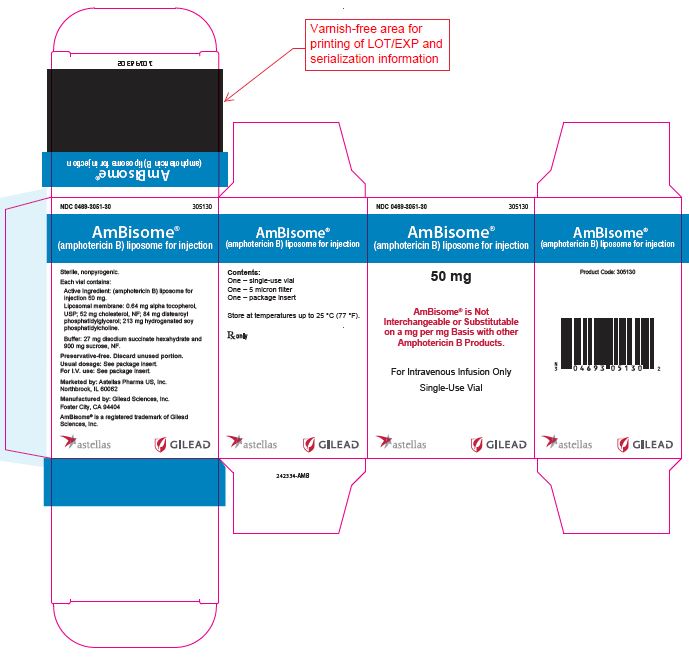
AmBisome amphotericin B 50 mg/12.5mL Injection, Powder, Lyophilized, For Solution, 12.5 mL — NDC 0469-3051-30 (Billing 00469-3051-30)
This is a package of 12.5 mL of AmBisome amphotericin B 50 mg/12.5mL Injection, Powder, Lyophilized, For Solution from Astellas Pharma US, Inc., no longer marketed (first marketed Aug 1997), no longer in the FDA NDC Directory. It is this product's only package size.
Other active recalls for Amphotericin B (different manufacturers) — 1 · tap to view
Identity & classification
Regulatory identifiers FDA, NLM and CMS codes for this package
Drug-database identifiers Medi-Span GPI and First Databank GCN / HICL / AHFS classification
- GSN (GCN sequence number): 030773
- GCN: 07387
- GPI-14 (Medi-Span): 11000010401920
- HICL (First Databank): 012800
- AHFS class code: 08:14.28.00
- RxCUI (RxNorm): 967385
Where does this data come from?
- FDA openFDA NDC Directory · synced Oct 1, 2026
- FDA label on DailyMed · label index refreshed Oct 1, 2026
- RxNorm (NLM RxNav) · catalog refreshed Oct 1, 2026
- Medi-Span GPI (licensed)
- First Databank (licensed) · refreshed Oct 1, 2026
RxNorm drug class
This medicine belongs to the Polyene Antifungal class.
Where does this data come from?
- RxClass (NLM) · catalog refreshed Oct 1, 2026
Clinical
Amphotericin B injection is used to treat serious and potentially life-threatening fungal infections. Amphotericin B injection is in a class of medications called antifungals. It works by slowing the growth of fungi that cause infection.
Read the full MedlinePlus article ↗- It treats serious, life-threatening fungal infections. The liposomal product AmBisome is also used for fever in people with low white blood cell counts who may have a fungal infect...
- It is given slowly through a vein by healthcare professionals. Conventional amphotericin B infusions take about 2 to 6 hours, and you may get a small test dose first. Your team wil...
- Chills, fever, nausea, vomiting, diarrhea and low potassium are common. AmBisome tends to cause fewer chills and kidney effects than conventional amphotericin B. Tell your nurse ri...
- Amphotericin B can affect your kidneys and lower potassium, which can strain the heart. Your team watches your kidney function and electrolytes closely.
Patient education
Supplement & herbal interactions
Some supplements/herbs that may interact with Amphotericin B — tap one for details:
Amphotericin B may be associated with lower levels of 1 nutrient — worth a chat with your pharmacist, not a cause for alarm.
Where does this data come from?
- MedlinePlus (NLM) · refreshed Oct 1, 2026
- FDA label on DailyMed · label index refreshed Oct 1, 2026
Ask a licensed pharmacist directly — free, answered by our team.
Pricing
A drug doesn't have one price. Each row is a different public payment system, and none is what you'd pay at the counter — that depends on your insurance. The ⓘ on each row explains what it measures.
| Price system | Per mL | Per package |
|---|---|---|
| Retail pharmacies payNADAC · weekly | Not in the retail survey — common for institutional, discontinued, or low-volume packs. | |
| Medicaid paysCMS SDUD · 12 mo | $220.87 | $2,760.82 / 12.5 ml |
| Medicare drug plans payPart D · Q2 2026 | $313.58 | $3,919.71 / 12.5 ml |
| Medicare Part B allowsASP · J0289 | $19.845 / J0289 unit | — |
Where does this data come from?
- CMS NADAC weekly file
- CMS ASP pricing files · refreshed Sep 20, 2026
- CMS Medicaid State Drug Utilization Data · through Q4 2025
- CMS Part D plan pricing files · refreshed Sep 24, 2026
- VA National Acquisition Center price file
Billing & reimbursement
Where does this data come from?
- CMS ASP NDC-HCPCS crosswalk · refreshed Sep 22, 2026
- DMEPDAC NDC-HCPCS crosswalk
- openFDA NSDE billing units · refreshed Sep 7, 2026
Packaging — all sizes for this product
| Package NDC | Description | Marketing start | Marketing end | Status |
|---|---|---|---|---|
| 00469-3051-30 You're viewing this Main listing | 12.5 mL in 1 VIAL, SINGLE-DOSE | 1997-08-11 | — | Inactivated by FDA |
Therapeutic equivalents
| Product | Labeler | Pack | NADAC/unit | TE | Status | Price vs. this |
|---|---|---|---|---|---|---|
| AmBisome 50 mg/12.5mLthis 00469-3051-30 | Astellas | 12.5 ml | — | AB | Discontinued | — |
| Amphotericin B 50 mg 23155-0594-31 | Heritage | 1 vial | — | AB | FDA listed | — |
| Amphotericin B 50 mg/12.5mL 55150-0365-01 | Eugia | 1 vial | — | AB | FDA listed | — |
| Amphotericin B 50 mg 62756-0233-01 | Sun | 1 vial | — | AB | FDA listed | — |
| Amphotericin B 50 mg 62756-0954-01 | Sun | 1 vial | — | AB | FDA listed | — |
| Amphotericin B liposome 50 mg/12.5mL 67457-0926-50 | Mylan | 1 vial | — | AB | FDA listed | — |
Where does this data come from?
- FDA openFDA NDC Directory · synced Oct 1, 2026
- FDA Orange Book · refreshed Sep 3, 2026
- CMS NADAC weekly file
Availability & generic status
The FDA lists approved generic versions of this medicine, but that does not always mean a pharmacy can get one today. Patent rules, launch agreements, supply and pricing can affect when generics actually arrive.
Where does this data come from?
- FDA Orange Book · refreshed Sep 3, 2026
Inactive Ingredients / Excipients
Inactive ingredients, also called excipients, are components of the drug product other than the active ingredient. They may include fillers, dyes, coatings, preservatives, flavors, or other formulation ingredients.
💡 Tap an ingredient (hover on desktop) to see what it is and why it’s used.
-
UNII H4N855PNZ1
Alpha-tocopherol is a form of vitamin E, a fat-soluble antioxidant derived from natural or synthetic sources. In medicines, it prevents oils and fats from breaking down and becoming rancid, protecting the product's stability and shelf life.
-
UNII 97C5T2UQ7J
Cholesterol is a fatty substance found naturally in animal tissues. In medications, it's used as an ingredient in liposomal formulations and lipid-based drug delivery systems to help encapsulate and stabilize active drugs for better absorption.
-
UNII 4271ZA8WXO
A synthetic phospholipid (fat-like compound) derived from or similar to those found in cell membranes. It acts as an emulsifier and surfactant, helping to mix water and oil-based ingredients together in the medicine.
-
UNII H1109Z9J4N
A natural emulsifier derived from soybean oil. It helps mix oil and water-based ingredients together, ensuring even distribution of active ingredients throughout the medicine.
-
UNII U16QOD6C4E
Sodium succinate hexahydrate is a salt form of succinic acid that contains water molecules. It functions as a buffer to help maintain stable pH levels in the medicine and may also act as a filler or tonicity agent.
-
UNII C151H8M554
A natural sugar derived from sugar cane or sugar beets. It's used as a sweetener, filler, and binder to improve taste, add bulk, and help hold tablet or capsule ingredients together.
-
UNII 059QF0KO0R
Water is a liquid solvent that dissolves and mixes ingredients together in liquid medicines, syrups, and injections. It helps distribute the active drug evenly throughout the product.
7 inactive ingredients listed in the exact product block matched to this NDC.
Where does this data come from?
ingredient classCode="IACT" elements from the exact product block matched by this NDC. Label-section narrative from DailyMed / the openFDA label index is shown separately when available.- FDA label on DailyMed · label index refreshed Oct 1, 2026
- FDA openFDA NDC Directory · synced Oct 1, 2026
Inactive ingredient FAQ
Are inactive ingredients the same for every manufacturer?
Why might an inactive ingredient be missing?
Can inactive ingredients matter?
Manufacturer & labeler
Where does this data come from?
- FDA openFDA NDC Directory · synced Oct 1, 2026
- Drugs@FDA
Full prescribing information FDA SPL
🎯 Indications and Usage ▾
INDICATIONS AND USAGE Am B isome is indicated for the following: • Empirical therapy for presumed fungal infection in febrile, neutropenic patients. • Treatment of Cryptococcal Meningitis in HIV-infected patients (see DESCRIPTION OF CLINICAL STUDIES ). • Treatment of patients with Aspergillus species, Candida species and/or Cryptococcus species infections (see above for the treatment of Cryptococcal Meningitis) refractory to amphotericin B deoxycholate, or in patients where renal impairment or unacceptable toxicity precludes the use of amphotericin B deoxycholate. • Treatment of visceral leishmaniasis.
In immunocompromised patients with visceral leishmaniasis treated with Am B isome, relapse rates were high following initial clearance of parasites (see DESCRIPTION OF CLINICAL STUDIES ). See DOSAGE AND ADMINISTRATION for recommended doses by indication.
⏱️ Dosage and Administration ▾
DOSAGE AND ADMINISTRATION AmBisome is not interchangeable or substitutable on a mg per mg basis with other amphotericin B products. Different amphotericin B products are not equivalent in terms of pharmacodynamics, pharmacokinetics and dosing. Am B isome should be administered by intravenous infusion, using a controlled infusion device, over a period of approximately 120 minutes.
An in-line membrane filter may be used for the intravenous infusion of Am B isome, provided THE MEAN PORE DIAMETER OF THE FILTER IS NOT LESS THAN
1.0MICRON . NOTE: An existing intravenous line must be flushed with 5% Dextrose Injection prior to infusion of AmBisome. If this is not feasible, AmBisome must be administered through a separate line.
Infusion time may be reduced to approximately 60 minutes in patients in whom the treatment is well-tolerated. If the patient experiences discomfort during infusion, the duration of infusion may be increased. The recommended initial dose of Am B isome for each indication for adult and pediatric patients is as follows: Indication Dose (mg/kg/day) Empirical therapy 3 Systemic fungal infections: Aspergillus Candida Cryptococcus 3 - 5 Cryptococcal meningitis in HIV-infected patients (see DESCRIPTION OF CLINICAL STUDIES ) 6 Dosing and rate of infusion should be individualized to the needs of the specific patient to ensure maximum efficacy while minimizing systemic toxicities or adverse events.
Doses recommended for visceral leishmaniasis are presented below: Visceral Leishmaniasis Dose (mg/kg/day) Immunocompetent patients 3 (days 1 - 5) and 3 on days 14, 21 Immunocompromised patients 4 (days 1 - 5) and 4 on days 10, 17, 24, 31, 38 For immunocompetent patients who do not achieve parasitic clearance with the recommended dose, a repeat course of therapy may be useful. For immunocompromised patients who do not clear parasites or who experience relapses, expert advice regarding further treatment is recommended.
For additional information, see DESCRIPTION OF CLINICAL STUDIES . Directions for Reconstitution, Filtration and Dilution Read This Entire Section Carefully Before Beginning Reconstitution Am B isome must be reconstituted using Sterile Water for Injection, USP (without a bacteriostatic agent). Vials of Am B isome containing 50 mg of amphotericin B are prepared as follows: Reconstitution 1.
Aseptically add 12 mL of Sterile Water for Injection, USP to each Am B isome vial to yield a preparation containing 4 mg amphotericin B/mL. CAUTION: DO NOT RECONSTITUTE WITH SALINE OR ADD SALINE TO THE RECONSTITUTED CONCENTRATION, OR MIX WITH OTHER DRUGS. The use of any solution other than those recommended, or the presence of a bacteriostatic agent in the solution, may cause precipitation of Am B isome.
2. Immediately after the addition of water, SHAKE THE VIAL VIGOROUSLY for 30 seconds to completely disperse the Am B isome. Am B isome forms a yellow, translucent suspension.
Visually inspect the vial for particulate matter and continue shaking until completely dispersed. Filtration and Dilution 3. Calculate the amount of reconstituted (4 mg/mL) Am B isome to be further diluted.
4. Withdraw this amount of reconstituted Am B isome into a sterile syringe. 5.
Attach the 5 micron filter provided to the syringe. Inject the syringe contents through the filter, into the appropriate amount of 5% Dextrose Injection (use only one filter per vial of Am B isome). 6.
Am B isome must be diluted with 5% Dextrose Injection to a final concentration of 1 to 2 mg/mL prior to administration. Lower concentrations (0.2 to 0.5 mg/mL) may be appropriate for infants and small children to provide sufficient volume for infusion. DISCARD PARTIALLY USED VIALS .
⛔ Contraindications ▾
CONTRAINDICATIONS Am B isome is contraindicated in those patients who have demonstrated or have a known hypersensitivity to amphotericin B deoxycholate or any other constituents of the product unless, in the opinion of the treating physician, the benefit of therapy outweighs the risk.
⚠️ Warnings ▾
WARNINGS Anaphylaxis has been reported with amphotericin B deoxycholate and other amphotericin B-containing drugs, including Am B isome. If a severe anaphylactic reaction occurs, the infusion should be immediately discontinued and the patient should not receive further infusions of Am B isome.
🤒 Adverse Reactions ▾
ADVERSE REACTIONS The following adverse events are based on the experience of 592 adult patients (295 treated with Am B isome and 297 treated with amphotericin B deoxycholate) and 95 pediatric patients (48 treated with Am B isome and 47 treated with amphotericin B deoxycholate) in Study 94-0-002, a randomized double-blind, multi-center study in febrile, neutropenic patients. Am B isome and amphotericin B were infused over two hours. The incidence of common adverse events (incidence of 10% or greater) occurring with Am B isome compared to amphotericin B deoxycholate, regardless of relationship to study drug, is shown in the following table: Empirical Therapy Study 94-0-002 Common Adverse Events Adverse Event by Body System AmBisome N = 343 % Amphotericin B N = 344 % Body as a Whole Abdominal pain Asthenia Back pain Blood product transfusion reaction Chills Infection Pain Sepsis 19.8 13.1 12 18.4 47.5 11.1 14 14 21.8 10.8 7.3 18.6 75.9 9.3 12.8
11.3Cardiovascular System Chest pain Hypertension Hypotension Tachycardia 12 7.9 14.3 13.4 11.6 16.3 21.5
20.9Digestive System Diarrhea Gastrointestinal hemorrhage Nausea Vomiting 30.3 9.9 39.7 31.8 27.3 11.3 38.7
43.9Metabolic and Nutritional Disorders Alkaline phosphatase increased ALT (SGPT) increased AST (SGOT) increased Bilirubinemia BUN increased Creatinine increased Edema Hyperglycemia Hypernatremia Hypervolemia Hypocalcemia Hypokalemia Hypomagnesemia Peripheral edema 22.2 14.6 12.8 18.1 21 22.4 14.3 23 4.1 12.2 18.4 42.9 20.4 14.6 19.2 14 12.8 19.2 31.1 42.2 14.8 27.9 11 15.4 20.9 50.6 25.6
17.2Nervous System Anxiety Confusion Headache Insomnia 13.7 11.4 19.8 17.2 11 13.4 20.9
14.2Respiratory System Cough increased Dyspnea Epistaxis Hypoxia Lung disorder Pleural effusion Rhinitis 17.8 23 14.9 7.6 17.8 12.5 11.1 21.8 29.1 20.1 14.8 17.4 9.6 11 Skin and Appendages Pruritus Rash Sweating 10.8 24.8 7 10.2 24.4
10.8Urogenital System Hematuria 14 14 Am B isome was well tolerated. Am B isome had a lower incidence of chills, hypertension, hypotension, tachycardia, hypoxia, hypokalemia, and various events related to decreased kidney function as compared to amphotericin B deoxycholate. In pediatric patients (16 years of age or less) in this double-blind study, Am B isome compared to amphotericin B deoxycholate, had a lower incidence of hypokalemia (37% versus 55%), chills (29% versus 68%), vomiting (27% versus 55%), and hypertension (10% versus 21%).
Similar trends, although with a somewhat lower incidence, were observed in open-label, randomized Study 104-14 involving 205 febrile neutropenic pediatric patients (141 treated with Am B isome and 64 treated with amphotericin B deoxycholate). Pediatric patients appear to have more tolerance than older individuals for the nephrotoxic effects of amphotericin B deoxycholate. The following adverse events are based on the experience of 244 patients (202 adult and 42 pediatric patients) of whom 85 patients were treated with Am B isome 3 mg/kg, 81 patients were treated with Am B isome 5 mg/kg and 78 patients were treated with amphotericin B lipid complex 5 mg/kg in Study 97-0-034, a randomized, double-blind, multi-center study in febrile, neutropenic patients.
Am B isome and amphotericin B lipid complex were infused over two hours. The incidence of adverse events occurring in more than 10% of subjects in one or more arms, regardless of relationship to study drug, are summarized in the following table: Empirical Therapy Study 97-0-034 Common Adverse Events Adverse Event by Body System AmBisome 3 mg/kg/day N = 85 % AmBisome 5 mg/kg/day N = 81 % Amphotericin B Lipid Complex 5 mg/kg/day N = 78 % Body as a Whole Abdominal pain Asthenia Chills/rigors Sepsis Transfusion reaction 12.9 8.2 40 12.9 10.6 9.9 6.2 48.1 7.4 8.6 11.5 11.5 89.7 11.5
5.1Cardiovascular System Chest pain Hypertension Hypotension Tachycardia 8.2 10.6 10.6 9.4 11.1 19.8 7.4 18.5 6.4 23.1 19.2
23.1Digestive System Diarrhea Nausea Vomiting 15.3 25.9 22.4 17.3 29.6 25.9 14.1 37.2 30.… [Excerpted — this section continues on DailyMed.]
🔄 Drug Interactions ▾
Drug Interactions No formal clinical studies of drug interactions have been conducted with Am B isome; however, the following drugs are known to interact with amphotericin B and may interact with Am B isome: Antineoplastic Agents Concurrent use of antineoplastic agents may enhance the potential for renal toxicity, bronchospasm, and hypotension. Antineoplastic agents should be given concomitantly with caution. Corticosteroids and Corticotropin (ACTH) Concurrent use of corticosteroids and ACTH may potentiate hypokalemia, which could predispose the patient to cardiac dysfunction.
If used concomitantly, serum electrolytes and cardiac function should be closely monitored. Digitalis Glycosides Concurrent use may induce hypokalemia and may potentiate digitalis toxicity. When administered concomitantly, serum potassium levels should be closely monitored.
Flucytosine Concurrent use of flucytosine may increase the toxicity of flucytosine by possibly increasing its cellular uptake and/or impairing its renal excretion. Azoles (e.g., ketoconazole, miconazole, clotrimazole, fluconazole, etc.) In vitro and in vivo animal studies of the combination of amphotericin B and imidazoles suggest that imidazoles may induce fungal resistance to amphotericin B. Combination therapy should be administered with caution, especially in immunocompromised patients.
Leukocyte Transfusions Acute pulmonary toxicity has been reported in patients simultaneously receiving intravenous amphotericin B and leukocyte transfusions. Other Nephrotoxic Medications Concurrent use of amphotericin B and other nephrotoxic medications may enhance the potential for drug-induced renal toxicity. Intensive monitoring of renal function is recommended in patients requiring any combination of nephrotoxic medications.
Skeletal Muscle Relaxants Amphotericin B-induced hypokalemia may enhance the curariform effect of skeletal muscle relaxants (e.g. tubocurarine) due to hypokalemia. When administered concomitantly, serum potassium levels should be closely monitored.
🧒 Pediatric Use ▾
Pediatric Use Pediatric patients, age 1 month to 16 years, with presumed fungal infection (empirical therapy), confirmed systemic fungal infections or with visceral leishmaniasis have been successfully treated with Am B isome. In studies which included 302 pediatric patients administered Am B isome, there was no evidence of any differences in efficacy or safety of Am B isome compared to adults. Since pediatric patients have received Am B isome at doses comparable to those used in adults on a per kilogram body weight basis, no dosage adjustment is required in this population.
Safety and effectiveness in pediatric patients below the age of one month have not been established (See DESCRIPTION OF CLINICAL STUDIES - Empirical Therapy in Febrile Neutropenic Patients and DOSAGE AND ADMINISTRATION ).
🧓 Geriatric Use ▾
Elderly Patients Experience with Am B isome in the elderly (65 years or older) comprised 72 patients. It has not been necessary to alter the dose of Am B isome for this population. As with most other drugs, elderly patients receiving Am B isome should be carefully monitored.
🆘 Overdosage ▾
OVERDOSAGE The toxicity of Am B isome due to overdose has not been defined. Repeated daily doses up to 10 mg/kg in pediatric patients and 15 mg/kg in adult patients have been administered in clinical trials with no reported dose-related toxicity. Management If overdosage should occur, cease administration immediately.
Symptomatic supportive measures should be instituted. Particular attention should be given to monitoring renal function. Hemodialysis or peritoneal dialysis do not appear to significantly affect the elimination of Am B isome.
🧬 Clinical Pharmacology ▾
CLINICAL PHARMACOLOGY Pharmacokinetics The assay used to measure amphotericin B in the serum after administration of Am B isome does not distinguish amphotericin B that is complexed with the phospholipids of Am B isome from amphotericin B that is uncomplexed. The pharmacokinetic profile of amphotericin B after administration of Am B isome is based upon total serum concentrations of amphotericin B. The pharmacokinetic profile of amphotericin B was determined in febrile neutropenic cancer and bone marrow transplant patients who received 1-2 hour infusions of 1 to 5 mg/kg/day Am B isome for 3 to 20 days.
The pharmacokinetics of amphotericin B after administration of Am B isome is nonlinear such that there is a greater than proportional increase in serum concentrations with an increase in dose from 1 to 5 mg/kg/day. The pharmacokinetic parameters of total amphotericin B (mean ± SD) after the first dose and at steady state are shown in the table below. Pharmacokinetic Parameters of AmBisome Dose 1 mg/kg/day 2.5 mg/kg/day 5 mg/kg/day Day 1 n = 8 Last n = 7 1 n = 7 Last n = 7 1 n = 12 Last n = 9 Parameters C max (mcg/mL) 7.3 ± 3.8 12.2 ± 4.9 17.2 ± 7.1 31.4 ± 17.8 57.6 ± 21 83 ±
35.2AUC 0-24 (mcg•hr/mL) 27 ± 14 60 ± 20 65 ± 33 197 ± 183 269 ± 96 555 ± 311 t ½ (hr) 10.7 ± 6.4 7 ± 2.1 8.1 ± 2.3 6.3 ± 2 6.4 ± 2.1 6.8 ±
2.1V ss (L/kg) 0.44 ± 0.27 0.14 ± 0.05 0.40 ± 0.37 0.16 ± 0.09 0.16 ± 0.10 0.10 ±
0.07Cl (mL/hr/kg) 39 ± 22 17 ± 6 51 ± 44 22 ± 15 21 ± 14 11 ± 6 Distribution Based on total amphotericin B concentrations measured within a dosing interval (24 hours) after administration of Am B isome, the mean half-life was 7-10 hours. However, based on total amphotericin B concentration measured up to 49 days after dosing of Am B isome, the mean half-life was 100-153 hours. The long terminal elimination half-life is probably a slow redistribution from tissues.
Steady state concentrations were generally achieved within 4 days of dosing. Although variable, mean trough concentrations of amphotericin B remained relatively constant with repeated administration of the same dose over the range of 1 to 5 mg/kg/day, indicating no significant drug accumulation in the serum. Metabolism The metabolic pathways of amphotericin B after administration of Am B isome are not known.
Excretion The mean clearance at steady state was independent of dose. The excretion of amphotericin B after administration of Am B isome has not been studied. Pharmacokinetics in Special Populations Renal Impairment The effect of renal impairment on the disposition of amphotericin B after administration of Am B isome has not been studied.
However, Am B isome has been successfully administered to patients with pre-existing renal impairment (see DESCRIPTION OF CLINICAL STUDIES ). Hepatic Impairment The effect of hepatic impairment on the disposition of amphotericin B after administration of Am B isome is not known. Pediatric and Elderly Patients The pharmacokinetics of amphotericin B after administration of Am B isome in pediatric and elderly patients has not been studied; however, Am B isome has been used in pediatric and elderly patients (see DESCRIPTION OF CLINICAL STUDIES ).
Gender and Ethnicity The effect of gender or ethnicity on the pharmacokinetics of amphotericin B after administration of Am B isome is not known.
📦 How Supplied / Storage and Handling ▾
HOW SUPPLIED Am B isome for Injection is available as an individual carton (NDC 0469-3051-30). Each carton contains one pre-packaged, disposable sterile 5 micron filter.
📋 Description ▾
DESCRIPTION Am B isome ® for Injection is a sterile, non-pyrogenic lyophilized product for intravenous infusion. Each vial contains amphotericin B 50 milligrams (mg), intercalated into a liposomal membrane consisting of alpha tocopherol approximately 0.64 mg; cholesterol 52 mg; distearoyl phosphatidylglycerol sodium salt 84 mg; hydrogenated soy phosphatidylcholine 213 mg, together with disodium succinate hexahydrate 27 mg; and sucrose 900 mg. Am B isome may also contain hydrochloric acid and/or sodium hydroxide as pH adjusters.
Following reconstitution with Sterile Water for Injection, USP, the resulting pH of the suspension is between 5-6. Am B isome is a true single bilayer liposomal drug delivery system. Liposomes are closed, spherical vesicles created by mixing specific proportions of amphophilic substances such as phospholipids and cholesterol so that they arrange themselves into multiple concentric bilayer membranes when hydrated in aqueous solutions.
Single bilayer liposomes are then formed by microemulsification of multilamellar vesicles using a homogenizer. Am B isome consists of these unilamellar bilayer liposomes with amphotericin B intercalated within the membrane. Due to the nature and quantity of amphophilic substances used, and the lipophilic moiety in the amphotericin B molecule, the drug is an integral part of the overall structure of the Am B isome liposomes.
Am B isome contains true liposomes that are less than 100 nm in diameter. A schematic depiction of the liposome is presented below. Note: Liposomal encapsulation or incorporation into a lipid complex can substantially affect a drug’s functional properties relative to those of the unencapsulated drug or non-lipid associated drug.
In addition, different liposomal or lipid-complex products with a common active ingredient may vary from one another in the chemical composition and physical form of the lipid component. Such differences may affect the functional properties of these drug products. Amphotericin B is a macrocyclic, polyene, antifungal antibiotic produced from a strain of Streptomyces nodosus .
Amphotericin B is designated chemically as: [1R-(1R*,3S*,5R*,6R*,9R*,11R*,15S*,16R*,17R*,18S*,19E,21E,23E,25E,27E,29E,31E,33R*,35S*,36R*,37S*)]-33-[(3-Amino-3,6-dideoxy-β-D-mannopyranosyl)oxy]-1,3,5,6,9,11,17,37-octahydroxy-15,16,18-trimethyl-13-oxo-14,39-dioxabicyclo[33.3.1]nonatriaconta-19,21,23,25,27,29,31-heptaene-36-carboxylic acid (CAS No. 1397-89-3). Amphotericin B has a molecular formula of C 47 H 73 NO 17 and a molecular weight of 924.09.
The structure of amphotericin B is shown below: description Molecular structure of amphotericin B
⚠️ Precautions ▾
PRECAUTIONS General As with any amphotericin B-containing product the drug should be administered by medically trained personnel. During the initial dosing period, patients should be under close clinical observation. Am B isome has been shown to be significantly less toxic than amphotericin B deoxycholate; however, adverse events may still occur.
Laboratory Tests Patient management should include laboratory evaluation of renal, hepatic and hematopoietic function, and serum electrolytes (particularly magnesium and potassium). Drug-Laboratory Interactions: Serum phosphate false elevation False elevations of serum phosphate may occur when samples from patients receiving Am B isome are analyzed using the PHOSm assay (e.g. used in Beckman Coulter analyzers including the Synchron LX20). This assay is intended for the quantitative determination of inorganic phosphorus in human serum, plasma or urine samples.
Drug Interactions No formal clinical studies of drug interactions have been conducted with Am B isome; however, the following drugs are known to interact with amphotericin B and may interact with Am B isome: Antineoplastic Agents Concurrent use of antineoplastic agents may enhance the potential for renal toxicity, bronchospasm, and hypotension. Antineoplastic agents should be given concomitantly with caution. Corticosteroids and Corticotropin (ACTH) Concurrent use of corticosteroids and ACTH may potentiate hypokalemia, which could predispose the patient to cardiac dysfunction.
If used concomitantly, serum electrolytes and cardiac function should be closely monitored. Digitalis Glycosides Concurrent use may induce hypokalemia and may potentiate digitalis toxicity. When administered concomitantly, serum potassium levels should be closely monitored.
Flucytosine Concurrent use of flucytosine may increase the toxicity of flucytosine by possibly increasing its cellular uptake and/or impairing its renal excretion. Azoles (e.g., ketoconazole, miconazole, clotrimazole, fluconazole, etc.) In vitro and in vivo animal studies of the combination of amphotericin B and imidazoles suggest that imidazoles may induce fungal resistance to amphotericin B. Combination therapy should be administered with caution, especially in immunocompromised patients.
Leukocyte Transfusions Acute pulmonary toxicity has been reported in patients simultaneously receiving intravenous amphotericin B and leukocyte transfusions. Other Nephrotoxic Medications Concurrent use of amphotericin B and other nephrotoxic medications may enhance the potential for drug-induced renal toxicity. Intensive monitoring of renal function is recommended in patients requiring any combination of nephrotoxic medications.
Skeletal Muscle Relaxants Amphotericin B-induced hypokalemia may enhance the curariform effect of skeletal muscle relaxants (e.g. tubocurarine) due to hypokalemia. When administered concomitantly, serum potassium levels should be closely monitored. Carcinogenesis, Mutagenesis, Impairment of Fertility No long-term studies in animals have been performed to evaluate carcinogenic potential of Am B isome.
Am B isome has not been tested to determine its mutagenic potential. A Segment I Reproductive Study in rats found an abnormal estrous cycle (prolonged diestrus) and decreased number of corpora lutea in the high-dose groups (10 and 15 mg/kg, doses equivalent to human doses of 1.6 and 2.4 mg/kg based on body surface area considerations). Am B isome did not affect fertility or days to copulation.
There were no effects on male reproductive function. Pregnancy There have been no adequate and well-controlled studies of Am B isome in pregnant women. Systemic fungal infections have been successfully treated in pregnant women with amphotericin B deoxycholate, but the number of cases reported has been small.
Segment II studies in both rats and rabbits have concluded that Am B isome had no teratogenic potential in these species. In rats, the maternal non-toxic dose of Am B isome was estimat… [Excerpted — this section continues on DailyMed.]
🍼 Nursing Mothers ▾
Nursing Mothers Many drugs are excreted in human milk; however, it is not known whether Am B isome is excreted in human milk. Due to the potential for serious adverse reactions in breastfed infants, a decision should be made whether to discontinue nursing or whether to discontinue the drug, taking into account the importance of the drug to the mother.
🔬 Clinical Studies ▾
DESCRIPTION OF CLINICAL STUDIES Eleven clinical studies supporting the efficacy and safety of Am B isome were conducted. This clinical program included both controlled and uncontrolled studies. These studies, which involved 2,171 patients, included patients with confirmed systemic mycoses, empirical therapy, and visceral leishmaniasis.
Nineteen hundred and forty-six (1946) episodes were evaluable for efficacy, of which 1,280 (302 pediatric and 978 adults) were treated with Am B isome. Three controlled empirical therapy trials compared the efficacy and safety of Am B isome to amphotericin B. One of these studies was conducted in a pediatric population, one in adults, and a third in patients aged 2 years or more.
In addition, a controlled empirical therapy trial comparing the safety of Am B isome to Abelcet ® (amphotericin B lipid complex) was conducted in patients aged 2 years or more. One controlled trial compared the efficacy and safety of Am B isome to amphotericin B in HIV patients with cryptococcal meningitis. One compassionate use study enrolled patients who had failed amphotericin B deoxycholate therapy or who were unable to receive amphotericin B deoxycholate because of renal insufficiency.
Empirical Therapy in Febrile Neutropenic Patients Study 94-0-002, a randomized, double-blind, comparative multi-center trial, evaluated the efficacy of Am B isome (1.5-6 mg/kg/day) compared with amphotericin B deoxycholate (0.3-1.2 mg/kg/day) in the empirical treatment of 687 adult and pediatric neutropenic patients who were febrile despite having received at least 96 hours of broad spectrum antibacterial therapy. Therapeutic success required (a) resolution of fever during the neutropenic period, (b) absence of an emergent fungal infection, (c) patient survival for at least 7 days post therapy, (d) no discontinuation of therapy due to toxicity or lack of efficacy, and (e) resolution of any study-entry fungal infection.
The overall therapeutic success rates for Am B isome and the amphotericin B deoxycholate were equivalent. Results are summarized in the following table. Note: The categories presented below are not mutually exclusive.
Empirical Therapy in Febrile Neutropenic Patients: Randomized, Double-Blind Study in 687 Patients AmBisome 3 mg/kg/day Amphotericin B 0.6 mg/kg/day Number of patients receiving at least one dose of study drug 343 344 Overall Success 171 (49.9%) 169 (49.1%) Fever resolution during neutropenic period 199 (58%) 200 (58.1%) No treatment-emergent fungal infection 300 (87.5%) 301 (87.7%) Survival through 7 days post study drug 318 (92.7%) 308 (89.5%) Study drug not prematurely discontinued due to toxicity or lack of efficacy* 294 (85.7%) 280 (81.4%) * 8 and 10 patients, respectively, were treated as failures due to premature discontinuation alone.
This therapeutic equivalence had no apparent relationship to the use of prestudy antifungal prophylaxis or concomitant granulocytic colony-stimulating factors. The incidence of mycologically-confirmed, and clinically-diagnosed, emergent fungal infections are presented in the following table. Am B isome and amphotericin B were found to be equivalent with respect to the total number of emergent fungal infections.
Empirical Therapy in Febrile Neutropenic Patients: Emergent Fungal Infections AmBisome 3 mg/kg/day Amphotericin B 0.6 mg/kg/day Number of patients receiving at least one dose of study drug 343 344 Mycologically-confirmed fungal infection 11 (3.2%) 27 (7.8%) Clinically-diagnosed fungal infection 32 (9.3%) 16 (4.7%) Total emergent fungal infections 43 (12.5%) 43 (12.5%) Mycologically-confirmed fungal infections at study entry were cured in 8 of 11 patients in the Am B isome group and 7 of 10 in the amphotericin B group.
Study 97-0-034, a randomized, double-blind, comparative multi-center trial, evaluated the safety of Am B isome (3 and 5 mg/kg/day) compared with amphotericin B lipid complex (5 mg/kg/day) in the empirical treatment of 202 adult and 42 pediatric ne… [Excerpted — this section continues on DailyMed.]
📄 Carcinogenesis, Mutagenesis, Impairment of Fertility ▾
Carcinogenesis, Mutagenesis, Impairment of Fertility No long-term studies in animals have been performed to evaluate carcinogenic potential of Am B isome. Am B isome has not been tested to determine its mutagenic potential. A Segment I Reproductive Study in rats found an abnormal estrous cycle (prolonged diestrus) and decreased number of corpora lutea in the high-dose groups (10 and 15 mg/kg, doses equivalent to human doses of 1.6 and 2.4 mg/kg based on body surface area considerations).
Am B isome did not affect fertility or days to copulation. There were no effects on male reproductive function.
📄 Package Label / Principal Display Panel ▾
Principal Display Panel AmBisome (amphotericin B) liposome for injection equivalent to 50 mg amphotericin B For Intravenous Infusion Only Single-Use Vial Ambisome Carton
Medicaid utilization & spend
Medicare Part D spend CMS · PART D · 2026 (Q1)
Reported adverse events (FAERS)
Top reported reactions
Age at onset
Reporter sex
Serious outcomes
Where does this data come from?
About this NDC listing & data coverage
What data is (and isn’t) available for this NDC — tap to expand
| NDC identity (package / product / labeler codes) | ✓ Available |
| Labeler | ✓ Available |
| Product & package description | ✓ Available |
| Marketing category & status | ✓ Available |
| Active ingredient / dosage form / route | ✓ Available |
| FDA label (SPL via DailyMed) | ✓ Available |
| Package photos | ✓ Available |
| Inactive ingredients (structured) | ✓ Available |
| NADAC pharmacy acquisition price (CMS) | — Not published for this NDC CMS publishes NADAC only for NDCs reported in its retail-pharmacy survey. |
| Orange Book / therapeutic-equivalence data | ✓ Available |
| HCPCS J-code billing crosswalk | ✓ Available |
| Medicaid utilization (CMS SDUD) | ✓ Available |