
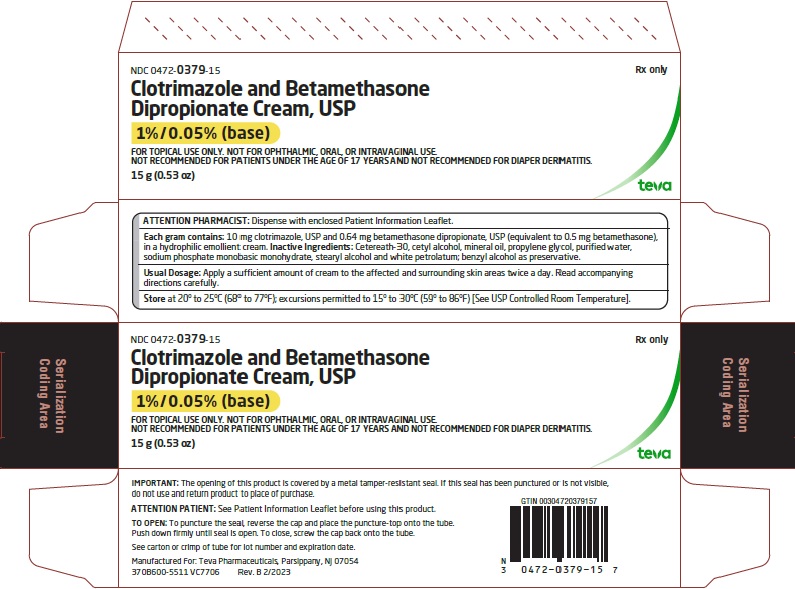
Clotrimazole and Betamethasone Dipropionate 10 mg/g; .5 mg/g Cream
🆔 Identity & classification
Where does this data come from?
🏷️ RxNorm drug class
This medicine belongs to the Corticosteroid class.
Where does this data come from?
🏭 Manufacturer & labeler
Where does this data come from?
🩺 Clinical
Betamethasone topical is used to treat the itching, redness, dryness, crusting, scaling, inflammation, and discomfort of various skin conditions, including psoriasis (a skin disease in which red, scaly patches form on some areas of the body) and eczema (a skin disease that causes the skin to be dry and itchy and to sometimes develop red, scaly rashes). Betamethasone is in a class of medications called corticosteroids. It works by activating natural substances in the skin to reduce swelling, redness, and itching.
Read the full MedlinePlus article ↗Patient education
Supplement & herbal interactions
Where does this data come from?
Ask a licensed pharmacist directly — free, answered by our team.
🧪 Inactive Ingredients / Excipients
Inactive ingredients, also called excipients, are components of the drug product other than the active ingredient. They may include fillers, dyes, coatings, preservatives, flavors, or other formulation ingredients.
💡 Tap an ingredient (hover on desktop) to see what it is and why it’s used.
-
UNII LKG8494WBH
Benzyl alcohol is a clear liquid used as a preservative and solvent in medicines. It helps prevent bacterial and fungal growth and dissolves other ingredients to create uniform liquid formulations.
-
UNII 8FA93U5T67
A waxy substance made from plant oils that acts as an emulsifier and thickener. It helps mix oil and water components in the medicine and gives the product a smooth texture.
-
UNII 936JST6JCN
Cetyl alcohol is a waxy, fatty substance derived from plant or animal sources. It acts as an emulsifier and thickener in medicines, helping blend oil and water components and giving products a smooth, creamy texture.
-
UNII T5L8T28FGP
Mineral oil is a clear, odorless liquid derived from crude oil. It acts as a lubricant and emollient in medications, helping pills slide smoothly during manufacturing and aiding moisture retention in topical products.
-
UNII 4T6H12BN9U
Petrolatum is a purified mineral oil-based jelly derived from petroleum. In medicines, it acts as an emollient, lubricant, and moisture barrier to soften skin, reduce friction, and help prevent water loss from formulations.
-
UNII 6DC9Q167V3
Propylene glycol is a clear liquid derived from petroleum or vegetable sources. It acts as a solvent, humectant, and preservative in medicines, helping dissolve active ingredients and maintain product stability.
-
UNII 593YOG76RN
A salt made from sodium and phosphate that helps regulate acidity and maintain proper pH balance in the medicine. It also acts as a buffer to keep the product stable.
-
UNII 2KR89I4H1Y
Stearyl alcohol is a waxy, fatty substance derived from natural oils or made synthetically. It acts as an emulsifier and thickener in medicines, helping mix ingredients together and give the product the right texture.
-
UNII 059QF0KO0R
Water is a liquid solvent that dissolves and mixes ingredients together in liquid medicines, syrups, and injections. It helps distribute the active drug evenly throughout the product.
9 inactive ingredients listed in the exact product block matched to this NDC.
Where does this data come from?
ingredient classCode="IACT" elements from the exact product block matched by this NDC. Label-section narrative from DailyMed / the openFDA label index is shown separately when available.Inactive ingredient FAQ
Are inactive ingredients the same for every manufacturer?
Why might an inactive ingredient be missing?
Can inactive ingredients matter?
💲 Pricing
A drug doesn't have one price. Each row is a different public payment system, and none is what you'd pay at the counter — that depends on your insurance. The ⓘ on each row explains what it measures.
| Price system | Per g | Per package |
|---|---|---|
| Retail pharmacies payNADAC · weekly | $0.201 | $3.02 / 15 g |
| Medicaid paysCMS SDUD · 12 mo | $0.5363 | $8.04 / 15 g |
| Medicare drug plans payPart D · Q2 2026 | $0.3646 | $5.47 / 15 g |
Where does this data come from?
🔁 Therapeutic equivalents
Where does this data come from?
⏳ Availability & generic status
This product is an FDA-approved generic. Other versions of the same drug are listed under Therapeutic equivalents, least expensive first.
Where does this data come from?
🗺️ Medicaid utilization & spend
💊 Medicaid utilization by pack size
🔬 Reported adverse events (FAERS)
Top reported reactions
Reporter sex
Serious outcomes
Where does this data come from?
📦 Packaging — all sizes for this product
| Package NDC | Description | Per unit | Per pack | Marketing start | Status |
|---|---|---|---|---|---|
| 00472-0379-15 You're viewing this | 1 TUBE in 1 CARTON (0472-0379-15) / 15 g in 1 TUBE | $0.2013 / g | $3.02 | 2003-12-16 | Active |
| 00472-0379-45 | 1 TUBE in 1 CARTON (0472-0379-45) / 45 g in 1 TUBE | $0.1781 / g | $8.01 | 2003-12-16 | Active |
Per g, this pack runs about 13% above the cheapest pack (NDC 00472-0379-45, $0.1781 vs $0.2013 NADAC).
This pack accounts for about 40% of this product's recent Medicaid fills; most go to a different pack size. See all packs ↓
Pack size FAQ
What quantity is in NDC 00472-0379-15?
What NDC number is used to bill for this package of Clotrimazole and Betamethasone Dipropionate 10 mg/g; .5 mg/g Cream?
Prices are the latest CMS NADAC pharmacy acquisition cost per NDC; per-pack figures are per-unit × pack quantity, shown only when the pack is denominated in the same measure NADAC prices.
📄 Full prescribing information FDA SPL
🎯 Indications and Usage ▾
1 INDICATIONS AND USAGE Clotrimazole and betamethasone dipropionate cream is a combination of an azole antifungal and corticosteroid and is indicated for the topical treatment of symptomatic inflammatory tinea pedis, tinea cruris, and tinea corporis due to Epidermophyton floccosum, Trichophyton mentagrophytes, and Trichophyton rubrum in patients 17 years and older. Clotrimazole and betamethasone dipropionate cream contains a combination of clotrimazole, an azole antifungal, and betamethasone dipropionate, a corticosteroid, and is indicated for the topical treatment of symptomatic inflammatory tinea pedis, tinea cruris, and tinea corporis due to Epidermophyton floccosum, Trichophyton mentagrophytes, and Trichophyton rubrum in patients 17 years and older.
( 1 )
⏱️ Dosage and Administration ▾
2 DOSAGE AND ADMINISTRATION Treatment of tinea corporis or tinea cruris: Apply a thin film of clotrimazole and betamethasone dipropionate cream into the affected skin areas twice a day for one week. Do not use more than 45 grams per week. Do not use with occlusive dressings.
If a patient shows no clinical improvement after 1 week of treatment with clotrimazole and betamethasone dipropionate cream, the diagnosis should be reviewed. Do not use longer than 2 weeks. Treatment of tinea pedis: Gently massage a sufficient amount of clotrimazole and betamethasone dipropionate cream into the affected skin areas twice a day for two weeks.
Do not use more than 45 grams per week. Do not use with occlusive dressings. If a patient shows no clinical improvement after 2 weeks of treatment with clotrimazole and betamethasone dipropionate cream, the diagnosis should be reviewed.
Do not use longer than 4 weeks. Clotrimazole and betamethasone dipropionate cream is for topical use only. It is not for oral, ophthalmic, or intravaginal use.
Avoid contact with eyes. Wash hands after each application. Tinea pedis: Apply a thin film to the affected skin areas twice a day for 2 weeks.
Do not use longer than 4 weeks. ( 2 ) Tinea cruris and tinea corporis: Apply a thin film to the affected skin area twice a day for 1 week. Do not use longer than 2 weeks.
( 2 ) Do not use with occlusive dressings unless directed by a physician. ( 2 ) Not for ophthalmic, oral or intravaginal use. ( 2 )
💊 Dosage Forms and Strengths ▾
3 DOSAGE FORMS AND STRENGTHS Cream, 1%/0.05% (base). Each gram of clotrimazole and betamethasone dipropionate cream, USP contains 10 mg of clotrimazole, USP and 0.64 mg of betamethasone dipropionate, USP (equivalent to 0.5 mg of betamethasone) in a white to off-white hydrophilic cream. Cream, 1%/0.05% (base) ( 3 ) Each gram of clotrimazole and betamethasone dipropionate cream contains 10 mg of clotrimazole and 0.64 mg of betamethasone dipropionate (equivalent to 0.5 mg of betamethasone) ( 3 )
⛔ Contraindications ▾
4 CONTRAINDICATIONS None. None. ( 4 )
⚠️ Warnings and Cautions ▾
5 WARNINGS AND PRECAUTIONS Clotrimazole and betamethasone dipropionate cream can cause reversible HPA axis suppression with the potential for glucocorticosteroid insufficiency during and after withdrawal of the treatment. Risk factor(s) are: use of high-potency topical corticosteroid, use over a large surface area or to areas under occlusion, prolonged use, altered skin barrier, liver failure, and young age. Modify use should HPA axis suppression develop.
( 5.1 , 8.4 ) Pediatric patients may be more susceptible to systemic toxicity. ( 5.1 , 8.4 ) The use of clotrimazole and betamethasone dipropionate cream in the treatment of diaper dermatitis is not recommended. ( 5.2 ) Topical corticosteroid products may increase the risk of cataracts and glaucoma.
If visual symptoms occur, consider referral to an ophthalmologist. ( 5.3 )
5.1Effects on Endocrine System Clotrimazole and betamethasone dipropionate cream can cause reversible hypothalamic-pituitary-adrenal (HPA) axis suppression with the potential for glucocorticosteroid insufficiency. This may occur during treatment or after withdrawal of treatment. Cushing’s syndrome and hyperglycemia may also occur due to the systemic effect of corticosteroids while on treatment.
Factors that predispose a patient to HPA axis suppression include the use of high-potency steroids, large treatment surface areas, prolonged use, use of occlusive dressing, altered skin barrier, liver failure, and young age. Because of the potential for systemic corticosteroid effects, patients may need to be periodically evaluated for HPA axis suppression. This may be done by using the adrenocorticotropic hormone (ACTH) stimulation test.
In a small trial, clotrimazole and betamethasone dipropionate cream was applied using large dosages, 7 g daily for 14 days (BID) to the crural area of normal adult subjects. Three of the 8 normal subjects on whom clotrimazole and betamethasone dipropionate cream was applied exhibited low morning plasma cortisol levels during treatment. One of these subjects had an abnormal cosyntropin test.
The effect on morning plasma cortisol was transient and subjects recovered 1 week after discontinuing dosing. In addition, 2 separate trials in pediatric subjects demonstrated adrenal suppression as determined by cosyntropin testing [see Use in Specific Populations (8.4) ]. If HPA axis suppression is documented, gradually withdraw the drug, reduce the frequency of application, or substitute with a less potent corticosteroid.
Pediatric patients may be more susceptible to systemic toxicity due to their larger skin-surface-to-body mass ratios [see Use in Specific Populations (8.4) ].
5.2Diaper Dermatitis The use of clotrimazole and betamethasone dipropionate cream in the treatment of diaper dermatitis is not recommended.
5.3Ophthalmic Adverse Reactions Use of topical corticosteroids may increase the risk of posterior subcapsular cataracts and glaucoma. Cataracts and glaucoma have been reported in postmarketing experience with the use of topical corticosteroid products, including topical betamethasone products [see Adverse Reactions (6.2) ] . Avoid contact of clotrimazole and betamethasone dipropionate cream with eyes.
Advise patients to report any visual symptoms and consider referral to an ophthalmologist for evaluation.
🤒 Adverse Reactions ▾
6 ADVERSE REACTIONS Most common adverse reactions reported for clotrimazole and betamethasone dipropionate cream were paraesthesia in 1.9% of patients and rash, edema, and secondary infections each in less than 1% of patients. ( 6.1 ) To report SUSPECTED ADVERSE REACTIONS, contact Teva at 1-888-838-2872 or FDA at 1-800-FDA-1088 or www.fda.gov/medwatch.
6.1Clinical Trial Experience Because clinical trials are conducted under widely varying conditions, adverse reaction rates observed in the clinical trials of a drug cannot be directly compared to rates in the clinical trials of another drug and may not reflect the rates observed in practice. In clinical trials common adverse reaction reported for clotrimazole and betamethasone dipropionate cream was paresthesia in 1.9% of patients. Adverse reactions reported at a frequency less than 1% included rash, edema, and secondary infection.
6.2Postmarketing Experience Because adverse reactions are reported voluntarily from a population of uncertain size, it is not always possible to reliably estimate their frequency or establish a causal relationship to drug exposure. The following local adverse reactions have been reported with topical corticosteroids: itching, irritation, dryness, folliculitis, hypertrichosis, acneiform eruptions, hypopigmentation, perioral dermatitis, allergic contact dermatitis, maceration of the skin, skin atrophy, striae, miliaria, capillary fragility (ecchymoses), telangiectasia, and sensitization (local reactions upon repeated application of product).
Ophthalmic adverse reactions of blurred vision, cataracts, glaucoma, increased intraocular pressure, and central serous chorioretinopathy have been reported with the use of topical corticosteroids, including topical betamethasone products. Adverse reactions reported with the use of clotrimazole are: erythema, stinging, blistering, peeling, edema, pruritus, urticaria, and general irritation of the skin.
👥 Use in Specific Populations ▾
8 USE IN SPECIFIC POPULATIONS
8.1Pregnancy Risk Summary There are no available data on topical betamethasone dipropionate or clotrimazole use in pregnant women to identify a clotrimazole and betamethasone dipropionate cream associated risk of major birth defects, miscarriage, or adverse maternal or fetal outcomes. Observational studies suggest an increased risk of low birthweight infants with the use of potent or very potent topical corticosteroid during pregnancy . Advise pregnant women that clotrimazole and betamethasone dipropionate cream may increase the risk of having a low birthweight infant and to use clotrimazole and betamethasone dipropionate cream on the smallest area of skin and for the shortest duration possible.
There have been no reproduction studies performed in animals or humans with the combination of clotrimazole and betamethasone dipropionate. In an animal reproduction study, betamethasone dipropionate caused malformations (i.e., umbilical hernias, cephalocele, and cleft palate) in pregnant rabbits when given by the intramuscular route during organogenesis [see Data]. The available data do not allow the calculation of relevant comparisons between the systemic exposure of clotrimazole and/or betamethasone dipropionate observed in the animal studies to the systemic exposure that would be expected in humans after topical use of clotrimazole and betamethasone dipropionate cream.
The estimated background risk of major birth defects and miscarriage for the indicated population is unknown. All pregnancies have a background risk of birth defect, loss, or other adverse outcomes. In the U.S. general population, the estimated risk of major birth defects and miscarriage in clinically recognized pregnancies is 2 to 4% and 15 to 20%, respectively.
Data Animal Data Clotrimazole Studies in pregnant rats treated during organogenesis with intravaginal doses up to 100 mg/kg/day revealed no evidence of fetotoxicity due to clotrimazole exposure. No increase in fetal malformations was noted in pregnant rats receiving oral (gastric tube) clotrimazole doses up to 100 mg/kg/day during gestation Days 6 to 15. However, clotrimazole dosed at 100 mg/kg/day was embryotoxic (increased resorptions), fetotoxic (reduced fetal weights), and maternally toxic (reduced body weight gain) to rats.
Clotrimazole dosed at 200 mg/kg/day was maternally lethal, and therefore, fetuses were not evaluated in this group. Also in this study, doses up to 50 mg/kg/day had no adverse effects on dams or fetuses. However, in the combined fertility, embryofetal development, and postnatal development study conducted in rats, 50 mg/kg/day clotrimazole was associated with reduced maternal weight gain and reduced numbers of offspring reared to 4 weeks [see Nonclinical Toxicology (13.1) ] .
Oral clotrimazole doses of 25, 50, 100, and 200 mg/kg/day did not cause malformations in pregnant mice. No evidence of maternal toxicity or embryotoxicity was seen in pregnant rabbits dosed orally during organogenesis with 60, 120, or 180 mg/kg/day. Betamethasone Dipropionate Betamethasone dipropionate caused malformations when given to pregnant rabbits during organogenesis by the intramuscular route at doses of 0.05 mg/kg/day.
The abnormalities observed included umbilical hernias, cephalocele, and cleft palates.
8.2Lactation Risk Summary There are no data regarding the excretion of betamethasone dipropionate or clotrimazole into breast milk, the effects on the breastfed infant, or the effects on milk production after topical application to women who are breastfeeding. It is possible that topical administration of betamethasone dipropionate could result in sufficient systemic absorption to produce detectable quantities in human milk. The developmental and health benefits of breastfeeding should be considered along with the mother’s clinical need for clotrimazole and betamethasone dipropionate cream and any potential adverse effects on the breastfed infant from clotrimazole and bet…
🤰 Pregnancy ▾
8.1Pregnancy Risk Summary There are no available data on topical betamethasone dipropionate or clotrimazole use in pregnant women to identify a clotrimazole and betamethasone dipropionate cream associated risk of major birth defects, miscarriage, or adverse maternal or fetal outcomes. Observational studies suggest an increased risk of low birthweight infants with the use of potent or very potent topical corticosteroid during pregnancy . Advise pregnant women that clotrimazole and betamethasone dipropionate cream may increase the risk of having a low birthweight infant and to use clotrimazole and betamethasone dipropionate cream on the smallest area of skin and for the shortest duration possible.
There have been no reproduction studies performed in animals or humans with the combination of clotrimazole and betamethasone dipropionate. In an animal reproduction study, betamethasone dipropionate caused malformations (i.e., umbilical hernias, cephalocele, and cleft palate) in pregnant rabbits when given by the intramuscular route during organogenesis [see Data]. The available data do not allow the calculation of relevant comparisons between the systemic exposure of clotrimazole and/or betamethasone dipropionate observed in the animal studies to the systemic exposure that would be expected in humans after topical use of clotrimazole and betamethasone dipropionate cream.
The estimated background risk of major birth defects and miscarriage for the indicated population is unknown. All pregnancies have a background risk of birth defect, loss, or other adverse outcomes. In the U.S. general population, the estimated risk of major birth defects and miscarriage in clinically recognized pregnancies is 2 to 4% and 15 to 20%, respectively.
Data Animal Data Clotrimazole Studies in pregnant rats treated during organogenesis with intravaginal doses up to 100 mg/kg/day revealed no evidence of fetotoxicity due to clotrimazole exposure. No increase in fetal malformations was noted in pregnant rats receiving oral (gastric tube) clotrimazole doses up to 100 mg/kg/day during gestation Days 6 to 15. However, clotrimazole dosed at 100 mg/kg/day was embryotoxic (increased resorptions), fetotoxic (reduced fetal weights), and maternally toxic (reduced body weight gain) to rats.
Clotrimazole dosed at 200 mg/kg/day was maternally lethal, and therefore, fetuses were not evaluated in this group. Also in this study, doses up to 50 mg/kg/day had no adverse effects on dams or fetuses. However, in the combined fertility, embryofetal development, and postnatal development study conducted in rats, 50 mg/kg/day clotrimazole was associated with reduced maternal weight gain and reduced numbers of offspring reared to 4 weeks [see Nonclinical Toxicology (13.1) ] .
Oral clotrimazole doses of 25, 50, 100, and 200 mg/kg/day did not cause malformations in pregnant mice. No evidence of maternal toxicity or embryotoxicity was seen in pregnant rabbits dosed orally during organogenesis with 60, 120, or 180 mg/kg/day. Betamethasone Dipropionate Betamethasone dipropionate caused malformations when given to pregnant rabbits during organogenesis by the intramuscular route at doses of 0.05 mg/kg/day.
The abnormalities observed included umbilical hernias, cephalocele, and cleft palates.
🧒 Pediatric Use ▾
8.4Pediatric Use The use of clotrimazole and betamethasone dipropionate cream in patients under 17 years of age is not recommended. Adverse events consistent with corticosteroid use have been observed in pediatric patients treated with clotrimazole and betamethasone dipropionate cream. In open-label trials, 17 of 43 (39.5%) evaluable pediatric subjects (aged 12 to 16 years old) using clotrimazole and betamethasone dipropionate cream for treatment of tinea pedis demonstrated adrenal suppression as determined by cosyntropin testing.
In another open-label trial, 8 of 17 (47.1%) evaluable pediatric subjects (aged 12 to 16 years old) using clotrimazole and betamethasone dipropionate cream for treatment of tinea cruris demonstrated adrenal suppression as determined by cosyntropin testing. Because of a higher ratio of skin surface area to body mass, pediatric patients are at a greater risk than adults of HPA axis suppression when they are treated with topical corticosteroids. They are, therefore also at greater risk of adrenal insufficiency during and/or after withdrawal of treatment.
Pediatric patients may be more susceptible than adults to skin atrophy, including striae, when they are treated with topical corticosteroids. HPA axis suppression, Cushing’s syndrome, linear growth retardation, delayed weight gain, and intracranial hypertension have been reported in pediatric patients receiving topical corticosteroids [see Warnings and Precautions (5.1) ]. Avoid use of clotrimazole and betamethasone dipropionate cream in the treatment of diaper dermatitis.
🧓 Geriatric Use ▾
8.5Geriatric Use Clinical studies of clotrimazole and betamethasone dipropionate cream did not include sufficient numbers of subjects aged 65 and over to determine whether they respond differently from younger subjects. However, greater sensitivity of some older individuals cannot be ruled out. The use of clotrimazole and betamethasone dipropionate cream under occlusion, such as in diaper dermatitis, is not recommended.
Postmarket adverse event reporting for clotrimazole and betamethasone dipropionate cream in patients aged 65 and above includes reports of skin atrophy and rare reports of skin ulceration. Caution should be exercised with the use of these corticosteroid-containing topical products on thinning skin.
🧬 Clinical Pharmacology ▾
12 CLINICAL PHARMACOLOGY
12.1Mechanism of Action Clotrimazole is an azole antifungal [see Clinical Pharmacology (12.4) ]. Betamethasone dipropionate is a corticosteroid. Corticosteroids play a role in cellular signaling, immune function, inflammation, and protein regulation; however, the precise mechanism of action for the treatment of tinea pedis, tinea cruris and tinea corporis is unknown.
12.2Pharmacodynamics Vasoconstrictor Assay Studies performed with clotrimazole and betamethasone dipropionate cream indicate that these topical combination antifungal/corticosteroids may have vasoconstrictor potencies in a range that is comparable to high-potency topical corticosteroids. However, similar blanching scores do not necessarily imply therapeutic equivalence.
12.3Pharmacokinetics Skin penetration and systemic absorption of clotrimazole and betamethasone dipropionate following topical application of clotrimazole and betamethasone dipropionate cream has not been studied. The extent of percutaneous absorption of topical corticosteroids is determined by many factors, including the vehicle, the integrity of the epidermal barrier, and the use of occlusive dressings. Topical corticosteroids can be absorbed from normal intact skin.
Inflammation and/or other disease processes in the skin may increase percutaneous absorption of topical corticosteroids. Occlusive dressings substantially increase the percutaneous absorption of topical corticosteroids [see Dosage and Administration (2) ] . Once absorbed through the skin, the pharmacokinetics of topical corticosteroids are similar to systemically administered corticosteroids.
Corticosteroids are bound to plasma proteins in varying degrees. Corticosteroids are metabolized primarily in the liver and are then excreted by the kidneys. Some of the topical corticosteroids and their metabolites are also excreted into the bile.
12.4Microbiology Mechanism of Action Clotrimazole, an azole antifungal agent, inhibits 14-α-demethylation of lanosterol in fungi by binding to one of the cytochrome P-450 enzymes. This leads to the accumulation of 14-α-methylsterols and reduced concentrations of ergosterol, a sterol essential for a normal fungal cytoplasmic membrane. The methylsterols may affect the electron transport system, thereby inhibiting growth of fungi.
Activity In Vitro and In Vivo Clotrimazole has been shown to be active against most strains of the following dermatophytes, both in vitro and in clinical infections, Epidermophyton floccosum, Trichophyton mentagrophytes, and Trichophyton rubrum [see Indications and Usage (1) ]. Drug Resistance Strains of dermatophytes having a natural resistance to clotrimazole have not been reported. Resistance to azoles, including clotrimazole, has been reported in some Candida species.
No single-step or multiple-step resistance to clotrimazole has developed during successive passages of Trichophyton mentagrophytes.
🧬 Mechanism of Action ▾
12.1Mechanism of Action Clotrimazole is an azole antifungal [see Clinical Pharmacology (12.4) ]. Betamethasone dipropionate is a corticosteroid. Corticosteroids play a role in cellular signaling, immune function, inflammation, and protein regulation; however, the precise mechanism of action for the treatment of tinea pedis, tinea cruris and tinea corporis is unknown.
📦 How Supplied / Storage and Handling ▾
16 HOW SUPPLIED/STORAGE AND HANDLING Clotrimazole and betamethasone dipropionate cream, USP is available as follows: 15 gram tube in a carton (NDC 0472-0379-15) 45 gram tube in a carton (NDC 0472-0379-45) Store at 20° to 25°C (68° to 77°F); excursions permitted to 15° to 30°C (59° to 86°F) [See USP Controlled Room Temperature].
📋 Description ▾
11 DESCRIPTION Clotrimazole and betamethasone dipropionate cream USP, 1%/0.05% (base), contains combinations of clotrimazole, USP, an azole antifungal, and betamethasone dipropionate, USP, a corticosteroid, for topical use. Chemically, clotrimazole, USP is 1-( o -Chloro-α,α-diphenylbenzyl)imidazole, with the molecular formula C 22 H 17 ClN 2 , a molecular weight of 344.84, and the following structural formula: Clotrimazole, USP is an odorless, white crystalline powder, insoluble in water and soluble in ethanol. Betamethasone dipropionate, USP has 9-Fluoro-11β,17,21-trihydroxy-16β-methylpregna-1,4-diene-3,20-dione 17,21-dipropionate, with the molecular formula C 28 H 37 FO 7 , a molecular weight of 504.59, and the following structural formula: Betamethasone dipropionate, USP is a white to creamy-white, odorless crystalline powder, insoluble in water.
Each gram of clotrimazole and betamethasone dipropionate cream, USP contains 10 mg clotrimazole, USP and 0.64 mg betamethasone dipropionate, USP (equivalent to 0.5 mg betamethasone), in a white to off-white hydrophilic cream. Inactive ingredients: Ceteareth-25, cetyl alcohol, mineral oil, propylene glycol, purified water, sodium phosphate monobasic monohydrate, stearyl alcohol and white petrolatum; benzyl alcohol as preservative. clotrimazole structure Beta structure
💬 Information for Patients ▾
17 PATIENT COUNSELING INFORMATION Advise the patient to read the FDA-Approved patient labeling (Patient Information). Inform the patient of the following: Pregnancy Advise pregnant women that clotrimazole and betamethasone dipropionate cream may increase the risk of having a low birthweight infant and to use clotrimazole and betamethasone dipropionate cream on the smallest area of skin and for the shortest duration possible [see Use in Specific Populations (8.1) ] . Lactation Advise a woman to use clotrimazole and betamethasone dipropionate cream on the smallest area of skin and for the shortest duration possible while breastfeeding.
Advise breastfeeding women not to apply clotrimazole and betamethasone dipropionate cream directly to the nipple and areola to avoid direct infant exposure [see Use in Specific Populations (8.2) ] . Important Administration Instructions Inform patients of the following: Use clotrimazole and betamethasone dipropionate cream as directed by the physician. It is for external use only.
Avoid contact with the eyes, the mouth, or intravaginally. Advise patients to report any visual symptoms to their healthcare providers. Do not use clotrimazole and betamethasone dipropionate cream on the face or underarms.
Do not use more than 45 grams of clotrimazole and betamethasone dipropionate cream per week. When using clotrimazole and betamethasone dipropionate cream in the groin area, patients should use the medication for 2 weeks only, and apply the cream sparingly. Patients should wear loose-fitting clothing.
Notify the physician if the condition persists after 2 weeks. Do not use clotrimazole and betamethasone dipropionate cream for any disorder other than that for which it was prescribed. Do not bandage, cover or wrap the treatment area unless directed by the physician.
Avoid use of clotrimazole and betamethasone dipropionate cream in the diaper area, as diapers or plastic pants may constitute occlusive dressing. Report any signs of local adverse reactions to the physician. Advise patients that local reactions and skin atrophy are more likely to occur with occlusive use or prolonged use.
This medication is to be used for the full prescribed treatment time, even though the symptoms may have improved. Notify the physician if there is no improvement after 1 week of treatment for tinea cruris or tinea corporis, or after 2 weeks for tinea pedis. Manufactured In India By: Encube Ethicals Private Limited Plot No.
C-1 Madkaim Industrial Estate, Madkaim Ponda, Goa, 403404, India Manufactured For: Teva Pharmaceuticals Parsippany, NJ 07054 Rev. A 8/2024