
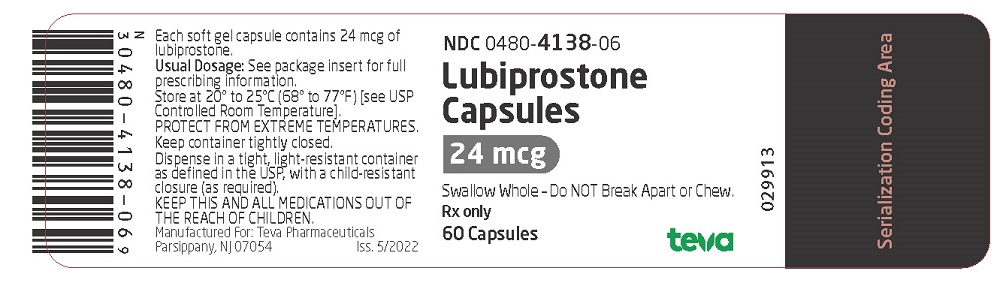
Lubiprostone 24 ug Capsule, Gelatin Coated, 60-count — NDC 0480-4138-06 (Billing 00480-4138-06)
This is a package of 60 capsules of Lubiprostone 24 ug Capsule, Gelatin Coated from Teva Pharmaceuticals, Inc., marketed since Jan 2023 and currently FDA-listed; retail pharmacies pay about $0.6507 per capsule (NADAC). It is this product's only package size.
Identity & classification
Regulatory identifiers FDA, NLM and CMS codes for this package
Drug-database identifiers Medi-Span GPI and First Databank GCN / HICL / AHFS classification
- GSN (GCN sequence number): 060341
- GCN: 26473
- GPI-14 (Medi-Span): 52450045000120
- HICL (First Databank): 033451
- AHFS class code: 56:18.08.00
- RxCUI (RxNorm): 616578
Where does this data come from?
- FDA openFDA NDC Directory · synced Oct 1, 2026
- FDA label on DailyMed · label index refreshed Oct 1, 2026
- RxNorm (NLM RxNav) · catalog refreshed Oct 1, 2026
- Medi-Span GPI (licensed)
- First Databank (licensed) · refreshed Oct 1, 2026
RxNorm drug class
This medicine belongs to the Chloride Channel Activator class.
Where does this data come from?
- RxClass (NLM) · catalog refreshed Oct 1, 2026
Clinical
Lubiprostone is used to relieve stomach pain, bloating, and straining and produce softer and more frequent bowel movements in people who have chronic idiopathic constipation (difficult or infrequent passage of stools that lasts for 3 months or longer and is not caused by a disease or a medication). Lubiprostone is also used to treat irritable bowel syndrome with constipation (IBS-C; a condition that causes stomach pain or cramps, bloating, and infrequent or difficult passage of stools) in women who are at least 18 years of age. Lubiprostone is also used to treat constipation caused by certain...
Read the full MedlinePlus article ↗- It treats long-lasting constipation with no known cause in adults. It also treats constipation caused by opioid pain medicines in adults with chronic non-cancer pain. In women 18 a...
- Take your capsule by mouth with food and water, and swallow it whole. Don't chew or break it. It's usually taken twice a day, but follow your prescriber's directions for your dose.
- Nausea is the most common side effect, and taking it with food may help. Diarrhea, headache, belly pain, bloating, and gas can also happen. Call your doctor if the diarrhea is seve...
- Call if you faint or feel very lightheaded, or if you get chest tightness or trouble breathing. These can happen within an hour of a dose and may come back with later doses. Severe...
Patient education
Supplement & herbal interactions
Some supplements/herbs that may interact with lubiprostone — tap one for details:
Where does this data come from?
- MedlinePlus (NLM) · refreshed Oct 1, 2026
- FDA label on DailyMed · label index refreshed Oct 1, 2026
Ask a licensed pharmacist directly — free, answered by our team.
Pricing
A drug doesn't have one price. Each row is a different public payment system, and none is what you'd pay at the counter — that depends on your insurance. The ⓘ on each row explains what it measures.
| Price system | Per ea | Per package |
|---|---|---|
| Retail pharmacies payNADAC · weekly | $0.651 | $39.04 / 60 capsules |
| Medicaid paysCMS SDUD · 12 mo | $1.05 | $62.77 / 60 capsules |
| Medicare drug plans payPart D · Q2 2026 | $1.50 | $89.73 / 60 capsules |
Where does this data come from?
- CMS NADAC weekly file · file of Sep 30, 2026
- CMS ASP pricing files · refreshed Sep 20, 2026
- CMS Medicaid State Drug Utilization Data · through Q1 2026
- CMS Part D plan pricing files · refreshed Sep 24, 2026
- VA National Acquisition Center price file
Packaging — all sizes for this product
| Package NDC | Description | Marketing start | Marketing end | Status |
|---|---|---|---|---|
| 00480-4138-06 You're viewing this Main listing | 60 CAPSULE, GELATIN COATED in 1 BOTTLE | 2023-01-03 | — | Active |
Therapeutic equivalents
| Product | Labeler | Pack | NADAC/unit | TE | Status | Price vs. this |
|---|---|---|---|---|---|---|
| Lubiprostone 24 ug 00254-3029-02 | Par | 60 capsules | $0.651 | AB | Availability likely | — |
| Lubiprostone 24 ugthis 00480-4138-06 | Teva | 60 capsules | $0.651 | AB | Availability likely | — |
| Lubiprostone .024 mg 31722-0404-60 | Camber | 60 capsules | $0.651 | AB | Availability likely | — |
| Lubiprostone 24 ug 43598-0168-60 | Dr. | 60 capsules | $0.651 | AB | Availability likely | — |
| Lubiprostone 24 ug 60687-0827-32 | American | 1 capsule | $0.651 | AB | Availability likely | — |
| Lubiprostone 24 ug 63304-0352-60 | Sun | 60 capsules | $0.651 | AB | Availability likely | — |
| Lubiprostone 24 ug 69339-0163-17 | Natco | 40 capsules | $0.651 | AB | Availability likely | — |
| Lubiprostone .024 mg 72603-0289-01 | Northstar | 60 capsules | $0.651 | AB | Availability likely | — |
| Lubiprostone 24 ug 65162-0842-06 | Amneal | 60 capsules | $0.664 | AB | Availability likely | +2% |
| Amitiza 24 ug 23635-0524-60 | SpecGx | 60 capsules | $6.449 | AB | Availability likely | +891% |
| Lubiprostone 24 ug 00406-6424-60 | SpecGx | 60 capsules | — | AB | FDA listed | — |
| Lubiprostone 24 ug 51407-0745-60 | Golden | 60 capsules | — | AB | FDA listed | — |
| Amitiza 24 ug 64764-0240-40 | Takeda | 4 capsules | — | AB | Discontinued | — |
| Lubiprostone 24 ug 70710-1642-01 | Zydus | 100 capsules | — | AB | FDA listed | — |
| Lubiprostone 24 ug 70771-1764-01 | Zydus | 100 capsules | — | AB | FDA listed | — |
| Lubiprostone 24 ug 71205-0832-00 | Proficient | 100 capsules | — | AB | FDA listed | — |
| Lubiprostone 24 ug 71205-0834-00 | Proficient | 100 capsules | — | AB | FDA listed | — |
| Lubiprostone 24 ug 72189-0607-60 | Direct | 60 capsules | — | AB | FDA listed | — |
| Lubiprostone 24 ug 76420-0778-01 | Asclemed | 100 capsules | — | AB | FDA listed | — |
| Lubiprostone 24 ug 76420-0907-01 | Asclemed | 100 capsules | — | AB | FDA listed | — |
| Lubiprostone 24 ug 80425-0355-02 | Advanced | 60 capsules | — | AB | FDA listed | — |
| Lubiprostone 24 ug 82804-0001-30 | Proficient | 30 capsules | — | AB | FDA listed | — |
| Lubiprostone 24 ug 83008-0001-60 | Quality | 60 capsules | — | AB | Discontinued | — |
| Lubiprostone 24 ug 82804-0304-60 | Proficient | 60 capsules | — | AB | FDA listed | — |
Where does this data come from?
- FDA openFDA NDC Directory · synced Oct 1, 2026
- FDA Orange Book · refreshed Sep 3, 2026
- CMS NADAC weekly file · file of Sep 30, 2026
Availability & generic status
This product is an FDA-approved generic. Other versions of the same drug are listed under Therapeutic equivalents, least expensive first.
Where does this data come from?
- FDA Orange Book · refreshed Sep 3, 2026
What it looks like
Where does this data come from?
- FDA label on DailyMed · label index refreshed Oct 1, 2026
Inactive Ingredients / Excipients
Inactive ingredients, also called excipients, are components of the drug product other than the active ingredient. They may include fillers, dyes, coatings, preservatives, flavors, or other formulation ingredients.
💡 Tap an ingredient (hover on desktop) to see what it is and why it’s used.
-
UNII 35SW5USQ3G
A synthetic yellow dye used to color medicines. It helps make tablets, capsules, and liquids visually distinct so patients can easily identify their medication.
-
UNII WZB9127XOA
A synthetic red dye used to color medications and make them easier to identify. It serves as a colorant in tablets, capsules, and liquid formulations.
-
UNII XM0M87F357
A dark iron oxide compound that gives medicines their black or dark color. It's used as a colorant in tablets and capsules to help identify the product and make it visually distinctive.
-
UNII 2G86QN327L
Gelatin is a protein derived from animal collagen, commonly used in medicines as a gelling agent and capsule material. It helps create soft or hard capsule shells that hold and release medication, and can also thicken liquid formulations.
-
UNII 3NXW29V3WO
Hypromellose is a plant-based thickener made from cellulose. It's used in medicines as a binder to hold ingredients together, a coating for tablets, and a thickener for liquids.
-
UNII 1DI56QDM62
A natural fatty substance from soybeans that helps mix oil and water-based ingredients together. It acts as an emulsifier and lubricant in medicines to improve texture and help the product break down properly in your body.
-
UNII C9H2L21V7U
A fat derived from coconut or palm oil containing shorter fatty acid chains. It serves as a solvent and carrier to help dissolve or suspend active ingredients, improving absorption and stability in liquid formulations.
-
UNII 6DC9Q167V3
Propylene glycol is a clear liquid derived from petroleum or vegetable sources. It acts as a solvent, humectant, and preservative in medicines, helping dissolve active ingredients and maintain product stability.
-
UNII 8KW3E207O2
A liquid sweetener made from sorbitol, a sugar alcohol derived from glucose. It sweetens the medicine and also acts as a humectant to help retain moisture and improve texture in liquid formulations.
-
UNII 059QF0KO0R
Water is a liquid solvent that dissolves and mixes ingredients together in liquid medicines, syrups, and injections. It helps distribute the active drug evenly throughout the product.
10 inactive ingredients listed in the exact product block matched to this NDC.
Where does this data come from?
ingredient classCode="IACT" elements from the exact product block matched by this NDC. Label-section narrative from DailyMed / the openFDA label index is shown separately when available.- FDA label on DailyMed · label index refreshed Oct 1, 2026
- FDA openFDA NDC Directory · synced Oct 1, 2026
Inactive ingredient FAQ
Are inactive ingredients the same for every manufacturer?
Why might an inactive ingredient be missing?
Can inactive ingredients matter?
Manufacturer & labeler
Where does this data come from?
- FDA openFDA NDC Directory · synced Oct 1, 2026
- Drugs@FDA
Full prescribing information FDA SPL
🎯 Indications and Usage ▾
1 INDICATIONS AND USAGE Lubiprostone capsules are a chloride channel activator indicated for the treatment of: chronic idiopathic constipation (CIC) in adults. ( 1.1 ) opioid-induced constipation (OIC) in adult patients with chronic, non-cancer pain, including patients with chronic pain related to prior cancer or its treatment who do not require frequent (e.g., weekly) opioid dosage escalation. ( 1.2 ) Limitations of Use: Effectiveness of lubiprostone capsules in the treatment of OIC in patients taking diphenylheptane opioids (e.g., methadone) has not been established.
( 1.2 , 7.1 ) irritable bowel syndrome with constipation (IBS-C) in women ≥18 years old. ( 1.3 )
1.1Chronic Idiopathic Constipation in Adults Lubiprostone capsules are indicated for the treatment of chronic idiopathic constipation (CIC) in adults.
1.2Opioid-Induced Constipation in Adult Patients with Chronic Non-Cancer Pain Lubiprostone capsules are indicated for the treatment of opioid-induced constipation (OIC) in adult patients with chronic non-cancer pain, including patients with chronic pain related to prior cancer or its treatment who do not require frequent (e.g., weekly) opioid dosage escalation. Limitations of Use: Effectiveness of lubiprostone capsules in the treatment of opioid-induced constipation in patients taking diphenylheptane opioids (e.g., methadone) has not been established [see Clinical Studies ( 14.2 )].
1.3Irritable Bowel Syndrome with Constipation Lubiprostone capsules are indicated for the treatment of irritable bowel syndrome with constipation (IBS-C) in women at least 18 years old.
⏱️ Dosage and Administration ▾
2 DOSAGE AND ADMINISTRATION Recommended Dosage ( 2.1 ) CIC and OIC: 24 mcg twice daily. IBS-C: 8 mcg twice daily. See full prescribing information for dosage adjustment by indication and degree of hepatic impairment. Administration Instructions ( 2.2 ) Swallow capsules whole and do not break apart or chew, Take capsules with food and water, Assess periodically the need for continuous therapy.
2.1Recommended Dosage The recommended oral dosage of lubiprostone capsules by indication and adjustments for patients with moderate (Child Pugh Class B) and severe (Child Pugh Class C) hepatic impairment are shown in Table 1. Table 1. Recommended Dosage Regimen CIC and OIC IBS-C Recommended Adult Dosage Regimen 24 mcg twice daily 8 mcg twice daily Dosage Adjustment for Hepatic Impairment [see Use in Specific Populations (8.6)] Moderate Impairment (Child-Pugh Class B) : 16 mcg twice daily* Moderate Impairment (Child-Pugh Class B) : No adjustment necessary Severe Impairment (Child-Pugh Class C) : 8 mcg twice daily* Severe Impairment (Child-Pugh Class C) : 8 mcg once daily* *If the dose is tolerated and an adequate response has not been obtained after an appropriate interval, doses can then be escalated to full dosing with appropriate monitoring of patient response.
2.2Administration Instructions Take lubiprostone capsules orally with food and water. Swallow capsules whole and do not break apart or chew. Physicians and patients should periodically assess the need for continued therapy.
💊 Dosage Forms and Strengths ▾
3 DOSAGE FORMS AND STRENGTHS Lubiprostone capsules are available as oval, gelatin capsules containing 8 mcg or 24 mcg of lubiprostone. 8 mcg capsules are opaque pink and are printed with A08 on the outer shell in black ink 24 mcg capsules are clear orange and are printed with A04 on the outer shell in black ink Capsules: 8 mcg and 24 mcg ( 3 )
⛔ Contraindications ▾
4 CONTRAINDICATIONS Lubiprostone is contraindicated in patients with known or suspected mechanical gastrointestinal obstruction [see Warnings and Precautions ( 5.5 )]. Patients with known or suspected mechanical gastrointestinal obstruction. ( 4 , 5.5 )
⚠️ Warnings and Cautions ▾
5 WARNINGS AND PRECAUTIONS Nausea : Patients may experience nausea; concomitant administration of food may reduce this symptom. ( 2.2 , 5.1 ) Diarrhea : Avoid use in patients with severe diarrhea. Instruct patients to discontinue lubiprostone and contact their healthcare provider if severe diarrhea occurs during treatment.
( 5.2 ) Syncope and Hypotension : May occur after taking the first dose or with subsequent doses. Generally resolves prior to the next dose, but may recur with repeat dosing. Instruct patients to discontinue lubiprostone and contact their healthcare provider if symptoms occur.
(5.3) Dyspnea : May occur within an hour of first dose. Generally resolves within 3 hours, but may recur with repeat dosing. Instruct patients to contact their healthcare provider if symptoms occur.
( 5.4 ) Bowel Obstruction : Evaluate patients with symptoms suggestive of mechanical gastrointestinal obstruction prior to initiating treatment with lubiprostone. ( 4 , 5.5 )
5.1Nausea Patients taking lubiprostone may experience nausea. Concomitant administration of food with lubiprostone may reduce symptoms of nausea [see Adverse Reactions ( 6.1 )].
5.2Diarrhea Avoid use of lubiprostone in patients with severe diarrhea. Patients should be aware of the possible occurrence of diarrhea during treatment. Instruct patients to discontinue lubiprostone and contact their healthcare provider if severe diarrhea occurs [see Adverse Reactions ( 6.1 )].
5.3Syncope and Hypotension Syncope and hypotension have been reported with lubiprostone in the postmarketing setting and a few of these adverse reactions resulted in hospitalization. Most cases occurred in patients taking 24 mcg twice daily and some occurred within an hour after taking the first dose or subsequent doses of lubiprostone. Some patients had concomitant diarrhea or vomiting prior to developing the adverse reaction.
Syncope and hypotension generally resolved following lubiprostone discontinuation or prior to next dose, but recurrence has been reported with subsequent doses. Several cases reported concomitant use of medications known to lower blood pressure, which may increase the risk for the development of syncope or hypotension. Patients should be aware of the risk of syncope and hypotension during treatment and that other adverse reactions may increase this risk, such as diarrhea or vomiting.
5.4Dyspnea In clinical trials, dyspnea was reported by 3%, 1%, and <1% of the treated CIC, OIC, and IBS-C populations receiving lubiprostone, respectively, compared to 0%, 1%, and <1% of placebo-treated patients. There have been postmarketing reports of dyspnea when using lubiprostone 24 mcg twice daily. Some patients have discontinued treatment because of dyspnea.
These events have usually been described as a sensation of chest tightness and difficulty taking in a breath, and generally have an acute onset within 30 to 60 minutes after taking the first dose. They generally resolve within a few hours after taking the dose, but recurrence has been frequently reported with subsequent doses. Instruct patients to contact their healthcare provider if dyspnea occurs.
5.5Bowel Obstruction In patients with symptoms suggestive of mechanical gastrointestinal obstruction, perform a thorough evaluation to confirm the absence of an obstruction prior to initiating therapy with lubiprostone [see Contraindications ( 4 )].
🤒 Adverse Reactions ▾
6 ADVERSE REACTIONS The following adverse reactions are described below and elsewhere in labeling: Nausea [see Warnings and Precautions ( 5.1 )] Diarrhea [see Warnings and Precautions ( 5.2 )] Syncope and Hypotension [see Warnings and Precautions ( 5.3 )] Dyspnea [see Warnings and Precautions ( 5.4 )] Most common adverse reactions (>4%) are: CIC: nausea, diarrhea, headache, abdominal pain, abdominal distension, and flatulence. ( 6.1 ) OIC: nausea and diarrhea. ( 6.1 ) IBS-C: nausea, diarrhea, and abdominal pain.
( 6.1 ) To report SUSPECTED ADVERSE REACTIONS, contact Teva at 1-888-838-2872 or FDA at 1-800-FDA-1088 or www.fda.gov/medwatch .
6.1Clinical Trials Experience Because clinical studies are conducted under widely varying conditions, adverse reaction rates observed in the clinical studies of a drug cannot be directly compared to rates in the clinical studies of another drug and may not reflect the rates observed in practice. During clinical development of lubiprostone for CIC, OIC, and IBS-C, 1,648 patients were treated with lubiprostone for 6 months and 710 patients were treated for 1 year (not mutually exclusive). Chronic Idiopathic Constipation Adverse reactions in adult dose-finding, efficacy, and long-term clinical studies: The data described below reflect exposure to lubiprostone 24 mcg twice daily in 1,113 patients with CIC over 3- or 4-week, 6-month, and 12-month treatment periods; and from 316 patients receiving placebo over short-term exposure (≤4 weeks).
The placebo population (N=316) had a mean age of 48 (range 21 to 81) years; was 87% female; 81% Caucasian, 10% African American, 7% Hispanic, 1% Asian, and 12% elderly (≥65 years of age). Of those patients treated with lubiprostone 24 mcg twice daily (N=1,113), the mean age was 50 (range 19 to 86) years; 87% were female; 86% Caucasian, 8% African American, 5% Hispanic, 1% Asian, and 17% elderly (≥65 years of age). The most common adverse reactions (>4%) in CIC were nausea, diarrhea, headache, abdominal pain, abdominal distension, and flatulence.
Table 2 presents data for the adverse reactions that occurred in at least 1% of patients and that occurred more frequently with lubiprostone than placebo. Table 2. Adverse Reactions 1 in Clinical Trials of Adults with CIC System/Adverse Reaction Placebo N=316 % Lubiprostone 24 mcg Twice Daily N=1,113 % Nausea 3 29 Diarrhea 1 12 Headache 5 11 Abdominal pain 3 8 Abdominal distension 2 6 Flatulence 2 6 Vomiting 0 3 Loose stools 0 3 Edema <1 3 Abdominal discomfort 2 1 3 Dizziness 1 3 Chest discomfort/pain 0 2 Dyspnea 0 2 Dyspepsia <1 2 Fatigue 1 2 Dry mouth <1 1 1 Reported in at least 1% of patients treated with lubiprostone and greater than placebo 2 This term combines “abdominal tenderness,” “abdominal rigidity,” “gastrointestinal discomfort,” “stomach discomfort”, and “abdominal discomfort.” Nausea: Approximately 29% of patients who received lubiprostone experienced nausea; 4% of patients had severe nausea and 9% of patients discontinued treatment due to nausea.
The rate of nausea was lower among male (8%) and elderly (19%) patients. No patients in the clinical studies were hospitalized due to nausea. Diarrhea: Approximately 12% of patients who received lubiprostone experienced diarrhea; 2% of patients had severe diarrhea and 2% of patients discontinued treatment due to diarrhea.
Electrolytes: No serious adverse reactions of electrolyte imbalance were reported in clinical studies, and no clinically significant changes were seen in serum electrolyte levels in patients receiving lubiprostone. Less common adverse reactions (<1%): fecal incontinence, muscle cramp, defecation urgency, frequent bowel movements, hyperhidrosis, pharyngolaryngeal pain, intestinal functional disorder, anxiety, cold sweat, constipation, cough, dysgeusia, eructation, influenza, joint swelling, myalgia, pain, syncope, tremor, decreased appetite.
Opioid-Induced Constipation Adverse reactions in adult efficacy and long-term clinical studies: The data… [Excerpted — this section continues on DailyMed.]
🔄 Drug Interactions ▾
7 DRUG INTERACTIONS
7.1Methadone Diphenylheptane opioids (e.g., methadone) have been shown in nonclinical studies to dose-dependently reduce the activation of ClC-2 by lubiprostone in the gastrointestinal tract. There is a possibility of a dose-dependent decrease in the efficacy of lubiprostone in patients using diphenylheptane opioids. No in vivo interaction studies have been conducted.
The effectiveness of lubiprostone in the treatment of OIC in patients taking diphenylhepatane opioids (e.g., methadone) has not been established [see Indications and Usage ( 1.2 )] .
👥 Use in Specific Populations ▾
8 USE IN SPECIFIC POPULATIONS Pregnancy : Based on animal data, may cause fetal harm. ( 8.1 ) Pediatrics : Safety and effectiveness have not been established in pediatric patients with IBS-C, pediatric functional constipation (PFC), and OIC. ( 8.4 )
8.1Pregnancy Risk Summary Following oral administration, concentrations of lubiprostone in plasma are below the level of quantitation; however, one of the metabolites, M3, has measurable systemic concentrations [see Clinical Pharmacology ( 12.3 )] . Limited available data with lubiprostone use in pregnant women are insufficient to inform a drug associated risk of adverse developmental outcomes. Animal reproduction studies did not show an increase in structural malformations.
Although a dose dependent increase in fetal loss was observed in pregnant guinea pigs that received lubiprostone (doses equivalent to 0.2 to 6 times the maximum recommended human dose (MRHD) based on body surface area (mg/m 2 )), these effects were probably secondary to maternal toxicity and occurred after the period of organogenesis (see Data) . The background risk of major birth defects and miscarriage for the indicated population is unknown. All pregnancies have a background risk of birth defect, loss, or other adverse outcomes.
In the U.S. general population, the estimated background risk of major birth defects and miscarriage in clinically recognized pregnancies is 2 to 4% and 15 to 20%, respectively. Data Animal Data In developmental toxicity studies, pregnant rats and rabbits received oral lubiprostone during organogenesis at doses up to approximately 338 times (rats) and approximately 34 times (rabbits) the maximum recommended human dose (MRHD) based on body surface area (mg/m 2 ). Maximal animal doses were 2,000 mcg/kg/day (rats) and 100 mcg/kg/day (rabbits).
In rats, there were increased incidences of early resorptions and soft tissue malformations ( situs inversus , cleft palate) at the 2,000 mcg/kg/day dose; however, these effects were probably secondary to maternal toxicity. A dose-dependent increase in fetal loss occurred when guinea pigs received lubiprostone after the period of organogenesis, on days 40 to 53 of gestation, at daily oral doses of 1, 10, and 25 mcg/kg/day (approximately 0.2, 2 and 6 times the MRHD based on body surface area (mg/m 2 )); however, these effects were probably secondary to maternal toxicity.
The potential of lubiprostone to cause fetal loss was also examined in pregnant rhesus monkeys. Monkeys received lubiprostone post-organogenesis on gestation days 110 through 130 at daily oral doses of 10 and 30 mcg/kg/day (approximately 3 and 10 times the MRHD based on body surface area (mg/m 2 )). Fetal loss was noted in one monkey from the 10-mcg/kg dose group, which is within normal historical rates for this species.
There was no drug-related adverse effect seen in monkeys.
8.2Lactation Risk Summary There are no data available on the presence of lubiprostone in human milk or the effect of lubiprostone on milk production. There are limited data available on the effect of lubiprostone on the breastfed infant. Neither lubiprostone nor its active metabolite (M3) were present in the milk of lactating rats.
When a drug is not present in animal milk, it is likely that the drug will not be present in human milk. If present, lubiprostone may cause diarrhea in the breastfed infant (see Clinical Considerations) . The developmental and health benefits of breastfeeding should be considered along with the mother’s clinical need for lubiprostone and any potential adverse effects on the breastfed infant from lubiprostone or from the underlying maternal condition.
Clinical Considerations Infants of nursing mothers being treated with lubiprostone should be monitored for diarrhea.
8.4Pediatric Use Safety and effectiveness have not been established in pediatric patients with IBS-C, pediatric functional constipation (PFC), and OIC. Efficacy was not demonstrated for the treatment of PFC in patien… [Excerpted — this section continues on DailyMed.]
🤰 Pregnancy ▾
8.1Pregnancy Risk Summary Following oral administration, concentrations of lubiprostone in plasma are below the level of quantitation; however, one of the metabolites, M3, has measurable systemic concentrations [see Clinical Pharmacology ( 12.3 )] . Limited available data with lubiprostone use in pregnant women are insufficient to inform a drug associated risk of adverse developmental outcomes. Animal reproduction studies did not show an increase in structural malformations.
Although a dose dependent increase in fetal loss was observed in pregnant guinea pigs that received lubiprostone (doses equivalent to 0.2 to 6 times the maximum recommended human dose (MRHD) based on body surface area (mg/m 2 )), these effects were probably secondary to maternal toxicity and occurred after the period of organogenesis (see Data) . The background risk of major birth defects and miscarriage for the indicated population is unknown. All pregnancies have a background risk of birth defect, loss, or other adverse outcomes.
In the U.S. general population, the estimated background risk of major birth defects and miscarriage in clinically recognized pregnancies is 2 to 4% and 15 to 20%, respectively. Data Animal Data In developmental toxicity studies, pregnant rats and rabbits received oral lubiprostone during organogenesis at doses up to approximately 338 times (rats) and approximately 34 times (rabbits) the maximum recommended human dose (MRHD) based on body surface area (mg/m 2 ). Maximal animal doses were 2,000 mcg/kg/day (rats) and 100 mcg/kg/day (rabbits).
In rats, there were increased incidences of early resorptions and soft tissue malformations ( situs inversus , cleft palate) at the 2,000 mcg/kg/day dose; however, these effects were probably secondary to maternal toxicity. A dose-dependent increase in fetal loss occurred when guinea pigs received lubiprostone after the period of organogenesis, on days 40 to 53 of gestation, at daily oral doses of 1, 10, and 25 mcg/kg/day (approximately 0.2, 2 and 6 times the MRHD based on body surface area (mg/m 2 )); however, these effects were probably secondary to maternal toxicity.
The potential of lubiprostone to cause fetal loss was also examined in pregnant rhesus monkeys. Monkeys received lubiprostone post-organogenesis on gestation days 110 through 130 at daily oral doses of 10 and 30 mcg/kg/day (approximately 3 and 10 times the MRHD based on body surface area (mg/m 2 )). Fetal loss was noted in one monkey from the 10-mcg/kg dose group, which is within normal historical rates for this species.
There was no drug-related adverse effect seen in monkeys.
🧒 Pediatric Use ▾
8.4Pediatric Use Safety and effectiveness have not been established in pediatric patients with IBS-C, pediatric functional constipation (PFC), and OIC. Efficacy was not demonstrated for the treatment of PFC in patients 6 years of age and older in a 12 week, randomized, double-blind, placebo-controlled trial conducted in 606 patients 6 to 17 years with PFC comparing lubiprostone to placebo. The primary efficacy endpoint was an overall response based on spontaneous bowel movement frequency over the duration of the trial; the treatment difference from placebo was not statistically significant.
In this age group, adverse reactions to lubiprostone were similar to those reported in adults. In a 36-week, long-term safety extension trial after approximately 9 months of treatment with lubiprostone, a single case of reversible elevation of ALT (17-times upper limit of normal [ULN]), AST (13-times ULN), and GGT (9-times [ULN]) was observed in a child with baseline elevated values (less than or equal to 2.5-times ULN). Juvenile Animal Toxicity Data In a 13-week oral toxicity study in juvenile rats, a significant decrease in total bone mineral density was observed in female pups at 0.5 mg/kg/day; in male pups, a significantly lower cortical thickness at the tibial diaphysis was observed at 0.5 mg/kg.
The 0.5 mg/kg/day dose is approximately 101 times the maximum recommended adult dose of 48 mcg/day, based on body surface area (mg/m 2 ).
🧓 Geriatric Use ▾
8.5Geriatric Use Chronic Idiopathic Constipation The efficacy of lubiprostone 24 mcg twice daily in the elderly (at least 65 years of age) subpopulation with CIC was consistent with the efficacy in the overall study population. Of the total number of patients treated in the dose-finding, efficacy, and long-term studies of lubiprostone, 16% were at least 65 years of age, and 4% were at least 75 years of age. Elderly patients taking lubiprostone experienced a lower rate of associated nausea compared to the overall study population taking lubiprostone (19% vs.
29%, respectively). Opioid-Induced Constipation The safety profile of lubiprostone in the elderly (at least 65 years of age) subpopulation with OIC (9% were at least 65 years of age and 2% were at least 75 years of age) was consistent with the safety profile in the overall study population. Clinical studies of lubiprostone did not include sufficient numbers of patients aged 65 years and over to determine whether they respond differently from younger patients.
Irritable Bowel Syndrome with Constipation The safety profile of lubiprostone in the elderly (at least 65 years of age) subpopulation with IBS-C (8% were at least 65 years of age and 2% were at least 75 years of age) was consistent with the safety profile in the overall study population. Clinical studies of lubiprostone did not include sufficient numbers of patients aged 65 years and over to determine whether they respond differently from younger patients.
🆘 Overdosage ▾
10 OVERDOSAGE There have been six reports of overdosage with lubiprostone during clinical development. Of these six cases, only two subjects reported adverse events: one reported vomiting, diarrhea and stomach ache after taking 168 to 192 mcg of lubiprostone, and another reported diarrhea and a joint injury on the day of overdose after taking 36 mcg of lubiprostone. Adverse reactions that occurred in at least 1% of healthy subjects given a single oral dose of 144 mcg of lubiprostone (6 times the highest recommended dose) in a cardiac repolarization study included nausea (45%), diarrhea (35%), vomiting (27%), dizziness (14%), headache (12%), abdominal pain (8%), flushing/hot flash (8%), retching (8%), dyspnea (4%), pallor (4%), stomach discomfort (4%), anorexia (2%), asthenia (2%), chest discomfort (2%), dry mouth (2%), hyperhidrosis (2%), and syncope (2%).
🧬 Clinical Pharmacology ▾
12 CLINICAL PHARMACOLOGY
12.1Mechanism of Action Lubiprostone is a locally acting chloride channel activator that enhances a chloride-rich intestinal fluid secretion without altering sodium and potassium concentrations in the serum. Lubiprostone acts by specifically activating ClC-2, which is a normal constituent of the apical membrane of the human intestine, in a protein kinase A-independent fashion. By increasing intestinal fluid secretion, lubiprostone increases motility in the intestine, thereby facilitating the passage of stool and alleviating symptoms associated with chronic idiopathic constipation.
Patch clamp cell studies in human cell lines have indicated that the majority of the beneficial biological activity of lubiprostone and its metabolites is observed only on the apical (luminal) portion of the gastrointestinal epithelium. Lubiprostone, via activation of apical ClC-2 channels in intestinal epithelial cells, bypasses the antisecretory action of opiates that results from suppression of secretomotor neuron excitability. Activation of ClC-2 by lubiprostone has also been shown to stimulate recovery of mucosal barrier function and reduce intestinal permeability via the restoration of tight junction protein complexes in ex vivo studies of ischemic porcine intestine.
12.2Pharmacodynamics Although the pharmacologic effects of lubiprostone in humans have not been fully evaluated, animal studies have shown that oral administration of lubiprostone increases chloride ion transport into the intestinal lumen, enhances fluid secretion into the bowels, and improves fecal transit.
12.3Pharmacokinetics Following oral administration, concentrations of lubiprostone in plasma are below the level of quantitation (10 pg/mL). Therefore, standard pharmacokinetic parameters such as area under the curve (AUC), maximum concentration (C max ), and half-life (t ½ ) cannot be reliably calculated. However, the pharmacokinetic parameters of M3 (only measurable active metabolite of lubiprostone) have been characterized.
Absorption Peak plasma concentrations of M3, after a single oral dose of 24 mcg of lubiprostone, occurred at approximately 1.1 hours. The C max was 41.5 pg/mL and the mean AUC 0–t was 57.1 pg•hr/mL. The AUC 0–t of M3 increases dose proportionally after single 24-mcg and 144-mcg doses of lubiprostone (6-times the maximum recommended 24 mcg dose).
Food Effect A study was conducted with a single 72-mcg dose of 3 H-labeled lubiprostone (3-times the maximum recommended 24 mcg dose) to evaluate the potential of a food effect on lubiprostone absorption, metabolism, and excretion. Pharmacokinetic parameters of total radioactivity demonstrated that C max decreased by 55% while AUC 0–∞ was unchanged when lubiprostone was administered with a high-fat meal. The clinical relevance of the effect of food on the pharmacokinetics of lubiprostone is not clear.
However, lubiprostone was administered with food and water in a majority of clinical trials. Distribution In vitro protein binding studies indicate lubiprostone is approximately 94% bound to human plasma proteins. Elimination Metabolism Lubiprostone is rapidly and extensively metabolized by 15-position reduction, α-chain β-oxidation, and ω-chain ω-oxidation.
In vitro studies using human liver microsomes indicate that cytochrome P450 isoenzymes are not involved in the metabolism of lubiprostone. Further in vitro studies indicate that M3, a metabolite of lubiprostone, is formed by the reduction of the 15-carbonyl moiety to a hydroxy moiety by microsomal carbonyl reductase. M3 makes up less than 10% of the dose of radiolabeled lubiprostone.
Animal studies have shown that metabolism of lubiprostone rapidly occurs within the stomach and jejunum, most likely in the absence of any systemic absorption. Excretion Lubiprostone could not be detected in plasma; however, M3 has a t ½ ranging from 0.9 to 1.4 hours. After a single oral dose of 72 mcg of 3 H-labeled lubiprostone, 60% of total administered… [Excerpted — this section continues on DailyMed.]
🧬 Mechanism of Action ▾
12.1Mechanism of Action Lubiprostone is a locally acting chloride channel activator that enhances a chloride-rich intestinal fluid secretion without altering sodium and potassium concentrations in the serum. Lubiprostone acts by specifically activating ClC-2, which is a normal constituent of the apical membrane of the human intestine, in a protein kinase A-independent fashion. By increasing intestinal fluid secretion, lubiprostone increases motility in the intestine, thereby facilitating the passage of stool and alleviating symptoms associated with chronic idiopathic constipation.
Patch clamp cell studies in human cell lines have indicated that the majority of the beneficial biological activity of lubiprostone and its metabolites is observed only on the apical (luminal) portion of the gastrointestinal epithelium. Lubiprostone, via activation of apical ClC-2 channels in intestinal epithelial cells, bypasses the antisecretory action of opiates that results from suppression of secretomotor neuron excitability. Activation of ClC-2 by lubiprostone has also been shown to stimulate recovery of mucosal barrier function and reduce intestinal permeability via the restoration of tight junction protein complexes in ex vivo studies of ischemic porcine intestine.
📦 How Supplied / Storage and Handling ▾
16 HOW SUPPLIED/STORAGE AND HANDLING Lubiprostone capsules are available as follows: 8 mcg – Oval, opaque pink soft gelatin capsule printed with A08 on the outer shell in black ink, in bottles of 60 (NDC 0480-3479-06). 24 mcg – Oval, clear orange soft gelatin capsule printed with A04 on the outer shell in black ink, in bottles of 60 (NDC 0480-4138-06). Store at 20° to 25°C (68° to 77°F) [see USP Controlled Room Temperature].
Protect from light and extreme temperatures.
📋 Description ▾
11 DESCRIPTION Lubiprostone is a chloride channel activator for oral use. The chemical name for lubiprostone is (–)-7-[(2 R ,4a R ,5 R ,7a R )-2-(1,1-difluoropentyl)-2-hydroxy-6-oxooctahydrocyclopenta[ b ]pyran-5-yl]heptanoic acid. The molecular formula of lubiprostone is C 20 H 32 F 2 O 5 with a molecular weight of 390.47 and a chemical structure as follows: Lubiprostone drug substance occurs as off-white to white crystalline powder, is very soluble in ether and ethanol, and is practically insoluble in hexane and water.
Lubiprostone capsules are available as imprinted, oval, soft gelatin capsules in two strengths. Pink capsules contain 8 mcg of lubiprostone and the following inactive ingredients: black iron oxide, ferric oxide red, gelatin, hypromellose, lecithin, medium-chain triglycerides, propylene glycol, purified water, sorbitol sorbitan solution, and titanium dioxide. Orange capsules contain 24 mcg of lubiprostone and the following inactive ingredients: black iron oxide, D&C Yellow No.
10, FD&C Red No. 40, gelatin, hypromellose, lecithin, medium-chain triglycerides, propylene glycol, purified water, and sorbitol sorbitan solution. 1
💬 Information for Patients ▾
17 PATIENT COUNSELING INFORMATION Administration Instructions Instruct patients to take lubiprostone capsules orally with food and water to reduce the occurrence of nausea [see Warnings and Precautions ( 5.1 )] . Swallow capsules whole and do not break apart or chew. Physicians and patients should periodically assess the need for continued therapy.
Diarrhea Inform patients that they may experience diarrhea during treatment with lubiprostone capsules. Instruct patients to discontinue lubiprostone capsules and contact their healthcare provider if severe diarrhea occurs [see Warnings and Precautions ( 5.2 )] . Syncope and Hypotension Inform patients that they may experience syncope and hypotension after taking the first dose or subsequent doses of lubiprostone capsules.
Syncope and hypotension generally resolve prior to the next dose, but may recur with repeat dosing. Instruct patients to discontinue lubiprostone capsules and to contact their healthcare provider if these reactions occur [see Warnings and Precautions ( 5.3 )] . Inform patients that other adverse reactions may increase the risk of syncope and hypotension, such as diarrhea or vomiting.
Dyspnea Inform patients that they may experience dyspnea within an hour of the first dose. Dyspnea generally resolves within 3 hours, but may recur with repeat dosing. Instruct patients to inform their healthcare provider if dyspnea occurs [see Warnings and Precautions ( 5.4 )] .
Lactation Advise lactating women to monitor their human milk-fed infants for diarrhea while taking lubiprostone capsules [see Use in Specific Populations ( 8.2 )] . Manufactured For: Teva Pharmaceuticals Parsippany, NJ 07054 Iss. 5/2022
🧬 Pharmacokinetics ▾
12.3Pharmacokinetics Following oral administration, concentrations of lubiprostone in plasma are below the level of quantitation (10 pg/mL). Therefore, standard pharmacokinetic parameters such as area under the curve (AUC), maximum concentration (C max ), and half-life (t ½ ) cannot be reliably calculated. However, the pharmacokinetic parameters of M3 (only measurable active metabolite of lubiprostone) have been characterized.
Absorption Peak plasma concentrations of M3, after a single oral dose of 24 mcg of lubiprostone, occurred at approximately 1.1 hours. The C max was 41.5 pg/mL and the mean AUC 0–t was 57.1 pg•hr/mL. The AUC 0–t of M3 increases dose proportionally after single 24-mcg and 144-mcg doses of lubiprostone (6-times the maximum recommended 24 mcg dose).
Food Effect A study was conducted with a single 72-mcg dose of 3 H-labeled lubiprostone (3-times the maximum recommended 24 mcg dose) to evaluate the potential of a food effect on lubiprostone absorption, metabolism, and excretion. Pharmacokinetic parameters of total radioactivity demonstrated that C max decreased by 55% while AUC 0–∞ was unchanged when lubiprostone was administered with a high-fat meal. The clinical relevance of the effect of food on the pharmacokinetics of lubiprostone is not clear.
However, lubiprostone was administered with food and water in a majority of clinical trials. Distribution In vitro protein binding studies indicate lubiprostone is approximately 94% bound to human plasma proteins. Elimination Metabolism Lubiprostone is rapidly and extensively metabolized by 15-position reduction, α-chain β-oxidation, and ω-chain ω-oxidation.
In vitro studies using human liver microsomes indicate that cytochrome P450 isoenzymes are not involved in the metabolism of lubiprostone. Further in vitro studies indicate that M3, a metabolite of lubiprostone, is formed by the reduction of the 15-carbonyl moiety to a hydroxy moiety by microsomal carbonyl reductase. M3 makes up less than 10% of the dose of radiolabeled lubiprostone.
Animal studies have shown that metabolism of lubiprostone rapidly occurs within the stomach and jejunum, most likely in the absence of any systemic absorption. Excretion Lubiprostone could not be detected in plasma; however, M3 has a t ½ ranging from 0.9 to 1.4 hours. After a single oral dose of 72 mcg of 3 H-labeled lubiprostone, 60% of total administered radioactivity was recovered in the urine within 24 hours and 30% of total administered radioactivity was recovered in the feces by 168 hours.
Lubiprostone and M3 are only detected in trace amounts in human feces. Specific Populations Male and Female Patients The pharmacokinetics of M3 were similar between male and female subjects. Patients with Renal Impairment Sixteen subjects, 34 to 47 years old (8 severe renally impaired subjects [creatinine clearance (CrCl) less than 20 mL/min] who required hemodialysis and 8 control subjects with normal renal function [CrCl above 80 mL/min]), received a single oral 24-mcg dose of lubiprostone.
Following administration, lubiprostone plasma concentrations were below the limit of quantitation (10 pg/mL). Plasma concentrations of M3 were within the range of exposure from previous clinical experience with lubiprostone. Patients with Hepatic Impairment Twenty-five subjects, 38 to 78 years old (9 with severe hepatic impairment [Child-Pugh Class C], 8 with moderate impairment [Child-Pugh Class B], and 8 with normal liver function), received either 12 mcg or 24 mcg of lubiprostone under fasting conditions.
Following administration, lubiprostone plasma concentrations were below the limit of quantitation (10 pg/mL) except for two subjects. In moderately and severely impaired subjects, the C max and AUC 0–t of the active lubiprostone metabolite M3 were increased, as shown in Table 5. Table 5.
Pharmacokinetic Parameters of the Metabolite M3 for Subjects with Normal or Impaired Liver Function following Dosing with Lubiprostone Liver Function Status Mean (… [Excerpted — this section continues on DailyMed.]
🧬 Pharmacodynamics ▾
12.2Pharmacodynamics Although the pharmacologic effects of lubiprostone in humans have not been fully evaluated, animal studies have shown that oral administration of lubiprostone increases chloride ion transport into the intestinal lumen, enhances fluid secretion into the bowels, and improves fecal transit.
🔬 Clinical Studies ▾
14 CLINICAL STUDIES
14.1Chronic Idiopathic Constipation in Adults Two double-blinded, placebo-controlled studies of identical design were conducted in patients with CIC. CIC was defined as, on average, less than 3 SBMs per week (a SBM is a bowel movement occurring in the absence of laxative use) along with one or more of the following symptoms of constipation for at least 6 months prior to randomization: 1) very hard stools for at least a quarter of all bowel movements; 2) sensation of incomplete evacuation following at least a quarter of all bowel movements; and 3) straining with defecation at least a quarter of the time.
Following a 2-week baseline/washout period, a total of 479 patients (mean age 47 [range 20 to 81] years; 89% female; 81% Caucasian, 10% African American, 7% Hispanic, 2% Asian, 11% at least 65 years of age) were randomized and received lubiprostone 24 mcg twice daily or placebo twice daily for 4 weeks. The primary endpoint of the studies was SBM frequency. The studies demonstrated that patients treated with lubiprostone had a higher frequency of SBMs during Week 1 than the placebo patients.
In both studies, results similar to those in Week 1 were also observed in Weeks 2, 3, and 4 of therapy (Table 6). Table 6. Adult Spontaneous Bowel Movement Frequency Rates 1 (Efficacy Studies) Trial Study Arm Baseline Mean ± SD Median Week 1 Mean ± SD Median Week 2 Mean ± SD Median Week 3 Mean ± SD Median Week 4 Mean ± SD Median Week 1 Change from Baseline Mean ± SD Median Week 4 Change from Baseline Mean ± SD Median Study 1 Placebo 1.6 ± 1.3 1.5 3.5 ± 2.3 3.0 3.2 ± 2.5 3.0 2.8 ± 2.2 2.0 2.9 ± 2.4 2.3 1.9 ± 2.2 1.5 1.3 ± 2.5
1.0Lubiprostone 24 mcg Twice Daily 1.4 ± 0.8 1.5 5.7 ± 4.4 5.0 5.1 ± 4.1 4.0 5.3 ± 4.9 5.0 5.3 ± 4.7 4.0 4.3 ± 4.3 3.5 3.9 ± 4.6
3.0Study 2 Placebo 1.5 ± 0.8 1.5 4.0 ± 2.7 3.5 3.6 ± 2.7 3.0 3.4 ± 2.8 3.0 3.5 ± 2.9 3.0 2.5 ± 2.6 1.5 1.9 ± 2.7
1.5Lubiprostone 24 mcg Twice Daily 1.3 ± 0.9 1.5 5.9 ± 4.0 5.0 5.0 ± 4.2 4.0 5.6 ± 4.6 5.0 5.4 ± 4.8 4.3 4.6 ± 4.1 3.8 4.1 ± 4.8 3.0 1 Frequency rates are calculated as 7 times (number of SBMs) / (number of days observed for that week). In both studies, lubiprostone demonstrated increases in the percentage of patients who experienced SBMs within the first 24 hours after administration when compared to placebo (57% vs. 37% in Study 1 and 63% vs.
32% in Study 2, respectively). Similarly, the time to first SBM was shorter for patients receiving lubiprostone than for those receiving placebo. Signs and symptoms related to constipation, including abdominal bloating, abdominal discomfort, stool consistency, and straining, as well as constipation severity ratings, were also improved with lubiprostone versus placebo.
The results were consistent in subpopulation analyses for gender, race, and elderly patients at least 65 years of age. During a 7-week randomized withdrawal study, patients who received lubiprostone during a 4-week treatment period were then randomized to receive either placebo or to continue treatment with lubiprostone. In lubiprostone-treated patients randomized to placebo, SBM frequency rates returned toward baseline within 1 week and did not result in worsening compared to baseline.
Patients who continued on lubiprostone maintained their response to therapy over the additional 3 weeks of treatment.
14.2Opioid-Induced Constipation in Adults with Chronic Non-Cancer Pain The efficacy of lubiprostone in the treatment of OIC in patients receiving opioid therapy for chronic, non-cancer-related pain was assessed in three randomized, double-blinded, placebo-controlled studies. In Study 1, the median age was 52 years (range 20 to 82) and 63% were female. In Study 2, the median age was 50 years (range 21 to 77) and 64% were female.
In Study 3, the median age was 50 years (range 21 to 89) and 60% were female. Patients had been receiving stable opioid therapy for at least 30 days prior to screening, which was to continue throughout the 12-week treatment period. A… [Excerpted — this section continues on DailyMed.]
🧪 Nonclinical Toxicology ▾
13 NONCLINICAL TOXICOLOGY
13.1Carcinogenesis, Mutagenesis, Impairment of Fertility Carcinogenesis Two 2-year oral (gavage) carcinogenicity studies (one in Crl:B6C3F1 mice and one in Sprague-Dawley rats) were conducted with lubiprostone. In the 2-year carcinogenicity study in mice, lubiprostone doses of 25, 75, 200, and 500 mcg/kg/day (approximately 2, 6, 17, and 42 times the maximum recommended human dose, respectively, based on body surface area (mg/m 2 )) were used. In the 2-year rat carcinogenicity study, lubiprostone doses of 20, 100, and 400 mcg/kg/day (approximately 3, 17, and 68 times the maximum recommended human dose, respectively, based on body surface area (mg/m 2 )) were used.
In the mouse carcinogenicity study, there was no significant increase in any tumor incidences. There was a significant increase in the incidence of interstitial cell adenoma of the testes in male rats at the 400 mcg/kg/day dose. In female rats, treatment with lubiprostone produced hepatocellular adenoma at the 400 mcg/kg/day dose.
Mutagenesis Lubiprostone was not genotoxic in the in vitro Ames reverse mutation assay, the in vitro mouse lymphoma (L5178Y TK +/− ) forward mutation assay, the in vitro Chinese hamster lung (CHL/IU) chromosomal aberration assay, and the in vivo mouse bone marrow micronucleus assay. Impairment of Fertility Lubiprostone, at oral doses of up to 1,000 mcg/kg/day, had no effect on the fertility and reproductive function of male and female rats. However, the number of implantation sites and live embryos were significantly reduced in rats at the 1,000 mcg/kg/day dose as compared to control.
The number of dead or resorbed embryos in the 1,000 mcg/kg/day group was higher compared to the control group, but was not statistically significant. The 1,000 mcg/kg/day dose in rats is approximately 169 times the maximum recommended human dose of 48 mcg/day, based on body surface area (mg/m 2 ).
📄 Carcinogenesis, Mutagenesis, Impairment of Fertility ▾
13.1Carcinogenesis, Mutagenesis, Impairment of Fertility Carcinogenesis Two 2-year oral (gavage) carcinogenicity studies (one in Crl:B6C3F1 mice and one in Sprague-Dawley rats) were conducted with lubiprostone. In the 2-year carcinogenicity study in mice, lubiprostone doses of 25, 75, 200, and 500 mcg/kg/day (approximately 2, 6, 17, and 42 times the maximum recommended human dose, respectively, based on body surface area (mg/m 2 )) were used. In the 2-year rat carcinogenicity study, lubiprostone doses of 20, 100, and 400 mcg/kg/day (approximately 3, 17, and 68 times the maximum recommended human dose, respectively, based on body surface area (mg/m 2 )) were used.
In the mouse carcinogenicity study, there was no significant increase in any tumor incidences. There was a significant increase in the incidence of interstitial cell adenoma of the testes in male rats at the 400 mcg/kg/day dose. In female rats, treatment with lubiprostone produced hepatocellular adenoma at the 400 mcg/kg/day dose.
Mutagenesis Lubiprostone was not genotoxic in the in vitro Ames reverse mutation assay, the in vitro mouse lymphoma (L5178Y TK +/− ) forward mutation assay, the in vitro Chinese hamster lung (CHL/IU) chromosomal aberration assay, and the in vivo mouse bone marrow micronucleus assay. Impairment of Fertility Lubiprostone, at oral doses of up to 1,000 mcg/kg/day, had no effect on the fertility and reproductive function of male and female rats. However, the number of implantation sites and live embryos were significantly reduced in rats at the 1,000 mcg/kg/day dose as compared to control.
The number of dead or resorbed embryos in the 1,000 mcg/kg/day group was higher compared to the control group, but was not statistically significant. The 1,000 mcg/kg/day dose in rats is approximately 169 times the maximum recommended human dose of 48 mcg/day, based on body surface area (mg/m 2 ).
📄 Package Label / Principal Display Panel ▾
PACKAGE LABEL.PRINCIPAL DISPLAY PANEL NDC 0480-3479-06 Lubiprostone Capsules 8 mcg Swallow Whole – Do NOT Break Apart or Chew. Rx only 60 Capsules new
PACKAGE LABEL.PRINCIPAL DISPLAY PANEL NDC 0480-4138-06 Lubiprostone Capsules 24 mcg Swallow Whole – Do NOT Break Apart or Chew. Rx only 60 Capsules new