
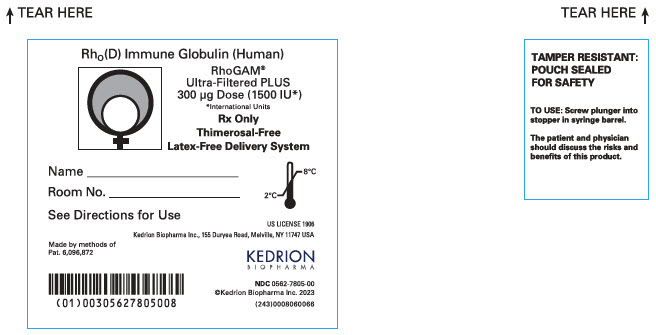
RhoGAM Ultra-Filtered PLUS HUMAN RHO(D) IMMUNE GLOBULIN 300 ug Injection, Solution, 5 pouches
🆔 Identity & classification
Where does this data come from?
🏭 Manufacturer & labeler
Where does this data come from?
🩺 Clinical
Patient education
Supplement & herbal interactions
Where does this data come from?
Ask a licensed pharmacist directly — free, answered by our team.
🧪 Inactive Ingredients / Excipients
Inactive ingredients, also called excipients, are components of the drug product other than the active ingredient. They may include fillers, dyes, coatings, preservatives, flavors, or other formulation ingredients.
💡 Tap an ingredient (hover on desktop) to see what it is and why it’s used.
-
UNII TE7660XO1C
Glycine is an amino acid used in medicines as a buffer to help stabilize pH and improve taste. It may also serve as a filler or binder to give the product proper form and consistency.
-
UNII 6OZP39ZG8H
Polysorbate 80 is a synthetic emulsifier derived from sorbitol and oleic acid. It helps mix oil and water-based ingredients together in medications and improves how the product disperses in the body.
-
UNII 451W47IQ8X
Sodium chloride is common table salt. It's used in medicines as a buffer to maintain proper pH, as a filler to add bulk, or to adjust the osmotic balance in liquid formulations.
3 inactive ingredients listed in the exact product block matched to this NDC.
Where does this data come from?
ingredient classCode="IACT" elements from the exact product block matched by this NDC. Label-section narrative from DailyMed / the openFDA label index is shown separately when available.Inactive ingredient FAQ
Are inactive ingredients the same for every manufacturer?
Why might an inactive ingredient be missing?
Can inactive ingredients matter?
💲 Pricing
A drug doesn't have one price. Each row is a different public payment system, and none is what you'd pay at the counter — that depends on your insurance. The ⓘ on each row explains what it measures.
| Price system | Per mL | Per package |
|---|---|---|
| Retail pharmacies payNADAC · weekly | Not in the retail survey — common for institutional, discontinued, or low-volume packs. | |
| Medicaid paysCMS SDUD · 12 mo | $33.40 | — |
| Medicare drug plans payPart D · quarterly | No Part D plan price is available for this NDC in our data. | |
| Medicare Part B allowsASP · J2790 | $85.125 / J2790 unit | — |
Where does this data come from?
🧾 Billing & reimbursement
Where does this data come from?
🔁 Therapeutic equivalents
| Product | Labeler | Pack | NADAC/unit | TE | Status | Price vs. this |
|---|---|---|---|---|---|---|
| RhoGAM Ultra-Filtered PLUS 300 ugthis 00562-7805-05 | Kedrion | 5 pouches | — | — | FDA listed | — |
Where does this data come from?
⏳ Availability & biosimilar status
Biologics have no small-molecule generics; biosimilar competition is tracked in the FDA Purple Book.
Where does this data come from?
🗺️ Medicaid utilization & spend
💊 Medicaid utilization by pack size
📦 Packaging — all sizes for this product
| Package NDC | Description | Marketing start | Status |
|---|---|---|---|
| 00562-7805-01 | 1 POUCH in 1 CARTON (0562-7805-01) / 1 INJECTION, SOLUTION in 1 POUCH (0562-7805-00) | 2007-03-09 | Active |
| 00562-7805-05 You're viewing this | 5 POUCH in 1 CARTON (0562-7805-05) / 1 INJECTION, SOLUTION in 1 POUCH (0562-7805-00) | 2007-03-09 | Active |
| 00562-7805-25 | 25 POUCH in 1 CARTON (0562-7805-25) / 1 INJECTION, SOLUTION in 1 POUCH (0562-7805-00) | 2007-03-09 | Active |
In Medicaid, this is the most-dispensed pack of this product — about 62% of fills over the last four reported quarters. See all packs ↓
Pack size FAQ
What quantity is in NDC 00562-7805-05?
What is the difference between NDC 00562-7805-05 and NDC 00562-7805-01?
What NDC number is used to bill for this package of RhoGAM Ultra-Filtered PLUS HUMAN RHO(D) IMMUNE GLOBULIN 300 ug Injection, Solution?
🧭 About this NDC listing & data coverage
What data is (and isn’t) available for this NDC — tap to expand
| NDC identity (package / product / labeler codes) | ✓ Available |
| Labeler | ✓ Available |
| Product & package description | ✓ Available |
| Marketing category & status | ✓ Available |
| Active ingredient / dosage form / route | ✓ Available |
| FDA label (SPL via DailyMed) | ✓ Available |
| Package photos | ✓ Available |
| Inactive ingredients (structured) | ✓ Available |
| NADAC pharmacy acquisition price (CMS) | — Not published for this NDC CMS publishes NADAC only for NDCs reported in its retail-pharmacy survey. |
| Orange Book / therapeutic-equivalence data | — Not published for this NDC Applies only to products approved under an NDA/ANDA; many listings are out of scope. |
| HCPCS J-code billing crosswalk | ✓ Available |
| Medicaid utilization (CMS SDUD) | ✓ Available |
Questions about this listing
Why is there no price listed?
Is the NDC printed on the package the same as the 11-digit billing NDC?
What do the three segments of this NDC mean?
Is this package still being marketed?
Does this product come in other package sizes?
Who lists this product with the FDA?
Does this product have a billing J-code?
Where does this data come from?
📄 Full FDA label FDA SPL
🎯 Indications and Usage ▾
1 INDICATIONS AND USAGE For use in preventing Rh immunization. Pregnancy and other obstetrical conditions in Rh-negative women unless the father or baby are conclusively Rh-negative, e.g. delivery of an Rh-positive baby irrespective of the ABO groups of the mother and baby, any antepartum fetal-maternal hemorrhage (suspected or proven), actual or threatened pregnancy loss at any stage of gestation and ectopic pregnancy. ( 1.1 ) Prevention of Rh immunization in any Rh-negative person after incompatible transfusion of Rh-positive blood or blood products ( 1.2 ) 1.1.
Pregnancy and other obstetrical conditions For administration to Rh-negative women not previously sensitized to the Rh o (D) factor, unless the father or baby are conclusively Rh-negative. Delivery of an Rh-positive baby irrespective of the ABO groups of the mother and baby Antepartum prophylaxis at 26 to 28 weeks gestation Antepartum fetal-maternal hemorrhage (suspected or proven) as a result of placenta previa, amniocentesis, chorionic villus sampling, percutaneous umbilical blood sampling, other obstetrical manipulative procedure (e.g., version) or abdominal trauma Actual or threatened pregnancy loss at any stage of gestation Ectopic pregnancy 1.2.
Transfusion of Rh-incompatible blood or blood products Prevention of Rh immunization in any Rh-negative person after incompatible transfusion of Rh-positive blood or blood products (e.g., red blood cells, platelet concentrates, granulocyte concentrates)
⏱️ Dosage and Administration ▾
2 DOSAGE AND ADMINISTRATION For intramuscular use only. Do not inject RhoGAM Ultra-Filtered PLUS (RhoGAM) or MICRhoGAM Ultra-Filtered PLUS (MICRhoGAM) intravenously. In the case of postpartum use, the product is intended for maternal administration.
Do not inject the newborn infant. Inject the entire contents of the syringe(s). For single use only.
(See WARNINGS AND PRECAUTIONS ) RhoGAM or MICRhoGAM should be administered within 72 hours of delivery or known or suspected exposure to Rh-positive red blood cells. There is little information concerning the effectiveness of Rh o (D) Immune Globulin (Human) when given beyond this 72 hour period. In one study, Rh o (D) Immune Globulin (Human) provided protection against Rh immunization in about 50% of subjects when given 13 days after exposure to Rh-positive red blood cells.
1 Administer every 12 weeks starting from first injection to maintain a level of passively acquired anti-D. If delivery occurs within three weeks after the last antepartum dose, the postpartum dose may be withheld, but a test for fetal-maternal hemorrhage should be performed to determine if exposure to > 15 mL of red blood cells has occurred. 2 Parenteral drug products should be inspected visually for particulate matter, discoloration and syringe damage prior to administration.
Do not use if particulate matter and / or discoloration are observed. The solution should appear clear or slightly opalescent. For intramuscular use only, do not administer intravenously.
Pregnancy and other obstetrical conditions ( 2.1 ) RhoGAM (300 μg) (1500 IU) Postpartum – if the newborn is Rh-positive. Administer within 72 hours of delivery. Antepartum – Prophylaxis at 26 – 28 weeks gestation.
At or beyond thirteen weeks gestation: administer within 72 hours when suspected or proven exposure to Rh-positive red blood cells occurs resulting from invasive procedures, abdominal trauma or obstetrical manipulation, ectopic pregnancy, pregnancy termination or threatened termination. Administer every 12 weeks starting from first injection to maintain a level of passively acquired anti-D. If delivery occurs within three weeks after the last antepartum dose, the postpartum dose may be withheld, but a test for fetal-maternal hemorrhage should be performed to determine if exposure to > 15 mL of red blood cells has occurred.
MICRhoGAM (50 μg) (250 IU) Administer within 72 hours of actual or threatened termination of pregnancy (spontaneous or induced) up to and including 12 weeks gestation. Transfusion of Rh-incompatible blood or blood products ( 2.1 ) Administer within 72 hours. RhoGAM (300 μg) (1500 IU) 2.5 - 15.0 mL Rh-positive red blood cells > 15.0 mL Rh-positive red blood cells (multiple syringes) MICRhoGAM (50 mg) (250 IU) < 2.5 mL Rh-positive red blood cells
2.1Indications and Recommended Dosage Indication Dose Notes Postpartum (if the newborn is Rh-positive) RhoGAM (300 μg) (1500 IU) Additional doses of RhoGAM are indicated when the patient has been exposed to > 15 mL of Rh-positive red blood cells. This may be determined by use of qualitative or quantitative tests for fetal-maternal hemorrhage. Administer within 72 hours of delivery.
Antepartum: Prophylaxis at 26 to 28 weeks gestation Administer within 72 hours of suspected or proven exposure to Rh-positive red blood cells resulting from: Amniocentesis, chorionic villus sampling (CVS) and percutaneous umbilical blood sampling (PUBS) Abdominal trauma or obstetrical manipulation Ectopic pregnancy Threatened pregnancy loss after 12 weeks gestation with continuation of pregnancy Pregnancy termination (spontaneous or induced) beyond 12 weeks gestation If antepartum prophylaxis is indicated, it is essential that the mother receive a postpartum dose if the infant is Rh-positive.
If RhoGAM is administered early in pregnancy (before 26 to 28 weeks), there is an obligation to maintain a level of passively acquired anti-D by administration of RhoGAM at 12-week intervals. Actual or threatened termi…
💊 Dosage Forms and Strengths ▾
3 DOSAGE FORMS AND STRENGTHS RhoGAM ® Ultra-Filtered PLUS - 300 μg (1500 IU) The anti-D content of RhoGAM / MICRhoGAM is expressed as μg per dose or as International Units (IU) per dose. The conversion factor is 1 μg = 5 IU. 8 – Prefilled Syringes MICRhoGAM ® Ultra-Filtered PLUS - 50 μg (250 IU) – Prefilled Syringes Rh o (D) Immune Globulin (Human) RhoGAM ® Ultra-Filtered PLUS - 300 μg (1500 IU) – Prefilled Syringes ( 3 ) MICRhoGAM ® Ultra-Filtered PLUS - 50 μg (250 IU) – Prefilled Syringes ( 3 )
⛔ Contraindications ▾
4 CONTRAINDICATIONS The use of RhoGAM and MICRhoGAM is contraindicated in Rh-positive individuals. Rh-positive individuals. ( 4 )
⚠️ Warnings and Cautions ▾
5 WARNINGS AND PRECAUTIONS Do not inject intravenously. ( 5.1 ) In the case of postpartum use, the product is intended for maternal use only. ( 5.1 ) Do not inject the newborn infant.
( 5.1 ) May carry a risk of transmitting infectious agents because it is made from human plasma. ( 5.2 ) Administer with caution to patients who have had prior severe systemic allergic reactions to human immune globulin. ( 5.1 ) Contains a small quantity of immunoglobulin A (IgA), there is a potential risk of hypersensitivity in IgA deficient individuals.
( 5.1 ) Patients treated for Rh-incompatible transfusion should be monitored by clinical and laboratory means for signs and symptoms of a hemolytic reaction. ( 5.1 )
5.1Warnings For intramuscular use only, do not inject intravenously. In the case of postpartum use, the product is intended for maternal administration. Do not inject the newborn infant.
Patients should be observed for at least 20 minutes after administration. Administer with caution to patients who have had prior severe systemic allergic reactions to human immune globulin. RhoGAM / MICRhoGAM contain a small quantity og IgA.
There is a potential risk of hypersensitivity in IgA deficient individuals. Patients treated for Rh-incompatible transfusion should be monitored by clinical and laboratory means for signs and symptoms of a hemolytic reaction. Store at 2 to 8°C.
Do not store frozen. Do not use after the expiration date printed on the syringe.
5.2Use of Plasma Derived Products RhoGAM and MICRhoGAM are made from human plasma and may carry a risk of transmitting infectious agents, e.g., viruses, and theoretically the Creutzfeldt-Jakob disease (CJD) agent. The risk that such products will transmit an infectious agent has been reduced by screening plasma donors for prior exposure to certain viruses, by testing plasma for the presence of certain current virus infections and by using pathogen removal and inactivation techniques during the manufacturing process.
All of the above steps are designed to increase product safety by reducing the risk of pathogen transmission. Despite these measures, such products can still potentially transmit disease. There is also the possibility that unknown infectious agents may be present in such products.
All infections thought by a physician possibly to have been transmitted by these products should be reported by the physician or other healthcare provider in the United States to Ortho-Clinical Diagnostics, Inc. at 1-800-421-3311. Outside the United States, the company distributing these products should be contacted. The physician should discuss the risks and benefits of these products with the patient.
5.3Laboratory Tests Recovery of anti-D in plasma or serum after injection of RhoGAM or other Rh o (D) Immune Globulin (Human) products is highly variable among individuals. Anti-D detection in a patient's plasma is dependent on assay sensitivity and time of sample collection post-injection. Currently there are no requirements or practice standards to test for the presence of anti-D in order to determine adequacy or efficacy of dose following an injection of RhoGAM.
The presence of passively acquired anti-D in the maternal serum may cause a positive antibody screening test. This does not preclude further antepartum or postpartum prophylaxis. Some babies born to women given Rh o (D) Immune Globulin (Human) antepartum have weakly positive direct antiglobulin (Coombs) tests at birth.
Fetal-maternal hemorrhage may cause false blood typing results in the mother. Late in pregnancy or following delivery, there may be sufficient fetal Rh-positive red blood cells in the circulation of the Rh-negative mother to cause a positive antiglobulin test for weak D (Du). In this instance if there is any doubt as to the patient's Rh type, RhoGAM or MICRhoGAM should be administered.
9
⚠️ Warnings ▾
5.1Warnings For intramuscular use only, do not inject intravenously. In the case of postpartum use, the product is intended for maternal administration. Do not inject the newborn infant.
Patients should be observed for at least 20 minutes after administration. Administer with caution to patients who have had prior severe systemic allergic reactions to human immune globulin. RhoGAM / MICRhoGAM contain a small quantity og IgA.
There is a potential risk of hypersensitivity in IgA deficient individuals. Patients treated for Rh-incompatible transfusion should be monitored by clinical and laboratory means for signs and symptoms of a hemolytic reaction. Store at 2 to 8°C.
Do not store frozen. Do not use after the expiration date printed on the syringe.
🤒 Adverse Reactions ▾
6 ADVERSE REACTIONS Adverse events (AE) after administration of RhoGAM and MICRhoGAM are rare. The most frequently reported AEs are anti-D formation and injection site reactions, such as swelling, induration, redness and mild pain or warmth. Possible systemic reactions are skin rash, body aches or a slight elevation in temperature.
Severe systemic allergic reactions are extremely rare. Patients should be observed for at least 20 minutes after administration. There have been no reported fatalities due to anaphylaxis or any other cause related to RhoGAM or MICRhoGAM administration.
As with any Rh o (D) Immune Globulin (Human), administration to patients who are Rh-positive or have received Rh-positive red blood cells may result in signs and symptoms of a hemolytic reaction, including fever, back pain, nausea and vomiting, hypo- or hypertension, hemoglobinuria/emia, elevated bilirubin and creatinine and decreased haptoglobin. RhoGAM and MICRhoGAM contain a small quantity of IgA (less than 15 μg per dose). 10 Although high doses of intravenous immune globulin containing IgA at levels of 270-720 μg/mL have been given without incident during treatment of patients with high-titered antibodies to IgA, 11 the attending physician must weigh the benefit against the potential risks of hypersensitivity reactions.
Most common are: Injection site reactions that include swelling, induration, redness and mild pain or warmth. ( 6 ) Systemic reactions that include skin rash, body aches or a slight elevation in temperature. Patients should be observed for at least 20 minutes after administration.
Severe systemic allergic reactions are extremely rare. ( 6 ) Anti-D formation is rarely reported after proper administration of RhoGAM. ( 6 ).
To report SUSPECTED ADVERSE REACTIONS, contact: Ortho-Clinical Diagnostics, Inc. at 1-800-421-3311 in the United States. Outside of the United States, the company distributing these products should be contacted. Voluntary reporting of adverse reactions may also be made to the FDA through MedWatch at 1-800-FDA-1088 or on the Internet at www.fda.gov/medwatch.
🔄 Drug Interactions ▾
7 DRUG INTERACTIONS Immune globulin preparations including Rh o (D) Immune Globulin (Human) may impair the efficacy of live vaccines such as measles, mumps and varicella. Administration of live vaccines should generally be delayed until 12 weeks after the final dose of immune globulin. If an immune globulin is administered within 14 days after administration of a live vaccine, the immune response to the vaccination may be inhibited.
12 Because of the importance of rubella immunity among women of childbearing age, the postpartum vaccination of rubella-susceptible women with rubella or MMR vaccine should not be delayed because of the receipt of Rh o (D) Immune Globulin (Human) during the last trimester of pregnancy or at delivery. Vaccination should occur immediately after delivery and if possible, testing should be performed after 3 or more months to ensure immunity to rubella and if necessary, to measles. 12 May impair the efficacy of live vaccines such as measles, mumps and varicella.
Administration of live vaccines should generally be delayed until 12 weeks after the final dose of immune globulin. If administered within 14 days after administration of a live vaccine, the efficacy of the vaccination may be impaired. ( 7 ) The postpartum vaccination of rubella-susceptible women with rubella or MMR vaccine should not be delayed because of the receipt of Rh o (D) Immune Globulin (Human).
( 7 )
👥 Use in Specific Populations ▾
8 USE IN SPECIFIC POPULATIONS Administer only to Rh-negative patients exposed or potentially exposed to Rh-positive red blood cells to prevent Rh immunization. ( 8 )
8.1Pregnancy Pregnancy Category C Animal reproduction studies have not been conducted with RhoGAM or MICRhoGAM. The available evidence suggests that Rh o (D) Immune Globulin (Human) does not harm the fetus or affect future pregnancies or the reproduction capacity of the maternal recipient. 13,14
8.6Rh Blood Type RhoGAM or MICRhoGAM Rh o (D) Immune Globulin (Human) should only be administered to Rh-negative patients exposed or potentially exposed to Rh-positive red blood cells to prevent Rh immunization.
🤰 Pregnancy ▾
8.1Pregnancy Pregnancy Category C Animal reproduction studies have not been conducted with RhoGAM or MICRhoGAM. The available evidence suggests that Rh o (D) Immune Globulin (Human) does not harm the fetus or affect future pregnancies or the reproduction capacity of the maternal recipient. 13,14
🆘 Overdosage ▾
10 OVERDOSAGE Repeated administration or increased dosage in Rh-negative individuals should not cause more severe or more frequent adverse reactions than the normal dose. Patients who receive RhoGAM or MICRhoGAM for Rh-incompatible transfusion should be monitored by clinical and laboratory means due to the risk of a hemolytic reaction.
🧬 Clinical Pharmacology ▾
12 CLINICAL PHARMACOLOGY
12.1Mechanism of Action RhoGAM and MICRhoGAM act by suppressing the immune response of Rh-negative individuals to Rh-positive red blood cells. The mechanism of action is unknown. RhoGAM, MICRhoGAM and other Rh o (D) Immune Globulin (Human) products are not effective in altering the course or consequences of Rh immunization once it has occurred.
12.3Pharmacokinetic Properties Pharmacokinetic studies after intramuscular injection were performed on sixteen Rh-negative subjects receiving a single dose of (368 μg or 1840 IU) RhoGAM. 10 Plasma anti-D levels were monitored for thirteen weeks using a validated Automated Quantitative Hemagglutination method with sensitivity of approximately 1 ng/mL. The following mean pharmacokinetic parameters were obtained from data collected over the first ten weeks of a thirteen-week study: Parameter Mean SD Units Maximum plasma concentration obtained (Cmax) 54.0 13.0 ng/mL Time to attain Cmax (Tmax) 4 days Elimination half-life (T1/2) 30.9 13.8 days Volume of distribution (Vd) 7.3 1.5 liters Clearance (CL) 150.4 53.3 mL/day
12.4Obstetrical Use The Rh-negative obstetrical patient may be exposed to red blood cells from her Rh-positive fetus during the normal course of pregnancy or after obstetrical procedures or abdominal trauma.
12.5Use after Rh-Incompatible Transfusion An Rh-negative individual transfused with one unit of Rh-positive red blood cells has about an 80% likelihood of producing anti-D. 4 However, Rh immunization can occur after exposure to < 1 mL of Rh-positive red blood cells. Protection from Rh immunization is accomplished by administering ≥ 20 μg of RhoGAM or MICRhoGAM per mL of Rh-positive red blood cells within 72 hours of transfusion of incompatible red blood cells.
13,22
🧬 Mechanism of Action ▾
12.1Mechanism of Action RhoGAM and MICRhoGAM act by suppressing the immune response of Rh-negative individuals to Rh-positive red blood cells. The mechanism of action is unknown. RhoGAM, MICRhoGAM and other Rh o (D) Immune Globulin (Human) products are not effective in altering the course or consequences of Rh immunization once it has occurred.
📦 How Supplied / Storage and Handling ▾
16 HOW SUPPLIED / STORAGE AND HANDLING
16.1RhoGAM Ultra-Filtered PLUS package sizes 1 prefilled single-dose syringe of RhoGAM (Product Code 780501) NDC 0562-7805-01 1 package insert, 1 control form, 1 patient identification card 5 prefilled single-dose syringes of RhoGAM (Product Code 780505) NDC 0562-7805-05 5 package inserts, 5 control forms, 5 patient identification cards 25 prefilled single-dose syringes of RhoGAM (Product Code 780525) NDC 0562-7805-25 25 package inserts, 25 control forms, 25 patient identification cards
16.2MICRhoGAM Ultra-Filtered PLUS package sizes 1 prefilled single-dose syringe of MICRhoGAM (Product Code 780601) NDC 0562-7806-01 1 package insert, 1 control form, 1 patient identification card 5 prefilled single-dose syringes of MICRhoGAM (Product Code 780605) NDC 0562-7806-05 5 package inserts, 5 control forms, 5 patient identification cards 25 prefilled single-dose syringes of MICRhoGAM (Product Code 780625) NDC 0562-7806-25 25 package inserts, 25 control forms, 25 patient identification cards Store at 2 to 8°C.
Do not store frozen. Do not use after the expiration date printed on the syringe.
📦 Storage and Handling ▾
Store at 2 to 8°C. Do not store frozen. Do not use after the expiration date printed on the syringe.
📋 Description ▾
11 DESCRIPTION RhoGAM and MICRhoGAM Rh o (D) Immune Globulin (Human) are sterile solutions containing immunoglobulin G (IgG) anti-D (anti-Rh) for use in preventing Rh immunization. They are manufactured from human plasma containing anti-D. A single dose of RhoGAM contains sufficient anti-D (300 μg or 1500 IU) to suppress the immune response to up to 15 mL of Rh-positive red blood cells.
4,15 A single dose of MICRhoGAM contains sufficient anti-D (50 μg or 250 IU) to suppress the immune response to up to 2.5 mL of Rh-positive red blood cells. The anti-D dose is measured by comparison to the RhoGAM in-house reference standard, the potency of which is established relative to the U.S./World Health Organization/European Pharmacopoeia Standard Anti-D Immunoglobulin Rh o (D) Immune Globulin (Human) CBER Lot 4: NIBSC Lot 01/572 (285 IU/ampoule). 16 Plasma for RhoGAM is typically sourced from a donor center owned and operated by Ortho-Clinical Diagnostics.
All donors are carefully screened by history and laboratory testing to reduce the risk of transmitting blood-borne pathogens from infected donors. Each plasma donation is tested and found to be non-reactive for the presence of hepatitis B surface antigen (HBsAg) and antibodies to hepatitis C (HCV) and human immunodeficiency viruses (HIV) 1 and 2. Additionally, plasma is tested by FDA licensed Nucleic Acid Testing (NAT) for HCV and HIV-1 and the results must be negative.
Plasma is also tested by investigational NAT for hepatitis B (HBV) and must be non-reactive. However, the significance of a negative result has not been established. Plasma is tested by in-process NAT procedures for hepatitis A virus (HAV) and parvovirus B19 (B19) in a minipool format.
Only plasma that has passed virus screening is used for production. The procedure for B19 detects all three genotypes based upon sequence alignment of known virus isolates. The limit of B19 DNA in the manufacturing pool is set not to exceed 10 4 IU per mL.
Fractionation of the plasma is performed by a modification of the cold alcohol procedure that has been shown to significantly lower viral titers. 10 Following plasma fractionation, a viral clearance filtration step and a viral inactivation step are performed. The viral filtration step removes viruses via a size-exclusion mechanism utilizing a patented Viresolve 180 ultrafiltration membrane with defined pore-size distribution of 12-18 nanometers to remove enveloped and non-enveloped viruses.
Following viral filtration, quality control tests (CorrTest and diffusion test) are performed on the Viresolve 180 ultrafiltration membrane to insure filter integrity. 17 The viral inactivation step utilizes Triton X-100 and tri-n-butyl phosphate (TNBP) to inactivate enveloped viruses such as HCV, HIV and West Nile Virus (WNV) 10,18 (Patent Pending). The donor selection process, the fractionation process, the viral filtration step and the viral inactivation process increase product safety by reducing the risk of transmission of enveloped and non-enveloped viruses.
Rh o (D) Immune Globulin (Human) intended for intramuscular use and prepared by cold alcohol fractionation has not been shown to transmit hepatitis or other infectious diseases. 19 There have been no documented cases of infectious disease transmission by RhoGAM or MICRhoGAM. Laboratory spiking studies 10,20 have shown that the cumulative viral removal and inactivation capability of the RhoGAM / MICRhoGAM manufacturing process is as follows: Virus HIV BVDV PRV PPV EMC WNV HAV Units = log 10 reduction HIV Human Immunodeficiency Virus, Model for HIV-1 and 2 and Human T-cell Lymphotropic Virus (HTLV) 1 and 2 BVDV Bovine Viral Diarrhea Virus, Model for Hepatitis C Virus PRV Pseudorabies Virus, Model for Herpes Viruses PPV Porcine Parvovirus, Model for Parvovirus B19 EMC Encephalomyocarditis Virus, Model for Hepatitis A Virus WNV West Nile Virus HAV Hepatitis A Virus ND Not Determined N/A Not Applicable Lipid Enveloped Yes Yes Yes No No Yes No S…
💬 Information for Patients ▾
17 PATIENT COUNSELING INFORMATION As with all immune globulin preparations, the physician should discuss the risks and benefits with the patient. The most common adverse reactions are local reactions including swelling, induration, redness and mild pain at the site of injection, and a small number of patients have noted a slight elevation in temperature. Systemic reactions to RhoGAM or MICRhoGAM are extremely rare, however allergic responses to RhoGAM or MICRhoGAM may occur.
Patients should be observed for at least 20 minutes after administration. Patients should be informed of the early signs of hypersensitivity reactions including hives, generalized urticaria, tightness of the chest, wheezing, hypotension and anaphylaxis. The physician should provide the patient with a completed RhoGAM Patient Identification Card and advise the patient to retain the card and present it to other health care providers when appropriate.
SUMMARY OF REVISIONS Section Revision 10 DESCRIPTION Modified parvovirus and hepatitis A virus testing.