
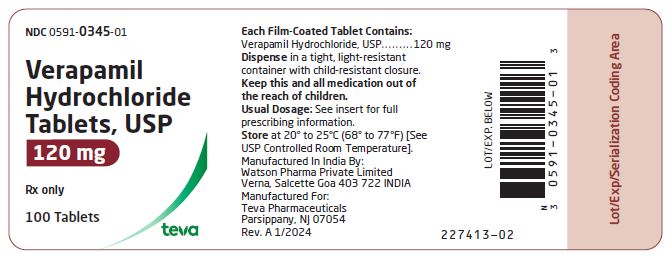
Verapamil Hydrochloride 120 mg Tablet, Film Coated, 100-count — NDC 0591-0345-01 (Billing 00591-0345-01)
This is a package of 100 tablets of Verapamil Hydrochloride 120 mg Tablet, Film Coated from Actavis Pharma, Inc., marketed since Oct 1986 and currently FDA-listed; retail pharmacies pay about $0.0887 per tablet (NADAC). It is the main listing for this product, which comes in 5 package sizes.
Other active recalls for Verapamil Hydrochloride (different manufacturers) — 2 · tap to view
Identity & classification
Regulatory identifiers FDA, NLM and CMS codes for this package
Drug-database identifiers Medi-Span GPI and First Databank GCN / HICL / AHFS classification
- GSN (GCN sequence number): 000564
- GCN: 02341
- GPI-14 (Medi-Span): 34000030100310
- HICL (First Databank): 000180
- AHFS class code: 24:04.04.24
- RxCUI (RxNorm): 897666
Where does this data come from?
- FDA openFDA NDC Directory · synced Oct 1, 2026
- FDA label on DailyMed · label index refreshed Oct 1, 2026
- RxNorm (NLM RxNav) · catalog refreshed Oct 1, 2026
- Medi-Span GPI (licensed)
- First Databank (licensed) · refreshed Oct 1, 2026
RxNorm drug class
This medicine belongs to the Calcium Channel Blocker class.
Where does this data come from?
- RxClass (NLM) · catalog refreshed Oct 1, 2026
Clinical
Verapamil is used to treat high blood pressure and to control angina (chest pain). The immediate-release tablets are also used alone or with other medications to prevent and treat irregular heartbeats. Verapamil is in a class of medications called calcium-channel blockers. It works by relaxing the blood vessels so the heart does not have to pump as hard. It also increases the supply of blood and oxygen to the heart and slows electrical activity in the heart to control the heart rate. High blood pressure is a common condition and when not treated, can cause damage to the brain, heart, blood ves...
Read the full MedlinePlus article ↗- It depends on the product. Verapamil tablets treat angina, certain fast heart rhythms and high blood pressure. Extended-release forms are used for high blood pressure. The injectio...
- Extended-release tablets are taken with food in the morning. The PM capsules are taken at bedtime. Swallow capsules whole, or sprinkle the entire contents on applesauce. Never crus...
- How should I take my extended-release verapamil?
- Constipation is the most common, along with headache, dizziness and ankle swelling. Tell your doctor if they bother you. Call right away for fainting, a very slow heartbeat, shortn...
Patient education
Supplement & herbal interactions
Verapamil may be associated with lower levels of 2 nutrients — worth a chat with your pharmacist, not a cause for alarm.
Where does this data come from?
- MedlinePlus (NLM) · refreshed Oct 1, 2026
- FDA label on DailyMed · label index refreshed Oct 1, 2026
Ask a licensed pharmacist directly — free, answered by our team.
Pricing
A drug doesn't have one price. Each row is a different public payment system, and none is what you'd pay at the counter — that depends on your insurance. The ⓘ on each row explains what it measures.
| Price system | Per ea | Per package |
|---|---|---|
| Retail pharmacies payNADAC · weekly | $0.089 | $8.87 / 100 tablets |
| Medicaid paysCMS SDUD · 12 mo | $0.1723 | $17.23 / 100 tablets |
| Medicare drug plans payPart D · Q2 2026 | $0.1177 | $11.77 / 100 tablets |
Where does this data come from?
- CMS NADAC weekly file · file of Sep 30, 2026
- CMS ASP pricing files · refreshed Sep 20, 2026
- CMS Medicaid State Drug Utilization Data · through Q1 2026
- CMS Part D plan pricing files · refreshed Sep 24, 2026
- VA National Acquisition Center price file
Packaging — all sizes for this product
| Package NDC | Description | Per unit | Per pack | Marketing start | Marketing end | Status |
|---|---|---|---|---|---|---|
| 00591-0345-01 You're viewing this Main listing | 100 TABLET, FILM COATED in 1 BOTTLE, PLASTIC | $0.0887 / ea | $8.87 | 1986-10-01 | — | Active |
| 00591-0345-05 0591-0345-05 | 500 TABLET, FILM COATED in 1 BOTTLE, PLASTIC | $0.0887 / ea | $44.37 | 1986-10-01 | — | Active |
| 00591-0345-10 0591-0345-10 | 1000 TABLET, FILM COATED in 1 BOTTLE, PLASTIC | $0.0887 / ea | $88.73 | 1986-10-01 | — | Active |
| 00591-0345-00 0591-0345-00 | 28000 TABLET, FILM COATED in 1 BAG | — | — | — | — | Active |
| 00591-0345-77 0591-0345-77 | 33240 TABLET, FILM COATED in 1 CONTAINER | — | — | — | — | Active |
You're viewing the smallest of 5 pack sizes for this product.
This pack has the lowest per-ea cost of the 3 priced pack sizes ($0.0887 NADAC).
In Medicaid, this is the most-dispensed pack of this product — about 94% of fills over the last four reported quarters. See all packs ↓
Pack size FAQ
What quantity is in this package?
How does this package differ from NDC 00591-0345-05?
What NDC number is used to bill for this package of Verapamil Hydrochloride 120 mg Tablet, Film Coated?
Prices are the latest CMS NADAC pharmacy acquisition cost per NDC; per-pack figures are per-unit × pack quantity, shown only when the pack is denominated in the same measure NADAC prices.
Therapeutic equivalents
| Product | Labeler | Pack | NADAC/unit | TE | Status | Price vs. this |
|---|---|---|---|---|---|---|
| Verapamil Hydrochloride 120 mgthis 00591-0345-01 | Actavis | 100 tablets | $0.089 | AB | Availability likely | — |
| Verapamil Hydrochloride 120 mg 23155-0486-01 | Heritage | 100 tablets | $0.089 | AB | Availability likely | — |
| Verapamil Hydrochloride 120 mg 62135-0745-90 | Chartwell | 90 tablets | $0.089 | AB | Availability likely | — |
| Verapamil hydrochloride 120 mg 68382-0561-01 | Zydus | 100 tablets | $0.178 | AB | Availability likely | +100% |
| Verapamil Hydrochloride 120 mg 42291-0855-01 | AvKARE | 100 tablets | — | AB | FDA listed | — |
| Verapamil Hydrochloride 120 mg 50090-4013-00 | A-S | 100 tablets | — | AB | FDA listed | — |
| Verapamil Hydrochloride 120 mg 51407-0964-01 | Golden | 100 tablets | — | AB | FDA listed | — |
| Verapamil Hydrochloride 120 mg 51655-0315-26 | Northwind | 90 tablets | — | AB | FDA listed | — |
| Verapamil Hydrochloride 120 mg 51655-0957-26 | Northwind | 90 tablets | — | AB | FDA listed | — |
| Verapamil Hydrochloride 120 mg 63629-4337-01 | Bryant | 30 tablets | — | AB | FDA listed | — |
| Verapamil Hydrochloride 120 mg 68071-4635-09 | NuCare | 90 tablets | — | AB | FDA listed | — |
| Verapamil Hydrochloride 120 mg 68788-8338-03 | Preferred | 30 tablets | — | AB | FDA listed | — |
| Verapamil Hydrochloride 120 mg 71205-0129-30 | Proficient | 30 tablets | — | AB | FDA listed | — |
| Verapamil Hydrochloride 120 mg 71335-1004-01 | Bryant | 30 tablets | — | AB | FDA listed | — |
| Verapamil Hydrochloride 120 mg 68788-8696-01 | Preferred | 100 tablets | — | AB | FDA listed | — |
| Verapamil hydrochloride 120 mg 70771-1953-01 | Zydus | 100 tablets | — | AB | FDA listed | — |
| Verapamil Hydrochloride 120 mg 71335-2375-01 | Bryant | 30 tablets | — | AB | FDA listed | — |
| Verapamil Hydrochloride 120 mg 50090-7311-01 | A-S | 90 tablets | — | AB | FDA listed | — |
Where does this data come from?
- FDA openFDA NDC Directory · synced Oct 1, 2026
- FDA Orange Book · refreshed Sep 3, 2026
- CMS NADAC weekly file · file of Sep 30, 2026
Availability & generic status
This product is an FDA-approved generic. Other versions of the same drug are listed under Therapeutic equivalents, least expensive first.
Where does this data come from?
- FDA Orange Book · refreshed Sep 3, 2026
What it looks like
Where does this data come from?
- FDA label on DailyMed · label index refreshed Oct 1, 2026
Inactive Ingredients / Excipients
Inactive ingredients, also called excipients, are components of the drug product other than the active ingredient. They may include fillers, dyes, coatings, preservatives, flavors, or other formulation ingredients.
💡 Tap an ingredient (hover on desktop) to see what it is and why it’s used.
-
UNII 3SY5LH9PMK
Anhydrous lactose is a milk sugar with no water content. It acts as a filler and binder in tablets and capsules, adding bulk and helping ingredients stick together.
-
UNII OP1R32D61U
Microcrystalline cellulose is a purified form of cellulose, a natural fiber from plant sources. It acts as a binder and filler in tablets and capsules, helping hold ingredients together and give the medicine its shape and size.
-
UNII RFW2ET671P
Hydroxypropyl cellulose is a plant-derived thickening agent made from cellulose. It acts as a binder to hold tablet ingredients together and as a film-former to coat tablets or control how fast the medicine releases.
-
UNII 0WZ8WG20P6
Hypromellose 2910 is a plant-based cellulose derivative that acts as a thickener, binder, and film-coating agent. It helps control how quickly the medicine dissolves and protects the tablet or capsule from moisture and light.
-
UNII 70097M6I30
Magnesium stearate is a salt made from magnesium and stearic acid, a fatty substance. It's used in tablets and capsules as a lubricant and glidant to help ingredients flow smoothly during manufacturing and prevent sticking.
-
UNII 0BZ5A00FQU
Polacrilin potassium is a synthetic polymer that absorbs water and swells. It acts as a disintegrant, helping tablets or capsules break apart quickly so the active ingredient can be absorbed in your body.
-
UNII B697894SGQ
Polyethylene glycol 400 is a clear, thick liquid made from petroleum-derived polymers. It acts as a solvent and humectant in medicines, helping dissolve active ingredients and retain moisture in the formulation.
-
UNII O8232NY3SJ
A plant-based carbohydrate derived from corn kernels. It acts as a filler to add bulk, a binder to hold ingredients together, and a disintegrant to help the tablet break apart in your stomach for absorption.
-
UNII 15FIX9V2JP
Titanium dioxide is a bright white mineral powder commonly used as a colorant and opacifying agent. It makes pills and tablets white or lighter in color and helps make coatings non-transparent.
9 inactive ingredients listed in the exact product block matched to this NDC.
Where does this data come from?
ingredient classCode="IACT" elements from the exact product block matched by this NDC. Label-section narrative from DailyMed / the openFDA label index is shown separately when available.- FDA label on DailyMed · label index refreshed Oct 1, 2026
- FDA openFDA NDC Directory · synced Oct 1, 2026
Inactive ingredient FAQ
Are inactive ingredients the same for every manufacturer?
Why might an inactive ingredient be missing?
Can inactive ingredients matter?
Manufacturer & labeler
Where does this data come from?
- FDA openFDA NDC Directory · synced Oct 1, 2026
- Drugs@FDA
Full prescribing information FDA SPL
🎯 Indications and Usage ▾
INDICATIONS AND USAGE Verapamil Hydrochloride Tablets are indicated for the treatment of the following: Angina 1. Angina at rest including: – Vasospastic (Prinzmetal’s variant) angina – Unstable (crescendo, pre-infarction) angina 2. Chronic stable angina (classic effort-associated angina) Arrhythmias 1.
In association with digitalis for the control of ventricular rate at rest and during stress in patients with chronic atrial flutter and/or atrial fibrillation (see WARNINGS: Accessory bypass tract ) 2. Prophylaxis of repetitive paroxysmal supraventricular tachycardia Essential hypertension: Verapamil is indicated for the treatment of hypertension, to lower blood pressure. Lowering blood pressure reduces the risk of fatal and nonfatal cardiovascular events, primarily strokes and myocardial infarctions.
These benefits have been seen in controlled trials of antihypertensive drugs from a wide variety of pharmacologic classes, including this drug. Control of high blood pressure should be part of comprehensive cardiovascular risk management, including, as appropriate, lipid control, diabetes management, antithrombotic therapy, smoking cessation, exercise, and limited sodium intake. Many patients will require more than one drug to achieve blood pressure goals.
For specific advice on goals and management, see published guidelines, such as those of the National High Blood Pressure Education Program’s Joint National Committee on Prevention, Detection, Evaluation, and Treatment of High Blood Pressure (JNC). Numerous antihypertensive drugs, from a variety of pharmacologic classes and with different mechanisms of action, have been shown in randomized controlled trials to reduce cardiovascular morbidity and mortality, and it can be concluded that it is blood pressure reduction, and not some other pharmacologic property of the drugs, that is largely responsible for those benefits.
The largest and most consistent cardiovascular outcome benefit has been a reduction in the risk of stroke, but reductions in myocardial infarction and cardiovascular mortality also have been seen regularly. Elevated systolic or diastolic pressure causes increased cardiovascular risk, and the absolute risk increase per mmHg is greater at higher blood pressures, so that even modest reductions of severe hypertension can provide substantial benefit. Relative risk reduction from blood pressure reduction is similar across populations with varying absolute risk, so the absolute benefit is greater in patients who are at higher risk independent of their hypertension (for example, patients with diabetes or hyperlipidemia), and such patients would be expected to benefit from more aggressive treatment to a lower blood pressure goal.
Some antihypertensive drugs have smaller blood pressure effects (as monotherapy) in black patients, and many antihypertensive drugs have additional approved indications and effects (e.g., on angina, heart failure, or diabetic kidney disease). These considerations may guide selection of therapy.
⏱️ Dosage and Administration ▾
DOSAGE AND ADMINISTRATION The dose of verapamil must be individualized by titration. The usefulness and safety of dosages exceeding 480 mg/day have not been established; therefore, this daily dosage should not be exceeded. Since the half-life of verapamil increases during chronic dosing, maximum response may be delayed.
Angina: Clinical trials show that the usual dose is 80 mg to 120 mg three times a day. However, 40 mg three times a day may be warranted in patients who may have an increased response to verapamil (e.g., decreased hepatic function, elderly, etc.). Upward titration should be based on therapeutic efficacy and safety evaluated approximately eight hours after dosing.
Dosage may be increased at daily (e.g., patients with unstable angina) or weekly intervals until optimum clinical response is obtained. Arrhythmias: The dosage in digitalized patients with chronic atrial fibrillation (see PRECAUTIONS ) ranges from 240 to 320 mg/day in divided (three times a day or four times a day) doses. The dosage for prophylaxis of PSVT (non-digitalized patients) ranges from 240 to 480 mg/day in divided (three times a day or four times a day) doses.
In general, maximum effects for any given dosage will be apparent during the first 48 hours of therapy. Essential hypertension: Dose should be individualized by titration. The usual initial monotherapy dose in clinical trials was 80 mg three times a day (240 mg/day).
Daily dosages of 360 and 480 mg have been used but there is no evidence that dosages beyond 360 mg provided added effect. Consideration should be given to beginning titration at 40 mg three times per day in patients who might respond to lower doses, such as the elderly or people of small stature. The antihypertensive effects of verapamil are evident within the first week of therapy.
Upward titration should be based on therapeutic efficacy, assessed at the end of the dosing interval.
⛔ Contraindications ▾
CONTRAINDICATIONS Verapamil Hydrochloride Tablets are contraindicated in: 1. Severe left ventricular dysfunction (see WARNINGS ) 2. Hypotension (systolic pressure less than 90 mm Hg) or cardiogenic shock 3.
Sick sinus syndrome (except in patients with a functioning artificial ventricular pacemaker) 4. Second- or third, degree AV block (except in patients with a functioning artificial ventricular pacemaker) 5. Patients with atrial flutter or atrial fibrillation and an accessory bypass tract (e.g., Wolff-Parkinson-White, Lown-Ganong-Levine syndromes) (see WARNINGS ) 6.
Patients with known hypersensitivity to verapamil hydrochloride.
⚠️ Warnings ▾
WARNINGS Heart failure: Verapamil has a negative inotropic effect, which in most patients is compensated by its afterload reduction (decreased systemic vascular resistance) properties without a net impairment of ventricular performance. In clinical experience with 4,954 patients, 87 (1.8%) developed congestive heart failure or pulmonary edema. Verapamil should be avoided in patients with severe left ventricular dysfunction (e.g., ejection fraction less than 30%) or moderate to severe symptoms of cardiac failure and in patients with any degree of ventricular dysfunction if they are receiving a beta-adrenergic blocker (see PRECAUTIONS, Drug interactions ).
Patients with milder ventricular dysfunction should, if possible, be controlled with optimum doses of digitalis and/or diuretics before verapamil treatment. ( Note interactions with digoxin under PRECAUTIONS .) Hypotension: Occasionally, the pharmacologic action of verapamil may produce a decrease in blood pressure below normal levels, which may result in dizziness or symptomatic hypotension. The incidence of hypotension observed in 4,954 patients enrolled in clinical trials was 2.5%.
In hypertensive patients, decreases in blood pressure below normal are unusual. Tilt-table testing (60 degrees) was not able to induce orthostatic hypotension. Elevated liver enzymes: Elevations of transaminases with and without concomitant elevations in alkaline phosphatase and bilirubin have been reported.
Such elevations have sometimes been transient and may disappear even with continued verapamil treatment. Several cases of hepatocellular injury related to verapamil have been proven by rechallenge; half of these had clinical symptoms (malaise, fever, and/or right upper quadrant pain), in addition to elevation of SGOT, SGPT, and alkaline phosphatase. Periodic monitoring of liver function in patients receiving verapamil is therefore prudent.
Accessory bypass tract (Wolff-Parkinson-White or Lown-Ganong-Levine): Some patients with paroxysmal and/or chronic atrial fibrillation or atrial flutter and a coexisting accessory AV pathway have developed increased antegrade conduction across the accessory pathway bypassing the AV node, producing a very rapid ventricular response or ventricular fibrillation after receiving intravenous verapamil (or digitalis). Although a risk of this occurring with oral verapamil has not been established, such patients receiving oral verapamil may be at risk and its use in these patients is contraindicated (see CONTRAINDICATIONS ).
Treatment is usually DC-cardioversion. Cardioversion has been used safely and effectively after oral verapamil hydrochloride. Atrioventricular block: The effect of verapamil on AV conduction and the SA node may cause asymptomatic first-degree AV block and transient bradycardia, sometimes accompanied by nodal escape rhythms.
PR-interval prolongation is correlated with verapamil plasma concentrations especially during the early titration phase of therapy. Higher degrees of AV block, however, were infrequently (0.8%) observed. Marked first-degree block or progressive development to second- or third-degree AV block requires a reduction in dosage or, in rare instances, discontinuation of verapamil hydrochloride and institution of appropriate therapy, depending on the clinical situation.
Patients with hypertrophic cardiomyopathy (IHSS): In 120 patients with hypertrophic cardiomyopathy (most of them refractory or intolerant to propranolol) who received therapy with verapamil at doses up to 720 mg/day, a variety of serious adverse effects were seen. Three patients died in pulmonary edema; all had severe left ventricular outflow obstruction and a past history of left ventricular dysfunction. Eight other patients had pulmonary edema and/or severe hypotension; abnormally high (greater than 20 mm Hg) pulmonary wedge pressure and a marked left ventricular outflow obstruction were present in most of these patients.
Concomitant administration of quinidine (see… [Excerpted — this section continues on DailyMed.]
🤒 Adverse Reactions ▾
ADVERSE REACTIONS Serious adverse reactions are uncommon when verapamil hydrochloride therapy is initiated with upward dose titration within the recommended single and total daily dose. See WARNINGS for discussion of heart failure, hypotension, elevated liver enzymes, AV block, and rapid ventricular response. Reversible (upon discontinuation of verapamil) non-obstructive, paralytic ileus has been infrequently reported in association with the use of verapamil.
The following reactions to orally administered verapamil occurred at rates greater than 1% or occurred at lower rates but appeared clearly drug-related in clinical trials in 4,954 patients: Constipation 7.3% Dyspnea 1.4% Dizziness 3.3% Bradycardia (HR <50/min) 1.4% Nausea 2.7% AV block total (1°, 2°, 3°) 1.2% Hypotension 2.5% 2° and 3° 0.8% Headache 2.2% Rash 1.2% Edema 1.9% Flushing 0.6% CHF, Pulmonary edema 1.8% Fatigue 1.7% Elevated liver enzymes (see WARNINGS ) In clinical trials related to the control of ventricular response in digitalized patients who had atrial fibrillation or flutter, ventricular rates below 50 at rest occurred in 15% of patients and asymptomatic hypotension occurred in 5% of patients.
The following reactions, reported in 1% or less of patients, occurred under conditions (open trials, marketing experience) where a causal relationship is uncertain; they are listed to alert the physician to a possible relationship: Cardiovascular: angina pectoris, atrioventricular dissociation, chest pain, claudication, myocardial infarction, palpitations, purpura (vasculitis), syncope. Digestive system: diarrhea, dry mouth, gastrointestinal distress, gingival hyperplasia. Hemic and lymphatic: ecchymosis or bruising.
Nervous system: cerebrovascular accident, confusion, equilibrium disorders, insomnia, muscle cramps, paresthesia, psychotic symptoms, shakiness, somnolence, extrapyramidal symptoms. Skin: arthralgia and rash, exanthema, hair loss, hyperkeratosis, macules, sweating, urticaria, Stevens-Johnson syndrome, erythema multiforme. Special senses: blurred vision, tinnitus.
Urogenital: gynecomastia, galactorrhea/hyperprolactinemia, increased urination, spotty menstruation, impotence. Treatment of acute cardiovascular adverse reactions: The frequency of cardiovascular adverse reactions that require therapy is rare; hence, experience with their treatment is limited. Whenever severe hypotension or complete AV block occurs following oral administration of verapamil, the appropriate emergency measures should be applied immediately; e.g., intravenously administered norepinephrine bitartrate, atropine sulfate, isoproterenol hydrochloride (all in the usual doses), or calcium gluconate (10% solution).
In patients with hypertrophic cardiomyopathy (IHSS), alpha-adrenergic agents (phenylephrine hydrochloride, metaraminol bitartrate, or methoxamine hydrochloride) should be used to maintain blood pressure, and isoproterenol and norepinephrine should be avoided. If further support is necessary, dopamine hydrochloride or dobutamine hydrochloride may be administered. Actual treatment and dosage should depend on the severity of the clinical situation and the judgment and experience of the treating physician.
To report SUSPECTED ADVERSE REACTIONS, contact Teva at 1-888-838-2872 or FDA at 1-800-FDA-1088 or www.fda.gov/medwatch.
🔄 Drug Interactions ▾
Drug interactions Cytochrome inducers/inhibitors: In vitro metabolic studies indicate that verapamil is metabolized by cytochrome P450 CYP3A4, CYP1A2, CYP2C8, CYP2C9, and CYP2C18. Clinically significant interactions have been reported with inhibitors of CYP3A4 (e.g., erythromycin, ritonavir) causing elevation of plasma levels of verapamil while inducers of CYP3A4 (e.g., rifampin) have caused a lowering of plasma levels of verapamil. HMG-CoA reductase inhibitors: The use of HMG-CoA reductase inhibitors that are CYP3A4 substrates in combination with verapamil has been associated with reports of myopathy/rhabdomyolysis.
Coadministration of multiple doses of 10 mg of verapamil with 80 mg simvastatin resulted in exposure to simvastatin 2.5-fold that following simvastatin alone. Limit the dose of simvastatin in patients on verapamil to 10 mg daily. Limit the daily dose of lovastatin to 40 mg.
Lower starting and maintenance doses of other CYP3A4 substrates (e.g., atorvastatin) may be required as verapamil may increase the plasma concentration of these drugs. Aspirin: In a few reported cases, coadministration of verapamil with aspirin has led to increased bleeding times greater than observed with aspirin alone. Grapefruit juice: Grapefruit juice may increase plasma levels of verapamil.
Alcohol: Verapamil may increase blood alcohol concentrations and prolong its effects. Beta-blockers: Controlled studies in small numbers of patients suggest that the concomitant use of verapamil hydrochloride and oral beta-adrenergic blocking agents may be beneficial in certain patients with chronic stable angina or hypertension, but available information is not sufficient to predict with confidence the effects of concurrent treatment in patients with left ventricular dysfunction or cardiac conduction abnormalities.
Concomitant therapy with beta-adrenergic blockers and verapamil may result in additive negative effects on heart rate, atrioventricular conduction and/or cardiac contractility. In one study involving 15 patients treated with high doses of propranolol (median dose: 480 mg/day; range: 160 to 1,280 mg/day) for severe angina, with preserved left ventricular function (ejection fraction greater than 35%), the hemodynamic effects of additional therapy with verapamil hydrochloride were assessed using invasive methods. The addition of verapamil to high-dose beta-blockers induced modest negative inotropic and chronotropic effects that were not severe enough to limit short-term (48 hours) combination therapy in this study.
These modest cardiodepressant effects persisted for greater than 6 but less than 30 hours after abrupt withdrawal of beta-blockers and were closely related to plasma levels of propranolol. The primary verapamil/beta-blocker interaction in this study appeared to be hemodynamic rather than electrophysiologic. In other studies, verapamil did not generally induce significant negative inotropic, chronotropic, or dromotropic effects in patients with preserved left ventricular function receiving low or moderate doses of propranolol (less than or equal to 320 mg/day); in some patients, however, combined therapy did produce such effects.
Therefore, if combined therapy is used, close surveillance of clinical status should be carried out. Combined therapy should usually be avoided in patients with atrioventricular conduction abnormalities and those with depressed left ventricular function. Asymptomatic bradycardia (36 beats/min) with a wandering atrial pacemaker has been observed in a patient receiving concomitant timolol (a beta-adrenergic blocker) eyedrops and oral verapamil.
A decrease in metoprolol and propranolol clearance has been observed when either drug is administered concomitantly with verapamil. A variable effect has been seen when verapamil and atenolol were given together. Digitalis: Clinical use of verapamil in digitalized patients has shown the combination to be well tolerated if digoxin doses are properly adjusted.
However, chr… [Excerpted — this section continues on DailyMed.]
🤰 Pregnancy ▾
Pregnancy: Pregnancy Category C. Reproduction studies have been performed in rabbits and rats at oral doses up to 1.5 (15 mg/kg/day) and 6 (60 mg/kg/day) times the human oral daily dose, respectively, and have revealed no evidence of teratogenicity. In the rat, however, this multiple of the human dose was embryocidal and retarded fetal growth and development, probably because of adverse maternal effects reflected in reduced weight gains of the dams.
This oral dose has also been shown to cause hypotension in rats. There are no adequate and well-controlled studies in pregnant women. Because animal reproduction studies are not always predictive of human response, this drug should be used during pregnancy only if clearly needed.
Verapamil crosses the placental barrier and can be detected in umbilical vein blood at delivery.
🧒 Pediatric Use ▾
Pediatric use: Safety and effectiveness in pediatric patients have not been established.
🆘 Overdosage ▾
OVERDOSAGE Treat all verapamil overdoses as serious and maintain observation for at least 48 hours (especially the extended-release formulation), preferably under continuous hospital care. Delayed pharmacodynamic consequences may occur with the extended-release formulation. Verapamil is known to decrease gastrointestinal transit time.
Treatment of overdosage should be supportive. Beta-adrenergic stimulation or parenteral administration of calcium solutions may increase calcium ion flux across the slow channel and have been used effectively in treatment of deliberate overdosage with verapamil. In a few reported cases, overdose with calcium channel blockers has been associated with hypotension and bradycardia, initially refractory to atropine but becoming more responsive to this treatment when the patients received large doses (close to 1 gram/hour for more than 24 hours) of calcium chloride.
Verapamil cannot be removed by hemodialysis. Clinically significant hypotensive reactions or high degree AV block should be treated with vasopressor agents or cardiac pacing, respectively. Asystole should be handled by the usual measures, including cardiopulmonary resuscitation.
🧬 Clinical Pharmacology ▾
CLINICAL PHARMACOLOGY Verapamil hydrochloride is a calcium ion influx inhibitor (slow-channel blocker or calcium ion antagonist) that exerts its pharmacologic effects by modulating the influx of ionic calcium across the cell membrane of the arterial smooth muscle as well as in conductile and contractile myocardial cells. Mechanism of action Angina: The precise mechanism of action of verapamil hydrochloride as an antianginal agent remains to be fully determined, but includes the following two mechanisms: 1 . Relaxation and prevention of coronary artery spasm: Verapamil dilates the main coronary arteries and coronary arterioles, both in normal and ischemic regions, and is a potent inhibitor of coronary artery spasm, whether spontaneous or ergonovine-induced.
This property increases myocardial oxygen delivery in patients with coronary artery spasm and is responsible for the effectiveness of verapamil in vasospastic (Prinzmetal’s or variant) as well as unstable angina at rest. Whether this effect plays any role in classical effort angina is not clear, but studies of exercise tolerance have not shown an increase in the maximum exercise rate-pressure product, a widely accepted measure of oxygen utilization. This suggests that, in general, relief of spasm or dilation of coronary arteries is not an important factor in classical angina.
2 . Reduction of oxygen utilization: Verapamil regularly reduces the total peripheral resistance (afterload) against which the heart works both at rest and at a given level of exercise by dilating peripheral arterioles. This unloading of the heart reduces myocardial energy consumption and oxygen requirements and probably accounts for the effectiveness of verapamil in chronic stable effort angina.
Arrhythmia: Electrical activity through the AV node depends, to a significant degree, upon calcium influx through the slow channel. By decreasing the influx of calcium, verapamil prolongs the effective refractory period within the AV node and slows AV conduction in a rate-related manner. This property accounts for the ability of verapamil to slow the ventricular rate in patients with chronic atrial flutter or atrial fibrillation.
Normal sinus rhythm is usually not affected, but in patients with sick sinus syndrome, verapamil may interfere with sinus-node impulse generation and may induce sinus arrest or sinoatrial block. Atrioventricular block can occur in patients without preexisting conduction defects (see WARNINGS ). Verapamil decreases the frequency of episodes of paroxysmal supraventricular tachycardia.
Verapamil does not alter the normal atrial action potential or intraventricular conduction time, but in depressed atrial fibers it decreases amplitude, velocity of depolarization, and conduction velocity. Verapamil may shorten the antegrade effective refractory period of the accessory bypass tract. Acceleration of ventricular rate and/or ventricular fibrillation has been reported in patients with atrial flutter or atrial fibrillation and a coexisting accessory AV pathway following administration of verapamil (see WARNINGS ).
Verapamil has a local anesthetic action that is 1.6 times that of procaine on an equimolar basis. It is not known whether this action is important at the doses used in man. Essential hypertension: Verapamil exerts antihypertensive effects by decreasing systemic vascular resistance, usually without orthostatic decreases in blood pressure or reflex tachycardia; bradycardia (rate less than 50 beats/min) is uncommon (1.4%).
During isometric or dynamic exercise, verapamil does not alter systolic cardiac function in patients with normal ventricular function. Verapamil does not alter total serum calcium levels. However, one report suggested that calcium levels above the normal range may alter the therapeutic effect of verapamil.
Pharmacokinetics and metabolism: More than 90% of the orally administered dose of verapamil hydrochloride is absorbed. Because of rapid biotransformation of verapamil… [Excerpted — this section continues on DailyMed.]
📦 How Supplied / Storage and Handling ▾
HOW SUPPLIED Verapamil hydrochloride tablets, USP are available as follows: 40 mg - Round, unscored, light peach film-coated tablets, debossed with WATSON 404 and are available in bottles of 100 (NDC 0591-0404-01). 80 mg - Round, white, scored film-coated tablets, debossed with WATSON 343 and are available in bottles of 100 (NDC 0591-0343-01), 500 (NDC 0591-0343-05), and 1000 (NDC 0591-0343-10). 120 mg - Round, white, scored film-coated tablets, debossed with WATSON 345 and are available in bottles of 100 (NDC 0591-0345-01), 500 (NDC 0591-0345-05), and 1000 (NDC 0591-0345-10).
Bottles of 100 are supplied with child-resistant closures. Dispense in a tight, light-resistant container with child-resistant closure. Store at 20° to 25°C (68° to 77°F) [See USP Controlled Room Temperature].
Manufactured In India By: Watson Pharma Private Limited Verna, Salcette Goa 403 722 INDIA Manufactured For: Teva Pharmaceuticals Parsippany, NJ 07054 Rev. A 1/2024
📋 Description ▾
DESCRIPTION Verapamil hydrochloride, USP is a calcium ion influx inhibitor (slow-channel blocker or calcium ion antagonist) available for oral administration in film-coated tablets containing 40 mg, 80 mg, or 120 mg of verapamil hydrochloride, USP. The structural formula of verapamil hydrochloride, USP is: Benzeneacetonitrile, α-[3-[[2-(3,4-dimethoxyphenyl)ethyl]methylamino]propyl]-3,4-dimethoxy-α-(1-methylethyl) hydrochloride Verapamil hydrochloride, USP is an almost white, crystalline powder, practically free of odor, with a bitter taste.
It is soluble in water, chloroform, and methanol. Verapamil hydrochloride, USP is not chemically related to other cardioactive drugs. Inactive ingredients include anhydrous lactose, corn starch, hypromellose 2910, magnesium stearate, microcrystalline cellulose, polacrilin potassium, and polyethylene glycol 400.
In addition the following coloring agents are used: FD&C Yellow No. 6 Aluminum Lake, hydroxypropyl cellulose and titanium dioxide (40 mg light peach); hydroxypropyl cellulose and titanium dioxide (80 mg white and 120 mg white). image 1
⚠️ Precautions ▾
PRECAUTIONS General Use in patients with impaired hepatic function: Since verapamil is highly metabolized by the liver, it should be administered cautiously to patients with impaired hepatic function. Severe liver dysfunction prolongs the elimination half-life of verapamil to about 14 to 16 hours; hence, approximately 30% of the dose given to patients with normal liver function should be administered to these patients. Careful monitoring for abnormal prolongation of the PR interval or other signs of excessive pharmacologic effects (see OVERDOSAGE ) should be carried out.
Use in patients with attenuated (decreased) neuromuscular transmission: It has been reported that verapamil decreases neuromuscular transmission in patients with Duchenne’s muscular dystrophy, prolongs recovery from the neuromuscular blocking agent vecuronium, and causes a worsening of myasthenia gravis. It may be necessary to decrease the dosage of verapamil when it is administered to patients with attenuated neuromuscular transmission. Use in patients with impaired renal function: About 70% of an administered dose of verapamil is excreted as metabolites in the urine.
Verapamil is not removed by hemodialysis. Until further data are available, verapamil should be administered cautiously to patients with impaired renal function. These patients should be carefully monitored for abnormal prolongation of the PR interval or other signs of overdosage (see OVERDOSAGE ).
Drug interactions Cytochrome inducers/inhibitors: In vitro metabolic studies indicate that verapamil is metabolized by cytochrome P450 CYP3A4, CYP1A2, CYP2C8, CYP2C9, and CYP2C18. Clinically significant interactions have been reported with inhibitors of CYP3A4 (e.g., erythromycin, ritonavir) causing elevation of plasma levels of verapamil while inducers of CYP3A4 (e.g., rifampin) have caused a lowering of plasma levels of verapamil. HMG-CoA reductase inhibitors: The use of HMG-CoA reductase inhibitors that are CYP3A4 substrates in combination with verapamil has been associated with reports of myopathy/rhabdomyolysis.
Coadministration of multiple doses of 10 mg of verapamil with 80 mg simvastatin resulted in exposure to simvastatin 2.5-fold that following simvastatin alone. Limit the dose of simvastatin in patients on verapamil to 10 mg daily. Limit the daily dose of lovastatin to 40 mg.
Lower starting and maintenance doses of other CYP3A4 substrates (e.g., atorvastatin) may be required as verapamil may increase the plasma concentration of these drugs. Aspirin: In a few reported cases, coadministration of verapamil with aspirin has led to increased bleeding times greater than observed with aspirin alone. Grapefruit juice: Grapefruit juice may increase plasma levels of verapamil.
Alcohol: Verapamil may increase blood alcohol concentrations and prolong its effects. Beta-blockers: Controlled studies in small numbers of patients suggest that the concomitant use of verapamil hydrochloride and oral beta-adrenergic blocking agents may be beneficial in certain patients with chronic stable angina or hypertension, but available information is not sufficient to predict with confidence the effects of concurrent treatment in patients with left ventricular dysfunction or cardiac conduction abnormalities.
Concomitant therapy with beta-adrenergic blockers and verapamil may result in additive negative effects on heart rate, atrioventricular conduction and/or cardiac contractility. In one study involving 15 patients treated with high doses of propranolol (median dose: 480 mg/day; range: 160 to 1,280 mg/day) for severe angina, with preserved left ventricular function (ejection fraction greater than 35%), the hemodynamic effects of additional therapy with verapamil hydrochloride were assessed using invasive methods. The addition of verapamil to high-dose beta-blockers induced modest negative inotropic and chronotropic effects that were not severe enough to limit short-term (48 hours) combination therapy in this study.
The… [Excerpted — this section continues on DailyMed.]
🍼 Nursing Mothers ▾
Nursing mothers: Verapamil is excreted in human milk. Because of the potential for adverse reactions in nursing infants from verapamil, nursing should be discontinued while verapamil is administered.
📄 Carcinogenesis, Mutagenesis, Impairment of Fertility ▾
Carcinogenesis, mutagenesis, impairment of fertility: An 18-month toxicity study in rats, at a low multiple (6-fold) of the maximum recommended human dose, and not the maximum tolerated dose, did not suggest a tumorigenic potential. There was no evidence of a carcinogenic potential of verapamil administered in the diet of rats for two years at doses of 10, 35, and 120 mg/kg/day or approximately 1, 3.5, and 12 times, respectively, the maximum recommended human daily dose (480 mg/day or 9.6 mg/kg/day). Verapamil was not mutagenic in the Ames test in 5 test strains at 3 mg per plate with or without metabolic activation.
Studies in female rats at daily dietary doses up to 5.5 times (55 mg/kg/day) the maximum recommended human dose did not show impaired fertility. Effects on male fertility have not been determined.
📄 Package Label / Principal Display Panel ▾
PRINCIPAL DISPLAY PANEL NDC 0591-0404-01 Verapamil Hydrochloride Tablets, USP 40 mg Rx only 100 Tablets 40 mg_100s
PRINCIPAL DISPLAY PANEL NDC 0591-0343-01 Verapamil Hydrochloride Tablets, USP 80 mg Rx only 100 Tablets 80mg_100s
PRINCIPAL DISPLAY PANEL NDC 0591-0345-01 Verapamil Hydrochloride Tablets, USP 120 mg Rx only 100 Tablets 120mg_100s