
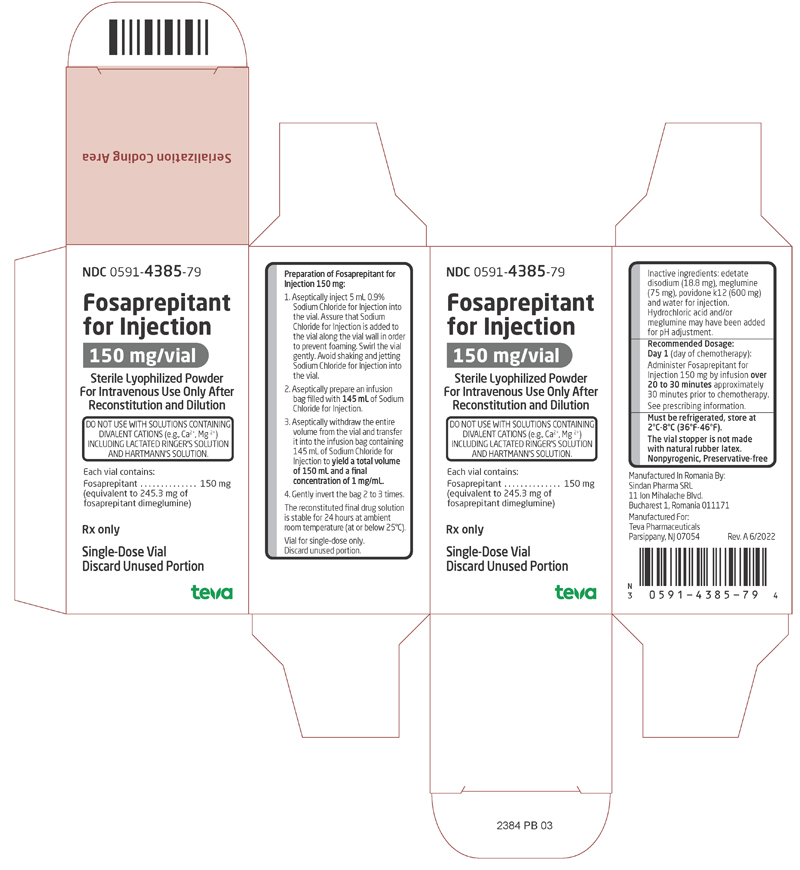
Fosaprepitant 150 mg Injection, Powder, Lyophilized, For Solution, 1 injection — NDC 0591-4385-79 (Billing 00591-4385-79)
This is a package of 1 injection of Fosaprepitant 150 mg Injection, Powder, Lyophilized, For Solution from Actavis Pharma, Inc., marketed since Sep 2019 and currently FDA-listed. It is this product's only package size.
NDC database record
One package, one record: these facts belong to NDC 0591-4385-79 alone.
- Record
- FDA NDC Directory package listing · Human prescription drug
- Code segments
- 0591 labeler · 4385 product · 79 package
- Package marketed since
- Sep 19, 2019
- Sample package
- No — commercial package
- Listing certified through
- Dec 31, 2026
- Billing quantity
- 1 EA per package
- Barcode (UPC)
- 0305914385794
- Medicaid fills, this package
- 999 prescriptions in the last four reported quarters
- FDA record last changed
- Jul 24, 2026
Identity & classification
Regulatory identifiers FDA, NLM and CMS codes for this package
Drug-database identifiers Medi-Span GPI and First Databank GCN / HICL / AHFS classification
- GSN (GCN sequence number): 066837
- GCN: 29247
- GPI-14 (Medi-Span): 50280035102130
- HICL (First Databank): 035346
- AHFS class code: 56:22.32.00
- RxCUI (RxNorm): 1731077
Where does this data come from?
- FDA openFDA NDC Directory · synced Oct 8, 2026
- FDA label on DailyMed · label index refreshed Oct 6, 2026
- RxNorm (NLM RxNav) · catalog refreshed Oct 1, 2026
- Medi-Span GPI (licensed)
- First Databank (licensed) · refreshed Oct 8, 2026
Clinical
Aprepitant injection and fosaprepitant injection are used along with other medications to prevent nausea and vomiting in adults that may occur within 24 hours or several days after receiving certain cancer chemotherapy treatments. Fosaprepitant injection can also be used in children 6 months of age and older. Aprepitant and fosaprepitant injections are not used to treat nausea and vomiting that you already have. Aprepitant and fosaprepitant injections are in a class of medications called antiemetics. They work by blocking the action of neurokinin, a natural substance in the brain that causes n...
Read the full MedlinePlus article ↗- It helps prevent nausea and vomiting caused by cancer chemotherapy. You get it along with other anti-nausea medicines. It prevents symptoms but is not studied for treating nausea t...
- A healthcare professional gives it as an IV infusion, usually on the first day of chemotherapy. It finishes about 30 minutes before chemo begins. You will also get a steroid and an...
- Fatigue, diarrhea, low blood counts and weakness are common. Some people have pain or redness at the IV site. Tell your team about any discomfort at the site.
- Tell your nurse immediately if you feel flushed, short of breath, faint or have a rash during or after the infusion. Also report severe pain or swelling where the IV is.
Patient education
Supplement & herbal interactions
Some supplements/herbs that may interact with Fosaprepitant — tap one for details:
Where does this data come from?
- MedlinePlus (NLM) · refreshed Oct 1, 2026
- FDA label on DailyMed · label index refreshed Oct 6, 2026
Ask a licensed pharmacist directly — free, answered by our team.
Pricing
A drug doesn't have one price. Each row is a different public payment system, and none is what you'd pay at the counter — that depends on your insurance. The ⓘ on each row explains what it measures.
| Price system | Per mL | Per package |
|---|---|---|
| Retail pharmacies payNADAC · weekly | Not in the retail survey — common for institutional, discontinued, or low-volume packs. | |
| Medicaid paysCMS SDUD · 12 mo | $143.52 | — |
| Medicare drug plans payPart D · quarterly | No Part D plan price is available for this NDC in our data. | |
| Medicare Part B allowsASP · J1456 | $0.036 / J1456 unit | — |
Where does this data come from?
- CMS NADAC weekly file
- CMS ASP pricing files · refreshed Sep 20, 2026
- CMS Medicaid State Drug Utilization Data · through Q1 2026
- CMS Part D plan pricing files · refreshed Sep 24, 2026
- VA National Acquisition Center price file
Billing & reimbursement
Where does this data come from?
- CMS ASP NDC-HCPCS crosswalk · refreshed Sep 22, 2026
- DMEPDAC NDC-HCPCS crosswalk
- openFDA NSDE billing units · refreshed Oct 7, 2026
Packaging — all sizes for this product
| Package NDC | Description | Marketing start | Marketing end | Status |
|---|---|---|---|---|
| 00591-4385-79 You're viewing this Main listing | 1 INJECTION, POWDER, LYOPHILIZED, FOR SOLUTION in 1 CARTON | 2019-09-19 | — | Active |
Therapeutic equivalents
| Product | Labeler | Pack | NADAC/unit | TE | Status | Price vs. this |
|---|---|---|---|---|---|---|
| Emend 150 mg/5mL 00006-3061-00 | Merck | 1 vial | — | AP | FDA listed | — |
| Fosaprepitant Dimeglumine 150 mg/5mL 00143-9384-01 | Hikma | 1 vial | — | AP | FDA listed | — |
| Fosaprepitant Dimeglumine 150 mg/5mL 00143-9428-01 | Hikma | 1 vial | — | AP | FDA listed | — |
| Fosaprepitant 150 mg/5mL 00338-0008-01 | Baxter | 1 vial | — | — | FDA listed | — |
| Fosaprepitant 150 mgthis 00591-4385-79 | Actavis | 1 injection | — | — | FDA listed | — |
| Fosaprepitant 150 mg/5mL 16714-0248-01 | NorthStar | 1 vial | — | AP | FDA listed | — |
| Fosaprepitant 150 mg/5mL 31722-0165-31 | Camber | 1 vial | — | AP | FDA listed | — |
| Fosaprepitant 150 mg 43598-0671-11 | Dr. | 1 vial | — | AP | FDA listed | — |
| Fosaprepitant 150 mg/5mL 43598-0859-11 | Dr. | 1 vial | — | AP | FDA listed | — |
| Fosaprepitant 150 mg/5mL 43598-0948-11 | Dr. | 1 vial | — | AP | FDA listed | — |
| Fosaprepitant Dimeglumine 150 mg/5mL 55150-0299-01 | Eugia | 1 vial | — | AP | FDA listed | — |
| Fosaprepitant 150 mg/5mL 63323-0972-10 | Fresenius | 1 vial | — | AP | FDA listed | — |
| Fosaprepitant Dimeglumine 150 mg/5mL 67184-0540-01 | Qilu | 1 vial | — | AP | FDA listed | — |
| fosaprepitant 150 mg/5mL 67457-0889-10 | Mylan | 1 vial | — | AP | FDA listed | — |
| Fosaprepitant 150 mg/5mL 68001-0523-36 | BluePoint | 1 vial | — | AP | FDA listed | — |
| Fosaprepitant 150 mg/5mL 68001-0675-25 | BluePoint | 1 vial | — | AP | FDA listed | — |
| Fosaprepitant 150 mg/5mL 71731-5111-01 | Chia | 1 vial | — | AP | FDA listed | — |
| fosaprepitant 150 mg/5mL 71839-0104-01 | BE | 1 vial | — | AP | FDA listed | — |
| Fosaprepitant 150 mg/5mL 72162-2636-02 | Bryant | 1 vial | — | AP | FDA listed | — |
| Fosaprepitant 150 mg/5mL 72205-0054-01 | Novadoz | 1 vial | — | AP | FDA listed | — |
| Fosaprepitant 150 mg/5mL 72205-0083-01 | Novadoz | 1 vial | — | AP | FDA listed | — |
| Fosaprepitant 150 mg/5mL 72603-0450-01 | Northstar | 1 vial | — | AP | FDA listed | — |
| Fosaprepitant 150 mg/5mL 83634-0776-10 | Avenacy, | 1 vial | — | AP | FDA listed | — |
Where does this data come from?
- FDA openFDA NDC Directory · synced Oct 8, 2026
- FDA Orange Book · refreshed Oct 3, 2026
- CMS NADAC weekly file
Availability & generic status
The FDA lists approved generic versions of this medicine, but that does not always mean a pharmacy can get one today. Patent rules, launch agreements, supply and pricing can affect when generics actually arrive.
Where does this data come from?
- FDA Orange Book · refreshed Oct 3, 2026
Inactive Ingredients / Excipients
Inactive ingredients, also called excipients, are components of the drug product other than the active ingredient. They may include fillers, dyes, coatings, preservatives, flavors, or other formulation ingredients.
🧪 Avoiding an ingredient? See Fosaprepitant Dimeglumine inactive ingredients by manufacturer: every current product's list side by side, so you can ask your pharmacy for the version that does not list it.
💡 Tap an ingredient (hover on desktop) to see what it is and why it’s used.
-
UNII 7FLD91C86K
Edetate disodium is a chemical compound that binds and removes certain metal ions. In medicines, it acts as a preservative and stabilizer by preventing metals like calcium from interfering with the product's shelf life and consistency.
-
UNII QTT17582CB
A strong acid used to adjust and maintain the proper pH level in liquid medicines, ensuring stability and preventing breakdown of active ingredients.
-
UNII 6HG8UB2MUY
Meglumine is a sugar-alcohol compound used as a solubilizer and pH buffer in medicines. It helps dissolve drugs that don't mix well in water and maintains stable acidity levels in the formulation.
-
UNII 333AG72FWJ
Povidone K12 is a synthetic polymer derived from petroleum. It acts as a binder and disintegrant in tablets and capsules, helping hold ingredients together and allowing the tablet to break apart for absorption.
-
UNII 059QF0KO0R
Water is a liquid solvent that dissolves and mixes ingredients together in liquid medicines, syrups, and injections. It helps distribute the active drug evenly throughout the product.
5 inactive ingredients listed in the exact product block matched to this NDC.
Where does this data come from?
ingredient classCode="IACT" elements from the exact product block matched by this NDC. Label-section narrative from DailyMed / the openFDA label index is shown separately when available.- FDA label on DailyMed · label index refreshed Oct 6, 2026
- FDA openFDA NDC Directory · synced Oct 8, 2026
Inactive ingredient FAQ
Are inactive ingredients the same for every manufacturer?
Why might an inactive ingredient be missing?
Can inactive ingredients matter?
Manufacturer & labeler
More NDCs from Actavis Pharma, Inc. labeler code 00591
- Desvenlafaxine 25 mg Tablet, Extended Release NDC 0591-4060-30
- Perphenazine 2 mg Tablet, Film Coated NDC 0591-4101-00
- Perphenazine 4 mg Tablet, Film Coated NDC 0591-4102-00
- Perphenazine 8 mg Tablet, Film Coated NDC 0591-4103-00
- Perphenazine 16 mg Tablet, Film Coated NDC 0591-4104-00
- Penicillamine 250 mg Capsule NDC 0591-4171-00
- Mifepristone 300 mg Tablet, Film Coated NDC 0591-4390-96
- Doxycycline Hyclate 50 mg Tablet, Delayed Release NDC 0591-4550-22
- Doxycycline Hyclate 200 mg Tablet, Delayed Release NDC 0591-4575-60
- Amantadine Hydrochloride 100 mg Tablet NDC 0591-4920-01
- Prednisone 5 mg Tablet NDC 0591-5052-00
- Promethazine Hydrochloride 25 mg Tablet NDC 0591-5307-00
Where does this data come from?
- FDA openFDA NDC Directory · synced Oct 8, 2026
- Drugs@FDA
Full prescribing information FDA SPL
🎯 Indications and Usage ▾
1 INDICATIONS AND USAGE Fosaprepitant for Injection, in combination with other antiemetic agents, is indicated in adults for the prevention of: acute and delayed nausea and vomiting associated with initial and repeat courses of highly emetogenic cancer chemotherapy (HEC) including high-dose cisplatin. delayed nausea and vomiting associated with initial and repeat courses of moderately emetogenic cancer chemotherapy (MEC). Limitations of Use Fosaprepitant for Injection has not been studied for the treatment of established nausea and vomiting.
Fosaprepitant for Injection is a substance P/neurokinin-1 (NK 1 ) receptor antagonist, indicated in adults, in combination with other antiemetic agents, for the prevention of ( 1 ): acute and delayed nausea and vomiting associated with initial and repeat courses of highly emetogenic cancer chemotherapy (HEC) including high-dose cisplatin. delayed nausea and vomiting associated with initial and repeat courses of moderately emetogenic cancer chemotherapy (MEC). Limitations of Use ( 1 ) Fosaprepitant for Injection has not been studied for treatment of established nausea and vomiting.
⏱️ Dosage and Administration ▾
2 DOSAGE AND ADMINISTRATION Dosage ( 2.1 ) The recommended dosage in adults is 150 mg on Day 1 as an intravenous infusion over 20 to 30 minutes completing the infusion approximately 30 minutes prior to chemotherapy. See Full Prescribing Information for dosages of concomitant antiemetic(s) of Fosaprepitant for Injection. Preparation ( 2.2 ) Reconstitute with 5 mL of 0.9% sodium chloride.
Add to infusion bag containing 145 mL 0.9% sodium chloride for a final concentration of 1 mg/mL.
2.1Recommended Dosage The recommended dosage of Fosaprepitant for Injection, dexamethasone, and a 5-HT 3 antagonist for the prevention of nausea and vomiting associated with administration of HEC or MEC in adults is shown in Table 1 or Table 2, respectively. Administer Fosaprepitant for Injection as an intravenous infusion on Day 1 over 20 to 30 minutes, completing the infusion approximately 30 minutes prior to chemotherapy. Table 1 Recommended Dosage for the Prevention of Nausea and Vomiting Associated with HEC Day 1 Day 2 Day 3 Day 4 Fosaprepitant for Injection 150 mg intravenously over 20 to 30 minutes none none none Dexamethasone * 12 mg orally 8 mg orally 8 mg orally twice daily 8 mg orally twice daily 5-HT 3 antagonist See selected 5-HT 3 antagonist prescribing information for the recommended dosage none none none * Administer dexamethasone 30 minutes prior to chemotherapy treatment on Day 1 and in the morning on Days 2 through 4.
Also administer dexamethasone in the evenings on Days 3 and 4. A 50% dosage reduction of dexamethasone on Days 1 and 2 is recommended to account for a drug interaction with Fosaprepitant for Injection [see Clinical Pharmacology (12.3)] . Table 2 Recommended Dosage for the Prevention of Nausea and Vomiting Associated with MEC Day 1 Fosaprepitant for Injection 150 mg intravenously over 20 to 30 minutes Dexamethasone * 12 mg orally 5-HT 3 antagonist See selected 5-HT 3 antagonist prescribing information for the recommended dosage * Administer dexamethasone 30 minutes prior to chemotherapy treatment on Day 1.
A 50% dosage reduction of dexamethasone is recommended to account for a drug interaction with Fosaprepitant for Injection [see Clinical Pharmacology ( 12.3 )] .
2.2Preparation Instructions Table 5 Preparation Instructions for Fosaprepitant for Injection (150 mg) Step 1 Aseptically inject 5 mL 0.9% Sodium Chloride Injection, USP into the vial. Assure that 0.9% Sodium Chloride Injection, USP is added to the vial along the vial wall in order to prevent foaming. Swirl the vial gently.
Avoid shaking and jetting 0.9% Sodium Chloride Injection, USP into the vial. Step 2 Aseptically prepare an infusion bag filled with 145 mL of 0.9% Sodium Chloride Injection, USP. Step 3 Aseptically withdraw the entire volume from the vial and transfer it into the infusion bag containing 145 mL of 0.9% Sodium Chloride Injection, USP to yield a total volume of 150 mL and a final concentration of 1 mg/mL.
Step 4 Gently invert the bag 2 to 3 times. Step 5 Before administration, inspect the bag for particulate matter and discoloration. Discard the bag if particulate and/or discoloration are observed.
Caution: Do not mix or reconstitute Fosaprepitant for Injection with solutions for which physical and chemical compatibility have not been established. Fosaprepitant for Injection is incompatible with any solutions containing divalent cations (e.g., calcium, magnesium), including Lactated Ringer’s Solution and Hartmann's Solution. Storage The reconstituted final drug solution is stable for 24 hours at ambient room temperature [at or below 25°C (77°F)].
💊 Dosage Forms and Strengths ▾
3 DOSAGE FORMS AND STRENGTHS Fosaprepitant for Injection: 150 mg fosaprepitant, white to off-white lyophilized powder in single-dose glass vial for reconstitution Fosaprepitant for Injection: 150 mg fosaprepitant, lyophilized powder in single-dose vial for reconstitution. ( 3 )
⛔ Contraindications ▾
4 CONTRAINDICATIONS Fosaprepitant for Injection is contraindicated in patients: who are hypersensitive to any component of the product. Hypersensitivity reactions including anaphylactic reactions, flushing, erythema, and dyspnea have been reported [see Warnings and Precautions ( 5.2 ), Adverse Reactions ( 6.2 )] . taking pimozide. Inhibition of CYP3A4 by aprepitant, the active moiety, could result in elevated plasma concentrations of this drug, which is a CYP3A4 substrate, potentially causing serious or life-threatening reactions, such as QT prolongation, a known adverse reaction of pimozide [see Warnings and Precautions ( 5.1 )] .
Known hypersensitivity to any component of this drug. ( 4 , 5.2 ) Concurrent use with pimozide. ( 4 )
⚠️ Warnings and Cautions ▾
5 WARNINGS AND PRECAUTIONS CYP3A4 Interactions: Fosaprepitant is a weak inhibitor of CYP3A4, and aprepitant, the active moiety, is a substrate, inhibitor, and inducer of CYP3A4; see Full Prescribing Information for recommendations regarding contraindications, risk of adverse reactions, and dosage adjustment of Fosaprepitant for Injection and concomitant drugs. ( 4 , 5.1 , 7.1 , 7.2 ) Hypersensitivity Reactions (including anaphylaxis and anaphylactic shock): May occur during or soon after infusion. If symptoms occur, discontinue the drug.
Do not reinitiate Fosaprepitant for Injection if symptoms occur with previous use. ( 4 , 5.2 ) Infusion Site Reactions (including thrombophlebitis, necrosis, and vasculitis): Majority of reactions reported in patients receiving vesicant chemotherapy. Avoid infusion into small veins.
Discontinue infusion and administer treatment if a severe reaction develops. ( 5.3 ) Warfarin (a CYP2C9 substrate): Risk of decreased INR of prothrombin time; monitor INR in 2-week period, particularly at 7 to 10 days, following initiation of Fosaprepitant for Injection. ( 5.4 , 7.1 ) Hormonal Contraceptives: Efficacy of contraceptives may be reduced during and for 28 days following administration of Fosaprepitant for Injection.
Use effective alternative or back-up methods of contraception. ( 5.5 , 7.1 , 8.3 )
5.1Clinically Significant CYP3A4 Drug Interactions Fosaprepitant, a prodrug of aprepitant, is a weak inhibitor of CYP3A4, and aprepitant is a substrate, inhibitor, and inducer of CYP3A4. Use of Fosaprepitant for Injection with other drugs that are CYP3A4 substrates, may result in increased plasma concentration of the concomitant drug. Use of pimozide with Fosaprepitant for Injection is contraindicated due to the risk of significantly increased plasma concentrations of pimozide, potentially resulting in prolongation of the QT interval, a known adverse reaction of pimozide [see Contraindications ( 4 )] .
Use of Fosaprepitant for Injection with strong or moderate CYP3A4 inhibitors (e.g., ketoconazole, diltiazem) may increase plasma concentrations of aprepitant and result in an increased risk of adverse reactions related to Fosaprepitant for Injection. Use of Fosaprepitant for Injection with strong CYP3A4 inducers (e.g., rifampin) may result in a reduction in aprepitant plasma concentrations and decreased efficacy of Fosaprepitant for Injection. See Table 7 and Table 8 for a listing of potentially significant drug interactions [see Drug Interactions ( 7.1 , 7.2 )] .
5.2Hypersensitivity Reactions Serious hypersensitivity reactions, including anaphylaxis and anaphylactic shock, during or soon after infusion of fosaprepitant have occurred. Symptoms including flushing, erythema, dyspnea, hypotension and syncope have been reported [see Adverse Reactions ( 6.2 )] . Monitor patients during and after infusion.
If hypersensitivity reactions occur, discontinue the infusion and administer appropriate medical therapy. Do not reinitiate Fosaprepitant for Injection in patients who experience these symptoms with previous use [see Contraindications ( 4 )] .
5.3Infusion Site Reactions Infusion site reactions (ISRs) have been reported with the use of Fosaprepitant for Injection [see Adverse Reactions ( 6.1 )] . The majority of severe ISRs, including thrombophlebitis and vasculitis, were reported with concomitant vesicant (anthracycline-based) chemotherapy administration, particularly when associated with extravasation. Necrosis was also reported in some patients with concomitant vesicant chemotherapy.
Most ISRs occurred with the first, second or third exposure to single doses of Fosaprepitant for Injection and in some cases, reactions persisted for two weeks or longer. Treatment of severe ISRs consisted of medical, and in some cases surgical, intervention. Avoid infusion of Fosaprepitant for Injection into small veins or through a butterfly catheter.
If a severe ISR develops during infusion, discontinue the infusion and adminis… [Excerpted — this section continues on DailyMed.]
🤒 Adverse Reactions ▾
6 ADVERSE REACTIONS The following clinically significant adverse reactions are described elsewhere in the labeling: Hypersensitivity Reactions [see Warnings and Precautions ( 5.2 )] Infusion Site Reactions [see Warnings and Precautions ( 5.3 )] Most common adverse reactions (≥2%) are: fatigue, diarrhea, neutropenia, asthenia, anemia, peripheral neuropathy, leukopenia, dyspepsia, urinary tract infection, pain in extremity. ( 6.1 ) To report SUSPECTED ADVERSE REACTIONS, contact Teva 1-888-838-2872 or FDA at 1-800-FDA-1088 or www.fda.gov/medwatch.
6.1Clinical Trials Experience Because clinical trials are conducted under widely varying conditions, adverse reaction rates observed in the clinical trials of a drug cannot be directly compared to rates in the clinical trials of another drug and may not reflect the rates observed in clinical practice. The safety of Fosaprepitant for Injection has been established from adequate and well-controlled studies of another intravenous fosaprepitant product in chemotherapy induced nausea and vomiting [see Clinical Studies ( 14 )] .
Adverse reactions reported in these studies are described below. Adverse Reactions for the Prevention of Nausea and Vomiting Associated with MEC In an active-controlled clinical trial in patients receiving MEC, safety was evaluated in 504 adult patients receiving a single intravenous dose of fosaprepitant in combination with ondansetron and dexamethasone (fosaprepitant regimen) compared to 497 patients receiving ondansetron and dexamethasone alone (standard therapy). The most common adverse reactions are listed in Table 6.
Table 6 Most Common Adverse Reactions in Patients Receiving MEC* Intravenous fosaprepitant, ondansetron, and dexamethasone † (N=504) Ondansetron and dexamethasone ‡ (N=497) fatigue 15% 13% diarrhea 13% 11% neutropenia 8% 7% asthenia 4% 3% anemia 3% 2% peripheral neuropathy 3% 2% leukopenia 2% 1% dyspepsia 2% 1% urinary tract infection 2% 1% pain in extremity 2% 1% * Reported in ≥2% of patients treated with the fosaprepitant regimen and at a greater incidence than standard therapy. † Fosaprepitant regimen ‡ Standard therapy Infusion-site reactions were reported in 2.2% of patients treated with the fosaprepitant regimen compared to 0.6% of patients treated with standard therapy.
The infusion-site reactions included: infusion-site pain (1.2%, 0.4%), injection-site irritation (0.2%, 0.0%), vessel puncture-site pain (0.2%, 0.0%), and infusion-site thrombophlebitis (0.6%, 0.0%), reported in the fosaprepitant regimen compared to standard therapy, respectively. Adverse Reactions for the Prevention of Nausea and Vomiting Associated with HEC In an active-controlled clinical study in patients receiving HEC, safety was evaluated for 1143 adult patients receiving a single intravenous dose of fosaprepitant compared to 1169 patients receiving the 3-day regimen of oral aprepitant [see Clinical Studies ( 14.1 )] .
The safety profile was generally similar to that seen in the MEC study with fosaprepitant and prior HEC studies with aprepitant. However, infusion-site reactions occurred at a higher incidence in patients in the fosaprepitant group (3.0%) compared to those in the aprepitant group (0.5%). The following additional infusion-site reactions occurred in the HEC study and were not reported in the MEC study described above: infusion-site erythema (0.5%, 0.1%), infusion-site pruritus (0.3%, 0.0%), and infusion-site induration (0.2%, 0.1%), reported in the fosaprepitant group compared to the aprepitant group, respectively.
Because fosaprepitant is converted to aprepitant, those adverse reactions associated with aprepitant might also be expected to occur with Fosaprepitant for Injection. See the full prescribing information for aprepitant capsules for complete safety information regarding studies performed with oral aprepitant.
6.2Postmarketing Experience The following adverse reactions have been identified during post-approval use of another intravenous formulatio… [Excerpted — this section continues on DailyMed.]
🔄 Drug Interactions ▾
7 DRUG INTERACTIONS See Full Prescribing Information for a list of clinically significant drug interactions. ( 4 , 5.1 , 5.4 , 5.5 , 7.1 , 7.2 )
7.1Effect of Fosaprepitant/Aprepitant on the Pharmacokinetics of Other Drugs When administered intravenously, fosaprepitant, a prodrug of aprepitant, is converted to aprepitant within 30 minutes. Therefore, drug interactions following administration of Fosaprepitant for Injection are likely to occur with drugs that interact with oral aprepitant. Fosaprepitant, given as a single 150-mg dose, is a weak inhibitor of CYP3A4, and the weak inhibition of CYP3A4 continues for 2 days after single dose administration.
Single dose fosaprepitant does not induce CYP3A4. Aprepitant is a substrate, an inhibitor, and an inducer of CYP3A4. Aprepitant is also an inducer of CYP2C9 [see Clinical Pharmacology ( 12.3 )] .
Some substrates of CYP3A4 are contraindicated with Fosaprepitant for Injection [see Contraindications ( 4 )] . Dosage adjustment of some CYP3A4 and CYP2C9 substrates may be warranted, as shown in Table 7. Table 7 Effects of Fosaprepitant/Aprepitant on the Pharmacokinetics of Other Drugs CYP3A4 Substrates Pimozide Clinical Impact Increased pimozide exposure Intervention Fosaprepitant for Injection is contraindicated [see Contraindications ( 4 )] .
Benzodiazepines Clinical Impact Increased exposure to midazolam or other benzodiazepines metabolized via CYP3A4 (alprazolam, triazolam) may increase the risk of adverse reactions [see Clinical Pharmacology ( 12.3 )] . Intervention Monitor for benzodiazepine-related adverse reactions. Dexamethasone Clinical Impact Increased dexamethasone exposure [see Clinical Pharmacology ( 12.3 )] .
Intervention Reduce the dose of oral dexamethasone by approximately 50% [see Dosage and Administration (2.1)] . Methylprednisolone Clinical Impact Increased methylprednisolone exposure [see Clinical Pharmacology ( 12.3 )] . Intervention Reduce the dose of oral methylprednisolone by approximately 50% on Days 1 and 2 for patients receiving HEC and on Day 1 for patients receiving MEC.
Reduce the dose of intravenous methylprednisolone by 25% on Days 1 and 2 for patients receiving HEC and on Day 1 for patients receiving MEC. Chemotherapeutic agents that are metabolized by CYP3A4 Clinical Impact Increased exposure of the chemotherapeutic agent may increase the risk of adverse reactions [see Clinical Pharmacology (12.3)] . Intervention Vinblastine, vincristine, or ifosfamide or other chemotherapeutic agents Monitor for chemotherapeutic-related adverse reactions.
Etoposide, vinorelbine, paclitaxel, and docetaxel No dosage adjustment needed. Hormonal Contraceptives Clinical Impact Decreased hormonal exposure during administration of and for 28 days after administration of the last dose of Fosaprepitant for Injection [see Warnings and Precautions ( 5.5 ), Use in Specific Populations ( 8.3 ), Clinical Pharmacology ( 12.3 )] . Intervention Effective alternative or back-up methods of contraception (such as condoms or spermicides) should be used during treatment with Fosaprepitant for Injection and for 1 month following administration of Fosaprepitant for Injection.
Examples birth control pills, skin patches, implants, and certain IUDs CYP2C9 Substrates Warfarin Clinical Impact Decreased warfarin exposure and decreased prothrombin time (INR) [see Warnings and Precautions (5.4), Clinical Pharmacology ( 12.3 )] . Intervention In patients on chronic warfarin therapy, monitor the prothrombin time (INR) in the 2-week period, particularly at 7 to 10 days, following administration of Fosaprepitant for Injection with each chemotherapy cycle. Other 5-HT 3 Antagonists Clinical Impact No change in the exposure of the 5-HT 3 antagonist [see Clinical Pharmacology ( 12.3 )] .
Intervention No dosage adjustment needed Examples ondansetron, granisetron, dolasetron
7.2Effect of Other Drugs on the Pharmacokinetics of Fosaprepitant/Aprepitant Aprepitant is a CYP3A4 substrate [see Clinical Pharmacol… [Excerpted — this section continues on DailyMed.]
👥 Use in Specific Populations ▾
8 USE IN SPECIFIC POPULATIONS
8.1Pregnancy Risk Summary There are no available data on use of fosaprepitant in pregnant women to inform a drug-associated risk of adverse developmental outcomes. In animal reproduction studies, no adverse developmental effects were observed in rats or rabbits exposed during the period of organogenesis to systemic exposures (AUC) approximately equivalent to the exposure at the recommended human dose (RHD) of 150 mg [see Data] . The estimated background risk of major birth defects and miscarriage for the indicated populations is unknown.
All pregnancies have a background risk of birth defect, loss, or other adverse outcomes. In the U.S. general population, the estimated background risk of major birth defects and miscarriage in clinically recognized pregnancies is 2% to 4% and 15% to 20%, respectively. Data Animal Data In embryofetal development studies in rats and rabbits, aprepitant was administered during the period of organogenesis at oral doses up to 1,000 mg/kg twice daily (rats) and up to the maximum tolerated dose of 25 mg/kg/day (rabbits).
No embryofetal lethality or malformations were observed at any dose level in either species. The exposures (AUC) in pregnant rats at 1,000 mg/kg twice daily and in pregnant rabbits at 25 mg/kg/day were approximately equivalent to the exposure at the RHD of 150 mg. Aprepitant crosses the placenta in rats and rabbits.
8.2Lactation Risk Summary There are no data on the presence of aprepitant in human milk, the effects on the breastfed infant, or the effects on milk production. Aprepitant is present in rat milk. The developmental and health benefits of breastfeeding should be considered along with the mother’s clinical need for Fosaprepitant for Injection and any potential adverse effects on the breastfed infant from Fosaprepitant for Injection or from the underlying maternal condition.
8.3Females and Males of Reproductive Potential Contraception Upon administration of Fosaprepitant for Injection, the efficacy of hormonal contraceptives may be reduced. Advise females of reproductive potential using hormonal contraceptives to use an effective alternative or back-up non-hormonal contraceptive (such as condoms or spermicides) during treatment with Fosaprepitant for Injection and for 1 month following the last dose [see Drug Interactions ( 7.1 ), Clinical Pharmacology ( 12.3 )] .
8.4Pediatric Use This Fosaprepitant for Injection product is not approved for use in pediatric patients. This Fosaprepitant for Injection product contains 18.8 mg of edetate disodium (EDTA) per vial [see Description ( 11 )] . Edetate disodium is a chelator of metal ions, including calcium. Other fosaprepitant for injection products may contain less edetate disodium.
8.5Geriatric Use Of the 1649 adult cancer patients treated with intravenous fosaprepitant in HEC and MEC clinical studies, 27% were aged 65 and over, while 5% were aged 75 and over. Other reported clinical experience has not identified differences in responses between elderly and younger patients. In general, use caution when dosing elderly patients as they have a greater frequency of decreased hepatic, renal or cardiac function and concomitant disease or other drug therapy [see Clinical Pharmacology ( 12.3 )] .
8.6Patients with Hepatic Impairment The pharmacokinetics of aprepitant in patients with mild and moderate hepatic impairment were similar to those of healthy subjects with normal hepatic function. No dosage adjustment is necessary for patients with mild to moderate hepatic impairment (Child-Pugh score 5 to 9). There are no clinical or pharmacokinetic data in patients with severe hepatic impairment (Child-Pugh score greater than 9).
Therefore, additional monitoring for adverse reactions in these patients may be warranted when Fosaprepitant for Injection is administered [see Clinical Pharmacology ( 12.3 )] .
🤰 Pregnancy ▾
8.1Pregnancy Risk Summary There are no available data on use of fosaprepitant in pregnant women to inform a drug-associated risk of adverse developmental outcomes. In animal reproduction studies, no adverse developmental effects were observed in rats or rabbits exposed during the period of organogenesis to systemic exposures (AUC) approximately equivalent to the exposure at the recommended human dose (RHD) of 150 mg [see Data] . The estimated background risk of major birth defects and miscarriage for the indicated populations is unknown.
All pregnancies have a background risk of birth defect, loss, or other adverse outcomes. In the U.S. general population, the estimated background risk of major birth defects and miscarriage in clinically recognized pregnancies is 2% to 4% and 15% to 20%, respectively. Data Animal Data In embryofetal development studies in rats and rabbits, aprepitant was administered during the period of organogenesis at oral doses up to 1,000 mg/kg twice daily (rats) and up to the maximum tolerated dose of 25 mg/kg/day (rabbits).
No embryofetal lethality or malformations were observed at any dose level in either species. The exposures (AUC) in pregnant rats at 1,000 mg/kg twice daily and in pregnant rabbits at 25 mg/kg/day were approximately equivalent to the exposure at the RHD of 150 mg. Aprepitant crosses the placenta in rats and rabbits.
🧒 Pediatric Use ▾
8.4Pediatric Use This Fosaprepitant for Injection product is not approved for use in pediatric patients. This Fosaprepitant for Injection product contains 18.8 mg of edetate disodium (EDTA) per vial [see Description ( 11 )] . Edetate disodium is a chelator of metal ions, including calcium. Other fosaprepitant for injection products may contain less edetate disodium.
🧓 Geriatric Use ▾
8.5Geriatric Use Of the 1649 adult cancer patients treated with intravenous fosaprepitant in HEC and MEC clinical studies, 27% were aged 65 and over, while 5% were aged 75 and over. Other reported clinical experience has not identified differences in responses between elderly and younger patients. In general, use caution when dosing elderly patients as they have a greater frequency of decreased hepatic, renal or cardiac function and concomitant disease or other drug therapy [see Clinical Pharmacology ( 12.3 )] .
🆘 Overdosage ▾
10 OVERDOSAGE There is no specific information on the treatment of overdosage with fosaprepitant or aprepitant. In the event of overdose, Fosaprepitant for Injection should be discontinued and general supportive treatment and monitoring should be provided. Because of the antiemetic activity of Fosaprepitant for Injection, drug-induced emesis may not be effective in cases of Fosaprepitant for Injection overdosage. Aprepitant is not removed by hemodialysis.
🧬 Clinical Pharmacology ▾
12 CLINICAL PHARMACOLOGY
12.1Mechanism of Action Fosaprepitant is a prodrug of aprepitant and accordingly, its antiemetic effects are attributable to aprepitant. Aprepitant is a selective high-affinity antagonist of human substance P/neurokinin 1 (NK 1 ) receptors. Aprepitant has little or no affinity for serotonin (5-HT 3 ), dopamine, and corticosteroid receptors, the targets of existing therapies for chemotherapy-induced nausea and vomiting (CINV).
Aprepitant has been shown in animal models to inhibit emesis induced by cytotoxic chemotherapeutic agents, such as cisplatin, via central actions. Animal and human Positron Emission Tomography (PET) studies with aprepitant have shown that it crosses the blood brain barrier and occupies brain NK 1 receptors. Animal and human studies have shown that aprepitant augments the antiemetic activity of the 5-HT 3 -receptor antagonist ondansetron and the corticosteroid dexamethasone and inhibits both the acute and delayed phases of cisplatin-induced emesis.
12.2Pharmacodynamics Cardiac Electrophysiology In a randomized, double-blind, positive-controlled, thorough QTc study, a single 200-mg dose of fosaprepitant (approximately 1.3 times the recommended dose) had no effect on the QTc interval.
12.3Pharmacokinetics Aprepitant after Fosaprepitant Administration Following administration of a single intravenous 150-mg dose of fosaprepitant, a prodrug of aprepitant administered as a 20-minute infusion to healthy subjects, the mean AUC 0-∞ of aprepitant was 37.4 (± 14.8) mcg•hr/mL and the mean maximal aprepitant concentration (C max ) was 4.2 (± 1.2) mcg/mL. Plasma concentrations of fosaprepitant are below the limits of quantification (10 ng/mL) within 30 minutes of the completion of infusion. Distribution Aprepitant is greater than 95% bound to plasma proteins.
The mean apparent volume of distribution at steady state (Vd ss ) was approximately 70 L in humans. Aprepitant crosses the blood brain barrier in humans [see Clinical Pharmacology ( 12.1 )] . Elimination Metabolism Fosaprepitant is converted to aprepitant in in vitro incubations with human liver preparations and in S9 preparations from multiple other human tissues including kidney, lung and ileum.
Thus, it appears that the conversion of fosaprepitant to aprepitant can occur in multiple extrahepatic tissues in addition to the liver. Aprepitant undergoes extensive metabolism. In vitro studies using human liver microsomes indicate that aprepitant is metabolized primarily by CYP3A4 with minor metabolism by CYP1A2 and CYP2C19.
Metabolism is largely via oxidation at the morpholine ring and its side chains. No metabolism by CYP2D6, CYP2C9, or CYP2E1 was detected. In healthy young adults, aprepitant accounts for approximately 24% of the radioactivity in plasma over 72 hours following a single oral 300-mg dose of [ 14 C]-aprepitant, indicating a substantial presence of metabolites in the plasma.
Seven metabolites of aprepitant, which are only weakly active, have been identified in human plasma. Excretion Following administration of a single intravenous 100-mg dose of [ 14 C]-fosaprepitant to healthy subjects, 57% of the radioactivity was recovered in urine and 45% in feces. Aprepitant is eliminated primarily by metabolism; aprepitant is not renally excreted.
The apparent terminal half-life ranged from approximately 9 to 13 hours. Specific Populations Geriatric Patients Following oral administration of a single 125-mg dose of aprepitant on Day 1 and 80 mg once daily on Days 2 through 5, the AUC 0-24hr of aprepitant was 21% higher on Day 1 and 36% higher on Day 5 in elderly (65 years and older) relative to younger adults. The C max was 10% higher on Day 1 and 24% higher on Day 5 in elderly relative to younger adults.
These differences are not considered clinically meaningful [see Use in Specific Populations ( 8.5 )] . Male and Female Patients Following oral administration of a single dose of aprepitant, ranging from 40 mg to 375 mg, the AUC 0-24hr… [Excerpted — this section continues on DailyMed.]
🧬 Mechanism of Action ▾
12.1Mechanism of Action Fosaprepitant is a prodrug of aprepitant and accordingly, its antiemetic effects are attributable to aprepitant. Aprepitant is a selective high-affinity antagonist of human substance P/neurokinin 1 (NK 1 ) receptors. Aprepitant has little or no affinity for serotonin (5-HT 3 ), dopamine, and corticosteroid receptors, the targets of existing therapies for chemotherapy-induced nausea and vomiting (CINV).
Aprepitant has been shown in animal models to inhibit emesis induced by cytotoxic chemotherapeutic agents, such as cisplatin, via central actions. Animal and human Positron Emission Tomography (PET) studies with aprepitant have shown that it crosses the blood brain barrier and occupies brain NK 1 receptors. Animal and human studies have shown that aprepitant augments the antiemetic activity of the 5-HT 3 -receptor antagonist ondansetron and the corticosteroid dexamethasone and inhibits both the acute and delayed phases of cisplatin-induced emesis.
📦 How Supplied / Storage and Handling ▾
16 HOW SUPPLIED/STORAGE AND HANDLING Fosaprepitant for Injection is available as follows: One single-dose glass vial containing 150 mg fosaprepitant as a sterile, white to off-white lyophilized powder for reconstitution. Supplied as follows: NDC 0591-4385-79 1 vial per carton. Storage Store at 2° to 8°C (36° to 46°F). For storage of reconstituted drug solution see Dosage and Administration 2.2 .
📋 Description ▾
11 DESCRIPTION Fosaprepitant for Injection is a sterile, lyophilized formulation containing fosaprepitant dimeglumine, a prodrug of aprepitant, a substance P/neurokinin-1 (NK 1 ) receptor antagonist, an antiemetic agent, chemically described as 1-Deoxy-1-(methylamino)-D-glucitol[3-[[(2 R ,3 S )-2-[(1 R )-1-[3,5- bis(trifluoromethyl)phenyl]ethoxy]-3-(4-fluorophenyl)-4-morpholinyl]methyl]-2,5-dihydro-5-oxo-1 H -1,2,4- triazol-1-yl]phosphonate (2:1) (salt). Its empirical formula is C 23 H 22 F 7 N 4 O 6 P • 2(C 7 H 17 NO 5 ) and its structural formula is: Fosaprepitant dimeglumine is a white to off-white amorphous powder with a molecular weight of 1004.83.
It is freely soluble in water. Each vial of Fosaprepitant for Injection for administration as an intravenous infusion contains 150 mg of fosaprepitant (equivalent to 245.3 mg of fosaprepitant dimeglumine) and the following inactive ingredients: edetate disodium (18.8 mg), meglumine (75 mg), povidone k12 (600 mg), and water for injection. Hydrochloric acid and/or meglumine may have been added for pH adjustment. formula image
💬 Information for Patients ▾
17 PATIENT COUNSELING INFORMATION Advise the patient to read the FDA-approved patient labeling (Patient Information). Hypersensitivity Advise patients that hypersensitivity reactions, including anaphylaxis and anaphylactic shock, have been reported in patients taking fosaprepitant. Advise patients to seek immediate medical attention if they experience signs or symptoms of a hypersensitivity reaction, such as hives, rash and itching, skin peeling or sores, flushing, difficulty in breathing or swallowing, or dizziness, rapid or weak heartbeat or feeling faint [see Warnings and Precautions ( 5.2 )] .
Infusion Site Reactions Advise patients to seek medical attention if they experience new or worsening signs or symptoms of an infusion site reaction, such as erythema, edema, pain, necrosis, vasculitis, or thrombophlebitis at or near the infusion site [see Warnings and Precautions ( 5.3 )] . Drug Interactions Advise patients to discuss all medications they are taking, including other prescription, non-prescription medication or herbal products [see Contraindications ( 4 ), Warnings and Precautions ( 5.1 )] . Warfarin: Instruct patients on chronic warfarin therapy to follow instructions from their healthcare provider regarding blood draws to monitor their INR during the 2-week period, particularly at 7 to 10 days, following initiation of Fosaprepitant for Injection with each chemotherapy cycle [see Warnings and Precautions ( 5.4 )] .
Hormonal Contraceptives: Advise patients that administration of Fosaprepitant for Injection may reduce the efficacy of hormonal contraceptives. Instruct patients to use effective alternative or back-up methods of contraception (such as condoms or spermicides) during treatment with Fosaprepitant for Injection and for 1 month following administration of Fosaprepitant for Injection [see Warnings and Precautions ( 5.5 ), Use in Specific Populations ( 8.3 )] . Manufactured in Romania By: Sindan Pharma SRL 11 Ion Mihalache Blvd.
Bucharest 1, Romania 011171 Manufactured For: Teva Pharmaceuticals Parsippany, NJ 07054
🍼 Nursing Mothers ▾
8.3Females and Males of Reproductive Potential Contraception Upon administration of Fosaprepitant for Injection, the efficacy of hormonal contraceptives may be reduced. Advise females of reproductive potential using hormonal contraceptives to use an effective alternative or back-up non-hormonal contraceptive (such as condoms or spermicides) during treatment with Fosaprepitant for Injection and for 1 month following the last dose [see Drug Interactions ( 7.1 ), Clinical Pharmacology ( 12.3 )] .
🧬 Pharmacokinetics ▾
12.3Pharmacokinetics Aprepitant after Fosaprepitant Administration Following administration of a single intravenous 150-mg dose of fosaprepitant, a prodrug of aprepitant administered as a 20-minute infusion to healthy subjects, the mean AUC 0-∞ of aprepitant was 37.4 (± 14.8) mcg•hr/mL and the mean maximal aprepitant concentration (C max ) was 4.2 (± 1.2) mcg/mL. Plasma concentrations of fosaprepitant are below the limits of quantification (10 ng/mL) within 30 minutes of the completion of infusion. Distribution Aprepitant is greater than 95% bound to plasma proteins.
The mean apparent volume of distribution at steady state (Vd ss ) was approximately 70 L in humans. Aprepitant crosses the blood brain barrier in humans [see Clinical Pharmacology ( 12.1 )] . Elimination Metabolism Fosaprepitant is converted to aprepitant in in vitro incubations with human liver preparations and in S9 preparations from multiple other human tissues including kidney, lung and ileum.
Thus, it appears that the conversion of fosaprepitant to aprepitant can occur in multiple extrahepatic tissues in addition to the liver. Aprepitant undergoes extensive metabolism. In vitro studies using human liver microsomes indicate that aprepitant is metabolized primarily by CYP3A4 with minor metabolism by CYP1A2 and CYP2C19.
Metabolism is largely via oxidation at the morpholine ring and its side chains. No metabolism by CYP2D6, CYP2C9, or CYP2E1 was detected. In healthy young adults, aprepitant accounts for approximately 24% of the radioactivity in plasma over 72 hours following a single oral 300-mg dose of [ 14 C]-aprepitant, indicating a substantial presence of metabolites in the plasma.
Seven metabolites of aprepitant, which are only weakly active, have been identified in human plasma. Excretion Following administration of a single intravenous 100-mg dose of [ 14 C]-fosaprepitant to healthy subjects, 57% of the radioactivity was recovered in urine and 45% in feces. Aprepitant is eliminated primarily by metabolism; aprepitant is not renally excreted.
The apparent terminal half-life ranged from approximately 9 to 13 hours. Specific Populations Geriatric Patients Following oral administration of a single 125-mg dose of aprepitant on Day 1 and 80 mg once daily on Days 2 through 5, the AUC 0-24hr of aprepitant was 21% higher on Day 1 and 36% higher on Day 5 in elderly (65 years and older) relative to younger adults. The C max was 10% higher on Day 1 and 24% higher on Day 5 in elderly relative to younger adults.
These differences are not considered clinically meaningful [see Use in Specific Populations ( 8.5 )] . Male and Female Patients Following oral administration of a single dose of aprepitant, ranging from 40 mg to 375 mg, the AUC 0-24hr and C max are 9% and 17% higher in females as compared with males. The half-life of aprepitant is approximately 25% lower in females as compared with males and T max occurs at approximately the same time.
These differences are not considered clinically meaningful. Racial or Ethnic Groups Following oral administration of a single dose of aprepitant, ranging from 40 mg to 375 mg, the AUC 0-24hr and C max are approximately 27% and 19% higher in Hispanics as compared with Caucasians. The AUC 0-24hr and C max were 74% and 47% higher in Asians as compared to Caucasians.
There was no difference in AUC 0-24hr or C max between Caucasians and Blacks. These differences are not considered clinically meaningful. Patients with Renal Impairment A single 240-mg oral dose of aprepitant was administered to patients with severe renal impairment (creatinine clearance less than 30 mL/min/1.73 m 2 as measured by 24-hour urinary creatinine clearance) and to patients with end stage renal disease (ESRD) requiring hemodialysis.
In patients with severe renal impairment, the AUC 0-∞ of total aprepitant (unbound and protein bound) decreased by 21% and C max decreased by 32%, relative to healthy subjects (creatinine clearance greater than 80 mL/min estimated b… [Excerpted — this section continues on DailyMed.]
🧬 Pharmacodynamics ▾
12.2Pharmacodynamics Cardiac Electrophysiology In a randomized, double-blind, positive-controlled, thorough QTc study, a single 200-mg dose of fosaprepitant (approximately 1.3 times the recommended dose) had no effect on the QTc interval.
🔬 Clinical Studies ▾
14 CLINICAL STUDIES The safety and efficacy of Fosaprepitant for Injection have been established based on adequate and well-controlled adult studies of another intravenous fosaprepitant product in chemotherapy induced nausea and vomiting. Below is a display of the results of these adequate and well-controlled studies of fosaprepitant in these conditions.
14.1Prevention of Nausea and Vomiting Associated with HEC in Adults In a randomized, parallel, double-blind, active-controlled study, 150 mg fosaprepitant as a single intravenous infusion (N=1147) was compared to a 3-day oral aprepitant capsules regimen (N=1175) in patients receiving a HEC regimen that included cisplatin (≥70 mg/m 2 ). All patients in both groups received dexamethasone and ondansetron (see Table 11). Patient demographics were similar between the two treatment groups.
Of the total 2322 patients, 63% were men, 56% White, 26% Asian, 3% American Indian/Alaska Native, 2% Black, 13% Multi-Racial, and 33% Hispanic/Latino ethnicity. Patient ages ranged from 19 to 86 years of age, with a mean age of 56 years. Other concomitant chemotherapy agents commonly administered were fluorouracil (17%), gemcitabine (16%), paclitaxel (15%), and etoposide (12%).
Table 11 Treatment Regimens in Adult HEC Trial* Day 1 Day 2 Day 3 Day 4 Intravenous Fosaprepitant Regimen Fosaprepitant 150 mg intravenously over 20 to 30 minutes approximately 30 minutes prior to chemotherapy none none none Oral dexamethasone † 12 mg 8 mg 8 mg twice daily 8 mg twice daily Ondansetron Ondansetron ‡ none none none Oral Aprepitant Regimen Aprepitant capsules 125 mg 80 mg 80 mg none Oral dexamethasone § 12 mg 8 mg 8 mg 8 mg Ondansetron Ondansetron ‡ none none none * Fosaprepitant placebo, aprepitant capsules placebo and dexamethasone placebo (in the evenings on Days 3 and 4) were used to maintain blinding. † Dexamethasone was administered 30 minutes prior to chemotherapy treatment on Day 1 and in the morning on Days 2 through 4.
Dexamethasone was also administered in the evenings on Days 3 and 4. The 12 mg dose of dexamethasone on Day 1 and the 8 mg once daily dose on Day 2 reflects a dosage adjustment to account for a drug interaction with the fosaprepitant regimen [see Clinical Pharmacology ( 12.3 )] . ‡ Ondansetron 32 mg intravenous was used in the clinical trials of fosaprepitant. Although this dose was used in clinical trials, this is no longer the currently recommended dose.
Refer to the ondansetron prescribing information for the current recommended dose. § Dexamethasone was administered 30 minutes prior to chemotherapy treatment on Day 1 and in the morning on Days 2 through 4. The 12 mg dose of dexamethasone on Day 1 and the 8 mg once daily dose on Days 2 through 4 reflects a dosage adjustment to account for a drug interaction with the oral aprepitant capsules regimen [see Clinical Pharmacology ( 12.3 )] . The efficacy of a single-dose of intravenous fosaprepitant was evaluated based on the primary and secondary endpoints listed in Table 12 and was shown to be non-inferior to that of the 3-day oral aprepitant regimen with regard to complete response in each of the evaluated phases.
The pre-specified non-inferiority margin for complete response in the overall phase was 7%. The pre-specified non-inferiority margin for complete response in the delayed phase was 7.3%. The pre-specified non-inferiority margin for no vomiting in the overall phase was 8.2%.
Table 12 Percent of Adult Patients Receiving HEC Responding by Treatment Group and Phase - Cycle 1 ENDPOINTS Intravenous Fosaprepitant Regimen Oral Aprepitant Regimen Difference † (N=1106) * (N=1134) * (95% CI) % % PRIMARY ENDPOINT Complete Response ‡ Overall § 71.9 72.3 -0.4 (-4.1, 3.3) SECONDARY ENDPOINTS Complete Response ‡ Delayed phase ¶ 74.3 74.2 0.1 (-3.5, 3.7) No Vomiting Overall § 72.9 74.6 -1.7 (-5.3, 2.0) * N: Number of patients included in the primary analysis of complete response. † Difference and Confidence interval (CI) were calculated usin… [Excerpted — this section continues on DailyMed.]
🧪 Nonclinical Toxicology ▾
13 NONCLINICAL TOXICOLOGY
13.1Carcinogenesis, Mutagenesis, Impairment of Fertility Carcinogenesis Carcinogenicity studies were conducted in Sprague-Dawley rats and in CD-1 mice for 2 years. In the rat carcinogenicity studies, animals were treated with oral doses ranging from 0.05 to 1,000 mg/kg twice daily. The highest dose produced systemic exposures to aprepitant approximately equivalent to (female rats) or less than (male rats) the adult human exposure at the RHD of 150 mg.
Treatment with aprepitant at doses of 5 to 1,000 mg/kg twice daily caused an increase in the incidences of thyroid follicular cell adenomas and carcinomas in male rats. In female rats, it produced hepatocellular adenomas at 5 to 1,000 mg/kg twice daily and hepatocellular carcinomas and thyroid follicular cell adenomas at 125 to 1,000 mg/kg twice daily. In the mouse carcinogenicity studies, the animals were treated with oral doses ranging from 2.5 to 2,000 mg/kg/day.
The highest dose produced a systemic exposure approximately 2 times the adult human exposure at the RHD of 150 mg. Treatment with aprepitant produced skin fibrosarcomas at 125 and 500 mg/kg/day doses in male mice. Carcinogenicity studies were not conducted with fosaprepitant.
Mutagenesis Aprepitant and fosaprepitant were not genotoxic in the Ames test, the human lymphoblastoid cell (TK6) mutagenesis test, the rat hepatocyte DNA strand break test, the Chinese hamster ovary (CHO) cell chromosome aberration test and the mouse micronucleus test. Impairment of Fertility Fosaprepitant, when administered intravenously, is rapidly converted to aprepitant. In the fertility studies conducted with fosaprepitant and aprepitant, the highest systemic exposures to aprepitant were obtained following oral administration of aprepitant.
Oral aprepitant did not affect the fertility or general reproductive performance of male or female rats at doses up to the maximum feasible dose of 1,000 mg/kg twice daily (providing exposure in male rats lower than the exposure at the recommended adult human dose of 150 mg and exposure in female rats approximately equivalent to the adult human exposure).
📄 Carcinogenesis, Mutagenesis, Impairment of Fertility ▾
13.1Carcinogenesis, Mutagenesis, Impairment of Fertility Carcinogenesis Carcinogenicity studies were conducted in Sprague-Dawley rats and in CD-1 mice for 2 years. In the rat carcinogenicity studies, animals were treated with oral doses ranging from 0.05 to 1,000 mg/kg twice daily. The highest dose produced systemic exposures to aprepitant approximately equivalent to (female rats) or less than (male rats) the adult human exposure at the RHD of 150 mg.
Treatment with aprepitant at doses of 5 to 1,000 mg/kg twice daily caused an increase in the incidences of thyroid follicular cell adenomas and carcinomas in male rats. In female rats, it produced hepatocellular adenomas at 5 to 1,000 mg/kg twice daily and hepatocellular carcinomas and thyroid follicular cell adenomas at 125 to 1,000 mg/kg twice daily. In the mouse carcinogenicity studies, the animals were treated with oral doses ranging from 2.5 to 2,000 mg/kg/day.
The highest dose produced a systemic exposure approximately 2 times the adult human exposure at the RHD of 150 mg. Treatment with aprepitant produced skin fibrosarcomas at 125 and 500 mg/kg/day doses in male mice. Carcinogenicity studies were not conducted with fosaprepitant.
Mutagenesis Aprepitant and fosaprepitant were not genotoxic in the Ames test, the human lymphoblastoid cell (TK6) mutagenesis test, the rat hepatocyte DNA strand break test, the Chinese hamster ovary (CHO) cell chromosome aberration test and the mouse micronucleus test. Impairment of Fertility Fosaprepitant, when administered intravenously, is rapidly converted to aprepitant. In the fertility studies conducted with fosaprepitant and aprepitant, the highest systemic exposures to aprepitant were obtained following oral administration of aprepitant.
Oral aprepitant did not affect the fertility or general reproductive performance of male or female rats at doses up to the maximum feasible dose of 1,000 mg/kg twice daily (providing exposure in male rats lower than the exposure at the recommended adult human dose of 150 mg and exposure in female rats approximately equivalent to the adult human exposure).
📄 Patient Package Insert ▾
PATIENT INFORMATION FOSAPREPITANT for injection (FOS a PRE pi tant) for intravenous use What is Fosaprepitant for Injection? Fosaprepitant for Injection is a prescription medicine used with other medicines that treat nausea and vomiting in adults to prevent nausea and vomiting caused by certain anti-cancer (chemotherapy) medicines. Fosaprepitant for Injection is not used to treat nausea and vomiting that you already have.
It is not known if Fosaprepitant for Injection is safe and effective in children. Do not receive Fosaprepitant for Injection if you: are allergic to fosaprepitant, aprepitant, or any of the ingredients in Fosaprepitant for Injection. See the end of this leaflet for a complete list of the ingredients in Fosaprepitant for Injection. are taking pimozide (ORAP).
Before receiving Fosaprepitant for Injection, tell your healthcare provider about all your medical conditions including, if you: have liver problems. are pregnant or plan to become pregnant. It is not known if Fosaprepitant for Injection can harm your unborn baby. Women who use birth control medicines containing hormones to prevent pregnancy (birth control pills, skin patches, implants, and certain IUDs) should also use a backup method of birth control that does not contain hormones, such as condoms or spermicides, during treatment with Fosaprepitant for Injection and for 1 month after receiving the last dose of Fosaprepitant for Injection. are breastfeeding or plan to breastfeed.
It is not known if Fosaprepitant for Injection passes into your breast milk. Talk to your healthcare provider about the best way to feed your baby if you receive Fosaprepitant for Injection. Tell your healthcare provider about all the medicines you take, including prescription and over-the-counter medicines, vitamins, and herbal supplements.
Fosaprepitant for Injection may affect the way other medicines work, and other medicines may affect the way Fosaprepitant for Injection works , causing serious side effects. Know the medicines you take. Keep a list of them to show your healthcare provider or pharmacist when you get a new medicine.
How will I receive Fosaprepitant for Injection? Fosaprepitant for Injection will be given on Day 1 of chemotherapy treatment. It will be given to you by intravenous (IV) infusion in your vein about 50 to 60 minutes before you start your chemotherapy treatment.
If you take the blood thinner medicine warfarin sodium (COUMADIN, JANTOVEN), your healthcare provider may do blood tests after you receive Fosaprepitant for Injection to check your blood clotting. What are the possible side effects of Fosaprepitant for Injection? Fosaprepitant for Injection may cause serious side effects, including: Serious allergic reactions.
Allergic reactions can happen with Fosaprepitant for Injection and may be serious. Tell your healthcare provider or nurse right away if you have hives, rash, itching, flushing or redness of your face or skin, trouble breathing or swallowing, dizziness, a rapid or weak heartbeat, or you feel faint during or soon after you receive Fosaprepitant for Injection, as you may need emergency medical care. Severe skin reactions, which may include rash, skin peeling, or sores, may occur.
Get medical care right away if you have signs of a severe skin reaction. Infusion site reactions (ISR) at or near the infusion site have happened with Fosaprepitant for Injection. Most severe ISR have happened with a certain type of chemotherapy medicine that can burn or blister your skin (vesicant) with side effects, including pain, swelling and redness.
Death of skin tissue (necrosis) has happened in some people getting this type of chemotherapy medicine. Most ISR can happen with the first, second, or third dose and some can last up to 2 weeks or longer. Tell your healthcare provider right away if you get any infusion site side effects.
The most common side effects of Fosaprepitant for Injection include: tiredness feeling weak or numb in your arms and legs diarr… [Excerpted — this section continues on DailyMed.]
📄 Package Label / Principal Display Panel ▾
PRINCIPAL DISPLAY PANEL NDC 0591-4385-79 Fosaprepitant for Injection 150 mg/vial Sterile Lyophilized Powder for Intravenous Use Only After Reconstitution and Dilution DO NOT USE WITH SOLUTIONS CONTAINING DIVALENT CATIONS (e.g., Ca 2+ , Mg 2+ ) INCLUDING LACTATED RINGER’S SOLUTION AND HARTMANN’S SOLUTION. Each vial contains: Fosaprepitant…………….150 mg (equivalent to 245.3 mg of fosaprepitant dimeglumine) Rx only Single-Dose Vial Discard Unused Portion 1
Medicaid utilization & spend
About this NDC listing & data coverage
What data is (and isn’t) available for this NDC — tap to expand
| NDC identity (package / product / labeler codes) | ✓ Available |
| Labeler | ✓ Available |
| Product & package description | ✓ Available |
| Marketing category & status | ✓ Available |
| Active ingredient / dosage form / route | ✓ Available |
| FDA label (SPL via DailyMed) | ✓ Available |
| Package photos | ✓ Available |
| Inactive ingredients (structured) | ✓ Available |
| NADAC pharmacy acquisition price (CMS) | — Not published for this NDC CMS publishes NADAC only for NDCs reported in its retail-pharmacy survey. |
| Orange Book / therapeutic-equivalence data | — Not published for this NDC Applies only to products approved under an NDA/ANDA; many listings are out of scope. |
| HCPCS J-code billing crosswalk | ✓ Available |
| Medicaid utilization (CMS SDUD) | ✓ Available |