
Pradaxa dabigatran etexilate mesylate 150 mg Capsule, 12-count — NDC 0597-0360-42 (Billing 00597-0360-42)
This is a package of 12 capsules of Pradaxa dabigatran etexilate mesylate 150 mg Capsule from Boehringer Ingelheim Pharmaceuticals Inc., no longer marketed (first marketed Jul 2017), no longer in the FDA NDC Directory.
Identity & classification
Regulatory identifiers FDA, NLM and CMS codes for this package
Drug-database identifiers Medi-Span GPI and First Databank GCN / HICL / AHFS classification
- GSN (GCN sequence number): 066781
- GCN: 29166
- GPI-14 (Medi-Span): 83337030200140
- HICL (First Databank): 035604
- AHFS class code: 20:12.04.12
- RxCUI (RxNorm): 1037045
Where does this data come from?
- FDA openFDA NDC Directory · synced Oct 1, 2026
- FDA label on DailyMed · label index refreshed Oct 1, 2026
- RxNorm (NLM RxNav) · catalog refreshed Oct 1, 2026
- Medi-Span GPI (licensed)
- First Databank (licensed) · refreshed Oct 1, 2026
RxNorm drug class
This medicine belongs to the Direct thrombin inhibitors class.
Where does this data come from?
- RxClass (NLM) · catalog refreshed Oct 1, 2026
Clinical
- It’s a blood thinner. It lowers stroke risk in non-valvular atrial fibrillation and treats or prevents blood clots in the legs and lungs. Some forms are approved for children with...
- Swallow capsules whole, with or without food, as your prescriber directs. Don’t open, chew or break them. Don’t swap between forms on your own.
- No. Stopping early raises your risk of clots and stroke. Talk to your doctor first so they can plan coverage if needed.
- Stomach upset, indigestion, nausea and diarrhea are common, along with bleeding. Call us or your doctor about unusual or heavy bleeding.
Patient education
Supplement & herbal interactions
Where does this data come from?
- MedlinePlus (NLM) · refreshed Oct 1, 2026
- FDA label on DailyMed · label index refreshed Oct 1, 2026
Ask a licensed pharmacist directly — free, answered by our team.
Pricing
A drug doesn't have one price. Each row is a different public payment system, and none is what you'd pay at the counter — that depends on your insurance. The ⓘ on each row explains what it measures.
| Price system | Per each | Per package |
|---|---|---|
| Retail pharmacies payNADAC · weekly | Not in the retail survey — common for institutional, discontinued, or low-volume packs. | |
| Medicaid paysCMS SDUD · 12 mo | No recent Medicaid claims on file for this NDC — rare and low-volume NDCs are suppressed in the public data. | |
| Medicare drug plans payPart D · quarterly | No Part D plan price is available for this NDC in our data. | |
Where does this data come from?
- CMS NADAC weekly file
- CMS ASP pricing files · refreshed Sep 20, 2026
- CMS Medicaid State Drug Utilization Data · refreshed Oct 3, 2026
- CMS Part D plan pricing files · refreshed Sep 24, 2026
- VA National Acquisition Center price file
Packaging — all sizes for this product
| Package NDC | Description | Per unit | Per pack | Marketing start | Marketing end | Status |
|---|---|---|---|---|---|---|
| 00597-0360-42 You're viewing this | 12 BLISTER PACK in 1 CARTON / 1 CAPSULE in 1 BLISTER PACK | — | — | 2017-07-28 | — | Discontinued by firm |
| 00597-0360-55 0597-0360-55 Main listing | 1 BOTTLE in 1 CARTON / 60 CAPSULE in 1 BOTTLE | $3.16 / ea | $189.58 | 2017-07-28 | — | Active |
| 00597-0360-82 0597-0360-82 | 60 BLISTER PACK in 1 CARTON / 1 CAPSULE in 1 BLISTER PACK | $3.16 / ea | $189.58 | 2017-07-28 | — | Active |
This pack shows little to no recent Medicaid volume — a different pack size carries most fills. See all packs ↓
Pack size FAQ
What quantity is in this package?
How does this package differ from NDC 00597-0360-55?
What NDC number is used to bill for this package of Pradaxa dabigatran etexilate mesylate 150 mg Capsule?
Prices are the latest CMS NADAC pharmacy acquisition cost per NDC; per-pack figures are per-unit × pack quantity, shown only when the pack is denominated in the same measure NADAC prices.
Therapeutic equivalents
| Product | Labeler | Pack | NADAC/unit | TE | Status | Price vs. this |
|---|---|---|---|---|---|---|
| Dabigatran Etexilate 150 mg 00378-0266-91 | Mylan | 60 capsules | $0.795 | AB | Availability likely | — |
| Dabigatran Etexilate 150 mg 00904-7255-10 | Major | 10 capsules | $0.795 | AB | Availability likely | — |
| Dabigatran Etexilate 150 mg 31722-0622-60 | Camber | 60 capsules | $0.795 | AB | Availability likely | — |
| Dabigatran etexilate 150 mg 43598-0641-60 | Dr.Reddys | 60 capsules | $0.795 | AB | Availability likely | — |
| Dabigatran Etexilate 150 mg 59651-0975-60 | Aurobindo | 60 capsules | $0.795 | AB | Availability likely | — |
| dabigatran etexilate 150 mg 60505-4348-06 | Apotex | 60 capsules | $0.795 | AB | Availability likely | — |
| Dabigatran 150 mg 60687-0974-32 | American | 20 capsules | $0.795 | AB | Availability likely | — |
| Dabigatran Etexilate 150 mg 62332-0636-06 | Alembic | 60 capsules | $0.795 | AB | Availability likely | — |
| Dabigatran Etexilate 150 mg 67877-0475-60 | Ascend | 60 capsules | $0.795 | AB | Availability likely | — |
| Dabigatran Etexilate 150 mg 72603-0239-01 | NorthStar | 60 capsules | $0.795 | AB | Availability likely | — |
| Pradaxa 150 mgthis 00597-0360-42 | Boehringer | 12 capsules | — | AB | Discontinued | — |
| Dabigatran 150 mg 42291-0034-60 | AvKARE | 60 capsules | — | AB | FDA listed | — |
| Dabigatran Etexilate 150 mg 46708-0636-06 | Alembic | 60 capsules | — | AB | FDA listed | — |
| Dabigatran 150 mg 50090-7530-00 | A-S | 60 capsules | — | AB | FDA listed | — |
| Dabigatran Etexilate 150 mg 50090-7657-00 | A-S | 60 capsules | — | AB | FDA listed | — |
| Dabigatran 150 mg 50268-0200-16 | AvPAK | 60 capsules | — | AB | FDA listed | — |
| Dabigatran 150 mg 72205-0204-34 | Novadoz | 60 capsules | — | AB | FDA listed | — |
| Dabigatran Etexilate 150 mg 72865-0273-60 | XLCare | 60 capsules | — | AB | FDA listed | — |
Where does this data come from?
- FDA openFDA NDC Directory · synced Oct 1, 2026
- FDA Orange Book · refreshed Sep 3, 2026
- CMS NADAC weekly file
Availability & generic status
The FDA lists approved generic versions of this medicine, but that does not always mean a pharmacy can get one today. Patent rules, launch agreements, supply and pricing can affect when generics actually arrive.
Why the date isn’t exact: Generic timing can change because patents may be challenged, settled, licensed, added, removed, or worked around with a narrower label — and FDA approval does not always mean a pharmacy can get the generic today.
🛈 What do these terms mean?
- Patent
- Legal protection listed in the Orange Book that may delay generic approval or launch. Issued by the U.S. Patent & Trademark Office.
- Substance patent
- Covers the active drug molecule itself — the hardest to design around. A generic generally can’t launch until it expires.
- Formulation (product) patent
- Covers a specific formulation or dosage form. A generic can sometimes work around it with a different formulation.
- Method-of-use patent
- A patent covering one specific approved use of the drug — not necessarily the whole molecule. A generic can sometimes launch with a “skinny label” that carves out the protected use and keeps the others.
- Skinny label
- A generic label that omits a still-patented use when the FDA allows it — letting a generic reach the market for the unprotected uses.
- Exclusivity
- FDA-granted marketing protection, separate from patents — e.g. 5-yr new chemical entity, 7-yr orphan drug, or a +6-month pediatric extension.
- Paragraph IV
- A generic applicant’s formal challenge to a listed patent. It can potentially lead to earlier generic entry, but often involves litigation or a settlement.
- RLD / RS
- Reference Listed Drug — the brand product the FDA uses as the reference for generic applications. Reference Standard — the product the FDA expects generics to compare against in bioequivalence testing.
- TE / AB rating
- FDA therapeutic-equivalence rating. An AB rating generally means the FDA considers a generic therapeutically equivalent to — and substitutable for — the brand.
- LOE (loss of exclusivity)
- The latest patent or exclusivity currently listed — the loss-of-exclusivity / latest-listed-protection date shown on this page. Paragraph-IV challenges and settlements can move the real date earlier; FDA approval and a manufacturer’s decision to market can move it later.
Built from the FDA Orange Book. The bars above are scaled to each protection’s expiry; the red LOE marker is the last one to lapse.
| Patent | Type | Use code | Expires |
|---|---|---|---|
| US 9034822 ↗ | Method of use | U-1759 | Jan 20, 2031 |
| US 9034822 ↗ | Method of use | U-1759 | Jan 20, 2031 |
| US 9034822 ↗ | Method of use | U-1759 | Jan 20, 2031 |
| US 7932273 ↗ | Drug substance | — | Sep 7, 2025 |
| US 7932273 ↗ | Drug substance | — | Sep 7, 2025 |
| US 7932273 ↗ | Drug substance | — | Sep 7, 2025 |
| US 7932273*PED ↗ | Drug product | — | Mar 7, 2026 |
| US 7932273*PED ↗ | Drug product | — | Mar 7, 2026 |
| US 9034822*PED ↗ | Drug product | — | Jul 20, 2031 |
| US 7932273*PED ↗ | Drug product | — | Mar 7, 2026 |
| US 9034822*PED ↗ | Drug product | — | Jul 20, 2031 |
| US 9034822*PED ↗ | Drug product | — | Jul 20, 2031 |
Is there a generic version of PRADAXA 150 MG CAPSULE?
The FDA approved a generic — why can’t I get it at my pharmacy yet?
Why do different websites show different generic release dates?
What does “FDA listed” mean?
What does a patent or protection date mean here?
What does “current Orange Book estimate” mean?
Can a generic come out before the last patent expires?
Can a generic come out after the listed dates?
What is the difference between patents and exclusivity?
Why are there multiple patent dates?
Where does this data come from?
- FDA Orange Book · refreshed Sep 3, 2026
What it looks like
Where does this data come from?
- FDA label on DailyMed · label index refreshed Oct 1, 2026
Inactive Ingredients / Excipients
Inactive ingredients, also called excipients, are components of the drug product other than the active ingredient. They may include fillers, dyes, coatings, preservatives, flavors, or other formulation ingredients.
Where does this data come from?
IACT rows and label-wide narrative are kept separate; availability and product-level specificity depend on the submitted label.- FDA label on DailyMed · label index refreshed Oct 1, 2026
- FDA openFDA NDC Directory · synced Oct 1, 2026
Inactive ingredient FAQ
Are inactive ingredients the same for every manufacturer?
Why might an inactive ingredient be missing?
Can inactive ingredients matter?
Manufacturer & labeler
Where does this data come from?
- FDA openFDA NDC Directory · synced Oct 1, 2026
- Drugs@FDA
Full prescribing information FDA SPL
🚨 Boxed Warning ▾
WARNING: (A) PREMATURE DISCONTINUATION OF PRADAXA INCREASES THE RISK OF THROMBOTIC EVENTS, and (B) SPINAL/EPIDURAL HEMATOMA WARNING: (A) PREMATURE DISCONTINUATION OF PRADAXA INCREASES THE RISK OF THROMBOTIC EVENTS, and (B) SPINAL/EPIDURAL HEMATOMA See full prescribing information for complete boxed warning (A) PREMATURE DISCONTINUATION OF PRADAXA INCREASES THE RISK OF THROMBOTIC EVENTS: Premature discontinuation of any oral anticoagulant, including PRADAXA, increases the risk of thrombotic events. To reduce this risk, consider coverage with another anticoagulant if PRADAXA is discontinued for a reason other than pathological bleeding or completion of a course of therapy ( 2.6 , 2.7 , 2.8 , 5.1 ).
(B) SPINAL/EPIDURAL HEMATOMA: Epidural or spinal hematomas may occur in patients treated with PRADAXA who are receiving neuraxial anesthesia or undergoing spinal puncture. These hematomas may result in long-term or permanent paralysis ( 5.3 ). Monitor patients frequently for signs and symptoms of neurological impairment and if observed, treat urgently.
Consider the benefits and risks before neuraxial intervention in patients who are or who need to be anticoagulated ( 5.3 ). (A) PREMATURE DISCONTINUATION OF PRADAXA INCREASES THE RISK OF THROMBOTIC EVENTS Premature discontinuation of any oral anticoagulant, including PRADAXA, increases the risk of thrombotic events. If anticoagulation with PRADAXA is discontinued for a reason other than pathological bleeding or completion of a course of therapy, consider coverage with another anticoagulant [see Dosage and Administration (2.6 , 2.7 , 2.8) and Warnings and Precautions (5.1) ].
(B) SPINAL/EPIDURAL HEMATOMA Epidural or spinal hematomas may occur in patients treated with PRADAXA who are receiving neuraxial anesthesia or undergoing spinal puncture. These hematomas may result in long-term or permanent paralysis. Consider these risks when scheduling patients for spinal procedures.
Factors that can increase the risk of developing epidural or spinal hematomas in these patients include: use of indwelling epidural catheters concomitant use of other drugs that affect hemostasis, such as non-steroidal anti-inflammatory drugs (NSAIDs), platelet inhibitors, other anticoagulants a history of traumatic or repeated epidural or spinal punctures a history of spinal deformity or spinal surgery optimal timing between the administration of PRADAXA and neuraxial procedures is not known [see Warnings and Precautions (5.3) ].
Monitor patients frequently for signs and symptoms of neurological impairment. If neurological compromise is noted, urgent treatment is necessary [see Warnings and Precautions (5.3) ]. Consider the benefits and risks before neuraxial intervention in patients anticoagulated or to be anticoagulated [see Warnings and Precautions (5.3) ].
🎯 Indications and Usage ▾
1 INDICATIONS AND USAGE PRADAXA Capsules is a direct thrombin inhibitor indicated: To reduce the risk of stroke and systemic embolism in adult patients with non-valvular atrial fibrillation ( 1.1 ) For the treatment of deep venous thrombosis (DVT) and pulmonary embolism (PE) in adult patients who have been treated with a parenteral anticoagulant for 5-10 days ( 1.2 ) To reduce the risk of recurrence of DVT and PE in adult patients who have been previously treated ( 1.3 ) For the prophylaxis of DVT and PE in adult patients who have undergone hip replacement surgery ( 1.4 ) For the treatment of venous thromboembolic events (VTE) in pediatric patients 8 to less than 18 years of age who have been treated with a parenteral anticoagulant for at least 5 days ( 1.5 ) To reduce the risk of recurrence of VTE in pediatric patients 8 to less than 18 years of age who have been previously treated ( 1.6 )
1.1Reduction of Risk of Stroke and Systemic Embolism in Non-valvular Atrial Fibrillation in Adult Patients PRADAXA Capsules is indicated to reduce the risk of stroke and systemic embolism in adult patients with non-valvular atrial fibrillation.
1.2Treatment of Deep Venous Thrombosis and Pulmonary Embolism in Adult Patients PRADAXA Capsules is indicated for the treatment of deep venous thrombosis and pulmonary embolism in adult patients who have been treated with a parenteral anticoagulant for 5-10 days.
1.3Reduction in the Risk of Recurrence of Deep Venous Thrombosis and Pulmonary Embolism in Adult Patients PRADAXA Capsules is indicated to reduce the risk of recurrence of deep venous thrombosis and pulmonary embolism in adult patients who have been previously treated.
1.4Prophylaxis of Deep Vein Thrombosis and Pulmonary Embolism in Adult Patients Following Hip Replacement Surgery PRADAXA Capsules is indicated for the prophylaxis of deep vein thrombosis and pulmonary embolism in adult patients who have undergone hip replacement surgery.
1.5Treatment of Venous Thromboembolic Events in Pediatric Patients PRADAXA Capsules is indicated for the treatment of venous thromboembolic events (VTE) in pediatric patients 8 to less than 18 years of age who have been treated with a parenteral anticoagulant for at least 5 days [see Dosage and Administration (2.3) ] .
1.6Reduction in the Risk of Recurrence of Venous Thromboembolic Events in Pediatric Patients PRADAXA Capsules is indicated to reduce the risk of recurrence of VTE in pediatric patients 8 to less than 18 years of age who have been previously treated [see Dosage and Administration (2.3) ] .
⏱️ Dosage and Administration ▾
2 DOSAGE AND ADMINISTRATION Non-valvular Atrial Fibrillation in Adult Patients: For patients with CrCl > 30 mL/min: 150 mg orally, twice daily ( 2.2 ) For patients with CrCl 15-30 mL/min: 75 mg orally, twice daily ( 2.2 ) Treatment of DVT and PE in Adult Patients: For patients with CrCl > 30 mL/min: 150 mg orally, twice daily after 5-10 days of parenteral anticoagulation ( 2.2 ) Reduction in the Risk of Recurrence of DVT and PE in Adult Patients: For patients with CrCl > 30 mL/min: 150 mg orally, twice daily after previous treatment ( 2.2 ) Prophylaxis of DVT and PE Following Hip Replacement Surgery in Adult Patients: For patients with CrCl > 30 mL/min: 110 mg orally first day, then 220 mg once daily ( 2.2 ) Treatment of Pediatric VTE: For pediatric patients: weight-based dosage, twice daily after at least 5 days of parenteral anticoagulant ( 2.3 ) Reduction in the Risk of Recurrence of Pediatric VTE: For pediatric patients: weight-based dosage, twice daily after previous treatment ( 2.3 ) Pradaxa Capsules are NOT substitutable on a milligram-to-milligram basis with other dabigatran etexilate dosage forms Review recommendations for converting to or from other oral or parenteral anticoagulants ( 2.6 , 2.7 ) Temporarily discontinue PRADAXA before invasive or surgical procedures when possible, then restart promptly ( 2.8 )
2.1Important Dosage Information Dabigatran etexilate is available in different dosage forms and not all dosage forms are approved for the same indications and age groups. In addition, there are differences between the dosage forms with respect to dosing due to differences in bioavailability. Do not substitute different dosage forms on a milligram-to-milligram basis and do not combine more than one dosage form to achieve the total dose [see Clinical Pharmacology (12.3) ] .
2.2Recommended PRADAXA Capsules Dosage for Adults Indication Dosage Reduction in Risk of Stroke and Systemic Embolism in Non-valvular AF CrCl > 30 mL/min: 150 mg twice daily CrCl 15 to 30 mL/min: 75 mg twice daily CrCl < 15 mL/min or on dialysis: Dosing recommendations cannot be provided CrCl 30 to 50 mL/min with concomitant use of P-gp inhibitors: Reduce dosage to 75 mg twice daily if given with P-gp inhibitors dronedarone or systemic ketoconazole. CrCl < 30 mL/min with concomitant use of P-gp inhibitors: Avoid coadministration Treatment of DVT and PE CrCl > 30 mL/min: 150 mg twice daily Reduction in the Risk of Recurrence of DVT and PE CrCl ≤ 30 mL/min or on dialysis: Dosing recommendations cannot be provided CrCl < 50 mL/min with concomitant use of P-gp inhibitors: Avoid coadministration Prophylaxis of DVT and PE Following Hip Replacement Surgery CrCl > 30 mL/min: 110 mg for first day, then 220 mg once daily CrCl ≤ 30 mL/min or on dialysis: Dosing recommendations cannot be provided CrCl < 50 mL/min with concomitant use of P-gp inhibitors: Avoid coadministration Reduction of Risk of Stroke and Systemic Embolism in Non-valvular Atrial Fibrillation in Adult Patients For patients with creatinine clearance (CrCl) > 30 mL/min, the recommended dosage of PRADAXA Capsules is 150 mg taken orally, twice daily.
For patients with severe renal impairment (CrCl 15-30 mL/min), the recommended dosage of PRADAXA Capsules is 75 mg twice daily [see Use in Specific Populations (8.6) and Clinical Pharmacology (12.3) ]. Dosing recommendations for patients with a CrCl < 15 mL/min or on dialysis cannot be provided. Treatment of Deep Venous Thrombosis and Pulmonary Embolism in Adult Patients For patients with CrCl > 30 mL/min, the recommended dosage of PRADAXA Capsules is 150 mg taken orally, twice daily, after 5-10 days of parenteral anticoagulation.
Dosing recommendations for patients with a CrCl ≤ 30 mL/min or on dialysis cannot be provided [see Use in Specific Populations (8.6) and Clinical Pharmacology (12.3) ]. Reduction in the Risk of Recurrence of Deep Venous Thrombosis and Pulmonary Embolism in Adult Patients For patients with CrCl > 30 mL/min, the recomm… [Excerpted — this section continues on DailyMed.]
💊 Dosage Forms and Strengths ▾
3 DOSAGE FORMS AND STRENGTHS 150 mg capsules with a light blue opaque cap imprinted in black with the Boehringer Ingelheim company symbol and a white opaque body imprinted in black with "R150". 110 mg capsules with a light blue opaque cap imprinted in black with the Boehringer Ingelheim company symbol and a light blue opaque body imprinted in black with "R110". 75 mg capsules with a white opaque cap imprinted in black with the Boehringer Ingelheim company symbol and a white opaque body imprinted in black with "R75".
Capsules: 75 mg, 110 mg and 150 mg ( 3 )
⛔ Contraindications ▾
4 CONTRAINDICATIONS PRADAXA is contraindicated in patients with: Active pathological bleeding [see Warnings and Precautions (5.2) and Adverse Reactions (6.1) ] History of a serious hypersensitivity reaction to dabigatran, dabigatran etexilate, or to one of the excipients of the product (e.g., anaphylactic reaction or anaphylactic shock) [see Adverse Reactions (6.1) ] Mechanical prosthetic heart valve [see Warnings and Precautions (5.4) ] Active pathological bleeding ( 4 ) History of serious hypersensitivity reaction to PRADAXA ( 4 ) Mechanical prosthetic heart valve ( 4 )
⚠️ Warnings and Cautions ▾
5 WARNINGS AND PRECAUTIONS Bleeding: PRADAXA can cause serious and fatal bleeding ( 5.2 ) Bioprosthetic heart valves: PRADAXA use not recommended ( 5.4 ) Increased Risk of Thrombosis in Patients with Triple-Positive Antiphospholipid Syndrome: PRADAXA use not recommended ( 5.6 )
5.1Increased Risk of Thrombotic Events after Premature Discontinuation Premature discontinuation of any oral anticoagulant, including PRADAXA, in the absence of adequate alternative anticoagulation increases the risk of thrombotic events. If PRADAXA Capsules is discontinued for a reason other than pathological bleeding or completion of a course of therapy, consider coverage with another anticoagulant and restart PRADAXA Capsules as soon as medically appropriate [see Dosage and Administration (2.6 , 2.7 , 2.8) ].
5.2Risk of Bleeding PRADAXA increases the risk of bleeding and can cause significant and, sometimes, fatal bleeding. Promptly evaluate any signs or symptoms of blood loss (e.g., a drop in hemoglobin and/or hematocrit or hypotension). Discontinue PRADAXA Capsules in patients with active pathological bleeding [see Dosage and Administration (2.4) ].
Risk factors for bleeding include the concomitant use of other drugs that increase the risk of bleeding (e.g., anti-platelet agents, heparin, fibrinolytic therapy, and chronic use of NSAIDs). PRADAXA's anticoagulant activity and half-life are increased in patients with renal impairment [see Clinical Pharmacology (12.2) ]. Reversal of Anticoagulant Effect In adults, a specific reversal agent (idarucizumab) for PRADAXA is available when reversal of the anticoagulant effect of dabigatran is needed: For emergency surgery/urgent procedures In life-threatening or uncontrolled bleeding In pediatric patients, the efficacy and safety of idarucizumab have not been established.
Hemodialysis can remove dabigatran; however the clinical experience supporting the use of hemodialysis as a treatment for bleeding is limited [see Overdosage (10) ] . Prothrombin complex concentrates, or recombinant Factor VIIa may be considered but their use has not been evaluated in clinical trials. Protamine sulfate and vitamin K are not expected to affect the anticoagulant activity of dabigatran.
Consider administration of platelet concentrates in cases where thrombocytopenia is present or long-acting antiplatelet drugs have been used.
5.3Spinal/Epidural Anesthesia or Puncture When neuraxial anesthesia (spinal/epidural anesthesia) or spinal puncture is employed, patients treated with anticoagulant agents are at risk of developing an epidural or spinal hematoma which can result in long-term or permanent paralysis [see Boxed Warning ] . To reduce the potential risk of bleeding associated with the concurrent use of PRADAXA and epidural or spinal anesthesia/analgesia or spinal puncture, consider the pharmacokinetic profile of dabigatran [see Clinical Pharmacology (12.3) ] .
Placement or removal of an epidural catheter or lumbar puncture is best performed when the anticoagulant effect of dabigatran is low; however, the exact timing to reach a sufficiently low anticoagulant effect in each patient is not known. Should the physician decide to administer anticoagulation in the context of epidural or spinal anesthesia/analgesia or lumbar puncture, monitor frequently to detect any signs or symptoms of neurological impairment, such as midline back pain, sensory and motor deficits (numbness, tingling, or weakness in lower limbs), bowel and/or bladder dysfunction.
Instruct patients to immediately report if they experience any of the above signs or symptoms. If signs or symptoms of spinal hematoma are suspected, initiate urgent diagnosis and treatment including consideration for spinal cord decompression even though such treatment may not prevent or reverse neurological sequelae.
5.4Thromboembolic and Bleeding Events in Patients with Prosthetic Heart Valves The safety and efficacy of PRADAXA Capsules in adult patients with bileaflet mechanical pro… [Excerpted — this section continues on DailyMed.]
🤒 Adverse Reactions ▾
6 ADVERSE REACTIONS The following clinically significant adverse reactions are described elsewhere in the labeling: Increased Risk of Thrombotic Events after Premature Discontinuation [see Warnings and Precautions (5.1) ] Risk of Bleeding [see Warnings and Precautions (5.2) ] Spinal/Epidural Anesthesia or Puncture [see Warnings and Precautions (5.3) ] Thromboembolic and Bleeding Events in Patients with Prosthetic Heart Valves [see Warnings and Precautions (5.4) ] Increased Risk of Thrombosis in Patients with Triple-Positive Antiphospholipid Syndrome [see Warnings and Precautions (5.6) ] The most serious adverse reactions reported with PRADAXA were related to bleeding [see Warnings and Precautions (5.2) ] .
Most common adverse reactions (> 15%) are gastrointestinal adverse reactions and bleeding ( 6.1 ) To report SUSPECTED ADVERSE REACTIONS, contact Boehringer Ingelheim Pharmaceuticals, Inc. at (800) 542-6257 or FDA at 1-800-FDA-1088 or www.fda.gov/medwatch .
6.1Clinical Trials Experience Because clinical trials are conducted under widely varying conditions, adverse reactions rates observed in the clinical trials of a drug cannot be directly compared to rates in the clinical trials of another drug and may not reflect the rates observed in practice. Adult Trials Reduction of Risk of Stroke and Systemic Embolism in Non-valvular Atrial Fibrillation The RE-LY (Randomized Evaluation of Long-term Anticoagulant Therapy) study provided safety information on the use of two doses of PRADAXA Capsules and warfarin [see Clinical Studies (14.1) ] .
The numbers of patients and their exposures are described in Table 2. Limited information is presented on the 110 mg dosing arm because this dose is not approved. Table 2 Summary of Treatment Exposure in RE-LY PRADAXA Capsules 110 mg twice daily PRADAXA Capsules 150 mg twice daily Warfarin Total number treated 5,983 6,059 5,998 Exposure > 12 months 4,936 4,939 5,193 > 24 months 2,387 2,405 2,470 Mean exposure (months) 20.5 20.3
21.3Total patient-years 10,242 10,261 10,659 Drug Discontinuation in RE-LY The rates of adverse reactions leading to treatment discontinuation were 21% for PRADAXA Capsules 150 mg and 16% for warfarin. The most frequent adverse reactions leading to discontinuation of PRADAXA Capsules were bleeding and gastrointestinal events (i.e., dyspepsia, nausea, upper abdominal pain, gastrointestinal hemorrhage, and diarrhea). Bleeding [see Warnings and Precautions (5.2) ] Table 3 shows the number of adjudicated major bleeding events during the treatment period in the RE-LY study, with the bleeding rate per 100 subject-years (%).
Major bleeding is defined as bleeding accompanied by one or more of the following: a decrease in hemoglobin of ≥ 2 g/dL, a transfusion of ≥ 2 units of packed red blood cells, bleeding at a critical site or with a fatal outcome. Intracranial hemorrhage included intracerebral (hemorrhagic stroke), subarachnoid, and subdural bleeds. Table 3 Adjudicated Major Bleeding Events in Treated Patients a Event PRADAXA Capsules 150 mg N = 6,059 n (%/year b ) Warfarin N = 5,998 n (%/year b ) PRADAXA Capsules 150 mg vs Warfarin HR (95% CI) a Patients during treatment or within 2 days of stopping study treatment.
Major bleeding events within each subcategory were counted once per patient, but patients may have contributed events to multiple subcategories. b Annual event rate per 100 pt-years = 100 * number of subjects with event/subject-years. Subject-years is defined as cumulative number of days from first drug intake to event date, date of last drug intake + 2, death date (whatever occurred first) across all treated subjects divided by 365.25. In case of recurrent events of the same category, the first event was considered. c Defined as bleeding accompanied by one or more of the following: a decrease in hemoglobin of ≥ 2 g/dL, a transfusion of 2 or more units of packed red blood cells, bleeding at a critical site or with fatal outcome. d Intracranial bleed included intrac… [Excerpted — this section continues on DailyMed.]
🔄 Drug Interactions ▾
7 DRUG INTERACTIONS P-gp inducers: Avoid coadministration with PRADAXA ( 5.5 ) P-gp inhibitors in adult patients with CrCl 30-50 mL/min: Reduce dosage or avoid ( 7 ) P-gp inhibitors in adult patients with CrCl < 30 mL/min: Not recommended ( 7 )
7.1Reduction of Risk of Stroke and Systemic Embolism in Non-valvular Atrial Fibrillation in Adult Patients The concomitant use of PRADAXA with P-gp inducers (e.g., rifampin) reduces exposure to dabigatran and should generally be avoided [see Clinical Pharmacology (12.3) ] . P-gp inhibition and impaired renal function are the major independent factors that result in increased exposure to dabigatran [see Clinical Pharmacology (12.3) ] . Concomitant use of P-gp inhibitors in patients with renal impairment is expected to produce increased exposure of dabigatran compared to that seen with either factor alone.
In patients with moderate renal impairment (CrCl 30-50 mL/min), reduce the dosage of PRADAXA to 75 mg twice daily when administered concomitantly with the P-gp inhibitors dronedarone or systemic ketoconazole. The use of the P-gp inhibitors verapamil, amiodarone, quinidine, clarithromycin, and ticagrelor does not require a dosage adjustment of PRADAXA. These results should not be extrapolated to other P-gp inhibitors [see Warnings and Precautions (5.5) , Use in Specific Populations (8.6) , and Clinical Pharmacology (12.3) ] .
The concomitant use of PRADAXA and P-gp inhibitors in patients with severe renal impairment (CrCl 15-30 mL/min) should be avoided [see Warnings and Precautions (5.5) , Use in Specific Populations (8.6) , and Clinical Pharmacology (12.3) ] .
7.2Treatment and Reduction in the Risk of Recurrence of Deep Venous Thrombosis and Pulmonary Embolism in Adult Patients Avoid use of PRADAXA and P-gp inhibitors in patients with CrCl < 50 mL/min [see Warnings and Precautions (5.5) , Use in Specific Populations (8.6) , and Clinical Pharmacology (12.3) ] .
7.3Prophylaxis of Deep Vein Thrombosis and Pulmonary Embolism in Adult Patients Following Hip Replacement Surgery In patients with CrCl ≥ 50 mL/min who have concomitant administration of P-gp inhibitors such as dronedarone or systemic ketoconazole, it may be helpful to separate the timing of administration of PRADAXA and the P-gp inhibitor by several hours. The concomitant use of PRADAXA and P-gp inhibitors in patients with CrCl < 50 mL/min should be avoided [see Warnings and Precautions (5.5) , Use in Specific Populations (8.6) , and Clinical Pharmacology (12.2 , 12.3) ] .
7.4Treatment and Reduction in Risk of Recurrence of VTE in Pediatric Patients The concomitant use of PRADAXA with P-gp inhibitors has not been studied in pediatric patients but may increase exposure to dabigatran [see Warnings and Precautions (5.5) ] .
👥 Use in Specific Populations ▾
8 USE IN SPECIFIC POPULATIONS Lactation: Breastfeeding not recommended ( 8.2 ) Geriatric Use: Risk of bleeding increases with age ( 8.5 )
8.1Pregnancy Risk Summary The limited available data on PRADAXA use in pregnant women are insufficient to determine drug-associated risks for adverse developmental outcomes. There are risks to the mother associated with untreated venous thromboembolism in pregnancy and a risk of hemorrhage in the mother and fetus associated with the use of anticoagulants (see Clinical Considerations ) . In pregnant rats treated from implantation until weaning, dabigatran increased the number of dead offspring and caused excess vaginal/uterine bleeding close to parturition at an exposure 2.6 times the human exposure.
At a similar exposure, dabigatran decreased the number of implantations when rats were treated prior to mating and up to implantation (gestation Day 6). Dabigatran administered to pregnant rats and rabbits during organogenesis up to exposures 8 and 13 times the human exposure, respectively, did not induce major malformations. However, the incidence of delayed or irregular ossification of fetal skull bones and vertebrae was increased in the rat (see Data ) .
The estimated background risk of major birth defects and miscarriage for the indicated population is unknown. All pregnancies have a background risk of birth defect, loss, or other adverse outcomes. In the U.S. general population, the estimated background risk of major birth defects and miscarriage in clinically recognized pregnancies is 2%-4% and 15%-20%, respectively.
Clinical Considerations Disease-associated maternal and/or embryo/fetal risk Pregnancy confers an increased risk for thromboembolism that is higher for women with underlying thromboembolic disease and certain high-risk pregnancy conditions. Published data describe that women with a previous history of venous thrombosis are at high risk for recurrence during pregnancy. Fetal/Neonatal adverse reaction Use of anticoagulants, including PRADAXA, may increase the risk of bleeding in the fetus and neonate.
Monitor neonates for bleeding [see Warnings and Precautions (5.2) ]. Labor or delivery All patients receiving anticoagulants, including pregnant women, are at risk for bleeding. PRADAXA use during labor or delivery in women who are receiving neuraxial anesthesia may result in epidural or spinal hematomas.
Consider discontinuation or use of shorter acting anticoagulant as delivery approaches [see Warnings and Precautions (5.2 , 5.3) ] . Data Animal Data Dabigatran has been shown to decrease the number of implantations when male and female rats were treated at a dosage of 70 mg/kg (about 2.6 to 3.0 times the human exposure at MRHD of 300 mg/day based on area under the curve [AUC] comparisons) prior to mating and up to implantation (gestation Day 6). Treatment of pregnant rats after implantation with dabigatran at the same dose increased the number of dead offspring and caused excess vaginal/uterine bleeding close to parturition.
Dabigatran administered to pregnant rats and rabbits during organogenesis up to maternally toxic doses of 200 mg/kg (8 and 13 times the human exposure, respectively, at a MRHD of 300 mg/day based on AUC comparisons) did not induce major malformations, but increased the incidence of delayed or irregular ossification of fetal skull bones and vertebrae in the rat. Death of offspring and mother rats during labor in association with uterine bleeding occurred during treatment of pregnant rats from implantation (gestation Day 7) to weaning (lactation Day 21) with dabigatran at a dose of 70 mg/kg (about 2.6 times the human exposure at MRHD of 300 mg/day based on AUC comparisons).
8.2Lactation Risk Summary There are insufficient data to assess the presence of dabigatran in human milk. There are no data on the effects of dabigatran on the breastfed child or on milk production. Dabigatran and/or its metabolites were present in rat milk. Breastfeeding is not recommended… [Excerpted — this section continues on DailyMed.]
🤰 Pregnancy ▾
8.1Pregnancy Risk Summary The limited available data on PRADAXA use in pregnant women are insufficient to determine drug-associated risks for adverse developmental outcomes. There are risks to the mother associated with untreated venous thromboembolism in pregnancy and a risk of hemorrhage in the mother and fetus associated with the use of anticoagulants (see Clinical Considerations ) . In pregnant rats treated from implantation until weaning, dabigatran increased the number of dead offspring and caused excess vaginal/uterine bleeding close to parturition at an exposure 2.6 times the human exposure.
At a similar exposure, dabigatran decreased the number of implantations when rats were treated prior to mating and up to implantation (gestation Day 6). Dabigatran administered to pregnant rats and rabbits during organogenesis up to exposures 8 and 13 times the human exposure, respectively, did not induce major malformations. However, the incidence of delayed or irregular ossification of fetal skull bones and vertebrae was increased in the rat (see Data ) .
The estimated background risk of major birth defects and miscarriage for the indicated population is unknown. All pregnancies have a background risk of birth defect, loss, or other adverse outcomes. In the U.S. general population, the estimated background risk of major birth defects and miscarriage in clinically recognized pregnancies is 2%-4% and 15%-20%, respectively.
Clinical Considerations Disease-associated maternal and/or embryo/fetal risk Pregnancy confers an increased risk for thromboembolism that is higher for women with underlying thromboembolic disease and certain high-risk pregnancy conditions. Published data describe that women with a previous history of venous thrombosis are at high risk for recurrence during pregnancy. Fetal/Neonatal adverse reaction Use of anticoagulants, including PRADAXA, may increase the risk of bleeding in the fetus and neonate.
Monitor neonates for bleeding [see Warnings and Precautions (5.2) ]. Labor or delivery All patients receiving anticoagulants, including pregnant women, are at risk for bleeding. PRADAXA use during labor or delivery in women who are receiving neuraxial anesthesia may result in epidural or spinal hematomas.
Consider discontinuation or use of shorter acting anticoagulant as delivery approaches [see Warnings and Precautions (5.2 , 5.3) ] . Data Animal Data Dabigatran has been shown to decrease the number of implantations when male and female rats were treated at a dosage of 70 mg/kg (about 2.6 to 3.0 times the human exposure at MRHD of 300 mg/day based on area under the curve [AUC] comparisons) prior to mating and up to implantation (gestation Day 6). Treatment of pregnant rats after implantation with dabigatran at the same dose increased the number of dead offspring and caused excess vaginal/uterine bleeding close to parturition.
Dabigatran administered to pregnant rats and rabbits during organogenesis up to maternally toxic doses of 200 mg/kg (8 and 13 times the human exposure, respectively, at a MRHD of 300 mg/day based on AUC comparisons) did not induce major malformations, but increased the incidence of delayed or irregular ossification of fetal skull bones and vertebrae in the rat. Death of offspring and mother rats during labor in association with uterine bleeding occurred during treatment of pregnant rats from implantation (gestation Day 7) to weaning (lactation Day 21) with dabigatran at a dose of 70 mg/kg (about 2.6 times the human exposure at MRHD of 300 mg/day based on AUC comparisons).
🧒 Pediatric Use ▾
8.4Pediatric Use The safety and effectiveness of PRADAXA Capsules for the treatment and the reduction in risk of recurrence of venous thromboembolism have been established in pediatric patients 8 to less than 18 years of age. Use of PRADAXA for this indication is supported by evidence from adequate and well-controlled studies in pediatric patients. These studies included an open-label, randomized, parallel-group study and an open-label, single-arm safety study [see Adverse Reactions (6.1) and Clinical Studies (14.4 , 14.5) ] .
Other age-appropriate pediatric dosage forms of dabigatran etexilate are available for pediatric patients less than 8 years of age for these indications. Safety and effectiveness of PRADAXA Capsules have not been established in pediatric patients with non-valvular atrial fibrillation or those who have undergone hip replacement surgery.
🧓 Geriatric Use ▾
8.5Geriatric Use Of the total number of patients in the RE-LY study, 82% were 65 and over, while 40% were 75 and over. The risk of stroke and bleeding increases with age, but the risk-benefit profile is favorable in all age groups [see Warnings and Precautions (5) , Adverse Reactions (6.1) , and Clinical Studies (14.1) ] .
🆘 Overdosage ▾
10 OVERDOSAGE Accidental overdose may lead to hemorrhagic complications. In the event of hemorrhagic complications, initiate appropriate clinical support, discontinue treatment with PRADAXA, and investigate the source of bleeding. A specific reversal agent (idarucizumab) is available for adult patients.
Dabigatran is primarily eliminated by the kidneys with a low plasma protein binding of approximately 35%. Hemodialysis can remove dabigatran; however, data supporting this approach are limited. Using a high-flux dialyzer, blood flow rate of 200 mL/min, and dialysate flow rate of 700 mL/min, approximately 49% of total dabigatran can be cleared from plasma over 4 hours.
At the same dialysate flow rate, approximately 57% can be cleared using a dialyzer blood flow rate of 300 mL/min, with no appreciable increase in clearance observed at higher blood flow rates. Upon cessation of hemodialysis, a redistribution effect of approximately 7% to 15% is seen. The effect of dialysis on dabigatran's plasma concentration would be expected to vary based on patient specific characteristics.
Measurement of aPTT or ECT may help guide therapy [see Warnings and Precautions (5.2) and Clinical Pharmacology (12.2) ].
🧬 Clinical Pharmacology ▾
12 CLINICAL PHARMACOLOGY
12.1Mechanism of Action Dabigatran and its acyl glucuronides are competitive, direct thrombin inhibitors. Because thrombin (serine protease) enables the conversion of fibrinogen into fibrin during the coagulation cascade, its inhibition prevents the development of a thrombus. Both free and clot-bound thrombin, and thrombin-induced platelet aggregation are inhibited by the active moieties.
12.2Pharmacodynamics At recommended therapeutic doses, dabigatran etexilate prolongs the coagulation markers such as aPTT, ECT, TT, and dTT. INR is relatively insensitive to the exposure to dabigatran and cannot be interpreted the same way as used for warfarin monitoring. Figure 2 Adults The aPTT test provides an approximation of PRADAXA's anticoagulant effect.
The average time course for effects on aPTT, following approved dosing regimens in patients with various degrees of renal impairment is shown in Figure 2. The curves represent mean levels without confidence intervals; variations should be expected when measuring aPTT. While advice cannot be provided on the level of recovery of aPTT needed in any particular clinical setting, the curves can be used to estimate the time to get to a particular level of recovery, even when the time since the last dose of PRADAXA is not precisely known.
In the RE-LY trial, the median (10 th to 90 th percentile) trough aPTT in patients receiving the 150 mg dose was 52 (40 to 76) seconds. Figure 2 Average Time Course for Effects of Dabigatran on aPTT, Following Approved PRADAXA Dosing Regimens in Adult Patients with Various Degrees of Renal Impairment* *Simulations based on PK data from a study in subjects with renal impairment and PK/aPTT relationships derived from the RE-LY study; aPTT prolongation in RE-LY was measured centrally in citrate plasma using PTT Reagent Roche Diagnostics GmbH, Mannheim, Germany.
There may be quantitative differences between various established methods for aPTT assessment. The degree of anticoagulant activity can also be assessed by the ecarin clotting time (ECT). This test is a more specific measure of the effect of dabigatran than activated partial thromboplastin time (aPTT).
In the RE-LY trial, the median (10 th to 90 th percentile) trough ECT in patients receiving the 150 mg dose was 63 (44 to 103) seconds. In orthopedic hip surgery patients, maximum aPTT response (E max ) to dabigatran and baseline aPTT were higher shortly after surgery than at later time points (e.g. ≥ 3 days after surgery). Pediatrics As in adults, there is a correlation between plasma dabigatran concentrations and the degree of its anticoagulant effect in pediatric patients with venous thromboembolism.
The parameters dTT and ECT increased in direct linear proportion to the plasma concentration of dabigatran, whereas aPTT prolongation increases in a nonlinear fashion with dabigatran plasma concentrations. Similar PK/PD relationships for aPTT, ECT, and dTT were observed across age groups of pediatric patients (ages 26 days to < 18 years) and between pediatric and adult patients with venous thromboembolism. This similarity in PK/PD relationship suggests that similar exposure-response relationship is expected for dabigatran etexilate treatment across the pediatric age groups and adult patients.
Cardiac Electrophysiology No prolongation of the QTc interval was observed with dabigatran etexilate at doses up to 600 mg.
12.3Pharmacokinetics Dabigatran etexilate mesylate is absorbed as the dabigatran etexilate ester. The ester is then hydrolyzed, forming dabigatran, the active moiety. Dabigatran is metabolized to four different acyl glucuronides and both the glucuronides and dabigatran have similar pharmacological activity.
Pharmacokinetics described here refer to the sum of dabigatran and its glucuronides. Dabigatran displays dose-proportional pharmacokinetics in healthy adult subjects and adult patients in the range of doses from 10 to 400 mg. Given twice daily, dabigatran's accumulati… [Excerpted — this section continues on DailyMed.]
🧬 Mechanism of Action ▾
12.1Mechanism of Action Dabigatran and its acyl glucuronides are competitive, direct thrombin inhibitors. Because thrombin (serine protease) enables the conversion of fibrinogen into fibrin during the coagulation cascade, its inhibition prevents the development of a thrombus. Both free and clot-bound thrombin, and thrombin-induced platelet aggregation are inhibited by the active moieties.
📦 How Supplied / Storage and Handling ▾
16 HOW SUPPLIED/STORAGE AND HANDLING PRADAXA 75 mg capsules have a white opaque cap imprinted with the Boehringer Ingelheim company symbol and a white opaque body imprinted with "R75". The color of the imprinting is black. The capsules are supplied in the packages listed: NDC 0597-0355-09 Unit of use bottle of 60 capsules NDC 0597-0355-56 Blister package containing 60 capsules (10 × 6 capsule blister cards) PRADAXA 110 mg capsules have a light blue opaque cap imprinted with the Boehringer Ingelheim company symbol and a light blue opaque body imprinted with "R110".
The color of the imprinting is black. The capsules are supplied in the packages listed: NDC 0597-0108-54 Unit of use bottle of 60 capsules NDC 0597-0108-60 Blister package containing 60 capsules (10 × 6 capsule blister cards) PRADAXA 150 mg capsules have a light blue opaque cap imprinted with the Boehringer Ingelheim company symbol and a white opaque body imprinted with "R150". The color of the imprinting is black.
The capsules are supplied in the packages listed: NDC 0597-0360-55 Unit of use bottle of 60 capsules NDC 0597-0360-82 Blister package containing 60 capsules (10 × 6 capsule blister cards) Bottles Store at 20°C to 25°C (68°F to 77°F); excursions permitted to 15°C to 30°C (59°F to 86°F) [see USP Controlled Room Temperature]. Once opened, the product must be used within 4 months. Keep the bottle tightly closed.
Store in the original package to protect from moisture. Blisters Store at 20°C to 25°C (68°F to 77°F); excursions permitted to 15°C to 30°C (59°F to 86°F) [see USP Controlled Room Temperature]. Store in the original package to protect from moisture.
📦 Storage and Handling ▾
Bottles Store at 20°C to 25°C (68°F to 77°F); excursions permitted to 15°C to 30°C (59°F to 86°F) [see USP Controlled Room Temperature]. Once opened, the product must be used within 4 months. Keep the bottle tightly closed. Store in the original package to protect from moisture.
Blisters Store at 20°C to 25°C (68°F to 77°F); excursions permitted to 15°C to 30°C (59°F to 86°F) [see USP Controlled Room Temperature]. Store in the original package to protect from moisture.
📋 Description ▾
11 DESCRIPTION The chemical name for dabigatran etexilate mesylate, a direct thrombin inhibitor, is β-Alanine, N-[[2-[[[4-[[[(hexyloxy)carbonyl]amino]iminomethyl] phenyl]amino]methyl]-1-methyl-1H-benzimidazol-5-yl]carbonyl]-N-2-pyridinyl-,ethyl ester, methanesulfonate. The empirical formula is C 34 H 41 N 7 O 5 ∙ CH 4 O 3 S and the molecular weight is 723.86 (mesylate salt), 627.75 (free base). The structural formula is: Dabigatran etexilate mesylate is a yellow-white to yellow powder.
A saturated solution in pure water has a solubility of 1.8 mg/mL. It is freely soluble in methanol, slightly soluble in ethanol, and sparingly soluble in isopropanol. PRADAXA Capsules are supplied in 75 mg, 110 mg, and 150 mg strengths for oral administration.
Each capsule contains dabigatran etexilate mesylate as the active ingredient: 150 mg dabigatran etexilate (equivalent to 172.95 mg dabigatran etexilate mesylate), 110 mg dabigatran etexilate (equivalent to 126.83 mg dabigatran etexilate mesylate), or 75 mg dabigatran etexilate (equivalent to 86.48 mg dabigatran etexilate mesylate) along with the following inactive ingredients: acacia, dimethicone, hydroxypropyl cellulose, hypromellose, talc, and tartaric acid. The capsule shell is composed of black edible ink, carrageenan, FD&C Blue No.
2 (150 mg and 110 mg capsules only), hypromellose, potassium chloride, and titanium dioxide. Chemical Structure
💬 Information for Patients ▾
17 PATIENT COUNSELING INFORMATION Advise the patient or caregiver to read the FDA-approved patient labeling (Medication Guide). Instructions for Patients Tell patients to take PRADAXA Capsules exactly as prescribed. Remind patients not to discontinue PRADAXA Capsules without talking to the healthcare provider who prescribed it.
Keep PRADAXA Capsules in the original bottle to protect from moisture. Do not put PRADAXA Capsules in pill boxes or pill organizers. When more than one bottle is dispensed to the patient, instruct them to open only one bottle at a time.
Instruct patient to remove only one capsule from the opened bottle at the time of use. The bottle should be immediately and tightly closed. Advise patients not to chew or break the capsules before swallowing them and not to open the capsules and take the pellets alone.
Advise patients that the capsule should be taken with a full glass of water. [see Boxed Warning , Dosage and Administration (2.5) ] Bleeding Inform patients that they may bleed more easily, may bleed longer, and should call their healthcare provider for any signs or symptoms of bleeding [see Warnings and Precautions (5.2) ] . Instruct patients to seek emergency care right away if they have any of the following, which may be a sign or symptom of serious bleeding: Unusual bruising (bruises that appear without known cause or that get bigger) Pink or brown urine Red or black, tarry stools Coughing up blood Vomiting blood, or vomit that looks like coffee grounds Instruct patients to call their healthcare provider or to get prompt medical attention if they experience any signs or symptoms of bleeding: Pain, swelling or discomfort in a joint Headaches, dizziness, or weakness Reoccurring nose bleeds Unusual bleeding from gums Bleeding from a cut that takes a long time to stop Menstrual bleeding or vaginal bleeding that is heavier than normal If patients have had neuraxial anesthesia or spinal puncture, and particularly, if they are taking concomitant NSAIDs or platelet inhibitors, advise patients to watch for signs and symptoms of spinal or epidural hematoma, such as back pain, tingling, numbness (especially in the lower limbs), muscle weakness, and stool or urine incontinence.
If any of these symptoms occur, advise the patient to contact his or her physician immediately [see Boxed Warning ] . Gastrointestinal Adverse Reactions Instruct patients to call their healthcare provider if they experience any signs or symptoms of dyspepsia or gastritis: Dyspepsia (upset stomach), burning, or nausea Abdominal pain or discomfort Epigastric discomfort, GERD (gastric indigestion) [see Adverse Reactions (6.1) ] Invasive or Surgical Procedures Instruct patients to inform their healthcare provider that they are taking PRADAXA before any invasive procedure (including dental procedures) is scheduled [see Dosage and Administration (2.8) ] .
Concomitant Medications Ask patients to list all prescription medications, over-the-counter medications, or dietary supplements they are taking or plan to take so their healthcare provider knows about other treatments that may affect bleeding risk (e.g., aspirin or NSAIDs) or dabigatran exposure (e.g., dronedarone or systemic ketoconazole) [see Warnings and Precautions (5.2 , 5.5) ] . Prosthetic Heart Valves Instruct patients to inform their healthcare provider if they will have or have had surgery to place a prosthetic heart valve [see Warnings and Precautions (5.4) ] .
Allergic Reactions Advise adult patients and caregivers that some adults taking PRADAXA have developed symptoms of an allergic reaction. Advise adult patients or caregivers to inform their healthcare provider if they or their child develop symptoms of an allergic reaction, such as hives, rash, or itching. Advise adult patients or caregivers to seek emergency medical attention if they or their child develop chest pain or tightness, swelling of the face or tongue, trouble breathing or wheezing, or feeling dizzy or faint.
Pregnancy… [Excerpted — this section continues on DailyMed.]
💬 Medication Guide ▾
This Medication Guide has been approved by the U.S. Food and Drug Administration. Revised: 6/2025 MEDICATION GUIDE PRADAXA (pra dax a) (dabigatran etexilate) Capsules This Medication Guide is for PRADAXA Capsules.
If your healthcare provider prescribes PRADAXA Oral Pellets for you, read the Medication Guide that comes with your medicine. Read this Medication Guide before you start taking PRADAXA Capsules and each time you get a refill. There may be new information.
This Medication Guide does not take the place of talking with your healthcare provider about your medical condition or your treatment. What is the most important information I should know about PRADAXA? People with atrial fibrillation (a type of irregular heartbeat) are at an increased risk of forming a blood clot in the heart, which can travel to the brain, causing a stroke, or to other parts of the body.
PRADAXA lowers your chance of having a stroke by helping to prevent clots from forming. If you stop taking PRADAXA, you may have increased risk of forming a clot in your blood. Do not stop taking PRADAXA Capsules without talking to the healthcare provider who prescribes it for you.
Stopping PRADAXA increases your risk of having a stroke. PRADAXA may need to be stopped, if possible, before surgery or a medical or dental procedure. Ask the healthcare provider who prescribed PRADAXA for you when you should stop taking it.
Your healthcare provider will tell you when you may start taking PRADAXA again after your surgery or procedure. If you have to stop taking PRADAXA, your healthcare provider may prescribe another medicine to help prevent a blood clot from forming. PRADAXA can cause bleeding which can be serious, and sometimes lead to death.
This is because PRADAXA is a blood thinner medicine that lowers the chance of blood clots forming in your body. You may have a higher risk of bleeding if you take PRADAXA and: are over 75 years old have kidney problems have stomach or intestine bleeding that is recent or keeps coming back, or you have a stomach ulcer take other medicines that increase your risk of bleeding, including: aspirin or aspirin-containing products long-term (chronic) use of non-steroidal anti-inflammatory drugs (NSAIDs) a medicine that contains warfarin sodium a medicine that contains heparin a medicine that contains clopidogrel bisulfate a medicine that contains prasugrel have certain kidney problems and also take a medicine that contains dronedarone or ketoconazole tablets.
Tell your healthcare provider if you take any of these medicines. Ask your healthcare provider or pharmacist if you are not sure if your medicine is one listed above. PRADAXA can increase your risk of bleeding because it lessens the ability of your blood to clot.
During treatment with PRADAXA: you may bruise more easily it may take longer for any bleeding to stop Call your healthcare provider or get medical help right away if you have any of these signs or symptoms of bleeding: unexpected bleeding or bleeding that lasts a long time, such as: unusual bleeding from the gums nose bleeds that happen often menstrual bleeding or vaginal bleeding that is heavier than normal bleeding that is severe or you cannot control pink or brown urine red or black stools (looks like tar) bruises that happen without a known cause or get larger cough up blood or blood clots vomit blood or your vomit looks like "coffee grounds" unexpected pain, swelling, or joint pain headaches, feeling dizzy or weak Take PRADAXA Capsules exactly as prescribed.
Do not stop taking PRADAXA Capsules without first talking to the healthcare provider who prescribes it for you. Stopping PRADAXA may increase your risk of a stroke. Spinal or epidural blood clots (hematoma).
People who take a blood thinner medicine (anticoagulant) like PRADAXA, and have medicine injected into their spinal and epidural area, or have a spinal puncture have a risk of forming a blood clot that can cause long-term or permanent loss of the ability to move… [Excerpted — this section continues on DailyMed.]
🧬 Pharmacokinetics ▾
12.3Pharmacokinetics Dabigatran etexilate mesylate is absorbed as the dabigatran etexilate ester. The ester is then hydrolyzed, forming dabigatran, the active moiety. Dabigatran is metabolized to four different acyl glucuronides and both the glucuronides and dabigatran have similar pharmacological activity.
Pharmacokinetics described here refer to the sum of dabigatran and its glucuronides. Dabigatran displays dose-proportional pharmacokinetics in healthy adult subjects and adult patients in the range of doses from 10 to 400 mg. Given twice daily, dabigatran's accumulation factor in adults and pediatrics is approximately two.
Absorption The absolute bioavailability of dabigatran following oral administration of dabigatran etexilate is approximately 3% to 7%. Dabigatran etexilate is a substrate of the efflux transporter P-gp. After oral administration of dabigatran etexilate in healthy volunteers, C max occurs at 1-hour post-administration in the fasted state.
Coadministration of PRADAXA with a high-fat meal delays the time to C max by approximately 2 hours but has no effect on the bioavailability of dabigatran; PRADAXA may be administered with or without food. The oral bioavailability of dabigatran etexilate increases by 75% when the pellets are taken without the capsule shell compared to the intact capsule formulation based on a single-dose relative bioavailability study. PRADAXA Capsules should therefore not be broken, chewed, or opened before administration.
PRADAXA is available in capsules and oral pellets. The approved indications and intended age groups are not the same. Oral absorption of dabigatran etexilate is formulation-dependent.
At steady-state, dabigatran etexilate oral pellets show 37% higher relative bioavailability in healthy adults compared to dabigatran etexilate capsules based on a multiple-dose relative bioavailability study. In addition, the relative bioavailability between the two dosage forms is age-dependent. The relative bioavailability observed in adults cannot be translated to pediatrics.
Distribution Dabigatran is approximately 35% bound to human plasma proteins. The red blood cell to plasma partitioning of dabigatran measured as total radioactivity is less than 0.3. The volume of distribution of dabigatran is 50 to 70 L.
Elimination Dabigatran is eliminated primarily in the urine. Renal clearance of dabigatran is 80% of total clearance after intravenous administration. After oral administration of radiolabeled dabigatran, 7% of radioactivity is recovered in urine and 86% in feces.
The half-life of dabigatran in healthy adult subjects is 12 to 17 hours. Population pharmacokinetic simulation shows that the elimination half-life in pediatric patients is 12 to14 hours. Metabolism After oral administration, dabigatran etexilate is converted to dabigatran.
The cleavage of the dabigatran etexilate by esterase-catalyzed hydrolysis to the active principal dabigatran is the predominant metabolic reaction. Dabigatran is not a substrate, inhibitor, or inducer of CYP450 enzymes. Dabigatran is subject to conjugation, forming pharmacologically active acyl glucuronides.
Four positional isomers, 1-O, 2-O, 3-O, and 4-O-acylglucuronide exist, and each accounts for less than 10% of total dabigatran in plasma. Specific Populations Pediatric Patients The pharmacokinetics of dabigatran was characterized in two clinical studies (DIVERSITY and Study 2) following multiple doses in pediatric patients from birth to less than 18 years old. In pediatric patients taking age- and weight-adjusted dosages of PRADAXA Capsules (aged 8-18 years), the observed geometric mean steady-state trough concentration was 97.9 ng/mL (63.7 to 151 ng/mL, 10 th to 90 th percentile) compared to the steady-state geometric mean trough concentration of 59.7 ng/mL (26.3 to 146 ng/mL, 10 th to 90 th percentile) observed in adult patients with DVT/PE.
Renal Impairment An open, parallel-group, single-center study compared dabigatran pharmacokinetics in h… [Excerpted — this section continues on DailyMed.]
🧬 Pharmacodynamics ▾
12.2Pharmacodynamics At recommended therapeutic doses, dabigatran etexilate prolongs the coagulation markers such as aPTT, ECT, TT, and dTT. INR is relatively insensitive to the exposure to dabigatran and cannot be interpreted the same way as used for warfarin monitoring. Figure 2 Adults The aPTT test provides an approximation of PRADAXA's anticoagulant effect.
The average time course for effects on aPTT, following approved dosing regimens in patients with various degrees of renal impairment is shown in Figure 2. The curves represent mean levels without confidence intervals; variations should be expected when measuring aPTT. While advice cannot be provided on the level of recovery of aPTT needed in any particular clinical setting, the curves can be used to estimate the time to get to a particular level of recovery, even when the time since the last dose of PRADAXA is not precisely known.
In the RE-LY trial, the median (10 th to 90 th percentile) trough aPTT in patients receiving the 150 mg dose was 52 (40 to 76) seconds. Figure 2 Average Time Course for Effects of Dabigatran on aPTT, Following Approved PRADAXA Dosing Regimens in Adult Patients with Various Degrees of Renal Impairment* *Simulations based on PK data from a study in subjects with renal impairment and PK/aPTT relationships derived from the RE-LY study; aPTT prolongation in RE-LY was measured centrally in citrate plasma using PTT Reagent Roche Diagnostics GmbH, Mannheim, Germany.
There may be quantitative differences between various established methods for aPTT assessment. The degree of anticoagulant activity can also be assessed by the ecarin clotting time (ECT). This test is a more specific measure of the effect of dabigatran than activated partial thromboplastin time (aPTT).
In the RE-LY trial, the median (10 th to 90 th percentile) trough ECT in patients receiving the 150 mg dose was 63 (44 to 103) seconds. In orthopedic hip surgery patients, maximum aPTT response (E max ) to dabigatran and baseline aPTT were higher shortly after surgery than at later time points (e.g. ≥ 3 days after surgery). Pediatrics As in adults, there is a correlation between plasma dabigatran concentrations and the degree of its anticoagulant effect in pediatric patients with venous thromboembolism.
The parameters dTT and ECT increased in direct linear proportion to the plasma concentration of dabigatran, whereas aPTT prolongation increases in a nonlinear fashion with dabigatran plasma concentrations. Similar PK/PD relationships for aPTT, ECT, and dTT were observed across age groups of pediatric patients (ages 26 days to < 18 years) and between pediatric and adult patients with venous thromboembolism. This similarity in PK/PD relationship suggests that similar exposure-response relationship is expected for dabigatran etexilate treatment across the pediatric age groups and adult patients.
Cardiac Electrophysiology No prolongation of the QTc interval was observed with dabigatran etexilate at doses up to 600 mg.
🔬 Clinical Studies ▾
14 CLINICAL STUDIES
14.1Reduction of Risk of Stroke and Systemic Embolism in Non-valvular Atrial Fibrillation in Adult Patients The clinical evidence for the efficacy of PRADAXA Capsules was derived from RE-LY (Randomized Evaluation of Long-term Anticoagulant Therapy), a multi-center, multi-national, randomized, parallel group trial comparing two blinded dosages of PRADAXA Capsules (110 mg twice daily and 150 mg twice daily) with open-label warfarin (dosed to target INR of 2 to 3) in patients with non-valvular, persistent, paroxysmal, or permanent atrial fibrillation and one or more of the following additional risk factors: Previous stroke, transient ischemic attack (TIA), or systemic embolism Left ventricular ejection fraction < 40% Symptomatic heart failure, ≥ New York Heart Association Class 2 Age ≥ 75 years Age ≥ 65 years and one of the following: diabetes mellitus, coronary artery disease (CAD), or hypertension The primary objective of this study was to determine if PRADAXA Capsules was non-inferior to warfarin in reducing the occurrence of the composite endpoint, stroke (ischemic and hemorrhagic) and systemic embolism.
The study was designed to ensure that PRADAXA Capsules preserved more than 50% of warfarin's effect as established by previous randomized, placebo-controlled trials of warfarin in atrial fibrillation. Statistical superiority was also analyzed. A total of 18,113 patients were randomized and followed for a median of 2 years.
The patients' mean age was 71.5 years and the mean CHADS 2 score was 2.1. The patient population was 64% male, 70% Caucasian, 16% Asian, and 1% black. Twenty percent of patients had a history of a stroke or TIA and 50% were vitamin K antagonist (VKA) naïve, defined as less than 2 months total lifetime exposure to a VKA.
Thirty-two percent of the population had never been exposed to a VKA. Concomitant diseases of patients in this trial included hypertension 79%, diabetes 23%, and CAD 28%. At baseline, 40% of patients were on aspirin and 6% were on clopidogrel.
For patients randomized to warfarin, the mean percentage of time in therapeutic range (INR 2 to 3) was 64%. Relative to warfarin and to PRADAXA Capsules 110 mg twice daily, PRADAXA Capsules 150 mg twice daily significantly reduced the primary composite endpoint of stroke and systemic embolism (see Table 11 and Figure 4 ). Table 11 First Occurrence of Stroke or Systemic Embolism in the RE-LY Study* PRADAXA Capsules 150 mg twice daily PRADAXA Capsules 110 mg twice daily Warfarin * Randomized ITT Patients randomized 6,076 6,015 6,022 Patients (% per yr) with events 135 (1.12%) 183 (1.54%) 203 (1.72%) Hazard ratio vs warfarin (95% CI) 0.65 (0.52, 0.81) 0.89 (0.73, 1.09) P-value for superiority 0.0001
0.27Hazard ratio vs PRADAXA 110 mg (95% CI) 0.72 (0.58, 0.91) P-value for superiority 0.005 Figure 4 Kaplan-Meier Curve Estimate of Time to First Stroke or Systemic Embolism The contributions of the components of the composite endpoint, including stroke by subtype, are shown in Table 12. The treatment effect was primarily a reduction in stroke. PRADAXA Capsules 150 mg twice daily was superior in reducing ischemic and hemorrhagic strokes relative to warfarin.
Table 12 Strokes and Systemic Embolism in the RE-LY Study PRADAXA Capsules 150 mg twice daily Warfarin Hazard ratio vs warfarin (95% CI) Patients randomized 6,076 6,022 Stroke 123 187 0.64 (0.51, 0.81) Ischemic stroke 104 134 0.76 (0.59, 0.98) Hemorrhagic stroke 12 45 0.26 (0.14, 0.49) Systemic embolism 13 21 0.61 (0.30, 1.21) In the RE-LY trial, the rate of all-cause mortality was lower on PRADAXA Capsules 150 mg than on warfarin (3.6% per year versus 4.1% per year). The rate of vascular death was lower on PRADAXA Capsules 150 mg compared to warfarin (2.3% per year versus 2.7% per year).
Non-vascular death rates were similar in the treatment arms. The efficacy of PRADAXA Capsules 150 mg twice daily was generally consistent across major subgroups (see Figure 5 ). Figure 5 Stroke and S… [Excerpted — this section continues on DailyMed.]
🧪 Nonclinical Toxicology ▾
13 NONCLINICAL TOXICOLOGY
13.1Carcinogenesis, Mutagenesis, Impairment of Fertility Dabigatran was not carcinogenic when administered by oral gavage to mice and rats for up to 2 years. The highest doses tested (200 mg/kg/day) in mice and rats were approximately 3.6 and 6 times, respectively, the human exposure at MRHD of 300 mg/day based on AUC comparisons. Dabigatran was not mutagenic in in vitro tests, including bacterial reversion tests, mouse lymphoma assay and chromosomal aberration assay in human lymphocytes, and the in vivo micronucleus assay in rats.
In the rat fertility study with oral gavage doses of 15, 70, and 200 mg/kg, males were treated for 29 days prior to mating, during mating up to scheduled termination, and females were treated 15 days prior to mating through gestation Day 6. No adverse effects on male or female fertility were observed at 200 mg/kg or 9 to 12 times the human exposure at MRHD of 300 mg/day based on AUC comparisons. However, the number of implantations decreased in females receiving 70 mg/kg, or 3 times the human exposure at MRHD based on AUC comparisons.
📄 Carcinogenesis, Mutagenesis, Impairment of Fertility ▾
13.1Carcinogenesis, Mutagenesis, Impairment of Fertility Dabigatran was not carcinogenic when administered by oral gavage to mice and rats for up to 2 years. The highest doses tested (200 mg/kg/day) in mice and rats were approximately 3.6 and 6 times, respectively, the human exposure at MRHD of 300 mg/day based on AUC comparisons. Dabigatran was not mutagenic in in vitro tests, including bacterial reversion tests, mouse lymphoma assay and chromosomal aberration assay in human lymphocytes, and the in vivo micronucleus assay in rats.
In the rat fertility study with oral gavage doses of 15, 70, and 200 mg/kg, males were treated for 29 days prior to mating, during mating up to scheduled termination, and females were treated 15 days prior to mating through gestation Day 6. No adverse effects on male or female fertility were observed at 200 mg/kg or 9 to 12 times the human exposure at MRHD of 300 mg/day based on AUC comparisons. However, the number of implantations decreased in females receiving 70 mg/kg, or 3 times the human exposure at MRHD based on AUC comparisons.
📄 Package Label / Principal Display Panel ▾
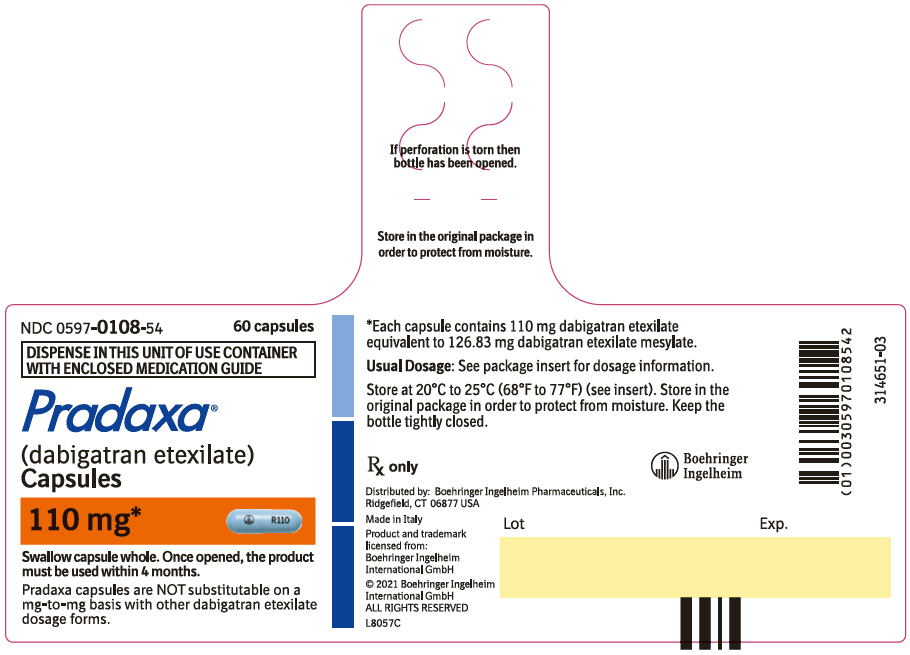
PRINCIPAL DISPLAY PANEL - 110 mg Capsule Bottle Label NDC 0597-0108-54 60 capsules DISPENSE IN THIS UNIT OF USE CONTAINER WITH ENCLOSED MEDICATION GUIDE Pradaxa ® (dabigatran etexilate) Capsules 110 mg* Swallow capsule whole. Once opened, the product must be used within 4 months. Pradaxa capsules are NOT substitutable on a mg-to-mg basis with other dabigatran etexilate dosage forms. PRINCIPAL DISPLAY PANEL - 110 mg Capsule Bottle Label
PRINCIPAL DISPLAY PANEL - 75 mg Capsule Bottle Label NDC 0597-0355-09 60 capsules DISPENSE IN THIS UNIT OF USE CONTAINER WITH ENCLOSED MEDICATION GUIDE Pradaxa ® (dabigatran etexilate) Capsules 75 mg* Swallow capsule whole. Once opened, the product must be used within 4 months. Pradaxa capsules are NOT substitutable on a mg-to-mg basis with other dabigatran etexilate dosage forms. PRINCIPAL DISPLAY PANEL - 75 mg Capsule Bottle Label
PRINCIPAL DISPLAY PANEL - 150 mg Capsule Bottle Label NDC 0597-0360-55 60 capsules DISPENSE IN THIS UNIT OF USE CONTAINER WITH ENCLOSED MEDICATION GUIDE Pradaxa ® (dabigatran etexilate) Capsules 150 mg* Swallow capsule whole. Once opened, the product must be used within 4 months. Pradaxa capsules are NOT substitutable on a mg-to-mg basis with other dabigatran etexilate dosage forms. PRINCIPAL DISPLAY PANEL - 150 mg Capsule Bottle Label
Medicaid utilization by pack size
Medicare Part D spend CMS · PART D · 2026 (Q1)
Reported adverse events (FAERS)
Top reported reactions
Age at onset
Reporter sex
Serious outcomes
Where does this data come from?
About this NDC listing & data coverage
What data is (and isn’t) available for this NDC — tap to expand
| NDC identity (package / product / labeler codes) | ✓ Available |
| Labeler | ✓ Available |
| Product & package description | ✓ Available |
| Marketing category & status | ✓ Available |
| Active ingredient / dosage form / route | ✓ Available |
| FDA label (SPL via DailyMed) | ✓ Available |
| Package photos | ✓ Available |
| Inactive ingredients (structured) | — Not published for this NDC The labeler did not submit a structured excipient list, or no SPL is available. |
| NADAC pharmacy acquisition price (CMS) | — Not published for this NDC CMS publishes NADAC only for NDCs reported in its retail-pharmacy survey. |
| Orange Book / therapeutic-equivalence data | ✓ Available |
| HCPCS J-code billing crosswalk | — Not published for this NDC Most self-administered / retail products have no J-code — that is normal. |
| Medicaid utilization (CMS SDUD) | — Not published for this NDC CMS reports utilization only for NDCs with Medicaid claims above its privacy threshold. |