
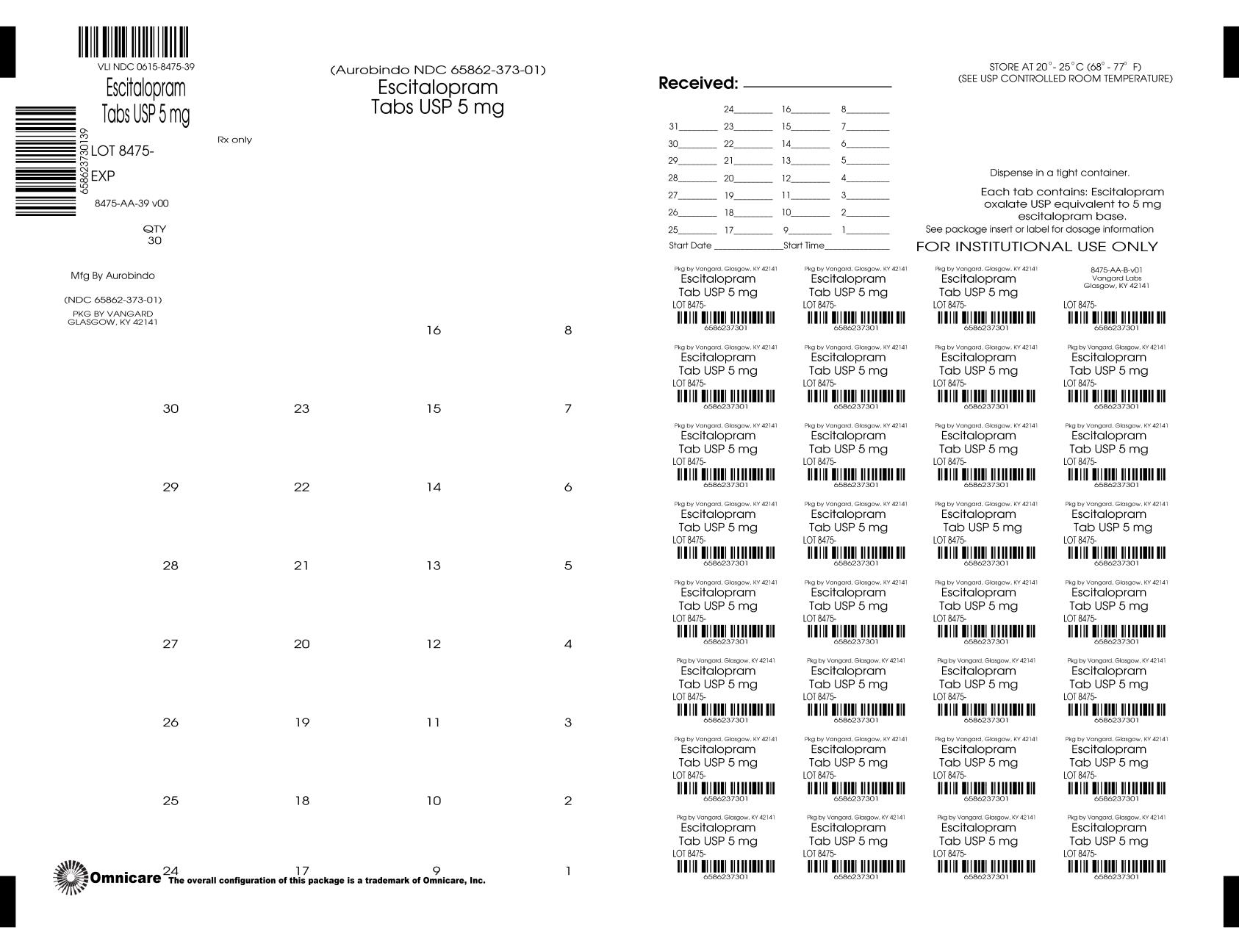
Escitalopram 5 mg Tablet, Film Coated, 30-count — NDC 0615-8475-39 (Billing 00615-8475-39)
This is a package of 30 tablets of Escitalopram 5 mg Tablet, Film Coated from NCS HealthCare of KY, LLC dba Vangard Labs, marketed since Sep 2012 and currently FDA-listed.
NDC database record
One package, one record: these facts belong to NDC 0615-8475-39 alone.
- Record
- FDA NDC Directory package listing · Human prescription drug
- Code segments
- 0615 labeler · 8475 product · 39 package
- Package marketed since
- May 17, 2023
- Sample package
- No — commercial package
- Listing certified through
- Dec 31, 2026
- Barcode (UPC-A, from the NDC)
- 3 0615847539 5
- FDA record last changed
- Jul 24, 2026
Identity & classification
Regulatory identifiers FDA, NLM and CMS codes for this package
- RxCUI (RxNorm): 349332
Where does this data come from?
- FDA openFDA NDC Directory · synced Oct 1, 2026
- FDA label on DailyMed · label index refreshed Oct 6, 2026
- RxNorm (NLM RxNav) · catalog refreshed Oct 1, 2026
- Medi-Span GPI (licensed)
- First Databank (licensed) · refreshed Oct 1, 2026
RxNorm drug class
This medicine belongs to the Serotonin Reuptake Inhibitor class.
Where does this data come from?
- RxClass (NLM) · catalog refreshed Oct 1, 2026
Clinical
Escitalopram is used to treat depression and generalized anxiety disorder (GAD; excessive worry and tension that disrupts daily life and lasts for 6 months or longer). Escitalopram is in a class of antidepressants called selective serotonin reuptake inhibitors (SSRIs). It works by increasing the amount of serotonin, a natural substance in the brain that helps maintain mental balance.
Read the full MedlinePlus article ↗- It treats major depressive disorder and generalized anxiety disorder. Age limits depend on the product, so check with me or your prescriber about yours.
- Take it once a day, morning or evening, with or without food. Capsules should be swallowed whole. Follow your prescriber's directions.
- Please don't stop suddenly. Stopping can cause withdrawal-type symptoms. Talk to your prescriber about lowering the dose gradually.
- The most common are nausea, trouble sleeping, sleepiness, tiredness, sweating and sexual side effects such as delayed ejaculation or lower sex drive. Tell us if sexual problems bot...
Patient education
Supplement & herbal interactions
Escitalopram may be associated with lower levels of 1 nutrient — worth a chat with your pharmacist, not a cause for alarm.
Where does this data come from?
- MedlinePlus (NLM) · refreshed Oct 1, 2026
- FDA label on DailyMed · label index refreshed Oct 6, 2026
Ask a licensed pharmacist directly — free, answered by our team.
Pricing
A drug doesn't have one price. Each row is a different public payment system, and none is what you'd pay at the counter — that depends on your insurance. The ⓘ on each row explains what it measures.
| Price system | Per each | Per package |
|---|---|---|
| Retail pharmacies payNADAC · weekly | Not in the retail survey — common for institutional, discontinued, or low-volume packs. | |
| Medicaid paysCMS SDUD · 12 mo | No recent Medicaid claims on file for this NDC — rare and low-volume NDCs are suppressed in the public data. | |
| Medicare drug plans payPart D · Q2 2026 | $0.1381 | $4.14 / 30 tablets |
Where does this data come from?
- CMS NADAC weekly file
- CMS ASP pricing files · refreshed Sep 20, 2026
- CMS Medicaid State Drug Utilization Data · refreshed Oct 6, 2026
- CMS Part D plan pricing files · refreshed Sep 24, 2026
- VA National Acquisition Center price file
Packaging — all sizes for this product
| Package NDC | Description | Marketing start | Marketing end | Status |
|---|---|---|---|---|
| 00615-8475-05 0615-8475-05 Main listing | 15 TABLET, FILM COATED in 1 BLISTER PACK | 2023-08-10 | — | Active |
| 00615-8475-39 You're viewing this | 30 TABLET, FILM COATED in 1 BLISTER PACK | 2023-05-17 | — | Active |
You're viewing the largest of 2 pack sizes for this product.
Pack size FAQ
What quantity is in this package?
How does this package differ from NDC 00615-8475-05?
What NDC number is used to bill for this package of Escitalopram 5 mg Tablet, Film Coated?
Therapeutic equivalents
| Product | Labeler | Pack | NADAC/unit | TE | Status | Price vs. this |
|---|---|---|---|---|---|---|
| escitalopram 5 mg 13668-0135-01 | Torrent | 100 tablets | $0.042 | AB | Availability likely | — |
| escitalopram 5 mg 16571-0755-01 | Rising | 100 tablets | $0.042 | AB | Availability likely | — |
| Escitalopram 5 mg 43547-0280-10 | SOLCO | 100 tablets | $0.042 | AB | Availability likely | — |
| Escitalopram 5 mg 60687-0865-01 | American | 1 tablet | $0.042 | AB | Availability likely | — |
| Escitalopram 5 mg 65862-0373-01 | Aurobindo | 100 tablets | $0.042 | AB | Availability likely | — |
| Escitalopram 5 mg 68001-0591-00 | BluePoint | 100 tablets | $0.042 | AB | Availability likely | — |
| Escitalopram Oxalate 5 mg 72603-0149-01 | NorthStar | 1000 tablets | $0.042 | AB | Availability likely | — |
| escitalopram oxalate 5 mg 82009-0035-10 | Quallent | 1000 tablets | $0.042 | AB | Availability likely | — |
| Escitalopram 5 mg 16729-0168-01 | Accord | 100 tablets | $0.042 | AB | Availability likely | — |
| Escitalopram 5 mg 59746-0279-01 | Jubilant | 100 tablets | $0.045 | AB | FDA listed | — |
| Escitalopram Oxalate 5 mg 33342-0036-11 | Macleods | 100 tablets | $0.046 | AB | FDA listed | — |
| Lexapro 5 mg 00456-2005-01 | Allergan, | 100 tablets | $14.743 | AB | Availability likely | — |
| Escitalopram 5 mgthis 00615-8475-39 | NCS | 30 tablets | — | AB | FDA listed | — |
| Escitalopram Oxalate 5 mg 43602-0473-10 | Ascent | 1000 tablets | — | AB | FDA listed | — |
| Escitalopram 5 mg 50090-5312-00 | A-S | 90 tablets | — | AB | FDA listed | — |
| escitalopram 5 mg 50090-7177-00 | A-S | 90 tablets | — | AB | FDA listed | — |
| Escitalopram 5 mg 51655-0116-26 | Northwind | 90 tablets | — | AB | FDA listed | — |
| Escitalopram 5 mg 51655-0766-52 | Northwind | 30 tablets | — | AB | FDA listed | — |
| Escitalopram Oxalate 5 mg 53746-0019-05 | Amneal | 500 tablets | — | AB | FDA listed | — |
| escitalopram 5 mg 60760-0894-30 | ST. | 30 tablets | — | AB | FDA listed | — |
| Escitalopram Oxalate 5 mg 65162-0019-03 | Amneal | 30 tablets | — | AB | FDA listed | — |
| escitalopram 5 mg 67046-1472-03 | Coupler | 30 tablets | — | AB | FDA listed | — |
| Escitalopram Oxalate 5 mg 69097-0847-02 | Cipla | 30 tablets | — | AB | FDA listed | — |
| Escitalopram 5 mg 70518-2597-00 | REMEDYREPACK | 1 tablet | — | AB | Discontinued | — |
| escitalopram 5 mg 70518-4300-00 | REMEDYREPACK | 30 tablets | — | AB | FDA listed | — |
| escitalopram oxalate 5 mg 71205-0313-30 | Proficient | 30 tablets | — | AB | FDA listed | — |
| Escitalopram 5 mg 71335-1241-01 | Bryant | 30 tablets | — | AB | Discontinued | — |
| Escitalopram 5 mg 71335-2058-01 | Bryant | 30 tablets | — | AB | FDA listed | — |
| escitalopram 5 mg 71335-2460-01 | Bryant | 30 tablets | — | AB | FDA listed | — |
| Escitalopram 5 mg 71335-9687-01 | Bryant | 30 tablets | — | AB | FDA listed | — |
| escitalopram 5 mg 72162-2242-00 | Bryant | 1000 tablets | — | AB | FDA listed | — |
| Escitalopram 5 mg 72189-0449-30 | Direct_Rx | 30 tablets | — | AB | FDA listed | — |
| Escitalopram oxalate 5 mg 76282-0249-01 | Exelan | 100 tablets | — | AB | FDA listed | — |
| Escitalopram 5 mg 76420-0721-01 | Asclemed | 100 tablets | — | AB | FDA listed | — |
Where does this data come from?
- FDA openFDA NDC Directory · synced Oct 1, 2026
- FDA Orange Book · refreshed Oct 3, 2026
- CMS NADAC weekly file
Availability & generic status
This product is an FDA-approved generic. Other versions of the same drug are listed under Therapeutic equivalents, least expensive first.
Where does this data come from?
- FDA Orange Book · refreshed Oct 3, 2026
What it looks like
Where does this data come from?
- FDA label on DailyMed · label index refreshed Oct 6, 2026
Inactive Ingredients / Excipients
Inactive ingredients, also called excipients, are components of the drug product other than the active ingredient. They may include fillers, dyes, coatings, preservatives, flavors, or other formulation ingredients.
🧪 Avoiding an ingredient? See Escitalopram inactive ingredients by manufacturer: every current product's list side by side, so you can ask your pharmacy for the version that does not list it.
Where does this data come from?
IACT rows and label-wide narrative are kept separate; availability and product-level specificity depend on the submitted label.- FDA label on DailyMed · label index refreshed Oct 6, 2026
- FDA openFDA NDC Directory · synced Oct 1, 2026
Inactive ingredient FAQ
Are inactive ingredients the same for every manufacturer?
Why might an inactive ingredient be missing?
Can inactive ingredients matter?
Manufacturer & labeler
More NDCs from NCS HealthCare of KY, LLC dba Vangard Labs labeler code 00615
- tizanidine 4 mg Tablet NDC 0615-8469-39
- Quetiapine Fumarate 25 mg Tablet, Film Coated NDC 0615-8470-05
- Quetiapine Fumarate 50 mg Tablet, Film Coated NDC 0615-8471-05
- Quetiapine Fumarate 100 mg Tablet, Film Coated NDC 0615-8472-05
- Quetiapine Fumarate 200 mg Tablet, Film Coated NDC 0615-8473-39
- Quetiapine Fumarate 300 mg Tablet, Film Coated NDC 0615-8474-39
- Escitalopram 10 mg Tablet, Film Coated NDC 0615-8476-05
- Escitalopram 20 mg Tablet, Film Coated NDC 0615-8477-05
- Benztropine Mesylate 2 mg Tablet NDC 0615-8478-39
- Cetirizine hydrochloride 10 mg Tablet, Coated NDC 0615-8479-39
- Lithium Carbonate 300 mg Capsule NDC 0615-8480-39
- Dicyclomine hydrochloride 10 mg Capsule NDC 0615-8483-39
Where does this data come from?
- FDA openFDA NDC Directory · synced Oct 1, 2026
- Drugs@FDA
Full prescribing information FDA SPL
🚨 Boxed Warning ▾
WARNING: SUICIDAL THOUGHTS AND BEHAVIORS Antidepressants increased the risk of suicidal thoughts and behaviors in pediatric and young adult patients in short-term studies. Closely monitor all antidepressant-treated patients for clinical worsening, and for emergence of suicidal thoughts and behaviors [see Warnings and Precautions (5.1) ] . Escitalopram oxalate is not approved for use in pediatric patients less than 12 years of age [see Use in Specific Populations (8.4) ].
WARNING: SUICIDAL THOUGHTS AND BEHAVIORS See full prescribing information for complete boxed warning. Increased risk of suicidal thoughts and behavior in pediatric and young adult patients taking antidepressants. Closely monitor all antidepressant-treated patients for clinical worsening and emergence of suicidal thoughts and behaviors (5.1).
Escitalopram oxalate is not approved for use in pediatric patients less than 12 years of age ( 8.4 ).
🎯 Indications and Usage ▾
1 INDICATIONS AND USAGE Escitalopram oxalate is a selective serotonin reuptake inhibitor (SSRI) indicated for: Acute and Maintenance Treatment of Major Depressive Disorder (MDD) in adults and adolescents aged 12 to 17 years (1.1) Acute Treatment of Generalized Anxiety Disorder (GAD) in adults (1.2)
1.1Major Depressive Disorder Escitalopram tablets are indicated for the acute and maintenance treatment of major depressive disorder in adults and in adolescents 12 to 17 years of age [see Clinical Studies (14.1) ] . A major depressive episode (DSM-IV) implies a prominent and relatively persistent (nearly every day for at least 2 weeks) depressed or dysphoric mood that usually interferes with daily functioning, and includes at least five of the following nine symptoms: depressed mood, loss of interest in usual activities, significant change in weight and/or appetite, insomnia or hypersomnia, psychomotor agitation or retardation, increased fatigue, feelings of guilt or worthlessness, slowed thinking or impaired concentration, a suicide attempt or suicidal ideation.
1.2Generalized Anxiety Disorder Escitalopram tablets are indicated for the acute treatment of Generalized Anxiety Disorder (GAD) in adults [see Clinical Studies (14.2) ] . Generalized Anxiety Disorder (DSM-IV) is characterized by excessive anxiety and worry (apprehensive expectation) that is persistent for at least 6 months and which the person finds difficult to control. It must be associated with at least 3 of the following symptoms: restlessness or feeling keyed up or on edge, being easily fatigued, difficulty concentrating or mind going blank, irritability, muscle tension, and sleep disturbance.
⏱️ Dosage and Administration ▾
2 DOSAGE AND ADMINISTRATION Escitalopram tablets should be administered once daily, in the morning or evening, with or without food. Escitalopram tablets should generally be administered once daily, morning or evening with or without food ( 2.1 , 2.2 ). Indication Recommended Dose MDD in Adolescents (2.1) Initial: 10 mg once daily Recommended: 10 mg once daily Maximum: 20 mg once daily MDD in Adults (2.1) Initial: 10 mg once daily Recommended: 10 mg once daily Maximum: 20 mg once daily GAD in Adults (2.2) Initial: 10 mg once daily Recommended: 10 mg once daily No additional benefits seen at 20 mg/day dose (2.1) .
10 mg/day is the recommended dose for most elderly patients and patients with hepatic impairment ( 2.3 ). No dosage adjustment for patients with mild or moderate renal impairment. Use caution in patients with severe renal impairment ( 2.3 ).
Discontinuing Escitalopram Tablets: A gradual dose reduction is recommended ( 2.4 ).
2.1Major Depressive Disorder Initial Treatment Adolescents The recommended dose of escitalopram tablets is 10 mg once daily. A flexible-dose trial of escitalopram tablets (10 to 20 mg/day) demonstrated the effectiveness of escitalopram tablets [see Clinical Studies (14.1) ] . If the dose is increased to 20 mg, this should occur after a minimum of three weeks.
Adults The recommended dose of escitalopram tablets is 10 mg once daily. A fixed-dose trial of escitalopram tablets demonstrated the effectiveness of both 10 mg and 20 mg of escitalopram tablets, but failed to demonstrate a greater benefit of 20 mg over 10 mg [see Clinical Studies (14.1) ] . If the dose is increased to 20 mg, this should occur after a minimum of one week.
Maintenance Treatment It is generally agreed that acute episodes of major depressive disorder require several months or longer of sustained pharmacological therapy beyond response to the acute episode. Systematic evaluation of continuing escitalopram tablets 10 or 20 mg/day in adults patients with major depressive disorder who responded while taking escitalopram tablets during an 8-week, acute-treatment phase demonstrated a benefit of such maintenance treatment [see Clinical Studies (14.1) ] . Nevertheless, the physician who elects to use escitalopram tablets for extended periods should periodically re-evaluate the long-term usefulness of the drug for the individual patient.
Patients should be periodically reassessed to determine the need for maintenance treatment.
2.2Generalized Anxiety Disorder Initial Treatment Adults The recommended starting dose of escitalopram tablets is 10 mg once daily. If the dose is increased to 20 mg, this should occur after a minimum of one week. Maintenance Treatment Generalized anxiety disorder is recognized as a chronic condition.
The efficacy of escitalopram tablets in the treatment of GAD beyond 8 weeks has not been systematically studied. The physician who elects to use escitalopram tablets for extended periods should periodically re-evaluate the long-term usefulness of the drug for the individual patient.
2.3Screen for Bipolar Disorder Prior to Starting Escitalopram Tablets Prior to initiating treatment with escitalopram tablets or another antidepressant, screen patients for a personal family history of bipolar disorder, mania, or hypomania [see Warnings and Precautions (5.5) ].
2.4Special Populations 10 mg/day is the recommended dose for most elderly patients and patients with hepatic impairment. No dosage adjustment is necessary for patients with mild or moderate renal impairment. Escitalopram tablets should be used with caution in patients with severe renal impairment.
2.5Discontinuation of Treatment with Escitalopram Tablets Symptoms associated with discontinuation of escitalopram tablets and other SSRIs and SNRIs have been reported [see Warnings and Precautions (5.3) ] . Patients should be monitored for these symptoms when discontinuing treatment. A gradual reduction in the dose rather than abrupt cessation is recommended wheneve… [Excerpted — this section continues on DailyMed.]
💊 Dosage Forms and Strengths ▾
3 DOSAGE FORMS AND STRENGTHS 5 mg are white to off-white, round, biconvex film-coated tablets debossed with ‘F’ on one side and ‘53’ on the other side. 10 mg are white to off-white, oval shaped, biconvex film-coated tablets debossed with ‘F’ on one side and ‘54’ on the other side with a deep scoreline between ‘5’ and ‘4’. 20 mg are white to off-white, oval shaped, biconvex film-coated tablets debossed with ‘F’ on one side and ‘56’ on the other side with a deep scoreline between ‘5’ and ‘6’.
Tablets: 5 mg, 10 mg (scored) and 20 mg (scored)
⛔ Contraindications ▾
4 CONTRAINDICATIONS Serotonin Syndrome and MAOIs: Do not use MAOIs intended to treat psychiatric disorders with escitalopram tablets or within 14 days of stopping treatment with escitalopram tablets. Do not use escitalopram tablets within 14 days of stopping an MAOI intended to treat psychiatric disorders. In addition, do not start escitalopram tablets in a patient who is being treated with linezolid or intravenous methylene blue (4.1) .
Pimozide: Do not use concomitantly ( 4.2 ). Known hypersensitivity to escitalopram or citalopram or any of the inactive ingredients (4.3) .
4.1Monoamine Oxidase Inhibitors (MAOIs) The use of MAOIs intended to treat psychiatric disorders with escitalopram tablets or within 14 days of stopping treatment with escitalopram tablets are contraindicated because of an increased risk of serotonin syndrome. The use of escitalopram tablets within 14 days of stopping an MAOI intended to treat psychiatric disorders are also contraindicated [see Dosage and Administration (2.5) , and Warnings and Precautions (5.2) ] . Starting escitalopram tablets in a patient who is being treated with MAOIs such as linezolid or intravenous methylene blue is also contraindicated because of an increased risk of serotonin syndrome [see Dosage and Administration (2.6) , and Warnings and Precautions (5.2) ] .
4.2Pimozide Concomitant use in patients taking pimozide is contraindicated [see Drug Interactions (7.10) ] .
4.3Hypersensitivity to escitalopram or citalopram Escitalopram tablets are contraindicated in patients with a hypersensitivity to escitalopram or citalopram or any of the inactive ingredients in escitalopram tablets.
⚠️ Warnings and Cautions ▾
5 WARNINGS AND PRECAUTIONS Serotonin Syndrome: Serotonin syndrome has been reported with SSRIs and SNRIs, including escitalopram oxalate, both when taken alone, but especially when co-administered with other serotonergic agents (including triptans, tricyclic antidepressants, fentanyl, lithium, tramadol, tryptophan, buspirone, amphetamines, and St. John’s Wort). If such symptoms occur, discontinue escitalopram oxalate and initiate supportive treatment.
If concomitant use of escitalopram oxalate with other serotonergic drugs is clinically warranted, patients should be made aware of a potential increased risk for serotonin syndrome, particularly during treatment initiation and dose increases ( 4 , 5.2). Discontinuation of Treatment with Escitalopram Oxalate: A gradual reduction in dose rather than abrupt cessation is recommended whenever possible (5.3) . Seizures: Prescribe with care in patients with a history of seizure (5.4) .
Activation of Mania/Hypomania: Screen patients for bipolar disorder. (5.5) . Hyponatremia: Can occur in association with SIADH (5.6) .
Abnormal Bleeding: Use caution in concomitant use with NSAIDs, aspirin, warfarin or other drugs that affect coagulation (5.7) . Interference with Cognitive and Motor Performance: Use caution when operating machinery (5.8) . Angle Closure Glaucoma: Angle closure glaucoma has occurred in patients with untreated anatomically narrow angles treated with antidepressants (5.9) .
Use in Patients with Concomitant Illness: Use caution in patients with diseases or conditions that produce altered metabolism or hemodynamic responses ( 5.10 ). Sexual Dysfunction: Escitalopram oxalate may cause symptoms of sexual dysfunction ( 5.11 ).
5.1Suicidal Thoughts and Behaviors in Adolescents and Young Adults In pooled analyses of placebo-controlled trials of antidepressant drugs (SSRIs and other antidepressant classes) that included approximately 77,000 adult patients and 4,500 pediatric patients, the incidence of suicidal thoughts and behaviors in the antidepressant-treated patients age 24 years and younger was greater than in placebo-treated patients. There was considerable variation in risk of suicidal thoughts and behaviors among drugs, but there was an increased risk identified in young patients for most drugs studied.
There were differences in absolute risk of suicidal thoughts and behaviors across the different indications, with the highest incidence in patients with MDD. The drug-placebo differences in the number of cases of suicidal thoughts and behaviors per 1000 patients treated are provided in Table 1 . Table 1: Risk Differences of the Number of Patients of Suicidal Thoughts and Behaviors in the Pooled Placebo-Controlled Trials of Antidepressants in Pediatric and Adult Patients Age Range Drug-Placebo Difference in Number of Patients of Suicidal Thoughts and Behaviors per 1000 Patients Treated Increases Compared to Placebo <18 years old 14 additional patients 18 to 24 years old 5 additional patients Decreases Compared to Placebo 25 to 64 years old 1 fewer patient ≥65 years old 6 fewer patients It is unknown whether the risk of suicidal thoughts and behaviors in children, adolescents, and young adults extends to longer-term use, i.e., beyond four months.
However, there is substantial evidence from placebo-controlled maintenance trials in adults with MDD that antidepressants delay the recurrence of depression and that depression itself is a risk factor for suicidal thoughts and behaviors. Monitor all antidepressant-treated patients for any indication for clinical worsening and emergence of suicidal thoughts and behaviors, especially during the initial few months of drug therapy, and at times of dosage changes. Counsel family members or caregivers of patients to monitor for changes in behavior and to alert the healthcare provider.
Consider changing the therapeutic regimen, including possibly discontinuing escitalopram oxalate, in patients whose depression is persistently worse, or who a… [Excerpted — this section continues on DailyMed.]
🤒 Adverse Reactions ▾
6 ADVERSE REACTIONS Most commonly observed adverse reactions (incidence ≥ 5% and at least twice the incidence of placebo patients) are: insomnia, ejaculation disorder (primarily ejaculatory delay), nausea, sweating increased, fatigue and somnolence, decreased libido, and anorgasmia (6.1) . To report SUSPECTED ADVERSE REACTIONS, contact Aurobindo Pharma USA, Inc. at 1-866-850-2876 or FDA at 1-800-FDA-1088 or www.fda.gov/medwatch .
6.1Clinical Trials Experience Because clinical studies are conducted under widely varying conditions, adverse reaction rates observed in the clinical studies of a drug cannot be directly compared to rates in the clinical studies of another drug and may not reflect the rates observed in practice. Clinical Trial Data Sources Pediatrics (6 to 17 years) Adverse events were collected in 576 pediatric patients (286 escitalopram oxalate, 290 placebo) with major depressive disorder in double-blind placebo-controlled studies.
Safety and effectiveness of escitalopram oxalate in pediatric patients less than 12 years of age has not been established. Adults Adverse events information for escitalopram oxalate was collected from 715 patients with major depressive disorder who were exposed to escitalopram and from 592 patients who were exposed to placebo in double-blind, placebo-controlled trials. An additional 284 patients with major depressive disorder were newly exposed to escitalopram in open-label trials.
The adverse event information for escitalopram oxalate in patients with GAD was collected from 429 patients exposed to escitalopram and from 427 patients exposed to placebo in double-blind, placebo-controlled trials. Adverse events during exposure were obtained primarily by general inquiry and recorded by clinical investigators using terminology of their own choosing. Consequently, it is not possible to provide a meaningful estimate of the proportion of individuals experiencing adverse events without first grouping similar types of events into a smaller number of standardized event categories.
In the tables and tabulations that follow, standard World Health Organization (WHO) terminology has been used to classify reported adverse events. The stated frequencies of adverse reactions represent the proportion of individuals who experienced, at least once, a treatment emergent adverse event of the type listed. An event was considered treatment-emergent if it occurred for the first time or worsened while receiving therapy following baseline evaluation.
Adverse Events Associated with Discontinuation of Treatment Major Depressive Disorder Pediatrics (6 to 17 years) Adverse events were associated with discontinuation of 3.5% of 286 patients receiving escitalopram oxalate and 1% of 290 patients receiving placebo. The most common adverse event (incidence at least 1% for escitalopram oxalate and greater than placebo) associated with discontinuation was insomnia (1% escitalopram oxalate, 0% placebo). Adults Among the 715 depressed patients who received escitalopram oxalate in placebo-controlled trials, 6% discontinued treatment due to an adverse event, as compared to 2% of 592 patients receiving placebo.
In two fixed-dose studies, the rate of discontinuation for adverse events in patients receiving 10 mg/day escitalopram oxalate was not significantly different from the rate of discontinuation for adverse events in patients receiving placebo. The rate of discontinuation for adverse events in patients assigned to a fixed dose of 20 mg/day escitalopram oxalate was 10%, which was significantly different from the rate of discontinuation for adverse events in patients receiving 10 mg/day escitalopram oxalate (4%) and placebo (3%).
Adverse events that were associated with the discontinuation of at least 1% of patients treated with escitalopram oxalate, and for which the rate was at least twice that of placebo, were nausea (2%) and ejaculation disorder (2% of male patients). Generalized Anxiety Disorder Adults Among the 429 GAD pa… [Excerpted — this section continues on DailyMed.]
🔄 Drug Interactions ▾
7 DRUG INTERACTIONS Concomitant use with SSRIs, SNRIs or Tryptophan is not recommended ( 7.2 ). Use caution when concomitant use with drugs that affect Hemostasis (NSAIDs, Aspirin, Warfarin) (7.6) .
7.1Monoamine Oxidase Inhibitors (MAOIs) [See Dosage and Administration (2.5 and 2.6) , Contraindications (4.1) and Warnings and Precautions (5.2) ].
7.2Serotonergic Drugs [See Dosage and Administration (2.5 and 2.6) , Contraindications (4.1) and Warnings and Precautions (5.2) ].
7.3Triptans There have been rare postmarketing reports of serotonin syndrome with use of an SSRI and a triptan. If concomitant treatment of escitalopram oxalate with a triptan is clinically warranted, careful observation of the patient is advised, particularly during treatment initiation and dose increases [see Warnings and Precautions (5.2) ] .
7.4CNS Drugs Given the primary CNS effects of escitalopram, caution should be used when it is taken in combination with other centrally acting drugs.
7.5Alcohol Although escitalopram oxalate did not potentiate the cognitive and motor effects of alcohol in a clinical trial, as with other psychotropic medications, the use of alcohol by patients taking escitalopram oxalate is not recommended.
7.6Drugs That Interfere With Hemostasis (NSAIDs, Aspirin, Warfarin, etc.) Serotonin release by platelets plays an important role in hemostasis. Epidemiological studies of the case-control and cohort design that have demonstrated an association between use of psychotropic drugs that interfere with serotonin reuptake and the occurrence of upper gastrointestinal bleeding have also shown that concurrent use of an NSAID or aspirin may potentiate the risk of bleeding. Altered anticoagulant effects, including increased bleeding, have been reported when SSRIs and SNRIs are coadministered with warfarin.
Patients receiving warfarin therapy should be carefully monitored when escitalopram oxalate is initiated or discontinued.
7.7Cimetidine In subjects who had received 21 days of 40 mg/day racemic citalopram, combined administration of 400 mg twice a day cimetidine for 8 days resulted in an increase in citalopram AUC and C max of 43% and 39%, respectively. The clinical significance of these findings is unknown.
7.8Digoxin In subjects who had received 21 days of 40 mg/day racemic citalopram, combined administration of citalopram and digoxin (single dose of 1 mg) did not significantly affect the pharmacokinetics of either citalopram or digoxin.
7.9Lithium Coadministration of racemic citalopram (40 mg/day for 10 days) and lithium (30 mmol/day for 5 days) had no significant effect on the pharmacokinetics of citalopram or lithium. Nevertheless, plasma lithium levels should be monitored with appropriate adjustment to the lithium dose in accordance with standard clinical practice. Because lithium may enhance the serotonergic effects of escitalopram, caution should be exercised when escitalopram oxalate and lithium are coadministered.
7.10Pimozide and Celexa In a controlled study, a single dose of pimozide 2 mg co-administered with racemic citalopram 40 mg given once daily for 11 days was associated with a mean increase in QTc values of approximately 10 msec compared to pimozide given alone. Racemic citalopram did not alter the mean AUC or C max of pimozide. The mechanism of this pharmacodynamic interaction is not known.
7.11Sumatriptan There have been rare postmarketing reports describing patients with weakness, hyperreflexia, and incoordination following the use of an SSRI and sumatriptan. If concomitant treatment with sumatriptan and an SSRI (e.g., fluoxetine, fluvoxamine, paroxetine, sertraline, citalopram, escitalopram) is clinically warranted, appropriate observation of the patient is advised.
7.12Theophylline Combined administration of racemic citalopram (40 mg/day for 21 days) and the CYP1A2 substrate theophylline (single dose of 300 mg) did not affect the pharmacokinetics of theophylline. The effect of theophylline on the pharmaco… [Excerpted — this section continues on DailyMed.]
👥 Use in Specific Populations ▾
8 USE IN SPECIFIC POPULATIONS Pregnancy: SSRI use, particularly later in pregnancy, may increase the risk for persistent pulmonary hypertension and symptoms of poor adaptation (respiratory distress, temperature instability, feeding difficulties, hypotonia, tremor, irritability) in the neonate. ( 8.1 ).
8.1Pregnancy Pregnancy Exposure Registry There is a pregnancy exposure registry that monitors pregnancy outcomes in women exposed to antidepressants during pregnancy. Healthcare providers are encouraged to register patients by calling the National Pregnancy Registry for Antidepressants at 1-844-405-6185 or visiting online at https://womensmentalhealth.org/clinical-and-research-programs/pregnancyregistry/antidepressants/ Risk Summary Available data from published epidemiologic studies and postmarketing reports have not established an increased risk of major birth defects or miscarriage.
There are risks of persistent pulmonary hypertension of the newborn (PPHN) (see Data) and poor neonatal adaptation (see Clinical Considerations) with exposure to selective serotonin reuptake inhibitors (SSRIs), including escitalopram oxalate, during pregnancy. There are risks associated with untreated depression in pregnancy (see Clinical Considerations). In animal reproduction studies, both escitalopram and racemic citalopram have been shown to have adverse effects on embryo/fetal and postnatal development, including fetal structural abnormalities, when administered at doses greater than human therapeutic doses (see Data) .
The estimated background risk of major birth defects and miscarriage for the indicated population is unknown. All pregnancies have a background risk of birth defect, loss, or other adverse outcomes. In the U.S. general population, the estimated background risk of major birth defects and miscarriage in the clinically recognized pregnancies is 2 to 4% and 15 to 20%, respectively.
Clinical Considerations Disease-associated maternal risk and/or embryo/fetal risk Women who discontinue antidepressants are more likely to experience a relapse of major depression than women who continue antidepressants. This finding is from a prospective longitudinal study of 201 pregnant women with a history of major depression, who were euthymic and taking antidepressants at the beginning of pregnancy. Consider the risk of untreated depression when discontinuing or changing treatment with antidepressant medication during pregnancy and postpartum.
Fetal/Neonatal adverse reactions Neonates exposed to SSRIs or SNRIs, including escitalopram oxalate, late in third trimester have developed complications requiring prolonged hospitalization, respiratory support, and tube feeding. Such complications can arise immediately upon delivery. Reported clinical findings have included respiratory distress, cyanosis, apnea, seizures, temperature instability, feeding difficulty, vomiting, hypoglycemia, hypotonia, hypertonia, hyperreflexia, tremor, jitteriness, irritability, and constant crying.
These features are consistent with either a direct toxic effect of SSRIs and SNRIs or, possibly, a drug discontinuation syndrome. It should be noted that, in some cases, the clinical picture is consistent with serotonin syndrome [see Warnings and Precautions (5.2) ]. Data Human Data Exposure to SSRIs, particularly later in pregnancy, may increase the risk for PPHN.
PPHN occurs in 1 to 2 per 1000 live births in the general populations and is associated with substantial neonatal morbidity and mortality. Animal Data In a rat embryo/fetal development study, oral administration of escitalopram (56, 112, or 150 mg/kg/day) to pregnant animals during the period of organogenesis resulted in decreased fetal body weight and associated delays in ossification at the two higher doses [approximately ≥ 55 times the maximum recommended human dose (MRHD) of 20 mg/day on a mg/m 2 basis]. Maternal toxicity (clinical signs and decreased body weight gain and food consumption), mild at 56 mg/kg/day, w… [Excerpted — this section continues on DailyMed.]
🤰 Pregnancy ▾
8.1Pregnancy Pregnancy Exposure Registry There is a pregnancy exposure registry that monitors pregnancy outcomes in women exposed to antidepressants during pregnancy. Healthcare providers are encouraged to register patients by calling the National Pregnancy Registry for Antidepressants at 1-844-405-6185 or visiting online at https://womensmentalhealth.org/clinical-and-research-programs/pregnancyregistry/antidepressants/ Risk Summary Available data from published epidemiologic studies and postmarketing reports have not established an increased risk of major birth defects or miscarriage.
There are risks of persistent pulmonary hypertension of the newborn (PPHN) (see Data) and poor neonatal adaptation (see Clinical Considerations) with exposure to selective serotonin reuptake inhibitors (SSRIs), including escitalopram oxalate, during pregnancy. There are risks associated with untreated depression in pregnancy (see Clinical Considerations). In animal reproduction studies, both escitalopram and racemic citalopram have been shown to have adverse effects on embryo/fetal and postnatal development, including fetal structural abnormalities, when administered at doses greater than human therapeutic doses (see Data) .
The estimated background risk of major birth defects and miscarriage for the indicated population is unknown. All pregnancies have a background risk of birth defect, loss, or other adverse outcomes. In the U.S. general population, the estimated background risk of major birth defects and miscarriage in the clinically recognized pregnancies is 2 to 4% and 15 to 20%, respectively.
Clinical Considerations Disease-associated maternal risk and/or embryo/fetal risk Women who discontinue antidepressants are more likely to experience a relapse of major depression than women who continue antidepressants. This finding is from a prospective longitudinal study of 201 pregnant women with a history of major depression, who were euthymic and taking antidepressants at the beginning of pregnancy. Consider the risk of untreated depression when discontinuing or changing treatment with antidepressant medication during pregnancy and postpartum.
Fetal/Neonatal adverse reactions Neonates exposed to SSRIs or SNRIs, including escitalopram oxalate, late in third trimester have developed complications requiring prolonged hospitalization, respiratory support, and tube feeding. Such complications can arise immediately upon delivery. Reported clinical findings have included respiratory distress, cyanosis, apnea, seizures, temperature instability, feeding difficulty, vomiting, hypoglycemia, hypotonia, hypertonia, hyperreflexia, tremor, jitteriness, irritability, and constant crying.
These features are consistent with either a direct toxic effect of SSRIs and SNRIs or, possibly, a drug discontinuation syndrome. It should be noted that, in some cases, the clinical picture is consistent with serotonin syndrome [see Warnings and Precautions (5.2) ]. Data Human Data Exposure to SSRIs, particularly later in pregnancy, may increase the risk for PPHN.
PPHN occurs in 1 to 2 per 1000 live births in the general populations and is associated with substantial neonatal morbidity and mortality. Animal Data In a rat embryo/fetal development study, oral administration of escitalopram (56, 112, or 150 mg/kg/day) to pregnant animals during the period of organogenesis resulted in decreased fetal body weight and associated delays in ossification at the two higher doses [approximately ≥ 55 times the maximum recommended human dose (MRHD) of 20 mg/day on a mg/m 2 basis]. Maternal toxicity (clinical signs and decreased body weight gain and food consumption), mild at 56 mg/kg/day, was present at all dose levels.
The developmental no-effect dose of 56 mg/kg/day is approximately 27 times the MRHD of 20 mg on a mg/m 2 basis. No malformations were observed at any of the doses tested (as high as 73 times the MRHD on a mg/m 2 basis). When female rats were treated with escitalopram (6, 1… [Excerpted — this section continues on DailyMed.]
🧒 Pediatric Use ▾
8.4Pediatric Use The safety and effectiveness of escitalopram oxalate have been established in adolescents (12 to 17 years of age) for the treatment of major depressive disorder [see Clinical Studies (14.1) ] . Although maintenance efficacy in adolescent patients with major depressive disorder has not been systematically evaluated, maintenance efficacy can be extrapolated from adult data along with comparisons of escitalopram pharmacokinetic parameters in adults and adolescent patients. The safety and effectiveness of escitalopram oxalate have not been established in pediatric (younger than 12 years of age) patients with major depressive disorder.
In a 24-week, open-label safety study in 118 children (aged 7 to 11 years) who had major depressive disorder, the safety findings were consistent with the known safety and tolerability profile for escitalopram oxalate. Safety and effectiveness of escitalopram oxalate has not been established in pediatric patients less than 18 years of age with Generalized Anxiety Disorder. Decreased appetite and weight loss have been observed in association with the use of SSRIs.
Consequently, regular monitoring of weight and growth should be performed in children and adolescents treated with an SSRI such as escitalopram oxalate.
🧓 Geriatric Use ▾
8.5Geriatric Use Approximately 6% of the 1144 patients receiving escitalopram in controlled trials of escitalopram oxalate in major depressive disorder and GAD were 60 years of age or older; elderly patients in these trials received daily doses of escitalopram oxalate between 10 and 20 mg. The number of elderly patients in these trials was insufficient to adequately assess for possible differential efficacy and safety measures on the basis of age. Nevertheless, greater sensitivity of some elderly individuals to effects of escitalopram oxalate cannot be ruled out.
SSRIs and SNRIs, including escitalopram oxalate, have been associated with cases of clinically significant hyponatremia in elderly patients, who may be at greater risk for this adverse event [see Warnings and Precautions (5.6) ]. In two pharmacokinetic studies, escitalopram half-life was increased by approximately 50% in elderly subjects as compared to young subjects and C max was unchanged [see Clinical Pharmacology (12.3) ] . 10 mg/day is the recommended dose for elderly patients [see Dosage and Administration (2.3) ] .
Of 4422 patients in clinical studies of racemic citalopram, 1357 were 60 and over, 1034 were 65 and over, and 457 were 75 and over. No overall differences in safety or effectiveness were observed between these subjects and younger subjects, and other reported clinical experience has not identified differences in responses between the elderly and younger patients, but again, greater sensitivity of some elderly individuals cannot be ruled out.
🆘 Overdosage ▾
10 OVERDOSAGE The following have been reported with escitalopram tablet overdosage: Seizures, which may be delayed, and altered mental status including coma. Cardiovascular toxicity, which may be delayed, including QRS and QTc interval prolongation, wide complex tachyarrhythmias, and torsade de pointes. Hypertension most commonly seen, but rarely can see hypotension alone or with co-ingestants including alcohol.
Serotonin syndrome (patients with a multiple drug overdosage with other proserotonergic drugs may have a higher risk). Prolonged cardiac monitoring is recommended in escitalopram oxalate overdosage ingestions due to the arrhythmia risk. Gastrointestinal decontamination with activated charcoal should be considered in patients who present early after a escitalopram oxalate overdose.
Consider contacting a poison center (1-800-221-2222) or a medical toxicologist for overdosage management recommendations.
🧬 Clinical Pharmacology ▾
12 CLINICAL PHARMACOLOGY
12.1Mechanism of Action The mechanism of antidepressant action of escitalopram, the S-enantiomer of racemic citalopram, is presumed to be linked to potentiation of serotonergic activity in the central nervous system (CNS) resulting from its inhibition of CNS neuronal reuptake of serotonin (5-HT).
12.2Pharmacodynamics In vitro and in vivo studies in animals suggest that escitalopram is a highly selective serotonin reuptake inhibitor (SSRI) with minimal effects on norepinephrine and dopamine neuronal reuptake. Escitalopram is at least 100-fold more potent than the R-enantiomer with respect to inhibition of 5-HT reuptake and inhibition of 5-HT neuronal firing rate. Tolerance to a model of antidepressant effect in rats was not induced by long-term (up to 5 weeks) treatment with escitalopram.
Escitalopram has no or very low affinity for serotonergic (5-HT 1-7 ) or other receptors including alpha- and beta-adrenergic, dopamine (D 1-5 ), histamine (H 1-3 ), muscarinic (M 1-5 ), and benzodiazepine receptors. Escitalopram also does not bind to, or has low affinity for, various ion channels including Na + , K + , Cl - , and Ca ++ channels. Antagonism of muscarinic, histaminergic, and adrenergic receptors has been hypothesized to be associated with various anticholinergic, sedative, and cardiovascular side effects of other psychotropic drugs.
12.3Pharmacokinetics The single- and multiple-dose pharmacokinetics of escitalopram are linear and dose-proportional in a dose range of 10 to 30 mg/day. Biotransformation of escitalopram is mainly hepatic, with a mean terminal half-life of about 27 to 32 hours. With once-daily dosing, steady state plasma concentrations are achieved within approximately one week.
At steady state, the extent of accumulation of escitalopram in plasma in young healthy subjects was 2.2 to 2.5 times the plasma concentrations observed after a single dose. The tablet and the oral solution dosage forms of escitalopram oxalate are bioequivalent. Absorption and Distribution Following a single oral dose (20 mg tablet or solution) of escitalopram, peak blood levels occur at about 5 hours.
Absorption of escitalopram is not affected by food. The absolute bioavailability of citalopram is about 80% relative to an intravenous dose, and the volume of distribution of citalopram is about 12 L/kg. Data specific on escitalopram are unavailable.
The binding of escitalopram to human plasma proteins is approximately 56%. Metabolism and Elimination Following oral administrations of escitalopram, the fraction of drug recovered in the urine as escitalopram and S-demethylcitalopram (S-DCT) is about 8% and 10%, respectively. The oral clearance of escitalopram is 600 mL/min, with approximately 7% of that due to renal clearance.
Escitalopram is metabolized to S-DCT and S-didemethylcitalopram (S-DDCT). In humans, unchanged escitalopram is the predominant compound in plasma. At steady state, the concentration of the escitalopram metabolite S-DCT in plasma is approximately one-third that of escitalopram.
The level of S-DDCT was not detectable in most subjects. In vitro studies show that escitalopram is at least 7 and 27 times more potent than S-DCT and S-DDCT, respectively, in the inhibition of serotonin reuptake, suggesting that the metabolites of escitalopram do not contribute significantly to the antidepressant actions of escitalopram. S-DCT and S-DDCT also have no or very low affinity for serotonergic (5-HT 1-7 ) or other receptors including alpha- and beta-adrenergic, dopamine (D 1-5 ), histamine (H 1-3 ), muscarinic (M 1-5 ), and benzodiazepine receptors.
S-DCT and S-DDCT also do not bind to various ion channels including Na + , K + , Cl - , and Ca ++ channels. In vitro studies using human liver microsomes indicated that CYP3A4 and CYP2C19 are the primary isozymes involved in the N-demethylation of escitalopram. Population Subgroups Age Adolescents - In a single dose study of 10 mg escitalopram, AUC of escitalopram de… [Excerpted — this section continues on DailyMed.]
🧬 Mechanism of Action ▾
12.1Mechanism of Action The mechanism of antidepressant action of escitalopram, the S-enantiomer of racemic citalopram, is presumed to be linked to potentiation of serotonergic activity in the central nervous system (CNS) resulting from its inhibition of CNS neuronal reuptake of serotonin (5-HT).
📦 How Supplied / Storage and Handling ▾
16 HOW SUPPLIED/STORAGE AND HANDLING Escitalopram Tablets USP, 5 mg are white to off-white, round, biconvex film-coated tablets debossed with ‘F’ on one side and ‘53’ on the other side. Blistercards of 30 NDC 0615-8475-39 Blistercards of 15 NDC 0615-8475-05 Escitalopram Tablets USP, 10 mg are white to off-white, oval shaped, biconvex film-coated tablets debossed with ‘F’ on one side and ‘54’ on the other side with a deep scoreline between ‘5’ and ‘4’. Blistercards of 30 NDC 0615-8476-39 Blistercards of 15 NDC 0615-8476-05 Blistercards of 28 NDC 0615-8476-28 Unit dose boxes of 30 NDC 0615-8476-30 Escitalopram Tablets USP, 20 mg are white to off-white, oval shaped, biconvex film-coated tablets debossed with ‘F’ on one side and ‘56’ on the other side with a deep scoreline between ‘5’ and ‘6’.
Storage and Handling Store at 20° to 25°C (68° to 77°F); excursions permitted to 15° to 30°C (59° to 86°F) [see USP Controlled Room Temperature].
📋 Description ▾
11 DESCRIPTION Escitalopram tablets contains escitalopram oxalate, an orally administered selective serotonin reuptake inhibitor (SSRI). Escitalopram is the pure S-enantiomer (single isomer) of the racemic bicyclic phthalane derivative citalopram. Escitalopram oxalate is designated S-(+)-1-[3(dimethyl-amino)propyl]-1-( p -fluorophenyl)-5-phthalancarbonitrile oxalate with the following structural formula: The molecular formula is C 20 H 21 FN 2 O • C 2 H 2 O 4 and the molecular weight is 414.40.
Escitalopram oxalate USP occurs as a white to almost white, crystalline powder and is freely soluble in methanol and dimethyl sulfoxide (DMSO), soluble in isotonic saline solution, sparingly soluble in water and ethanol, slightly soluble in ethyl acetate, and insoluble in heptane. Escitalopram oxalate USP is available as tablets for oral administration. Escitalopram tablets USP are film-coated, containing 6.38 mg, 12.77 mg, 25.54 mg escitalopram oxalate USP in strengths equivalent to 5 mg, 10 mg, and 20 mg, respectively, of escitalopram base.
The 10 and 20 mg tablets are scored. The tablets also contain the following inactive ingredients: butylated hydroxyl anisole, butylated hydroxy toluene, colloidal silicon dioxide, croscarmellose sodium, magnesium stearate, microcrystalline cellulose, silicified microcrystalline cellulose, and talc. The film coating contains hypromellose, polyethylene glycol 400, and titanium dioxide.
Chemical Structure
💬 Information for Patients ▾
17 PATIENT COUNSELING INFORMATION Advise the patient to read the FDA-approved patient labeling ( Medication Guide ). Suicidal Thoughts and Behaviors Advise patients, their families and caregivers to look for the emergence of suicidal ideation and behavior, especially during treatment and when the dose is adjusted up or down, and instruct them to report such symptoms to their healthcare provider [see Boxed Warning and Warnings and Precautions (5.1) ]. Serotonin Syndrome Patients should be cautioned about the risk of serotonin syndrome with the concomitant use of escitalopram oxalate with other serotonergic drugs including triptans, tricyclic antidepressants, fentanyl, lithium, tramadol, tryptophan, buspirone, amphetamines and St.
John’s Wort, and with drugs that impair metabolism of serotonin (in particular, MAOIs, both those intended to treat psychiatric disorders and also others, such as linezolid) [see Warnings and Precautions (5.2) ]. Activation of Mania or Hypomania Advise patients and their caregivers to observe for signs of activation of mania/hypomania and instruct them to report such symptoms to the healthcare provider [see Warnings and Precautions (5.5) ] . Abnormal Bleeding Patients should be cautioned about the concomitant use of escitalopram oxalate and NSAIDs, aspirin, warfarin, or other drugs that affect coagulation since combined use of psychotropic drugs that interfere with serotonin reuptake and these agents has been associated with an increased risk of bleeding [see Warnings and Precautions (5.7) ].
Angle Closure Glaucoma Patients should be advised that taking escitalopram oxalate can cause mild pupillary dilation, which in susceptible individuals, can lead to an episode of angle closure glaucoma. Pre-existing glaucoma is almost always open-angle glaucoma because angle closure glaucoma, when diagnosed, can be treated definitively with iridectomy. Open-angle glaucoma is not a risk factor for angle closure glaucoma.
Patients may wish to be examined to determine whether they are susceptible to angle closure, and have a prophylactic procedure (e.g., iridectomy), if they are susceptible [see Warnings and Precautions (5.9) ] . Sexual Dysfunction Advise patients that use of escitalopram oxalate may cause symptoms of sexual dysfunction in both male and female patients. Inform patients that they should discuss any changes in sexual function and potential management strategies with their healthcare provider [ see Warnings and Precautions (5.11) ].
Concomitant Medications Since escitalopram is the active isomer of racemic citalopram (Celexa), the two agents should not be coadministered. Patients should be advised to inform their physician if they are taking, or plan to take, any prescription or over-the-counter drugs, as there is a potential for interactions. Continuing the Therapy Prescribed While patients may notice improvement with escitalopram oxalate therapy in 1 to 4 weeks, they should be advised to continue therapy as directed.
Interference with Psychomotor Performance Because psychoactive drugs may impair judgment, thinking, or motor skills, patients should be cautioned about operating hazardous machinery, including automobiles, until they are reasonably certain that escitalopram oxalate therapy does not affect their ability to engage in such activities. Alcohol Patients should be told that, although escitalopram oxalate has not been shown in experiments with normal subjects to increase the mental and motor skill impairments caused by alcohol, the concomitant use of escitalopram oxalate and alcohol in depressed patients is not advised.
Pregnancy Advise pregnant women to notify their healthcare providers if they become pregnant or intend to become pregnant during treatment with escitalopram oxalate. Advise patients that escitalopram oxalate use later in pregnancy may lead to increased risk for neonatal complications requiring prolonged hospitalization, respiratory support, tube feeding, and/or persistent pulmonar… [Excerpted — this section continues on DailyMed.]
💬 Medication Guide ▾
Medication Guide Escitalopram Tablets USP (es'' sye tal' oh pram) Read the Medication Guide that comes with escitalopram tablets before you start taking them and each time you get a refill. There may be new information. This Medication Guide does not take the place of talking to your healthcare provider about your medical condition or treatment.
Talk with your healthcare provider if there is something you do not understand or want to learn more about. What is the most important information I should know about escitalopram tablets ? Escitalopram tablets and other antidepressant medicines may cause serious side effects, including: 1.
Suicidal thoughts or actions: Escitalopram tablets and other antidepressant medicines may increase suicidal thoughts or actions in some children, teenagers, or young adults within the first few months of treatment or when the dose is changed. Depression or other serious mental illnesses are the most important causes of suicidal thoughts or actions. Watch for these changes and call your healthcare provider right away if you notice: New or sudden changes in mood, behavior, actions, thoughts, or feelings, especially if severe.
Pay particular attention to such changes when escitalopram tablets are started or when the dose is changed. Keep all follow-up visits with your healthcare provider and call between visits if you are worried about symptoms. Call your healthcare provider right away if you have any of the following symptoms, or call 911 if an emergency, especially if they are new, worse, or worry you: attempts to commit suicide acting on dangerous impulses acting aggressive or violent thoughts about suicide or dying new or worse depression new or worse anxiety or panic attacks feeling agitated, restless, angry or irritable trouble sleeping an increase in activity or talking more than what is normal for you other unusual changes in behavior or mood Call your healthcare provider right away if you have any of the following symptoms, or call 911 if an emergency.
Escitalopram tablets may be associated with these serious side effects: 2. Serotonin Syndrome. This condition can be life-threatening and may include: agitation, hallucinations, coma or other changes in mental status coordination problems or muscle twitching (overactive reflexes) racing heartbeat, high or low blood pressure sweating or fever nausea, vomiting, or diarrhea muscle rigidity 3.
Severe allergic reactions: trouble breathing swelling of the face, tongue, eyes or mouth rash, itchy welts (hives) or blisters, alone or with fever or joint pain 4. Abnormal bleeding: Escitalopram tablets and other antidepressant medicines may increase your risk of bleeding or bruising, especially if you take the blood thinner warfarin (Coumadin ® , Jantoven ® ), a non-steroidal antiinflammatory drug (NSAIDs, like ibuprofen or naproxen), or aspirin. 5.
Seizures or convulsions 6. Manic episodes: greatly increased energy severe trouble sleeping racing thoughts reckless behavior unusually grand ideas excessive happiness or irritability talking more or faster than usual 7. Changes in appetite or weight.
Children and adolescents should have height and weight monitored during treatment. 8. Low salt (sodium) levels in the blood.
Elderly people may be at greater risk for this. Symptoms may include: headache weakness or feeling unsteady confusion, problems concentrating or thinking or memory problems 9. Visual problems eye pain changes in vision swelling or redness in or around the eye Only some people are at risk for these problems.
You may want to undergo an eye examination to see if you are at risk and receive preventative treatment if you are. 10. Sexual Dysfunction.
Taking selective serotonin reuptake inhibitors (SSRIs), including escitalopram tablets, may cause sexual problems. Symptoms in males may include: Delayed ejaculation or inability to have an ejaculation Decreased sex drive Problems getting or keeping an erection Symptoms in females may include: Decreas… [Excerpted — this section continues on DailyMed.]
🧬 Pharmacokinetics ▾
12.3Pharmacokinetics The single- and multiple-dose pharmacokinetics of escitalopram are linear and dose-proportional in a dose range of 10 to 30 mg/day. Biotransformation of escitalopram is mainly hepatic, with a mean terminal half-life of about 27 to 32 hours. With once-daily dosing, steady state plasma concentrations are achieved within approximately one week.
At steady state, the extent of accumulation of escitalopram in plasma in young healthy subjects was 2.2 to 2.5 times the plasma concentrations observed after a single dose. The tablet and the oral solution dosage forms of escitalopram oxalate are bioequivalent. Absorption and Distribution Following a single oral dose (20 mg tablet or solution) of escitalopram, peak blood levels occur at about 5 hours.
Absorption of escitalopram is not affected by food. The absolute bioavailability of citalopram is about 80% relative to an intravenous dose, and the volume of distribution of citalopram is about 12 L/kg. Data specific on escitalopram are unavailable.
The binding of escitalopram to human plasma proteins is approximately 56%. Metabolism and Elimination Following oral administrations of escitalopram, the fraction of drug recovered in the urine as escitalopram and S-demethylcitalopram (S-DCT) is about 8% and 10%, respectively. The oral clearance of escitalopram is 600 mL/min, with approximately 7% of that due to renal clearance.
Escitalopram is metabolized to S-DCT and S-didemethylcitalopram (S-DDCT). In humans, unchanged escitalopram is the predominant compound in plasma. At steady state, the concentration of the escitalopram metabolite S-DCT in plasma is approximately one-third that of escitalopram.
The level of S-DDCT was not detectable in most subjects. In vitro studies show that escitalopram is at least 7 and 27 times more potent than S-DCT and S-DDCT, respectively, in the inhibition of serotonin reuptake, suggesting that the metabolites of escitalopram do not contribute significantly to the antidepressant actions of escitalopram. S-DCT and S-DDCT also have no or very low affinity for serotonergic (5-HT 1-7 ) or other receptors including alpha- and beta-adrenergic, dopamine (D 1-5 ), histamine (H 1-3 ), muscarinic (M 1-5 ), and benzodiazepine receptors.
S-DCT and S-DDCT also do not bind to various ion channels including Na + , K + , Cl - , and Ca ++ channels. In vitro studies using human liver microsomes indicated that CYP3A4 and CYP2C19 are the primary isozymes involved in the N-demethylation of escitalopram. Population Subgroups Age Adolescents - In a single dose study of 10 mg escitalopram, AUC of escitalopram decreased by 19%, and C max increased by 26% in healthy adolescent subjects (12 to 17 years of age) compared to adults.
Following multiple dosing of 40 mg/day citalopram, escitalopram elimination half-life, steady-state C max and AUC were similar in patients with MDD (12 to 17 years of age) compared to adult patients. No adjustment of dosage is needed in adolescent patients. Elderly - Escitalopram pharmacokinetics in subjects ≥ 65 years of age were compared to younger subjects in a single-dose and a multiple-dose study.
Escitalopram AUC and half-life were increased by approximately 50% in elderly subjects, and C max was unchanged. 10 mg is the recommended dose for elderly patients [see Dosage and Administration (2.3) ] . Gender - Based on data from single- and multiple-dose studies measuring escitalopram in elderly, young adults, and adolescents, no dosage adjustment on the basis of gender is needed.
Reduced hepatic function - Citalopram oral clearance was reduced by 37% and half-life was doubled in patients with reduced hepatic function compared to normal subjects. 10 mg is the recommended dose of escitalopram for most hepatically impaired patients [see Dosage and Administration (2.3) ] . Reduced renal function - In patients with mild to moderate renal function impairment, oral clearance of citalopram was reduced by 17% compared to normal subjects.
No adjustme… [Excerpted — this section continues on DailyMed.]
🧬 Pharmacodynamics ▾
12.2Pharmacodynamics In vitro and in vivo studies in animals suggest that escitalopram is a highly selective serotonin reuptake inhibitor (SSRI) with minimal effects on norepinephrine and dopamine neuronal reuptake. Escitalopram is at least 100-fold more potent than the R-enantiomer with respect to inhibition of 5-HT reuptake and inhibition of 5-HT neuronal firing rate. Tolerance to a model of antidepressant effect in rats was not induced by long-term (up to 5 weeks) treatment with escitalopram.
Escitalopram has no or very low affinity for serotonergic (5-HT 1-7 ) or other receptors including alpha- and beta-adrenergic, dopamine (D 1-5 ), histamine (H 1-3 ), muscarinic (M 1-5 ), and benzodiazepine receptors. Escitalopram also does not bind to, or has low affinity for, various ion channels including Na + , K + , Cl - , and Ca ++ channels. Antagonism of muscarinic, histaminergic, and adrenergic receptors has been hypothesized to be associated with various anticholinergic, sedative, and cardiovascular side effects of other psychotropic drugs.
🔬 Clinical Studies ▾
14 CLINICAL STUDIES
14.1Major Depressive Disorder Adolescents The efficacy of escitalopram oxalate as an acute treatment for major depressive disorder in adolescent patients was established in an 8-week, flexible-dose, placebo-controlled study that compared escitalopram oxalate 10 to 20 mg/day to placebo in outpatients 12 to 17 years of age inclusive who met DSM-IV criteria for major depressive disorder. The primary outcome was change from baseline to endpoint in the Children’s Depression Rating Scale - Revised (CDRS-R). In this study, escitalopram oxalate showed statistically significant greater mean improvement compared to placebo on the CDRS-R.
The efficacy of escitalopram oxalate in the acute treatment of major depressive disorder in adolescents was established, in part, on the basis of extrapolation from the 8-week, flexible-dose, placebo-controlled study with racemic citalopram 20 to 40 mg/day. In this outpatient study in children and adolescents 7 to 17 years of age who met DSM-IV criteria for major depressive disorder, citalopram treatment showed statistically significant greater mean improvement from baseline, compared to placebo, on the CDRS-R; the positive results for this trial largely came from the adolescent subgroup.
Two additional flexible-dose, placebo-controlled MDD studies (one escitalopram oxalate study in patients ages 7 to 17 and one citalopram study in adolescents) did not demonstrate efficacy. Although maintenance efficacy in adolescent patients has not been systematically evaluated, maintenance efficacy can be extrapolated from adult data along with comparisons of escitalopram pharmacokinetic parameters in adults and adolescent patients. Adults The efficacy of escitalopram oxalate as a treatment for major depressive disorder was established in three, 8-week, placebo-controlled studies conducted in outpatients between 18 and 65 years of age who met DSM-IV criteria for major depressive disorder.
The primary outcome in all three studies was change from baseline to endpoint in the Montgomery Asberg Depression Rating Scale (MADRS). A fixed-dose study compared 10 mg/day escitalopram oxalate and 20 mg/day escitalopram oxalate to placebo and 40 mg/day citalopram. The 10 mg/day and 20 mg/day escitalopram oxalate treatment groups showed statistically significant greater mean improvement compared to placebo on the MADRS.
The 10 mg and 20 mg escitalopram oxalate groups were similar on this outcome measure. In a second fixed-dose study of 10 mg/day escitalopram oxalate and placebo, the 10 mg/day escitalopram oxalate treatment group showed statistically significant greater mean improvement compared to placebo on the MADRS. In a flexible-dose study, comparing escitalopram oxalate, titrated between 10 and 20 mg/day, to placebo and citalopram, titrated between 20 and 40 mg/day, the escitalopram oxalate treatment group showed statistically significant greater mean improvement compared to placebo on the MADRS.
Analyses of the relationship between treatment outcome and age, gender, and race did not suggest any differential responsiveness on the basis of these patient characteristics. In a longer-term trial, 274 patients meeting (DSM-IV) criteria for major depressive disorder, who had responded during an initial 8 week, open-label treatment phase with escitalopram oxalate 10 or 20 mg/day, were randomized to continuation of escitalopram oxalate at their same dose, or to placebo, for up to 36 weeks of observation for relapse.
Response during the open-label phase was defined by having a decrease of the MADRS total score to ≤ 12. Relapse during the double-blind phase was defined as an increase of the MADRS total score to ≥ 22, or discontinuation due to insufficient clinical response. Patients receiving continued escitalopram oxalate experienced a statistically significant longer time to relapse compared to those receiving placebo.
14.2Generalized Anxiety Disorder The efficacy of escitalopram oxalate in the acute treatment of… [Excerpted — this section continues on DailyMed.]
🔒 Drug Abuse and Dependence ▾
9 DRUG ABUSE AND DEPENDENCE
9.2Abuse and Dependence Physical and Psychological Dependence Animal studies suggest that the abuse liability of racemic citalopram is low. Escitalopram oxalate has not been systematically studied in humans for its potential for abuse, tolerance, or physical dependence. The premarketing clinical experience with escitalopram oxalate did not reveal any drug-seeking behavior.
However, these observations were not systematic and it is not possible to predict on the basis of this limited experience the extent to which a CNS-active drug will be misused, diverted, and/or abused once marketed. Consequently, physicians should carefully evaluate escitalopram oxalate patients for history of drug abuse and follow such patients closely, observing them for signs of misuse or abuse (e.g., development of tolerance, incrementations of dose, drug-seeking behavior).
🧪 Nonclinical Toxicology ▾
13 NONCLINICAL TOXICOLOGY
13.1Carcinogenesis, Mutagenesis, Impairment of Fertility Carcinogenesis Racemic citalopram was administered in the diet to NMRI/BOM strain mice and COBS WI strain rats for 18 and 24 months, respectively. There was no evidence for carcinogenicity of racemic citalopram in mice receiving up to 240 mg/kg/day. There was an increased incidence of small intestine carcinoma in rats receiving 8 or 24 mg/kg/day racemic citalopram.
A no-effect dose for this finding was not established. The relevance of these findings to humans is unknown. Mutagenesis Racemic citalopram was mutagenic in the in vitro bacterial reverse mutation assay (Ames test) in 2 of 5 bacterial strains (Salmonella TA98 and TA1537) in the absence of metabolic activation.
It was clastogenic in the in vitro Chinese hamster lung cell assay for chromosomal aberrations in the presence and absence of metabolic activation. Racemic citalopram was not mutagenic in the in vitro mammalian forward gene mutation assay (HPRT) in mouse lymphoma cells or in a coupled in vitro/in vivo unscheduled DNA synthesis (UDS) assay in rat liver. It was not clastogenic in the in vitro chromosomal aberration assay in human lymphocytes or in two in vivo mouse micronucleus assays.
Impairment of Fertility When racemic citalopram was administered orally to 16 male and 24 female rats prior to and throughout mating and gestation at doses of 32, 48, and 72 mg/kg/day, mating was decreased at all doses, and fertility was decreased at doses ≥ 32 mg/kg/day. Gestation duration was increased at 48 mg/kg/day.
13.2Animal Toxicology and/or Pharmacology Retinal Changes in Rats Pathologic changes (degeneration/atrophy) were observed in the retinas of albino rats in the 2-year carcinogenicity study with racemic citalopram. There was an increase in both incidence and severity of retinal pathology in both male and female rats receiving 80 mg/kg/day. Similar findings were not present in rats receiving 24 mg/kg/day of racemic citalopram for two years, in mice receiving up to 240 mg/kg/day of racemic citalopram for 18 months, or in dogs receiving up to 20 mg/kg/day of racemic citalopram for one year.
Additional studies to investigate the mechanism for this pathology have not been performed, and the potential significance of this effect in humans has not been established. Cardiovascular Changes in Dogs In a one-year toxicology study, 5 of 10 beagle dogs receiving oral racemic citalopram doses of 8 mg/kg/day died suddenly between weeks 17 and 31 following initiation of treatment. Sudden deaths were not observed in rats at doses of racemic citalopram up to 120 mg/kg/day, which produced plasma levels of citalopram and its metabolites demethylcitalopram and didemethylcitalopram (DDCT) similar to those observed in dogs at 8 mg/kg/day.
A subsequent intravenous dosing study demonstrated that in beagle dogs, racemic DDCT caused QT prolongation, a known risk factor for the observed outcome in dogs.
📄 Carcinogenesis, Mutagenesis, Impairment of Fertility ▾
13.1Carcinogenesis, Mutagenesis, Impairment of Fertility Carcinogenesis Racemic citalopram was administered in the diet to NMRI/BOM strain mice and COBS WI strain rats for 18 and 24 months, respectively. There was no evidence for carcinogenicity of racemic citalopram in mice receiving up to 240 mg/kg/day. There was an increased incidence of small intestine carcinoma in rats receiving 8 or 24 mg/kg/day racemic citalopram.
A no-effect dose for this finding was not established. The relevance of these findings to humans is unknown. Mutagenesis Racemic citalopram was mutagenic in the in vitro bacterial reverse mutation assay (Ames test) in 2 of 5 bacterial strains (Salmonella TA98 and TA1537) in the absence of metabolic activation.
It was clastogenic in the in vitro Chinese hamster lung cell assay for chromosomal aberrations in the presence and absence of metabolic activation. Racemic citalopram was not mutagenic in the in vitro mammalian forward gene mutation assay (HPRT) in mouse lymphoma cells or in a coupled in vitro/in vivo unscheduled DNA synthesis (UDS) assay in rat liver. It was not clastogenic in the in vitro chromosomal aberration assay in human lymphocytes or in two in vivo mouse micronucleus assays.
Impairment of Fertility When racemic citalopram was administered orally to 16 male and 24 female rats prior to and throughout mating and gestation at doses of 32, 48, and 72 mg/kg/day, mating was decreased at all doses, and fertility was decreased at doses ≥ 32 mg/kg/day. Gestation duration was increased at 48 mg/kg/day.
📄 Recent Major Changes ▾
Warnings and Precautions ( 5.11 ) 9/2021
📄 Package Label / Principal Display Panel ▾
PRINCIPAL DISPLAY PANEL - 5 MG PRINCIPAL DISPLAY PANEL
PRINCIPAL DISPLAY PANEL - 10 MG BINGO CARD PRINCIPLE DISPLAY PANEL
PRINCIPAL DISPLAY PANEL - 10 MG UNIT DOSE PRINCIPAL DISPLAY PANEL
Medicare Part D spend CMS · PART D · 2026 (Q1)
About this NDC listing & data coverage
What data is (and isn’t) available for this NDC — tap to expand
| NDC identity (package / product / labeler codes) | ✓ Available |
| Labeler | ✓ Available |
| Product & package description | ✓ Available |
| Marketing category & status | ✓ Available |
| Active ingredient / dosage form / route | ✓ Available |
| FDA label (SPL via DailyMed) | ✓ Available |
| Package photos | ✓ Available |
| Inactive ingredients (structured) | — Not published for this NDC The labeler did not submit a structured excipient list, or no SPL is available. |
| NADAC pharmacy acquisition price (CMS) | — Not published for this NDC CMS publishes NADAC only for NDCs reported in its retail-pharmacy survey. |
| Orange Book / therapeutic-equivalence data | ✓ Available |
| HCPCS J-code billing crosswalk | — Not published for this NDC Most self-administered / retail products have no J-code — that is normal. |
| Medicaid utilization (CMS SDUD) | — Not published for this NDC CMS reports utilization only for NDCs with Medicaid claims above its privacy threshold. |