
voriconazole 50 mg Tablet, Film Coated, 500-count — NDC 0781-5667-05 (Billing 00781-5667-05)
This is a package of 500 tablets of voriconazole 50 mg Tablet, Film Coated from Sandoz Inc, marketed since Dec 2011 and currently FDA-listed.
NDC database record
One package, one record: these facts belong to NDC 0781-5667-05 alone.
- Record
- FDA NDC Directory package listing · Human prescription drug
- Code segments
- 0781 labeler · 5667 product · 05 package
- Package marketed since
- Dec 12, 2011
- Sample package
- No — commercial package
- Listing certified through
- Dec 31, 2027
- Barcode (UPC)
- 0307815668310, 0307815667313
- FDA record last changed
- Jul 24, 2026
Other active recalls for Voriconazole (different manufacturers) — 2 · tap to view
Identity & classification
Regulatory identifiers FDA, NLM and CMS codes for this package
Drug-database identifiers Medi-Span GPI and First Databank GCN / HICL / AHFS classification
- GSN (GCN sequence number): 050442
- GCN: 17497
- GPI-14 (Medi-Span): 11407080000320
- HICL (First Databank): 023720
- AHFS class code: 08:14.08.00
- RxCUI (RxNorm): 349434
Where does this data come from?
- FDA openFDA NDC Directory · synced Oct 8, 2026
- FDA label on DailyMed · label index refreshed Oct 6, 2026
- RxNorm (NLM RxNav) · catalog refreshed Oct 1, 2026
- Medi-Span GPI (licensed)
- First Databank (licensed) · refreshed Oct 8, 2026
RxNorm drug class
This medicine belongs to the Azole Antifungal class.
Where does this data come from?
- RxClass (NLM) · catalog refreshed Oct 1, 2026
Clinical
Voriconazole is used in adults and children 2 years of age and older to treat serious fungal infections such as invasive aspergillosis (a fungal infection that begins in the lungs and spreads through the bloodstream to other organs), esophageal candidiasis (a yeast [a type of fungus] infection that may cause white patching in the mouth and throat), and candidemia (a fungal infection in the blood). It is also used to treat certain other fungal infections when other medications will not work for certain patients. Voriconazole is in a class of antifungal medications called triazoles. It works by...
Read the full MedlinePlus article ↗- It treats serious fungal infections. These include invasive aspergillosis, Candida infections in the blood or deep tissues, esophageal candidiasis, and certain Scedosporium and Fus...
- It is usually dosed every 12 hours as a tablet, oral suspension or IV infusion. High-fat meals can lower how much medicine you absorb, so ask me about timing with food. Follow your...
- Vision changes, fever, nausea, vomiting, rash, headache, chills, fast heartbeat and abnormal liver tests are common. Some people have hallucinations. Tell your doctor about anythin...
- Call for yellow skin or eyes, a fast or irregular heartbeat, fainting, a severe blistering or peeling rash, or vision problems that last. Also call for chest tightness or trouble b...
Patient education
Supplement & herbal interactions
Some supplements/herbs that may interact with Voriconazole — tap one for details:
Where does this data come from?
- MedlinePlus (NLM) · refreshed Oct 1, 2026
- FDA label on DailyMed · label index refreshed Oct 6, 2026
Ask a licensed pharmacist directly — free, answered by our team.
Pricing
A drug doesn't have one price. Each row is a different public payment system, and none is what you'd pay at the counter — that depends on your insurance. The ⓘ on each row explains what it measures.
| Price system | Per each | Per package |
|---|---|---|
| Retail pharmacies payNADAC · weekly | Not in the retail survey — common for institutional, discontinued, or low-volume packs. | |
| Medicaid paysCMS SDUD · 12 mo | No recent Medicaid claims on file for this NDC — rare and low-volume NDCs are suppressed in the public data. | |
| Medicare drug plans payPart D · Q2 2026 | $3.43 | $1,715.90 / 500 tablets |
Where does this data come from?
- CMS NADAC weekly file
- CMS ASP pricing files · refreshed Sep 20, 2026
- CMS Medicaid State Drug Utilization Data · refreshed Oct 8, 2026
- CMS Part D plan pricing files · refreshed Sep 24, 2026
- VA National Acquisition Center price file
Packaging — all sizes for this product
| Package NDC | Description | Per unit | Per pack | Marketing start | Marketing end | Status |
|---|---|---|---|---|---|---|
| 00781-5667-05 You're viewing this | 500 TABLET, FILM COATED in 1 BOTTLE | — | — | 2011-12-12 | — | Active |
| 00781-5667-10 0781-5667-10 | 1000 TABLET, FILM COATED in 1 BOTTLE | — | — | 2011-12-12 | — | Active |
| 00781-5667-13 0781-5667-13 | 10 BLISTER PACK in 1 CARTON / 10 TABLET, FILM COATED in 1 BLISTER PACK | — | — | 2011-12-12 | — | Active |
| 00781-5667-31 0781-5667-31 Main listing | 30 TABLET, FILM COATED in 1 BOTTLE | $0.8275 / ea | $24.82 | 2011-12-12 | — | Active |
Pack size FAQ
What quantity is in this package?
How does this package differ from NDC 00781-5667-31?
What NDC number is used to bill for this package of voriconazole 50 mg Tablet, Film Coated?
Prices are the latest CMS NADAC pharmacy acquisition cost per NDC; per-pack figures are per-unit × pack quantity, shown only when the pack is denominated in the same measure NADAC prices.
Therapeutic equivalents
| Product | Labeler | Pack | NADAC/unit | TE | Status | Price vs. this |
|---|---|---|---|---|---|---|
| Voriconazole 50 mg 60687-0294-21 | American | 1 tablet | $0.480 | AB | Discontinued | — |
| voriconazole 50 mg 00904-6596-04 | Major | 30 tablets | $0.827 | AB | Availability likely | — |
| Voriconazole 50 mg 16714-0198-01 | NorthStar | 30 tablets | $0.827 | AB | Availability likely | — |
| Voriconazole 50 mg 27241-0062-03 | Ajanta | 30 tablets | $0.827 | AB | Availability likely | — |
| Voriconazole 50 mg 43547-0377-03 | Solco | 30 tablets | $0.827 | AB | Availability likely | — |
| Voriconazole 50 mg 51079-0164-03 | Mylan | 1 tablet | $0.827 | AB | Availability likely | — |
| Voriconazole 50 mg 60687-0968-21 | American | 1 tablet | $0.827 | AB | Availability likely | — |
| Vfend 50 mg 00049-3170-30 | Roerig | 30 tablets | — | AB | Discontinued | — |
| Voriconazole 50 mg 00378-1626-93 | Mylan | 30 tablets | — | AB | FDA listed | — |
| voriconazole 50 mgthis 00781-5667-05 | Sandoz | 500 tablets | — | AB | FDA listed | — |
| voriconazole 50 mg 43386-0088-03 | Lupin | 30 tablets | — | AB | FDA listed | — |
| Voriconazole 50 mg 48433-0146-03 | Safecor | 1 tablet | — | AB | FDA listed | — |
| voriconazole 50 mg 65841-0830-01 | Zydus | 100 tablets | — | AB | FDA listed | — |
| Voriconazole 50 mg 65862-0891-01 | Aurobindo | 100 tablets | — | AB | FDA listed | — |
| voriconazole 50 mg 68462-0572-13 | Glenmark | 10 tablets | — | AB | FDA listed | — |
| voriconazole 50 mg 72578-0062-01 | Viona | 100 tablets | — | AB | FDA listed | — |
Where does this data come from?
- FDA openFDA NDC Directory · synced Oct 8, 2026
- FDA Orange Book · refreshed Oct 3, 2026
- CMS NADAC weekly file
Availability & generic status
This product is an FDA-approved generic. Other versions of the same drug are listed under Therapeutic equivalents, least expensive first.
Where does this data come from?
- FDA Orange Book · refreshed Oct 3, 2026
What it looks like
Where does this data come from?
- FDA label on DailyMed · label index refreshed Oct 6, 2026
Inactive Ingredients / Excipients
Inactive ingredients, also called excipients, are components of the drug product other than the active ingredient. They may include fillers, dyes, coatings, preservatives, flavors, or other formulation ingredients.
🧪 Avoiding an ingredient? See Voriconazole inactive ingredients by manufacturer: every current product's list side by side, so you can ask your pharmacy for the version that does not list it.
💡 Tap an ingredient (hover on desktop) to see what it is and why it’s used.
-
UNII M28OL1HH48
Croscarmellose sodium is a plant-based substance derived from cellulose. It acts as a disintegrant, helping tablets and capsules break down quickly in the digestive system so the medicine can be absorbed.
-
UNII 3NXW29V3WO
Hypromellose is a plant-based thickener made from cellulose. It's used in medicines as a binder to hold ingredients together, a coating for tablets, and a thickener for liquids.
-
UNII EWQ57Q8I5X
Lactose monohydrate is a natural sugar derived from milk. It serves as a filler and binder in tablets and capsules, helping create the proper size, texture, and consistency of the medicine.
-
UNII 70097M6I30
Magnesium stearate is a salt made from magnesium and stearic acid, a fatty substance. It's used in tablets and capsules as a lubricant and glidant to help ingredients flow smoothly during manufacturing and prevent sticking.
-
UNII U725QWY32X
Povidone K30 is a synthetic polymer made from petroleum. It acts as a binder to hold tablet ingredients together and as a disintegrant to help the tablet break apart in the stomach so the medicine can be absorbed.
-
UNII O8232NY3SJ
A plant-based carbohydrate derived from corn kernels. It acts as a filler to add bulk, a binder to hold ingredients together, and a disintegrant to help the tablet break apart in your stomach for absorption.
-
UNII 15FIX9V2JP
Titanium dioxide is a bright white mineral powder commonly used as a colorant and opacifying agent. It makes pills and tablets white or lighter in color and helps make coatings non-transparent.
-
UNII XHX3C3X673
Triacetin is a clear, oily liquid made from glycerin and acetic acid. It works as a plasticizer and solvent in medicines, helping soften coatings and improve how liquids mix together in formulations.
8 inactive ingredients listed in the exact product block matched to this NDC.
Where does this data come from?
ingredient classCode="IACT" elements from the exact product block matched by this NDC. Label-section narrative from DailyMed / the openFDA label index is shown separately when available.- FDA label on DailyMed · label index refreshed Oct 6, 2026
- FDA openFDA NDC Directory · synced Oct 8, 2026
Inactive ingredient FAQ
Are inactive ingredients the same for every manufacturer?
Why might an inactive ingredient be missing?
Can inactive ingredients matter?
Manufacturer & labeler
More NDCs from Sandoz Inc labeler code 00781
- Entacapone 200 mg Tablet, Film Coated NDC 0781-5578-01
- Carbidopa, Levodopa, and Entacapone 12.5 mg; 50 mg; 200 mg Tablet, Film Coated NDC 0781-5613-01
- Carbidopa, Levodopa, and Entacapone 18.75 mg; 75 mg; 200 mg Tablet, Film Coated NDC 0781-5625-01
- Carbidopa, Levodopa, and Entacapone 25 mg; 100 mg; 200 mg Tablet, Film Coated NDC 0781-5637-01
- Carbidopa, Levodopa, and Entacapone 31.25 mg; 125 mg; 200 mg Tablet, Film Coated NDC 0781-5641-01
- Carbidopa, Levodopa, and Entacapone 37.5 mg; 150 mg; 200 mg Tablet, Film Coated NDC 0781-5654-01
- voriconazole 200 mg Tablet, Film Coated NDC 0781-5668-05
- Carbidopa, Levodopa, and Entacapone 50 mg; 200 mg; 200 mg Tablet, Film Coated NDC 0781-5669-01
- Ezetimibe 10 mg Tablet NDC 0781-5690-05
- Sitagliptin Phosphate 25 mg Tablet, Film Coated NDC 0781-5766-31
- Sitagliptin Phosphate 50 mg Tablet, Film Coated NDC 0781-5768-31
- Sitagliptin Phosphate 100 mg Tablet, Film Coated NDC 0781-5770-10
Where does this data come from?
- FDA openFDA NDC Directory · synced Oct 8, 2026
- Drugs@FDA
Full prescribing information FDA SPL
🎯 Indications and Usage ▾
1 INDICATIONS AND USAGE Voriconazole tablets are an azole antifungal indicated for the treatment of adults and pediatric patients 2 years of age and older with: • Invasive aspergillosis ( 1.1 ) • Candidemia in non-neutropenics and other deep tissue Candida infections ( 1.2 ) • Esophageal candidiasis ( 1.3 ) • Serious fungal infections caused by Scedosporium apiospermum and Fusarium species including Fusarium solani , in patients intolerant of, or refractory to, other therapy ( 1.4 )
1.1Invasive Aspergillosis Voriconazole tablets are indicated in adults and pediatric patients (2 years of age and older) for the treatment of invasive aspergillosis (IA). In clinical trials, the majority of isolates recovered were Aspergillus fumigatus . There was a small number of cases of culture-proven disease due to species of Aspergillus other than A. fumigatus [see Clinical Studies (14.1 , 14.5) and Microbiology (12.4) ] .
1.2Candidemia in Non-neutropenic Patients and Other Deep Tissue Candida Infections Voriconazole tablets are indicated in adults and pediatric patients (2 years of age and older) for the treatment of candidemia in non-neutropenic patients and the following Candida infections: disseminated infections in skin and infections in abdomen, kidney, bladder wall, and wounds [see Clinical Studies (14.2 , 14.5) and Microbiology (12.4) ].
1.3Esophageal Candidiasis Voriconazole tablets are indicated in adults and pediatric patients (2 years of age and older) for the treatment of esophageal candidiasis (EC) [see Clinical Studies (14.3 , 14.5) and Microbiology (12.4) ].
1.4Scedosporiosis and Fusariosis Voriconazole tablets are indicated for the treatment of serious fungal infections caused by Scedosporium apiospermum (asexual form of Pseudallescheria boydii ) and Fusarium spp. including Fusarium solani , in adults and pediatric patients (2 years of age and older) intolerant of, or refractory to, other therapy [see Clinical Studies (14.4) and Microbiology (12.4) ].
1.5Usage Specimens for fungal culture and other relevant laboratory studies (including histopathology) should be obtained prior to therapy to isolate and identify causative organism(s). Therapy may be instituted before the results of the cultures and other laboratory studies are known. However, once these results become available, antifungal therapy should be adjusted accordingly.
⏱️ Dosage and Administration ▾
2 DOSAGE AND ADMINISTRATION • Dosage in Adults ( 2.3 ) Infection Loading dose Maintenance Dose Intravenous infusion Intravenous infusion Oral tablets Invasive Aspergillosis 6 mg/kg every 12 hours for the first 24 hours 4 mg/kg every 12 hours 200 mg every 12 hours Candidemia in nonneutropenics and other deep tissue Candida infections 3 to 4 mg/kg every 12 hours 200 mg every 12 hours Scedosporiosis and Fusariosis 4 mg/kg every 12 hours 200 mg every 12 hours Esophageal Candidiasis Not Evaluated Not Evaluated 200 mg every 12 hours • Adult patients weighing less than 40 kg: oral maintenance dose 100 mg or 150 mg every 12 hours • Hepatic Impairment : Use half the maintenance dose in adult patients with mild to moderate hepatic impairment (Child-Pugh Class A and B) ( 2.5 ) • Renal Impairment : Avoid intravenous administration in adult patients with moderate to severe renal impairment (creatinine clearance <50 mL/min) ( 2.6 ) • Dosage in Pediatric Patients 2 years of age and older ( 2.4 ) • For pediatric patients 2 to less than 12 years of age and 12 to 14 years of age weighing less than 50 kg see Table below.
Infection Loading Dose Maintenance Dose Intravenous infusion Intravenous infusion Oral tablets Invasive Aspergillosis 9 mg/kg every 12 hours for the first 24 hours 8 mg/kg every 12 hours after the first 24 hours 9 mg/kg every 12 hours (maximum dose of 350 mg every 12 hours) Candidemia in nonneutropenics and other deep tissue Candida infections Scedosporiosis and Fusariosis Esophageal Candidiasis Not Evaluated 4 mg/kg every 12 hours 9 mg/kg every 12 hours (maximum dose of 350 mg every 12 hours) • For pediatric patients aged 12 to 14 years weighing greater than or equal to 50 kg and those aged 15 years and older regardless of body weight use adult dosage.
( 2.4 ) • Dosage adjustment of voriconazole in pediatric patients with renal or hepatic impairment has not been established. (2.5 , 2.6 )
2.1Important Administration Instructions for Use in All Patients Administer voriconazole tablets at least one hour before or after a meal.
2.3Recommended Dosing Regimen in Adults Invasive aspergillosis and serious fungal infections due to Fusarium spp . and Scedosporium apiospermum See Table 1 . Therapy must be initiated with the specified loading dose regimen of intravenous voriconazole on Day 1 followed by the recommended maintenance dose (RMD) regimen. Intravenous treatment should be continued for at least 7 days.
Once the patient has clinically improved and can tolerate medication given by mouth, the oral tablet form or oral suspension form of voriconazole may be utilized. The recommended oral maintenance dose of 200 mg achieves a voriconazole exposure similar to 3 mg/kg intravenously; a 300 mg oral dose achieves an exposure similar to 4 mg/kg intravenously [see Clinical Pharmacology (12.3) ] . Candidemia in non-neutropenic patients and other deep tissue candida infections See Table 1 .
Patients should be treated for at least 14 days following resolution of symptoms or following last positive culture, whichever is longer. Esophageal Candidiasis See Table 1 . Patients should be treated for a minimum of 14 days and for at least 7 days following resolution of symptoms.
Table 1: Recommended Dosing Regimen (Adults) Infection Loading Dose Maintenance Dose a,b Intravenous infusion Intravenous infusion Oral tablets c Invasive Aspergillosis d 6 mg/kg every 12 hours for the first 24 hours 4 mg/kg every 12 hours 200 mg every 12 hours Candidemia in nonneutropenic patients and other deep tissue Candida infections 6 mg/kg every 12 hours for the first 24 hours 3 to 4 mg/kg every 12 hours e 200 mg every 12 hours Esophageal Candidiasis Not Evaluated f Not Evaluated f 200 mg every 12 hours Scedosporiosis and Fusariosis 6 mg/kg every 12 hours for the first 24 hours 4 mg/kg every 12 hours 200 mg every 12 hours a Increase dose when voriconazole is coadministered with phenytoin or efavirenz (7); Decrease dose in patients with hepatic impairment ( 2.5 ) b In he… [Excerpted — this section continues on DailyMed.]
💊 Dosage Forms and Strengths ▾
3 DOSAGE FORMS AND STRENGTHS Voriconazole tablets, 50 mg are white to off-white, round, biconvex, film coated tablets with 'SZ' debossed on one side and '132' debossed on the other side. Voriconazole tablets, 200 mg are white to off-white, capsule shaped, biconvex, film coated tablets with 'SZ' debossed on one side and '133' debossed on the other side. • Film-coated tablets: 50 mg, 200 mg voriconazole ( 3 )
⛔ Contraindications ▾
4 CONTRAINDICATIONS • Voriconazole tablets are contraindicated in patients with known hypersensitivity to voriconazole or its excipients [see Warnings and Precautions ( 5.5 ) and Adverse Reactions ( 6.1 , 6.2 )]. There is no information regarding cross-sensitivity between voriconazole and other azole antifungal agents. Refer to the prescribing information for other azole antifungal agents. • Concomitant use of voriconazole tablets with the interacting drugs described and listed below in this section are a guide and not considered a comprehensive list of all possible drugs that may be contraindicated with voriconazole tablets.
1. Concomitant use of voriconazole tablets are contraindicated with drugs that are highly dependent on CYP3A4 for metabolism, and for which elevated plasma concentrations are associated with serious and/or life-threatening reactions [see Drug Interactions ( 7 )]: • Eplerenone • Ergot alkaloids (e.g., ergotamine, dihydroergotamine) • Finerenone • Ivabradine • Lurasidone • Naloxegol • Pimozide • Quinidine • Rifabutin [see Clinical Pharmacology ( 12.3 )] • Sirolimus [see Clinical Pharmacology ( 12.3 )] • Tolvaptan • Venetoclax: Coadministration at initiation and during the ramp-up phase is contraindicated in patients with chronic lymphocytic leukemia (CLL) or small lymphocytic lymphoma (SLL) due to the potential for increased risk of tumor lysis syndrome [see Drug Interactions ( 7 )]. • Voclosporin 2.
Concomitant use of voriconazole tablets are contraindicated with drugs and herbal products that induce CYP2C19, CYP2C9, and/or CYP3A4 and for which significantly reduced voriconazole plasma concentrations may be associated with loss of efficacy [see Drug Interactions ( 7 )]: • Carbamazepine • Efavirenz • Concomitant use with efavirenz dosages of 400 mg every 24 hours or higher is contraindicated [see Clinical Pharmacology ( 12.3 )]. • Long-acting barbiturates • Rifabutin • Rifampin • Ritonavir • Concomitant use with high-dose ritonavir (400 mg every 12 hours) is contraindicated.
Concomitant use with low-dose ritonavir (100 mg every 12 hours) should be avoided, unless an assessment of the benefit/risk to the patient justifies the use of voriconazole tablets [see Clinical Pharmacology ( 12.3 )]. • St. John’s Wort [see Clinical Pharmacology ( 12.3 )] • Known hypersensitivity to voriconazole or its excipients ( 4 ) • Concomitant use with drugs that are highly dependent on CYP3A4 for metabolism, and for which elevated plasma concentrations are associated with serious and/or life-threatening reactions ( 4 , 7 ) • Concomitant use with drugs and herbal products that induce CYP2C19, CYP2C9, and/or CYP3A4 and for which significantly reduced voriconazole plasma concentrations may be associated with loss of efficacy ( 4 , 7 )
⚠️ Warnings and Cautions ▾
5 WARNINGS AND PRECAUTIONS • Hepatic Toxicity : Serious hepatic reactions reported. Evaluate liver function tests at start of and during voriconazole therapy ( 5.1 ) • Arrhythmias and QT Prolongation : Correct potassium, magnesium and calcium prior to use; caution patients with proarrhythmic conditions ( 5.2 ) • Infusion Related Reactions (including anaphylaxis) : Stop the infusion ( 5.3 ) • Visual Disturbances (including optic neuritis and papilledema): Monitor visual function if treatment continues beyond 28 days ( 5.4 ) • Severe Cutaneous Adverse Reactions : Discontinue for exfoliative cutaneous reactions ( 5.5 ) • Photosensitivity : Avoid sunlight due to risk of photosensitivity ( 5.6 ) • Adrenal Dysfunction: Carefully monitor patients receiving voriconazole and corticosteroids for adrenal dysfunction both during and after voriconazole treatment.
Instruct patients to seek immediate medical care if they develop signs and symptoms of Cushing’s syndrome or adrenal insufficiency ( 5.8 ) • Embryo-Fetal Toxicity : Voriconazole can cause fetal harm when administered to a pregnant woman. Inform pregnant patients of the potential hazard to the fetus. Advise females of reproductive potential to use effective contraception during treatment with voriconazole ( 5.9 , 8.1 , 8.3 ) • Skeletal Adverse Reactions : Fluorosis and periostitis with long-term voriconazole therapy.
Discontinue if these adverse reactions occur ( 5.12 ) • Clinically Significant Drug Interactions : Review patient's concomitant medications ( 5.13 , 7 ) • Patients with Hereditary Galactose Intolerance, Lapp Lactase Deficiency or Glucose-Galactose Malabsorption: Voriconazole tablets should not be given to these patients because it contains lactose ( 5.14 )
5.1Hepatic Toxicity In clinical trials, there have been uncommon cases of serious hepatic reactions during treatment with voriconazole (including clinical hepatitis, cholestasis and fulminant hepatic failure, including fatalities). Instances of hepatic reactions were noted to occur primarily in patients with serious underlying medical conditions (predominantly hematological malignancy). Hepatic reactions, including hepatitis and jaundice, have occurred among patients with no other identifiable risk factors.
Liver dysfunction has usually been reversible on discontinuation of therapy [see Adverse Reactions ( 6.1 )] . A higher frequency of liver enzyme elevations was observed in the pediatric population [see Adverse Reactions ( 6.1 )] . Hepatic function should be monitored in both adult and pediatric patients.
Measure serum transaminase levels and bilirubin at the initiation of voriconazole therapy and monitor at least weekly for the first month of treatment. Monitoring frequency can be reduced to monthly during continued use if no clinically significant changes are noted. If liver function tests become markedly elevated compared to baseline, voriconazole should be discontinued unless the medical judgment of the benefit/risk of the treatment for the patient justifies continued use [see Dosage and Administration ( 2.5 ) and Adverse Reactions ( 6.1 )] .
5.2Arrhythmias and QT Prolongation Some azoles, including voriconazole, have been associated with prolongation of the QT interval on the electrocardiogram. During clinical development and post-marketing surveillance, there have been rare cases of arrhythmias, (including ventricular arrhythmias such as torsade de pointes ), cardiac arrests and sudden deaths in patients taking voriconazole. These cases usually involved seriously ill patients with multiple confounding risk factors, such as history of cardiotoxic chemotherapy, cardiomyopathy, hypokalemia and concomitant medications that may have been contributory.
Voriconazole should be administered with caution to patients with potentially proarrhythmic conditions, such as: • Congenital or acquired QT prolongation • Cardiomyopathy, in particular when heart failure is present • Sinus bradycardia • Existing symptomatic arrhyt… [Excerpted — this section continues on DailyMed.]
🤒 Adverse Reactions ▾
6 ADVERSE REACTIONS The following serious adverse reactions are described elsewhere in the labeling: Hepatic Toxicity [see Warnings and Precautions ( 5.1 )] Arrhythmias and QT Prolongation [see Warnings and Precautions ( 5.2 )] Infusion Related Reactions [see Warnings and Precautions ( 5.3 )] Visual Disturbances [see Warnings and Precautions ( 5.4 )] Severe Cutaneous Adverse Reactions [see Warnings and Precautions ( 5.5 )] Photosensitivity [see Warnings and Precautions ( 5.6 )] Renal Toxicity [see Warnings and Precautions ( 5.7 )] • Adult Patients : The most common adverse reactions (incidence ≥2%) were visual disturbances, fever, nausea, rash, vomiting, chills, headache, liver function test abnormal, tachycardia, hallucinations ( 6 ) • Pediatric Patients : The most common adverse reactions (incidence ≥5%) were visual disturbances, pyrexia, vomiting, epistaxis, nausea, rash, abdominal pain, diarrhea, hypertension, hypokalemia, cough, headache, thrombocytopenia, ALT abnormal, hypotension, peripheral edema, hyperglycemia, tachycardia, dyspnea, hypocalcemia, hypophosphatemia, LFT abnormal, mucosal inflammation, photophobia, abdominal distention, constipation, dizziness, hallucinations, hemoptysis, hypoalbuminemia, hypomagnesemia, renal impairment, upper respiratory tract infection ( 6 ) To report SUSPECTED ADVERSE REACTIONS, contact Sandoz Inc. at 1-800-525-8747 or FDA at 1-800-FDA-1088 or www.fda.gov/medwatch.
6.1Clinical Trials Experience Because clinical trials are conducted under widely varying conditions, adverse reaction rates observed in clinical trials of a drug cannot be directly compared to rates in the clinical trials of another drug and may not reflect the rates observed in practice. Clinical Trials Experience in Adults Overview The most frequently reported adverse reactions (see Table 4) in the adult therapeutic trials were visual disturbances (18.7%), fever (5.7%), nausea (5.4%), rash (5.3%), vomiting (4.4%), chills (3.7%), headache (3.0%), liver function test increased (2.7%), tachycardia (2.4%), hallucinations (2.4%).
The adverse reactions which most often led to discontinuation of voriconazole therapy were elevated liver function tests, rash, and visual disturbances [see Warnings and Precautions ( 5.1 , 5.4) and Adverse Reactions ( 6.1 )] . The data described in Table 4 reflect exposure to voriconazole in 1,655 patients in nine therapeutic studies. This represents a heterogeneous population, including immunocompromised patients, e.g., patients with hematological malignancy or HIV and non-neutropenic patients.
This subgroup does not include healthy subjects and patients treated in the compassionate use and non-therapeutic studies. This patient population was 62% male, had a mean age of 46 years (range 11 to 90, including 51 patients aged 12 to 18 years), and was 78% White and 10% Black. Five hundred sixty one patients had a duration of voriconazole therapy of greater than 12 weeks, with 136 patients receiving voriconazole for over six months.
Table 4 includes all adverse reactions which were reported at an incidence of ≥2% during voriconazole therapy in the all therapeutic studies population, studies 307/602 and 608 combined, or study 305, as well as events of concern which occurred at an incidence of <2%. In study 307/602, 381 patients (196 on voriconazole, 185 on amphotericin B) were treated to compare voriconazole to amphotericin B followed by other licensed antifungal therapy (OLAT) in the primary treatment of patients with acute IA. The rate of discontinuation from voriconazole study medication due to adverse reactions was 21.4% (42/196 patients).
In study 608, 403 patients with candidemia were treated to compare voriconazole (272 patients) to the regimen of amphotericin B followed by fluconazole (131 patients). The rate of discontinuation from voriconazole study medication due to adverse reactions was 19.5% out of 272 patients. Study 305 evaluated the effects of oral voriconazole (200 patients) and oral flu… [Excerpted — this section continues on DailyMed.]
🔄 Drug Interactions ▾
7 DRUG INTERACTIONS Voriconazole is metabolized by cytochrome P450 isoenzymes, CYP2C19, CYP2C9, and CYP3A4. Therefore, inhibitors or inducers of these isoenzymes may increase or decrease voriconazole plasma concentrations, respectively. Voriconazole is a strong inhibitor of CYP3A4, and also inhibits CYP2C19 and CYP2C9.
Therefore, voriconazole may increase the plasma concentrations of substances metabolized by these CYP450 isoenzymes. Table 10 and Table 11 provide listings of clinically significant drug interactions, including contraindicated drugs [see Contraindications ( 4 )]. Drugs listed in Table 10 and Table 11 are a guide and not considered a comprehensive list of all possible drugs and herbal products that are contraindicated or may interact with voriconazole tablets.
Table 10: Effect of Other Drugs on Voriconazole Pharmacokinetics [see Clinical Pharmacology ( 12.3 )] Drug/Drug Class (Mechanism of Interaction by the Drug) Voriconazole Plasma Exposure (C max and AUC τ after 200 mg every 12 hours) Prevention or Management Recommendations Rifampin * and Rifabutin * (CYP450 Induction) Significantly Reduced Contraindicated Efavirenz (400 mg every 24 hours) ** (CYP450 Induction) Significantly Reduced Contraindicated Efavirenz (300 mg every 24 hours) ** (CYP450 Induction) Slight Decrease in AUC τ When voriconazole is concomitantly administered with efavirenz, voriconazole oral maintenance dose should be increased to 400 mg every 12 hours and efavirenz should be decreased to 300 mg every 24 hours.
High-dose Ritonavir (400 mg every 12 hours) ** (CYP450 Induction) Significantly Reduced Contraindicated Low-dose Ritonavir (100 mg every 12 hours) ** (CYP450 Induction) Reduced Concomitant administration of voriconazole and low-dose ritonavir (100 mg every 12 hours) should be avoided, unless an assessment of the benefit/risk to the patient justifies the use of voriconazole. Carbamazepine (CYP450 Induction) Not Studied In Vivo or In Vitro , but Likely to Result in Significant Reduction Contraindicated Long Acting Barbiturates (e.g., phenobarbital, mephobarbital) (CYP450 Induction) Not Studied In Vivo or In Vitro , but Likely to Result in Significant Reduction Contraindicated Phenytoin * (CYP450 Induction) Significantly Reduced Increase voriconazole maintenance dose from 4 mg/kg to 5 mg/kg IV every 12 hours or from 200 mg to 400 mg orally every 12 hours (100 mg to 200 mg orally every 12 hours in patients weighing less than 40 kg).
Letermovir (CYP2C9/2C19 Induction) Reduced If concomitant administration of voriconazole with letermovir cannot be avoided, monitor for reduced effectiveness of voriconazole. St. John's Wort (CYP450 inducer; P-gp inducer) Significantly Reduced Contraindicated Oral Contraceptives ** containing ethinyl estradiol and norethindrone (CYP2C19 Inhibition) Increased Monitoring for adverse reactions and toxicity related to voriconazole is recommended for concomitant administration with oral contraceptives.
Fluconazole ** (CYP2C9, CYP2C19 and CYP3A4 Inhibition) Significantly Increased Avoid concomitant administration of voriconazole and fluconazole. Monitoring for adverse reactions and toxicity related to voriconazole is started within 24 hours after the last dose of fluconazole. Other HIV Protease Inhibitors (CYP3A4 Inhibition) In Vivo Studies Showed No Significant Effects of Indinavir on Voriconazole Exposure No dosage adjustment in the voriconazole dosage needed for concomitant administration with indinavir.
In Vitro Studies Demonstrated Potential for Inhibition of Voriconazole Metabolism (Increased Plasma Exposure) Frequent monitoring for adverse reactions and toxicity related to voriconazole for concomitant administration with other HIV protease inhibitors. Other NNRTIs *** (CYP3A4 Inhibition or CYP450 Induction) In Vitro Studies Demonstrated Potential for Inhibition of Voriconazole Metabolism by Delavirdine and Other NNRTIs (Increased Plasma Exposure) Frequent monitoring for adverse reactions and toxicity related t… [Excerpted — this section continues on DailyMed.]
👥 Use in Specific Populations ▾
8 USE IN SPECIFIC POPULATIONS • Pediatrics : Safety and effectiveness in patients younger than 2 years has not been established ( 8.4 )
8.1Pregnancy Risk Summary Voriconazole can cause fetal harm when administered to a pregnant woman. There are no available data on the use of voriconazole in pregnant women. In animal reproduction studies, oral voriconazole was associated with fetal malformations in rats and fetal toxicity in rabbits.
Cleft palates and hydronephrosis/hydroureter were observed in rat pups exposed to voriconazole during organogenesis at and above 10 mg/kg (0.3 times the RMD of 200 mg every 12 hours based on body surface area comparisons). In rabbits, embryomortality, reduced fetal weight and increased incidence of skeletal variations, cervical ribs and extrasternal ossification sites were observed in pups when pregnant rabbits were orally dosed at 100 mg/kg (6 times the RMD based on body surface area comparisons) during organogenesis.
Rats exposed to voriconazole from implantation to weaning experienced increased gestational length and dystocia, which were associated with increased perinatal pup mortality at the 10 mg/kg dose [see Data] . If this drug is used during pregnancy, or if the patient becomes pregnant while taking this drug, inform the patient of the potential hazard to the fetus [see Warnings and Precautions ( 5.9 )] . The background risk of major birth defects and miscarriage for the indicated populations is unknown.
In the U.S. general population, the estimated background risk of major birth defects and miscarriage in clinically recognized pregnancies is 2 to 4% and 15 to 20% respectively. Data Animal Data Voriconazole was administered orally to pregnant rats during organogenesis (gestation days 6 to 17) at 10, 30, and 60 mg/kg/day. . Voriconazole was associated with increased incidences of the malformations hydroureter and hydronephrosis at 10 mg/kg/day or greater, approximately 0.3 times the recommended human dose (RMD) based on body surface area comparisons, and cleft palate at 60 mg/kg , approximately 2 times the RMD based on body surface area comparisons.
Reduced ossification of sacral and caudal vertebrae, skull, pubic, and hyoid bone, supernumerary ribs, anomalies of the sternebrae, and dilatation of the ureter/renal pelvis were also observed at doses of 10 mg/kg or greater. There was no evidence of maternal toxicity at any dose. Voriconazole was administered orally to pregnant rabbits during the period of organogenesis (gestation days 7 to 19) at 10, 40, and 100 mg/kg/day.
Voriconazole was associated with increased post-implantation loss and decreased fetal body weight, in association with maternal toxicity (decreased body weight gain and food consumption) at 100 mg/kg/day (6 times the RMD based on body surface area comparisons). Fetal skeletal variations (increases in the incidence of cervical rib and extra sternebral ossification sites) were observed at 100 mg/kg/day. In a peri- and postnatal toxicity study in rats, voriconazole was administered orally to female rats from implantation through the end of lactation at 1, 3, and 10 mg/kg/day.
Voriconazole prolonged the duration of gestation and labor and produced dystocia with related increases in maternal mortality and decreases in perinatal survival of F1 pups at 10 mg/kg/day, approximately 0.3 times the RMD.
8.2Lactation Risk Summary No data are available regarding the presence of voriconazole in human milk, the effects of voriconazole on the breastfed infant, or the effects on milk production. The developmental and health benefits of breastfeeding should be considered along with the mother's clinical need for voriconazole and any potential adverse effects on the breastfed child from voriconazole or from the underlying maternal condition.
8.3Females and Males of Reproductive Potential Contraception Advise females of reproductive potential to use effective contraception during treatment with voriconazole. The coadministration of voriconaz… [Excerpted — this section continues on DailyMed.]
🤰 Pregnancy ▾
8.1Pregnancy Risk Summary Voriconazole can cause fetal harm when administered to a pregnant woman. There are no available data on the use of voriconazole in pregnant women. In animal reproduction studies, oral voriconazole was associated with fetal malformations in rats and fetal toxicity in rabbits.
Cleft palates and hydronephrosis/hydroureter were observed in rat pups exposed to voriconazole during organogenesis at and above 10 mg/kg (0.3 times the RMD of 200 mg every 12 hours based on body surface area comparisons). In rabbits, embryomortality, reduced fetal weight and increased incidence of skeletal variations, cervical ribs and extrasternal ossification sites were observed in pups when pregnant rabbits were orally dosed at 100 mg/kg (6 times the RMD based on body surface area comparisons) during organogenesis.
Rats exposed to voriconazole from implantation to weaning experienced increased gestational length and dystocia, which were associated with increased perinatal pup mortality at the 10 mg/kg dose [see Data] . If this drug is used during pregnancy, or if the patient becomes pregnant while taking this drug, inform the patient of the potential hazard to the fetus [see Warnings and Precautions ( 5.9 )] . The background risk of major birth defects and miscarriage for the indicated populations is unknown.
In the U.S. general population, the estimated background risk of major birth defects and miscarriage in clinically recognized pregnancies is 2 to 4% and 15 to 20% respectively. Data Animal Data Voriconazole was administered orally to pregnant rats during organogenesis (gestation days 6 to 17) at 10, 30, and 60 mg/kg/day. . Voriconazole was associated with increased incidences of the malformations hydroureter and hydronephrosis at 10 mg/kg/day or greater, approximately 0.3 times the recommended human dose (RMD) based on body surface area comparisons, and cleft palate at 60 mg/kg , approximately 2 times the RMD based on body surface area comparisons.
Reduced ossification of sacral and caudal vertebrae, skull, pubic, and hyoid bone, supernumerary ribs, anomalies of the sternebrae, and dilatation of the ureter/renal pelvis were also observed at doses of 10 mg/kg or greater. There was no evidence of maternal toxicity at any dose. Voriconazole was administered orally to pregnant rabbits during the period of organogenesis (gestation days 7 to 19) at 10, 40, and 100 mg/kg/day.
Voriconazole was associated with increased post-implantation loss and decreased fetal body weight, in association with maternal toxicity (decreased body weight gain and food consumption) at 100 mg/kg/day (6 times the RMD based on body surface area comparisons). Fetal skeletal variations (increases in the incidence of cervical rib and extra sternebral ossification sites) were observed at 100 mg/kg/day. In a peri- and postnatal toxicity study in rats, voriconazole was administered orally to female rats from implantation through the end of lactation at 1, 3, and 10 mg/kg/day.
Voriconazole prolonged the duration of gestation and labor and produced dystocia with related increases in maternal mortality and decreases in perinatal survival of F1 pups at 10 mg/kg/day, approximately 0.3 times the RMD.
🧒 Pediatric Use ▾
8.4Pediatric Use The safety and effectiveness of voriconazole have been established in pediatric patients 2 years of age and older based on evidence from adequate and well-controlled studies in adult and pediatric patients and additional pediatric pharmacokinetic and safety data. A total of 105 pediatric patients aged 2 to less than 12 [N=26] and aged 12 to less than 18 [N=79] from two, non-comparative Phase 3 pediatric studies and eight adult therapeutic trials provided safety information for voriconazole use in the pediatric population [see Adverse Reactions ( 6.1 ), Clinical Pharmacology ( 12.3 ), and Clinical Studies ( 14 )] .
Safety and effectiveness in pediatric patients below the age of 2 years has not been established. Therefore, voriconazole is not recommended for pediatric patients less than 2 years of age. A higher frequency of liver enzyme elevations was observed in the pediatric patients [see Dosage and Administration ( 2.5 ), Warnings and Precautions ( 5.1 ), and Adverse Reactions ( 6.1 )] .
The frequency of phototoxicity reactions is higher in the pediatric population. Squamous cell carcinoma has been reported in patients who experience photosensitivity reactions. Stringent measures for photoprotection are warranted.
Sun avoidance and dermatologic follow-up are recommended in pediatric patients experiencing photoaging injuries, such as lentigines or ephelides, even after treatment discontinuation [see Warnings and Precautions ( 5.6 )]. Voriconazole has not been studied in pediatric patients with hepatic or renal impairment [see Dosage and Administration ( 2.5 , 2.6) ] . Hepatic function and serum creatinine levels should be closely monitored in pediatric patients [see Dosage and Administration ( 2.6 ) and Warnings and Precautions ( 5.1 , 5.10) ] .
🧓 Geriatric Use ▾
8.5Geriatric Use In multiple dose therapeutic trials of voriconazole, 9.2% of patients were ≥65 years of age and 1.8% of patients were ≥75 years of age. In a study in healthy subjects, the systemic exposure (AUC) and peak plasma concentrations (C max ) were increased in elderly males compared to young males. Pharmacokinetic data obtained from 552 patients from 10 voriconazole therapeutic trials showed that voriconazole plasma concentrations in the elderly patients were approximately 80% to 90% higher than those in younger patients after either IV or oral administration.
However, the overall safety profile of the elderly patients was similar to that of the young so no dosage adjustment is recommended [see Clinical Pharmacology ( 12.3 )] .
🆘 Overdosage ▾
10 OVERDOSAGE In clinical trials, there were three cases of accidental overdose. All occurred in pediatric patients who received up to five times the recommended intravenous dose of voriconazole. A single adverse reaction of photophobia of 10 minutes duration was reported.
There is no known antidote to voriconazole. Voriconazole is hemodialyzed with clearance of 121 mL/min. The intravenous vehicle, SBECD, is hemodialyzed with clearance of 55 mL/min.
In an overdose, hemodialysis may assist in the removal of voriconazole and SBECD from the body.
🧬 Clinical Pharmacology ▾
12 CLINICAL PHARMACOLOGY
12.1Mechanism of Action Voriconazole is an antifungal drug [see Microbiology ( 12.4 )] .
12.2Pharmacodynamics Exposure-Response Relationship for Efficacy and Safety In 10 clinical trials (N=1121), the median values for the average and maximum voriconazole plasma concentrations in individual patients across these studies was 2.51 mcg/mL (inter-quartile range 1.21 to 4.44 mcg/mL) and 3.79 mcg/mL (inter-quartile range 2.06 to 6.31 mcg/mL), respectively. A pharmacokinetic-pharmacodynamic analysis of patient data from 6 of these 10 clinical trials (N=280) could not detect a positive association between mean, maximum or minimum plasma voriconazole concentration and efficacy.
However, pharmacokinetic/pharmacodynamic analyses of the data from all 10 clinical trials identified positive associations between plasma voriconazole concentrations and rate of both liver function test abnormalities and visual disturbances [see Adverse Reactions ( 6 )] . Cardiac Electrophysiology A placebo-controlled, randomized, crossover study to evaluate the effect on the QT interval of healthy male and female subjects was conducted with three single oral doses of voriconazole and ketoconazole. Serial ECGs and plasma samples were obtained at specified intervals over a 24-hour post dose observation period.
The placebo-adjusted mean maximum increases in QTc from baseline after 800, 1200, and 1600 mg of voriconazole and after ketoconazole 800 mg were all <10 msec. Females exhibited a greater increase in QTc than males, although all mean changes were <10 msec. Age was not found to affect the magnitude of increase in QTc.
No subject in any group had an increase in QTc of ≥60 msec from baseline. No subject experienced an interval exceeding the potentially clinically relevant threshold of 500 msec. However, the QT effect of voriconazole combined with drugs known to prolong the QT interval is unknown [see Contraindications ( 4 ) and Drug Interactions ( 7 )] .
12.3Pharmacokinetics The pharmacokinetics of voriconazole have been characterized in healthy subjects, special populations and patients. The pharmacokinetics of voriconazole are non-linear due to saturation of its metabolism. The interindividual variability of voriconazole pharmacokinetics is high.
Greater than proportional increase in exposure is observed with increasing dose. It is estimated that, on average, increasing the oral dose from 200 mg every 12 hours to 300 mg every 12 hours leads to an approximately 2.5-fold increase in exposure (AUC τ ); similarly, increasing the intravenous dose from 3 mg/kg every 12 hours to 4 mg/kg every 12 hours produces an approximately 2.5-fold increase in exposure ( Table 12 ). Table 12: Geometric Mean (%CV) Plasma Voriconazole Pharmacokinetic Parameters in Adults Receiving Different Dosing Regimens 6 mg/kg IV (loading dose) 3 mg/kg IV every 12 hours 4 mg/kg IV every 12 hours 400 mg Oral (loading dose) 200 mg Oral every 12 hours 300 mg Oral every 12 hours Note: Parameters were estimated based on non-compartmental analysis from 5 pharmacokinetic studies.
AUC 12 = area under the curve over 12 hour dosing interval, C max = maximum plasma concentration, C min = minimum plasma concentration. CV = coefficient of variation N 35 23 40 17 48 16 AUC 12 (mcg∙h/mL) 13.9 (32) 13.7 (53) 33.9 (54) 9.31 (38) 12.4 (78) 34 (53) C max (mcg/mL) 3.13 (20) 3.03 (25) 4.77 (36) 2.30 (19) 2.31 (48) 4.74 (35) C min (mcg/mL) -- 0.46 (97) 1.73 (74) -- 0.46 (120) 1.63 (79) When the recommended intravenous loading dose regimen is administered to healthy subjects, plasma concentrations close to steady state are achieved within the first 24 hours of dosing (e.g., 6 mg/kg IV every 12 hours on day 1 followed by 3 mg/kg IV every 12 hours).
Without the loading dose, accumulation occurs during twice daily multiple dosing with steady state plasma voriconazole concentrations being achieved by day 6 in the majority of subjects. Absorption The pharmacokinetic properties of voriconazole… [Excerpted — this section continues on DailyMed.]
🧬 Mechanism of Action ▾
12.1Mechanism of Action Voriconazole is an antifungal drug [see Microbiology ( 12.4 )] .
📦 How Supplied / Storage and Handling ▾
16 HOW SUPPLIED/STORAGE AND HANDLING
16.1How Supplied Voriconazole tablets, 50 mg are white to off-white, round, biconvex, film coated tablets with 'SZ' debossed on one side and '132' debossed on the other side. NDC 0781-5667-31, 30 Tablets in one bottle NDC 0781-5667-05, 500 Tablets in one bottle NDC 0781-5667-10, 1000 Tablets in one bottle NDC 0781-5667-13, Carton of 100 Tablets (10 x 10 Unit-dose) Voriconazole tablets, 200 mg are white to off-white, capsule shaped, biconvex, film coated tablets with 'SZ' debossed on one side and '133' debossed on the other side.
NDC 0781-5668-31, 30 Tablets in one bottle NDC 0781-5668-05, 500 Tablets in one bottle NDC 0781-5668-10, 1000 Tablets in one bottle NDC 0781-5668-13, Carton of 100 Tablets (10 x 10 Unit-dose)
16.2Storage Voriconazole tablets should be stored at 20°C to 25°C (68°F to 77°F) [see USP Controlled Room Temperature].
📦 Storage and Handling ▾
16.2Storage Voriconazole tablets should be stored at 20°C to 25°C (68°F to 77°F) [see USP Controlled Room Temperature].
📋 Description ▾
11 DESCRIPTION Voriconazole, an azole antifungal agent is available as a film-coated tablets for oral administration. The structural formula is: Voriconazole is designated chemically as (2R,3S)-2-(2, 4-difluorophenyl)-3-(5-fluoro-4-pyrimidinyl)-1-(1 H -1,2,4-triazol-1-yl)-2-butanol with the molecular formula of C 16 H 14 F 3 N 5 O and a molecular weight of 349.31. Voriconazole drug substance is a white to off-white powder.
Voriconazole tablets contain 50 mg or 200 mg of voriconazole. The inactive ingredients include croscarmellose sodium, lactose monohydrate, magnesium stearate, povidone, pregelatinized starch and a coating containing hypromellose, lactose monohydrate, titanium dioxide and triacetin. Structure.jpg
💬 Information for Patients ▾
17 PATIENT COUNSELING INFORMATION Advise the patient to read the FDA-approved patient labeling (Patient Information). Visual Disturbances Patients should be instructed that visual disturbances such as blurring and sensitivity to light may occur with the use of voriconazole. Photosensitivity • Advise patients of the risk of photosensitivity (with or without concomitant methotrexate), accelerated photoaging, and skin cancer. • Advise patients that voriconazole can cause serious photosensitivity and to immediately contact their healthcare provider for new or worsening skin rash. • Advise patients to avoid exposure to direct sun light and to use measures such as protective clothing and sunscreen with high sun protection factor (SPF).
Embryo-Fetal Toxicity • Advise female patients of the potential risks to a fetus. • Advise females of reproductive potential to use effective contraception during treatment with voriconazole. Manufactured by Sandoz Private Limited., India for Sandoz Inc, Princeton, NJ 08540.
🧬 Pharmacokinetics ▾
12.3Pharmacokinetics The pharmacokinetics of voriconazole have been characterized in healthy subjects, special populations and patients. The pharmacokinetics of voriconazole are non-linear due to saturation of its metabolism. The interindividual variability of voriconazole pharmacokinetics is high.
Greater than proportional increase in exposure is observed with increasing dose. It is estimated that, on average, increasing the oral dose from 200 mg every 12 hours to 300 mg every 12 hours leads to an approximately 2.5-fold increase in exposure (AUC τ ); similarly, increasing the intravenous dose from 3 mg/kg every 12 hours to 4 mg/kg every 12 hours produces an approximately 2.5-fold increase in exposure ( Table 12 ). Table 12: Geometric Mean (%CV) Plasma Voriconazole Pharmacokinetic Parameters in Adults Receiving Different Dosing Regimens 6 mg/kg IV (loading dose) 3 mg/kg IV every 12 hours 4 mg/kg IV every 12 hours 400 mg Oral (loading dose) 200 mg Oral every 12 hours 300 mg Oral every 12 hours Note: Parameters were estimated based on non-compartmental analysis from 5 pharmacokinetic studies.
AUC 12 = area under the curve over 12 hour dosing interval, C max = maximum plasma concentration, C min = minimum plasma concentration. CV = coefficient of variation N 35 23 40 17 48 16 AUC 12 (mcg∙h/mL) 13.9 (32) 13.7 (53) 33.9 (54) 9.31 (38) 12.4 (78) 34 (53) C max (mcg/mL) 3.13 (20) 3.03 (25) 4.77 (36) 2.30 (19) 2.31 (48) 4.74 (35) C min (mcg/mL) -- 0.46 (97) 1.73 (74) -- 0.46 (120) 1.63 (79) When the recommended intravenous loading dose regimen is administered to healthy subjects, plasma concentrations close to steady state are achieved within the first 24 hours of dosing (e.g., 6 mg/kg IV every 12 hours on day 1 followed by 3 mg/kg IV every 12 hours).
Without the loading dose, accumulation occurs during twice daily multiple dosing with steady state plasma voriconazole concentrations being achieved by day 6 in the majority of subjects. Absorption The pharmacokinetic properties of voriconazole are similar following administration by the intravenous and oral routes. Based on a population pharmacokinetic analysis of pooled data in healthy subjects (N=207), the oral bioavailability of voriconazole is estimated to be 96% (CV 13%).
Bioequivalence was established between the 200 mg tablet and the 40 mg/mL oral suspension when administered as a 400 mg every 12 hours loading dose followed by a 200 mg every 12 hours maintenance dose. Maximum plasma concentrations (C max ) are achieved 1 to 2 hours after dosing. When multiple doses of voriconazole are administered with high-fat meals, the mean C max and AUC τ are reduced by 34% and 24%, respectively when administered as a tablet and by 58% and 37% respectively when administered as the oral suspension [see Dosage and Administration ( 2 )] .
In healthy subjects, the absorption of voriconazole is not affected by coadministration of oral ranitidine, cimetidine, or omeprazole, drugs that are known to increase gastric pH. Distribution The volume of distribution at steady state for voriconazole is estimated to be
4.6L/kg, suggesting extensive distribution into tissues. Plasma protein binding is estimated to be 58% and was shown to be independent of plasma concentrations achieved following single and multiple oral doses of 200 mg or 300 mg (approximate range: 0.9 to 15 mcg/mL). Varying degrees of hepatic and renal impairment do not affect the protein binding of voriconazole.
Elimination Metabolism In vitro studies showed that voriconazole is metabolized by the human hepatic cytochrome P450 enzymes, CYP2C19, CYP2C9 and CYP3A4 [see Drug Interactions ( 7 )] . In vivo studies indicated that CYP2C19 is significantly involved in the metabolism of voriconazole. This enzyme exhibits genetic polymorphism [see Clinical Pharmacology ( 12.5 )] .
The major metabolite of voriconazole is the N-oxide, which accounts for 72% of the circulating radiolabelled metabolites in plasma. Since this metabolite has minimal antifu… [Excerpted — this section continues on DailyMed.]
🧬 Pharmacodynamics ▾
12.2Pharmacodynamics Exposure-Response Relationship for Efficacy and Safety In 10 clinical trials (N=1121), the median values for the average and maximum voriconazole plasma concentrations in individual patients across these studies was 2.51 mcg/mL (inter-quartile range 1.21 to 4.44 mcg/mL) and 3.79 mcg/mL (inter-quartile range 2.06 to 6.31 mcg/mL), respectively. A pharmacokinetic-pharmacodynamic analysis of patient data from 6 of these 10 clinical trials (N=280) could not detect a positive association between mean, maximum or minimum plasma voriconazole concentration and efficacy.
However, pharmacokinetic/pharmacodynamic analyses of the data from all 10 clinical trials identified positive associations between plasma voriconazole concentrations and rate of both liver function test abnormalities and visual disturbances [see Adverse Reactions ( 6 )] . Cardiac Electrophysiology A placebo-controlled, randomized, crossover study to evaluate the effect on the QT interval of healthy male and female subjects was conducted with three single oral doses of voriconazole and ketoconazole. Serial ECGs and plasma samples were obtained at specified intervals over a 24-hour post dose observation period.
The placebo-adjusted mean maximum increases in QTc from baseline after 800, 1200, and 1600 mg of voriconazole and after ketoconazole 800 mg were all <10 msec. Females exhibited a greater increase in QTc than males, although all mean changes were <10 msec. Age was not found to affect the magnitude of increase in QTc.
No subject in any group had an increase in QTc of ≥60 msec from baseline. No subject experienced an interval exceeding the potentially clinically relevant threshold of 500 msec. However, the QT effect of voriconazole combined with drugs known to prolong the QT interval is unknown [see Contraindications ( 4 ) and Drug Interactions ( 7 )] .
🔬 Clinical Studies ▾
14 CLINICAL STUDIES Voriconazole, administered orally or parenterally, has been evaluated as primary or salvage therapy in 520 patients aged 12 years and older with infections caused by Aspergillus spp., Fusarium spp., and Scedosporium spp.
14.1Invasive Aspergillosis (IA) Voriconazole was studied in patients for primary therapy of IA (randomized, controlled study 307/602), for primary and salvage therapy of aspergillosis (non-comparative study 304) and for treatment of patients with IA who were refractory to, or intolerant of, other antifungal therapy (non-comparative study 309/604). Study 307/602 – Primary Therapy of Invasive Aspergillosis The efficacy of voriconazole compared to amphotericin B in the primary treatment of acute IA was demonstrated in 277 patients treated for 12 weeks in a randomized, controlled study (Study 307/602).
The majority of study patients had underlying hematologic malignancies, including bone marrow transplantation. The study also included patients with solid organ transplantation, solid tumors, and AIDS. The patients were mainly treated for definite or probable IA of the lungs.
Other aspergillosis infections included disseminated disease, CNS infections and sinus infections. Diagnosis of definite or probable IA was made according to criteria modified from those established by the National Institute of Allergy and Infectious Diseases Mycoses Study Group/European Organisation for Research and Treatment of Cancer (NIAID MSG/EORTC). Voriconazole was administered intravenously with a loading dose of 6 mg/kg every 12 hours for the first 24 hours followed by a maintenance dose of 4 mg/kg every 12 hours for a minimum of 7 days.
Therapy could then be switched to the oral formulation at a dose of 200 mg every 12 hours. Median duration of IV voriconazole therapy was 10 days (range 2 to 85 days). After IV voriconazole therapy, the median duration of PO voriconazole therapy was 76 days (range 2 to 232 days).
Patients in the comparator group received conventional amphotericin B as a slow infusion at a daily dose of 1 to 1.5 mg/kg/day. Median duration of IV amphotericin therapy was 12 days (range 1 to 85 days). Treatment was then continued with OLAT, including itraconazole and lipid amphotericin B formulations.
Although initial therapy with conventional amphotericin B was to be continued for at least two weeks, actual duration of therapy was at the discretion of the investigator. Patients who discontinued initial randomized therapy due to toxicity or lack of efficacy were eligible to continue in the study with OLAT treatment. A satisfactory global response at 12 weeks (complete or partial resolution of all attributable symptoms, signs, radiographic/bronchoscopic abnormalities present at baseline) was seen in 53% of voriconazole treated patients compared to 32% of amphotericin B treated patients ( Table 15 ).
A benefit of voriconazole compared to amphotericin B on patient survival at Day 84 was seen with a 71% survival rate on voriconazole compared to 58% on amphotericin B ( Table 13 ). Table 13 also summarizes the response (success) based on mycological confirmation and species. Table 13: Overall Efficacy and Success by Species in the Primary Treatment of Acute Invasive Aspergillosis Study 307/602 Voriconazole Ampho B c Stratified Difference (95% CI) d n/N (%) n/N (%) Efficacy as Primary Therapy Satisfactory Global Response a 76/144 (53) 42/133 (32) 21.8% (10.5%, 33%) p<0.0001 Survival at Day 84 b 102/144 (71) 77/133 (58) 13.1% (2.1%, 24.2%) Success by Species Success n/N (%) Overall success 76/144 (53) 42/133 (32) Mycologically confirmed e 37/84 (44) 16/67 (24) Aspergillus spp. f A. fumigatus 28/63 (44) 12/47 (26) A. flavus 3/6 4/9 A. terreus 2/3 0/3 A. niger 1/4 0/9 A. nidulans 1/1 0/0 a Assessed by independent Data Review Committee (DRC) b Proportion of subjects alive c Amphotericin B followed by other licensed antifungal therapy d Difference and corresponding 95% confidence interval are stratified by protoco… [Excerpted — this section continues on DailyMed.]
🧪 Nonclinical Toxicology ▾
13 NONCLINICAL TOXICOLOGY
13.1Carcinogenesis, Mutagenesis, Impairment of Fertility Two-year carcinogenicity studies were conducted in rats and mice. Rats were given oral doses of 6, 18 or 50 mg/kg voriconazole, or 0.2, 0.6, or 1.6 times the RMD on a body surface area basis. Hepatocellular adenomas were detected in females at 50 mg/kg and hepatocellular carcinomas were found in males at 6 and 50 mg/kg.
Mice were given oral doses of 10, 30 or 100 mg/kg voriconazole, or 0.1, 0.4, or 1.4 times the RMD on a body surface area basis. In mice, hepatocellular adenomas were detected in males and females and hepatocellular carcinomas were detected in males at 1.4 times the RMD of voriconazole. Voriconazole demonstrated clastogenic activity (mostly chromosome breaks) in human lymphocyte cultures in vitro .
Voriconazole was not genotoxic in the Ames assay, CHO HGPRT assay, the mouse micronucleus assay or the in vivo DNA repair test (Unscheduled DNA Synthesis assay). Voriconazole administration induced no impairment of male or female fertility in rats dosed at 50 mg/kg, or 1.6 times the RMD.
📄 Carcinogenesis, Mutagenesis, Impairment of Fertility ▾
13.1Carcinogenesis, Mutagenesis, Impairment of Fertility Two-year carcinogenicity studies were conducted in rats and mice. Rats were given oral doses of 6, 18 or 50 mg/kg voriconazole, or 0.2, 0.6, or 1.6 times the RMD on a body surface area basis. Hepatocellular adenomas were detected in females at 50 mg/kg and hepatocellular carcinomas were found in males at 6 and 50 mg/kg.
Mice were given oral doses of 10, 30 or 100 mg/kg voriconazole, or 0.1, 0.4, or 1.4 times the RMD on a body surface area basis. In mice, hepatocellular adenomas were detected in males and females and hepatocellular carcinomas were detected in males at 1.4 times the RMD of voriconazole. Voriconazole demonstrated clastogenic activity (mostly chromosome breaks) in human lymphocyte cultures in vitro .
Voriconazole was not genotoxic in the Ames assay, CHO HGPRT assay, the mouse micronucleus assay or the in vivo DNA repair test (Unscheduled DNA Synthesis assay). Voriconazole administration induced no impairment of male or female fertility in rats dosed at 50 mg/kg, or 1.6 times the RMD.
📄 Patient Package Insert ▾
PATIENT INFORMATION Voriconazole Tablets (vor-ah-KON-ah-zole) Read the Patient Information that comes with voriconazole tablets before you start taking it and each time you get a refill. There may be new information. This information does not take the place of talking with your healthcare provider about your condition or treatment.
What are voriconazole tablets? Voriconazole tablets are a prescription medicine used to treat certain serious fungal infections in your blood and body. These infections are called “ aspergillosis ,” “ esophageal candidiasis ,” “Scedosporium,” “Fusarium,” and “ candidemia ”.
It is not known if voriconazole tablets are safe and effective in children younger than 2 years old. Do not take voriconazole tablets if you: • are allergic to voriconazole or any of the ingredients in voriconazole tablets . See the end of this leaflet for a complete list of ingredients in voriconazole tablets. • are taking any of the following medicines: • carbamazepine • efavirenz • eplerenone • ergotamine, dihydroergotamine (ergot alkaloids) • finerenone • ivabradine • long-acting barbiturates like phenobarbital • lurasidone • naloxegol • pimozide • quinidine • rifabutin • rifampin • ritonavir • sirolimus • St.
John’s Wort (herbal supplement) • tolvaptan • venetoclax • voclosporin Ask your healthcare provider or pharmacist if you are not sure if you are taking any of the medicines listed above. Do not start taking a new medicine without talking to your healthcare provider or pharmacist. Before you take voriconazole tablets, tell your healthcare provider about all of your medical conditions, including if you: • have or ever had heart disease, or an abnormal heart rate or rhythm.
Your healthcare provider may order a test to check your heart (EKG) before starting voriconazole tablets. • have low potassium levels, low magnesium levels, and low calcium levels. Your healthcare provider may do blood tests before starting and during treatment with voriconazole tablets. • have liver or kidney problems. Your healthcare provider may do blood tests to make sure you can take voriconazole tablets. • have trouble digesting dairy products, lactose (milk sugar), or regular table sugar.
Voriconazole tablets contain lactose. • are pregnant or plan to become pregnant. Voriconazole tablets can harm your unborn baby. Talk to your healthcare provider if you are pregnant or plan to become pregnant.
Women who can become pregnant should use effective birth control while taking voriconazole tablets. Talk to your healthcare provider about birth control methods that may be right for you. • are breastfeeding or plan to breastfeed. It is not known if voriconazole passes into breast milk.
Talk to your healthcare provider about the best way to feed your baby if you take voriconazole tablets. Tell your healthcare provider about all the medicines you take , including prescription and over-the-counter medicines, vitamins and herbal supplements. Voriconazole tablets may affect the way other medicines work, and other medicines may affect how voriconazole tablet works.
Know what medicines you take. Keep a list of them to show your healthcare provider or pharmacist when you get a new medicine. How should I take voriconazole tablets? • Voriconazole may be prescribed to you as : • Tablets • Take voriconazole tablets exactly as your healthcare provider tells you to. • Take voriconazole tablets at least 1 hour before or at least 1 hour after meals. • If you take too many voriconazole tablets, call your healthcare provider or go to the nearest hospital emergency room.
What should I avoid while taking voriconazole tablets? • You should not drive at night while taking voriconazole tablets. Voriconazole tablets can cause changes in your vision such as blurring or sensitivity to light. • Do not drive or operate machinery, or do other dangerous activities until you know how voriconazole tablets affect you. • Avoid direct sunlight. Voriconazole tablets can make your skin sensi… [Excerpted — this section continues on DailyMed.]
📄 Recent Major Changes ▾
Contraindications ( 4 ) 1/2026
📄 Package Label / Principal Display Panel ▾
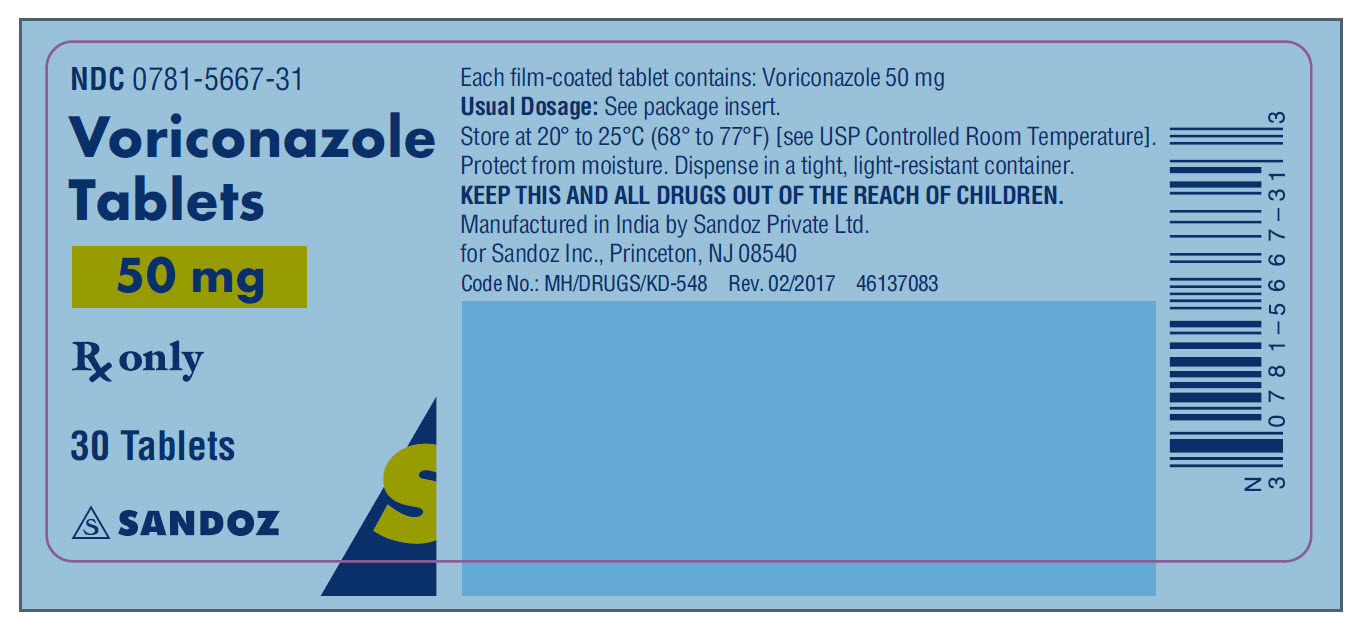
Principal Label Display Panel NDC 0781-5667-31 Voriconazole Tablets 50 mg Rx Only 30 Tablets SANDOZ 50-mg
Principal Display Panel NDC 0781-5668-31 Voriconazole Tablets 200 mg Rx Only 30 Tablets SANDOZ 200-mg
Medicaid utilization by pack size
Medicare Part D spend CMS · PART D · 2026 (Q1)
About this NDC listing & data coverage
What data is (and isn’t) available for this NDC — tap to expand
| NDC identity (package / product / labeler codes) | ✓ Available |
| Labeler | ✓ Available |
| Product & package description | ✓ Available |
| Marketing category & status | ✓ Available |
| Active ingredient / dosage form / route | ✓ Available |
| FDA label (SPL via DailyMed) | ✓ Available |
| Package photos | ✓ Available |
| Inactive ingredients (structured) | ✓ Available |
| NADAC pharmacy acquisition price (CMS) | — Not published for this NDC CMS publishes NADAC only for NDCs reported in its retail-pharmacy survey. |
| Orange Book / therapeutic-equivalence data | ✓ Available |
| HCPCS J-code billing crosswalk | — Not published for this NDC Most self-administered / retail products have no J-code — that is normal. |
| Medicaid utilization (CMS SDUD) | — Not published for this NDC CMS reports utilization only for NDCs with Medicaid claims above its privacy threshold. |