
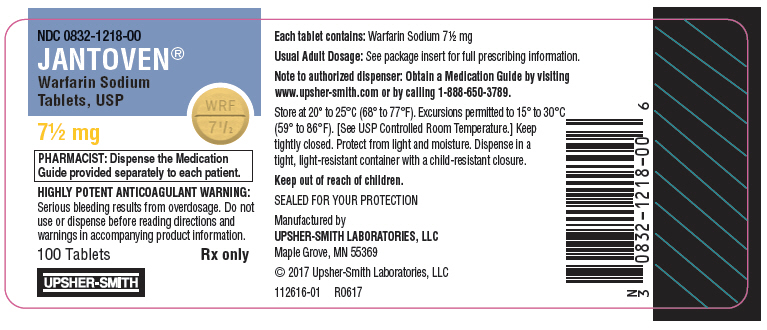
Jantoven Warfarin Sodium 7.5 mg Tablet, 100-count — NDC 0832-1218-00 (Billing 00832-1218-00)
This is a package of 100 tablets of Jantoven Warfarin Sodium 7.5 mg Tablet from Upsher-Smith Laboratories, LLC, marketed since Feb 2010 and currently FDA-listed; retail pharmacies pay about $0.0891 per tablet (NADAC). It is the main listing for this product, which comes in 3 package sizes.
Identity & classification
Regulatory identifiers FDA, NLM and CMS codes for this package
Drug-database identifiers Medi-Span GPI and First Databank GCN / HICL / AHFS classification
- GSN (GCN sequence number): 006563
- GCN: 25795
- GPI-14 (Medi-Span): 83200030200320
- HICL (First Databank): 002812
- AHFS class code: 20:12.04.08
- RxCUI (RxNorm): 855288
Where does this data come from?
- FDA openFDA NDC Directory · synced Oct 1, 2026
- FDA label on DailyMed · label index refreshed Oct 1, 2026
- RxNorm (NLM RxNav) · catalog refreshed Oct 1, 2026
- Medi-Span GPI (licensed)
- First Databank (licensed) · refreshed Oct 1, 2026
RxNorm drug class
This medicine belongs to the Vitamin K Antagonist class.
Where does this data come from?
- RxClass (NLM) · catalog refreshed Oct 1, 2026
Clinical
Warfarin is used to: prevent and treat blood clots prevent complications in people with certain types of irregular heartbeat, people with prosthetic (replacement or mechanical) heart valves, and people who have had a heart attack or stroke. Warfarin is in a class of medications called anticoagulants ('blood thinners'). It works by decreasing the clotting ability of the blood.
Read the full MedlinePlus article ↗- Warfarin helps prevent and treat harmful blood clots. That includes clots in the veins and lungs, clots linked to atrial fibrillation or heart valve replacement, and clots after a...
- Your INR tells us how well your blood is clotting. Your dose is adjusted based on it. Expect checks daily at the start, then about every 1 to 4 weeks. Please don't skip them, becau...
- Yes. Vitamin K in food can affect warfarin. Eat a normal, balanced diet with a steady amount of vitamin K, and avoid sudden big changes like eating lots of leafy greens. Grapefruit...
- Tell us about everything, including over-the-counter pain relievers like ibuprofen or naproxen, aspirin, antidepressants, antibiotics, antifungals and herbals like ginkgo, garlic o...
Patient education
Supplement & herbal interactions
Some supplements/herbs that may interact with Warfarin Sodium — tap one for details:
Where does this data come from?
- MedlinePlus (NLM) · refreshed Oct 1, 2026
- FDA label on DailyMed · label index refreshed Oct 1, 2026
Ask a licensed pharmacist directly — free, answered by our team.
Pricing
A drug doesn't have one price. Each row is a different public payment system, and none is what you'd pay at the counter — that depends on your insurance. The ⓘ on each row explains what it measures.
| Price system | Per ea | Per package |
|---|---|---|
| Retail pharmacies payNADAC · weekly | $0.089 | $8.91 / 100 tablets |
| Medicaid paysCMS SDUD · 12 mo | $0.2284 | $22.84 / 100 tablets |
| Medicare drug plans payPart D · Q2 2026 | $0.1753 | $17.53 / 100 tablets |
Where does this data come from?
- CMS NADAC weekly file · file of Sep 30, 2026
- CMS ASP pricing files · refreshed Sep 20, 2026
- CMS Medicaid State Drug Utilization Data · through Q1 2026
- CMS Part D plan pricing files · refreshed Sep 24, 2026
- VA National Acquisition Center price file
Packaging — all sizes for this product
| Package NDC | Description | Per unit | Per pack | Marketing start | Marketing end | Status |
|---|---|---|---|---|---|---|
| 00832-1218-00 You're viewing this Main listing | 100 TABLET in 1 BOTTLE | $0.0891 / ea | $8.91 | 2010-02-23 | — | Active |
| 00832-1218-01 0832-1218-01 | 100 BLISTER PACK in 1 CARTON / 1 TABLET in 1 BLISTER PACK | $0.0905 / ea | $9.05 | 2010-02-23 | — | Active |
| 00832-1218-50 0832-1218-50 | 500 TABLET in 1 BOTTLE | $0.1101 / ea | $55.05 | 2010-02-23 | — | Active |
This pack has the lowest per-ea cost of the 3 priced pack sizes ($0.0891 NADAC).
In Medicaid, this is the most-dispensed pack of this product — about 100% of fills over the last four reported quarters. See all packs ↓
Pack size FAQ
What quantity is in this package?
How does this package differ from NDC 00832-1218-01?
What NDC number is used to bill for this package of Jantoven Warfarin Sodium 7.5 mg Tablet?
Prices are the latest CMS NADAC pharmacy acquisition cost per NDC; per-pack figures are per-unit × pack quantity, shown only when the pack is denominated in the same measure NADAC prices.
Therapeutic equivalents
| Product | Labeler | Pack | NADAC/unit | TE | Status | Price vs. this |
|---|---|---|---|---|---|---|
| Warfarin Sodium 7.5 mg 00093-1723-01 | Teva | 100 tablets | $0.089 | AB | Discontinued | — |
| Jantoven 7.5 mgthis 00832-1218-00 | Upsher-Smith | 100 tablets | $0.089 | AB | Availability likely | — |
| Warfarin Sodium 7.5 mg 65162-0768-10 | Amneal | 100 tablets | $0.089 | AB | Availability likely | — |
| Warfarin Sodium 7.5 mg 76282-0334-01 | Exelan | 100 tablets | $0.089 | AB | Availability likely | — |
| Warfarin Sodium 7.5 mg 43353-0053-30 | Aphena | 30 tablets | — | AB | FDA listed | — |
| Warfarin Sodium 7.5 mg 50090-2582-00 | A-S | 30 tablets | — | AB | FDA listed | — |
| Warfarin Sodium 7.5 mg 51407-0791-01 | Golden | 100 tablets | — | AB | FDA listed | — |
| Warfarin Sodium 7.5 mg 51672-4034-00 | Sun | 100 tablets | — | AB | Discontinued | — |
| Warfarin Sodium 7.5 mg 67046-1525-03 | Coupler | 30 tablets | — | AB | FDA listed | — |
| Warfarin Sodium 7.5 mg 70518-1467-00 | REMEDYREPACK | 30 tablets | — | AB | FDA listed | — |
| Warfarin Sodium 7.5 mg 70518-4635-00 | REMEDYREPACK | 50 tablets | — | AB | FDA listed | — |
| Warfarin Sodium 7.5 mg 71335-1059-01 | Bryant | 30 tablets | — | AB | FDA listed | — |
Where does this data come from?
- FDA openFDA NDC Directory · synced Oct 1, 2026
- FDA Orange Book · refreshed Sep 3, 2026
- CMS NADAC weekly file · file of Sep 30, 2026
Availability & generic status
This product is an FDA-approved generic. Other versions of the same drug are listed under Therapeutic equivalents, least expensive first.
Where does this data come from?
- FDA Orange Book · refreshed Sep 3, 2026
What it looks like
Where does this data come from?
- FDA label on DailyMed · label index refreshed Oct 1, 2026
Inactive Ingredients / Excipients
Inactive ingredients, also called excipients, are components of the drug product other than the active ingredient. They may include fillers, dyes, coatings, preservatives, flavors, or other formulation ingredients.
💡 Tap an ingredient (hover on desktop) to see what it is and why it’s used.
-
UNII 35SW5USQ3G
A synthetic yellow dye used to color medicines. It helps make tablets, capsules, and liquids visually distinct so patients can easily identify their medication.
-
UNII H77VEI93A8
A synthetic yellow dye used to color medications. It helps identify the drug and make it visually distinctive, with no effect on how the medicine works.
-
UNII EWQ57Q8I5X
Lactose monohydrate is a natural sugar derived from milk. It serves as a filler and binder in tablets and capsules, helping create the proper size, texture, and consistency of the medicine.
-
UNII 70097M6I30
Magnesium stearate is a salt made from magnesium and stearic acid, a fatty substance. It's used in tablets and capsules as a lubricant and glidant to help ingredients flow smoothly during manufacturing and prevent sticking.
-
UNII FZ989GH94E
Povidone is a synthetic polymer made from a plastic-like material. It acts as a binder to hold tablet ingredients together and as a disintegrant to help the tablet break apart in your stomach so the medicine can be absorbed.
-
UNII O8232NY3SJ
A plant-based carbohydrate derived from corn kernels. It acts as a filler to add bulk, a binder to hold ingredients together, and a disintegrant to help the tablet break apart in your stomach for absorption.
6 inactive ingredients listed in the exact product block matched to this NDC.
Where does this data come from?
ingredient classCode="IACT" elements from the exact product block matched by this NDC. Label-section narrative from DailyMed / the openFDA label index is shown separately when available.- FDA label on DailyMed · label index refreshed Oct 1, 2026
- FDA openFDA NDC Directory · synced Oct 1, 2026
Inactive ingredient FAQ
Are inactive ingredients the same for every manufacturer?
Why might an inactive ingredient be missing?
Can inactive ingredients matter?
Manufacturer & labeler
Where does this data come from?
- FDA openFDA NDC Directory · synced Oct 1, 2026
- Drugs@FDA
Full prescribing information FDA SPL
🚨 Boxed Warning ▾
WARNING: BLEEDING RISK Warfarin Sodium can cause major or fatal bleeding [see Warnings and Precautions (5.1) ]. Perform regular monitoring of INR in all treated patients [see Dosage and Administration (2.1) ]. Drugs, dietary changes, and other factors affect INR levels achieved with Warfarin Sodium therapy [see Drug Interactions (7) ].
Instruct patients about prevention measures to minimize risk of bleeding and to report signs and symptoms of bleeding [see Patient Counseling Information (17) ]. WARNING: BLEEDING RISK See full prescribing information for complete boxed warning. Warfarin Sodium can cause major or fatal bleeding.
( 5.1 ) Perform regular monitoring of INR in all treated patients. ( 2.1 ) Drugs, dietary changes, and other factors affect INR levels achieved with Warfarin Sodium therapy. ( 7 ) Instruct patients about prevention measures to minimize risk of bleeding and to report signs and symptoms of bleeding.
( 17 )
🎯 Indications and Usage ▾
1 INDICATIONS AND USAGE JANTOVEN ® is indicated for: Prophylaxis and treatment of venous thrombosis and its extension, pulmonary embolism (PE). Prophylaxis and treatment of thromboembolic complications associated with atrial fibrillation (AF) and/or cardiac valve replacement. Reduction in the risk of death, recurrent myocardial infarction (MI), and thromboembolic events such as stroke or systemic embolization after myocardial infarction.
Limitations of Use Warfarin Sodium has no direct effect on an established thrombus, nor does it reverse ischemic tissue damage. Once a thrombus has occurred, however, the goals of anticoagulant treatment are to prevent further extension of the formed clot and to prevent secondary thromboembolic complications that may result in serious and possibly fatal sequelae. JANTOVEN is a vitamin K antagonist indicated for: Prophylaxis and treatment of venous thrombosis and its extension, pulmonary embolism ( 1 ) Prophylaxis and treatment of thromboembolic complications associated with atrial fibrillation and/or cardiac valve replacement ( 1 ) Reduction in the risk of death, recurrent myocardial infarction, and thromboembolic events such as stroke or systemic embolization after myocardial infarction ( 1 ) Limitations of Use Warfarin Sodium has no direct effect on an established thrombus, nor does it reverse ischemic tissue damage.
( 1 )
⏱️ Dosage and Administration ▾
2 DOSAGE AND ADMINISTRATION Individualize dosing regimen for each patient, and adjust based on INR response. ( 2.1 , 2.2 ) Knowledge of genotype can inform initial dose selection. ( 2.3 ) Monitoring: Obtain daily INR determinations upon initiation until stable in the therapeutic range. Obtain subsequent INR determinations every 1 to 4 weeks. ( 2.4 ) Review conversion instructions from other anticoagulants. ( 2.8 )
2.1Individualized Dosing The dosage and administration of JANTOVEN must be individualized for each patient according to the patient's International Normalized Ratio (INR) response to the drug. Adjust the dose based on the patient's INR and the condition being treated. Consult the latest evidence-based clinical practice guidelines regarding the duration and intensity of anticoagulation for the indicated conditions.
2.2Recommended Target INR Ranges and Durations for Individual Indications An INR of greater than 4.0 appears to provide no additional therapeutic benefit in most patients and is associated with a higher risk of bleeding. Venous Thromboembolism (including deep venous thrombosis [DVT] and PE) Adjust the warfarin dose to maintain a target INR of 2.5 (INR range, 2.0 to 3.0) for all treatment durations. The duration of treatment is based on the indication as follows: For patients with a DVT or PE secondary to a transient (reversible) risk factor, treatment with warfarin for 3 months is recommended.
For patients with an unprovoked DVT or PE, treatment with warfarin is recommended for at least 3 months. After 3 months of therapy, evaluate the risk-benefit ratio of long-term treatment for the individual patient. For patients with two episodes of unprovoked DVT or PE, long-term treatment with warfarin is recommended.
For a patient receiving long-term anticoagulant treatment, periodically reassess the risk-benefit ratio of continuing such treatment in the individual patient. Atrial Fibrillation In patients with non-valvular AF, anticoagulate with warfarin to target INR of 2.5 (range, 2.0 to 3.0). In patients with non-valvular AF that is persistent or paroxysmal and at high risk of stroke (i.e., having any of the following features: prior ischemic stroke, transient ischemic attack, or systemic embolism, or 2 of the following risk factors: age greater than 75 years, moderately or severely impaired left ventricular systolic function and/or heart failure, history of hypertension, or diabetes mellitus), long-term anticoagulation with warfarin is recommended.
In patients with non-valvular AF that is persistent or paroxysmal and at an intermediate risk of ischemic stroke (i.e., having 1 of the following risk factors: age greater than 75 years, moderately or severely impaired left ventricular systolic function and/or heart failure, history of hypertension, or diabetes mellitus), long-term anticoagulation with warfarin is recommended. For patients with AF and mitral stenosis, long-term anticoagulation with warfarin is recommended. For patients with AF and prosthetic heart valves, long-term anticoagulation with warfarin is recommended; the target INR may be increased and aspirin added depending on valve type and position, and on patient factors.
Mechanical and Bioprosthetic Heart Valves For patients with a bileaflet mechanical valve or a Medtronic Hall (Minneapolis, MN) tilting disk valve in the aortic position who are in sinus rhythm and without left atrial enlargement, therapy with warfarin to a target INR of 2.5 (range, 2.0 to 3.0) is recommended. For patients with tilting disk valves and bileaflet mechanical valves in the mitral position, therapy with warfarin to a target INR of 3.0 (range, 2.5 to 3.5) is recommended. For patients with caged ball or caged disk valves, therapy with warfarin to a target INR of 3.0 (range, 2.5 to 3.5) is recommended.
For patients with a bioprosthetic valve in the mitral position, therapy with warfarin to a target INR of 2.5 (range, 2.0 to 3.0) for the first 3 months after valve insertion is… [Excerpted — this section continues on DailyMed.]
💊 Dosage Forms and Strengths ▾
3 DOSAGE FORMS AND STRENGTHS JANTOVEN tablets are single scored, compressed tablets with one side scored and debossed with WRF above the score and 1, 2, 2½, 3, 4, 5, 6, 7½, or 10 below the score and with 832 debossed on the opposite side. JANTOVEN tablets are supplied in the following strengths: JANTOVEN Tablets Strength Color 1 mg pink 2 mg lavender 2½ mg green 3 mg tan 4 mg blue 5 mg peach 6 mg teal 7½ mg yellow 10 mg white (dye free) Scored tablets: 1, 2, 2½, 3, 4, 5, 6, 7½, or 10 mg ( 3 )
⛔ Contraindications ▾
4 CONTRAINDICATIONS JANTOVEN is contraindicated in: Pregnancy JANTOVEN is contraindicated in women who are pregnant except in pregnant women with mechanical heart valves, who are at high risk of thromboembolism [see Warnings and Precautions (5.7) and Use in Specific Populations (8.1) ]. JANTOVEN can cause fetal harm when administered to a pregnant woman. JANTOVEN exposure during pregnancy causes a recognized pattern of major congenital malformations (warfarin embryopathy and fetotoxicity), fatal fetal hemorrhage, and an increased risk of spontaneous abortion and fetal mortality.
If JANTOVEN is used during pregnancy or if the patient becomes pregnant while taking this drug, the patient should be apprised of the potential hazard to a fetus [see Use in Specific Populations (8.1) ]. JANTOVEN is contraindicated in patients with: Hemorrhagic tendencies or blood dyscrasias Recent or contemplated surgery of the central nervous system or eye, or traumatic surgery resulting in large open surfaces [see Warnings and Precautions (5.8) ] Bleeding tendencies associated with: Active ulceration or overt bleeding of the gastrointestinal, genitourinary, or respiratory tract Central nervous system hemorrhage Cerebral aneurysms, dissecting aorta Pericarditis and pericardial effusions Bacterial endocarditis Threatened abortion, eclampsia, and preeclampsia Unsupervised patients with conditions associated with potential high level of non-compliance Spinal puncture and other diagnostic or therapeutic procedures with potential for uncontrollable bleeding Hypersensitivity to warfarin or to any other components of this product (e.g., anaphylaxis) [see Adverse Reactions (6) ] Major regional or lumbar block anesthesia Malignant hypertension Pregnancy, except in women with mechanical heart valves ( 4 , 5.7 , 8.1 ) Hemorrhagic tendencies or blood dyscrasias ( 4 ) Recent or contemplated surgery of the central nervous system (CNS) or eye, or traumatic surgery resulting in large open surfaces ( 4 , 5.8 ) Bleeding tendencies associated with certain conditions ( 4 ) Threatened abortion, eclampsia, and preeclampsia ( 4 ) Unsupervised patients with potential high levels of non-compliance ( 4 ) Spinal puncture and other diagnostic or therapeutic procedures with potential for uncontrollable bleeding ( 4 ) Hypersensitivity to warfarin or any component of the product ( 4 ) Major regional or lumbar block anesthesia ( 4 ) Malignant hypertension ( 4 )
⚠️ Warnings and Cautions ▾
5 WARNINGS AND PRECAUTIONS Tissue necrosis: Necrosis or gangrene of skin or other tissues can occur, with severe cases requiring debridement or amputation. Discontinue JANTOVEN and consider alternative anticoagulants if necessary. ( 5.2 ) Calciphylaxis: Fatal and serious cases have occurred.
Discontinue JANTOVEN and consider alternative anticoagulation therapy. ( 5.3 ) Acute kidney injury may occur during episodes of excessive anticoagulation and hematuria. ( 5.4 ) Systemic atheroemboli and cholesterol microemboli: Some cases have progressed to necrosis or death.
Discontinue JANTOVEN if such emboli occur. ( 5.5 ) Heparin-induced thrombocytopenia (HIT): Initial therapy with Warfarin Sodium in HIT has resulted in cases of amputation and death. Warfarin Sodium may be considered after platelet count has normalized.
( 5.6 ) Pregnant women with mechanical heart valves: Warfarin Sodium may cause fetal harm; however, the benefits may outweigh the risks. ( 5.7 )
5.1Hemorrhage JANTOVEN can cause major or fatal bleeding. Bleeding is more likely to occur within the first month. Risk factors for bleeding include high intensity of anticoagulation (INR >4.0), age greater than or equal to 65, history of highly variable INRs, history of gastrointestinal bleeding, hypertension, cerebrovascular disease, anemia, malignancy, trauma, renal impairment, certain genetic factors [see Clinical Pharmacology (12.5) ], certain concomitant drugs [see Drug Interactions (7) ], and long duration of warfarin therapy.
Perform regular monitoring of INR in all treated patients. Those at high risk of bleeding may benefit from more frequent INR monitoring, careful dose adjustment to desired INR, and a shortest duration of therapy appropriate for the clinical condition. However, maintenance of INR in the therapeutic range does not eliminate the risk of bleeding.
Drugs, dietary changes, and other factors affect INR levels achieved with JANTOVEN therapy. Perform more frequent INR monitoring when starting or stopping other drugs, including botanicals, or when changing dosages of other drugs [see Drug Interactions (7) ]. Instruct patients about prevention measures to minimize risk of bleeding and to report signs and symptoms of bleeding [see Patient Counseling Information (17) ].
5.2Tissue Necrosis JANTOVEN can cause necrosis and/or gangrene of skin and other tissues, which is an uncommon but serious risk (<0.1%). Necrosis may be associated with local thrombosis and usually appears within a few days of the start of JANTOVEN therapy. In severe cases of necrosis, treatment through debridement or amputation of the affected tissue, limb, breast, or penis has been reported.
Careful clinical evaluation is required to determine whether necrosis is caused by an underlying disease. Although various treatments have been attempted, no treatment for necrosis has been considered uniformly effective. Discontinue JANTOVEN therapy if necrosis occurs.
Consider alternative drugs if continued anticoagulation therapy is necessary.
5.3Calciphylaxis JANTOVEN can cause fatal and serious calciphylaxis or calcium uremic arteriolopathy, which has been reported in patients with and without end-stage renal disease. When calciphylaxis is diagnosed in these patients, discontinue JANTOVEN and treat calciphylaxis as appropriate. Consider alternative anticoagulation therapy.
5.4Acute Kidney Injury In patients with altered glomerular integrity or with a history of kidney disease, acute kidney injury may occur with JANTOVEN, possibly in relation to episodes of excessive anticoagulation and hematuria [ see Use in Specific Populations (8.6) ]. More frequent monitoring of anticoagulation is advised in patients with compromised renal function.
5.5Systemic Atheroemboli and Cholesterol Microemboli Anticoagulation therapy with JANTOVEN may enhance the release of atheromatous plaque emboli. Systemic atheroemboli and cholesterol microemboli can present with a variety of signs and symptoms depending on the sit… [Excerpted — this section continues on DailyMed.]
🤒 Adverse Reactions ▾
6 ADVERSE REACTIONS The following serious adverse reactions to JANTOVEN are discussed in greater detail in other sections of the labeling: Hemorrhage [see Boxed Warning , Warnings and Precautions (5.1) , and Overdosage (10) ] Tissue Necrosis [see Warnings and Precautions (5.2) ] Calciphylaxis [see Warnings and Precautions (5.3) ] Acute Kidney Injury [see Warnings and Precautions (5.4) ] Systemic Atheroemboli and Cholesterol Microemboli [see Warnings and Precautions (5.5) ] Limb Ischemia, Necrosis, and Gangrene in Patients with HIT and HITTS [see Warnings and Precautions (5.6) ] Other Clinical Settings with Increased Risks [see Warnings and Precautions (5.8) ] Other adverse reactions to JANTOVEN include: Immune system disorders: hypersensitivity/allergic reactions (including urticaria and anaphylactic reactions) Vascular disorders: vasculitis Hepatobiliary disorders: hepatitis, elevated liver enzymes.
Cholestatic hepatitis has been associated with concomitant administration of warfarin sodium and ticlopidine. Gastrointestinal disorders: nausea, vomiting, diarrhea, taste perversion, abdominal pain, flatulence, bloating Skin disorders: rash, dermatitis (including bullous eruptions), pruritus, alopecia Respiratory disorders: tracheal or tracheobronchial calcification General disorders: chills Most common adverse reactions to Warfarin Sodium are fatal and nonfatal hemorrhage from any tissue or organ. ( 6 ) To report SUSPECTED ADVERSE REACTIONS, contact Upsher-Smith Laboratories, LLC at 1-855-899-9180 or FDA at 1-800-FDA-1088 or www.fda.gov/medwatch .
🔄 Drug Interactions ▾
7 DRUG INTERACTIONS Concomitant use of drugs that increase bleeding risk, antibiotics, antifungals, botanical (herbal) products, and inhibitors and inducers of CYP2C9, 1A2, or 3A4. ( 7 ) Consult labeling of all concurrently used drugs for complete information about interactions with JANTOVEN or increased risks for bleeding. ( 7 )
7.1General Information Drugs may interact with JANTOVEN through pharmacodynamic or pharmacokinetic mechanisms. Pharmacodynamic mechanisms for drug interactions with JANTOVEN are synergism (impaired hemostasis, reduced clotting factor synthesis), competitive antagonism (vitamin K), and alteration of the physiologic control loop for vitamin K metabolism (hereditary resistance). Pharmacokinetic mechanisms for drug interactions with JANTOVEN are mainly enzyme induction, enzyme inhibition, and reduced plasma protein binding.
It is important to note that some drugs may interact by more than one mechanism. More frequent INR monitoring should be performed when starting or stopping other drugs, including botanicals, or when changing dosages of other drugs, including drugs intended for short-term use (e.g., antibiotics, antifungals, corticosteroids) [see Boxed Warning ]. Consult the labeling of all concurrently used drugs to obtain further information about interactions with JANTOVEN or adverse reactions pertaining to bleeding.
7.2CYP450 Interactions CYP450 isozymes involved in the metabolism of warfarin include CYP2C9, 2C19, 2C8, 2C18, 1A2, and 3A4. The more potent warfarin S -enantiomer is metabolized by CYP2C9 while the R -enantiomer is metabolized by CYP1A2 and 3A4. Inhibitors of CYP2C9, 1A2, and/or 3A4 have the potential to increase the effect (increase INR) of warfarin by increasing the exposure of warfarin.
Inducers of CYP2C9, 1A2, and/or 3A4 have the potential to decrease the effect (decrease INR) of warfarin by decreasing the exposure of warfarin. Examples of inhibitors and inducers of CYP2C9, 1A2, and 3A4 are below in Table 2; however, this list should not be considered all-inclusive. Consult the labeling of all concurrently used drugs to obtain further information about CYP450 interaction potential.
The CYP450 inhibition and induction potential should be considered when starting, stopping, or changing dose of concomitant medications. Closely monitor INR if a concomitant drug is a CYP2C9, 1A2, and/or 3A4 inhibitor or inducer. Table 2: Examples of CYP450 Interactions with Warfarin Enzyme Inhibitors Inducers CYP2C9 amiodarone, capecitabine, cotrimoxazole, etravirine, fluconazole, fluvastatin, fluvoxamine, metronidazole, miconazole, oxandrolone, sulfinpyrazone, tigecycline, voriconazole, zafirlukast aprepitant, bosentan, carbamazepine, phenobarbital, rifampin CYP1A2 acyclovir, allopurinol, caffeine, cimetidine, ciprofloxacin, disulfiram, enoxacin, famotidine, fluvoxamine, methoxsalen, mexiletine, norfloxacin, oral contraceptives, phenylpropanolamine, propafenone, propranolol, terbinafine, thiabendazole, ticlopidine, verapamil, zileuton montelukast, moricizine, omeprazole, phenobarbital, phenytoin, cigarette smoking CYP3A4 alprazolam, amiodarone, amlodipine, amprenavir, aprepitant, atorvastatin, atazanavir, bicalutamide, cilostazol, cimetidine, ciprofloxacin, clarithromycin, conivaptan, cyclosporine, darunavir/ritonavir, diltiazem, erythromycin, fluconazole, fluoxetine, fluvoxamine, fosamprenavir, imatinib, indinavir, isoniazid, itraconazole, ketoconazole, lopinavir/ritonavir, nefazodone, nelfinavir, nilotinib, oral contraceptives, posaconazole, ranitidine, ranolazine, ritonavir, saquinavir, telithromycin, tipranavir, voriconazole, zileuton armodafinil, amprenavir, aprepitant, bosentan, carbamazepine, efavirenz, etravirine, modafinil, nafcillin, phenytoin, pioglitazone, prednisone, rifampin, rufinamide
7.3Drugs that Increase Bleeding Risk Examples of drugs known to increase the risk of bleeding are presented in Table 3. Because bleeding risk is increased when these drugs are used concomitantly with war… [Excerpted — this section continues on DailyMed.]
👥 Use in Specific Populations ▾
8 USE IN SPECIFIC POPULATIONS Pregnant women with mechanical heart valves: JANTOVEN may cause fetal harm; however, the benefits may outweigh the risks. ( 8.1 ) Lactation: Monitor breastfeeding infants for bruising or bleeding. ( 8.2 ) Renal Impairment: Instruct patients with renal impairment to frequently monitor their INR. ( 8.6 )
8.1Pregnancy Risk Summary JANTOVEN is contraindicated in women who are pregnant except in pregnant women with mechanical heart valves, who are at high risk of thromboembolism, and for whom the benefits of JANTOVEN may outweigh the risks [see Warnings and Precautions (5.7) ]. JANTOVEN can cause fetal harm. Exposure to warfarin during the first trimester of pregnancy caused a pattern of congenital malformations in about 5% of exposed offspring.
Because these data were not collected in adequate and well-controlled studies, this incidence of major birth defects is not an adequate basis for comparison to the estimated incidences in the control group or the U.S. general population and may not reflect the incidences observed in practice. Consider the benefits and risks of JANTOVEN and possible risks to the fetus when prescribing JANTOVEN to a pregnant woman. Adverse outcomes in pregnancy occur regardless of the health of the mother or the use of medications.
The estimated background risk of major birth defects and miscarriage for the indicated population is unknown. In the U.S. general population, the estimated background risk of major birth defects and miscarriage in clinically recognized pregnancies is 2% to 4% and 15% to 20%, respectively. Clinical Considerations Fetal/Neonatal Adverse Reactions In humans, warfarin crosses the placenta, and concentrations in fetal plasma approach the maternal values.
Exposure to warfarin during the first trimester of pregnancy caused a pattern of congenital malformations in about 5% of exposed offspring. Warfarin embryopathy is characterized by nasal hypoplasia with or without stippled epiphyses (chondrodysplasia punctata) and growth retardation (including low birth weight). Central nervous system and eye abnormalities have also been reported, including dorsal midline dysplasia characterized by agenesis of the corpus callosum, Dandy-Walker malformation, midline cerebellar atrophy, and ventral midline dysplasia characterized by optic atrophy.
Mental retardation, blindness, schizencephaly, microcephaly, hydrocephalus, and other adverse pregnancy outcomes have been reported following warfarin exposure during the second and third trimesters of pregnancy [see Contraindications (4) ].
8.2Lactation Risk Summary Warfarin was not present in human milk from mothers treated with warfarin from a limited published study. Because of the potential for serious adverse reactions, including bleeding in a breastfed infant, consider the developmental and health benefits of breastfeeding along with the mother's clinical need for JANTOVEN and any potential adverse effects on the breastfed infant from JANTOVEN or from the underlying maternal condition before prescribing JANTOVEN to a lactating woman. Clinical Considerations Monitor breastfeeding infants for bruising or bleeding.
Data Human Data Based on published data in 15 nursing mothers, warfarin was not detected in human milk. Among the 15 full-term newborns, 6 nursing infants had documented prothrombin times within the expected range. Prothrombin times were not obtained for the other 9 nursing infants.
Effects in premature infants have not been evaluated.
8.3Females and Males of Reproductive Potential Pregnancy Testing JANTOVEN can cause fetal harm [see Use in Specific Populations (8.1) ]. Verify the pregnancy status of females of reproductive potential prior to initiating JANTOVEN therapy. Contraception Females Advise females of reproductive potential to use effective contraception during treatment and for at least 1 month after the final dose of JANTOVEN.
8.4Pediatric Use Adequate and well-controlled studies with warfarin sodium ha… [Excerpted — this section continues on DailyMed.]
🤰 Pregnancy ▾
8.1Pregnancy Risk Summary JANTOVEN is contraindicated in women who are pregnant except in pregnant women with mechanical heart valves, who are at high risk of thromboembolism, and for whom the benefits of JANTOVEN may outweigh the risks [see Warnings and Precautions (5.7) ]. JANTOVEN can cause fetal harm. Exposure to warfarin during the first trimester of pregnancy caused a pattern of congenital malformations in about 5% of exposed offspring.
Because these data were not collected in adequate and well-controlled studies, this incidence of major birth defects is not an adequate basis for comparison to the estimated incidences in the control group or the U.S. general population and may not reflect the incidences observed in practice. Consider the benefits and risks of JANTOVEN and possible risks to the fetus when prescribing JANTOVEN to a pregnant woman. Adverse outcomes in pregnancy occur regardless of the health of the mother or the use of medications.
The estimated background risk of major birth defects and miscarriage for the indicated population is unknown. In the U.S. general population, the estimated background risk of major birth defects and miscarriage in clinically recognized pregnancies is 2% to 4% and 15% to 20%, respectively. Clinical Considerations Fetal/Neonatal Adverse Reactions In humans, warfarin crosses the placenta, and concentrations in fetal plasma approach the maternal values.
Exposure to warfarin during the first trimester of pregnancy caused a pattern of congenital malformations in about 5% of exposed offspring. Warfarin embryopathy is characterized by nasal hypoplasia with or without stippled epiphyses (chondrodysplasia punctata) and growth retardation (including low birth weight). Central nervous system and eye abnormalities have also been reported, including dorsal midline dysplasia characterized by agenesis of the corpus callosum, Dandy-Walker malformation, midline cerebellar atrophy, and ventral midline dysplasia characterized by optic atrophy.
Mental retardation, blindness, schizencephaly, microcephaly, hydrocephalus, and other adverse pregnancy outcomes have been reported following warfarin exposure during the second and third trimesters of pregnancy [see Contraindications (4) ].
🧒 Pediatric Use ▾
8.4Pediatric Use Adequate and well-controlled studies with warfarin sodium have not been conducted in any pediatric population, and the optimum dosing, safety, and efficacy in pediatric patients is unknown. Pediatric use of warfarin sodium is based on adult data and recommendations, and available limited pediatric data from observational studies and patient registries. Pediatric patients administered JANTOVEN should avoid any activity or sport that may result in traumatic injury.
The developing hemostatic system in infants and children results in a changing physiology of thrombosis and response to anticoagulants. Dosing of warfarin in the pediatric population varies by patient age, with infants generally having the highest, and adolescents having the lowest milligram per kilogram dose requirements to maintain target INRs. Because of changing warfarin requirements due to age, concomitant medications, diet, and existing medical condition, target INR ranges may be difficult to achieve and maintain in pediatric patients, and more frequent INR determinations are recommended.
Bleeding rates varied by patient population and clinical care center in pediatric observational studies and patient registries. Infants and children receiving vitamin K-supplemented nutrition, including infant formulas, may be resistant to warfarin therapy, while human milk-fed infants may be sensitive to warfarin therapy.
🧓 Geriatric Use ▾
8.5Geriatric Use Of the total number of patients receiving warfarin sodium in controlled clinical trials for which data were available for analysis, 1885 patients (24.4%) were 65 years and older, while 185 patients (2.4%) were 75 years and older. No overall differences in effectiveness or safety were observed between these patients and younger patients, but greater sensitivity of some older individuals cannot be ruled out. Patients 60 years or older appear to exhibit greater than expected INR response to the anticoagulant effects of warfarin [see Clinical Pharmacology (12.3) ].
JANTOVEN is contraindicated in any unsupervised patient with senility. Conduct more frequent monitoring for bleeding with administration of JANTOVEN to elderly patients in any situation or with any physical condition where added risk of hemorrhage is present. Consider lower initiation and maintenance doses of JANTOVEN in elderly patients [see Dosage and Administration (2.2 , 2.3) ].
🆘 Overdosage ▾
10 OVERDOSAGE
10.1Signs and Symptoms Bleeding (e.g., appearance of blood in stools or urine, hematuria, excessive menstrual bleeding, melena, petechiae, excessive bruising or persistent oozing from superficial injuries, unexplained fall in hemoglobin) is a manifestation of excessive anticoagulation.
10.2Treatment The treatment of excessive anticoagulation is based on the level of the INR, the presence or absence of bleeding, and clinical circumstances. Reversal of JANTOVEN anticoagulation may be obtained by discontinuing JANTOVEN therapy and, if necessary, by administration of oral or parenteral vitamin K 1 . The use of vitamin K 1 reduces response to subsequent JANTOVEN therapy and patients may return to a pretreatment thrombotic status following the rapid reversal of a prolonged INR.
Resumption of JANTOVEN administration reverses the effect of vitamin K, and a therapeutic INR can again be obtained by careful dosage adjustment. If rapid re-anticoagulation is indicated, heparin may be preferable for initial therapy. Prothrombin complex concentrate (PCC), fresh frozen plasma, or activated Factor VII treatment may be considered if the requirement to reverse the effects of JANTOVEN is urgent.
A risk of hepatitis and other viral diseases is associated with the use of blood products; PCC and activated Factor VII are also associated with an increased risk of thrombosis. Therefore, these preparations should be used only in exceptional or life-threatening bleeding episodes secondary to JANTOVEN overdosage.
🧬 Clinical Pharmacology ▾
12 CLINICAL PHARMACOLOGY
12.1Mechanism of Action Warfarin acts by inhibiting the synthesis of vitamin K-dependent clotting factors, which include Factors II, VII, IX, and X, and the anticoagulant proteins C and S. Vitamin K is an essential cofactor for the post ribosomal synthesis of the vitamin K-dependent clotting factors. Vitamin K promotes the biosynthesis of γ-carboxyglutamic acid residues in the proteins that are essential for biological activity.
Warfarin is thought to interfere with clotting factor synthesis by inhibition of the C1 subunit of vitamin K epoxide reductase (VKORC1) enzyme complex, thereby reducing the regeneration of vitamin K 1 epoxide [see Clinical Pharmacology (12.5) ].
12.2Pharmacodynamics An anticoagulation effect generally occurs within 24 hours after warfarin administration. However, peak anticoagulant effect may be delayed 72 to 96 hours. The duration of action of a single dose of racemic warfarin is 2 to 5 days.
The effects of JANTOVEN may become more pronounced as effects of daily maintenance doses overlap. This is consistent with the half-lives of the affected vitamin K-dependent clotting factors and anticoagulation proteins: Factor II – 60 hours, VII – 4 to 6 hours, IX – 24 hours, X – 48 to 72 hours, and proteins C and S are approximately 8 hours and 30 hours, respectively.
12.3Pharmacokinetics JANTOVEN is a racemic mixture of the R - and S -enantiomers of warfarin. The S -enantiomer exhibits 2 to 5 times more anticoagulant activity than the R -enantiomer in humans, but generally has a more rapid clearance. Absorption Warfarin is essentially completely absorbed after oral administration, with peak concentration generally attained within the first 4 hours. Distribution Warfarin shows a volume of distribution of about
0.14L/kg. Approximately 99% of the drug is bound to plasma proteins. Metabolism The elimination of warfarin is almost entirely by metabolism.
Warfarin is stereoselectively metabolized by hepatic cytochrome P-450 (CYP450) microsomal enzymes to inactive hydroxylated metabolites (predominant route) and by reductases to reduced metabolites (warfarin alcohols) with minimal anticoagulant activity. Identified metabolites of warfarin include dehydrowarfarin, two diastereoisomer alcohols, and 4'-, 6-, 7-, 8-, and 10-hydroxywarfarin. The CYP450 isozymes involved in the metabolism of warfarin include CYP2C9, 2C19, 2C8, 2C18, 1A2, and 3A4.
CYP2C9, a polymorphic enzyme, is likely to be the principal form of human liver CYP450 that modulates the in vivo anticoagulant activity of warfarin. Patients with one or more variant CYP2C9 alleles have decreased S-warfarin clearance [see Clinical Pharmacology (12.5) ]. Excretion The terminal half-life of warfarin after a single dose is approximately 1 week; however, the effective half-life ranges from 20 to 60 hours, with a mean of about 40 hours.
The clearance of R-warfarin is generally half that of S-warfarin, thus as the volumes of distribution are similar, the half-life of R-warfarin is longer than that of S-warfarin. The half-life of R-warfarin ranges from 37 to 89 hours, while that of S-warfarin ranges from 21 to 43 hours. Studies with radiolabeled drug have demonstrated that up to 92% of the orally administered dose is recovered in urine.
Very little warfarin is excreted unchanged in urine. Urinary excretion is in the form of metabolites. Geriatric Patients Patients 60 years or older appear to exhibit greater than expected INR response to the anticoagulant effects of warfarin.
The cause of the increased sensitivity to the anticoagulant effects of warfarin in this age group is unknown but may be due to a combination of pharmacokinetic and pharmacodynamic factors. Limited information suggests there is no difference in the clearance of S-warfarin; however, there may be a slight decrease in the clearance of R-warfarin in the elderly as compared to the young. Therefore, as patient age increases, a lower dose of warfarin is usually required to produce… [Excerpted — this section continues on DailyMed.]
🧬 Mechanism of Action ▾
12.1Mechanism of Action Warfarin acts by inhibiting the synthesis of vitamin K-dependent clotting factors, which include Factors II, VII, IX, and X, and the anticoagulant proteins C and S. Vitamin K is an essential cofactor for the post ribosomal synthesis of the vitamin K-dependent clotting factors. Vitamin K promotes the biosynthesis of γ-carboxyglutamic acid residues in the proteins that are essential for biological activity.
Warfarin is thought to interfere with clotting factor synthesis by inhibition of the C1 subunit of vitamin K epoxide reductase (VKORC1) enzyme complex, thereby reducing the regeneration of vitamin K 1 epoxide [see Clinical Pharmacology (12.5) ].
📦 How Supplied / Storage and Handling ▾
16 HOW SUPPLIED/STORAGE AND HANDLING Tablets JANTOVEN tablets are single scored, compressed tablets with one side scored and debossed with WRF above the score and 1, 2, 2½, 3, 4, 5, 6, 7½, or 10 below the score and with 832 debossed on the opposite side. JANTOVEN is available in bottles and unit dose blister packages with potencies and colors as follows: 1 mg – Compressed tablet, pink, round; in bottles of 100 (NDC 0832-1211-00) and 1000 (NDC 0832-1211-10) and in unit dose cartons of 100 tablets (10 cards containing 10 tablets each) (NDC 0832-1211-01).
2 mg – Compressed tablet, lavender, round; in bottles of 100 (NDC 0832-1212-00) and 1000 (NDC 0832-1212-10) and in unit dose cartons of 100 tablets (10 cards containing 10 tablets each) (NDC 0832-1212-01). 2½ mg – Compressed tablet, green, round; in bottles of 100 (NDC 0832-1213-00) and 1000 (NDC 0832-1213-10) and in unit dose cartons of 100 tablets (10 cards containing 10 tablets each) (NDC 0832-1213-01). 3 mg – Compressed tablet, tan, round; in bottles of 100 (NDC 0832-1214-00) and 1000 (NDC 0832-1214-10) and in unit dose cartons of 100 tablets (10 cards containing 10 tablets each) (NDC 0832-1214-01).
4 mg – Compressed tablet, blue, round; in bottles of 100 (NDC 0832-1215-00) and 1000 (NDC 0832-1215-10) and in unit dose cartons of 100 tablets (10 cards containing 10 tablets each) (NDC 0832-1215-01). 5 mg – Compressed tablet, peach, round; in bottles of 100 (NDC 0832-1216-00) and 1000 (NDC 0832-1216-10) and in unit dose cartons of 100 tablets (10 cards containing 10 tablets each) (NDC 0832-1216-01). 6 mg – Compressed tablet, teal, round; in bottles of 100 (NDC 0832-1217-00) and 1000 (NDC 0832-1217-10) and in unit dose cartons of 100 tablets (10 cards containing 10 tablets each) (NDC 0832-1217-01).
7½ mg – Compressed tablet, yellow, round; in bottles of 100 (NDC 0832-1218-00) and 500 (NDC 0832-1218-50) and in unit dose cartons of 100 tablets (10 cards containing 10 tablets each) (NDC 0832-1218-01). 10 mg – Compressed tablet, white (dye-free), round; in bottles of 100 (NDC 0832-1219-00) and 500 (NDC 0832-1219-50) and in unit dose cartons of 100 tablets (10 cards containing 10 tablets each) (NDC 0832-1219-01). Store at 20° to 25°C (68° to 77°F).
Excursions permitted to 15° to 30°C (59° to 86°F). [See USP Controlled Room Temperature.] Protect from light and moisture. Dispense in a tight, light-resistant container with a child-resistant closure. Special Handling Procedures for proper handling and disposal of potentially hazardous drugs should be considered.
Guidelines on this subject have been published [see References (15) ]. Pharmacy and clinical personnel who are pregnant should avoid exposure to crushed or broken tablets [see Use in Specific Populations (8.1) ].
📋 Description ▾
11 DESCRIPTION JANTOVEN (Warfarin Sodium Tablets, USP) is an anticoagulant that acts by inhibiting vitamin K-dependent coagulation factors. The chemical name of warfarin sodium is 3-(α-acetonylbenzyl)-4-hydroxycoumarin sodium salt, which is a racemic mixture of the R - and S -enantiomers. Crystalline warfarin sodium is an isopropanol clathrate.
Its empirical formula is C 19 H 15 NaO 4 , and its structural formula is represented by the following: Crystalline warfarin sodium occurs as a white, odorless, crystalline powder that is discolored by light. It is very soluble in water, freely soluble in alcohol, and very slightly soluble in chloroform and ether. JANTOVEN tablets for oral use contain: 1 mg, 2 mg, 2½ mg, 3 mg, 4 mg, 5 mg, 6 mg, 7½ mg or 10 mg of warfarin sodium, USP.
They also contain: All strengths: Lactose monohydrate, magnesium stearate, povidone, and pregelatinized starch (corn). 1 mg: FD&C Red #40 Aluminum Lake 2 mg: FD&C Blue #2 Aluminum Lake and FD&C Red #40 Aluminum Lake 2½ mg: D&C Yellow #10 Aluminum Lake and FD&C Blue #1 Aluminum Lake 3 mg: Brown #75 Synthetic Brown Iron Oxide 4 mg: FD&C Blue #1 Aluminum Lake 5 mg: FD&C Yellow #6 Aluminum Lake 6 mg: Yellow #10 Synthetic Yellow Iron Oxide, Black #85 Synthetic Black Iron Oxide and FD&C Blue #1 Aluminum Lake 7½ mg: D&C Yellow #10 Aluminum Lake and FD&C Yellow #6 Aluminum Lake 10 mg: Dye Free Chemical Structure
💬 Information for Patients ▾
17 PATIENT COUNSELING INFORMATION Advise the patient to read the FDA-approved patient labeling (Medication Guide). Instructions for Patients Advise patients to: Strictly adhere to the prescribed dosage schedule [see Dosage and Administration (2.1) ]. If the prescribed dose of JANTOVEN is missed, take the dose as soon as possible on the same day but do not take a double dose of JANTOVEN the next day to make up for missed doses [see Dosage and Administration (2.6) ].
Obtain prothrombin time tests and make regular visits to their physician or clinic to monitor therapy [see Dosage and Administration (2.1) ]. Be aware that if therapy with JANTOVEN is discontinued, the anticoagulant effects of JANTOVEN may persist for about 2 to 5 days [see Clinical Pharmacology (12.2) ]. Avoid any activity or sport that may result in traumatic injury [see Use in Specific Populations (8.4) ].
And to tell their physician if they fall often as this may increase their risk for complications. Eat a normal, balanced diet to maintain a consistent intake of vitamin K. Avoid drastic changes in dietary habits, such as eating large amounts of leafy, green vegetables [see Drug Interactions (7.5) ].
Contact their physician to report any serious illness, such as severe diarrhea, infection, or fever [see Warnings and Precautions (5) and Adverse Reactions (6) ]. Immediately contact their physician when experiencing pain and discoloration of the skin (a purple bruise like rash) mostly on areas of the body with a high fat content, such as breasts, thighs, buttocks, hips and abdomen [see Warnings and Precautions (5.2) ]. Immediately contact their physician when experiencing any unusual symptom or pain since JANTOVEN may cause small cholesterol or athero emboli.
On feet it may appear as a sudden cool, painful, purple discoloration of toe(s) or forefoot [see Warnings and Precautions (5.5) ]. Immediately contact their physician when taking JANTOVEN after any heparin formulation therapy and experiencing bloody or black stools or appearance of bruises, or bleeding [see Warnings and Precautions (5.6) ]. To tell all of their healthcare professionals and dentists that they are taking JANTOVEN.
This should be done before they have any surgery or dental procedure [see Dosage and Administration (2.7) ]. Carry identification stating that they are taking JANTOVEN. Bleeding Risks Advise patients to: Notify their physician immediately if any unusual bleeding or symptoms occur.
Signs and symptoms of bleeding include: pain, swelling or discomfort, prolonged bleeding from cuts, increased menstrual flow or vaginal bleeding, nosebleeds, bleeding of gums from brushing, unusual bleeding or bruising, red or dark brown urine, red or tar black stools, headache, dizziness, or weakness [see Box Warning and Warnings and Precautions (5.1) ]. Concomitant Medications and Botanicals (Herbals) Advise patients to: Not take or discontinue any other drug, including salicylates (e.g., aspirin and topical analgesics), other over-the-counter drugs, and botanical (herbal) products except on advice of your physician [see Drug Interactions (7) ].
Pregnancy and Nursing Advise patients to: Notify their physician if they are pregnant or planning to become pregnant or considering breast feeding [ see Use in Specific Populations (8.1 , 8.2 , 8.3) ]. Avoid JANTOVEN during pregnancy except in pregnant women with mechanical heart valves, who are at risk of thromboembolism [ see Contraindications (4) ]. Use effective measures to avoid pregnancy while taking JANTOVEN.
This is very important because their unborn baby could be seriously harmed if they take JANTOVEN while they are pregnant [ see Use in Specific Populations (8.1 , 8.3) ]. JANTOVEN is a registered trademark of Upsher-Smith Laboratories, LLC. Manufactured by UPSHER-SMITH LABORATORIES, LLC Maple Grove, MN 55369 Revised 0917
💬 Medication Guide ▾
MEDICATION GUIDE JANTOVEN ® (JAN-to-ven) Tablets (Warfarin Sodium Tablets, USP) This Medication Guide has been approved by the U.S. Food and Drug Administration. Revised 0917 What is the most important information I should know about JANTOVEN?
JANTOVEN can cause bleeding which can be serious and sometimes lead to death. This is because JANTOVEN is a blood thinner medicine that lowers the chance of blood clots forming in your body. You may have a higher risk of bleeding if you take JANTOVEN and: are 65 years of age or older have a history of stomach or intestinal bleeding have high blood pressure (hypertension) have a history of stroke, or "mini-stroke" (transient ischemic attack or TIA) have serious heart disease have a low blood count or cancer have had trauma, such as an accident or surgery have kidney problems take other medicines that increase your risk of bleeding, including: a medicine that contains heparin other medicines to prevent or treat blood clots nonsteroidal anti-inflammatory drugs (NSAIDs) take warfarin sodium for a long time.
Warfarin sodium is the active ingredient in JANTOVEN. Tell your healthcare provider if you take any of these medicines. Ask your healthcare provider if you are not sure if your medicine is one listed above.
Many other medicines can interact with JANTOVEN and affect the dose you need or increase JANTOVEN side effects. Do not change or stop any of your medicines or start any new medicines before you talk to your healthcare provider. Do not take other medicines that contain warfarin sodium while taking JANTOVEN.
Get your regular blood test to check for your response to JANTOVEN. This blood test is called an INR test. The INR test checks to see how fast your blood clots.
Your healthcare provider will decide what INR numbers are best for you. Your dose of JANTOVEN will be adjusted to keep your INR in a target range for you. Call your healthcare provider right away if you get any of the following signs or symptoms of bleeding problems: pain, swelling, or discomfort headaches, dizziness, or weakness unusual bruising (bruises that develop without known cause or grow in size) nosebleeds bleeding gums bleeding from cuts takes a long time to stop menstrual bleeding or vaginal bleeding that is heavier than normal pink or brown urine red or black stools coughing up blood vomiting blood or material that looks like coffee grounds Some foods and beverages can interact with JANTOVEN and affect your treatment and dose.
Eat a normal, balanced diet. Talk to your healthcare provider before you make any diet changes. Do not eat large amounts of leafy, green vegetables.
Leafy, green vegetables contain vitamin K. Certain vegetable oils also contain large amounts of vitamin K. Too much vitamin K can lower the effect of JANTOVEN.
Always tell all of your healthcare providers that you take JANTOVEN. Wear or carry information that you take JANTOVEN. See " What are the possible side effects of JANTOVEN? " for more information about side effects.
What is JANTOVEN? JANTOVEN is prescription medicine used to treat blood clots and to lower the chance of blood clots forming in your body. Blood clots can cause a stroke, heart attack, or other serious conditions if they form in the legs or lungs.
Who should not take JANTOVEN? Do not take JANTOVEN if: your risk of having bleeding problems is higher than the possible benefit of treatment. Your healthcare provider will decide if JANTOVEN is right for you. you are pregnant unless you have a mechanical heart valve.
JANTOVEN may cause birth defects, miscarriage, or death of your unborn baby. you are allergic to warfarin or any of the other ingredients in JANTOVEN. See the end of this leaflet for a complete list of ingredients in JANTOVEN. Before taking JANTOVEN, tell your healthcare provider about all of your medical conditions, including if you: have bleeding problems fall often have liver problems have kidney problems or are undergoing dialysis have high blood pressure have a hea… [Excerpted — this section continues on DailyMed.]
🧬 Pharmacokinetics ▾
12.3Pharmacokinetics JANTOVEN is a racemic mixture of the R - and S -enantiomers of warfarin. The S -enantiomer exhibits 2 to 5 times more anticoagulant activity than the R -enantiomer in humans, but generally has a more rapid clearance. Absorption Warfarin is essentially completely absorbed after oral administration, with peak concentration generally attained within the first 4 hours. Distribution Warfarin shows a volume of distribution of about
0.14L/kg. Approximately 99% of the drug is bound to plasma proteins. Metabolism The elimination of warfarin is almost entirely by metabolism.
Warfarin is stereoselectively metabolized by hepatic cytochrome P-450 (CYP450) microsomal enzymes to inactive hydroxylated metabolites (predominant route) and by reductases to reduced metabolites (warfarin alcohols) with minimal anticoagulant activity. Identified metabolites of warfarin include dehydrowarfarin, two diastereoisomer alcohols, and 4'-, 6-, 7-, 8-, and 10-hydroxywarfarin. The CYP450 isozymes involved in the metabolism of warfarin include CYP2C9, 2C19, 2C8, 2C18, 1A2, and 3A4.
CYP2C9, a polymorphic enzyme, is likely to be the principal form of human liver CYP450 that modulates the in vivo anticoagulant activity of warfarin. Patients with one or more variant CYP2C9 alleles have decreased S-warfarin clearance [see Clinical Pharmacology (12.5) ]. Excretion The terminal half-life of warfarin after a single dose is approximately 1 week; however, the effective half-life ranges from 20 to 60 hours, with a mean of about 40 hours.
The clearance of R-warfarin is generally half that of S-warfarin, thus as the volumes of distribution are similar, the half-life of R-warfarin is longer than that of S-warfarin. The half-life of R-warfarin ranges from 37 to 89 hours, while that of S-warfarin ranges from 21 to 43 hours. Studies with radiolabeled drug have demonstrated that up to 92% of the orally administered dose is recovered in urine.
Very little warfarin is excreted unchanged in urine. Urinary excretion is in the form of metabolites. Geriatric Patients Patients 60 years or older appear to exhibit greater than expected INR response to the anticoagulant effects of warfarin.
The cause of the increased sensitivity to the anticoagulant effects of warfarin in this age group is unknown but may be due to a combination of pharmacokinetic and pharmacodynamic factors. Limited information suggests there is no difference in the clearance of S-warfarin; however, there may be a slight decrease in the clearance of R-warfarin in the elderly as compared to the young. Therefore, as patient age increases, a lower dose of warfarin is usually required to produce a therapeutic level of anticoagulation [see Dosage and Administration (2.3 , 2.4) ].
Asian Patients Asian patients may require lower initiation and maintenance doses of warfarin. A non-controlled study of 151 Chinese outpatients stabilized on warfarin for various indications reported a mean daily warfarin requirement of 3.3 ± 1.4 mg to achieve an INR of 2 to 2.5. Patient age was the most important determinant of warfarin requirement in these patients, with a progressively lower warfarin requirement with increasing age.
🧬 Pharmacodynamics ▾
12.2Pharmacodynamics An anticoagulation effect generally occurs within 24 hours after warfarin administration. However, peak anticoagulant effect may be delayed 72 to 96 hours. The duration of action of a single dose of racemic warfarin is 2 to 5 days.
The effects of JANTOVEN may become more pronounced as effects of daily maintenance doses overlap. This is consistent with the half-lives of the affected vitamin K-dependent clotting factors and anticoagulation proteins: Factor II – 60 hours, VII – 4 to 6 hours, IX – 24 hours, X – 48 to 72 hours, and proteins C and S are approximately 8 hours and 30 hours, respectively.
🔬 Clinical Studies ▾
14 CLINICAL STUDIES
14.1Atrial Fibrillation In five prospective, randomized, controlled clinical trials involving 3711 patients with non-rheumatic AF, warfarin significantly reduced the risk of systemic thromboembolism including stroke (see Table 4 ). The risk reduction ranged from 60% to 86% in all except one trial (CAFA: 45%), which was stopped early due to published positive results from two of these trials. The incidence of major bleeding in these trials ranged from 0.6% to 2.7% (see Table 4 ).
Table 4: Clinical Studies of Warfarin in Non-Rheumatic AF Patients All study results of warfarin vs. control are based on intention-to-treat analysis and include ischemic stroke and systemic thromboembolism, excluding hemorrhagic stroke and transient ischemic attacks. N Thromboembolism % Major Bleeding Study Warfarin-Treated Patients Control Patients PT Ratio INR % Risk Reduction p -value Warfarin-Treated Patients Control Patients AFASAK 335 336 1.5–2.0 2.8–4.2 60 0.027 0.6
0.0SPAF 210 211 1.3–1.8 2.0–4.5 67 0.01 1.9
1.9BAATAF 212 208 1.2–1.5 1.5–2.7 86 <0.05 0.9
0.5CAFA 187 191 1.3–1.6 2.0–3.0 45 0.25 2.7
0.5SPINAF 260 265 1.2–1.5 1.4–2.8 79 0.001 2.3
1.5Trials in patients with both AF and mitral stenosis suggest a benefit from anticoagulation with warfarin sodium [see Dosage and Administration (2.2) ].
14.2Mechanical and Bioprosthetic Heart Valves In a prospective, randomized, open-label, positive-controlled study in 254 patients with mechanical prosthetic heart valves, the thromboembolic-free interval was found to be significantly greater in patients treated with warfarin alone compared with dipyridamole/aspirin-treated patients (p<0.005) and pentoxifylline/aspirin-treated patients (p<0.05). The results of this study are presented in Table 5. Table 5: Prospective, Randomized, Open-Label, Positive-Controlled Clinical Study of Warfarin in Patients with Mechanical Prosthetic Heart Valves Patients Treated With Event Warfarin Dipyridamole/Aspirin Pentoxifylline/Aspirin py=patient years Thromboembolism 2.2/100 py 8.6/100 py 7.9/100 py Major Bleeding 2.5/100 py 0.0/100 py 0.9/100 py In a prospective, open-label, clinical study comparing moderate (INR 2.65) versus high intensity (INR 9.0) warfarin therapies in 258 patients with mechanical prosthetic heart valves, thromboembolism occurred with similar frequency in the two groups (4.0 and 3.7 events per 100 patient years, respectively).
Major bleeding was more common in the high intensity group. The results of this study are presented in Table 6. Table 6: Prospective, Open-Label Clinical Study of Warfarin in Patients with Mechanical Prosthetic Heart Valves Event Moderate Warfarin Therapy INR
2.65High Intensity Warfarin Therapy INR 9.0 py=patient years Thromboembolism 4.0/100 py 3.7/100 py Major Bleeding 0.95/100 py 2.1/100 py In a randomized trial in 210 patients comparing two intensities of warfarin therapy (INR 2.0 to 2.25 vs. INR 2.5 to 4.0) for a three-month period following tissue heart valve replacement, thromboembolism occurred with similar frequency in the two groups (major embolic events 2.0% vs. 1.9%, respectively, and minor embolic events 10.8% vs.
10.2%, respectively). Major hemorrhages occurred in 4.6% of patients in the higher intensity INR group compared to zero in the lower intensity INR group.
14.3Myocardial Infarction WARIS (The Warfarin Re-Infarction Study) was a double-blind, randomized study of 1214 patients 2 to 4 weeks post-infarction treated with warfarin to a target INR of 2.8 to 4.8. The primary endpoint was a composite of total mortality and recurrent infarction. A secondary endpoint of cerebrovascular events was assessed.
Mean follow-up of the patients was 37 months. The results for each endpoint separately, including an analysis of vascular death, are provided in Table 7. Table 7: WARIS – Endpoint Analysis of Separate Events Event Warfarin (N=607) Placebo (N=607) RR (95% CI) % Risk Reduction ( p -value) RR=Relative risk; Risk reduction=(1 – RR); CI=Con… [Excerpted — this section continues on DailyMed.]
🧪 Nonclinical Toxicology ▾
13 NONCLINICAL TOXICOLOGY
13.1Carcinogenesis, Mutagenesis, Impairment of Fertility Carcinogenicity, mutagenicity, or fertility studies have not been performed with warfarin.
📄 Carcinogenesis, Mutagenesis, Impairment of Fertility ▾
13.1Carcinogenesis, Mutagenesis, Impairment of Fertility Carcinogenicity, mutagenicity, or fertility studies have not been performed with warfarin.
📚 References ▾
15 REFERENCES OSHA Hazardous Drugs. OSHA. http://www.osha.gov/SLTC/hazardousdrugs/index.html.
📄 Recent Major Changes ▾
Dosage and Administration, Renal Impairment ( 2.5 ) 5/2017 Warnings and Precautions, Calciphylaxis ( 5.3 ) 9/2016 Warnings and Precautions, Acute kidney injury ( 5.4 ) 5/2017
📄 Package Label / Principal Display Panel ▾
PRINCIPAL DISPLAY PANEL - 1 mg Tablet Bottle Label NDC 0832-1211-00 JANTOVEN ® Warfarin Sodium Tablets, USP 1 mg PHARMACIST: Dispense the Medication Guide provided separately to each patient. HIGHLY POTENT ANTICOAGULANT WARNING: Serious bleeding results from overdosage. Do not use or dispense before reading directions and warnings in accompanying product information. 100 Tablets Rx only UPSHER-SMITH PRINCIPAL DISPLAY PANEL - 1 mg Tablet Bottle Label
PRINCIPAL DISPLAY PANEL - 2 mg Tablet Bottle Label NDC 0832-1212-00 JANTOVEN ® Warfarin Sodium Tablets, USP 2 mg PHARMACIST: Dispense the Medication Guide provided separately to each patient. HIGHLY POTENT ANTICOAGULANT WARNING: Serious bleeding results from overdosage. Do not use or dispense before reading directions and warnings in accompanying product information. 100 Tablets Rx only UPSHER-SMITH PRINCIPAL DISPLAY PANEL - 2 mg Tablet Bottle Label
PRINCIPAL DISPLAY PANEL - 2½ mg Tablet Bottle Label NDC 0832-1213-00 JANTOVEN ® Warfarin Sodium Tablets, USP 2½ mg PHARMACIST: Dispense the Medication Guide provided separately to each patient. HIGHLY POTENT ANTICOAGULANT WARNING: Serious bleeding results from overdosage. Do not use or dispense before reading directions and warnings in accompanying product information. 100 Tablets Rx only UPSHER-SMITH PRINCIPAL DISPLAY PANEL - 2½ mg Tablet Bottle Label
PRINCIPAL DISPLAY PANEL - 3 mg Tablet Bottle Label NDC 0832-1214-00 JANTOVEN ® Warfarin Sodium Tablets, USP 3 mg PHARMACIST: Dispense the Medication Guide provided separately to each patient. HIGHLY POTENT ANTICOAGULANT WARNING: Serious bleeding results from overdosage. Do not use or dispense before reading directions and warnings in accompanying product information. 100 Tablets Rx only UPSHER-SMITH PRINCIPAL DISPLAY PANEL - 3 mg Tablet Bottle Label
PRINCIPAL DISPLAY PANEL - 4 mg Tablet Bottle Label NDC 0832-1215-00 JANTOVEN ® Warfarin Sodium Tablets, USP 4 mg PHARMACIST: Dispense the Medication Guide provided separately to each patient. HIGHLY POTENT ANTICOAGULANT WARNING: Serious bleeding results from overdosage. Do not use or dispense before reading directions and warnings in accompanying product information. 100 Tablets Rx only UPSHER-SMITH PRINCIPAL DISPLAY PANEL - 4 mg Tablet Bottle Label
PRINCIPAL DISPLAY PANEL - 5 mg Tablet Bottle Label NDC 0832-1216-00 JANTOVEN ® Warfarin Sodium Tablets, USP 5 mg PHARMACIST: Dispense the Medication Guide provided separately to each patient. HIGHLY POTENT ANTICOAGULANT WARNING: Serious bleeding results from overdosage. Do not use or dispense before reading directions and warnings in accompanying product information. 100 Tablets Rx only UPSHER-SMITH PRINCIPAL DISPLAY PANEL - 5 mg Tablet Bottle Label
PRINCIPAL DISPLAY PANEL - 6 mg Tablet Bottle Label NDC 0832-1217-00 JANTOVEN ® Warfarin Sodium Tablets, USP 6 mg PHARMACIST: Dispense the Medication Guide provided separately to each patient. HIGHLY POTENT ANTICOAGULANT WARNING: Serious bleeding results from overdosage. Do not use or dispense before reading directions and warnings in accompanying product information. 100 Tablets Rx only UPSHER-SMITH PRINCIPAL DISPLAY PANEL - 6 mg Tablet Bottle Label
PRINCIPAL DISPLAY PANEL - 7½ mg Tablet Bottle Label NDC 0832-1218-00 JANTOVEN ® Warfarin Sodium Tablets, USP 7½ mg PHARMACIST: Dispense the Medication Guide provided separately to each patient. HIGHLY POTENT ANTICOAGULANT WARNING: Serious bleeding results from overdosage. Do not use or dispense before reading directions and warnings in accompanying product information. 100 Tablets Rx only UPSHER-SMITH PRINCIPAL DISPLAY PANEL - 7½ mg Tablet Bottle Label
PRINCIPAL DISPLAY PANEL - 10 mg Tablet Bottle Label NDC 0832-1219-50 JANTOVEN ® Warfarin Sodium Tablets, USP 10 mg PHARMACIST: Dispense the Medication Guide provided separately to each patient. HIGHLY POTENT ANTICOAGULANT WARNING: Serious bleeding results from overdosage. Do not use or dispense before reading directions and warnings in accompanying pro… [Excerpted — this section continues on DailyMed.]