
EXTRANEAL icodextrin, sodium chloride, sodium lactate, calcium chloride, magnesium chloride 7.5 g/100mL; 535 mg/100mL; 448 mg/100mL; 25.7 mg/100mL; 5.08 mg/100mL Injection, Solution, 2500 mL — NDC 0941-0679-53 (Billing 00941-0679-53)
This is a package of 2,500 mL of EXTRANEAL icodextrin, sodium chloride, sodium lactate, calcium chloride, magnesium chloride 7.5 g/100mL; 535 mg/100mL; 448 mg/100mL; 25.7 mg/100mL; 5.08 mg/100mL Injection, Solution from Vantive US Healthcare LLC, marketed since Dec 2002 and currently FDA-listed.
NDC database record
One package, one record: these facts belong to NDC 0941-0679-53 alone.
- Record
- FDA NDC Directory package listing · Human prescription drug
- Code segments
- 0941 labeler · 0679 product · 53 package
- Package marketed since
- Dec 20, 2002
- Sample package
- No — commercial package
- Listing certified through
- Dec 31, 2026
- Billing quantity
- 2,500 mL per package
- Barcode (UPC-A, from the NDC)
- 3 0941067953 1
- FDA record last changed
- Oct 8, 2026
Identity & classification
Regulatory identifiers FDA, NLM and CMS codes for this package
Drug-database identifiers Medi-Span GPI and First Databank GCN / HICL / AHFS classification
- GSN (GCN sequence number): 061815
- GCN: 97600
- GPI-14 (Medi-Span): 99700040102020
- HICL (First Databank): 034246
- AHFS class code: 40:36.00.00
- RxCUI (RxNorm): 1100742
Where does this data come from?
- FDA openFDA NDC Directory · synced Oct 8, 2026
- FDA label on DailyMed · label index refreshed Oct 8, 2026
- RxNorm (NLM RxNav) · catalog refreshed Oct 8, 2026
- Medi-Span GPI (licensed)
- First Databank (licensed) · refreshed Oct 8, 2026
RxNorm drug class
This medicine belongs to the Organic acids class.
Where does this data come from?
- RxClass (NLM) · catalog refreshed Oct 8, 2026
Clinical
Patient education
Supplement & herbal interactions
Where does this data come from?
- MedlinePlus (NLM) · refreshed Oct 8, 2026
- FDA label on DailyMed · label index refreshed Oct 8, 2026
Ask a licensed pharmacist directly — free, answered by our team.
Pricing
A drug doesn't have one price. Each row is a different public payment system, and none is what you'd pay at the counter — that depends on your insurance. The ⓘ on each row explains what it measures.
| Price system | Per mL | Per package |
|---|---|---|
| Retail pharmacies payNADAC · weekly | Not in the retail survey — common for institutional, discontinued, or low-volume packs. | |
| Medicaid paysCMS SDUD · 12 mo | No recent Medicaid claims on file for this NDC — rare and low-volume NDCs are suppressed in the public data. | |
| Medicare drug plans payPart D · quarterly | No Part D plan price is available for this NDC in our data. | |
Where does this data come from?
- CMS NADAC weekly file
- CMS ASP pricing files · refreshed Sep 20, 2026
- CMS Medicaid State Drug Utilization Data · refreshed Oct 9, 2026
- CMS Part D plan pricing files · refreshed Sep 24, 2026
- VA National Acquisition Center price file
Packaging — all sizes for this product
| Package NDC | Description | Marketing start | Marketing end | Status |
|---|---|---|---|---|
| 00941-0679-05 0941-0679-05 Main listing | 2500 mL in 1 BAG | 2002-12-20 | — | Active |
| 00941-0679-06 0941-0679-06 | 2000 mL in 1 BAG | 2002-12-20 | — | Active |
| 00941-0679-52 0941-0679-52 | 2000 mL in 1 BAG | 2002-12-20 | — | Active |
| 00941-0679-53 You're viewing this | 2500 mL in 1 BAG | 2002-12-20 | — | Active |
Pack size FAQ
What quantity is in this package?
How does this package differ from NDC 00941-0679-06?
What NDC number is used to bill for this package of EXTRANEAL icodextrin, sodium chloride, sodium lactate, calcium chloride, magnesium chloride 7.5 g/100mL; 535 mg/100mL; 448 mg/100mL; 25.7 mg/100mL; 5.08 mg/100mL Injection, Solution?
Therapeutic equivalents
| Product | Labeler | Pack | NADAC/unit | TE | Status | Price vs. this |
|---|---|---|---|---|---|---|
| Extraneal 7.5 g/100mL; 535 mg/100mL; 448 mg/100mL; 25.7 mg/100mL; 5.08 mg/100mLthis 00941-0679-53 | Vantive | 2500 ml | — | — | FDA listed | — |
| Extraneal 7.5 g/100mL; 540 mg/100mL; 450 mg/100mL; 25.7 mg/100mL; 5.1 mg/100mL 00941-0681-04 | Vantive | 2500 ml | — | — | FDA listed | — |
| Extraneal 7.5 g/100mL; 538 mg/100mL; 448 mg/100mL; 25.7 mg/100mL; 5.08 mg/100mL 00941-0707-06 | Vantive | 2000 ml | — | — | FDA listed | — |
| Extraneal 25.7 mg/100mL; 7.5 g/100mL; 5.1 mg/100mL; 540 mg/100mL; 450 mg/100mL 00941-0717-05 | Vantive | 2000 ml | — | — | Discontinued | — |
| Extraneal 7.5 g/100mL; 540 mg/100mL; 450 mg/100mL; 25.7 mg/100mL; 5.1 mg/100mL 00941-0719-05 | Vantive | 2000 ml | — | — | Discontinued | — |
Where does this data come from?
- FDA openFDA NDC Directory · synced Oct 8, 2026
- FDA Orange Book · refreshed Oct 3, 2026
- CMS NADAC weekly file
Availability & generic status
We did not find an FDA-approved generic match for this exact strength, form and route.
Where does this data come from?
- FDA Orange Book · refreshed Oct 3, 2026
Inactive Ingredients / Excipients
Inactive ingredients, also called excipients, are components of the drug product other than the active ingredient. They may include fillers, dyes, coatings, preservatives, flavors, or other formulation ingredients.
💡 Tap an ingredient (hover on desktop) to see what it is and why it’s used.
-
UNII QTT17582CB
A strong acid used to adjust and maintain the proper pH level in liquid medicines, ensuring stability and preventing breakdown of active ingredients.
-
UNII 55X04QC32I
A strong alkaline chemical used to adjust and maintain the pH balance of liquid medicines. It helps keep the medicine stable and ensures it stays effective during storage.
-
UNII 059QF0KO0R
Water is a liquid solvent that dissolves and mixes ingredients together in liquid medicines, syrups, and injections. It helps distribute the active drug evenly throughout the product.
3 inactive ingredients listed in the exact product block matched to this NDC.
Where does this data come from?
ingredient classCode="IACT" elements from the exact product block matched by this NDC. Label-section narrative from DailyMed / the openFDA label index is shown separately when available.- FDA label on DailyMed · label index refreshed Oct 8, 2026
- FDA openFDA NDC Directory · synced Oct 8, 2026
Inactive ingredient FAQ
Are inactive ingredients the same for every manufacturer?
Why might an inactive ingredient be missing?
Can inactive ingredients matter?
Manufacturer & labeler
More NDCs from Vantive US Healthcare LLC labeler code 00941
- DIANEAL Low Calcium with Dextrose sodium chloride, sodium lactate, calcium chloride, magnesium chloride and 4.25 g/100mL; 538 mg/100mL; 448 mg/100mL; 18.3 mg/100mL; 5.08 mg/100mL Injection, Solution NDC 0941-0433-51
- DIANEAL Low Calcium with Dextrose sodium chloride, sodium lactate, calcium chloride, magnesium chloride and 2.5 g/100mL; 538 mg/100mL; 448 mg/100mL; 18.3 mg/100mL; 5.08 mg/100mL Injection, Solution NDC 0941-0457-01
- DIANEAL Low Calcium with Dextrose sodium chloride, sodium lactate, calcium chloride, magnesium chloride and 4.25 g/100mL; 538 mg/100mL; 448 mg/100mL; 18.3 mg/100mL; 5.08 mg/100mL Injection, Solution NDC 0941-0459-01
- DIANEAL Low Calcium with Dextrose sodium chloride, sodium lactate, calcium chloride, magnesium chloride and 1.5 g/100mL; 538 mg/100mL; 448 mg/100mL; 18.4 mg/100mL; 5.08 mg/100mL Injection, Solution NDC 0941-0484-01
- DIANEAL Low Calcium with Dextrose sodium chloride, sodium lactate, calcium chloride, magnesium chloride and 2.5 g/100mL; 538 mg/100mL; 448 mg/100mL; 18.4 mg/100mL; 5.08 mg/100mL Injection, Solution NDC 0941-0487-01
- DIANEAL Low Calcium with Dextrose sodium chloride, sodium lactate, calcium chloride, magnesium chloride and 4.25 g/100mL; 538 mg/100mL; 448 mg/100mL; 18.4 mg/100mL; 5.08 mg/100mL Injection, Solution NDC 0941-0490-01
- EXTRANEAL icodextrin, sodium chloride, sodium lactate, calcium chloride, magnesium chloride 7.5 g/100mL; 540 mg/100mL; 450 mg/100mL; 25.7 mg/100mL; 5.1 mg/100mL Injection, Solution NDC 0941-0681-04
- DIANEAL LOW CALCIUM WITH DEXTROSE sodium chloride, sodium lactate, calcium chloride, magnesium chloride and 1.5 g/100mL; 538 mg/100mL; 448 mg/100mL; 18.3 mg/100mL; 5.08 mg/100mL Injection, Solution NDC 0941-0684-04
- DIANEAL LOW CALCIUM WITH DEXTROSE sodium chloride, sodium lactate, calcium chloride, magnesium chloride and 1.5 g/100mL; 538 mg/100mL; 448 mg/100mL; 18.3 mg/100mL; 5.1 mg/100mL Injection, Solution NDC 0941-0686-08
- DIANEAL LOW CALCIUM WITH DEXTROSE sodium chloride, sodium lactate, calcium chloride, magnesium chloride and 2.5 g/100mL; 538 mg/100mL; 448 mg/100mL; 18.3 mg/100mL; 5.08 mg/100mL Injection, Solution NDC 0941-0688-04
- DIANEAL LOW CALCIUM WITH DEXTROSE sodium chloride, sodium lactate, calcium chloride, magnesium chloride and 2.5 g/100mL; 538 mg/100mL; 448 mg/100mL; 18.3 mg/100mL; 5.1 mg/100mL Injection, Solution NDC 0941-0690-08
- DIANEAL LOW CALCIUM WITH DEXTROSE sodium chloride, sodium lactate, calcium chloride, magnesium chloride and 4.25 g/100mL; 538 mg/100mL; 448 mg/100mL; 18.3 mg/100mL; 5.08 mg/100mL Injection, Solution NDC 0941-0692-04
Where does this data come from?
- FDA openFDA NDC Directory · synced Oct 8, 2026
- Drugs@FDA
Full prescribing information FDA SPL
🎯 Indications and Usage ▾
1 INDICATIONS AND USAGE EXTRANEAL (icodextrin) is indicated for a single daily exchange for the long (8- to 16- hour) dwell during continuous ambulatory peritoneal dialysis (CAPD) or automated peritoneal dialysis (APD) for the management of kidney failure in patients requiring long-term kidney replacement therapy. EXTRANEAL is also indicated to improve (compared to 4.25% dextrose) long-dwell ultrafiltration and clearance of creatinine and urea nitrogen in patients with high average or greater transport characteristics, as defined using the peritoneal equilibration test (PET) [see Clinical Pharmacology ( 12 ), Clinical Studies ( 14 )]. • For a single daily exchange for the long (8- to 16- hour) dwell during continuous ambulatory peritoneal dialysis (CAPD) or automated peritoneal dialysis (APD) for the management of kidney failure in patients requiring long-term kidney replacement therapy.
( 1 ) • To improve (compared to 4.25% dextrose) long-dwell ultrafiltration and clearance of creatinine and urea nitrogen in patients with high average or greater transport characteristics, as defined using the peritoneal equilibration test (PET). ( 1 )
⏱️ Dosage and Administration ▾
2 DOSAGE AND ADMINISTRATION For intraperitoneal administration only. Not for intravenous or intra-arterial administration. Administer as a single daily peritoneal dialysis (PD) exchange for the long dwell. Dosage should be individualized by the prescribing physician experienced in the treatment of kidney failure in patients requiring long-term kidney replacement therapy with PD. ( 2.1 )
2.1Basic Dosing Information EXTRANEAL is intended for intraperitoneal administration only. Not for intravenous or intra-arterial administration. Administer as a single daily exchange for the long dwell in continuous ambulatory peritoneal dialysis or automated peritoneal dialysis.
The recommended dwell time is 8 to 16 hours. Administer over a period of 10 to 20 minutes at a rate that is comfortable for the patient. The mode of therapy, frequency of treatment, exchange volume, duration of dwell, and length of dialysis should be initiated and supervised by the prescribing physician experienced in the treatment of kidney failure in patients requiring long-term kidney replacement therapy with peritoneal dialysis.
It is recommended that patients being placed on peritoneal dialysis should be appropriately trained in a program that is under supervision of a physician.
2.2Directions for Use For complete CAPD and APD system preparation, see directions accompanying ancillary equipment. Aseptic technique should be used throughout the peritoneal dialysis procedure. For single-dose only.
Storage Store in moisture barrier overwrap and in carton until ready to use [see How Supplied/Storage and Handling ( 16 )] . Warming For patient comfort, EXTRANEAL can be warmed to 37°C (98.6°F). Only dry heat should be used (e.g., heating pad, warming plate).
Do not immerse EXTRANEAL in water for warming. Do not use a microwave oven to warm EXTRANEAL. Do not heat above 40°C (104°F).
To Open To open, tear the overwrap down at the slit and remove the solution container. Some opacity of the plastic, due to moisture absorption during the sterilization process, may be observed. This does not affect the solution quality or safety and may often leave a slight amount of moisture within the overwrap.
Inspect for Container Integrity and Solution Appearance Do not use EXTRANEAL if it is cloudy or discolored, if it contains particulate matter, or if the container is leaking. Inspect the patient connector to ensure the pull ring is attached. Do not use if pull ring is not attached to the connector.
Inspect the EXTRANEAL container for signs of leakage and check for minute leaks by squeezing the container firmly. If the container has frangible(s), inspect that they are positioned correctly and are not broken. Do not use EXTRANEAL if the frangible(s) are broken or leaks are suspected as sterility may be impaired.
For EXTRANEAL in ULTRABAG, inspect the tubing and drain container for presence of solution. Small droplets are acceptable, but if solution flows past the frangible prior to use, do not use and discard the units. Adding Medications The decision to add medication should be made by the physician after careful evaluation of the patient [see Drug Interactions ( 7 ), Clinical Pharmacology ( 12.3 )] .
If the re-sealable rubber plug on the medication port is missing or partly removed, do not use the product. To add a medication: 1. Put on mask.
Clean and/or disinfect hands. 2. Prepare medication port site using aseptic technique.
3. Using a syringe with a 1-inch long, 25- to 19-gauge needle, puncture the medication port and inject additive. 4.
Reposition container with container ports up and evacuate medication port by squeezing and tapping it. 5. Mix solution and additive thoroughly.
Preparation for Administration 1. Put on mask. Clean and/or disinfect hands.
2. Place EXTRANEAL on work surface. 3.
For ULTRABAG system for manual exchanges, uncoil tubing and drain bag. Ensure the patient transfer set is closed. Break the connector (Y-set) frangible.
4. Remove pull ring from connector of… [Excerpted — this section continues on DailyMed.]
💊 Dosage Forms and Strengths ▾
3 DOSAGE FORMS AND STRENGTHS EXTRANEAL is a clear, colorless peritoneal dialysis solution containing icodextrin as the primary osmotic ingredient at a concentration of 7.5% (7.5 grams icodextrin per 100 milliliters) in an electrolyte solution with 40 mEq/L lactate. EXTRANEAL is available in the following containers and fill volumes: Container Fill Volume Peritoneal Dialysis Modality ULTRABAG 2 L,
2.5 L CAPD AMBU-FLEX II 2 L,
2.5L APD 7.5% icodextrin (75 grams icodextrin per 1000 milliliters) in an electrolyte solution containing 40 mEq/L lactate ( 3 ) • 2 L and
2.5 L AMBU-FLEX II containers (APD) • 2 L and
2.5 L ULTRABAG containers (CAPD)
⛔ Contraindications ▾
4 CONTRAINDICATIONS EXTRANEAL is contraindicated in patients with: • known hypersensitivity to icodextrin [see Warnings and Precautions ( 5.3 )] • maltose or isomaltose intolerance • glycogen storage disease • severe lactic acidosis, as EXTRANEAL contains lactate which may contribute to worsening acidosis if conversion to bicarbonate is impaired and may be associated with hyperventilation, lethargy, hypotension or irregular heart rhythms. • Known hypersensitivity to icodextrin • Maltose or isomaltose intolerance • Glycogen storage disease • Pre-existing severe lactic acidosis
⚠️ Warnings and Cautions ▾
5 WARNINGS AND PRECAUTIONS • Use glucose-specific glucose monitoring systems when measuring blood glucose ( 5.1 ) • Encapsulating peritoneal sclerosis (5.2 ) • Peritonitis: Initiate appropriate antimicrobial therapy. ( 5.2 ) • Hypersensitivity reactions: Serious reactions have been reported. Discontinue use of EXTRANEAL if serious reaction is suspected.
( 5.3 ) • Monitor for lactic acidosis in patients at risk ( 5.4 ) • Monitor for electrolyte, fluid, and nutrition imbalances ( 5.6 )
5.1Unrecognized Hypoglycemia Resulting from Drug-Device Interaction When measuring blood glucose levels in patients using EXTRANEAL (icodextrin) Peritoneal Dialysis Solution, do not use blood glucose monitoring devices using glucose dehydrogenase pyrroloquinolinequinone (GDH-PQQ)-, glucose-dye-oxidoreductase (GDO)-, and some glucose dehydrogenase flavin-adenine dinucleotide (GDH-FAD)-based methods because these systems may result in falsely elevated glucose readings (due to the presence of maltose). Falsely elevated glucose readings have led patients or health care providers to withhold treatment of hypoglycemia or to administer insulin inappropriately leading to unrecognized hypoglycemia.
Falsely elevated glucose levels may be measured up to two weeks following cessation of EXTRANEAL (icodextrin) therapy when GDH-PQQ, GDO, and GDH-FAD-based blood glucose monitors and test strips are used. Additionally, other glucose-measuring technologies, such as continuous glucose monitoring systems, may or may not be compatible with EXTRANEAL. Always contact the device manufacturer for current information regarding compatibility and intended use of the device in the dialysis patient population.
For additional information, please contact the Vantive Renal Clinical Help Line 1-888-RENAL-HELP or visit www.glucosesafety.com .
5.2Peritonitis and Encapsulating Peritoneal Sclerosis Infectious and aseptic peritonitis has been associated with EXTRANEAL use. Following EXTRANEAL use, inspect the drained fluid for the presence of fibrin or cloudiness, which may indicate the presence of peritonitis. Improper clamping or priming sequence may result in infusion of air into the peritoneal cavity, which may result in abdominal pain and/or peritonitis.
If peritonitis occurs, treat with appropriate therapy. Encapsulating peritoneal sclerosis (EPS), sometimes fatal, is a complication of peritoneal dialysis therapy and has been reported in patients using EXTRANEAL.
5.3Hypersensitivity Reactions Serious hypersensitivity reactions to EXTRANEAL have been reported such as toxic epidermal necrolysis, angioedema, serum sickness, erythema multiforme and vasculitis [ see Adverse Reactions ( 6.1 , 6.2 ) ]. Anaphylactic or anaphylactoid reactions may occur. Stop the infusion immediately and drain the solution from the peritoneal cavity if any signs or symptoms of a suspected hypersensitivity reaction develop [see Contraindications ( 4 )] .
Institute appropriate therapeutic countermeasures as clinically indicated.
5.4Lactic Acidosis Monitor patients with conditions known to increase the risk of lactic acidosis [e.g., severe hypotension or sepsis that can be associated with acute renal failure, inborn errors of metabolism, treatment with drugs such as nucleoside/nucleotide reverse transcriptase inhibitors (NRTIs)] for lactic acidosis before the start of treatment and during treatment with EXTRANEAL [see Contraindications ( 4 )].
5.5Overinfusion Overinfusion of peritoneal dialysis solution volume into the peritoneal cavity may be characterized by abdominal distention, feeling of fullness and/or shortness of breath. Drain the peritoneal dialysis solution from the peritoneal cavity to treat overinfusion.
5.6Electrolyte, Fluid, and Nutrition Imbalances Peritoneal dialysis may affect a patient’s protein, water-soluble vitamin, potassium, sodium, chloride, bicarbonate, and magnesium levels and volume status [see Adverse Reactions ( 6 )] . Monitor electrolytes and blood chemistry periodically… [Excerpted — this section continues on DailyMed.]
🤒 Adverse Reactions ▾
6 ADVERSE REACTIONS The most common adverse reaction (incidence > 5%) was rash. ( 6.1 ) To report SUSPECTED ADVERSE REACTIONS, contact Vantive US Healthcare LLC at 1-855-857-0003 or FDA at 1-800-FDA-1088 or www.fda.gov/medwatch.
6.1Clinical Trials Experience EXTRANEAL was originally studied in controlled clinical trials of 493 patients with kidney failure in patients requiring long-term kidney replacement therapy who received a single daily exchange of EXTRANEAL for the long dwell (8-to 16- hours). There were 215 patients exposed for at least 6 months and 155 patients exposed for at least one year. The population was 18-83 years of age, 56% male and 44% female, 73% Caucasian, 18% Black, 4% Asian, 3% Hispanic, and it included patients with the following comorbid conditions: 27% diabetes, 49% hypertension and 23% hypertensive nephropathy.
Because clinical trials are conducted under widely varying conditions, adverse reaction rates observed in clinical trials of a drug cannot be compared to rates in the clinical trials of another drug and may not reflect the rates observed in practice. The adverse reaction information from clinical trials does, however, provide a basis for identifying the adverse events that appear to be related to drug use and for approximating rates. Rash was the most frequently occurring EXTRANEAL-related adverse reaction (5.5%, EXTRANEAL; 1.7% Control).
Seven patients on EXTRANEAL discontinued treatment due to rash, and one patient on EXTRANEAL discontinued due to exfoliative dermatitis. The rash typically appeared within the first three weeks of treatment and resolved with treatment discontinuation or, in some patients, with continued treatment. Table 1 shows the adverse events reported in these clinical studies regardless of causality, occurring in ≥ 5% of patients and more common on EXTRANEAL than control.
Table 1 - Adverse Experiences in ≥5% of Patients and More Common on EXTRANEAL EXTRANEAL Control N = 493 N = 347 Peritonitis 26% 25% Upper respiratory infection 15% 13% Hypertension 13% 8% Rash 10% 5% Headache 9% 7% Abdominal Pain 8% 6% Flu syndrome 7% 6% Nausea 7% 5% Cough increase 7% 4% Edema 6% 5% Accidental injury 6% 4% Chest pain 5% 4% Dyspepsia 5% 4% Hyperglycemia 5% 4% Clinical Laboratory Findings An increase in mean serum alkaline phosphatase has been observed in clinical studies of ESRD patients receiving EXTRANEAL.
No associated increases in other liver chemistry tests were observed. Serum alkaline phosphatase levels did not show progressive increase over a 12-month study period. Levels returned to normal approximately two weeks after discontinuation of EXTRANEAL.
Decreases in serum sodium and chloride have been observed in patients using EXTRANEAL. The mean change in serum sodium from baseline to the last study visit was -2.8 mmol/L for patients on EXTRANEAL and -0.3 mmol/L for patients on control solution. Four EXTRANEAL patients and two control patients developed serum sodium < 125 mmol/L.
The mean change in serum chloride from baseline to last study visit was -2 mmol/L for EXTRANEAL patients and + 0.6 mmol/L for control patients. Similar changes in serum chemistries were observed in an additional clinical study in a subpopulation of high average/high transporter patients. The declines in serum sodium and chloride may be related to dilution resulting from the presence of icodextrin metabolites in plasma.
An apparent decrease in serum amylase activity has been observed in patients administered EXTRANEAL. Investigations indicate that icodextrin and its metabolites interfere with enzymatic-based amylase assays, resulting in inaccurately low values. This should be taken into account when evaluating serum amylase levels for diagnosis or monitoring of pancreatitis in patients using EXTRANEAL.
6.2Post-Marketing Experience The following adverse reactions have been identified during post-approval use of EXTRANEAL, or in conjunction with performing the peritoneal dialysis procedure. Because these rea… [Excerpted — this section continues on DailyMed.]
🔄 Drug Interactions ▾
7 DRUG INTERACTIONS As with other dialysis solutions, blood concentrations of dialyzable drugs may be reduced by dialysis. Dosage adjustment of concomitant medications may be necessary. In patients using cardiac glycosides (digoxin and others), plasma levels of calcium, potassium and magnesium must be carefully monitored [see Warnings and Precautions ( 5.6 )].
Insulin: Patients with insulin-dependent diabetes may require modification of insulin dosage following initiation of treatment with EXTRANEAL. Monitor blood glucose and adjust insulin, if needed [see Warnings and Precautions ( 5.1 )] .
👥 Use in Specific Populations ▾
8 USE IN SPECIFIC POPULATIONS
8.1Pregnancy Risk Summary EXTRANEAL is a pharmacologically inactive solution. While there are no adequate and well controlled studies in pregnant women, appropriate administration of EXTRANEAL with monitoring of hematology, blood chemistry, and fluid status is not expected to cause fetal harm. The estimated background risk of major birth defects and miscarriage for the indicated population is unknown.
All pregnancies have a background risk of birth defect, loss, or other adverse outcomes. In the U.S. general population, the estimated background risk of major birth defects and miscarriage in clinically recognized pregnancies is 2 to 4% and 15 to 20%, respectively.
8.2Lactation Risk Summary It is not known whether icodextrin or its metabolites are excreted in human milk. The developmental and health benefits of breastfeeding should be considered along with the mother’s clinical need for EXTRANEAL and any potential adverse effects on the breastfed child from EXTRANEAL or from the mother’s underlying condition.
8.4Pediatric Use Safety and effectiveness in pediatric patients have not been established.
8.5Geriatric Use No formal studies were specifically carried out in the geriatric population. However, 140 of the patients in clinical studies of EXTRANEAL were age 65 or older, with 28 of the patients age 75 or older. No overall differences in safety or effectiveness were observed between these patients and patients under age 65.
Although clinical experience has not identified differences in responses between the elderly and younger patients, greater sensitivity of some older individuals cannot be ruled out.
🤰 Pregnancy ▾
8.1Pregnancy Risk Summary EXTRANEAL is a pharmacologically inactive solution. While there are no adequate and well controlled studies in pregnant women, appropriate administration of EXTRANEAL with monitoring of hematology, blood chemistry, and fluid status is not expected to cause fetal harm. The estimated background risk of major birth defects and miscarriage for the indicated population is unknown.
All pregnancies have a background risk of birth defect, loss, or other adverse outcomes. In the U.S. general population, the estimated background risk of major birth defects and miscarriage in clinically recognized pregnancies is 2 to 4% and 15 to 20%, respectively.
🧒 Pediatric Use ▾
8.4Pediatric Use Safety and effectiveness in pediatric patients have not been established.
🧓 Geriatric Use ▾
8.5Geriatric Use No formal studies were specifically carried out in the geriatric population. However, 140 of the patients in clinical studies of EXTRANEAL were age 65 or older, with 28 of the patients age 75 or older. No overall differences in safety or effectiveness were observed between these patients and patients under age 65.
Although clinical experience has not identified differences in responses between the elderly and younger patients, greater sensitivity of some older individuals cannot be ruled out.
🆘 Overdosage ▾
10 OVERDOSAGE No clinical trial data are available on experiences of overdosage with EXTRANEAL. Overdosage of EXTRANEAL would be expected to result in higher levels of serum icodextrin and metabolites, but it is not known what signs or symptoms might be caused by exposure in excess of the exposures used in clinical trials. An increase in plasma osmolality or clinical manifestations of hypovolemia may occur.
In the event of overdosage with EXTRANEAL, continued peritoneal dialysis with glucose-based solutions should be provided.
🧬 Clinical Pharmacology ▾
12 CLINICAL PHARMACOLOGY
12.1Mechanism of Action EXTRANEAL is an isosmotic peritoneal dialysis solution containing glucose polymers (icodextrin) as the primary osmotic agent. Icodextrin functions as a colloid osmotic agent to achieve ultrafiltration during long peritoneal dialysis dwells. Icodextrin acts in the peritoneal cavity by exerting osmotic pressure across small intercellular pores resulting in transcapillary ultrafiltration throughout the dwell.
Like other peritoneal dialysis solutions, EXTRANEAL also contains electrolytes to help normalize electrolyte balance and lactate to help normalize acid-base status.
12.2Pharmacodynamics EXTRANEAL results in a reduction in the absorbed caloric (carbohydrate) load compared to 4.25% hyperosmolar glucose solutions. Additionally, EXTRANEAL results in an increased ultrafiltration volume per gram of absorbed carbohydrate compared to hyperosmolar glucose solutions.
12.3Pharmacokinetics Absorption Absorption of icodextrin from the peritoneal cavity follows zero-order kinetics consistent with convective transport via peritoneal lymphatic pathways. In a single-dose pharmacokinetic study using EXTRANEAL, a median of 40% (60 g) of the instilled icodextrin was absorbed from the peritoneal solution during a 12-hour dwell. Plasma levels of icodextrin rose during the dwell and declined after the dwell was drained.
Peak plasma levels of icodextrin plus its metabolites (median C peak 2.2 g/L) were observed at the end of the long dwell exchange (median T max = 13 hours). At steady-state, the mean plasma level of icodextrin plus its metabolites was about 5 g/L. In multi-dose studies, steady-state levels of icodextrin were achieved within one week.
Plasma levels of icodextrin and metabolites return to baseline values within approximately two weeks following cessation of icodextrin administration. Metabolism Icodextrin is metabolized by alpha-amylase into oligosaccharides with a lower degree of polymerization (DP), including maltose (DP2), maltotriose (DP3), maltotetraose (DP4), and higher molecular weight species. In a single dose study, DP2, DP3 and DP4 showed a progressive rise in plasma concentrations with a profile similar to that for total icodextrin, with peak values reached by the end of the dwell and declining thereafter.
Only very small increases in blood levels of larger polymers were observed. Steady-state plasma levels of icodextrin metabolites were achieved within one week and stable plasma levels were observed during long-term administration. Some degree of metabolism of icodextrin occurs intraperitoneally with a progressive rise in the concentration of the smaller polymers in the dialysate during the 12-hour dwell.
Elimination Icodextrin undergoes renal elimination in direct proportion to the level of residual renal function. Diffusion of the smaller icodextrin metabolites from plasma into the peritoneal cavity is also possible after systemic absorption and metabolism of icodextrin. Special Populations Geriatrics The influence of age on the pharmacokinetics of icodextrin and its metabolites was not assessed.
Gender and Race The influence of gender and race on the pharmacokinetics of icodextrin and its metabolites was not assessed. Drug Interactions Insulin A clinical study in 6 insulin-dependent diabetic patients demonstrated no effect of EXTRANEAL on insulin absorption from the peritoneal cavity or on insulin’s ability to control blood glucose when insulin was administered intraperitoneally with EXTRANEAL. However, appropriate monitoring of blood glucose should be performed when initiating EXTRANEAL in diabetic patients and insulin dosage should be adjusted if needed [see Drug Interactions ( 7 )] .
Heparin In vitro studies demonstrated no evidence of incompatibility of heparin with EXTRANEAL. Antibiotics Compatibility has been demonstrated with vancomycin, cefazolin, ceftazidime, gentamicin, and netilmicin. However, aminoglycosides should not be mixed with penicillins due to chem… [Excerpted — this section continues on DailyMed.]
🧬 Mechanism of Action ▾
12.1Mechanism of Action EXTRANEAL is an isosmotic peritoneal dialysis solution containing glucose polymers (icodextrin) as the primary osmotic agent. Icodextrin functions as a colloid osmotic agent to achieve ultrafiltration during long peritoneal dialysis dwells. Icodextrin acts in the peritoneal cavity by exerting osmotic pressure across small intercellular pores resulting in transcapillary ultrafiltration throughout the dwell.
Like other peritoneal dialysis solutions, EXTRANEAL also contains electrolytes to help normalize electrolyte balance and lactate to help normalize acid-base status.
📦 How Supplied / Storage and Handling ▾
16 HOW SUPPLIED/STORAGE AND HANDLING EXTRANEAL (icodextrin) Peritoneal Dialysis Solution is available in the following containers and fill volumes: Container Fill Volume NDC ULTRABAG 2 L NDC 0941-0679-52 ULTRABAG
2.5 L NDC 0941-0679-53 AMBU-FLEX II 2 L NDC 0941-0679-06 AMBU-FLEX II
2.5L NDC 0941-0679-05 Each 100 mL of EXTRANEAL contains 7.5 grams of icodextrin in an electrolyte solution with 40 mEq/L lactate. Store at 20–25°C (68–77°F). Excursions permitted to 15–30°C (59–86°F) [See USP Controlled Room Temperature]. Protect from freezing. Store in moisture barrier overwrap and in carton until ready to use.
📋 Description ▾
11 DESCRIPTION EXTRANEAL (icodextrin) Peritoneal Dialysis Solution is a solution intended for intraperitoneal administration that contains the colloid osmotic agent icodextrin. Icodextrin is a cornstarch-derived, water-soluble glucose polymer linked by alpha (1-4) and less than 10% alpha (1-6) glucosidic bonds with a weight-average molecular weight between 13,000 and 19,000 Daltons and a number average molecular weight between 5,000 and 6,500 Daltons. The representative structural formula of icodextrin is: Each 100 mL of EXTRANEAL contains: Icodextrin 7.5 g Sodium Chloride, USP 535 mg Sodium Lactate 448 mg Calcium Chloride, USP 25.7 mg Magnesium Chloride, USP 5.08 mg Electrolyte content per liter: Sodium 132 mEq/L Calcium 3.5 mEq/L Magnesium 0.5 mEq/L Chloride 96 mEq/L Lactate 40 mEq/L Water for Injection, USP qs HCl/NaOH may have been used to adjust pH.
EXTRANEAL contains no bacteriostatic or antimicrobial agents. Calculated osmolarity: 282-286 mOsm/L; pH=5.0-6.0 EXTRANEAL is a sterile, nonpyrogenic, clear solution packaged in AMBU-FLEX II and ULTRABAG containers. The container systems are composed of polyvinyl chloride.
Solutions in contact with the plastic container can leach out certain of its chemical components in very small amounts within the expiration period, e.g., di-2-ethylhexyl phthalate (DEHP), up to 5 parts per million; however, the safety of the plastic has been confirmed in tests in animals according to USP biological tests for plastic containers as well as by tissue culture toxicity studies. Image of Structural Formula of Icodextrin
💬 Information for Patients ▾
17 PATIENT COUNSELING INFORMATION Inform patients of the following: • Only use glucose-specific glucose monitoring systems when measuring blood glucose. Falsely elevated blood glucose readings have led patients or health care providers to withhold treatment of hypoglycemia or to administer insulin inappropriately. • Serious allergic reactions have been observed in patients using EXTRANEAL. Patients should call their doctor or get medical help if they experience any of these symptoms during treatment with EXTRANEAL: swelling of the face, eyes, lips, tongue, or mouth; trouble swallowing or breathing; skin rash, hives, sores in the mouth, on eyelids, or in the eyes; or, if skin blisters or peels. • Peritonitis is a common side effect of patients on peritoneal dialysis.
Symptoms of peritonitis may include cloudy peritoneal effluent, pain, erythema or drainage at the exit site, or fever. Because patients self-administer EXTRANEAL at home, patients should also be instructed to: • Follow the peritoneal dialysis (PD) training instructions given by the health care provider. Use aseptic technique throughout their entire PD procedure.
Discard any unused EXTRANEAL solution [see Dosage and Administration ( 2.2 )]. • Check the appearance of EXTRANEAL solution prior to use. Do not use EXTRANEAL if solution appears cloudy, discolored, contain visible particulate matter, or if there is evidence of leaking containers. • Regularly check fluid balance and body weight to avoid over-hydration or dehydration and associated side effects. • Inform their physicians about any changes in prescription or over-the-counter medications and supplements. • Have periodic laboratory tests and routinely follow up with their health care provider. • In case of damage, the container should be discarded.
🧬 Pharmacokinetics ▾
12.3Pharmacokinetics Absorption Absorption of icodextrin from the peritoneal cavity follows zero-order kinetics consistent with convective transport via peritoneal lymphatic pathways. In a single-dose pharmacokinetic study using EXTRANEAL, a median of 40% (60 g) of the instilled icodextrin was absorbed from the peritoneal solution during a 12-hour dwell. Plasma levels of icodextrin rose during the dwell and declined after the dwell was drained.
Peak plasma levels of icodextrin plus its metabolites (median C peak 2.2 g/L) were observed at the end of the long dwell exchange (median T max = 13 hours). At steady-state, the mean plasma level of icodextrin plus its metabolites was about 5 g/L. In multi-dose studies, steady-state levels of icodextrin were achieved within one week.
Plasma levels of icodextrin and metabolites return to baseline values within approximately two weeks following cessation of icodextrin administration. Metabolism Icodextrin is metabolized by alpha-amylase into oligosaccharides with a lower degree of polymerization (DP), including maltose (DP2), maltotriose (DP3), maltotetraose (DP4), and higher molecular weight species. In a single dose study, DP2, DP3 and DP4 showed a progressive rise in plasma concentrations with a profile similar to that for total icodextrin, with peak values reached by the end of the dwell and declining thereafter.
Only very small increases in blood levels of larger polymers were observed. Steady-state plasma levels of icodextrin metabolites were achieved within one week and stable plasma levels were observed during long-term administration. Some degree of metabolism of icodextrin occurs intraperitoneally with a progressive rise in the concentration of the smaller polymers in the dialysate during the 12-hour dwell.
Elimination Icodextrin undergoes renal elimination in direct proportion to the level of residual renal function. Diffusion of the smaller icodextrin metabolites from plasma into the peritoneal cavity is also possible after systemic absorption and metabolism of icodextrin. Special Populations Geriatrics The influence of age on the pharmacokinetics of icodextrin and its metabolites was not assessed.
Gender and Race The influence of gender and race on the pharmacokinetics of icodextrin and its metabolites was not assessed. Drug Interactions Insulin A clinical study in 6 insulin-dependent diabetic patients demonstrated no effect of EXTRANEAL on insulin absorption from the peritoneal cavity or on insulin’s ability to control blood glucose when insulin was administered intraperitoneally with EXTRANEAL. However, appropriate monitoring of blood glucose should be performed when initiating EXTRANEAL in diabetic patients and insulin dosage should be adjusted if needed [see Drug Interactions ( 7 )] .
Heparin In vitro studies demonstrated no evidence of incompatibility of heparin with EXTRANEAL. Antibiotics Compatibility has been demonstrated with vancomycin, cefazolin, ceftazidime, gentamicin, and netilmicin. However, aminoglycosides should not be mixed with penicillins due to chemical incompatibility.
Minimum Inhibitory Concentration (MIC) No formal clinical drug interaction studies have been performed. In vitro studies with EXTRANEAL and the following antibiotics have demonstrated no effects with regard to minimum inhibitory concentration (MIC): vancomycin, cefazolin, ampicillin, ampicillin/flucoxacillin, ceftazidime, gentamicin, and amphotericin.
🧬 Pharmacodynamics ▾
12.2Pharmacodynamics EXTRANEAL results in a reduction in the absorbed caloric (carbohydrate) load compared to 4.25% hyperosmolar glucose solutions. Additionally, EXTRANEAL results in an increased ultrafiltration volume per gram of absorbed carbohydrate compared to hyperosmolar glucose solutions.
🔬 Clinical Studies ▾
6.1Clinical Trials Experience EXTRANEAL was originally studied in controlled clinical trials of 493 patients with kidney failure in patients requiring long-term kidney replacement therapy who received a single daily exchange of EXTRANEAL for the long dwell (8-to 16- hours). There were 215 patients exposed for at least 6 months and 155 patients exposed for at least one year. The population was 18-83 years of age, 56% male and 44% female, 73% Caucasian, 18% Black, 4% Asian, 3% Hispanic, and it included patients with the following comorbid conditions: 27% diabetes, 49% hypertension and 23% hypertensive nephropathy.
Because clinical trials are conducted under widely varying conditions, adverse reaction rates observed in clinical trials of a drug cannot be compared to rates in the clinical trials of another drug and may not reflect the rates observed in practice. The adverse reaction information from clinical trials does, however, provide a basis for identifying the adverse events that appear to be related to drug use and for approximating rates. Rash was the most frequently occurring EXTRANEAL-related adverse reaction (5.5%, EXTRANEAL; 1.7% Control).
Seven patients on EXTRANEAL discontinued treatment due to rash, and one patient on EXTRANEAL discontinued due to exfoliative dermatitis. The rash typically appeared within the first three weeks of treatment and resolved with treatment discontinuation or, in some patients, with continued treatment. Table 1 shows the adverse events reported in these clinical studies regardless of causality, occurring in ≥ 5% of patients and more common on EXTRANEAL than control.
Table 1 - Adverse Experiences in ≥5% of Patients and More Common on EXTRANEAL EXTRANEAL Control N = 493 N = 347 Peritonitis 26% 25% Upper respiratory infection 15% 13% Hypertension 13% 8% Rash 10% 5% Headache 9% 7% Abdominal Pain 8% 6% Flu syndrome 7% 6% Nausea 7% 5% Cough increase 7% 4% Edema 6% 5% Accidental injury 6% 4% Chest pain 5% 4% Dyspepsia 5% 4% Hyperglycemia 5% 4% Clinical Laboratory Findings An increase in mean serum alkaline phosphatase has been observed in clinical studies of ESRD patients receiving EXTRANEAL.
No associated increases in other liver chemistry tests were observed. Serum alkaline phosphatase levels did not show progressive increase over a 12-month study period. Levels returned to normal approximately two weeks after discontinuation of EXTRANEAL.
Decreases in serum sodium and chloride have been observed in patients using EXTRANEAL. The mean change in serum sodium from baseline to the last study visit was -2.8 mmol/L for patients on EXTRANEAL and -0.3 mmol/L for patients on control solution. Four EXTRANEAL patients and two control patients developed serum sodium < 125 mmol/L.
The mean change in serum chloride from baseline to last study visit was -2 mmol/L for EXTRANEAL patients and + 0.6 mmol/L for control patients. Similar changes in serum chemistries were observed in an additional clinical study in a subpopulation of high average/high transporter patients. The declines in serum sodium and chloride may be related to dilution resulting from the presence of icodextrin metabolites in plasma.
An apparent decrease in serum amylase activity has been observed in patients administered EXTRANEAL. Investigations indicate that icodextrin and its metabolites interfere with enzymatic-based amylase assays, resulting in inaccurately low values. This should be taken into account when evaluating serum amylase levels for diagnosis or monitoring of pancreatitis in patients using EXTRANEAL.
14 CLINICAL STUDIES
14.1Ultrafiltration, Urea and Creatinine Clearance In the active-controlled trials of one to six months in duration, described below, EXTRANEAL used once-daily for the long dwell in either continuous ambulatory peritoneal dialysis (CAPD) or automated peritoneal dialysis (APD) therapy resulted in higher net ultrafiltration than 1.5% and 2.5% dextrose solutions, and higher creatinine and urea nitrogen clearances t… [Excerpted — this section continues on DailyMed.]
🧪 Nonclinical Toxicology ▾
13 NONCLINICAL TOXICOLOGY
13.1Carcinogenesis, Mutagenesis, Impairment of Fertility Icodextrin did not demonstrate evidence of genotoxicity potential in in vitro bacterial cell reverse mutation assay (Ames test); in vitro mammalian cell chromosomal aberration assay (CHO cell assay); and in the in vivo micronucleus assay in mice. Long-term animal studies to evaluate the carcinogenic potential of EXTRANEAL or icodextrin have not been conducted. Icodextrin is derived from maltodextrin, a common food ingredient.
A fertility study in rats where males and females were treated for four and two weeks, respectively, prior to mating and until day 17 of gestation at up to 1.5 g/kg/day (1/3 the human exposure on a mg/m 2 basis) revealed slightly low epididymal weights in parental males in the high dose group as compared to Control. Toxicological significance of this finding was not evident as no other reproductive organs were affected and all males were of proven fertility. The study demonstrated no effects of treatment with icodextrin on mating performance, fertility, litter response, embryo-fetal survival, or fetal growth and development.
📄 Carcinogenesis, Mutagenesis, Impairment of Fertility ▾
13.1Carcinogenesis, Mutagenesis, Impairment of Fertility Icodextrin did not demonstrate evidence of genotoxicity potential in in vitro bacterial cell reverse mutation assay (Ames test); in vitro mammalian cell chromosomal aberration assay (CHO cell assay); and in the in vivo micronucleus assay in mice. Long-term animal studies to evaluate the carcinogenic potential of EXTRANEAL or icodextrin have not been conducted. Icodextrin is derived from maltodextrin, a common food ingredient.
A fertility study in rats where males and females were treated for four and two weeks, respectively, prior to mating and until day 17 of gestation at up to 1.5 g/kg/day (1/3 the human exposure on a mg/m 2 basis) revealed slightly low epididymal weights in parental males in the high dose group as compared to Control. Toxicological significance of this finding was not evident as no other reproductive organs were affected and all males were of proven fertility. The study demonstrated no effects of treatment with icodextrin on mating performance, fertility, litter response, embryo-fetal survival, or fetal growth and development.
📄 Package Label / Principal Display Panel ▾
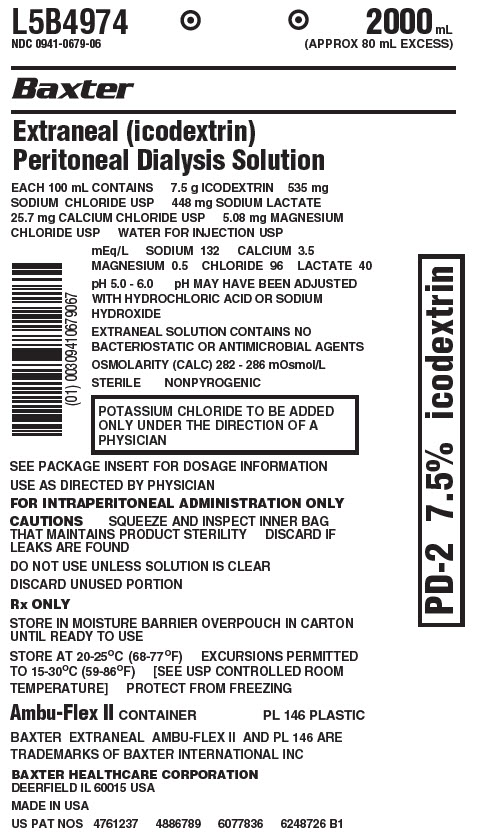
PACKAGE LABEL - PRINCIPAL DISPLAY PANEL Container Label L5B4974 NDC 0941-0679-06 2000 mL (APPROX 80 mL EXCESS) Vantive Extraneal (icodextrin) Peritoneal Dialysis Solution EACH 100 mL CONTAINS 7.5 g ICODEXTRN 535 mg SODIUM CHLORIDE USP 448 mg SODIUM LACTATE 25.7 mg CALCIUM CHLORIDE USP 5.08 mg MAGNESIUM CHLORIDE USP WATER FOR INJECTION USP mEq/L SODIUM 132 CALCIUM
3.5 MAGNESIUM
0.5CHLORIDE 96 LACTATE 40 pH 5.0 - 6.0 pH MAY HAVE BEEN ADJUSTED WITH HYDROCHLORIC ACID OR SODIUM HYDROXIDE EXTRANEAL SOLUTION CONTAINS NO BACTERIOSTATIC OR ANTIMICROBIAL AGENTS OSMOLARITY (CALC) 282 - 286 mOsmol/L STERILE NONPYROGENIC POTASSIUM CHLORIDE TO BE ADDED ONLY UNDER THE DIRECTION OF A PHYSICIAN SEE PACKAGE INSERT FOR DOSAGE INFORMATION USE AS DIRECTED BY A PHYSICIAN FOR INTRAPERITONEAL ADMINISTRATION ONLY CAUTIONS SQUEEZE AND INSPECT INNER BAG THAT MAINTAINS PRODUCT STERILITY DISCARD IF LEAKS ARE FOUND DO NOT USE UNLESS SOLUTION IS CLEAR DISCARD UNUSED PORTION Rx ONLY STORE IN MOISTURE BARRIER OVERPOUCH IN CARTON UNTIL READY TO USE STORE AT 20-25°C (68-77°F) EXCURSIONS PERMITTED TO 15-30°C (59-86°F) [SEE USP CONTROLLED ROOM TEMPERATURE] PROTECT FROM FREEZING Ambu-Flex II CONTAINER VANTIVE US HEALTHCARE LLC DEERFIELD IL 60015 USA MADE IN USA Bar Code (01) 00309410679067 PD-2 7.5% icodextrin Extraneal Representative Container Label 0941-0679-06
About this NDC listing & data coverage
What data is (and isn’t) available for this NDC — tap to expand
| NDC identity (package / product / labeler codes) | ✓ Available |
| Labeler | ✓ Available |
| Product & package description | ✓ Available |
| Marketing category & status | ✓ Available |
| Active ingredient / dosage form / route | ✓ Available |
| FDA label (SPL via DailyMed) | ✓ Available |
| Package photos | ✓ Available |
| Inactive ingredients (structured) | ✓ Available |
| NADAC pharmacy acquisition price (CMS) | — Not published for this NDC CMS publishes NADAC only for NDCs reported in its retail-pharmacy survey. |
| Orange Book / therapeutic-equivalence data | — Not published for this NDC Applies only to products approved under an NDA/ANDA; many listings are out of scope. |
| HCPCS J-code billing crosswalk | — Not published for this NDC Most self-administered / retail products have no J-code — that is normal. |
| Medicaid utilization (CMS SDUD) | — Not published for this NDC CMS reports utilization only for NDCs with Medicaid claims above its privacy threshold. |