
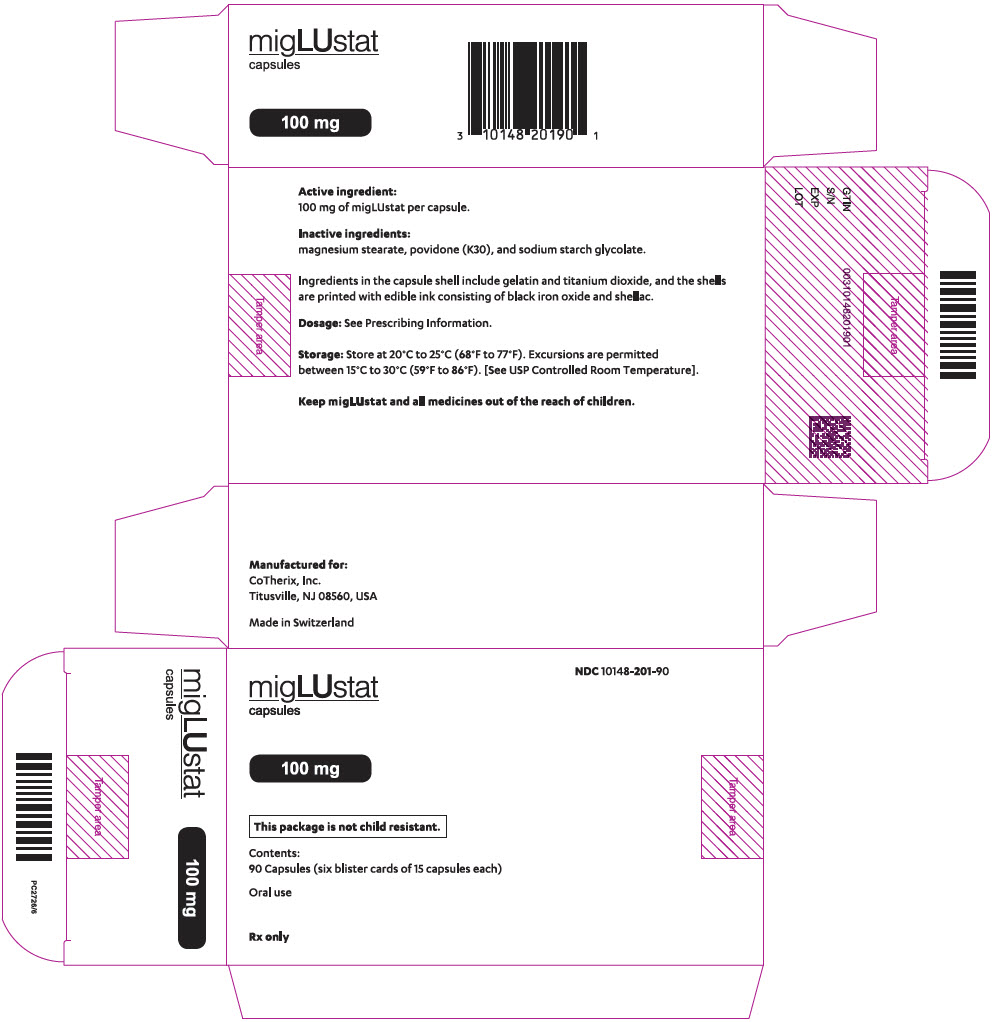
Miglustat 100 mg Capsule, 90-count — NDC 10148-201-90 (Billing 10148-0201-90)
This is a package of 90 capsules of Miglustat 100 mg Capsule from CoTherix, Inc., marketed since Apr 2018 and currently FDA-listed. It is this product's only package size.
NDC database record
One package, one record: these facts belong to NDC 10148-201-90 alone.
- Record
- FDA NDC Directory package listing · Human prescription drug
- Code segments
- 10148 labeler · 201 product · 90 package
- Package marketed since
- Apr 25, 2018
- Sample package
- No — commercial package
- Listing certified through
- Dec 31, 2026
- Billing quantity
- 90 EA per package
- Barcode (UPC-A, from the NDC)
- 3 1014820190 1
- FDA record last changed
- Jul 24, 2026
Identity & classification
Regulatory identifiers FDA, NLM and CMS codes for this package
Drug-database identifiers Medi-Span GPI and First Databank GCN / HICL / AHFS classification
- GSN (GCN sequence number): 051970
- GCN: 19453
- GPI-14 (Medi-Span): 82700070000120
- HICL (First Databank): 025098
- AHFS class code: 44:04.00.00
- RxCUI (RxNorm): 401938
Where does this data come from?
- FDA openFDA NDC Directory · synced Oct 8, 2026
- FDA label on DailyMed · label index refreshed Oct 8, 2026
- RxNorm (NLM RxNav) · catalog refreshed Oct 1, 2026
- Medi-Span GPI (licensed)
- First Databank (licensed) · refreshed Oct 8, 2026
RxNorm drug class
This medicine belongs to the Glucosylceramide Synthase Inhibitor class.
Where does this data come from?
- RxClass (NLM) · catalog refreshed Oct 1, 2026
Clinical
Miglustat is used to treat Gaucher disease type 1 (a condition in which a certain fatty substance is not broken down normally in the body and instead builds up in some organs and causes liver, spleen, bone, and blood problems). Miglustat is also used in combination with another medication known as cipaglucosidase alfa-atga (Pombilti) to treat late onset Pompe disease (a genetic condition that causes deficiency in lysosomal acid alpha-glucosidase, which can lead to muscle weakness and wasting) in adult patients who weigh 92 pounds (40 kg) or more and who have not been improving on their enzyme...
Read the full MedlinePlus article ↗- It depends on the product. Miglustat, Zavesca and Yargesa treat mild to moderate type 1 Gaucher disease in adults who can't use enzyme replacement therapy. Opfolda is used with Pom...
- Food slows how fast miglustat is absorbed but doesn't change much how much your body takes in. If you get diarrhea, taking the capsules between meals may help. Follow your prescrib...
- Diarrhea and weight loss are very common, and many people notice gas, stomach pain, nausea, headache or shaky hands. Diarrhea often improves over time and may respond to diet chang...
- Call if you feel numbness, tingling, pain or weakness in your hands or feet. Also call for a tremor that doesn't go away or diarrhea and weight loss that keep going. Your doctor wi...
Patient education
Supplement & herbal interactions
Some supplements/herbs that may interact with Miglustat — tap one for details:
Where does this data come from?
- MedlinePlus (NLM) · refreshed Oct 8, 2026
- FDA label on DailyMed · label index refreshed Oct 8, 2026
Ask a licensed pharmacist directly — free, answered by our team.
Pricing
A drug doesn't have one price. Each row is a different public payment system, and none is what you'd pay at the counter — that depends on your insurance. The ⓘ on each row explains what it measures.
| Price system | Per each | Per package |
|---|---|---|
| Retail pharmacies payNADAC · weekly | Not in the retail survey — common for institutional, discontinued, or low-volume packs. | |
| Medicaid paysCMS SDUD · 12 mo | No recent Medicaid claims on file for this NDC — rare and low-volume NDCs are suppressed in the public data. | |
| Medicare drug plans payPart D · Q2 2026 | $181.42 | $16,327.95 / 90 capsules |
Where does this data come from?
- CMS NADAC weekly file
- CMS ASP pricing files · refreshed Sep 20, 2026
- CMS Medicaid State Drug Utilization Data · refreshed Oct 8, 2026
- CMS Part D plan pricing files · refreshed Sep 24, 2026
- VA National Acquisition Center price file
Packaging — all sizes for this product
| Package NDC | Description | Marketing start | Marketing end | Status |
|---|---|---|---|---|
| 10148-0201-90 You're viewing this Main listing | 6 BLISTER PACK in 1 CARTON / 15 CAPSULE in 1 BLISTER PACK | 2018-04-25 | — | Active |
Therapeutic equivalents
| Product | Labeler | Pack | NADAC/unit | TE | Status | Price vs. this |
|---|---|---|---|---|---|---|
| Miglustat 100 mgthis 10148-0201-90 | CoTherix, | 90 capsules | — | AB | FDA listed | — |
| Yargesa 100 mg 42799-0709-15 | Edenbridge | 15 capsules | — | AB | FDA listed | — |
| Miglustat 100 mg 43975-0310-83 | ANI | 90 capsules | — | AB | FDA listed | — |
| Zavesca 100 mg 66215-0201-90 | Actelion | 90 capsules | — | AB | FDA listed | — |
| Miglustat 100 mg 68475-0204-02 | Navinta | 90 capsules | — | AB | FDA listed | — |
| Miglustat 100 mg 70710-2039-08 | Zydus | 90 capsules | — | AB | FDA listed | — |
Where does this data come from?
- FDA openFDA NDC Directory · synced Oct 8, 2026
- FDA Orange Book · refreshed Oct 3, 2026
- CMS NADAC weekly file
Availability & generic status
The FDA lists approved generic versions of this medicine, but that does not always mean a pharmacy can get one today. Patent rules, launch agreements, supply and pricing can affect when generics actually arrive.
Where does this data come from?
- FDA Orange Book · refreshed Oct 3, 2026
What it looks like
Where does this data come from?
- FDA label on DailyMed · label index refreshed Oct 8, 2026
Inactive Ingredients / Excipients
Inactive ingredients, also called excipients, are components of the drug product other than the active ingredient. They may include fillers, dyes, coatings, preservatives, flavors, or other formulation ingredients.
🧪 Avoiding an ingredient? See Miglustat inactive ingredients by manufacturer: every current product's list side by side, so you can ask your pharmacy for the version that does not list it.
💡 Tap an ingredient (hover on desktop) to see what it is and why it’s used.
-
UNII XM0M87F357
A dark iron oxide compound that gives medicines their black or dark color. It's used as a colorant in tablets and capsules to help identify the product and make it visually distinctive.
-
UNII 2G86QN327L
Gelatin is a protein derived from animal collagen, commonly used in medicines as a gelling agent and capsule material. It helps create soft or hard capsule shells that hold and release medication, and can also thicken liquid formulations.
-
UNII 70097M6I30
Magnesium stearate is a salt made from magnesium and stearic acid, a fatty substance. It's used in tablets and capsules as a lubricant and glidant to help ingredients flow smoothly during manufacturing and prevent sticking.
-
UNII U725QWY32X
Povidone K30 is a synthetic polymer made from petroleum. It acts as a binder to hold tablet ingredients together and as a disintegrant to help the tablet break apart in the stomach so the medicine can be absorbed.
-
UNII 46N107B71O
Shellac is a natural resin secreted by the lac beetle. It's used as a coating on tablets and capsules to control how quickly the medicine dissolves and to improve appearance and stability.
-
UNII 5856J3G2A2
A starch-based powder made from potatoes and processed with sodium. It acts as a disintegrant, helping the tablet or capsule break apart quickly in the stomach so the medicine can be absorbed.
-
UNII 15FIX9V2JP
Titanium dioxide is a bright white mineral powder commonly used as a colorant and opacifying agent. It makes pills and tablets white or lighter in color and helps make coatings non-transparent.
7 inactive ingredients listed in the exact product block matched to this NDC.
Where does this data come from?
ingredient classCode="IACT" elements from the exact product block matched by this NDC. Label-section narrative from DailyMed / the openFDA label index is shown separately when available.- FDA label on DailyMed · label index refreshed Oct 8, 2026
- FDA openFDA NDC Directory · synced Oct 8, 2026
Inactive ingredient FAQ
Are inactive ingredients the same for every manufacturer?
Why might an inactive ingredient be missing?
Can inactive ingredients matter?
Manufacturer & labeler
Where does this data come from?
- FDA openFDA NDC Directory · synced Oct 8, 2026
- Drugs@FDA
Full prescribing information FDA SPL
🎯 Indications and Usage ▾
1 INDICATIONS AND USAGE Miglustat is a glucosylceramide synthase inhibitor indicated as monotherapy for treatment of adult patients with mild/moderate type 1 Gaucher disease for whom enzyme replacement therapy is not a therapeutic option ( 1.1 ).
1.1Type 1 Gaucher Disease Miglustat is indicated as monotherapy for the treatment of adult patients with mild to moderate type 1 Gaucher disease for whom enzyme replacement therapy is not a therapeutic option (e.g. due to allergy, hypersensitivity, or poor venous access).
⏱️ Dosage and Administration ▾
2 DOSAGE AND ADMINISTRATION Recommended dosage is 100 mg administered orally three times a day at regular intervals ( 2.1 ). May reduce dosage to 100 mg once or twice a day in some patients due to tremor or diarrhea ( 2.1 ). Adjust in patients with renal impairment ( 2.2 ): Renal Impairment Adjusted Creatinine Clearance (in mL/min/1.73 m 2 ) Recommendations Mild 50 – 70 Start dose at 100 mg twice a day Moderate 30 – 50 Start dose at 100 mg once a day Severe <30 Use is not recommended
2.1Instructions for Administration Therapy should be directed by physicians who are knowledgeable in the management of Gaucher disease. The recommended dose for the treatment of adult patients with type 1 Gaucher disease is one 100 mg capsule administered orally three times a day at regular intervals. If a dose is missed, the next miglustat capsule should be taken at the next scheduled time.
It may be necessary to reduce the dose to one 100 mg capsule once or twice a day in some patients due to adverse reactions, such as tremor or diarrhea.
2.2Patients with Renal Insufficiency In patients with mild renal impairment (adjusted creatinine clearance 50–70 mL/min/1.73 m 2 ), initiate miglustat treatment at a dose of 100 mg twice per day. In patients with moderate renal impairment (adjusted creatinine clearance of 30–50 mL/min/1.73 m 2 ), initiate miglustat treatment at a dose of one 100 mg capsule per day. Miglustat is not recommended for use in patients with severe renal impairment (creatinine clearance <30 mL/min/1.73 m 2 ) [ see Use in Specific Populations (8.6) ].
💊 Dosage Forms and Strengths ▾
3 DOSAGE FORMS AND STRENGTHS Capsules: 100 mg of miglustat, white opaque hard gelatin capsules with "OGT 918" printed in black on the cap and "100" printed in black on the body. Capsules : 100 mg ( 3 )
⛔ Contraindications ▾
4 CONTRAINDICATIONS None. None ( 4 )
⚠️ Warnings and Cautions ▾
5 WARNINGS AND PRECAUTIONS Peripheral neuropathy : Perform baseline and follow-up neurological evaluations at 6- month intervals in all patients ( 5.1 ). Tremor : Reduce dose to ameliorate tremor or discontinue treatment if tremor does not resolve within days of dose reduction ( 5.2 ). Diarrhea and Weight Loss : Evaluate for underlying gastrointestinal disease in patients who do not respond to usual interventions (e.g. diet modification) ( 5.3 ).
Reductions in Platelet Count : Mild reductions in platelet counts without association with bleeding were observed in some patients. Monitoring of platelet counts is recommended ( 5.4 ).
5.1Peripheral Neuropathy In clinical trials, cases of peripheral neuropathy have been reported in 3% of Gaucher's patients treated with miglustat. All patients receiving miglustat treatment should undergo baseline and repeat neurological evaluations at approximately 6-month intervals. Patients who develop symptoms of peripheral neuropathy such as pain, weakness, numbness and tingling should have a careful re-assessment of the risk/benefit of miglustat therapy, and cessation of treatment may be considered.
5.2Tremor Approximately 30% of patients have reported tremor or exacerbation of existing tremor on treatment. These tremors were described as an exaggerated physiological tremor of the hands. Tremor usually began within the first month of therapy and in many cases resolved between 1 to 3 months during treatment. Reduce dose to ameliorate tremor or discontinue treatment if tremor does not resolve within days of dose reduction.
5.3Diarrhea and Weight Loss Diarrhea and weight loss were common in clinical studies of patients treated with miglustat, occurring in approximately 85% and up to 65% of treated patients, respectively. Diarrhea appears to be the result of the inhibitory activity of miglustat on intestinal disaccharidases such as sucrase-isomaltase in the gastrointestinal tract leading to reduced absorption of dietary disaccharides in the small intestine, with a resultant osmotic diarrhea. It is unclear if weight loss results from the diarrhea and associated gastrointestinal complaints, a decrease in food intake, or a combination of these or other factors.
The incidence of weight loss was most evident in the first 12 months of treatment. Diarrhea decreased over time with continued miglustat treatment, and may respond to individualized diet modification (e.g., reduction of sucrose, lactose and other carbohydrate intake), to taking miglustat between meals, and/or to anti-diarrheal medications, most commonly loperamide. Patients may be instructed to avoid high carbohydrate content foods during treatment with miglustat if they present with diarrhea.
Patients with persistent gastrointestinal events that continue during treatment with miglustat, and who do not respond to usual interventions (e.g. diet modification), should be evaluated to determine whether significant underlying gastrointestinal disease is present. The safety of treatment with miglustat has not been evaluated in patients with significant gastrointestinal disease, such as inflammatory bowel disease, and continued treatment of these patients with miglustat should occur only after consideration of the risks and benefits of continued treatment.
5.4Reductions in Platelet Count In clinical trials evaluating the use of miglustat for treatment of indications other than type 1 Gaucher disease, mild reductions in platelet counts without association with bleeding were observed in some patients; approximately 40% of patients in this trial had low platelet counts (defined as below 150×10 9 /L) before starting treatment with miglustat. Monitoring of platelet counts is recommended in patients with type 1 Gaucher disease. Mild reductions in platelet counts without association with bleeding were observed in patients with type 1 Gaucher disease who were switched from enzyme replacement therapy (ERT) to miglustat.
🤒 Adverse Reactions ▾
6 ADVERSE REACTIONS The following serious adverse reactions are described below and elsewhere in the labeling: Peripheral Neuropathy [see Warnings and Precautions (5.1) ] Tremor [see Warnings and Precautions (5.2) ] Diarrhea and Weight Loss [see Warnings and Precautions (5.3) ] Reductions in Platelet Count [see Warnings and Precautions (5.4) ] The most common adverse reactions (incidence ≥5%) are: diarrhea, weight loss, stomach pain, gas, nausea and vomiting headache including migraine, tremor, leg cramps, dizziness, weakness, vision problems, thrombocytopenia, muscle cramps, back pain, constipation, dry mouth, heaviness in arms and legs, memory loss, unsteady walking, anorexia, indigestion, paresthesia, stomach bloating, stomach pain not related to food, and menstrual changes ( 6.1 ).
To report SUSPECTED ADVERSE REACTIONS, contact CoTherix at 1-855-246-5637 or FDA at 1-800-FDA-1088 or www.fda.gov/medwatch .
6.1Clinical Trials Experience Because clinical trials are conducted under widely varying conditions, adverse reaction rates observed in the clinical trials of a drug cannot be directly compared to rates in the clinical trials of another drug and may not reflect the rates observed in practice. The data described below reflect exposure of 80 patients with type 1 Gaucher disease in two open-label, uncontrolled, monotherapy trials, one open-label, active-controlled trial, and two extensions, who received miglustat at doses ranging from 50 mg to 200 mg three times daily.
Patients were aged 18 to 69 years at first treatment. The population was evenly distributed by gender. The most common serious adverse reaction reported with miglustat treatment in clinical trials was peripheral neuropathy [see Warnings and Precautions (5.1) ].
The most commonly reported adverse reactions in patients treated with miglustat (occurring in ≥5%) that were considered related to miglustat are shown in Tables 1 and 2 [see Warnings and Precautions (5.2 , 5.3) ]. The most common adverse reactions requiring intervention were diarrhea and tremor [see Warnings and Precautions (5.2 , 5.3) ]. In two open-label, uncontrolled monotherapy trials, adult type 1 Gaucher disease patients were treated with miglustat at a starting dose of 100 mg three times daily (dose range 100 to 200 mg three times daily) for up to 12 months in 28 patients [Study 1], or at a dose of 50 mg three times daily for up to 6 months in 18 patients [Study 2].
Table 1 below lists adverse reactions that occurred during the trials in ≥5% of patients. Table 1: Adverse Reactions in ≥5% of Patients in Two Open-Label, Uncontrolled Monotherapy Trials of miglustat Incidence of adverse reactions Study 1 (starting dose 100 mg three times daily) Study 2 (50 mg three times daily) Patients entered in Study (n) 28 18 Body System - Preferred Term % of patients reporting % of patients reporting Gastrointestinal System Diarrhea 89 89 Flatulence 29 44 Abdominal Pain 18 50 Nausea 14 22 Vomiting 4 11 Bloating 0 6 Anorexia 7 0 Dyspepsia 7 0 Epigastric pain not food-related 0 6 Metabolic and Nutritional Disorders Weight Decrease 39 67 Central and Peripheral Nervous System Headache 21 22 Tremor 11 11 Dizziness 0 11 Leg cramps 4 11 Paresthesia 7 0 Migraine 0 6 Vision Disorders Visual Disturbance 0 17 Musculoskeletal Disorders Cramps 0 11 Platelet, Bleeding, and Clotting Disorders Thrombocytopenia 7 6 Reproductive disorders, female Menstrual disorder 0 6 In an open-label, active-controlled study, 36 adult type 1 Gaucher disease patients were treated with miglustat, imiglucerase, or miglustat plus imiglucerase [Study 3] for up to 12 months.
Table 2 lists adverse reactions that occurred during the trial in ≥5% of patients. Table 2: Adverse Reactions in ≥5% of Patients in Open-Label Active Controlled Study Incidence of adverse reactions Miglustat alone Imiglucerase alone Patients entered in Study (n) 12 12 Body System - Preferred Term % of patients reporting % of patients reporting Gastrointestinal System Diarrhea 100… [Excerpted — this section continues on DailyMed.]
🔄 Drug Interactions ▾
7 DRUG INTERACTIONS While co-administration of miglustat appeared to increase the clearance of imiglucerase by 70%, these results are not conclusive because of the small number of patients studied and because patients took variable doses of imiglucerase [see Clinical Pharmacology (12.3) ]. Co-administration of miglustat and imiglucerase may lead to increased clearance of imiglucerase ( 7 ).
👥 Use in Specific Populations ▾
8 USE IN SPECIFIC POPULATIONS Pregnancy : Based on animal data, may cause fetal harm ( 8.1 ). Lactation : Breastfeeding not recommended ( 8.2 ).
8.1Pregnancy Risk Summary Based on findings from animal reproduction studies, miglustat may cause fetal harm when administered to a pregnant woman. Available data from postmarketing case reports with miglustat use in pregnancy are insufficient to assess a drug-associated risk of major birth defects, miscarriage, or adverse maternal or fetal outcomes. There are risks associated with symptomatic Type I Gaucher disease in pregnancy, including hepatosplenomegaly and thrombocytopenia (see Clinical Considerations ).
Advise pregnant women of the potential risks to the fetus. In animal reproduction studies, miglustat was maternally toxic in rabbits at exposures near the expected human therapeutic dose and caused embryo-fetal toxicities in rats at doses twice the recommended human dose. No adverse developmental outcomes were observed with administration of miglustat to pregnant rats at dose levels 6 times the recommended human dose.
(see Data ). The estimated background risk of major birth defects and miscarriage for the indicated population is unknown. All pregnancies have a background risk of birth defect, loss, or other adverse outcomes.
In the U.S. general population, the estimated background risk of major birth defects and miscarriage in clinically recognized pregnancies is 2–4% and 15–20%, respectively. Clinical Considerations Disease-associated Maternal and Embryo-Fetal Risk Pregnancy may exacerbate existing Type 1 Gaucher disease symptoms or result in new disease manifestations. Type 1 Gaucher disease manifestations may lead to adverse pregnancy outcomes including, hepatosplenomegaly which can interfere with the normal growth of a pregnancy and thrombocytopenia which can lead to increased bleeding and possible hemorrhage.
Data Animal Data In female rats given miglustat by oral gavage at doses of 20, 60, 180 mg/kg/day beginning 14 days before mating and continuing through gestation day 17 (organogenesis), increased post implantation loss, decreased embryo-fetal survival and decreased fetal and pup weights were observed at doses ≥60 mg/kg/day (≥2 times the human therapeutic dose on a mg/m 2 basis). Miglustat was also administered to pregnant rats by oral gavage at doses of 20, 60, 180 mg/kg/day from gestation day 6 through lactation (postpartum day 20).
Delayed and prolonged parturition with decreased live births were observed at doses ≥60 mg/kg/day (≥2 times the human therapeutic dose on a mg/m 2 basis). In pregnant rabbits given miglustat by oral gavage at doses of 15, 30, 45 mg/kg/day during gestation days 6–18 (organogenesis), maternal toxicity, including maternal deaths (all doses), reduced food consumption (30 and 45 mg/kg/day), and decreased body weight gain (15 and 30 mg/kg/day), was observed. The 15 mg/kg/day dose level was 0.97 times the human therapeutic dose on a mg/m 2 basis.
In a pre- and postnatal development study in rats, miglustat was administered by oral gavage at doses of 20, 60, 180 mg/kg/day from gestation day 6 through day 20 of lactation, decreased live births were observed in dams, as well as decreased body weight gain in the offspring at doses ≥60 mg/kg/day (≥2 times the human therapeutic dose on a mg/m 2 basis). There was no effect on behavioral and learning assessments, sexual maturation or reproductive performance of the offspring at doses up to 180 mg/kg/day (about 6 times the human therapeutic dose on a mg/m 2 basis).
8.2Lactation Risk Summary There are no available data on the presence of miglustat in either human or animal milk, the effects on the breastfed infant, or the effects on milk production. Based on the physical properties of miglustat, miglustat is likely to be present in breast milk. Because of the potential for serious adverse reactions in breastfed infants, advise women that breastfeeding is not recommended.
8.3Females and Males of Reprodu… [Excerpted — this section continues on DailyMed.]
🤰 Pregnancy ▾
8.1Pregnancy Risk Summary Based on findings from animal reproduction studies, miglustat may cause fetal harm when administered to a pregnant woman. Available data from postmarketing case reports with miglustat use in pregnancy are insufficient to assess a drug-associated risk of major birth defects, miscarriage, or adverse maternal or fetal outcomes. There are risks associated with symptomatic Type I Gaucher disease in pregnancy, including hepatosplenomegaly and thrombocytopenia (see Clinical Considerations ).
Advise pregnant women of the potential risks to the fetus. In animal reproduction studies, miglustat was maternally toxic in rabbits at exposures near the expected human therapeutic dose and caused embryo-fetal toxicities in rats at doses twice the recommended human dose. No adverse developmental outcomes were observed with administration of miglustat to pregnant rats at dose levels 6 times the recommended human dose.
(see Data ). The estimated background risk of major birth defects and miscarriage for the indicated population is unknown. All pregnancies have a background risk of birth defect, loss, or other adverse outcomes.
In the U.S. general population, the estimated background risk of major birth defects and miscarriage in clinically recognized pregnancies is 2–4% and 15–20%, respectively. Clinical Considerations Disease-associated Maternal and Embryo-Fetal Risk Pregnancy may exacerbate existing Type 1 Gaucher disease symptoms or result in new disease manifestations. Type 1 Gaucher disease manifestations may lead to adverse pregnancy outcomes including, hepatosplenomegaly which can interfere with the normal growth of a pregnancy and thrombocytopenia which can lead to increased bleeding and possible hemorrhage.
Data Animal Data In female rats given miglustat by oral gavage at doses of 20, 60, 180 mg/kg/day beginning 14 days before mating and continuing through gestation day 17 (organogenesis), increased post implantation loss, decreased embryo-fetal survival and decreased fetal and pup weights were observed at doses ≥60 mg/kg/day (≥2 times the human therapeutic dose on a mg/m 2 basis). Miglustat was also administered to pregnant rats by oral gavage at doses of 20, 60, 180 mg/kg/day from gestation day 6 through lactation (postpartum day 20).
Delayed and prolonged parturition with decreased live births were observed at doses ≥60 mg/kg/day (≥2 times the human therapeutic dose on a mg/m 2 basis). In pregnant rabbits given miglustat by oral gavage at doses of 15, 30, 45 mg/kg/day during gestation days 6–18 (organogenesis), maternal toxicity, including maternal deaths (all doses), reduced food consumption (30 and 45 mg/kg/day), and decreased body weight gain (15 and 30 mg/kg/day), was observed. The 15 mg/kg/day dose level was 0.97 times the human therapeutic dose on a mg/m 2 basis.
In a pre- and postnatal development study in rats, miglustat was administered by oral gavage at doses of 20, 60, 180 mg/kg/day from gestation day 6 through day 20 of lactation, decreased live births were observed in dams, as well as decreased body weight gain in the offspring at doses ≥60 mg/kg/day (≥2 times the human therapeutic dose on a mg/m 2 basis). There was no effect on behavioral and learning assessments, sexual maturation or reproductive performance of the offspring at doses up to 180 mg/kg/day (about 6 times the human therapeutic dose on a mg/m 2 basis).
🧒 Pediatric Use ▾
8.4Pediatric Use The safety and effectiveness of miglustat in pediatric patients have not been established. In a combined clinical trial safety data set of 45 patients less than 18 years of age exposed to miglustat in indications other than type 1 Gaucher disease, the median weight and height percentiles adjusted for age and gender decreased during the first year of treatment but then stabilized. The mean length of exposure in these studies ranged from 2 to 2.6 years; some pediatric patients were exposed for up to 4 years.
However, the effect of miglustat on long-term gain in weight and height in pediatric patients is unclear.
🧓 Geriatric Use ▾
8.5Geriatric Use Clinical studies of miglustat did not include sufficient numbers of patients aged 65 and over to determine whether they respond differently than younger patients. Other reported clinical experience has not identified differences in responses between elderly and younger patients. In general, dose selection for an elderly patient should be cautious, usually starting at the low end of the dosing range, reflecting the greater frequency of decreased hepatic, renal, and cardiac function and of concomitant disease or other drug therapy.
🧬 Clinical Pharmacology ▾
12 CLINICAL PHARMACOLOGY
12.1Mechanism of Action Type 1 Gaucher disease is caused by a functional deficiency of glucocerebrosidase, the enzyme that mediates the degradation of the glycosphingolipid glucosylceramide. Miglustat functions as a competitive and reversible inhibitor of the enzyme glucosylceramide synthase, the initial enzyme in a series of reactions which results in the synthesis of most glycosphingolipids. Miglustat helps reduce the rate of glycosphingolipid biosynthesis so that the amount of glycosphingolipid substrate is reduced to a level which allows the residual activity of the deficient glucocerebrosidase enzyme to be more effective (substrate reduction therapy).
In vitro and in vivo studies have shown that miglustat can reduce the synthesis of glucosylceramide-based glycosphingolipids.
12.3Pharmacokinetics Absorption After a 100 mg oral dose, the time to maximum observed plasma concentration of miglustat (t max ) ranged from 2 to 2.5 hours in Gaucher patients. Plasma concentrations show a biexponential decline, characterized by a short distribution phase and a longer elimination phase. The effective half-life of miglustat is approximately 6 to 7 hours, which predicts that steady-state will be achieved by 1.5 to 2 days following the start of three times daily dosing.
Miglustat, dosed at 50 and 100 mg three times daily in Gaucher patients, exhibits dose-proportional pharmacokinetics. The pharmacokinetics of miglustat were not altered after repeated dosing three times daily for up to 12 months. In healthy subjects, co-administration of miglustat with food results in a decrease in the rate of absorption of miglustat (maximum plasma concentration [C max ] was decreased by 36% and t max delayed 2 h) but had no statistically significant effect on the extent of absorption of miglustat (area-under-the-plasma-concentration time curve [AUC] was decreased by 14%).
The mean oral bioavailability of a 100-mg miglustat capsule is about 97% relative to an oral solution administered under fasting conditions. The pharmacokinetics of miglustat were similar between adult type 1 Gaucher disease patients and healthy subjects after a single dose administration of miglustat 100 mg. Distribution Miglustat does not bind to plasma proteins.
Mean apparent volume of distribution of miglustat is 83–105 liters in Gaucher patients. At steady state, the concentration of miglustat in cerebrospinal fluid of six non-Gaucher patients was 31.4–67.2% of that in plasma, indicating that miglustat crosses the blood brain barrier. Metabolism and Excretion The major route of excretion of miglustat is via kidney.
Following administration of a single dose of 100 mg 14 C-miglustat to healthy volunteers, 83% of the radioactivity was recovered in urine and 12% in feces. In healthy subjects, 67% of the administered dose was excreted unchanged in urine over 72 hours. The most abundant metabolite in urine was miglustat glucuronide accounting for 5% of the dose.
The terminal half-life of radioactivity in plasma was 150 hours, suggesting the presence of one or more metabolites with a prolonged half-life. The metabolite accounting for this observation has not been identified, but may accumulate and reach concentrations exceeding those of miglustat at steady state. Specific Populations Gender There was no statistically significant gender difference in miglustat pharmacokinetics, based on pooled data analysis.
Race Ethnic differences in miglustat pharmacokinetics have not been evaluated in Gaucher patients. However, apparent oral clearance of miglustat in patients of Ashkenazi Jewish descent was not statistically different to that in others (1 Asian and 15 Caucasians), based on a cross-study analysis. Hepatic Impairment No studies have been performed to assess the pharmacokinetics of miglustat in patients with hepatic impairment.
Renal Impairment Limited data in non-Gaucher patients with impaired renal function indicate that the apparent oral clearance (CL/F) of… [Excerpted — this section continues on DailyMed.]
🧬 Mechanism of Action ▾
12.1Mechanism of Action Type 1 Gaucher disease is caused by a functional deficiency of glucocerebrosidase, the enzyme that mediates the degradation of the glycosphingolipid glucosylceramide. Miglustat functions as a competitive and reversible inhibitor of the enzyme glucosylceramide synthase, the initial enzyme in a series of reactions which results in the synthesis of most glycosphingolipids. Miglustat helps reduce the rate of glycosphingolipid biosynthesis so that the amount of glycosphingolipid substrate is reduced to a level which allows the residual activity of the deficient glucocerebrosidase enzyme to be more effective (substrate reduction therapy).
In vitro and in vivo studies have shown that miglustat can reduce the synthesis of glucosylceramide-based glycosphingolipids.
📦 How Supplied / Storage and Handling ▾
16 HOW SUPPLIED/STORAGE AND HANDLING Miglustat is supplied in hard gelatin capsules containing 100 mg miglustat. Miglustat 100 mg capsules are white opaque with "OGT 918" printed in black on the cap and "100" printed in black on the body. Miglustat 100 mg capsules are packed in blister cards.
Six blister cards of 15 capsules are supplied in each carton. NDC 10148-201-90: carton containing 90 capsules NDC 10148-201-15: blister card containing 15 capsules Storage Store at 20°C to 25°C (68°F to 77°F). Excursions are permitted between 15°C to 30°C (59°F to 86°F). [See USP Controlled Room Temperature].
Keep out of reach of children.
📦 Storage and Handling ▾
Storage Store at 20°C to 25°C (68°F to 77°F). Excursions are permitted between 15°C to 30°C (59°F to 86°F). [See USP Controlled Room Temperature]. Keep out of reach of children.
📋 Description ▾
11 DESCRIPTION Miglustat (miglustat capsules, 100 mg) is a glucosylceramide synthase inhibitor, which is a glucosyl transferase enzyme responsible for the first step in the synthesis of most glycosphingolipids. miglustat is an N-alkylated imino sugar, a synthetic analog of D-glucose. The chemical name for miglustat is 1,5-(butylimino)-1,5-dideoxy-D-glucitol with the chemical formula C 10 H 21 NO 4 and a molecular weight of 219.28. Miglustat is a white to off-white crystalline solid and has a bitter taste.
It is highly soluble in water (>1000 mg/mL as a free base). Miglustat is supplied in hard gelatin capsules each containing 100 mg miglustat for oral administration. Each miglustat 100 mg capsule also contains magnesium stearate, povidone (K30), and sodium starch glycolate.
Ingredients in the capsule shell include gelatin and titanium dioxide, and the shells are printed with edible ink consisting of black iron oxide and shellac. Chemical Structure
💬 Information for Patients ▾
17 PATIENT COUNSELING INFORMATION Advise the patient to read the FDA-approved patient labeling (Patient Information). Information for Patients Advise patients that the most common serious adverse reaction reported with miglustat is peripheral neuropathy. Advise patients to promptly report any numbness, tingling, pain, or burning in the hands and feet [see Warnings and Precautions (5.1) ] .
Advise patients that other adverse reactions include tremor and reductions in platelet counts. Advise patients to promptly report the development of tremor or worsening in an existing tremor [see Warnings and Precautions (5.2 , 5.4) ]. Advise patients that other serious adverse reactions include diarrhea and weight loss.
Advise patients to adhere to dietary instructions [see Warnings and Precautions (5.3) ] . Advise patients to take the next miglustat capsule at the next scheduled time if a dose is missed. Inform patients of the potential risks and benefits of miglustat and of alternative modes of therapy.
Pregnancy Advise pregnant women and females of reproductive potential of the potential risk to a fetus, based on animal data. Advise patients who may become pregnant to inform their healthcare provider of a known or suspected pregnancy [see Use in Specific Populations (8.1) ]. Lactation Advise women not to breastfeed if they are taking miglustat [see Use in Specific Populations (8.2) ].
🧬 Pharmacokinetics ▾
12.3Pharmacokinetics Absorption After a 100 mg oral dose, the time to maximum observed plasma concentration of miglustat (t max ) ranged from 2 to 2.5 hours in Gaucher patients. Plasma concentrations show a biexponential decline, characterized by a short distribution phase and a longer elimination phase. The effective half-life of miglustat is approximately 6 to 7 hours, which predicts that steady-state will be achieved by 1.5 to 2 days following the start of three times daily dosing.
Miglustat, dosed at 50 and 100 mg three times daily in Gaucher patients, exhibits dose-proportional pharmacokinetics. The pharmacokinetics of miglustat were not altered after repeated dosing three times daily for up to 12 months. In healthy subjects, co-administration of miglustat with food results in a decrease in the rate of absorption of miglustat (maximum plasma concentration [C max ] was decreased by 36% and t max delayed 2 h) but had no statistically significant effect on the extent of absorption of miglustat (area-under-the-plasma-concentration time curve [AUC] was decreased by 14%).
The mean oral bioavailability of a 100-mg miglustat capsule is about 97% relative to an oral solution administered under fasting conditions. The pharmacokinetics of miglustat were similar between adult type 1 Gaucher disease patients and healthy subjects after a single dose administration of miglustat 100 mg. Distribution Miglustat does not bind to plasma proteins.
Mean apparent volume of distribution of miglustat is 83–105 liters in Gaucher patients. At steady state, the concentration of miglustat in cerebrospinal fluid of six non-Gaucher patients was 31.4–67.2% of that in plasma, indicating that miglustat crosses the blood brain barrier. Metabolism and Excretion The major route of excretion of miglustat is via kidney.
Following administration of a single dose of 100 mg 14 C-miglustat to healthy volunteers, 83% of the radioactivity was recovered in urine and 12% in feces. In healthy subjects, 67% of the administered dose was excreted unchanged in urine over 72 hours. The most abundant metabolite in urine was miglustat glucuronide accounting for 5% of the dose.
The terminal half-life of radioactivity in plasma was 150 hours, suggesting the presence of one or more metabolites with a prolonged half-life. The metabolite accounting for this observation has not been identified, but may accumulate and reach concentrations exceeding those of miglustat at steady state. Specific Populations Gender There was no statistically significant gender difference in miglustat pharmacokinetics, based on pooled data analysis.
Race Ethnic differences in miglustat pharmacokinetics have not been evaluated in Gaucher patients. However, apparent oral clearance of miglustat in patients of Ashkenazi Jewish descent was not statistically different to that in others (1 Asian and 15 Caucasians), based on a cross-study analysis. Hepatic Impairment No studies have been performed to assess the pharmacokinetics of miglustat in patients with hepatic impairment.
Renal Impairment Limited data in non-Gaucher patients with impaired renal function indicate that the apparent oral clearance (CL/F) of miglustat decreases with decreasing renal function. While the number of subjects with mild and moderate renal impairment was very small, the data suggest an approximate decrease in the apparent oral clearance of 40% and 60% respectively, in mild and moderate renal impairment, justifying the need to decrease the dosing of miglustat in such patients dependent upon creatinine clearance levels [see Dosage and Administration (2.2) ].
Data in severe renal impairment are limited to two patients with creatinine clearances in the range 18–29 mL/min and cannot be extrapolated below this range. These data suggest a decrease in CL/F by at least 70% in patients with severe renal impairment [see Dosage and Administration (2.2) and Use in Specific Populations (8.6) ]. Drug Interaction Studies Miglustat does not inhibit t… [Excerpted — this section continues on DailyMed.]
🔬 Clinical Studies ▾
14 CLINICAL STUDIES The efficacy of miglustat in type 1 Gaucher disease has been investigated in two open-label, uncontrolled trials and one randomized, open-label, active-controlled trial with enzyme replacement given as imiglucerase. Patients who received miglustat were treated with doses ranging from 100 to 600 mg a day, although the majority of patients were maintained on doses between 200 to 300 mg a day. Efficacy parameters included the evaluation of liver and spleen organ volume, hemoglobin concentration, and platelet count.
A total of 80 patients were exposed to miglustat during the three trials and their extension period. Open-Label Uncontrolled Monotherapy Trials In Study 1, miglustat was administered at a starting dose of 100 mg three times daily for 12 months (dose range of 100 once-daily to 200 mg three times daily) to 28 adult patients with type 1 Gaucher disease, who were unable to receive enzyme replacement therapy and who had not taken enzyme replacement therapy in the preceding 6 months. Twenty-two patients completed the trial.
After 12 months of treatment, the results showed significant mean percent reductions from baseline in liver volume of 12% and spleen volume of 19%, a non-significant increase from baseline in mean absolute hemoglobin concentration of 0.26 g/dL and a mean absolute increase from baseline in platelet counts of 8×10 9 /L (See Tables 3–6). In Study 2, miglustat was administered at a dose of 50 mg three times daily for 6 months to 18 adult patients with type 1 Gaucher disease who were unable to receive enzyme replacement therapy and who had not taken enzyme replacement therapy in the preceding 6 months.
Seventeen patients completed the trial. After 6 months of treatment, the results showed significant mean percent reductions from baseline in liver volume of 6% and spleen volume of 5%. There was a non-significant mean absolute decrease from baseline in hemoglobin concentration of 0.13 g/dL and a non-significant mean absolute increase from baseline in platelet counts of 5×10 9 /L (See Tables 3–6).
Extension Period Eighteen patients were enrolled in a 12-month extension to Study 1. A subset of patients continuing in the extension had larger mean baseline liver volumes, and lower mean baseline platelet counts and hemoglobin concentrations than the original study population (See Tables 3–6). After a total of 24 months of treatment, there were significant mean decreases from baseline in liver and spleen organ volumes of 15% and 27%, respectively, and significant mean absolute increases from baseline in hemoglobin concentration and platelet count of 0.9 g/dL and 14×10 9 /L, respectively (See Tables 3–6).
Sixteen patients were enrolled in a 6-month extension to Study 2. After a total of 12 months of treatment, there was a mean decrease from baseline in spleen organ volume of 10%, whereas the mean percent decrease in liver organ volume remained at 6%. There were no significant changes in hemoglobin concentrations or platelet counts (See Tables 3–6).
Liver volume results from Studies 1 and 2 and their extensions are summarized in Table 3: Table 3: Liver Volume Changes in Two Open-Label Uncontrolled Monotherapy Trials of miglustat with Extension Period Liver Volume n Absolute Mean (L) (2-sided 95% CI) Percent Mean (%) (2-sided 95% CI) Study 1 (starting dose miglustat 100 mg three times daily) Baseline (Month 0) 21
2.39Month 12 Change from baseline -0.28 (-0.38, -0.18) -12.1% (-16.4, 7.9) Study 1 Extension Phase Baseline (Month 0) 12
2.54Month 24 Change from baseline -0.36 (-0.48, -0.24) -14.5% (-19.3, 9.7) Study 2 (miglustat 50 mg three times daily) Baseline (Month 0) 17
2.45Month 6 Change from baseline -0.14 (-0.25, -0.03) -5.9% (-9.9, -1.9) Study 2 Extension Phase Baseline (Month 0) 13
2.35Month 12 Change from baseline -0.17 (-0.3, -0.0) -6.2% (-12.0, -0.5) Spleen volume results from Studies 1 and 2 and their extensions are summarized in Table 4: Table 4: Spleen Volume Changes in Two Open-Label U… [Excerpted — this section continues on DailyMed.]
🧪 Nonclinical Toxicology ▾
13 NONCLINICAL TOXICOLOGY
13.1Carcinogenesis, Mutagenesis, Impairment of Fertility Carcinogenesis Two-year carcinogenicity studies have been conducted with miglustat in CD-1 mice at oral doses up to 500 mg/kg/day and in Sprague Dawley rats at oral doses up to 180 mg/kg/day. Oral administration of miglustat for 104 weeks produced mucinous adenocarcinomas of the large intestine at 210, 420 and 500 mg/kg/day (about 3, 6 and 7 times the recommended human dose, respectively, based on the body surface area) in male mice and at 420 and 500 mg/kg/day (about 6 and 7 times the recommended human dose, based on the body surface area) in female mice.
The adenocarcinomas were considered rare in CD-1 mice and occurred in the presence of inflammatory and hyperplastic lesions in the large intestine of both males and females. In rats, oral administration of miglustat for 100 weeks produced increased incidences of interstitial cell adenomas of the testis at 30, 60 and 180 mg/kg/day (about 1, 2 and 5 times the recommended human dose, respectively, based on the body surface area). Mutagenesis Miglustat was not mutagenic or clastogenic in a battery of in vitro and in vivo assays including the bacterial reverse mutation (Ames), chromosomal aberration (in human lymphocytes), gene mutation in mammalian cells (Chinese hamster ovary), and mouse micronucleus assays.
Impairment of Fertility Miglustat was administered by oral gavage to male rats at doses of 20, 60, 180 mg/kg/day beginning at least 14 days prior to mating and continuing through mating. Effects on sperm parameters (concentration, motility and morphology) resulting in decreased fertility were observed at all dose levels (the lowest dose level was 0.65 times the human therapeutic dose on a mg/m 2 basis). Reversibility was demonstrated following 6 weeks of drug withdrawal.
Findings of, seminiferous tubule degeneration and atrophy were observed in the testes in rat repeat-dose toxicity studies. Miglustat was administered by oral gavage to female rats at doses of 20, 60, 180 mg/kg/day beginning 14 days before mating and continuing through gestation day 17. There were no effects on mating performance or fertility in female rats at doses up to 180 mg/kg/day.
However, increased post implantation loss and decreased embryo-fetal survival were observed at doses ≥60 mg/kg/day (≥2 times the human therapeutic dose on a mg/m 2 basis).
13.2Animal Toxicology and/or Pharmacology Histopathology findings in the absence of clinical signs in the central nervous system of the monkey (brain, spine) that included vascular mineralization, in addition to mineralization and necrosis of white matter were observed at >750 mg/kg/day (4 times the human therapeutic systemic exposure based on area-under-the-plasma-concentration curve [AUC] comparisons) in a 52-week oral toxicity study using doses of 750 and 2000 mg/kg/d. Vacuolization of white matter was observed in rats dosed orally by gavage at ≥180 mg/kg/d (6 times the human therapeutic exposure based on surface area comparisons, mg/m 2 ) in a 4-week study using doses of 180, 840, and 4200 mg/kg/d.
Vacuolization can sometimes occur as an artifact of tissue processing. Findings in dogs included tremor and absent corneal reflexes at 105 mg/kg/day (10 times the human therapeutic systemic exposure, based on body surface area comparisons, mg/m 2 ) after a 4-week oral gavage toxicity study using doses of 35, 70, 105, and 140 mg/kg/d. Ataxia, diminished/absent pupillary, palpebral, or patellar reflexes were observed in a dog at ≥495 mg/kg/day (50 times the human therapeutic systemic exposure based on body surface area comparisons, mg/m 2 ), in a 2-week oral gavage toxicity study using doses of 85, 165, 495, and 825 mg/kg/d.
Cataracts were observed in rats at ≥180 mg/kg/day (4 times the human therapeutic systemic exposure, based on AUC) in a 52-week oral gavage toxicity study using doses of 180, 420, 840, and 1680 mg/kg/d. Gastrointestinal necrosis, inflammation, and hemorrhage… [Excerpted — this section continues on DailyMed.]
📄 Carcinogenesis, Mutagenesis, Impairment of Fertility ▾
13.1Carcinogenesis, Mutagenesis, Impairment of Fertility Carcinogenesis Two-year carcinogenicity studies have been conducted with miglustat in CD-1 mice at oral doses up to 500 mg/kg/day and in Sprague Dawley rats at oral doses up to 180 mg/kg/day. Oral administration of miglustat for 104 weeks produced mucinous adenocarcinomas of the large intestine at 210, 420 and 500 mg/kg/day (about 3, 6 and 7 times the recommended human dose, respectively, based on the body surface area) in male mice and at 420 and 500 mg/kg/day (about 6 and 7 times the recommended human dose, based on the body surface area) in female mice.
The adenocarcinomas were considered rare in CD-1 mice and occurred in the presence of inflammatory and hyperplastic lesions in the large intestine of both males and females. In rats, oral administration of miglustat for 100 weeks produced increased incidences of interstitial cell adenomas of the testis at 30, 60 and 180 mg/kg/day (about 1, 2 and 5 times the recommended human dose, respectively, based on the body surface area). Mutagenesis Miglustat was not mutagenic or clastogenic in a battery of in vitro and in vivo assays including the bacterial reverse mutation (Ames), chromosomal aberration (in human lymphocytes), gene mutation in mammalian cells (Chinese hamster ovary), and mouse micronucleus assays.
Impairment of Fertility Miglustat was administered by oral gavage to male rats at doses of 20, 60, 180 mg/kg/day beginning at least 14 days prior to mating and continuing through mating. Effects on sperm parameters (concentration, motility and morphology) resulting in decreased fertility were observed at all dose levels (the lowest dose level was 0.65 times the human therapeutic dose on a mg/m 2 basis). Reversibility was demonstrated following 6 weeks of drug withdrawal.
Findings of, seminiferous tubule degeneration and atrophy were observed in the testes in rat repeat-dose toxicity studies. Miglustat was administered by oral gavage to female rats at doses of 20, 60, 180 mg/kg/day beginning 14 days before mating and continuing through gestation day 17. There were no effects on mating performance or fertility in female rats at doses up to 180 mg/kg/day.
However, increased post implantation loss and decreased embryo-fetal survival were observed at doses ≥60 mg/kg/day (≥2 times the human therapeutic dose on a mg/m 2 basis).
📄 Patient Package Insert ▾
PATIENT INFORMATION MIGLUSTAT (MIG-loo-stat) (miglustat) Capsules This Patient Information has been approved by the U.S. Food and Drug Administration. Revised: 12/2022 Read this Patient Information before you start taking miglustat and each time you get a refill.
There may be new information. What is MIGLUSTAT? Miglustat is a prescription medicine used alone to treat adults with mild to moderate type 1 Gaucher disease.
Miglustat is used only in people who cannot be treated with enzyme replacement therapy. It is not known if miglustat is safe and effective in children under 18 years of age. Before taking MIGLUSTAT, tell your healthcare provider about all of your medical conditions, including if you: have kidney problems are pregnant or plan to become pregnant.
Miglustat may harm your unborn baby. Tell your healthcare provider right away if you become pregnant or think you may be pregnant during treatment with miglustat. are breastfeeding or plan to breastfeed. It is not known if miglustat can pass into your breast milk and may harm your baby.
Do not breastfeed during treatment with miglustat. Talk to your healthcare provider about the best way to feed your baby during treatment with miglustat. Tell your healthcare provider about all the medicines you take, including prescription and over-the-counter medicines, vitamins, and herbal supplements.
Miglustat may affect how other medicines work. How should I take MIGLUSTAT? Take miglustat exactly as your healthcare provider tells you to.
Take miglustat at the same time each day. If you miss a dose of miglustat, skip that dose. Take the next miglustat capsule at the usual time.
What are the possible side effects of MIGLUSTAT? Miglustat may cause serious side effects including: Numbness, tingling, pain, or burning in your hands or feet (peripheral neuropathy). Call your healthcare provider right away if you get numbness, tingling, pain, or burning in your hands or feet.
Your healthcare provider may test your nerves (neurological exam) before you start miglustat and during treatment with miglustat. New or worsening hand tremors (shaky movements). Tremors are common with miglustat and may begin within the first month of starting treatment.
Sometimes the tremors may go away between 1 to 3 months with continued treatment. Your healthcare provider may lower your dose or stop miglustat if you develop new or worsening hand tremors. Call your healthcare provider right away if you get new hand tremors during treatment with miglustat or if the hand tremors you already have get worse.
Diarrhea is common with miglustat and sometimes can be serious. Your healthcare provider may prescribe another medicine (anti-diarrheal) to treat diarrhea if it is a problem for you and may recommend changes to your diet, such as avoiding foods high in carbohydrates. Talk with your healthcare provider about your diet if you have diarrhea.
Weight loss is common with miglustat and sometimes can be serious. You may lose weight when you start treatment with miglustat. Low platelet count is common with miglustat and can be serious.
Your healthcare provider may do blood tests to monitor your blood platelet count during treatment with miglustat. The most common side effects of miglustat include: weight loss stomach pain gas nausea and vomiting headache, including migraine back pain constipation dry mouth heaviness in arms and legs memory loss unsteady walking leg cramps dizziness weakness vision problems muscle cramps loss of appetite indigestion numbness, tingling, pain, or burning of your skin stomach bloating stomach pain not related to food menstrual changes These are not all of the possible side effects of miglustat.
Call your doctor for medical advice about side effects. You may report side effects to FDA at 1-800-FDA-1088. How should I store MIGLUSTAT?
Store miglustat at room temperature between 68°F to 77°F (20°C to 25°C). Keep miglustat and all medicines out of the reach of children. General information about the… [Excerpted — this section continues on DailyMed.]
📄 Package Label / Principal Display Panel ▾
PRINCIPAL DISPLAY PANEL - 100 mg Capsule Blister Card Carton migLUstat capsules NDC 10148-201-90 100 mg This package is not child resistant. Contents: 90 Capsules (six blister cards of 15 capsules each) Oral use Rx only PRINCIPAL DISPLAY PANEL - 100 mg Capsule Blister Card Carton
Medicare Part D spend CMS · PART D · 2026 (Q1)
About this NDC listing & data coverage
What data is (and isn’t) available for this NDC — tap to expand
| NDC identity (package / product / labeler codes) | ✓ Available |
| Labeler | ✓ Available |
| Product & package description | ✓ Available |
| Marketing category & status | ✓ Available |
| Active ingredient / dosage form / route | ✓ Available |
| FDA label (SPL via DailyMed) | ✓ Available |
| Package photos | ✓ Available |
| Inactive ingredients (structured) | ✓ Available |
| NADAC pharmacy acquisition price (CMS) | — Not published for this NDC CMS publishes NADAC only for NDCs reported in its retail-pharmacy survey. |
| Orange Book / therapeutic-equivalence data | ✓ Available |
| HCPCS J-code billing crosswalk | — Not published for this NDC Most self-administered / retail products have no J-code — that is normal. |
| Medicaid utilization (CMS SDUD) | — Not published for this NDC CMS reports utilization only for NDCs with Medicaid claims above its privacy threshold. |