
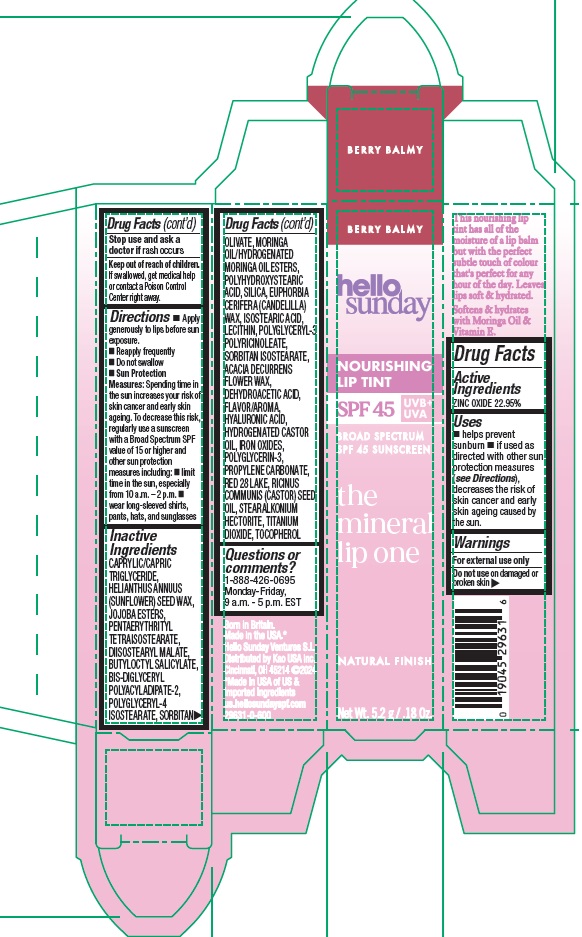
Hello Sunday The Mineral Lip One Nourishing Lip Tint Spf 45 Berry Balmy Zinc Oxide 229.5 mg/g Stick, 1 tube — NDC 10596-001-01 (Billing 10596-0001-01)
This is a package of 1 tube of Hello Sunday The Mineral Lip One Nourishing Lip Tint Spf 45 Berry Balmy Zinc Oxide 229.5 mg/g Stick from Kao USA Inc., marketed since Nov 2024 and currently FDA-listed. It is this product's only package size.
NDC database record
One package, one record: these facts belong to NDC 10596-001-01 alone.
- Record
- FDA NDC Directory package listing · Human OTC drug
- Code segments
- 10596 labeler · 001 product · 01 package
- Package marketed since
- Nov 12, 2024
- Sample package
- No — commercial package
- Listing certified through
- Dec 31, 2027
- Barcode (UPC-A, from the NDC)
- 3 1059600101 6
- FDA record last changed
- Jul 24, 2026
Other active recalls for Zinc Oxide (different manufacturers) — 6 · tap to view
Identity & classification
Regulatory identifiers FDA, NLM and CMS codes for this package
Where does this data come from?
- FDA openFDA NDC Directory · synced Oct 8, 2026
- FDA label on DailyMed · label index refreshed Oct 8, 2026
- RxNorm (NLM RxNav) · catalog refreshed Oct 8, 2026
- Medi-Span GPI (licensed)
- First Databank (licensed) · refreshed Oct 8, 2026
Clinical
This is a topical lip tint stick marketed as an over-the-counter monograph drug product. The active ingredient is zinc oxide, a mineral sunscreen agent that functions as a broad-spectrum ultraviolet filter commonly used in lip balms and other sun-protective products applied to the lips. The product is formulated to provide sun protection at SPF 45 while also serving as a cosmetic lip tint. This type of product is regulated under the FDA's established rules for over-the-counter sunscreen drugs rather than through individual product approval.
Patient education
Supplement & herbal interactions
Some supplements/herbs that may interact with Zinc oxide (OTC drug) — tap one for details:
Where does this data come from?
- MedlinePlus (NLM) · refreshed Oct 8, 2026
- FDA label on DailyMed · label index refreshed Oct 8, 2026
Ask a licensed pharmacist directly — free, answered by our team.
Pricing
A drug doesn't have one price. Each row is a different public payment system, and none is what you'd pay at the counter — that depends on your insurance. The ⓘ on each row explains what it measures.
| Price system | Per each | Per package |
|---|---|---|
| Retail pharmacies payNADAC · weekly | Not in the retail survey — common for institutional, discontinued, or low-volume packs. | |
| Medicaid paysCMS SDUD · 12 mo | No recent Medicaid claims on file for this NDC — rare and low-volume NDCs are suppressed in the public data. | |
| Medicare drug plans payPart D · quarterly | No Part D plan price is available for this NDC in our data. | |
Where does this data come from?
- CMS NADAC weekly file
- CMS ASP pricing files · refreshed Sep 20, 2026
- CMS Medicaid State Drug Utilization Data · refreshed Oct 9, 2026
- CMS Part D plan pricing files · refreshed Sep 24, 2026
- VA National Acquisition Center price file
Packaging — all sizes for this product
| Package NDC | Description | Marketing start | Marketing end | Status |
|---|---|---|---|---|
| 10596-0001-01 You're viewing this Main listing | 1 TUBE in 1 CARTON / 5.2 g in 1 TUBE | 2024-11-12 | — | Active |
Therapeutic equivalents
| Product | Labeler | Pack | NADAC/unit | TE | Status | Price vs. this |
|---|---|---|---|---|---|---|
| Hello Sunday The Mineral Lip One Nourishing Lip Tint Spf 45 Vanilla Cloud 229.5 mg/g 10596-0002-01 | Kao | 1 tube | — | — | FDA listed | — |
| Hello Sunday The Mineral Lip One Nourishing Lip Tint Spf 45 Berry Balmy 229.5 mg/gthis 10596-0001-01 | Kao | 1 tube | — | — | FDA listed | — |
Where does this data come from?
- FDA openFDA NDC Directory · synced Oct 8, 2026
- FDA Orange Book · refreshed Oct 3, 2026
- CMS NADAC weekly file
Availability & generic status
We did not find an FDA-approved generic match for this exact strength, form and route.
Where does this data come from?
- FDA Orange Book · refreshed Oct 3, 2026
Inactive Ingredients / Excipients
Inactive ingredients, also called excipients, are components of the drug product other than the active ingredient. They may include fillers, dyes, coatings, preservatives, flavors, or other formulation ingredients.
💡 Tap an ingredient (hover on desktop) to see what it is and why it’s used.
-
UNII AU6XZE9IY9
A natural wax derived from acacia decurrens flowers. It functions as a coating agent, lubricant, and polish to give tablets and capsules a smooth, protective finish and improve handling during manufacturing.
-
UNII 6L246LAM9T
A synthetic oil derived from glycerol and adipic acid. It acts as an emulsifier and solubilizer in medicines, helping mix ingredients that don't naturally blend together and improving how the body absorbs the active drug.
-
UNII 2EH13UN8D3
A synthetic compound used as a solvent and penetration enhancer in topical formulations. It helps dissolve active ingredients and allows them to penetrate the skin more effectively.
-
UNII WL0328HX19
A natural plant-based wax derived from candelilla shrub leaves. It acts as a coating agent, hardener, and texture modifier to control how quickly the medicine releases and to improve the tablet or capsule's appearance and stability.
-
UNII C9H2L21V7U
A fat derived from coconut or palm oil containing shorter fatty acid chains. It serves as a solvent and carrier to help dissolve or suspend active ingredients, improving absorption and stability in liquid formulations.
-
UNII D5340Y2I9G
Castor oil is a natural plant-based oil used in medicines as a lubricant, laxative agent, and solvent. It helps medicine ingredients dissolve or flow smoothly and can aid bowel movement in formulations designed for that purpose.
-
UNII 767IP0Y5NH
A synthetic red colorant used to give medicines their color. It helps patients identify their medication and makes the product visually appealing.
-
UNII 2KAG279R6R
Dehydroacetic acid is a synthetic preservative that prevents mold, yeast, and bacterial growth in medicines. It extends shelf life by protecting the product from spoilage during storage and use.
-
UNII QBS8A3XZGQ
A synthetic oil made from diisostearyl alcohol and malic acid. It serves as an emollient and solvent in formulations, helping to dissolve and deliver active ingredients while improving texture and spreadability.
-
UNII 1K09F3G675
Ferric oxide red is an inorganic iron compound used as a colorant in medicines. It gives tablets, capsules, or other dosage forms a red or reddish tint for identification and appearance.
-
UNII 42DG15CHXV
A natural plant wax derived from sunflower seeds. It serves as a lubricant and glidant to help powders flow smoothly during manufacturing and tablet formation.
-
UNII S270N0TRQY
Hyaluronic acid is a naturally occurring substance found in skin and joints. In medicines, it acts as a moisturizer and thickening agent to improve texture and help the product spread smoothly.
-
UNII ZF94AP8MEY
Hydrogenated castor oil is a processed plant oil made by adding hydrogen to castor oil. It's used as a binder to help hold tablet ingredients together and as a lubricant to prevent sticking during manufacturing.
-
UNII X33R8U0062
Isostearic acid is a fatty acid derived from vegetable oils. It acts as an emulsifier and lubricant in medicines, helping blend ingredients together and reducing friction during tablet or capsule manufacturing.
-
UNII 7F0EV20QYL
Jojoba oil is a liquid wax extracted from jojoba plant seeds. In medications, it serves as an emollient and carrier oil that helps soften skin, improve texture, and distribute active ingredients evenly in topical formulations.
-
UNII 834K0WOS5G
A natural fat extracted from sunflower seeds. It acts as an emulsifier and lubricant in medicines, helping mix ingredients that don't normally blend together and allowing the product to flow smoothly during manufacturing.
-
UNII 9D7IK5483F
A synthetic oil derived from pentaerythritol and isostearic acid. It acts as an emollient and texture enhancer in topical formulations, helping create a smooth, spreadable consistency and improve skin feel.
-
UNII 4A0NCJ6RD6
Polyglycerin-3 is a synthetic ingredient made by linking multiple glycerin molecules together. It acts as an emulsifier and humectant, helping oils and water mix smoothly and keeping the product from drying out.
-
UNII 7Q0OK5DOT4
A plant-derived emulsifier made from glycerin and ricinoleic acid (from castor oil). It helps blend oil and water-based ingredients together in formulations and improves product texture and stability.
-
UNII 820DPX33S7
A synthetic emulsifier derived from glycerin and fatty acids. It helps mix oil and water-based ingredients together and keeps them evenly blended throughout the product.
-
UNII YXH47AOU0F
A synthetic fatty acid used as a thickener and stabilizer in medicines. It helps create the right texture and prevents separation of ingredients in liquid or semi-solid formulations.
-
UNII 8D08K3S51E
Propylene carbonate is a clear liquid solvent derived from propylene. It helps dissolve or suspend active ingredients in liquid medicines and can improve how well the product flows and mixes.
-
UNII ETJ7Z6XBU4
Silicon dioxide is a naturally occurring mineral used as a glidant and anti-caking agent. It helps powder ingredients flow smoothly and prevents clumping during manufacturing and storage.
-
UNII 01S2G2C1E4
Sorbitan isostearate is an emulsifier derived from sorbitol and isostearic acid. It helps mix oil and water-based ingredients together and keeps them blended throughout the medicine's shelf life.
-
UNII MDL271E3GR
Sorbitan olivate is an emulsifier derived from sorbitol and olive oil. It helps blend water and oil ingredients together to maintain consistent texture and appearance throughout the medicine.
-
UNII OLX698AH5P
A clay mineral processed with a quaternary ammonium compound. It acts as a glidant and anti-caking agent to improve powder flow and prevent clumping in tablets and capsules.
-
UNII 15FIX9V2JP
Titanium dioxide is a bright white mineral powder commonly used as a colorant and opacifying agent. It makes pills and tablets white or lighter in color and helps make coatings non-transparent.
-
UNII R0ZB2556P8
Tocopherol is a form of vitamin E derived from plant oils. It acts as an antioxidant in medicines to prevent oils and fats from breaking down and spoiling during storage.
28 inactive ingredients listed in the exact product block matched to this NDC.
Label-section wording can be broader than the structured product block and may mention additional formulation ingredients.
Where does this data come from?
ingredient classCode="IACT" elements from the exact product block matched by this NDC. Label-section narrative from DailyMed / the openFDA label index is shown separately when available.- FDA label on DailyMed · label index refreshed Oct 8, 2026
- FDA openFDA NDC Directory · synced Oct 8, 2026
Inactive ingredient FAQ
Are inactive ingredients the same for every manufacturer?
Why might an inactive ingredient be missing?
Can inactive ingredients matter?
Manufacturer & labeler
More NDCs from Kao USA Inc. labeler code 10596
- Hello Sunday The Mineral Lip One Nourishing Lip Tint Spf 45 Vanilla Cloud Zinc Oxide 229.5 mg/g Stick NDC 10596-002-01
- Hello Sunday Bestseller Daily SPF Duo Avobenzone, Homosalate, Octisalate, Octocrylene Kit NDC 10596-003-01
- Biore Blemish Fighting Ice Cleanser SALICYLIC ACID 4.3 g/200mL Liquid NDC 10596-159-67
- Biore Pore Unclogging Scrub SALICYLIC ACID 2.8 g/141g Liquid NDC 10596-161-15
- Biore Witch Hazel Pore Clarifying Cleanser SALICYLIC ACID 2 g/100mL Liquid NDC 10596-188-67
- Octocrylene Ethylhexyl Salicylate Homosalate Butyl Methoxydibenzoylmethane 5.9 kg/100kg; 11.7 kg/100kg; 5.9 kg/100kg; 3.5 kg/100kg Liquid NDC 10596-194-20
Where does this data come from?
- FDA openFDA NDC Directory · synced Oct 8, 2026
- Drugs@FDA
FDA label — Drug Facts FDA SPL
🎯 Indications and Usage ▾
Uses helps prevent sunburn if used as directed with other sun protection measures ( see Directions ), decreases the risk of skin cancer and early skin ageing caused by the sun.
⏱️ Dosage and Administration ▾
Directions Apply generously to lips before sun exposure. Reapply frequently Do not swallow Sun Protection Measures : Spending time in the sun increases your risk of skin cancer and early skin ageing. To decrease this risk, regularly use a sunscreen with a Broad Spectrum SPF value of 15 or higher and other sun protection measures including: limit time in the sun, especially from 10 a.m. - 2 p.m. wear long-sleeved shirts, pants, hats, and sunglasses
⚠️ Warnings ▾
Warnings For external use only Do not use on damaged or broken skin Stop use and ask a doctor if rash occurs Keep out of reach of children. If swallowed, get medical help or contact a Poison Control Center right away.
🧪 Active Ingredient ▾
Active Ingredients ZINC OXIDE 22.95%
🧪 Inactive Ingredients ▾
Inactive Ingredients CAPRYLIC/CAPRIC TRIGLYCERIDE, HELIANTHUS ANNUUS (SUNFLOWER) SEED WAX, JOJOBA ESTERS, PENTAERYTHRITYL TETRAISOSTEARATE, DIISOSTEARYL MALATE, BUTYLOCTYL SALICYLATE, BIS-DIGLYCERYL POLYACYLADIPATE-2, POLYGLYCERYL-4 ISOSTEARATE, SORBITAN OLIVATE, MORINGA OIL/HYDROGENATED MORINGA OIL ESTERS, POLYHYDROXYSTEARIC ACID, SILICA, EUPHORBIA CERIFERA (CANDELILLA) WAX, ISOSTEARIC ACID, LECITHIN, POLYGLYCERYL-3 POLYRICINOLEATE, SORBITAN ISOSTEARATE, ACACIA DECURRENS FLOWER WAX, DEHYDROACETIC ACID, FLAVOR/AROMA, HYALURONIC ACID, HYDROGENATED CASTOR OIL, IRON OXIDES, POLYGLYCERIN-3, PROPYLENE CARBONATE, RED 28 LAKE, RICINUS COMMUNIS (CASTOR) SEED OIL, STEARALKONIUM HECTORITE, TITANIUM DIOXIDE, TOCOPHEROL
🎯 Purpose ▾
Purpose Sunscreen
📄 Do Not Use ▾
Do not use on damaged or broken skin
📄 Stop Use and Ask a Doctor If ▾
Stop use and ask a doctor if rash occurs
📄 Keep Out of Reach of Children ▾
Keep out of reach of children. If swallowed, get medical help or contact a Poison Control Center right away.
📄 Questions or Comments ▾
Questions or comments? 1-888-426-0695 Monday-Friday, 9 a.m. - 5 p.m. EST
📄 Package Label / Principal Display Panel ▾
Product Packaging 1
Reported adverse events (FAERS)
Top reported reactions
Age at onset
Reporter sex
Serious outcomes
Where does this data come from?
About this NDC listing & data coverage
What data is (and isn’t) available for this NDC — tap to expand
| NDC identity (package / product / labeler codes) | ✓ Available |
| Labeler | ✓ Available |
| Product & package description | ✓ Available |
| Marketing category & status | ✓ Available |
| Active ingredient / dosage form / route | ✓ Available |
| FDA label (SPL via DailyMed) | ✓ Available |
| Package photos | ✓ Available |
| Inactive ingredients (structured) | ✓ Available |
| NADAC pharmacy acquisition price (CMS) | — Not published for this NDC CMS publishes NADAC only for NDCs reported in its retail-pharmacy survey. |
| Orange Book / therapeutic-equivalence data | — Not published for this NDC Applies only to products approved under an NDA/ANDA; many listings are out of scope. |
| HCPCS J-code billing crosswalk | — Not published for this NDC Most self-administered / retail products have no J-code — that is normal. |
| Medicaid utilization (CMS SDUD) | — Not published for this NDC CMS reports utilization only for NDCs with Medicaid claims above its privacy threshold. |