
Revlon Kiss Balm SPF 20 Avobenzone, Benzophenone-3, Octinoxate 2 g/mL; 7.5 g/mL; 3 g/mL Stick, 2.6 mL — NDC 10967-640-19 (Billing 10967-0640-19)
This is a package of 2.6 mL of Revlon Kiss Balm SPF 20 Avobenzone, Benzophenone-3, Octinoxate 2 g/mL; 7.5 g/mL; 3 g/mL Stick from Revlon Consumer Products Corp, marketed since Sep 2016 and currently FDA-listed. It is this product's only package size.
NDC database record
One package, one record: these facts belong to NDC 10967-640-19 alone.
- Record
- FDA NDC Directory package listing · Human OTC drug
- Code segments
- 10967 labeler · 640 product · 19 package
- Package marketed since
- Sep 19, 2016
- Sample package
- No — commercial package
- Listing certified through
- Dec 31, 2026
- Barcode (UPC-A, from the NDC)
- 3 1096764019 6
- FDA record last changed
- Jul 24, 2026
Identity & classification
Regulatory identifiers FDA, NLM and CMS codes for this package
Where does this data come from?
- FDA openFDA NDC Directory · synced Oct 1, 2026
- FDA label on DailyMed · label index refreshed Oct 3, 2026
- RxNorm (NLM RxNav) · catalog refreshed Oct 1, 2026
- Medi-Span GPI (licensed)
- First Databank (licensed) · refreshed Oct 1, 2026
Clinical
Revlon Kiss Balm SPF 20 is a topical lip balm stick containing three active ingredients that function as ultraviolet light filters. Avobenzone, octinoxate, and oxybenzone are commonly used together in sunscreen products to help absorb UV radiation and reduce sun exposure to the lips. This is an over-the-counter monograph product, meaning it is marketed under FDA's established rules for sunscreen ingredients rather than as an individually reviewed drug application.
Patient education
Supplement & herbal interactions
Where does this data come from?
- MedlinePlus (NLM) · refreshed Oct 1, 2026
- FDA label on DailyMed · label index refreshed Oct 3, 2026
Ask a licensed pharmacist directly — free, answered by our team.
Pricing
A drug doesn't have one price. Each row is a different public payment system, and none is what you'd pay at the counter — that depends on your insurance. The ⓘ on each row explains what it measures.
| Price system | Per each | Per package |
|---|---|---|
| Retail pharmacies payNADAC · weekly | Not in the retail survey — common for institutional, discontinued, or low-volume packs. | |
| Medicaid paysCMS SDUD · 12 mo | No recent Medicaid claims on file for this NDC — rare and low-volume NDCs are suppressed in the public data. | |
| Medicare drug plans payPart D · quarterly | No Part D plan price is available for this NDC in our data. | |
Where does this data come from?
- CMS NADAC weekly file
- CMS ASP pricing files · refreshed Sep 20, 2026
- CMS Medicaid State Drug Utilization Data · refreshed Oct 4, 2026
- CMS Part D plan pricing files · refreshed Sep 24, 2026
- VA National Acquisition Center price file
Packaging — all sizes for this product
| Package NDC | Description | Marketing start | Marketing end | Status |
|---|---|---|---|---|
| 10967-0640-19 You're viewing this Main listing | 2.6 mL in 1 CONTAINER | 2016-09-19 | — | Active |
Therapeutic equivalents
| Product | Labeler | Pack | NADAC/unit | TE | Status | Price vs. this |
|---|---|---|---|---|---|---|
| Revlon Kiss Balm SPF 20 2 g/mL; 7.5 g/mL; 3 g/mLthis 10967-0640-19 | Revlon | 2.6 ml | — | — | FDA listed | — |
Where does this data come from?
- FDA openFDA NDC Directory · synced Oct 1, 2026
- FDA Orange Book · refreshed Oct 3, 2026
- CMS NADAC weekly file
Availability & generic status
We did not find an FDA-approved generic match for this exact strength, form and route.
Where does this data come from?
- FDA Orange Book · refreshed Oct 3, 2026
Inactive Ingredients / Excipients
Inactive ingredients, also called excipients, are components of the drug product other than the active ingredient. They may include fillers, dyes, coatings, preservatives, flavors, or other formulation ingredients.
💡 Tap an ingredient (hover on desktop) to see what it is and why it’s used.
-
UNII WC51CA3418
A fragrance compound derived from cinnamon, used as a flavoring and scent agent in medicines to improve taste and aroma.
-
UNII 7X6O37OK2I
A synthetic fragrance compound used as a flavoring agent or aromatic component in medicines. It adds pleasant taste or smell to make the medication more acceptable to patients.
-
UNII 8SKN0B0MIM
Benzoic acid is a naturally occurring organic acid used as a preservative in medicines and foods. It helps prevent bacterial and fungal growth to extend shelf life and maintain product stability.
-
UNII LKG8494WBH
Benzyl alcohol is a clear liquid used as a preservative and solvent in medicines. It helps prevent bacterial and fungal growth and dissolves other ingredients to create uniform liquid formulations.
-
UNII N863NB338G
Benzyl benzoate is a liquid organic compound used as a solvent and preservative in medicines. It helps dissolve active ingredients and can extend shelf life by preventing microbial growth in liquid formulations.
-
UNII 6L246LAM9T
A synthetic oil derived from glycerol and adipic acid. It acts as an emulsifier and solubilizer in medicines, helping mix ingredients that don't naturally blend together and improving how the body absorbs the active drug.
-
UNII 3JRB8A35M0
A mineral compound made from calcium, aluminum, boron, and silicon. It's used as a colorant and opacifying agent to give medicines their appearance and color, and sometimes helps protect ingredients from light damage.
-
UNII WL0328HX19
A natural plant-based wax derived from candelilla shrub leaves. It acts as a coating agent, hardener, and texture modifier to control how quickly the medicine releases and to improve the tablet or capsule's appearance and stability.
-
UNII Q1LS2UJO3A
Ceresin is a purified mineral wax derived from ozocerite. It functions as a binding agent, thickener, and coating material in medicines to help hold ingredients together and provide texture or protective coating.
-
UNII 5ZA2S6B08X
Cetyl palmitate is a waxy substance made from natural fats. It works as a binder and thickener to help hold the medicine together and control how it dissolves in your body.
-
UNII T7EU0O9VPP
Citral is a natural oil compound found in lemon and citrus plants. It's used in medicines as a flavoring agent and to add pleasant lemon or citrus scent to the product.
-
UNII 5323S7S2LR
A synthetic oily liquid made from linoleic acid, a plant-derived fatty acid. It acts as an emollient and lubricant in topical formulations, helping to soften skin and improve product spreadability.
-
UNII QBS8A3XZGQ
A synthetic oil made from diisostearyl alcohol and malic acid. It serves as an emollient and solvent in formulations, helping to dissolve and deliver active ingredients while improving texture and spreadability.
-
UNII 930MLC8XGG
A plant oil extracted from grape seeds, used as an emollient and solvent in medicines. It helps dissolve active ingredients and improve the texture and absorption of topical or liquid formulations.
-
UNII UG00KM4WR7
A plastic polymer used as a container material and film coating. It helps protect the medicine from moisture and air exposure during storage and shipping.
-
UNII 8SQ0VA4YUR
A fragrance compound derived from natural sources, used to add pleasant scent to the medicine. It serves as a flavoring or aromatic agent to mask unpleasant tastes or improve the product's sensory appeal.
-
UNII 9XP4LC555B
A fragrance compound derived from natural plant sources or made synthetically. It's added to medicines as a flavoring agent to mask bitter tastes and improve how the medicine smells and tastes.
-
UNII S4V5BS6GCX
A synthetic oily liquid used as an emollient and solvent in topical medications. It helps dissolve active ingredients and creates a smooth, spreadable texture on the skin.
-
UNII 9MC3I34447
A natural oil extracted from citrus peel, used as a flavoring agent and solvent to improve taste and help dissolve or distribute other ingredients in the medicine.
-
UNII D81QY6I88E
Linalool is a natural fragrant oil found in plants like lavender and citrus. It's used in medicines as a flavoring agent and to mask unpleasant tastes or smells.
-
UNII X8725R883T
A synthetic oily liquid derived from branched carboxylic acids, used as an emollient and skin-conditioning agent in topical formulations. It helps soften and smooth the product's texture while improving how it spreads on skin.
-
UNII 1NA5AO9GH7
A synthetic polymer derived from petroleum, polybutene is used as a binder and lubricant in solid medications to help hold ingredients together and improve the tablet or capsule's flow during manufacturing.
-
UNII 0UI45XV0T6
A plant oil extracted from pomegranate seeds. It's used in formulations as an emollient to soften and smooth the product texture, and sometimes as a carrier or conditioning agent in topical preparations.
-
UNII 9S8867952A
A plant-derived oil from raspberry seeds used as an emollient and skin-conditioning agent in topical formulations. It helps soften the product texture and improve skin feel.
-
UNII SB8ZUX40TY
Saccharin sodium is an artificial sweetener made from saccharin salt. It's added to medicines to improve taste, especially in liquid formulations for children or bitter drugs.
-
UNII ETJ7Z6XBU4
Silicon dioxide is a naturally occurring mineral used as a glidant and anti-caking agent. It helps powder ingredients flow smoothly and prevents clumping during manufacturing and storage.
-
UNII 51DM34B894
A synthetic antioxidant mixture containing butylated hydroxytoluene (BHT) combined with tris and mesitylene. It prevents oils and fats in the medicine from degrading or becoming rancid during storage.
-
UNII 7G1J5DA97F
White wax is a refined, bleached plant-based or mineral wax that serves as a coating and hardening agent in medicines. It helps control how fast the drug dissolves and improves the product's texture and appearance.
28 inactive ingredients listed in the exact product block matched to this NDC.
Label-section wording can be broader than the structured product block and may mention additional formulation ingredients.
Where does this data come from?
ingredient classCode="IACT" elements from the exact product block matched by this NDC. Label-section narrative from DailyMed / the openFDA label index is shown separately when available.- FDA label on DailyMed · label index refreshed Oct 3, 2026
- FDA openFDA NDC Directory · synced Oct 1, 2026
Inactive ingredient FAQ
Are inactive ingredients the same for every manufacturer?
Why might an inactive ingredient be missing?
Can inactive ingredients matter?
Manufacturer & labeler
More NDCs from Revlon Consumer Products Corp labeler code 10967
- Revlon Mitchum Clinical Gel Aluminum Zirconium Octachlorohydrex Gly liquid .2 g/mL Liquid NDC 10967-633-02
- Mitchum Advance Control Aluminum Chlorohydrate .25 g/mL Aerosol NDC 10967-635-04
- Mitchum Advance Control Sport Aluminum Chlorohydrate .25 g/mL Aerosol NDC 10967-636-04
- Mitchum Advance Control Powder Fresh Aluminum Chlorohydrate .25 g/mL Aerosol NDC 10967-637-04
- Mitchum Advance Control Aluminum Chlorohydrate .25 g/mL Aerosol NDC 10967-638-04
- Revlon Youth FX Zinc Oxide, Titanium Dioxide Make-Up 2.8 mg/30mL; 4.3 mg/30mL Liquid NDC 10967-639-01
- Revlon Colorstay Liquid Makeup for Oily to Combination Skin Zinc Oxide, Titanium Dioxide Make-Up 2.1 mg/mL; 4.3 mg/mL Liquid NDC 10967-642-01
- Revlon Colorstay Liquid Makeup for Normal to Dry Skin Zinc Oxide, Titanium Dioxide Make-Up 2.1 mg/mL; 4.3 mg/mL Liquid NDC 10967-643-01
- Mitchum Clear Gel ALUMINUM SESQUICHLOROHYDRATE .25 g/mL Liquid NDC 10967-647-34
- Mitchum Clear Gel ALUMINUM SESQUICHLOROHYDRATE .25 g/mL Liquid NDC 10967-648-34
- Mitchum Advance Control Pure Fresh Aluminum Chlorohydrate .25 g/mL Aerosol NDC 10967-649-04
- American Crew Pyrithione Zinc 1 mg/mL Shampoo NDC 10967-650-25
Where does this data come from?
- FDA openFDA NDC Directory · synced Oct 1, 2026
- Drugs@FDA
FDA label — Drug Facts FDA SPL
🎯 Indications and Usage ▾
Helps prevent sunbunrs. If used as directed with other sun protection measures (See Directions), decreases the risk of skin cancer and early skin aging caused by the sun.
⏱️ Dosage and Administration ▾
Apply liberally 15 minutes before sun exposure.
⚠️ Warnings ▾
EXTERNAL USE ONLY External Use Only
🧪 Active Ingredient ▾
Active Ingredients: Avobenzone 2.0% Octinoxate 7.5% Oxybenzone 3.0%
🧪 Inactive Ingredients ▾
Inactive Ingredients Polybutene, Diisostearyl Malate, Isononyl Isononanoate, Bis-Diglyceryl Polyacyladipate-2, Octyldodecyl Neopentanoate, Polyethylene, Ozokerite, Diisopropyl Dimer Dilinoleate, Cera Alba ((Beeswax) Cire D Abeille), Parfum (Fragrance), Flavor, Punica Granatum Seed Oil, Rubus Idaeus (Raspberry) Seed Oil, Vitis Vinifera (Grape) Seed Oil, Calcium Aluminum Borosilicate, Euphorbia Cerifera (Candelilla) Wax, Cetyl Palmitate, Benzoic Acid, Oxidized Polyethylene, BHT, Silica, Sodium Saccharin, Benzyl Benzoate, Limonene, Benzyl Alcohol, Citral, Amyl Cinnamal, Hexyl Cinnamal, Hydroxycitronellal, Alpha-Isomethyl Ionone, Linalool May Contain- Mica, Titanium Dioxide (CI 77891), Iron Oxides (CI 77491, 77492, 77499), Red 6 Lake (CI 15850), Red 7 Lake (CI 15850), Red 28 Lake (CI 45410), Red 33 Lake (CI 17200), Blue 1 Lake (CI 42090), Yellow 5 Lake (CI 19140), Yellow 6 Lake (CI 15985), Carmine (CI 75470
🎯 Purpose ▾
Sunscreen
📄 Keep Out of Reach of Children ▾
Keep out of the reach of children. If product is swallowed, get medical help or contact a Poison Control Center right away.
📄 Questions or Comments ▾
Questions? 1-800-473-8566
📄 Package Label / Principal Display Panel ▾
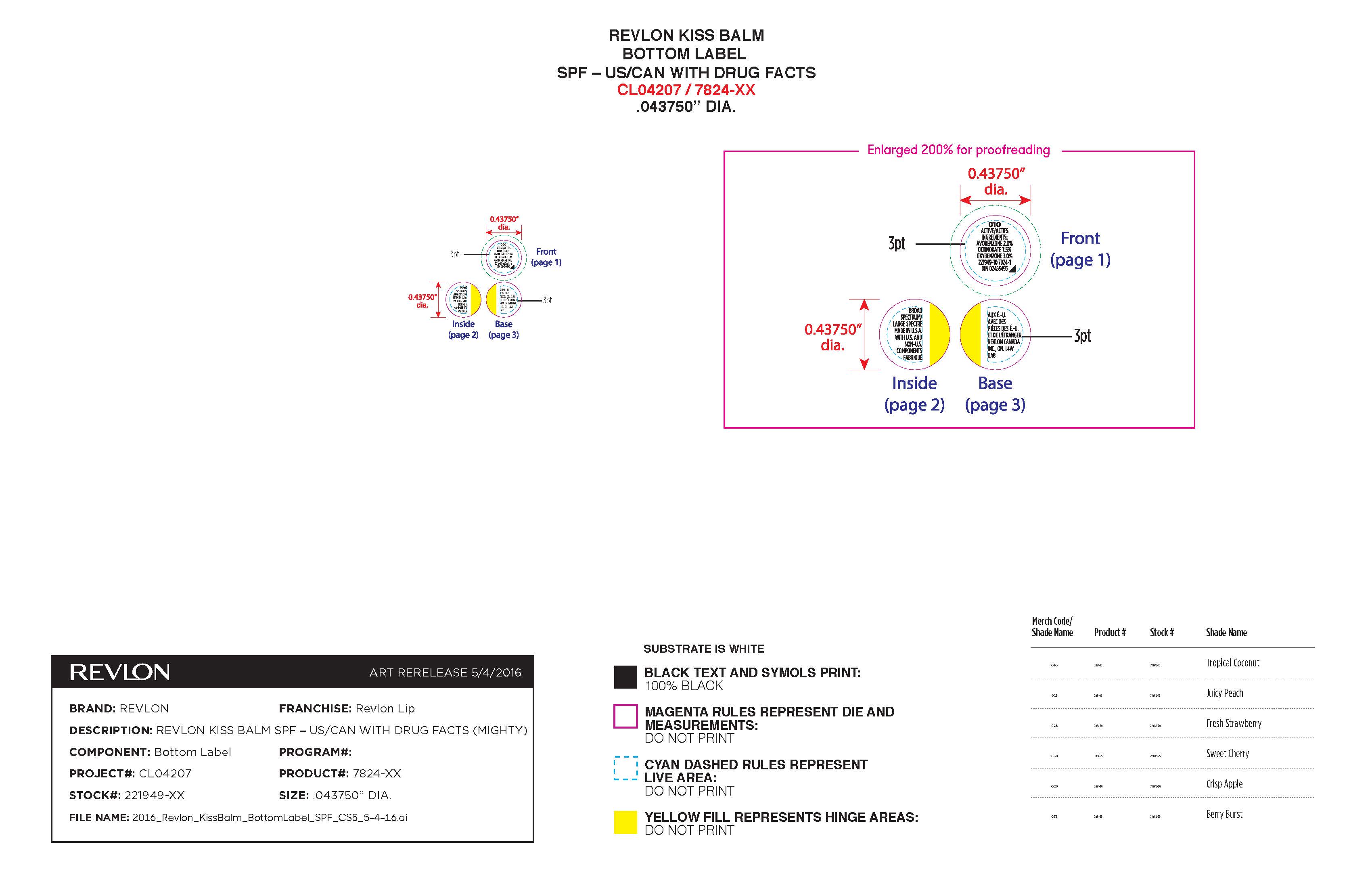
Product Label Revlon Kiss Balm SPF 20 Broad Spectrum Avobenzone- 2.0% Octinoxate - 7.5% Oxybenzone- 3.0% Revlon Kiss Balm
Reported adverse events (FAERS)
Top reported reactions
Reporter sex
Where does this data come from?
About this NDC listing & data coverage
What data is (and isn’t) available for this NDC — tap to expand
| NDC identity (package / product / labeler codes) | ✓ Available |
| Labeler | ✓ Available |
| Product & package description | ✓ Available |
| Marketing category & status | ✓ Available |
| Active ingredient / dosage form / route | ✓ Available |
| FDA label (SPL via DailyMed) | ✓ Available |
| Package photos | ✓ Available |
| Inactive ingredients (structured) | ✓ Available |
| NADAC pharmacy acquisition price (CMS) | — Not published for this NDC CMS publishes NADAC only for NDCs reported in its retail-pharmacy survey. |
| Orange Book / therapeutic-equivalence data | — Not published for this NDC Applies only to products approved under an NDA/ANDA; many listings are out of scope. |
| HCPCS J-code billing crosswalk | — Not published for this NDC Most self-administered / retail products have no J-code — that is normal. |
| Medicaid utilization (CMS SDUD) | — Not published for this NDC CMS reports utilization only for NDCs with Medicaid claims above its privacy threshold. |