
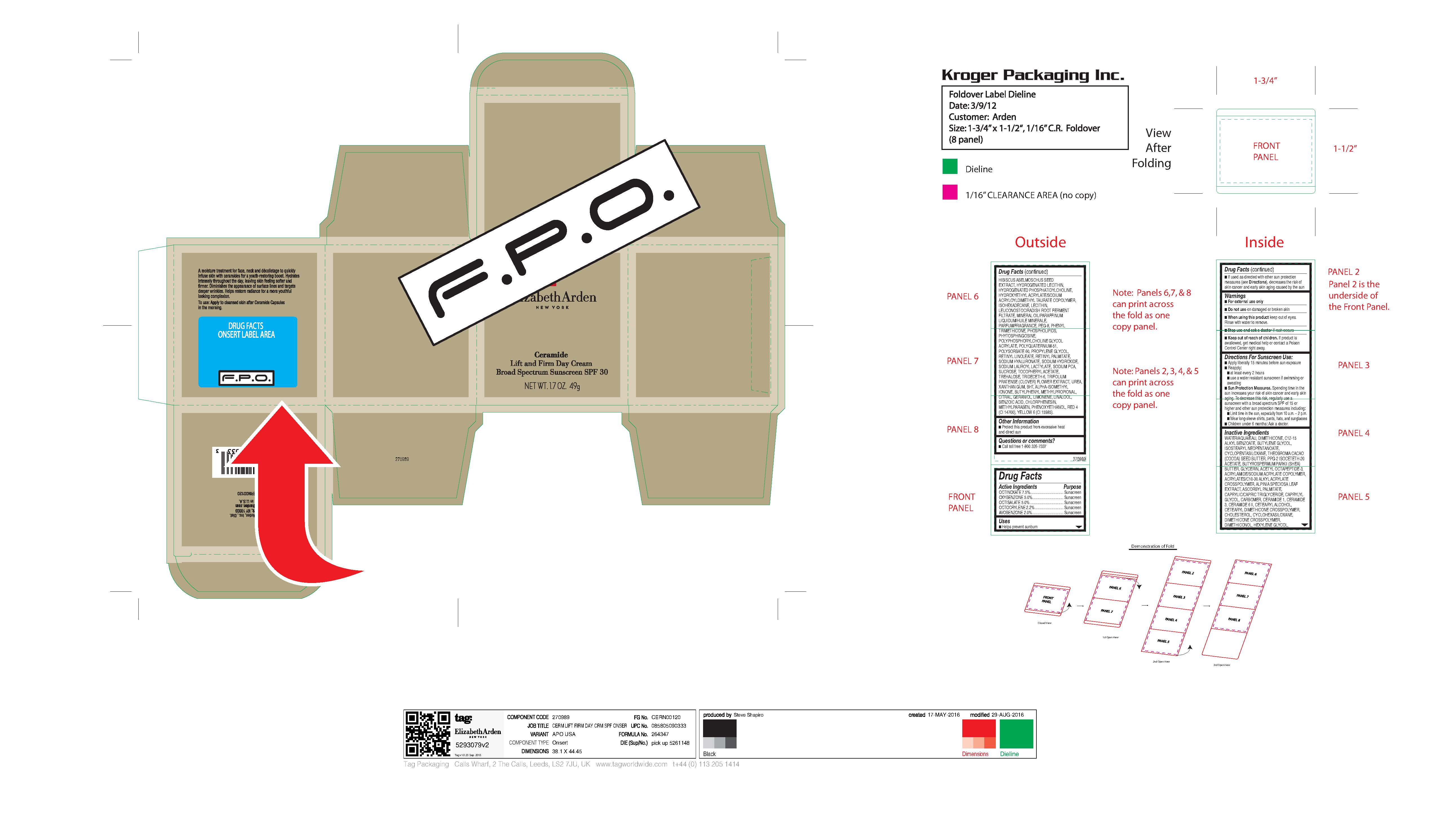
CERAMIDE LIFT and FIRM Octinoxate, Oxybenzone, Avobenzone, Octisalate, Octocrylene 5 mg/g; 5 mg/g; 7.5 mg/g; 2.2 mg/g Emulsion, 49 g
🆔 Identity & classification
Where does this data come from?
🏭 Manufacturer & labeler
Where does this data come from?
🩺 Clinical
This is a topical emulsion marketed as an OTC monograph sunscreen product. It contains five UV-filtering ingredients (oxybenzone, octinoxate, octisalate, octocrylene, and avobenzone) that are typically used together to absorb and scatter ultraviolet radiation from the sun. The product is applied to skin as a lotion or cream and is intended to help reduce sun exposure. As an over-the-counter monograph drug, it is regulated under FDA's general sunscreen rules rather than as an individually approved application.
Patient education
Supplement & herbal interactions
Where does this data come from?
Ask a licensed pharmacist directly — free, answered by our team.
🧪 Inactive Ingredients / Excipients
Inactive ingredients, also called excipients, are components of the drug product other than the active ingredient. They may include fillers, dyes, coatings, preservatives, flavors, or other formulation ingredients.
💡 Tap an ingredient (hover on desktop) to see what it is and why it’s used.
-
UNII 9E8X80D2L0
A synthetic form of vitamin E used as an antioxidant and preservative in medications. It helps prevent the active ingredients from degrading when exposed to oxygen or light.
-
UNII UN2QZ55I88
A plant-derived ingredient from abelmoschus moschatus seeds. It's used in formulations as a thickening agent, emulsifier, and texture enhancer to help bind and stabilize medicine ingredients.
-
UNII 8K14HJF88S
A synthetic peptide made of eight amino acids linked together. It's used in some formulations as a conditioning or skin-feel agent to help improve product texture and appearance on the skin.
-
UNII A9EJ3J61HQ
A synthetic liquid derived from benzoic acid and long-chain alcohols. It functions as a solvent and penetration enhancer in topical formulations, helping active ingredients dissolve and absorb into the skin.
-
UNII MS8P33AMKX
Alpinia zerumbet leaf is a plant extract used in medicines as a flavoring agent and to add pleasant taste or aroma to the product.
-
UNII QN83US2B0N
Ascorbyl palmitate is a fat-soluble form of vitamin C used as an antioxidant in medicines. It prevents oils and fats in the product from breaking down and becoming less stable over time.
-
UNII 8SKN0B0MIM
Benzoic acid is a naturally occurring organic acid used as a preservative in medicines and foods. It helps prevent bacterial and fungal growth to extend shelf life and maintain product stability.
-
UNII 1P9D0Z171K
BHT is a synthetic antioxidant that prevents fats and oils in medicines from breaking down and becoming rancid. It helps keep the product stable and effective during storage.
-
UNII 3XUS85K0RA
Butylene glycol is a clear liquid derived from petroleum or plants that acts as a humectant, solvent, and preservative booster in medicines. It helps keep formulations stable, dissolve active ingredients, and maintain moisture in topical products.
-
UNII T7540GJV69
A synthetic fragrance compound used as a flavor or scent ingredient in medicines. It helps mask unpleasant tastes or odors in the formulation to make the medication more palatable.
-
UNII 0C9AC7D6XU
A plant-derived fat from shea nut kernels that remains after soap-making. It acts as a moisturizer, emollient, and texture enhancer in topical formulations, helping soften skin and improve product spreadability.
-
UNII 00YIU5438U
Caprylyl glycol is a clear liquid derived from coconut oil. In medicines, it acts as a humectant to retain moisture, a preservative booster to prevent microbial growth, and a solvent to help dissolve or mix other ingredients.
-
UNII 0A5MM307FC
A synthetic polymer that absorbs water and forms a thick, gel-like substance. In medicines, it works as a thickener and stabilizer to improve texture and help ingredients stay mixed together in creams, gels, and lotions.
-
UNII 59TL3WG5CO
A synthetic polymer made by crosslinking acrylic acid with allyl sucrose. It thickens liquids, forms gels, and helps control how fast the medicine is released in your body.
-
UNII 5THT33P7X7
A waxy, lipid-like substance derived from animal or plant sources. It helps soften and moisturize the skin by acting as an emollient and skin-conditioning agent in topical medicines and creams.
-
UNII 4370DF050B
Ceramide NP is a waxy, lipid-based substance that mimics natural skin oils. It's used in topical formulations as an emollient and skin-conditioning agent to help soften, smooth, and protect the skin barrier.
-
UNII F1X8L2B00J
A naturally derived fatty substance that helps bind and condition the product's texture. It works as an emollient and skin-conditioning agent in topical formulations, helping maintain moisture and smoothness.
-
UNII 2DMT128M1S
A waxy solid derived from plant or animal sources. It acts as an emulsifier to blend oil and water components, and also thickens the medicine to give it the right texture and consistency.
-
UNII I670DAL4SZ
A preservative that fights bacteria and fungi. It keeps medicines and topical products stable and safe from microbial contamination during storage and use.
-
UNII 97C5T2UQ7J
Cholesterol is a fatty substance found naturally in animal tissues. In medications, it's used as an ingredient in liposomal formulations and lipid-based drug delivery systems to help encapsulate and stabilize active drugs for better absorption.
-
UNII T7EU0O9VPP
Citral is a natural oil compound found in lemon and citrus plants. It's used in medicines as a flavoring agent and to add pleasant lemon or citrus scent to the product.
-
UNII 512OYT1CRR
Cocoa butter is a natural fat extracted from cocoa beans. It's used in medicines as a base for suppositories and as a lubricant to help pills dissolve smoothly.
-
UNII 0THT5PCI0R
A silicone-based liquid that helps distribute active ingredients evenly throughout topical products. It acts as a solvent and emollient, allowing medicines to spread smoothly on skin while improving texture and absorption.
-
UNII XHK3U310BA
Cyclohexasiloxane is a silicon-based liquid that acts as a solvent and conditioning agent in medicines. It helps dissolve or carry other ingredients and improves how the product spreads or feels on the skin.
-
UNII 92RU3N3Y1O
Dimethicone is a silicone-based oil that acts as an anti-foaming agent and lubricant in medicines. It reduces gas bubbles in liquid formulations and helps coat and protect the stomach lining when ingested.
-
UNII UF7620L1W6
A synthetic silicone polymer that acts as a thickener and absorbent in medicines. It helps create the right texture, improves how the product feels on skin or in the mouth, and can absorb excess moisture or oil in formulations.
-
UNII 1Z74184RGV
Egg phospholipids are naturally derived fats from eggs that help mix oil and water-based ingredients together. They work as emulsifiers in medicines, keeping the formula stable and uniform.
-
UNII X3W0AM1JLX
A synthetic red dye used to color medicines and products. It helps make pills, liquids, and capsules visually distinct and easier to identify.
-
UNII H77VEI93A8
A synthetic yellow dye used to color medications. It helps identify the drug and make it visually distinctive, with no effect on how the medicine works.
-
UNII L837108USY
Geraniol is a natural fragrant compound found in plants like roses and lemons. It's used in medicines as a flavoring agent and to improve the taste or aroma of the product.
-
UNII PDC6A3C0OX
Glycerin is a clear, thick liquid derived from plant oils or fats. It acts as a humectant to retain moisture, a sweetener, and a solvent in medications.
-
UNII KEH0A3F75J
Hexylene glycol is a clear liquid alcohol used as a solvent and preservative in medicines. It helps dissolve other ingredients and keeps the product stable during storage.
-
UNII YSE9PPT4TH
Hyaluronate sodium is a natural carbohydrate that holds moisture. It's used in medicines as a lubricant, thickener, and moisture-retaining agent to improve texture and delivery of the active ingredient.
-
UNII H1109Z9J4N
A natural emulsifier derived from soybean oil. It helps mix oil and water-based ingredients together, ensuring even distribution of active ingredients throughout the medicine.
-
UNII 86FQE96TZ4
A synthetic polymer, this ingredient acts as a thickener and suspending agent in liquid formulations. It helps maintain uniform consistency and keeps particles evenly distributed throughout the medicine.
-
UNII 918X1OUF1E
Isohexadecane is a synthetic hydrocarbon oil used as an emollient and solvent in topical medicines. It helps dissolve active ingredients and improves spreadability and absorption through the skin.
-
UNII 9XP4LC555B
A fragrance compound derived from natural plant sources or made synthetically. It's added to medicines as a flavoring agent to mask bitter tastes and improve how the medicine smells and tastes.
-
UNII 411THY156Q
Isostearyl neopentanoate is a synthetic oily substance used as an emollient and skin-conditioning agent in topical medicines. It helps soften and smooth the product's texture while improving how it spreads on skin.
-
UNII 1DI56QDM62
A natural fatty substance from soybeans that helps mix oil and water-based ingredients together. It acts as an emulsifier and lubricant in medicines to improve texture and help the product break down properly in your body.
-
UNII D2QHA03458
A fermented ingredient made by culturing beneficial bacteria in radish root extract. It acts as a natural preservative and humectant, helping keep the product fresh and maintain moisture in the formula.
-
UNII GFD7C86Q1W
A natural oil extracted from citrus peels, (+)-limonene is used as a flavoring agent and solvent in medicines. It helps dissolve active ingredients and provides a lemon or orange taste.
-
UNII D81QY6I88E
Linalool is a natural fragrant oil found in plants like lavender and citrus. It's used in medicines as a flavoring agent and to mask unpleasant tastes or smells.
-
UNII C9H2L21V7U
A fat derived from coconut or palm oil containing shorter fatty acid chains. It serves as a solvent and carrier to help dissolve or suspend active ingredients, improving absorption and stability in liquid formulations.
-
UNII A2I8C7HI9T
Methylparaben is a preservative derived from benzoic acid that prevents growth of bacteria, fungi, and mold in medicines. It extends the product's shelf life and maintains safety during storage.
-
UNII T5L8T28FGP
Mineral oil is a clear, odorless liquid derived from crude oil. It acts as a lubricant and emollient in medications, helping pills slide smoothly during manufacturing and aiding moisture retention in topical products.
-
UNII HIE492ZZ3T
Phenoxyethanol is a synthetic preservative and antimicrobial agent used to prevent bacterial and fungal growth in medicines and cosmetic products, extending shelf life and maintaining product safety.
-
UNII DR0K5NOJ4R
Phenyl trimethicone is a silicone-based lubricant and glidant. It helps powder particles flow smoothly and reduces friction during tablet or capsule manufacturing and filling.
-
UNII GIN46U9Q2Q
Phytosphingosine is a naturally derived fatty compound that helps stabilize and thicken skincare and cosmetic formulations. It works as an emollient and conditioning agent to improve texture and skin feel in topical products.
-
UNII B697894SGQ
Polyethylene glycol 400 is a clear, thick liquid made from petroleum-derived polymers. It acts as a solvent and humectant in medicines, helping dissolve active ingredients and retain moisture in the formulation.
-
UNII X8Q92E1CPM
A synthetic polymer that acts as a film-former and thickener in liquid medications. It helps create a protective coating on the product's surface and improves texture and consistency.
-
UNII CAL22UVI4M
A synthetic emulsifier derived from sorbitol and fatty acids. It helps mix oil and water-based ingredients together and improves the texture and stability of the medicine.
-
UNII BI6C7YO419
A synthetic oily liquid derived from petroleum-based materials. It functions as an emulsifier and solubilizer in medicines, helping blend water and oil-based ingredients and keeping them mixed throughout the product's shelf life.
-
UNII 6DC9Q167V3
Propylene glycol is a clear liquid derived from petroleum or vegetable sources. It acts as a solvent, humectant, and preservative in medicines, helping dissolve active ingredients and maintain product stability.
-
UNII 61911N8D6W
Retinyl linoleate is a derivative of vitamin A combined with linoleic acid, a natural fatty acid. It's used in medicines as an emollient and skin-conditioning agent to help soften and protect the skin.
-
UNII 55X04QC32I
A strong alkaline chemical used to adjust and maintain the pH balance of liquid medicines. It helps keep the medicine stable and ensures it stays effective during storage.
-
UNII 7243K85WFO
Sodium lauroyl lactylate is a mild surfactant derived from natural fats and lactic acid. It acts as an emulsifier and solubilizer to help blend oil and water-based ingredients and improve how the body absorbs the active drug.
-
UNII 469OTG57A2
Sodium pyrrolidone carboxylate is a synthetic polymer derived from pyrrolidone chemistry. It functions as a solubilizer and binder in medications, helping dissolve poorly water-soluble drugs and hold tablet ingredients together.
-
UNII C151H8M554
A natural sugar derived from sugar cane or sugar beets. It's used as a sweetener, filler, and binder to improve taste, add bulk, and help hold tablet or capsule ingredients together.
-
UNII B8WCK70T7I
Trehalose is a natural sugar made from two glucose molecules linked together. It's used in medicines as a filler to add bulk, a sweetener for taste, and a stabilizer to help keep active ingredients effective during storage.
-
UNII 3T5PCR2H0C
A synthetic detergent and emulsifier made from plant-derived materials. It helps mix oil and water components together and improves how the medicine spreads or absorbs in the body.
-
UNII 4JS0838828
A plant extract from red clover flowers used in herbal or natural formulations. It may serve as an active botanical ingredient or flavor/color component, though its specific role depends on the product's intended use.
-
UNII 8W8T17847W
A nitrogen-containing chemical compound used in pharmaceuticals as a humectant to retain moisture, and sometimes as a keratolytic agent in topical formulations to help soften and remove dead skin cells.
-
UNII 1D1K0N0VVC
A fat-soluble form of vitamin A used as a colorant and nutritional fortification ingredient. It gives products a yellow or orange tint and increases vitamin A content in the formula.
-
UNII 059QF0KO0R
Water is a liquid solvent that dissolves and mixes ingredients together in liquid medicines, syrups, and injections. It helps distribute the active drug evenly throughout the product.
-
UNII TTV12P4NEE
Xanthan gum is a thickening and stabilizing ingredient made from fermented corn or other sugars. It's added to medicines to improve texture, prevent separation of liquids and solids, and help the product stay consistent.
65 inactive ingredients listed in the exact product block matched to this NDC.
Label-section wording can be broader than the structured product block and may mention additional formulation ingredients.
Where does this data come from?
ingredient classCode="IACT" elements from the exact product block matched by this NDC. Label-section narrative from DailyMed / the openFDA label index is shown separately when available.Inactive ingredient FAQ
Are inactive ingredients the same for every manufacturer?
Why might an inactive ingredient be missing?
Can inactive ingredients matter?
💲 Pricing
A drug doesn't have one price. Each row is a different public payment system, and none is what you'd pay at the counter — that depends on your insurance. The ⓘ on each row explains what it measures.
| Price system | Per mL | Per package |
|---|---|---|
| Retail pharmacies payNADAC · weekly | Not in the retail survey — common for institutional, discontinued, or low-volume packs. | |
| Medicaid paysCMS SDUD · 12 mo | No recent Medicaid claims on file for this NDC — rare and low-volume NDCs are suppressed in the public data. | |
| Medicare drug plans payPart D · quarterly | No Part D plan price is available for this NDC in our data. | |
Where does this data come from?
🔁 Therapeutic equivalents
| Product | Labeler | Pack | NADAC/unit | TE | Status | Price vs. this |
|---|---|---|---|---|---|---|
| CERAMIDE LIFT and FIRM 5 mg/g; 5 mg/g; 7.5 mg/g; 2.2 mg/gthis 10967-0666-17 | REVLON | 49 g | — | — | FDA listed | — |
Where does this data come from?
⏳ Availability & generic status
We did not find an FDA-approved generic match for this exact strength, form and route.
Where does this data come from?
📦 Packaging — all sizes for this product
| Package NDC | Description | Marketing start | Status |
|---|---|---|---|
| 10967-0666-17 You're viewing this | 49 g in 1 JAR (10967-666-17) | 2016-10-24 | Active |
🧭 About this NDC listing & data coverage
What data is (and isn’t) available for this NDC — tap to expand
| NDC identity (package / product / labeler codes) | ✓ Available |
| Labeler | ✓ Available |
| Product & package description | ✓ Available |
| Marketing category & status | ✓ Available |
| Active ingredient / dosage form / route | ✓ Available |
| FDA label (SPL via DailyMed) | ✓ Available |
| Package photos | ✓ Available |
| Inactive ingredients (structured) | ✓ Available |
| NADAC pharmacy acquisition price (CMS) | — Not published for this NDC CMS publishes NADAC only for NDCs reported in its retail-pharmacy survey. |
| Orange Book / therapeutic-equivalence data | — Not published for this NDC Applies only to products approved under an NDA/ANDA; many listings are out of scope. |
| HCPCS J-code billing crosswalk | — Not published for this NDC Most self-administered / retail products have no J-code — that is normal. |
| Medicaid utilization (CMS SDUD) | — Not published for this NDC CMS reports utilization only for NDCs with Medicaid claims above its privacy threshold. |
Questions about this listing
Is this NDC FDA-approved?
Why is there no price listed?
Is the NDC printed on the package the same as the 11-digit billing NDC?
What do the three segments of this NDC mean?
Is this package still being marketed?
Who lists this product with the FDA?
Do I need a prescription for this product?
Where does this data come from?
📄 FDA label — Drug Facts FDA SPL
🎯 Indications and Usage ▾
Helps prevent sunburn
⏱️ Dosage and Administration ▾
As needed
⚠️ Warnings ▾
Warnings For external use only Do not use on damage or broken skin When using this product keep out of eyes. Rinse with water to remove. Stop use and ask a doctor if rash occurs. Keep out of reach of children. If product is swallowed, get medical help or contact a Poison Control Center right away.
🧪 Active Ingredient ▾
ACTIVE INGREDIENTS OCTINOXATE 7.5%.................................. Sunscreen OXYBENZONE 5.0%................................ Sunscreen OCTISALATE 5.0% .................................. Sunscreen OCTOCRYLENE 2.2% ............................. Sunscreen AVOBENZONE 2.0%................................ Sunscreen
🧪 Inactive Ingredients ▾
OTHER INGREDIENTS WATER/AQUA/EAU, DIMETHICONE, C12-15 ALKYL BENZOATE, BUTYLENE GLYCOL, ISOSTEARYL NEOPENTANOATE, CYCLOPENTASILOXANE, THEOBROMA CACAO (COCOA) SEED BUTTER, PPG-2 ISOCETETH-20 ACETATE, BUTYROSPERMUM PARKII (SHEA) BUTTER, GLYCERIN, ACETYL OCTAPEPTIDE-3, ACRYLAMIDE/SODIUM ACRYLATE COPOLYMER, ACRYLATES/C10-30 ALKYL ACRYLATE CROSSPOLYMER, ALPINIA SPECIOSA LEAF EXTRACT, ASCORBYL PALMITATE, CAPRYLIC/CAPRIC TRIGLYCERIDE, CAPRYLYL GLYCOL, CARBOMER, CERAMIDE 1, CERAMIDE 3, CERAMIDE 6 II, CETEARYL ALCOHOL, CETEARYL DIMETHICONE CROSSPOLYMER, CHOLESTEROL, CYCLOHEXASILOXANE, DIMETHICONE CROSSPOLYMER, DIMETHICONOL, HEXYLENE GLYCOL, HIBISCUS ABELMOSCHUS SEED EXTRACT, HYDROGENATED LECITHIN, HYDROGENATED PHOSPHATIDYLCHOLINE, HYDROXYETHYL ACRYLATE/SODIUM ACRYLOYLDIMETHYL TAURATE COPOLYMER, ISOHEXADECANE, LECITHIN, LEUCONOSTOC/RADISH ROOT FERMENT FILTRATE, MINERAL OIL/PARAFFINUM LIQUIDUM/HUILE MINERALE, PARFUM/FRAGRANCE, PEG-8, PHENYL TRIMETHICONE, PHOSPHOLIPIDS, PHYTOSPHINGOSINE, POLYPHOSPHORYLCHOLINE GLYCOL ACRYLATE, POLYQUATERNIUM-51, POLYSORBATE 60, PROPYLENE GLYCOL, RETINYL LINOLEATE, RETINYL PALMITATE, SODIUM HYALURONATE, SODIUM HYDROXIDE, SODIUM LAUROYL LACTYLATE, SODIUM PCA, SUCROSE, TOCOPHERYL ACETATE, TREHALOSE, TRIDECETH-6, TRIFOLIUM PRATENSE (CLOVER) FLOWER EXTRACT, UREA, XANTHAN GUM, BHT, ALPHA-ISOMETHYL IONONE, BUTYLPHENYL METHYLPROPIONAL, CITRAL, GERANIOL, LIMONENE, LINALOOL, BENZOIC ACID, CHLORPHENESIN, METHYLPARABEN, PHENOXYETHANOL, RED 4 (CI 14700), YELLOW 6 (CI 15985).
🎯 Purpose ▾
Sunscreen