
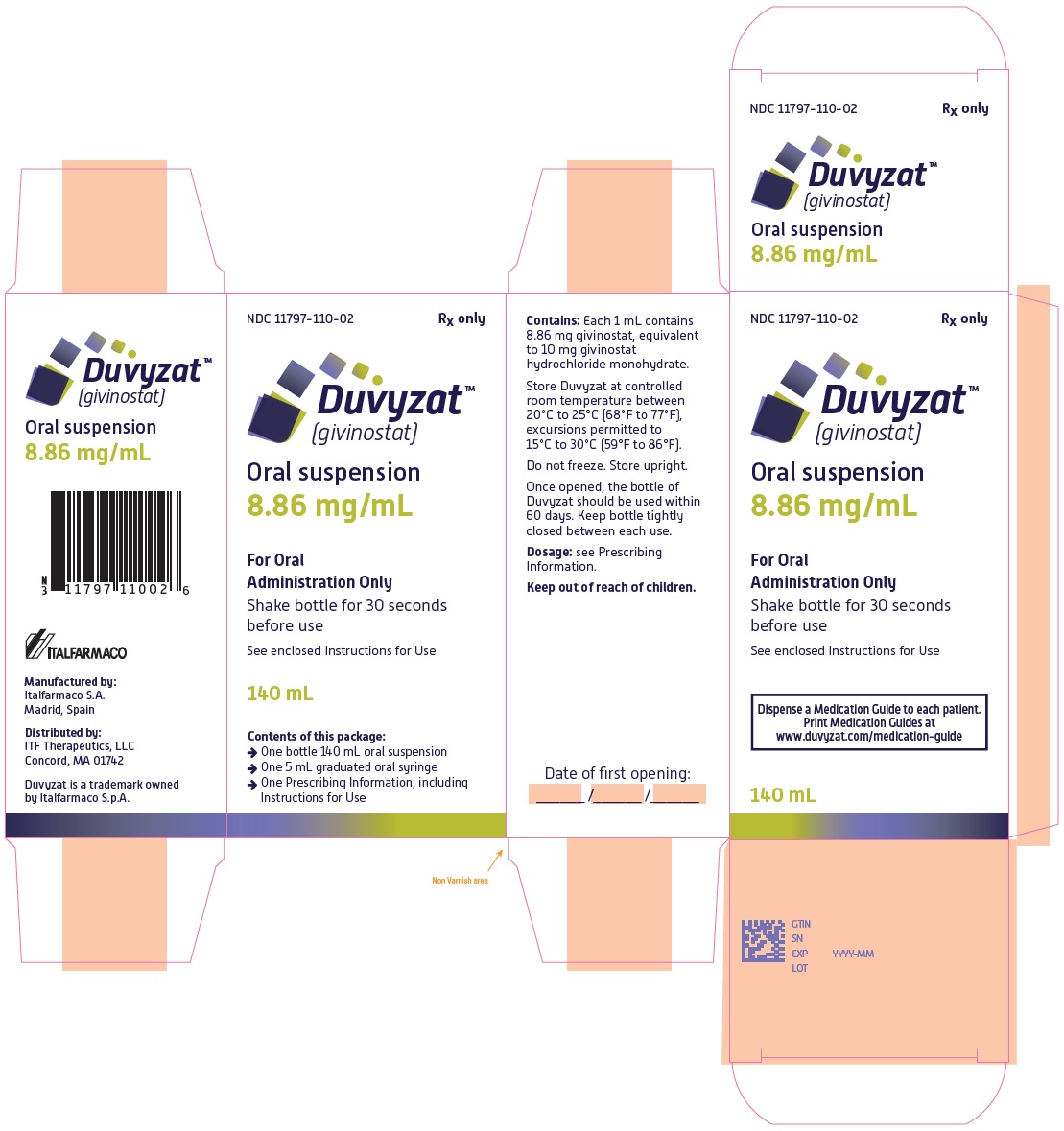
DUVYZAT givinostat 8.86 mg/mL Suspension
🆔 Identity & classification
Where does this data come from?
🏷️ RxNorm drug class
This medicine belongs to the Histone Deacetylase Inhibitor class.
Where does this data come from?
🏭 Manufacturer & labeler
Where does this data come from?
🩺 Clinical
Givinostat is used to treat Duchenne muscular dystrophy (DMD; a progressive disease in which the muscles do not function properly) in adults and children 6 years of age and older. Givinostat is in a class of medications called histone deacetylase inhibitors. How it works to help symptoms of DMD is unknown.
Read the full MedlinePlus article ↗Patient education
Supplement & herbal interactions
Some supplements/herbs that may interact with givinostat — tap one for details:
Where does this data come from?
Ask a licensed pharmacist directly — free, answered by our team.
💊 What it looks like
Where does this data come from?
🧪 Inactive Ingredients / Excipients
Inactive ingredients, also called excipients, are components of the drug product other than the active ingredient. They may include fillers, dyes, coatings, preservatives, flavors, or other formulation ingredients.
💡 Tap an ingredient (hover on desktop) to see what it is and why it’s used.
-
UNII 463JZS0XJ3
Cream is a mixture of water and oil used as a base or vehicle in medicines applied to skin. It helps deliver active ingredients while softening and moisturizing the affected area.
-
UNII PDC6A3C0OX
Glycerin is a clear, thick liquid derived from plant oils or fats. It acts as a humectant to retain moisture, a sweetener, and a solvent in medications.
-
UNII 9E0S3UM200
A sugar alcohol solution derived from glucose that stays liquid without forming crystals. It functions as a sweetener, humectant (moisture-retaining agent), and solvent in liquid medications and syrups.
-
UNII 3OKE88I3QG
A natural flavoring derived from peach fruit. It enhances taste in oral medicines to make them more palatable, especially for patients who might otherwise resist taking the medication.
-
UNII 7T1F30V5YH
A synthetic emulsifier derived from sorbitol and oleic acid. It helps mix oil and water-based ingredients together and keeps them from separating in liquid formulations.
-
UNII SB8ZUX40TY
Saccharin sodium is an artificial sweetener made from saccharin salt. It's added to medicines to improve taste, especially in liquid formulations for children or bitter drugs.
-
UNII OJ245FE5EU
Sodium benzoate is a salt derived from benzoic acid, a preservative. It's added to medicines to prevent growth of bacteria, fungi, and other microorganisms that could spoil the product.
-
UNII 55X04QC32I
A strong alkaline chemical used to adjust and maintain the pH balance of liquid medicines. It helps keep the medicine stable and ensures it stays effective during storage.
-
UNII W4888I119H
Tartaric acid is a natural organic acid found in grapes and tamarinds. In medicines, it works as a buffer to control acidity, an antioxidant to prevent spoilage, and sometimes a flavoring or binding agent.
-
UNII 2944357O2O
A natural gum derived from the tragacanth shrub, used as a thickener, stabilizer, and binder in medicines. It helps create the right consistency and keeps ingredients evenly mixed throughout the product.
-
UNII 059QF0KO0R
Water is a liquid solvent that dissolves and mixes ingredients together in liquid medicines, syrups, and injections. It helps distribute the active drug evenly throughout the product.
11 inactive ingredients listed in the exact product block matched to this NDC.
Where does this data come from?
ingredient classCode="IACT" elements from the exact product block matched by this NDC. Label-section narrative from DailyMed / the openFDA label index is shown separately when available.Inactive ingredient FAQ
Are inactive ingredients the same for every manufacturer?
Why might an inactive ingredient be missing?
Can inactive ingredients matter?
💲 Pricing
A drug doesn't have one price. Each row is a different public payment system, and none is what you'd pay at the counter — that depends on your insurance. The ⓘ on each row explains what it measures.
| Price system | Per mL | Per package |
|---|---|---|
| Retail pharmacies payNADAC · weekly | Not in the retail survey — common for institutional, discontinued, or low-volume packs. | |
| Medicaid paysCMS SDUD · 12 mo | $271.81 | $38,053.19 / 140 ml |
| Medicare drug plans payPart D · quarterly | No Part D plan price is available for this NDC in our data. | |
Where does this data come from?
🔁 Therapeutic equivalents
| Product | Labeler | Pack | NADAC/unit | TE | Status | Price vs. this |
|---|---|---|---|---|---|---|
| Duvyzat 8.86 mg/mLthis 11797-0110-02 | Italfarmaco | 1 bottle | — | — | FDA listed | — |
Where does this data come from?
⏳ Availability & generic status
We did not find an FDA-approved generic match for this exact strength, form and route. Patent/protection dates below may affect future generic timing.
Why the date isn’t exact: Generic timing can change because patents may be challenged, settled, licensed, added, removed, or worked around with a narrower label — and FDA approval does not always mean a pharmacy can get the generic today.
🛈 What do these terms mean?
- Patent
- Legal protection listed in the Orange Book that may delay generic approval or launch. Issued by the U.S. Patent & Trademark Office.
- Substance patent
- Covers the active drug molecule itself — the hardest to design around. A generic generally can’t launch until it expires.
- Formulation (product) patent
- Covers a specific formulation or dosage form. A generic can sometimes work around it with a different formulation.
- Method-of-use patent
- A patent covering one specific approved use of the drug — not necessarily the whole molecule. A generic can sometimes launch with a “skinny label” that carves out the protected use and keeps the others.
- Skinny label
- A generic label that omits a still-patented use when the FDA allows it — letting a generic reach the market for the unprotected uses.
- Exclusivity
- FDA-granted marketing protection, separate from patents — e.g. 5-yr new chemical entity, 7-yr orphan drug, or a +6-month pediatric extension.
- Paragraph IV
- A generic applicant’s formal challenge to a listed patent. It can potentially lead to earlier generic entry, but often involves litigation or a settlement.
- RLD / RS
- Reference Listed Drug — the brand product the FDA uses as the reference for generic applications. Reference Standard — the product the FDA expects generics to compare against in bioequivalence testing.
- TE / AB rating
- FDA therapeutic-equivalence rating. An AB rating generally means the FDA considers a generic therapeutically equivalent to — and substitutable for — the brand.
- LOE (loss of exclusivity)
- The latest patent or exclusivity currently listed — the loss-of-exclusivity / latest-listed-protection date shown on this page. Paragraph-IV challenges and settlements can move the real date earlier; FDA approval and a manufacturer’s decision to market can move it later.
Built from the FDA Orange Book. The bars above are scaled to each protection’s expiry; the red LOE marker is the last one to lapse.
| Patent | Type | Use code | Expires |
|---|---|---|---|
| US 9421184 ↗ | Method of use | U-3885 | Feb 3, 2032 |
| US 9867799 ↗ | Method of use | U-3885 | Feb 3, 2032 |
| US 10688047 ↗ | Method of use | U-3885 | Oct 28, 2036 |
| US 12606519 ↗ | Drug substance | — | May 3, 2040 |
| US 7329689 ↗ | Drug substance | — | Jan 15, 2027 |
| Code | What it grants | Expires |
|---|---|---|
| NCE | New Chemical Entity (5-year) | Mar 21, 2029 |
| ODE-473 | Orphan Drug Exclusivity (7-year) | Mar 21, 2031 |
Is there a generic version of DUVYZAT 8.86 MG/ML ORAL SUSP?
The FDA approved a generic — why can’t I get it at my pharmacy yet?
Why do different websites show different generic release dates?
What does “FDA listed” mean?
What does a patent or protection date mean here?
What does “current Orange Book estimate” mean?
Can a generic come out before the last patent expires?
Can a generic come out after the listed dates?
What is the difference between patents and exclusivity?
Why are there multiple patent dates?
Where does this data come from?
🗺️ Medicaid utilization & spend
📊 Medicare Part D spend CMS · PART D · 2026 (Q1)
📦 Packaging — all sizes for this product
| Package NDC | Description | Marketing start | Status |
|---|---|---|---|
| 11797-0110-02 You're viewing this | 1 BOTTLE in 1 CARTON (11797-110-02) / 140 mL in 1 BOTTLE (11797-110-01) | 2024-03-21 | Active |
🧭 About this NDC listing & data coverage
What data is (and isn’t) available for this NDC — tap to expand
| NDC identity (package / product / labeler codes) | ✓ Available |
| Labeler | ✓ Available |
| Product & package description | ✓ Available |
| Marketing category & status | ✓ Available |
| Active ingredient / dosage form / route | ✓ Available |
| FDA label (SPL via DailyMed) | ✓ Available |
| Package photos | ✓ Available |
| Inactive ingredients (structured) | ✓ Available |
| NADAC pharmacy acquisition price (CMS) | — Not published for this NDC CMS publishes NADAC only for NDCs reported in its retail-pharmacy survey. |
| Orange Book / therapeutic-equivalence data | ✓ Available |
| HCPCS J-code billing crosswalk | — Not published for this NDC Most self-administered / retail products have no J-code — that is normal. |
| Medicaid utilization (CMS SDUD) | ✓ Available |
Questions about this listing
Why is there no price listed?
Is the NDC printed on the package the same as the 11-digit billing NDC?
What do the three segments of this NDC mean?
Is this package still being marketed?
Who lists this product with the FDA?
Do I need a prescription for this product?
Where does this data come from?
📄 Full prescribing information FDA SPL
🎯 Indications and Usage ▾
1 INDICATIONS AND USAGE DUVYZAT is indicated for the treatment of Duchenne muscular dystrophy (DMD) in patients 6 years of age and older. DUVYZAT is a histone deacetylase inhibitor indicated for the treatment of Duchenne muscular dystrophy (DMD) in patients 6 years of age and older. ( 1 )
⏱️ Dosage and Administration ▾
2 DOSAGE AND ADMINISTRATION Obtain and evaluate baseline platelet counts and triglycerides prior to initiation of DUVYZAT. Do not initiate DUVYZAT in patients with a platelet count less than 150 x 10^9/L. ( 2.1 , 5.1 , 5.2 ) The dosage of DUVYZAT is based on patient’s body weight.
( 2.2 ) Administer orally twice daily with food. ( 2.2 ) Dosage modifications may be needed for decreased platelet counts, diarrhea, increased triglycerides, or QTc prolongation. ( 2.3 , 5.1 , 5.2 , 5.3 , 5.4 )
2.1Recommended Evaluation and Testing Before Initiation of DUVYZAT Obtain and evaluate baseline platelet counts and triglycerides prior to initiation of DUVYZAT [see Warnings and Precautions (5.1 , 5.2) ] . Do not initiate DUVYZAT in patients with a platelet count less than 150 x 10 9 /L. Monitor platelet counts and triglycerides as recommended during treatment to determine if dosage modifications are needed [see Dosage and Administration (2.3) ].
In addition, in patients with underlying cardiac disease or taking concomitant medications that cause QT prolongation, obtain ECGs when initiating treatment with DUVYZAT, during concomitant use, and as clinically indicated [see Dosage and Administration (2.3) , Warnings and Precautions (5.4) , and Drug Interactions (7.2) ] .
2.2Recommended Dosage The recommended dosage of DUVYZAT is based on body weight and administered orally twice daily with food (see Table 1 ) [see Dosage and Administration (2.4) ] . Table 1: Recommended Dosage in Patients 6 Years of Age and Older for the Treatment of DMD Weight Based on actual body weight Dosage Oral Suspension Volume 10 kg to less than 20 kg 22.2 mg twice daily 2.5 mL twice daily 20 kg to less than 40 kg 31 mg twice daily 3.5 mL twice daily 40 kg to less than 60 kg 44.3 mg twice daily 5 mL twice daily 60 kg or more 53.2 mg twice daily 6 mL twice daily
2.3Dosage Modifications for Adverse Reactions Decrease in Platelets, Diarrhea, Increase in Triglycerides DUVYZAT may cause adverse reactions [see Warnings and Precautions (5.1 , 5.2 , 5.3) ], which may necessitate a dosage modification (see Table 2 ) if the following occur: Platelet count <150 x 10 9 /L verified in two assessments one week apart or Moderate or severe diarrhea or Fasting triglycerides >300 mg/dL verified by two assessments one week apart Based on the severity of these adverse reactions, treatment interruption prior to dosage modification should be considered.
Table 2: Dosage Modifications for Adverse Reactions in Patients 6 Years of Age and Older for the Treatment of DMD First Dosage Modification If the adverse reaction(s) persist after the first dosage modification, proceed to the second dosage modification. Second Dosage Modification If the adverse reaction(s) persist after the second dosage modification, DUVYZAT should be discontinued. Weight Based on actual body weight Dosage Oral Suspension Volume Dosage Oral Suspension Volume 10 kg to less than 20 kg 17.7 mg twice daily 2 mL twice daily 13.3 mg twice daily 1.5 mL twice daily 20 kg to less than 40 kg 22.2 mg twice daily 2.5 mL twice daily 17.7 mg twice daily 2 mL twice daily 40 kg to less than 60 kg 31 mg twice daily 3.5 mL twice daily 26.6 mg twice daily 3 mL twice daily 60 kg or more 39.9 mg twice daily 4.5 mL twice daily 35.4 mg twice daily 4 mL twice daily QTc Interval Prolongation Withhold DUVYZAT if the QTc interval is > 500 ms or the change from baseline is > 60 ms [see Warnings and Precautions (5.4) and Drug Interactions (7.2) ].
2.4Preparation and Administration Instructions See the Instructions for Use for further details. Before use, shake the DUVYZAT suspension for at least 30 seconds by inverting the bottle by 180°. Visually verify the homogeneity of the suspension. Using a graduated oral syringe, measure the appropriate volume of suspension corresponding to the prescribed dose of DUVYZAT. Administer orally with the provided graduated oral syringe.
2.5 Missed Dose If a dose is missed, patients should not take double or extra do…
💊 Dosage Forms and Strengths ▾
3 DOSAGE FORMS AND STRENGTHS Oral suspension: 8.86 mg/mL givinostat as a white to off-white or faintly pink, peach-cream flavored suspension. Oral suspension: 8.86 mg/mL givinostat. ( 3 )
⛔ Contraindications ▾
4 CONTRAINDICATIONS None. None. ( 4 )
⚠️ Warnings and Cautions ▾
5 WARNINGS AND PRECAUTIONS Hematological Changes: DUVYZAT can cause dose-related thrombocytopenia and other signs of myelosuppression, including anemia and neutropenia. Monitor platelets; dosage adjustment or discontinuation may be needed. ( 2.3 , 5.1 ) Increased Triglycerides: An increase in triglycerides can occur; dosage modification may be needed.
Discontinuation may be needed. ( 2.3 , 5.2 ) Gastrointestinal Disturbances: Adjust dosage if moderate or severe diarrhea occurs. Antiemetics or antidiarrheal medications may be considered during treatment with DUVYZAT.
Discontinue DUVYZAT if the symptoms persist. ( 2.3 , 5.3 ) QTc Prolongation: Avoid use of DUVYZAT in patients who are at an increased risk for ventricular arrhythmias. ( 2.1 , 5.4 , 7.2 )
5.1Hematological Changes DUVYZAT can cause dose-related thrombocytopenia and other signs of myelosuppression, including decreased hemoglobin and neutropenia. In Study 1 [see Clinical Studies (14) ] , thrombocytopenia occurred in 33% of patients treated with DUVYZAT compared to no patients on placebo. The maximum decrease in platelets occurred within the first 2 months of therapy and remained low throughout the course of therapy.
In a few patients, thrombocytopenia was associated with bleeding events including epistaxis, hematoma or contusions. Low platelet counts resulted in DUVYZAT dose reduction in 28% of patients. Patients with baseline platelet counts below the lower limit of normal were excluded from the study.
Decreased hemoglobin and decreased neutrophils were also observed in patients treated with DUVYZAT compared to placebo. Monitor blood counts every 2 weeks for the first 2 months of treatment, at month 3, and then every 3 months thereafter. Modify the dosage of DUVYZAT for confirmed thrombocytopenia [see Dosage and Administration (2.3) ] .
Treatment should be permanently discontinued if the abnormalities worsen despite dose modification. If a patient develops signs or symptoms of thrombocytopenia, obtain a platelet count as soon as possible, and hold dosing until platelet count is confirmed.
5.2Increased Triglycerides DUVYZAT can cause elevations in triglycerides. In Study 1 [see Clinical Studies (14) ] , hypertriglyceridemia occurred in 23% of patients treated with DUVYZAT (one of whom had familial hypertriglyceridemia) compared to 7% of patients on placebo. High triglycerides (i.e., levels greater than 300 mg/dL) resulted in discontinuation and led to dosage modification in 2% and 8%, respectively, of patients treated with DUVYZAT.
Monitor triglycerides at 1 month, 3 months, 6 months, and then every 6 months thereafter. Modify the dosage if fasting triglycerides are verified > 300 mg/dL [see Dosage and Administration (2.3) ] . Treatment with DUVYZAT should be discontinued if triglycerides remain elevated despite adequate dietary intervention and dosage adjustment.
5.3Gastrointestinal Disturbances Gastrointestinal disturbances, including diarrhea, nausea/vomiting, and abdominal pain were common adverse reactions in DUVYZAT clinical trials in DMD. In Study 1, diarrhea was reported in 37% of patients treated with DUVYZAT (with 1 severe case reported) compared to 20% of patients on placebo. Diarrhea usually occurred within the first few weeks of initiation of treatment with DUVYZAT.
Vomiting and nausea, sometimes severe and usually occurring within the first 2 months of treatment, occurred in 32% of patients treated with DUVYZAT compared to 18% of patients on placebo. Abdominal pain occurred in 34% of patients treated with DUVYZAT compared to 25% of patients on placebo. One case of abdominal pain was serious.
Antiemetics or antidiarrheal medications may be considered during treatment with DUVYZAT. Fluid and electrolytes should be replaced as needed to prevent dehydration [see Warnings and Precautions (5.4) ] . Modify the dosage of DUVYZAT in patients with moderate or severe diarrhea, and treatment should be discontinued if significant symptoms persist [see Dosage and A…
🤒 Adverse Reactions ▾
6 ADVERSE REACTIONS The following clinically significant adverse reactions are described below and elsewhere in the labeling: Hematological Changes [see Warnings and Precautions (5.1) ] Increased Triglycerides [see Warnings and Precautions (5.2) ] Gastrointestinal Disturbances [see Warnings and Precautions (5.3) ] QTc Prolongation [see Warnings and Precautions (5.4) ] Most common adverse reactions (≥10% in DUVYZAT-treated patients) are diarrhea, abdominal pain, thrombocytopenia, nausea/vomiting, hypertriglyceridemia, and pyrexia.
( 6.1 ) To report SUSPECTED ADVERSE REACTIONS, contact ITF Therapeutics, LLC. at 1-833-582-4312 or FDA at 1-800-FDA-1088 or www.fda.gov/medwatch .
6.1Clinical Trials Experience Because clinical trials are conducted under widely varying conditions, adverse reaction rates observed in the clinical trials of a drug cannot be directly compared to rates in the clinical trials of another drug and may not reflect the rates observed in practice. In controlled and uncontrolled trials in patients with confirmed DMD, 222 male patients aged 6 years and older were treated with DUVYZAT, including 210 patients treated for ≥ 6 months, 187 patients for ≥ 12 months, and 105 patients for ≥ 24 months.
The safety profile of DUVYZAT is based on a double-blind, placebo-controlled, 18-month study in a total of 179 ambulant DMD patients aged 6 years or older on concomitant steroid treatment (Study 1) [see Clinical Studies (14) ] . The dosage in Study 1 was weight-based [see Dosage and Administration (2.2) ] . Patients were excluded from the study if they had the following abnormalities at the screening visit: platelet, white blood cell, or hemoglobin counts less than the lower limit of normal, triglycerides > 300 mg/dL (3.42 mmol/L) in fasting condition, or had a baseline-corrected QT interval, Fridericia’s correction (QTcF) of > 450 msec (mean of 3 consecutive readings 5 minutes apart) or a history of additional risk factors for torsades de pointes (e.g., heart failure, hypokalemia, or family history of long QT syndrome).
Overall, 2% of the patients discontinued the study because of adverse reactions. Adverse reactions reported in >5% of DUVYZAT-treated patients at a frequency at least 5% greater than that of the placebo group are presented in Table 3 below. Table 3.
Adverse Reactions Reported in >5% of DUVYZAT-Treated Patients and at Least 5% Greater than Placebo in Study 1 Adverse Reaction DUVYZAT N=118 % Placebo N=61 % Diarrhea 37 20 Abdominal pain 34 25 Thrombocytopenia Thrombocytopenia includes platelet count decreased and thrombocytopenia 33 0 Nausea/Vomiting 32 18 Hypertriglyceridemia 23 7 Pyrexia 13 8 Myalgia 9 3 Rash 9 2 Arthralgia 8 2 Fatigue 8 0 Constipation 7 2 Decreased appetite 7 0 Less Common Adverse Reactions in Study 1 Adverse reactions of hypothyroidism and/or thyroid stimulating hormone (TSH) increased occurred in 5% of patients treated with DUVYZAT compared to 2% of patients who received placebo.
🔄 Drug Interactions ▾
7 DRUG INTERACTIONS Closely monitor when DUVYZAT is used in combination with an oral CYP3A4 sensitive substrate or a sensitive substrate of the OCT2 transporter, for which a small change in substrate plasma concentration may lead to serious toxicities. ( 7.1 ) Avoid concomitant use with other drugs that prolong the QTc interval; monitor ECG if concomitant use cannot be avoided. ( 7.2 )
7.1Effect of DUVYZAT on Other Drugs CYP3A4 Sensitive Substrates Givinostat is a weak intestinal CYP3A4 inhibitor [see Clinical Pharmacology (12.3) ] . Closely monitor when DUVYZAT is used in combination with orally administered CYP3A4 sensitive substrates for which a small change in substrate plasma concentration may lead to serious toxicities. OCT2 Sensitive Substrates Givinostat is a weak inhibitor of the renal uptake transporter OCT2 [see Clinical Pharmacology (12.3) ] .
Closely monitor when DUVYZAT is used in combination with drugs known as a sensitive substrate of the OCT2 transporter for which a small change in substrate plasma concentration may lead to serious toxicities.
7.2Effect of Other Drugs on DUVYZAT Drugs that Prolong the QTc Interval Avoid concomitant use of DUVYZAT with other product(s) with a known potential to prolong the QTc interval. If concomitant use cannot be avoided, obtain ECGs when initiating, during concomitant use, and as clinically indicated [see Warnings and Precautions (5.4) ] . Withhold DUVYZAT if the QTc interval is > 500 ms or the change from baseline is > 60 ms [see Dosage and Administration (2.1) ] .
DUVYZAT causes QTc interval prolongation [see Clinical Pharmacology (12.2) ] . Concomitant use of DUVYZAT with other products that prolong the QTc interval may result in a greater increase in the QTc interval and adverse reactions associated with QTc interval prolongation, including Torsade de pointes, other serious arrythmias, and sudden death [see Warnings and Precautions (5.4) ] .
👥 Use in Specific Populations ▾
8 USE IN SPECIFIC POPULATIONS Pregnancy: Based on animal data, may cause fetal harm. ( 8.1 ) Hepatic Impairment: Exposure to givinostat is expected to be increased. ( 8.6 )
8.1Pregnancy Risk Summary DUVYZAT is indicated for the treatment of DMD, which is a disease of predominantly young male patients. Therefore, there are no adequate data available to assess the use of DUVYZAT in pregnant women. In animal studies, oral administration of givinostat during organogenesis resulted in decreased fetal body weight and increased structural variations; oral administration during pregnancy and lactation resulted in increased embryofetal and offspring mortality and neurobehavioral changes in the offspring.
In the U.S. general population, the estimated background risk of major birth defects and miscarriage in clinically recognized pregnancies is 2-4% and 15-20%, respectively. Data Animal Data Oral administration of givinostat (0, 40, 80, or 160 mg/kg/day) to pregnant rats throughout organogenesis resulted in reduced fetal body weight at the highest dose tested and increases in the incidence of skeletal and visceral variations at the mid and high doses. The no-effect dose (40 mg/kg/day) for adverse effects on embryofetal development was associated with maternal plasma exposures (AUC) lower than that in humans at the maximum recommended human dose (MRHD) of 53.2 mg twice daily.
Oral administration of givinostat (0, 40, 80, or 160 mg/kg/day) to pregnant rabbits throughout organogenesis resulted in maternal death at the highest dose tested, resulting in too few fetuses to evaluate. No adverse effects on embryofetal development were observed at the low and mid doses. Plasma exposures (AUC) at the higher no-effect dose (80 mg/kg) for adverse effects on embryofetal development were approximately 4 times that in humans at the MRHD.
Oral administration of givinostat (0, 40, 80, or 160 mg/kg/day) to rats throughout pregnancy and lactation resulted in increases in embryofetal mortality, stillbirths, and offspring mortality at the highest dose tested. When offspring were tested postweaning (postnatal day 49), adverse effects on behavior (decreased open field activity) were observed at all doses. A no-effect dose for adverse developmental effects was not identified; plasma exposures (AUC) at the lowest dose tested were lower than that in humans at the MRHD.
8.2Lactation Risk Summary There are no human or animal data to assess the effect of DUVYZAT or its metabolites on milk production, the presence of givinostat in milk, or the effects on the breastfed infant. The developmental and health benefits of breastfeeding should be considered along with the mother's clinical need for DUVYZAT and any potential adverse effects on the breastfed infant from DUVYZAT or from the underlying maternal condition.
8.3Females and Males of Reproductive Potential No human data are available on the effect of DUVYZAT on reproductive potential. Animal studies indicate possible adverse effects on reproduction [see Nonclinical Toxicology (13.1) ] .
8.4Pediatric Use The safety and effectiveness of DUVYZAT in children aged 6 years and older have been established [see Clinical Studies (14) ] . Safety and effectiveness in pediatric patients below the age of 6 years have not been established. Juvenile Animal Data In a study in juvenile male and female rats, givinostat was orally administered at doses of 0, 10, 20, or 40 mg/kg on postnatal days (PND) 7 to 27, doses of 0, 15, 30, or 60 mg/kg/day on PNDs 28 to 48, and doses of 0, 15, 45, or 90 mg/kg/day on PNDs 49 to 92.
Adverse effects on behavior (increased locomotor activity and decreased auditory startle prepulse inhibition) were observed at the high dose at the end of the dosing period. Adverse effects on locomotor activity, but not prepulse inhibition, were observed at the end of the recovery period primarily at the mid and high doses. Persistent decreases in bone density were observed at all doses tested.
A no-effect dose fo…
🤰 Pregnancy ▾
8.1Pregnancy Risk Summary DUVYZAT is indicated for the treatment of DMD, which is a disease of predominantly young male patients. Therefore, there are no adequate data available to assess the use of DUVYZAT in pregnant women. In animal studies, oral administration of givinostat during organogenesis resulted in decreased fetal body weight and increased structural variations; oral administration during pregnancy and lactation resulted in increased embryofetal and offspring mortality and neurobehavioral changes in the offspring.
In the U.S. general population, the estimated background risk of major birth defects and miscarriage in clinically recognized pregnancies is 2-4% and 15-20%, respectively. Data Animal Data Oral administration of givinostat (0, 40, 80, or 160 mg/kg/day) to pregnant rats throughout organogenesis resulted in reduced fetal body weight at the highest dose tested and increases in the incidence of skeletal and visceral variations at the mid and high doses. The no-effect dose (40 mg/kg/day) for adverse effects on embryofetal development was associated with maternal plasma exposures (AUC) lower than that in humans at the maximum recommended human dose (MRHD) of 53.2 mg twice daily.
Oral administration of givinostat (0, 40, 80, or 160 mg/kg/day) to pregnant rabbits throughout organogenesis resulted in maternal death at the highest dose tested, resulting in too few fetuses to evaluate. No adverse effects on embryofetal development were observed at the low and mid doses. Plasma exposures (AUC) at the higher no-effect dose (80 mg/kg) for adverse effects on embryofetal development were approximately 4 times that in humans at the MRHD.
Oral administration of givinostat (0, 40, 80, or 160 mg/kg/day) to rats throughout pregnancy and lactation resulted in increases in embryofetal mortality, stillbirths, and offspring mortality at the highest dose tested. When offspring were tested postweaning (postnatal day 49), adverse effects on behavior (decreased open field activity) were observed at all doses. A no-effect dose for adverse developmental effects was not identified; plasma exposures (AUC) at the lowest dose tested were lower than that in humans at the MRHD.
🧒 Pediatric Use ▾
8.4Pediatric Use The safety and effectiveness of DUVYZAT in children aged 6 years and older have been established [see Clinical Studies (14) ] . Safety and effectiveness in pediatric patients below the age of 6 years have not been established. Juvenile Animal Data In a study in juvenile male and female rats, givinostat was orally administered at doses of 0, 10, 20, or 40 mg/kg on postnatal days (PND) 7 to 27, doses of 0, 15, 30, or 60 mg/kg/day on PNDs 28 to 48, and doses of 0, 15, 45, or 90 mg/kg/day on PNDs 49 to 92.
Adverse effects on behavior (increased locomotor activity and decreased auditory startle prepulse inhibition) were observed at the high dose at the end of the dosing period. Adverse effects on locomotor activity, but not prepulse inhibition, were observed at the end of the recovery period primarily at the mid and high doses. Persistent decreases in bone density were observed at all doses tested.
A no-effect dose for adverse effects on postnatal development was not identified; the lowest dose tested was associated with plasma exposures (AUC) less than that in humans at the MRHD.
🧓 Geriatric Use ▾
8.5Geriatric Use DMD is largely a disease of children and young adults; therefore, there is no experience with DUVYZAT in geriatric DMD patients.
🧬 Clinical Pharmacology ▾
12 CLINICAL PHARMACOLOGY
12.1Mechanism of Action DUVYZAT is a histone deacetylase inhibitor. The precise mechanism by which DUVYZAT exerts its effect in patients with DMD is unknown.
12.2Pharmacodynamics Muscle Fat Fraction as Assessed by MR Spectroscopy The percentage of fat fraction present in the vastus lateralis muscles (VLM) of the thigh was measured in Study 1 [see Clinical Studies (14) ] using magnetic resonance spectroscopy. At 18 months, for the patients with VLM fat fraction baseline in the range of >5% to ≤30%, a mean increase (absolute difference from baseline levels) of VLM fat fraction was 7.48% in the DUVYZAT-treated patients compared to a 10.89% increase in patients who received placebo.
Cardiac Electrophysiology The largest mean increase in QTc interval of 13.6 ms (upper confidence interval of 17.1 ms) occurred 5 hours after administration of givinostat 265.8 mg to healthy subjects (approximately 5 times the 53.2 mg dose recommended for DMD patients weighing 60 kg or more) [see Warnings and Precautions (5.4) ] .
12.3Pharmacokinetics Givinostat exhibits linear kinetics with the studied dose range. Systemic exposure to givinostat was dose-proportional across the therapeutic dose range. Steady-state concentrations are achieved within 5 to 7 days after twice daily dosing.
An accumulation of less than 2-fold was observed for givinostat after twice daily administration. Absorption Absolute bioavailability was not determined. The time to maximum plasma concentrations is about 2 to 3 hours after oral administration.
Effect of Food A high fat standard meal resulted in an increase in the exposure (about 40% increase in area under the plasma concentration-time curve [AUC] and about 23% increase in maximum plasma concentration [C max ]) and a delay in time to maximum concentration (T max ) from 2 to 3 hours [see Dosage and Administration (2.2) ] . Distribution Givinostat is approximately 96% bound to human plasma proteins and is slightly partitioned into red blood cells (blood to plasma ratio = 1.3). Elimination In plasma, apparent elimination half-life of givinostat is about 6 hours.
Metabolism In vitro studies with human enzymatic preparations together with animal metabolism showed that givinostat is extensively metabolized forming several metabolites. CYP450 and UGTs are not involved in the main metabolic reactions. Four major metabolites, which are not active with respect to the efficacy of givinostat, have been characterized in humans and preclinical species.
Excretion The elimination of givinostat is likely dependent on metabolism followed by renal and biliary excretion of the resulting metabolites as suggested by the mass balance study in the rat. Urinary excretion of givinostat in humans is minimal (<3% of the dose). Specific Populations The population PK analyses show that the PK of givinostat can be affected by body weight, while age has no effects on the pharmacokinetics of givinostat.
Patients with Hepatic Impairment The pharmacokinetics and safety of givinostat have not been studied in patients with hepatic impairment. Givinostat is highly metabolized and therefore the impact of hepatic impairment on the exposure of givinostat cannot be excluded [see Use in Specific Populations (8.6) ] . Patients with Renal Impairment The pharmacokinetics and safety of givinostat have not been studied in patients with renal impairment.
However, renal impairment is not expected to impact the exposure of givinostat because renal excretion is not a significant route of givinostat elimination. Drug Interaction Studies In Vitro Givinostat is not a substrate of cytochrome P450 (CYP450) enzymes and uridine diphosphate glucuronosyltransferase (UGT). Therefore, coadministration of drugs that are inducers or inhibitors of major metabolizing enzymes will not significantly affect the systemic exposure of givinostat.
Givinostat and its metabolites ITF2374, ITF2375, ITF2440, and ITF2563 were investigated as inhibitors of the main CYP450…
🧬 Mechanism of Action ▾
12.1Mechanism of Action DUVYZAT is a histone deacetylase inhibitor. The precise mechanism by which DUVYZAT exerts its effect in patients with DMD is unknown.
📦 How Supplied / Storage and Handling ▾
16 HOW SUPPLIED/STORAGE AND HANDLING
16.1How Supplied DUVYZAT (givinostat) oral suspension is a white to off-white or faintly pink, peach-cream flavored suspension. It is supplied in an amber polyethylene terephthalate bottle closed with a high-density polyethylene child-resistant, screw cap with low-density polyethylene syringe adapter, containing 140 mL of oral suspension (NDC 11797-110-01). Each mL contains 8.86 mg of givinostat.
DUVYZAT is supplied in a carton, NDC 11797-110-02, containing: one bottle containing 140 mL oral suspension one 5 mL graduated oral syringe Prescribing Information and Instructions for Use The Medication Guide is available at www.duvyzat.com/medication-guide .
16.2Storage and Handling Store at 20°C to 25°C (68°F to 77°F), excursions permitted to 15°C to 30°C (59°F to 86°F) [see USP Controlled Room Temperature]. Do not freeze. Store upright. Discard any unused DUVYZAT remaining after 60 days of first opening of the bottle.
16.1How Supplied DUVYZAT (givinostat) oral suspension is a white to off-white or faintly pink, peach-cream flavored suspension. It is supplied in an amber polyethylene terephthalate bottle closed with a high-density polyethylene child-resistant, screw cap with low-density polyethylene syringe adapter, containing 140 mL of oral suspension (NDC 11797-110-01). Each mL contains 8.86 mg of givinostat.
DUVYZAT is supplied in a carton, NDC 11797-110-02, containing: one bottle containing 140 mL oral suspension one 5 mL graduated oral syringe Prescribing Information and Instructions for Use The Medication Guide is available at www.duvyzat.com/medication-guide .
📦 Storage and Handling ▾
16.2Storage and Handling Store at 20°C to 25°C (68°F to 77°F), excursions permitted to 15°C to 30°C (59°F to 86°F) [see USP Controlled Room Temperature]. Do not freeze. Store upright. Discard any unused DUVYZAT remaining after 60 days of first opening of the bottle.
📋 Description ▾
11 DESCRIPTION DUVYZAT (givinostat) oral suspension contains givinostat hydrochloride monohydrate, a histone deacetylase inhibitor. Givinostat hydrochloride monohydrate is designated chemically as: [6-(diethylaminomethyl)naphthalen-2-yl]methyl[4(hydroxycarbamoyl) phenyl] carbamate hydrochloride monohydrate. The molecular formula is C 24 H 27 N 3 O 4 •HCl•H 2 O and the molecular weight is 475.97 g/mol.
Its structural formula is: Givinostat hydrochloride monohydrate is a white to off-white, non-hygroscopic, crystalline powder that is very slightly to slightly soluble in aqueous media and slightly soluble in ethanol. DUVYZAT contains givinostat 8.86 mg/mL (equivalent to givinostat hydrochloride monohydrate 10 mg/mL) and the following inactive ingredients: cream flavor, glycerin, non-crystallizing sorbitol solution, peach flavor, polysorbate 20, purified water, saccharin sodium, sodium benzoate, sodium hydroxide, tartaric acid, and tragacanth.
Image
💬 Information for Patients ▾
17 PATIENT COUNSELING INFORMATION Advise the patient to read the FDA-approved patient labeling ( Medication Guide and Instructions for Use ). Administration Instructions Instruct patients or caregivers to [see Dosage and Administration (2.4) ]: Shake DUVYZAT oral suspension well before measuring out each dose. Administer using the provided graduated oral syringe to measure the appropriate volume of suspension corresponding to the prescribed dose for the patient.
Take DUVYZAT with food. Discard any unused DUVYZAT oral suspension remaining after 60 days of first opening the bottle. Hematological Changes Inform patients and/or caregivers that DUVYZAT can cause hematological changes including a decrease in platelet counts (thrombocytopenia), anemia, and a decrease in neutrophils (neutropenia) [see Warnings and Precautions (5.1) ] .
Advise patients to notify their healthcare provider if they have any signs or symptoms of these adverse reactions (e.g., easy bruising, excessive bleeding from cuts, blood in the stool, fatigue). Instruct patients to adhere to the testing recommended to monitor for these adverse reactions. Inform patients that their dosage may need to be changed or their treatment may need to be stopped depending on the results of their test for platelet counts.
Increased Triglycerides Inform patients and/or caregivers that DUVYZAT can cause an increase in triglycerides, [see Warnings and Precautions (5.2) ] . Instruct patients to adhere to the testing recommended to monitor for this adverse reaction. Inform patients that their dosage may need to be changed or their treatment may need to be stopped depending on the results of their test for triglycerides.
Gastrointestinal Disturbances Inform patients and/or caregivers that DUVYZAT can cause diarrhea and vomiting, which may require medication for treatment [see Warnings and Precautions (5.3) ] . Advise patients to maintain hydration if diarrhea or vomiting occurs and contact their healthcare provider if the symptoms persist or become moderate to severe. Inform patients that their dosage may need to be changed or their treatment may need to be stopped depending on the severity of diarrhea.
QTc Prolongation Inform patients and/or caregivers that DUVYZAT can cause prolongation of the QTc interval [see Warnings and Precautions (5.4) ] . Instruct patients to notify their healthcare provider if they have or develop any symptoms of significant QTc prolongation (e.g., dizziness, lightheadedness, syncope) or new cardiac issues and before taking any over-the-counter (e.g., diphenhydramine), herbal (e.g., echinacea), or prescription medications (e.g., antibiotics). Manufactured by: Italfarmaco S.A.
Madrid, Spain Distributed by: ITF Therapeutics, LLC Concord, MA 01742 DUVYZAT is a trademark owned by Italfarmaco S.p.A. All rights reserved.
💬 Medication Guide ▾
This Medication Guide has been approved by the U.S. Food and Drug Administration. Issued: 3/2024 MEDICATION GUIDE DUVYZAT ™ (doo' vi zat) (givinostat) oral suspension What is the most important information I should know about DUVYZAT?
DUVYZAT can cause serious side effects including: Low platelet counts in your blood (thrombocytopenia) . Platelets are important for blood clotting, and a decrease in their numbers can lead to an increased risk of bleeding or bruising. Your healthcare provider will check your blood count before you start DUVYZAT and regularly during treatment for any signs of thrombocytopenia.
Call your healthcare provider right away if you notice any unusual bleeding or small red or purple spots on the skin called petechiae. Your healthcare provider may change your dose of DUVYZAT if your blood platelet counts continue to be low or may stop your treatment with DUVYZAT. Increased levels of fat (triglycerides) in your blood .
You may not have any symptoms, so your healthcare provider will do blood tests before you start DUVYZAT and regularly during treatment to check your triglyceride levels. Your healthcare provider may change your dose of DUVYZAT if your triglyceride levels continue to be high or may stop your treatment with DUVYZAT. Frequent watery loose stools (diarrhea) and vomiting .
DUVYZAT can cause vomiting and moderate to severe diarrhea. If diarrhea occurs, you should keep track of the frequency and severity of your diarrhea symptoms, drink plenty of fluids, and contact your healthcare provider. Your healthcare provider may change your dose of DUVYZAT if the diarrhea cannot be managed or does not go away.
Your healthcare provider may also stop your treatment with DUVYZAT. What is DUVYZAT? DUVYZAT is a prescription medicine that is used for the treatment of Duchenne muscular dystrophy (DMD) in people 6 years of age and older.
It is not known if DUVYZAT is safe and effective in children under 6 years of age. Before taking DUVYZAT, tell your healthcare provider about all of your medical conditions, including if you: have any heart problems or if you take any medicines that could increase your chance for irregular heart rhythms. have any bleeding problems. Tell your healthcare provider about all of the medicines you take, including prescription and over-the-counter medicines, vitamins, and herbal supplements.
Taking DUVYZAT with certain other medicines may affect each other. Taking DUVYZAT with other medicines can cause serious side effects. Do not start or stop other medicines without talking to your healthcare provider.
Know the medicines you take. Keep a list of them to show your healthcare provider and pharmacist when you get a new medicine. How should I take DUVYZAT?
See the Instructions for Use that came with your DUVYZAT medicine for detailed instructions on how to take DUVYZAT the right way. Take DUVYZAT by mouth with food. Take DUVYZAT exactly as prescribed.
Your healthcare provider will tell you how much DUVYZAT to take and when to take it. Your healthcare provider may change your dose of DUVYZAT if needed. Do not change your dose of DUVYZAT without talking to your healthcare provider.
Shake the bottle for at least 30 seconds by continuously turning the bottle up and down. Stop when the DUVYZAT suspension looks the same throughout. Take the prescribed dose of DUVYZAT by mouth (orally) using the oral syringe that came with your DUVYZAT medicine.
Do not throw away the oral syringe. DUVYZAT should not be mixed with water or other liquids. If you miss a dose of DUVYZAT, skip the missed dose and take your next dose of DUVYZAT as scheduled.
What are the possible side effects of DUVYZAT? DUVYZAT can cause serious side effects, including: see “ What is the most important information I should know about DUVYZAT? ” changes in the electrical activity of your heart called QT Prolongation. QT Prolongation can increase the risk of developing a type of irregular heart rhythm known as Torsades de Pointes.
Call yo…