
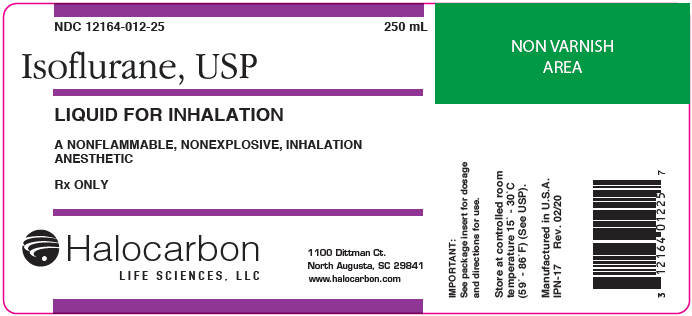
Isoflurane 1 mL/mL Liquid, 100 mL
🆔 Identity & classification
Where does this data come from?
🏷️ RxNorm drug class
This medicine belongs to the General Anesthetic class.
Where does this data come from?
🏭 Manufacturer & labeler
Where does this data come from?
🩺 Clinical
Patient education
Supplement & herbal interactions
Some supplements/herbs that may interact with Isoflurane — tap one for details:
Where does this data come from?
Ask a licensed pharmacist directly — free, answered by our team.
🧪 Inactive Ingredients / Excipients
Inactive ingredients, also called excipients, are components of the drug product other than the active ingredient. They may include fillers, dyes, coatings, preservatives, flavors, or other formulation ingredients.
Where does this data come from?
IACT rows and label-wide narrative are kept separate; availability and product-level specificity depend on the submitted label.Inactive ingredient FAQ
Are inactive ingredients the same for every manufacturer?
Why might an inactive ingredient be missing?
Can inactive ingredients matter?
💲 Pricing
A drug doesn't have one price. Each row is a different public payment system, and none is what you'd pay at the counter — that depends on your insurance. The ⓘ on each row explains what it measures.
| Price system | Per mL | Per package |
|---|---|---|
| Retail pharmacies payNADAC · weekly | Not in the retail survey — common for institutional, discontinued, or low-volume packs. | |
| Medicaid paysCMS SDUD · 12 mo | No recent Medicaid claims on file for this NDC — rare and low-volume NDCs are suppressed in the public data. | |
| Medicare drug plans payPart D · quarterly | No Part D plan price is available for this NDC in our data. | |
Where does this data come from?
🔁 Therapeutic equivalents
| Product | Labeler | Pack | NADAC/unit | TE | Status | Price vs. this |
|---|---|---|---|---|---|---|
| Forane 1 mL/mL 10019-0360-40 | Baxter | 6 bottles | — | AN | FDA listed | — |
| Isoflurane 1 mL/mLthis 12164-0012-10 | Halocarbon | 100 ml | — | AN | FDA listed | — |
| Isoflurane 100 mL/100mL 42677-0326-01 | Shandong | 1 bottle | — | AN | FDA listed | — |
| Isoflurane 250 mL/250mL 42677-0327-01 | Shandong | 1 bottle | — | AN | FDA listed | — |
| Terrell 1 mL/mL 66794-0011-10 | Piramal | 100 ml | — | AN | FDA listed | — |
| Isoflurane 1 mL/mL 66794-0017-10 | Piramal | 100 ml | — | AN | FDA listed | — |
| Terrell 1 mL/mL 66794-0019-10 | Piramal | 100 ml | — | AN | FDA listed | — |
| Isoflurane 1 mL/mL 66794-0020-10 | Piramal | 100 ml | — | AN | FDA listed | — |
| Isoflurane, (Volatile for Inhalation) 100 mL/100mL 83301-0071-02 | Mullan | 6 bottles | — | AN | FDA listed | — |
| Isoflurane, (Volatile for Inhalation) 250 mL/250mL 83301-0072-02 | Mullan | 6 bottles | — | AN | FDA listed | — |
Where does this data come from?
⏳ Availability & generic status
This product is an FDA-approved generic. Other versions of the same drug are listed under Therapeutic equivalents, least expensive first.
Where does this data come from?
🔬 Reported adverse events (FAERS)
Top reported reactions
Reporter sex
Serious outcomes
Where does this data come from?
📦 Packaging — all sizes for this product
| Package NDC | Description | Marketing start | Status |
|---|---|---|---|
| 12164-0012-10 You're viewing this | 100 mL in 1 BOTTLE, GLASS (12164-012-10) | 1999-10-20 | Active |
| 12164-0012-25 | 250 mL in 1 BOTTLE, GLASS (12164-012-25) | 1999-10-20 | Active |
You're viewing the smallest of 2 pack sizes for this product.
Pack size FAQ
What quantity is in NDC 12164-0012-10?
What is the difference between NDC 12164-0012-10 and NDC 12164-0012-25?
What NDC number is used to bill for this package of Isoflurane 1 mL/mL Liquid?
🧭 About this NDC listing & data coverage
What data is (and isn’t) available for this NDC — tap to expand
| NDC identity (package / product / labeler codes) | ✓ Available |
| Labeler | ✓ Available |
| Product & package description | ✓ Available |
| Marketing category & status | ✓ Available |
| Active ingredient / dosage form / route | ✓ Available |
| FDA label (SPL via DailyMed) | ✓ Available |
| Package photos | ✓ Available |
| Inactive ingredients (structured) | — Not published for this NDC The labeler did not submit a structured excipient list, or no SPL is available. |
| NADAC pharmacy acquisition price (CMS) | — Not published for this NDC CMS publishes NADAC only for NDCs reported in its retail-pharmacy survey. |
| Orange Book / therapeutic-equivalence data | ✓ Available |
| HCPCS J-code billing crosswalk | — Not published for this NDC Most self-administered / retail products have no J-code — that is normal. |
| Medicaid utilization (CMS SDUD) | — Not published for this NDC CMS reports utilization only for NDCs with Medicaid claims above its privacy threshold. |
Questions about this listing
Why is there no price listed?
Is the NDC printed on the package the same as the 11-digit billing NDC?
What do the three segments of this NDC mean?
Is this package still being marketed?
Does this product come in other package sizes?
Who lists this product with the FDA?
Do I need a prescription for this product?
Where does this data come from?
📄 Full prescribing information FDA SPL
🎯 Indications and Usage ▾
INDICATIONS AND USAGE Isoflurane may be used for induction and maintenance of general anesthesia. Adequate data have not been developed to establish its application in obstetrical anesthesia.
⏱️ Dosage and Administration ▾
DOSAGE AND ADMINISTRATION Premedication Premedication should be selected according to the need of the individual patient, taking into account that secretions are weakly stimulated by isoflurane and the heart rate tends to be increased. The use of anticholinergic drugs is a matter of choice. Inspired Concentration The concentration of isoflurane being delivered from a vaporizer during anesthesia should be known.
This may be accomplished by using: a) vaporizers calibrated specifically for isoflurane; b) vaporizers from which delivered flows can be calculated, such as vaporizers delivering a saturated vapor which is then diluted. The delivered concentration from such a vaporizer may be calculated using the formula: % isoflurane = 100 P V F V ––––––––– F T (P A -P V ) Where: P A = Pressure of atmosphere P V = Vapor pressure of isoflurane F V = Flow of gas through vaporizer (mL/min) F T = Total gas flow (mL/min) Isoflurane contains no stabilizer.
Nothing in the agent alters calibration or operation of these vaporizers. Induction Induction with isoflurane in oxygen or in combination with oxygen-nitrous oxide mixtures may produce coughing, breath holding, or laryngospasm. These difficulties may be avoided by the use of a hypnotic dose of an ultra-short-acting barbiturate.
Inspired concentrations of 1.5 to 3.0% isoflurane usually produce surgical anesthesia in 7 to 10 minutes. Maintenance Surgical levels of anesthesia may be sustained with a 1.0 to 2.5% concentration when nitrous oxide is used concomitantly. An additional 0.5 to 1.0% may be required when isoflurane is given using oxygen alone.
If added relaxation is required, supplemental doses of muscle relaxants may be used. The level of blood pressure during maintenance is an inverse function of isoflurane concentration in the absence of other complicating problems. Excessive decreases may be due to depth of anesthesia and in such instances may be corrected by lightening anesthesia.
⛔ Contraindications ▾
CONTRAINDICATIONS Known sensitivity to isoflurane, or to other halogenated agents. Known or suspected genetic susceptibility to malignant hyperthermia.
⚠️ Warnings ▾
WARNINGS Perioperative Hyperkalemia Use of inhaled anesthetic agents has been associated with rare increases in serum potassium levels that have resulted in cardiac arrhythmias and death in pediatric patients during the postoperative period. Patients with latent as well as overt neuromuscular disease, particularly Duchenne muscular dystrophy, appear to be most vulnerable. Concomitant use of succinylcholine has been associated with most, but not all, of these cases.
These patients also experienced significant elevations in serum creatinine kinase levels and, in some cases, changes in urine consistent with myoglobinuria. Despite the similarity in presentation to malignant hyperthermia, none of these patients exhibited signs or symptoms of muscle rigidity or hypermetabolic state. Early and aggressive intervention to treat the hyperkalemia and resistant arrhythmias is recommended, as is subsequent evaluation for latent neuromuscular disease.
Malignant Hyperthermia In susceptible individuals, isoflurane anesthesia may trigger a skeletal muscle hypermetabolic state leading to high oxygen demand and the clinical syndrome known as malignant hyperthermia. The syndrome includes nonspecific features such as muscle rigidity, tachycardia, tachypnea, cyanosis, arrhythmias and unstable blood pressure. (It should also be noted that many of these nonspecific signs may appear with light anesthesia, acute hypoxia, etc.) An increase in overall metabolism may be reflected in an elevated temperature (which may rise rapidly early or late in the case, but usually is not the first sign of augmented metabolism) and an increased usage of the CO 2 absorption system (hot cannister).
PaO 2 and pH may decrease, and hyperkalemia and a base deficit may appear. Treatment includes discontinuance of triggering agents (e.g., isoflurane), administration of intravenous dantrolene sodium, and application of supportive therapy. Such therapy includes vigorous efforts to restore body temperature to normal, respiratory and circulatory support as indicated, and management of electrolyte- fluid-acid-base derangements.
(Consult prescribing information for dantrolene sodium intravenous for additional information on patient management). Renal failure may appear later, and urine flow should be sustained if possible. Since levels of anesthesia may be altered easily and rapidly, only vaporizers producing predictable concentrations should be used Hypotension and respiratory depression increase as anesthesia is deepened.
Increased blood loss comparable to that seen with halothane has been observed in patients undergoing abortions. Isoflurane markedly increases cerebral blood flow at deeper levels of anesthesia. There may be a transient rise in cerebral spinal fluid pressure which is fully reversible with hyperventilation.
Pediatric Neurotoxicity Published animal studies demonstrate that the administration of anesthetic and sedation drugs that block NMDA receptors and/or potentiate GABA activity increase neuronal apoptosis in the developing brain and result in long-term cognitive deficits when used for longer than 3 hours. The clinical significance of these findings is not clear. However, based on the available data, the window of vulnerability to these changes is believed to correlate with exposures in the third trimester of gestation through the first several months of life, but may extend out to approximately three years of age in humans (See PRECAUTIONS/ Pregnancy , Pediatric Use , and ANIMAL TOXICOLOGY AND/OR PHARMACOLOGY ).
Some published studies in children suggest that similar deficits may occur after repeated or prolonged exposures to anesthetic agents early in life and may result in adverse cognitive or behavioral effects. These studies have substantial limitations, and it is not clear if the observed effects are due to the anesthetic/sedation drug administration or other factors such as the surgery or underlying illness. Anesthetic and sedation drugs are a necessary par…
🤒 Adverse Reactions ▾
ADVERSE REACTIONS Adverse reactions encountered in the administration of isoflurane are in general dose dependent extensions of pharmacophysiologic effects and include respiratory depression, hypotension and arrhythmias. Shivering, nausea, vomiting and ileus have been observed in the postoperative period. As with all other general anesthetics, transient elevations in white blood count have been observed even in the absence of surgical stress.
See WARNINGS for information regarding malignant hyperthermia and elevated carboxyhemoglobin levels. During marketing, there have been rare reports of mild, moderate and severe (some fatal) post-operative hepatic dysfunction and hepatitis. Isoflurane has also been associated with perioperative hyperkalemia (see WARNINGS ).
Post-Marketing Events The following adverse events have been identified during post-approval use of isoflurane, USP. Due to the spontaneous nature of these reports, the actual incidence and relationship of isoflurane, USP to these events cannot be established with certainty. Cardiac Disorders : Cardiac arrest Hepatobiliary Disorders : Hepatic necrosis, Hepatic failure.
🔄 Drug Interactions ▾
Drug Interactions Isoflurane potentiates the muscle relaxant effect of all muscle relaxants, most notably nondepolarizing muscle relaxants, and MAC (minimum alveolar concentration) is reduced by concomitant administration of N 2 O. See CLINICAL PHARMACOLOGY .
🤰 Pregnancy ▾
Pregnancy Risk Summary There are no adequate and well-controlled studies in pregnant women. In animal reproduction studies, embrofetal toxicity was noted in pregnant mice exposed to 0.075% (increased post implantation losses) and 0.3% isoflurane (increased post implantation losses and decreased live-birth index) during organogenesis. Published studies in pregnant primates demonstrate that the administration of anesthetic and sedation drugs that block NMDA receptors and/or potentiate GABA activity during the period of peak brain development increases neuronal apoptosis in the developing brain of the offspring when used for longer than 3 hours.
There are no data on pregnancy exposures in primates corresponding to periods prior to the third trimester in humans [See Data ]. The estimated background risk of major birth defects and miscarriage for the indicated population is unknown. All pregnancies have a background risk of birth defect, loss, or other adverse outcomes.
In the U.S. general population, the estimated background risk of major birth defects and miscarriage in clinically recognized pregnancies is 2-4% and 15-20%, respectively. Data Animal Data Pregnant rats were exposed to isoflurane at concentrations of 0%, 0.1%, or 0.4% for two hours per day during organogenesis (Gestational Days 6-15). Isoflurane did not cause malformations or clear maternal toxicity under these conditions.
Pregnant mice exposed to isoflurane at concentrations of 0%, 0.075%, or 0.30% for 2 hours per day during organogenesis (Gestational Days 6-15). Isoflurane increased fetal toxicity (higher post implantation losses at 0.075 and 0.3% groups and significantly lower live-birth index in the 0.3% isoflurane treatment group). Isoflurane did not cause malformations or clear maternal toxicity under these conditions.
Pregnant rats were exposed to concentrations of isoflurane at 0%, 0.1%, or 0.4% for 2 hours per day during late gestation (GD 15-20). Animals appeared slightly sedated during exposure. No adverse effects on the offspring or evidence of maternal toxicity were reported.
This study did not evaluate neurobehavioral function including learning and memory in the first generation (F1) of pups. In a published study in primates, administration of an anesthetic dose of ketamine for 24 hours on Gestation Day 122 increased neuronal apoptosis in the developing brain of the fetus. In other published studies, administration of either isoflurane or propofol for 5 hours on Gestation Day 120 resulted in increased neuronal and oligodendrocyte apoptosis in the developing brain of the offspring.
With respect to brain development, this time period corresponds to the third trimester of gestation in the human. The clinical significance of these findings is not clear; however, studies in juvenile animals suggest neuroapoptosis correlates with long-term cognitive deficits (See WARNINGS/ Pediatric Neurotoxicity , PRECAUTIONS/ Pediatric Use , and ANIMAL TOXICOLOGY AND/OR PHARMACOLOGY ).
🧒 Pediatric Use ▾
Pediatric Use Published juvenile animal studies demonstrate that the administration of anesthetic and sedation drugs, such as isoflurane, that either block NMDA receptors or potentiate the activity of GABA during the period of rapid brain growth or synaptogenesis, results in widespread neuronal and oligodendrocyte cell loss in the developing brain and alterations in synaptic morphology and neurogenesis. Based on comparisons across species, the window of vulnerability to these changes is believed to correlate with exposures in the third trimester of gestation through the first several months of life, but may extend out to approximately 3 years of age in humans.
In primates, exposure to 3 hours of ketamine that produced a light surgical plane of anesthesia did not increase neuronal cell loss, however, treatment regimens of 5 hours or longer of isoflurane increased neuronal cell loss. Data from isoflurane-treated rodents and ketamine-treated primates suggest that the neuronal and oligodendrocyte cell losses are associated with prolonged cognitive deficits in learning and memory. The clinical significance of these nonclinical findings is not known, and healthcare providers should balance the benefits of appropriate anesthesia in pregnant women, neonates, and young children who require procedures with the potential risks suggested by the nonclinical data.
(See WARNINGS/ Pediatric Neurotoxicity , PRECAUTIONS/ Pregnancy , and ANIMAL TOXICOLOGY AND/OR PHARMACOLOGY ).
🆘 Overdosage ▾
OVERDOSAGE In the event of overdosage, or what may appear to be overdosage, the following action should be taken: Stop drug administration, establish a clear airway and initiate assisted or controlled ventilation with pure oxygen.
🧬 Clinical Pharmacology ▾
CLINICAL PHARMACOLOGY Isoflurane is an inhalation anesthetic. The MAC (minimum alveolar concentration) in man is as follows: Age 100% Oxygen 70% N 2 O 26 ± 4 1.28 0.56 44 ± 7 1.15 0.50 64 ± 5 1.05
0.37Induction of and recovery from isoflurane anesthesia are rapid. Isoflurane has a mild pungency which limits the rate of induction, although excessive salivation or tracheobronchial secretions do not appear to be stimulated. Pharyngeal and laryngeal reflexes are readily obtunded.
The level of anesthesia may be changed rapidly with isoflurane. Isoflurane is a profound respiratory depressant. RESPIRATION MUST BE MONITORED CLOSELY AND SUPPORTED WHEN NECESSARY.
As anesthetic dose is increased, tidal volume decreases and respiratory rate is unchanged. This depression is partially reversed by surgical stimulation, even at deeper levels of anesthesia. Isoflurane evokes a sigh response reminiscent of that seen with diethyl ether and enflurane, although the frequency is less than with enflurane.
Blood pressure decreases with induction of anesthesia but returns toward normal with surgical stimulation. Progressive increases in depth of anesthesia produce corresponding decreases in blood pressure. Nitrous oxide diminishes the inspiratory concentration of isoflurane required to reach a desired level of anesthesia and may reduce the arterial hypotension seen with isoflurane alone.
Heart rhythm is remarkably stable. With controlled ventilation and normal PaCO 2 , cardiac output is maintained despite increasing depth of anesthesia primarily through an increase in heart rate which compensates for a reduction in stroke volume. The hypercapnia which attends spontaneous ventilation during isoflurane anesthesia further increases heart rate and raises cardiac output above awake levels.
Isoflurane does not sensitize the myocardium to exogenously administered epinephrine in the dog. Limited data indicate that subcutaneous injection of 0.25mg of epinephrine (50 mL of 1:200,000 solution) does not produce an increase in ventricular arrhythmias in patients anesthetized with isoflurane. Muscle relaxation is often adequate for intra-abdominal operations at normal levels of anesthesia.
Complete muscle paralysis can be attained with small doses of muscle relaxants. ALL COMMONLY USED MUSCLE RELAXANTS ARE MARKEDLY POTENTIATED WITH ISOFLURANE, THE EFFECT BEING MOST PROFOUND WITH THE NONDEPOLARIZING TYPE. Neostigmine reverses the effect of nondepolarizing muscle relaxants in the presence of isoflurane.
All commonly used muscle relaxants are compatible with isoflurane. Isoflurane can produce coronary vasodilation at the arteriolar level in selected animal models; the drug is probably also a coronary dilator in humans. Isoflurane, like some other coronary arteriolar dilators, has been shown to divert blood from collateral dependent myocardium to normally perfused areas in an animal model ("coronary steal").
Clinical studies to date evaluating myocardial ischemia, infarction and death as outcome parameters have not established that the coronary arteriolar dilation property of isoflurane is associated with coronary steal or myocardial ischemia in patients with coronary artery disease. Pharmacokinetics Isoflurane undergoes minimal biotransformation in man. In the postanesthesia period, only 0.17% of the isoflurane taken up can be recovered as urinary metabolites.
📦 How Supplied / Storage and Handling ▾
HOW SUPPLIED Isoflurane, USP is available in unit packages of 100 mL (NDC 12164-012-10) and 250 mL (NDC 12164-012-25) amber colored bottles. Safety and Handling Occupational Caution There is no specific work exposure limit established for isoflurane, USP. However, the National Institute for Occupational Safety and Health Administration (NIOSH) recommends that no worker should be exposed at ceiling concentrations greater than 2 ppm of any halogenated anesthetic agent over a sampling period not to exceed one hour.
The predicted effects of acute overexposure by inhalation of isoflurane, USP include headache, dizziness or (in extreme cases) unconsciousness. There are no documented adverse effects of chronic exposure to halogenated anesthetic vapors (Waste Anesthetic Gases or WAGs) in the workplace. Although results of some epidemiological studies suggest a link between exposure to halogenated anesthetics and increased health problems (particularly spontaneous abortion), the relationship is not conclusive.
Since exposure to WAGs is one possible factor in the findings for these studies, operating room personnel, and pregnant women in particular, should minimize exposure. Precautions include adequate general ventilation in the operating room, the use of a well-designed and well-maintained scavenging system, work practices to minimize leaks and spills while the anesthetic agent is in use, and routine equipment maintenance to minimize leaks. Storage Store at controlled room temperature 15° - 30°C (59° - 86°F) (see USP).
Isoflurane contains no additives and has been demonstrated to be stable at room temperature for a period in excess of five years.
📦 Storage and Handling ▾
Storage Store at controlled room temperature 15° - 30°C (59° - 86°F) (see USP). Isoflurane contains no additives and has been demonstrated to be stable at room temperature for a period in excess of five years.
📋 Description ▾
DESCRIPTION Isoflurane, USP, a nonflammable liquid administered by vaporizing, is a general inhalation anesthetic drug. It is 1-chloro-2,2,2-trifluoroethyl difluoromethyl ether, and its structural formula is: Some physical constants are: Molecular weight 184.5 Boiling point at 760 mm Hg 48.5°C (uncorr.) Refractive index n 20 D 1.2990-1.3005 Specific gravity 25° / 25°C 1.496 Vapor pressure in mm Hg Equation for vapor pressure calculation: 20°C 238 25ºC 295 30°C 367 35°C 450 Log 10 P vap = A + B T where: A=8.056 B=-1664.58 T=°C = 273.16 (Kelvin Partition coefficients at 37°C: Water / gas
0.61 Blood / gas
1.43 Oil / gas
90.8 Partition coefficients at 25°C - rubber and plastic Conductive rubber / gas
62.0 Butyl rubber / gas
75.0Polyvinyl chloride / gas 110.0 Polyethylene / gas ~2.0 Polyurethane / gas ~1.4 Polyolefin / gas ~1.1 Butyl acetate / gas ~2.5 Purity by gas chromatography >99.9% Lower limit of flammability in oxygen or nitrous oxide at 9 joules/sec. and 23ºC None Lower limit of flammability in oxygen or nitrous oxide at 900 joules/sec. and 23ºC Greater than useful concentration in anesthesia Isoflurane is a clear, colorless, stable liquid containing no additives or chemical stabilizers. Isoflurane has a mildly pungent, musty, ethereal odor.
Samples stored in indirect sunlight in clear, colorless glass for five years, as well as samples directly exposed for 30 hours to a 2 amp, 115 volt, 60 cycle long wave U.V. light were unchanged in composition as determined by gas chromatography. Isoflurane in one normal sodium methoxide-methanol solution, a strong base, for over six months consumed essentially no alkali, indicative of strong base stability. Isoflurane does not decompose in the presence of soda lime (at normal operating temperatures), and does not attack aluminum, tin, brass, iron, or copper.
Chemical Structure
💬 Information for Patients ▾
Information for Patients Isoflurane, as well as other general anesthetics, may cause a slight decrease in intellectual function for 2 or 3 days following anesthesia. As with other anesthetics, small changes in moods and symptoms may persist for up to 6 days after administration. Effect of anesthetic and sedation drugs on early brain development Studies conducted in young animals and children suggest repeated or prolonged use of general anesthetic or sedation drugs in children younger than 3 years may have negative effects on their developing brains.
Discuss with parents and caregivers the benefits, risks, and timing and duration of surgery or procedures requiring anesthetic and sedation drugs (See WARNINGS/Pediatric Neurotoxicity ).