
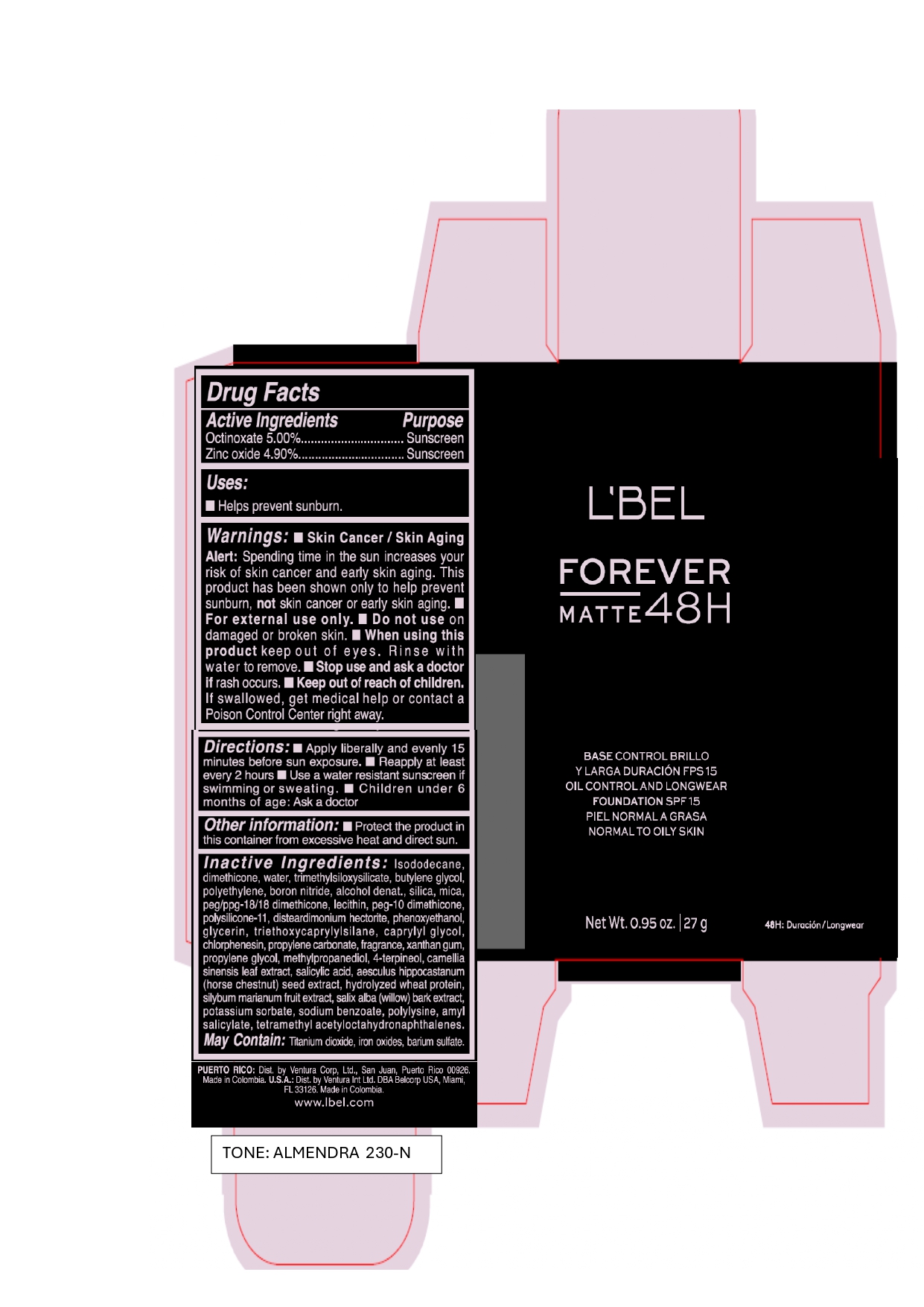
LBEL FOREVER MATTE BASE CONTROL BRILLO Y LARGA DURACION 48H FPS 15 CONTROL AND LONGWEAR FOUNDATION 48H SPF 15 LATTE 180-F OCTINOXATE, ZINC OXIDE 50 mg/g; 49 mg/g Emulsion
🆔 Identity & classification
Where does this data come from?
🏭 Manufacturer & labeler
Where does this data come from?
🩺 Clinical
This is a liquid foundation makeup sold as an over-the-counter drug product under FDA's sunscreen rules. It contains two active ingredients, octinoxate and zinc oxide, which function as ultraviolet (UV) filters commonly used in sunscreens and tinted facial products to help protect skin from sun exposure. The product is applied topically to the face and is marketed for long-wearing coverage and oil control. As an OTC monograph sunscreen product, it is made according to FDA standards for this category rather than through individual product approval.
Patient education
Supplement & herbal interactions
Where does this data come from?
Ask a licensed pharmacist directly — free, answered by our team.
🧪 Inactive Ingredients / Excipients
Inactive ingredients, also called excipients, are components of the drug product other than the active ingredient. They may include fillers, dyes, coatings, preservatives, flavors, or other formulation ingredients.
💡 Tap an ingredient (hover on desktop) to see what it is and why it’s used.
-
UNII HZK34LN80N
A natural plant compound derived from essential oils, used as a fragrance and flavoring agent in medicines to improve taste and aroma.
-
UNII 3K9958V90M
A liquid solvent derived from fermentation or chemical synthesis. In medicines, alcohol dissolves active ingredients, helps preserve the product, and improves how the body absorbs certain drugs.
-
UNII VZO9C30208
Amyl salicylate is an organic compound derived from salicylic acid. It's used as a fragrance ingredient and flavoring agent to add pleasant scent or taste to medications.
-
UNII 25BB7EKE2E
Barium sulfate is a white powder mineral compound used as a filler and opacifying agent in tablets and capsules. It adds bulk to the medicine and may be included in formulations for imaging purposes.
-
UNII 2U4T60A6YD
Boron nitride is a synthetic mineral compound. It acts as a glidant and anti-caking agent to improve powder flow and prevent clumping in tablets and capsules.
-
UNII 3XUS85K0RA
Butylene glycol is a clear liquid derived from petroleum or plants that acts as a humectant, solvent, and preservative booster in medicines. It helps keep formulations stable, dissolve active ingredients, and maintain moisture in topical products.
-
UNII 00YIU5438U
Caprylyl glycol is a clear liquid derived from coconut oil. In medicines, it acts as a humectant to retain moisture, a preservative booster to prevent microbial growth, and a solvent to help dissolve or mix other ingredients.
-
UNII I670DAL4SZ
A preservative that fights bacteria and fungi. It keeps medicines and topical products stable and safe from microbial contamination during storage and use.
-
UNII 92RU3N3Y1O
Dimethicone is a silicone-based oil that acts as an anti-foaming agent and lubricant in medicines. It reduces gas bubbles in liquid formulations and helps coat and protect the stomach lining when ingested.
-
UNII 9E4CO0W6C5
A silicone-based polymer that forms soft, spongy particles. Used as a texture modifier and suspending agent to improve how the product feels and flows, and to help keep ingredients evenly distributed throughout the formulation.
-
UNII X687XDK09L
A clay mineral processed to carry positive charges, used as a thickener and suspending agent in liquid medicines. It helps keep solid particles evenly distributed throughout the product.
-
UNII 1K09F3G675
Ferric oxide red is an inorganic iron compound used as a colorant in medicines. It gives tablets, capsules, or other dosage forms a red or reddish tint for identification and appearance.
-
UNII EX438O2MRT
Ferric oxide yellow is a naturally occurring iron compound used as a colorant in medications. It gives tablets, capsules, and other forms a yellow or golden hue for identification and appearance.
-
UNII XM0M87F357
A dark iron oxide compound that gives medicines their black or dark color. It's used as a colorant in tablets and capsules to help identify the product and make it visually distinctive.
-
UNII PDC6A3C0OX
Glycerin is a clear, thick liquid derived from plant oils or fats. It acts as a humectant to retain moisture, a sweetener, and a solvent in medications.
-
UNII W2ZU1RY8B0
A plant extract from green tea leaves. It's used as an antioxidant ingredient to help preserve the medicine and maintain its stability during storage.
-
UNII UG00KM4WR7
A plastic polymer used as a container material and film coating. It helps protect the medicine from moisture and air exposure during storage and shipping.
-
UNII 3C18L6RJAZ
A plant extract from horse chestnut seeds used in formulations as a natural thickening agent and binder. It helps hold tablet or capsule ingredients together and may improve product texture.
-
UNII J2S07SB0YL
A protein derived from wheat that has been broken down into smaller pieces using enzymes. It's used in formulations as a film-former and texturizer to help bind ingredients together and improve product consistency.
-
UNII A8289P68Y2
Isododecane is a lightweight liquid hydrocarbon used as a solvent and spreadability agent in topical formulations. It helps dissolve active ingredients and makes the product easier to apply and absorb into the skin.
-
UNII 834K0WOS5G
A natural fat extracted from sunflower seeds. It acts as an emulsifier and lubricant in medicines, helping mix ingredients that don't normally blend together and allowing the product to flow smoothly during manufacturing.
-
UNII N8F53B3R4R
A synthetic humectant and solvent derived from propane. It draws and holds moisture in the formulation, helping keep the medicine stable and improving texture or flow in liquid and semi-solid products.
-
UNII V8A1AW0880
Mica is a naturally occurring mineral that's ground into fine powder. It's used in medicines as a colorant and anti-caking agent to improve appearance and prevent clumping in tablets or powders.
-
UNII U946SH95EE
Milk thistle is a plant extract used in some supplements and herbal formulations. It may act as an active botanical ingredient rather than a traditional inactive excipient, though it can also serve as a filler or binder in tablet or capsule preparations.
-
UNII 8PR7V1SVM0
A silicone-based lubricant combined with polyethylene glycol. It reduces friction and helps the medicine flow smoothly during manufacturing and improves how the product feels when applied or swallowed.
-
UNII 9H0AO7T794
A silicone-based lubricant mixed with polyethylene glycol and polypropylene glycol polymers. It reduces friction between pill surfaces and equipment during manufacturing, and helps the finished product slide smoothly when swallowed.
-
UNII HIE492ZZ3T
Phenoxyethanol is a synthetic preservative and antimicrobial agent used to prevent bacterial and fungal growth in medicines and cosmetic products, extending shelf life and maintaining product safety.
-
UNII 0A1V8JTU2M
A synthetic amino acid polymer used as a coating or film-forming agent in medicines. It helps create protective barriers on tablet surfaces and can improve how the medication is absorbed in the body.
-
UNII 1VPU26JZZ4
Potassium sorbate is a salt derived from sorbic acid, a naturally occurring preservative. It prevents growth of mold, yeast, and some bacteria, extending the medicine's shelf life.
-
UNII 8D08K3S51E
Propylene carbonate is a clear liquid solvent derived from propylene. It helps dissolve or suspend active ingredients in liquid medicines and can improve how well the product flows and mixes.
-
UNII 6DC9Q167V3
Propylene glycol is a clear liquid derived from petroleum or vegetable sources. It acts as a solvent, humectant, and preservative in medicines, helping dissolve active ingredients and maintain product stability.
-
UNII O414PZ4LPZ
A beta hydroxy acid derived from willow bark or synthesized chemically. In topical medicines, it acts as a keratolytic agent that helps soften and shed dead skin cells, improving penetration of active ingredients.
-
UNII 205MXS71H7
A plant extract from white willow bark. It's used as a natural flavoring agent and may help preserve the medicine by providing mild antioxidant properties in the formulation.
-
UNII ETJ7Z6XBU4
Silicon dioxide is a naturally occurring mineral used as a glidant and anti-caking agent. It helps powder ingredients flow smoothly and prevents clumping during manufacturing and storage.
-
UNII OJ245FE5EU
Sodium benzoate is a salt derived from benzoic acid, a preservative. It's added to medicines to prevent growth of bacteria, fungi, and other microorganisms that could spoil the product.
-
UNII 2JU6ZH6GRE
A synthetic fragrance compound made by modifying naphthalene molecules. It's used in very small amounts to add pleasant scent to medications, making them more appealing to take.
-
UNII 15FIX9V2JP
Titanium dioxide is a bright white mineral powder commonly used as a colorant and opacifying agent. It makes pills and tablets white or lighter in color and helps make coatings non-transparent.
-
UNII LDC331P08E
A silicone-based compound that acts as a glidant and flow agent in solid medications. It reduces friction between powder particles, helping the medicine flow smoothly during manufacturing and tablet compression.
-
UNII 5041RX63GN
A synthetic silicon-based polymer used as a glidant and anti-caking agent. It helps powder particles flow smoothly and prevents clumping during manufacturing and storage.
-
UNII 059QF0KO0R
Water is a liquid solvent that dissolves and mixes ingredients together in liquid medicines, syrups, and injections. It helps distribute the active drug evenly throughout the product.
-
UNII TTV12P4NEE
Xanthan gum is a thickening and stabilizing ingredient made from fermented corn or other sugars. It's added to medicines to improve texture, prevent separation of liquids and solids, and help the product stay consistent.
41 inactive ingredients listed in the exact product block matched to this NDC.
Label-section wording can be broader than the structured product block and may mention additional formulation ingredients.
Where does this data come from?
ingredient classCode="IACT" elements from the exact product block matched by this NDC. Label-section narrative from DailyMed / the openFDA label index is shown separately when available.Inactive ingredient FAQ
Are inactive ingredients the same for every manufacturer?
Why might an inactive ingredient be missing?
Can inactive ingredients matter?
💲 Pricing
A drug doesn't have one price. Each row is a different public payment system, and none is what you'd pay at the counter — that depends on your insurance. The ⓘ on each row explains what it measures.
| Price system | Per mL | Per package |
|---|---|---|
| Retail pharmacies payNADAC · weekly | Not in the retail survey — common for institutional, discontinued, or low-volume packs. | |
| Medicaid paysCMS SDUD · 12 mo | No recent Medicaid claims on file for this NDC — rare and low-volume NDCs are suppressed in the public data. | |
| Medicare drug plans payPart D · quarterly | No Part D plan price is available for this NDC in our data. | |
Where does this data come from?
🔁 Therapeutic equivalents
| Product | Labeler | Pack | NADAC/unit | TE | Status | Price vs. this |
|---|---|---|---|---|---|---|
| Lbel Forever Matte Base Control Brillo Y Larga Duracion 48H Fps 15 Control And Longwear Foundation 48H Spf 15 Beige 220-C 50 mg/g; 49 mg/g 14141-0339-01 | BEL | 1 tube | — | — | FDA listed | — |
| Lbel Forever Matte Base Control Brillo Y Larga Duracion 48H Fps 15 Control And Longwear Foundation 48H Spf 15 Almendra 230-N 50 mg/g; 49 mg/g 14141-0338-01 | BEL | 1 tube | — | — | FDA listed | — |
| Lbel Forever Matte Base Control Brillo Y Larga Duracion 48H Fps 15 Control And Longwear Foundation 48H Spf 15 Latte 180-F 50 mg/g; 49 mg/gthis 14141-0342-01 | BEL | 1 tube | — | — | FDA listed | — |
| Lbel Forever Matte Base Control Brillo Y Larga Duracion 48H Fps 15 Control And Longwear Foundation 48H Spf 15 Capuccino 310-C 50 mg/g; 49 mg/g 14141-0340-01 | BEL | 1 tube | — | — | FDA listed | — |
| Lbel Forever Matte Base Control Brillo Y Larga Duracion 48H Fps 15 Control And Longwear Foundation 48H Spf 15 Champagne 170-N 50 mg/g; 49 mg/g 14141-0341-01 | BEL | 1 tube | — | — | FDA listed | — |
Where does this data come from?
⏳ Availability & generic status
We did not find an FDA-approved generic match for this exact strength, form and route.
Where does this data come from?
🔬 Reported adverse events (FAERS)
Top reported reactions
Reporter sex
Serious outcomes
Where does this data come from?
📦 Packaging — all sizes for this product
| Package NDC | Description | Marketing start | Status |
|---|---|---|---|
| 14141-0342-01 You're viewing this | 1 TUBE in 1 BOX (14141-342-01) / 27 g in 1 TUBE | 2024-07-08 | Active |
🧭 About this NDC listing & data coverage
What data is (and isn’t) available for this NDC — tap to expand
| NDC identity (package / product / labeler codes) | ✓ Available |
| Labeler | ✓ Available |
| Product & package description | ✓ Available |
| Marketing category & status | ✓ Available |
| Active ingredient / dosage form / route | ✓ Available |
| FDA label (SPL via DailyMed) | ✓ Available |
| Package photos | ✓ Available |
| Inactive ingredients (structured) | ✓ Available |
| NADAC pharmacy acquisition price (CMS) | — Not published for this NDC CMS publishes NADAC only for NDCs reported in its retail-pharmacy survey. |
| Orange Book / therapeutic-equivalence data | — Not published for this NDC Applies only to products approved under an NDA/ANDA; many listings are out of scope. |
| HCPCS J-code billing crosswalk | — Not published for this NDC Most self-administered / retail products have no J-code — that is normal. |
| Medicaid utilization (CMS SDUD) | — Not published for this NDC CMS reports utilization only for NDCs with Medicaid claims above its privacy threshold. |
Questions about this listing
Is this NDC FDA-approved?
Why is there no price listed?
Is the NDC printed on the package the same as the 11-digit billing NDC?
What do the three segments of this NDC mean?
Is this package still being marketed?
Who lists this product with the FDA?
Do I need a prescription for this product?
Where does this data come from?
📄 FDA label — Drug Facts FDA SPL
🎯 Indications and Usage ▾
Uses Helps prevent sunburn
⏱️ Dosage and Administration ▾
Directions Apply liberally and evenly 15 minutes before sun exposure. Reapply at least every 2 hours. Use a water resistant sunscreen if swimming or sweating. Children under 6 months of age: Ask a doctor
⚠️ Warnings ▾
Warnings Skin Cancer/Skin Aging Alert : Spending time in the sun increases your risk of skin cancer and early skin aging. This product has been shown only to help prevent sunburn, not skin cancer or early skin aging. For external use only.
Do not use on damaged or broken skin. When using this product keep out of eyes. Rinse with water to remove.
Stop use and ask a doctor if rash occurs. Keep out of reach of children. If swallowed, get medical help or contact a Poison Control Center right away.
🧪 Active Ingredient ▾
Active Ingredients Octinoxate 5.00% Zinc oxide 4.90%
🧪 Inactive Ingredients ▾
Inactive Ingredients Isododecane, dimethicone, water, trimethylsiloxysilicate, butylene glycol, polyethylene, boron nitride, alcohol denat., silica, mica, peg/ppg-18/18 dimethicone, lecithin, peg-10 dimethicone, polysilicone-11, disteardimonium hectorite, phenoxyethanol, glycerin, triethoxycaprylylsilane, caprylyl glycol, chlorphenesin, propylene carbonate, fragrance, xanthan gum, propylene glycol, methylpropanediol, 4-terpineol, camellia sinensis leaf extract, salicylic acid, aesculus hippocastanum (horse chestnut) seed extract, hydrolyzed wheat protein, silybum marianum fruit extract, salix alba (willow) bark extract, potassium sorbate, sodium benzoate, polylysine, amyl salicylate, tetramethyl acetyloctahydronaphthalenes.
May Contain : Titanium dioxide, iron oxides, barium sulfate.
🎯 Purpose ▾
Purpose Sunscreen