
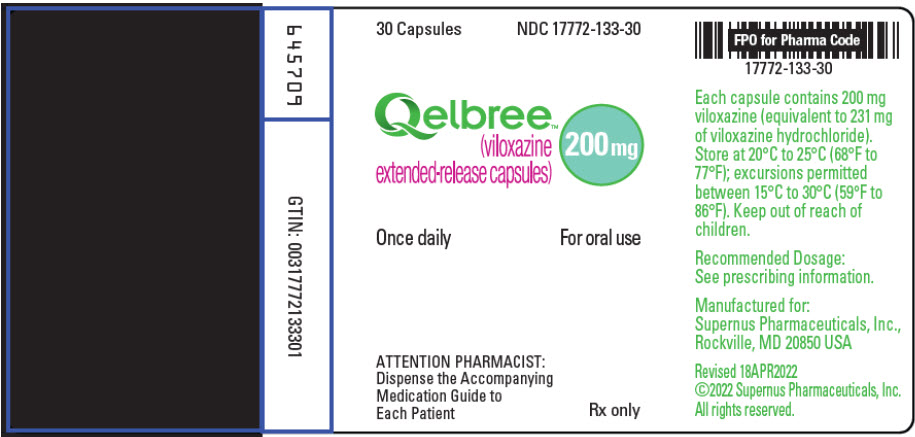
QELBREE viloxazine hydrochloride 200 mg Capsule, Extended Release, 100-count
🆔 Identity & classification
Where does this data come from?
🏭 Manufacturer & labeler
Where does this data come from?
🩺 Clinical
Viloxazine is used to treat attention deficit hyperactivity disorder (ADHD). Viloxazine is in a class of medications called selective norepinephrine reuptake inhibitors. It works by increasing the levels of norepinephrine, a natural substance in the brain that is needed to control behavior.
Read the full MedlinePlus article ↗- Qelbree contains viloxazine, and it's what's called a non-stimulant ADHD medication. Most people know ADHD medications as stimulants — things like Adderall or Ritalin — but Qelbree...
- What exactly is Qelbree and how is it different from other ADHD medications?
- It's a real and important warning, and you're right to ask. In clinical trials, people taking Qelbree reported suicidal thoughts or behaviors more often than those taking a placebo...
- I heard there's a serious warning about suicidal thoughts — should I be worried?
Patient education
Supplement & herbal interactions
Some supplements/herbs that may interact with Viloxazine Hydrochloride — tap one for details:
Where does this data come from?
Ask a licensed pharmacist directly — free, answered by our team.
💊 What it looks like
Where does this data come from?
🧪 Inactive Ingredients / Excipients
Inactive ingredients, also called excipients, are components of the drug product other than the active ingredient. They may include fillers, dyes, coatings, preservatives, flavors, or other formulation ingredients.
💡 Tap an ingredient (hover on desktop) to see what it is and why it’s used.
-
UNII 3K9958V90M
A liquid solvent derived from fermentation or chemical synthesis. In medicines, alcohol dissolves active ingredients, helps preserve the product, and improves how the body absorbs certain drugs.
-
UNII 5138Q19F1X
Ammonia is a colorless gas made from nitrogen and hydrogen. It's used in medicines as a pH buffer to maintain the correct acidity level and help keep the product stable.
-
UNII 8PJ61P6TS3
Butyl alcohol is a clear liquid organic solvent derived from petroleum or natural sources. In medicines, it helps dissolve active ingredients and serves as a solvent in liquid formulations and some topical products.
-
UNII 7Z8S9VYZ4B
Ethylcellulose is a plant-derived thickener and film-former made by chemically modifying cellulose. It's used as a binder to hold tablet ingredients together, a coating to control how quickly medicine is released, or a thickener in liquid formulations.
-
UNII H3R47K3TBD
FD&C Blue No. 1 is a synthetic blue dye approved for use in foods and medicines. It serves as a colorant to give the medication its distinctive appearance and help with product identification.
-
UNII I753WB2F1M
FD&C Yellow No. 5 is a synthetic yellow colorant approved by the FDA. It is added to medicines to make pills, tablets, or liquids visually distinct and easier to identify.
-
UNII XM0M87F357
A dark iron oxide compound that gives medicines their black or dark color. It's used as a colorant in tablets and capsules to help identify the product and make it visually distinctive.
-
UNII 2G86QN327L
Gelatin is a protein derived from animal collagen, commonly used in medicines as a gelling agent and capsule material. It helps create soft or hard capsule shells that hold and release medication, and can also thicken liquid formulations.
-
UNII R75537T0T4
Hypromellose 2910 is a plant-derived thickening agent made from cellulose. It serves as a binder that holds tablet ingredients together, a film-coating for pills, and a viscosity controller in liquids.
-
UNII ND2M416302
Isopropyl alcohol is a clear liquid solvent derived from petroleum. In medicines, it dissolves active ingredients and other components, helps the product flow smoothly, and aids in sterilization during manufacturing.
-
UNII EWQ57Q8I5X
Lactose monohydrate is a natural sugar derived from milk. It serves as a filler and binder in tablets and capsules, helping create the proper size, texture, and consistency of the medicine.
-
UNII C9H2L21V7U
A fat derived from coconut or palm oil containing shorter fatty acid chains. It serves as a solvent and carrier to help dissolve or suspend active ingredients, improving absorption and stability in liquid formulations.
-
UNII 2UMI9U37CP
Oleic acid is a naturally occurring fatty acid derived from plant or animal oils. It functions as an emulsifier and solvent in medicines, helping blend water and oil-based ingredients together and dissolving other components.
-
UNII G2M7P15E5P
Polyethylene glycol 3350 is a synthetic polymer used as a solvent, humectant, and thickening agent in medicines. It helps dissolve other ingredients, retain moisture in the product, and achieve the desired consistency.
-
UNII WZH3C48M4T
Potassium hydroxide is a strong alkaline chemical used in medicines to adjust and maintain the pH level of liquid formulations, helping keep the product stable and the active ingredients effective.
-
UNII 6DC9Q167V3
Propylene glycol is a clear liquid derived from petroleum or vegetable sources. It acts as a solvent, humectant, and preservative in medicines, helping dissolve active ingredients and maintain product stability.
-
UNII 46N107B71O
Shellac is a natural resin secreted by the lac beetle. It's used as a coating on tablets and capsules to control how quickly the medicine dissolves and to improve appearance and stability.
-
UNII O8232NY3SJ
A plant-based carbohydrate derived from corn kernels. It acts as a filler to add bulk, a binder to hold ingredients together, and a disintegrant to help the tablet break apart in your stomach for absorption.
-
UNII C151H8M554
A natural sugar derived from sugar cane or sugar beets. It's used as a sweetener, filler, and binder to improve taste, add bulk, and help hold tablet or capsule ingredients together.
-
UNII 7SEV7J4R1U
A powder made from a naturally occurring mineral. In medicines, talc works as a glidant and anti-caking agent, helping tablets and capsules flow smoothly during manufacturing and preventing clumping.
-
UNII 15FIX9V2JP
Titanium dioxide is a bright white mineral powder commonly used as a colorant and opacifying agent. It makes pills and tablets white or lighter in color and helps make coatings non-transparent.
-
UNII XHX3C3X673
Triacetin is a clear, oily liquid made from glycerin and acetic acid. It works as a plasticizer and solvent in medicines, helping soften coatings and improve how liquids mix together in formulations.
-
UNII 059QF0KO0R
Water is a liquid solvent that dissolves and mixes ingredients together in liquid medicines, syrups, and injections. It helps distribute the active drug evenly throughout the product.
23 inactive ingredients listed in the exact product block matched to this NDC.
Where does this data come from?
ingredient classCode="IACT" elements from the exact product block matched by this NDC. Label-section narrative from DailyMed / the openFDA label index is shown separately when available.Inactive ingredient FAQ
Are inactive ingredients the same for every manufacturer?
Why might an inactive ingredient be missing?
Can inactive ingredients matter?
💲 Pricing
A drug doesn't have one price. Each row is a different public payment system, and none is what you'd pay at the counter — that depends on your insurance. The ⓘ on each row explains what it measures.
| Price system | Per each | Per package |
|---|---|---|
| Retail pharmacies payNADAC · weekly | Not in the retail survey — common for institutional, discontinued, or low-volume packs. | |
| Medicaid paysCMS SDUD · 12 mo | No recent Medicaid claims on file for this NDC — rare and low-volume NDCs are suppressed in the public data. | |
| Medicare drug plans payPart D · Q2 2026 | $12.76 | $1,275.64 / 100 capsules |
Where does this data come from?
🔁 Therapeutic equivalents
| Product | Labeler | Pack | NADAC/unit | TE | Status | Price vs. this |
|---|---|---|---|---|---|---|
| Qelbree 200 mgthis 17772-0133-01 | Supernus | 100 capsules | — | — | FDA listed | — |
Where does this data come from?
⏳ Availability & generic status
We did not find an FDA-approved generic match for this exact strength, form and route. Patent/protection dates below may affect future generic timing.
Why the date isn’t exact: Generic timing can change because patents may be challenged, settled, licensed, added, removed, or worked around with a narrower label — and FDA approval does not always mean a pharmacy can get the generic today.
🛈 What do these terms mean?
- Patent
- Legal protection listed in the Orange Book that may delay generic approval or launch. Issued by the U.S. Patent & Trademark Office.
- Substance patent
- Covers the active drug molecule itself — the hardest to design around. A generic generally can’t launch until it expires.
- Formulation (product) patent
- Covers a specific formulation or dosage form. A generic can sometimes work around it with a different formulation.
- Method-of-use patent
- A patent covering one specific approved use of the drug — not necessarily the whole molecule. A generic can sometimes launch with a “skinny label” that carves out the protected use and keeps the others.
- Skinny label
- A generic label that omits a still-patented use when the FDA allows it — letting a generic reach the market for the unprotected uses.
- Exclusivity
- FDA-granted marketing protection, separate from patents — e.g. 5-yr new chemical entity, 7-yr orphan drug, or a +6-month pediatric extension.
- Paragraph IV
- A generic applicant’s formal challenge to a listed patent. It can potentially lead to earlier generic entry, but often involves litigation or a settlement.
- RLD / RS
- Reference Listed Drug — the brand product the FDA uses as the reference for generic applications. Reference Standard — the product the FDA expects generics to compare against in bioequivalence testing.
- TE / AB rating
- FDA therapeutic-equivalence rating. An AB rating generally means the FDA considers a generic therapeutically equivalent to — and substitutable for — the brand.
- LOE (loss of exclusivity)
- The latest patent or exclusivity currently listed — the loss-of-exclusivity / latest-listed-protection date shown on this page. Paragraph-IV challenges and settlements can move the real date earlier; FDA approval and a manufacturer’s decision to market can move it later.
Built from the FDA Orange Book. The bars above are scaled to each protection’s expiry; the red LOE marker is the last one to lapse.
| Patent | Type | Use code | Expires |
|---|---|---|---|
| US 12121523 ↗ | Method of use | U-727 | Sep 4, 2029 |
| US 12121523 ↗ | Method of use | U-727 | Sep 4, 2029 |
| US 12121523 ↗ | Method of use | U-727 | Sep 4, 2029 |
| US 11458143 ↗ | Method of use | U-727 | Sep 4, 2029 |
| US 11458143 ↗ | Method of use | U-727 | Sep 4, 2029 |
| US 11458143 ↗ | Method of use | U-727 | Sep 4, 2029 |
| US 11324753 ↗ | Method of use | U-727 | Sep 4, 2029 |
| US 11324753 ↗ | Method of use | U-727 | Sep 4, 2029 |
| US 11324753 ↗ | Method of use | U-727 | Sep 4, 2029 |
| US 9603853 ↗ | Method of use | U-727 | Feb 7, 2033 |
| US 9603853 ↗ | Method of use | U-727 | Feb 7, 2033 |
| US 9603853 ↗ | Method of use | U-727 | Feb 7, 2033 |
| US 9358204 ↗ | Drug product | — | Feb 7, 2033 |
| US 9358204 ↗ | Drug product | — | Feb 7, 2033 |
| US 9358204 ↗ | Drug product | — | Feb 7, 2033 |
| US 9662338 ↗ | Drug product | — | Apr 2, 2035 |
| US 9662338 ↗ | Drug product | — | Apr 2, 2035 |
| US 9662338 ↗ | Drug product | — | Apr 2, 2035 |
| Code | What it grants | Expires |
|---|---|---|
| NCE | New Chemical Entity (5-year) | Apr 2, 2026 |
| NCE | New Chemical Entity (5-year) | Apr 2, 2026 |
| NCE | New Chemical Entity (5-year) | Apr 2, 2026 |
Is there a generic version of QELBREE ER 200 MG CAPSULE?
The FDA approved a generic — why can’t I get it at my pharmacy yet?
Why do different websites show different generic release dates?
What does “FDA listed” mean?
What does a patent or protection date mean here?
What does “current Orange Book estimate” mean?
Can a generic come out before the last patent expires?
Can a generic come out after the listed dates?
What is the difference between patents and exclusivity?
Why are there multiple patent dates?
Where does this data come from?
💊 Medicaid utilization by pack size
📊 Medicare Part D spend CMS · PART D · 2026 (Q1)
🔬 Reported adverse events (FAERS)
Top reported reactions
Age at onset
Reporter sex
Serious outcomes
Where does this data come from?
📦 Packaging — all sizes for this product
| Package NDC | Description | Per unit | Per pack | Marketing start | Status |
|---|---|---|---|---|---|
| 17772-0133-01 You're viewing this | 100 CAPSULE, EXTENDED RELEASE in 1 BOTTLE (17772-133-01) | — | — | 2021-04-02 | Active |
| 17772-0133-07 | 7 CAPSULE, EXTENDED RELEASE in 1 BOTTLE (17772-133-07) | — | — | 2021-04-02 | Active |
| 17772-0133-30 | 30 CAPSULE, EXTENDED RELEASE in 1 BOTTLE (17772-133-30) | $12.74 / ea | $382.22 | 2021-04-02 | Active |
| 17772-0133-60 | 60 CAPSULE, EXTENDED RELEASE in 1 BOTTLE (17772-133-60) | $12.74 / ea | $764.43 | 2021-04-02 | Active |
| 17772-0133-90 | 90 CAPSULE, EXTENDED RELEASE in 1 BOTTLE (17772-133-90) | — | — | 2021-04-02 | Active |
You're viewing the largest of 5 pack sizes for this product.
This pack shows little to no recent Medicaid volume — the 30 capsules pack carries most fills. See all packs ↓
Pack size FAQ
What quantity is in NDC 17772-0133-01?
What is the difference between NDC 17772-0133-01 and NDC 17772-0133-07?
What NDC number is used to bill for this package of QELBREE viloxazine hydrochloride 200 mg Capsule, Extended Release?
Prices are the latest CMS NADAC pharmacy acquisition cost per NDC; per-pack figures are per-unit × pack quantity, shown only when the pack is denominated in the same measure NADAC prices.
🧭 About this NDC listing & data coverage
What data is (and isn’t) available for this NDC — tap to expand
| NDC identity (package / product / labeler codes) | ✓ Available |
| Labeler | ✓ Available |
| Product & package description | ✓ Available |
| Marketing category & status | ✓ Available |
| Active ingredient / dosage form / route | ✓ Available |
| FDA label (SPL via DailyMed) | ✓ Available |
| Package photos | ✓ Available |
| Inactive ingredients (structured) | ✓ Available |
| NADAC pharmacy acquisition price (CMS) | — Not published for this NDC CMS publishes NADAC only for NDCs reported in its retail-pharmacy survey. |
| Orange Book / therapeutic-equivalence data | ✓ Available |
| HCPCS J-code billing crosswalk | — Not published for this NDC Most self-administered / retail products have no J-code — that is normal. |
| Medicaid utilization (CMS SDUD) | — Not published for this NDC CMS reports utilization only for NDCs with Medicaid claims above its privacy threshold. |
Questions about this listing
Why is there no price listed?
Is the NDC printed on the package the same as the 11-digit billing NDC?
What do the three segments of this NDC mean?
Is this package still being marketed?
Does this product come in other package sizes?
Who lists this product with the FDA?
Do I need a prescription for this product?
Where does this data come from?
📄 Full prescribing information FDA SPL
🚨 Boxed Warning ▾
WARNING: SUICIDAL THOUGHTS AND BEHAVIORS In clinical studies, higher rates of suicidal thoughts and behavior were reported in patients with ADHD treated with Qelbree than in patients treated with placebo . Closely monitor all Qelbree-treated patients for clinical worsening, and for emergence of suicidal thoughts and behaviors [see Warnings and Precautions (5.1) ] . WARNING: SUICIDAL THOUGHTS AND BEHAVIORS See full prescribing information for complete boxed warning.
In clinical trials, higher rates of suicidal thoughts and behavior were reported in patients treated with Qelbree than in patients treated with placebo. Closely monitor for worsening and emergence of suicidal thoughts and behaviors ( 5.1 ).
🎯 Indications and Usage ▾
1 INDICATIONS AND USAGE Qelbree is indicated for the treatment of Attention-Deficit Hyperactivity Disorder (ADHD) in adults and pediatric patients 6 years and older. Qelbree is a selective norepinephrine reuptake inhibitor indicated for the treatment of Attention Deficit Hyperactivity Disorder (ADHD) in adults and pediatric patients 6 years and older ( 1 )
⏱️ Dosage and Administration ▾
2 DOSAGE AND ADMINISTRATION Pediatric patients 6 to 11 years of age : Recommended starting dosage is 100 mg once daily. May titrate in increments of 100 mg weekly to the maximum recommended dosage of 400 mg once daily ( 2.2 ) Pediatric patients 12 to 17 years of age : Recommended starting dosage is 200 mg once daily. May titrate after 1 week, by an increment of 200mg, to the maximum recommended dosage of 400 mg once daily ( 2.2 ) Adult patients : Recommended starting dosage is 200 mg once daily.
May titrate in increments of 200 mg weekly, to maximum recommended dosage of 600 mg once daily ( 2.2 ) Capsules may be swallowed whole or opened and the entire contents sprinkled onto applesauce or pudding ( 2.3 ) Severe Renal Impairment : Initial dosage is 100 mg once daily. Titrate in weekly increments of 50 mg to 100 mg to a maximum recommended dosage of 200 mg once daily ( 2.4 , 8.6 )
2.1Important Considerations Prior to Initiating Treatment Assess heart rate and blood pressure prior to initiating treatment with Qelbree, following increases in dosage, and periodically while on therapy [see Warnings and Precautions (5.2) ] . Prior to initiating treatment with Qelbree, screen patients for a personal or family history of suicide, bipolar disorder, and depression [see Warnings and Precautions (5.3) ].
2.2Recommended Dosage Pediatric patients The recommended starting dosage for pediatric patients 6 to 11 years of age is 100 mg orally once daily. Dosage may be titrated in increments of 100 mg at weekly intervals to the maximum recommended dosage of 400 mg once daily, depending on response and tolerability. The recommended starting dosage for pediatric patients 12 to 17 years of age is 200 mg orally once daily.
After 1 week, dosage may be titrated by an increment of 200 mg to the maximum recommended dosage of 400 mg once daily, depending on response and tolerability. Adult patients The recommended starting dosage for adults is 200 mg orally once daily. Dosage may be titrated in increments of 200 mg weekly to the maximum recommended dosage of 600 mg once daily, depending on response and tolerability.
Pharmacological treatment of ADHD may be needed for extended periods. Periodically reevaluate the long-term use of Qelbree and adjust dosage as needed.
2.3Administration Information Administer Qelbree orally with or without food [see Clinical Pharmacology (12.3) ] . Do not cut, crush, or chew the capsules. Swallow Qelbree capsules whole, or open the capsule and sprinkle the entire contents over a teaspoonful or tablespoonful of pudding or applesauce. Consume the food mixture in its entirety, without chewing, within 15 minutes for pudding, or within 2 hours for applesauce; do not store for future use.
2.4Dosage Recommendations in Patients with Renal Impairment In patients with severe renal impairment (eGFR < 30 mL/min/1.73m 2 ), the recommended starting dosage is 100 mg once daily. Dosage may be titrated in weekly increments of 50 to 100 mg once daily, to a maximum recommended dosage of 200 mg once daily. No dosage adjustment is recommended in patients with mild to moderate (eGFR of 30 to 89 mL/min/1.73m 2 ) renal impairment [see Use in Specific Populations (8.6) ] .
💊 Dosage Forms and Strengths ▾
3 DOSAGE FORMS AND STRENGTHS Qelbree (viloxazine extended-release capsules) are available as: 100 mg: yellow opaque body and cap (printed "SPN" on the cap, "100" on the body) 150 mg: lavender opaque body and cap (printed "SPN" on the cap, "150" on the body) 200 mg: light green opaque body and cap (printed "SPN" on the cap, "200" on the body) Extended-release capsules: 100 mg, 150 mg and 200 mg ( 3 )
⛔ Contraindications ▾
4 CONTRAINDICATIONS Qelbree is contraindicated in patients: receiving concomitant treatment with monoamine oxidase inhibitors (MAOI), or within 14 days following discontinuing an MAOI, because of an increased risk of hypertensive crisis [see Drug Interactions (7.1) ] . receiving concomitant administration of sensitive CYP1A2 substrates or CYP1A2 substrates with a narrow therapeutic range [see Drug Interactions (7.1) ]. Concomitant administration of monoamine oxidase inhibitors (MAOI), or dosing within 14 days after discontinuing an MAOI ( 4 , 7.1 ) Concomitant administration of sensitive CYP1A2 substrates or CYP1A2 substrates with a narrow therapeutic range ( 4 , 7.1 )
⚠️ Warnings and Cautions ▾
5 WARNINGS AND PRECAUTIONS Blood Pressure and Heart Rate Increases: Assess heart rate and blood pressure prior to initiating treatment, following increases in dosage, and periodically while on therapy ( 5.2 ) Activation of Mania or Hypomania: Screen patients for bipolar disorder ( 5.3 ) Somnolence and Fatigue: Advise patients to use caution when driving or operating hazardous machinery due to potential somnolence (including sedation and lethargy) and fatigue ( 5.4 )
5.1Suicidal Thoughts and Behaviors Higher rates of suicidal thoughts and behaviors were reported in pediatric and adult patients with ADHD treated with Qelbree than in patients treated with placebo. Among 1019 pediatric patients exposed to Qelbree 100 mg to 400 mg in short-term trials, a total of nine patients (0.9%) reported suicidal ideation (N=6), behavior (N=1) or both (N=2). Eight patients reported suicidal ideation or behavior on the Columbia Suicide Severity Rating Scale (C-SSRS), a validated scale that assesses suicide risk.
An additional patient treated with Qelbree reported suicidal behavior during the clinical trials, but did not report it on the C-SSRS. Among 463 patients treated with placebo in these studies, two patients (0.4%) reported suicidal ideation on the C-SSRS. No patients treated with placebo reported suicidal behavior.
No completed suicides occurred in these trials. Among 189 adults treated with Qelbree, a total of three patients (1.6%) reported suicidal ideation on the C-SSRS, versus 0 of 183 adults treated with placebo. No adults treated with either Qelbree or placebo reported suicidal behavior on the C-SSRS in the study.
No attempted or completed suicides occurred in the trial. Patients treated with Qelbree had higher rates of insomnia and irritability [see Adverse Reactions (6.1) ] . Although a causal link between the emergence of insomnia and irritability and the emergence of suicidal impulses has not been established, there is a concern that these and other symptoms such as depressed mood, anxiety, agitation, akathisia, mania, hypomania, panic attacks, impulsive behavior, and aggression may represent precursors to emerging suicidal ideation or behavior.
Thus, patients being treated with Qelbree should be observed for the emergence of precursor symptoms. Closely monitor all Qelbree-treated patients for clinical worsening and emergence of suicidal thoughts and behaviors, especially during the initial few months of drug therapy, and at times of dosage changes. Consider changing the therapeutic regimen, including possibly discontinuing Qelbree, in patients who are experiencing emergent suicidal thoughts and behaviors or symptoms that might be precursors to emerging suicidal ideation or behavior, especially if these symptoms are severe or abrupt in onset, or were not part of the patient's presenting symptoms.
Advise family members or caregivers of patients to monitor for the emergence of suicidal ideation or behavior, and to report such symptoms immediately to the healthcare provider.
5.2Blood Pressure and Heart Rate Increases Qelbree can cause an increase in heart rate and diastolic blood pressure. Pediatric Patients In a clinical study in pediatric patients 6 to 11 years of age, 34/154 (22%) of patients treated with Qelbree 100 mg daily had a ≥20 beat per minute (bpm) increase in heart rate at any time point in the clinical trial, compared to 15/159 (9%) of patients who received placebo. This finding was observed in 84/268 (31%) who received the 200 mg daily dosage, compared to 39/262 (15%) of patients in the placebo group, and in 28/100 (28%) of patients who received the 400 mg daily dosage, compared to 24/103 (23%) of patients who received placebo.
In a clinical study in pediatric patients 12 to 17 years of age, 22/99 (22%) of patients treated with Qelbree 200 mg daily had a ≥20 bpm increase in heart rate at any time point in the clinical trial, compared to 15/104 (14%) of patients who received placebo. This finding was observed in 69…
🤒 Adverse Reactions ▾
6 ADVERSE REACTIONS The following serious adverse reactions are described in other sections of the labeling: Suicidal Thoughts and Behaviors [see Warnings and Precautions (5.1) ] Blood Pressure and Heart Rate Increases [see Warnings and Precautions (5.2) ] Activation of Mania or Hypomania [see Warnings and Precautions (5.3) ] Somnolence and Fatigue [see Warnings and Precautions (5.4) ] Most commonly observed adverse reactions (≥5% and at least twice the rate of placebo) were: Pediatric patients 6 to 17 years of age : somnolence, decreased appetite, fatigue, nausea, vomiting, insomnia, and irritability ( 6.1 ) Adult patients : insomnia, headache, somnolence, fatigue, nausea, decreased appetite, dry mouth and constipation ( 6.1 ) To report SUSPECTED ADVERSE REACTIONS, contact Supernus Pharmaceuticals at 1-866-398-0833 or FDA at 1-800-FDA-1088 or www.fda.gov/medwatch.
6.1Clinical Trials Experience Because clinical trials are conducted under widely varying conditions, adverse reaction rates observed in the clinical trials of a drug cannot be directly compared to rates in the clinical trials of another drug and may not reflect the rates observed in practice. The safety of Qelbree has been evaluated in 1118 pediatric patients (6 to 17 years of age) with ADHD exposed to one or more doses in short-term (6 to 8 week), randomized, double-blind, placebo-controlled trials. A total of 682 pediatric patients 6 to 17 years of age were treated for at least 6 months, and 347 pediatric patients 6 to 17 years of age for at least 12 months with Qelbree.
The safety of Qelbree has been evaluated in 189 adult patients (18 to 60 years of age) with ADHD exposed to one or more doses in a short-term (6 week), randomized, double-blind, placebo-controlled trial. A total of 277 adult patients with ADHD have been exposed to one or more doses of Qelbree. Eighty-four adult patients were treated for at least 6 months, and 22 adult patients for at least 12 months.
Pediatric Patients (6 to 17 Years of Age) The data described below reflect exposure to Qelbree in 826 pediatric patients (6 to 17 years) who participated in randomized, double-blind, placebo-controlled trials with doses ranging from 100 mg to 400 mg. The population (N=826) was 65% male, 35% female, 54% White, 41% Black, 4% multiracial, and 1% other races. Adverse Reactions Leading to Discontinuation of Qelbree Treatment : Approximately 3% (n=27) of the 826 patients receiving Qelbree in clinical studies discontinued treatment due to an adverse reaction.
The adverse reactions most commonly associated with discontinuation of Qelbree were somnolence (n=5), nausea (n=3), headache (n=2), irritability (n=2), tachycardia (n=2), fatigue (n=2), and decreased appetite (n=2). Most Common Adverse Reactions (occurring at ≥5% and at least twice the placebo rate for any dose) : somnolence, decreased appetite, fatigue, nausea, vomiting, insomnia, and irritability. Table 1 lists adverse reactions that occurred in at least 2% of patients treated with Qelbree and more frequently in Qelbree-treated patients than in placebo-treated patients.
Table 1 data represents pooled data from pediatric patients 6 to 17 years of age who were enrolled in randomized, placebo-controlled trials of Qelbree. Table 1. Adverse Reactions Reported in ≥2% of Pediatric Patients (6 to 17 Years of Age) Treated with Qelbree and at a Rate Greater than Placebo-Treated Patients in Placebo-Controlled ADHD Studies Qelbree Body System Adverse Reaction Placebo N=463 (%) 100mg N=154 (%) 200mg N=367 (%) 400mg N=305 (%) All Qelbree N=826 (%) Nervous system disorders Somnolence The following terms were combined: Somnolence: somnolence, lethargy, sedation Headache: headache, migraine, migraine with aura, tension headache Upper respiratory tract infection: nasopharyngitis, pharyngitis, sinusitis, upper respiratory tract infection, viral sinusitis, viral upper respiratory tract infection Abdominal pain: abdominal discomfort, abdominal pain, abdominal pain lower,…
🔄 Drug Interactions ▾
7 DRUG INTERACTIONS Moderate sensitive CYP1A2 substrates : Not recommended for coadministration with Qelbree. Dose reduction may be warranted ( 7.1 )
7.1Drugs Having Clinically Important Interactions with Qelbree Table 3: Clinically Important Drug Interactions with Qelbree Monoamine Oxidase Inhibitors (MAOI) Clinical Impact Concomitant use of Qelbree with an MAOI may lead to a potentially life-threatening hypertensive crisis. Intervention Concomitant use of Qelbree with an MAOI or within 2 weeks after discontinuing an MAOI is contraindicated [see Contraindications (4) ] . Sensitive CYP1A2 Substrates or CYP1A2 Substrates with a Narrow Therapeutic Range Clinical Impact Viloxazine is a strong CYP1A2 inhibitor.
Concomitant use of viloxazine significantly increases the total exposure, but not peak exposure, of sensitive CYP1A2 substrates [see Clinical Pharmacology (12.3) ] , which may increase the risk of adverse reactions associated with these CYP1A2 substrates. Intervention Coadministration with Qelbree is contraindicated [see Contraindications (4) ] . Moderate Sensitive CYP1A2 Substrate Clinical Impact Viloxazine is a strong CYP1A2 inhibitor.
Concomitant use of viloxazine significantly increases the total, but not peak, exposure of sensitive CYP1A2 substrates [see Clinical Pharmacology (12.3) ] , which may increase the risk of adverse reactions associated with these CYP1A2 substrates. Intervention Not recommended for coadministration with Qelbree. Dose reduction may be warranted if coadministered.
CYP2D6 Substrates Clinical Impact Viloxazine is a weak inhibitor of CYP2D6, and increases the exposure of CYP2D6 substrates when coadministered [see Clinical Pharmacology (12.3) ] . Intervention Monitor patients for adverse reactions and adjust dosages of CYP2D6 substrates, as clinically indicated. CYP3A4 Substrates Clinical Impact Viloxazine is a weak inhibitor of CYP3A4 which increases the exposure of CYP3A4 substrates when coadministered [see Clinical Pharmacology (12.3) ].
Intervention Monitor patients for adverse reactions and adjust dosages of CYP3A4 substrates, as clinically indicated.
👥 Use in Specific Populations ▾
8 USE IN SPECIFIC POPULATIONS Pregnancy : May cause maternal harm; discontinue when pregnancy is recognized ( 8.1 )
8.1Pregnancy Pregnancy Exposure Registry There is a pregnancy exposure registry that monitors pregnancy outcomes in women exposed Qelbree during pregnancy. Healthcare providers are encouraged to register patients by calling the National Pregnancy Registry for Psychiatric Medications at 1-866-961-2388 or visiting online at www.womensmentalhealth.org/preg. Risk Summary Based on findings from animal reproduction studies, viloxazine may cause maternal harm when used during pregnancy.
Discontinue Qelbree when pregnancy is recognized unless the benefits of therapy outweigh the potential risk to the mother. Available data from case series with viloxazine use in pregnant women are insufficient to determine a drug-associated risk of major birth defects, miscarriage or adverse maternal outcomes. In animal reproduction studies, oral administration of viloxazine during the period of organogenesis caused fetal toxicities and delayed fetal development in the rat and maternal toxicities in the rabbit at doses approximately equal to the maximum recommended human dose (MRHD) of 600 mg in adults, based on mg/m 2 .Oral administration of viloxazine to pregnant rats and mice during pregnancy and lactation caused maternal toxicities and deaths and fetal toxicities at doses equal to or less than the MRHD of 600 mg in adults, based on mg/m 2 , respectively (see Data ).
The estimated background risk of major birth defects and miscarriage for the indicated population is unknown. All pregnancies have a background risk of birth defect, loss, or other adverse outcomes. In the U.S. general population, the estimated background risk of major birth defects and miscarriage in clinically recognized pregnancies is 2 to 4% and 15 to 20%, respectively.
Data Animal Data Viloxazine was administered orally to pregnant rats during the period of organogenesis at doses of 13, 33, and 82 mg/kg/day. The high dose is approximately equal to the MRHD of 600 mg in adults, based on mg/m 2 . Viloxazine did not cause maternal toxicity up to the high dose.
Viloxazine at the high dose increased early and late resorption, delayed fetal development, and possibly caused low incidences of fetal malformations or anomalies (craniorachischisis, missing cervical vertebrae, and morphological changes associated with hydranencephaly). The NOAEL for fetal toxicity and malformation is 33 mg/kg/day, which is less than the MRHD of 600 mg in adults, based on mg/m 2 . Viloxazine was administered orally to pregnant rabbits during the period of organogenesis at doses of 43, 87, and 130 mg/kg/day, which are approximately 1, 3, and 4 times the MRHD of 600 mg in adults, based on mg/m 2 , respectively.
Viloxazine decreased maternal body weight, weight gain, or food consumption at doses ≥ 87 mg/kg/day but did not cause fetal toxicity at doses up to 130 mg/kg/day. The NOAELs for maternal and fetal toxicity is 43 and 130 mg/kg/day, respectively, which is approximately 1 and 4 times the MRHD, based on mg/m 2 , respectively. Viloxazine was administered orally to pregnant rats during gestation and lactation at doses of 43, 87, and 217 mg/kg/day, which are less than, equal to , and 4 times the MRHD of 600 mg in adults, based on mg/m 2 , respectively.
Viloxazine caused maternal toxicity of decreased body weight, weight gain, and food consumption at doses ≥ 87 mg/kg/day and maternal deaths near term at 217 mg/kg/day. At these maternally toxic doses, viloxazine caused lower live birth, decreased viability, and delayed growth and sexual maturation without affecting learning and memory in the offspring. The NOAEL for maternal and developmental toxicity is 43 mg/kg/day, which is less than the MRHD of 600 mg in adults, based on mg/m 2 .
Viloxazine was administered orally to pregnant mice during gestation and lactation at doses of 13, 33, and 82 mg/kg/day, which are less than the MRHD of 600 mg in adult…
🤰 Pregnancy ▾
8.1Pregnancy Pregnancy Exposure Registry There is a pregnancy exposure registry that monitors pregnancy outcomes in women exposed Qelbree during pregnancy. Healthcare providers are encouraged to register patients by calling the National Pregnancy Registry for Psychiatric Medications at 1-866-961-2388 or visiting online at www.womensmentalhealth.org/preg. Risk Summary Based on findings from animal reproduction studies, viloxazine may cause maternal harm when used during pregnancy.
Discontinue Qelbree when pregnancy is recognized unless the benefits of therapy outweigh the potential risk to the mother. Available data from case series with viloxazine use in pregnant women are insufficient to determine a drug-associated risk of major birth defects, miscarriage or adverse maternal outcomes. In animal reproduction studies, oral administration of viloxazine during the period of organogenesis caused fetal toxicities and delayed fetal development in the rat and maternal toxicities in the rabbit at doses approximately equal to the maximum recommended human dose (MRHD) of 600 mg in adults, based on mg/m 2 .Oral administration of viloxazine to pregnant rats and mice during pregnancy and lactation caused maternal toxicities and deaths and fetal toxicities at doses equal to or less than the MRHD of 600 mg in adults, based on mg/m 2 , respectively (see Data ).
The estimated background risk of major birth defects and miscarriage for the indicated population is unknown. All pregnancies have a background risk of birth defect, loss, or other adverse outcomes. In the U.S. general population, the estimated background risk of major birth defects and miscarriage in clinically recognized pregnancies is 2 to 4% and 15 to 20%, respectively.
Data Animal Data Viloxazine was administered orally to pregnant rats during the period of organogenesis at doses of 13, 33, and 82 mg/kg/day. The high dose is approximately equal to the MRHD of 600 mg in adults, based on mg/m 2 . Viloxazine did not cause maternal toxicity up to the high dose.
Viloxazine at the high dose increased early and late resorption, delayed fetal development, and possibly caused low incidences of fetal malformations or anomalies (craniorachischisis, missing cervical vertebrae, and morphological changes associated with hydranencephaly). The NOAEL for fetal toxicity and malformation is 33 mg/kg/day, which is less than the MRHD of 600 mg in adults, based on mg/m 2 . Viloxazine was administered orally to pregnant rabbits during the period of organogenesis at doses of 43, 87, and 130 mg/kg/day, which are approximately 1, 3, and 4 times the MRHD of 600 mg in adults, based on mg/m 2 , respectively.
Viloxazine decreased maternal body weight, weight gain, or food consumption at doses ≥ 87 mg/kg/day but did not cause fetal toxicity at doses up to 130 mg/kg/day. The NOAELs for maternal and fetal toxicity is 43 and 130 mg/kg/day, respectively, which is approximately 1 and 4 times the MRHD, based on mg/m 2 , respectively. Viloxazine was administered orally to pregnant rats during gestation and lactation at doses of 43, 87, and 217 mg/kg/day, which are less than, equal to , and 4 times the MRHD of 600 mg in adults, based on mg/m 2 , respectively.
Viloxazine caused maternal toxicity of decreased body weight, weight gain, and food consumption at doses ≥ 87 mg/kg/day and maternal deaths near term at 217 mg/kg/day. At these maternally toxic doses, viloxazine caused lower live birth, decreased viability, and delayed growth and sexual maturation without affecting learning and memory in the offspring. The NOAEL for maternal and developmental toxicity is 43 mg/kg/day, which is less than the MRHD of 600 mg in adults, based on mg/m 2 .
Viloxazine was administered orally to pregnant mice during gestation and lactation at doses of 13, 33, and 82 mg/kg/day, which are less than the MRHD of 600 mg in adults, based on mg/m 2 ,. Viloxazine treatment at 82 mg/kg/day during the gestation period caused maternal deaths and de…
🧒 Pediatric Use ▾
8.4Pediatric Use The safety and effectiveness of Qelbree in pediatric patients 6 to 17 years of age with ADHD have been established based on randomized, placebo-controlled studies in pediatric patients [see Adverse Reactions (6.1) and Clinical Studies (14) ] . The safety and effectiveness of Qelbree have not been established in pediatric patients younger than 6 years old. Patients treated with Qelbree should be monitored for suicidal thoughts and behavior [see Warnings and Precautions (5.1) ] , and for changes in weight [see Adverse Reactions (6.1) ].
Juvenile Animal Toxicity Data Viloxazine was administered orally to juvenile rats from postnatal day (PND) 23 through PND 79 at doses of 43, 130, and 217 mg/kg/day, which are approximately 1, 2, and 3 times the MRHD of 400 mg in children, based on mg/m 2 , respectively. Viloxazine decreased body weight, weight gain, and food consumption in both sexes at 217 mg/kg/day. Sexual maturation, reproductive capacity, and learning and memory were not affected.
The NOAEL for juvenile toxicity is 130 mg/kg/day, which is approximately 2 times the MRHD of 400 mg in children, based on mg/m 2 .
🧓 Geriatric Use ▾
8.5Geriatric Use Clinical trials of Qelbree in the treatment of ADHD did not include sufficient numbers of patients aged 65 and older to determine whether or not they respond differently from younger patients.
🆘 Overdosage ▾
10 OVERDOSAGE Human Experience The pre-market clinical trials with Qelbree do not provide information regarding symptoms of overdose. Literature reports from post marketing experience with immediate-release viloxazine include cases of overdosage from 1000 mg to 6500 mg (1.7 to 10.8 times the maximum recommended daily dose). The most reported symptom was drowsiness.
Impaired consciousness, diminished reflexes, and increased heart rate have also been reported. Treatment and Management There is no specific antidote for Qelbree overdose. Administer symptomatic and supportive treatment as appropriate.
In case of overdose, consult a Certified Poison Control Center (1-800-222-1222 or www.poison.org ).
🧬 Clinical Pharmacology ▾
12 CLINICAL PHARMACOLOGY
12.1Mechanism of Action The mechanism of action of viloxazine in the treatment of ADHD is unclear; however, it is thought to be through inhibiting the reuptake of norepinephrine.
12.2Pharmacodynamics Viloxazine binds to and inhibits the norepinephrine transporter (Ki=0.13 μM). In addition, viloxazine binds to and exhibits partial agonist activity at the serotonin 5-HT 2C receptor (Ki=0.66 μM). Cardiac Electrophysiology At a dose 3 times the maximum recommended dose, Qelbree did not prolong the QT interval to any clinically relevant extent.
There was no effect of Qelbree on the PR interval or QRS duration in healthy volunteers. However, nonclinical studies suggest the potential for Qelbree to inhibit cardiac sodium channels.
12.3Pharmacokinetics Viloxazine C max and AUC increase proportionally over a dosage range from 100 mg to 600 mg once daily. Steady-state was reached after two days of once-daily administration, and no accumulation was observed. Absorption The relative bioavailability of viloxazine extended-release relative to an immediate-release formulation was about 88%.
The median (range) time to peak plasma concentration of viloxazine (T max ) was approximately 5 hours, with a range of 3 to 9 hours, following a single 200 mg dose. Effect of Food Administration of 200 mg viloxazine extended-release with a high-fat meal (800 to 1000 calories) decreased viloxazine C max and AUC by about 9% and 8%, respectively. Viloxazine T max increased by about 2 hours after administration with a high-fat meal.
Sprinkling the contents of a capsule on applesauce decreased viloxazine C max and AUC by about 10% and 5%, respectively. Distribution Viloxazine is 76-82% bound to human plasma proteins over the blood concentration range of 0.5 mcg/mL to 10 mcg/mL. Elimination The mean (± SD) half-life of viloxazine was 7.02 ± (4.74 hours).
Metabolism Viloxazine is primarily metabolized by CYP2D6, UGT1A9, and UGT2B15. The major metabolite detected in plasma is 5-hydroxy-viloxazine glucuronide. Excretion Renal excretion is the primary route of excretion of viloxazine.
After administration of radiolabeled viloxazine, 90% of the dose was recovered in urine within the first 24 hours post-dose. Less than 1% of the dose is excreted in the feces. Specific Populations Geriatric Patients No studies were conducted to evaluate pharmacokinetics in the geriatric population.
Pediatric Patients The estimated steady-state C max and AUC 0-t of viloxazine and its major metabolite, at doses ranging from 200 mg to 400 mg, was approximately 130-250% and 60-140% higher in pediatric patients 6 to 11 and 12 to 17 years of age, respectively, compared to adults. Male or Female Patients and Racial or Ethnic Groups No clinically significant differences in the pharmacokinetics of viloxazine was observed based on race and sex. Patients with Hepatic and Renal Impairment Exposures of viloxazine in patients with hepatic and renal impairment are summarized in Figure 1 [see Dosage and Administration (2.4) and Use in Specific Populations (8.6) ] Figure 1: Effect of Hepatic and Renal Impairment on Viloxazine Pharmacokinetics Figure 1 CYP2D6 Metabolism A multiple-dose study was conducted with Qelbree 900 mg once-daily in healthy volunteers to compare the effect of CYP2D6 poor metabolizers (PMs) and extensive metabolizers (EMs) on the PK of viloxazine.
At steady state, viloxazine geometric means for C max and AUC 0-24 were 21% and 26%, respectively, higher in CYP2D6 PMs compared to EMs. Drug Interaction Studies Alcohol : There was no significant effect on viloxazine C max and AUC when 200 mg viloxazine ER was administered with orange juice containing 4% and 20% alcohol. However, when administered with orange juice containing 40% alcohol, C max and AUC of viloxazine decreased by about 32% and 19%, respectively.
The effect of other drugs on the pharmacokinetics of viloxazine is presented in Figure 2. Figure 2: Effects of Other Drugs on Viloxazine Pharmacokinet…
🧬 Mechanism of Action ▾
12.1Mechanism of Action The mechanism of action of viloxazine in the treatment of ADHD is unclear; however, it is thought to be through inhibiting the reuptake of norepinephrine.
📦 How Supplied / Storage and Handling ▾
16 HOW SUPPLIED/STORAGE AND HANDLING How Supplied Qelbree (viloxazine extended-release capsules) are available in the following strengths and colors: 100mg (yellow capsule printed with "SPN" on capsule cap and "100" on capsule body with edible black ink). Bottles of 100 capsules………………..…….NDC 17772-131-01 Bottles of 90 capsules……………………….NDC 17772-131-90 Bottles of 60 capsules……………………….NDC 17772-131-60 Bottles of 30 capsules……………………….NDC 17772-131-30 150mg (lavender capsule printed with "SPN" on capsule cap and "150" on capsule body with edible black ink).
Bottles of 100 capsules………………………NDC 17772-132-01 Bottles of 90 capsules………………………..NDC 17772-132-90 Bottles of 60 capsules………………………..NDC 17772-132-60 Bottles of 30 capsules………………………..NDC 17772-132-30 200mg (light green capsule printed with "SPN" on capsule cap and "200" on capsule body with edible black ink). Bottles of 100 capsules…………………..…NDC 17772-133-01 Bottles of 90 capsules………………………NDC 17772-133-90 Bottles of 60 capsules………………………NDC 17772-133-60 Bottles of 30 capsules………………………NDC 17772-133-30 Storage and Handling Store at 20°C to 25°C (68°F to 77°F); excursions permitted between 15°C to 30°C (59°F to 86°F).
📦 Storage and Handling ▾
Storage and Handling Store at 20°C to 25°C (68°F to 77°F); excursions permitted between 15°C to 30°C (59°F to 86°F).
📋 Description ▾
11 DESCRIPTION Qelbree contains viloxazine, a selective norepinephrine reuptake inhibitor, in the form of viloxazine hydrochloride which is (±)-2-[(2-ethoxyphenoxy)methyl]morpholine hydrochloride. The molecular formula is C 13 H 20 NO 3 Cl and its molecular weight is 273.8 (HCl salt) with the following structural formula: Viloxazine hydrochloride is a white to off-white powder. Viloxazine hydrochloride is soluble in water, 0.1N HCl and aqueous solutions of pH 9.5 and lower.
Viloxazine hydrochloride is sparingly soluble in methanol, very slightly soluble in acetonitrile, acetic acid and isopropyl alcohol, and practically insoluble in ethyl acetate. Qelbree extended-release capsules are intended for oral administration. Each extended-release capsule contains 100 mg, 150 mg, and 200 mg of viloxazine free base equivalent to 115mg, 173mg, and 231mg, respectively, of viloxazine hydrochloride salt.
The inactive ingredients are: Ammonium hydroxide, black iron oxide, butyl alcohol, corn starch, ethylcellulose, FD&C Blue #1, FD&C Red #28, FD&C Yellow #5, FD&C Yellow #6, FD&C Yellow #10, gelatin, hypromellose, isopropyl alcohol, lactose monohydrate, medium chain triglycerides, oleic acid, polyethylene glycol, potassium hydroxide, propylene glycol, shellac, strong ammonia solution, sucrose, talc, triacetin, titanium dioxide. Chemical Structure
💬 Information for Patients ▾
17 PATIENT COUNSELING INFORMATION Advise the patient to read the FDA-approved patient labeling (Medication Guide). Suicidal Thoughts and Behaviors Advise patients and caregivers to monitor for the emergence of suicidal thoughts or behaviors or symptoms that might be precursors to emerging suicidal ideation or behavior, especially early during treatment and when the dosage is adjusted up or down. Instruct patients and caregivers to report such symptoms to the healthcare provider [see Boxed Warning and Warnings and Precautions (5.1) ] .
Concomitant Use with Monoamine Oxidase Inhibitors (MAOI) Caution patients about the concomitant use of Qelbree and monoamine oxidase inhibitors (MAOI), or within 14 days after discontinuing an MAOI, because of an increased risk of hypertensive crisis [see Contraindications (4) and Drug Interactions (7.1) ] . Blood Pressure and Heart Rate Increases Instruct patients that Qelbree can cause elevations of their blood pressure and pulse rate and they should be monitored for such effects [see Warnings and Precautions (5.2) ] .
Activation of Mania/Hypomania Advise patients and their caregivers to look for signs of activation of mania/hypomania [see Warnings and Precautions (5.3) ] . Somnolence and Fatigue Advise patients about the potential for somnolence (including sedation and lethargy) and fatigue. Advise patients to use caution when performing activities requiring mental alertness, such as driving a motor vehicle or operating hazardous machinery, until they know how they will be affected by Qelbree [see Warnings and Precautions (5.4) ].
Effects on Weight Advise patients and their caregivers that Qelbree may affect weight and that weight should be monitored while using Qelbree [see Adverse Reactions (6.1) ]. Pregnancy Advise patients that there is a pregnancy registry that monitors pregnancy outcomes in women exposed to Qelbree during pregnancy. Advise females of reproductive potential to inform their healthcare provider of a known or suspected pregnancy to discuss if Qelbree should be discontinued [see Use in Specific Populations (8.1) ].
Administration Instructions Advise patients to take the capsule whole or sprinkled over a teaspoonful or tablespoonful of applesauce or pudding and consume within 15 minutes when mixed with pudding or within 2 hours when mixed with applesauce. Do not cut, chew or crush the capsule [see Dosage and Administration (2.3) ] .
💬 Medication Guide ▾
This Medication Guide has been approved by the U.S. Food and Drug Administration. Revised: 01/2025 MEDICATION GUIDE QELBREE ® (Kel' bree) (viloxazine extended-release capsules) for oral use What is the most important information I should know about QELBREE?
QELBREE can cause serious side effects, including: Increased risk of suicidal thoughts or actions. QELBREE may increase suicidal thoughts or actions in children and adults with attention deficit hyperactivity disorder (ADHD), especially within the first few months of treatment or when the dose is changed. How can I watch for and try to prevent suicidal thoughts and actions?
Pay close attention to any changes, especially sudden changes in mood, behavior, thoughts, or feelings or if you or your child develops suicidal thoughts or actions. This is very important when QELBREE treatment is started or when the dose is changed. Call your healthcare provider right away if you or your child has any new or sudden changes in mood, behavior, thoughts, or feelings, or if you or your child develops suicidal thoughts or actions.
Keep all follow-up visits with your healthcare provider as scheduled. Call your healthcare provider between visits as needed, especially if you have concerns about symptoms. Call your healthcare provider or get emergency help right away if you or your child has any of the following symptoms, especially if they are new, worse, or worry you: attempts to commit suicide new or worse depression feeling very agitated or restless trouble sleeping (insomnia) acting aggressive, being angry, or violent an extreme increase in activity and talking (mania) thoughts about suicide or dying new or worse anxiety panic attacks new or worse irritability acting on dangerous impulses other unusual changes in behavior or mood See " What are the possible side effects of QELBREE? " for more information about side effects.
What is QELBREE? QELBREE is a prescription medicine used to treat attention deficit hyperactivity disorder (ADHD) in adults and children 6 years of age and older. It is not known if QELBREE is safe and effective in children less than 6 years of age.
Do not take QELBREE if you or your child: takes a medicine used to treat depression called a monoamine oxidase inhibitor (MAOI). Ask your healthcare provider or pharmacist if you are not sure if you or your child takes an MAOI. stopped taking an MAOI in the last 14 days. takes alosetron, duloxetine, ramelteon, tasimelteon, tizanidine, or theophylline. Before taking QELBREE, tell your healthcare provider about all your or your child's medical conditions, including if you or your child: have, or have a family history of, suicide, bipolar disorder, depression, mania or hypomania have blood pressure or heart rate problems have severe kidney problems.
Your healthcare provider may lower the dose of QELBREE. are pregnant or plan to become pregnant. QELBREE may cause harm to the mother when taken during pregnancy. You and your healthcare provider will decide if QELBREE should be taken during pregnancy.
Tell your healthcare provider right away if you or your child become pregnant or think they are pregnant during treatment with QELBREE. There is a pregnancy registry for females who are exposed to QELBREE during pregnancy. The purpose of the registry is to collect information about the health of females exposed to QELBREE and their baby.
If you become pregnant while taking QELBREE, talk to your healthcare provider about registering with the National Pregnancy Registry for Psychiatric Medications by calling 1-866-961-2388 or go to www.womensmentalhealth.org/preg. are breastfeeding or plan to breastfeed. QELBREE passes into your breastmilk. Talk to your healthcare provider about the best way to feed the baby during treatment with QELBREE.
Tell your healthcare provider about all the medicines you or your child take, including prescription and over-the-counter medicines, vitamins, and herbal supplements. QELBREE and other medicines may af…