
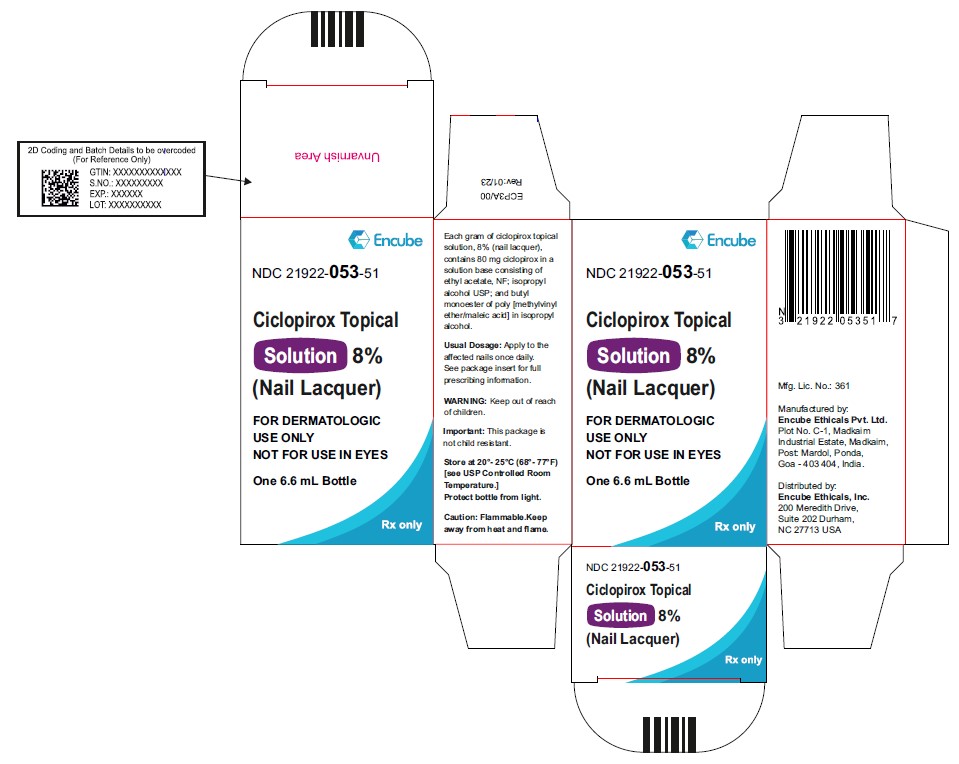
CICLOPIROX 80 mg/mL Solution, 1 bottle — NDC 21922-053-51 (Billing 21922-0053-51)
This is a package of 1 bottle of CICLOPIROX 80 mg/mL Solution from Encube Ethicals, Inc., marketed since Nov 2023 and currently FDA-listed; retail pharmacies pay about $1.15 per mL (NADAC). It is this product's only package size.
NDC database record
One package, one record: these facts belong to NDC 21922-053-51 alone.
- Record
- FDA NDC Directory package listing · Human prescription drug
- Code segments
- 21922 labeler · 053 product · 51 package
- Package marketed since
- Nov 9, 2023
- Sample package
- No — commercial package
- Listing certified through
- Dec 31, 2026
- Barcode (UPC-A, from the NDC)
- 3 2192205351 7
- Medicaid fills, this package
- 149,515 prescriptions in the last four reported quarters
- FDA record last changed
- Jul 24, 2026
Identity & classification
Regulatory identifiers FDA, NLM and CMS codes for this package
Drug-database identifiers Medi-Span GPI and First Databank GCN / HICL / AHFS classification
- GSN (GCN sequence number): 037020
- GCN: 08040
- GPI-14 (Medi-Span): 90150030002020
- HICL (First Databank): 016915
- AHFS class code: 84:04.08.20
- RxCUI (RxNorm): 309291
Where does this data come from?
- FDA openFDA NDC Directory · synced Oct 8, 2026
- FDA label on DailyMed · label index refreshed Oct 8, 2026
- RxNorm (NLM RxNav) · catalog refreshed Oct 1, 2026
- Medi-Span GPI (licensed)
- First Databank (licensed) · refreshed Oct 8, 2026
RxNorm drug class
This medicine belongs to the Other antifungals for topical use class.
Where does this data come from?
- RxClass (NLM) · catalog refreshed Oct 1, 2026
Clinical
Ciclopirox topical solution is used along with regular nail trimming to treat fungal infections of the fingernails and toenails (an infection that may cause nail discoloration, splitting and pain). Ciclopirox is in a class of medications called antifungals. It works by stopping the growth of nail fungus.
Read the full MedlinePlus article ↗- It's treating a fungal infection living inside your nail. Ciclodan (the 8% nail lacquer solution) works specifically on onychomycosis — a fungal infection of the nail plate caused...
- What is this medicine actually treating — my nail or a skin infection?
- Nail infections are slow to treat because nails grow slowly. Clinical studies used ciclopirox nail lacquer for 48 weeks — that's nearly a year. Even then, complete clearing of the...
- How long will I have to use this before I see results?
Patient education
Supplement & herbal interactions
Some supplements/herbs that may interact with Ciclopirox — tap one for details:
Where does this data come from?
- MedlinePlus (NLM) · refreshed Oct 8, 2026
- FDA label on DailyMed · label index refreshed Oct 8, 2026
Ask a licensed pharmacist directly — free, answered by our team.
Pricing
A drug doesn't have one price. Each row is a different public payment system, and none is what you'd pay at the counter — that depends on your insurance. The ⓘ on each row explains what it measures.
| Price system | Per mL | Per package |
|---|---|---|
| Retail pharmacies payNADAC · weekly | $1.154 | $7.62 / 6.6 ml |
| Medicaid paysCMS SDUD · 12 mo | $2.90 | $19.13 / 6.6 ml |
| Medicare drug plans payPart D · Q2 2026 | $3.03 | $20.03 / 6.6 ml |
Where does this data come from?
- CMS NADAC weekly file · file of Oct 7, 2026
- CMS ASP pricing files · refreshed Sep 20, 2026
- CMS Medicaid State Drug Utilization Data · through Q1 2026
- CMS Part D plan pricing files · refreshed Sep 24, 2026
- VA National Acquisition Center price file
Packaging — all sizes for this product
| Package NDC | Description | Marketing start | Marketing end | Status |
|---|---|---|---|---|
| 21922-0053-51 You're viewing this Main listing | 1 BOTTLE, WITH APPLICATOR in 1 CARTON / 6.6 mL in 1 BOTTLE, WITH APPLICATOR | 2023-11-09 | — | Active |
Therapeutic equivalents
| Product | Labeler | Pack | NADAC/unit | TE | Status | Price vs. this |
|---|---|---|---|---|---|---|
| Ciclopirox 80 mg/mLthis 21922-0053-51 | Encube | 1 bottle | $1.154 | AT | Availability likely | — |
| Ciclopirox 80 mg/mL 42192-0715-06 | Acella | 1 bottle | $1.154 | AT | Availability likely | — |
| Ciclopirox 80 mg/mL 45802-0141-67 | Padagis | 1 bottle | $1.154 | AT | Availability likely | — |
| Ciclopirox 42192-0714-01 | Acella | 1 kit | $7.355 | — | Availability likely | +537% |
| Ciclopirox 80 mg/mL 50090-6562-00 | A-S | 1 bottle | — | AT | FDA listed | — |
| Ciclopirox 71.3 mg/mL 62135-0814-45 | Chartwell | 6.6 ml | — | AT | FDA listed | — |
| Ciclopirox 80 mg/mL 63629-8623-01 | Bryant | 1 bottle | — | AT | FDA listed | — |
| Ciclopirox 80 mg/mL 68788-6797-06 | Preferred | 1 bottle | — | AT | FDA listed | — |
| Ciclopirox 80 mg/mL 68788-8755-06 | Preferred | 1 bottle | — | AT | FDA listed | — |
| Ciclopirox 80 mg/mL 71335-2836-01 | Bryant | 1 bottle | — | AT | FDA listed | — |
| Ciclopirox 80 mg/mL 72162-1321-02 | Bryant | 1 bottle | — | AT | FDA listed | — |
| Ciclopirox 80 mg/mL 72162-2076-01 | Bryant | 1 bottle | — | AT | FDA listed | — |
| Ciclopirox 80 mg/mL 72162-2298-02 | Bryant | 1 bottle | — | AT | FDA listed | — |
Where does this data come from?
- FDA openFDA NDC Directory · synced Oct 8, 2026
- FDA Orange Book · refreshed Oct 3, 2026
- CMS NADAC weekly file · file of Oct 7, 2026
Availability & generic status
This product is an FDA-approved generic. Other versions of the same drug are listed under Therapeutic equivalents, least expensive first.
Where does this data come from?
- FDA Orange Book · refreshed Oct 3, 2026
Inactive Ingredients / Excipients
Inactive ingredients, also called excipients, are components of the drug product other than the active ingredient. They may include fillers, dyes, coatings, preservatives, flavors, or other formulation ingredients.
🧪 Avoiding an ingredient? See Ciclopirox Topical inactive ingredients by manufacturer: every current product's list side by side, so you can ask your pharmacy for the version that does not list it.
💡 Tap an ingredient (hover on desktop) to see what it is and why it’s used.
-
UNII 389H2R62BD
A synthetic polymer made from chemicals that form a plastic-like substance. It acts as a binder and film-former to help hold tablet ingredients together and may provide a protective coating on the medicine.
-
UNII 76845O8NMZ
Ethyl acetate is a clear, colorless liquid solvent derived from acetic acid and ethanol. In medicines, it dissolves active ingredients, carries them into the product formulation, and helps control how quickly the drug releases and works in your body.
-
UNII ND2M416302
Isopropyl alcohol is a clear liquid solvent derived from petroleum. In medicines, it dissolves active ingredients and other components, helps the product flow smoothly, and aids in sterilization during manufacturing.
3 inactive ingredients listed in the exact product block matched to this NDC.
Where does this data come from?
ingredient classCode="IACT" elements from the exact product block matched by this NDC. Label-section narrative from DailyMed / the openFDA label index is shown separately when available.- FDA label on DailyMed · label index refreshed Oct 8, 2026
- FDA openFDA NDC Directory · synced Oct 8, 2026
Inactive ingredient FAQ
Are inactive ingredients the same for every manufacturer?
Why might an inactive ingredient be missing?
Can inactive ingredients matter?
Manufacturer & labeler
More NDCs from Encube Ethicals, Inc. labeler code 21922
- Metronidazole Vaginal Gel 65 mg/5g Gel NDC 21922-046-41
- Nitroglycerin 4 mg/g Ointment NDC 21922-048-05
- Fluorouracil 2 g/40g Cream NDC 21922-049-17
- Clindamycin Phosphate and Tretinoin Gel 1.2%/0.025% 10 mg/g; .25 mg/g Gel NDC 21922-050-05
- Adapalene Gel USP, 0.3% 3 mg/g Gel NDC 21922-051-06
- Adapalene and Benzoyl Peroxide Gel, 0.1%/2.5% 1 mg/g; 25 mg/g Gel NDC 21922-052-50
- Nitroglycerin 20 mg/g Ointment NDC 21922-054-05
- TRETINOIN .1 mg/g Gel NDC 21922-056-04
- TRETINOIN .25 mg/g Gel NDC 21922-057-04
- CLOBETASOL PROPIONATE .5 mg/mL Solution NDC 21922-061-22
- Triamcinolone Acetonide 1 mg/g Cream NDC 21922-062-04
- Triamcinolone Acetonide 1 mg/g Ointment NDC 21922-063-04
Where does this data come from?
- FDA openFDA NDC Directory · synced Oct 8, 2026
- Drugs@FDA
Full prescribing information FDA SPL
🎯 Indications and Usage ▾
INDICATIONS AND USAGE (To understand fully the indication for this product, please read the entire INDICATIONS AND USAGE section of the labeling.) Ciclopirox topical solution, 8% (nail lacquer), as a component of a comprehensive management program, is indicated as topical treatment in immunocompetent patients with mild to moderate onychomycosis of fingernails and toenails without lunula involvement, due to Trichophyton rubrum . The comprehensive management program includes removal of the unattached, infected nails as frequently as monthly, by a health care professional who has special competence in the diagnosis and treatment of nail disorders, including minor nail procedures.
No studies have been conducted to determine whether ciclopirox might reduce the effectiveness of systemic antifungal agents for onychomycosis. Therefore, the concomitant use of ciclopirox topical solution, 8% (nail lacquer) and systemic antifungal agents for onychomycosis, is not recommended. Ciclopirox topical solution, 8% (nail lacquer), should be used only under medical supervision as described above.
The effectiveness and safety of ciclopirox topical solution, 8% (nail lacquer), in the following populations has not been studied. The clinical trials with use of ciclopirox topical solution, 8% (nail lacquer), excluded patients who: were pregnant or nursing, planned to become pregnant, had a history of immunosuppression (e.g., extensive, persistent, or unusual distribution of dermatomycoses, extensive seborrheic dermatitis, recent or recurring herpes zoster, or persistent herpes simplex), were HIV seropositive, received organ transplant, required medication to control epilepsy, were insulin dependent diabetics or had diabetic neuropathy.
Patients with severe plantar (moccasin) tinea pedis were also excluded. The safety and efficacy of using ciclopirox topical solution, 8% (nail lacquer), daily for greater than 48 weeks have not been established. Clinical Trials Data The results of use of ciclopirox topical solution, 8% (nail lacquer), in treatment of onychomycosis of the toenail without lunula involvement were obtained from two double-blind, placebo-controlled studies conducted in the US.
In these studies, patients with onychomycosis of the great toenails without lunula involvement were treated with ciclopirox topical solution, 8% (nail lacquer), in conjunction with monthly removal of the unattached, infected toenail by the investigator. Ciclopirox topical solution, 8% (nail lacquer), was applied for 48 weeks. At baseline, patients had 20-65% involvement of the target great toenail plate.
Statistical significance was demonstrated in one of two studies for the endpoint “complete cure” (clear nail and negative mycology), and in two studies for the endpoint “almost clear” ( < 10% nail involvement and negative mycology) at the end of study. These results are presented below. At Week 48 (plus Last Observation Carried Forward) for the Intent-to-Treat (ITT) Population Study 312 Study 313 Active Vehicle Active Vehicle Complete Cure* 6/110 (5.5%) 1/109 (0.9%) 10/118 (8.5%) 0/117 (0%) Almost Clear** 7/107 (6.5%) 1/108 (0.9%) 14/116 (12%) 1/115 (0.9%) Negative Mycology Alone*** 30/105 (29%) 12/106 (11%) 41/115 (36%) 10/114 (9%) * Clear nail and negative mycology ** ≤10% nail involvement and negative mycology *** Negative KOH and negative culture The summary of reported patient outcomes for the ITT population at 12 weeks following the end of treatment are presented below.
Note that post - treatment efficacy assessments were scheduled only for patients who achieved a complete cure. Post-treatment Week 12 Data for Patients Who Achieved Complete Cure at Week 48 Study 312 Study 313 Active Vehicle Active Vehicle Number of Treated Patients 112 111 119 118 Complete Cure at Week 48 6 1 10 0 Post-treatment Week 12 Outcomes: Patients Missing All Week 12 Assessments Patients with Week 12 Assessments Complete Cure Almost Clear Negative Mycology 2 4 3 2* 3 0 1 1 1 1 2 8 4 1* 5… [Excerpted — this section continues on DailyMed.]
⏱️ Dosage and Administration ▾
DOSAGE AND ADMINISTRATION Ciclopirox topical solution, 8% (nail lacquer), should be used as a component of a comprehensive management program for onychomycosis. Removal of the unattached, infected nail, as frequently as monthly, by a health care professional, weekly trimming by the patient, and daily application of the medication are all integral parts of this therapy. Careful consideration of the appropriate nail management program should be given to patients with diabetes (see PRECAUTIONS ).
Nail Care By Health Care Professionals Removal of the unattached, infected nail, as frequently as monthly, trimming of onycholytic nail, and filing of excess horny material should be performed by professionals trained in treatment of nail disorders. Nail Care By Patient Patients should file away (with emery board) loose nail material and trim nails, as required, or as directed by the health care professional, every seven days after ciclopirox topical solution, 8% (nail lacquer), is removed with alcohol. Ciclopirox topical solution, 8% (nail lacquer), should be applied once daily (preferably at bedtime or eight hours before washing) to all affected nails with the applicator brush provided.
The ciclopirox topical solution, 8% (nail lacquer), should be applied evenly over the entire nail plate. If possible, ciclopirox topical solution, 8% (nail lacquer), should be applied to the nail bed, hyponychium, and the under surface of the nail plate when it is free of the nail bed (e.g., onycholysis). The ciclopirox topical solution, 8% (nail lacquer), should not be removed on a daily basis.
Daily applications should be made over the previous coat and removed with alcohol every seven days. This cycle should be repeated throughout the duration of therapy.
⛔ Contraindications ▾
CONTRAINDICATIONS Ciclopirox topical solution, 8% (nail lacquer), is contraindicated in individuals who have shown hypersensitivity to any of its components.
⚠️ Warnings ▾
WARNINGS Ciclopirox topical solution, 8% (nail lacquer), is not for ophthalmic, oral, or intravaginal use. For use on nails and immediately adjacent skin only.
🤒 Adverse Reactions ▾
ADVERSE REACTIONS In the vehicle-controlled clinical trials conducted in the US, 9% (30/327) of patients treated with ciclopirox topical solution, 8% (nail lacquer), and 7% (23/328) of patients treated with vehicle reported treatment-emergent adverse events (TEAE) considered by the investigator to be causally related to the test material. The incidence of these adverse events, within each body system, was similar between the treatment groups except for Skin and Appendages: 8% (27/327) and 4% (14/328) of subjects in the ciclopirox and vehicle groups reported at least one adverse event, respectively.
The most common were rash-related adverse events: periungual erythema and erythema of the proximal nail fold were reported more frequently in patients treated with ciclopirox topical solution, 8% (nail lacquer), (5% [16/327]) than in patients treated with vehicle (1% [3/328]). Other TEAEs thought to be causally related included nail disorders such as shape change, irritation, ingrown toenail, and discoloration. The incidence of nail disorders was similar between the treatment groups (2% [6/327] in the ciclopirox topical solution, 8% (nail lacquer), group and 2% [7/328] in the vehicle group).
Moreover, application site reactions and/or burning of the skin occurred in 1 % of patients treated with ciclopirox topical solution, 8% (nail lacquer), (3/327) and vehicle (4/328). A21-Day Cumulative Irritancy study was conducted under conditions of semi-occlusion. Mild reactions were seen in 46% of patients with the ciclopirox topical solution, 8% (nail lacquer), 32% with the vehicle and 2% with the negative control, but all were reactions of mild transient erythema.
There was no evidence of allergic contact sensitization for either the ciclopirox topical solution, 8% (nail lacquer), or the vehicle base. In a separate study of the photosensitization potential of ciclopirox topical solution, 8% (nail lacquer), in a maximized test design that included the occluded application of sodium lauryl sulfate, no photoallergic reactions were noted. In four subjects localized allergic contact reactions were observed.
In the vehicle-controlled studies, one patient treated with ciclopirox topical solution, 8% (nail lacquer), discontinued treatment due to a rash, localized to the palm (causal relation to test material undetermined). Use of ciclopirox topical solution, 8% (nail lacquer), for 48 additional weeks was evaluated in an open-label extension study conducted in patients previously treated in the vehicle-controlled studies. Three percent (9/281) of subjects treated with ciclopirox topical solution, 8% (nail lacquer), experienced at least one TEAE that the investigator thought was causally related to the test material.
Mild rash in the form of periungual erythema (1% [2/281]) and nail disorders (1 % [4/281]) were the most frequently reported. Four patients discontinued because of TEAEs. Two of the four had events considered to be related to test material: one patient’s great toenail “broke away” and another had an elevated creatine phosphokinase level on Day 1 (after 48 weeks of treatment with vehicle in the previous vehicle-controlled study).
🤰 Pregnancy ▾
Pregnancy Teratogenic effects: Pregnancy Category B Teratology studies in mice, rats, rabbits, and monkeys at oral doses of up to 77, 23, 23, or 38.5 mg, respectively, of ciclopirox as ciclopirox olamine/kg/day (14, 8, 17, and 28 times MRHTD), or in rats and rabbits receiving topical doses of up to 92.4 and 77 mg/kg/day, respectively (33 and 55 times MRHTD), did not indicate any significant fetal malformations. There are no adequate or well-controlled studies of topically applied ciclopirox in pregnant women. Ciclopirox topical solution, 8% (nail lacquer), should be used during pregnancy only if the potential benefit justifies the potential risk to the fetus.
🧒 Pediatric Use ▾
Pediatric Use Based on the safety profile in adults, ciclopirox topical solution, 8% (nail lacquer), is considered safe for use in children twelve years and older. No clinical trials have been conducted in the pediatric population.
🧓 Geriatric Use ▾
Geriatric Use Clinical studies of ciclopirox topical solution, 8% (nail lacquer), did not include sufficient numbers of subjects aged 65 and over to determine whether they respond differently from younger subjects. Other reported clinical experience has not identified differences in responses between elderly and younger patients.
🧬 Clinical Pharmacology ▾
CLINICAL PHARMACOLOGY Microbiology Mechanism of Action The mechanism of action of ciclopirox has been investigated using various in vitro and in vivo infection models. One in vitro study suggested that ciclopirox acts by chelation of polyvalent cations (Fe +3 or Al +3 ) resulting in the inhibition of the metal-dependent enzymes that are responsible for the degradation of peroxides within the fungal cell. The clinical significance of this observation is not known.
Activity in vitro and ex vivo In vitro methodologies employing various broth or solid media with and without additional nutrients have been utilized to determine ciclopirox minimum inhibitory concentration (MIC) values for the dermatophytic molds. (1-2) As a consequence, a broad range of MIC values, 1-20 μg/mL, were obtained for Trichophyton rubrum and Trichophyton mentagrophytes species. Correlation between in vitro MIC results and clinical outcome has yet to be established for ciclopirox.
One ex vivo study was conducted evaluating 8% ciclopirox against new and established Tricho phyton rubrum and Trichophyton mentagrophytes infections in ovine hoof material. (3) After 10 days of treatment the growth of T. rubrum and T. mentagrophytes in the established infection model was very minimally affected. Elimination of the molds from hoof material was not achieved in either the new or established infection models.
Susceptibility testing for Trichophyton rubrum species In vitro susceptibility testing methods for determining ciclopirox MIC values against the dermatophytic molds, including Trichophyton rubrum species, have not been standardized or validated. Ciclopirox MIC values will vary depending on the susceptibility testing method employed, composition and pH of media and the utilization of nutritional supplements. Breakpoints to determine whether clinical isolates of Trichophyton rubrum are susceptible or resistant to ciclopirox have not been established.
Resistance Studies have not been conducted to evaluate drug resistance development in T. rubrum species exposed to 8% ciclopirox topical solution. Studies assessing cross-resistance to ciclopirox and other known antifungal agents have not been performed. Antifungal Drug Interactions No studies have been conducted to determine whether ciclopirox might reduce the effectiveness of systemic antifungal agents for onychomycosis.
Therefore, the concomitant use of 8% ciclopirox topical solution and systemic antifungal agents for onychomycosis is not recommended. Pharmacokinetics As demonstrated in pharmacokinetic studies in animals and man, ciclopirox olamine is rapidly absorbed after oral administration and completely eliminated in all species via feces and urine. Most of the compound is excreted either unchanged or as glucuronide.
After oral administration of 10 mg of radiolabeled drug (14C-ciclopirox) to healthy volunteers, approximately 96% of the radioactivity was excreted renally within 12 hours of administration. Ninety-four percent of the renally excreted radioactivity was in the form of glucuronides. Thus, glucuronidation is the main metabolic pathway of this compound.
Systemic absorption of ciclopirox was determined in 5 patients with dermatophytic onychomycoses, after application of ciclopirox topical solution, 8% (nail lacquer), to all 20 digits and adjacent 5 mm of skin once daily for six months. Random serum concentrations and 24 hour urinary excretion of ciclopirox were determined at two weeks and at 1, 2, 4 and 6 months after initiation of treatment and 4 weeks post-treatment. In this study, ciclopirox serum levels ranged from 12-80 ng/mL.
Based on urinary data, mean absorption of ciclopirox from the dosage form was <5% of the applied dose. One month after cessation of treatment, serum and urine levels of ciclopirox were below the limit of detection. In two vehicle-controlled trials, patients applied ciclopirox topical solution, 8% (nail lacquer) to all toenails and affected fingernails.
Out of a total of 66 ran… [Excerpted — this section continues on DailyMed.]
📦 How Supplied / Storage and Handling ▾
HOW SUPPLIED Ciclopirox topical solution, 8% (nail lacquer), is supplied in 6.6 mL (NDC 21922-053-51) glass bottles with screw caps which are fitted with brushes. Protect from light (e.g., store the bottle in the carton after every use). Ciclopirox topical solution, 8% (nail lacquer), should be stored at 20°C to 25°C (68°F to 77°F) [see USP Controlled Room Temperature.] CAUTION: Flammable.
Keep away from heat and flame. Rx ONLY To report SUSPECTED ADVERSE REACTIONS, contact Encube Ethicals Private Limited at 1-833-285-4151 and/or FDA at 1-800-FDA-1088 or www.fda.gov/medwatch. Made in Finland Manufactured by: Encube Ethicals Pvt.
Ltd. Plot No. C-1, Madkaim Industrial Estate, Madkaim, Post: Mardol, Panda, Goa-403404, India.
References: 1. Dittmar W., Lohaus G. 1973.
HOE296, A new antimycotic compound with a broad antimicrobial spectrum. Arzneim-Forsch./ Drug Res. 23:670-674.
2. Niewerth et. al., 1998. Antimicrobial susceptibility testing of dermatophytes: Comparison of the agar macrodilution and broth micro dilution tests.
Chemotherapy. 44:31-35. 3.
Yang et. al. 1997. A new simulation model for studying in vitro topical penetration of antifungal drugs into hard keratin.
J. Mycol. Med.
7:195-98. Gantrez is a registered trademark of GAF Corporation Rev. 01/25
📋 Description ▾
DESCRIPTION Ciclopirox topical solution, 8% (nail lacquer) contains a synthetic antifungal agent, ciclopirox. It is intended for topical use on fingernails and toenails and immediately adjacent skin. Each gram of ciclopirox topical solution, 8% (nail lacquer) contains 80 mg ciclopirox in a solution base consisting of ethyl acetate, NF; isopropyl alcohol, USP; and butyl monoester of poly[methylvinyl ether/maleic acid] in isopropyl alcohol.
Ethyl acetate and isopropyl alcohol are solvents that vaporize after application. Ciclopirox topical solution, 8% (nail lacquer) is a clear, colorless to slightly yellowish solution. The chemical name for ciclopirox is 6-cyclohexyl-1-hydroxy-4- methyl-2(1 H)-pyridone, with the empirical formula C 12 H 17 NO 2 and a molecular weight of 207.27.
The CAS Registry Number is [29342-05-0]. The chemical structure is: Structure
💬 Information for Patients ▾
Information for Patients Patients should have detailed instructions regarding the use of ciclopirox topical solution, 8% (nail lacquer), as a component of a comprehensive management program for onychomycosis in order to achieve maximum benefit with the use of this product. The patient should be told to: 1. Use ciclopirox topical solution, 8% (nail lacquer), as directed by a health care professional.
Avoid contact with the eyes and mucous membranes. Contact with skin other than skin immediately surrounding the treated nail(s) should be avoided. Ciclopirox topical solution, 8% (nail lacquer), is for external use only.
2. Ciclopirox topical solution, 8% (nail lacquer), should be applied evenly over the entire nail plate and 5 mm of surrounding skin. If possible, ciclopirox topical solution, 8% (nail lacquer), should be applied to the nail bed, hyponychium, and the under surface of the nail plate when it is free of the nail bed (e.g., onycholysis).
Contact with the surrounding skin may produce mild, transient irritation (redness). 3. Removal of the unattached, infected nail, as frequently as monthly, by a health care professional is needed with use of this medication.
Inform a health care professional if they have diabetes or problems with numbness in your toes or fingers for consideration of the appropriate nail management program. 4. Inform a health care professional if the area of application shows signs of increased irritation (redness, itching, burning, blistering, swelling, oozing).
5. Up to 48 weeks of daily applications with ciclopirox topical solution, 8% (nail lacquer), and professional removal of the unattached, infected nail, as frequently as monthly, are considered the full treatment needed to achieve a clear or almost clear nail (defined as 10% or less residual nail involvement). 6.
Six months of therapy with professional removal of the unattached, infected nail may be required before initial improvement of symptoms is noticed. 7. A completely clear nail may not be achieved with use of this medication.
In clinical studies less than 12% of patients were able to achieve either a completely clear or almost clear toenail. 8. Do not use the medication for any disorder other than that for which itis prescribed.
9. Do not use nail polish or other nail cosmetic products on the treated nails. 10.
Avoid use near heat or open flame, because product is flammable.
⚠️ Precautions ▾
PRECAUTIONS If a reaction suggesting sensitivity or chemical irritation should occur with the use of ciclopirox topical solution, 8% (nail lacquer), treatment should be discontinued and appropriate therapy instituted. So far there is no relevant clinical experience with patients with insulin dependent diabetes or who have diabetic neuropathy. The risk of removal of the unattached, infected nail, by the health care professional and trimming by the patient should be carefully considered before prescribing to patients with a history of insulin dependent diabetes mellitus or diabetic neuropathy.
Information for Patients Patients should have detailed instructions regarding the use of ciclopirox topical solution, 8% (nail lacquer), as a component of a comprehensive management program for onychomycosis in order to achieve maximum benefit with the use of this product. The patient should be told to: 1. Use ciclopirox topical solution, 8% (nail lacquer), as directed by a health care professional.
Avoid contact with the eyes and mucous membranes. Contact with skin other than skin immediately surrounding the treated nail(s) should be avoided. Ciclopirox topical solution, 8% (nail lacquer), is for external use only.
2. Ciclopirox topical solution, 8% (nail lacquer), should be applied evenly over the entire nail plate and 5 mm of surrounding skin. If possible, ciclopirox topical solution, 8% (nail lacquer), should be applied to the nail bed, hyponychium, and the under surface of the nail plate when it is free of the nail bed (e.g., onycholysis).
Contact with the surrounding skin may produce mild, transient irritation (redness). 3. Removal of the unattached, infected nail, as frequently as monthly, by a health care professional is needed with use of this medication.
Inform a health care professional if they have diabetes or problems with numbness in your toes or fingers for consideration of the appropriate nail management program. 4. Inform a health care professional if the area of application shows signs of increased irritation (redness, itching, burning, blistering, swelling, oozing).
5. Up to 48 weeks of daily applications with ciclopirox topical solution, 8% (nail lacquer), and professional removal of the unattached, infected nail, as frequently as monthly, are considered the full treatment needed to achieve a clear or almost clear nail (defined as 10% or less residual nail involvement). 6.
Six months of therapy with professional removal of the unattached, infected nail may be required before initial improvement of symptoms is noticed. 7. A completely clear nail may not be achieved with use of this medication.
In clinical studies less than 12% of patients were able to achieve either a completely clear or almost clear toenail. 8. Do not use the medication for any disorder other than that for which itis prescribed.
9. Do not use nail polish or other nail cosmetic products on the treated nails. 10.
Avoid use near heat or open flame, because product is flammable. Carcinogenesis, Mutagenesis, Impairment of Fertility No carcinogenicity study was conducted with ciclopirox topical solution, 8% (nail lacquer), formulation. A carcinogenicity study of ciclopirox (1% and 5% solutions in polyethylene glycol 400) in female mice dosed topically twice per week for 50 weeks followed by a 6- month drug-free observation period prior to necropsy revealed no evidence of tumors at the application sites.
In human systemic tolerability studies following daily. application (~340 mg of ciclopirox topical solution, 8% (nail lacquer)), in subjects with distal subungual onychomycosis, the average maximal serum level of ciclopirox was 31±28 ng/mL after two months of once daily applications. This level was 159 times lower than the lowest toxic dose and 115 times lower than the highest nontoxic dose in rats and dogs fed 7.7 and 23.1 mg ciclopirox (as ciclopirox olamine)/kg/day. The following in vitro genotoxicity tests have been conducted with ciclopirox: evaluation of… [Excerpted — this section continues on DailyMed.]
🍼 Nursing Mothers ▾
Nursing Mothers It is not known whether this drug is excreted in human milk. Since many drugs are excreted in human milk, caution should be exercised when ciclopirox topical solution, 8% (nail lacquer), is administered to a nursing woman.
📄 Carcinogenesis, Mutagenesis, Impairment of Fertility ▾
Carcinogenesis, Mutagenesis, Impairment of Fertility No carcinogenicity study was conducted with ciclopirox topical solution, 8% (nail lacquer), formulation. A carcinogenicity study of ciclopirox (1% and 5% solutions in polyethylene glycol 400) in female mice dosed topically twice per week for 50 weeks followed by a 6- month drug-free observation period prior to necropsy revealed no evidence of tumors at the application sites. In human systemic tolerability studies following daily. application (~340 mg of ciclopirox topical solution, 8% (nail lacquer)), in subjects with distal subungual onychomycosis, the average maximal serum level of ciclopirox was 31±28 ng/mL after two months of once daily applications.
This level was 159 times lower than the lowest toxic dose and 115 times lower than the highest nontoxic dose in rats and dogs fed 7.7 and 23.1 mg ciclopirox (as ciclopirox olamine)/kg/day. The following in vitro genotoxicity tests have been conducted with ciclopirox: evaluation of gene mutation in Ames Salmonella and E. coli assays (negative): chromosome aberration assays in V79 Chinese hamster lung fibroblasts, with and without metabolic activation (positive); gene mutation assay in the HGPRT-test with V79 Chinese hamster lung fibroblasts (negative); unscheduled DNA synthesis in human A549 cells (negative); and BALB/c3T3 cell transformation assay (negative).
In an in vivo Chinese hamster bone marrow cytogenetic assay, ciclopirox was negative for chromosome aberrations at 5,000 mg/kg. The following in vitro genotoxicity tests were conducted with ciclopirox topical solution, 8% (nail lacquer): Ames Salmonella test (negative); unscheduled DNA synthesis in the rat hepatocytes (negative); cell transformation assay in BALB/c3T3 cell assay (positive). The positive response of the lacquer formulation in the BALB/c3T3 test was attributed to its butyl monoester of poly [methylvinyl ether/maleic acid] resin component (Gantrez® ES-435), which also tested positive in this test.
The cell transformation assay may have been confounded because of the film-forming nature of the resin. Gantrez® ES-435 tested nonmutagenic in both the in vitro mouse lymphoma forward mutation assay with or without activation and unscheduled DNA, synthesis assay in rat hepatocytes. Oral reproduction studies in rats at doses up to 3.85 mg ciclopirox (as ciclopirox olamine)/kg/day [equivalent to approximately 1.4 times the potential exposure at the maximum recommended human topical dose (MRHTD)] did not reveal any specific effects on fertility or other reproductive parameters.
MRHTD (mg/m2) is based on the assumption of 100% systemic absorption of 27.12 mg ciclopirox (~340 mg ciclopirox topical solution, 8% (nail lacquer)), that will cover all the fingernails and toenails including 5 mm proximal and lateral fold area plus onycholysis to a maximal extent of 50%.
📄 Patient Package Insert ▾
Patient Information and Instructions Ciclopirox Topical Solution, 8% (Nail Lacquer) Patient Information and Instructions Patients should have detailed instructions regarding the use of ciclopirox topical solution, 8% (nail lacquer), as a component of a comprehensive management program for onychomycosis in order to achieve maximum benefit with the use of this product. Discuss your treatment plan with your health care professional for regular removal of the unattached, infected nail. Before using this medication, tell your doctor if you: Are pregnant or nursing Are an insulin dependent diabetic or have diabetic neuropathy Have a history of immunosuppression Are immunocompromised (e.g., received an organ transplant, etc.) Require medication to control epilepsy Use or require topical corticosteroids on a repeated monthly basis Use steroid inhalers on a regular basis Patient Information: Use ciclopirox topical solution, 8% (nail lacquer), as directed by your health care professional.
Ciclopirox topical solution, 8% (nail lacquer), is for external use only. Contact with skin other than skin immediately surrounding the treated nail(s)should be avoided. Avoid contact with the eyes and mucous membranes.
Removal of the unattached, infected nail, as frequently as monthly, by your health care professional is needed with use of this medication to obtain maximal benefit with use of this product. If you have diabetes or problems with numbness in your toes or fingers, talk to your health care provider before trimming your nails or removing any nail material. Inform your health care professional if the area of application shows signs of increased irritation (redness, itching, burning, blistering, swelling, oozing).
Up to 48 weeks of daily applications with ciclopirox topical solution, 8% (nail lacquer), and professional removal, as frequently as monthly, of the unattached, infected nail are considered the full treatment time to achieve a clear or almost clear nail ( defined as 10% or less residual nail involvement). Six months of therapy with professional removal of the unattached, infected nail may be required before initial improvement of symptoms is noticed. A completely clear nail may not be achieved with use of this medication.
In clinical studies less than 12% of patients were able to achieve either a clear or almost clear toenail." Do not use nail polish or other nail cosmetic products on the treated nails. Avoid use near heat or open flame, because product is flammable. Patient Instructions 1.
Before starting treatment, remove any loose nail or nail material using nail clippers or nail files. If you have diabetes or problems with numbness in your toes or fingers, talk to your health care provider before trimming your nails or removing any nail material. 2.
Apply Ciclopirox topical solution, 8% (nail lacquer), once daily (preferably at bedtime) to all affected nails with the applicator brush provided. Apply the lacquer evenly over the entire nail. Where possible, nail lacquer should also be applied to the underside of the nail and to the skin beneath it.
Allow lacquer to dry (approximately 30 seconds) before putting on socks or stockings. After applying medication, wait 8 hours before taking a bath or shower. 3.
Apply Ciclopirox topical solution, 8% (nail lacquer), daily over the previous coat. 4. Once a week, remove the Ciclopirox topical solution, 8% (nail lacquer), with alcohol.
Remove as much as possible of the damaged nail using scissors, nail clippers, or nail files. 5. Repeat process (steps 2 through 4).
Please Note: 1. To prevent screw cap from sticking to the bottle, do not allow solution to get into the bottle threads. 2.
To prevent the solution from drying out, bottle should be closed tightly after every use. 3. To protect from light, replace bottle into carton after each use.
Made in Finland Manufactured by: Encube Ethicals Pvt. Ltd. Plot No.
C-1, Madkaim Industrial Estate, Madkaim, Post: Mardol, Panda, Goa-403404, India. Di… [Excerpted — this section continues on DailyMed.]
📄 Package Label / Principal Display Panel ▾
PACKAGE LABEL.PRINCIPAL DISPLAY PANEL Rx Only NDC 21922- 053 -51 Ciclopirox Topical Solution 8% (Nail Lacquer) For Dermatologic Use Only Not for Use in Eyes One 6.6 mL Bottle carton