
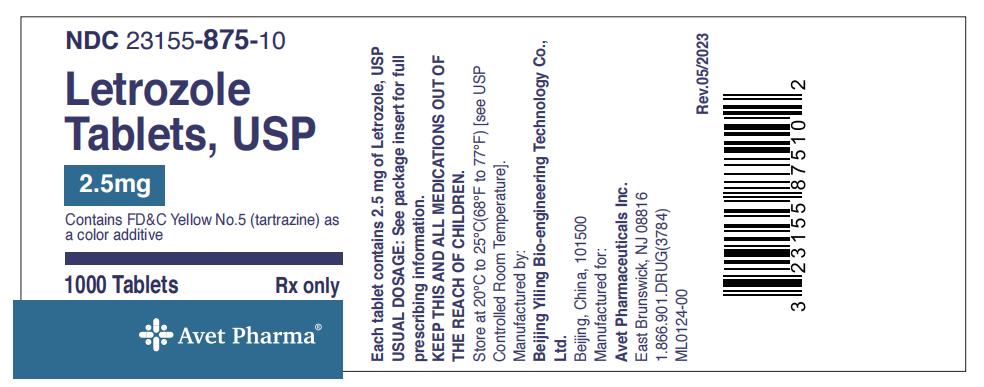
Letrozole 2.5 mg Tablet, Film Coated, 1,000-count — NDC 23155-875-10 (Billing 23155-0875-10)
This is a package of 1,000 tablets of Letrozole 2.5 mg Tablet, Film Coated from Avet Pharmaceuticals Inc., marketed since Jun 2023 and currently FDA-listed; retail pharmacies pay about $0.1450 per tablet (NADAC).
NDC database record
One package, one record: these facts belong to NDC 23155-875-10 alone.
- Record
- FDA NDC Directory package listing · Human prescription drug
- Code segments
- 23155 labeler · 875 product · 10 package
- Package marketed since
- Jun 1, 2023
- Sample package
- Yes — professional sample, not for sale
- Listing certified through
- Dec 31, 2026
- Billing quantity
- 1,000 EA per package
- Barcode (UPC)
- 0323155875096, 0323155875102, 0323155875034
- Medicaid fills, this package
- 28 prescriptions in the last four reported quarters
- FDA record last changed
- Jul 24, 2026
Identity & classification
Regulatory identifiers FDA, NLM and CMS codes for this package
Drug-database identifiers Medi-Span GPI and First Databank GCN / HICL / AHFS classification
- GSN (GCN sequence number): 029821
- GCN: 49541
- GPI-14 (Medi-Span): 21402860000320
- HICL (First Databank): 012351
- AHFS class code: 10:00.00.00
- RxCUI (RxNorm): 200064
Where does this data come from?
- FDA openFDA NDC Directory · synced Oct 8, 2026
- FDA label on DailyMed · label index refreshed Oct 8, 2026
- RxNorm (NLM RxNav) · catalog refreshed Oct 1, 2026
- Medi-Span GPI (licensed)
- First Databank (licensed) · refreshed Oct 8, 2026
RxNorm drug class
This medicine belongs to the Aromatase Inhibitor class.
Where does this data come from?
- RxClass (NLM) · catalog refreshed Oct 1, 2026
Clinical
- Letrozole is not chemotherapy. It's a hormone therapy, specifically an aromatase inhibitor — it works by dramatically lowering estrogen levels in your body. Some breast cancers are...
- What exactly is letrozole being used to treat — is it chemotherapy?
- Good news — you can take letrozole with or without food, whichever is easiest for you. Meals don't affect how the medication is absorbed. As for timing, pick a time of day you'll r...
- Can I take letrozole with food, and does it matter what time of day I take it?
Patient education
Supplement & herbal interactions
Where does this data come from?
- MedlinePlus (NLM) · refreshed Oct 8, 2026
- FDA label on DailyMed · label index refreshed Oct 8, 2026
Ask a licensed pharmacist directly — free, answered by our team.
Pricing
A drug doesn't have one price. Each row is a different public payment system, and none is what you'd pay at the counter — that depends on your insurance. The ⓘ on each row explains what it measures.
| Price system | Per ea | Per package |
|---|---|---|
| Retail pharmacies payNADAC · weekly | $0.145 | $145.00 / 1000 tablets |
| Medicaid paysCMS SDUD · 12 mo | $0.4969 | $496.90 / 1000 tablets |
| Medicare drug plans payPart D · quarterly | No Part D plan price is available for this NDC in our data. | |
Where does this data come from?
- CMS NADAC weekly file · file of Oct 7, 2026
- CMS ASP pricing files · refreshed Sep 20, 2026
- CMS Medicaid State Drug Utilization Data · through Q1 2026
- CMS Part D plan pricing files · refreshed Sep 24, 2026
- VA National Acquisition Center price file
Packaging — all sizes for this product
| Package NDC | Description | Per unit | Per pack | Marketing start | Marketing end | Status |
|---|---|---|---|---|---|---|
| 23155-0875-03 23155-875-03 Main listing | 30 TABLET, FILM COATED in 1 BOTTLE Sample | $0.1450 / ea | $4.35 | 2023-06-01 | — | Active |
| 23155-0875-09 23155-875-09 | 90 TABLET, FILM COATED in 1 BOTTLE Sample | $0.1450 / ea | $13.05 | 2023-06-01 | — | Active |
| 23155-0875-10 You're viewing this | 1000 TABLET, FILM COATED in 1 BOTTLE Sample | $0.1450 / ea | $144.98 | 2023-06-01 | — | Active |
You're viewing the largest of 3 pack sizes for this product.
This pack effectively ties for the lowest per-ea cost of the 3 priced pack sizes ($0.1450 NADAC).
Pack size FAQ
What quantity is in this package?
How does this package differ from NDC 23155-0875-03?
What NDC number is used to bill for this package of Letrozole 2.5 mg Tablet, Film Coated?
Prices are the latest CMS NADAC pharmacy acquisition cost per NDC; per-pack figures are per-unit × pack quantity, shown only when the pack is denominated in the same measure NADAC prices.
Therapeutic equivalents
| Product | Labeler | Pack | NADAC/unit | TE | Status | Price vs. this |
|---|---|---|---|---|---|---|
| Letrozole 2.5 mg 69117-0004-01 | Yiling | 30 tablets | $0.109 | AB | FDA listed | save 25% |
| Letrozole 2.5 mg 00093-7620-56 | Teva | 30 tablets | $0.145 | AB | Availability likely | — |
| Letrozole 2.5 mg 16729-0034-10 | Accord | 30 tablets | $0.145 | AB | Availability likely | — |
| Letrozole 2.5 mgthis 23155-0875-10 | Avet | 1000 tablets | $0.145 | AB | Availability likely | — |
| Letrozole 2.5 mg 50268-0476-15 | AvPAK | 50 tablets | $0.145 | AB | Availability likely | — |
| Letrozole 2.5 mg 51991-0759-10 | Breckenridge | 1000 tablets | $0.145 | AB | Availability likely | — |
| Letrozole 2.5 mg 59651-0180-30 | Aurobindo | 30 tablets | $0.145 | AB | Availability likely | — |
| Letrozole 2.5 mg 62135-0491-30 | Chartwell | 30 tablets | $0.145 | AB | Availability likely | — |
| Femara 2.5 mg 00078-0249-15 | Novartis | 30 tablets | $27.116 | AB | Availability likely | +18603% |
| Letrozole 2.5 mg 17856-0032-01 | ATLANTIC | 1 tablet | — | AB | FDA listed | — |
| Letrozole 2.5 mg 24979-0726-07 | Upsher-Smith | 90 tablets | — | AB | FDA listed | — |
| Letrozole 2.5 mg 42291-0374-90 | AvKARE | 90 tablets | — | AB | FDA listed | — |
| Letrozole 2.5 mg 50090-3474-00 | A-S | 90 tablets | — | AB | FDA listed | — |
| Letrozole 2.5 mg 51407-0986-90 | Golden | 90 tablets | — | AB | FDA listed | — |
| Letrozole 2.5 mg 55111-0646-30 | Dr. | 30 tablets | — | AB | FDA listed | — |
| Letrozole 2.5 mg 63629-7819-01 | Bryant | 30 tablets | — | AB | FDA listed | — |
| Letrozole 2.5 mg 63850-0025-01 | Natco | 30 tablets | — | AB | FDA listed | — |
| Letrozole 2.5 mg 68071-2167-04 | NuCare | 40 tablets | — | AB | FDA listed | — |
| Letrozole 2.5 mg 68071-5264-03 | NuCare | 30 tablets | — | AB | FDA listed | — |
| Letrozole 2.5 mg 71205-0587-30 | Proficient | 30 tablets | — | AB | FDA listed | — |
| Letrozole 2.5 mg 71335-1526-01 | Bryant | 30 tablets | — | AB | FDA listed | — |
| Letrozole 2.5 mg 71335-2396-01 | Bryant | 30 tablets | — | AB | FDA listed | — |
Where does this data come from?
- FDA openFDA NDC Directory · synced Oct 8, 2026
- FDA Orange Book · refreshed Oct 3, 2026
- CMS NADAC weekly file · file of Oct 7, 2026
Availability & generic status
This product is an FDA-approved generic. Other versions of the same drug are listed under Therapeutic equivalents, least expensive first.
Where does this data come from?
- FDA Orange Book · refreshed Oct 3, 2026
Inactive Ingredients / Excipients
Inactive ingredients, also called excipients, are components of the drug product other than the active ingredient. They may include fillers, dyes, coatings, preservatives, flavors, or other formulation ingredients.
🧪 Avoiding an ingredient? See Letrozole inactive ingredients by manufacturer: every current product's list side by side, so you can ask your pharmacy for the version that does not list it.
💡 Tap an ingredient (hover on desktop) to see what it is and why it’s used.
-
UNII B1QE5P712K
Hypromellose 2208 is a plant-derived thickening agent that dissolves in water. It's used as a binder to help hold tablet ingredients together and as a coating on pills to control how quickly the medicine releases in your body.
-
UNII EWQ57Q8I5X
Lactose monohydrate is a natural sugar derived from milk. It serves as a filler and binder in tablets and capsules, helping create the proper size, texture, and consistency of the medicine.
-
UNII 70097M6I30
Magnesium stearate is a salt made from magnesium and stearic acid, a fatty substance. It's used in tablets and capsules as a lubricant and glidant to help ingredients flow smoothly during manufacturing and prevent sticking.
-
UNII OP1R32D61U
Microcrystalline cellulose is a purified form of cellulose, a natural fiber from plant sources. It acts as a binder and filler in tablets and capsules, helping hold ingredients together and give the medicine its shape and size.
-
UNII H8AV0SQX4D
A modified starch derived from potato or corn starch. It absorbs water quickly and helps tablets or capsules break apart and dissolve in the stomach, acting as a disintegrant to ensure the medicine releases its active ingredients properly.
5 inactive ingredients listed in the exact product block matched to this NDC.
Where does this data come from?
ingredient classCode="IACT" elements from the exact product block matched by this NDC. Label-section narrative from DailyMed / the openFDA label index is shown separately when available.- FDA label on DailyMed · label index refreshed Oct 8, 2026
- FDA openFDA NDC Directory · synced Oct 8, 2026
Inactive ingredient FAQ
Are inactive ingredients the same for every manufacturer?
Why might an inactive ingredient be missing?
Can inactive ingredients matter?
Manufacturer & labeler
More NDCs from Avet Pharmaceuticals Inc. labeler code 23155
- Arsenic Trioxide 1 mg/mL Injection NDC 23155-869-41
- Arsenic Trioxide 2 mg/mL Injection NDC 23155-870-41
- Torsemide 5 mg Tablet NDC 23155-871-01
- Torsemide 10 mg Tablet NDC 23155-872-01
- Torsemide 20 mg Tablet NDC 23155-873-01
- Torsemide 100 mg Tablet NDC 23155-874-01
- lisinopril 2.5 mg Tablet NDC 23155-876-01
- lisinopril 5 mg Tablet NDC 23155-877-01
- lisinopril 10 mg Tablet NDC 23155-878-01
- lisinopril 20 mg Tablet NDC 23155-879-01
- lisinopril 30 mg Tablet NDC 23155-880-01
- lisinopril 40 mg Tablet NDC 23155-881-01
Where does this data come from?
- FDA openFDA NDC Directory · synced Oct 8, 2026
- Drugs@FDA
Full prescribing information FDA SPL
🎯 Indications and Usage ▾
1 INDICATIONS AND USAGE Letrozole Tablets are aromatase inhibitor indicated for: Adjuvant treatment of postmenopausal women with hormone receptor positive early breast cancer ( 1.1 ) Extended adjuvant treatment of postmenopausal women with early breast cancer who have received prior standard adjuvant tamoxifen therapy ( 1.2 ) First and second-line treatment of postmenopausal women with hormone receptor positive or unknown advanced breast cancer ( 1.3 )
1.1Adjuvant Treatment of Early Breast Cancer Letrozole tablets, are indicated for the adjuvant treatment of postmenopausal women with hormone receptor positive early breast cancer.
1.2Extended Adjuvant Treatment of Early Breast Cancer Letrozole tablets, are indicated for the extended adjuvant treatment of early breast cancer in postmenopausal women, who have received 5 years of adjuvant tamoxifen therapy. The effectiveness of letrozole in extended adjuvant treatment of early breast cancer is based on an analysis of disease-free survival in patients treated with letrozole for a median of 60 months [ see Clinical Studies ( 14.2 , 14.3 ) ].
1.3First and Second-Line Treatment of Advanced Breast Cancer Letrozole tablets, are indicated for first-line treatment of postmenopausal women with hormone receptor positive or unknown, locally advanced or metastatic breast cancer.Letrozole tablets, are also indicated for the treatment of advanced breast cancer in postmenopausal women with disease progression following antiestrogen therapy [see Clinical Studies ( 14.4 , 14.5 )].
⏱️ Dosage and Administration ▾
2 DOSAGE AND ADMINISTRATION Letrozole tablets are taken orally without regard to meals ( 2 ): Recommended dose: 2.5 mg once daily ( 2.1 ) Patients with cirrhosis or severe hepatic impairment: 2.5 mg every other day ( 2.5 , 5.3 )
2.1Recommended Dose The recommended dose of Letrozole tablets is one 2.5 mg tablet administered once a day, without regard to meals.
2.2Use in Adjuvant Treatment of Early Breast Cancer In the adjuvant setting, the optimal duration of treatment with letrozole is unknown. In both the adjuvant study and the post approval adjuvant study, median treatment duration was 5 years. Treatment should be discontinued at relapse [ see Clinical Studies (14.1) ]
2.3Use in Extended Adjuvant Treatment of Early Breast Cancer In the extended adjuvant setting, the optimal treatment duration with letrozole is not known. The planned duration of treatment in the study was 5 years. In the final updated analysis, conducted at a median follow-up of 62 months, the median treatment duration for letrozole was 60 months.
Seventy-one (71%) percent of patients were treated for at least 3 years and 58% of patients completed at least 4.5 years of extended adjuvant treatment. The treatment should be discontinued at tumor relapse [ see Clinical Studies (14.2) ].
2.4Use in First and Second-Line Treatment of Advanced Breast Cancer In patients with advanced disease, treatment with letrozole should continue until tumor progression is evident [see Clinical Studies ( 14.4 , 14.5 )] .
2.5Use in Hepatic Impairment No dosage adjustment is recommended for patients with mild to moderate hepatic impairment, although letrozole blood concentrations were modestly increased in subjects with moderate hepatic impairment due to cirrhosis. The dose of letrozole in patients with cirrhosis and severe hepatic dysfunction should be reduced by 50% [see Warnings and Precautions (5.3) ] . The recommended dose of letrozole for such patients is 2.5 mg administered every other day.
The effect of hepatic impairment on letrozole exposure in noncirrhotic cancer patients with elevated bilirubin levels has not been determined.
2.6Use in Renal Impairment No dosage adjustment is required for patients with renal impairment if creatinine clearance is greater than or equal to 10 mL/min [ see Clinical Pharmacology (12.3) ].
💊 Dosage Forms and Strengths ▾
3 DOSAGE FORMS AND STRENGTHS Letrozole Tablets, USP 2.5 mg are yellow, round, biconvex, fil-coated tablets, debossed with '121' on one side and 'YL' on the other side. 2.5 mg tablets ( 3 )
⛔ Contraindications ▾
4 CONTRAINDICATIONS ● Pregnancy: Letrozole can cause fetal harm [see Use in Specific Populations (8.1) ] . ● Known hypersensitivity to the active substance, or to any of the excipients [see Adverse Reactions (6) ] . Pregnancy ( 4 ) Known hypersensitivity to the active substance, or to any of the excipients ( 4 )
⚠️ Warnings and Cautions ▾
5 WARNINGS AND PRECAUTIONS Decreases in bone mineral density may occur. Consider bone mineral density monitoring ( 5.1 ) Increases in total cholesterol may occur. Consider cholesterol monitoring.
( 5.2 ) Fatigue, dizziness and somnolence may occur. Exercise caution when operating machinery ( 5.4 ) Embryo-Fetal toxicity: Can cause fetal harm when administered to pregnant women. Obtain a pregnancy test in females of reproductive potential.
Advise females of reproductive potential to use effective contraception ( 5.6 , 8.1 , 8.3 )
5.1Bone Effects Use of letrozole may cause decreases in bone mineral density (BMD). Consideration should be given to monitoring BMD. Results of a safety study to evaluate safety in the adjuvant setting comparing the effect on lumbar spine (L2 to L4) BMD of adjuvant treatment with letrozole to that with tamoxifen showed at 24 months a median decrease in lumbar spine BMD of 4.1% in the letrozole arm compared to a median increase of 0.3% in the tamoxifen arm (difference = 4.4%) ( P <0.0001) [ see Adverse Reactions (6) ].
Updated results from the BMD substudy (MA-17B) in the extended adjuvant setting demonstrated that at 2 years patients receiving letrozole had a median decrease from baseline of 3.8% in hip BMD compared to a median decrease of 2.0% in the placebo group. The changes from baseline in lumbar spine BMD in letrozole and placebo treated groups were not significantly different [ see Adverse Reactions (6) ]. In the adjuvant trial (BIG 1-98) the incidence of bone fractures at any time after randomization was 14.7% for letrozole and 11.4% for tamoxifen at a median follow-up of 96 months.
The incidence of osteoporosis was 5.1% for letrozole and 2.7% for tamoxifen [ see Adverse Reactions (6) ]. In the extended adjuvant trial (MA-17), the incidence of bone fractures at any time after randomization was 13.3% for letrozole and 7.8% for placebo at a median follow-up of 62 months. The incidence of new osteoporosis was 14.5% for letrozole and 7.8% for placebo [ see Adverse Reactions (6) ].
5.2Cholesterol Consideration should be given to monitoring serum cholesterol. In the adjuvant trial (BIG 1-98), hypercholesterolemia was reported in 52.3% of letrozole patients and 28.6% of tamoxifen patients. Grade 3 to 4 hypercholesterolemia was reported in 0.4% of letrozole patients and 0.1% of tamoxifen patients.
Also in the adjuvant setting, an increase of greater than or equal to 1.5 x upper limit of normal (ULN) in total cholesterol (generally non-fasting) was observed in patients on monotherapy who had baseline total serum cholesterol within the normal range (i.e., less than =1.5 x ULN) in 155/1843 (8.4%) patients on letrozole vs 71/1840 (3.9%) patients on tamoxifen Lipid lowering medications were required for 29% of patients on letrozole and 20% on tamoxifen [ s ee Adverse R eactions (6) ].
5.3Hepatic Impairment Subjects with cirrhosis and severe hepatic impairment who were dosed with 2.5 mg of letrozole experienced approximately twice the exposure to letrozole as healthy volunteers with normal liver function [ see Clinical Pharmacology (12.3) ]. Therefore, a dose reduction is recommended for this patient population. The effect of hepatic impairment on letrozole exposure in cancer patients with elevated bilirubin levels has not been determined [ see Dosage and Administration (2.5) ].
5.4Fatigue and Dizziness Because fatigue, dizziness, and somnolence have been reported with the use of letrozole, caution is advised when driving or using machinery until it is known how the patient reacts to letrozole use.
5.5Laboratory Test Abnormalities No dose-related effect of letrozole on any hematologic or clinical chemistry parameter was evident. Moderate decreases in lymphocyte counts, of uncertain clinical significance, were observed in some patients receiving letrozole tablets 2.5 mg. This depression was transient in about half of those affected.
Two patients on letrozole developed thrombocytopenia; relationship to the… [Excerpted — this section continues on DailyMed.]
🤒 Adverse Reactions ▾
6 ADVERSE REACTIONS The following adverse reactions are discussed in greater detail in other sections of the labeling. Bone effects [see Warnings and Precautions (5.1) ] Increases in cholesterol [see Warnings and Precautions (5.2) ] Fatigue and Dizziness [see Warnings and Precautions (5.4) ] The most common adverse reactions (greater than 20%) were hot flashes, arthralgia; flushing, asthenia, edema, arthralgia, headache, dizziness, hypercholesterolemia, sweating increased, bone pain; and musculoskeletal ( 6 ). To report SUSPECTED ADVERSE REACTIONS, contact Avet Pharmaceuticals Inc. at 1-866-901-DRUG (3784) or FDA at 1-877-736-5697 or FDA at 1-800-FDA-1088 or www.fda.gov/medwatch.
6.1Clinical Trials Experience Because clinical trials are conducted under widely varying conditions, adverse reactions rates observed in the clinical trials of a drug cannot be directly compared to rates in the clinical trials of another drug and may not reflect the rates observed in practice. Adjuvant Treatment of Early Breast Cancer In study, BIG 1-98, the median treatment duration of adjuvant treatment was 60 months and the median duration of follow-up for safety was 96 months for patients receiving letrozole and tamoxifen.
Certain adverse reactions were prospectively specified for analysis ( see Table 1 ), based on the known pharmacologic properties and side effect profiles of the two drugs. Adverse reactions were analyzed irrespective of whether a symptom was present or absent at baseline. Most adverse reactions reported (approximately 75% of patients who reported AEs) were Grade 1 or Grade 2 applying the Common Toxicity Criteria (CTC) Version 2.0/Common Terminology Criteria for Adverse Events (CTCAE), Version 3.0.
Table 1 describes adverse reactions (Grades 1 to 4 and Grades 3 to 4) irrespective of relationship to study treatment in the adjuvant trial for the monotherapy arms analysis (safety population). Table 1: Patients with Adverse Reactions (CTC Grades 1 to 4,) in the Adjuvant Study – Monotherapy Arms Analysis (Median Follow-up 96 Months; Median Treatment 60 Months) Grades 1 to 4 Grades 3 to 4 Letrozole Tamoxifen Letrozole Tamoxifen Adverse R eaction s N = 2,448 N = 2,447 N = 2,448 N = 2,447 n (%) n (%) n (%) n (%) Patients with any adverse reaction 2,309 (94.3) 2,212 (90.4) 636 (26.0) 606 (24.8) Hypercholesterolemia* 1,280 (52.3) 700 (28.6) 11 (0.4) 6 (0.2) Hot flashes* 819 (33.5) 929 (38.0) - - - - Arthralgia/arthritis* 621 (25.4) 504 (20.6) 84 (3.4) 50 (2.0) Bone fractures 1 361 (14.7) 280 (11.4) - - - - Night sweats* 356 (14.5) 426 (17.4) - - - - Weight increase* 317 (12.9) 378 (15.4) 27 (1.1) 39 (1.6) Nausea* 284 (11.6) 277 (11.3) 6 (0.2) 9 (0.4) Bone fractures** 2 249 (10.2) 175 (7.2) - - - - Fatigue (lethargy, malaise, asthenia)* 235 (9.6) 250 (10.2) 6 (0.2) 7 (0.3) Myalgia* 221 (9.0) 212 (8.7) 18 (0.7) 14 (0.6) Vaginal bleeding* 129 (5.3) 320 (13.1) 1 (< 0.1) 8 (0.3) Edema* 164 (6.7) 160 (6.5) 3 (0.1) 1 (< 0.1) Weight decrease 140 (5.7) 129 (5.3) 8 (0.3) 5 (0.2) Osteoporosis** 126 (5.1) 67 (2.7) 10 (0.4) 5 (0.2) Back pain 125 (5.1) 136 (5.6) 7 (0.3) 11 (0.4) Bone pain 123 (5.0) 109 (4.5) 6 (0.2) 4 (0.2) Depression 119 (4.9) 114 (4.7) 16 (0.7) 14 (0.6) Vaginal irritation* 112 (4.6) 77 (3.1) 2 (< 0.1) 2 (< 0.1) Headache* 105 (4.3) 94 (3.8) 8 (0.3) 4 (0.2) Pain in extremity 103 (4.2) 79 (3.2) 6 (0.2) 4 (0.2) Osteopenia* 87 (3.6) 76 (3.1) 0 - 3 (0.1) Dizziness/light-headedness* 84 (3.4) 80 (3.3) 1 (< 0.1) 6 (0.2) Alopecia 83 (3.4) 84 (3.4) - - - - Vomiting* 80 (3.3) 80 (3.3) 3 (0.1) 5 (0.2) Cataract* 49 (2.0) 54 (2.2) 16 (0.7) 17 (0.7) Constipation* 49 (2.0) 71 (2.9) 3 (0.1) 1 (< 0.1) Myocardial infarction 1 42 (1.7) 28 (1.1) - - - - Breast pain* 37 (1.5) 43 (1.8) 1 (< 0.1) - - Anorexia* 20 (0.8) 20 (0.8) 1 (< 0.1) 1 (< 0.1) Endometrial proliferation disorders* 14 (0.6) 86 (3.5) 0 - 14 (0.6) Ovarian cyst* 11 (0.4) 18 (0.7) 4 (0.2) 4 (0.2) Endometrial hyperplasia/cancer** 1 11 (0.4) 72 (2.9) - - - - Endometrial hyperplasia/cancer** , 3… [Excerpted — this section continues on DailyMed.]
🔄 Drug Interactions ▾
7 DRUG INTERACTIONS Tamoxifen Coadministration of letrozole and tamoxifen 20 mg daily resulted in a reduction of letrozole plasma levels of 38% on average (study P015). Clinical experience in the second-line breast cancer trials (AR/BC2 and AR/BC3) indicates that the therapeutic effect of letrozole therapy is not impaired if letrozole is administered immediately after tamoxifen. Cimetidine A pharmacokinetic interaction study with cimetidine (study P004) showed no clinically significant effect on letrozole pharmacokinetics.
Warfarin An interaction study (P017) with warfarin showed no clinically significant effect of letrozole on warfarin pharmacokinetics. Other anticancer agents There is no clinical experience to date on the use of letrozole in combination with other anticancer agents.
👥 Use in Specific Populations ▾
8 USE IN SPECIFIC POPULATIONS Lactation: Advise not to breastfeed. ( 8.2 )
8.1Pregnancy Risk S ummary Based on post-marketing reports, findings from animal studies and the mechanism of action, letrozole can cause fetal harm and is contraindicated for use in pregnant women. In post-marketing reports, use of letrozole during pregnancy resulted in cases of spontaneous abortions and congenital birth defects; however, the data are insufficient to inform a drug-associated risk [see Contraindications (4) , Warnings and Precautions (5.6) , Adverse reactions (6.2) , and Clinical Pharmacology (12.1) ] .
In animal reproduction studies, administration of letrozole to pregnant animals during organogenesis resulted in increased post-implantation pregnancy loss and resorption, fewer live fetuses, and fetal malformation affecting the renal and skeletal systems in rats and rabbits at doses approximately 0.1 times the daily maximum recommended human dose (MRHD) on a mg/m 2 basis (see Data) . The background risk of major birth defects and miscarriage for the indicated population is unknown. However, the background risk in the U.S. general population of major birth defects is 2% to 4% and of miscarriage is 15% to 20% of clinically recognized pregnancies.
Data Animal Data In a fertility and early embryonic development toxicity study in female rats, oral administration of letrozole starting 2 weeks before mating until pregnancy day 6 resulted in an increase in pre-implantation loss at doses ≥ 0.003 mg/kg/day (approximately 0.01 times the maximum recommended human dose on a mg/m 2 basis). In an embryo-fetal developmental toxicity study in rats, daily administration of oral letrozole during the period of organogenesis at doses ≥ 0.003 mg/kg (approximately 0.01 time the maximum recommended human dose on a mg/m 2 basis) resulted in embryo-fetal toxicity including intrauterine mortality, increased resorptions and postimplantation loss, decreased numbers of live fetuses and fetal anomalies including absence and shortening of renal papilla, dilation of ureter, edema and incomplete ossification of frontal skull and metatarsals.
Letrozole was teratogenic to rats at a dose of 0.03 mg/kg (approximately 0.01 times the maximum recommended human dose on a mg/m 2 basis) and caused fetal domed head and cervical/centrum vertebral fusion. In the embryo-fetal development toxicity study in rabbits, daily administration of oral letrozole during the period of organogenesis at doses ≥ 0.002 mg/kg (approximately 0.01 times the maximum recommended human dose on a mg/m 2 basis) resulted in embryo-fetal toxicity including intrauterine mortality, increased resorption, increased postimplantation loss and decreased numbers of live fetuses.
Fetal anomalies included incomplete ossification of the skull, sternebrae, and fore- and hind legs.
8.2Lactation Risk Summary It is not known if letrozole is present in human milk. There are no data on the effects of letrozole on the breastfed infant or milk production. Exposure of lactating rats to letrozole was associated with impaired reproductive performance of the male offspring (see Data) .
Because of the potential for serious adverse reactions in breastfed infants from letrozole, advise lactating women not to breastfeed while taking letrozole and for at least 3 weeks after the last dose. Data Animal Data In a postnatal developmental toxicity study in lactating rats, letrozole was administered orally at doses of 1, 0.003, 0.03 or 0.3 mg/kg/day on day 0 through day 20 of lactation. The reproductive performance of the male offspring was impaired at letrozole dose as low as 0.003 mg/kg/day (approximately 0.01 times the maximum recommended human dose on a mg/m 2 basis), as reflected by decreased mating and pregnancy ratios.
There were no effects on the reproductive performance of female offspring.
8.3Females and Males of Reproductive Potential Pregnancy Testing Based on animal studies, letrozole can cause fetal harm when administered to… [Excerpted — this section continues on DailyMed.]
🤰 Pregnancy ▾
8.1Pregnancy Risk S ummary Based on post-marketing reports, findings from animal studies and the mechanism of action, letrozole can cause fetal harm and is contraindicated for use in pregnant women. In post-marketing reports, use of letrozole during pregnancy resulted in cases of spontaneous abortions and congenital birth defects; however, the data are insufficient to inform a drug-associated risk [see Contraindications (4) , Warnings and Precautions (5.6) , Adverse reactions (6.2) , and Clinical Pharmacology (12.1) ] .
In animal reproduction studies, administration of letrozole to pregnant animals during organogenesis resulted in increased post-implantation pregnancy loss and resorption, fewer live fetuses, and fetal malformation affecting the renal and skeletal systems in rats and rabbits at doses approximately 0.1 times the daily maximum recommended human dose (MRHD) on a mg/m 2 basis (see Data) . The background risk of major birth defects and miscarriage for the indicated population is unknown. However, the background risk in the U.S. general population of major birth defects is 2% to 4% and of miscarriage is 15% to 20% of clinically recognized pregnancies.
Data Animal Data In a fertility and early embryonic development toxicity study in female rats, oral administration of letrozole starting 2 weeks before mating until pregnancy day 6 resulted in an increase in pre-implantation loss at doses ≥ 0.003 mg/kg/day (approximately 0.01 times the maximum recommended human dose on a mg/m 2 basis). In an embryo-fetal developmental toxicity study in rats, daily administration of oral letrozole during the period of organogenesis at doses ≥ 0.003 mg/kg (approximately 0.01 time the maximum recommended human dose on a mg/m 2 basis) resulted in embryo-fetal toxicity including intrauterine mortality, increased resorptions and postimplantation loss, decreased numbers of live fetuses and fetal anomalies including absence and shortening of renal papilla, dilation of ureter, edema and incomplete ossification of frontal skull and metatarsals.
Letrozole was teratogenic to rats at a dose of 0.03 mg/kg (approximately 0.01 times the maximum recommended human dose on a mg/m 2 basis) and caused fetal domed head and cervical/centrum vertebral fusion. In the embryo-fetal development toxicity study in rabbits, daily administration of oral letrozole during the period of organogenesis at doses ≥ 0.002 mg/kg (approximately 0.01 times the maximum recommended human dose on a mg/m 2 basis) resulted in embryo-fetal toxicity including intrauterine mortality, increased resorption, increased postimplantation loss and decreased numbers of live fetuses.
Fetal anomalies included incomplete ossification of the skull, sternebrae, and fore- and hind legs.
🧒 Pediatric Use ▾
8.4Pediatric Use The safety and effectiveness in pediatric patients have not been established. Letrozole administration to young (postnatal day 7) rats for 12 weeks duration at 0.003, 0.03, 0.3 mg/kg/day by oral gavage resulted in adverse skeletal/growth effects (bone maturation, bone mineral density) and neuroendocrine and reproductive developmental perturbations of the hypothalamic-pituitary axis. Administration of 0.3 mg/kg/day resulted in AUC values that were similar to the AUC in adult patients receiving the recommended dose of 2.5 mg/day.
Decreased fertility was accompanied by hypertrophy of the hypophysis and testicular changes that included degeneration of the seminiferous tubular epithelium and atrophy of the female reproductive tract. Young rats in this study were allowed to recover following discontinuation of letrozole treatment for 42 days. Histopathological changes were not reversible at clinically relevant exposures.
🧓 Geriatric Use ▾
8.5Geriatric Use The median age of patients in all studies of first-line and second-line treatment of metastatic breast cancer was 64 to 65 years. About 1/3 of the patients were greater than or equal to 70 years old. In the first-line study, patients greater than or equal to 70 years of age experienced longer time to tumor progression and higher response rates than patients less than 70.
For the extended adjuvant setting (MA-17), more than 5,100 postmenopausal women were enrolled in the clinical study. In total, 41% of patients were aged 65 years or older at enrollment, while 12% were 75 or older. In the extended adjuvant setting, no overall differences in safety or efficacy were observed between these older patients and younger patients, and other reported clinical experience has not identified differences in responses between the elderly and younger patients, but greater sensitivity of some older individuals cannot be ruled out.
In the adjuvant setting (BIG 1-98), more than 8,000 postmenopausal women were enrolled in the clinical study. In total, 36% of patients were aged 65 years or older at enrollment, while 12% were 75 or older. More adverse reactions were generally reported in elderly patients irrespective of study treatment allocation.
However, in comparison to tamoxifen, no overall differences with regards to the safety and efficacy profiles were observed between elderly patients and younger patients.
🆘 Overdosage ▾
10 OVERDOSAGE Isolated cases of letrozole overdose have been reported. In these instances, the highest single dose ingested was 62.5 mg or 25 tablets. While no serious adverse reactions were reported in these cases, because of the limited data available, no firm recommendations for treatment can be made.
However, emesis could be induced if the patient is alert. In general, supportive care and frequent monitoring of vital signs are also appropriate. In single-dose studies, the highest dose used was 30 mg, which was well tolerated; in multiple-dose trials, the largest dose of 10 mg was well tolerated.
Lethality was observed in mice and rats following single oral doses that were equal to or greater than 2,000 mg/kg (about 4,000 to 8,000 times the daily maximum recommended human dose on a mg/m 2 basis); death was associated with reduced motor activity, ataxia and dyspnea. Lethality was observed in cats following single IV doses that were equal to or greater than 10 mg/kg (about 50 times the daily maximum recommended human dose on a mg/m 2 basis); death was preceded by depressed blood pressure and arrhythmias.
🧬 Clinical Pharmacology ▾
12 CLINICAL PHARMACOLOGY
12.1Mechanism of Action The growth of some cancers of the breast is stimulated or maintained by estrogens. Treatment of breast cancer thought to be hormonally responsive (i.e., estrogen and/or progesterone receptor positive or receptor unknown) has included a variety of efforts to decrease estrogen levels (ovariectomy, adrenalectomy, hypophysectomy) or inhibit estrogen effects (antiestrogens and progestational agents). These interventions lead to decreased tumor mass or delayed progression of tumor growth in some women.
In postmenopausal women, estrogens are mainly derived from the action of the aromatase enzyme, which converts adrenal androgens (primarily androstenedione and testosterone) to estrone and estradiol. The suppression of estrogen biosynthesis in peripheral tissues and in the cancer tissue itself can therefore be achieved by specifically inhibiting the aromatase enzyme. Letrozole is a nonsteroidal competitive inhibitor of the aromatase enzyme system; it inhibits the conversion of androgens to estrogens.
In adult nontumor- and tumor-bearing female animals, letrozole is as effective as ovariectomy in reducing uterine weight, elevating serum LH, and causing the regression of estrogen-dependent tumors. In contrast to ovariectomy, treatment with letrozole does not lead to an increase in serum FSH. Letrozole selectively inhibits gonadal steroidogenesis but has no significant effect on adrenal mineralocorticoid or glucocorticoid synthesis.
Letrozole inhibits the aromatase enzyme by competitively binding to the heme of the cytochrome P450 subunit of the enzyme, resulting in a reduction of estrogen biosynthesis in all tissues. Treatment of women with letrozole significantly lowers serum estrone, estradiol and estrone sulfate and has not been shown to significantly affect adrenal corticosteroid synthesis, aldosterone synthesis, or synthesis of thyroid hormones.
12.2Pharmacodynamics In postmenopausal patients with advanced breast cancer, daily doses of 0.1 mg to 5 mg letrozole suppress plasma concentrations of estradiol, estrone, and estrone sulfate by 75% to 95% from baseline with maximal suppression achieved within two to three days. Suppression is dose-related, with doses of 0.5 mg and higher giving many values of estrone and estrone sulfate that were below the limit of detection in the assays. Estrogen suppression was maintained throughout treatment in all patients treated at 0.5 mg or higher.
Letrozole is highly specific in inhibiting aromatase activity. There is no impairment of adrenal steroidogenesis. No clinically-relevant changes were found in the plasma concentrations of cortisol, aldosterone, 11-deoxycortisol, 17-hydroxy-progesterone, ACTH or in plasma renin activity among postmenopausal patients treated with a daily dose of letrozole 0.1 mg to 5 mg.
The ACTH stimulation test performed after 6 and 12 weeks of treatment with daily doses of 0.1, 0.25, 0.5, 1, 2.5, and 5 mg did not indicate any attenuation of aldosterone or cortisol production. Glucocorticoid or mineralocorticoid supplementation is, therefore, not necessary. No changes were noted in plasma concentrations of androgens (androstenedione and testosterone) among healthy postmenopausal women after 0.1, 0.5, and 2.5 mg single doses of letrozole or in plasma concentrations of androstenedione among postmenopausal patients treated with daily doses of 0.1 mg to 5 mg.
This indicates that the blockade of estrogen biosynthesis does not lead to accumulation of androgenic precursors. Plasma levels of LH and FSH were not affected by letrozole in patients, nor was thyroid function as evaluated by TSH levels, T3 uptake, and T4 levels.
12.3Pharmacokinetics Absorption and Distribution: Letrozole is rapidly and completely absorbed from the gastrointestinal tract and absorption is not affected by food. It is metabolized slowly to an inactive metabolite whose glucuronide conjugate is excreted renally, representing the major clearance pathway. Abo… [Excerpted — this section continues on DailyMed.]
🧬 Mechanism of Action ▾
12.1Mechanism of Action The growth of some cancers of the breast is stimulated or maintained by estrogens. Treatment of breast cancer thought to be hormonally responsive (i.e., estrogen and/or progesterone receptor positive or receptor unknown) has included a variety of efforts to decrease estrogen levels (ovariectomy, adrenalectomy, hypophysectomy) or inhibit estrogen effects (antiestrogens and progestational agents). These interventions lead to decreased tumor mass or delayed progression of tumor growth in some women.
In postmenopausal women, estrogens are mainly derived from the action of the aromatase enzyme, which converts adrenal androgens (primarily androstenedione and testosterone) to estrone and estradiol. The suppression of estrogen biosynthesis in peripheral tissues and in the cancer tissue itself can therefore be achieved by specifically inhibiting the aromatase enzyme. Letrozole is a nonsteroidal competitive inhibitor of the aromatase enzyme system; it inhibits the conversion of androgens to estrogens.
In adult nontumor- and tumor-bearing female animals, letrozole is as effective as ovariectomy in reducing uterine weight, elevating serum LH, and causing the regression of estrogen-dependent tumors. In contrast to ovariectomy, treatment with letrozole does not lead to an increase in serum FSH. Letrozole selectively inhibits gonadal steroidogenesis but has no significant effect on adrenal mineralocorticoid or glucocorticoid synthesis.
Letrozole inhibits the aromatase enzyme by competitively binding to the heme of the cytochrome P450 subunit of the enzyme, resulting in a reduction of estrogen biosynthesis in all tissues. Treatment of women with letrozole significantly lowers serum estrone, estradiol and estrone sulfate and has not been shown to significantly affect adrenal corticosteroid synthesis, aldosterone synthesis, or synthesis of thyroid hormones.
📦 How Supplied / Storage and Handling ▾
16 HOW SUPPLIED/STORAGE AND HANDLING Packaged in HDPE bottles with a safety screw cap. Letrozole Tablets, USP 2.5 mg Bottles of 30 tablets..................................................................................NDC 23155-875-03 Bottles of 90 tablets..................................................................................NDC 23155-875-09 Bottles of 1000 tablets..............................................................................NDC 23155-875-10 Store at 20°C to 25°C (68°F to 77°F); excursions permitted to 15°C to 30°C (59°F to 86°F) [see USP Controlled Room Temperature].
📋 Description ▾
11 DESCRIPTION Letrozole Tablets, USP for oral administration contain 2.5 mg of letrozole, a nonsteroidal aromatase inhibitor (inhibitor of estrogen synthesis). It is chemically described as 4,4'-(1H-1,2,4-Triazol-1-ylmethylene) dibenzonitrile, and its structural formula is Letrozole, USP is a white to yellowish crystalline powder, practically odorless, freely soluble in dichloromethane, slightly soluble in ethanol, and practically insoluble in water. It has a molecular weight of 285.31, empirical formula C 17 H 11 N 5 , and a melting range of 184°C to 185°C.
Letrozole Tablets, USP are available as 2.5 mg tablets for oral administration. Inactive Ingredients: colloidal silica dioxide, hypromellose, lactose monohydrate, magnesium stearate, microcrystalline cellulose, polyethylene glycol/macrogol, polyvinyl alcohol, sodium starch glycolate, talc, titanium dioxide, and the following color additives: yellow iron oxide, FD&C Yellow #5/Tartrazine Aluminum Lake, FD&C Yellow #6/Sunset Yellow FCF Aluminum Lake, FD&C Blue #2/Indigo Carmine Aluminum Lake. figure-1
💬 Information for Patients ▾
17 PATIENT COUNSELING INFORMATION Embryo-Fetal Toxicity Advise females of reproductive potential of the potential risk to a fetus and to use effective contraception during letrozole therapy and for at least 3 weeks after the last dose. Advise females to contact their healthcare provider if they become pregnant, or if pregnancy is suspected, during treatment with letrozole [s ee Warnings and Precautions (5.6 ) and Use in Specific Populations ( 8.1 , 8.3 )]. Lactation Advise women not to breastfeed during letrozole treatment and for at least 3 weeks after the last dose [see Use in Specific Populations (8.2) ].
Infertility Advise females and males of reproductive potential of the potential for reduced fertility from letrozole [see Use in Specific Populations (8.3) ]. Fati gue and Dizziness Since fatigue and dizziness have been observed with the use of letrozole tablets and somnolence was uncommonly reported, caution is advised when driving or using machinery [see Warnings and Precautions (5.4) ]. Bone Effects Consideration should be given to monitoring bone mineral density [see Warnings and Precautions (5.1) ].
Manufactured by: Beijing Yiling Bio-engineering & Technology Co., Ltd No. 23 Keji Road, Industrial Park, Miyun, Beijing, China, 101500 Manufactured for: Avet Pharmaceuticals Inc. East Brunswick, NJ 08816 1 .866.901 .DRUG (3784) Revised: 09/2025 avet.jpg
🧬 Pharmacokinetics ▾
12.3Pharmacokinetics Absorption and Distribution: Letrozole is rapidly and completely absorbed from the gastrointestinal tract and absorption is not affected by food. It is metabolized slowly to an inactive metabolite whose glucuronide conjugate is excreted renally, representing the major clearance pathway. About 90% of radiolabeled letrozole is recovered in urine.
Letrozole’s terminal elimination half-life is about 2 days and steady-state plasma concentration after daily 2.5 mg dosing is reached in 2 to 6 weeks. Plasma concentrations at steady state are 1.5 to 2 times higher than predicted from the concentrations measured after a single dose, indicating a slight non-linearity in the pharmacokinetics of letrozole upon daily administration of 2.5 mg. These steady-state levels are maintained over extended periods, however, and continuous accumulation of letrozole does not occur.
Letrozole is weakly protein bound and has a large volume of distribution (approximately
1.9L/kg). Elimination Metabolism and Excretion: Metabolism to a pharmacologically-inactive carbinol metabolite (4,4'-methanol-bisbenzonitrile) and renal excretion of the glucuronide conjugate of this metabolite is the major pathway of letrozole clearance. Of the radiolabel recovered in urine, at least 75% was the glucuronide of the carbinol metabolite, about 9% was two unidentified metabolites, and 6% was unchanged letrozole.
In human microsomes with specific CYP isozyme activity, CYP3A4 metabolized letrozole to the carbinol metabolite while CYP2A6 formed both this metabolite and its ketone analog. In human liver microsomes, letrozole inhibited CYP2A6 and CYP2C19, however, the clinical significance of these findings is unknown. Specific Populations Pediatric, Geriatric and Race: In the study populations (adults ranging in age from 35 to greater than 80 years), no change in pharmacokinetic parameters was observed with increasing age.
Differences in letrozole pharmacokinetics between adult and pediatric populations have not been studied. Differences in letrozole pharmacokinetics due to race have not been studied. Renal Impairment: In a study of volunteers with varying renal function (24-hour creatinine clearance: 9 to 116 mL/min), no effect of renal function on the pharmacokinetics of single doses of 2.5 mg of letrozole was found.
In addition, in a study (AR/BC2) of 347 patients with advanced breast cancer, about half of whom received 2.5 mg letrozole and half 0.5 mg letrozole, renal impairment (calculated creatinine clearance: 20 to 50 mL/min) did not affect steady-state plasma letrozole concentrations. Hepatic Impairment: In a study of subjects with mild to moderate non-metastatic hepatic dysfunction (e.g., cirrhosis, Child-Pugh classification A and B), the mean area under curve (AUC) values of the volunteers with moderate hepatic impairment were 37% higher than in normal subjects, but still within the range seen in subjects without impaired function.
In a pharmacokinetic study, subjects with liver cirrhosis and severe hepatic impairment (Child-Pugh classification C, which included bilirubins about 2 to 11 times ULN with minimal to severe ascites) had two-fold increase in exposure (AUC) and 47% reduction in systemic clearance. Breast cancer patients with severe hepatic impairment are thus expected to be exposed to higher levels of letrozole than patients with normal liver function receiving similar doses of this drug [ see Dosage and Administration (2.5) ].
🧬 Pharmacodynamics ▾
12.2Pharmacodynamics In postmenopausal patients with advanced breast cancer, daily doses of 0.1 mg to 5 mg letrozole suppress plasma concentrations of estradiol, estrone, and estrone sulfate by 75% to 95% from baseline with maximal suppression achieved within two to three days. Suppression is dose-related, with doses of 0.5 mg and higher giving many values of estrone and estrone sulfate that were below the limit of detection in the assays. Estrogen suppression was maintained throughout treatment in all patients treated at 0.5 mg or higher.
Letrozole is highly specific in inhibiting aromatase activity. There is no impairment of adrenal steroidogenesis. No clinically-relevant changes were found in the plasma concentrations of cortisol, aldosterone, 11-deoxycortisol, 17-hydroxy-progesterone, ACTH or in plasma renin activity among postmenopausal patients treated with a daily dose of letrozole 0.1 mg to 5 mg.
The ACTH stimulation test performed after 6 and 12 weeks of treatment with daily doses of 0.1, 0.25, 0.5, 1, 2.5, and 5 mg did not indicate any attenuation of aldosterone or cortisol production. Glucocorticoid or mineralocorticoid supplementation is, therefore, not necessary. No changes were noted in plasma concentrations of androgens (androstenedione and testosterone) among healthy postmenopausal women after 0.1, 0.5, and 2.5 mg single doses of letrozole or in plasma concentrations of androstenedione among postmenopausal patients treated with daily doses of 0.1 mg to 5 mg.
This indicates that the blockade of estrogen biosynthesis does not lead to accumulation of androgenic precursors. Plasma levels of LH and FSH were not affected by letrozole in patients, nor was thyroid function as evaluated by TSH levels, T3 uptake, and T4 levels.
🔬 Clinical Studies ▾
14 CLINICAL STUDIES
14.1Updated Adjuvant Treatment of Early Breast Cancer In a multicenter study (BIG 1-98, NCT00004205) enrolling over 8,000 postmenopausal women with resected, receptor-positive early breast cancer, one of the following treatments was randomized in a double-blind manner: Option 1: Tamoxifen for 5 years Letrozole for 5 years Tamoxifen for 2 years followed by Letrozole for 3 years Letrozole for 2 years followed by tamoxifen for 3 years Option 2: A. Tamoxifen for 5 years B. Letrozole for 5 years The study in the adjuvant setting, BIG 1-98, was designed to answer two primary questions: whether letrozole for 5 years was superior to Tamoxifen for 5 years (Primary Core Analysis) and whether switching endocrine treatments at 2 years was superior to continuing the same agent for a total of 5 years (Sequential Treatments Analysis).
Selected baseline characteristics for the study population are shown in Table 6. The primary endpoint of this trial was disease-free survival (DFS) (i.e., interval between randomization and earliest occurrence of a local, regional, or distant recurrence, or invasive contralateral breast cancer, or death from any cause). The secondary endpoints were overall survival (OS), systemic disease-free survival (SDFS), invasive contralateral breast cancer, time to breast cancer recurrence (TBR) and time to distant metastasis (TDM).
The Primary Core Analysis (PCA) included all patients and all follow-up in the monotherapy arms in both randomization options, but follow-up in the two sequential treatments arms was truncated 30 days after switching treatments. The PCA was conducted at a median treatment duration of 24 months and a median follow-up of 26 months. Letrozole was superior to tamoxifen in all endpoints except overall survival and contralateral breast cancer [e.g., DFS: hazard ratio, HR 0.79; 95% CI (0.68, 0.92); P=0.002; SDFS: HR 0.83; 95% CI (0.70, 0.97); TDM: HR 0.73; 95% CI (0.60, 0.88); OS: HR 0.86; 95% CI (0.70, 1.06).
In 2005, based on recommendations by the independent Data Monitoring Committee, the tamoxifen arms were unblinded and patients were allowed to complete initial adjuvant therapy with letrozole (if they had received tamoxifen for at least 2 years) or to start extended adjuvant treatment with letrozole (if they had received tamoxifen for at least 4.5 years) if they remained alive and disease-free. In total, 632 patients crossed to letrozole or another aromatase inhibitor. Approximately 70% (448) of these 632 patients crossed to letrozole to complete initial adjuvant therapy and most of these crossed in years 3 to 4.
All of these patients were in Option 1. A total of 184 patients started extended adjuvant therapy with letrozole (172 patients) or with another aromatase inhibitor (12 patients). To explore the impact of this selective crossover, results from analyses censoring follow-up at the date of the selective crossover (in the tamoxifen arm) are presented for the MAA.
The PCA allowed the results of letrozole for 5 years compared with tamoxifen for 5 years to be reported in 2005 after a median follow-up of only 26 months. The design of the PCA is not optimal to evaluate the effect of letrozole after a longer time (because follow-up was truncated in two arms at around 25 months). The MAA (ignoring the two sequential treatment arms) provided follow-up equally as long in each treatment and did not over-emphasize early recurrences as the PCA did.
The MAA thus provides the clinically appropriate updated efficacy results in answer to the first primary question, despite the confounding of the tamoxifen reference arm by the selective crossover to letrozole. The updated results for the MAA are summarized in Table 7. Median follow-up for this analysis is 73 months.
The Sequential Treatments Analysis (STA) addresses the second primary question of the study. The primary analysis for the STA was from switch (or equivalent time-point in monotherapy arms) + 30 days (STA-S) with a two-sided… [Excerpted — this section continues on DailyMed.]
🧪 Nonclinical Toxicology ▾
13 NONCLINICAL TOXICOLOGY
13.1Carcinogenesis, Mutagenesis, Impairment of Fertility A conventional carcinogenesis study in mice at doses of 0.6 to 60 mg/kg/day (about 1 to 100 times the daily maximum recommended human dose on a mg/m 2 basis) administered by oral gavage for up to 2 years revealed a dose-related increase in the incidence of benign ovarian stromal tumors. The incidence of combined hepatocellular adenoma and carcinoma showed a significant trend in females when the high dose group was excluded due to low survival. In a separate study, plasma AUC 0-12hr levels in mice at 60 mg/kg/day were 55 times higher than the AUC 0-24hr level in breast cancer patients at the recommended dose.
The carcinogenicity study in rats at oral doses of 0.1 to 10 mg/kg/day (about 0.4 to 40 times the daily maximum recommended human dose on a mg/m 2 basis) for up to 2 years also produced an increase in the incidence of benign ovarian stromal tumors at 10 mg/kg/day. Ovarian hyperplasia was observed in females at doses equal to or greater than 0.1 mg/kg/day. At 10 mg/kg/day, plasma AUC 0-24hr levels in rats were 80 times higher than the level in breast cancer patients at the recommended dose.
The benign ovarian stromal tumors observed in mice and rats were considered to be related to the pharmacological inhibition of estrogen synthesis and may be due to increased luteinizing hormone resulting from the decrease in circulating estrogen. Letrozole was not mutagenic in in vitro tests (Ames and E.coli bacterial tests) but was observed to be a potential clastogen in in vitro assays (CHO K1 and CCL 61 Chinese hamster ovary cells). Letrozole was not clastogenic in vivo (micronucleus test in rats).
In a fertility and early embryonic development toxicity study in female rats, oral administration of letrozole starting 2 weeks before mating until pregnancy day 6 resulted in an increase in pre-implantation loss at doses ≥ 0.03 mg/kg/day (approximately 0.1 times the maximum recommended human dose on a mg/m 2 basis). In repeat-dose toxicity studies, administration of letrozole caused sexual inactivity in females and atrophy of the reproductive tract in males and females at doses of 0.6, 0.1 and 0.03 mg/kg in mice, rats and dogs, respectively (approximately 1, 0.4 and 0.4 times the daily maximum recommended human dose on a mg/m 2 basis, respectively).
📄 Carcinogenesis, Mutagenesis, Impairment of Fertility ▾
13.1Carcinogenesis, Mutagenesis, Impairment of Fertility A conventional carcinogenesis study in mice at doses of 0.6 to 60 mg/kg/day (about 1 to 100 times the daily maximum recommended human dose on a mg/m 2 basis) administered by oral gavage for up to 2 years revealed a dose-related increase in the incidence of benign ovarian stromal tumors. The incidence of combined hepatocellular adenoma and carcinoma showed a significant trend in females when the high dose group was excluded due to low survival. In a separate study, plasma AUC 0-12hr levels in mice at 60 mg/kg/day were 55 times higher than the AUC 0-24hr level in breast cancer patients at the recommended dose.
The carcinogenicity study in rats at oral doses of 0.1 to 10 mg/kg/day (about 0.4 to 40 times the daily maximum recommended human dose on a mg/m 2 basis) for up to 2 years also produced an increase in the incidence of benign ovarian stromal tumors at 10 mg/kg/day. Ovarian hyperplasia was observed in females at doses equal to or greater than 0.1 mg/kg/day. At 10 mg/kg/day, plasma AUC 0-24hr levels in rats were 80 times higher than the level in breast cancer patients at the recommended dose.
The benign ovarian stromal tumors observed in mice and rats were considered to be related to the pharmacological inhibition of estrogen synthesis and may be due to increased luteinizing hormone resulting from the decrease in circulating estrogen. Letrozole was not mutagenic in in vitro tests (Ames and E.coli bacterial tests) but was observed to be a potential clastogen in in vitro assays (CHO K1 and CCL 61 Chinese hamster ovary cells). Letrozole was not clastogenic in vivo (micronucleus test in rats).
In a fertility and early embryonic development toxicity study in female rats, oral administration of letrozole starting 2 weeks before mating until pregnancy day 6 resulted in an increase in pre-implantation loss at doses ≥ 0.03 mg/kg/day (approximately 0.1 times the maximum recommended human dose on a mg/m 2 basis). In repeat-dose toxicity studies, administration of letrozole caused sexual inactivity in females and atrophy of the reproductive tract in males and females at doses of 0.6, 0.1 and 0.03 mg/kg in mice, rats and dogs, respectively (approximately 1, 0.4 and 0.4 times the daily maximum recommended human dose on a mg/m 2 basis, respectively).
📄 Package Label / Principal Display Panel ▾
PRINCIPAL DISPLAY PANEL Package Label – 2.5 mg Rx Only NDC 23155-875-03 Letrozole tablets, USP 2.5 mg per tablet 30 Tablets label 30s.jpg
PRINCIPAL DISPLAY PANEL Package Label – 2.5 mg Rx Only NDC 23155-875-09 Letrozole tablets, USP 2.5 mg per tablet 90 Tablets label 90s.jpg
PRINCIPAL DISPLAY PANEL Package Label – 2.5 mg Rx Only NDC 23155-875-10 Letrozole tablets, USP 2.5 mg per tablet 1000 Tablets label