
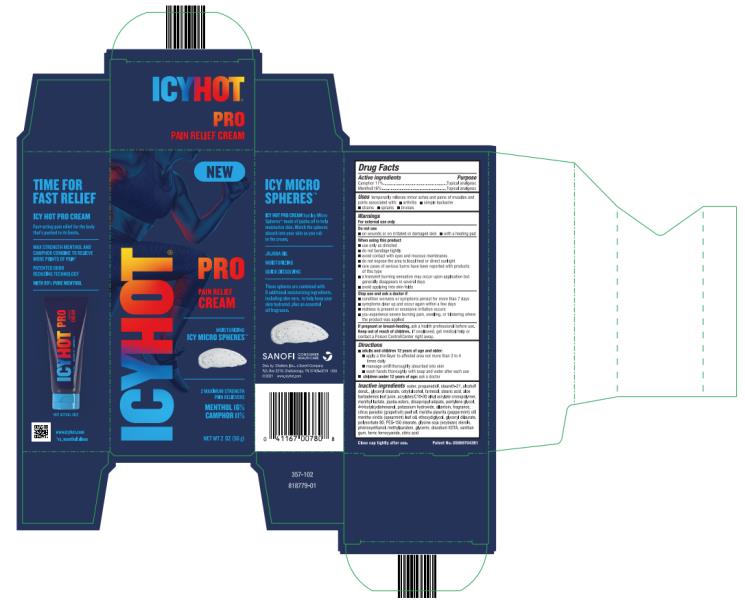
Icy Hot Pro Pain Relief Cream w/ microbeads Menthol, Camphor .16 g/g; .11 g/g Cream, 56 g
🆔 Identity & classification
Where does this data come from?
🏭 Manufacturer & labeler
Where does this data come from?
🩺 Clinical
Icy Hot Pro Pain Relief Cream is a topical cream containing menthol and camphor that is applied directly to the skin. These ingredients are commonly used in over-the-counter pain relief products because they produce a warm or cool sensation that people typically find soothing when applied to sore muscles and joints. This product is marketed as an over-the-counter monograph drug, meaning it follows established FDA guidelines for this category of topical pain relief products rather than undergoing individual FDA review.
Patient education
Supplement & herbal interactions
Where does this data come from?
Ask a licensed pharmacist directly — free, answered by our team.
🧪 Inactive Ingredients / Excipients
Inactive ingredients, also called excipients, are components of the drug product other than the active ingredient. They may include fillers, dyes, coatings, preservatives, flavors, or other formulation ingredients.
💡 Tap an ingredient (hover on desktop) to see what it is and why it’s used.
-
UNII K0H1405S9C
A synthetic organic compound used as a solvent or carrier in pharmaceutical formulations. It helps dissolve or suspend active ingredients and improve the stability and consistency of the medicine.
-
UNII 3K9958V90M
A liquid solvent derived from fermentation or chemical synthesis. In medicines, alcohol dissolves active ingredients, helps preserve the product, and improves how the body absorbs certain drugs.
-
UNII 344S277G0Z
Allantoin is a naturally derived compound that helps soften and soothe skin. In medicines, it works as a skin-conditioning agent and may help support wound healing and reduce irritation in topical formulations.
-
UNII ZY81Z83H0X
Aloe vera leaf is a plant extract derived from the aloe plant. It is used in medicines as a natural moisturizer and skin-soothing agent in topical formulations.
-
UNII 59TL3WG5CO
A synthetic polymer made by crosslinking acrylic acid with allyl sucrose. It thickens liquids, forms gels, and helps control how fast the medicine is released in your body.
-
UNII 2DMT128M1S
A waxy solid derived from plant or animal sources. It acts as an emulsifier to blend oil and water components, and also thickens the medicine to give it the right texture and consistency.
-
UNII 2968PHW8QP
A weak organic acid derived from citrus fruits or made through fermentation. It works as a buffer to control pH, a preservative to extend shelf life, and a flavoring agent in medications.
-
UNII A1A1I8X02B
A clear liquid solvent derived from ethylene glycol. It helps dissolve active ingredients and improve how the medicine flows and mixes in liquid formulations.
-
UNII P7E6YFV72X
Diisopropyl adipate is a clear, oily liquid derived from adipic acid. It acts as a plasticizer and solvent in medicines, helping soften coatings and improve how the drug dissolves or spreads in the body.
-
UNII 8NLQ36F6MM
Edetate disodium anhydrous is a chemical compound that binds to metal ions in a medicine. It's used as a stabilizer to prevent unwanted chemical reactions and help keep the drug product effective during storage.
-
UNII EB41QIU6JL
Farnesol is a natural fragrant compound found in plants. It's used in medicines as a preservative and flavoring agent to improve taste and help prevent microbial growth.
-
UNII TLE294X33A
Ferric ferrocyanide is an iron compound used as a colorant and anti-caking agent in medications. It helps prevent clumping and gives tablets or capsules a consistent appearance.
-
UNII PDC6A3C0OX
Glycerin is a clear, thick liquid derived from plant oils or fats. It acts as a humectant to retain moisture, a sweetener, and a solvent in medications.
-
UNII MFL3ZIE8SK
A fatty substance derived from glycerin and lauric acid. It works as an emulsifier to help blend oil and water ingredients together, and as a thickener in the medicine formulation.
-
UNII 230OU9XXE4
A waxy substance made from glycerin and stearic acid that acts as an emulsifier to blend oily and watery ingredients together. It also helps thicken and stabilize the medicine's texture.
-
UNII YR377U58W9
Grapefruit oil is a natural aromatic extract from grapefruit peel. It's used in medicines as a flavoring agent to improve taste and sometimes as a fragrance component.
-
UNII 724GKU717M
Jojoba oil is a natural liquid wax extracted from jojoba plant seeds. It's used in medicines as an emollient and lubricant to soften and smooth the product, and sometimes as a carrier or penetration enhancer.
-
UNII 2BF9E65L7I
A chemical compound combining menthol with lactic acid. It's used in medicines as a flavoring agent and to provide a cooling or soothing sensation on the skin or mouth.
-
UNII A2I8C7HI9T
Methylparaben is a preservative derived from benzoic acid that prevents growth of bacteria, fungi, and mold in medicines. It extends the product's shelf life and maintains safety during storage.
-
UNII 7BSG7DF10Q
PEG-150 stearate is a waxy substance made by combining polyethylene glycol with stearic acid. It acts as an emulsifier and surfactant to help blend water and oil-based ingredients together in the medicine.
-
UNII 50C1307PZG
Pentylene glycol is a humectant and preservative helper derived from petroleum or plant sources. It draws moisture into the product and helps prevent bacterial growth, keeping medicines stable during storage.
-
UNII AV092KU4JH
A natural oil extracted from peppermint plants. It's used as a flavoring agent to mask bitter tastes and add a refreshing mint flavor to medicines, making them easier to take.
-
UNII HIE492ZZ3T
Phenoxyethanol is a synthetic preservative and antimicrobial agent used to prevent bacterial and fungal growth in medicines and cosmetic products, extending shelf life and maintaining product safety.
-
UNII 6OZP39ZG8H
Polysorbate 80 is a synthetic emulsifier derived from sorbitol and oleic acid. It helps mix oil and water-based ingredients together in medications and improves how the product disperses in the body.
-
UNII WZH3C48M4T
Potassium hydroxide is a strong alkaline chemical used in medicines to adjust and maintain the pH level of liquid formulations, helping keep the product stable and the active ingredients effective.
-
UNII 5965N8W85T
Propanediol is a clear liquid organic compound derived from vegetable sources or synthesized chemically. It acts as a humectant to retain moisture, a solvent to dissolve active ingredients, and a preservative booster in liquid medications and supplements.
-
UNII PL360EPO9J
Soy sterol is a plant-derived fat extracted from soybeans. It's used as an emulsifier and stabilizer to help keep oil and water mixed together and maintain the medicine's texture and consistency.
-
UNII C3M81465G5
Spearmint oil is a natural flavoring extract from spearmint plants. It's added to medicines to improve taste and mask bitter flavors, making medications easier to take.
-
UNII 53J3F32P58
A synthetic detergent derived from stearic acid, a fatty substance. It helps dissolve or distribute oil-based ingredients evenly throughout the medicine, acting as an emulsifier and solubilizer in tablets and capsules.
-
UNII 4ELV7Z65AP
Stearic acid is a fatty acid derived from plant or animal sources. It acts as a binder and lubricant in tablets and capsules, helping them hold together and flow smoothly during manufacturing.
-
UNII 059QF0KO0R
Water is a liquid solvent that dissolves and mixes ingredients together in liquid medicines, syrups, and injections. It helps distribute the active drug evenly throughout the product.
-
UNII TTV12P4NEE
Xanthan gum is a thickening and stabilizing ingredient made from fermented corn or other sugars. It's added to medicines to improve texture, prevent separation of liquids and solids, and help the product stay consistent.
32 inactive ingredients listed in the exact product block matched to this NDC.
Label-section wording can be broader than the structured product block and may mention additional formulation ingredients.
Where does this data come from?
ingredient classCode="IACT" elements from the exact product block matched by this NDC. Label-section narrative from DailyMed / the openFDA label index is shown separately when available.Inactive ingredient FAQ
Are inactive ingredients the same for every manufacturer?
Why might an inactive ingredient be missing?
Can inactive ingredients matter?
💲 Pricing
A drug doesn't have one price. Each row is a different public payment system, and none is what you'd pay at the counter — that depends on your insurance. The ⓘ on each row explains what it measures.
| Price system | Per g | Per package |
|---|---|---|
| Retail pharmacies payNADAC · weekly | Not in the retail survey — common for institutional, discontinued, or low-volume packs. | |
| Medicaid paysCMS SDUD · 12 mo | No recent Medicaid claims on file for this NDC — rare and low-volume NDCs are suppressed in the public data. | |
| Medicare drug plans payPart D · quarterly | No Part D plan price is available for this NDC in our data. | |
Where does this data come from?
🔁 Therapeutic equivalents
| Product | Labeler | Pack | NADAC/unit | TE | Status | Price vs. this |
|---|---|---|---|---|---|---|
| Icy Hot Pro Pain Relief Cream w/ microbeads .16 g/g; .11 g/gthis 41167-0078-00 | Chattem, | 56 g | — | — | FDA listed | — |
| Icy Hot Pro No-Mess 11 g/100g; 16 g/100g 41167-0079-06 | Chattem, | 85 g | — | — | FDA listed | — |
| Icy Hot Advanced Relief .11 g/g; .16 g/g 41167-0801-00 | Chattem, | 1 tube | — | — | FDA listed | — |
| Hempvana Maximum Strength Pain Relief Cream Extreme 16 g/100g; 11 g/100g 73287-0031-01 | Telebrands | 1 jar | — | — | FDA listed | — |
Where does this data come from?
⏳ Availability & generic status
We did not find an FDA-approved generic match for this exact strength, form and route.
Where does this data come from?
📦 Packaging — all sizes for this product
| Package NDC | Description | Marketing start | Status |
|---|---|---|---|
| 41167-0078-00 You're viewing this | 56 g in 1 TUBE (41167-0078-0) | 2022-02-21 | Active |
| 41167-0078-02 | 28 g in 1 TUBE (41167-0078-2) | 2022-06-12 | Active |
You're viewing the largest of 2 pack sizes for this product.
Pack size FAQ
What quantity is in NDC 41167-0078-00?
What is the difference between NDC 41167-0078-00 and NDC 41167-0078-02?
What NDC number is used to bill for this package of Icy Hot Pro Pain Relief Cream w/ microbeads Menthol, Camphor .16 g/g; .11 g/g Cream?
🧭 About this NDC listing & data coverage
What data is (and isn’t) available for this NDC — tap to expand
| NDC identity (package / product / labeler codes) | ✓ Available |
| Labeler | ✓ Available |
| Product & package description | ✓ Available |
| Marketing category & status | ✓ Available |
| Active ingredient / dosage form / route | ✓ Available |
| FDA label (SPL via DailyMed) | ✓ Available |
| Package photos | ✓ Available |
| Inactive ingredients (structured) | ✓ Available |
| NADAC pharmacy acquisition price (CMS) | — Not published for this NDC CMS publishes NADAC only for NDCs reported in its retail-pharmacy survey. |
| Orange Book / therapeutic-equivalence data | — Not published for this NDC Applies only to products approved under an NDA/ANDA; many listings are out of scope. |
| HCPCS J-code billing crosswalk | — Not published for this NDC Most self-administered / retail products have no J-code — that is normal. |
| Medicaid utilization (CMS SDUD) | — Not published for this NDC CMS reports utilization only for NDCs with Medicaid claims above its privacy threshold. |
Questions about this listing
Is this NDC FDA-approved?
Why is there no price listed?
Is the NDC printed on the package the same as the 11-digit billing NDC?
What do the three segments of this NDC mean?
Is this package still being marketed?
Does this product come in other package sizes?
Who lists this product with the FDA?
Do I need a prescription for this product?
Where does this data come from?
📄 FDA label — Drug Facts FDA SPL
🎯 Indications and Usage ▾
Use s temporarily relieves minor aches and pains of muscles and joints associated with: ■ arthritis ■ simple backache ■ strains ■ sprains ■ bruises
⏱️ Dosage and Administration ▾
Directions adults and children 12 years of age and older : ▪ apply a thin layer to affected area not more than 3 to 4 times daily ▪ massage until thoroughly absorbed into skin ▪ wash hands thoroughly with soap and water after each use children under 12 years of age : ask a doctor
⚠️ Warnings ▾
Warnings For external use only Do not use ■ on wounds or on irritated or damaged skin ■ with a heating pad When using this product ■ use only as directed ■ do not bandage tightly ■ avoid contact with eyes and mucous membranes ■ do not expose the area to local heat or direct sunlight ■ rare cases of serious burns have been reported with products of this type ■ a transient burning sensation may occur upon application but generally disappears in several days ■ avoid applying into skin folds Stop use and ask a doctor if ■ condition worsens or symptoms persist for more than 7 days ■ symptoms clear up and occur again within a few days ■ redness is present or excessive skin irritation occurs ■ you experience severe burning pain, swelling, or blistering where the product was applied If pregnant or breast-feeding, ask a health professional before use.
Keep out of reach of children. If swallowed, get medical help or contact a Poison Control Center right away.
🧪 Active Ingredient ▾
Active ingredient s Camphor 11%, Menthol 16%
🧪 Inactive Ingredients ▾
Inactive ingredients water, propanediol, steareth-21, alcohol denat., glyceryl stearate, cetyl alcohol, farnesol, stearic acid, aloe barbadensis leaf juice, acrylates/C10-30 alkyl acrylate crosspolymer, menthyl lactate, jojoba esters, diisopropyl adipate, pentylene glycol, 4-t-butylcyclohexanol, potassium hydroxide, allantoin, fragrance, citrus paradisi (grapefruit) peel oil, mentha piperita (peppermint) oil, mentha viridis (spearmint) leaf oil, ethoxydiglycol, glyceryl dilaurate, polysorbate 80, PEG-150 stearate, glycine soja (soybean) sterols, phenoxyethanol, methylparaben, glycerin, disodium EDTA, xanthan gum, ferric ferrocyanide, citric acid 357-102 Close cap tightly after use.
Keep carton as it contains important information.
🎯 Purpose ▾
Purpose Topical analgesic