
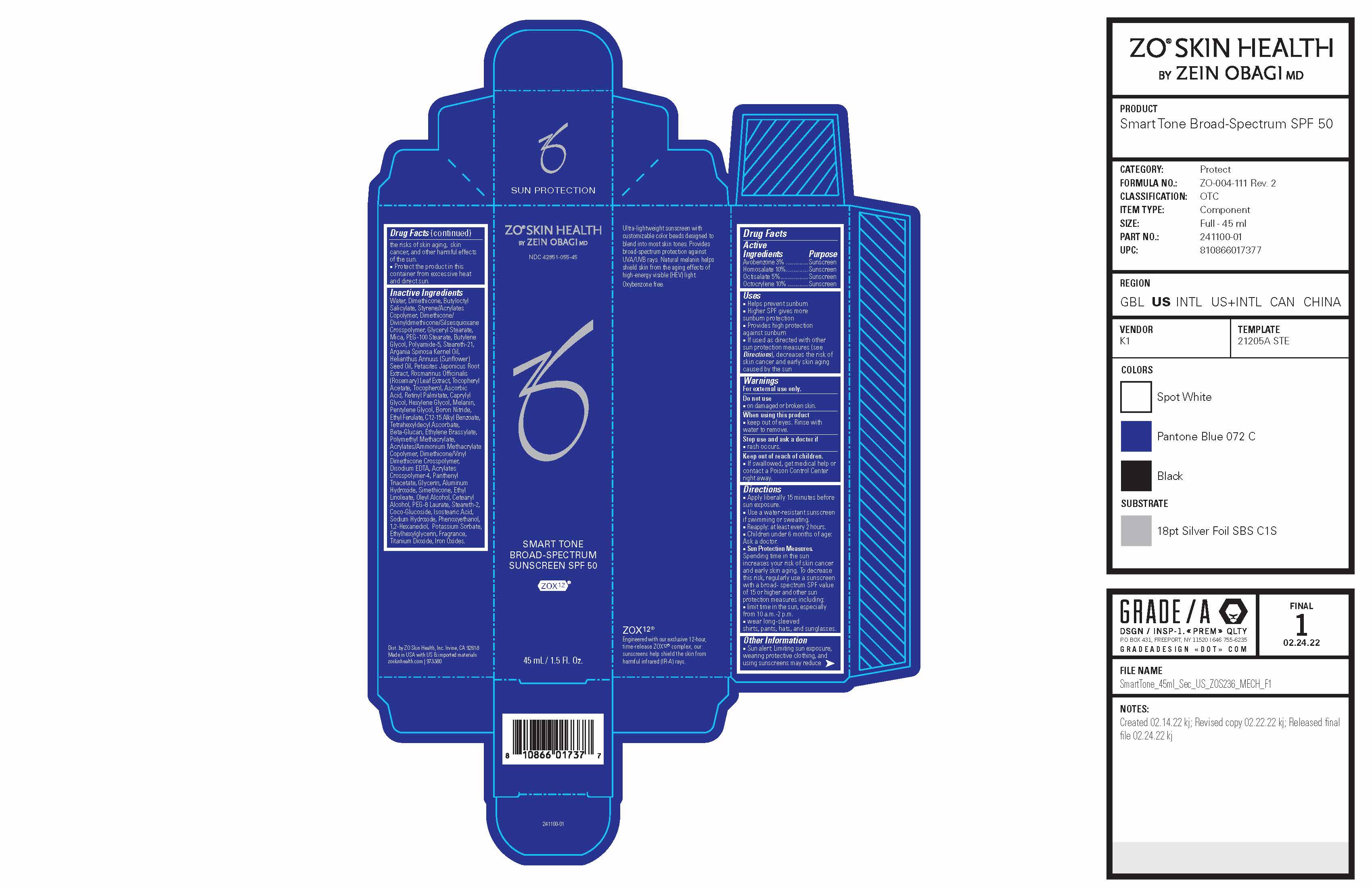
ZO Skin Health Smart Tone Broad-Spectrum Sunscreen SPF 50 Avobenzone, Homosalate, Octisalate, Octocrylene 100 mg/mL; 30 mg/mL; 100 mg/mL; 50 mg/mL Lotion
🆔 Identity & classification
Where does this data come from?
🏭 Manufacturer & labeler
Where does this data come from?
🩺 Clinical
This is a topical lotion sunscreen marketed as an over-the-counter monograph product under FDA's established rules for sunscreens. It contains four active ingredients (avobenzone, homosalate, octisalate, and octocrylene) that function as ultraviolet light absorbers, commonly used together in broad-spectrum sunscreens to help protect skin from both UVA and UVB rays. The product is labeled SPF 50 and is applied to exposed skin as a sun-protective measure.
Patient education
Supplement & herbal interactions
Where does this data come from?
Ask a licensed pharmacist directly — free, answered by our team.
🧪 Inactive Ingredients / Excipients
Inactive ingredients, also called excipients, are components of the drug product other than the active ingredient. They may include fillers, dyes, coatings, preservatives, flavors, or other formulation ingredients.
💡 Tap an ingredient (hover on desktop) to see what it is and why it’s used.
-
UNII TR046Y3K1G
A liquid alcohol derived from petroleum or plant sources. It acts as a solvent and humectant in medicines, helping dissolve active ingredients and retain moisture in the formulation.
-
UNII 3K9958V90M
A liquid solvent derived from fermentation or chemical synthesis. In medicines, alcohol dissolves active ingredients, helps preserve the product, and improves how the body absorbs certain drugs.
-
UNII A9EJ3J61HQ
A synthetic liquid derived from benzoic acid and long-chain alcohols. It functions as a solvent and penetration enhancer in topical formulations, helping active ingredients dissolve and absorb into the skin.
-
UNII 9E8X80D2L0
A synthetic form of vitamin E used as an antioxidant and preservative in medications. It helps prevent the active ingredients from degrading when exposed to oxygen or light.
-
UNII 5QB0T2IUN0
Aluminum hydroxide is a white powder mineral compound used as an antacid ingredient in some formulations. It works as a buffer and pH regulator to help neutralize stomach acid in the medicine.
-
UNII 4V59G5UW9X
Argan oil is a plant-derived oil from argan tree kernels. It's used in medicines as an emollient and skin-conditioning agent to help soften and moisturize the product's texture.
-
UNII PQ6CK8PD0R
Ascorbic acid, also known as vitamin C, is a white crystalline powder. It serves as an antioxidant to prevent degradation of other ingredients and may also function as a preservative in the formulation.
-
UNII 2U4T60A6YD
Boron nitride is a synthetic mineral compound. It acts as a glidant and anti-caking agent to improve powder flow and prevent clumping in tablets and capsules.
-
UNII 3XUS85K0RA
Butylene glycol is a clear liquid derived from petroleum or plants that acts as a humectant, solvent, and preservative booster in medicines. It helps keep formulations stable, dissolve active ingredients, and maintain moisture in topical products.
-
UNII 2EH13UN8D3
A synthetic compound used as a solvent and penetration enhancer in topical formulations. It helps dissolve active ingredients and allows them to penetrate the skin more effectively.
-
UNII 00YIU5438U
Caprylyl glycol is a clear liquid derived from coconut oil. In medicines, it acts as a humectant to retain moisture, a preservative booster to prevent microbial growth, and a solvent to help dissolve or mix other ingredients.
-
UNII ICS790225B
A plant-derived cleaning agent made from coconut oil and glucose. It works as a surfactant and emulsifier to help mix oil and water-based ingredients together in the formulation.
-
UNII 92RU3N3Y1O
Dimethicone is a silicone-based oil that acts as an anti-foaming agent and lubricant in medicines. It reduces gas bubbles in liquid formulations and helps coat and protect the stomach lining when ingested.
-
UNII T3064TZ75A
A silicone-based polymer mixture used as an anti-foaming agent and skin protectant in topical formulations. It helps reduce surface bubbles during manufacturing and creates a smooth, water-resistant barrier on the skin.
-
UNII 9E4CO0W6C5
A silicone-based polymer that forms soft, spongy particles. Used as a texture modifier and suspending agent to improve how the product feels and flows, and to help keep ingredients evenly distributed throughout the formulation.
-
UNII 8NLQ36F6MM
Edetate disodium anhydrous is a chemical compound that binds to metal ions in a medicine. It's used as a stabilizer to prevent unwanted chemical reactions and help keep the drug product effective during storage.
-
UNII 5B8915UELW
A plant-derived compound used as an antioxidant in medicines. It helps prevent spoilage and degradation of active ingredients during storage by protecting them from oxidative damage.
-
UNII MJ2YTT4J8M
Ethyl linoleate is a fatty acid ester derived from linoleic acid. It acts as an emollient and solvent in formulations, helping to dissolve or carry active ingredients and improve product texture and absorption.
-
UNII 9A87HC7ROD
A synthetic compound used as a plasticizer and conditioning agent in tablet coatings and film formulations. It helps make coatings flexible and improves how they cling to the tablet surface.
-
UNII 147D247K3P
Ethylhexylglycerin is a synthetic preservative used to prevent bacteria and mold from growing in medicines and personal care products. It helps keep the product safe and stable throughout its shelf life.
-
UNII 1K09F3G675
Ferric oxide red is an inorganic iron compound used as a colorant in medicines. It gives tablets, capsules, or other dosage forms a red or reddish tint for identification and appearance.
-
UNII PDC6A3C0OX
Glycerin is a clear, thick liquid derived from plant oils or fats. It acts as a humectant to retain moisture, a sweetener, and a solvent in medications.
-
UNII 230OU9XXE4
A waxy substance made from glycerin and stearic acid that acts as an emulsifier to blend oily and watery ingredients together. It also helps thicken and stabilize the medicine's texture.
-
UNII KEH0A3F75J
Hexylene glycol is a clear liquid alcohol used as a solvent and preservative in medicines. It helps dissolve other ingredients and keeps the product stable during storage.
-
UNII X33R8U0062
Isostearic acid is a fatty acid derived from vegetable oils. It acts as an emulsifier and lubricant in medicines, helping blend ingredients together and reducing friction during tablet or capsule manufacturing.
-
UNII V8A1AW0880
Mica is a naturally occurring mineral that's ground into fine powder. It's used in medicines as a colorant and anti-caking agent to improve appearance and prevent clumping in tablets or powders.
-
UNII 172F2WN8DV
A fatty alcohol derived from animal or plant oils. It acts as an emollient and helps stabilize emulsions, allowing oil and water to mix evenly in the medication.
-
UNII 1206E8961B
A synthetic moisturizing compound derived from panthenol. It's used in topical formulations as an emollient and skin conditioner to help soften and hydrate the skin surface.
-
UNII YD01N1999R
A waxy substance made from polyethylene glycol and stearic acid. It helps mix oil and water-based ingredients together and serves as an emulsifier and solubilizer in liquid and semi-solid medicines.
-
UNII 762O8IWA10
PEG-8 laurate is a synthetic compound made by combining polyethylene glycol with lauric acid. It acts as an emulsifier and solubilizer in medicines, helping to blend water and oil-based ingredients together and improve how well some drugs dissolve.
-
UNII 50C1307PZG
Pentylene glycol is a humectant and preservative helper derived from petroleum or plant sources. It draws moisture into the product and helps prevent bacterial growth, keeping medicines stable during storage.
-
UNII 6F650HF10T
A plant extract from Japanese butterbur root used as a natural flavoring agent or botanical ingredient in some formulations to add taste and plant-derived components to the medicine.
-
UNII HIE492ZZ3T
Phenoxyethanol is a synthetic preservative and antimicrobial agent used to prevent bacterial and fungal growth in medicines and cosmetic products, extending shelf life and maintaining product safety.
-
UNII Z47NNT4J11
A synthetic plastic polymer used as a film-coating material on tablets and capsules. It helps protect the medicine, control how fast it dissolves, and improve appearance by creating a smooth, glossy outer layer.
-
UNII 1VPU26JZZ4
Potassium sorbate is a salt derived from sorbic acid, a naturally occurring preservative. It prevents growth of mold, yeast, and some bacteria, extending the medicine's shelf life.
-
UNII IJ67X351P9
A natural plant extract from rosemary leaves used as a preservative to help prevent oils and fats in the medicine from spoiling or becoming rancid during storage.
-
UNII 55X04QC32I
A strong alkaline chemical used to adjust and maintain the pH balance of liquid medicines. It helps keep the medicine stable and ensures it stays effective during storage.
-
UNII V56DFE46J5
Steareth-2 is a synthetic emulsifier made from stearic acid and ethylene oxide. It helps mix oil and water-based ingredients together in the formulation and may improve how the medicine spreads or dissolves.
-
UNII 53J3F32P58
A synthetic detergent derived from stearic acid, a fatty substance. It helps dissolve or distribute oil-based ingredients evenly throughout the medicine, acting as an emulsifier and solubilizer in tablets and capsules.
-
UNII 3W1JG795YI
Sunflower oil is a natural vegetable oil derived from sunflower seeds. It serves as a solvent, lubricant, and carrier in medicines, helping dissolve active ingredients and improve how the medication flows and absorbs in the body.
-
UNII 9LBV3F07AZ
A synthetic, oil-soluble form of vitamin C used as an antioxidant to prevent degradation of the medicine and maintain its stability during storage.
-
UNII 15FIX9V2JP
Titanium dioxide is a bright white mineral powder commonly used as a colorant and opacifying agent. It makes pills and tablets white or lighter in color and helps make coatings non-transparent.
-
UNII R0ZB2556P8
Tocopherol is a form of vitamin E derived from plant oils. It acts as an antioxidant in medicines to prevent oils and fats from breaking down and spoiling during storage.
-
UNII 1D1K0N0VVC
A fat-soluble form of vitamin A used as a colorant and nutritional fortification ingredient. It gives products a yellow or orange tint and increases vitamin A content in the formula.
-
UNII 059QF0KO0R
Water is a liquid solvent that dissolves and mixes ingredients together in liquid medicines, syrups, and injections. It helps distribute the active drug evenly throughout the product.
45 inactive ingredients listed in the exact product block matched to this NDC.
Label-section wording can be broader than the structured product block and may mention additional formulation ingredients.
Where does this data come from?
ingredient classCode="IACT" elements from the exact product block matched by this NDC. Label-section narrative from DailyMed / the openFDA label index is shown separately when available.Inactive ingredient FAQ
Are inactive ingredients the same for every manufacturer?
Why might an inactive ingredient be missing?
Can inactive ingredients matter?
💲 Pricing
A drug doesn't have one price. Each row is a different public payment system, and none is what you'd pay at the counter — that depends on your insurance. The ⓘ on each row explains what it measures.
| Price system | Per g | Per package |
|---|---|---|
| Retail pharmacies payNADAC · weekly | Not in the retail survey — common for institutional, discontinued, or low-volume packs. | |
| Medicaid paysCMS SDUD · 12 mo | No recent Medicaid claims on file for this NDC — rare and low-volume NDCs are suppressed in the public data. | |
| Medicare drug plans payPart D · quarterly | No Part D plan price is available for this NDC in our data. | |
Where does this data come from?
🔁 Therapeutic equivalents
| Product | Labeler | Pack | NADAC/unit | TE | Status | Price vs. this |
|---|---|---|---|---|---|---|
| ZO Skin Health Smart Tone Broad-Spectrum Sunscreen SPF 50 100 mg/mL; 30 mg/mL; 100 mg/mL; 50 mg/mLthis 42851-0055-45 | ZO | 1 tube | — | — | FDA listed | — |
Where does this data come from?
⏳ Availability & generic status
We did not find an FDA-approved generic match for this exact strength, form and route.
Where does this data come from?
🔬 Reported adverse events (FAERS)
Top reported reactions
Age at onset
Reporter sex
Serious outcomes
Where does this data come from?
📦 Packaging — all sizes for this product
| Package NDC | Description | Marketing start | Status |
|---|---|---|---|
| 42851-0055-20 | 1 TUBE in 1 CARTON (42851-055-20) / 20 mL in 1 TUBE | 2022-06-01 | Active |
| 42851-0055-45 You're viewing this | 1 TUBE in 1 CARTON (42851-055-45) / 45 mL in 1 TUBE | 2022-06-01 | Active |
Pack size FAQ
What quantity is in NDC 42851-0055-45?
What NDC number is used to bill for this package of ZO Skin Health Smart Tone Broad-Spectrum Sunscreen SPF 50 Avobenzone, Homosalate, Octisalate, Octocrylene 100 mg/mL; 30 mg/mL; 100 mg/mL; 50 mg/mL Lotion?
🧭 About this NDC listing & data coverage
What data is (and isn’t) available for this NDC — tap to expand
| NDC identity (package / product / labeler codes) | ✓ Available |
| Labeler | ✓ Available |
| Product & package description | ✓ Available |
| Marketing category & status | ✓ Available |
| Active ingredient / dosage form / route | ✓ Available |
| FDA label (SPL via DailyMed) | ✓ Available |
| Package photos | ✓ Available |
| Inactive ingredients (structured) | ✓ Available |
| NADAC pharmacy acquisition price (CMS) | — Not published for this NDC CMS publishes NADAC only for NDCs reported in its retail-pharmacy survey. |
| Orange Book / therapeutic-equivalence data | — Not published for this NDC Applies only to products approved under an NDA/ANDA; many listings are out of scope. |
| HCPCS J-code billing crosswalk | — Not published for this NDC Most self-administered / retail products have no J-code — that is normal. |
| Medicaid utilization (CMS SDUD) | — Not published for this NDC CMS reports utilization only for NDCs with Medicaid claims above its privacy threshold. |
Questions about this listing
Is this NDC FDA-approved?
Why is there no price listed?
Is the NDC printed on the package the same as the 11-digit billing NDC?
What do the three segments of this NDC mean?
Is this package still being marketed?
Does this product come in other package sizes?
Who lists this product with the FDA?
Do I need a prescription for this product?
Where does this data come from?
📄 FDA label — Drug Facts FDA SPL
🎯 Indications and Usage ▾
Directions Apply liberally 15 minutes before sun exposure. Use a water-resistant sunscreen if swimming or sweating. Reapply: at least every 2 hours.
Children under 6 months of age: Ask a doctor. Sun Protection Measures. Spending time in the sun increases your risk of skin cancer and early skin aging.
To decrease this risk, regularly use a sunscreen with a broad- spectrum SPF value of 15 or higher and other sun protection measures including: ■ limit time in the sun, especially from 10 a.m.-2 p.m. ■ wear long-sleeved shirts, pants, hats, and sunglasses.
⏱️ Dosage and Administration ▾
Drug Facts Active Ingredients Active Ingredients Purpose Avobenzone 3% ............... Sunscreen Homosalate 10%............... Sunscreen Octisalate 5%...................
Sunscreen Octocrylene 10% .............. Sunscreen Uses Helps prevent sunburn Higher SPF gives more sunburn protection Provides high protection against sunburn If used as directed with other sun protection measures (see Directions ), decreases the risk of skin cancer and early skin aging caused by the sun Warnings For external use only. Do not use on damaged or broken skin.
When using this product keep out of eyes. Rinse with water to remove. Stop use and ask a doctor if rash occurs.
Keep out of reach of children. If swallowed, get medical help or contact a Poison Control Center right away. Directions Apply liberally 15 minutes before sun exposure.
Use a water-resistant sunscreen if swimming or sweating. Reapply: at least every 2 hours. Children under 6 months of age: Ask a doctor.
Sun Protection Measures. Spending time in the sun increases your risk of skin cancer and early skin aging. To decrease this risk, regularly use a sunscreen with a broad- spectrum SPF value of 15 or higher and other sun protection measures including: ■ limit time in the sun, especially from 10 a.m.-2 p.m. ■ wear long-sleeved shirts, pants, hats, and sunglasses.
Other Information Protect the product in this container from excessive heat and direct sun. Inactive Ingredients Water, Dimethicone, Butyloctyl Salicylate, Styrene/Acrylates Copolymer, Dimethicone/Divinyldimethicone/Silsesquioxane Crosspolymer, Glyceryl Stearate, Mica, PEG-100 Stearate, Butylene Glycol, Polyamide-5, Steareth-21, Argania Spinosa Kernel Oil, Helianthus Annuus (Sunflower) Seed Oil, Petasites Japonicus Root Extract, Rosmarinus Officinalis (Rosemary) Leaf Extract, Tocopheryl Acetate, Tocopherol, Ascorbic Acid, Retinyl Palmitate, Caprylyl Glycol, Hexylene Glycol, Melanin, Pentylene Glycol, Boron Nitride, Ethyl Ferulate, C12-15 Alkyl Benzoate, Tetrahexyldecyl Ascorbate, Beta-Glucan, Ethylene Brassylate, Polymethyl Methacrylate, Acrylates/Ammonium Methacrylate Copolymer, Dimethicone/Vinyl Dimethicone Crosspolymer, Disodium EDTA, Acrylates Crosspolymer-4, Panthenyl Triacetate, Glycerin, Aluminum Hydroxide, Simethicone, Ethyl Linoleate, Oleyl Alcohol, Cetearyl Alcohol, PEG-8 Laurate, Steareth-2, Coco-Glucoside, Isostearic Acid, Sodium Hydroxide, Phenoxyethanol, 1,2-Hexanediol, Potassium Sorbate, Ethylhexylglycerin, Fragrance, Titanium Dioxide, Iron Oxides.
⚠️ Warnings ▾
Warnings For external use only.
📦 Storage and Handling ▾
Other Information Protect the product in this container from excessive heat and direct sun.
🧪 Active Ingredient ▾
Active Ingredients Active Ingredients Purpose Avobenzone 3% ............... Sunscreen Homosalate 10%............... Sunscreen Octisalate 5%................... Sunscreen Octocrylene 10% .............. Sunscreen
🧪 Inactive Ingredients ▾
Inactive Ingredients Water, Dimethicone, Butyloctyl Salicylate, Styrene/Acrylates Copolymer, Dimethicone/Divinyldimethicone/Silsesquioxane Crosspolymer, Glyceryl Stearate, Mica, PEG-100 Stearate, Butylene Glycol, Polyamide-5, Steareth-21, Argania Spinosa Kernel Oil, Helianthus Annuus (Sunflower) Seed Oil, Petasites Japonicus Root Extract, Rosmarinus Officinalis (Rosemary) Leaf Extract, Tocopheryl Acetate, Tocopherol, Ascorbic Acid, Retinyl Palmitate, Caprylyl Glycol, Hexylene Glycol, Melanin, Pentylene Glycol, Boron Nitride, Ethyl Ferulate, C12-15 Alkyl Benzoate, Tetrahexyldecyl Ascorbate, Beta-Glucan, Ethylene Brassylate, Polymethyl Methacrylate, Acrylates/Ammonium Methacrylate Copolymer, Dimethicone/Vinyl Dimethicone Crosspolymer, Disodium EDTA, Acrylates Crosspolymer-4, Panthenyl Triacetate, Glycerin, Aluminum Hydroxide, Simethicone, Ethyl Linoleate, Oleyl Alcohol, Cetearyl Alcohol, PEG-8 Laurate, Steareth-2, Coco-Glucoside, Isostearic Acid, Sodium Hydroxide, Phenoxyethanol, 1,2-Hexanediol, Potassium Sorbate, Ethylhexylglycerin, Fragrance, Titanium Dioxide, Iron Oxides.
🎯 Purpose ▾
Uses Helps prevent sunburn Higher SPF gives more sunburn protection Provides high protection against sunburn If used as directed with other sun protection measures (see Directions ), decreases the risk of skin cancer and early skin aging caused by the sun