
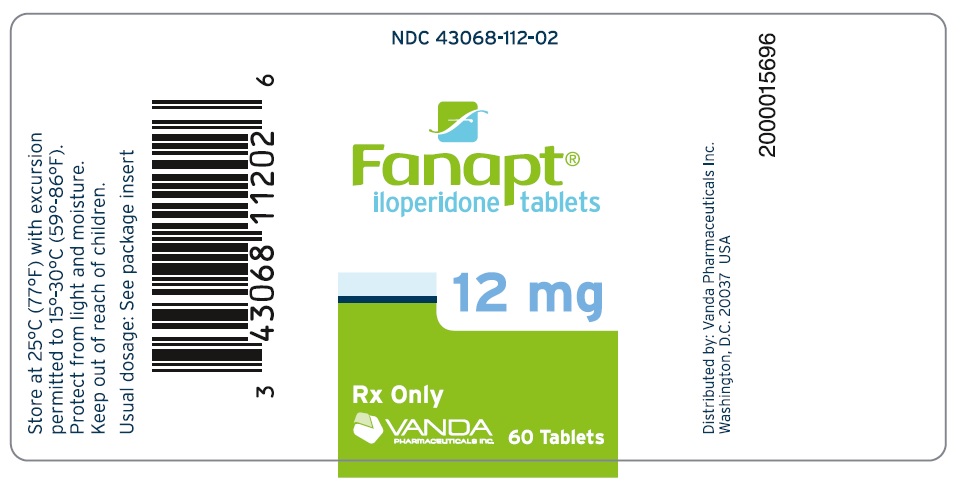
FANAPT ILOPERIDONE 12 mg Tablet, 60-count
🆔 Identity & classification
Where does this data come from?
🏷️ RxNorm drug class
This medicine belongs to the Atypical Antipsychotic class.
Where does this data come from?
🏭 Manufacturer & labeler
Where does this data come from?
🩺 Clinical
Iloperidone is used to treat the symptoms of schizophrenia (a mental illness that affects how a person thinks, feels and behaves) and bipolar I disorder (a disease that causes depression, mania, and other abnormal moods). Iloperidone is in a class of medications called atypical antipsychotics. It works by changing the activity of certain natural substances in the brain.
Read the full MedlinePlus article ↗- Iloperidone tablets are approved to treat schizophrenia in adults. If you've been prescribed the brand Fanapt, it has one additional approved use: treating acute manic or mixed epi...
- Iloperidone can cause a significant drop in blood pressure when you first start it — especially when you stand up quickly — which can make you dizzy or even faint. That's called or...
- Why do I have to start on such a small dose and increase it slowly?
- The most common side effects include dizziness (especially when standing), drowsiness, dry mouth, a fast heartbeat, nasal congestion, fatigue, and some weight gain. Most of these e...
Patient education
Supplement & herbal interactions
Where does this data come from?
Ask a licensed pharmacist directly — free, answered by our team.
💊 What it looks like
Where does this data come from?
🧪 Inactive Ingredients / Excipients
Inactive ingredients, also called excipients, are components of the drug product other than the active ingredient. They may include fillers, dyes, coatings, preservatives, flavors, or other formulation ingredients.
Where does this data come from?
IACT rows and label-wide narrative are kept separate; availability and product-level specificity depend on the submitted label.Inactive ingredient FAQ
Are inactive ingredients the same for every manufacturer?
Why might an inactive ingredient be missing?
Can inactive ingredients matter?
💲 Pricing
A drug doesn't have one price. Each row is a different public payment system, and none is what you'd pay at the counter — that depends on your insurance. The ⓘ on each row explains what it measures.
| Price system | Per ea | Per package |
|---|---|---|
| Retail pharmacies payNADAC · weekly | $60.042 | $3,602.54 / 60 tablets |
| Medicaid paysCMS SDUD · 12 mo | $57.85 | $3,470.86 / 60 tablets |
| Medicare drug plans payPart D · Q2 2026 | $60.96 | $3,657.89 / 60 tablets |
Where does this data come from?
🔁 Therapeutic equivalents
| Product | Labeler | Pack | NADAC/unit | TE | Status | Price vs. this |
|---|---|---|---|---|---|---|
| Fanapt 12 mgthis 43068-0112-02 | Vanda | 60 tablets | $60.042 | — | Availability likely | — |
| Iloperidone 12 mg 00378-0636-01 | Mylan | 100 tablets | — | — | FDA listed | — |
Where does this data come from?
⏳ Availability & generic status
The FDA lists approved generic versions of this medicine, but that does not always mean a pharmacy can get one today. Patent rules, launch agreements, supply and pricing can affect when generics actually arrive.
Why the date isn’t exact: Generic timing can change because patents may be challenged, settled, licensed, added, removed, or worked around with a narrower label — and FDA approval does not always mean a pharmacy can get the generic today.
🛈 What do these terms mean?
- Patent
- Legal protection listed in the Orange Book that may delay generic approval or launch. Issued by the U.S. Patent & Trademark Office.
- Substance patent
- Covers the active drug molecule itself — the hardest to design around. A generic generally can’t launch until it expires.
- Formulation (product) patent
- Covers a specific formulation or dosage form. A generic can sometimes work around it with a different formulation.
- Method-of-use patent
- A patent covering one specific approved use of the drug — not necessarily the whole molecule. A generic can sometimes launch with a “skinny label” that carves out the protected use and keeps the others.
- Skinny label
- A generic label that omits a still-patented use when the FDA allows it — letting a generic reach the market for the unprotected uses.
- Exclusivity
- FDA-granted marketing protection, separate from patents — e.g. 5-yr new chemical entity, 7-yr orphan drug, or a +6-month pediatric extension.
- Paragraph IV
- A generic applicant’s formal challenge to a listed patent. It can potentially lead to earlier generic entry, but often involves litigation or a settlement.
- RLD / RS
- Reference Listed Drug — the brand product the FDA uses as the reference for generic applications. Reference Standard — the product the FDA expects generics to compare against in bioequivalence testing.
- TE / AB rating
- FDA therapeutic-equivalence rating. An AB rating generally means the FDA considers a generic therapeutically equivalent to — and substitutable for — the brand.
- LOE (loss of exclusivity)
- The latest patent or exclusivity currently listed — the loss-of-exclusivity / latest-listed-protection date shown on this page. Paragraph-IV challenges and settlements can move the real date earlier; FDA approval and a manufacturer’s decision to market can move it later.
Built from the FDA Orange Book. The bars above are scaled to each protection’s expiry; the red LOE marker is the last one to lapse.
| Patent | Type | Use code | Expires |
|---|---|---|---|
| US 8586610 ↗ | Method of use | U-1625 | Nov 2, 2027 |
| US 8586610 ↗ | Method of use | U-1625 | Nov 2, 2027 |
| US 8586610 ↗ | Method of use | U-1625 | Nov 2, 2027 |
| US 8586610 ↗ | Method of use | U-1625 | Nov 2, 2027 |
| US 8586610 ↗ | Method of use | U-1625 | Nov 2, 2027 |
| US 9074256 ↗ | Method of use | U-1674 | Feb 10, 2031 |
| US 9072742 ↗ | Method of use | U-1674 | Jan 16, 2031 |
| US 9072742 ↗ | Method of use | U-1674 | Jan 16, 2031 |
| US 9074256 ↗ | Method of use | U-1674 | Feb 10, 2031 |
| US 9072742 ↗ | Method of use | U-1674 | Jan 16, 2031 |
| US 9074256 ↗ | Method of use | U-1674 | Feb 10, 2031 |
| US 9074256 ↗ | Method of use | U-1674 | Feb 10, 2031 |
| US 9072742 ↗ | Method of use | U-1674 | Jan 16, 2031 |
| US 9074255 ↗ | Method of use | U-1674 | Dec 17, 2030 |
| US 9072742 ↗ | Method of use | U-1674 | Jan 16, 2031 |
| US 9157121 ↗ | Method of use | U-1674 | Apr 5, 2030 |
| US 9157121 ↗ | Method of use | U-1674 | Apr 5, 2030 |
| US 9157121 ↗ | Method of use | U-1674 | Apr 5, 2030 |
| US 9157121 ↗ | Method of use | U-1674 | Apr 5, 2030 |
| US 8999638 ↗ | Method of use | U-1674 | Oct 28, 2030 |
| US 8999638 ↗ | Method of use | U-1674 | Oct 28, 2030 |
| US 8999638 ↗ | Method of use | U-1674 | Oct 28, 2030 |
| US 9074254 ↗ | Method of use | U-1674 | Dec 28, 2031 |
| US 9074254 ↗ | Method of use | U-1674 | Dec 28, 2031 |
| US 9074254 ↗ | Method of use | U-1674 | Dec 28, 2031 |
| US 8652776 ↗ | Method of use | U-1685 | Aug 31, 2030 |
| US 8652776 ↗ | Method of use | U-1685 | Aug 31, 2030 |
| US 9074255 ↗ | Method of use | U-1674 | Dec 17, 2030 |
| US 9072742 ↗ | Method of use | U-1674 | Jan 16, 2031 |
| US 9074255 ↗ | Method of use | U-1674 | Dec 17, 2030 |
| US 9072742 ↗ | Method of use | U-1674 | Jan 16, 2031 |
| US 9157121 ↗ | Method of use | U-1674 | Apr 5, 2030 |
| US 8999638 ↗ | Method of use | U-1674 | Oct 28, 2030 |
| US 8999638 ↗ | Method of use | U-1674 | Oct 28, 2030 |
| US 9074254 ↗ | Method of use | U-1674 | Dec 28, 2031 |
| US 9074254 ↗ | Method of use | U-1674 | Dec 28, 2031 |
| US 8652776 ↗ | Method of use | U-1685 | Aug 31, 2030 |
| US 8652776 ↗ | Method of use | U-1685 | Aug 31, 2030 |
| US 8652776 ↗ | Method of use | U-1685 | Aug 31, 2030 |
| US 8652776 ↗ | Method of use | U-1685 | Aug 31, 2030 |
| US 9074255 ↗ | Method of use | U-1674 | Dec 17, 2030 |
| US 9157121 ↗ | Method of use | U-1674 | Apr 5, 2030 |
| US 8586610 ↗ | Method of use | U-1625 | Nov 2, 2027 |
| US 9074254 ↗ | Method of use | U-1674 | Dec 28, 2031 |
| US 9074254 ↗ | Method of use | U-1674 | Dec 28, 2031 |
| US 9074255 ↗ | Method of use | U-1674 | Dec 17, 2030 |
| US 9074255 ↗ | Method of use | U-1674 | Dec 17, 2030 |
| US 9074255 ↗ | Method of use | U-1674 | Dec 17, 2030 |
| US 9074256 ↗ | Method of use | U-1674 | Feb 10, 2031 |
| US 9157121 ↗ | Method of use | U-1674 | Apr 5, 2030 |
| US 9074256 ↗ | Method of use | U-1674 | Feb 10, 2031 |
| US 8652776 ↗ | Method of use | U-1685 | Aug 31, 2030 |
| US 8999638 ↗ | Method of use | U-1674 | Oct 28, 2030 |
| US 8999638 ↗ | Method of use | U-1674 | Oct 28, 2030 |
| US 9074256 ↗ | Method of use | U-1674 | Feb 10, 2031 |
| US 8586610 ↗ | Method of use | U-1625 | Nov 2, 2027 |
| US 12606869 ↗ | Method of use | U-4504 | Sep 22, 2030 |
| US 12606869 ↗ | Method of use | U-4505 | Sep 22, 2030 |
| US 12606869 ↗ | Method of use | U-4504 | Sep 22, 2030 |
| US 12606869 ↗ | Method of use | U-4505 | Sep 22, 2030 |
| US 12606869 ↗ | Method of use | U-4504 | Sep 22, 2030 |
| US 12606869 ↗ | Method of use | U-4505 | Sep 22, 2030 |
| US 12606869 ↗ | Method of use | U-4504 | Sep 22, 2030 |
| US 12606869 ↗ | Method of use | U-4505 | Sep 22, 2030 |
| US 12606869 ↗ | Method of use | U-4504 | Sep 22, 2030 |
| US 12606869 ↗ | Method of use | U-4505 | Sep 22, 2030 |
| US 12606869 ↗ | Method of use | U-4504 | Sep 22, 2030 |
| US 12606869 ↗ | Method of use | U-4505 | Sep 22, 2030 |
| US 12606869 ↗ | Method of use | U-4504 | Sep 22, 2030 |
| US 12606869 ↗ | Method of use | U-4505 | Sep 22, 2030 |
| US 10570453 ↗ | Method of use | U-4562 | Mar 28, 2028 |
| US 10570453 ↗ | Method of use | U-4563 | Mar 28, 2028 |
| US 10570453 ↗ | Method of use | U-4562 | Mar 28, 2028 |
| US 10570453 ↗ | Method of use | U-4563 | Mar 28, 2028 |
| US 10570453 ↗ | Method of use | U-4562 | Mar 28, 2028 |
| US 10570453 ↗ | Method of use | U-4563 | Mar 28, 2028 |
| US 10570453 ↗ | Method of use | U-4562 | Mar 28, 2028 |
| US 10570453 ↗ | Method of use | U-4563 | Mar 28, 2028 |
| US 10570453 ↗ | Method of use | U-4562 | Mar 28, 2028 |
| US 10570453 ↗ | Method of use | U-4563 | Mar 28, 2028 |
| US 10570453 ↗ | Method of use | U-4562 | Mar 28, 2028 |
| US 10570453 ↗ | Method of use | U-4563 | Mar 28, 2028 |
| US 10570453 ↗ | Method of use | U-4562 | Mar 28, 2028 |
| US 10570453 ↗ | Method of use | U-4563 | Mar 28, 2028 |
| US 10563259 ↗ | Method of use | U-4562 | Jul 24, 2030 |
| US 10563259 ↗ | Method of use | U-4563 | Jul 24, 2030 |
| US 10563259 ↗ | Method of use | U-4562 | Jul 24, 2030 |
| US 10563259 ↗ | Method of use | U-4563 | Jul 24, 2030 |
| US 10563259 ↗ | Method of use | U-4562 | Jul 24, 2030 |
| US 10563259 ↗ | Method of use | U-4563 | Jul 24, 2030 |
| US 10563259 ↗ | Method of use | U-4562 | Jul 24, 2030 |
| US 10563259 ↗ | Method of use | U-4563 | Jul 24, 2030 |
| US 10563259 ↗ | Method of use | U-4562 | Jul 24, 2030 |
| US 10563259 ↗ | Method of use | U-4563 | Jul 24, 2030 |
| US 10563259 ↗ | Method of use | U-4562 | Jul 24, 2030 |
| US 10563259 ↗ | Method of use | U-4563 | Jul 24, 2030 |
| US 10563259 ↗ | Method of use | U-4562 | Jul 24, 2030 |
| US 10563259 ↗ | Method of use | U-4563 | Jul 24, 2030 |
| Code | What it grants | Expires |
|---|---|---|
| I-939 | New indication (3-year) | Apr 2, 2027 |
| I-939 | New indication (3-year) | Apr 2, 2027 |
| I-939 | New indication (3-year) | Apr 2, 2027 |
| I-939 | New indication (3-year) | Apr 2, 2027 |
| I-939 | New indication (3-year) | Apr 2, 2027 |
| I-939 | New indication (3-year) | Apr 2, 2027 |
| I-939 | New indication (3-year) | Apr 2, 2027 |
Is there a generic version of FANAPT 12 MG TABLET?
The FDA approved a generic — why can’t I get it at my pharmacy yet?
Why do different websites show different generic release dates?
What does “FDA listed” mean?
What does a patent or protection date mean here?
What does “current Orange Book estimate” mean?
Can a generic come out before the last patent expires?
Can a generic come out after the listed dates?
What is the difference between patents and exclusivity?
Why are there multiple patent dates?
Where does this data come from?
🗺️ Medicaid utilization & spend
📊 Medicare Part D spend CMS · PART D · 2026 (Q1)
📦 Packaging — all sizes for this product
| Package NDC | Description | Marketing start | Status |
|---|---|---|---|
| 43068-0112-02 You're viewing this | 60 TABLET in 1 BOTTLE (43068-112-02) | 2016-10-15 | Active |
📄 Full prescribing information FDA SPL
🚨 Boxed Warning ▾
WARNING: INCREASED MORTALITY IN ELDERLY PATIENTS WITH DEMENTIA-RELATED PSYCHOSIS Elderly patients with dementia-related psychosis treated with antipsychotic drugs are at an increased risk of death. FANAPT is not approved for the treatment of patients with dementia-related psychosis [see Warnings and Precautions (5.1) ] . WARNING: INCREASED MORTALITY IN ELDERLY PATIENTS WITH DEMENTIA-RELATED PSYCHOSIS See full prescribing information for complete boxed warning.
Elderly patients with dementia-related psychosis treated with antipsychotic drugs are at an increased risk of death. FANAPT is not approved for use in patients with dementia-related psychosis. ( 5.1 )
🎯 Indications and Usage ▾
1 INDICATIONS AND USAGE FANAPT ® is indicated for: Treatment of schizophrenia in adults [see Clinical Studies (14.1) ]. Acute treatment of manic or mixed episodes associated with bipolar I disorder in adults [see Clinical Studies (14.2) ] . FANAPT is an atypical antipsychotic indicated for: Treatment of schizophrenia in adults. ( 1 , 14.1 ) Acute treatment of manic or mixed episodes associated with bipolar I disorder in adults. ( 1 , 14.2 )
⏱️ Dosage and Administration ▾
2 DOSAGE AND ADMINISTRATION Administer FANAPT orally twice daily without regard to meals. ( 2.1 ) Titrate the dosage of FANAPT to avoid orthostatic hypotension. See Full Prescribing Information for titration schedule.
( 2.1 ) Recommended Dosage: Indication Starting Dosage Recommended Dosage Schizophrenia ( 2.1 ) 1 mg twice daily 6 mg to 12 mg twice daily Bipolar Mania ( 2.1 ) 1 mg twice daily 12 mg twice daily CYP2D6 Poor Metabolizers: See Full Prescribing Information for titration schedule and recommended dosage. ( 2.2 )
2.1Recommended Dosage Titrate FANAPT to avoid orthostatic hypotension [see Warnings and Precautions (5.7) ] . Administer FANAPT orally with or without food. Table 1 includes dosage recommendations for FANAPT for the treatment of schizophrenia and the acute treatment of manic or mixed episodes associated with bipolar I disorder in adults.
Table 1: Dosage Recommendations for FANAPT in Adults for the Treatment of Schizophrenia or Acute Treatment of Manic or Mixed Episodes Associated with Bipolar I Disorder Indication and Population Titration schedule Recommended Dosage Day 1 Day 2 Day 3 Day 4 Day 5 Day 6 Day 7 Schizophrenia Titration Pack A 1mg twice daily 2 mg twice daily 4 mg twice daily 6 mg twice daily 8 mg twice daily 10 mg twice daily 12 mg twice daily 6 mg to 12 mg twice daily Bipolar I Disorder Manic or Mixed Episodes Titration Pack B 1 mg twice daily 3 mg twice daily 6 mg twice daily 9 mg twice daily 12 mg twice daily Titration complete 12 mg twice daily
2.2Dosage Recommendations for Use in Patients Who Are Known CYP2D6 Poor Metabolizers Reduce the dose of FANAPT by one-half for CYP2D6 poor metabolizers [see Clinical Pharmacology (12.3 , 12.5 )] . Table 2 includes dosage recommendations for FANAPT in adults who are CYP2D6 poor metabolizers. Table 2: Dosage Recommendations for FANAPT in Adults with Schizophrenia or Bipolar I Disorder Who are CYP2D6 Poor Metabolizers Indication and Population Titration schedule Recommended Dosage Day 1 Day 2 Day 3 Day 4 Day 5 Day 6 Day 7 Schizophrenia Titration Pack A 1mg twice daily 2 mg twice daily 4 mg twice daily 6 mg twice daily Titration complete 3 mg to 6 mg twice daily Bipolar I Disorder Manic or Mixed Episodes Titration Pack C 1 mg twice daily 3 mg twice daily 6 mg twice daily Titration complete 6 mg twice daily
2.3Dosage Recommendations in Patients with Hepatic Impairment No dose adjustment for FANAPT is needed in patients with mild hepatic impairment. Patients with moderate hepatic impairment may require dose reduction, if clinically indicated. FANAPT is not recommended for patients with severe hepatic impairment [see Use in Specific Populations (8.6) ] .
2.4Dosage Modifications for Concomitant Use with Strong CYP2D6 Inhibitors and Strong CYP3A4 Inhibitors Coadministration with Strong CYP2D6 Inhibitors Reduce the dose of FANAPT one-half when administered concomitantly with strong CYP2D6 inhibitors such as fluoxetine or paroxetine. When the CYP2D6 inhibitor is withdrawn from the combination therapy, increase the dose of FANAPT to where it was before [see Drug Interactions (7.1) ] . Coadministration with Strong CYP3A4 Inhibitors Reduce the dose of FANAPT by one-half when administered concomitantly with strong CYP3A4 inhibitors such as ketoconazole or clarithromycin.
When the CYP3A4 inhibitor is withdrawn from the combination therapy, increase the dose of FANAPT to where it was before [see Drug Interactions (7.1) ] . Coadministration with Strong CYP2D6 and Strong CYP3A4 Inhibitors Reduce the dose of FANAPT by about one-half if administered concomitantly with inhibitors of CYP2D6 and CYP3A4. When both CYP2D6 and CYP3A4 inhibitors are withdrawn from the combination therapy, increase the dose of FANAPT to where it was before [see Drug Interactions (7.1) ] .
2.5Reinitiation of Treatment in Patients Previously Discontinued Although there are no data to specifically address reinitiation of treatment, it is recommended that the initiation titration schedule be follo…
💊 Dosage Forms and Strengths ▾
3 DOSAGE FORMS AND STRENGTHS FANAPT tablets are available in the following strengths: 1 mg, 2 mg, 4 mg, 6 mg, 8 mg, 10 mg, and 12 mg. The tablets are white, round, flat, beveled-edged and identified with a logo “ ” debossed on one side and tablet strength “1”, “2”, “4”, “6”, “8”, “10”, or “12” debossed on the other side. 1 mg, 2 mg, 4 mg, 6 mg, 8 mg, 10 mg and 12 mg tablets. ( 3 ) Tablet Imprint
⛔ Contraindications ▾
4 CONTRAINDICATIONS FANAPT is contraindicated in individuals with a known hypersensitivity reaction to the product. Anaphylaxis, angioedema, and other hypersensitivity reactions have been reported [see Adverse Reactions (6.2) ] . Known hypersensitivity to FANAPT or to any components in the formulation. ( 4 , 6.2 )
⚠️ Warnings and Cautions ▾
5 WARNINGS AND PRECAUTIONS Cerebrovascular Adverse Reactions in Elderly Patients with Dementia- Related Psychosis: Increased incidence of cerebrovascular adverse reactions (e.g., stroke, transient ischemic attack). ( 5.2 ) QT prolongation: Prolongs QT interval and may be associated with arrhythmia and sudden death. Avoid use of FANAPT in combination with other drugs that are known to prolong QTc; use caution and consider dose modification when prescribing FANAPT with other drugs that inhibit FANAPT metabolism.
Monitor serum potassium and magnesium in patients at risk for electrolyte disturbances. ( 1 , 5.3 , 7.1 , 7.2 , 12.3 ) Neuroleptic Malignant Syndrome (NMS): Manage with immediate discontinuation of drug and close monitoring. ( 5.4 ) Tardive dyskinesia: Discontinue if clinically appropriate.
( 5.5 ) Metabolic Changes: Monitor for hyperglycemia/diabetes mellitus, dyslipidemia and weight gain. ( 5.6 ) Orthostatic hypotension and Syncope: Monitor heart rate and blood pressure and warn patients with known cardiovascular or cerebrovascular disease, and risk of dehydration or syncope. ( 5.7 ) Seizures: Use cautiously in patients with a history of seizures or with conditions that lower seizure threshold.
( 5.9 ) Leukopenia, Neutropenia, and Agranulocytosis have been reported with antipsychotics. Perform complete blood counts (CBC) in patients with pre-existing low white blood cell count (WBC) or a history of leukopenia/neutropenia. Consider discontinuing FANAPT if clinically significant decline in WBC occurs in the absence of other causative factors.
( 5.10 ) Priapism: Cases have been reported in association with FANAPT treatment. Severe priapism may require surgical intervention. ( 5.14 ) Potential for cognitive and motor impairment: Use caution when operating machinery.
( 5.15 ) Intraoperative Floppy Iris Syndrome (IFIS): IFIS during cataract surgery may require modifications to the surgical technique. ( 5.16 )
5.1Increased Mortality in Elderly Patients with Dementia-Related Psychosis Elderly patients with dementia-related psychosis treated with antipsychotic drugs are at an increased risk of death. Analyses of 17 dementia-related psychosis placebo-controlled trials (modal duration of 10 weeks) largely in patients taking atypical antipsychotic drugs, revealed a risk of death in the drug-treated patients of between 1.6 to 1.7 times that in placebo-treated patients. Over the course of a typical 10-week controlled trial, the rate of death in drug-treated patients was about 4.5%, compared to a rate of about 2.6% in placebo-treated patients.
Although the causes of death were varied, most of the deaths appeared to be either cardiovascular (e.g., heart failure, sudden death) or infectious (e.g., pneumonia) in nature. FANAPT is not approved for the treatment of patients with dementia-related psychosis [see Boxed Warning , Warnings and Precautions (5.2) ] .
5.2Cerebrovascular Adverse Reactions, Including Stroke, in Elderly Patients with Dementia-Related Psychosis In placebo-controlled trials in elderly subjects with dementia, patients randomized to risperidone, aripiprazole, and olanzapine had a higher incidence of stroke and transient ischemic attack, including fatal stroke. FANAPT is not approved for the treatment of patients with dementia-related psychosis [see Boxed Warning , Warnings and Precautions (5.1) ] .
5.3QT Prolongation In an open-label QTc study in patients with schizophrenia or schizoaffective disorder (n=160), FANAPT was associated with QTc prolongation of 9 msec at an iloperidone dose of 12 mg twice daily. The effect of FANAPT on the QT interval was augmented by the presence of CYP450 2D6 or 3A4 metabolic inhibition (paroxetine 20 mg once daily and ketoconazole 200 mg twice daily, respectively). Under conditions of metabolic inhibition for both 2D6 and 3A4, FANAPT 12 mg twice daily was associated with a mean QTcF increase from baseline of about 19 msec.
No cases of torsade de pointes or other severe cardiac arrhythm…
🤒 Adverse Reactions ▾
6 ADVERSE REACTIONS The following adverse reactions are discussed in more detail in other sections of the labeling: Increased Mortality in Elderly Patients with Dementia-Related Psychosis [see Warnings and Precautions (5.1) ] Cerebrovascular Adverse Reactions, Including Stroke, in Elderly Patients with Dementia-Related Psychosis [see Warnings and Precautions (5.2) ] QT Prolongation [see Warnings and Precautions (5.3) ] Neuroleptic Malignant Syndrome (NMS) [see Warnings and Precautions (5.4) ] Tardive Dyskinesia [see Warnings and Precautions (5.5) ] Metabolic Changes [see Warnings and Precautions (5.6) ] Orthostatic Hypotension and Syncope [see Warnings and Precautions (5.7) ] Falls [see Warnings and Precautions (5.8) ] Seizures [see Warnings and Precautions (5.9) ] Leukopenia, Neutropenia and Agranulocytosis [see Warnings and Precautions (5.10) ] Hyperprolactinemia [see Warnings and Precautions (5.11) ] Body Temperature Regulation [see Warnings and Precautions (5.12) ] Dysphagia [see Warnings and Precautions (5.13) ] Priapism [see Warnings and Precautions (5.14) ] Potential for Cognitive and Motor Impairment [see Warnings and Precautions (5.15) ] Intraoperative Floppy Iris Syndrome [see Warnings and Precautions (5.16) ] Commonly observed adverse reactions (incidence ≥5% and 2-fold greater than placebo) were ( 6.1 ): Schizophrenia: dizziness, dry mouth, fatigue, nasal congestion, orthostatic hypotension, somnolence, tachycardia, and weight increased.
Bipolar mania: tachycardia, dizziness, dry mouth, hepatic enzymes increased, nasal congestion, weight increased, hypotension, and somnolence. To report SUSPECTED ADVERSE REACTIONS, contact Vanda Pharmaceuticals Inc. at 1-844-GO-VANDA (1-844-468-2632) or FDA at 1-800-FDA-1088 or www.fda.gov/medwatch .
6.1Clinical Studies Experience Because clinical trials are conducted under widely varying conditions, adverse reaction rates observed in the clinical trial of a drug cannot be directly compared to rates in the clinical trials of another drug and may not reflect the rates observed in clinical practice. The information below is derived from a clinical trial database for FANAPT consisting of 3,229 patients exposed to FANAPT at doses of 10 mg/day or greater, for the treatment of schizophrenia and from a clinical trial database for FANAPT consisting of 312 patients exposed to FANAPT at doses of 24 mg/day, for the treatment of bipolar mania [see Clinical Studies (14.2) ] .
Of these, 999 received FANAPT for at least 6 months, with 657 exposed to FANAPT for at least 12 months for the treatment of schizophrenia and 69 received FANAPT for at least 6 months, with 28 exposed to FANAPT for at least 12 months for the treatment of bipolar mania. All of these patients who received FANAPT were participating in multiple-dose clinical trials. The conditions and duration of treatment with FANAPT varied greatly and included (in overlapping categories), open-label and double-blind phases of studies, inpatients and outpatients, fixed-dose and flexible-dose studies, and short-term and longer-term exposure.
Schizophrenia The information presented in this section was derived from pooled data from 4 placebo-controlled, 4- or 6-week, fixed- or flexible-dose studies in patients who received FANAPT at daily doses within a range of 10 to 24 mg (n=874). Adverse Reactions Occurring at an Incidence of 2% or More among FANAPT-Treated Patients and More Frequent than Placebo Table 3 enumerates the pooled incidences of adverse reactions that were spontaneously reported in four placebo-controlled, 4- or 6-week, fixed- or flexible-dose studies, listing those reactions that occurred in 2% or more of patients treated with FANAPT in any of the dose groups, and for which the incidence in FANAPT- treated patients in any dose group was greater than the incidence in patients treated with placebo.
Table 3: Percentage of Adverse Reactions in Short-Term, Fixed- or Flexible-Dose, Placebo- Controlled Schizophrenia Trials in Adult Patie…
🔄 Drug Interactions ▾
7 DRUG INTERACTIONS The dose of FANAPT should be reduced in patients co-administered a strong CYP2D6 or CYP3A4 inhibitor. ( 2.2 , 7.1 )
7.1Clinically Important Drug Interactions with FANAPT Table 7 presents clinically important drug interactions with FANAPT. Table 7: Clinically Important Drug Interactions with FANAPT Strong CYP2D6 Inhibitors Clinical Impact Coadministration of fluoxetine with iloperidone increased exposure (area under curve, [AUC]) of iloperidone and its metabolite P88, by about 2- to 3- fold, and decreased the AUC of its metabolite P95 by one-half [see Clinical Pharmacology (12.3 , 12.5) ] . Coadministration of paroxetine with iloperidone resulted in increased mean steady-state peak concentrations of iloperidone and its metabolite P88, by about 1.6- fold, and decreased mean steady-state peak concentrations of its metabolite P95 by one-half [see Clinical Pharmacology (12.3 , 12.5) ] .
Intervention Reduce the dose of FANAPT by one-half when administered with strong CYP2D6 inhibitors. When a strong CYP2D6 inhibitor is withdrawn from the combination therapy, the iloperidone dose should be returned to the previous level [see Dosage and Administration (2.4) ] . Strong CYP3A4 Inhibitors Clinical Impact Co-administration of ketoconazole with iloperidone, increased the AUC of iloperidone and its metabolites P88 and P95 by 57%, 55%, and 35%, respectively [see Clinical Pharmacology (12.3) ] .
Intervention Reduce the dose of FANAPT by one-half when administered with strong CYP3A4 inhibitors. When the CYP3A4 inhibitor is withdrawn from the combination therapy, the FANAPT dose should be returned to the previous level [see Dosage and Administration (2.4) ] . Concomitant use of Strong CYP2D6 and Strong CYP3A4 Inhibitors Clinical Impact Coadministration of iloperidone with paroxetine and ketoconazole resulted in a 1.4- fold increase in steady-state concentrations of iloperidone and its metabolite P88 and a 1.4- fold decrease in the P95 in the presence of paroxetine [see Clinical Pharmacology (12.3) ] .
Intervention Coadministration of FANAPT with inhibitors of both CYP2D6 and CYP3A4 did not add to the effect of either inhibitor given alone. Reduce the dose of FANAPT by about one-half if administered concomitantly with both a CYP2D6 and CYP3A4 inhibitor same as if it is coadministered with only one inhibitor. When the inhibitors of CYP2D6 and CYP3A4 are withdrawn from the combination therapy, the FANAPT dose should be returned to the previous level [see Dosage and Administration (2.4) ] .
7.2Drugs that Prolong the QT Interval Concomitant use of drugs that prolong the QT interval may add to the QT effects of FANAPT and increase the risk of cardiac arrhythmia. Avoid the use of FANAPT in combination with any other drugs that prolong the QT interval [see Warnings and Precautions (5.3) ] .
7.3Drugs that Lower Blood Pressure Concomitant use of FANAPT with medications that lower blood pressure could potentially cause symptomatic hypotension. Avoid coadministration of FANAPT with alpha-adrenergic blocking agents and adjust medications that affect blood pressure as needed [see Warnings and Precautions (5.7) ] .
👥 Use in Specific Populations ▾
8 USE IN SPECIFIC POPULATIONS Pregnancy: May cause extrapyramidal and/or withdrawal symptoms in neonates with third trimester exposure. ( 8.1 ) Lactation: Advise not to breast feed. ( 8.2 ) Pediatric Use: Safety and effectiveness not established in children and adolescents. ( 8.4 ) Hepatic Impairment: FANAPT is not recommended for patients with severe hepatic impairment. ( 2.3 , 8.6 )
8.1Pregnancy Pregnancy Exposure Registry There is a pregnancy exposure registry that monitors pregnancy outcomes in women exposed to FANAPT during pregnancy. For more information contact the National Pregnancy Registry for Atypical Antipsychotics at 1-866-961-2388 or visit http://womensmentalhealth.org/clinical-and-research-programs/pregnancyregistry/ . Risk Summary Neonates whose mothers are exposed to antipsychotic drugs, including FANAPT, during the third trimester of pregnancy are at risk for extrapyramidal and/or withdrawal symptoms following delivery [see Clinical Considerations ] .
The limited available data with FANAPT in pregnant women are not sufficient to inform a drug-associated risk for major birth defects and miscarriage. Iloperidone was not teratogenic when administered orally to pregnant rats during organogenesis at doses up to 26 times the maximum recommended human dose of 24 mg/day on mg/m 2 basis. However, it prolonged the duration of pregnancy and parturition, increased still births, early intrauterine deaths, increased incidence of developmental delays, and decreased post-partum pup survival.
Iloperidone was not teratogenic when administered orally to pregnant rabbits during organogenesis at doses up to 20-times the MRHD on mg/m 2 basis. However, it increased early intrauterine deaths and decreased fetal viability at term at the highest dose which was also a maternally toxic dose [see Data] . The background risk of major birth defects and miscarriage for the indicated population is unknown.
In the U.S. general population, the estimated background risk of major birth defects and miscarriage in clinically recognized pregnancies is 2 to 4% and 15 to 20%, respectively. Clinical Considerations Fetal/Neonatal Adverse Reactions Extrapyramidal and/or withdrawal symptoms, including agitation, hypertonia, hypotonia, tremor, somnolence, respiratory distress and feeding disorder have been reported in neonates whose mothers were exposed to antipsychotic drugs during the third trimester of pregnancy. These symptoms have varied in severity.
Some neonates recovered within hours or days without specific treatment; others required prolonged hospitalization. Monitor neonates for extrapyramidal and/or withdrawal symptoms and manage symptoms appropriately. Data Animal Data In an embryo-fetal development study, pregnant rats were given 4, 16, or 64 mg/kg/day (1.6, 6.5, and 26 times the maximum recommended human dose (MRHD) of 24 mg/day on a mg/m 2 basis) of iloperidone orally during the period of organogenesis.
The highest dose caused increased early intrauterine deaths, decreased fetal weight and length, decreased fetal skeletal ossification, and an increased incidence of minor fetal skeletal anomalies and variations; this dose also caused decreased maternal food consumption and weight gain. In an embryo-fetal development study, pregnant rabbits were given 4, 10, or 25 mg/kg/day (3, 8, and 20 times the MRHD on a mg/m 2 basis) of iloperidone during the period of organogenesis. The highest dose caused increased early intrauterine deaths and decreased fetal viability at term; this dose also caused maternal toxicity.
In additional studies in which rats were given iloperidone at doses similar to the above beginning from either pre-conception or from day 17 of gestation and continuing through weaning, adverse reproductive effects included prolonged pregnancy and parturition, increased stillbirth rates, increased incidence of fetal visceral variations, decreased fetal and pup weights, and decreased post-partum pup survival. There were no drug effects o…
🤰 Pregnancy ▾
8.1Pregnancy Pregnancy Exposure Registry There is a pregnancy exposure registry that monitors pregnancy outcomes in women exposed to FANAPT during pregnancy. For more information contact the National Pregnancy Registry for Atypical Antipsychotics at 1-866-961-2388 or visit http://womensmentalhealth.org/clinical-and-research-programs/pregnancyregistry/ . Risk Summary Neonates whose mothers are exposed to antipsychotic drugs, including FANAPT, during the third trimester of pregnancy are at risk for extrapyramidal and/or withdrawal symptoms following delivery [see Clinical Considerations ] .
The limited available data with FANAPT in pregnant women are not sufficient to inform a drug-associated risk for major birth defects and miscarriage. Iloperidone was not teratogenic when administered orally to pregnant rats during organogenesis at doses up to 26 times the maximum recommended human dose of 24 mg/day on mg/m 2 basis. However, it prolonged the duration of pregnancy and parturition, increased still births, early intrauterine deaths, increased incidence of developmental delays, and decreased post-partum pup survival.
Iloperidone was not teratogenic when administered orally to pregnant rabbits during organogenesis at doses up to 20-times the MRHD on mg/m 2 basis. However, it increased early intrauterine deaths and decreased fetal viability at term at the highest dose which was also a maternally toxic dose [see Data] . The background risk of major birth defects and miscarriage for the indicated population is unknown.
In the U.S. general population, the estimated background risk of major birth defects and miscarriage in clinically recognized pregnancies is 2 to 4% and 15 to 20%, respectively. Clinical Considerations Fetal/Neonatal Adverse Reactions Extrapyramidal and/or withdrawal symptoms, including agitation, hypertonia, hypotonia, tremor, somnolence, respiratory distress and feeding disorder have been reported in neonates whose mothers were exposed to antipsychotic drugs during the third trimester of pregnancy. These symptoms have varied in severity.
Some neonates recovered within hours or days without specific treatment; others required prolonged hospitalization. Monitor neonates for extrapyramidal and/or withdrawal symptoms and manage symptoms appropriately. Data Animal Data In an embryo-fetal development study, pregnant rats were given 4, 16, or 64 mg/kg/day (1.6, 6.5, and 26 times the maximum recommended human dose (MRHD) of 24 mg/day on a mg/m 2 basis) of iloperidone orally during the period of organogenesis.
The highest dose caused increased early intrauterine deaths, decreased fetal weight and length, decreased fetal skeletal ossification, and an increased incidence of minor fetal skeletal anomalies and variations; this dose also caused decreased maternal food consumption and weight gain. In an embryo-fetal development study, pregnant rabbits were given 4, 10, or 25 mg/kg/day (3, 8, and 20 times the MRHD on a mg/m 2 basis) of iloperidone during the period of organogenesis. The highest dose caused increased early intrauterine deaths and decreased fetal viability at term; this dose also caused maternal toxicity.
In additional studies in which rats were given iloperidone at doses similar to the above beginning from either pre-conception or from day 17 of gestation and continuing through weaning, adverse reproductive effects included prolonged pregnancy and parturition, increased stillbirth rates, increased incidence of fetal visceral variations, decreased fetal and pup weights, and decreased post-partum pup survival. There were no drug effects on the neurobehavioral or reproductive development of the surviving pups. No-effect doses ranged from 4 to 12 mg/kg except for the increase in stillbirth rates which occurred at the lowest dose tested of 4 mg/kg, which is 1.6 times the MRHD on a mg/m 2 basis.
Maternal toxicity was seen at the higher doses in these studies. The iloperidone metabolite P95, which is a major circulating met…
🧒 Pediatric Use ▾
8.4Pediatric Use Safety and effectiveness of FANAPT have not been established in pediatric patients.
🧓 Geriatric Use ▾
8.5Geriatric Use Clinical Studies of FANAPT in the treatment of schizophrenia did not include sufficient numbers of patients aged 65 years and over to determine whether or not they respond differently than younger adult patients. Of the 3,210 patients with schizophrenia treated with FANAPT in clinical trials, 25 (0.5%) were ≥65 years old and there were no patients ≥75 years old. Of the 206 patients with bipolar mania treated with FANAPT in a clinical trial, 2 (0.1%) were 65 years old and there were no patients were >65 years old.
Elderly patients with dementia-related psychosis treated with FANAPT are at an increased risk of death compared to placebo. FANAPT is not approved for the treatment of patients with dementia-related psychosis [see Boxed Warning and Warnings and Precautions (5.1 , 5.2) ] .
🆘 Overdosage ▾
10 OVERDOSAGE
10.1Human Experience In pre-marketing trials involving over 3,522 patients, accidental or intentional overdose of FANAPT was documented in 8 patients ranging from 48 mg to 576 mg taken at once and 292 mg taken over a 3-day period. No fatalities were reported from these cases. The largest confirmed single ingestion of FANAPT was 576 mg; no adverse physical effects were noted for this patient.
The next largest confirmed ingestion of FANAPT was 438 mg over a 4-day period; extrapyramidal symptoms and a QTc interval of 507 msec were reported for this patient with no cardiac sequelae. This patient resumed FANAPT treatment for an additional 11 months. In general, reported signs and symptoms were those resulting from an exaggeration of the known pharmacological effects (e.g., drowsiness and sedation, tachycardia and hypotension) of FANAPT.
10.2Management of Overdose There is no specific antidote for FANAPT. Therefore appropriate supportive measures should be instituted. In case of acute overdose, the healthcare provider should establish and maintain an airway and ensure adequate oxygenation and ventilation.
Gastric lavage (after intubation, if patient is unconscious) and administration of activated charcoal together with a laxative should be considered. The possibility of obtundation, seizures or dystonic reaction of the head and neck following overdose may create a risk of aspiration with induced emesis. Cardiovascular monitoring should commence immediately and should include continuous ECG monitoring to detect possible arrhythmias.
If antiarrhythmic therapy is administered, disopyramide, procainamide and quinidine should not be used, as they have the potential for QT-prolonging effects that might be additive to those of FANAPT. Similarly, it is reasonable to expect that the alpha-blocking properties of bretylium might be additive to those of FANAPT, resulting in problematic hypotension. Hypotension and circulatory collapse should be treated with appropriate measures such as intravenous fluids or sympathomimetic agents (epinephrine and dopamine should not be used, since beta stimulation may worsen hypotension in the setting of FANAPT-induced alpha blockade).
In cases of severe extrapyramidal symptoms, anticholinergic medication should be administered. Close medical supervision should continue until the patient recovers. Consider contacting the Poison Help Line (1-800-222-1222) or a medical toxicologist for additional overdose management recommendations.
🧬 Clinical Pharmacology ▾
12 CLINICAL PHARMACOLOGY
12.1Mechanism of Action The mechanism of action of iloperidone in schizophrenia and bipolar I disorder is unknown. However, the efficacy of iloperidone could be mediated through a combination of dopamine type 2 (D 2 ) and serotonin type 2 (5-HT 2 ) antagonism. Iloperidone forms an active metabolite, P88, that has an in vitro receptor binding profile similar to the parent drug.
12.2Pharmacodynamics Iloperidone acts as an antagonist with high (nM) affinity binding to serotonin 5-HT 2A, dopamine D 2 and D 3 receptors, and norepinephrine NEα1 receptors (K i values of 5.6, 6.3, 7.1, and 0.36 nM, respectively). Iloperidone has moderate affinity for dopamine D 4 , and serotonin 5-HT 6 and 5-HT 7 receptors (K i values of 25, 43, and 22, nM respectively), and low affinity for the serotonin 5-HT 1A , dopamine D 1 , and histamine H 1 receptors (K i values of 168, 216, and 437 nM, respectively). Iloperidone has no appreciable affinity (K i >1000 nM) for cholinergic muscarinic receptors.
The affinity of iloperidone metabolite P88 is generally equal to or less than that of the parent compound, while the metabolite P95 only shows affinity for 5-HT 2A (K i value of 3.91) and the NE α1A , NE α1B , NE α1D , and NE α2 C receptors (K i values of 4.7, 2.7, 8.8, and 4.7 nM respectively).
12.3Pharmacokinetics The pharmacokinetics of iloperidone is more than dose proportional. Steady-state concentrations are attained within 3 to 4 days of dosing. Iloperidone accumulation is predictable from single-dose pharmacokinetics.
Absorption Iloperidone is well absorbed after administration of the tablet with time to peak plasma concentrations (T max ) occurring within 2 to 4 hours. The relative bioavailability of the tablet formulation compared to oral solution is 96%. Effect of Food Administration of iloperidone with a standard high-fat meal did not significantly affect the C max or AUC of iloperidone, P88, or P95, but delayed T max by 1 hour for iloperidone, 2 hours for P88 and 6 hours for P95.
FANAPT can be administered without regard to meals. Distribution Iloperidone has an apparent volume of distribution of 1340-2800 L. At therapeutic concentrations, the unbound fraction of iloperidone in plasma is ~3% and of each metabolite (P88 and P95) it is ~8%.
Elimination The observed mean elimination half-lives for iloperidone, P88, and P95 in CYP2D6 extensive metabolizers (EM) are 18, 26, and 23 hours, respectively, and in poor metabolizers (PM) are 33, 37, and 31 hours, respectively. Iloperidone has an apparent clearance (clearance / bioavailability) of 47 to 102 L/h. Metabolism Elimination of iloperidone is mainly through hepatic metabolism.
Iloperidone is metabolized primarily by 3 biotransformation pathways: carbonyl reduction, hydroxylation (mediated by CYP2D6) and O-demethylation (mediated by CYP3A4). There are 2 predominant iloperidone metabolites, P95 and P88. The iloperidone metabolite P95 represents 47.9% of the AUC of iloperidone and its metabolites in plasma at steady-state for extensive metabolizers (EM) and 25% for poor metabolizers (PM).
The active metabolite P88 accounts for 19.5% and 34.0% of total plasma exposure in EM and PM, respectively. Approximately 7% - 10% of Caucasians and 3% - 8% of black/African Americans lack the capacity to metabolize CYP2D6 substrates and are classified as poor metabolizers (PM), whereas the rest are intermediate, extensive, or ultrarapid metabolizers. Excretion The bulk of the radioactive materials were recovered in the urine (mean 58.2% and 45.1% in EM and PM, respectively), with feces accounting for 19.9% (EM) to 22.1% (PM) of the dosed radioactivity.
Specific Populations Patients with Renal Impairment Renal impairment (creatinine clearance <30 mL/min) had minimal effect on C max of iloperidone (given in a single dose of 3 mg) and its metabolites P88 and P95 in any of the 3 analytes measured. AUC 0–∞ was increased by 24%, decreased by 6%, and increased by 52% for iloperidone, P88 and P…
🧬 Mechanism of Action ▾
12.1Mechanism of Action The mechanism of action of iloperidone in schizophrenia and bipolar I disorder is unknown. However, the efficacy of iloperidone could be mediated through a combination of dopamine type 2 (D 2 ) and serotonin type 2 (5-HT 2 ) antagonism. Iloperidone forms an active metabolite, P88, that has an in vitro receptor binding profile similar to the parent drug.
📦 How Supplied / Storage and Handling ▾
16 HOW SUPPLIED/STORAGE AND HANDLING FANAPT tablets are white, round and identified with a logo “ ” debossed on one side and tablet strength “1”, “2”, “4”, “6”, “8”, “10”, or “12” debossed on the other side. Tablets are supplied in the following strengths and package configurations: Package Configuration Tablet Strength (mg) NDC Code Bottles of 60 1 mg 43068-101-02 Bottles of 60 2 mg 43068-102-02 Bottles of 60 4 mg 43068-104-02 Bottles of 60 6 mg 43068-106-02 Bottles of 60 8 mg 43068-108-02 Bottles of 60 10 mg 43068-110-02 Bottles of 60 12 mg 43068-112-02 Package Configuration Indication Tablet Quantity and Strength (mg) NDC Code Titration Pack A For the treatment of schizophrenia Two 1 mg tablets Two 2 mg tablets Two 4 mg tablets Two 6 mg tablets (Total of 8 tablets) 43068-113-04 Titration Pack B For the acute treatment of manic or mixed episodes associated with bipolar I disorder Six 1 mg tablets Two 2 mg tablets Two 6 mg tablets Two 8 mg tablets (Total of 12 tablets) 43068-115-04 Titration Pack C For the acute treatment of manic or mixed episodes associated with bipolar I disorder in patients who are known CYP2D6 poor metabolizers Four 1 mg tablets Two 2 mg tablets Two 6 mg tablets (Total of 8 tablets) 43068-114-03 Storage Store FANAPT tablets at controlled room temperature, 25℃ (77℉); excursions permitted to 15° to 30 ℃ (59° to 86℉) [See USP Controlled Room Temperature].
Protect FANAPT tablets from exposure to light and moisture.
📋 Description ▾
11 DESCRIPTION FANAPT is an atypical antipsychotic belonging to the chemical class of piperidinyl-benzisoxazole derivatives. Its chemical name is 4’-[3-[4-(6-Fluoro-1,2-benzisoxazol-3-yl)piperidino]propoxy]-3’-methoxyacetophenone. Its molecular formula is C 24 H 27 FN 2 O 4 and its molecular weight is 426.48.
The structural formula is: Iloperidone is a white to off-white finely crystalline powder. It is practically insoluble in water, very slightly soluble in
0.1N HCl and freely soluble in chloroform, ethanol, methanol, and acetonitrile. FANAPT tablets are intended for oral administration only. Each round, uncoated tablet contains 1 mg, 2 mg, 4 mg, 6 mg, 8 mg, 10 mg, or 12 mg of iloperidone.
Inactive ingredients are: lactose monohydrate, microcrystalline cellulose, hydroxypropylmethylcellulose, crospovidone, magnesium stearate, colloidal silicon dioxide, and purified water (removed during processing). The tablets are white, round, flat, beveled-edged, and identified with a logo “ ” debossed on one side and tablet strength “1”, “2”, “4”, “6”, “8”, “10”, or “12” debossed on the other side. FANAPT structural formula
💬 Information for Patients ▾
17 PATIENT COUNSELING INFORMATION QT Interval Prolongation Patients should be advised to consult their healthcare provider immediately if they feel faint, lose consciousness or have heart palpitations. Patients should be counseled not to take FANAPT with other drugs that cause QT interval prolongation [see Warnings and Precautions (5.3) ] . Patients should be told to inform their healthcare provider that they are taking FANAPT before any new drug is taken.
Neuroleptic Malignant Syndrome (NMS) Counsel patients and caregivers about a potentially fatal adverse reaction, NMS, that has been reported with administration of antipsychotic drugs, including FANAPT. Advise patients and caregivers to contact the healthcare provider or to report to the emergency room if they experience signs and symptoms of NMS [see Warnings and Precautions (5.4) ] . Tardive Dyskinesia Counsel patients on the signs and symptoms of tardive dyskinesia and to contact their healthcare provider if these abnormal movements occur [see Warnings and Precautions (5.5) ] .
Metabolic Changes Educate patients of metabolic changes, how to recognize symptoms of hyperglycemia and diabetes mellitus, and the need for specific monitoring, including blood glucose, lipids, and weight. Patients should be counseled that weight gain has occurred during treatment with FANAPT [see Warnings and Precautions (5.6) ] . Orthostatic Hypotension and Syncope Educate patients about the risk of orthostatic hypotension and syncope, particularly at the time of initiating treatment, re-initiating treatment, or increasing the dose [see Warnings and Precautions (5.7) ] .
Leukopenia/Neutropenia Advise patients with a pre-existing low WBC or a history of drug induced leukopenia/neutropenia that they should have their CBC monitored while taking FANAPT [see Warnings and Precautions (5.10) ] . Heat Exposure and Dehydration Educate patients regarding appropriate care in avoiding overheating and dehydration [see Warnings and Precautions (5.12) ] . Interference with Cognitive and Motor Performance Caution patients about performing activities requiring mental alertness, such as operating hazardous machinery or operating a motor vehicle, until they are reasonably certain that FANAPT therapy does not affect them adversely [see ( Warnings and Precautions (5.15) ] .
Intraoperative Floppy Iris Syndrome Instruct patients to tell their ophthalmologist about their use of FANAPT before cataract surgery or other procedures involving the eyes, even if the patient is no longer taking FANAPT [see Warnings and Precautions (5.16) ] . Pregnancy Advise patients that third trimester use of FANAPT may cause extrapyramidal and/or withdrawal symptoms in a neonate. Advise patients to notify their healthcare provider with known or suspected pregnancy [see Use in Specific Populations (8.1) ] .
Pregnancy Registry Advise patients that there is a pregnancy exposure registry that monitors pregnancy outcomes in women exposed to FANAPT during pregnancy [see Use in Specific Populations (8.1) ] . Lactation Advise women not to breastfeed during treatment with FANAPT [see Use in Specific Populations (8.2) ] . Concomitant Medication Advise patients to inform their healthcare provider if they are taking, or plan to take, any prescription or over-the-counter drugs, since there is a potential for interactions [see Drug Interactions (7) ] .
Alcohol Patients should be advised to avoid alcohol while taking FANAPT. Distributed by: Vanda Pharmaceuticals Inc. Washington, D.C.
20037 USA Vanda and Fanapt ® are registered trademarks of Vanda Pharmaceuticals Inc. in the United States and other countries.