
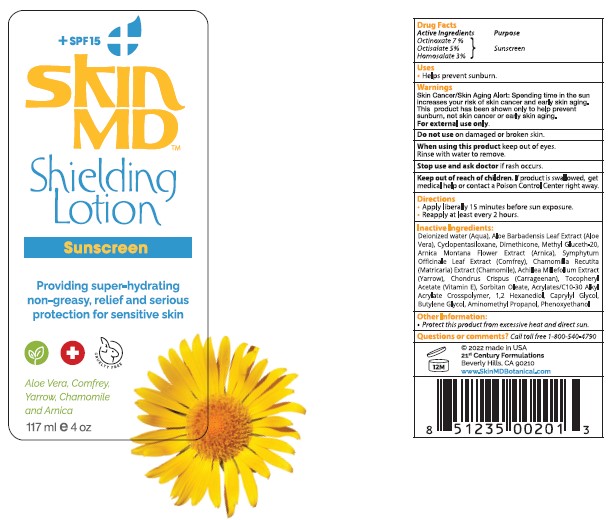
skin MD octinoxate, octisalate, homosalate 7 mg/100mL; 5 mg/100mL; 3 mg/100mL Lotion, 100 mL — NDC 44099-011-04 (Billing 44099-0011-04)
This is a package of 100 mL of skin MD octinoxate, octisalate, homosalate 7 mg/100mL; 5 mg/100mL; 3 mg/100mL Lotion from 21st Century Formulations, no longer marketed (first marketed Aug 2008), no longer in the FDA NDC Directory.
NDC database record
One package, one record: these facts belong to NDC 44099-011-04 alone.
- Record
- FDA NDC Directory package listing · Human OTC drug
- Code segments
- 44099 labeler · 011 product · 04 package
- Listing certified through
- Dec 31, 2026
- Barcode (UPC-A, from the NDC)
- 3 4409901104 3
- FDA record last changed
- Aug 27, 2026
Identity & classification
Regulatory identifiers FDA, NLM and CMS codes for this package
Where does this data come from?
- FDA openFDA NDC Directory · synced Oct 8, 2026
- FDA label on DailyMed · label index refreshed Oct 8, 2026
- RxNorm (NLM RxNav) · catalog refreshed Oct 8, 2026
- Medi-Span GPI (licensed)
- First Databank (licensed) · refreshed Oct 8, 2026
Clinical
This is a topical lotion containing three UV-filtering ingredients: octinoxate, octisalate, and homosalate. These chemicals are commonly used together in sunscreen products to absorb ultraviolet radiation and help protect skin from sun exposure. The product is marketed as an over-the-counter monograph drug, meaning it follows FDA's established safety and effectiveness guidelines for sunscreen ingredients rather than being approved through an individual product application.
Patient education
Supplement & herbal interactions
Where does this data come from?
- MedlinePlus (NLM) · refreshed Oct 8, 2026
- FDA label on DailyMed · label index refreshed Oct 8, 2026
Ask a licensed pharmacist directly — free, answered by our team.
Pricing
A drug doesn't have one price. Each row is a different public payment system, and none is what you'd pay at the counter — that depends on your insurance. The ⓘ on each row explains what it measures.
| Price system | Per g | Per package |
|---|---|---|
| Retail pharmacies payNADAC · weekly | Not in the retail survey — common for institutional, discontinued, or low-volume packs. | |
| Medicaid paysCMS SDUD · 12 mo | No recent Medicaid claims on file for this NDC — rare and low-volume NDCs are suppressed in the public data. | |
| Medicare drug plans payPart D · quarterly | No Part D plan price is available for this NDC in our data. | |
Where does this data come from?
- CMS NADAC weekly file
- CMS ASP pricing files · refreshed Sep 20, 2026
- CMS Medicaid State Drug Utilization Data · refreshed Oct 9, 2026
- CMS Part D plan pricing files · refreshed Sep 24, 2026
- VA National Acquisition Center price file
Packaging — all sizes for this product
| Package NDC | Description | Marketing start | Marketing end | Status |
|---|---|---|---|---|
| 44099-0011-01 44099-011-01 Main listing | 117 mL in 1 BOTTLE | 2008-08-19 | — | Active |
| 44099-0011-02 44099-011-02 | 236 mL in 1 BOTTLE | 2008-08-19 | — | Active |
| 44099-0011-03 44099-011-03 | 3785 mL in 1 BOTTLE | 2008-08-19 | — | Discontinued by firm |
| 44099-0011-04 You're viewing this | 100 mL in 1 TUBE | 2018-07-16 | — | Discontinued by firm |
| 44099-0011-05 44099-011-05 | 200 mL in 1 TUBE | 2018-07-16 | — | Discontinued by firm |
You're viewing the smallest of 5 pack sizes for this product.
Pack size FAQ
What quantity is in this package?
How does this package differ from NDC 44099-0011-01?
What NDC number is used to bill for this package of skin MD octinoxate, octisalate, homosalate 7 mg/100mL; 5 mg/100mL; 3 mg/100mL Lotion?
Therapeutic equivalents
| Product | Labeler | Pack | NADAC/unit | TE | Status | Price vs. this |
|---|---|---|---|---|---|---|
| skin MD 7 mg/100mL; 5 mg/100mL; 3 mg/100mLthis 44099-0011-04 | 21st | 100 ml | — | — | Discontinued | — |
Where does this data come from?
- FDA openFDA NDC Directory · synced Oct 8, 2026
- FDA Orange Book · refreshed Oct 3, 2026
- CMS NADAC weekly file
Availability & generic status
We did not find an FDA-approved generic match for this exact strength, form and route.
Where does this data come from?
- FDA Orange Book · refreshed Oct 3, 2026
Inactive Ingredients / Excipients
Inactive ingredients, also called excipients, are components of the drug product other than the active ingredient. They may include fillers, dyes, coatings, preservatives, flavors, or other formulation ingredients.
💡 Tap an ingredient (hover on desktop) to see what it is and why it’s used.
-
UNII 9E8X80D2L0
A synthetic form of vitamin E used as an antioxidant and preservative in medications. It helps prevent the active ingredients from degrading when exposed to oxygen or light.
-
UNII TR046Y3K1G
A liquid alcohol derived from petroleum or plant sources. It acts as a solvent and humectant in medicines, helping dissolve active ingredients and retain moisture in the formulation.
-
UNII 2FXJ6SW4PK
A plant extract from yarrow, used in some formulations as a natural flavoring agent or botanical ingredient to add taste or aroma to the medicine.
-
UNII ZY81Z83H0X
Aloe vera leaf is a plant extract derived from the aloe plant. It is used in medicines as a natural moisturizer and skin-soothing agent in topical formulations.
-
UNII LU49E6626Q
A synthetic organic compound used as a pH buffer and neutralizing agent in medicines. It helps maintain the proper acidity level in liquid formulations to improve stability and comfort.
-
UNII OZ0E5Y15PZ
A plant extract from arnica flowers, used as a flavoring agent or fragrance component in medicines. It may also provide mild soothing properties to certain topical formulations.
-
UNII 7K226YI89Y
A silicone-based lubricant and anti-foaming agent. It helps reduce friction between tablet particles during manufacturing, prevents foam in liquid formulations, and improves the flow of powders during production.
-
UNII 3XUS85K0RA
Butylene glycol is a clear liquid derived from petroleum or plants that acts as a humectant, solvent, and preservative booster in medicines. It helps keep formulations stable, dissolve active ingredients, and maintain moisture in topical products.
-
UNII 00YIU5438U
Caprylyl glycol is a clear liquid derived from coconut oil. In medicines, it acts as a humectant to retain moisture, a preservative booster to prevent microbial growth, and a solvent to help dissolve or mix other ingredients.
-
UNII 71DD5V995L
A synthetic polymer derived from acrylic acid, crosslinked to form a gel-like substance. It thickens formulations, improves texture, and helps distribute active ingredients evenly in topical products like creams and gels.
-
UNII FGL3685T2X
Chamomile is a plant extract used in medications as a flavoring agent and for its mild soothing properties in formulations. It helps improve taste and aroma of the medicine.
-
UNII OQS23HUA1X
A seaweed-derived natural thickener and gelling agent. In medicines, it forms a gel-like consistency to improve texture and help the product hold together, or to slow how quickly the body absorbs the medication.
-
UNII DG4F8T839X
A plant extract from comfrey leaves used as a natural ingredient in formulations. It may serve as a soothing agent or botanical additive in topical or oral preparations.
-
UNII 0THT5PCI0R
A silicone-based liquid that helps distribute active ingredients evenly throughout topical products. It acts as a solvent and emollient, allowing medicines to spread smoothly on skin while improving texture and absorption.
-
UNII 92RU3N3Y1O
Dimethicone is a silicone-based oil that acts as an anti-foaming agent and lubricant in medicines. It reduces gas bubbles in liquid formulations and helps coat and protect the stomach lining when ingested.
-
UNII 9E4CO0W6C5
A silicone-based polymer that forms soft, spongy particles. Used as a texture modifier and suspending agent to improve how the product feels and flows, and to help keep ingredients evenly distributed throughout the formulation.
-
UNII J3QD0LD11P
A synthetic compound made by combining glucose with methyl alcohol and polyethylene glycol. It acts as an emulsifier and solvent to help blend water and oil-based ingredients and improve how the medicine dissolves or spreads.
-
UNII HIE492ZZ3T
Phenoxyethanol is a synthetic preservative and antimicrobial agent used to prevent bacterial and fungal growth in medicines and cosmetic products, extending shelf life and maintaining product safety.
-
UNII 06XEA2VD56
Sorbitan oleate is an emulsifier derived from sorbitol and oleic acid. It helps mix oil and water-based ingredients together and keeps them from separating in the medicine.
19 inactive ingredients listed in the exact product block matched to this NDC.
Label-section wording can be broader than the structured product block and may mention additional formulation ingredients.
Where does this data come from?
ingredient classCode="IACT" elements from the exact product block matched by this NDC. Label-section narrative from DailyMed / the openFDA label index is shown separately when available.- FDA label on DailyMed · label index refreshed Oct 8, 2026
- FDA openFDA NDC Directory · synced Oct 8, 2026
Inactive ingredient FAQ
Are inactive ingredients the same for every manufacturer?
Why might an inactive ingredient be missing?
Can inactive ingredients matter?
Manufacturer & labeler
Where does this data come from?
- FDA openFDA NDC Directory · synced Oct 8, 2026
- Drugs@FDA
FDA label — Drug Facts FDA SPL
🎯 Indications and Usage ▾
Uses Helps prevent sunburn. Decreases the risk of skin cancer and early aging caused by the sun.
⏱️ Dosage and Administration ▾
Directions Apply liberally 15 minutes before sun exposure. Reapply at least every 2 hours. Spending time in the sun increases your risk of skin cancer and early skin aging.
⚠️ Warnings ▾
Warnings For external use only.
🧪 Active Ingredient ▾
Active ingredients Octinoxate 7% Octisalate 5% Homosalate 3%
🧪 Inactive Ingredients ▾
Inactive ingredients Water (aqua), Aloe Barbadensis Leaf Extract (Aloe Vera), Cyclopentasiloxane, Dimethicone, Methyl Gluceth-20, Extracts of Arnica Montana Flower (Arnica), Symphytum Officinale Leaf (Camfrey), Chamomilla Recutita (Matricaria Chamomile), Achillea Millefolium (Yarrow), Chondrus Crispus (Carrageenan), Tocopheryl Acetate (Vitamin E), Sorbitan Oleate, 1,2 Hexanediol, Caprylyl Gylcol, Butylene Glycol, Aminomethyl Propanol, Phenoxyethanol (preservative), Acrylates/C10-30 Alkyl Acrylate Crosspolymer, Dimethicone/Vinyl Dimethicone Crosspolymer, Bis-Hydroxyethoxypropyl Dimethicone.
🎯 Purpose ▾
Purpose Sunscreen
📄 Do Not Use ▾
Do not use on damaged or broken skin
📄 Stop Use and Ask a Doctor If ▾
Stop use and ask a Doctor if rash occurs.
📄 Keep Out of Reach of Children ▾
Keep out of reach of children. If product is swallowed, get medical help or contact a Poison Control Center right away.
📄 Other Information ▾
Other information Protect this product from excessive heat and direct sun.
📄 Questions or Comments ▾
Questions? Call toll free 1-800-540-4790 ® 2013 Made in USA 21st Century Formulations Beverly Hills, CA 90210 www.skinmdnatural.com
📄 Package Label / Principal Display Panel ▾
01b LBL_Skin MD_Shielding Lotion_SPF15_4oz
About this NDC listing & data coverage
What data is (and isn’t) available for this NDC — tap to expand
| NDC identity (package / product / labeler codes) | ✓ Available |
| Labeler | ✓ Available |
| Product & package description | ✓ Available |
| Marketing category & status | ✓ Available |
| Active ingredient / dosage form / route | ✓ Available |
| FDA label (SPL via DailyMed) | ✓ Available |
| Package photos | ✓ Available |
| Inactive ingredients (structured) | ✓ Available |
| NADAC pharmacy acquisition price (CMS) | — Not published for this NDC CMS publishes NADAC only for NDCs reported in its retail-pharmacy survey. |
| Orange Book / therapeutic-equivalence data | — Not published for this NDC Applies only to products approved under an NDA/ANDA; many listings are out of scope. |
| HCPCS J-code billing crosswalk | — Not published for this NDC Most self-administered / retail products have no J-code — that is normal. |
| Medicaid utilization (CMS SDUD) | — Not published for this NDC CMS reports utilization only for NDCs with Medicaid claims above its privacy threshold. |