
Fesoterodine Fumarate 8 mg Tablet, Extended Release, 100-count — NDC 46708-176-10 (Billing 46708-0176-10)
This is a package of 100 tablets of Fesoterodine Fumarate 8 mg Tablet, Extended Release from Alembic Pharmaceuticals Limited, marketed since Jan 2023 and currently FDA-listed. It is the main listing for this product, which comes in 4 package sizes.
NDC database record
One package, one record: these facts belong to NDC 46708-176-10 alone.
- Record
- FDA NDC Directory package listing · Human prescription drug
- Code segments
- 46708 labeler · 176 product · 10 package
- Package marketed since
- Jan 6, 2023
- Sample package
- No — commercial package
- Listing certified through
- Dec 31, 2026
- Barcode (UPC)
- 0346708175306
- FDA record last changed
- Jul 24, 2026
Other active recalls for Fesoterodine Fumarate (different manufacturers) — 2 · tap to view
Identity & classification
Regulatory identifiers FDA, NLM and CMS codes for this package
- RxCUI (RxNorm): 810071
Where does this data come from?
- FDA openFDA NDC Directory · synced Oct 8, 2026
- FDA label on DailyMed · label index refreshed Oct 8, 2026
- RxNorm (NLM RxNav) · catalog refreshed Oct 1, 2026
- Medi-Span GPI (licensed)
- First Databank (licensed) · refreshed Oct 8, 2026
RxNorm drug class
This medicine belongs to the Drugs for urinary frequency and incontinence class.
Where does this data come from?
- RxClass (NLM) · catalog refreshed Oct 1, 2026
Clinical
Fesoterodine is used to treat overactive bladder (a condition in which the bladder muscles contract uncontrollably and cause frequent urination, urgent need to urinate, and inability to control urination). Fesoterodine is in a class of medications called antimuscarinics. It works by relaxing the bladder muscles to prevent urgent, frequent, or uncontrolled urination.
Read the full MedlinePlus article ↗- It treats overactive bladder in adults, which means sudden urges to urinate, leaking with those urges, and going often. Some products, including Toviaz, are also approved for neuro...
- Take one tablet by mouth once a day, with or without food. Swallow it whole with liquid. Don't chew, split, or crush it because it's an extended-release tablet. Follow the dose you...
- Dry mouth is the most common, and constipation is next. Some people get indigestion, dry eyes, or a urinary tract infection. Call your doctor if side effects bother you or you have...
- Get help right away if your face, lips, tongue, or throat swells, because that's angioedema and it can block breathing. It can show up after the first dose or later. Stop the medic...
Patient education
Supplement & herbal interactions
Some supplements/herbs that may interact with Fesoterodine Fumarate — tap one for details:
Where does this data come from?
- MedlinePlus (NLM) · refreshed Oct 8, 2026
- FDA label on DailyMed · label index refreshed Oct 8, 2026
Ask a licensed pharmacist directly — free, answered by our team.
Pricing
A drug doesn't have one price. Each row is a different public payment system, and none is what you'd pay at the counter — that depends on your insurance. The ⓘ on each row explains what it measures.
| Price system | Per each | Per package |
|---|---|---|
| Retail pharmacies payNADAC · weekly | Not in the retail survey — common for institutional, discontinued, or low-volume packs. | |
| Medicaid paysCMS SDUD · 12 mo | No recent Medicaid claims on file for this NDC — rare and low-volume NDCs are suppressed in the public data. | |
| Medicare drug plans payPart D · Q2 2026 | $1.66 | $166.44 / 100 tablets |
Where does this data come from?
- CMS NADAC weekly file
- CMS ASP pricing files · refreshed Sep 20, 2026
- CMS Medicaid State Drug Utilization Data · refreshed Oct 8, 2026
- CMS Part D plan pricing files · refreshed Sep 24, 2026
- VA National Acquisition Center price file
Packaging — all sizes for this product
| Package NDC | Description | Marketing start | Marketing end | Status |
|---|---|---|---|---|
| 46708-0176-10 You're viewing this Main listing | 100 TABLET, EXTENDED RELEASE in 1 CARTON | 2023-01-06 | — | Active |
| 46708-0176-30 46708-176-30 | 30 TABLET, EXTENDED RELEASE in 1 BOTTLE | 2023-01-06 | — | Active |
| 46708-0176-90 46708-176-90 | 90 TABLET, EXTENDED RELEASE in 1 BOTTLE | 2023-01-06 | — | Active |
| 46708-0176-91 46708-176-91 | 1000 TABLET, EXTENDED RELEASE in 1 BOTTLE | 2023-01-06 | — | Active |
You're viewing one of 4 pack sizes for this product.
Pack size FAQ
What quantity is in this package?
How does this package differ from NDC 46708-0176-30?
What NDC number is used to bill for this package of Fesoterodine Fumarate 8 mg Tablet, Extended Release?
Therapeutic equivalents
| Product | Labeler | Pack | NADAC/unit | TE | Status | Price vs. this |
|---|---|---|---|---|---|---|
| Fesoterodine Fumarate 8 mg 31722-0034-30 | Camber | 30 tablets | $0.839 | AB | Availability likely | — |
| Fesoterodine fumarate 8 mg 43598-0248-30 | Dr.Reddy's | 30 tablets | $0.839 | AB | Availability likely | — |
| Fesoterodine Fumarate 8 mg 65862-0767-30 | Aurobindo | 30 tablets | $0.839 | AB | Availability likely | — |
| Fesoterodine Fumarate 8 mg 67877-0068-30 | Ascend | 30 tablets | $0.839 | AB | Availability likely | — |
| fesoterodine fumarate 8 mg 68382-0480-06 | Zydus | 30 tablets | $0.839 | AB | Availability likely | — |
| Fesoterodine Fumarate 8 mg 72603-0414-01 | NorthStar | 30 tablets | $0.839 | AB | Availability likely | — |
| Toviaz 8 mg 00069-0244-30 | Pfizer | 30 tablets | $9.262 | AB | Availability likely | — |
| Fesoterodine Fumarate 8 mgthis 46708-0176-10 | Alembic | 100 tablets | — | AB | FDA listed | — |
| Fesoterodine fumarate 8 mg 51407-0662-30 | Golden | 30 tablets | — | AB | FDA listed | — |
| Fesoterodine Fumarate 8 mg 62332-0176-10 | Alembic | 100 tablets | — | AB | FDA listed | — |
| Fesoterodine Fumarate 8 mg 65162-0370-03 | Amneal | 30 tablets | — | AB | FDA listed | — |
| fesoterodine fumarate 8 mg 70771-1169-03 | Zydus | 30 tablets | — | AB | FDA listed | — |
Where does this data come from?
- FDA openFDA NDC Directory · synced Oct 8, 2026
- FDA Orange Book · refreshed Oct 3, 2026
- CMS NADAC weekly file
Availability & generic status
This product is an FDA-approved generic. Other versions of the same drug are listed under Therapeutic equivalents, least expensive first.
Where does this data come from?
- FDA Orange Book · refreshed Oct 3, 2026
What it looks like
Where does this data come from?
- FDA label on DailyMed · label index refreshed Oct 8, 2026
Inactive Ingredients / Excipients
Inactive ingredients, also called excipients, are components of the drug product other than the active ingredient. They may include fillers, dyes, coatings, preservatives, flavors, or other formulation ingredients.
🧪 Avoiding an ingredient? See Fesoterodine inactive ingredients by manufacturer: every current product's list side by side, so you can ask your pharmacy for the version that does not list it.
💡 Tap an ingredient (hover on desktop) to see what it is and why it’s used.
-
UNII L06K8R7DQK
A synthetic blue dye approved by the FDA for use in medications and foods. It serves as a colorant to make pills and liquids visually distinct and easier to identify.
-
UNII R8WTH25YS2
Glyceryl dibehenate is a wax-like substance made from behenate fatty acids and glycerol. It functions as a binder and release-control agent in tablets and capsules, helping hold ingredients together and regulate how quickly the medicine dissolves and releases in your body.
-
UNII RFW2ET671P
Hydroxypropyl cellulose is a plant-derived thickening agent made from cellulose. It acts as a binder to hold tablet ingredients together and as a film-former to coat tablets or control how fast the medicine releases.
-
UNII 3NXW29V3WO
Hypromellose is a plant-based thickener made from cellulose. It's used in medicines as a binder to hold ingredients together, a coating for tablets, and a thickener for liquids.
-
UNII EWQ57Q8I5X
Lactose monohydrate is a natural sugar derived from milk. It serves as a filler and binder in tablets and capsules, helping create the proper size, texture, and consistency of the medicine.
-
UNII 1DI56QDM62
A natural fatty substance from soybeans that helps mix oil and water-based ingredients together. It acts as an emulsifier and lubricant in medicines to improve texture and help the product break down properly in your body.
-
UNII OP1R32D61U
Microcrystalline cellulose is a purified form of cellulose, a natural fiber from plant sources. It acts as a binder and filler in tablets and capsules, helping hold ingredients together and give the medicine its shape and size.
-
UNII G2M7P15E5P
Polyethylene glycol 3350 is a synthetic polymer used as a solvent, humectant, and thickening agent in medicines. It helps dissolve other ingredients, retain moisture in the product, and achieve the desired consistency.
-
UNII 532B59J990
Polyvinyl alcohol is a synthetic polymer made from plant-derived materials. It's used as a binder to hold ingredients together, a film-former in coatings, and a thickener in liquid formulations.
-
UNII 8ZQ0AYU1TT
Pullulan is a natural polysaccharide, a type of carbohydrate made from yeast. It acts as a binder and film-former to hold tablet ingredients together and create protective coatings on capsules.
-
UNII 7SEV7J4R1U
A powder made from a naturally occurring mineral. In medicines, talc works as a glidant and anti-caking agent, helping tablets and capsules flow smoothly during manufacturing and preventing clumping.
-
UNII 15FIX9V2JP
Titanium dioxide is a bright white mineral powder commonly used as a colorant and opacifying agent. It makes pills and tablets white or lighter in color and helps make coatings non-transparent.
12 inactive ingredients listed in the exact product block matched to this NDC.
Where does this data come from?
ingredient classCode="IACT" elements from the exact product block matched by this NDC. Label-section narrative from DailyMed / the openFDA label index is shown separately when available.- FDA label on DailyMed · label index refreshed Oct 8, 2026
- FDA openFDA NDC Directory · synced Oct 8, 2026
Inactive ingredient FAQ
Are inactive ingredients the same for every manufacturer?
Why might an inactive ingredient be missing?
Can inactive ingredients matter?
Manufacturer & labeler
More NDCs from Alembic Pharmaceuticals Limited labeler code 46708
- Desvenlafaxine 100 mg Tablet, Extended Release NDC 46708-153-30
- Lacosamide 50 mg Tablet, Film Coated NDC 46708-171-10
- Lacosamide 100 mg Tablet, Film Coated NDC 46708-172-10
- Lacosamide 150 mg Tablet, Film Coated NDC 46708-173-10
- Lacosamide 200 mg Tablet, Film Coated NDC 46708-174-10
- Fesoterodine Fumarate 4 mg Tablet, Extended Release NDC 46708-175-10
- Tadalafil 2.5 mg Tablet, Coated NDC 46708-177-15
- Tadalafil 5 mg Tablet, Coated NDC 46708-178-15
- Tadalafil 10 mg Tablet, Coated NDC 46708-179-30
- Tadalafil 20 mg Tablet, Coated NDC 46708-180-30
- Zolmitriptan 2.5 mg Tablet, Orally Disintegrating NDC 46708-181-06
- Zolmitriptan 5 mg Tablet, Orally Disintegrating NDC 46708-182-03
Where does this data come from?
- FDA openFDA NDC Directory · synced Oct 8, 2026
- Drugs@FDA
Full prescribing information FDA SPL
🎯 Indications and Usage ▾
1 INDICATIONS AND USAGE Fesoterodine fumarate extended-release tablets are indicated for the treatment of: • Overactive bladder (OAB) in adults with symptoms of urge urinary incontinence, urgency, and frequency. (1.1)
1.1Adult Overactive Bladder Fesoterodine fumarate extended-release tablets are indicated for the treatment of overactive bladder (OAB) in adults with symptoms of urge urinary incontinence, urgency, and frequency. Pediatric use information is approved for Pfizer Inc.’s TOVIAZ ® (fesoterodine fumarate) extended-release tablets. However, due to Pfizer Inc.’s marketing exclusivity rights, this drug product is not labeled with that information.
⏱️ Dosage and Administration ▾
2 DOSAGE AND ADMINISTRATION • OAB in Adults : The recommended starting dosage is 4 mg orally once daily. Based upon individual response and tolerability, increase to the maximum dosage of 8 mg once daily. (2.1) • Adult Patients with Renal or Hepatic Impairment : Refer to the full prescribing information for recommended dosage.
(2.3) • Dosage Modifications Due to Strong CYP3A4 Inhibitors : Refer to the full prescribing information for recommended dosage. (2.5) • Administration : Swallow whole with liquid. Do not chew, divide, or crush.
Take with or without food. (2.6)
2.1Recommended Dosage for Adult Patients with OAB The recommended starting dosage of fesoterodine fumarate extended-release tablet in adults is 4 mg orally once daily. Based upon individual response and tolerability, increase to the maximum dosage of fesoterodine fumarate extended-release tablet 8 mg once daily. For administration instructions, see Dosage and Administration (2.6).
Pediatric use information is approved for Pfizer Inc.’s TOVIAZ ® (fesoterodine fumarate) extended-release tablets. However, due to Pfizer Inc.’s marketing exclusivity rights, this drug product is not labeled with that information.
2.3Recommended Dosage in Adult Patients with Renal Impairment The recommended dosage of fesoterodine fumarate extended-release tablet in adult patients with renal impairment is described in Table 1 [see Use in Specific Populations (8.6)]. For administration instructions, see Dosage and Administration (2.6) . Table 1: Fesoterodine Fumarate Extended-Release Tablet Recommended Dose in Adult Patients with Renal Impairment (Administered Orally Once Daily) Estimated Creatinine Clearance 1 Recommended Dose CLcr 30 to 89 mL/min 8 mg CLcr 15 to 29 mL/min 4 mg CLcr <15 mL/min 4 mg 1 Calculate CLcr using the Cockcroft-Gault formula Pediatric use information is approved for Pfizer Inc.’s TOVIAZ ® (fesoterodine fumarate) extended-release tablets.
However, due to Pfizer Inc.’s marketing exclusivity rights, this drug product is not labeled with that information.
2.5Fesoterodine Fumarate Extended-Release Tablets Dosage Modifications Due to Strong CYP3A4 Inhibitors Adult Patients with OAB The maximum recommended dosage is fesoterodine fumarate extended-release tablet 4 mg orally once daily in adult patients taking strong CYP3A4 inhibitors [see Drug Interactions (7.2) and Clinical Pharmacology (12.3)] . For administration instructions, see Dosage and Administration (2.6) . Pediatric use information is approved for Pfizer Inc.’s TOVIAZ ® (fesoterodine fumarate) extended-release tablets.
However, due to Pfizer Inc.’s marketing exclusivity rights, this drug product is not labeled with that information.
2.6Administration Instructions Swallow fesoterodine fumarate extended-release tablet whole with liquid. Do not chew, divide, or crush. Take with or without food [see Clinical Pharmacology (12.3)].
💊 Dosage Forms and Strengths ▾
3 DOSAGE FORMS AND STRENGTHS • Fesoterodine fumarate extended-release tablets 4 mg are dark blue, oval, biconvex, film-coated tablets debossed with L376 on one side and plain on other side. • Fesoterodine fumarate extended-release tablets 8 mg are light blue, oval, biconvex, film-coated tablets debossed with L377 on one side and plain on other side. Extended-release tablets: 4 mg and 8 mg (3)
⛔ Contraindications ▾
4 CONTRAINDICATIONS Fesoterodine fumarate extended-release tablet is contraindicated in patients with any of the following: • known or suspected hypersensitivity to fesoterodine fumarate extended-release tablets or any of its ingredients, or to tolterodine tartrate tablets or tolterodine tartrate extended-release capsules [see Clinical Pharmacology (12.1)] . Reactions have included angioedema [see Warnings and Precautions (5.1)] . • urinary retention [see Warnings and Precautions (5.2)] • gastric retention [see Warnings and Precautions (5.3)] • uncontrolled narrow-angle glaucoma [see Warnings and Precautions (5.4)] • Known or suspected hypersensitivity to fesoterodine fumarate extended-release tablets or any of its ingredients or to tolterodine tartrate tablets or tolterodine tartrate extended-release capsules.
(4) • Urinary retention (4) • Gastric retention (4) • Uncontrolled narrow-angle glaucoma. (4)
⚠️ Warnings and Cautions ▾
5 WARNINGS AND PRECAUTIONS • Angioedema : Promptly discontinue fesoterodine fumarate and provide appropriate therapy. (5.1) • Urinary Retention : Fesoterodine fumarate is not recommended in patients with clinically significant bladder outlet obstruction because of the risk of urinary retention. (5.2) • Decreased Gastrointestinal Motility : Fesoterodine fumarate is not recommended for use in patients with decreased gastrointestinal motility, such as those with severe constipation.
(5.3) • Worsening of Narrow Angle Glaucoma : Use fesoterodine fumarate with caution in patients being treated for narrow-angle glaucoma. (5.4) • Central Nervous System Effects : Somnolence has been reported with fesoterodine fumarate. Advise patients not to drive or operate heavy machinery until they know how fesoterodine fumarate affects them.
(5.5) • Worsening of Myasthenia Gravis Symptoms : Use Fesoterodine fumarate with caution in patients with myasthenia gravis. (5.6)
5.1Angioedema Angioedema of the face, lips, tongue, and/or larynx has been reported with fesoterodine. In some cases angioedema occurred after the first dose; however, cases have been reported to occur hours after the first dose or after multiple doses. Angioedema associated with upper airway swelling may be life-threatening.
Fesoterodine fumarate is contraindicated in patients with a known or suspected hypersensitivity to fesoterodine fumarate or any of its ingredients [see Contraindications (4)] . If involvement of the tongue, hypopharynx, or larynx occurs, fesoterodine fumarate should be promptly discontinued and appropriate therapy and/or measures to ensure a patent airway should be promptly provided.
5.2Urinary Retention in Adult Patients with Bladder Outlet Obstruction The use of fesoterodine fumarate, like other antimuscarinic drugs, in patients with clinically significant bladder outlet obstruction, including patients with urinary retention, may result in further urinary retention and kidney injury. The use of fesoterodine fumarate is not recommended in patients with clinically significant bladder outlet obstruction, and is contraindicated in patients with urinary retention [see Contraindications (4) and Adverse Reactions (6.1)].
5.3Decreased Gastrointestinal Motility Fesoterodine fumarate is associated with decreased gastric motility. Fesoterodine fumarate is contraindicated in patients with gastric retention [see Contraindications (4)]. The use of fesoterodine fumarate is not recommended in patients with decreased gastrointestinal motility, such as those with severe constipation.
5.4Worsening of Narrow-Angle Glaucoma Fesoterodine fumarate can worsen controlled narrow-angle glaucoma. Fesoterodine fumarate is contraindicated in patients with uncontrolled narrow-angle glaucoma [see Contraindications (4)] . Fesoterodine fumarate should be used with caution in patients being treated for narrow-angle glaucoma.
5.5Central Nervous Systems Effects Fesoterodine fumarate is associated with anticholinergic central nervous system (CNS) adverse reactions [see Adverse Reactions (6.1)] . A variety of CNS anticholinergic effects have been reported, including headache, dizziness, and somnolence. Patients should be monitored for signs of anticholinergic CNS effects, particularly after beginning treatment or increasing the dose.
Advise patients not to drive or operate heavy machinery until they know how fesoterodine fumarate affects them. If a patient experiences anticholinergic CNS effects, fesoterodine fumarate dose reduction or discontinuation should be considered.
5.6Worsening of Myasthenia Gravis Symptoms Fesoterodine fumarate should be used with caution in patients with myasthenia gravis due to the risk of worsening of symptoms of the disease.
🤒 Adverse Reactions ▾
6 ADVERSE REACTIONS The following clinically significant adverse reactions are described elsewhere in labeling: • Angioedema [see Warnings and Precautions (5.1)] • Urinary Retention [see Warnings and Precautions (5.2)] • Decreased Gastointestinal Motility [see Warnings and Precautions (5.3)] • Most frequently reported adverse events with fesoterodine fumarate in adult patients with OAB (≥4%) were: dry mouth (placebo, 7%; fesoterodine fumarate 4 mg, 19%; fesoterodine fumarate 8 mg, 35%) and constipation (placebo, 2%; fesoterodine fumarate 4 mg, 4%; fesoterodine fumarate 8 mg, 6%).
(6.1) To report SUSPECTED ADVERSE REACTIONS, contact FDA at 1-800-FDA-1088 or www.fda.gov/medwatch . Pediatric use information is approved for Pfizer Inc.’s TOVIAZ ® (fesoterodine fumarate) extended-release tablets. However, due to Pfizer Inc.’s marketing exclusivity rights, this drug product is not labeled with that information.
6.1Clinical Trials Experience Because clinical trials are conducted under widely varying conditions, adverse reaction rates observed in the clinical trials of a drug cannot be directly compared to rates in the clinical trials of another drug and may not reflect the rates observed in practice. Adult Overactive Bladder (OAB) The safety of fesoterodine fumarate was evaluated in Phase 2 and 3 controlled trials in a total of 2,859 patients with overactive bladder, of which 2,288 were treated with fesoterodine fumarate. Of this total, 782 received fesoterodine fumarate 4 mg/day, and 785 received fesoterodine fumarate 8 mg/day with treatment periods of 8-or 12-weeks.
Approximately 80% of these patients had greater than 10-weeks of exposure to fesoterodine fumarate in these trials. A total of 1,964 patients participated in two 12-week, Phase 3 efficacy and safety studies and subsequent open-label extension studies. In these two studies combined, 554 patients received fesoterodine fumarate 4 mg/day and 566 patients received fesoterodine fumarate 8 mg/day.
In Phase 2 and 3 placebo-controlled trials combined, the incidences of serious adverse events in patients receiving placebo, fesoterodine fumarate 4 mg, and fesoterodine fumarate 8 mg were 1.9%, 3.5%, and 2.9%, respectively. All serious adverse events were judged to be not related or unlikely to be related to study medication by the investigator, except for four patients receiving fesoterodine fumarate who reported one serious adverse reaction each: angina, chest pain, gastroenteritis, and QT prolongation on ECG. The most commonly reported adverse event in patients treated with fesoterodine fumarate was dry mouth.
The incidence of dry mouth was higher in those taking 8 mg/day (35%) and in those taking 4 mg/day (19%), as compared to placebo (7%). Dry mouth led to discontinuation in 0.4%, 0.4%, and 0.8% of patients receiving placebo, fesoterodine fumarate 4 mg, and fesoterodine fumarate 8 mg, respectively. For those patients who reported dry mouth, most had their first occurrence of the event within the first month of treatment.
The second most commonly reported adverse event was constipation. The incidence of constipation was 2% in those taking placebo, 4% in those taking 4 mg/day, and 6% in those taking 8 mg/day. Table 4 lists adverse events, regardless of causality, that were reported in the combined Phase 3, randomized, placebo-controlled trials at an incidence greater than placebo and in 1% or more of patients treated with fesoterodine fumarate 4 mg or 8 mg once daily for up to 12-weeks.
Table 4: Adverse Events with an Incidence Exceeding the Placebo Rate and Reported by ≥1% of Patients from Double-Blind, Placebo-Controlled Phase 3 Trials of 12-weeks Treatment Duration System organ class/Preferred term Placebo N=554 % Fesoterodine fumarate 4 mg/day N=554 % Fesoterodine fumarate 8 mg/day N=566 % Gastrointestinal disorders Dry mouth 7 18.8
34.6Constipation 2 4.2 6 Dyspepsia 0.5 1.6
2.3Nausea 1.3 0.7
1.9Abdominal pain upper 0.5 1.1
0.5Infections Urinary tract infection 3.1 3.2 4… [Excerpted — this section continues on DailyMed.]
🔄 Drug Interactions ▾
7 DRUG INTERACTIONS
7.1Antimuscarinic Drugs Coadministration of fesoterodine fumarate with other antimuscarinic agents that produce dry mouth, constipation, urinary retention, and other anticholinergic pharmacological effects may increase the frequency and/or severity of such effects. Anticholinergic agents may potentially alter the absorption of some concomitantly administered drugs due to anticholinergic effects on gastrointestinal motility.
7.2CYP3A4 Inhibitors Doses of fesoterodine fumarate greater than 4 mg are not recommended in adult patients taking strong CYP3A4 inhibitors, such as ketoconazole, itraconazole, and clarithromycin [see Dosage and Administration (2.5)]. In a study in adults, coadministration of the strong CYP3A4 inhibitor ketoconazole with fesoterodine led to approximately a doubling of the maximum concentration (C max ) and area under the concentration versus time curve (AUC) of 5-hydroxymethyl tolterodine (5-HMT), the active metabolite of fesoterodine.
Compared with CYP2D6 extensive metabolizers not taking ketoconazole, further increases in the exposure to 5-HMT were observed in subjects who were CYP2D6 poor metabolizers taking ketoconazole [see Clinical Pharmacology (12.3)]. There is no clinically relevant effect of moderate CYP3A4 inhibitors on the pharmacokinetics of fesoterodine. Following blockade of CYP3A4 by coadministration of the moderate CYP3A4 inhibitor fluconazole 200 mg twice a day for 2 days, the average (90% confidence interval) increase in C max and AUC of the active metabolite of fesoterodine was approximately 19% (11% to 28%) and 27% (18% to 36%) respectively.
No dosing adjustments are recommended in the presence of moderate CYP3A4 inhibitors (e.g., erythromycin, fluconazole, diltiazem, verapamil and grapefruit juice). The effect of weak CYP3A4 inhibitors (e.g. cimetidine) was not examined; it is not expected to be in excess of the effect of moderate inhibitors [see Clinical Pharmacology (12.3)]. Pediatric use information is approved for Pfizer Inc.’s TOVIAZ ® (fesoterodine fumarate) extended-release tablets.
However, due to Pfizer Inc.’s marketing exclusivity rights, this drug product is not labeled with that information.
7.3CYP3A4 Inducers No dosing adjustments are recommended in the presence of CYP3A4 inducers, such as rifampin and carbamazepine. Following induction of CYP3A4 by coadministration of rifampin 600 mg once a day, C max and AUC of the active metabolite of fesoterodine decreased by approximately 70% and 75%, respectively, after oral administration of fesoterodine fumarate 8 mg. The terminal half-life of the active metabolite was not changed.
7.4CYP2D6 Inhibitors The interaction with CYP2D6 inhibitors was not tested clinically. In poor metabolizers for CYP2D6, representing a maximum CYP2D6 inhibition, C max and AUC of the active metabolite are increased 1.7- and 2-fold, respectively. No dosing adjustments are recommended in the presence of CYP2D6 inhibitors.
7.5Drugs Metabolized by Cytochrome P450 In vitro data indicate that at therapeutic concentrations, the active metabolite of fesoterodine does not have the potential to inhibit or induce Cytochrome P450 enzyme systems [see Clinical Pharmacology (12.3)].
7.6Oral Contraceptives In the presence of fesoterodine, there are no clinically significant changes in the plasma concentrations of combined oral contraceptives containing ethinyl estradiol and levonorgestrel [see Clinical Pharmacology (12.3)].
7.7Warfarin A clinical study has shown that fesoterodine 8 mg once daily has no significant effect on the pharmacokinetics or the anticoagulant activity (PT/INR) of warfarin 25 mg. Standard therapeutic monitoring for warfarin should be continued [see Clinical Pharmacology (12.3)].
7.8Drug-Laboratory Test Interactions Interactions between fesoterodine fumarate and laboratory tests have not been studied.
👥 Use in Specific Populations ▾
8 USE IN SPECIFIC POPULATIONS
8.1Pregnancy Risk Summary There are no available data with the use of fesoterodine in pregnant women and adolescents to evaluate for a drug-associated risk of major birth defects, miscarriage or adverse maternal or fetal outcomes. In animal reproduction studies, oral administration of fesoterodine to pregnant mice and rabbits during organogenesis resulted in fetotoxicity at maternal exposures that were 6 and 3 times respectively the maximum recommended human dose (MRHD) of 8 mg/day, based on AUC (see Data) . The background risk of major birth defects and miscarriage for the indicated population are unknown.
However, in the U.S. general population, the estimated background risk of major birth defects and miscarriage in clinically recognized pregnancies is 2 to 4% and 15 to 20%, respectively. Data Animal Data No dose-related teratogenicity was observed in reproduction studies performed in mice and rabbits. In mice at 6 to 27 times the expected exposure at the maximum recommended human dose (MRHD) of 8 mg based on AUC (75 mg/kg/day, oral), increased resorptions and decreased live fetuses were observed.
One fetus with cleft palate was observed at each dose (15, 45, and 75 mg/kg/day), at an incidence within the background historical range. In rabbits treated at 3 to 11 times the MRHD (27 mg/kg/day, oral), incompletely ossified sternebrae (retardation of bone development) and reduced survival were observed in fetuses. In rabbits at 9 to 11 times the MRHD (4.5 mg/kg/day, subcutaneous), maternal toxicity and incompletely ossified sternebrae were observed in fetuses (at an incidence within the background historical range).
In rabbits at 3 times the MRHD (1.5 mg/kg/day, subcutaneous), decreased maternal food consumption in the absence of any fetal effects was observed. Oral administration of 30 mg/kg/day fesoterodine to mice in a pre- and post-natal development study resulted in decreased body weight of the dams and delayed ear opening of the pups. No effects were noted on mating and reproduction of the F 1 dams or on the F 2 offspring.
8.2Lactation Risk Summary There is no information on the presence of fesoterodine in human milk, the effects on the breastfed child, or the effects on milk production. The developmental and health benefits of breastfeeding should be considered along with the mother’s clinical need for fesoterodine fumarate and any potential adverse effects on the breastfed child from fesoterodine fumarate or from the underlying maternal condition.
8.4Pediatric Use The safety and effectiveness of fesoterodine fumarate have not been established in pediatric patients younger than 6 years of age or weighing 25 kg or less. Pediatric use information is approved for Pfizer Inc.’s TOVIAZ ® (fesoterodine fumarate) extended-release tablets. However, due to Pfizer Inc.’s marketing exclusivity rights, this drug product is not labeled with that information.
8.5Geriatric Use No dose adjustment is recommended for the elderly. The pharmacokinetics of fesoterodine are not significantly influenced by age. Of the 1,567 patients who received fesoterodine fumarate 4 mg or 8 mg orally once daily in Phase 2 and 3, placebo-controlled, efficacy and safety studies for OAB, 515 (33%) were 65 years of age or older, and 140 (9%) were 75 years of age or older.
No overall differences in effectiveness was observed between patients younger than 65 years of age and those 65 years of age or older in these studies. However, the incidence of antimuscarinic adverse reactions, including dry mouth, constipation, dyspepsia, increase in residual urine, dizziness (8 mg only) and urinary tract infection, was higher in patients 75 years of age and older as compared to younger patients [see Clinical Studies (14.1) and Adverse Reactions (6)].
8.6Renal Impairment In adult patients with severe renal impairment (CL CR <30 mL/min), C max and AUC are increased 2- and 2.3-fold, respectively. Doses of fesoterodine fumarate greater than 4 m… [Excerpted — this section continues on DailyMed.]
🤰 Pregnancy ▾
8.1Pregnancy Risk Summary There are no available data with the use of fesoterodine in pregnant women and adolescents to evaluate for a drug-associated risk of major birth defects, miscarriage or adverse maternal or fetal outcomes. In animal reproduction studies, oral administration of fesoterodine to pregnant mice and rabbits during organogenesis resulted in fetotoxicity at maternal exposures that were 6 and 3 times respectively the maximum recommended human dose (MRHD) of 8 mg/day, based on AUC (see Data) . The background risk of major birth defects and miscarriage for the indicated population are unknown.
However, in the U.S. general population, the estimated background risk of major birth defects and miscarriage in clinically recognized pregnancies is 2 to 4% and 15 to 20%, respectively. Data Animal Data No dose-related teratogenicity was observed in reproduction studies performed in mice and rabbits. In mice at 6 to 27 times the expected exposure at the maximum recommended human dose (MRHD) of 8 mg based on AUC (75 mg/kg/day, oral), increased resorptions and decreased live fetuses were observed.
One fetus with cleft palate was observed at each dose (15, 45, and 75 mg/kg/day), at an incidence within the background historical range. In rabbits treated at 3 to 11 times the MRHD (27 mg/kg/day, oral), incompletely ossified sternebrae (retardation of bone development) and reduced survival were observed in fetuses. In rabbits at 9 to 11 times the MRHD (4.5 mg/kg/day, subcutaneous), maternal toxicity and incompletely ossified sternebrae were observed in fetuses (at an incidence within the background historical range).
In rabbits at 3 times the MRHD (1.5 mg/kg/day, subcutaneous), decreased maternal food consumption in the absence of any fetal effects was observed. Oral administration of 30 mg/kg/day fesoterodine to mice in a pre- and post-natal development study resulted in decreased body weight of the dams and delayed ear opening of the pups. No effects were noted on mating and reproduction of the F 1 dams or on the F 2 offspring.
🧒 Pediatric Use ▾
8.4Pediatric Use The safety and effectiveness of fesoterodine fumarate have not been established in pediatric patients younger than 6 years of age or weighing 25 kg or less. Pediatric use information is approved for Pfizer Inc.’s TOVIAZ ® (fesoterodine fumarate) extended-release tablets. However, due to Pfizer Inc.’s marketing exclusivity rights, this drug product is not labeled with that information.
🧓 Geriatric Use ▾
8.5Geriatric Use No dose adjustment is recommended for the elderly. The pharmacokinetics of fesoterodine are not significantly influenced by age. Of the 1,567 patients who received fesoterodine fumarate 4 mg or 8 mg orally once daily in Phase 2 and 3, placebo-controlled, efficacy and safety studies for OAB, 515 (33%) were 65 years of age or older, and 140 (9%) were 75 years of age or older.
No overall differences in effectiveness was observed between patients younger than 65 years of age and those 65 years of age or older in these studies. However, the incidence of antimuscarinic adverse reactions, including dry mouth, constipation, dyspepsia, increase in residual urine, dizziness (8 mg only) and urinary tract infection, was higher in patients 75 years of age and older as compared to younger patients [see Clinical Studies (14.1) and Adverse Reactions (6)].
🆘 Overdosage ▾
10 OVERDOSAGE Overdosage with fesoterodine fumarate can result in severe anticholinergic effects. Treatment should be symptomatic and supportive. In the event of overdosage, ECG monitoring is recommended.
🧬 Clinical Pharmacology ▾
12 CLINICAL PHARMACOLOGY
12.1Mechanism of Action Fesoterodine is a competitive muscarinic receptor antagonist. After oral administration, fesoterodine is rapidly and extensively hydrolyzed by nonspecific esterases to its active metabolite, 5-hydroxymethyl tolterodine, which is responsible for the antimuscarinic activity of fesoterodine. Muscarinic receptors play a role in contractions of urinary bladder smooth muscle.
Inhibition of these receptors in the bladder is presumed to be the mechanism by which fesoterodine produces its effects.
12.2Pharmacodynamics In a urodynamic study involving patients with involuntary detrusor contractions, the effects after the administration of fesoterodine on the volume at first detrusor contraction and bladder capacity were assessed. Administration of fesoterodine increased the volume at first detrusor contraction and bladder capacity in a dose-dependent manner. These findings are consistent with an antimuscarinic effect on the bladder.
Cardiac Electrophysiology : The effect of fesoterodine 4 mg and 28 mg on the QT interval was evaluated in a double-blind, randomized, placebo- and positive-controlled (moxifloxacin 400 mg once a day) parallel trial with once-daily treatment over a period of 3 days in 261 male and female subjects aged 44 to 65 years. Electrocardiographic parameters were measured over a 24-hour period at pre-dose, after the first administration, and after the third administration of study medication. Fesoterodine 28 mg was chosen because this dose, when administered to CYP2D6 extensive metabolizers, results in an exposure to the active metabolite that is similar to the exposure in a CYP2D6 poor metabolizer receiving fesoterodine 8 mg together with CYP3A4 blockade.
Corrected QT intervals (QTc) were calculated using Fridericia’s correction and a linear individual correction method. Analyses of 24-hour average QTc, time-matched baseline-corrected QTc, and time-matched placebo-subtracted QTc intervals indicate that fesoterodine at doses of 4 and 28 mg/day did not prolong the QT interval. The sensitivity of the study was confirmed by positive QTc prolongation by moxifloxacin.
In this study, conducted in subjects aged 44 to 65 years, fesoterodine fumarate was associated with an increase in heart rate that correlates with increasing dose. When compared to placebo, the mean increase in heart rate associated with fesoterodine 4 mg/day and fesoterodine 28 mg/day was 3 beats/minute and 11 beats/minute, respectively. In the two, phase 3, placebo-controlled studies in adult in patients with overactive bladder, the mean increases in heart rate compared to placebo were approximately 3 to 4 beats/minute in the fesoterodine 4 mg/day group and 3 to 5 beats/minute in the fesoterodine 8 mg/day group.
12.3Pharmacokinetics Absorption: After oral administration, fesoterodine is well absorbed. Due to rapid and extensive hydrolysis by nonspecific esterases to its active metabolite 5-hydroxymethyl tolterodine, fesoterodine cannot be detected in plasma. Bioavailability of the active metabolite is 52%.
After single or multiple-dose oral administration of fesoterodine in doses from 4 mg to 28 mg, plasma concentrations of the active metabolite are proportional to the dose. Maximum plasma levels are reached after approximately 5 hours. No accumulation occurs after multiple-dose administration.
A summary of pharmacokinetic parameters for the active metabolite after a single dose of fesoterodine fumarate 4 mg and 8 mg in extensive and poor metabolizers of CYP2D6 is provided in Table 8. Table 8: Summary of geometric mean [CV] pharmacokinetic parameters for the active metabolite after a single dose of fesoterodine fumarate 4 mg and 8 mg in extensive and poor CYP2D6 metabolizers Fesoterodine fumarate 4 mg Fesoterodine fumarate 8 mg Parameter EM (N=16) PM (N=8) EM (N=16) PM (N=8) C max (ng/mL) 1.89 [43%] 3.45 [54%] 3.98 [28%] 6.9 [39%] AUC 0-tz (ng*h/mL) 21.2 [38%] 40.5 [31%] 45.3 [32%] 88.7 [36%] t max (h) a 5 [… [Excerpted — this section continues on DailyMed.]
🧬 Mechanism of Action ▾
12.1Mechanism of Action Fesoterodine is a competitive muscarinic receptor antagonist. After oral administration, fesoterodine is rapidly and extensively hydrolyzed by nonspecific esterases to its active metabolite, 5-hydroxymethyl tolterodine, which is responsible for the antimuscarinic activity of fesoterodine. Muscarinic receptors play a role in contractions of urinary bladder smooth muscle.
Inhibition of these receptors in the bladder is presumed to be the mechanism by which fesoterodine produces its effects.
📦 How Supplied / Storage and Handling ▾
16 HOW SUPPLIED/STORAGE AND HANDLING Fesoterodine fumarate extended-release tablets 4 mg are dark blue, oval, biconvex, film-coated tablets debossed with L376 on one side and plain on other side. They are supplied as follows: NDC 46708-175-30 bottle of 30 tablets with child resistant closure NDC 46708-175-90 bottle of 90 tablets with child resistant closure NDC 46708-175-91 bottle of 1000 tablets NDC 46708-175-10 carton of 100 (l0 x 10) unit dose tablets Fesoterodine fumarate extended-release tablets 8 mg are light blue, oval, biconvex, film-coated tablets debossed with L377 on one side and plain on other side.
They are supplied as follows: NDC 46708-176-30 bottle of 30 tablets with child resistant closure NDC 46708-176-90 bottle of 90 tablets with child resistant closure NDC 46708-176-91 bottle of 1000 tablets NDC 46708-176-10 carton of 100 (l0 x 10) unit dose tablets Store at 20° to 25°C (68° to 77°F); excursions permitted between 15° to 30°C (59° to 86°F) [see USP Controlled Room Temperature]. Protect from moisture.
📋 Description ▾
11 DESCRIPTION Fesoterodine fumarate tablet contains fesoterodine fumarate and is an extended-release tablet. Fesoterodine is rapidly de-esterified to its active metabolite (R)-2-(3-diisopropylamino-1-phenylpropyl)-4-hydroxymethyl-phenol, or 5-hydroxymethyl tolterodine, which is a muscarinic receptor antagonist. Chemically, fesoterodine fumarate is designated as isobutyric acid 2-((R)-3-diisopropylammonium-1-phenylpropyl)-4-(hydroxymethyl) phenyl ester hydrogen fumarate.
The empirical formula is C 30 H 41 NO 7 and its molecular weight is 527.66. The structural formula is: The asterisk (*) indicates the chiral carbon. Fesoterodine fumarate is a white to off-white powder, it is soluble in water, freely soluble in methanol and practically insoluble in heptane.
Each fesoterodine fumarate extended-release tablet contains either 4 mg or 8 mg of fesoterodine fumarate and the following inactive ingredients: pullulan, microcrystalline cellulose, lactose monohydrate, hypromellose, hydroxypropyl cellulose, talc, glyceryl behenate, polyvinyl alcohol, polyethylene glycol, FD&C blue No. 2 aluminum lake, titanium dioxide and soya lecithin. Structure
💬 Information for Patients ▾
17 PATIENT COUNSELING INFORMATION Advise the patient to read the FDA-Approved Patient Labeling (Patient Information). Angioedema Inform patients and/or their caregivers that fesoterodine fumarate may cause angioedema, which could result in life-threatening airway obstruction. Advise patients and/or their caregivers to promptly discontinue fesoterodine fumarate and seek immediate medical attention if they experience edema of the lips, tongue or laryngopharynx, or difficulty breathing.
Antimuscarinic Effects Inform patients that fesoterodine fumarate, like other antimuscarinic agents, may produce clinically significant adverse effects related to antimuscarinic pharmacological activity including constipation and urinary retention. Fesoterodine fumarate, like other antimuscarinics, may be associated with blurred vision, therefore, patients should be advised to exercise caution in decisions to engage in potentially dangerous activities until the drug’s effects on the patient have been determined. Heat prostration (due to decreased sweating) can occur when fesoterodine fumarate, like other antimuscarinic drugs, is used in a hot environment.
Alcohol Patients should also be informed that alcohol may enhance the drowsiness caused by fesoterodine fumarate, like other anticholinergic agents.
🧬 Pharmacokinetics ▾
12.3Pharmacokinetics Absorption: After oral administration, fesoterodine is well absorbed. Due to rapid and extensive hydrolysis by nonspecific esterases to its active metabolite 5-hydroxymethyl tolterodine, fesoterodine cannot be detected in plasma. Bioavailability of the active metabolite is 52%.
After single or multiple-dose oral administration of fesoterodine in doses from 4 mg to 28 mg, plasma concentrations of the active metabolite are proportional to the dose. Maximum plasma levels are reached after approximately 5 hours. No accumulation occurs after multiple-dose administration.
A summary of pharmacokinetic parameters for the active metabolite after a single dose of fesoterodine fumarate 4 mg and 8 mg in extensive and poor metabolizers of CYP2D6 is provided in Table 8. Table 8: Summary of geometric mean [CV] pharmacokinetic parameters for the active metabolite after a single dose of fesoterodine fumarate 4 mg and 8 mg in extensive and poor CYP2D6 metabolizers Fesoterodine fumarate 4 mg Fesoterodine fumarate 8 mg Parameter EM (N=16) PM (N=8) EM (N=16) PM (N=8) C max (ng/mL) 1.89 [43%] 3.45 [54%] 3.98 [28%] 6.9 [39%] AUC 0-tz (ng*h/mL) 21.2 [38%] 40.5 [31%] 45.3 [32%] 88.7 [36%] t max (h) a 5 [2 to 6] 5 [5 to 6] 5 [3 to 6] 5 [5 to 6] t ½ (h) 7.31 [27%] 7.31 [30%] 8.59 [41%] 7.66 [21%] EM = extensive CYP2D6 metabolizer, PM = poor CYP2D6 metabolizer, CV = coefficient of variation; C max = maximum plasma concentration, AUC 0-tz = area under the concentration time curve from zero up to the last measurable plasma concentration, t max = time to reach C max , t ½ = terminal half-life a Data presented as median (range) Effect of Food: There is no clinically relevant effect of food on the pharmacokinetics of fesoterodine.
In a study of the effects of food on the pharmacokinetics of fesoterodine in 16 healthy male volunteers, concomitant food intake increased the active metabolite of fesoterodine AUC by approximately 19% and C max by 18% [see Dosage and Administration (2.1)]. Distribution: Plasma protein binding of the active metabolite is low (approximately 50%) and is primarily bound to albumin and alpha-1-acid glycoprotein. The mean steady-state volume of distribution following intravenous infusion of the active metabolite is 169 L.
Metabolism: After oral administration, fesoterodine is rapidly and extensively hydrolyzed to its active metabolite. The active metabolite is further metabolized in the liver to its carboxy, carboxy-N-desisopropyl, and N-desisopropyl metabolites via two major pathways involving CYP2D6 and CYP3A4. None of these metabolites contribute significantly to the antimuscarinic activity of fesoterodine.
Variability in CYP2D6 Metabolism: A subset of individuals (approximately 7% of Caucasians and approximately 2% of African Americans) are poor metabolizers for CYP2D6. C max and AUC of the active metabolite are increased 1.7- and 2-fold, respectively, in CYP2D6 poor metabolizers, as compared to extensive metabolizers. Excretion: Hepatic metabolism and renal excretion contribute significantly to the elimination of the active metabolite.
After oral administration of fesoterodine, approximately 70% of the administered dose was recovered in urine as the active metabolite (16%), carboxy metabolite (34%), carboxy-N-desisopropyl metabolite (18%), or N-desisopropyl metabolite (1%), and a smaller amount (7%) was recovered in feces. The terminal half-life of the active metabolite is approximately 4 hours following an intravenous administration. The apparent terminal half-life following oral administration is approximately 7 hours.
Pharmacokinetics in Specific Populations Geriatric Patients: Following a single 8 mg oral dose of fesoterodine, the mean (±SD) AUC and C max for the active metabolite 5-hydroxymethyl tolterodine in 12 elderly men (mean age 67 years) were 51.8 ± 26.1 h*ng/mL and 3.8 ± 1.7 ng/mL, respectively. In the same study, the mean (±SD) AUC and C max in 12 young men (mean age 30 years) were 52 ± 31.5 h*ng/… [Excerpted — this section continues on DailyMed.]
🧬 Pharmacodynamics ▾
12.2Pharmacodynamics In a urodynamic study involving patients with involuntary detrusor contractions, the effects after the administration of fesoterodine on the volume at first detrusor contraction and bladder capacity were assessed. Administration of fesoterodine increased the volume at first detrusor contraction and bladder capacity in a dose-dependent manner. These findings are consistent with an antimuscarinic effect on the bladder.
Cardiac Electrophysiology : The effect of fesoterodine 4 mg and 28 mg on the QT interval was evaluated in a double-blind, randomized, placebo- and positive-controlled (moxifloxacin 400 mg once a day) parallel trial with once-daily treatment over a period of 3 days in 261 male and female subjects aged 44 to 65 years. Electrocardiographic parameters were measured over a 24-hour period at pre-dose, after the first administration, and after the third administration of study medication. Fesoterodine 28 mg was chosen because this dose, when administered to CYP2D6 extensive metabolizers, results in an exposure to the active metabolite that is similar to the exposure in a CYP2D6 poor metabolizer receiving fesoterodine 8 mg together with CYP3A4 blockade.
Corrected QT intervals (QTc) were calculated using Fridericia’s correction and a linear individual correction method. Analyses of 24-hour average QTc, time-matched baseline-corrected QTc, and time-matched placebo-subtracted QTc intervals indicate that fesoterodine at doses of 4 and 28 mg/day did not prolong the QT interval. The sensitivity of the study was confirmed by positive QTc prolongation by moxifloxacin.
In this study, conducted in subjects aged 44 to 65 years, fesoterodine fumarate was associated with an increase in heart rate that correlates with increasing dose. When compared to placebo, the mean increase in heart rate associated with fesoterodine 4 mg/day and fesoterodine 28 mg/day was 3 beats/minute and 11 beats/minute, respectively. In the two, phase 3, placebo-controlled studies in adult in patients with overactive bladder, the mean increases in heart rate compared to placebo were approximately 3 to 4 beats/minute in the fesoterodine 4 mg/day group and 3 to 5 beats/minute in the fesoterodine 8 mg/day group.
🔬 Clinical Studies ▾
14 CLINICAL STUDIES
14.1Adult Overactive Bladder The efficacy of fesoterodine fumarate extended-release tablets was evaluated in two, Phase 3, randomized, double-blind, placebo-controlled, 12-week studies for the treatment of overactive bladder with symptoms of urge urinary incontinence, urgency, and urinary frequency. Entry criteria required that patients have symptoms of overactive bladder for ≥6-months duration, at least 8 micturitions per day, and at least 6 urinary urgency episodes or 3 urge incontinence episodes per 3-day diary period.
Patients were randomized to a fixed dose of fesoterodine fumarate 4 or 8 mg/day or placebo. In one of these studies, 290 patients were randomized to an active control arm (an oral antimuscarinic agent). For the combined studies, a total of 554 patients received placebo, 554 patients received fesoterodine fumarate 4 mg/day, and 566 patients received fesoterodine fumarate 8 mg/day.
The majority of patients were Caucasian (91%) and female (79%) with a mean age of 58 years (range 19 to 91 years). The primary efficacy endpoints were the mean change in the number of urge urinary incontinence episodes per 24 hours and the mean change in the number of micturitions (frequency) per 24 hours. An important secondary endpoint was the mean change in the voided volume per micturition.
Results for the primary endpoints and for mean change in voided volume per micturition from the two 12-week clinical studies of fesoterodine fumarate are reported in Table 10. Table 10: Mean baseline and change from baseline to Week 12 for urge urinary incontinence episodes, number of micturitions, and volume voided per micturition Study 1 Study 2 Parameter Placebo N=279 Fesoterodine fumarate 4mg/day N=265 Fesoterodine fumarate 8mg/day N=276 Placebo N=266 Fesoterodine fumarate 4mg/day N=267 Fesoterodine fumarate 8mg/day N=267 Number of urge incontinence episodes per 24 hours a Baseline 3.7 3.8 3.7 3.7 3.9
3.9Change of baseline -1.20 -2.06 -2.27 -1 -1.77 -2.42 p-value vs. placebo - 0.001 <0.001 - <0.003 <0.001 Number of micturitions per 24 hours Baseline 12 11.6 11.9 12.2 12.9 12 Change of baseline -1.02 -1.74 -1.94 -1.02 -1.86 -1.94 p-value vs. placebo - <0.001 <0.001 - 0.032 <0.001 Voided volume per micturition (mL) Baseline 150 160 154 159 152 156 Change of baseline 10 27 33 8 17 33 p-value vs. placebo - <0.001 <0.001 - 0.150 <0.001 vs. = versus a Only those patients who were urge incontinent at baseline were included for the analysis of number of urge incontinence episodes per 24 hours: In Study 1, the number of these patients was 211, 199, and 223 in the placebo, fesoterodine fumarate 4 mg/day and fesoterodine fumarate 8 mg/day groups, respectively.
In Study 2, the number of these patients was 205, 228, and 218, respectively. Figures 1 to 4: The following figures show change from baseline over time in number of micturitions and urge urinary incontinence episodes per 24 h in the two studies. A reduction in number of urge urinary incontinence episodes per 24 hours was observed for both doses as compared to placebo as early as two weeks after starting fesoterodine fumarate therapy.
Pediatric use information is approved for Pfizer Inc.’s TOVIAZ ® (fesoterodine fumarate) extended-release tablets. However, due to Pfizer Inc.’s marketing exclusivity rights, this drug product is not labeled with that information. fesoterodine-figure1.jpg fesoterodine-figure2.jpg fesoterodine-figure3.jpg fesoterodine-figure4.jpg
🧪 Nonclinical Toxicology ▾
13 NONCLINICAL TOXICOLOGY
13.1Carcinogenesis,Mutagenesis,Impairment of Fertility Carcinogenicity No evidence of drug-related carcinogenicity was found in 24-month studies with oral administration to mice and rats. The highest tolerated doses in mice (females 45 to 60 mg/kg/day, males 30 to 45 mg/kg/day) correspond to 11 to 19 times (females) and 4 to 9 times (males) the estimated human AUC values reached with fesoterodine 8 mg, which is the Maximum Recommended Human Dose (MRHD). In rats, the highest tolerated dose (45 to 60 mg/kg/day) corresponds to 3 to 8 times (females) and 3 to 14 times (males) the estimated human AUC at the MRHD.
Mutagenesis Fesoterodine was not mutagenic or genotoxic in vitro (Ames tests, chromosome aberration tests) or in vivo (mouse micronucleus test). Impairment of Fertility Fesoterodine had no effect on male reproductive function or fertility at doses up to 45 mg/kg/day in mice. At 45 mg/kg/day, a lower number of corpora lutea, implantation sites and viable fetuses was observed in female mice administered fesoterodine for 2-weeks prior to mating and continuing through day 7 of gestation.
The maternal No-Observed-Effect Level (NOEL) and the NOEL for effects on reproduction and early embryonic development were both 15 mg/kg/day. At the NOEL, the systemic exposure, based on AUC, was 0.6 to 1.5 times higher in mice than in humans at the MRHD, whereas based on peak plasma concentrations, the exposure in mice was 5 to 9 times higher.
📄 Carcinogenesis, Mutagenesis, Impairment of Fertility ▾
13.1Carcinogenesis,Mutagenesis,Impairment of Fertility Carcinogenicity No evidence of drug-related carcinogenicity was found in 24-month studies with oral administration to mice and rats. The highest tolerated doses in mice (females 45 to 60 mg/kg/day, males 30 to 45 mg/kg/day) correspond to 11 to 19 times (females) and 4 to 9 times (males) the estimated human AUC values reached with fesoterodine 8 mg, which is the Maximum Recommended Human Dose (MRHD). In rats, the highest tolerated dose (45 to 60 mg/kg/day) corresponds to 3 to 8 times (females) and 3 to 14 times (males) the estimated human AUC at the MRHD.
Mutagenesis Fesoterodine was not mutagenic or genotoxic in vitro (Ames tests, chromosome aberration tests) or in vivo (mouse micronucleus test). Impairment of Fertility Fesoterodine had no effect on male reproductive function or fertility at doses up to 45 mg/kg/day in mice. At 45 mg/kg/day, a lower number of corpora lutea, implantation sites and viable fetuses was observed in female mice administered fesoterodine for 2-weeks prior to mating and continuing through day 7 of gestation.
The maternal No-Observed-Effect Level (NOEL) and the NOEL for effects on reproduction and early embryonic development were both 15 mg/kg/day. At the NOEL, the systemic exposure, based on AUC, was 0.6 to 1.5 times higher in mice than in humans at the MRHD, whereas based on peak plasma concentrations, the exposure in mice was 5 to 9 times higher.
📄 Patient Package Insert ▾
Patient Information Fesoterodine ( FES-oh-TER-oh-deen) Fumarate Extended-release Tablets, for oral use Read the Patient Information that comes with fesoterodine fumarate extended-release tablets before you start taking it and each time you get a refill. There may be new information. This leaflet does not take the place of talking with your healthcare provider about your medical condition or your treatment.
What are fesoterodine fumarate extended-release tablets? Fesoterodine fumarate extended-release tablets are a prescription medicine used: • in adults to treat symptoms of a condition called overactive bladder (OAB), including urge urinary incontinence (leaking or wetting accidents due to a strong need to urinate), urinary urgency (having a strong need to urinate right away), or urinary frequency (having to urinate too often). It is not known if fesoterodine fumarate extended-release tablets are safe and effective in children younger than 6 years of age or with a body weight 55 pounds (25 kg) or less.
Who should not take fesoterodine fumarate extended-release tablets? Do not take fesoterodine fumarate extended-release tablets if you: • are allergic to fesoterodine fumarate extended-release tablets or any of its ingredients. See the end of this leaflet for a complete list of ingredients. • are allergic to tolterodine tartrate tablets or tolterodine tartrate extended-release capsules. • are not able to empty your bladder (urinary retention). • have delayed or slow emptying of your stomach (gastric retention). • have an eye problem called uncontrolled narrow-angle glaucoma.
Before you take fesoterodine fumarate extended-release tablets , tell your healthcare provider about all your medical conditions, including if you: • have problems emptying your bladder or you have a weak urine stream. • have any stomach or intestinal problems, or problems with constipation. • are receiving treatment for an eye problem called narrow-angle glaucoma. • have a condition called Myasthenia Gravis. • have kidney problems. • have liver problems. • are pregnant or plan to become pregnant. It is not known if fesoterodine fumarate extended-release tablets will harm your unborn baby.
Talk to your healthcare provider if you are pregnant or plan to become pregnant. • are breastfeeding or plan to breastfeed. It is not known if fesoterodine fumarate passes into your breast milk. You should talk to your healthcare provider about the best way to feed your baby while taking fesoterodine fumarate extended-release tablets.
Tell your healthcare provider about all the medicines you take, including prescription and over-the-counter medicines, vitamins, and herbal products. Fesoterodine fumarate extended-release tablets may affect the way other medicines work, and other medicines may affect how fesoterodine fumarate extended-release tablets works. Especially tell your healthcare provider if you are taking antimuscarinic, antibiotics, or antifungal medicines.
Know all the medicines you take. Keep a list of them with you to show your healthcare provider and pharmacist each time you get a new medicine. How should I take fesoterodine fumarate extended-release tablets? • Take fesoterodine fumarate extended-release tablets exactly as your healthcare provider tells you to take it. • Your healthcare provider may lower your dose of fesoterodine fumarate extended-release tablets if you are an adult with severe kidney problems. • Take fesoterodine fumarate extended-release tablets with liquid and swallow the tablet whole.
Do not chew, divide, or crush the tablet. • Take fesoterodine fumarate extended-release tablets with or without food. • If you miss a dose of fesoterodine fumarate extended-release tablets, begin taking fesoterodine fumarate extended-release tablets again the next day. Do not take 2 doses of fesoterodine fumarate extended-release tablets in the same day. • If you take too much fesoterodine fumarate extended-release tablets, call your healthcare provider or go… [Excerpted — this section continues on DailyMed.]
📄 Recent Major Changes ▾
Indications and Usage (1.1) 06/2021 Dosage and Administration (2.1, 2.3, 2.5, 2.6) 06/2021 Contraindications (4) 06/2021 Warnings and Precautions (5.1, 5.2, 5.3, 5.4, 5.6) 06/2021
📄 Package Label / Principal Display Panel ▾
PACKAGE LABEL.PRINCIPAL DISPLAY PANEL -4 mg NDC 46708-175-30 Fesoterodine Fumarate Extended-release Tablets 4 mg Rx only 30 Tablets Alembic 30 tablets
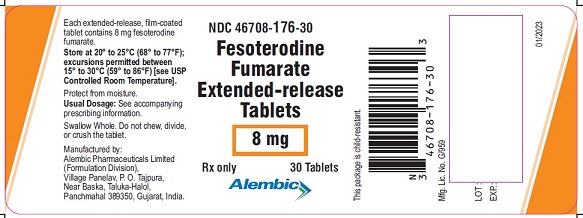
PACKAGE LABEL.PRINCIPAL DISPLAY PANEL -8 mg NDC 46708-176-30 Fesoterodine Fumarate Extended-release Tablets 8 mg Rx only 30 Tablets Alembic 30 tablets
Medicare Part D spend CMS · PART D · 2026 (Q1)
About this NDC listing & data coverage
What data is (and isn’t) available for this NDC — tap to expand
| NDC identity (package / product / labeler codes) | ✓ Available |
| Labeler | ✓ Available |
| Product & package description | ✓ Available |
| Marketing category & status | ✓ Available |
| Active ingredient / dosage form / route | ✓ Available |
| FDA label (SPL via DailyMed) | ✓ Available |
| Package photos | ✓ Available |
| Inactive ingredients (structured) | ✓ Available |
| NADAC pharmacy acquisition price (CMS) | — Not published for this NDC CMS publishes NADAC only for NDCs reported in its retail-pharmacy survey. |
| Orange Book / therapeutic-equivalence data | ✓ Available |
| HCPCS J-code billing crosswalk | — Not published for this NDC Most self-administered / retail products have no J-code — that is normal. |
| Medicaid utilization (CMS SDUD) | — Not published for this NDC CMS reports utilization only for NDCs with Medicaid claims above its privacy threshold. |