
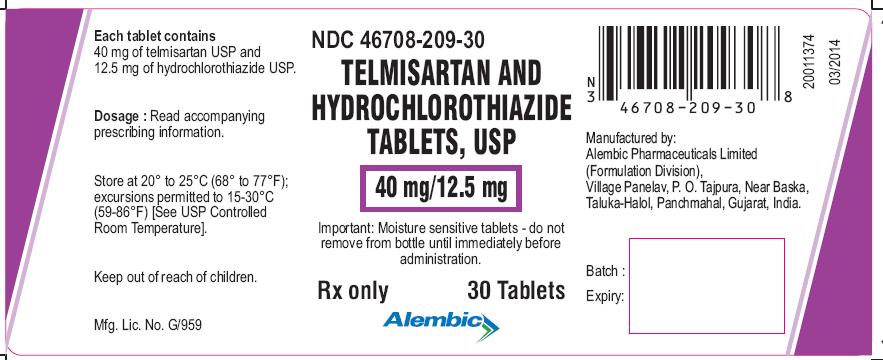
Telmisartan and Hydrochlorothiazide 40 mg; 12.5 mg Tablet, 100-count
🆔 Identity & classification
Where does this data come from?
🏷️ RxNorm drug class
This medicine belongs to the Thiazide Diuretic class.
Where does this data come from?
🏭 Manufacturer & labeler
Where does this data come from?
🩺 Clinical
Hydrochlorothiazide is used alone or in combination with other medications to treat high blood pressure. Hydrochlorothiazide is used to treat edema (fluid retention; excess fluid held in body tissues) caused by various medical problems, including heart, kidney, and liver disease and to treat edema caused by using certain medications including estrogen and corticosteroids. Hydrochlorothiazide is in a class of medications called diuretics ('water pills'). It works by causing the kidneys to get rid of unneeded water and salt from the body into the urine. High blood pressure is a common condition...
Read the full MedlinePlus article ↗- Great question. This combination is prescribed when one blood pressure drug alone isn't enough to reach your target. The two ingredients — telmisartan and hydrochlorothiazide — low...
- Why am I on two blood pressure drugs in one pill? Wouldn't one be simpler?
- You can take it either way — with or without food. Food does slightly reduce how much telmisartan your body absorbs, but not enough to matter clinically. Just try to take it at the...
- Can I take this pill with food, or does it have to be on an empty stomach?
Patient education
Supplement & herbal interactions
Where does this data come from?
Ask a licensed pharmacist directly — free, answered by our team.
💊 What it looks like
Where does this data come from?
🧪 Inactive Ingredients / Excipients
Inactive ingredients, also called excipients, are components of the drug product other than the active ingredient. They may include fillers, dyes, coatings, preservatives, flavors, or other formulation ingredients.
💡 Tap an ingredient (hover on desktop) to see what it is and why it’s used.
-
UNII 1K09F3G675
Ferric oxide red is an inorganic iron compound used as a colorant in medicines. It gives tablets, capsules, or other dosage forms a red or reddish tint for identification and appearance.
-
UNII EWQ57Q8I5X
Lactose monohydrate is a natural sugar derived from milk. It serves as a filler and binder in tablets and capsules, helping create the proper size, texture, and consistency of the medicine.
-
UNII 70097M6I30
Magnesium stearate is a salt made from magnesium and stearic acid, a fatty substance. It's used in tablets and capsules as a lubricant and glidant to help ingredients flow smoothly during manufacturing and prevent sticking.
-
UNII 3OWL53L36A
A natural sugar alcohol derived from seaweed or synthesized in the lab. It's used as a filler to add bulk, a sweetener in sugar-free formulas, and a disintegrant to help tablets break apart in the stomach.
-
UNII 6HG8UB2MUY
Meglumine is a sugar-alcohol compound used as a solubilizer and pH buffer in medicines. It helps dissolve drugs that don't mix well in water and maintains stable acidity levels in the formulation.
-
UNII K0KQV10C35
Povidone K25 is a synthetic polymer made from vinyl pyrrolidone. It acts as a binder to hold tablet ingredients together and as a disintegrant to help the tablet break apart in the stomach for better absorption.
-
UNII 55X04QC32I
A strong alkaline chemical used to adjust and maintain the pH balance of liquid medicines. It helps keep the medicine stable and ensures it stays effective during storage.
-
UNII 7CV7WJK4UI
Sodium stearyl fumarate is a synthetic compound made from stearyl alcohol and fumaric acid. It acts as a lubricant and glidant in tablets and capsules, helping ingredients flow smoothly during manufacturing and preventing sticking.
8 inactive ingredients listed in the exact product block matched to this NDC.
Where does this data come from?
ingredient classCode="IACT" elements from the exact product block matched by this NDC. Label-section narrative from DailyMed / the openFDA label index is shown separately when available.Inactive ingredient FAQ
Are inactive ingredients the same for every manufacturer?
Why might an inactive ingredient be missing?
Can inactive ingredients matter?
💲 Pricing
A drug doesn't have one price. Each row is a different public payment system, and none is what you'd pay at the counter — that depends on your insurance. The ⓘ on each row explains what it measures.
| Price system | Per each | Per package |
|---|---|---|
| Retail pharmacies payNADAC · weekly | Not in the retail survey — common for institutional, discontinued, or low-volume packs. | |
| Medicaid paysCMS SDUD · 12 mo | No recent Medicaid claims on file for this NDC — rare and low-volume NDCs are suppressed in the public data. | |
| Medicare drug plans payPart D · Q2 2026 | $0.7873 | $78.73 / 100 tablets |
Where does this data come from?
🔁 Therapeutic equivalents
| Product | Labeler | Pack | NADAC/unit | TE | Status | Price vs. this |
|---|---|---|---|---|---|---|
| Telmisartan And Hydrochlorothiazide 40 mg/1; 12.5 mg 43547-0441-03 | Solco | 30 tablets | $0.368 | AB | Availability likely | — |
| Telmisartan and Hydrochlorothiazide 40 mg/1; 12.5 mg 65862-0976-03 | Aurobindo | 30 tablets | $0.368 | — | Availability likely | — |
| Telmisartan and Hydrochlorothiazide 40 mg/1; 12.5 mg 68462-0840-13 | Glenmark | 30 tablets | $0.368 | AB | Availability likely | — |
| Micardis HCT 40 mg/1; 12.5 mg 00597-0043-37 | Boehringer | 30 tablets | $4.484 | AB | Availability likely | — |
| Telmisartan and Hydrochlorothiazide 40 mg/1; 12.5 mg 42291-0462-30 | AvKARE | 30 tablets | — | AB | FDA listed | — |
| Telmisartan and Hydrochlorothiazide 40 mg/1; 12.5 mgthis 46708-0209-10 | Alembic | 100 tablets | — | AB | FDA listed | — |
| Telmisartan and Hydrochlorothiazide 40 mg/1; 12.5 mg 62332-0209-10 | Alembic | 100 tablets | — | AB | FDA listed | — |
| telmisartan and hydrochlorothiazide 40 mg/1; 12.5 mg 70756-0315-30 | Lifestar | 30 tablets | — | — | FDA listed | — |
Where does this data come from?
⏳ Availability & generic status
This product is an FDA-approved generic. Other versions of the same drug are listed under Therapeutic equivalents, least expensive first.
Where does this data come from?
🔬 Reported adverse events (FAERS)
Top reported reactions
Age at onset
Reporter sex
Where does this data come from?
📦 Packaging — all sizes for this product
| Package NDC | Description | Marketing start | Status |
|---|---|---|---|
| 46708-0209-10 You're viewing this | 100 TABLET in 1 CARTON (46708-209-10) | 2014-03-14 | Active |
| 46708-0209-30 | 30 TABLET in 1 BOTTLE (46708-209-30) | 2014-03-14 | Active |
| 46708-0209-91 | 1000 TABLET in 1 BOTTLE (46708-209-91) | 2014-03-14 | Active |
You're viewing one of 3 pack sizes for this product.
Pack size FAQ
What quantity is in NDC 46708-0209-10?
What is the difference between NDC 46708-0209-10 and NDC 46708-0209-30?
What NDC number is used to bill for this package of Telmisartan and Hydrochlorothiazide 40 mg; 12.5 mg Tablet?
🧭 About this NDC listing & data coverage
What data is (and isn’t) available for this NDC — tap to expand
| NDC identity (package / product / labeler codes) | ✓ Available |
| Labeler | ✓ Available |
| Product & package description | ✓ Available |
| Marketing category & status | ✓ Available |
| Active ingredient / dosage form / route | ✓ Available |
| FDA label (SPL via DailyMed) | ✓ Available |
| Package photos | ✓ Available |
| Inactive ingredients (structured) | ✓ Available |
| NADAC pharmacy acquisition price (CMS) | — Not published for this NDC CMS publishes NADAC only for NDCs reported in its retail-pharmacy survey. |
| Orange Book / therapeutic-equivalence data | ✓ Available |
| HCPCS J-code billing crosswalk | — Not published for this NDC Most self-administered / retail products have no J-code — that is normal. |
| Medicaid utilization (CMS SDUD) | — Not published for this NDC CMS reports utilization only for NDCs with Medicaid claims above its privacy threshold. |
Questions about this listing
Why is there no price listed?
Is the NDC printed on the package the same as the 11-digit billing NDC?
What do the three segments of this NDC mean?
Is this package still being marketed?
Does this product come in other package sizes?
Who lists this product with the FDA?
Do I need a prescription for this product?
Where does this data come from?
📄 Full prescribing information FDA SPL
🚨 Boxed Warning ▾
WARNING: FETAL TOXICITY When pregnancy is detected, discontinue telmisartan and hydrochlorothiazide as soon as possible. Drugs that act directly on the renin-angiotensin system can cause injury and death to the developing fetus ( see WARNINGS, Fetal Toxicity).
🎯 Indications and Usage ▾
INDICATIONS & USAGE Telmisartan and hydrochlorothiazide tablets, USP are indicated for the treatment of hypertension. This fixed dose combination is not indicated for initial therapy (see DOSAGE AND ADMINISTRATION ).
⏱️ Dosage and Administration ▾
DOSAGE AND ADMINISTRATION The usual starting dose of telmisartan is 40 mg once a day; blood pressure response is dose related over the range of 20 to 80 mg. Patients with depletion of intravascular volume should have the condition corrected or telmisartan tablets should be initiated under close medical supervision (see WARNINGS, Hypotension in Volume Depleted Patients ). Patients with biliary obstructive disorders or hepatic insufficiency should have treatment started under close medical supervision (see PRECAUTIONS ).
Hydrochlorothiazide is effective in doses of 12.5 mg to 50 mg once daily. To minimize dose-independent side effects, it is usually appropriate to begin combination therapy only after a patient has failed to achieve the desired effect with monotherapy. The side effects (see WARNINGS ) of telmisartan are generally rare and apparently independent of dose; those of hydrochlorothiazide are a mixture of dose-dependent phenomena (primarily hypokalemia) and dose-independent phenomena (e.g., pancreatitis), the former much more common than the latter.
Therapy with any combination of telmisartan and hydrochlorothiazide will be associated with both sets of dose-independent side effects. Telmisartan and hydrochlorothiazide tablets may be administered with other antihypertensive agents. Telmisartan and hydrochlorothiazide tablets may be administered with or without food.
Replacement Therapy The combination may be substituted for the titrated components. Dose Titration by Clinical Effect Telmisartan and hydrochlorothiazide tablets are available as tablets containing either telmisartan 40 mg and hydrochlorothiazide 12.5 mg, or telmisartan 80 mg and hydrochlorothiazide 12.5 mg or 25 mg. A patient whose blood pressure is not adequately controlled with telmisartan monotherapy 80 mg (see above) may be switched to telmisartan and hydrochlorothiazide tablets, telmisartan 80 mg/hydrochlorothiazide 12.5 mg once daily, and finally titrated up to 160/25 mg, if necessary.
A patient whose blood pressure is inadequately controlled by 25 mg once daily of hydrochlorothiazide may be switched to telmisartan 80 mg/hydrochlorothiazide 12.5 mg or telmisartan 80 mg/hydrochlorothiazide 25 mg tablets once daily. The clinical response to telmisartan and hydrochlorothiazide tablets should be subsequently evaluated and if blood pressure remains uncontrolled after 2 to 4 weeks of therapy, the dose may be titrated up to 160/25 mg, if necessary. Those patients controlled by 25 mg hydrochlorothiazide but who experience hypokalemia with this regimen, may be switched to telmisartan 80 mg/hydrochlorothiazide 12.5 mg tablets once daily, reducing the dose of hydrochlorothiazide without reducing the overall expected antihypertensive response.
Patients with Renal Impairment The usual regimens of therapy with telmisartan and hydrochlorothiazide tablets may be followed as long as the patient’s creatinine clearance is >30 mL/min. In patients with more severe renal impairment, loop diuretics are preferred to thiazides, so telmisartan and hydrochlorothiazide tablets are not recommended. Patients with Hepatic Impairment Telmisartan and hydrochlorothiazide tablets are not recommended for patients with severe hepatic impairment.
Patients with biliary obstructive disorders or hepatic insufficiency should have treatment started under close medical supervision using the 40/12.5 mg combination (see PRECAUTIONS ).
⛔ Contraindications ▾
CONTRAINDICATIONS Telmisartan and hydrochlorothiazide tablets, USP are contraindicated in patients with known hypersensitivity (e.g., anaphylaxis or angioedema) to telmisartan, hydrochlorothiazide, or any other component of this product (see ADVERSE REACTIONS ). Because of the hydrochlorothiazide component, this product is contraindicated in patients with anuria or hypersensitivity to other sulfonamide-derived drugs. Do not co-administer aliskiren with telmisartan and hydrochlorothiazide tablets in patients with diabetes (see PRECAUTIONS , Drug Interactions ).
⚠️ Warnings ▾
WARNINGS Fetal Toxicity Pregnancy Category D Use of drugs that act on the renin-angiotensin system during the second and third trimesters of pregnancy reduces fetal renal function and increases fetal and neonatal morbidity and death. Resulting oligohydramnios can be associated with fetal lung hypoplasia and skeletal deformations. Potential neonatal adverse effects include skull hypoplasia, anuria, hypotension, renal failure, and death.
When pregnancy is detected, discontinue telmisartan and hydrochlorothiazide as soon as possible. These adverse outcomes are usually associated with use of these drugs in the second and third trimester of pregnancy. Most epidemiologic studies examining fetal abnormalities after exposure to antihypertensive use in the first trimester have not distinguished drugs affecting the renin-angiotensin system from other antihypertensive agents.
Appropriate management of maternal hypertension during pregnancy is important to optimize outcomes for both mother and fetus. In the unusual case that there is no appropriate alternative to therapy with drugs affecting the renin-angiotensin system for a particular patient, apprise the mother of the potential risk to the fetus. Perform serial ultrasound examinations to assess the intra-amniotic environment.
If oligohydramnios is observed, discontinue telmisartan and hydrochlorothiazide, unless it is considered lifesaving for the mother. Fetal testing may be appropriate, based on the week of pregnancy. Patients and physicians should be aware, however, that oligohydramnios may not appear until after the fetus has sustained irreversible injury.
Closely observe infants with histories of in utero exposure to telmisartan and hydrochlorothiazide for hypotension, oliguria, and hyperkalemia (see PRECAUTIONS , Pediatric Use ). No teratogenic effects were observed when telmisartan was administered to pregnant rats at oral doses of up to 50 mg/kg/day and to pregnant rabbits at oral doses up to 45 mg/kg/day. In rabbits, embryolethality associated with maternal toxicity (reduced body weight gain and food consumption) was observed at 45 mg/kg/day [about 12 times the maximum recommended human dose (MRHD) of 80 mg on a mg/m 2 basis].
In rats, maternally toxic (reduction in body weight gain and food consumption) telmisartan doses of 15 mg/kg/day (about 1.9 times the MRHD on a mg/m 2 basis), administered during late gestation and lactation, were observed to produce adverse effects in neonates, including reduced viability, low birth weight, delayed maturation, decreased weight gain. Telmisartan has been shown to be present in rat fetuses during late gestation and in rat milk. The no observed effect doses for developmental toxicity in rats and rabbits, 5 and 15 mg/kg/day, respectively, are about 0.64 and 3.7 times, on a mg/m 2 basis, the maximum recommended human dose of telmisartan (80 mg/day).
Studies in which hydrochlorothiazide was administered to pregnant mice and rats during their periods of major organogenesis at doses up to 3000 and 1000 mg/kg/day, respectively, provided no evidence of harm to the fetus. Thiazides cross the placental barrier and appear in cord blood. There is a risk of fetal or neonatal jaundice, thrombocytopenia, and possibly other adverse reactions that have occurred in adults.
Hypotension in Volume-Depleted Patients Initiation of antihypertensive therapy in patients whose renin-angiotensin system are activated such as patients who are intravascular volume- or sodium-depleted, e.g., in patients treated vigorously with diuretics, should only be approached cautiously. These conditions should be corrected prior to administration of telmisartan and hydrochlorothiazide tablets. Treatment should be started under close medical supervision (see DOSAGE AND ADMINISTRATION ).
If hypotension occurs, the patients should be placed in the supine position and, if necessary, given an intravenous infusion of normal saline. A transient hypotensive response is not a contraindicati…
🤒 Adverse Reactions ▾
ADVERSE REACTIONS Telmisartan and hydrochlorothiazide tablets has been evaluated for safety in over 1700 patients, including 716 treated for over six months and 420 for over one year. In clinical trials with telmisartan and hydrochlorothiazide tablets, no unexpected adverse events have been observed. Adverse experiences have been limited to those that have been previously reported with telmisartan and/or hydrochlorothiazide.
The overall incidence of adverse experiences reported with the combination was comparable to placebo. Most adverse experiences were mild in intensity and transient in nature and did not require discontinuation of therapy. Adverse events occurring at an incidence of 2% or more in patients treated with telmisartan/hydrochlorothiazide and at a greater rate than in patients treated with placebo, irrespective of their causal association, are presented in Table 1.
TABLE 1 Adverse Events Occurring ≥2% of Telmisartan/Hydrochlorothiazide (HCTZ) Patients* Telm/HCTZ (N=414) (%) Placebo (N=74) (%) Telm (N=209) (%) HCTZ (N=121) (%) Body as a whole Fatigue 3 1 3 3 Influenza-like symptoms 2 1 2 3 Central/peripheral nervous system Dizziness 5 1 4 6 Gastrointestinal system Diarrhea 3 0 5 2 Nausea 2 0 1 2 Respiratory system disorder Sinusitis 4 3 3 6 Upper respiratory tract infection 8 7 7 10 * includes all doses of telmisartan (20 to 160 mg), hydrochlorothiazide (6.25 to 25 mg), and combinations thereof The following adverse events were reported at a rate less than 2% in patients treated with telmisartan/hydrochlorothiazide and at a greater rate than in patients treated with placebo: back pain, dyspepsia, vomiting, tachycardia, hypokalemia, bronchitis, pharyngitis, rash, hypotension postural, abdominal pain.
Finally, the following adverse events were reported at a rate of 2% or greater in patients treated with telmisartan/hydrochlorothiazide, but were as, or more common in the placebo group: pain, headache, cough, urinary tract infection. Adverse events occurred at approximately the same rates in men and women, older and younger patients, and black and non-black patients. In controlled trials (n=1017), 0.3% of patients treated with telmisartan and hydrochlorothiazide tablets 40/12.5 mg, 80/12.5 mg or 80/25 mg discontinued due to orthostatic hypotension, and the incidence of dizziness was 4%, 7%, and 1% respectively.
Telmisartan Other adverse experiences that have been reported with telmisartan, without regard to causality, are listed below: Autonomic Nervous System : impotence, increased sweating, flushing Body as a Whole : allergy, fever, leg pain, malaise, chest pain Cardiovascular : palpitation, dependent edema, angina pectoris, leg edema, abnormal ECG, hypertension, peripheral edema CNS : insomnia, somnolence, migraine, vertigo, paresthesia, involuntary muscle contractions, hypoaesthesia Gastrointestinal : flatulence, constipation, gastritis, dry mouth, hemorrhoids, gastroenteritis, enteritis, gastroesophageal reflux, toothache, non-specific gastrointestinal disorders Metabolic : gout, hypercholesterolemia, diabetes mellitus Musculoskeletal : arthritis, arthralgia, leg cramps, myalgia Psychiatric : anxiety, depression, nervousness Resistance Mechanism : infection, fungal infection, abscess, otitis media Respiratory : asthma, rhinitis, dyspnea, epistaxis Skin : dermatitis, eczema, pruritus Urinary : micturition frequency, cystitis Vascular : cerebrovascular disorder Special Senses : abnormal vision, conjunctivitis, tinnitus, earache A single case of angioedema was reported (among a total of 3781 patients treated with telmisartan).
Hydrochlorothiazide Other adverse experiences that have been reported with hydrochlorothiazide, without regard to causality, are listed below: Body as a whole : weakness Digestive : pancreatitis, jaundice (intrahepatic cholestatic jaundice), sialadenitis, cramping, gastric irritation Hematologic : aplastic anemia, agranulocytosis, leukopenia, hemolytic anemia, thrombocytopenia Hypersensitivity…
🔄 Drug Interactions ▾
Drug Interactions Telmisartan Aliskiren: Do not co-administer aliskiren with telmisartan and hydrochlorothiazide tablets in patients with diabetes. Avoid use of aliskiren with telmisartan and hydrochlorothiazide tablets in patients with renal impairment (GFR <60 mL/min). Digoxin : When telmisartan was co-administered with digoxin, median increases in digoxin peak plasma concentration (49%) and in trough concentration (20%) were observed.
It is, therefore, recommended that digoxin levels be monitored when initiating, adjusting, and discontinuing telmisartan to avoid possible over- or under-digitalization. Lithium: Reversible increases in serum lithium concentrations and toxicity have been reported during concomitant administration of lithium with angiotensin converting enzyme inhibitors. Cases have also been reported with angiotensin II receptor antagonists including telmisartan.
Because lithium should not be used with diuretics, the use of lithium with telmisartan and hydrochlorothiazide is not recommended. Non-Steroidal Anti-Inflammatory Agents including Selective Cyclooxygenase-2 Inhibitors (COX-2 Inhibitors) : In patients who are elderly, volume-depleted (including those on diuretic therapy), or with compromised renal function, co-administration of NSAIDs, including selective COX-2 inhibitors, with angiotensin II receptor antagonists, including telmisartan, may result in deterioration of renal function, including possible acute renal failure.
These effects are usually reversible. Monitor renal function periodically in patients receiving telmisartan and NSAID therapy. The antihypertensive effect of angiotensin II receptor antagonists, including telmisartan may be attenuated by NSAIDs including selective COX-2 inhibitors.
Ramipril and Ramiprilat: Co-administration of telmisartan 80 mg once daily and ramipril 10 mg once daily to healthy subjects increases steady-state C max and AUC of ramipril 2.3 and 2.1 fold, respectively, and C max and AUC of ramiprilat 2.4 and 1.5 fold, respectively. In contrast, C max and AUC of telmisartan decrease by 31% and 16%, respectively. When co-administering telmisartan and ramipril, the response may be greater because of the possibly additive pharmacodynamic effects of the combined drugs, and also because of the increased exposure to ramipril and ramiprilat in the presence of telmisartan.
Warfarin : Telmisartan administered for 10 days slightly decreased the mean warfarin trough plasma concentration; this decrease did not result in a change in International Normalized Ratio (INR). Other Drugs : Co-administration of telmisartan did not result in a clinically significant interaction with acetaminophen, amlodipine, glibenclamide, simvastatin, hydrochlorothiazide or ibuprofen. Telmisartan is not metabolized by the cytochrome P450 system and had no effects in vitro on cytochrome P450 enzymes, except for some inhibition of CYP2C19.
Telmisartan is not expected to interact with drugs that inhibit cytochrome P450 enzymes; it is also not expected to interact with drugs metabolized by cytochrome P450 enzymes, except for possible inhibition of the metabolism of drugs metabolized by CYP2C19. Hydrochlorothiazide When administered concurrently, the following drugs may interact with thiazide diuretics: Alcohol, barbiturates, or narcotics : Potentiation of orthostatic hypotension may occur. Antidiabetic drugs (oral agents and insulin) : Dosage adjustment of the antidiabetic drug may be required.
Other antihypertensive drugs : Additive effect or potentiation. Cholestyramine and colestipol resins : Absorption of hydrochlorothiazide is impaired in the presence of anionic exchange resins. Single doses of either cholestyramine or colestipol resins bind the hydrochlorothiazide and reduce its absorption from the gastrointestinal tract by up to 85% and 43%, respectively.
Corticosteroids, ACTH : Intensified electrolyte depletion, particularly hypokalemia. Pressor amines (e.g., norepinephrine) : Possible decreased respons…
🧒 Pediatric Use ▾
Pediatric Use Neonates with a history of in utero exposure to telmisartan and hydrochlorothiazide: If oliguria or hypotension occurs, direct attention toward support of blood pressure and renal perfusion. Exchange transfusions or dialysis may be required as a means of reversing hypotension and/or substituting for disordered renal function. Safety and effectiveness in pediatric patients have not been established.
🧓 Geriatric Use ▾
Geriatric Use In the controlled clinical trials (n=1017), approximately 20% of patients treated with telmisartan/hydrochlorothiazide were 65 years of age or older, and 5% were 75 years of age or older. No overall differences in effectiveness and safety of telmisartan/ hydrochlorothiazide were observed in these patients compared to younger patients. Other reported clinical experience has not identified differences in responses between the elderly and younger patients, but greater sensitivity of some older individuals cannot be ruled out.
🆘 Overdosage ▾
OVERDOSAGE Telmisartan Limited data are available with regard to overdosage in humans. The most likely manifestations of overdosage with telmisartan would be hypotension, dizziness and tachycardia; bradycardia could occur from parasympathetic (vagal) stimulation. If symptomatic hypotension should occur, supportive treatment should be instituted.
Telmisartan is not removed by hemodialysis. Hydrochlorothiazide The most common signs and symptoms observed in patients are those caused by electrolyte depletion (hypokalemia, hypochloremia, hyponatremia) and dehydration resulting from excessive diuresis. If digitalis has also been administered, hypokalemia may accentuate cardiac arrhythmias.
The degree to which hydrochlorothiazide is removed by hemodialysis has not been established. The oral LD 50 of hydrochlorothiazide is greater than 10 g/kg in both mice and rats.
🧬 Clinical Pharmacology ▾
CLINICAL PHARMACOLOGY Mechanism of Action Angiotensin II is formed from angiotensin I in a reaction catalyzed by angiotensin-converting enzyme (ACE, kininase II). Angiotensin II is the principal pressor agent of the renin-angiotensin system, with effects that include vasoconstriction, stimulation of synthesis and release of aldosterone, cardiac stimulation, and renal reabsorption of sodium. Telmisartan blocks the vasoconstrictor and aldosterone-secreting effects of angiotensin II by selectively blocking the binding of angiotensin II to the AT 1 receptor in many tissues, such as vascular smooth muscle and the adrenal gland.
Its action is therefore independent of the pathways for angiotensin II synthesis. There is also an AT 2 receptor found in many tissues, but AT 2 is not known to be associated with cardiovascular homeostasis. Telmisartan has much greater affinity (>3,000 fold) for the AT 1 receptor than for the AT 2 receptor.
Blockade of the renin-angiotensin system with ACE inhibitors, which inhibit the biosynthesis of angiotensin II from angiotensin I, is widely used in the treatment of hypertension. ACE inhibitors also inhibit the degradation of bradykinin, a reaction also catalyzed by ACE. Because telmisartan does not inhibit ACE (kininase II), it does not affect the response to bradykinin.
Whether this difference has clinical relevance is not yet known. Telmisartan does not bind to or block other hormone receptors or ion channels known to be important in cardiovascular regulation. Blockade of the angiotensin II receptor inhibits the negative regulatory feedback of angiotensin II on renin secretion, but the resulting increased plasma renin activity and angiotensin II circulating levels do not overcome the effect of telmisartan on blood pressure.
Hydrochlorothiazide is a thiazide diuretic. Thiazides affect the renal tubular mechanisms of electrolyte reabsorption, directly increasing excretion of sodium salt and chloride in approximately equivalent amounts. Indirectly, the diuretic action of hydrochlorothiazide reduces plasma volume, with consequent increases in plasma renin activity, increases in aldosterone secretion, increases in urinary potassium loss, and decreases in serum potassium.
The renin-aldosterone link is mediated by angiotensin II, so coadministration of an angiotensin II receptor antagonist tends to reverse the potassium loss associated with these diuretics. The mechanism of the antihypertensive effect of thiazides is not fully understood. Pharmacokinetics General Telmisartan Following oral administration, peak concentrations (C max ) of telmisartan are reached in 0.5 to 1 hour after dosing.
Food slightly reduces the bioavailability of telmisartan, with a reduction in the area under the plasma concentration-time curve (AUC) of about 6% with the 40 mg tablet and about 20% after a 160 mg dose. The absolute bioavailability of telmisartan is dose dependent. At 40 and 160 mg the bioavailability was 42% and 58%, respectively.
The pharmacokinetics of orally administered telmisartan are nonlinear over the dose range 20 to 160 mg, with greater than proportional increases of plasma concentrations (C max and AUC) with increasing doses. Telmisartan shows bi-exponential decay kinetics with a terminal elimination half-life of approximately 24 hours. Trough plasma concentrations of telmisartan with once daily dosing are about 10 to 25% of peak plasma concentrations.
Telmisartan has an accumulation index in plasma of 1.5 to 2.0 upon repeated once daily dosing. Hydrochlorothiazide When plasma levels have been followed for at least 24 hours, the plasma half-life has been observed to vary between 5.6 and 14.8 hours. Metabolism and Elimination Telmisartan Following either intravenous or oral administration of 14 C-labeled telmisartan, most of the administered dose (>97%) was eliminated unchanged in feces via biliary excretion; only minute amounts were found in the urine (0.91% and 0.49% of total radioactivity, respectively).
Te…
📦 How Supplied / Storage and Handling ▾
HOW SUPPLIED Telmisartan and hydrochlorothiazide tablets are available in three strengths as 40 mg/12.5 mg, 80 mg/12.5 mg and 80 mg/25 mg. 40 mg/12.5 mg: Oblong shaped, biconvex, bilayered, uncoated tablets with one white to off white color layer and one pink color mottled layer debossed with ‘L199’.White to off white color layer may contains pink color specks. NDC 46708-209-30 bottle of 30 units NDC 46708-209-91 bottle of 1000 units NDC 46708-209-10 100 Tablets (i.e.; 10 blister cards of 10 tablets each) 80 mg/12.5 mg: Oblong shaped, biconvex, bilayered, uncoated tablets with one white to off white color layer and one pink color mottled layer debossed with ‘L200’.
White to off white color layer may contains pink color specks. NDC 46708-210-30 bottle of 30 units NDC 46708-210-91 bottle of 1000 units NDC 46708-210-10 100 Tablets (i.e.; 10 blister cards of 10 tablets each) 80 mg/25 mg: Oblong shaped, biconvex, bilayered, uncoated tablets with one white to off white color layer and one yellow color mottled layer debossed with ‘L201’. White to off white color layer may contains yellow color specks.
NDC 46708-211-30 bottle of 30 units NDC 46708-211-91 bottle of 1000 units NDC 46708-211-10 100 Tablets (i.e.; 10 blister cards of 10 tablets each) Storage Store at 20° to 25°C (68° to 77°F); excursions permitted to 15-30°C (59-86°F) [see USP Controlled Room Temperature]. Tablets should not be removed from blisters until immediately before administration. Call your doctor for medical advice about side effects.
You may report side effects to FDA at 1-800-FDA-1088. Manufactured by: Alembic Pharmaceuticals Limited (Formulation Division), Village Panelav, P. O.
Tajpura, Near Baska, Taluka-Halol, Panchmahal, Gujarat, India. Revised: 03/2014
📋 Description ▾
DESCRIPTION Telmisartan and hydrochlorothiazide tablets, USP are a combination of telmisartan, an orally active angiotensin II antagonist acting on the AT 1 receptor subtype, and hydrochlorothiazide, a diuretic.Telmisartan, a non-peptide molecule, is chemically described as 4’-[(1,4’-dimethyl-2’-propyl[2,6’-bi-1H-benzimidazol]-1’-yl)methyl]-[1,1’-biphenyl]-2-carboxylic acid. Its empirical formula is C 33 H 30 N 4 O 2 , its molecular weight is 514.63, and its structural formula is: Telmisartan is a white to slightly yellowish solid.
It is practically insoluble in water and in the pH range of 3 to 9, sparingly soluble in strong acid (except insoluble in hydrochloric acid), and soluble in strong base. Hydrochlorothiazide is a white, or practically white, practically odorless, crystalline powder with a molecular weight of 297.74. It is slightly soluble in water, and freely soluble in sodium hydroxide solution.
Hydrochlorothiazide is chemically described as 6-chloro-3,4-dihydro-2 H -1,2,4-benzothiadiazine-7-sulfonamide 1,1-dioxide. Its empirical formula is C 7 H 8 ClN 3 O 4 S 2 , and its structural formula is: Telmisartan and hydrochlorothiazide tablets are formulated for oral administration in three combinations of 40 mg/12.5 mg, 80 mg/12.5 mg, and 80 mg/25 mg telmisartan and hydrochlorothiazide, respectively. The tablets contain the following inactive ingredients: mannitol, sodium hydroxide, meglumine, povidone, sodium stearyl fumarate, lactose monohydrate, magnesium stearate.
As coloring agents, the 40 mg/12.5 mg and 80 mg/12.5 mg tablets contain ferric oxide red, and the 80 mg/25 mg tablets contain ferric oxide yellow. Telmisartan and hydrochlorothiazide tablets are hygroscopic and require protection from moisture. Telmisartan Hydrochlorothiazide
💬 Information for Patients ▾
Information for Patients Pregnancy : Female patients of childbearing age should be told about the consequences of exposure to telmisartan and hydrochlorothiazide during pregnancy. Discuss treatment options with women planning to become pregnant. Patients should be asked to report pregnancies to their physicians as soon as possible.
Symptomatic Hypotension : A patient receiving telmisartan and hydrochlorothiazide tablets should be cautioned that lightheadedness can occur, especially during the first days of therapy, and that it should be reported to the prescribing physician. The patients should be told that if syncope occurs, telmisartan and hydrochlorothiazide tablets should be discontinued until the physician has been consulted. All patients should be cautioned that inadequate fluid intake, excessive perspiration, diarrhea, or vomiting can lead to an excessive fall in blood pressure, with the same consequences of lightheadedness and possible syncope.
Potassium Supplements : A patient receiving telmisartan and hydrochlorothiazide tablets should be told not to use potassium supplements or salt substitutes that contain potassium without consulting the prescribing physician.