
Memantine Hydrochloride 10 mg Tablet, Coated, 3,000-count — NDC 46708-452-42 (Billing 46708-0452-42)
This is a package of 3,000 tablets of Memantine Hydrochloride 10 mg Tablet, Coated from Alembic Pharmaceuticals Limited, marketed since Oct 2015 and currently FDA-listed.
NDC database record
One package, one record: these facts belong to NDC 46708-452-42 alone.
- Record
- FDA NDC Directory package listing · Human prescription drug
- Code segments
- 46708 labeler · 452 product · 42 package
- Package marketed since
- Oct 13, 2015
- Sample package
- No — commercial package
- Listing certified through
- Dec 31, 2026
- Barcode (UPC)
- 0346708452605, 0346708451608
- FDA record last changed
- Jul 24, 2026
Other active recalls for Memantine Hydrochloride (different manufacturers) — 1 · tap to view
Identity & classification
Regulatory identifiers FDA, NLM and CMS codes for this package
- RxCUI (RxNorm): 996561
Where does this data come from?
- FDA openFDA NDC Directory · synced Oct 1, 2026
- FDA label on DailyMed · label index refreshed Oct 5, 2026
- RxNorm (NLM RxNav) · catalog refreshed Oct 1, 2026
- Medi-Span GPI (licensed)
- First Databank (licensed) · refreshed Oct 1, 2026
RxNorm drug class
This medicine belongs to the N-methyl-D-aspartate Receptor Antagonist class.
Where does this data come from?
- RxClass (NLM) · catalog refreshed Oct 1, 2026
Clinical
- Memantine treats moderate to severe dementia of the Alzheimer’s type. It helps manage symptoms, but it has not been shown to prevent or slow the underlying nerve damage.
- Take it by mouth as your prescriber directs. The dose usually starts low and goes up over several weeks. Tablets and oral solution can be taken with or without food. If you miss a...
- The most common are dizziness, headache, confusion and constipation. Tell your doctor if they bother you or don’t settle. Seek help quickly for a seizure, a severe skin reaction, u...
- Many people take it with donepezil, which showed no interaction in studies. Be careful with amantadine, ketamine and dextromethorphan, and with sodium bicarbonate or carbonic anhyd...
Patient education
Supplement & herbal interactions
Some supplements/herbs that may interact with Memantine Hydrochloride — tap one for details:
Where does this data come from?
- MedlinePlus (NLM) · refreshed Oct 1, 2026
- FDA label on DailyMed · label index refreshed Oct 5, 2026
Ask a licensed pharmacist directly — free, answered by our team.
Pricing
A drug doesn't have one price. Each row is a different public payment system, and none is what you'd pay at the counter — that depends on your insurance. The ⓘ on each row explains what it measures.
| Price system | Per each | Per package |
|---|---|---|
| Retail pharmacies payNADAC · weekly | Not in the retail survey — common for institutional, discontinued, or low-volume packs. | |
| Medicaid paysCMS SDUD · 12 mo | No recent Medicaid claims on file for this NDC — rare and low-volume NDCs are suppressed in the public data. | |
| Medicare drug plans payPart D · Q2 2026 | $0.1890 | $567.00 / 3000 tablets |
Where does this data come from?
- CMS NADAC weekly file
- CMS ASP pricing files · refreshed Sep 20, 2026
- CMS Medicaid State Drug Utilization Data · refreshed Oct 5, 2026
- CMS Part D plan pricing files · refreshed Sep 24, 2026
- VA National Acquisition Center price file
Packaging — all sizes for this product
| Package NDC | Description | Marketing start | Marketing end | Status |
|---|---|---|---|---|
| 46708-0452-10 46708-452-10 Main listing | 100 TABLET, COATED in 1 CARTON | 2015-10-13 | — | Active |
| 46708-0452-20 46708-452-20 | 20 TABLET, COATED in 1 BOTTLE | 2015-10-13 | — | Active |
| 46708-0452-30 46708-452-30 | 30 TABLET, COATED in 1 BOTTLE | 2015-10-13 | — | Active |
| 46708-0452-31 46708-452-31 | 100 TABLET, COATED in 1 BOTTLE | 2015-10-13 | — | Active |
| 46708-0452-42 You're viewing this | 3000 TABLET, COATED in 1 BOTTLE | 2015-10-13 | — | Active |
| 46708-0452-60 46708-452-60 | 60 TABLET, COATED in 1 BOTTLE | 2015-10-13 | — | Active |
| 46708-0452-71 46708-452-71 | 500 TABLET, COATED in 1 BOTTLE | 2015-10-13 | — | Active |
Pack size FAQ
What quantity is in this package?
How does this package differ from NDC 46708-0452-20?
What NDC number is used to bill for this package of Memantine Hydrochloride 10 mg Tablet, Coated?
Therapeutic equivalents
| Product | Labeler | Pack | NADAC/unit | TE | Status | Price vs. this |
|---|---|---|---|---|---|---|
| memantine hydrochloride 10 mg 00591-3875-44 | Actavis | 100 tablets | $0.063 | — | Availability likely | — |
| Memantine Hydrochloride 10 mg 00832-1113-60 | Upsher-Smith | 60 tablets | $0.063 | AB | Availability likely | — |
| Memantine Hydrochloride 10 mg 00904-6506-06 | Major | 50 tablets | $0.063 | AB | Availability likely | — |
| Memantine Hydrochloride 10 mg 27241-0071-05 | Ajanta | 500 tablets | $0.063 | AB | Availability likely | — |
| Memantine Hydrochloride 10 mg 29300-0172-05 | Unichem | 500 tablets | $0.063 | AB | Availability likely | — |
| Memantine Hydrochloride 10 mg 33342-0298-09 | Macleods | 60 tablets | $0.063 | AB | Availability likely | — |
| Memantine Hydrochloride 10 mg 50268-0588-13 | AvPAK | 1 tablet | $0.063 | AB | Availability likely | — |
| Memantine 10 mg 60687-0184-57 | American | 60 tablets | $0.063 | AB | Availability likely | — |
| Memantine Hydrochloride 10 mg 61442-0193-05 | Carlsbad | 500 tablets | $0.063 | AB | Availability likely | — |
| memantine 10 mg 62135-0896-60 | Chartwell | 60 tablets | $0.063 | — | Availability likely | — |
| memantine hydrochloride 10 mg 65162-0169-06 | Amneal | 60 tablets | $0.063 | AB | Availability likely | — |
| Memantine hydrochloride 10 mg 68180-0230-07 | Lupin | 60 tablets | $0.063 | AB | Availability likely | — |
| Memantine 10 mg 72603-0119-01 | NorthStar | 60 tablets | $0.063 | AB | Availability likely | — |
| Memantine 10 mg 00615-8319-05 | NCS | 15 tablets | — | AB | FDA listed | — |
| memantine hydrochloride 10 mg 31722-0808-02 | Camber | 200 tablets | — | AB | FDA listed | — |
| Memantine Hydrochloride 10 mgthis 46708-0452-42 | Alembic | 3000 tablets | — | AB | FDA listed | — |
| Memantine Hydrochloride 10 mg 47335-0322-08 | Sun | 100 tablets | — | AB | FDA listed | — |
| Memantine Hydrochloride 10 mg 50090-4434-00 | A-S | 90 tablets | — | AB | FDA listed | — |
| Memantine Hydrochloride 10 mg 50090-5832-00 | A-S | 90 tablets | — | AB | FDA listed | — |
| Memantine Hydrochloride 10 mg 50090-6400-00 | A-S | 90 tablets | — | AB | FDA listed | — |
| memantine hydrochloride 10 mg 50090-7356-01 | A-S | 60 tablets | — | AB | FDA listed | — |
| Memantine hydrochloride 10 mg 52605-0072-10 | POLYGEN | 1000 tablets | — | AB | Discontinued | — |
| Memantine hydrochloride 10 mg 53746-0169-10 | Amneal | 1000 tablets | — | AB | FDA listed | — |
| Memantine Hydrochloride 10 mg 55111-0597-01 | Dr. | 100 tablets | — | AB | FDA listed | — |
| memantine hydrochloride 10 mg 55154-2667-00 | Cardinal | 10 tablets | — | — | FDA listed | — |
| Memantine Hydrochloride 10 mg 55154-7637-00 | Cardinal | 10 tablets | — | AB | FDA listed | — |
| Memantine Hydrochloride 10 mg 62332-0076-10 | Alembic | 100 tablets | — | AB | FDA listed | — |
| Memantine Hydrochloride 10 mg 63629-2511-01 | Bryant | 500 tablets | — | AB | FDA listed | — |
| Memantine Hydrochloride 10 mg 63629-2512-01 | Bryant | 60 tablets | — | AB | FDA listed | — |
| Memantine Hydrochloride 10 mg 65862-0653-03 | Aurobindo | 10 tablets | — | — | FDA listed | — |
| Memantine Hydrochloride 10 mg 68788-8647-03 | Preferred | 30 tablets | — | AB | FDA listed | — |
| Memantine Hydrochloride 10 mg 70771-1120-00 | Zydus | 1000 tablets | — | AB | FDA listed | — |
| Memantine Hydrochloride 10 mg 71335-1603-01 | Bryant | 30 tablets | — | AB | FDA listed | — |
| Memantine Hydrochloride 10 mg 71335-1899-01 | Bryant | 30 tablets | — | AB | FDA listed | — |
| Memantine Hydrochloride 10 mg 71335-1908-01 | Bryant | 30 tablets | — | AB | FDA listed | — |
| memantine hydrochloride 10 mg 71610-0011-18 | Aphena | 3000 tablets | — | — | FDA listed | — |
| Memantine Hydrochloride 10 mg 71610-0885-80 | Aphena | 180 tablets | — | AB | FDA listed | — |
| Memantine Hydrochloride 10 mg 72162-2004-05 | Bryant | 500 tablets | — | AB | FDA listed | — |
| Memantine HCL 10 mg 72189-0538-60 | Direct_Rx | 60 tablets | — | AB | FDA listed | — |
| Memantine Hydrochloride 10 mg 72578-0004-01 | Viona | 100 tablets | — | AB | FDA listed | — |
Where does this data come from?
- FDA openFDA NDC Directory · synced Oct 1, 2026
- FDA Orange Book · refreshed Oct 3, 2026
- CMS NADAC weekly file
Availability & generic status
This product is an FDA-approved generic. Other versions of the same drug are listed under Therapeutic equivalents, least expensive first.
Where does this data come from?
- FDA Orange Book · refreshed Oct 3, 2026
What it looks like
Where does this data come from?
- FDA label on DailyMed · label index refreshed Oct 5, 2026
Inactive Ingredients / Excipients
Inactive ingredients, also called excipients, are components of the drug product other than the active ingredient. They may include fillers, dyes, coatings, preservatives, flavors, or other formulation ingredients.
🧪 Avoiding an ingredient? See Memantine inactive ingredients by manufacturer: every current product's list side by side, so you can ask your pharmacy for the version that does not list it.
💡 Tap an ingredient (hover on desktop) to see what it is and why it’s used.
-
UNII M28OL1HH48
Croscarmellose sodium is a plant-based substance derived from cellulose. It acts as a disintegrant, helping tablets and capsules break down quickly in the digestive system so the medicine can be absorbed.
-
UNII XM0M87F357
A dark iron oxide compound that gives medicines their black or dark color. It's used as a colorant in tablets and capsules to help identify the product and make it visually distinctive.
-
UNII 3NXW29V3WO
Hypromellose is a plant-based thickener made from cellulose. It's used in medicines as a binder to hold ingredients together, a coating for tablets, and a thickener for liquids.
-
UNII EWQ57Q8I5X
Lactose monohydrate is a natural sugar derived from milk. It serves as a filler and binder in tablets and capsules, helping create the proper size, texture, and consistency of the medicine.
-
UNII 70097M6I30
Magnesium stearate is a salt made from magnesium and stearic acid, a fatty substance. It's used in tablets and capsules as a lubricant and glidant to help ingredients flow smoothly during manufacturing and prevent sticking.
-
UNII OP1R32D61U
Microcrystalline cellulose is a purified form of cellulose, a natural fiber from plant sources. It acts as a binder and filler in tablets and capsules, helping hold ingredients together and give the medicine its shape and size.
-
UNII B697894SGQ
Polyethylene glycol 400 is a clear, thick liquid made from petroleum-derived polymers. It acts as a solvent and humectant in medicines, helping dissolve active ingredients and retain moisture in the formulation.
-
UNII ETJ7Z6XBU4
Silicon dioxide is a naturally occurring mineral used as a glidant and anti-caking agent. It helps powder ingredients flow smoothly and prevents clumping during manufacturing and storage.
-
UNII 7SEV7J4R1U
A powder made from a naturally occurring mineral. In medicines, talc works as a glidant and anti-caking agent, helping tablets and capsules flow smoothly during manufacturing and preventing clumping.
-
UNII 15FIX9V2JP
Titanium dioxide is a bright white mineral powder commonly used as a colorant and opacifying agent. It makes pills and tablets white or lighter in color and helps make coatings non-transparent.
10 inactive ingredients listed in the exact product block matched to this NDC.
Where does this data come from?
ingredient classCode="IACT" elements from the exact product block matched by this NDC. Label-section narrative from DailyMed / the openFDA label index is shown separately when available.- FDA label on DailyMed · label index refreshed Oct 5, 2026
- FDA openFDA NDC Directory · synced Oct 1, 2026
Inactive ingredient FAQ
Are inactive ingredients the same for every manufacturer?
Why might an inactive ingredient be missing?
Can inactive ingredients matter?
Manufacturer & labeler
More NDCs from Alembic Pharmaceuticals Limited labeler code 46708
- Losartan Potassium 50 mg Tablet, Film Coated NDC 46708-446-30
- Losartan Potassium 100 mg Tablet, Film Coated NDC 46708-447-30
- Losartan Potassium and Hydrochlorothiazide 50 mg; 12.5 mg Tablet, Film Coated NDC 46708-448-10
- Losartan Potassium and Hydrochlorothiazide 100 mg; 12.5 mg Tablet, Film Coated NDC 46708-449-10
- Losartan Potassium and Hydrochlorothiazide 100 mg; 25 mg Tablet, Film Coated NDC 46708-450-10
- Memantine Hydrochloride 5 mg Tablet, Coated NDC 46708-451-10
- Valsartan and Hydrochlorothiazide 80 mg; 12.5 mg Tablet, Film Coated NDC 46708-453-10
- Valsartan and Hydrochlorothiazide 160 mg; 12.5 mg Tablet, Film Coated NDC 46708-454-10
- Valsartan and Hydrochlorothiazide 160 mg; 25 mg Tablet, Film Coated NDC 46708-455-10
- Valsartan and Hydrochlorothiazide 320 mg; 12.5 mg Tablet, Film Coated NDC 46708-456-10
- Valsartan and Hydrochlorothiazide 320 mg; 25 mg Tablet, Film Coated NDC 46708-457-10
- Amlodipine and Valsartan 5 mg; 160 mg Tablet, Film Coated NDC 46708-458-10
Where does this data come from?
- FDA openFDA NDC Directory · synced Oct 1, 2026
- Drugs@FDA
Full prescribing information FDA SPL
🎯 Indications and Usage ▾
1 INDICATIONS AND USAGE Memantine hydrochloride is indiacted for the treatment of moderate to severe dementia of the Alzheimer's type. Memantine hydrochloride is an N-methyl-D-aspartate (NMDA)receptor antagonist indicated for the treatment of moderate to severe dementia of the Alzheimer's type
⏱️ Dosage and Administration ▾
2 DOSAGE AND ADMINISTRATION The recommended starting dose of memantine hydrochloride is 5 mg once daily. The dose should be increased in 5 mg increments to 10 mg/day (5 mg twice daily), 15 mg/day (5 mg and 10 mg as separate doses), and 20 mg/day (10 mg twice daily). The minimum recommended interval between dose increases is one week.
The dosage shown to be effective in controlled clinical trials is 20 mg/day. Memantine hydrochloride can be taken with or without food. If a patient misses a single dose of memantine hydrochloride, that patient should not double up on the next dose.
The next dose should be taken as scheduled. If a patient fails to take memantine hydrochloride for several days, dosing may need to be resumed at lower doses and retitrated as described above. Special Populations Renal Impairment A target dose of 5 mg twice daily is recommended in patients with severe renal impairment (creatinine clearance of 5 to 29 mL/min based on the Cockroft-Gault equation).
Hepatic Impairment Memantine hydrochloride should be administered with caution to patients with severe hepatic impairment [see Clinical Pharmacology (12.3)] . May be taken with or without food (2) Initial dose is 5 mg once daily. Increase dose in 5 mg increments to a maintenance dose of 10 mg twice daily.
A minimum of 1 week of treatment with the previous dose should be observed before increasing the dose. (2) Severe renal impairment: recommended dose is 5 mg twice daily. (2)
💊 Dosage Forms and Strengths ▾
3 DOSAGE FORMS AND STRENGTHS Memantine hydrochloride5 mg tablets are orange colored, capsule shaped, film coated tablets, debossed with ‘211’ on one side and plain on other side. Memantine hydrochloride 10 mg tablets are light gray colored, capsule shaped, film coated tablets, debossed with ‘L212’ on one side and plain on other side. Tablets: 5 mg and 10 mg (3)
⛔ Contraindications ▾
4 CONTRAINDICATIONS Memantine hydrochloride is contraindicated in patients with known hypersensitivity to memantine hydrochloride or to any excipients used in the formulation. Memantine hydrochloride is contraindicated in patients with known hypersensitivity to memantine hydrochloride or to any excipients used in the formulation. (4)
⚠️ Warnings and Cautions ▾
5 WARNINGS AND PRECAUTIONS Conditions that raise urine pH may decrease the urinary elimination of memantine, resulting in increased plasma levels of memantine. (5.1, 7.1)
5.1Genitourinary Conditions Conditions that raise urine pH may decrease the urinary elimination of memantine resulting in increased plasma levels of memantine [see Drug Interactions (7.1)] .
🤒 Adverse Reactions ▾
6 ADVERSE REACTIONS Most common adverse reactions (≥5 % and greater than placebo) are dizziness, headache, confusion and constipation. (6.1) To report SUSPECTED ADVERSE REACTIONS, contact FDA at 1-800-FDA-1088 or www.fda.gov/medwatch .
6.1Clinical Trials Experience Memantine hydrochloride was evaluated in eight double-blind placebo-controlled trials involving a total of 1862 dementia (Alzheimer’s disease, vascular dementia) patients (940 patients treated with memantine hydrochloride and 922 patients treated with placebo) for a treatment period up to 28 weeks. Because clinical trials are conducted under widely varying conditions, adverse reaction rates observed in the clinical trials of a drug cannot be directly compared to rates in the clinical trials of another drug and may not reflect the rates observed in clinical practice.
Adverse Events Leading to Discontinuation In placebo-controlled trials in which dementia patients received doses of memantine hydrochloride up to 20 mg/day, the likelihood of discontinuation because of an adverse reaction was the same in the memantine hydrochloride group (10.1%) as in the placebo group (11.5%). No individual adverse reaction was associated with the discontinuation of treatment in 1% or more of memantine hydrochloride-treated patients and at a rate greater than placebo. Most Common Adverse Reactions In double-blind placebo-controlled trials involving dementia patients, the most common adverse reactions (incidence ≥5% and higher than placebo) in patients treated with memantine hydrochloride were dizziness, headache, confusion and constipation.
Table 1 lists all adverse reactions that occurred in at least 2% of patients treated with memantine hydrochloride and at an incidence greater than placebo. Table 1: Adverse Reactions Reported in Controlled Clinical Trials in at Least 2% of Patients Receiving M emantine Hydrochloride and at a Higher Frequency than Placebo-treated Patients Adverse Reaction Placebo (N = 922) % Memantine Hydrochloride (N = 940) % Body as a Whole Fatigue 1 2 Pain 1 3 Cardiovascular System Hypertension 2 4 Central and Peripheral Nervous System Dizziness 5 7 Headache 3 6 Gastrointestinal System Constipation 3 5 Vomiting 2 3 Musculoskeletal System Back pain 2 3 Psychiatric Disorders Confusion 5 6 Somnolence 2 3 Hallucination 2 3 Respiratory System Coughing 3 4 Dyspnea 1 2 The overall profile of adverse reactions and the incidence rates for individual adverse reactions in the subpopulation of patients with moderate to severe Alzheimer’s disease were not different from the profile and incidence rates described above for the overall dementia population.
Seizures Memantine hydrochloride has not been systematically evaluated in patients with a seizure disorder. In clinical trials of memantine hydrochloride, seizures occurred in 0.2% of patients treated with memantine hydrochloride and 0.5% of patients treated with placebo.
6.2Postmarketing Experience The following adverse reactions have been identified during post-approval use of memantine. Because these reactions are reported voluntarily from a population of uncertain size, it is not always possible to reliably estimate their frequency or establish a causal relationship to drug exposure. These reactions include: Blood and Lymphatic System Disorders -agranulocytosis, leukopenia (including neutropenia), pancytopenia, thrombocytopenia, thrombotic thrombocytopenic purpura.
Cardiac Disorders -cardiac failure congestive. Gastrointestinal Disorders -pancreatitis. Hepatobiliary Disorders – hepatitis.
Psychiatric Disorders -suicidal ideation. Renal and Urinary Disorders -acute renal failure (including increased creatinine and renal insufficiency). Skin Disorders -Stevens Johnson syndrome.
🔄 Drug Interactions ▾
7 DRUG INTERACTIONS
7.1Drugs that Make the Urine Alkaline The clearance of memantine was reduced by about 80% under alkaline urine conditions at pH 8. Therefore, alterations of urine pH towards the alkaline condition may lead to an accumulation of the drug with a possible increase in adverse effects. Urine pH is altered by diet, drugs (e.g. carbonic anhydrase inhibitors, sodium bicarbonate) and clinical state of the patient (e.g. renal tubular acidosis or severe infections of the urinary tract).
Hence, memantine should be used with caution under these conditions.
7.2Use with Other N-methyl-D-aspartate (NMDA) Antagonists The combined use of memantine hydrochloride with other NMDA antagonists (amantadine, ketamine, and dextromethorphan) has not been systematically evaluated and such use should be approached with caution.
👥 Use in Specific Populations ▾
8 USE IN SPECIFIC POPULATIONS
8.1Pregnancy Pregnancy Category B There are no adequate and well-controlled studies of memantine in pregnant women. Memantine hydrochloride should be used during pregnancy only if the potential benefit justifies the potential risk to the fetus. Memantine given orally to pregnant rats and pregnant rabbits during the period of organogenesis was not teratogenic up to the highest doses tested (18 mg/kg/day in rats and 30 mg/kg/day in rabbits, which are 9 and 30 times, respectively, the maximum recommended human dose [MRHD] on a mg/m 2 basis).
Slight maternal toxicity, decreased pup weights and an increased incidence of non-ossified cervical vertebrae were seen at an oral dose of 18 mg/kg/day in a study in which rats were given oral memantine beginning pre-mating and continuing through the postpartum period. Slight maternal toxicity and decreased pup weights were also seen at this dose in a study in which rats were treated from day 15 of gestation through the postpartum period. The no-effect dose for these effects was 6 mg/kg, which is 3 times the MRHD on a mg/m 2 basis.
8.3Nursing Mothers It is not known whether this drug is excreted in human milk. Because many drugs are excreted in human milk, caution should be exercised when memantine hydrochloride is administered to a nursing mother.
8.4Pediatric Use Safety and effectiveness in pediatric patients have not been established.
8.5Geriatric Use The majority of people with Alzheimer’s disease are 65 years and older. In the clinical studies of memantine hydrochloride the mean age of patients was approximately 76; over 90% of patients were 65 years and older, 60% were 75 years and older, and 12% were at or above 85 years of age. The efficacy and safety data presented in the clinical trial sections were obtained from these patients.
There were no clinically meaningful differences in most adverse events reported by patient groups ≥65 years old and <65 year old.
8.6Renal Impairment No dosage adjustment is needed in patients with mild or moderate renal impairment. A dosage reduction is recommended in patients with severe renal impairment [see Dosage and Administration (2) and Clinical Pharmacology (12.3)] .
8.7Hepatic Impairment No dosage adjustment is needed in patients with mild or moderate hepatic impairment. Memantine hydrochloride should be administered with caution to patients with severe hepatic impairment [see Dosage and Administration (2) and Clinical Pharmacology (12.3)] .
🤰 Pregnancy ▾
8.1Pregnancy Pregnancy Category B There are no adequate and well-controlled studies of memantine in pregnant women. Memantine hydrochloride should be used during pregnancy only if the potential benefit justifies the potential risk to the fetus. Memantine given orally to pregnant rats and pregnant rabbits during the period of organogenesis was not teratogenic up to the highest doses tested (18 mg/kg/day in rats and 30 mg/kg/day in rabbits, which are 9 and 30 times, respectively, the maximum recommended human dose [MRHD] on a mg/m 2 basis).
Slight maternal toxicity, decreased pup weights and an increased incidence of non-ossified cervical vertebrae were seen at an oral dose of 18 mg/kg/day in a study in which rats were given oral memantine beginning pre-mating and continuing through the postpartum period. Slight maternal toxicity and decreased pup weights were also seen at this dose in a study in which rats were treated from day 15 of gestation through the postpartum period. The no-effect dose for these effects was 6 mg/kg, which is 3 times the MRHD on a mg/m 2 basis.
🧒 Pediatric Use ▾
8.4Pediatric Use Safety and effectiveness in pediatric patients have not been established.
🧓 Geriatric Use ▾
8.5Geriatric Use The majority of people with Alzheimer’s disease are 65 years and older. In the clinical studies of memantine hydrochloride the mean age of patients was approximately 76; over 90% of patients were 65 years and older, 60% were 75 years and older, and 12% were at or above 85 years of age. The efficacy and safety data presented in the clinical trial sections were obtained from these patients.
There were no clinically meaningful differences in most adverse events reported by patient groups ≥65 years old and <65 year old.
🆘 Overdosage ▾
10 OVERDOSAGE Signs and symptoms most often accompanying memantine overdosage in clinical trials and from worldwide marketing experience, alone or in combination with other drugs and/or alcohol, include agitation, asthenia, bradycardia, confusion, coma, dizziness, ECG changes, increased blood pressure, lethargy, loss of consciousness, psychosis, restlessness, slowed movement, somnolence, stupor, unsteady gait, visual hallucinations, vertigo, vomiting, and weakness. The largest known ingestion of memantine worldwide was 2 grams in a patient who took memantine in conjunction with unspecified antidiabetic medications.
The patient experienced coma, diplopia, and agitation, but subsequently recovered. Fatal outcome has been very rarely reported with memantine, and the relationship to memantine was unclear. Because strategies for the management of overdose are continually evolving, it is advisable to contact a poison control center to determine the latest recommendations for the management of an overdose of any drug.
As in any cases of overdose, general supportive measures should be utilized, and treatment should be symptomatic. Elimination of memantine can be enhanced by acidification of urine.
🧬 Clinical Pharmacology ▾
12 CLINICAL PHARMACOLOGY
12.1Mechanism of Action Persistent activation of central nervous system N-methyl-D-aspartate (NMDA) receptors by the excitatory amino acid glutamate has been hypothesized to contribute to the symptomatology of Alzheimer’s disease. Memantine is postulated to exert its therapeutic effect through its action as a low to moderate affinity uncompetitive (open-channel) NMDA receptor antagonist which binds preferentially to the NMDA receptor-operated cation channels. There is no evidence that memantine prevents or slows neurodegeneration in patients with Alzheimer’s disease.
12.2Pharmacodynamics Memantine showed low to negligible affinity for GABA, benzodiazepine, dopamine, adrenergic, histamine and glycine receptors and for voltage-dependent Ca +2 , Na + or K + channels. Memantine also showed antagonistic effects at the 5HT 3 receptor with a potency similar to that for the NMDA receptor and blocked nicotinic acetylcholine receptors with one-sixth to one-tenth the potency. In vitro studies have shown that memantine does not affect the reversible inhibition of acetylcholinesterase by donepezil, galantamine, or tacrine.
12.3Pharmacokinetics Absorption Following oral administration memantine is highly absorbed with peak concentrations reached in about 3 to 7 hours. Memantine has linear pharmacokinetics over the therapeutic dose range. Food has no effect on the absorption of memantine.
Distribution The mean volume of distribution of memantine is 9 to 11 L/kg and the plasma protein binding is low (45%). Metabolism Memantine undergoes partial hepatic metabolism. The hepatic microsomal CYP450 enzyme system does not play a significant role in the metabolism of memantine.
Elimination Memantine is excreted predominantly (about 48%) unchanged in urine and has a terminal elimination half-life of about 60 to 80 hours. The remainder is converted primarily to three polar metabolites which possess minimal NMDA receptor antagonistic activity: the N-glucuronide conjugate, 6-hydroxy memantine, and 1-nitroso-deaminated memantine. A total of 74% of the administered dose is excreted as the sum of the parent drug and the N-glucuronide conjugate.
Renal clearance involves active tubular secretion moderated by pH dependent tubular reabsorption. Pharmacokinetics in Specific Populations Gender Following multiple dose administration of memantine hydrochloride 20 mg daily, females had about 45% higher exposure than males, but there was no difference in exposure when body weight was taken into account. Elderly The pharmacokinetics of memantine hydrochloride in young and elderly subjects are similar.
Renal Impairment Memantine pharmacokinetics were evaluated following single oral administration of 20 mg memantine HCl in 8 subjects with mild renal impairment (creatinine clearance, CLcr, >50 to 80 mL/min), 8 subjects with moderate renal impairment (CLcr 30 to 49 mL/min), 7 subjects with severe renal impairment (CLcr 5 to 29 mL/min) and 8 healthy subjects (CLcr >80 mL/min) matched as closely as possible by age, weight and gender to the subjects with renal impairment. Mean AUC 0-∞ increased by 4%, 60%, and 115% in subjects with mild, moderate, and severe renal impairment, respectively, compared to healthy subjects.
The terminal elimination half-life increased by 18%, 41%, and 95% in subjects with mild, moderate, and severe renal impairment, respectively, compared to healthy subjects. No dosage adjustment is recommended for patients with mild and moderate renal impairment. Dosage should be reduced in patients with severe renal impairment [see Dosage and Administration (2)] .
Hepatic Impairment Memantine pharmacokinetics were evaluated following the administration of single oral doses of 20 mg in 8 subjects with moderate hepatic impairment (Child-Pugh Class B, score 7 to 9) and 8 subjects who were age-, gender-, and weight-matched to the hepatically-impaired subjects. There was no change in memantine exposure (based on C max and AUC) in subject… [Excerpted — this section continues on DailyMed.]
🧬 Mechanism of Action ▾
12.1Mechanism of Action Persistent activation of central nervous system N-methyl-D-aspartate (NMDA) receptors by the excitatory amino acid glutamate has been hypothesized to contribute to the symptomatology of Alzheimer’s disease. Memantine is postulated to exert its therapeutic effect through its action as a low to moderate affinity uncompetitive (open-channel) NMDA receptor antagonist which binds preferentially to the NMDA receptor-operated cation channels. There is no evidence that memantine prevents or slows neurodegeneration in patients with Alzheimer’s disease.
📦 How Supplied / Storage and Handling ▾
16 HOW SUPPLIED/STORAGE AND HANDLING Memantine Hydrochloride Tablets USP, 5 mg are supplied as orange colored, capsule shaped, film coated tablets, debossed with ‘211’ on one side and plain on other side. NDC 46708-451-20 bottle of 20 tablets NDC 46708-451-30 bottle of 30 tablets NDC 46708-451-60 bottle of 60 tablets NDC 46708-451-31 bottle of 100 tablets NDC 46708-451-91 bottle of 1000 tablets NDC 46708-451-42 bottle of 3000 tablets NDC 46708-451-10 10 x 10 Unit dose Memantine Hydrochloride Tablets USP, 10 mg are supplied as light gray colored, capsule shaped, film coated tablets, debossed with ‘L212’ on one side and plain on other side.
NDC 46708-452-20 bottle of 20 tablets NDC 46708-452-30 bottle of 30 tablets NDC 46708-452-60 bottle of 60 tablets NDC 46708-452-31 bottle of 100 tablets NDC 46708-452-71 bottle of 500 tablets NDC 46708-452-42 bottle of 3000 tablets NDC 46708-452-10 10 x 10 Unit dose Store at 25°C (77°F); excursions permitted to 15°C to 30°C (59°F to 86°F) [see USP Controlled Room Temperature]. Call your doctor for medical advice about side effects. You may report side effects to FDA at 1-800-FDA-1088.
GLUCOVANCE® is a registered trademark of Merck Santé S.A.S., an associate of Merck KGaA of Darmstadt, Germany. Licensed to Bristol-Myers Squibb Company.
📋 Description ▾
11 DESCRIPTION Memantine hydrochloride is an orally active NMDA receptor antagonist. The chemical name for memantine hydrochloride is 1-amino-3,5-dimethyladamantane hydrochloride with the following structural formula: The molecular formula is C 12 H 21 N•HCl and the molecular weight is 215.76. Memantine HCl occurs as a fine white to off-white powder and is soluble in methanol and sparingly soluble in water.
Memantine hydrochloride is available as tablets. Memantine hydrochloride is available for oral administration as capsule-shaped, film-coated tablets containing 5 mg and 10 mg of memantine hydrochloride. The tablets also contain the following inactive ingredients: microcrystalline cellulose, lactose monohydrate, colloidal silicon dioxide, talc, croscarmellose sodium, and magnesium stearate.
In addition the following inactive ingredients are also present as components of the film coat: hypromellose, titanium dioxide, macrogol/polyethylene glycol 400, FD&C yellow #6 aluminum lake and FD&C blue #2 aluminum lake (5 mg tablets), and hypromellose, titanium dioxide, macrogol/polyethylene glycol 400 and iron oxide black (10 mg tablets). Structure
💬 Information for Patients ▾
17 PATIENT COUNSELING INFORMATION See FDA-approved patient labeling (Patient Information and Instructions for Use). To assure safe and effective use of memantine hydrochloride, the following information and instructions provided in the patient information section should be discussed with patients and caregivers. Patients/caregivers should be instructed to follow the dose titration schedule provided by their physician or healthcare professional for memantine hydrochloride.
They should be warned not to use any tablets of memantine hydrochloride that are damaged or show signs of tampering. If a patient misses a single dose of memantine hydrochloride, that patient should not double up on the next dose. The next dose should be taken as scheduled.
If a patient fails to take memantine hydrochloride for several days, dosing should not be resumed without consulting that patient’s healthcare professional. Manufactured by: Alembic Pharmaceuticals Limited (Formulation Division), Village Panelav, P. O.
Tajpura, Near Baska, Taluka-Halol, Panchmahal, Gujarat, India. Revised: 06/2017 Patient Information Memantine Hydrochloride (me-MAN-teen HYE-droe-KLOR-ide)Tablets USP Read this Patient Information that comes with memantine hydrochloride before you start taking it and each time you get a refill. There may be new information.
This information does not take the place of talking to your doctor about your medical condition or your treatment. What is memantine hydrochloride? Memantine hydrochloride is a prescription medicine used for the treatment of moderate to severe dementia in people with Alzheimer’s disease.
Memantine hydrochloride belongs to a class of medicines called NMDA (N-methyl-D-aspartate) inhibitors. It is not known if memantine hydrochloride is safe and effective in children. Who should not take memantine hydrochloride?
Do not take memantine hydrochloride if you are allergic to memantine or any of the ingredients in memantine hydrochloride. See the end of this leaflet for a complete list of ingredients in memantine hydrochloride. What should I tell my doctor before taking memantine hydrochloride?
Before you take memantine hydrochloride, tell your doctor if you: • have or have had seizures • have or have had problems passing urine • have or have had bladder or kidney problems • have liver problems • have any other medical conditions • are pregnant or plan to become pregnant. It is not known if memantine hydrochloride will harm your unborn baby. • are breastfeeding or plan to breastfeed. It is not known if memantine hydrochloride passes into your breast milk.
You and your doctor should decide if you will take memantine hydrochloride or breastfeed. Tell your doctor about all the medicines you take , including prescription and nonprescription medicines, vitamins, and herbal supplements. Taking memantine hydrochloride with certain other medicines may affect each other.
Taking memantine hydrochloride with other medicines can cause serious side effects. Especially tell your doctor if you take: • other NMDA antagonists such as amantadine, ketamine, and dextromethorphan • medicines that make your urine alkaline such as carbonic anhydrase inhibitors and sodium bicarbonate Ask your doctor or pharmacist for a list of these medicines, if you are not sure. Know the medicines you take.
Keep a list of them to show your doctor and pharmacist when you get a new medicine. How should I take memantine hydrochloride? Your doctor will tell you how much memantine hydrochloride to take and when to take it.
Your doctor may change your dose if needed. Memantine hydrochloride can be taken with food or without food. Do not use any tablets of memantine hydrochloride that are damaged or show signs of tampering.
If you forget to take one dose of memantine hydrochloride, do not double up on the next dose. You should take only the next dose as scheduled. If you have forgotten to take memantine hydrochloride for several days, you should not take the next dose until y… [Excerpted — this section continues on DailyMed.]
🍼 Nursing Mothers ▾
8.3Nursing Mothers It is not known whether this drug is excreted in human milk. Because many drugs are excreted in human milk, caution should be exercised when memantine hydrochloride is administered to a nursing mother.
🧬 Pharmacokinetics ▾
12.3Pharmacokinetics Absorption Following oral administration memantine is highly absorbed with peak concentrations reached in about 3 to 7 hours. Memantine has linear pharmacokinetics over the therapeutic dose range. Food has no effect on the absorption of memantine.
Distribution The mean volume of distribution of memantine is 9 to 11 L/kg and the plasma protein binding is low (45%). Metabolism Memantine undergoes partial hepatic metabolism. The hepatic microsomal CYP450 enzyme system does not play a significant role in the metabolism of memantine.
Elimination Memantine is excreted predominantly (about 48%) unchanged in urine and has a terminal elimination half-life of about 60 to 80 hours. The remainder is converted primarily to three polar metabolites which possess minimal NMDA receptor antagonistic activity: the N-glucuronide conjugate, 6-hydroxy memantine, and 1-nitroso-deaminated memantine. A total of 74% of the administered dose is excreted as the sum of the parent drug and the N-glucuronide conjugate.
Renal clearance involves active tubular secretion moderated by pH dependent tubular reabsorption. Pharmacokinetics in Specific Populations Gender Following multiple dose administration of memantine hydrochloride 20 mg daily, females had about 45% higher exposure than males, but there was no difference in exposure when body weight was taken into account. Elderly The pharmacokinetics of memantine hydrochloride in young and elderly subjects are similar.
Renal Impairment Memantine pharmacokinetics were evaluated following single oral administration of 20 mg memantine HCl in 8 subjects with mild renal impairment (creatinine clearance, CLcr, >50 to 80 mL/min), 8 subjects with moderate renal impairment (CLcr 30 to 49 mL/min), 7 subjects with severe renal impairment (CLcr 5 to 29 mL/min) and 8 healthy subjects (CLcr >80 mL/min) matched as closely as possible by age, weight and gender to the subjects with renal impairment. Mean AUC 0-∞ increased by 4%, 60%, and 115% in subjects with mild, moderate, and severe renal impairment, respectively, compared to healthy subjects.
The terminal elimination half-life increased by 18%, 41%, and 95% in subjects with mild, moderate, and severe renal impairment, respectively, compared to healthy subjects. No dosage adjustment is recommended for patients with mild and moderate renal impairment. Dosage should be reduced in patients with severe renal impairment [see Dosage and Administration (2)] .
Hepatic Impairment Memantine pharmacokinetics were evaluated following the administration of single oral doses of 20 mg in 8 subjects with moderate hepatic impairment (Child-Pugh Class B, score 7 to 9) and 8 subjects who were age-, gender-, and weight-matched to the hepatically-impaired subjects. There was no change in memantine exposure (based on C max and AUC) in subjects with moderate hepatic impairment as compared with healthy subjects. However, terminal elimination half-life increased by about 16% in subjects with moderate hepatic impairment as compared with healthy subjects.
No dose adjustment is recommended for patients with mild and moderate hepatic impairment. Memantine should be administered with caution to patients with severe hepatic impairment as the pharmacokinetics of memantine have not been evaluated in that population. Drug-Drug Interactions Use with Cholinesterase Inhibitors Coadministration of memantine with the AChE inhibitor donepezil HCl did not affect the pharmacokinetics of either compound.
Furthermore, memantine did not affect AChE inhibition by donepezil. In a 24-week controlled clinical study in patients with moderate to severe Alzheimer’s disease, the adverse event profile observed with a combination of memantine hydrochloride and donepezil was similar to that of donepezil alone. Effect of M emantine Hydrochloride on the Metabolism of Other Drugs I n vitro studies conducted with marker substrates of CYP450 enzymes (CYP1A2, -2A6, -2C9, -2D6, -2E1, -3A4) showed minimal inhibition… [Excerpted — this section continues on DailyMed.]
🧬 Pharmacodynamics ▾
12.2Pharmacodynamics Memantine showed low to negligible affinity for GABA, benzodiazepine, dopamine, adrenergic, histamine and glycine receptors and for voltage-dependent Ca +2 , Na + or K + channels. Memantine also showed antagonistic effects at the 5HT 3 receptor with a potency similar to that for the NMDA receptor and blocked nicotinic acetylcholine receptors with one-sixth to one-tenth the potency. In vitro studies have shown that memantine does not affect the reversible inhibition of acetylcholinesterase by donepezil, galantamine, or tacrine.
🔬 Clinical Studies ▾
14 CLINICAL STUDIES The effectiveness of memantine hydrochloride as a treatment for patients with moderate to severe Alzheimer’s disease was demonstrated in 2 randomized, double-blind, placebo-controlled clinical studies (Studies 1 and 2) conducted in the United States that assessed both cognitive function and day to day function. The mean age of patients participating in these two trials was 76 with a range of 50 to 93 years. Approximately 66% of patients were female and 91% of patients were Caucasian.
A third study (Study 3), carried out in Latvia, enrolled patients with severe dementia, but did not assess cognitive function as a planned endpoint. Study Outcome Measures: In each U.S. study, the effectiveness of memantine hydrochloride was determined using both an instrument designed to evaluate overall function through caregiver-related assessment, and an instrument that measures cognition. Both studies showed that patients on memantine hydrochloride experienced significant improvement on both measures compared to placebo.
Day-to-day function was assessed in both studies using the modified Alzheimer’s disease Cooperative Study -Activities of Daily Living inventory (ADCS-ADL). The ADCS-ADL consists of a comprehensive battery of ADL questions used to measure the functional capabilities of patients. Each ADL item is rated from the highest level of independent performance to complete loss.
The investigator performs the inventory by interviewing a caregiver familiar with the behavior of the patient. A subset of 19 items, including ratings of the patient’s ability to eat, dress, bathe, telephone, travel, shop, and perform other household chores has been validated for the assessment of patients with moderate to severe dementia. This is the modified ADCS-ADL, which has a scoring range of 0 to 54, with the lower scores indicating greater functional impairment.
The ability of memantine hydrochloride to improve cognitive performance was assessed in both studies with the Severe Impairment Battery (SIB), a multi-item instrument that has been validated for the evaluation of cognitive function in patients with moderate to severe dementia. The SIB examines selected aspects of cognitive performance, including elements of attention, orientation, language, memory, visuospatial ability, construction, praxis, and social interaction. The SIB scoring range is from 0 to 100, with lower scores indicating greater cognitive impairment.
Study 1 (Twenty-Eight-Week Study) In a study of 28 weeks duration, 252 patients with moderate to severe probable Alzheimer’s disease (diagnosed by DSM-IV and NINCDS-ADRDA criteria, with Mini-Mental State Examination scores ≥3 and ≤14 and Global Deterioration Scale Stages 5 to 6) were randomized to memantine hydrochloride or placebo. For patients randomized to memantine hydrochloride, treatment was initiated at 5 mg once daily and increased weekly by 5 mg/day in divided doses to a dose of 20 mg/day (10 mg twice a day).
Effects on the ADCS-ADL Figure 1 shows the time course for the change from baseline in the ADCS-ADL score for patients in the two treatment groups completing the 28 weeks of the study. At 28 weeks of treatment, the mean difference in the ADCS-ADL change scores for the memantine hydrochloride -treated patients compared to the patients on placebo was 3.4 units. Using an analysis based on all patients and carrying their last study observation forward (LOCF analysis), memantine hydrochloride treatment was statistically significantly superior to placebo.
Figure 2 shows the cumulative percentages of patients from each of the treatment groups who had attained at least the change in the ADCS-ADL shown on the X axis. The curves show that both patients assigned to memantine hydrochloride and placebo have a wide range of responses and generally show deterioration (a negative change in ADCS-ADL compared to baseline), but that the memantine hydrochloride group is more likely to show a smaller decline or an improvement.… [Excerpted — this section continues on DailyMed.]
🧪 Nonclinical Toxicology ▾
13 NONCLINICAL TOXICOLOGY
13.1Carcinogenesis, Mutagenesis,Impairment of Fertility There was no evidence of carcinogenicity in a 113-week oral study in mice at doses up to 40 mg/kg/day (10 times the maximum recommended human dose [MRHD] on a mg/m 2 basis). There was also no evidence of carcinogenicity in rats orally dosed at up to 40 mg/kg/day for 71 weeks followed by 20 mg/kg/day (20 and 10 times the MRHD on a mg/m 2 basis, respectively) through 128 weeks. Memantine produced no evidence of genotoxic potential when evaluated in the in vitro S. typhimurium or E. coli reverse mutation assay, an in vitro chromosomal aberration test in human lymphocytes, an in vivo cytogenetics assay for chromosome damage in rats, and the in vivo mouse micronucleus assay.
The results were equivocal in an in vitro gene mutation assay using Chinese hamster V79 cells. No impairment of fertility or reproductive performance was seen in rats administered up to 18 mg/kg/day (9 times the MRHD on a mg/m 2 basis) orally from 14 days prior to mating through gestation and lactation in females, or for 60 days prior to mating in males.
13.2Animal Pharmacologyand/orToxicology Memantine induced neuronal lesions (vacuolation and necrosis) in the multipolar and pyramidal cells in cortical layers III and IV of the posterior cingulate and retrosplenial neocortices in rats, similar to those which are known to occur in rodents administered other NMDA receptor antagonists. Lesions were seen after a single dose of memantine. In a study in which rats were given daily oral doses of memantine for 14 days, the no-effect dose for neuronal necrosis was 6 times the maximum recommended human dose of 20 mg/day on a mg/m 2 basis In acute and repeat-dose neurotoxicity studies in female rats, oral administration of memantine and donepezil in combination resulted in increased incidence, severity, and distribution of neurodegeneration compared with memantine alone.
The no-effect levels of the combination were associated with clinically relevant plasma memantine and donepezil exposures. The relevance of these findings to humans is unknown.
📄 Carcinogenesis, Mutagenesis, Impairment of Fertility ▾
13.1Carcinogenesis, Mutagenesis,Impairment of Fertility There was no evidence of carcinogenicity in a 113-week oral study in mice at doses up to 40 mg/kg/day (10 times the maximum recommended human dose [MRHD] on a mg/m 2 basis). There was also no evidence of carcinogenicity in rats orally dosed at up to 40 mg/kg/day for 71 weeks followed by 20 mg/kg/day (20 and 10 times the MRHD on a mg/m 2 basis, respectively) through 128 weeks. Memantine produced no evidence of genotoxic potential when evaluated in the in vitro S. typhimurium or E. coli reverse mutation assay, an in vitro chromosomal aberration test in human lymphocytes, an in vivo cytogenetics assay for chromosome damage in rats, and the in vivo mouse micronucleus assay.
The results were equivocal in an in vitro gene mutation assay using Chinese hamster V79 cells. No impairment of fertility or reproductive performance was seen in rats administered up to 18 mg/kg/day (9 times the MRHD on a mg/m 2 basis) orally from 14 days prior to mating through gestation and lactation in females, or for 60 days prior to mating in males.
📄 Package Label / Principal Display Panel ▾
PACKAGE LABEL.PRINCIPAL DISPLAY PANEL -5 mg Memantine Hydrochloride Tablets, USP 5 mg (60 Tablets in 1 HDPE Bottle) Each film-coated tablet contains 5 mg of memantine hydrochloride USP 46708-451-60 60 Tablets in 1 HDPE Bottle
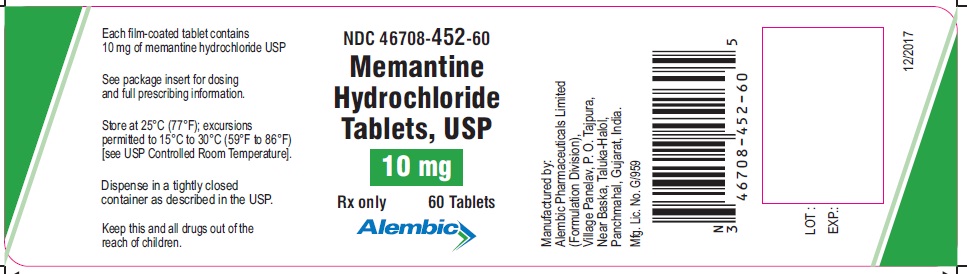
PACKAGE LABEL.PRINCIPAL DISPLAY PANEL - 10 mg Memantine Hydrochloride Tablets, USP 10 mg (60 Tablets in 1 HDPE Bottle) Each film-coated tablet contains 10 mg of memantine hydrochloride USP 46708-452-60 60 Tablets in 1 HDPE Bottle
About this NDC listing & data coverage
What data is (and isn’t) available for this NDC — tap to expand
| NDC identity (package / product / labeler codes) | ✓ Available |
| Labeler | ✓ Available |
| Product & package description | ✓ Available |
| Marketing category & status | ✓ Available |
| Active ingredient / dosage form / route | ✓ Available |
| FDA label (SPL via DailyMed) | ✓ Available |
| Package photos | ✓ Available |
| Inactive ingredients (structured) | ✓ Available |
| NADAC pharmacy acquisition price (CMS) | — Not published for this NDC CMS publishes NADAC only for NDCs reported in its retail-pharmacy survey. |
| Orange Book / therapeutic-equivalence data | ✓ Available |
| HCPCS J-code billing crosswalk | — Not published for this NDC Most self-administered / retail products have no J-code — that is normal. |
| Medicaid utilization (CMS SDUD) | — Not published for this NDC CMS reports utilization only for NDCs with Medicaid claims above its privacy threshold. |