
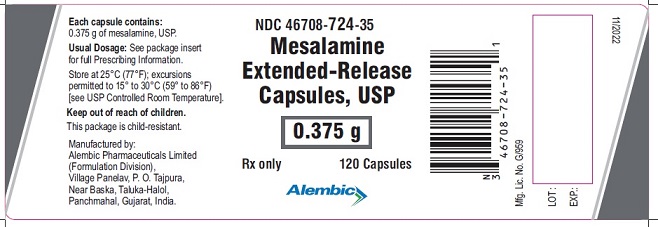
Mesalamine .375 g Capsule, Extended Release, 120-count — NDC 46708-724-35 (Billing 46708-0724-35)
This is a package of 120 capsules of Mesalamine .375 g Capsule, Extended Release from Alembic Pharmaceuticals Limited, marketed since Nov 2022 and currently FDA-listed. It is the main listing for this product, which comes in 2 package sizes.
NDC database record
One package, one record: these facts belong to NDC 46708-724-35 alone.
- Record
- FDA NDC Directory package listing · Human prescription drug
- Code segments
- 46708 labeler · 724 product · 35 package
- Package marketed since
- Nov 3, 2022
- Sample package
- No — commercial package
- Listing certified through
- Dec 31, 2026
- Barcode (UPC)
- 0346708724351
- FDA record last changed
- Jul 24, 2026
Other active recalls for Mesalamine (different manufacturers) — 1 · tap to view
Identity & classification
Regulatory identifiers FDA, NLM and CMS codes for this package
- RxCUI (RxNorm): 825130
Where does this data come from?
- FDA openFDA NDC Directory · synced Oct 8, 2026
- FDA label on DailyMed · label index refreshed Oct 8, 2026
- RxNorm (NLM RxNav) · catalog refreshed Oct 1, 2026
- Medi-Span GPI (licensed)
- First Databank (licensed) · refreshed Oct 8, 2026
RxNorm drug class
This medicine belongs to the Aminosalicylate class.
Where does this data come from?
- RxClass (NLM) · catalog refreshed Oct 1, 2026
Clinical
Mesalamine is used to treat ulcerative colitis (a condition which causes swelling and sores in the lining of the colon [large intestine] and rectum) and also to maintain improvement of ulcerative colitis symptoms. Mesalamine is in a class of medications called anti-inflammatory agents. It works by stopping the body from producing a certain substance that may cause inflammation.
Read the full MedlinePlus article ↗- It treats ulcerative colitis and, in rectal forms, inflammation in the lower bowel such as proctitis. Some products are for flares, some for keeping remission, and some for both. Y...
- It depends on your product. Tablets and most capsules are swallowed whole. Rectal forms are usually used at bedtime. Drink plenty of fluids, and follow your label for food and timi...
- Headache, gas, belly pain and diarrhea are the common ones. Call your doctor if you get severe cramping with bloody diarrhea, fever or rash, since that could be a reaction to the d...
- Yes. Your kidney function should be checked before starting and periodically after. If you take azathioprine or 6-mercaptopurine, or are 65 or older, blood counts should be monitor...
Patient education
Supplement & herbal interactions
Some supplements/herbs that may interact with Mesalamine — tap one for details:
Where does this data come from?
- MedlinePlus (NLM) · refreshed Oct 8, 2026
- FDA label on DailyMed · label index refreshed Oct 8, 2026
Ask a licensed pharmacist directly — free, answered by our team.
Pricing
A drug doesn't have one price. Each row is a different public payment system, and none is what you'd pay at the counter — that depends on your insurance. The ⓘ on each row explains what it measures.
| Price system | Per each | Per package |
|---|---|---|
| Retail pharmacies payNADAC · weekly | Not in the retail survey — common for institutional, discontinued, or low-volume packs. | |
| Medicaid paysCMS SDUD · 12 mo | No recent Medicaid claims on file for this NDC — rare and low-volume NDCs are suppressed in the public data. | |
| Medicare drug plans payPart D · Q2 2026 | $1.16 | $139.36 / 120 capsules |
Where does this data come from?
- CMS NADAC weekly file
- CMS ASP pricing files · refreshed Sep 20, 2026
- CMS Medicaid State Drug Utilization Data · refreshed Oct 8, 2026
- CMS Part D plan pricing files · refreshed Sep 24, 2026
- VA National Acquisition Center price file
Packaging — all sizes for this product
| Package NDC | Description | Marketing start | Marketing end | Status |
|---|---|---|---|---|
| 46708-0724-35 You're viewing this Main listing | 120 CAPSULE, EXTENDED RELEASE in 1 BOTTLE | 2022-11-03 | — | Active |
| 46708-0724-91 46708-724-91 | 1000 CAPSULE, EXTENDED RELEASE in 1 BOTTLE | 2022-11-03 | — | Active |
You're viewing the smallest of 2 pack sizes for this product.
Pack size FAQ
What quantity is in this package?
How does this package differ from NDC 46708-0724-91?
What NDC number is used to bill for this package of Mesalamine .375 g Capsule, Extended Release?
Therapeutic equivalents
| Product | Labeler | Pack | NADAC/unit | TE | Status | Price vs. this |
|---|---|---|---|---|---|---|
| mesalamine 375 mg 00093-9224-89 | Teva | 120 capsules | $0.478 | AB | Availability likely | — |
| Mesalamine .375 g 00378-1375-78 | Mylan | 120 capsules | $0.478 | AB | Availability likely | — |
| Mesalamine .375 g 00832-6056-12 | Upsher-Smith | 120 capsules | $0.478 | AB | Availability likely | — |
| Mesalamine .375 g 50268-0577-15 | AvPAK | 1 capsule | $0.478 | AB | Availability likely | — |
| Mesalamine .375 g 59651-0397-08 | Aurobindo | 120 capsules | $0.478 | AB | Availability likely | — |
| Mesalamine .375 g 60687-0650-32 | American | 1 capsule | $0.478 | AB | Availability likely | — |
| Mesalamine .375 g 62332-0724-35 | Alembic | 120 capsules | $0.478 | AB | Availability likely | — |
| Mesalamine .375 g 68382-0452-19 | Zydus | 120 capsules | $0.478 | AB | Availability likely | — |
| mesalamine 375 mg 68682-0113-20 | Oceanside | 120 capsules | $0.727 | AB | Discontinued | — |
| Mesalamine 375 mg 31722-0489-12 | Camber | 120 capsules | — | AB | FDA listed | — |
| Mesalamine .375 gthis 46708-0724-35 | Alembic | 120 capsules | — | AB | FDA listed | — |
| Mesalamine .375 g 50742-0371-12 | Ingenus | 120 capsules | — | AB | FDA listed | — |
| Mesalamine .375 g 51407-0976-12 | Golden | 120 capsules | — | AB | FDA listed | — |
| Apriso 375 mg 65649-0103-01 | Salix | 4 capsules | — | AB | FDA listed | — |
| Mesalamine .375 g 67877-0717-05 | Ascend | 500 capsules | — | AB | FDA listed | — |
| Mesalamine .375 g 70771-1625-07 | Zydus | 120 capsules | — | AB | FDA listed | — |
Where does this data come from?
- FDA openFDA NDC Directory · synced Oct 8, 2026
- FDA Orange Book · refreshed Oct 3, 2026
- CMS NADAC weekly file
Availability & generic status
This product is an FDA-approved generic. Other versions of the same drug are listed under Therapeutic equivalents, least expensive first.
Where does this data come from?
- FDA Orange Book · refreshed Oct 3, 2026
What it looks like
Where does this data come from?
- FDA label on DailyMed · label index refreshed Oct 8, 2026
Inactive Ingredients / Excipients
Inactive ingredients, also called excipients, are components of the drug product other than the active ingredient. They may include fillers, dyes, coatings, preservatives, flavors, or other formulation ingredients.
🧪 Avoiding an ingredient? See Mesalamine inactive ingredients by manufacturer: every current product's list side by side, so you can ask your pharmacy for the version that does not list it.
💡 Tap an ingredient (hover on desktop) to see what it is and why it’s used.
-
UNII P2OM2Q86BI
A synthetic polymer made from two types of plastic-like chemicals bonded together. It forms a protective coating on tablets or capsules to control how quickly the medicine dissolves and releases in your digestive system.
-
UNII H3R47K3TBD
FD&C Blue No. 1 is a synthetic blue dye approved for use in foods and medicines. It serves as a colorant to give the medication its distinctive appearance and help with product identification.
-
UNII WZB9127XOA
A synthetic red dye used to color medications and make them easier to identify. It serves as a colorant in tablets, capsules, and liquid formulations.
-
UNII XM0M87F357
A dark iron oxide compound that gives medicines their black or dark color. It's used as a colorant in tablets and capsules to help identify the product and make it visually distinctive.
-
UNII 2G86QN327L
Gelatin is a protein derived from animal collagen, commonly used in medicines as a gelling agent and capsule material. It helps create soft or hard capsule shells that hold and release medication, and can also thicken liquid formulations.
-
UNII G4U024CQK6
Hypromellose phthalate is a plant-derived polymer coating material. It's used to coat tablets or capsules so the medicine dissolves in the intestines rather than the stomach, protecting it from stomach acid or reducing stomach irritation.
-
UNII 3NXW29V3WO
Hypromellose is a plant-based thickener made from cellulose. It's used in medicines as a binder to hold ingredients together, a coating for tablets, and a thickener for liquids.
-
UNII 70097M6I30
Magnesium stearate is a salt made from magnesium and stearic acid, a fatty substance. It's used in tablets and capsules as a lubricant and glidant to help ingredients flow smoothly during manufacturing and prevent sticking.
-
UNII 74G4R6TH13
A synthetic polymer made by combining two plastic-like chemicals. It forms a coating on tablets or capsules that dissolves at a specific point in the digestive tract, controlling where and when the medicine releases.
-
UNII OP1R32D61U
Microcrystalline cellulose is a purified form of cellulose, a natural fiber from plant sources. It acts as a binder and filler in tablets and capsules, helping hold ingredients together and give the medicine its shape and size.
-
UNII WZH3C48M4T
Potassium hydroxide is a strong alkaline chemical used in medicines to adjust and maintain the pH level of liquid formulations, helping keep the product stable and the active ingredients effective.
-
UNII 46N107B71O
Shellac is a natural resin secreted by the lac beetle. It's used as a coating on tablets and capsules to control how quickly the medicine dissolves and to improve appearance and stability.
-
UNII ETJ7Z6XBU4
Silicon dioxide is a naturally occurring mineral used as a glidant and anti-caking agent. It helps powder ingredients flow smoothly and prevents clumping during manufacturing and storage.
-
UNII 7SEV7J4R1U
A powder made from a naturally occurring mineral. In medicines, talc works as a glidant and anti-caking agent, helping tablets and capsules flow smoothly during manufacturing and preventing clumping.
-
UNII 15FIX9V2JP
Titanium dioxide is a bright white mineral powder commonly used as a colorant and opacifying agent. It makes pills and tablets white or lighter in color and helps make coatings non-transparent.
-
UNII 8Z96QXD6UM
Triethyl citrate is a clear liquid derived from citric acid. It acts as a plasticizer and solvent in tablet coatings and film formulations, helping the coating remain flexible and adhere properly to the medicine.
16 inactive ingredients listed in the exact product block matched to this NDC.
Where does this data come from?
ingredient classCode="IACT" elements from the exact product block matched by this NDC. Label-section narrative from DailyMed / the openFDA label index is shown separately when available.- FDA label on DailyMed · label index refreshed Oct 8, 2026
- FDA openFDA NDC Directory · synced Oct 8, 2026
Inactive ingredient FAQ
Are inactive ingredients the same for every manufacturer?
Why might an inactive ingredient be missing?
Can inactive ingredients matter?
Manufacturer & labeler
More NDCs from Alembic Pharmaceuticals Limited labeler code 46708
- Clobetasol Propionate .5 mg/g Aerosol, Foam NDC 46708-707-31
- Betamethasone valerate 1.2 mg/g Aerosol, Foam NDC 46708-708-31
- Olopatadine Hydrochloride 1 mg/mL Solution/ Drops NDC 46708-709-05
- Olopatadine Hydrochloride 2 mg/mL Solution/ Drops NDC 46708-710-03
- METHOTREXATE 25 mg/mL Injection, Solution NDC 46708-711-05
- METHOTREXATE 25 mg/mL Injection, Solution NDC 46708-712-01
- Diltiazem Hydrochloride 120 mg Capsule, Extended Release NDC 46708-725-30
- Diltiazem Hydrochloride 180 mg Capsule, Extended Release NDC 46708-726-30
- Diltiazem Hydrochloride 240 mg Capsule, Extended Release NDC 46708-727-30
- Diltiazem Hydrochloride 300 mg Capsule, Extended Release NDC 46708-728-30
- Diltiazem Hydrochloride 360 mg Capsule, Extended Release NDC 46708-729-30
- Methotrexate 2.5 mg Tablet NDC 46708-730-31
Where does this data come from?
- FDA openFDA NDC Directory · synced Oct 8, 2026
- Drugs@FDA
Full prescribing information FDA SPL
🎯 Indications and Usage ▾
1 INDICATIONS AND USAGE Mesalamine extended-release capsules are indicated for the maintenance of remission of ulcerative colitis in adults. Mesalamine extended-release capsule is an aminosalicylate indicated for the maintenance of remission of ulcerative colitis in adults. (1)
⏱️ Dosage and Administration ▾
2 DOSAGE AND ADMINISTRATION Dosage The recommended dosage in adults is 1.5 g (four 0.375 g capsules) orally once daily in the morning. Administration Instructions • Evaluate renal function before initiating therapy with mesalamine extended-release capsules [see Warnings and Precautions (5.1)]. • Swallow mesalamine extended-release capsules whole. Do not cut, break, crush or chew the capsules. • Avoid co-administration of mesalamine extended-release capsules with antacids [see Drug Interactions (7.1)]. • Drink an adequate amount of fluids [see Warnings and Precautions (5.6)]. • Take mesalamine extended-release capsules without regard to meals [see Clinical Pharmacology (12.3)].
Dosage The recommended dosage is 1.5 g (four 0.375 g capsules) once daily in the morning. (2) Administration Instructions • Evaluate renal function before initiating therapy with mesalamine extended-release capsules. (2) • Swallow the capsules whole.
Do not cut, break, crush or chew the capsules. (2) • Avoid co-administration with antacids. (2, 7.1) • Drink an adequate amount of fluids.
(2, 5.6) • Take mesalamine extended-release capsules without regard to meals. (2)
💊 Dosage Forms and Strengths ▾
3 DOSAGE FORMS AND STRENGTHS Mesalamine extended-release capsules USP, 0.375 g are opaque light blue cap / opaque light blue body, hard gelatin capsules size ‘00’ having imprinting “A” on cap in black ink and “255” on body in black ink on either side of a black band filled with light grey to grey color granules. Extended-release capsules: 0.375 g (3)
⛔ Contraindications ▾
4 CONTRAINDICATIONS Mesalamine extended-release capsules are contraindicated in patients with hypersensitivity to salicylates or aminosalicylates or to any of the components of mesalamine extended-release capsules [see Warnings and Precautions (5.3), Adverse Reactions (6.2), Description (11)]. Known or suspected hypersensitivity to salicylates, aminosalicylates, or any component of mesalamine extended-release capsule. (4, 5.3)
⚠️ Warnings and Cautions ▾
5 WARNINGS AND PRECAUTIONS • Renal Impairment: Assess renal function at the beginning of treatment and periodically during treatment. Evaluate the risks and benefits in patients with known renal impairment or taking nephrotoxic drugs; monitor renal function. (5.1, 7.2, 8.6) • Mesalamine-Induced Acute Intolerance Syndrome: Symptoms may be difficult to distinguish from an exacerbation of ulcerative colitis; monitor for worsening symptoms; discontinue treatment if acute intolerance syndrome is suspected.
(5.2) • Hypersensitivity Reactions, including Myocarditis and Pericarditis: Evaluate patients immediately and discontinue if a hypersensitivity reaction is suspected. (5.3) • Hepatic Failure: Evaluate the risks and benefits in patients with known liver impairment. (5.4) • Severe Cutaneous Adverse Reactions: Discontinue at the first signs or symptoms of severe cutaneous adverse reactions or other signs of hypersensitivity and consider further evaluation.
(5.5) • Photosensitivity: Advise patients with pre-existing skin conditions to avoid sun exposure, wear protective clothing, and use a broad-spectrum sunscreen when outdoors. (5.6) • Nephrolithiasis: Mesalamine-containing stones are undetectable by standard radiography or computed tomography (CT). Ensure adequate fluid intake during treatment.
(5.7) • Interference with Laboratory Tests: Use of mesalamine may lead to spuriously elevated test results when measuring urinary Normetanephrine by liquid chromatography with electrochemical detection. (5.9)
5.1Renal Impairment Renal impairment, including minimal change disease, acute and chronic interstitial nephritis, and renal failure, has been reported in patients given products such as mesalamine that contain mesalamine or are converted to mesalamine. In animal studies, the kidney was the principal organ of mesalamine toxicity [see Adverse Reactions (6.2), Nonclinical Toxicology (13.2)]. Evaluate renal function prior to initiation of mesalamine therapy and periodically while on therapy.
Evaluate the risks and benefits of using mesalamine in patients with known renal impairment or a history of renal disease or taking concomitant nephrotoxic drugs [see Drug Interactions (7.2), Use in Specific Populations (8.6)].
5.2Mesalamine-Induced Acute Intolerance Syndrome Mesalamine has been associated with an acute intolerance syndrome that may be difficult to distinguish from an exacerbation of ulcerative colitis. Although the exact frequency of occurrence has not been determined, it has occurred in 3% of patients in controlled clinical trials of mesalamine or sulfasalazine. Symptoms include cramping, acute abdominal pain and bloody diarrhea, sometimes fever, headache, and rash.
Monitor patients for worsening of these symptoms while on treatment. If acute intolerance syndrome is suspected, promptly discontinue treatment with mesalamine.
5.3Hypersensitivity Reactions Some patients have experienced a hypersensitivity reaction to sulfasalazine. Some patients may have a similar reaction to mesalamine or to other compounds that contain or are converted to mesalamine. As with sulfasalazine, mesalamine-induced hypersensitivity reactions may present as internal organ involvement, including myocarditis, pericarditis, nephritis, hepatitis, pneumonitis and hematologic abnormalities.
Evaluate patients immediately if signs or symptoms of a hypersensitivity reaction are present. Discontinue mesalamine if an alternative etiology for the signs and symptoms cannot be established.
5.4Hepatic Failure There have been reports of hepatic failure in patients with pre-existing liver disease who have been administered mesalamine. Evaluate the risks and benefits of using mesalamine in patients with known liver impairment.
5.5Severe Cutaneous Adverse Reactions Severe cutaneous adverse reactions, including Stevens-Johnson syndrome (SJS) and toxic epidermal necrolysis (TEN), drug reaction with eosinophilia and systemic symptoms (DRESS), and acute generalized exanthematou… [Excerpted — this section continues on DailyMed.]
🤒 Adverse Reactions ▾
6 ADVERSE REACTIONS The following clinically significant adverse reactions are described elsewhere in labeling: • Renal Impairment [see Warnings and Precautions (5.1)] • Mesalamine-Induced Acute Intolerance Syndrome [see Warnings and Precautions (5.2)] • Hypersensitivity Reactions [see Warnings and Precautions (5.3)] • Hepatic Failure [see Warnings and Precautions (5.4)] • Severe Cutaneous Adverse Reactions [see Warnings and Precautions (5.5)] • Photosensitivity [see Warnings and Precautions (5.6)] • Nephrolithiasis [see Warnings and Precautions (5.7)] Most common adverse reactions (≥3%) are: headache, diarrhea, upper abdominal pain, nausea, and nasopharyngitis.
(6.1) To report SUSPECTED ADVERSE REACTIONS, contact FDA at 1-800-FDA-1088 or www.fda.gov/medwatch.
6.1Clinical Trials Experience Because clinical studies are conducted under widely varying conditions, adverse reaction rates observed in the clinical trials of a drug cannot be directly compared to rates in the clinical trials of another drug and may not reflect the rates observed in practice. The data described below reflect exposure to mesalamine in 557 patients, including 354 exposed for at least 6 months and 250 exposed for greater than one year. Mesalamine was studied in two placebo-controlled trials (n=367 treated with mesalamine) and in one open-label, long-term study (n=190 additional patients).
The population consisted of patients with ulcerative colitis; the mean age was 47 years, 54% were female, and 93% were white. Patients received doses of mesalamine 1.5 g administered orally once per day for six months in the placebo-controlled trials and for up to 24 months in the open-label study. In the two placebo-controlled trials, the most common reactions reported in at least 3% of mesalamine-treated patients and at a greater rate than placebo are shown in Table 1 below.
Table 1: Common Adverse Reactions* in Clinical Trials of Adults with Ulcerative Colitis Mesalamine 1.5 g once daily N=367 Placebo N=185 Headache 11% 8% Diarrhea 8% 7% Upper Abdominal Pain 5% 3% Nausea 4% 3% Nasopharyngitis 4% 3% * Reported in at least 3% of mesalamine-treated patients and at a greater rate than with placebo The following adverse reactions, presented by body system, were reported at a frequency less than 3% in patients treated with mesalamine for up to 24 months in controlled and open-label trials. Ear and Labyrinth Disorders : tinnitus, vertigo Dermatological Disorder : alopecia Gastrointestinal : lower abdominal pain, rectal hemorrhage Laboratory Abnormalities : increased triglycerides, decreased hematocrit and hemoglobin General Disorders and Administration Site Disorders : fatigue Hepatic : hepatitis cholestatic, transaminases increased Renal Disorders : creatinine clearance decreased, hematuria Musculoskeletal : pain, arthralgia Respiratory : dyspnea
6.2Postmarketing Experience The following adverse reactions have been identified during post approval use of mesalamine or other mesalaminecontaining products. Because many of these reactions are reported voluntarily from a population of unknown size, it is not always possible to reliably estimate their frequency or establish a causal relationship to drug exposure. Body as a Whole : lupus-like syndrome, drug fever Cardiovascular : pericarditis, pericardial effusion, myocarditis [see Warnings and Precautions (5.3)] Gastrointestinal : pancreatitis, cholecystitis, gastritis, gastroenteritis, gastrointestinal bleeding, perforated peptic ulcer Hepatic : jaundice, cholestatic jaundice, hepatitis, liver necrosis, liver failure, Kawasaki-like syndrome including changes in liver enzymes Hematologic : agranulocytosis, aplastic anemia Nervous System : intracranial hypertension Neurological/Psychiatric : peripheral neuropathy, Guillain-Barré syndrome, transverse myelitis Renal and Urinary : nephrogenic diabetes insipidus, interstitial nephritis, renal failure, minimal change disease, nephrolithiasis [see Warnings and Precautions (5.1, 5.7)] R… [Excerpted — this section continues on DailyMed.]
🔄 Drug Interactions ▾
7 DRUG INTERACTIONS • Nephrotoxic Agents including NSAIDs: Increased risk of nephrotoxicity; monitor for changes in renal function and mesalamine related adverse reactions. (7.2) • Azathioprine or 6-Mercaptopurine: Increased risk of blood disorders; monitor complete blood cell counts and platelet counts. (7.3)
7.1Antacids Because the dissolution of the coating of the granules in mesalamine extended-release capsules depends on pH, avoid co-administration of mesalamine extended-release capsules with antacids [see Dosage and Administration (2)] .
7.2Nephrotoxic Agents, Including Non-Steroidal Anti-Inflammatory Drugs The concurrent use of mesalamine with known nephrotoxic agents, including non-steroidal anti-inflammatory drugs (NSAIDs) may increase the risk of nephrotoxicity. Monitor patients taking nephrotoxic drugs for changes in renal function and mesalamine-related adverse reactions [see Warnings and Precautions (5.1)].
7.3Azathioprine or 6-Mercaptopurine The concurrent use of mesalamine with azathioprine or 6-mercaptopurine and/or other drugs known to cause myelotoxicity may increase the risk for blood disorders, bone marrow failure, and associated complications. If concomitant use of mesalamine and azathioprine or 6-mercaptopurine cannot be avoided, monitor blood tests, including complete blood cell counts and platelet counts.
7.4Interference with Urinary Normetanephrine Measurements Use of mesalamine may lead to spuriously elevated test results when measuring urinary normetanephrine by liquid chromatography with electrochemical detection [see Warnings and Precautions (5.9)] . Consider an alternative, selective assay for normetanephrine.
👥 Use in Specific Populations ▾
8 USE IN SPECIFIC POPULATIONS Geriatric Patients: Increased risk of blood dyscrasias; monitor blood cell counts and platelet counts. (8.5)
8.1Pregnancy Risk Summary Published data from meta-analyses, cohort studies and case series on the use of mesalamine during pregnancy have not reliably informed an association with mesalamine and major birth defects, miscarriage, or adverse maternal or fetal outcomes (see Data) . In animal reproduction studies, there were no adverse developmental outcomes with administration of oral mesalamine during organogenesis to pregnant rats and rabbits at doses 1.7 and 5.4 times, respectively, the maximum recommended human dose (see Data) .
The estimated background risk of major birth defects and miscarriage for the indicated populations is unknown. Adverse outcomes in pregnancy occur regardless of the health of the mother or the use of medications. In the U.S. general population, the estimated background risk of major birth defects and miscarriage in clinically recognized pregnancies is 2 to 4% and 15 to 20%, respectively.
Clinical Considerations Disease-associated maternal and embryo/fetal risk Published data suggest that increased disease activity is associated with the risk of developing adverse pregnancy outcomes in women with ulcerative colitis. Adverse pregnancy outcomes include preterm delivery (before 37 weeks of gestation), low birth weight (less than 2500 g) infants, and small for gestational age at birth. Data Human Data Published data from meta-analyses, cohort studies and case series on the use of mesalamine during early pregnancy (first trimester) and throughout pregnancy have not reliably informed an association of mesalamine and major birth defects, miscarriage, or adverse maternal or fetal outcomes.
There is no clear evidence that mesalamine exposure in early pregnancy is associated with an increased risk in major congenital malformations, including cardiac malformations. Published epidemiologic studies have important methodological limitations which hinder interpretation of the data, including inability to control for confounders, such as underlying maternal disease, and maternal use of concomitant medications, and missing information on the dose and duration of use for mesalamine products. Animal Data Reproduction studies with mesalamine during organogenesis have been performed in rats at oral doses up to 320 mg/kg/day (about 1.7 times the recommended human dose based on a body surface area comparison) and rabbits at doses up to 495 mg/kg/day (about 5.4 times the recommended human dose based on a body surface area comparison) and have revealed no evidence of harm to the fetus due to mesalamine.
8.2Lactation Risk Summary Data from published literature report the presence of mesalamine and its metabolite, N-acetyl 5-aminosalicylic acid in human milk in small amounts with relative infant doses (RID) of 2% or less (see Data) . There are case reports of diarrhea in breastfed infants exposed to mesalamine (see Clinical Considerations) . There is no information on the effects of the drug on milk production.
The lack of clinical data during lactation precludes a clear determination of the risk of mesalamine to an infant during lactation; therefore, the developmental and health benefits of breastfeeding should be considered along with the mother’s clinical need for mesalamine and any potential adverse effects on the breastfed child from mesalamine or from the underlying maternal condition. Clinical Considerations Advise the caregiver to monitor the breastfed infant for diarrhea. Data In published lactation studies, maternal mesalamine doses from various oral and rectal formulations and products ranged from 500 mg to 4.8 g daily.
The average concentration of mesalamine in milk ranged from non-detectable to 0.5 mg/L. The average concentration of the N-acetyl-5-aminosalicylic acid in milk ranged from 0.2 to 9.3 mg/L. Based on these concentrations, estimated infant daily dosages for an exclu… [Excerpted — this section continues on DailyMed.]
🤰 Pregnancy ▾
8.1Pregnancy Risk Summary Published data from meta-analyses, cohort studies and case series on the use of mesalamine during pregnancy have not reliably informed an association with mesalamine and major birth defects, miscarriage, or adverse maternal or fetal outcomes (see Data) . In animal reproduction studies, there were no adverse developmental outcomes with administration of oral mesalamine during organogenesis to pregnant rats and rabbits at doses 1.7 and 5.4 times, respectively, the maximum recommended human dose (see Data) .
The estimated background risk of major birth defects and miscarriage for the indicated populations is unknown. Adverse outcomes in pregnancy occur regardless of the health of the mother or the use of medications. In the U.S. general population, the estimated background risk of major birth defects and miscarriage in clinically recognized pregnancies is 2 to 4% and 15 to 20%, respectively.
Clinical Considerations Disease-associated maternal and embryo/fetal risk Published data suggest that increased disease activity is associated with the risk of developing adverse pregnancy outcomes in women with ulcerative colitis. Adverse pregnancy outcomes include preterm delivery (before 37 weeks of gestation), low birth weight (less than 2500 g) infants, and small for gestational age at birth. Data Human Data Published data from meta-analyses, cohort studies and case series on the use of mesalamine during early pregnancy (first trimester) and throughout pregnancy have not reliably informed an association of mesalamine and major birth defects, miscarriage, or adverse maternal or fetal outcomes.
There is no clear evidence that mesalamine exposure in early pregnancy is associated with an increased risk in major congenital malformations, including cardiac malformations. Published epidemiologic studies have important methodological limitations which hinder interpretation of the data, including inability to control for confounders, such as underlying maternal disease, and maternal use of concomitant medications, and missing information on the dose and duration of use for mesalamine products. Animal Data Reproduction studies with mesalamine during organogenesis have been performed in rats at oral doses up to 320 mg/kg/day (about 1.7 times the recommended human dose based on a body surface area comparison) and rabbits at doses up to 495 mg/kg/day (about 5.4 times the recommended human dose based on a body surface area comparison) and have revealed no evidence of harm to the fetus due to mesalamine.
🧒 Pediatric Use ▾
8.4Pediatric Use Safety and effectiveness of mesalamine in pediatric patients have not been established.
🧓 Geriatric Use ▾
8.5Geriatric Use Clinical studies of mesalamine did not include sufficient numbers of subjects aged 65 years and over to determine whether they respond differently than younger subjects. Reports from uncontrolled clinical studies and postmarketing reporting systems suggested a higher incidence of blood dyscrasias (i.e., agranulocytosis, neutropenia and pancytopenia) in patients who were 65 years or older compared to younger patients taking mesalamine-containing products such as mesalamine. Monitor complete blood cell counts and platelet counts in elderly patients during treatment with mesalamine.
In general, consider the greater frequency of decreased hepatic, renal, or cardiac function, and of concomitant disease or other drug therapy in elderly patients when prescribing mesalamine [see Use in Specific Populations (8.6)].
🆘 Overdosage ▾
10 OVERDOSAGE Mesalamine is an aminosalicylate, and symptoms of salicylate toxicity include nausea, vomiting and abdominal pain, tachypnea, hyperpnea, tinnitus, and neurologic symptoms (headache, dizziness, confusion, seizures). Severe salicylate intoxication may lead to electrolyte and blood pH imbalance and potentially to other organ (e.g., renal and liver) damage. There is no specific antidote for mesalamine overdose; however, conventional therapy for salicylate toxicity may be beneficial in the event of acute overdosage and may include gastrointestinal tract decontamination to prevent further absorption.
Correct fluid and electrolyte imbalance by the administration of appropriate intravenous therapy and maintain adequate renal function. Mesalamine is a pH-dependent delayed-release product and this factor should be considered when treating a suspected overdose.
🧬 Clinical Pharmacology ▾
12 CLINICAL PHARMACOLOGY
12.1Mechanism of Action The mechanism of action of mesalamine (5-ASA) is not fully understood, but appears to be a local anti-inflammatory effect on colonic epithelial cells. Mucosal production of arachidonic acid metabolites, both through the cyclooxygenase pathways, i.e., prostanoids, and through the lipoxygenase pathways, i.e., leukotrienes and hydroxyeicosatetraenoic acids, is increased in patients with ulcerative colitis, and it is possible that 5-ASA diminishes inflammation by blocking production of arachidonic acid metabolites.
12.3Pharmacokinetics Absorption The pharmacokinetics of 5-ASA and its metabolite, N-acetyl-5-aminosalicylic acid (N-Ac-5-ASA), were studied after a single and multiple oral doses of 1.5 g mesalamine in a crossover study in healthy subjects under fasting conditions. In the multiple-dose period, each subject received mesalamine 1.5 g (four 0.375 g capsules) once daily for 7 consecutive days. Steady state was reached on Day 6 of once daily dosing based on trough concentrations.
After single and multiple doses of mesalamine, peak plasma concentrations were observed at about 4 hours post-dose. At steady state, moderate increases (1.5-fold and 1.7-fold) in systemic exposure (AUC 0-24 ) to 5-ASA and N-Ac-5-ASA were observed when compared with a single-dose of mesalamine. Pharmacokinetic parameters after a single dose of 1.5 g mesalamine and at steady state in healthy subjects under fasting condition are shown in Table 2.
Table 2: Single Dose and Multiple Dose Mean (±SD) Plasma Pharmacokinetic Parameters of Mesalamine (5-ASA) and N-Ac-5-ASA After 1.5 g Mesalamine Administration in Healthy Subjects Mesalamine (5-ASA) Single Dose (n=24) Multiple Dose c (n=24) AUC 0-24 (mcg*h/mL) AUC 0-inf (mcg*h/mL) C max (mcg/mL) T max (h) a t ½ (h) b 11±5 14±5 2.1±1.1 4 (2, 16) 9±7 17±6 - 2.7±1.1 4 (2, 8) 10±8 N-Ac-5-ASA AUC 0-24 (mcg*h/mL) AUC 0-inf (mcg*h/mL) C max (mcg/mL) T max (h) a t ½ (h) b 26±6 51±23 2.8±0.8 4 (4, 12) 12±11 37±9 - 3.4±0.9 5 (2, 8) 14±10 a Median (range); b Harmonic mean (pseudo SD); c after 7 days of treatment In a separate study (n=30), it was observed that under fasting conditions about 32%±11% (mean±SD) of the administered dose was systemically absorbed based on the combined cumulative urinary excretion of 5-ASA and N-Ac-5-ASA over 96 hours post-dose.
Food Effects The effect of a high fat meal intake on absorption of mesalamine granules (the same granules contained in mesalamine extended-release capsules) was evaluated in 30 healthy subjects. Subjects received 1.6 g of mesalamine granules in sachet (2 x 0.8 g) following an overnight fast or a high fat meal in a crossover study. Under fed conditions, Tmax for both 5-ASA and N-Ac-5-ASA was prolonged by 4 and 2 hours, respectively.
A high fat meal did not affect Cmax for 5-ASA, but a 27% increase in the cumulative urinary excretion of 5-ASA was observed with a high fat meal. The overall extent of absorption of N-Ac-5-ASA was not affected by a high fat meal [see Dosage and Administration (2)] . Distribution In an in vitro study, at 2.5 mcg/mL, mesalamine and N-Ac-5-ASA are 43±6% and 78±1% bound, respectively, to plasma proteins.
Protein binding of N-Ac-5-ASA does not appear to be concentration dependent at concentrations ranging from 1 to 10 mcg/mL. Elimination Metabolism The major metabolite of mesalamine is N-acetyl-5-aminosalicylic acid (N-Ac-5-ASA). It is formed by N-acetyltransferase activity in the liver and intestinal mucosa.
Excretion Following single and multiple doses of mesalamine, the mean half-lives were 9 to 10 hours for 5-ASA, and 12 to 14 hours for N-Ac-5-ASA. Of the approximately 32% of the dose absorbed, about 2% of the dose was excreted unchanged in the urine, compared with about 30% of the dose excreted as N-Ac-5-ASA. Drug Interaction Studies In an in vitro study using human liver microsomes, 5-ASA and its metabolite, N-Ac-5-ASA, were shown not to inhibit the major CYP enzymes evaluated (CYP1A2, CYP2C… [Excerpted — this section continues on DailyMed.]
🧬 Mechanism of Action ▾
12.1Mechanism of Action The mechanism of action of mesalamine (5-ASA) is not fully understood, but appears to be a local anti-inflammatory effect on colonic epithelial cells. Mucosal production of arachidonic acid metabolites, both through the cyclooxygenase pathways, i.e., prostanoids, and through the lipoxygenase pathways, i.e., leukotrienes and hydroxyeicosatetraenoic acids, is increased in patients with ulcerative colitis, and it is possible that 5-ASA diminishes inflammation by blocking production of arachidonic acid metabolites.
📦 How Supplied / Storage and Handling ▾
16 HOW SUPPLIED/STORAGE AND HANDLING Mesalamine extended-release capsules, USP are available as opaque light blue cap / opaque light blue body, hard gelatin capsules size ‘00’ having imprinting “A” on cap in black ink and “255” on body in black ink on either side of a black band filled with light grey to grey color granules and are supplied as follows: Bottle of 120 capsules with child resistant closure, NDC 46708-724-35 Bottle of 1000 capsules, NDC 46708-724-91 Storage : Store at 25°C (77°F); excursions permitted to 15° to 30°C (59° to 86°F) [see USP Controlled Room Temperature].
📋 Description ▾
11 DESCRIPTION Each mesalamine capsule is a delayed- and extended-release dosage form for oral administration. Each capsule contains 0.375 g of mesalamine, USP (5-aminosalicylic acid, 5-ASA), an aminosalicylate. The structural formula of mesalamine is: Molecular Weight: 153.14 Molecular Formula: C 7 H 7 NO 3 Each mesalamine extended-release capsule contains granules composed of mesalamine in a polymer matrix with an enteric coating that dissolves at pH 6 and above.
The inactive ingredients of mesalamine extended-release capsules are: microcrystalline cellulose, hypromellose, colloidal silicon dioxide, ethyl acrylate and methyl methacrylate 2:1 copolymer, magnesium stearate, methacrylic acid and methyl methacrylate 1:1 copolymer, talc, triethyl citrate, titanium dioxide and hypromellose phthalate. The capsule shell contains titanium dioxide, FD&C Blue 1, FD&C Red 40 and gelatin. The capsule shells are printed with edible black ink containing shellac, black iron oxide and potassium hydroxide.
FDA approved dissolution test specifications differ from USP. structure
💬 Information for Patients ▾
17 PATIENT COUNSELING INFORMATION Administration Instruct patients: • Swallow the capsules whole. Do not cut, break, crush or chew the capsules. • Avoid co-administration of mesalamine extended-release capsules with antacids. • Drink an adequate amount of fluids. • Mesalamine extended-release capsules can be taken without regard to meals [see Dosage and Administration (2)]. Renal Impairment Inform patients that mesalamine extended-release capsules may decrease their renal function, especially if they have known renal impairment or are taking nephrotoxic drugs, including NSAIDs, and periodic monitoring of renal function will be performed while they are on therapy.
Advise patients to complete all blood tests ordered by their healthcare provider [see Warnings and Precautions (5.1), Drug Interactions (7.2)]. Mesalamine-Induced Acute Intolerance Syndrome and Other Hypersensitivity Reactions Inform patients of the signs and symptoms of hypersensitivity reactions. Instruct patients to stop taking mesalamine extended-release capsules and report to their healthcare provider if they experience new or worsening symptoms of Acute Intolerance Syndrome (cramping, abdominal pain, bloody diarrhea, fever, headache, and rash) or other symptoms suggestive of mesalamine-induced hypersensitivity [see Warnings and Precautions (5.2, 5.3)].
Hepatic Failure Inform patients with known liver disease of the signs and symptoms of worsening liver function and advise them to report to their healthcare provider if they experience such signs or symptoms [see Warnings and Precautions (5.4)]. Severe Cutaneous Adverse Reactions Inform patients of the signs and symptoms of severe cutaneous adverse reactions. Instruct patients to stop taking mesalamine extended-release capsules and report to their healthcare provider at first appearance of a severe cutaneous adverse reaction or other sign of hypersensitivity [see Warnings and Precautions (5.5)].
Photosensitivity Advise patients with pre-existing skin conditions to avoid sun exposure, wear protective clothing, and use a broad-spectrum sunscreen when outdoors [see Warnings and Precautions (5.6)]. Nephrolithiasis Instruct patients to drink an adequate amount of fluids during treatment in order to minimize the risk of kidney stone formation and to contact their healthcare provider if they experience signs or symptoms of a kidney stone (e.g., severe side or back pain, blood in the urine) [see Warnings and Precautions (5.7)].
Blood Disorders Inform elderly patients and those taking azathioprine or 6-mercaptopurine of the risk for blood disorders and the need for periodic monitoring of complete blood cell counts and platelet counts while on therapy. Advise patients to complete all blood tests ordered by their healthcare provider [see Drug Interactions (7.3), Use in Specific Populations (8.5)]. Manufactured by: Alembic Pharmaceuticals Limited (Formulation Division) Village Panelav, P.
O. Tajpura, Near Baska, Taluka-Halol, Panchmahal 389350, Gujarat, India. Revised: 07/2022
🧬 Pharmacokinetics ▾
12.3Pharmacokinetics Absorption The pharmacokinetics of 5-ASA and its metabolite, N-acetyl-5-aminosalicylic acid (N-Ac-5-ASA), were studied after a single and multiple oral doses of 1.5 g mesalamine in a crossover study in healthy subjects under fasting conditions. In the multiple-dose period, each subject received mesalamine 1.5 g (four 0.375 g capsules) once daily for 7 consecutive days. Steady state was reached on Day 6 of once daily dosing based on trough concentrations.
After single and multiple doses of mesalamine, peak plasma concentrations were observed at about 4 hours post-dose. At steady state, moderate increases (1.5-fold and 1.7-fold) in systemic exposure (AUC 0-24 ) to 5-ASA and N-Ac-5-ASA were observed when compared with a single-dose of mesalamine. Pharmacokinetic parameters after a single dose of 1.5 g mesalamine and at steady state in healthy subjects under fasting condition are shown in Table 2.
Table 2: Single Dose and Multiple Dose Mean (±SD) Plasma Pharmacokinetic Parameters of Mesalamine (5-ASA) and N-Ac-5-ASA After 1.5 g Mesalamine Administration in Healthy Subjects Mesalamine (5-ASA) Single Dose (n=24) Multiple Dose c (n=24) AUC 0-24 (mcg*h/mL) AUC 0-inf (mcg*h/mL) C max (mcg/mL) T max (h) a t ½ (h) b 11±5 14±5 2.1±1.1 4 (2, 16) 9±7 17±6 - 2.7±1.1 4 (2, 8) 10±8 N-Ac-5-ASA AUC 0-24 (mcg*h/mL) AUC 0-inf (mcg*h/mL) C max (mcg/mL) T max (h) a t ½ (h) b 26±6 51±23 2.8±0.8 4 (4, 12) 12±11 37±9 - 3.4±0.9 5 (2, 8) 14±10 a Median (range); b Harmonic mean (pseudo SD); c after 7 days of treatment In a separate study (n=30), it was observed that under fasting conditions about 32%±11% (mean±SD) of the administered dose was systemically absorbed based on the combined cumulative urinary excretion of 5-ASA and N-Ac-5-ASA over 96 hours post-dose.
Food Effects The effect of a high fat meal intake on absorption of mesalamine granules (the same granules contained in mesalamine extended-release capsules) was evaluated in 30 healthy subjects. Subjects received 1.6 g of mesalamine granules in sachet (2 x 0.8 g) following an overnight fast or a high fat meal in a crossover study. Under fed conditions, Tmax for both 5-ASA and N-Ac-5-ASA was prolonged by 4 and 2 hours, respectively.
A high fat meal did not affect Cmax for 5-ASA, but a 27% increase in the cumulative urinary excretion of 5-ASA was observed with a high fat meal. The overall extent of absorption of N-Ac-5-ASA was not affected by a high fat meal [see Dosage and Administration (2)] . Distribution In an in vitro study, at 2.5 mcg/mL, mesalamine and N-Ac-5-ASA are 43±6% and 78±1% bound, respectively, to plasma proteins.
Protein binding of N-Ac-5-ASA does not appear to be concentration dependent at concentrations ranging from 1 to 10 mcg/mL. Elimination Metabolism The major metabolite of mesalamine is N-acetyl-5-aminosalicylic acid (N-Ac-5-ASA). It is formed by N-acetyltransferase activity in the liver and intestinal mucosa.
Excretion Following single and multiple doses of mesalamine, the mean half-lives were 9 to 10 hours for 5-ASA, and 12 to 14 hours for N-Ac-5-ASA. Of the approximately 32% of the dose absorbed, about 2% of the dose was excreted unchanged in the urine, compared with about 30% of the dose excreted as N-Ac-5-ASA. Drug Interaction Studies In an in vitro study using human liver microsomes, 5-ASA and its metabolite, N-Ac-5-ASA, were shown not to inhibit the major CYP enzymes evaluated (CYP1A2, CYP2C9, CYP2C19, CYP2D6, and CYP3A4).
Therefore, mesalamine and its metabolite are not expected to inhibit the metabolism of other drugs that are substrates of CYP1A2, CYP2C9, CYP2C19, CYP2D6, or CYP3A4.
🔬 Clinical Studies ▾
14 CLINICAL STUDIES Two similar, randomized, double-blind, placebo-controlled, multi-center studies were conducted in a total of 562 adult patients in remission from ulcerative colitis. The study populations had a mean age of 46 years (11% age 65 years or older), were 53% female, and were primarily white (92%). Ulcerative colitis disease activity was assessed using a modified Sutherland Disease Activity Index (DAI), which is a sum of four subscores based on stool frequency, rectal bleeding, mucosal appearance on endoscopy, and physician’s rating of disease activity.
Each subscore can range from 0 to 3, for a total possible DAI score of 12. At baseline, approximately 80% of patients had a total DAI score of 0 or 1. Patients were randomized 2:1 to receive either mesalamine 1.5 g or placebo once daily in the morning for six months.
Patients were assessed at baseline, 1 month, 3 months, and 6 months in the clinic, with endoscopy performed at baseline, at end of study, or if clinical symptoms developed. Relapse was defined as a rectal bleeding subscale score of 1 or more and a mucosal appearance subscale score of 2 or more using the DAI. The analysis of the intent-to-treat population was a comparison of the proportions of patients who remained relapse-free at the end of six months of treatment.
For the table below (Table 3) all patients who prematurely withdrew from the study for any reason were counted as relapses. In both studies, the proportion of patients who remained relapse-free at six months was greater for mesalamine than for placebo. Table 3: Percentage of Ulcerative Colitis Patients Relapse-Free* Through 6 Months in Mesalamine Maintenance Studies Mesalamine 1.5 g once daily % (# no relapse/N) Placebo % (# no relapse/N) Difference (95% C.I.) P-value Study 1 68% (143/209) 51% (49/96) 17% (5.5, 29.2) <0.001 Study 2 71% (117/164) 59% (55/93) 12% (0, 24.5) 0.046 *Relapse counted as rectal bleeding score ≥1 and mucosal appearance score ≥2, or premature withdrawal from study.
Examination of gender subgroups did not identify difference in response to mesalamine among these subgroups. There were too few elderly and too few African-American patients to adequately assess difference in effects in those populations. The use of mesalamine for treating ulcerative colitis beyond six months has not been evaluated in controlled clinical trials.
🧪 Nonclinical Toxicology ▾
13 NONCLINICAL TOXICOLOGY
13.1Carcinogenesis, Mutagenesis, Impairment of Fertility Dietary mesalamine was not carcinogenic in rats at doses as high as 480 mg/kg/day, or in mice at 2000 mg/kg/day. These doses are about 2.6 and 5.4 times the recommended human dose of granulated mesalamine capsules of 1.5 g/day (30 mg/kg if 50 kg body weight assumed or 1110 mg/m 2 ), respectively, based on body surface area. Mesalamine was negative in the Ames test, the mouse lymphoma cell (L5178Y/TK+/-) forward mutation test, the sister chromatid exchange assay in the Chinese hamster bone marrow test, and the mouse bone marrow micronucleus test.
No effects on fertility or reproductive performance in male and female rats were observed with oral mesalamine doses up to 320 mg/kg (about 1.7 times the recommended human dose based on body surface area).
13.2Animal Toxicology and/or Pharmacology Renal Toxicity Animal studies with mesalamine (13-week and 26-week oral toxicity studies in rats, and 26-week and 52-week oral toxicity studies in dogs) have shown the kidney to be the major target organ of mesalamine toxicity. Single oral doses of 800 mg/kg (about 2.2 times the recommended human dose, on the basis of body surface area) and 1800 mg/kg (about 9.7 times the recommended human dose, on the basis of body surface area) of mesalamine were lethal to mice and rats, respectively, and resulted in gastrointestinal and renal toxicity.
Oral doses of 40 mg/kg/day (about 0.20 times the human dose, on the basis of body surface area) produced minimal to slight tubular injury, and doses of 160 mg/kg/day (about 0.90 times the human dose, on the basis of body surface area) or higher in rats produced renal lesions including tubular degeneration, tubular mineralization, and papillary necrosis. Oral doses of 60 mg/kg/day (about 1.1 times the human dose, on the basis of body surface area) or higher in dogs also produced renal lesions including tubular atrophy, interstitial cell infiltration, chronic nephritis, and papillary necrosis.
📄 Carcinogenesis, Mutagenesis, Impairment of Fertility ▾
13.1Carcinogenesis, Mutagenesis, Impairment of Fertility Dietary mesalamine was not carcinogenic in rats at doses as high as 480 mg/kg/day, or in mice at 2000 mg/kg/day. These doses are about 2.6 and 5.4 times the recommended human dose of granulated mesalamine capsules of 1.5 g/day (30 mg/kg if 50 kg body weight assumed or 1110 mg/m 2 ), respectively, based on body surface area. Mesalamine was negative in the Ames test, the mouse lymphoma cell (L5178Y/TK+/-) forward mutation test, the sister chromatid exchange assay in the Chinese hamster bone marrow test, and the mouse bone marrow micronucleus test.
No effects on fertility or reproductive performance in male and female rats were observed with oral mesalamine doses up to 320 mg/kg (about 1.7 times the recommended human dose based on body surface area).
📄 Recent Major Changes ▾
• Warnings and Precautions Severe Cutaneous Adverse Reactions (5.5) 11/2021
📄 Package Label / Principal Display Panel ▾
PACKAGE LABEL.PRINCIPAL DISPLAY PANEL NDC 46708-724-35 Mesalamine Extended-Release Capsules, USP 0.375 g Rx only 120 Capsules Alembic 120 capsules
Medicare Part D spend CMS · PART D · 2026 (Q1)
About this NDC listing & data coverage
What data is (and isn’t) available for this NDC — tap to expand
| NDC identity (package / product / labeler codes) | ✓ Available |
| Labeler | ✓ Available |
| Product & package description | ✓ Available |
| Marketing category & status | ✓ Available |
| Active ingredient / dosage form / route | ✓ Available |
| FDA label (SPL via DailyMed) | ✓ Available |
| Package photos | ✓ Available |
| Inactive ingredients (structured) | ✓ Available |
| NADAC pharmacy acquisition price (CMS) | — Not published for this NDC CMS publishes NADAC only for NDCs reported in its retail-pharmacy survey. |
| Orange Book / therapeutic-equivalence data | ✓ Available |
| HCPCS J-code billing crosswalk | — Not published for this NDC Most self-administered / retail products have no J-code — that is normal. |
| Medicaid utilization (CMS SDUD) | — Not published for this NDC CMS reports utilization only for NDCs with Medicaid claims above its privacy threshold. |