
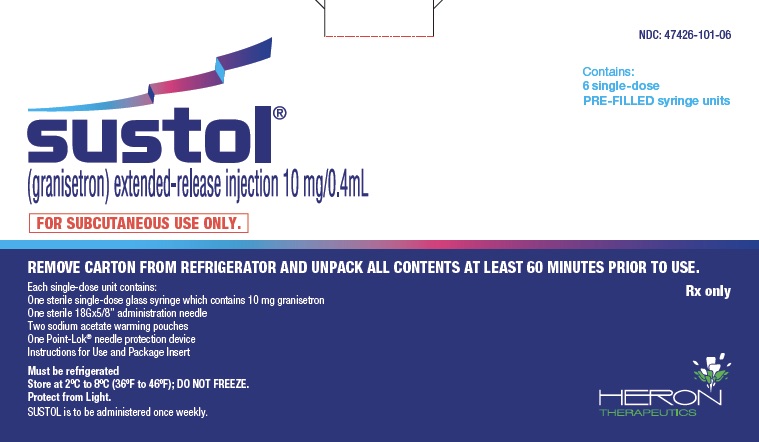
SUSTOL granisetron 10 mg/.4mL Injection, 6 kits — NDC 47426-101-06 (Billing 47426-0101-06)
This is a package of 6 kits of SUSTOL granisetron 10 mg/.4mL Injection from Heron Therapeutics, Inc., no longer marketed (first marketed Aug 2016), no longer in the FDA NDC Directory, this package's marketing ended Sep 2026. It is this product's only package size.
NDC database record
One package, one record: these facts belong to NDC 47426-101-06 alone.
- Record
- FDA NDC Directory package listing · Human prescription drug
- Code segments
- 47426 labeler · 101 product · 06 package
- Package marketed since
- Aug 9, 2016
- Package marketing ended
- Sep 30, 2026
- Sample package
- No — commercial package
- Listing certified through
- Dec 31, 2027
- Barcode (UPC-A, from the NDC)
- 3 4742610106 6
- Medicaid fills, this package
- 879 prescriptions in the last four reported quarters
- FDA record last changed
- Jul 24, 2026
Identity & classification
Regulatory identifiers FDA, NLM and CMS codes for this package
Drug-database identifiers Medi-Span GPI and First Databank GCN / HICL / AHFS classification
- GSN (GCN sequence number): 076461
- GCN: 42013
- GPI-14 (Medi-Span): 5025003500E420
- HICL (First Databank): 035877
- AHFS class code: 56:22.20.00
- RxCUI (RxNorm): 1810484
Where does this data come from?
- FDA openFDA NDC Directory · synced Oct 1, 2026
- FDA label on DailyMed · label index refreshed Oct 6, 2026
- RxNorm (NLM RxNav) · catalog refreshed Oct 1, 2026
- Medi-Span GPI (licensed)
- First Databank (licensed) · refreshed Oct 1, 2026
RxNorm drug class
This medicine belongs to the Serotonin-3 Receptor Antagonist class.
Where does this data come from?
- RxClass (NLM) · catalog refreshed Oct 1, 2026
Clinical
Granisetron immediate-release injection is used to prevent nausea and vomiting caused by cancer chemotherapy and to prevent and treat nausea and vomiting that may occur after surgery. Granisetron extended-release (long-acting) injection is used with other medications to prevent nausea and vomiting caused by cancer chemotherapy that may occur immediately or several days after receiving chemotherapy medications. Granisetron is in a class of medications called 5-HT3 receptor antagonists. It works by blocking serotonin, a natural substance in the body that causes nausea and vomiting.
Read the full MedlinePlus article ↗- Granisetron is an anti-nausea medicine. It's mainly used to prevent nausea and vomiting that cancer chemotherapy or radiation therapy can cause. Depending on which product you've b...
- The Sancuso patch delivers granisetron slowly through your skin over up to 7 days — you apply it to your upper outer arm at least 24 hours before chemotherapy starts and leave it o...
- How does the Sancuso patch work differently from the pill or injection?
- The most common ones are headache and constipation — these are the side effects most often reported in clinical studies. Some people also notice fever, stomach pain, or a slight ch...
Patient education
Supplement & herbal interactions
Some supplements/herbs that may interact with Granisetron — tap one for details:
Where does this data come from?
- MedlinePlus (NLM) · refreshed Oct 1, 2026
- FDA label on DailyMed · label index refreshed Oct 6, 2026
Ask a licensed pharmacist directly — free, answered by our team.
Pricing
A drug doesn't have one price. Each row is a different public payment system, and none is what you'd pay at the counter — that depends on your insurance. The ⓘ on each row explains what it measures.
| Price system | Per each | Per package |
|---|---|---|
| Retail pharmacies payNADAC · weekly | Not in the retail survey — common for institutional, discontinued, or low-volume packs. | |
| Medicaid paysCMS SDUD · 12 mo | $1,508.95 | $9,053.70 / 6 syringes |
| Medicare drug plans payPart D · quarterly | No Part D plan price is available for this NDC in our data. | |
| Medicare Part B allowsASP · J1627 | $3.217 / J1627 unit | — |
Where does this data come from?
- CMS NADAC weekly file
- CMS ASP pricing files · refreshed Sep 20, 2026
- CMS Medicaid State Drug Utilization Data · through Q1 2026
- CMS Part D plan pricing files · refreshed Sep 24, 2026
- VA National Acquisition Center price file
Billing & reimbursement
Where does this data come from?
- CMS ASP NDC-HCPCS crosswalk · refreshed Sep 22, 2026
- DMEPDAC NDC-HCPCS crosswalk
- openFDA NSDE billing units · refreshed Sep 7, 2026
Packaging — all sizes for this product
| Package NDC | Description | Marketing start | Marketing end | Status |
|---|---|---|---|---|
| 47426-0101-06 You're viewing this Main listing | 6 KIT in 1 CARTON / 1 SYRINGE, GLASS in 1 KIT / .4 mL in 1 SYRINGE, GLASS | 2016-08-09 | Sep 30, 2026 | Discontinued by firm |
Therapeutic equivalents
| Product | Labeler | Pack | NADAC/unit | TE | Status | Price vs. this |
|---|---|---|---|---|---|---|
| Sustol 10 mg/.4mLthis 47426-0101-06 | Heron | 6 kits | — | — | Discontinued | — |
Where does this data come from?
- FDA openFDA NDC Directory · synced Oct 1, 2026
- FDA Orange Book · refreshed Oct 3, 2026
- CMS NADAC weekly file
Availability & generic status
We did not find an FDA-approved generic match for this exact strength, form and route.
Where does this data come from?
- FDA Orange Book · refreshed Oct 3, 2026
Inactive Ingredients / Excipients
Inactive ingredients, also called excipients, are components of the drug product other than the active ingredient. They may include fillers, dyes, coatings, preservatives, flavors, or other formulation ingredients.
🧪 Avoiding an ingredient? See Granisetron inactive ingredients by manufacturer: every current product's list side by side, so you can ask your pharmacy for the version that does not list it.
💡 Tap an ingredient (hover on desktop) to see what it is and why it’s used.
-
UNII UQE3488NAI
A synthetic liquid polymer derived from petroleum. Functions as a solvent and humectant to dissolve or carry active ingredients and help retain moisture in the formulation.
1 inactive ingredient listed in the exact product block matched to this NDC.
Where does this data come from?
ingredient classCode="IACT" elements from the exact product block matched by this NDC. Label-section narrative from DailyMed / the openFDA label index is shown separately when available.- FDA label on DailyMed · label index refreshed Oct 6, 2026
- FDA openFDA NDC Directory · synced Oct 1, 2026
Inactive ingredient FAQ
Are inactive ingredients the same for every manufacturer?
Why might an inactive ingredient be missing?
Can inactive ingredients matter?
Manufacturer & labeler
More NDCs from Heron Therapeutics, Inc. labeler code 47426
Where does this data come from?
- FDA openFDA NDC Directory · synced Oct 1, 2026
- Drugs@FDA
Full prescribing information FDA SPL
🎯 Indications and Usage ▾
1 INDICATIONS AND USAGE SUSTOL is indicated in combination with other antiemetics in adults for the prevention of acute and delayed nausea and vomiting associated with initial and repeat courses of moderately emetogenic chemotherapy (MEC) or anthracycline and cyclophosphamide (AC) combination chemotherapy regimens. SUSTOL is a serotonin-3 (5-HT 3 ) receptor antagonist indicated in combination with other antiemetics in adults for the prevention of acute and delayed nausea and vomiting associated with initial and repeat courses of moderately emetogenic chemotherapy (MEC) or anthracycline and cyclophosphamide (AC) combination chemotherapy regimens.
( 1 )
⏱️ Dosage and Administration ▾
2 DOSAGE AND ADMINISTRATION Administration ( 2.1 ): For subcutaneous injection only. Intended for administration by a healthcare provider. Administer in skin of the back of the upper arm or in the skin of the abdomen at least 1 inch away from the umbilicus.
Do not administer anywhere the skin is burned, hardened, inflamed, swollen, or otherwise compromised. Due to the viscosity, administration requires a slow, sustained injection over 20 to 30 seconds. Recommended Dosage ( 2.2 ): The recommended dosage in adults is 10 mg administered as a single subcutaneous injection at least 30 minutes before the start of emetogenic chemotherapy on Day 1.
Do not administer SUSTOL more frequently than once every 7 days. See full prescribing information for recommended dosage of concomitant dexamethasone. Renal Impairment ( 2.3 ): In patients with moderate renal impairment (Clcr 30-59 mL/min), administer SUSTOL not more frequently than once every 14 days.
Avoid SUSTOL in patients with severe renal impairment (CLcr < 30 mL/min).
2.1Important Administration Instructions For subcutaneous injection only. SUSTOL is intended for administration by a health care provider. SUSTOL is supplied as a refrigerated kit consisting of a single-dose, pre-filled, sterile syringe, a special thin walled 18 Ga 5/8" administration needle, two syringe warming pouches, and a Point Lok ® needle protection device.
See the SUSTOL Instructions for Use included in the kit for complete administration instructions with illustrations. Do not substitute non-kit components for any of the components from the kit for administration. Preparation At least 60 minutes prior to administration, remove the SUSTOL kit from refrigeration.
Unpack the kit to allow the SUSTOL syringe and all other contents to warm to room temperature. Activate one of the syringe warming pouches, and wrap the SUSTOL syringe in the warming pouch for 5 to 6 minutes to warm SUSTOL to body temperature. Prior to administration, inspect the SUSTOL syringe visually for particulate matter and discoloration.
Note that the syringe is amber colored glass. SUSTOL should not be administered if particulate matter or discoloration is observed, the tip cap is missing or has been tampered with, or if the Luer fitting is missing or dislodged. Administration Use standard aseptic technique when performing the injection.
Administer SUSTOL as a single subcutaneous injection in the skin of the back of the upper arm or in the skin of the abdomen at least one inch away from the umbilicus. Avoid injecting SUSTOL anywhere the skin is burned, hardened, inflamed, swollen, or otherwise compromised [see Warnings and Precautions ( 5.1 )] . Topical anesthetic may be used at the injection site prior to administration of SUSTOL.
Due to the viscosity of SUSTOL, the time required for injection is greater than most medications administered subcutaneously. SUSTOL requires a slow, sustained injection which may take up to 20 to 30 seconds . Pressing the plunger harder will NOT expel SUSTOL faster.
2.2Recommended Dosage The recommended dosage of SUSTOL is 10 mg administered subcutaneously. Administer SUSTOL in combination with dexamethasone at least 30 minutes before the initiation of MEC or AC combination chemotherapy. Administer SUSTOL on Day 1 of chemotherapy and not more frequently than once every 7 days because of the extended-release properties of the formulation.
For patients receiving MEC, the recommended dexamethasone dosage is 8 mg intravenously on Day 1. For patients receiving AC combination chemotherapy regimens, the recommended dexamethasone dosage is 20 mg intravenously on Day 1, followed by 8 mg orally, twice a day, on Days 2, 3 and 4. If SUSTOL is administered with an NK 1 receptor antagonist, see the prescribing information of the NK 1 receptor antagonist for the recommended dexamethasone dosage.
2.3Dosage Adjustment in Renal Impairment In patients with moderate renal impairment (creatinine clearance of 30 to 59 mL/min), administe… [Excerpted — this section continues on DailyMed.]
💊 Dosage Forms and Strengths ▾
3 DOSAGE FORMS AND STRENGTHS SUSTOL is supplied as a clear, colorless to slightly yellow, viscous liquid and is available as an: Extended-Release Injection: 10 mg/0.4 mL in a single-dose pre-filled syringe. Extended-Release Injection: 10 mg/0.4 mL in a single-dose, pre-filled syringe. ( 3 )
⛔ Contraindications ▾
4 CONTRAINDICATIONS SUSTOL is contraindicated in patients with hypersensitivity to granisetron, any of the components of SUSTOL, or to any of the other 5-HT 3 receptor antagonists [see Warnings and Precautions ( 5.3 ), Description ( 11 )] . Hypersensitivity to granisetron, any of the components of SUSTOL, or to any of the other 5-HT 3 receptor antagonists. ( 4 , 5.3 )
⚠️ Warnings and Cautions ▾
5 WARNINGS AND PRECAUTIONS Serious or severe injection site reactions (ISRs): Infection, prolonged bleeding, bruising, hematomas, nodules, pain, and tenderness have been reported. Patients who are neutropenic or receiving antiplatelet agents or anticoagulants may be at greater risk. Monitor for ISRs during treatment with SUSTOL.
Inform patients that some ISRs may occur 2 weeks or more after SUSTOL administration. For ongoing ISRs, administer SUSTOL at a site away from the affected area and consider discontinuing SUSTOL for severe or persistent ISRs. ( 5.1 ) Gastrointestinal disorders: Monitor for constipation and consider optimizing patients' current bowel regimens used for managing preexisting constipation.
Also monitor for decreased bowel activity, particularly in patients with risk factors for gastrointestinal obstruction. Instruct patients to seek immediate medical care if signs and symptoms of ileus occur. ( 5.2 ) Hypersensitivity reactions: Serious reactions have been reported and may occur up to 7 days or longer following SUSTOL administration and may have an extended course.
If a reaction occurs, administer appropriate treatment and monitor until signs and symptoms resolve. ( 5.3 ) Serotonin syndrome: Reported with 5-HT receptor antagonists alone but particularly with concomitant use of serotonergic drugs. If such symptoms occur, discontinue SUSTOL and initiate supportive treatment.
If concomitant use of SUSTOL with other serotonergic drugs is clinically warranted, patients should be made aware of a potential increased risk for serotonin syndrome. ( 5.4 , 7.1 )
5.1Serious Injection Site Reactions Serious or severe injection site reactions (ISRs), including infections (e.g., abscess, cellulitis with gangrene), prolonged bleeding, bruising, hematomas, nodules, pain, and tenderness have been reported in clinical trials [ see Adverse Reactions ( 6.1 ) ] and/or postmarketing. Some postmarketing cases required emergent medical attention, hospitalization, surgical debridement, intravenous antibiotics, and/or incision and drainage. Patients who are neutropenic or receiving concomitant anticoagulant and antiplatelet medications may be at greater risk.
Monitor patients for development of ISRs during treatment with SUSTOL. Inform patients that some ISRs may occur up to 2 weeks or more after SUSTOL administration. For ongoing ISRs, administer SUSTOL at a site away from the affected area [see Dosage and Administration ( 2.1 )].
Consider discontinuing SUSTOL for severe or persistent ISRs.
5.2Gastrointestinal Disorders Constipation In clinical trials, 224 of 1131 (20%) of patients treated with SUSTOL 10 mg reported constipation compared to 13% to 15% in the 5-HT 3 receptor antagonist control arms. Hospitalization due to constipation or fecal impaction was reported in 5 SUSTOL-treated patients (0.3%). Monitor patients for the development of constipation while receiving treatment with SUSTOL taking into consideration the extended-release properties of the SUSTOL polymer formulation over at least 5 to 7 days, particularly in patients receiving opioid medications.
Consider optimizing bowel regimens in patients using SUSTOL. Progressive Ileus and Gastric Distention SUSTOL may mask a progressive ileus and/or gastric distention. This should be particularly considered before use of SUSTOL in patients who have had recent abdominal surgery.
Monitor for decreased bowel activity, particularly in patients with risk factors for gastrointestinal obstruction.
5.3Hypersensitivity Reactions Hypersensitivity reactions, including anaphylaxis, have been reported in granisetron-treated patients who have exhibited hypersensitivity to other 5-HT 3 receptor antagonists [see Contraindications ( 4 )] . Avoid SUSTOL in patients who have had hypersensitivity reactions to other 5-HT 3 receptor antagonists [see Contraindications ( 4 )] . Due to the extended-release properties of the SUSTOL polymer formulation, exposure to granisetron may continue for 5 to 7 day… [Excerpted — this section continues on DailyMed.]
🤒 Adverse Reactions ▾
6 ADVERSE REACTIONS The following clinically significant adverse reactions are described elsewhere in the labeling: Serious Injection Site Reactions [see Warnings and Precautions ( 5.1 )] Gastrointestinal Disorders [see Warnings and Precautions ( 5.2 )] Hypersensitivity Reactions [see Warnings and Precautions ( 5.3 )] Serotonin Syndrome [see Warnings and Precautions ( 5.4 )] Most common adverse reactions (≥ 3%) are injection site reactions, constipation, fatigue, headache, diarrhea, abdominal pain, insomnia, dyspepsia, dizziness, asthenia, and gastroesophageal reflux.
( 6.1 ) To report SUSPECTED ADVERSE REACTIONS, contact Heron Therapeutics, Inc. at 844-HERON11 (1-844-437-6611) and www.SUSTOL.com or FDA at 1-800-FDA-1088 or www.fda.gov/medwatch
6.1Clinical Trials Experience Because clinical trials are conducted under widely varying conditions, adverse reaction rates observed in the clinical trials of a drug cannot be directly compared to rates in the clinical trials of another drug and may not reflect the rates observed in practice. Studies 1 and 2 The safety of a 10 mg subcutaneous dose of SUSTOL was evaluated in two double-blind, randomized, active-controlled studies, in which 210 patients (23%) received MEC and 467 patients (51%) received AC combination chemotherapy (Studies 1 and 2) [see Clinical Studies ( 14 )] .
The data described below reflect exposure to a single 10 mg dose of SUSTOL in 924 patients whose mean age was 56 years (range 19 to 91 years); 76% of patients were female; 70% of patients were Caucasian, 16% Asian, 10% Black, and 4% other races. Dexamethasone was co-administered with SUSTOL in Study 1 and Study 2 and an NK 1 receptor antagonist was co-administered with SUSTOL in Study 2. Table 1 lists the most common adverse reactions reported in at least 3% of patients following a single dose of SUSTOL 10 mg in Study 1 and/or Study 2.
Overall, injection site reactions (ISRs) were the most common group of adverse reactions in SUSTOL-treated patients. Specific types of ISRs reported by SUSTOL-treated patients are shown in Table 2 . Table 1.
Adverse Reactions Occurring in at Least 3% of Patients Treated with SUSTOL 10 mg in Study 1 and/or Study 2 Study 1 Study 2 Adverse Reaction SUSTOL 10 mg subcutaneous (N=468) % Palonosetron hydrochloride 0.25 mg intravenous (N=463) % SUSTOL 10 mg subcutaneous (N=456) % Ondansetron 0.15 mg/kg intravenous (N=459) % Injection Site Reactions, any Rates of individual injection site reactions (ISRs) are shown in Table 2 37 15 The placebo subcutaneous injection for Study 1 was normal saline and for Study 2 was a SUSTOL-matched control consisting of the SUSTOL polymer vehicle without active drug.
62 See footnote Constipation 14 11 22 15 Fatigue 11 10 21 24 Headache 9 9 13 19 Diarrhea 8 7 9 8 Abdominal Pain 7 7 7 4 Insomnia 4 2 5 6 Dyspepsia 3 3 6 7 Dizziness 3 2 5 5 Asthenia 4 6 2 2 Gastroesophageal Reflux 1 1 5 4 Injection Site Reactions (ISRs) in Studies 1 and 2 Injection site reactions occurred in 37% (175/468) in Study 1, Cycle 1 only, and 62% (281/456) in Study 2 of SUSTOL-treated patients. The ISR manifestations included pain, erythema, mass/nodule, swelling/induration, and bleeding. The incidence of individual ISRs is shown in Table 2 .
Patients may have experienced one or more types of injection site reactions; a total of 213 of 924 patients had three or more. ISR reporting procedures included both investigator- and patient-reported outcomes in Study 2, while Study 1 used only investigator reporting. Table 2.
Injection Site Adverse Reactions Following a Single 10 mg SUSTOL Dose Injection Site Reaction Study 1 Treatment Arm (Subcutaneous Injection) Study 2 Patient diary was used in Study 2 to collect ISR information daily. , The placebo subcutaneous injection for Study 2 was a SUSTOL-matched control consisting of the SUSTOL polymer vehicle without active drug. ISR data for this group are not shown. SUSTOL (N=456) % SUSTOL (N=468) % Saline Control (N=463) % Total Subjects with at… [Excerpted — this section continues on DailyMed.]
🔄 Drug Interactions ▾
7 DRUG INTERACTIONS
7.1Serotonergic Drugs Serotonin syndrome (including altered mental status, autonomic instability, and neuromuscular symptoms) has been described following the concomitant use of 5-HT 3 receptor antagonists and other serotonergic drugs, including selective serotonin reuptake inhibitors (SSRIs) and serotonin and noradrenaline reuptake inhibitors (SNRIs). Monitor for the emergence of serotonin syndrome. If symptoms occur, discontinue SUSTOL and initiate supportive treatment [see Warnings and Precautions ( 5.4 )] .
👥 Use in Specific Populations ▾
8 USE IN SPECIFIC POPULATIONS
8.1Pregnancy Risk Summary There are no available data on the use of SUSTOL in pregnant women. Limited published data on granisetron use during pregnancy are not sufficient to inform a drug-associated risk. In animal reproduction studies, no adverse developmental effects were observed in pregnant rats and rabbits administered granisetron hydrochloride during organogenesis at intravenous doses up to 61 times and 41 times respectively the maximum recommended human dose (MRHD) of SUSTOL 10 mg/week [see Data] .
The estimated background risk of major birth defects and miscarriage for the indicated population is unknown. All pregnancies have a background risk of birth defect, loss, or other adverse outcomes. In the U.S. general population, the estimated background risk of major birth defects and miscarriage in clinically recognized pregnancies is 2 to 4% and 15 to 20%, respectively.
Data Animal Data Reproduction studies with granisetron hydrochloride have been performed in pregnant rats following administration during the period of organogenesis at intravenous doses up to 9 mg/kg/day (approximately 61 times the maximum recommended human dose (MRHD) of SUSTOL 10 mg/week, based on body surface area) and oral doses up to 125 mg/kg/day (approximately 851 times the MRHD of SUSTOL 10 mg/week, based on body surface area). Reproduction studies have been performed in pregnant rabbits in which granisetron hydrochloride was administered during the period of organogenesis at intravenous doses up to 3 mg/kg/day (approximately 41 times the MRHD of SUSTOL 10 mg/week, based on body surface area) and at oral doses up to 32 mg/kg/day (approximately 436 times the MRHD of SUSTOL 10 mg/week, based on body surface area).
These studies did not reveal any evidence of impaired fertility or harm to the fetus due to granisetron hydrochloride. Reproduction studies with the polymer vehicle for SUSTOL have been performed in pregnant rats and rabbits following administration of the polymer vehicle during the period of organogenesis at subcutaneous doses up to 0.295 and 1.18 g per day, respectively, (approximately 45 and 36 times, respectively the amount of polymer vehicle present in the maximum recommended /weekly single human dose of SUSTOL, based on body surface area).
These studies did not reveal any evidence of impaired fertility or harm to the fetus due to the polymer vehicle. A pre and postnatal development study with the polymer vehicle for SUSTOL in rats showed no evidence of any adverse effects on pre and postnatal development at subcutaneous doses (administered on gestation days 7 through lactation day 20) up to 0.295 g per day (approximately 45 times the amount of polymer vehicle present in the maximum recommended /weekly single human dose of SUSTOL, based on body surface area).
8.2Lactation Risk Summary There are no data on the presence of SUSTOL in human milk, the effects of SUSTOL on the breastfed infant, or the effects of SUSTOL on milk production. The lack of clinical data during lactation precludes a clear determination of the risk of SUSTOL to an infant during lactation; therefore, the developmental and health benefits of breastfeeding should be considered along with the mother's clinical need for SUSTOL and any potential adverse effects on the breastfed infant from SUSTOL or from the underlying maternal condition.
8.4Pediatric Use The safety and effectiveness of SUSTOL in pediatric patients under 18 years of age have not been established. SUSTOL is not recommended for use in pediatric patients less than 12 years of age because the product administration requires a large gauge needle and an extended administration time.
8.5Geriatric Use Of the 738 patients administered 10 mg of SUSTOL in the comparator controlled studies, 177 (24%) were 65 and over while 39 (5%) were 75 and over. No overall differences in safety or effectiveness were observed between these patients and younger patients; and other reported clinica… [Excerpted — this section continues on DailyMed.]
🤰 Pregnancy ▾
8.1Pregnancy Risk Summary There are no available data on the use of SUSTOL in pregnant women. Limited published data on granisetron use during pregnancy are not sufficient to inform a drug-associated risk. In animal reproduction studies, no adverse developmental effects were observed in pregnant rats and rabbits administered granisetron hydrochloride during organogenesis at intravenous doses up to 61 times and 41 times respectively the maximum recommended human dose (MRHD) of SUSTOL 10 mg/week [see Data] .
The estimated background risk of major birth defects and miscarriage for the indicated population is unknown. All pregnancies have a background risk of birth defect, loss, or other adverse outcomes. In the U.S. general population, the estimated background risk of major birth defects and miscarriage in clinically recognized pregnancies is 2 to 4% and 15 to 20%, respectively.
Data Animal Data Reproduction studies with granisetron hydrochloride have been performed in pregnant rats following administration during the period of organogenesis at intravenous doses up to 9 mg/kg/day (approximately 61 times the maximum recommended human dose (MRHD) of SUSTOL 10 mg/week, based on body surface area) and oral doses up to 125 mg/kg/day (approximately 851 times the MRHD of SUSTOL 10 mg/week, based on body surface area). Reproduction studies have been performed in pregnant rabbits in which granisetron hydrochloride was administered during the period of organogenesis at intravenous doses up to 3 mg/kg/day (approximately 41 times the MRHD of SUSTOL 10 mg/week, based on body surface area) and at oral doses up to 32 mg/kg/day (approximately 436 times the MRHD of SUSTOL 10 mg/week, based on body surface area).
These studies did not reveal any evidence of impaired fertility or harm to the fetus due to granisetron hydrochloride. Reproduction studies with the polymer vehicle for SUSTOL have been performed in pregnant rats and rabbits following administration of the polymer vehicle during the period of organogenesis at subcutaneous doses up to 0.295 and 1.18 g per day, respectively, (approximately 45 and 36 times, respectively the amount of polymer vehicle present in the maximum recommended /weekly single human dose of SUSTOL, based on body surface area).
These studies did not reveal any evidence of impaired fertility or harm to the fetus due to the polymer vehicle. A pre and postnatal development study with the polymer vehicle for SUSTOL in rats showed no evidence of any adverse effects on pre and postnatal development at subcutaneous doses (administered on gestation days 7 through lactation day 20) up to 0.295 g per day (approximately 45 times the amount of polymer vehicle present in the maximum recommended /weekly single human dose of SUSTOL, based on body surface area).
🧒 Pediatric Use ▾
8.4Pediatric Use The safety and effectiveness of SUSTOL in pediatric patients under 18 years of age have not been established. SUSTOL is not recommended for use in pediatric patients less than 12 years of age because the product administration requires a large gauge needle and an extended administration time.
🧓 Geriatric Use ▾
8.5Geriatric Use Of the 738 patients administered 10 mg of SUSTOL in the comparator controlled studies, 177 (24%) were 65 and over while 39 (5%) were 75 and over. No overall differences in safety or effectiveness were observed between these patients and younger patients; and other reported clinical experience has not identified differences in responses between the elderly and younger patients, but greater sensitivity of some older individuals cannot be ruled out.
🆘 Overdosage ▾
10 OVERDOSAGE There is no specific antidote for granisetron overdosage. In the case of overdosage, symptomatic treatment should be given. Overdosage of up to 38.5 mg of granisetron hydrochloride, as a single intravenous injection, has been reported without symptoms or with only the occurrence of headache.
🧬 Clinical Pharmacology ▾
12 CLINICAL PHARMACOLOGY
12.1Mechanism of Action Granisetron is a selective 5-hydroxytryptamine 3 (5-HT 3 ) receptor antagonist with little or no affinity for other serotonin receptors, including 5-HT 1 , 5-HT 1A , 5-HT 1B/C , 5-HT 2 ; for alpha 1- , alpha 2- , or beta-adrenoreceptors; for dopamine-D 2 ; or for histamine-H 1 ; benzodiazepine; picrotoxin or opioid receptors. Serotonin receptors of the 5-HT 3 type are located peripherally on vagal nerve terminals and centrally in the chemoreceptor trigger zone of the area postrema. During chemotherapy that induces vomiting, mucosal enterochromaffin cells release serotonin, which stimulates 5-HT 3 receptors.
This evokes vagal afferent discharge, inducing vomiting. Animal studies demonstrate that, in binding to 5-HT 3 receptors, granisetron blocks serotonin stimulation and subsequent vomiting after emetogenic stimuli such as cisplatin. In the ferret animal model, a single granisetron injection prevented vomiting due to high-dose cisplatin or arrested vomiting within 5 to 30 seconds.
12.2Pharmacodynamics Cardiac Electrophysiology The effect of SUSTOL on QTc prolongation was evaluated in a double-blind randomized, four-way crossover, placebo and positive (moxifloxacin) controlled study in 51 adult male and female healthy subjects. At 2-fold the recommended dosage of SUSTOL, there was no significant effect on the QTcF interval. In 142 cancer patients, 24-hour Holter monitoring and 12-lead ECGs were evaluated.
QTcF greater than 450 msec were seen in a total of 20 (19%) patients administered SUSTOL and 9 (31%) patients administered intravenous palonosetron hydrochloride. In the SUSTOL group, one patient had a QTcF interval greater than 500 msec and 4 patients had a change from baseline QTcF greater than 60 msec.
12.3Pharmacokinetics Absorption SUSTOL is an extended-release injection formulation of granisetron using a polymer-based drug delivery system. Following a single-dose administration in healthy subjects, granisetron is released from the polymer over an extended period of time and remains detectable in plasma for 7 days post-dose ( Figure 1 ). A mean concentration of 3.5 ng/mL (range 0 to 14 ng/mL) was observed at 5 days post-dose [see Warnings and Precautions ( 5.3 )] .
Figure 1. Plasma Concentrations of Granisetron Over 7 Days after a Single Subcutaneous Injection of SUSTOL in Healthy Subjects The granisetron pharmacokinetic parameters following injection of SUSTOL were similar between the abdomen and upper arm injection sites as shown in Table 3 . Table 3.
Granisetron Pharmacokinetic Parameters Following a Single 10 mg Subcutaneous Injection of SUSTOL in Healthy Subjects by Injection Site Location Parameter Values shown are mean ± SD, except for T max where median [range] are shown. Injection Site Location Abdomen N=113 Upper Arm N=113 C max (ng/mL) 9.8 ± 4.8 10.8 ±
4.6T max (hours) [range] 12 [1 to 144] 11 [1 to 120] AUC inf , ng.h/mL 680 ± 362 720 ± 366 In patients, peak plasma granisetron concentrations were delayed compared to healthy subjects with a median T max of approximately 24 hours. Distribution Plasma protein binding of granisetron is approximately 65% and granisetron distributes freely between plasma and red blood cells. Metabolism Published data suggests that granisetron is metabolized by CYP1A1 and CYP3A4.
Granisetron metabolism involves N-demethylation and aromatic ring oxidation followed by conjugation. Elimination Metabolism: Following a single 10 mg subcutaneous injection of SUSTOL, the terminal elimination half-life of granisetron was approximately 24 hours and was comparable between healthy subjects and patients. Granisetron clearance is predominantly by hepatic metabolism.
Excretion: Approximately 12% of a granisetron dose, following intravenous administration of granisetron hydrochloride, is eliminated unchanged in the urine in 48 hours. The remainder of the dose is excreted as metabolites, 49% in the urine and 34% in the feces. Specific Populations… [Excerpted — this section continues on DailyMed.]
🧬 Mechanism of Action ▾
12.1Mechanism of Action Granisetron is a selective 5-hydroxytryptamine 3 (5-HT 3 ) receptor antagonist with little or no affinity for other serotonin receptors, including 5-HT 1 , 5-HT 1A , 5-HT 1B/C , 5-HT 2 ; for alpha 1- , alpha 2- , or beta-adrenoreceptors; for dopamine-D 2 ; or for histamine-H 1 ; benzodiazepine; picrotoxin or opioid receptors. Serotonin receptors of the 5-HT 3 type are located peripherally on vagal nerve terminals and centrally in the chemoreceptor trigger zone of the area postrema. During chemotherapy that induces vomiting, mucosal enterochromaffin cells release serotonin, which stimulates 5-HT 3 receptors.
This evokes vagal afferent discharge, inducing vomiting. Animal studies demonstrate that, in binding to 5-HT 3 receptors, granisetron blocks serotonin stimulation and subsequent vomiting after emetogenic stimuli such as cisplatin. In the ferret animal model, a single granisetron injection prevented vomiting due to high-dose cisplatin or arrested vomiting within 5 to 30 seconds.
📦 How Supplied / Storage and Handling ▾
16 HOW SUPPLIED/STORAGE AND HANDLING SUSTOL extended-release injection is supplied in cartons of six kits (NDC 47426-101-06) each kit contains: One sterile single-dose amber colored glass syringe which contains 10 mg granisetron/0.4 mL, One sterile 18 Ga 5/8" special thin walled administration needle, Two sodium acetate syringe warming pouches, One Point Lok needle protection device. Storage Store SUSTOL in the refrigerator at 2°C to 8°C (36°F to 46°F). SUSTOL can be placed back in the refrigerator after being kept at room temperature.
SUSTOL can remain at room temperature for up to a maximum of 7 days. Protect from light. Do not freeze.
📋 Description ▾
11 DESCRIPTION SUSTOL (granisetron) extended-release injection, contains granisetron, a serotonin-3 (5-HT 3 ) receptor antagonist. Granisetron is 1-methyl-N-[(1R,3r,5S)-9-methyl-9-azabicyclo[3.3.1]non-3-yl]-1H-indazole-3-carboxamide with a molecular weight of 312.4. Its empirical formula is C 18 H 24 N 4 O, with the following chemical structure: Granisetron is a white to off-white crystalline solid that is insoluble in water.
SUSTOL is a sterile, clear, colorless to slightly yellow, viscous liquid supplied in a single-dose, pre-filled syringe. Each syringe contains 10 mg granisetron incorporated in an extended-release polymer formulation; the inactive ingredients are triethylene glycol poly(orthoester) polymer, 392 mg and polyethylene glycol monomethyl ether, NF, 98 mg. image of the chemical structure
💬 Information for Patients ▾
17 PATIENT COUNSELING INFORMATION Advise the patient to read the FDA-approved patient labeling ( Medication Guide ). Administration SUSTOL is intended for subcutaneous injection by a health care provider. Injection Site Reactions [see Warnings and Precautions ( 5.1 )] Inform the patient that ISRs may occur and may include infections, prolonged bleeding, bruising, hematomas, nodules, pain, and tenderness.
Inform the patient that some ISRs may occur up to 2 weeks or more after SUSTOL administration. Instruct the patient to seek immediate medical care for the following ISRs: ο signs of infection at the injection site. ο injection site bleeding that is severe or lasts for longer than one day. Advise the patient to tell their healthcare provider if they experience: ο pain or tenderness severe enough to require treatment with pain medication or interfere with daily activity. ο bruising and/or hematoma or a persistent nodule at the injection site.
Gastrointestinal Advise the patient to report new or worsening constipation to their healthcare provider and seek immediate medical care if signs and symptoms of an ileus occur [see Warnings and Precautions ( 5.2 )] . Hypersensitivity reactions Advise the patient that hypersensitivity reactions may occur up to 7 days or longer following SUSTOL administration. Inform the patient of the signs and symptoms of hypersensitivity reactions, and have them seek immediate medical care should signs and symptoms occur [see Warnings and Precautions ( 5.1 , 5.3 )] .
Serotonin Syndrome Advise the patient of the possibility of serotonin syndrome, especially with concomitant use of SUSTOL and another serotonergic agent such as medications to treat depression and migraines. Advise the patient to seek immediate medical attention if the following symptoms occur: changes in mental status, autonomic instability, neuromuscular symptoms with or without gastrointestinal symptoms [see Warnings and Precautions ( 5.4 )] . Manufactured for: Heron Therapeutics, Inc., Cary, NC 27511 Patent: https://www.herontx.com/patents/ SUSTOL ® is a registered trademark of Heron Therapeutics, Inc.
Copyright © 2017-2026 Heron Therapeutics, Inc. All rights reserved.
💬 Medication Guide ▾
MEDICATION GUIDE SUSTOL ® (sus' tol) (granisetron) extended-release injection, for subcutaneous use What is the most important information I should know about SUSTOL? SUSTOL can cause serious side effects, including: Serious injection site reactions. Some injection site reactions may be serious or severe and require medical care.
Injection site reactions may include infections, prolonged bleeding, bruising, swelling that is caused by blood that collects under the skin (hematoma), small bumps (nodules) at the injection site, pain, and tenderness. Some injection site reactions can happen up to 2 weeks or more after receiving SUSTOL. Tell your healthcare provider if you have: ο pain or tenderness that you need to take pain medicine for or if you have pain that interferes with your daily activity. ο bruising, hematoma, or a nodule at the injection site that does not go away.
Your risk of severe bruising and hematomas at the injection site is increased if you take a blood thinner medicine (anticoagulant or antiplatelet medicine). Get medical care right away if you have: ο signs of an infection at the injection site, including continued redness or warmth, or if you have a fever. ο bleeding at the injection site that is severe or lasts for longer than 24 hours. Stomach and intestinal problems.
Problems having a bowel movement (constipation) that may be serious, can happen up to 7 days after treatment with SUSTOL. These problems may be more likely in people taking opioid pain medicines. SUSTOL can make it harder to identify certain stomach and bowel problems you may have.
Tell your healthcare provider if you have constipation or your constipation worsens after you receive SUSTOL. Get medical care right away if you have pain or swelling in your stomach-area (abdomen). Serious allergic reactions.
Serious allergic reactions have happened in people who receive SUSTOL and who have had allergic reactions to other medicines used to help prevent nausea and vomiting called 5-HT 3 receptor antagonists. Serious allergic reactions can happen up to 7 days or longer after treatment. Get emergency medical help right away if you have any signs or symptoms of a serious allergic reaction, including: ο hives ο breathing trouble ο swollen face ο chest pain What is SUSTOL?
SUSTOL is a prescription medicine called an "antiemetic." SUSTOL is used in adults to help prevent the nausea and vomiting that happens right away or later with certain anti-cancer medicines (chemotherapy). It is not known if SUSTOL is safe and effective in children under 18 years of age. Who should not receive SUSTOL?
Do not receive SUSTOL if you are allergic to: granisetron or any of the ingredients in SUSTOL. See the end of this Medication Guide for a complete list of ingredients in SUSTOL. any other 5-HT 3 receptor antagonist medicine used to help prevent nausea and vomiting. What should I tell my healthcare provider before receiving SUSTOL?
Before receiving SUSTOL, tell your healthcare provider about all of your medical conditions, including if you: have constipation have had recent stomach-area (abdominal) surgery have kidney problems are pregnant or plan to become pregnant. It is not known if SUSTOL will harm your unborn baby. are breastfeeding or plan to breastfeed. It is not known if SUSTOL passes into your breast milk.
Talk to your healthcare provider about the best way to feed your baby if you will receive SUSTOL. Tell your healthcare provider about all the medicines you take, including prescription and over-the-counter medicines, vitamins, and herbal supplements. Using SUSTOL with certain other medicines can cause serious side effects.
Know the medicines you take. Keep a list of them to show your healthcare provider and pharmacist when you get a new medicine. How will I receive SUSTOL?
SUSTOL will be given to you by an injection under your skin (subcutaneously) in the back of your upper arm or in your stomach-area (abdomen) on Day 1 of your chemotherapy cycle. SUSTOL will be… [Excerpted — this section continues on DailyMed.]
🧬 Pharmacokinetics ▾
12.3Pharmacokinetics Absorption SUSTOL is an extended-release injection formulation of granisetron using a polymer-based drug delivery system. Following a single-dose administration in healthy subjects, granisetron is released from the polymer over an extended period of time and remains detectable in plasma for 7 days post-dose ( Figure 1 ). A mean concentration of 3.5 ng/mL (range 0 to 14 ng/mL) was observed at 5 days post-dose [see Warnings and Precautions ( 5.3 )] .
Figure 1. Plasma Concentrations of Granisetron Over 7 Days after a Single Subcutaneous Injection of SUSTOL in Healthy Subjects The granisetron pharmacokinetic parameters following injection of SUSTOL were similar between the abdomen and upper arm injection sites as shown in Table 3 . Table 3.
Granisetron Pharmacokinetic Parameters Following a Single 10 mg Subcutaneous Injection of SUSTOL in Healthy Subjects by Injection Site Location Parameter Values shown are mean ± SD, except for T max where median [range] are shown. Injection Site Location Abdomen N=113 Upper Arm N=113 C max (ng/mL) 9.8 ± 4.8 10.8 ±
4.6T max (hours) [range] 12 [1 to 144] 11 [1 to 120] AUC inf , ng.h/mL 680 ± 362 720 ± 366 In patients, peak plasma granisetron concentrations were delayed compared to healthy subjects with a median T max of approximately 24 hours. Distribution Plasma protein binding of granisetron is approximately 65% and granisetron distributes freely between plasma and red blood cells. Metabolism Published data suggests that granisetron is metabolized by CYP1A1 and CYP3A4.
Granisetron metabolism involves N-demethylation and aromatic ring oxidation followed by conjugation. Elimination Metabolism: Following a single 10 mg subcutaneous injection of SUSTOL, the terminal elimination half-life of granisetron was approximately 24 hours and was comparable between healthy subjects and patients. Granisetron clearance is predominantly by hepatic metabolism.
Excretion: Approximately 12% of a granisetron dose, following intravenous administration of granisetron hydrochloride, is eliminated unchanged in the urine in 48 hours. The remainder of the dose is excreted as metabolites, 49% in the urine and 34% in the feces. Specific Populations Age: Geriatric Population: In a pooled analysis of samples collected from 56 cancer patients in 3 clinical studies, the mean C max and mean AUC 0-inf for granisetron following subcutaneous administration of a 10 mg dose of SUSTOL was 39% and 76% higher in patients 65 years of age and older than in patients less than 65 years of age.
These pharmacokinetic differences are not considered clinically meaningful taking into consideration the small number of patients 65 years of age and older in the analysis (n = 16) and the high inter-patient variability. Sex: In a pooled analysis of samples collected from 56 cancer patients in 3 clinical studies, the mean C max and mean AUC 0-inf for granisetron following subcutaneous administration of a 10 mg dose of SUSTOL was 34% and 132% higher in males than in females. These pharmacokinetic differences are not considered meaningful taking into consideration the small number of males in the analysis (n = 13) and the high inter-patient variability.
Renal Impairment: The total clearance of granisetron was similar in patients with severe renal failure compared to patients with normal renal function following a single 40 mcg/kg intravenous dose of granisetron hydrochloride. Breakdown products of the polymer vehicle in SUSTOL can be detected in urine of healthy subjects [see Clinical Pharmacology ( 12.3 )] . There are no pharmacokinetic data regarding elimination of the polymer vehicle of SUSTOL in patients with renal impairment [see Dosage and Administration ( 2.3 ), Use in Specific Populations ( 8.6 )] .
Hepatic Impairment: The total clearance of granisetron was approximately 50% lower in patients with hepatic impairment (neoplastic liver disease) compared to patients with normal hepatic function following a single 40 mcg/kg i… [Excerpted — this section continues on DailyMed.]
🧬 Pharmacodynamics ▾
12.2Pharmacodynamics Cardiac Electrophysiology The effect of SUSTOL on QTc prolongation was evaluated in a double-blind randomized, four-way crossover, placebo and positive (moxifloxacin) controlled study in 51 adult male and female healthy subjects. At 2-fold the recommended dosage of SUSTOL, there was no significant effect on the QTcF interval. In 142 cancer patients, 24-hour Holter monitoring and 12-lead ECGs were evaluated.
QTcF greater than 450 msec were seen in a total of 20 (19%) patients administered SUSTOL and 9 (31%) patients administered intravenous palonosetron hydrochloride. In the SUSTOL group, one patient had a QTcF interval greater than 500 msec and 4 patients had a change from baseline QTcF greater than 60 msec.
🔬 Clinical Studies ▾
14 CLINICAL STUDIES In a randomized, multicenter, double-blind, parallel group study, a single 10 mg subcutaneous dose of SUSTOL was compared to a single 0.25 mg intravenous dose of palonosetron hydrochloride in cancer patients administered moderately emetogenic (MEC) or anthracycline plus cyclophosphamide (AC) combination chemotherapy. SUSTOL or palonosetron hydrochloride was administered 30 minutes prior to chemotherapy on Day 1. Patients also received either 8 or 20 mg intravenous dexamethasone on Day 1 depending on chemotherapy regimen.
Patients who received 20 mg of intravenous dexamethasone also received oral dexamethasone 8 mg twice daily on Days 2, 3, and 4. In this study of 733 patients (371 in the SUSTOL 10 mg arm and 362 in the palonosetron arm), 79% of patients were female and 63% were Caucasian. The mean age was 57 years (range 22 to 91 years), 55% received MEC and 45% received AC combination chemotherapy regimens.
The most common MEC regimens were carboplatin/paclitaxel (31%). The primary endpoints were proportion of patients with complete response (CR) [defined as no emetic episodes (vomiting or retching) and no use of rescue medication] during the acute phase (0 to 24 hours) and the delayed phase (>24 to 120 hours) following the administration of chemotherapy in Cycle 1. The study design allowed for assessment of non-inferiority of SUSTOL to palonosetron hydrochloride in the acute and delayed phase of MEC and of AC combination chemotherapy.
Non-inferiority of SUSTOL to palonosetron hydrochloride was demonstrated in the acute and delayed phases of MEC and of AC combination chemotherapy [ Table 4 ]. Table 4. Number and Percentage of Patients Who Achieved Complete Response with MEC or AC Combination Chemotherapy Complete response defined as no emetic episodes and no use of rescue medications.
Moderately Emetogenic Chemotherapy Complete Response SUSTOL 10 mg subcutaneous N=200 n (%) Palonosetron hydrochloride, 0.25 mg intravenous N=206 n (%) Difference (95% CI This study was designed to show non-inferiority in the acute phase or delayed phase for patients receiving moderately emetogenic chemotherapy. A lower bound greater than -15% demonstrates non-inferiority between SUSTOL and comparator. ): SUSTOL minus Palonosetron Acute Phase (0 – 24 hours) 166 (83) 183 (89) -6 (-13, 1) Delayed Phase (>24 – 120 hours) 137 (69) 144 (70) -1 (-10, 8) AC Combination Chemotherapy Complete Response SUSTOL 10 mg subcutaneous N=171 n (%) Palonosetron hydrochloride, 0.25 mg intravenous N=156 n (%) Difference (95% CI This study was designed to show non-inferiority in the acute phase and superiority in the delayed phase.
A lower bound greater than -15% demonstrates non-inferiority between SUSTOL and comparator. Because a lower bound did not exceed 0%, superiority was not demonstrated between SUSTOL and comparator. ): SUSTOL minus Palonosetron Acute Phase (0 – 24 hours) 120 (70) 99 (64) 6 (-3, 17) Delayed Phase (>24 – 120 hours) 85 (50) 74 (47) 2 (-9, 13)
🧪 Nonclinical Toxicology ▾
13 NONCLINICAL TOXICOLOGY
13.1Carcinogenesis, Mutagenesis, Impairment of Fertility In a 24-month carcinogenicity study of granisetron hydrochloride, rats were treated orally with 1, 5 or 50 mg/kg/day. The 50 mg/kg/day dose was reduced to 25 mg/kg/day during week 59 due to toxicity. For a 60 kg person, the 1, 5, and 25 mg/kg/day doses represent approximately 7, 34 and 169 times, respectively, the maximum recommended human dose (MRHD) (10 mg granisetron/week, approximately 6.2 mg/m 2 /week) of SUSTOL 10 mg/week, based on body surface area.
There was a statistically significant increase in the incidence of hepatocellular carcinomas and adenomas in male rats treated with 5 mg/kg/day (approximately 34 times the MRHD of SUSTOL 10 mg/week, based on body surface area) and above, and in female rats treated with 25 mg/kg/day (approximately 169 times the MRHD of SUSTOL 10 mg/week, based on body surface area). No increase in liver tumors was observed at a dose of 1 mg/kg/day (approximately 7 times the MRHD of SUSTOL 10 mg/week, based on body surface area) in male rats and 5 mg/kg/day (approximately 34 times the MRHD of SUSTOL 10 mg/week, based on body surface area) in female rats.
A 24-month subcutaneous carcinogenicity study in rats evaluated the carcinogenic potential of the polymer vehicle in SUSTOL. There were no drug-related neoplasms up to 0.295 g/week (approximately 9 to 30 times the amount of polymer vehicle present in the MRHD of SUSTOL 10 mg/week, based on body surface area). In a 12-month oral toxicity study with granisetron hydrochloride, rats were treated at 100 mg/kg/day (approximately 677 times the MRHD of SUSTOL 10 mg/week, based on body surface area).
This dose produced hepatocellular adenomas in male and female rats while no such tumors were found in the control rats. A 24-month mouse carcinogenicity study of granisetron did not show a statistically significant increase in tumor incidence, but the study was not conclusive. Because of the tumor findings in rat studies, SUSTOL should be prescribed only at the dose and for the indication recommended [see Indications and Usage ( 1 ), Dosage and Administration ( 2.2 )] .
Granisetron hydrochloride was not mutagenic in an in vitro Ames test and mouse lymphoma cell forward mutation assay, and in vivo mouse micronucleus test and in vitro and ex vivo rat hepatocyte unscheduled DNA synthesis (UDS) assays. However, granisetron hydrochloride was positive in a mouse lymphoma assay with metabolic activation and produced a significant increase in UDS in HeLa cells in vitro and a significant increased incidence of cells with polyploidy in an in vitro human lymphocyte chromosomal aberration test.
Neither SUSTOL nor the polymer vehicle for SUSTOL was mutagenic in the Ames test, mouse lymphoma assay, and the in vivo rat bone marrow micronucleus test. Granisetron hydrochloride at subcutaneous doses up to 6 mg/kg/day (approximately 40 times the MRHD of SUSTOL 10 mg/week, based on body surface area), and oral doses up to 100 mg/kg/day (approximately 677 times the MRHD of SUSTOL 10 mg/week, based on body surface area) was found to have no effect on fertility and reproductive performance of male and female rats. The polymer vehicle for SUSTOL at subcutaneous doses up to 0.295 g per day (approximately 137 times the amount of polymer vehicle present in the maximum recommended /weekly single human dose of SUSTOL, based on body surface area) was found to have no adverse effect on fertility and reproductive performance of male and female rats.
📄 Carcinogenesis, Mutagenesis, Impairment of Fertility ▾
13.1Carcinogenesis, Mutagenesis, Impairment of Fertility In a 24-month carcinogenicity study of granisetron hydrochloride, rats were treated orally with 1, 5 or 50 mg/kg/day. The 50 mg/kg/day dose was reduced to 25 mg/kg/day during week 59 due to toxicity. For a 60 kg person, the 1, 5, and 25 mg/kg/day doses represent approximately 7, 34 and 169 times, respectively, the maximum recommended human dose (MRHD) (10 mg granisetron/week, approximately 6.2 mg/m 2 /week) of SUSTOL 10 mg/week, based on body surface area.
There was a statistically significant increase in the incidence of hepatocellular carcinomas and adenomas in male rats treated with 5 mg/kg/day (approximately 34 times the MRHD of SUSTOL 10 mg/week, based on body surface area) and above, and in female rats treated with 25 mg/kg/day (approximately 169 times the MRHD of SUSTOL 10 mg/week, based on body surface area). No increase in liver tumors was observed at a dose of 1 mg/kg/day (approximately 7 times the MRHD of SUSTOL 10 mg/week, based on body surface area) in male rats and 5 mg/kg/day (approximately 34 times the MRHD of SUSTOL 10 mg/week, based on body surface area) in female rats.
A 24-month subcutaneous carcinogenicity study in rats evaluated the carcinogenic potential of the polymer vehicle in SUSTOL. There were no drug-related neoplasms up to 0.295 g/week (approximately 9 to 30 times the amount of polymer vehicle present in the MRHD of SUSTOL 10 mg/week, based on body surface area). In a 12-month oral toxicity study with granisetron hydrochloride, rats were treated at 100 mg/kg/day (approximately 677 times the MRHD of SUSTOL 10 mg/week, based on body surface area).
This dose produced hepatocellular adenomas in male and female rats while no such tumors were found in the control rats. A 24-month mouse carcinogenicity study of granisetron did not show a statistically significant increase in tumor incidence, but the study was not conclusive. Because of the tumor findings in rat studies, SUSTOL should be prescribed only at the dose and for the indication recommended [see Indications and Usage ( 1 ), Dosage and Administration ( 2.2 )] .
Granisetron hydrochloride was not mutagenic in an in vitro Ames test and mouse lymphoma cell forward mutation assay, and in vivo mouse micronucleus test and in vitro and ex vivo rat hepatocyte unscheduled DNA synthesis (UDS) assays. However, granisetron hydrochloride was positive in a mouse lymphoma assay with metabolic activation and produced a significant increase in UDS in HeLa cells in vitro and a significant increased incidence of cells with polyploidy in an in vitro human lymphocyte chromosomal aberration test.
Neither SUSTOL nor the polymer vehicle for SUSTOL was mutagenic in the Ames test, mouse lymphoma assay, and the in vivo rat bone marrow micronucleus test. Granisetron hydrochloride at subcutaneous doses up to 6 mg/kg/day (approximately 40 times the MRHD of SUSTOL 10 mg/week, based on body surface area), and oral doses up to 100 mg/kg/day (approximately 677 times the MRHD of SUSTOL 10 mg/week, based on body surface area) was found to have no effect on fertility and reproductive performance of male and female rats. The polymer vehicle for SUSTOL at subcutaneous doses up to 0.295 g per day (approximately 137 times the amount of polymer vehicle present in the maximum recommended /weekly single human dose of SUSTOL, based on body surface area) was found to have no adverse effect on fertility and reproductive performance of male and female rats.
📖 Instructions for Use ▾
SUSTOL ® (granisetron) extended-release injection 10 mg/0.4 mL Instructions for Use You must read these complete instructions before you administer SUSTOL for the first time. SUSTOL must be administered by a healthcare provider. What is SUSTOL?
SUSTOL is a subcutaneous injection that provides long-acting antiemetic medication to patients receiving chemotherapy. SUSTOL contains a highly viscous polymer that provides sustained release of granisetron. SUSTOL is supplied as part of an administration kit.
When should you administer SUSTOL? Administer SUSTOL at least 30 minutes before chemotherapy on Day 1 of chemotherapy treatment and not more frequently than once every 7 days, because of the extended-release properties of the formulation. Before you begin to prepare SUSTOL Injection Read these critical instructions.
Do not substitute any of the components from the kit for administration. Check to make sure the SUSTOL kit contains: One sterile single-dose glass syringe which contains 10 mg granisetron One sterile 18G x 5/8" administration needle Two sodium acetate warming pouches One Point-Lok ® needle protection device Instructions for Use, Package Insert and Medication Guide Bring SUSTOL to room temperature STEP To bring SUSTOL to room temperature: 1 Remove SUSTOL kit from refrigeration. Open carton and remove tray.
Open tray and unpack warming pouches. Wait a minimum of 60 minutes prior to use to allow SUSTOL and the warming pouches to warm to room temperature. SUSTOL may be left out at room temperature overnight, and for up to 7 days, before it must be discarded.
SUSTOL may be re-refrigerated if not used within the 7 day period. Warming SUSTOL prior to injection decreases the viscosity and makes administration easier. Bringing SUSTOL to room temperature prior to warming with the sodium acetate warming pouch will facilitate warming of SUSTOL to body temperature.
Prepare the syringe STEP Follow these steps to prepare SUSTOL for use: 1 Examine all contents of the package. Do not use if any component is damaged. 2 Check the expiration date on the syringe.
Do not use if the expiration date has passed. 3 Remove the perforated flag label from the plunger rod. 4 To ensure that the syringe contains the full dose, check that the gray stopper is close to or below the black line on the syringe barrel label as shown in the illustration.
Do NOT expel air bubbles. For a subcutaneous injection, air bubbles in the syringe will not harm the patient. 5 Unscrew the tip cap from the end of the pre-filled glass syringe.
Do NOT use if the tip cap is missing or has been tampered with. Do NOT use if the Luer fitting is missing or dislodged. 6 Remove the hub cover from the 18G x 5/8" needle supplied with the syringe.
Attach the needle to the syringe and seat the needle securely. Do NOT remove the blue needle cover. Do not substitute with any other needle Use ONLY the 18G x 5/8" needle provided with the syringe because of the highly viscous nature of the medication.
Warm SUSTOL to body temperature STEP Just prior to administering the injection, follow these steps: SUSTOL must be warmed to body temperature immediately prior to injection to reduce viscosity and facilitate administration. SUSTOL is packaged with two warming pouches. The warming pouches use a non- toxic solution of sodium acetate to create an exothermic (warming) reaction.
The second warming pouch can be used if SUSTOL is not immediately administered within the 15 minutes provided by the first warming pouch and needs to be re-warmed. Before activating the warming pouch, make sure that the SUSTOL kit was removed from the refrigerator and that the warming pouches were unpacked from the kit at least 60 minutes prior to use to allow SUSTOL and the warming pouches to warm to room temperature. 1 To activate the warming pouch, locate the metal disc and grasp with thumb and forefingers of both hands.
Flex (bend) the disc rapidly until crystals begin to form (fluid will start to turn white). Massage… [Excerpted — this section continues on DailyMed.]
📄 Recent Major Changes ▾
Warnings and Precautions Serious Injection Site Reactions ( 5.1 ) 02/2026
📄 Package Label / Principal Display Panel ▾
PRINCIPAL DISPLAY PANEL - 0.4 mL Syringe Kit Carton NDC: 47426-101-06 sustol ® (granisetron) extended-release injection 10 mg/0.4mL Contains: 6 single-dose PRE-FILLED syringe units FOR SUBCUTANEOUS USE ONLY. REMOVE CARTON FROM REFRIGERATOR AND UNPACK ALL CONTENTS AT LEAST 60 MINUTES PRIOR TO USE. Each single-dose unit contains: One sterile single-dose glass syringe which contains 10 mg granisetron One sterile 18Gx5/8" administration needle Two sodium acetate warming pouches One Point-Lok ® needle protection device Instructions for Use and Package Insert Must be refrigerated Store at 2°C to 8°C (36°F to 46°F); DO NOT FREEZE.
Protect from Light. SUSTOL is to be administered once weekly. Rx only HERON THERAPEUTICS PRINCIPAL DISPLAY PANEL - 0.4 mL Syringe Kit Carton
Medicaid utilization & spend
Medicare Part D spend CMS · PART D · 2026 (Q1)
About this NDC listing & data coverage
Kit / multi-component package
This NDC identifies a kit — a package containing more than one component. Structured data (pricing, ingredients, equivalents) is often reported per component rather than for the kit NDC itself, which can make this page look thinner than the components' own pages.
What data is (and isn’t) available for this NDC — tap to expand
| NDC identity (package / product / labeler codes) | ✓ Available |
| Labeler | ✓ Available |
| Product & package description | ✓ Available |
| Marketing category & status | ✓ Available |
| Active ingredient / dosage form / route | ✓ Available |
| FDA label (SPL via DailyMed) | ✓ Available |
| Package photos | ✓ Available |
| Inactive ingredients (structured) | ✓ Available |
| NADAC pharmacy acquisition price (CMS) | — Not published for this NDC CMS publishes NADAC only for NDCs reported in its retail-pharmacy survey. |
| Orange Book / therapeutic-equivalence data | — Not published for this NDC Applies only to products approved under an NDA/ANDA; many listings are out of scope. |
| HCPCS J-code billing crosswalk | ✓ Available |
| Medicaid utilization (CMS SDUD) | ✓ Available |