
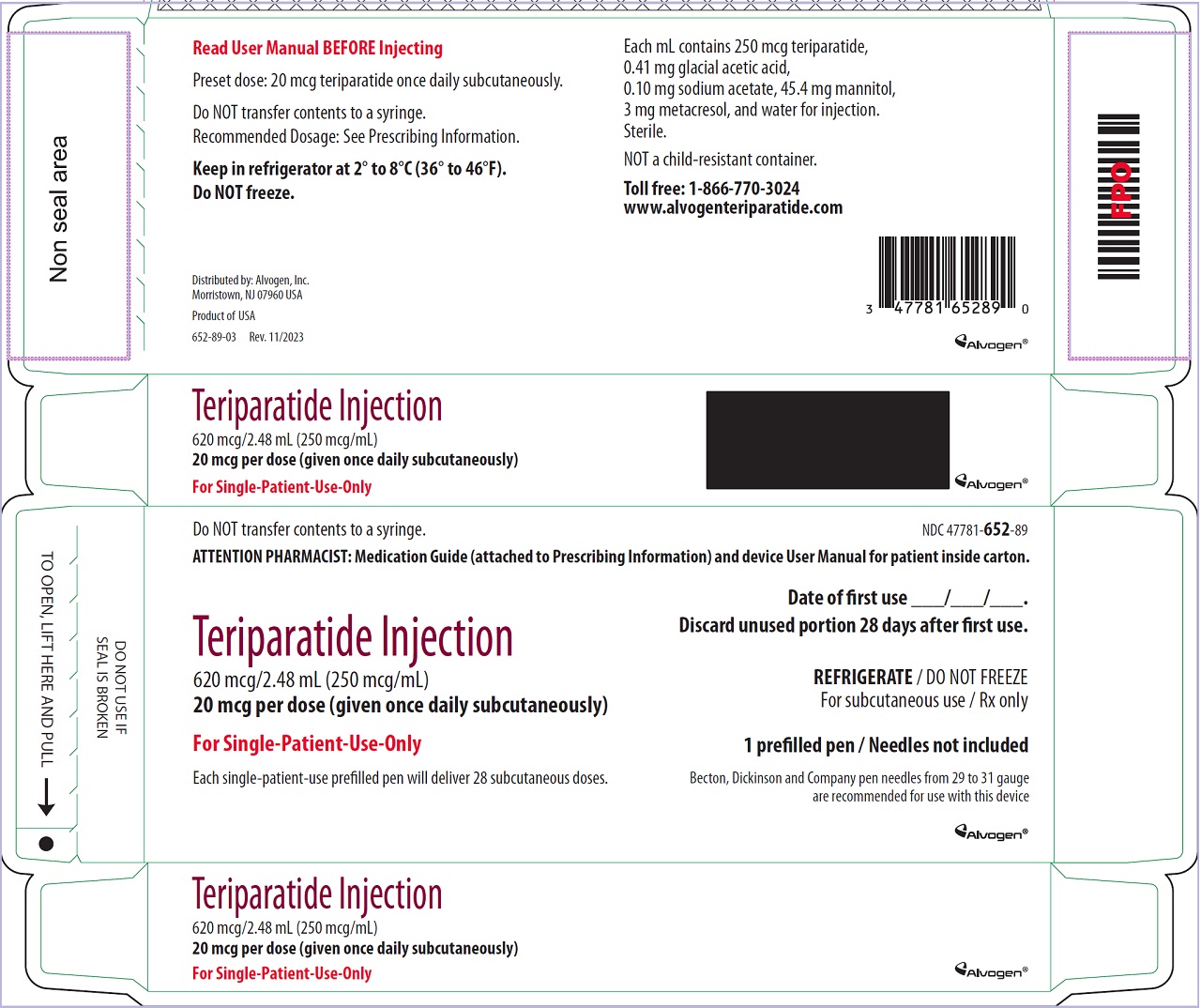
teriparatide 250 ug/mL Injection, Solution, 1 syringe — NDC 47781-652-89 (Billing 47781-0652-89)
This is a package of 1 syringe of teriparatide 250 ug/mL Injection, Solution from Alvogen, Inc., marketed since Nov 2019 and currently FDA-listed; retail pharmacies pay about $479.95 per mL (NADAC). It is this product's only package size.
NDC database record
One package, one record: these facts belong to NDC 47781-652-89 alone.
- Record
- FDA NDC Directory package listing · Human prescription drug
- Code segments
- 47781 labeler · 652 product · 89 package
- Package marketed since
- Nov 14, 2019
- Sample package
- No — commercial package
- Listing certified through
- Dec 31, 2026
- Barcode (UPC-A, from the NDC)
- 3 4778165289 0
- Medicaid fills, this package
- 1,083 prescriptions in the last four reported quarters
- FDA record last changed
- Jul 24, 2026
Identity & classification
Regulatory identifiers FDA, NLM and CMS codes for this package
Drug-database identifiers Medi-Span GPI and First Databank GCN / HICL / AHFS classification
- GSN (GCN sequence number): 064481
- GCN: 14404
- GPI-14 (Medi-Span): 3004407000D216
- HICL (First Databank): 024700
- AHFS class code: 68:24.08.00
- RxCUI (RxNorm): 1435115
Where does this data come from?
- FDA openFDA NDC Directory · synced Oct 8, 2026
- FDA label on DailyMed · label index refreshed Oct 8, 2026
- RxNorm (NLM RxNav) · catalog refreshed Oct 1, 2026
- Medi-Span GPI (licensed)
- First Databank (licensed) · refreshed Oct 8, 2026
RxNorm drug class
This medicine belongs to the Parathyroid Hormone Analog class.
Where does this data come from?
- RxClass (NLM) · catalog refreshed Oct 1, 2026
Clinical
- Most osteoporosis drugs work by slowing down the cells that break bone down. Teriparatide works the opposite way — it actually stimulates your body to build new bone. It's a lab-ma...
- What exactly is teriparatide and how is it different from other osteoporosis medications?
- You'll use a prefilled pen device to inject it just under the skin — into your thigh or abdomen — once a day. Your pharmacist or nurse will walk you through the first time. For the...
- How do I give myself the injection and are there things I need to know before I start?
Patient education
Supplement & herbal interactions
Teriparatide may be associated with lower levels of 1 nutrient — worth a chat with your pharmacist, not a cause for alarm.
Where does this data come from?
- MedlinePlus (NLM) · refreshed Oct 8, 2026
- FDA label on DailyMed · label index refreshed Oct 8, 2026
Ask a licensed pharmacist directly — free, answered by our team.
Pricing
A drug doesn't have one price. Each row is a different public payment system, and none is what you'd pay at the counter — that depends on your insurance. The ⓘ on each row explains what it measures.
| Price system | Per mL | Per package |
|---|---|---|
| Retail pharmacies payNADAC · weekly | $479.951 | $1,190.28 / 2.48 ml |
| Medicaid paysCMS SDUD · 12 mo | $881.22 | $2,185.43 / 2.48 ml |
| Medicare drug plans payPart D · Q2 2026 | $765.96 | $1,899.59 / 2.48 ml |
Where does this data come from?
- CMS NADAC weekly file · file of Oct 7, 2026
- CMS ASP pricing files · refreshed Sep 20, 2026
- CMS Medicaid State Drug Utilization Data · through Q1 2026
- CMS Part D plan pricing files · refreshed Sep 24, 2026
- VA National Acquisition Center price file
Packaging — all sizes for this product
| Package NDC | Description | Marketing start | Marketing end | Status |
|---|---|---|---|---|
| 47781-0652-89 You're viewing this Main listing | 1 SYRINGE in 1 CARTON / 2.48 mL in 1 SYRINGE | 2019-11-14 | — | Active |
Therapeutic equivalents
| Product | Labeler | Pack | NADAC/unit | TE | Status | Price vs. this |
|---|---|---|---|---|---|---|
| Teriparatide 250 ug/mL 00093-1106-16 | Teva | 1 syringe | $479.951 | AP | Availability likely | — |
| Teriparatide 250 ug/mL 00548-2311-00 | Amphastar | 1 syringe | $479.951 | AP | Availability likely | — |
| teriparatide 250 ug/mLthis 47781-0652-89 | Alvogen, | 1 syringe | $479.951 | — | Availability likely | — |
| Bonsity 250 ug/mL 47781-0852-89 | Alvogen | 1 syringe | $479.951 | — | Availability likely | — |
| Teriparatide 250 ug/mL 60505-6188-00 | Apotex | 1 syringe | $479.951 | AP | Availability likely | — |
| Teriparatide 250 ug/mL 66993-0495-28 | Prasco | 1 syringe | $479.951 | AP | Availability likely | — |
| Teriparatide 250 ug/mL 66993-0989-28 | Prasco | 1 syringe | $479.951 | AP | Availability likely | — |
| Teriparatide 250 ug/mL 68001-0693-76 | BluePoint | 1 syringe | $479.951 | AP | Availability likely | — |
| Forteo 250 ug/mL 00002-8400-01 | Eli | 1 syringe | $1,841.270 | AP | Availability likely | +284% |
| Forteo 250 ug/mL 00002-9678-01 | Eli | 1 syringe | $1,841.270 | AP | Availability likely | +284% |
Where does this data come from?
- FDA openFDA NDC Directory · synced Oct 8, 2026
- FDA Orange Book · refreshed Oct 3, 2026
- CMS NADAC weekly file · file of Oct 7, 2026
Availability & generic status
FDA-approved generic versions are listed, and recent pricing/market data suggests they may be available — see Therapeutic equivalents.
Where does this data come from?
- FDA Orange Book · refreshed Oct 3, 2026
Inactive Ingredients / Excipients
Inactive ingredients, also called excipients, are components of the drug product other than the active ingredient. They may include fillers, dyes, coatings, preservatives, flavors, or other formulation ingredients.
🧪 Avoiding an ingredient? See Teriparatide Injection inactive ingredients by manufacturer: every current product's list side by side, so you can ask your pharmacy for the version that does not list it.
💡 Tap an ingredient (hover on desktop) to see what it is and why it’s used.
-
UNII Q40Q9N063P
Acetic acid is a weak organic acid commonly used in medicines as a buffer and pH adjuster. It helps maintain the proper acidity level to ensure the drug remains stable and effective in its formulation.
-
UNII 3OWL53L36A
A natural sugar alcohol derived from seaweed or synthesized in the lab. It's used as a filler to add bulk, a sweetener in sugar-free formulas, and a disintegrant to help tablets break apart in the stomach.
-
UNII GGO4Y809LO
Metacresol is a preservative derived from coal tar or petroleum. It prevents bacterial and fungal growth in liquid medicines, helping keep the product safe and stable during storage.
-
UNII 4550K0SC9B
Sodium acetate is a salt derived from acetic acid. It acts as a buffer to help maintain the medicine's pH stability and may serve as a preservative or solubilizer in liquid formulations.
-
UNII 059QF0KO0R
Water is a liquid solvent that dissolves and mixes ingredients together in liquid medicines, syrups, and injections. It helps distribute the active drug evenly throughout the product.
5 inactive ingredients listed in the exact product block matched to this NDC.
Where does this data come from?
ingredient classCode="IACT" elements from the exact product block matched by this NDC. Label-section narrative from DailyMed / the openFDA label index is shown separately when available.- FDA label on DailyMed · label index refreshed Oct 8, 2026
- FDA openFDA NDC Directory · synced Oct 8, 2026
Inactive ingredient FAQ
Are inactive ingredients the same for every manufacturer?
Why might an inactive ingredient be missing?
Can inactive ingredients matter?
Manufacturer & labeler
More NDCs from Alvogen, Inc. labeler code 47781
- levothyroxine sodium 25 ug Tablet NDC 47781-640-10
- levothyroxine sodium 50 ug Tablet NDC 47781-643-10
- levothyroxine sodium 75 ug Tablet NDC 47781-646-10
- levothyroxine sodium 88 ug Tablet NDC 47781-649-10
- levothyroxine sodium 100 ug Tablet NDC 47781-651-10
- levothyroxine sodium 112 ug Tablet NDC 47781-654-10
- levothyroxine sodium 125 ug Tablet NDC 47781-657-10
- levothyroxine sodium 137 ug Tablet NDC 47781-659-10
- levothyroxine sodium 150 ug Tablet NDC 47781-662-10
- levothyroxine sodium 175 ug Tablet NDC 47781-665-10
Where does this data come from?
- FDA openFDA NDC Directory · synced Oct 8, 2026
- Drugs@FDA
Full prescribing information FDA SPL
🎯 Indications and Usage ▾
1 INDICATIONS AND USAGE Teriparatide injection is indicated: For the treatment of postmenopausal women with osteoporosis at high risk for fracture (defined herein as having a history of osteoporotic fracture or multiple risk factors for fracture) or who have failed or are intolerant to other available osteoporosis therapy. In postmenopausal women with osteoporosis, teriparatide injection reduces the risk of vertebral and nonvertebral fractures. To increase bone mass in men with primary or hypogonadal osteoporosis at high risk for fracture or who have failed or are intolerant to other available osteoporosis therapy.
For the treatment of men and women with osteoporosis associated with sustained systemic glucocorticoid therapy (daily dosage equivalent to 5 mg or greater of prednisone) at high risk for fracture or who have failed or are intolerant to other available osteoporosis therapy. Teriparatide injection is a parathyroid hormone analog, (PTH 1-34), indicated for: Treatment of postmenopausal women with osteoporosis at high risk for fracture or patients who have failed or are intolerant to other available osteoporosis therapy ( 1 ) Increase of bone mass in men with primary or hypogonadal osteoporosis at high risk for fracture or patients who have failed or are intolerant to other available osteoporosis therapy ( 1 ) Treatment of men and women with osteoporosis associated with sustained systemic glucocorticoid therapy at high risk for fracture or patients who have failed or are intolerant to other available osteoporosis therapy ( 1 )
⏱️ Dosage and Administration ▾
2 DOSAGE AND ADMINISTRATION Recommended dosage is 20 mcg subcutaneously once a day ( 2.1 ) Consider supplemental calcium and Vitamin D based on individual patient needs ( 2.1 ) Administer as a subcutaneous injection into the thigh or abdominal region ( 2.2 ) Administer initially under circumstances in which the patient can sit or lie down if symptoms of orthostatic hypotension occur ( 2.2 ) Use of teriparatide for more than 2 years during a patient's lifetime should only be considered if a patient remains at or has returned to having a high risk for fracture ( 2.3 )
2.1Recommended Dosage The recommended dosage is 20 mcg given subcutaneously once a day. Instruct patients to take supplemental calcium and vitamin D if daily dietary intake is inadequate.
2.2Administration Instructions Administer teriparatide injection as a subcutaneous injection into the thigh or abdominal region. Teriparatide injection is not approved for intravenous or intramuscular use. Teriparatide injection should be administered initially under circumstances in which the patient can sit or lie down if symptoms of orthostatic hypotension occur [see Warnings and Precautions ( 5.4 )] .
Parenteral drug products should be inspected visually for particulate matter and discoloration prior to administration (teriparatide injection is a clear and colorless liquid). Do not use if solid particles appear or if the solution is cloudy or colored. Patients and/or caregivers who administer teriparatide injection should receive appropriate training and instruction on the proper use of the teriparatide injection delivery device from a qualified health professional.
2.3Recommended Treatment Duration Use of teriparatide for more than 2 years during a patient's lifetime should only be considered if a patient remains at or has returned to having a high risk for fracture [see Warnings and Precautions ( 5.1 )] .
💊 Dosage Forms and Strengths ▾
3 DOSAGE FORMS AND STRENGTHS Injection: 560 mcg/2.24 mL (250 mcg/mL) Colorless solution in a single-patient-use prefilled pen intended to deliver 28 daily doses of 20 mcg. Injection: 560 mcg/2.24 mL (250 mcg/mL) in single-patient-use prefilled pen intended to deliver 28 daily doses of 20 mcg ( 3 )
⛔ Contraindications ▾
4 CONTRAINDICATIONS Teriparatide injection is contraindicated in patients with hypersensitivity to teriparatide or to any of its excipients. Hypersensitivity reactions have included angioedema and anaphylaxis [see Adverse Reactions ( 6.2 )] . Patients with hypersensitivity to teriparatide or to any of its excipients ( 4 )
⚠️ Warnings and Cautions ▾
5 WARNINGS AND PRECAUTIONS Osteosarcoma : Avoid use in patients with increased risk of osteosarcoma including patients with open epiphyses, metabolic bone diseases including Paget's disease, bone metastases or history of skeletal malignancies, prior external beam or implant radiation therapy involving the skeleton, and hereditary disorders predisposing to osteosarcoma. ( 5.1 ) Hypercalcemia and Cutaneous Calcification : Avoid in patients known to have an underlying hypercalcemic disorder. Discontinue in patients developing worsening of previously stable cutaneous calcification.
( 5.2 ) Risk of Urolithiasis : Consider the risk/benefit in patients with active or recent urolithiasis because of risk of exacerbation ( 5.3 ) Orthostatic Hypotension : Transient orthostatic hypotension may occur with initial doses of teriparatide injection ( 5.4 )
5.1Osteosarcoma An increase in the incidence of osteosarcoma (a malignant bone tumor) was observed in male and female rats treated with teriparatide. Osteosarcoma has been reported in patients treated with teriparatide in the post marketing setting; however, an increased risk of osteosarcoma has not been observed in observational studies in humans. There are limited data assessing the risk of osteosarcoma beyond 2 years of teriparatide use [see Dosage and Administration ( 2.3 ), Adverse Reactions ( 6.2 ), Nonclinical Toxicology ( 13.1 )] .
Avoid teriparatide injection use in patients with (these patients are at increased baseline risk of osteosarcoma): Open epiphyses (pediatric and young adult patients) (teriparatide injection is not approved in pediatric patients) [see Use in Specific Populations ( 8.4 )] . Metabolic bone diseases other than osteoporosis, including Paget's disease of the bone. Bone metastases or a history of skeletal malignancies.
Prior external beam or implant radiation therapy involving the skeleton. Hereditary disorders predisposing to osteosarcoma.
5.2Hypercalcemia and Cutaneous Calcification Hypercalcemia Teriparatide has not been studied in patients with pre-existing hypercalcemia. Teriparatide may cause hypercalcemia and may exacerbate hypercalcemia in patients with pre-existing hypercalcemia [see Adverse Reactions ( 6.1 , 6.2 )] . Avoid teriparatide injection in patients known to have an underlying hypercalcemic disorder, such as primary hyperparathyroidism.
Risk of Cutaneous Calcification Including Calciphylaxis Serious reports of calciphylaxis and worsening of previously stable cutaneous calcification have been reported in the post-marketing setting in patients taking teriparatide. Risk factors for development of calciphylaxis include underlying autoimmune disease, kidney failure, and concomitant warfarin or systemic corticosteroid use. Discontinue teriparatide injection in patients who develop calciphylaxis or worsening of previously stable cutaneous calcification.
5.3Risk of Urolithiasis In clinical trials, the frequency of urolithiasis was similar in patients treated with teriparatide and patients treated with placebo. However, teriparatide has not been studied in patients with active urolithiasis. If teriparatide injection-treated patients have pre-existing hypercalciuria or suspected/known active urolithiasis, consider measuring urinary calcium excretion.
Consider the risks and benefits of use in patients with active or recent urolithiasis because of the potential to exacerbate this condition.
5.4Orthostatic Hypotension Teriparatide injection should be administered initially under circumstances in which the patient can sit or lie down if symptoms of orthostatic hypotension occur. In short-term clinical pharmacology studies of teriparatide in healthy volunteers, transient episodes of symptomatic orthostatic hypotension were observed in 5% of volunteers. Typically, these events began within 4 hours of dosing and resolved (without treatment) within a few minutes to a few hours.
When transient orthostatic hypotension occurred, it happened within the first sev… [Excerpted — this section continues on DailyMed.]
🤒 Adverse Reactions ▾
6 ADVERSE REACTIONS Most common adverse reactions (>10%) include: arthralgia, pain, and nausea ( 6.1 ) To report SUSPECTED ADVERSE REACTIONS, contact Alvogen, Inc. at 1-866-770-3024 or FDA at 1-800-FDA-1088 or www.fda.gov/medwatch.
6.1Clinical Trials Experience Because clinical studies are conducted under widely varying conditions, adverse reaction rates observed in the clinical studies of a drug cannot be directly compared to rates in the clinical studies of another drug and may not reflect the rates observed in practice. Men with Primary or Hypogonadal Osteoporosis and Postmenopausal Women with Osteoporosis The safety of teriparatide in the treatment of osteoporosis in men and postmenopausal women was assessed in two randomized, double-blind, placebo-controlled trials of 1382 patients (21% men, 79% women) aged 28 to 86 years (mean 67 years) [see Clinical Studies ( 14.1 , 14.2 )] .
The median durations of the trials were 11 months for men and 19 months for women, with 691 patients exposed to teriparatide and 691 patients to placebo. All patients received 1000 mg of calcium plus at least 400 IU of vitamin D supplementation per day. The incidence of all-cause mortality was 1% in the teriparatide group and 1% in the placebo group.
The incidence of serious adverse events was 16% in the teriparatide group and 19% in the placebo group. Early discontinuation due to adverse events occurred in 7% in the teriparatide group and 6% in the placebo group. Table 1 lists adverse events from these two trials that occurred in ≥2% of teriparatide-treated and more frequently than placebo-treated patients.
Table 1. Percentage of Patients with Adverse Events Reported by at Least 2% of Teriparatide-Treated Patients and in More Teriparatide-Treated Patients than Placebo-Treated Patients from the Two Principal Osteoporosis Trials in Women and Men (Adverse Events are Shown Without Attribution of Causality) Teriparatide N=691 Placebo N=691 Event Classification (%) (%) Body as a Whole Pain 21.3
20.5Headache 7.5
7.4Asthenia 8.7
6.8Neck pain 3.0
2.7Cardiovascular Hypertension 7.1
6.8Angina pectoris 2.5
1.6Syncope 2.6
1.4Digestive System Nausea 8.5
6.7Constipation 5.4
4.5Diarrhea 5.1
4.6Dyspepsia 5.2
4.1Vomiting 3.0
2.3Gastrointestinal disorder 2.3
2.0Tooth disorder 2.0
1.3Musculoskeletal Arthralgia 10.1
8.4Leg cramps 2.6
1.3Nervous System Dizziness 8.0
5.4Depression 4.1
2.7Insomnia 4.3
3.6Vertigo 3.8
2.7Respiratory System Rhinitis 9.6
8.8Cough increased 6.4
5.5Pharyngitis 5.5
4.8Dyspnea 3.6
2.6Pneumonia 3.9
3.3Skin and Appendages Rash 4.9
4.5Sweating 2.2
1.7Laboratory Findings Serum Calcium - Teriparatide transiently increased serum calcium, with the maximal effect observed at approximately 4 to 6 hours post-dose. Serum calcium measured at least 16 hours post-dose was not different from pretreatment levels. In clinical trials, the frequency of at least 1 episode of transient hypercalcemia in the 4 to 6 hours after teriparatide administration was 11% of women and 6% of men treated with teriparatide compared to 2% of women and 0% of the men treated with placebo.
The percentage of patients treated with teriparatide whose transient hypercalcemia was verified on consecutive measurements was 3% of women and 1% of men. Urinary Calcium - Teriparatide increased urinary calcium excretion, but the frequency of hypercalciuria in clinical trials was similar for patients treated with teriparatide and placebo [see Clinical Pharmacology ( 12.2 )] . Serum Uric Acid - Teriparatide increased serum uric acid concentrations.
In clinical trials, 3% of teriparatide-treated patients had serum uric acid concentrations above the upper limit of normal compared with 1% of placebo-treated patients. However, the hyperuricemia did not result in an increase in gout, arthralgia, or urolithiasis. Renal Function - No clinically important adverse renal effects were observed in clinical studies.
Assessments included creatinine clearance; measurements of blood urea… [Excerpted — this section continues on DailyMed.]
🔄 Drug Interactions ▾
7 DRUG INTERACTIONS Digoxin: Transient hypercalcemia may predispose patients to digitalis toxicity ( 5.5 , 7.1 )
7.1Digoxin Sporadic case reports have suggested that hypercalcemia may predispose patients to digitalis toxicity. Teriparatide may transiently increase serum calcium. Consider the potential onset of signs and symptoms of digitalis toxicity when teriparatide injection is used in patients receiving digoxin [see Warnings and Precautions ( 5.5 ), Clinical Pharmacology ( 12.3 )] .
👥 Use in Specific Populations ▾
8 USE IN SPECIFIC POPULATIONS Pregnancy: Consider discontinuing when pregnancy is recognized ( 8.1 ) Lactation: Breastfeeding is not recommended ( 8.2 ) Pediatric Use: Safety and effectiveness not established. Avoid use due to increased baseline risk of osteosarcoma ( 5.1 , 8.4 )
8.1Pregnancy Risk Summary There are no available data on teriparatide injection use in pregnant women to evaluate for drug-associated risk of major birth defects, miscarriage, or adverse maternal or fetal outcomes. Consider discontinuing teriparatide injection when pregnancy is recognized. In animal reproduction studies, teriparatide increased skeletal deviations and variations in mouse offspring at subcutaneous doses equivalent to more than 60 times the recommended 20 mcg human daily dose (based on body surface area, mcg/m 2 ), and produced mild growth retardation and reduced motor activity in rat offspring at subcutaneous doses equivalent to more than 120 times the human dose (see Data) .
The background risk of major birth defects and miscarriage for the indicated population is unknown. The background risk in the US general population of major birth defects is 2% to 4% and of miscarriage is 15% to 20% of clinically recognized pregnancies. Data Animal Data In animal reproduction studies, pregnant mice received teriparatide during organogenesis at subcutaneous doses equivalent to 8 to 267 times the human dose (based on body surface area, mcg/m 2 ).
At subcutaneous doses ≥60 times the human dose, the fetuses showed an increased incidence of skeletal deviations or variations (interrupted rib, extra vertebra or rib). When pregnant rats received teriparatide during organogenesis at subcutaneous doses 16 to 540 times the human dose, the fetuses showed no abnormal findings. In a perinatal/postnatal study in pregnant rats dosed subcutaneously from organogenesis through lactation, mild growth retardation was observed in female offspring at doses ≥120 times the human dose.
Mild growth retardation in male offspring and reduced motor activity in both male and female offspring were observed at maternal doses of 540 times the human dose. There were no developmental or reproductive effects in mice or rats at doses 8 or 16 times the human dose, respectively.
8.2Lactation Risk Summary It is not known whether teriparatide is excreted in human milk, affects human milk production, or has effects on the breast fed infant. Avoid teriparatide injection use in women who are breastfeeding.
8.4Pediatric Use The safety and effectiveness of teriparatide have not been established in pediatric patients. Pediatric patients are at higher baseline risk of osteosarcoma because of open epiphyses [see Warnings and Precautions ( 5.1 )] .
8.5Geriatric Use Of the patients who received teriparatide in the osteoporosis trial of 1637 postmenopausal women, 75% were 65 years of age and older and 23% were 75 years of age and older. Of the patients who received teriparatide in the trial of 437 men with primary or hypogonadal osteoporosis, 39% were 65 years of age and over and 13% were 75 years of age and over. Of the 214 patients who received teriparatide in the glucocorticoid induced osteoporosis trial, 28% were 65 years of age and older and 9% were 75 years of age and older.
No overall differences in safety or effectiveness of teriparatide have been observed between patients 65 years of age and older and younger adult patients.
8.6Hepatic Impairment No studies have been performed in patients with hepatic impairment [see Clinical Pharmacology ( 12.3 )] .
8.7Renal Impairment In 5 patients with severe renal impairment (CrCl <30 mL/minute), the AUC and T 1/2 of teriparatide were increased by 73% and 77%, respectively. Maximum serum concentration of teriparatide was not increased. It is unknown whether teriparatide alters the underlying metabolic bone disease seen in chronic renal impairment [see Clinical Pharmacology ( 12.3 )] .
🤰 Pregnancy ▾
8.1Pregnancy Risk Summary There are no available data on teriparatide injection use in pregnant women to evaluate for drug-associated risk of major birth defects, miscarriage, or adverse maternal or fetal outcomes. Consider discontinuing teriparatide injection when pregnancy is recognized. In animal reproduction studies, teriparatide increased skeletal deviations and variations in mouse offspring at subcutaneous doses equivalent to more than 60 times the recommended 20 mcg human daily dose (based on body surface area, mcg/m 2 ), and produced mild growth retardation and reduced motor activity in rat offspring at subcutaneous doses equivalent to more than 120 times the human dose (see Data) .
The background risk of major birth defects and miscarriage for the indicated population is unknown. The background risk in the US general population of major birth defects is 2% to 4% and of miscarriage is 15% to 20% of clinically recognized pregnancies. Data Animal Data In animal reproduction studies, pregnant mice received teriparatide during organogenesis at subcutaneous doses equivalent to 8 to 267 times the human dose (based on body surface area, mcg/m 2 ).
At subcutaneous doses ≥60 times the human dose, the fetuses showed an increased incidence of skeletal deviations or variations (interrupted rib, extra vertebra or rib). When pregnant rats received teriparatide during organogenesis at subcutaneous doses 16 to 540 times the human dose, the fetuses showed no abnormal findings. In a perinatal/postnatal study in pregnant rats dosed subcutaneously from organogenesis through lactation, mild growth retardation was observed in female offspring at doses ≥120 times the human dose.
Mild growth retardation in male offspring and reduced motor activity in both male and female offspring were observed at maternal doses of 540 times the human dose. There were no developmental or reproductive effects in mice or rats at doses 8 or 16 times the human dose, respectively.
🧒 Pediatric Use ▾
8.4Pediatric Use The safety and effectiveness of teriparatide have not been established in pediatric patients. Pediatric patients are at higher baseline risk of osteosarcoma because of open epiphyses [see Warnings and Precautions ( 5.1 )] .
🧓 Geriatric Use ▾
8.5Geriatric Use Of the patients who received teriparatide in the osteoporosis trial of 1637 postmenopausal women, 75% were 65 years of age and older and 23% were 75 years of age and older. Of the patients who received teriparatide in the trial of 437 men with primary or hypogonadal osteoporosis, 39% were 65 years of age and over and 13% were 75 years of age and over. Of the 214 patients who received teriparatide in the glucocorticoid induced osteoporosis trial, 28% were 65 years of age and older and 9% were 75 years of age and older.
No overall differences in safety or effectiveness of teriparatide have been observed between patients 65 years of age and older and younger adult patients.
🆘 Overdosage ▾
10 OVERDOSAGE In postmarketing spontaneous reports, there have been cases of medication errors in which the entire contents (up to 800 mcg) (40 times the recommended dose) of the teriparatide prefilled delivery device (pen) have been administered as a single dose. Transient events reported have included nausea, weakness/lethargy and hypotension. No fatalities associated with overdose have been reported.
Additional signs, symptoms, and complications of teriparatide overdosage may include a delayed hypercalcemic effect, vomiting, dizziness, and headache. Overdose Management - There is no specific antidote for a teriparatide overdosage. Treatment of suspected overdosage should include discontinuation of teriparatide injection, monitoring of serum calcium and phosphorus, and implementation of appropriate supportive measures, such as hydration.
🧬 Clinical Pharmacology ▾
12 CLINICAL PHARMACOLOGY
12.1Mechanism of Action Endogenous 84-amino acid parathyroid hormone (PTH) is the primary regulator of calcium and phosphate metabolism in bone and kidney. Physiological actions of PTH include regulation of bone metabolism, renal tubular reabsorption of calcium and phosphate, and intestinal calcium absorption. The biological actions of PTH and teriparatide are mediated through binding to specific high-affinity cell-surface receptors.
Teriparatide and the 34 N-terminal amino acids of PTH bind to these receptors with the same affinity and have the same physiological actions on bone and kidney. Teriparatide is not expected to accumulate in bone or other tissues. The skeletal effects of teriparatide depend upon the pattern of systemic exposure.
Once-daily administration of teriparatide stimulates new bone formation on trabecular and cortical (periosteal and/or endosteal) bone surfaces by preferential stimulation of osteoblastic activity over osteoclastic activity. In monkey studies, teriparatide improved trabecular microarchitecture and increased bone mass and strength by stimulating new bone formation in both cancellous and cortical bone. In humans, the anabolic effects of teriparatide manifest as an increase in skeletal mass, an increase in markers of bone formation and resorption, and an increase in bone strength.
By contrast, continuous excess of endogenous PTH, as occurs in hyperparathyroidism, may be detrimental to the skeleton because bone resorption may be stimulated more than bone formation.
12.2Pharmacodynamics Pharmacodynamics in Men with Primary or Hypogonadal Osteoporosis and Postmenopausal Women with Osteoporosis Effects on Mineral Metabolism - Teriparatide affects calcium and phosphorus metabolism in a pattern consistent with the known actions of endogenous PTH (e.g., increases serum calcium and decreases serum phosphorus). Serum Calcium Concentrations - When teriparatide 20 mcg was administered once daily, the serum calcium concentration increased transiently, beginning approximately 2 hours after dosing and reaching a maximum concentration between 4 and 6 hours (median increase, 0.4 mg/dL).
The serum calcium concentration began to decline approximately 6 hours after dosing and returned to baseline by 16 to 24 hours after each dose. In a clinical study of postmenopausal women with osteoporosis, the median peak serum calcium concentration measured 4 to 6 hours after dosing with teriparatide (20 mcg subcutaneous once daily) was 9.68 mg/dL at 12 months. The peak serum calcium remained below 11 mg/dL in >99% of women at each visit.
Sustained hypercalcemia was not observed. In this study, 11.1% of women treated with teriparatide had at least 1 serum calcium value above the upper limit of normal (ULN) (10.6 mg/dL) compared with 1.5% of women treated with placebo. The percentage of women treated with teriparatide whose serum calcium was above the ULN on consecutive 4- to 6-hour post-dose measurements was 3% compared with 0.2% of women treated with placebo.
In these women, calcium supplements and/or teriparatide doses were reduced. The timing of these dose reductions was at the discretion of the investigator. Teriparatide dose adjustments were made at varying intervals after the first observation of increased serum calcium (median 21 weeks).
During these intervals, there was no evidence of progressive increases in serum calcium. In a clinical study of men with either primary or hypogonadal osteoporosis, the effects on serum calcium were similar to those observed in postmenopausal women. The median peak serum calcium concentration measured 4 to 6 hours after dosing with teriparatide was 9.44 mg/dL at 12 months.
The peak serum calcium remained below 11 mg/dL in 98% of men at each visit. Sustained hypercalcemia was not observed. In this study, 6% of men treated with teriparatide daily had at least 1 serum calcium value above the ULN (10.6 mg/dL) compared with none of the men treated with placebo.
Th… [Excerpted — this section continues on DailyMed.]
🧬 Mechanism of Action ▾
12.1Mechanism of Action Endogenous 84-amino acid parathyroid hormone (PTH) is the primary regulator of calcium and phosphate metabolism in bone and kidney. Physiological actions of PTH include regulation of bone metabolism, renal tubular reabsorption of calcium and phosphate, and intestinal calcium absorption. The biological actions of PTH and teriparatide are mediated through binding to specific high-affinity cell-surface receptors.
Teriparatide and the 34 N-terminal amino acids of PTH bind to these receptors with the same affinity and have the same physiological actions on bone and kidney. Teriparatide is not expected to accumulate in bone or other tissues. The skeletal effects of teriparatide depend upon the pattern of systemic exposure.
Once-daily administration of teriparatide stimulates new bone formation on trabecular and cortical (periosteal and/or endosteal) bone surfaces by preferential stimulation of osteoblastic activity over osteoclastic activity. In monkey studies, teriparatide improved trabecular microarchitecture and increased bone mass and strength by stimulating new bone formation in both cancellous and cortical bone. In humans, the anabolic effects of teriparatide manifest as an increase in skeletal mass, an increase in markers of bone formation and resorption, and an increase in bone strength.
By contrast, continuous excess of endogenous PTH, as occurs in hyperparathyroidism, may be detrimental to the skeleton because bone resorption may be stimulated more than bone formation.
📦 How Supplied / Storage and Handling ▾
16 HOW SUPPLIED/STORAGE AND HANDLING
16.1How Supplied Teriparatide injection is a colorless solution, available as single-patient-use prefilled pens in the following package size: 560 mcg/2.24 mL (250 mcg/mL) NDC 47781-652-89.
16.2Storage and Handling The teriparatide injection delivery device should be stored under refrigeration at 2°C to 8°C (36°F to 46°F) at all times. Recap the delivery device when not in use to protect the cartridge from physical damage and light. When using teriparatide injection, minimize the time out of the refrigerator; deliver the dose immediately following removal from the refrigerator.
Do not freeze. Do not use teriparatide injection if it has been frozen. Throw away the device 28 days after first use.
16.1How Supplied Teriparatide injection is a colorless solution, available as single-patient-use prefilled pens in the following package size: 560 mcg/2.24 mL (250 mcg/mL) NDC 47781-652-89.
📦 Storage and Handling ▾
16.2Storage and Handling The teriparatide injection delivery device should be stored under refrigeration at 2°C to 8°C (36°F to 46°F) at all times. Recap the delivery device when not in use to protect the cartridge from physical damage and light. When using teriparatide injection, minimize the time out of the refrigerator; deliver the dose immediately following removal from the refrigerator.
Do not freeze. Do not use teriparatide injection if it has been frozen. Throw away the device 28 days after first use.
📋 Description ▾
11 DESCRIPTION Teriparatide injection is a recombinant human parathyroid hormone analog (PTH 1-34). It has an identical sequence to the 34 N‑terminal amino acids (the biologically active region) of the 84-amino acid human parathyroid hormone. The molecular formula of teriparatide is C 181 H 291 N 55 O 51 S 2 and the molecular weight is 4117.8 daltons.
Its amino acid sequence is shown below: Teriparatide is manufactured using a strain of Pseudomonas fluorescens modified by recombinant DNA technology. Teriparatide injection is supplied as a sterile, colorless, clear, isotonic solution in a glass cartridge which is pre-assembled into a single-patient-use delivery device (pen) for subcutaneous injection. Each pen is filled with volume to allow delivery of 2.24 mL.
Each mL contains 250 mcg teriparatide (as a free base), 0.41 mg glacial acetic acid, 0.10 mg sodium acetate, 45.4 mg mannitol, 3 mg metacresol, and water for injection. The drug product is a pH 4.0 solution. Each cartridge, pre-assembled into a delivery device, delivers 20 mcg of teriparatide per dose each day for up to 28 days.
Each device contains additional volume to allow troubleshooting of the device 2 times. amino-acid-sequence
💬 Information for Patients ▾
17 PATIENT COUNSELING INFORMATION Advise the patient to read the FDA-approved patient labeling ( Medication Guide and the User Manual ) before starting teriparatide injection and each time the prescription is renewed. Failure to follow the instructions may result in inaccurate dosing. Osteosarcoma Patients should be made aware that in rats, teriparatide caused an increase in the incidence of osteosarcoma (a malignant bone tumor).
Although cases of osteosarcoma have been reported in patients using teriparatide, no increased risk of osteosarcoma was observed in adult humans treated with teriparatide [see Warnings and Precautions ( 5.1 )] . Hypercalcemia Instruct patients taking teriparatide injection to contact a health care provider if they develop persistent symptoms of hypercalcemia (e.g., nausea, vomiting, constipation, lethargy, muscle weakness) [see Warnings and Precautions ( 5.2 )] . Orthostatic Hypotension When initiating teriparatide injection treatment, instruct patients to be prepared to immediately sit or lie down during or after administration in case they feel lightheaded or have palpitations after the injection.
Instruct patients to sit or lie down until the symptoms resolve. If symptoms persist or worsen, instruct patients to consult a healthcare provider before continuing treatment [see Warnings and Precautions ( 5.4 )] . Other Osteoporosis Treatment Modalities Patients should be informed regarding the roles of supplemental calcium and/or vitamin D.
Use of Delivery Device (Pen) Instruct patients and caregivers who administer teriparatide injection on how to properly use the delivery device (refer to User Manual ) , to properly dispose of needles, and not to share their delivery device with other patients. Instruct patients and caregivers who administer teriparatide injection that the contents of the delivery device should not be transferred to a syringe. Inform patients that each teriparatide injection delivery device can be used for up to 28 days.
Instruct patients to discard the teriparatide injection delivery device 28 days after first use, even if it still contains some unused solution. Instruct patients not to use teriparatide injection after the expiration date printed on the delivery device and packaging.
💬 Medication Guide ▾
This Medication Guide has been approved by the U.S. Food and Drug Administration Revised: 11/2023 Medication Guide Teriparatide (ter i par a tide) Injection for subcutaneous use Read this Medication Guide before you start using teriparatide injection and each time you get a refill. There may be new information.
Also, read the User Manual that comes with the teriparatide injection delivery device (pen) for information on how to use the device to inject your medicine the right way. This Medication Guide does not take the place of talking with your healthcare provider about your medical condition or your treatment. What is the most important information I should know about teriparatide injection?
Possible bone cancer. During drug testing, the medicine in teriparatide injection caused some rats to develop a bone cancer called osteosarcoma. Studies in people have not shown that teriparatide increases your chance of getting osteosarcoma.
There is little information about the chance of getting osteosarcoma in patients using teriparatide beyond 2 years. What is teriparatide injection? Teriparatide injection is a prescription medicine used to: treat postmenopausal women who have osteoporosis who are at high risk for having broken bones (fractures) or who cannot use other osteoporosis treatments.
Teriparatide injection can lessen the chance of broken bones (fractures) in the spine and other bones in postmenopausal women with osteoporosis. increase the bone mass in men with primary or hypogonadal osteoporosis who are at high risk for having broken bones (fractures) or who cannot use other osteoporosis treatments. treat both men and women with osteoporosis due to use of glucocorticoid medicines, such as prednisone, for several months, who are at high risk for having broken bones (fractures) or who cannot use other osteoporosis treatments.
It is not known if teriparatide injection is safe and effective in children. Teriparatide injection should not be used in children and young adults whose bones are still growing. Who should not use teriparatide injection?
Do not use teriparatide injection if you: are allergic to any of the ingredients in teriparatide injection. See the end of this Medication Guide for a complete list of the ingredients in teriparatide injection. Symptoms of a serious allergic reaction of teriparatide injection may include swelling of the face, lips, tongue or throat that may cause difficulty in breathing or swallowing.
Call your healthcare provider right away or get emergency medical help if you get any of these symptoms. What should I tell my healthcare provider before using teriparatide injection? Before you use teriparatide injection, tell your healthcare provider about all of your medical conditions, including if you: have a certain bone disease called Paget's disease or other bone disease. have bone cancer or have had a history of bone cancer. are a young adult whose bones are still growing. have had radiation therapy. are affected with a condition that runs in your family that can increase your chance of getting cancer in your bones. have or have had too much calcium in your blood (hypercalcemia). have or have had a skin condition with painful sores or wounds caused by too much calcium. have or have had kidney stones. take medicines that contain digoxin. are pregnant or plan to become pregnant.
It is not known if teriparatide injection will harm your unborn baby. are breastfeeding or plan to breastfeed. It is not known if teriparatide passes into your breastmilk. You should not breastfeed while taking teriparatide injection.
Tell your healthcare provider about all the medicines you take , including prescription and over-the-counter medicines, vitamins, and herbal supplements. Know the medicines you take. Keep a list of them to show your healthcare provider and pharmacist when you get a new medicine.
How should I use teriparatide injection? Read the detailed Instructions for Use (User Manual) included with your teri… [Excerpted — this section continues on DailyMed.]
🧬 Pharmacokinetics ▾
12.3Pharmacokinetics The pharmacokinetic parameters of teriparatide following single subcutaneous administration of teriparatide injection in patients with osteoporosis are shown in Table 2. Table 2. Pharmacokinetic Parameters of Teriparatide Following Administration of a Single Dose, 20 mcg, of Teriparatide Injection Mean ± S.D. n Arithmetic mean ± S.D.; *T max = median (minimum, maximum) T max (hour)* 0.25 (0.12, 1.08) 83 C max (pg/mL) 109.5 ± 62.8 83 AUC 0-t (pg∙hr/mL) 134.8 ± 79.7 83 AUC 0-inf (pg∙hr/mL) 149.8 ± 68.1 72 t 1/2 (hour) 0.79 ± 0.35 72 Absorption — Teriparatide is absorbed after subcutaneous injection; the absolute bioavailability is approximately 95% based on pooled data from 20-, 40-, and 80-mcg doses (1-, 2-, and 4-times the recommended dosage, respectively).
The peptide reaches peak serum concentrations about 30 minutes after subcutaneous injection of a 20-mcg dose and declines to non-quantifiable concentrations within 3 hours. Distribution — Volume of distribution following intravenous injection is approximately
0.12L/kg. Elimination — Systemic clearance of teriparatide (approximately 62 L/hour in women and 94 L/hour in men) exceeds the rate of normal liver plasma flow, consistent with both hepatic and extra-hepatic clearance. No metabolism or excretion studies have been performed with teriparatide.
Peripheral metabolism of PTH is believed to occur by non-specific enzymatic mechanisms in the liver followed by excretion via the kidneys. Specific Populations Geriatric Patients - No age-related differences in teriparatide pharmacokinetics were detected (range 31 to 85 years). Male and Female Patients - Although systemic exposure to teriparatide was approximately 20% to 30% lower in men than women, the recommended dosage for men and women is the same.
Racial Groups - The influence of race has not been determined. Patients with Renal Impairment - No pharmacokinetic differences were identified in 11 patients with creatinine clearance (CrCl) 30 to 72 mL/minute administered a single dose of teriparatide. In 5 patients with severe renal impairment (CrCl <30 mL/minute), the AUC and T1/2 of teriparatide were increased by 73% and 77%, respectively.
Maximum serum concentration of teriparatide was not increased. No studies have been performed in patients undergoing dialysis for chronic renal failure. Patients with Hepatic Impairment - No studies have been performed in patients with hepatic impairment.
Non-specific proteolytic enzymes in the liver (possibly Kupffer cells) cleave PTH(1-34) and PTH(1-84) into fragments that are cleared from the circulation mainly by the kidney. Drug Interaction Studies Digoxin — In a study of 15 healthy people administered digoxin daily to steady state, a single teriparatide dose did not alter the effect of digoxin on the systolic time interval (from electrocardiographic Q-wave onset to aortic valve closure, a measure of digoxin's calcium-mediated cardiac effect). Hydrochlorothiazide — In a study of 20 healthy people, the coadministration of hydrochlorothiazide 25 mg with 40 mcg of teriparatide (2 times the recommended dose) did not affect the serum calcium response to teriparatide.
The 24-hour urine excretion of calcium was reduced by a clinically unimportant amount (15%). The effect of coadministration of a higher dose of hydrochlorothiazide with teriparatide on serum calcium levels has not been studied. Furosemide — In a study of 9 healthy people and 17 patients with CrCl 13 to 72 mL/minute, coadministration of intravenous furosemide (20 to 100 mg) with teriparatide 40 mcg (2 times the recommended dose) resulted in small increases in the serum calcium (2%) and 24-hour urine calcium (37%); however, these changes did not appear to be clinically important.
🧬 Pharmacodynamics ▾
12.2Pharmacodynamics Pharmacodynamics in Men with Primary or Hypogonadal Osteoporosis and Postmenopausal Women with Osteoporosis Effects on Mineral Metabolism - Teriparatide affects calcium and phosphorus metabolism in a pattern consistent with the known actions of endogenous PTH (e.g., increases serum calcium and decreases serum phosphorus). Serum Calcium Concentrations - When teriparatide 20 mcg was administered once daily, the serum calcium concentration increased transiently, beginning approximately 2 hours after dosing and reaching a maximum concentration between 4 and 6 hours (median increase, 0.4 mg/dL).
The serum calcium concentration began to decline approximately 6 hours after dosing and returned to baseline by 16 to 24 hours after each dose. In a clinical study of postmenopausal women with osteoporosis, the median peak serum calcium concentration measured 4 to 6 hours after dosing with teriparatide (20 mcg subcutaneous once daily) was 9.68 mg/dL at 12 months. The peak serum calcium remained below 11 mg/dL in >99% of women at each visit.
Sustained hypercalcemia was not observed. In this study, 11.1% of women treated with teriparatide had at least 1 serum calcium value above the upper limit of normal (ULN) (10.6 mg/dL) compared with 1.5% of women treated with placebo. The percentage of women treated with teriparatide whose serum calcium was above the ULN on consecutive 4- to 6-hour post-dose measurements was 3% compared with 0.2% of women treated with placebo.
In these women, calcium supplements and/or teriparatide doses were reduced. The timing of these dose reductions was at the discretion of the investigator. Teriparatide dose adjustments were made at varying intervals after the first observation of increased serum calcium (median 21 weeks).
During these intervals, there was no evidence of progressive increases in serum calcium. In a clinical study of men with either primary or hypogonadal osteoporosis, the effects on serum calcium were similar to those observed in postmenopausal women. The median peak serum calcium concentration measured 4 to 6 hours after dosing with teriparatide was 9.44 mg/dL at 12 months.
The peak serum calcium remained below 11 mg/dL in 98% of men at each visit. Sustained hypercalcemia was not observed. In this study, 6% of men treated with teriparatide daily had at least 1 serum calcium value above the ULN (10.6 mg/dL) compared with none of the men treated with placebo.
The percentage of men treated with teriparatide whose serum calcium was above the ULN on consecutive measurements was 1.3% (2 men) compared with none of the men treated with placebo. Calcium supplementation was reduced in these men [see Warnings and Precautions ( 5.2 ), Adverse Reactions ( 6.1 )] . In a clinical study of women previously treated for 18 to 39 months with raloxifene (n=26) or alendronate (n=33), mean serum calcium >12 hours after teriparatide treatment was increased by 0.36 to 0.56 mg/dL, after 1 to 6 months of teriparatide treatment compared with baseline.
Of the women pretreated with raloxifene, 3 (11.5%) had a serum calcium >11 mg/dL, and of those pretreated with alendronate, 3 (9.1%) had a serum calcium >11 mg/dL. The highest serum calcium reported was 12.5 mg/dL. None of the women had symptoms of hypercalcemia.
There were no placebo controls in this study. In the study of patients with glucocorticoid-induced osteoporosis, the effects of teriparatide on serum calcium were similar to those observed in postmenopausal women with osteoporosis not taking glucocorticoids. Urinary Calcium Excretion - In a clinical study of postmenopausal women with osteoporosis who received 1000 mg of supplemental calcium and at least 400 IU of vitamin D, daily teriparatide increased urinary calcium excretion.
The median urinary excretion of calcium was 190 mg/day at 6 months and 170 mg/day at 12 months. These levels were 30 mg/day and 12 mg/day higher, respectively, than in women treated with placebo. The incidence of hypercalci… [Excerpted — this section continues on DailyMed.]
🔬 Clinical Studies ▾
14 CLINICAL STUDIES
14.1Treatment of Osteoporosis in Postmenopausal Women The safety and efficacy of once-daily teriparatide, median exposure of 19 months, were examined in a double-blind, multicenter, placebo-controlled clinical study of 1637 postmenopausal women with osteoporosis. In this study 541 postmenopausal women were treated with 20 mcg teriparatide subcutaneously once daily. All women received 1000 mg of calcium and at least 400 IU of vitamin D per day.
Baseline and endpoint spinal radiographs were evaluated using the semiquantitative scoring. Ninety percent of the women in the study had 1 or more radiographically diagnosed vertebral fractures at baseline. The primary efficacy endpoint was the occurrence of new radiographically diagnosed vertebral fractures defined as changes in the height of previously undeformed vertebrae.
Such fractures are not necessarily symptomatic. Effect on Fracture Incidence New Vertebral Fractures — Teriparatide, when taken with calcium and vitamin D and compared with calcium and vitamin D alone, reduced the risk of 1 or more new vertebral fractures from 14.3% of women in the placebo group to 5.0% in the teriparatide group (444 of the 541 patients treated with 20 mcg once daily of teriparatide were included in this analysis). This difference was statistically significant (p <0.001); the absolute reduction in risk was 9.3% and the relative reduction was 65%.
Teriparatide was effective in reducing the risk for vertebral fractures regardless of age, baseline rate of bone turnover, or baseline BMD (see Table 3). Table 3. Effect of Teriparatide on Risk of Vertebral Fractures in Postmenopausal Women with Osteoporosis a p≤0.001 compared with placebo.
Percent of Women With Fracture Teriparatide (N=444) Placebo (N=448) Absolute Risk Reduction (%, 95% CI) Relative Risk Reduction (%, 95% CI) New fracture (≥1) 5.0 a 14.3 9.3 (5.5-13.1) 65 (45-78) 1 fracture 3.8 9.4 2 fractures 0.9 2.9 ≥3 fractures 0.2
2.0New Nonvertebral Osteoporotic Fractures — Teriparatide significantly reduced the risk of any nonvertebral fracture from 5.5% in the placebo group to 2.6% in the teriparatide group (p <0.05). The absolute reduction in risk was 2.9% and the relative reduction was 53%. The incidence of new nonvertebral fractures in the teriparatide group compared with the placebo group was ankle/foot (0.2%, 0.7%), hip (0.2%, 0.7%), humerus (0.4%, 0.4%), pelvis (0%, 0.6%), ribs (0.6%, 0.9%), wrist (0.4%, 1.3%), and other sites (1.1%, 1.5%), respectively.
The cumulative percentage of postmenopausal women with osteoporosis who sustained new nonvertebral fractures was lower in women treated with teriparatide than in women treated with placebo (see Figure 1). Figure 1: Cumulative Percentage of Postmenopausal Women with Osteoporosis Sustaining New Nonvertebral Osteoporotic Fractures figure-1 Effect on Bone Mineral Density (BMD) Teriparatide increased lumbar spine BMD in postmenopausal women with osteoporosis. Statistically significant increases were seen at 3 months and continued throughout the treatment period.
Postmenopausal women with osteoporosis who were treated with teriparatide had statistically significant increases in BMD from baseline to endpoint at the lumbar spine, femoral neck, total hip, and total body (see Table 4). Table 4. Mean Percent Change in BMD from Baseline to Endpoint a in Postmenopausal Women with Osteoporosis, Treated with Teriparatide or Placebo for a Median of 19 Months a Intent-to-treat analysis, last observation carried forward. b p <0.001 compared with placebo. c p <0.05 compared with placebo.
Teriparatide N=541 Placebo N=544 Lumbar spine BMD 9.7 b
1.1Femoral neck BMD 2.8 c -0.7 Total hip BMD 2.6 c -1.0 Trochanter BMD 3.5 c -0.2 Intertrochanter BMD 2.6 c -1.3 Ward's triangle BMD 4.2 c -0.8 Total body BMD 0.6 c -0.5 Distal 1/3 radius BMD -2.1 -1.3 Ultradistal radius BMD -0.1 -1.6 Teriparatide treatment increased lumbar spine BMD from baseline in 96% of postmenopausal women treated. Seventy-two p… [Excerpted — this section continues on DailyMed.]
🧪 Nonclinical Toxicology ▾
13 NONCLINICAL TOXICOLOGY
13.1Carcinogenesis, Mutagenesis, Impairment of Fertility Carcinogenesis Two carcinogenicity bioassays were conducted in Fischer 344 rats. In the first study, male and female rats were given daily subcutaneous teriparatide injections of 5, 30, or 75 mcg/kg/day for 24 months from 2 months of age. These doses resulted in rat systemic exposures that were 3, 20, and 60 times higher than the systemic exposure observed in humans, respectively, following a subcutaneous dose of 20 mcg (based on AUC comparison).
Teriparatide treatment resulted in a marked dose-related increase in the incidence of osteosarcoma, a rare malignant bone tumor, in both male and female rats. Osteosarcomas were observed at all doses and the incidence reached 40% to 50% in the high-dose groups. Teriparatide also caused a dose-related increase in osteoblastoma and osteoma in both sexes.
No osteosarcomas, osteoblastomas or osteomas were observed in untreated control rats. The bone tumors in rats occurred in association with a large increase in bone mass and focal osteoblast hyperplasia. The second 2-year study was carried out in order to determine the effect of treatment duration and animal age on the development of bone tumors.
Female rats were treated for different periods between 2 and 26 months of age with subcutaneous doses of 5 and 30 mcg/kg (equivalent to 3 and 20 times the human exposure at the 20-mcg dose, respectively, based on AUC comparison). The study showed that the occurrence of osteosarcoma, osteoblastoma and osteoma was dependent upon dose and duration of exposure. Bone tumors were observed when immature 2-month old rats were treated with 30 mcg/kg/day of teriparatide for 24 months or with 5 or 30 mcg/kg/day of teriparatide for 6 months.
Bone tumors were also observed when mature 6-month old rats were treated with 30 mcg/kg/day of teriparatide for 6 or 20 months. Tumors were not detected when mature 6-month old rats were treated with 5 mcg/kg/day of teriparatide for 6 or 20 months. The results did not demonstrate a difference in susceptibility to bone tumor formation, associated with teriparatide treatment, between mature and immature rats.
No bone tumors were detected in a long-term monkey study [see Nonclinical Toxicology ( 13.2 )] . Mutagenesis Teriparatide was not genotoxic in any of the following test systems: the Ames test for bacterial mutagenesis; the mouse lymphoma assay for mammalian cell mutation; the chromosomal aberration assay in Chinese hamster ovary cells, with and without metabolic activation; and the in vivo micronucleus test in mice. Impairment of Fertility No effects on fertility were observed in male and female rats given subcutaneous teriparatide doses of 30, 100, or 300 mcg/kg/day prior to mating and in females continuing through gestation Day 6 (16 to 160 times the human dose of 20 mcg based on surface area, mcg/m 2 ).
13.2Animal Toxicology and/or Pharmacology In single-dose rodent studies using subcutaneous injection of teriparatide, no mortality was seen in rats given doses of 1000 mcg/kg (540 times the human dose based on surface area, mcg/m 2 ) or in mice given 10,000 mcg/kg (2700 times the human dose based on surface area, mcg/m 2 ). In a long-term study, skeletally mature ovariectomized female monkeys (N=30 per treatment group) were given either daily subcutaneous teriparatide injections of 5 mcg/kg or vehicle. Following the 18-month treatment period, the monkeys were removed from teriparatide treatment and were observed for an additional 3 years.
The 5 mcg/kg dose resulted in systemic exposures that were approximately 6 times higher than the systemic exposure observed in humans following a subcutaneous dose of 20 mcg (based on AUC comparison). Bone tumors were not detected by radiographic or histologic evaluation in any monkey in the study.
📄 Carcinogenesis, Mutagenesis, Impairment of Fertility ▾
13.1Carcinogenesis, Mutagenesis, Impairment of Fertility Carcinogenesis Two carcinogenicity bioassays were conducted in Fischer 344 rats. In the first study, male and female rats were given daily subcutaneous teriparatide injections of 5, 30, or 75 mcg/kg/day for 24 months from 2 months of age. These doses resulted in rat systemic exposures that were 3, 20, and 60 times higher than the systemic exposure observed in humans, respectively, following a subcutaneous dose of 20 mcg (based on AUC comparison).
Teriparatide treatment resulted in a marked dose-related increase in the incidence of osteosarcoma, a rare malignant bone tumor, in both male and female rats. Osteosarcomas were observed at all doses and the incidence reached 40% to 50% in the high-dose groups. Teriparatide also caused a dose-related increase in osteoblastoma and osteoma in both sexes.
No osteosarcomas, osteoblastomas or osteomas were observed in untreated control rats. The bone tumors in rats occurred in association with a large increase in bone mass and focal osteoblast hyperplasia. The second 2-year study was carried out in order to determine the effect of treatment duration and animal age on the development of bone tumors.
Female rats were treated for different periods between 2 and 26 months of age with subcutaneous doses of 5 and 30 mcg/kg (equivalent to 3 and 20 times the human exposure at the 20-mcg dose, respectively, based on AUC comparison). The study showed that the occurrence of osteosarcoma, osteoblastoma and osteoma was dependent upon dose and duration of exposure. Bone tumors were observed when immature 2-month old rats were treated with 30 mcg/kg/day of teriparatide for 24 months or with 5 or 30 mcg/kg/day of teriparatide for 6 months.
Bone tumors were also observed when mature 6-month old rats were treated with 30 mcg/kg/day of teriparatide for 6 or 20 months. Tumors were not detected when mature 6-month old rats were treated with 5 mcg/kg/day of teriparatide for 6 or 20 months. The results did not demonstrate a difference in susceptibility to bone tumor formation, associated with teriparatide treatment, between mature and immature rats.
No bone tumors were detected in a long-term monkey study [see Nonclinical Toxicology ( 13.2 )] . Mutagenesis Teriparatide was not genotoxic in any of the following test systems: the Ames test for bacterial mutagenesis; the mouse lymphoma assay for mammalian cell mutation; the chromosomal aberration assay in Chinese hamster ovary cells, with and without metabolic activation; and the in vivo micronucleus test in mice. Impairment of Fertility No effects on fertility were observed in male and female rats given subcutaneous teriparatide doses of 30, 100, or 300 mcg/kg/day prior to mating and in females continuing through gestation Day 6 (16 to 160 times the human dose of 20 mcg based on surface area, mcg/m 2 ).
📄 Patient Package Insert ▾
Teriparatide Injection User Manual Storage Information Always store the device in the refrigerator with the white cap on. DO NOT store the device with a needle attached. The device can be stored in the refrigerator after first use for 28 days .
Dispose device after 28 days of use. DO NOT start the administration procedure until you have read the Medication Guide and this User Manual contained in your teriparatide injection carton thoroughly. Follow the instructions carefully whenever using the teriparatide injection device.
DO NOT share your teriparatide injection device or needles with anyone else. Infection or disease can be spread from one person to another. DO NOT use the teriparatide injection device for more than 28 days.
The teriparatide injection device contains 28 days of medicine. After 28 days of use dispose of this device even if it is not completely empty. DO NOT inject more than one dose of teriparatide injection in the same day.
DO NOT attempt to transfer teriparatide injection from the device provided to syringe or any other device. Prepare for Injection 1. Prepare Site and Remove the White Cap A) Wash hands prior to use.
B) Prepare the injection site (thigh or abdomen) as recommended by your healthcare provider. C) Remove the white cap by pulling it straight off of the device (Figure B). 2.
Check Device, Device Label and Medication A) Check the device. DO NOT use the teriparatide injection device if it is damaged. B) Check the label on the device.
DO NOT use if the device contains the incorrect medication or if the medication has expired (Figure C). C) Check the medication cartridge. The liquid medication should be clear and colorless.
DO NOT use the medication if it is cloudy, colored, or has floating particles. (Figure C). 3.
Attach New Needle A) Peel off the paper tab (Figure D). B) Push the needle straight onto medicine cartridge. Screw on needle clockwise until firmly attached (Figure E and Figure F).
DO NOT over-tighten the needle. 4. Remove Outer Needle Cover Pull off large outer needle cover (Figure G), and save it for later (see Step 9 ).
5. Set Dose Pull out the black injection button until it stops (Figure H). Check to make sure red stripe shows.
Additionally, the instruction window will show an arrow pointing towards the needle end of the device (Figure I). Troubleshooting If the device does not set fully or if you cannot pull back on the black injection button refer to Troubleshooting Problem E on the back page. Administer Injection 6.
Remove Inner Needle Cover A) Pull off small inner needle protector and throw it away (Figure J). B) CAUTION: The needle will be exposed. 7.
Inject Dose A) Gently hold a fold of skin on your thigh or abdomen and insert the needle straight into the folded skin (Figure K). B) Press the black injection button down until it stops and hold (Figure L). C) Hold it in and count to 5 slowly.
You must wait until the count of 5 to make sure the full dose has been delivered (Figure M). D) Remove the needle from the skin (Figure N). Once needle is removed from skin, take your thumb off the black injection button.
Note: You may not see the plunger moving. To confirm that your dose has been delivered, see Step 8 . After Injection 8.
Confirm Dose Check to make sure the black injection button is all the way down. The instruction window will show an arrow pointing towards the black button. If the yellow shaft does not show, you have finished the injection steps the right way (Figure O).
Important You should not see any of the yellow shaft. If you do and have already injected the medicine, do not inject yourself a second time in the same day. Instead, you must reset the device.
Refer to Troubleshooting Problem A on the back page for more information. 9. Remove Needle and Dispose A) Put the large outer needle cover on the needle by scooping it up and pressing it on (Figure P and Figure Q).
Do not try to put the needle cover back on with your hands. B) Unscrew the covered needle all the… [Excerpted — this section continues on DailyMed.]
📄 Package Label / Principal Display Panel ▾
PACKAGE LABEL PRINCIPAL DISPLAY PANEL SECTION NDC 47781- 652 -89 Rx only Teriparatide Injection 560 mcg/2.24 mL (250 mcg/mL) 20 mcg per dose (given once daily subcutaneously)
PACKAGE LABEL PRINCIPAL DISPLAY PANEL SECTION Do NOT transfer contents to a syringe. NDC 47781- 652 -89 ATTENTION PHARMACIST: Medication Guide (attached to Prescribing Information) and device User Manual for patient inside carton. Teriparatide Injection 560 mcg/2.24 mL (250 mcg/mL) 20 mcg per dose (given once daily subcutaneously) For Single-Patient-Use-Only Rx only carton