
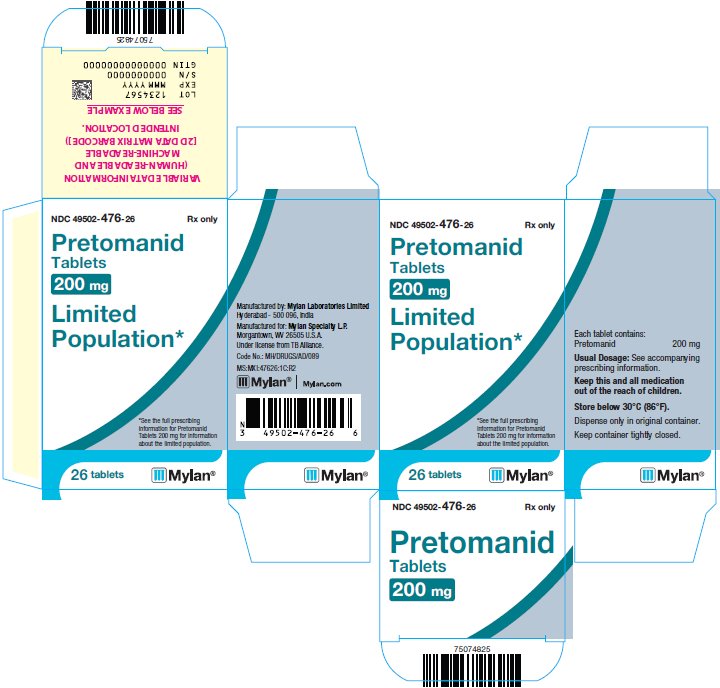
Pretomanid 200 mg Tablet, 26-count — NDC 49502-476-26 (Billing 49502-0476-26)
This is a package of 26 tablets of Pretomanid 200 mg Tablet from Viatris Specialty LLC, marketed since Nov 2019 and currently FDA-listed. It is this product's only package size.
NDC database record
One package, one record: these facts belong to NDC 49502-476-26 alone.
- Record
- FDA NDC Directory package listing · Human prescription drug
- Code segments
- 49502 labeler · 476 product · 26 package
- Package marketed since
- Nov 7, 2019
- Sample package
- No — commercial package
- Listing certified through
- Dec 31, 2026
- Billing quantity
- 26 EA per package
- Barcode (UPC-A, from the NDC)
- 3 4950247626 6
- FDA record last changed
- Jul 24, 2026
Identity & classification
Regulatory identifiers FDA, NLM and CMS codes for this package
Drug-database identifiers Medi-Span GPI and First Databank GCN / HICL / AHFS classification
- GSN (GCN sequence number): 080112
- GCN: 46807
- GPI-14 (Medi-Span): 09000063000320
- HICL (First Databank): 045940
- AHFS class code: 08:16.04.00
- RxCUI (RxNorm): 2198370
Where does this data come from?
- FDA openFDA NDC Directory · synced Oct 8, 2026
- FDA label on DailyMed · label index refreshed Oct 8, 2026
- RxNorm (NLM RxNav) · catalog refreshed Oct 1, 2026
- Medi-Span GPI (licensed)
- First Databank (licensed) · refreshed Oct 8, 2026
RxNorm drug class
This medicine belongs to the Antimycobacterial class.
Where does this data come from?
- RxClass (NLM) · catalog refreshed Oct 1, 2026
Clinical
Pretomanid is used along with bedaquiline (Sirturo) and linezolid (Zyvox) to treat multi-drug resistant tuberculosis (MDR-TB; a serious infection that affects the lungs that cannot be treated with other medications) in adults. Pretomanid is in a class of medications called antimycobacterials. It works by killing the bacteria that cause tuberculosis.
Read the full MedlinePlus article ↗- It treats certain drug-resistant forms of lung tuberculosis in adults. It is always used together with bedaquiline and linezolid. It is not for regular drug-sensitive TB, latent TB...
- Take one tablet once a day with food, swallowed whole with water. A healthcare worker will usually watch you take your doses. Finish the full course, and ask us if you have trouble...
- Common ones include numbness or tingling in the hands and feet, anemia, nausea, vomiting, acne and headache. Call your doctor about yellow skin or eyes, dark urine, vision changes,...
- This regimen can affect your liver, blood counts and heart rhythm. Testing at the start, at two weeks and then regularly helps catch problems early. Your team can often adjust the...
Patient education
Supplement & herbal interactions
Some supplements/herbs that may interact with Pretomanid — tap one for details:
Pretomanid may be associated with lower levels of 7 nutrients — worth a chat with your pharmacist, not a cause for alarm.
Where does this data come from?
- MedlinePlus (NLM) · refreshed Oct 8, 2026
- FDA label on DailyMed · label index refreshed Oct 8, 2026
Ask a licensed pharmacist directly — free, answered by our team.
Pricing
A drug doesn't have one price. Each row is a different public payment system, and none is what you'd pay at the counter — that depends on your insurance. The ⓘ on each row explains what it measures.
| Price system | Per each | Per package |
|---|---|---|
| Retail pharmacies payNADAC · weekly | Not in the retail survey — common for institutional, discontinued, or low-volume packs. | |
| Medicaid paysCMS SDUD · 12 mo | No recent Medicaid claims on file for this NDC — rare and low-volume NDCs are suppressed in the public data. | |
| Medicare drug plans payPart D · Q2 2026 | $26.82 | $697.28 / 26 tablets |
Where does this data come from?
- CMS NADAC weekly file
- CMS ASP pricing files · refreshed Sep 20, 2026
- CMS Medicaid State Drug Utilization Data · refreshed Oct 8, 2026
- CMS Part D plan pricing files · refreshed Sep 24, 2026
- VA National Acquisition Center price file
Packaging — all sizes for this product
| Package NDC | Description | Marketing start | Marketing end | Status |
|---|---|---|---|---|
| 49502-0476-26 You're viewing this Main listing | 26 TABLET in 1 BOTTLE | 2019-11-07 | — | Active |
Therapeutic equivalents
| Product | Labeler | Pack | NADAC/unit | TE | Status | Price vs. this |
|---|---|---|---|---|---|---|
| Pretomanid 200 mgthis 49502-0476-26 | Viatris | 26 tablets | — | — | FDA listed | — |
Where does this data come from?
- FDA openFDA NDC Directory · synced Oct 8, 2026
- FDA Orange Book · refreshed Oct 3, 2026
- CMS NADAC weekly file
Availability & generic status
We did not find an FDA-approved generic match for this exact strength, form and route. Patent/protection dates below may affect future generic timing.
Why the date isn’t exact: Generic timing can change because patents may be challenged, settled, licensed, added, removed, or worked around with a narrower label — and FDA approval does not always mean a pharmacy can get the generic today.
🛈 What do these terms mean?
- Patent
- Legal protection listed in the Orange Book that may delay generic approval or launch. Issued by the U.S. Patent & Trademark Office.
- Substance patent
- Covers the active drug molecule itself — the hardest to design around. A generic generally can’t launch until it expires.
- Formulation (product) patent
- Covers a specific formulation or dosage form. A generic can sometimes work around it with a different formulation.
- Method-of-use patent
- A patent covering one specific approved use of the drug — not necessarily the whole molecule. A generic can sometimes launch with a “skinny label” that carves out the protected use and keeps the others.
- Skinny label
- A generic label that omits a still-patented use when the FDA allows it — letting a generic reach the market for the unprotected uses.
- Exclusivity
- FDA-granted marketing protection, separate from patents — e.g. 5-yr new chemical entity, 7-yr orphan drug, or a +6-month pediatric extension.
- Paragraph IV
- A generic applicant’s formal challenge to a listed patent. It can potentially lead to earlier generic entry, but often involves litigation or a settlement.
- RLD / RS
- Reference Listed Drug — the brand product the FDA uses as the reference for generic applications. Reference Standard — the product the FDA expects generics to compare against in bioequivalence testing.
- TE / AB rating
- FDA therapeutic-equivalence rating. An AB rating generally means the FDA considers a generic therapeutically equivalent to — and substitutable for — the brand.
- LOE (loss of exclusivity)
- The latest patent or exclusivity currently listed — the loss-of-exclusivity / latest-listed-protection date shown on this page. Paragraph-IV challenges and settlements can move the real date earlier; FDA approval and a manufacturer’s decision to market can move it later.
Built from the FDA Orange Book. The bars above are scaled to each protection’s expiry; the red LOE marker is the last one to lapse.
| Code | What it grants | Expires |
|---|---|---|
| NCE | New Chemical Entity (5-year) | Aug 14, 2024 |
| ODE-253 | Orphan Drug Exclusivity (7-year) | Aug 14, 2026 |
| GAIN | Qualified Infectious Disease Product (+5-year) | Aug 14, 2029 |
| GAIN | Qualified Infectious Disease Product (+5-year) | Aug 14, 2031 |
Is there a generic version of PRETOMANID 200 MG TABLET?
The FDA approved a generic — why can’t I get it at my pharmacy yet?
Why do different websites show different generic release dates?
What does “FDA listed” mean?
What does a patent or protection date mean here?
What does “current Orange Book estimate” mean?
Can a generic come out before the last patent expires?
Can a generic come out after the listed dates?
What is the difference between patents and exclusivity?
Why are there multiple patent dates?
Where does this data come from?
- FDA Orange Book · refreshed Oct 3, 2026
What it looks like
Where does this data come from?
- FDA label on DailyMed · label index refreshed Oct 8, 2026
Inactive Ingredients / Excipients
Inactive ingredients, also called excipients, are components of the drug product other than the active ingredient. They may include fillers, dyes, coatings, preservatives, flavors, or other formulation ingredients.
🧪 Avoiding an ingredient? See Pretomanid inactive ingredients by manufacturer: every current product's list side by side, so you can ask your pharmacy for the version that does not list it.
💡 Tap an ingredient (hover on desktop) to see what it is and why it’s used.
-
UNII EWQ57Q8I5X
Lactose monohydrate is a natural sugar derived from milk. It serves as a filler and binder in tablets and capsules, helping create the proper size, texture, and consistency of the medicine.
-
UNII 70097M6I30
Magnesium stearate is a salt made from magnesium and stearic acid, a fatty substance. It's used in tablets and capsules as a lubricant and glidant to help ingredients flow smoothly during manufacturing and prevent sticking.
-
UNII OP1R32D61U
Microcrystalline cellulose is a purified form of cellulose, a natural fiber from plant sources. It acts as a binder and filler in tablets and capsules, helping hold ingredients together and give the medicine its shape and size.
-
UNII FZ989GH94E
Povidone is a synthetic polymer made from a plastic-like material. It acts as a binder to hold tablet ingredients together and as a disintegrant to help the tablet break apart in your stomach so the medicine can be absorbed.
-
UNII ETJ7Z6XBU4
Silicon dioxide is a naturally occurring mineral used as a glidant and anti-caking agent. It helps powder ingredients flow smoothly and prevents clumping during manufacturing and storage.
-
UNII 368GB5141J
A detergent and foaming agent derived from coconut or palm oil. In medications, it helps break down and mix oil and water-based ingredients, aids in tablet disintegration, and improves how the drug dissolves and spreads in the mouth or digestive system.
-
UNII H8AV0SQX4D
A modified starch derived from potato or corn starch. It absorbs water quickly and helps tablets or capsules break apart and dissolve in the stomach, acting as a disintegrant to ensure the medicine releases its active ingredients properly.
7 inactive ingredients listed in the exact product block matched to this NDC.
Where does this data come from?
ingredient classCode="IACT" elements from the exact product block matched by this NDC. Label-section narrative from DailyMed / the openFDA label index is shown separately when available.- FDA label on DailyMed · label index refreshed Oct 8, 2026
- FDA openFDA NDC Directory · synced Oct 8, 2026
Inactive ingredient FAQ
Are inactive ingredients the same for every manufacturer?
Why might an inactive ingredient be missing?
Can inactive ingredients matter?
Manufacturer & labeler
More NDCs from Viatris Specialty LLC labeler code 49502
- Epinephrine .3 mg/.3mL Injection NDC 49502-102-02
- TOBI Tobramycin 300 mg/5mL Solution NDC 49502-345-73
- ERMEZA levothyroxine sodium 30 ug/mL Solution NDC 49502-378-15
- TOBI Podhaler Tobramycin 28 mg Capsule NDC 49502-401-09
- CIMDUO Lamivudine and Tenofovir Disoproxil Fumarate 300 mg; 300 mg Tablet, Film Coated NDC 49502-450-93
- SYMFI Efavirenz, Lamivudine and Tenofovir Disoproxil Fumarate 600 mg; 300 mg; 300 mg Tablet, Film Coated NDC 49502-475-93
- EPIPEN epinephrine .3 mg/.3mL Injection NDC 49502-500-02
- EPIPEN JR epinephrine .15 mg/.3mL Injection NDC 49502-501-02
- Perforomist formoterol fumarate dihydrate 20 ug/2mL Solution NDC 49502-605-05
- Gwyn Lo norelgestromin and ethinyl estradiol 220 ug/d; 20 ug/d Patch NDC 49502-627-62
- YUPELRI revefenacin 175 ug/3mL Solution NDC 49502-806-87
- Emsam selegiline 6 mg/24h Patch NDC 49502-900-05
Where does this data come from?
- FDA openFDA NDC Directory · synced Oct 8, 2026
- Drugs@FDA
Full prescribing information FDA SPL
🎯 Indications and Usage ▾
1 INDICATIONS AND USAGE Limited Population: Pretomanid Tablet is indicated, as part of a combination regimen with bedaquiline and linezolid for the treatment of adults with pulmonary tuberculosis (TB) resistant to isoniazid, rifamycins, a fluoroquinolone and a second line injectable antibacterial drug OR adults with pulmonary TB resistant to isoniazid and rifampin, who are treatment-intolerant or nonresponsive to standard therapy. Approval of this indication is based on limited clinical safety and efficacy data. This drug is indicated for use in a limited and specific population of patients.
Limitations of Use: • Pretomanid Tablets are not indicated in patients with: o Drug-sensitive (DS) TB o Latent infection due to Mycobacterium tuberculosis o Extra-pulmonary infection due to Mycobacterium tuberculosis o TB resistant to isoniazid and rifampin who are responsive to standard therapy and not treatment-intolerant o TB with known resistance to any component of the combination • Safety and effectiveness of Pretomanid Tablets have not been established for its use in combination with drugs other than bedaquiline and linezolid as part of the recommended dosing regimen [see Dosage and Administration (2.2) ] .
Limited Population: Pretomanid Tablet is an antimycobacterial indicated, as part of a combination regimen with bedaquiline and linezolid for the treatment of adults with pulmonary tuberculosis (TB) that is resistant to isoniazid, rifamycins, a fluoroquinolone and a second line injectable antibacterial drug OR adults with pulmonary TB resistant to isoniazid and rifampin, who are treatment-intolerant or nonresponsive to standard therapy. Approval of this indication is based on limited clinical safety and efficacy data.
This drug is indicated for use in a limited and specific population of patients. ( 1 ) Limitations of Use: ( 1 ) Pretomanid Tablets are not indicated in patients with: • Drug-sensitive (DS) TB • Latent infection due to Mycobacterium tuberculosis • Extra-pulmonary infection due to Mycobacterium tuberculosis • TB resistant to isoniazid and rifampin, who are responsive to standard therapy and not treatment-intolerant • TB with known resistance to any component of the combination Safety and effectiveness of Pretomanid Tablets have not been established for its use in combination with drugs other than bedaquiline and linezolid as part of the recommended dosing regimen.
⏱️ Dosage and Administration ▾
2 DOSAGE AND ADMINISTRATION Important Administration Instructions: ( 2.1 ) • Pretomanid Tablets must be administered only in combination with bedaquiline and linezolid as part of the recommended dosage regimen. • Administer the combination regimen of Pretomanid Tablets, bedaquiline, and linezolid by directly observed therapy (DOT). • Pretomanid Tablets must be administered in combination with bedaquiline and linezolid with food. • Doses of the combination regimen missed for safety reasons can be made up at the end of treatment; doses of linezolid alone missed due to linezolid adverse reactions should not be made up. • Administer Pretomanid Tablets in combination with bedaquiline and linezolid as follows: ( 2.2 ) • Pretomanid Tablets: • Pretomanid Tablet 200 mg orally once daily for 26 weeks.
Administer Pretomanid Tablets whole with water. • For patients with swallowing difficulties see the full prescribing information for crushing or soaking followed by crushing instructions of the Pretomanid Tablets. • Bedaquiline : • Bedaquiline 400 mg orally once daily for 2 weeks followed by 200 mg 3 times per week, with at least 48 hours between doses, for 24 weeks for a total of 26 weeks. • Bedaquiline 200 mg orally once daily for 8 weeks followed by 100 mg once daily for 18 weeks, for a total of 26 weeks. • Linezolid : • Linezolid Preferred: 600 mg orally once daily for 26 weeks.
Alternative: 1,200 mg orally once daily for 26 weeks. • If myelosuppression, peripheral neuropathy, or optic neuropathy occurs, reduce or interrupt linezolid dosing as necessary.
2.1Important Administration Instructions • Pretomanid Tablets must be administered only in combination with bedaquiline and linezolid as part of the recommended dosage regimen [see Dosage and Administration (2.2) ] . • Administer the combination regimen of Pretomanid Tablets, bedaquiline, and linezolid by directly observed therapy (DOT). • Pretomanid Tablets must be administered in combination with bedaquiline and linezolid with food [see Clinical Pharmacology (12.3) ] . • Emphasize the need for compliance with the full course of therapy to patients [see Patient Counseling Information (17) ] . • If the combination regimen of Pretomanid Tablets, bedaquiline, and linezolid is interrupted by a healthcare provider for safety reasons, missed doses can be made up at the end of the treatment; doses of linezolid alone missed due to linezolid adverse reactions should not be made up [see Dosage and Administration (2.4) ] . • Dosing of the combination regimen of Pretomanid Tablets, bedaquiline, and linezolid can be extended beyond 26 weeks, if necessary [see Clinical Studies (14) ] .
2.2Recommended Dosage Pretomanid Tablets must be administered in combination with bedaquiline and linezolid with food [see Clinical Pharmacology (12.3) ] . The recommended dosage and duration for Pretomanid Tablets, bedaquiline and linezolid when administered in the combination regimen are as follows: Pretomanid Tablets: • Administer Pretomanid Tablet 200 mg orally (1 tablet of 200 mg), once daily, for 26 weeks with food. • Administer Pretomanid Tablets whole with water. • For adult patients with swallowing difficulties, use one of the following two methods: A) Crush and Suspend Pretomanid Tablets • Crush and suspend Pretomanid Tablet in one teaspoon (approximately 5 mL) of room temperature water in a drinking cup and mix well by vigorous stirring. • Orally administer the contents of the cup immediately. • To ensure no tablet residual is left in the cup, rinse with an additional one teaspoon (approximately 5 mL) of water and orally administer the contents of the cup immediately. • Do not store the mixture for later use.
B) Soak and then Crush Pretomanid Tablets • Soak Pretomanid Tablet for 4 to 5 minutes in one teaspoon (approximately 5 mL) of room temperature water in a drinking cup and then any remaining solid should be crushed. Mix the contents of the cup well by vigorous stirring. • Orally administer the conten… [Excerpted — this section continues on DailyMed.]
💊 Dosage Forms and Strengths ▾
3 DOSAGE FORMS AND STRENGTHS Pretomanid Tablets, 200 mg, are white to off-white, oval tablets debossed with M on one side and P200 on the other side. Tablets: 200 mg ( 3 )
⛔ Contraindications ▾
4 CONTRAINDICATIONS Pretomanid Tablets used in the combination regimen with bedaquiline and linezolid are contraindicated in patients for whom bedaquiline and/or linezolid are contraindicated. Refer to the bedaquiline and linezolid prescribing information. • Pretomanid Tablets used in combination with bedaquiline and linezolid are contraindicated in patients for whom bedaquiline and/or linezolid is contraindicated. ( 4 )
⚠️ Warnings and Cautions ▾
5 WARNINGS AND PRECAUTIONS • Hepatic adverse reactions were reported with the use of the combination regimen of Pretomanid Tablets, bedaquiline, and linezolid. Monitor symptoms and signs and liver‑related laboratory tests. Interrupt treatment with the entire regimen if evidence of liver injury occurs.
( 5.2 ) • Myelosuppression was reported with the use of the combination regimen of Pretomanid Tablets, bedaquiline, and linezolid. Monitor complete blood counts. Decrease or interrupt linezolid dosing if significant myelosuppression develops or worsens.
( 5.3 ) • Peripheral and optic neuropathy were reported with the use of the combination regimen of Pretomanid Tablets, bedaquiline, and linezolid. Monitor visual function. Obtain an ophthalmologic evaluation if there are symptoms of visual impairment.
Decrease or interrupt linezolid dosing if neuropathy develops or worsens. ( 5.4 ) • QT prolongation was reported with the use of the combination regimen of Pretomanid Tablets, bedaquiline, and linezolid. Use with drugs that prolong the QT interval may cause additive QT prolongation.
Monitor ECGs. Discontinue the combination regimen of Pretomanid Tablets, bedaquiline, and linezolid if significant ventricular arrhythmia or if QTcF interval prolongation of greater than 500 ms develops. ( 5.5 ) • Reproductive effects: Pretomanid caused testicular atrophy and impaired fertility in male rats.
Advise patients of reproductive toxicities seen in animal studies and that the potential effects on human male fertility have not been adequately evaluated. ( 5.7 , 13.1 ) • Lactic acidosis was reported with the use of the combination regimen of Pretomanid Tablets, bedaquiline, and linezolid. Consider interrupting linezolid or the entire combination regimen of Pretomanid Tablets, bedaquiline, and linezolid dosing if significant lactic acidosis develops.
( 5.8 )
5.1Risks Associated with the Combination Treatment Regimen Pretomanid Tablet is indicated for use as part of a regimen in combination with bedaquiline and linezolid. Refer to the prescribing information for bedaquiline and linezolid for additional risk information. Warnings and Precautions related to bedaquiline and linezolid also apply to their use in the combination regimen with Pretomanid Tablets.
5.2Hepatotoxicity Hepatic adverse reactions were reported with the combination regimen of Pretomanid Tablets, bedaquiline, and linezolid [see Warnings and Precautions (5.1) , and Adverse Reactions (6.1) ] . Avoid alcohol and hepatotoxic agents, including herbal supplements and drugs other than bedaquiline and linezolid [see Indications and Usage (1) ] while on Pretomanid Tablets, especially in patients with impaired hepatic function. Monitor symptoms and signs (such as fatigue, anorexia, nausea, jaundice, dark urine, liver tenderness, and hepatomegaly) and laboratory tests (ALT, AST, alkaline phosphatase, and bilirubin) at a minimum at baseline, at two weeks, and then monthly while on treatment and as needed.
If evidence of new or worsening liver dysfunction occurs, test for viral hepatitides and discontinue other hepatotoxic medications. Interrupt treatment with the entire regimen if: • Aminotransferase elevations are accompanied by total bilirubin elevation greater than 2 times the upper limit of normal. • Aminotransferase elevations are greater than 8 times the upper limit of normal. • Aminotransferase elevations are greater than 5 times the upper limit of normal and persist beyond 2 weeks.
5.3Myelosuppression Myelosuppression (including anemia, leukopenia, thrombocytopenia, and pancytopenia) was reported with the combination regimen of Pretomanid Tablets, bedaquiline, and linezolid. Myelosuppression is a known adverse reaction of linezolid. Anemia can be life threatening [see Warnings and Precautions (5.1) , and Adverse Reactions (6.1) ] .
When linezolid dosing, as part of the combination regimen of Pretomanid Tablets, bedaquiline, and linezolid, was reduced, interrupted, or discontinued, th… [Excerpted — this section continues on DailyMed.]
🤒 Adverse Reactions ▾
6 ADVERSE REACTIONS The following serious adverse reactions are discussed here and elsewhere in the labeling: • Hepatotoxicity [see Warnings and Precautions (5.2) ] • Myelosuppression [see Warnings and Precautions (5.3) ] • Peripheral and Optic Neuropathy [see Warnings and Precautions (5.4) ] • QT Prolongation [see Warnings and Precautions (5.5) ] • Reproductive Effects [see Warnings and Precautions (5.7) ] • Lactic Acidosis [see Warnings and Precautions (5.8) ] Most common adverse reactions (≥ 10%) are peripheral neuropathy, anemia, nausea, acne, vomiting, increased transaminases, headache, musculoskeletal pain, dyspepsia, rash, pruritus, decreased appetite, abdominal pain, pleuritic pain, increased gamma-glutamyltransferase, hemoptysis and hyperamylasemia.
( 6 ) To report SUSPECTED ADVERSE REACTIONS, contact Mylan at 1-877-446-3679 (1-877-4-INFO-RX) or FDA at 1-800-FDA-1088 or www.fda.gov/medwatch.
6.1Clinical Trials Experience Because clinical studies are conducted under widely varying conditions, adverse reaction rates observed in the clinical studies of a drug cannot be directly compared to the rates in the clinical studies of another drug and may not reflect the rates observed in clinical practice. When Pretomanid Tablets are administered in combination with bedaquiline and linezolid, refer to the prescribing information for the respective drugs for a description of the adverse reactions associated with their use.
Approximately 3100 subjects have been exposed to Pretomanid Tablets, either alone or as part of a combination therapy in clinical trials. The registrational trial, Trial 1 (NCT02333799), was a single-arm, open-label trial conducted in three sites in South Africa in which adult patients with pulmonary TB resistant to isoniazid, rifamycins, a fluoroquinolone and a second line injectable antibacterial drug or pulmonary TB resistant to isoniazid and rifampin, who were treatment-intolerant or non-responsive to standard therapy received the combination regimen of Pretomanid Tablets, bedaquiline, and linezolid for 6 months (extendable to 9 months) with 24 months of follow-up.
One hundred and nine patients were treated; 76% were black, and 23% were of mixed race. Their ages ranged from 17 years to 60 years (mean 36 years), and all patients were from South Africa. Fifty-six (51%) patients were HIV-positive.
There were 8 deaths. Six patients died while receiving treatment; all surviving patients, excluding one patient who withdrew consent, completed treatment. Two patients died during follow-up at Day 369 and Day 486, respectively.
Trial 2 (NCT03086486) was a phase 3 partially-blinded, randomized trial assessing the safety and efficacy of various doses and treatment durations of linezolid in combination with Pretomanid Tablets plus bedaquiline in patients with pulmonary TB resistant to isoniazid, rifamycins, a fluoroquinolone and a second line injectable antibacterial drug, or pulmonary TB resistant to rifamycins and either a fluoroquinolone or a second line injectable antibacterial drug, or pulmonary TB resistant to isoniazid and rifampin who were treatment intolerant or non-responsive to standard therapy.
A total of 181 patients were randomized to one of the 4 treatment arms, Pretomanid Tablets plus bedaquiline plus either 1,200 mg or 600 mg of linezolid for 26 weeks or for 9 weeks (not an approved dosing regimen), followed by a linezolid placebo for 17 weeks. Males represented 67% of the patients in the trial and the median age of all patients was 36 years. 64% of patients were White and the remaining patients were Black (36%).
The treatment groups were comparable with respect to demographic characteristics. Most patients (93%) completed treatment. One patient died in the linezolid 1,200 mg for 9 weeks (not an approved dosing regimen) arm.
Common Adverse Reactions Reported in Trials 1 and 2 Table 1 summarizes the incidence of select adverse reactions occurring in ≥ 5% of patients treated for 26 weeks in Trials 1 and… [Excerpted — this section continues on DailyMed.]
🔄 Drug Interactions ▾
7 DRUG INTERACTIONS • Strong or moderate CYP3A4 inducers such as rifampin or efavirenz: Avoid co-administration. ( 5.6 , 7.1 ) • Organic anion transporter-3 (OAT3) substrates: Monitor for OAT3 substrate drug-related adverse reactions and consider dosage reduction for OAT3 substrate drugs, if needed. ( 7.2 )
7.1Effect of Other Drugs on Pretomanid CYP3A4 Inducers Co-administration of pretomanid with rifampin and efavirenz resulted in a decrease in pretomanid plasma concentrations [see Clinical Pharmacology (12.3) ] . Avoid co-administration of the combination regimen of Pretomanid Tablets, bedaquiline, and linezolid with rifampin, efavirenz, or other strong or moderate CYP3A4 inducers. Refer to the prescribing information for bedaquiline for additional information about drug interactions with CYP3A4.
Lopinavir/Ritonavir Co-administration of pretomanid with lopinavir/ritonavir did not affect the plasma concentrations of pretomanid [see Clinical Pharmacology (12.3) ] . Lopinavir/ritonavir can be co-administered with the combination regimen of Pretomanid Tablets, bedaquiline, and linezolid.
7.2Effect of Pretomanid on Other Drugs Midazolam Co-administration of pretomanid with the CYP3A4 substrate, midazolam, resulted in no clinically significant effect on the pharmacokinetics of midazolam or its major metabolite, 1-hydroxy-midazolam [see Clinical Pharmacology (12.3) ] . The combination regimen of Pretomanid Tablets, bedaquiline, and linezolid can be administered with CYP3A4 substrate drugs. Organic Anion Transporter-3 (OAT3), BCRP, OATP1B3 and P-gp Substrates The effect of co-administration of pretomanid on the pharmacokinetics of OAT3 substrates in humans is unknown.
However, in vitro studies indicate that pretomanid significantly inhibits the OAT3 drug transporter [see Clinical Pharmacology (12.3) ] , which could result in increased concentrations of OAT3 substrate drugs clinically and may increase the risk of adverse reactions associated with these drugs. If pretomanid is co-administered with OAT3 substrate drugs (e.g., methotrexate, indomethacin, ciprofloxacin), increase monitoring for OAT3 substrate drug-related adverse reactions and consider dosage reduction for OAT3 substrate drugs, if needed.
Refer to the prescribing information of the co-administered drug for dosage reduction information. In vitro studies cannot exclude the possibility that pretomanid is an inhibitor of BCRP, OATP1B3 and P-gp [see Clinical Pharmacology (12.3) ] . No clinical studies have been performed to investigate these interactions.
Therefore, it cannot be excluded that co-administration of pretomanid with sensitive OATP1B3 substrates (e.g., valsartan, statins), BCRP substrates (e.g., rosuvastatin, prazosin, glyburide, sulfasalazine) and P-gp substrates (e.g., digoxin, dabigatran etexilate, verapamil) may increase their exposure. If pretomanid is co-administered with substrates of OATP1B3, BCRP, or P-gp, increased monitoring for drug-related adverse reactions to the co-administered medicinal product should be performed.
👥 Use in Specific Populations ▾
8 USE IN SPECIFIC POPULATIONS • Lactation: Breastfeeding is not recommended. ( 8.2 )
8.1Pregnancy Risk Summary There are no studies or available data on pretomanid use in pregnant women to inform any drug-associated risks. There are risks associated with active tuberculosis during pregnancy (see Clinical Considerations ). When Pretomanid Tablets are administered in combination with bedaquiline and linezolid, the pregnancy information for bedaquiline and linezolid also applies to this combination regimen.
Refer to the bedaquiline and linezolid prescribing information for more information on bedaquiline and linezolid associated risks of use during pregnancy. In animal reproduction studies, there was increased post-implantation loss in the presence of maternal toxicity (reduced bodyweight and feed consumption) with oral administration of pretomanid during organogenesis in rats at doses about 4 times the exposure at the recommended dose in humans. There were no adverse embryo fetal effects in rats or rabbits dosed with oral pretomanid during organogenesis at doses up to approximately 2 times the exposure in humans.
The estimated background risk of major birth defects and miscarriage for the indicated population is unknown. All pregnancies have a background risk of birth defect, loss, or other adverse outcomes. In the United States general population, the estimated background risks of major birth defects and miscarriage in clinically recognized pregnancies are 2% to 4% and 15% to 20%, respectively.
Clinical Considerations Disease-Associated Maternal and/or Embryo/Fetal Risk Active tuberculosis in pregnancy is associated with adverse maternal and neonatal outcomes including maternal anemia, caesarean delivery, preterm birth, low birth weight, birth asphyxia, and perinatal infant death. Data Animal Data In animal reproduction studies, pregnant rats were dosed orally with pretomanid at 10, 30, and 100 mg/kg/day during organogenesis (gestational Days 7 through 17). Rats showed increased post-implantation loss in the presence of maternal toxicity (including reduced body weight and feed consumption) at 100 mg/kg/day, approximately 4 times the exposure in humans for a 200 mg dose on an AUC basis.
There were no adverse embryofetal effects in rats dosed with oral pretomanid during organogenesis at doses up to approximately 2 times the exposure in humans. Pregnant rabbits were dosed orally with pretomanid during organogenesis (gestational Days 7 through 19) at 10, 30, and 60 mg/kg/day. No evidence of adverse developmental outcomes was observed when oral doses of pretomanid were administered to dams during organogenesis (gestational Days 7 to 19) at doses up to 60 mg/kg/day (approximately 2 times the exposure in humans for a 200 mg dose on an AUC basis).
In a pre- and postnatal development study, there were no adverse developmental effects in pups of pregnant rats orally dosed with up to 20 mg/kg/day from gestational Day 6 through lactation Day 20. Pups of pregnant females dosed at 60 mg/kg/day (about 2 times the exposure for the 200 mg dose) had lower body weights and a slight delay in the age at which the air-drop righting reflex developed. These effects occurred at a maternally toxic dose (based on maternal weight loss and reduced food consumption).
8.2Lactation Risk Summary There is no information regarding the presence of pretomanid in human milk, or its effects on milk production or the breastfed infant. Pretomanid was detected in rat milk (see Data ) . When a drug is present in animal milk, it is likely that the drug will be present in human milk.
Because of the potential for adverse reactions in nursing infants, the developmental and health benefits of breastfeeding should be considered along with the mother’s clinical need for Pretomanid Tablets and any potential adverse effects on the breastfed infant from Pretomanid Tablets or from the underlying maternal condition. When Pretomanid Tablets are administered in combination with bed… [Excerpted — this section continues on DailyMed.]
🤰 Pregnancy ▾
8.1Pregnancy Risk Summary There are no studies or available data on pretomanid use in pregnant women to inform any drug-associated risks. There are risks associated with active tuberculosis during pregnancy (see Clinical Considerations ). When Pretomanid Tablets are administered in combination with bedaquiline and linezolid, the pregnancy information for bedaquiline and linezolid also applies to this combination regimen.
Refer to the bedaquiline and linezolid prescribing information for more information on bedaquiline and linezolid associated risks of use during pregnancy. In animal reproduction studies, there was increased post-implantation loss in the presence of maternal toxicity (reduced bodyweight and feed consumption) with oral administration of pretomanid during organogenesis in rats at doses about 4 times the exposure at the recommended dose in humans. There were no adverse embryo fetal effects in rats or rabbits dosed with oral pretomanid during organogenesis at doses up to approximately 2 times the exposure in humans.
The estimated background risk of major birth defects and miscarriage for the indicated population is unknown. All pregnancies have a background risk of birth defect, loss, or other adverse outcomes. In the United States general population, the estimated background risks of major birth defects and miscarriage in clinically recognized pregnancies are 2% to 4% and 15% to 20%, respectively.
Clinical Considerations Disease-Associated Maternal and/or Embryo/Fetal Risk Active tuberculosis in pregnancy is associated with adverse maternal and neonatal outcomes including maternal anemia, caesarean delivery, preterm birth, low birth weight, birth asphyxia, and perinatal infant death. Data Animal Data In animal reproduction studies, pregnant rats were dosed orally with pretomanid at 10, 30, and 100 mg/kg/day during organogenesis (gestational Days 7 through 17). Rats showed increased post-implantation loss in the presence of maternal toxicity (including reduced body weight and feed consumption) at 100 mg/kg/day, approximately 4 times the exposure in humans for a 200 mg dose on an AUC basis.
There were no adverse embryofetal effects in rats dosed with oral pretomanid during organogenesis at doses up to approximately 2 times the exposure in humans. Pregnant rabbits were dosed orally with pretomanid during organogenesis (gestational Days 7 through 19) at 10, 30, and 60 mg/kg/day. No evidence of adverse developmental outcomes was observed when oral doses of pretomanid were administered to dams during organogenesis (gestational Days 7 to 19) at doses up to 60 mg/kg/day (approximately 2 times the exposure in humans for a 200 mg dose on an AUC basis).
In a pre- and postnatal development study, there were no adverse developmental effects in pups of pregnant rats orally dosed with up to 20 mg/kg/day from gestational Day 6 through lactation Day 20. Pups of pregnant females dosed at 60 mg/kg/day (about 2 times the exposure for the 200 mg dose) had lower body weights and a slight delay in the age at which the air-drop righting reflex developed. These effects occurred at a maternally toxic dose (based on maternal weight loss and reduced food consumption).
🧒 Pediatric Use ▾
8.4Pediatric Use Safety and effectiveness of Pretomanid Tablets in pediatric patients have not been established.
🧓 Geriatric Use ▾
8.5Geriatric Use Clinical studies of the combination regimen of Pretomanid Tablets, bedaquiline, and linezolid did not include sufficient numbers of subjects aged 65 and over to determine whether they respond differently from younger subjects.
🆘 Overdosage ▾
10 OVERDOSAGE There is no experience with the treatment of acute overdose with pretomanid. Take general measures to support basic vital functions including monitoring of vital signs and ECG (QT interval) in case of deliberate or accidental overdose.
🧬 Clinical Pharmacology ▾
12 CLINICAL PHARMACOLOGY
12.1Mechanism of Action Pretomanid is a nitroimidazooxazine antimycobacterial drug [see Microbiology (12.4) ] .
12.2Pharmacodynamics Cardiac Electrophysiology A randomized, double-blind, placebo- and positive-controlled (moxifloxacin 400 mg), crossover, thorough QT study of pretomanid was performed in 74 healthy adult subjects. At 400 mg (2 times the approved recommended dosage) and 1,000 mg (5 times the approved recommended dosage) single doses of pretomanid, no significant QT prolongation effect was detected. In Trial 1, patients received the combination regimen of Pretomanid Tablets, bedaquiline, and linezolid for 26 weeks.
No patient had QTcF intervals greater than 480 msec, and 1 subject had a post-baseline increase of QTcF of greater than 60 msec following the combination regimen of 200 mg pretomanid once daily, 400 mg bedaquiline once daily for 2 weeks followed by 200 mg bedaquiline 3 times per week thereafter, and 1,200 mg linezolid daily. In Trial 2, in patients who received the combination regimen of Pretomanid Tablets, bedaquiline, and linezolid for 26 weeks, no patient had QTcF intervals greater than 480 msec or post-baseline increase of QTcF of greater than 60 msec following the combination regimen of 200 mg pretomanid once daily, 200 mg bedaquiline once daily for 8 weeks followed by 100 mg bedaquiline once daily thereafter, and 600 mg or 1,200 mg linezolid daily.
12.3Pharmacokinetics Pretomanid AUC and C max were approximately dose proportional over a range of single oral doses from 50 mg (0.25 times the approved recommended dosage) to 200 mg (approved recommended dosage); at single doses greater than 200 mg and up to 1,000 mg (5 times the approved recommended dosage), AUC and C max increased in a less than dose proportional manner. Steady-state pretomanid plasma concentrations were achieved approximately 4 to 6 days following multiple dose administration of 200 mg, and the accumulation ratio was approximately 2.
Pharmacokinetic parameters following single and multiple 200 mg doses of pretomanid in healthy adult subjects are summarized in Table 3. Table 3: Mean (SD) Pretomanid Pharmacokinetic Parameters in Healthy Adult Subjects Under Fasted and Fed Conditions ND - Not Determined. PK Parameter Single Dose 200 mg; Fasted Single Dose 200 mg; Fed Steady State 200 mg QD; Fasted C max (µg/mL) 1.1 (0.2) 2.0 (0.3) 1.7 (0.3) AUC t (µg•hr/mL) - AUC 96hr 28.1 (8.0) 51.6 (10.1) - AUC 24hr 30.2 (3.7) AUC inf (µg•hr/mL) 28.8 (8.3) 53.0 (10.6) ND - Median (minimum, maximum) T max (hr) 4.0 (2.0, 6.0) 5.0 (3.0, 8.1) 4.5 (2.0, 8.0) Vd/F (L) 180 (51.3) 97.0 (17.2) ND CL/F (L/hr) 7.6 (2.5) 3.9 (0.8) ND t ½ (hr) 16.9 (3.1) 17.4 (2.8) 16.0 (1.6) Absorption Effect of Food Administration of an oral tablet dose of pretomanid with a high-fat, high-calorie meal (approximately 150, 250, and 500 to 600 calories from protein, carbohydrate, and fat, respectively) increased mean C max by 76% and mean AUC inf by 88% as compared with the fasted state (see also Table 3 above).
Distribution The plasma protein binding of pretomanid is approximately 86.4%. Elimination See Table 3 above for estimates of apparent oral clearance and half-life of pretomanid. Metabolism Pretomanid is metabolized by multiple reductive and oxidative pathways, with no single pathway considered as major.
In vitro studies using recombinant CYP3A4 demonstrated that this enzyme is responsible for up to approximately 20% of the metabolism of pretomanid. Excretion In healthy adult males receiving 1,100 mg oral 14 C-radiolabeled pretomanid, a mean (SD) of 53% (3.4%) of a radioactive dose was excreted in urine and 38% (2.7%) in feces, primarily as metabolites; approximately 1% of the radioactive dose was excreted in the urine as unchanged pretomanid. Specific Populations No clinically significant differences in the pharmacokinetics of pretomanid were observed based on sex, body weight, race (Black, White, or other), pulmonary TB status (resistant to ison… [Excerpted — this section continues on DailyMed.]
🧬 Mechanism of Action ▾
12.1Mechanism of Action Pretomanid is a nitroimidazooxazine antimycobacterial drug [see Microbiology (12.4) ] .
Mechanism of Action Pretomanid Tablet is a nitroimidazooxazine antimycobacterial drug. Pretomanid kills actively replicating M. tuberculosis by inhibiting mycolic acid biosynthesis, thereby blocking cell wall production. Under anaerobic conditions, against non-replicating bacteria, pretomanid acts as a respiratory poison following nitric oxide release.
All of these activities require nitro-reduction of pretomanid within the mycobacterial cell by the deazaflavin-dependent nitroreductase, Ddn, which is dependent on the reduced form of the cofactor F 420 . Reduction of F 420 is accomplished by the F 420 -dependent glucose-6-phosphate dehydrogenase, Fgd1.
📦 How Supplied / Storage and Handling ▾
16 HOW SUPPLIED/STORAGE AND HANDLING Pretomanid Tablet 200 mg is packaged in either white, round, high-density polyethylene bottles with polypropylene child-resistant closure or child-resistant blister packages comprised of a polyvinylchloride film with foil and paper backing. Pretomanid Tablet 200 mg is a white to off-white, oval tablet debossed with M on one side and P200 on the other side. NDC Number Size 49502-476-26 Bottle of 26 49502-476-14 Unit dose blister pack of 14 (1 strip of 14 tablets) 49502-476-29 Unit dose blister pack of 100 (10 strips of 10 tablets) 49502-476-72 Bottle of 182 Store below 30°C (86°F).
Dispense only in original container and keep container tightly closed.
📋 Description ▾
11 DESCRIPTION Pretomanid is an oral nitroimidazooxazine antimycobacterial drug. Pretomanid is a white to off-white to yellow-colored powder. The chemical name for pretomanid is (6 S )-2-Nitro-6-{[4-(trifluoromethoxy)phenyl]methoxy}-6,7-dihydro-5 H -imidazo[2,1- b ][1,3]oxazine.
The molecular formula for pretomanid is C 14 H 12 F 3 N 3 O 5 , and the molecular weight is 359.26. The structural formula of pretomanid is as follows: Each Pretomanid Tablet contains 200 mg of pretomanid. The inactive ingredients are colloidal silicon dioxide, lactose monohydrate, magnesium stearate, microcrystalline cellulose, povidone, sodium lauryl sulfate, and sodium starch glycolate.
Pretomanid Structural Formula
💬 Information for Patients ▾
17 PATIENT COUNSELING INFORMATION Advise the patient to read the FDA-approved patient labeling ( Medication Guide ). Important Information on Co-administration of Pretomanid Tablets in Combination with Bedaquiline and Linezolid [see Dosage and Administration (2.1) ] • Inform the patient or caregiver that Pretomanid Tablets administered as a combination regimen with bedaquiline and linezolid would be useful only in adult patients with TB resistant to isoniazid, rifamycins, a fluoroquinolone and a second line injectable antibacterial drug or TB resistant to isoniazid and rifampin, who are treatment-intolerant or nonresponsive to standard therapy.
This regimen is not indicated for treatment in patients with latent infection or extra-pulmonary infection due to M. tuberculosis , drug-sensitive TB, TB resistant to isoniazid and rifampin who are responsive to standard therapy and not treatment-intolerant, or who have TB with known resistance to any component of the regimen (Pretomanid Tablets, bedaquiline, or linezolid). • Instruct the patient or caregiver that the combination regimen of Pretomanid Tablets, bedaquiline, and linezolid must be administered by directly observed therapy (DOT). • Inform patients of safety concerns associated with linezolid and bedaquiline and advise the patient or their caregiver to read the Medication Guide for bedaquiline.
Serious Adverse Reactions Advise patients that the following serious adverse reactions can occur with the combination regimen of Pretomanid Tablets, bedaquiline, and linezolid: liver enzyme abnormalities, myelosuppression including anemia, peripheral and optic neuropathy, and cardiac rhythm abnormalities [see Warnings and Precautions (5.2 , 5.4) ] . Additional serious adverse reactions can occur with the use of linezolid, including serotonin syndrome, lactic acidosis, and convulsions. Refer to the prescribing information for linezolid for additional counseling information for these serious adverse reactions.
Peripheral and Optic Neuropathy Advise patients to promptly inform their physician if they experience changes in vision during linezolid therapy. Monitor visual function in all patients receiving linezolid. Counsel patients to obtain prompt ophthalmological evaluation if the patient experiences symptoms of visual impairment [see Warnings and Precautions (5.3) ] .
Interruption of Linezolid Dosing to Manage Linezolid Adverse Reactions Counsel patients that linezolid dosing may be modified or interrupted during the therapy to manage the known linezolid adverse reactions of myelosuppression, peripheral neuropathy, and optic neuropathy [see Dosage and Administration section (2.2) and Adverse Reactions (6) ] . Compliance with Treatment Inform patients that Pretomanid Tablets must be taken as part of a combination regimen with bedaquiline and linezolid. Compliance with the full course of therapy must be emphasized.
Advise patients that although it is common to feel better early in the course of therapy, the medication should be taken exactly as directed for the full prescribed duration of dosing. Skipping doses other than as directed by a physician or not completing the full course of therapy may (1) decrease the effectiveness of the immediate treatment and (2) increase the likelihood that their Mycobacterium may develop resistance and the disease will not be treatable by the regimen or other antibacterial drugs in the future.
Important Administration Instructions • Inform patients to take the regimen with food. Doses of the combination regimen of Pretomanid Tablets, bedaquiline, and linezolid missed for safety reasons can be made up at the end of treatment; doses of linezolid alone missed due to linezolid adverse reactions should not be made up. If bedaquiline and/or Pretomanid Tablets are permanently discontinued, the entire combination regimen of Pretomanid Tablets, bedaquiline, and linezolid should be discontinued. • Advise patients who have difficulty swallowing tablets that Pretoma… [Excerpted — this section continues on DailyMed.]
💬 Medication Guide ▾
MEDICATION GUIDE Pretomanid Tablets (Pre-TOH-mah-nid) Limited Population What is the most important information I should know about the combination regimen of Pretomanid Tablets, bedaquiline, and linezolid? Pretomanid Tablets are for use only as part of a combination antibiotic regimen that includes Pretomanid Tablets, bedaquiline, and linezolid. Treatment with the combination regimen of Pretomanid Tablets, bedaquiline, and linezolid can cause serious side effects.
See “What are the possible side effects of the combination regimen of Pretomanid Tablets, bedaquiline, and linezolid?” Read the Medication Guide that comes with bedaquiline. Ask your healthcare provider for information about linezolid. The serious side effects that can happen when taking bedaquiline and linezolid can also happen when taken in the combination regimen of Pretomanid Tablets, bedaquiline, and linezolid.
What is the combination regimen of Pretomanid Tablets, bedaquiline, and linezolid? Pretomanid Tablets are a prescription medicine used as part of a combination regimen with bedaquiline and linezolid. The combination regimen of Pretomanid Tablets, bedaquiline, and linezolid includes three prescription antibiotics that are used together in adults to treat tuberculosis (TB) of the lungs that is resistant to other classes of antibiotics (isoniazid, rifamycins, a fluoroquinolone and a second line injectable antibiotic) or in adults who cannot tolerate or do not respond to treatment for TB that is resistant to two specific antibiotics (isoniazid and rifampin).
Pretomanid Tablets are not for use in people who have: • TB that is not resistant to antibiotics. • an inactive (latent) TB infection. • a type of TB other than TB of the lungs. • TB resistant to isoniazid and rifampin who can tolerate or who respond to medicines usually used to treat this type of TB. • TB that is known to be resistant to Pretomanid Tablets, bedaquiline, or linezolid. It is not known if Pretomanid Tablets are safe and effective for use except in combination with bedaquiline and linezolid as part of the recommended dosing regimen.
It is not known if Pretomanid Tablets are safe and effective in children. Pretomanid Tablets were approved by FDA using the Limited Population pathway. This means FDA has approved this drug for a limited and specific patient population, and studies on the drug may have only answered focused questions about its safety and effectiveness.
Do not take the combination regimen of Pretomanid Tablets, bedaquiline, and linezolid if: • you have been told by your healthcare provider not to take bedaquiline or linezolid. Before you take the combination regimen of Pretomanid Tablets, bedaquiline, and linezolid, tell your healthcare provider about all of your medical conditions, including if you: • have liver problems. See “What are the possible side effects of the combination regimen of Pretomanid Tablets, bedaquiline, and linezolid?” • have kidney problems. • have or have had an abnormal heart rhythm (ECG) or other heart problems, including heart failure. • have a family history of a heart problem called “congenital long QT syndrome.” • have decreased thyroid gland function (hypothyroidism). • have HIV infection. • have been told that you have low levels of calcium, magnesium or potassium in your blood. • have ever had a seizure. • are pregnant or plan to become pregnant.
It is not known if pretomanid will harm your unborn baby. Talk to your healthcare provider about the possible risks to your baby if you take the combination regimen of Pretomanid Tablets, bedaquiline, and linezolid while you are pregnant. • are breastfeeding or plan to breastfeed. It is not known if pretomanid passes into your breast milk.
Talk to your healthcare provider about the best way to feed your baby if you take the combination regimen of Pretomanid Tablets, bedaquiline, and linezolid. Tell your healthcare provider about all the medicines you take, including prescription and over-the-counter medici… [Excerpted — this section continues on DailyMed.]
🧬 Pharmacokinetics ▾
12.3Pharmacokinetics Pretomanid AUC and C max were approximately dose proportional over a range of single oral doses from 50 mg (0.25 times the approved recommended dosage) to 200 mg (approved recommended dosage); at single doses greater than 200 mg and up to 1,000 mg (5 times the approved recommended dosage), AUC and C max increased in a less than dose proportional manner. Steady-state pretomanid plasma concentrations were achieved approximately 4 to 6 days following multiple dose administration of 200 mg, and the accumulation ratio was approximately 2.
Pharmacokinetic parameters following single and multiple 200 mg doses of pretomanid in healthy adult subjects are summarized in Table 3. Table 3: Mean (SD) Pretomanid Pharmacokinetic Parameters in Healthy Adult Subjects Under Fasted and Fed Conditions ND - Not Determined. PK Parameter Single Dose 200 mg; Fasted Single Dose 200 mg; Fed Steady State 200 mg QD; Fasted C max (µg/mL) 1.1 (0.2) 2.0 (0.3) 1.7 (0.3) AUC t (µg•hr/mL) - AUC 96hr 28.1 (8.0) 51.6 (10.1) - AUC 24hr 30.2 (3.7) AUC inf (µg•hr/mL) 28.8 (8.3) 53.0 (10.6) ND - Median (minimum, maximum) T max (hr) 4.0 (2.0, 6.0) 5.0 (3.0, 8.1) 4.5 (2.0, 8.0) Vd/F (L) 180 (51.3) 97.0 (17.2) ND CL/F (L/hr) 7.6 (2.5) 3.9 (0.8) ND t ½ (hr) 16.9 (3.1) 17.4 (2.8) 16.0 (1.6) Absorption Effect of Food Administration of an oral tablet dose of pretomanid with a high-fat, high-calorie meal (approximately 150, 250, and 500 to 600 calories from protein, carbohydrate, and fat, respectively) increased mean C max by 76% and mean AUC inf by 88% as compared with the fasted state (see also Table 3 above).
Distribution The plasma protein binding of pretomanid is approximately 86.4%. Elimination See Table 3 above for estimates of apparent oral clearance and half-life of pretomanid. Metabolism Pretomanid is metabolized by multiple reductive and oxidative pathways, with no single pathway considered as major.
In vitro studies using recombinant CYP3A4 demonstrated that this enzyme is responsible for up to approximately 20% of the metabolism of pretomanid. Excretion In healthy adult males receiving 1,100 mg oral 14 C-radiolabeled pretomanid, a mean (SD) of 53% (3.4%) of a radioactive dose was excreted in urine and 38% (2.7%) in feces, primarily as metabolites; approximately 1% of the radioactive dose was excreted in the urine as unchanged pretomanid. Specific Populations No clinically significant differences in the pharmacokinetics of pretomanid were observed based on sex, body weight, race (Black, White, or other), pulmonary TB status (resistant to isoniazid, rifamycins, a fluoroquinolone and a second line injectable antibacterial drug OR resistant to isoniazid and rifampin and treatment intolerant or non-responsive to standard therapy), or HIV status.
The effect of renal or hepatic impairment on the pharmacokinetics of pretomanid is unknown. Drug Interaction Studies Clinical Studies Efavirenz: Co-administration of 200 mg QD of pretomanid with efavirenz 600 mg QD for 7 days resulted in a decrease of pretomanid mean AUC by 35% and C max by 28%. Mean AUC and C max of efavirenz were not affected when given with pretomanid.
Lopinavir/Ritonavir: Co-administration of 200 mg QD pretomanid with lopinavir/ritonavir 400/100 mg BID for 7 days resulted in a decrease of pretomanid mean AUC by 17% and C max by 13%. Mean AUC and C max of lopinavir were decreased by 14% and 17%, respectively, when given with pretomanid. Rifampin: Co-administration of 200 mg QD pretomanid with rifampin 600 mg QD for 7 days resulted in a decrease of pretomanid mean AUC by 66% and C max by 53%.
Midazolam: Co-administration of 400 mg (twice the approved recommended dosage) QD pretomanid for 14 days and a single 2 mg oral dose of midazolam on Day 14 resulted in a decrease in midazolam mean AUC by 15% and C max by 16%, and an increase in 1-hydroxy midazolam mean AUC by 14% and C max by 5%. In Vitro Studies Where Drug Interaction Potential Was Not Further Evaluated Clinically Cytochrome P450… [Excerpted — this section continues on DailyMed.]
🧬 Pharmacodynamics ▾
12.2Pharmacodynamics Cardiac Electrophysiology A randomized, double-blind, placebo- and positive-controlled (moxifloxacin 400 mg), crossover, thorough QT study of pretomanid was performed in 74 healthy adult subjects. At 400 mg (2 times the approved recommended dosage) and 1,000 mg (5 times the approved recommended dosage) single doses of pretomanid, no significant QT prolongation effect was detected. In Trial 1, patients received the combination regimen of Pretomanid Tablets, bedaquiline, and linezolid for 26 weeks.
No patient had QTcF intervals greater than 480 msec, and 1 subject had a post-baseline increase of QTcF of greater than 60 msec following the combination regimen of 200 mg pretomanid once daily, 400 mg bedaquiline once daily for 2 weeks followed by 200 mg bedaquiline 3 times per week thereafter, and 1,200 mg linezolid daily. In Trial 2, in patients who received the combination regimen of Pretomanid Tablets, bedaquiline, and linezolid for 26 weeks, no patient had QTcF intervals greater than 480 msec or post-baseline increase of QTcF of greater than 60 msec following the combination regimen of 200 mg pretomanid once daily, 200 mg bedaquiline once daily for 8 weeks followed by 100 mg bedaquiline once daily thereafter, and 600 mg or 1,200 mg linezolid daily.
🔬 Clinical Studies ▾
Clinical Studies Efavirenz: Co-administration of 200 mg QD of pretomanid with efavirenz 600 mg QD for 7 days resulted in a decrease of pretomanid mean AUC by 35% and C max by 28%. Mean AUC and C max of efavirenz were not affected when given with pretomanid. Lopinavir/Ritonavir: Co-administration of 200 mg QD pretomanid with lopinavir/ritonavir 400/100 mg BID for 7 days resulted in a decrease of pretomanid mean AUC by 17% and C max by 13%.
Mean AUC and C max of lopinavir were decreased by 14% and 17%, respectively, when given with pretomanid. Rifampin: Co-administration of 200 mg QD pretomanid with rifampin 600 mg QD for 7 days resulted in a decrease of pretomanid mean AUC by 66% and C max by 53%. Midazolam: Co-administration of 400 mg (twice the approved recommended dosage) QD pretomanid for 14 days and a single 2 mg oral dose of midazolam on Day 14 resulted in a decrease in midazolam mean AUC by 15% and C max by 16%, and an increase in 1-hydroxy midazolam mean AUC by 14% and C max by 5%.
14 CLINICAL STUDIES Trial 1 Trial 1 (NCT02333799) was an open-label trial conducted in three centers in South Africa in patients with pulmonary TB resistant to isoniazid, rifamycins, a fluoroquinolone and a second line injectable antibacterial drug (Population 1), or pulmonary TB resistant to isoniazid and rifampin, who were treatment-intolerant or non-responsive to standard therapy (Population 2). Fifty-six (51%) patients were HIV-positive. The patients received a combination regimen of Pretomanid Tablets, bedaquiline, and linezolid for 26 weeks (extended to 9 months in 2 patients) with 24 months of follow-up.
The dosage of Pretomanid Tablets was 200 mg orally once daily. The dosage of bedaquiline was 400 mg orally once daily for 2 weeks followed by 200 mg 3 times per week for 24 weeks. The starting dose of linezolid was either 600 mg orally twice daily or 1,200 mg orally once daily.
One hundred seven of the 109 patients enrolled were assessable for the primary efficacy analyses with two patients remaining in follow-up for the primary outcome assessment. Treatment failure was defined as the incidence of bacteriologic failure (reinfection – culture conversion to positive status with a different M. tuberculosis strain), bacteriological relapse (culture conversion to positive status with the same M. tuberculosis strain), or clinical failure (an unfavorable status at, or before, end of treatment (EOT) or failing to attain culture negativity, or if the patient was withdrawn at or before EOT for clinical reasons including retreatment or changing treatment) through follow-up until 6 months after the EOT.
Results are presented in Table 4. Of the 107 patients assessed, outcomes were classified as success for 95 (89%) patients and failure for 12 (11%) patients. The success rate significantly exceeded the historical success rates for TB resistant to isoniazid, rifamycins, a fluoroquinolone and a second line injectable antibacterial drug based on a literature review.
The outcomes were similar in both HIV negative and HIV positive patients. Table 4: Outcomes Six Months After the End of Treatment in Population 1 and Population 2 in Trial 1 Outcome Total Population 1 Population 1 = TB resistant to isoniazid, rifamycins, a fluoroquinolone and a second line injectable antibacterial drug; Population 2 Population 2 = TB resistant to isoniazid and rifampin, who were treatment-intolerant or nonresponsive to standard therapy Total assessable 107 71 36 Success Success (culture negative status at 6 months post treatment) 95 (89%) 63 (89%) 32 (89%) Failure Death 7 6 1 Relapse post treatment 2 1 The patient died at Day 486.
1 Withdrawal, loss to follow-up, or contaminated cultures 3 1 2 Total Failure 12 (11%) 8 (11%) 4 (11%) Trial 2 Trial 2 (NCT03086486) was a phase 3 partially blinded, randomized trial assessing the safety and efficacy of various doses and treatment durations of linezolid plus Pretomanid Tablets and bedaquiline in patients with pulmonary TB resista… [Excerpted — this section continues on DailyMed.]
🧪 Nonclinical Toxicology ▾
13 NONCLINICAL TOXICOLOGY
13.1Carcinogenesis, Mutagenesis, Impairment of Fertility Carcinogenesis No mutagenic or clastogenic effects were detected in conventional genotoxicity studies with pretomanid. A circulating metabolite of pretomanid, M50, was mutagenic in a bacterial reverse mutation assay. No carcinogenic potential was revealed in a 6-month study in transgenic mice where this metabolite was produced.
In a 2-year study in rats, there was no evidence of carcinogenic risk. Mutagenesis No mutagenic or clastogenic effects were detected in both an in vitro bacterial reverse mutation assay and an in vitro mammalian chromosome aberrations assay using a Chinese hamster ovary cell line. Pretomanid was negative for clastogenicity in a mouse bone marrow micronucleus assay.
A metabolite of pretomanid was mutagenic in a bacterial reverse mutation assay. This metabolite represents approximately 6% of the human exposure (AUC) to pretomanid at the MRHD. Fertility In a fertility and general reproduction study in rats, male rats treated orally with pretomanid for 13 to 14 weeks had reduced fertility at 30 mg/kg/day and complete infertility at 100 mg/kg/day (approximately 1 and 2‑times the human exposure for a 200 mg dose, respectively).
At 100 mg/kg/day, males had testicular atrophy including hypospermia in the epididymal tubules and focal epithelial hyperplasia of the epididymal tubular epithelium. Following a 10-week treatment-free period, these effects were partially reversed in male rats given pretomanid at 30 mg/kg/day but not at 100 mg/kg/day. These effects were associated with increased serum follicle-stimulating hormone and decreased serum inhibin B concentrations.
There were no effects of pretomanid in male rats treated for 13 weeks at 10 mg/kg/day (approximately half of the human exposure for a 200 mg dose). Pretomanid did not affect mating behavior in female rats given oral pretomanid at 100 mg/kg/day for two weeks (approximately twice the human exposure). Testicular toxicity was present in male mice treated orally for 13 weeks at 20 mg/kg/day [approximately equal to the human exposure (AUC) for a 200 mg dose].
There were no adverse testicular effects observed in mice given pretomanid at 6 mg/kg/day (0.2‑times the human exposure for a 200 mg dose). Testicular toxicity was observed in male rats following 7 or 14 days of dosing with oral pretomanid at 100 mg/kg/day (approximately 2-times the human exposure for a 200 mg dose). The effects were partially reversible during a 6-month post treatment recovery period in rats treated with pretomanid for 7 days, but not 14 days.
In a 3-month study, decreased sperm motility and total sperm count, and increased abnormal sperm ratio were noted in sexually mature monkeys given ≥150 mg/kg/day (approximately 3 times the human exposure for a 200 mg dose).
13.2Animal Toxicology and/or Pharmacology Cataracts were observed in rats treated with pretomanid at doses of 300 mg/kg/day for 13 weeks or 100 mg/kg/day for 26 weeks. There were no cataracts observed in rats given oral pretomanid at 30 mg/kg/day (approximately 2 times the human exposure for a 200 mg dose) for 26 weeks. In monkeys given oral pretomanid at 450 mg/kg/day for 4 weeks and 300 mg/kg/day for 12 more weeks, cataracts were not present at the end of dosing but developed during the 13‑week post treatment recovery period.
In a subsequent study, cataracts were not observed following 13 weeks treatment with up to 300 mg/kg/day oral pretomanid or during the 20-week post treatment recovery period. Further, no cataracts were observed in monkeys given oral pretomanid at 100 mg/kg/day for 39 weeks with a 12-week post treatment recovery. This is approximately 1- to 2-times the human exposure (AUC) for a 200 mg dose.
📄 Carcinogenesis, Mutagenesis, Impairment of Fertility ▾
13.1Carcinogenesis, Mutagenesis, Impairment of Fertility Carcinogenesis No mutagenic or clastogenic effects were detected in conventional genotoxicity studies with pretomanid. A circulating metabolite of pretomanid, M50, was mutagenic in a bacterial reverse mutation assay. No carcinogenic potential was revealed in a 6-month study in transgenic mice where this metabolite was produced.
In a 2-year study in rats, there was no evidence of carcinogenic risk. Mutagenesis No mutagenic or clastogenic effects were detected in both an in vitro bacterial reverse mutation assay and an in vitro mammalian chromosome aberrations assay using a Chinese hamster ovary cell line. Pretomanid was negative for clastogenicity in a mouse bone marrow micronucleus assay.
A metabolite of pretomanid was mutagenic in a bacterial reverse mutation assay. This metabolite represents approximately 6% of the human exposure (AUC) to pretomanid at the MRHD. Fertility In a fertility and general reproduction study in rats, male rats treated orally with pretomanid for 13 to 14 weeks had reduced fertility at 30 mg/kg/day and complete infertility at 100 mg/kg/day (approximately 1 and 2‑times the human exposure for a 200 mg dose, respectively).
At 100 mg/kg/day, males had testicular atrophy including hypospermia in the epididymal tubules and focal epithelial hyperplasia of the epididymal tubular epithelium. Following a 10-week treatment-free period, these effects were partially reversed in male rats given pretomanid at 30 mg/kg/day but not at 100 mg/kg/day. These effects were associated with increased serum follicle-stimulating hormone and decreased serum inhibin B concentrations.
There were no effects of pretomanid in male rats treated for 13 weeks at 10 mg/kg/day (approximately half of the human exposure for a 200 mg dose). Pretomanid did not affect mating behavior in female rats given oral pretomanid at 100 mg/kg/day for two weeks (approximately twice the human exposure). Testicular toxicity was present in male mice treated orally for 13 weeks at 20 mg/kg/day [approximately equal to the human exposure (AUC) for a 200 mg dose].
There were no adverse testicular effects observed in mice given pretomanid at 6 mg/kg/day (0.2‑times the human exposure for a 200 mg dose). Testicular toxicity was observed in male rats following 7 or 14 days of dosing with oral pretomanid at 100 mg/kg/day (approximately 2-times the human exposure for a 200 mg dose). The effects were partially reversible during a 6-month post treatment recovery period in rats treated with pretomanid for 7 days, but not 14 days.
In a 3-month study, decreased sperm motility and total sperm count, and increased abnormal sperm ratio were noted in sexually mature monkeys given ≥150 mg/kg/day (approximately 3 times the human exposure for a 200 mg dose).
📄 Recent Major Changes ▾
Dosage and Administration ( 2.1 , 2.2 ) 11/2024 Warnings and Precautions ( 5.3 , 5.4 ) 11/2024
📄 Package Label / Principal Display Panel ▾
PRINCIPAL DISPLAY PANEL – 200 mg NDC 49502-476-26 Rx only Pretomanid Tablets 200 mg Limited Population* Dispense the enclosed Medication Guide to each patient. *See the full prescribing information for Pretomanid Tablets 200 mg for information about the limited population. 26 tablets Each tablet contains: Pretomanid 200 mg Recommended Dosage: see Prescribing Information. Keep this and all medication out of the reach of children.
Store below 30°C (86°F). Dispense only in original container. Keep container tightly closed.
Manufactured by: Mylan Laboratories Limited Hyderabad - 500 096, India Manufactured for: Mylan Specialty L.P. Morgantown, WV 26505 U.S.A. Under license from TB Alliance.
Code No.: MH/DRUGS/AD/089 MS:MXA:47626:1C:R3 Mylan.com Pretomanid Tablets 200 mg
Medicare Part D spend CMS · PART D · 2026 (Q1)
Reported adverse events (FAERS)
Top reported reactions
Age at onset
Reporter sex
Serious outcomes
Where does this data come from?
About this NDC listing & data coverage
What data is (and isn’t) available for this NDC — tap to expand
| NDC identity (package / product / labeler codes) | ✓ Available |
| Labeler | ✓ Available |
| Product & package description | ✓ Available |
| Marketing category & status | ✓ Available |
| Active ingredient / dosage form / route | ✓ Available |
| FDA label (SPL via DailyMed) | ✓ Available |
| Package photos | ✓ Available |
| Inactive ingredients (structured) | ✓ Available |
| NADAC pharmacy acquisition price (CMS) | — Not published for this NDC CMS publishes NADAC only for NDCs reported in its retail-pharmacy survey. |
| Orange Book / therapeutic-equivalence data | ✓ Available |
| HCPCS J-code billing crosswalk | — Not published for this NDC Most self-administered / retail products have no J-code — that is normal. |
| Medicaid utilization (CMS SDUD) | — Not published for this NDC CMS reports utilization only for NDCs with Medicaid claims above its privacy threshold. |