
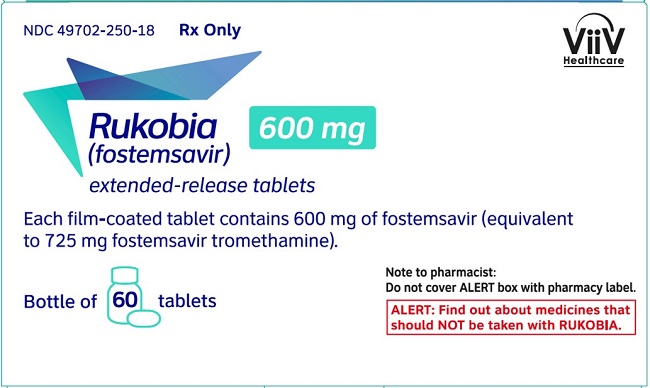
Rukobia fostemsavir tromethamine 600 mg Tablet, Film Coated, Extended Release, 60-count
🆔 Identity & classification
Where does this data come from?
🏷️ RxNorm drug class
This medicine belongs to the Other antivirals class.
Where does this data come from?
🏭 Manufacturer & labeler
Where does this data come from?
🩺 Clinical
- Rukobia is designed for people who have been on HIV treatment for a long time and whose virus has become resistant to many other drugs — or who couldn't tolerate those other option...
- Why am I being prescribed Rukobia instead of one of the more common HIV medications?
- Yes, you can take it either way — with or without food. That said, a very high-fat meal can noticeably increase the amount of medicine that gets into your bloodstream, so try to be...
- Can I take Rukobia with or without food?
Patient education
Supplement & herbal interactions
Some supplements/herbs that may interact with Fostemsavir Tromethamine — tap one for details:
Where does this data come from?
Ask a licensed pharmacist directly — free, answered by our team.
🧪 Inactive Ingredients / Excipients
Inactive ingredients, also called excipients, are components of the drug product other than the active ingredient. They may include fillers, dyes, coatings, preservatives, flavors, or other formulation ingredients.
💡 Tap an ingredient (hover on desktop) to see what it is and why it’s used.
-
UNII 1K09F3G675
Ferric oxide red is an inorganic iron compound used as a colorant in medicines. It gives tablets, capsules, or other dosage forms a red or reddish tint for identification and appearance.
-
UNII EX438O2MRT
Ferric oxide yellow is a naturally occurring iron compound used as a colorant in medications. It gives tablets, capsules, and other forms a yellow or golden hue for identification and appearance.
-
UNII 9XZ8H6N6OH
A plant-based cellulose derivative used as a binder to hold tablet ingredients together, a thickener in liquids, and a coating agent to control how fast the medicine dissolves.
-
UNII 3NXW29V3WO
Hypromellose is a plant-based thickener made from cellulose. It's used in medicines as a binder to hold ingredients together, a coating for tablets, and a thickener for liquids.
-
UNII 70097M6I30
Magnesium stearate is a salt made from magnesium and stearic acid, a fatty substance. It's used in tablets and capsules as a lubricant and glidant to help ingredients flow smoothly during manufacturing and prevent sticking.
-
UNII 3WJQ0SDW1A
Polyethylene glycol is a synthetic liquid or solid polymer used in medicines as a solvent, lubricant, and humectant. It helps dissolve active ingredients, reduces friction during manufacturing, and retains moisture in the final product.
-
UNII 532B59J990
Polyvinyl alcohol is a synthetic polymer made from plant-derived materials. It's used as a binder to hold ingredients together, a film-former in coatings, and a thickener in liquid formulations.
-
UNII ETJ7Z6XBU4
Silicon dioxide is a naturally occurring mineral used as a glidant and anti-caking agent. It helps powder ingredients flow smoothly and prevents clumping during manufacturing and storage.
-
UNII 7SEV7J4R1U
A powder made from a naturally occurring mineral. In medicines, talc works as a glidant and anti-caking agent, helping tablets and capsules flow smoothly during manufacturing and preventing clumping.
-
UNII 15FIX9V2JP
Titanium dioxide is a bright white mineral powder commonly used as a colorant and opacifying agent. It makes pills and tablets white or lighter in color and helps make coatings non-transparent.
10 inactive ingredients listed in the exact product block matched to this NDC.
Where does this data come from?
ingredient classCode="IACT" elements from the exact product block matched by this NDC. Label-section narrative from DailyMed / the openFDA label index is shown separately when available.Inactive ingredient FAQ
Are inactive ingredients the same for every manufacturer?
Why might an inactive ingredient be missing?
Can inactive ingredients matter?
💲 Pricing
A drug doesn't have one price. Each row is a different public payment system, and none is what you'd pay at the counter — that depends on your insurance. The ⓘ on each row explains what it measures.
| Price system | Per ea | Per package |
|---|---|---|
| Retail pharmacies payNADAC · weekly | $156.836 | $9,410.16 / 60 tablets |
| Medicaid paysCMS SDUD · 12 mo | $150.21 | $9,012.49 / 60 tablets |
| Medicare drug plans payPart D · Q2 2026 | $155.62 | $9,337.15 / 60 tablets |
Where does this data come from?
🔁 Therapeutic equivalents
| Product | Labeler | Pack | NADAC/unit | TE | Status | Price vs. this |
|---|---|---|---|---|---|---|
| Rukobia 600 mgthis 49702-0250-18 | ViiV | 60 tablets | $156.836 | — | Availability likely | — |
Where does this data come from?
⏳ Availability & generic status
We did not find an FDA-approved generic match for this exact strength, form and route. Patent/protection dates below may affect future generic timing.
Why the date isn’t exact: Generic timing can change because patents may be challenged, settled, licensed, added, removed, or worked around with a narrower label — and FDA approval does not always mean a pharmacy can get the generic today.
🛈 What do these terms mean?
- Patent
- Legal protection listed in the Orange Book that may delay generic approval or launch. Issued by the U.S. Patent & Trademark Office.
- Substance patent
- Covers the active drug molecule itself — the hardest to design around. A generic generally can’t launch until it expires.
- Formulation (product) patent
- Covers a specific formulation or dosage form. A generic can sometimes work around it with a different formulation.
- Method-of-use patent
- A patent covering one specific approved use of the drug — not necessarily the whole molecule. A generic can sometimes launch with a “skinny label” that carves out the protected use and keeps the others.
- Skinny label
- A generic label that omits a still-patented use when the FDA allows it — letting a generic reach the market for the unprotected uses.
- Exclusivity
- FDA-granted marketing protection, separate from patents — e.g. 5-yr new chemical entity, 7-yr orphan drug, or a +6-month pediatric extension.
- Paragraph IV
- A generic applicant’s formal challenge to a listed patent. It can potentially lead to earlier generic entry, but often involves litigation or a settlement.
- RLD / RS
- Reference Listed Drug — the brand product the FDA uses as the reference for generic applications. Reference Standard — the product the FDA expects generics to compare against in bioequivalence testing.
- TE / AB rating
- FDA therapeutic-equivalence rating. An AB rating generally means the FDA considers a generic therapeutically equivalent to — and substitutable for — the brand.
- LOE (loss of exclusivity)
- The latest patent or exclusivity currently listed — the loss-of-exclusivity / latest-listed-protection date shown on this page. Paragraph-IV challenges and settlements can move the real date earlier; FDA approval and a manufacturer’s decision to market can move it later.
Built from the FDA Orange Book. The bars above are scaled to each protection’s expiry; the red LOE marker is the last one to lapse.
| Patent | Type | Use code | Expires |
|---|---|---|---|
| US 7745625 ↗ | Drug substance | — | Nov 19, 2027 |
| US 8168615 ↗ | Drug product | — | Jul 13, 2029 |
Is there a generic version of RUKOBIA ER 600 MG TABLET?
The FDA approved a generic — why can’t I get it at my pharmacy yet?
Why do different websites show different generic release dates?
What does “FDA listed” mean?
What does a patent or protection date mean here?
What does “current Orange Book estimate” mean?
Can a generic come out before the last patent expires?
Can a generic come out after the listed dates?
What is the difference between patents and exclusivity?
Why are there multiple patent dates?
Where does this data come from?
🗺️ Medicaid utilization & spend
📊 Medicare Part D spend CMS · PART D · 2026 (Q1)
🔬 Reported adverse events (FAERS)
Top reported reactions
Reporter sex
Where does this data come from?
📦 Packaging — all sizes for this product
| Package NDC | Description | Marketing start | Status |
|---|---|---|---|
| 49702-0250-18 You're viewing this | 1 BOTTLE in 1 CARTON (49702-250-18) / 60 TABLET, FILM COATED, EXTENDED RELEASE in 1 BOTTLE | 2020-07-02 | Active |
📄 Full prescribing information FDA SPL
🎯 Indications and Usage ▾
1 INDICATIONS AND USAGE RUKOBIA, in combination with other antiretroviral(s), is indicated for the treatment of human immunodeficiency virus type 1 (HIV-1) infection in heavily treatment-experienced adults with multidrug-resistant HIV-1 infection failing their current antiretroviral regimen due to resistance, intolerance, or safety considerations [see Clinical Studies ( 14 )]. RUKOBIA, a human immunodeficiency virus type 1 (HIV-1) gp120-directed attachment inhibitor, in combination with other antiretroviral(s), is indicated for the treatment of HIV-1 infection in heavily treatment-experienced adults with multidrug-resistant HIV-1 infection failing their current antiretroviral regimen due to resistance, intolerance, or safety considerations.
( 1 , 12.4 )
⏱️ Dosage and Administration ▾
2 DOSAGE AND ADMINISTRATION The recommended dosage of RUKOBIA is one 600-mg tablet taken orally twice daily with or without food [see Clinical Pharmacology ( 12.3 )] . Swallow tablets whole. Do not chew, crush, or split tablets. One tablet taken twice daily with or without food. ( 2 )
💊 Dosage Forms and Strengths ▾
3 DOSAGE FORMS AND STRENGTHS Each RUKOBIA extended-release tablet contains 600 mg of fostemsavir (equivalent to 725 mg of fostemsavir tromethamine). The tablets are beige, oval, film-coated, biconvex tablets, debossed with “SV 1V7” on one side. Extended-release tablets: 600 mg ( 3 )
⛔ Contraindications ▾
4 CONTRAINDICATIONS RUKOBIA is contraindicated in patients: • with previous hypersensitivity to fostemsavir or any of the components of RUKOBIA. • coadministered strong cytochrome P450 (CYP)3A inducers, as significant decreases in temsavir (the active moiety of fostemsavir) plasma concentrations may occur which may result in loss of virologic response. These drugs include, but are not limited to [see Drug Interactions ( 7 ), Clinical Pharmacology ( 12.3 )] : o Androgen receptor inhibitor: Enzalutamide o Anticonvulsants: Carbamazepine, phenytoin o Antimycobacterial: Rifampin o Antineoplastic: Mitotane o Herbal product: St John’s wort ( Hypericum perforatum ) • Hypersensitivity to fostemsavir or any of the components of the formulation.
( 4 ) • Coadministration with strong cytochrome P450 (CYP)3A inducers as significant decreases in temsavir plasma concentrations may occur, which may result in loss of virologic response. ( 4 )
⚠️ Warnings and Cautions ▾
5 WARNINGS AND PRECAUTIONS • Immune reconstitution syndrome has been reported in patients treated with combination antiretroviral therapies. ( 5.1 ) • QTc prolongation: Use RUKOBIA with caution in patients with a history of QTc prolongation or with relevant pre-existing cardiac disease or who are taking drugs with a known risk of Torsade de Pointes. ( 5.2 ) • Elevations in hepatic transaminases in patients with hepatitis B (HBV) or C (HCV) virus co-infection: Elevations in hepatic transaminases were observed in a greater proportion of subjects with HBV and/or HCV co-infection compared with those with HIV mono-infection.
( 5.3 )
5.1Immune Reconstitution Syndrome Immune reconstitution syndrome has been reported in patients treated with combination antiretroviral therapy, including RUKOBIA [see Adverse Reactions ( 6.1 )] . During the initial phase of combination antiretroviral treatment, patients whose immune systems respond may develop an inflammatory response to indolent or residual opportunistic infections (such as Mycobacterium avium infection, cytomegalovirus, Pneumocystis jirovecii pneumonia [PCP], or tuberculosis), which may necessitate further evaluation and treatment.
Autoimmune disorders (such as Graves’ disease, polymyositis, Guillain-Barré syndrome, and autoimmune hepatitis) have also been reported to occur in the setting of immune reconstitution; however, the time to onset is more variable and can occur many months after initiation of treatment.
5.2QTc Prolongation with Higher than Recommended Dosages RUKOBIA at 2,400 mg twice daily, 4 times the recommended daily dose, has been shown to significantly prolong the QTc interval of the electrocardiogram [see Drug Interactions ( 7.4 ), Clinical Pharmacology ( 12.2 )] . RUKOBIA should be used with caution in patients with a history of QTc interval prolongation, when coadministered with a drug with a known risk of Torsade de Pointes, or in patients with relevant pre-existing cardiac disease. Elderly patients may be more susceptible to drug-induced QT interval prolongation.
5.3Elevations in Hepatic Transaminases in Patients with Hepatitis B or C Virus Co-Infection Monitoring of liver chemistries is recommended in patients with hepatitis B (HBV) and/or C (HCV) virus co-infection. Elevations in hepatic transaminases were observed in a greater proportion of subjects with HBV and/or HCV co-infection compared with those with HIV mono-infection. Some of these elevations in transaminases were consistent with hepatitis B reactivation, particularly in the setting where anti-hepatitis therapy was withdrawn [see Adverse Reactions ( 6.1 )] .
Particular diligence should be applied in initiating or maintaining effective hepatitis B therapy (referring to treatment guidelines) when starting RUKOBIA in patients co-infected with hepatitis B.
5.4Risk of Adverse Reactions or Loss of Virologic Response Due to Drug Interactions The concomitant use of RUKOBIA and certain other drugs may result in known or potentially significant drug interactions, some of which may lead to [see Contraindications ( 4 ), Warnings and Precautions ( 5.2 ), Drug Interactions ( 7.3 ), Clinical Pharmacology ( 12.3 )] : • Loss of therapeutic effect of RUKOBIA and possible development of resistance due to reduced exposure of temsavir. • Possible prolongation of QTc interval from increased exposure to temsavir [see Drug Interactions ( 7.4 )] .
See Table 3 for steps to prevent or manage these possible and known significant drug interactions, including dosing recommendations. Consider the potential for drug interactions prior to and during therapy with RUKOBIA, review concomitant medications during therapy with RUKOBIA, and monitor for the adverse reactions associated with the concomitant drugs.
🤒 Adverse Reactions ▾
6 ADVERSE REACTIONS The following adverse reactions are discussed in greater detail in other sections of the labeling: • Immune reconstitution syndrome [see Warnings and Precautions ( 5.1 )] . • QTc prolongation [see Warnings and Precautions ( 5.2 )] . • Elevations in hepatic transaminases in patients with hepatitis B or C virus co-infection [see Warnings and Precautions ( 5.3 )]. The most common adverse reaction (all grades) observed in ≥5% of subjects was nausea. ( 6.1 ) To report SUSPECTED ADVERSE REACTIONS, contact ViiV Healthcare at 1-877-844-8872 or FDA at 1-800-FDA-1088 or www.fda.gov/medwatch.
6.1Clinical Trials Experience Because clinical trials are conducted under widely varying conditions, adverse reaction rates observed in the clinical trials of a drug cannot be directly compared with rates in the clinical trials of another drug and may not reflect the rates observed in practice. A total of 620 subjects with HIV-1 infection received at least one dose of RUKOBIA as part of a controlled clinical trial. The primary safety assessment of RUKOBIA is based on 96 weeks of data from a Phase 3 partially randomized, international, multicenter, double-blind, placebo-controlled trial (BRIGHTE) conducted in 371 heavily treatment-experienced adult subjects [see Clinical Studies ( 14 )] .
In the randomized cohort, 203 subjects received at least one dose of blinded RUKOBIA 600 mg twice daily and 69 subjects received placebo in addition to their current failing regimen for 8 days of functional monotherapy. Beyond Day 8, all randomized subjects except one received open-label RUKOBIA 600 mg twice daily plus an optimized background therapy (OBT). In the nonrandomized cohort, 99 subjects received open-label RUKOBIA 600 mg twice daily plus OBT from Day 1 onward.
A total of 370 subjects (271 randomized and 99 nonrandomized) received at least 1 dose of RUKOBIA 600 mg twice daily in the BRIGHTE trial. Overall, most (81%) of the adverse reactions reported with RUKOBIA were mild or moderate in severity. The proportion of subjects who discontinued treatment with RUKOBIA due to an adverse event was 7% at Week 96 (randomized: 5% and nonrandomized: 12%).
The most common adverse events leading to discontinuation were related to infections (3% of subjects receiving RUKOBIA). Serious drug reactions occurred in 3% of subjects and included 3 cases of severe immune reconstitution inflammatory syndrome. Data from the randomized cohort form the basis of the safety assessment of RUKOBIA because the presence of significant comorbid illness in the nonrandomized cohort (associated with advanced HIV infection) may confound the assessment of causality.
Adverse reactions (all grades) reported in ≥2% of subjects in the randomized cohort in the Week 96 analysis are listed in Table 1 . Table 1. Adverse Reactions a (Grades 1 to 4) Reported in ≥2% of Subjects Receiving RUKOBIA plus OBT in the BRIGHTE Trial, Randomized Cohort (Week 96 Analysis) OBT = Optimized background therapy. a Frequencies of adverse reactions are based on all treatment-emergent adverse events attributed to study drug by the investigator. b Of the 272 subjects enrolled in the randomized cohort, 1 subject who received placebo withdrew from the trial prior to receiving RUKOBIA in the open-label phase of the trial. c Includes pooled terms: abdominal discomfort, abdominal pain, and abdominal pain upper. d Includes pooled terms: fatigue and asthenia. e Includes pooled terms: rash, rash generalized, rash maculo-papular, rash pruritic, and dermatitis allergic. f Includes pooled terms: insomnia, sleep deficit, sleep disorder, abnormal dreams.
Adverse Reaction RUKOBIA plus OBT (n = 271) b Nausea 10% Diarrhea 4% Headache 4% Abdominal pain c 3% Dyspepsia 3% Fatigue d 3% Rash e 3% Sleep disturbance f 3% Immune Reconstitution Inflammatory Syndrome 2% Somnolence 2% Vomiting 2% Adverse reactions in the nonrandomized cohort were similar to those observed in the randomized cohort. The most common adverse reactio…
🔄 Drug Interactions ▾
7 DRUG INTERACTIONS • See full prescribing information for complete list of significant drug interactions. ( 4 , 7 ) • Doses of oral contraceptives should not contain more than 30 mcg of ethinyl estradiol per day. ( 7.3 )
7.1Potential for RUKOBIA to Affect Other Drugs Temsavir may increase plasma concentrations of grazoprevir or voxilaprevir to a clinically relevant extent due to organic anion transporting polypeptide (OATP)1B1/3 inhibition [see Drug Interactions ( 7.3 )] . When RUKOBIA was coadministered with oral contraceptives, temsavir increased concentrations of ethinyl estradiol ( Table 3 ) [see Drug Interactions ( 7.3 ), Clinical Pharmacology ( 12.3 )] .
7.2Potential for Other Drugs to Affect RUKOBIA Coadministration of RUKOBIA with rifampin, a strong CYP3A4 inducer, significantly decreases temsavir plasma concentrations. The use of RUKOBIA with drugs that are strong inducers of CYP3A4 can significantly decrease temsavir plasma concentrations which may lead to loss of virologic response [see Contraindications ( 4 ), Drug Interactions ( 7.3 ), Clinical Pharmacology ( 12.3 )] .
7.3Established and Other Potentially Significant Drug Interactions Information regarding potential drug interactions with RUKOBIA is provided in Table 3 . These recommendations are based on either drug interaction trials or predicted interactions due to the expected magnitude of interaction and potential for serious adverse events or loss of efficacy [see Contraindications ( 4 ), Warnings and Precautions ( 5.4 ), Clinical Pharmacology ( 12.3 )] . Table 3.
Established and Other Potentially Significant Drug Interactions a ↑ = Increase; ↓ = Decrease; HCV = Hepatitis C virus. a This table is not all inclusive. b See Clinical Pharmacology ( 12.3 ) for magnitude of interaction. Concomitant Drug Class: Drug Name Effect on Concentration of Temsavir and/or Concomitant Drug Clinical Comment Androgen receptor inhibitor: Enzalutamide ↓Temsavir Coadministration is contraindicated due to potential for loss of therapeutic effect to RUKOBIA [see Contraindications ( 4 )] . Anticonvulsants: Carbamazepine Phenytoin ↓Temsavir Antimycobacterial: Rifampin b ↓Temsavir Antineoplastic: Mitotane ↓Temsavir Herbal product: St John’s wort ( Hypericum perforatum ) ↓Temsavir Hepatitis C virus direct-acting antivirals: Grazoprevir Voxilaprevir ↑Grazoprevir ↑Voxilaprevir Coadministration may increase exposures of grazoprevir or voxilaprevir; however, the magnitude of increase in exposure is unknown.
Increased exposures of grazoprevir may increase the risk of ALT elevations. Use an alternative HCV regimen if possible. Oral contraceptive: Ethinyl estradiol b ↑Ethinyl estradiol Ethinyl estradiol daily dose should not exceed 30 mcg .
Caution is advised particularly in patients with additional risk factors for thromboembolic events. Statins: Rosuvastatin b Atorvastatin Fluvastatin Pitavastatin Simvastatin ↑Rosuvastatin ↑Atorvastatin ↑Fluvastatin ↑Pitavastatin ↑Simvastatin Use the lowest possible starting dose for statins and monitor for statin-associated adverse events.
7.4Drugs that Prolong QT Interval Coadministration of RUKOBIA with a drug with a known risk of Torsade de Pointes may increase the risk of Torsade de Pointes [see Warnings and Precautions ( 5.2 ), Clinical Pharmacology ( 12.2 )] . Use RUKOBIA with caution when coadministered with drugs with a known risk of Torsade de Pointes.
7.5Drugs without Clinically Significant Interactions with RUKOBIA Based on drug interaction study results, the following drugs can be coadministered with RUKOBIA without a dose adjustment: atazanavir/ritonavir, buprenorphine/naloxone, cobicistat, darunavir/cobicistat, darunavir/ritonavir with and without etravirine, etravirine, famotidine, maraviroc, methadone, norethindrone, raltegravir, ritonavir, rifabutin with and without ritonavir, tenofovir disoproxil fumarate [see Clinical Pharmacology ( 12.3 )] .
👥 Use in Specific Populations ▾
8 USE IN SPECIFIC POPULATIONS
8.1Pregnancy Pregnancy Exposure Registry There is a pregnancy exposure registry that monitors pregnancy outcomes in individuals exposed to RUKOBIA during pregnancy. Healthcare providers are encouraged to register patients by calling the Antiretroviral Pregnancy Registry (APR) at 1-800-258-4263. Risk Summary There are insufficient human data on the use of RUKOBIA during pregnancy to adequately assess a drug-associated risk of birth defects and miscarriage.
In animal reproduction studies, oral administration of fostemsavir to pregnant rats and rabbits during organogenesis resulted in no adverse developmental effects at clinically relevant temsavir exposures (see Data) . The background risk for major birth defects and miscarriage for the indicated population is unknown. The background rate for major birth defects in a U.S. reference population of the Metropolitan Atlanta Congenital Defects Program (MACDP) is 2.7%.
The estimated background rate of miscarriage in clinically recognized pregnancies in the U.S. general population is 15% to 20%. Data Animal Data: Fostemsavir was administered orally to pregnant rats (50, 200, 600 mg/kg/day) and rabbits (25, 50, or 100 mg/kg/day) during Gestation Days 6 to 15 (rat) and 7 to 19 (rabbit). No fetal abnormalities were observed at temsavir exposures of approximately 180 (rat) and 30 (rabbit) times those in humans at the maximum recommended human dose (MRHD).
In rabbits, increased embryonic death associated with maternal toxicity was observed at temsavir exposures approximately 60 times those in humans at the MRHD. In a separate rat study conducted at drug exposures approximately 200 times those in humans at the MRHD, fetal abnormalities (cleft palate, open eyes, shortened snout, microstomia, misaligned mouth/jaw, and protruding tongue) and reductions in fetal body weights occurred in the presence of maternal toxicity. In a rat pre- and postnatal development study, fostemsavir was administered orally at doses of 10, 50, or 300 mg/kg/day from Gestation Day 6 through Lactation Day 20.
Reduced neonatal survival (7 to 14 days after birth) in the absence of other adverse fetal or neonatal effects was observed at maternal temsavir exposures approximately 130 times those in humans at the MRHD. No adverse fetal or neonatal effects were observed at maternal temsavir exposures approximately 35 times those in humans at the MRHD. In a distribution study in pregnant rats, fostemsavir-related drug materials (i.e., temsavir and/or temsavir-derived metabolites) crossed the placenta and were detectable in fetal tissue.
8.2Lactation Risk Summary It is not known whether RUKOBIA is present in human breast milk, affects human milk production, or has effects on the breastfed infant. When administered to lactating rats, fostemsavir-related drug was present in rat milk (see Data) . When a drug is present in animal milk, it is likely that the drug will be present in human milk.
Potential risks of breastfeeding include: (1) HIV-1 transmission (in HIV-1–negative infants), (2) developing viral resistance (in HIV-1–positive infants), and (3) adverse reactions in a breastfed infant similar to those seen in adults. Data In a distribution study, fostemsavir-related drug materials (i.e., temsavir and/or temsavir-derived metabolites) were excreted in rat milk following a single dose of fostemsavir administered to lactating rats 7 to 9 days postpartum. In the pre- and postnatal development study in rats, temsavir was present in milk at concentrations similar to those measured in maternal plasma, as determined 11 days postpartum.
In addition, lactational exposure was associated with reduced offspring survival at maternal temsavir exposures not thought to be clinically relevant.
8.4Pediatric Use The safety and effectiveness of RUKOBIA have not been established in pediatric patients.
8.5Geriatric Use Clinical trials of RUKOBIA did not include sufficient numbers of subjects aged 65 and older to det…
🤰 Pregnancy ▾
8.1Pregnancy Pregnancy Exposure Registry There is a pregnancy exposure registry that monitors pregnancy outcomes in individuals exposed to RUKOBIA during pregnancy. Healthcare providers are encouraged to register patients by calling the Antiretroviral Pregnancy Registry (APR) at 1-800-258-4263. Risk Summary There are insufficient human data on the use of RUKOBIA during pregnancy to adequately assess a drug-associated risk of birth defects and miscarriage.
In animal reproduction studies, oral administration of fostemsavir to pregnant rats and rabbits during organogenesis resulted in no adverse developmental effects at clinically relevant temsavir exposures (see Data) . The background risk for major birth defects and miscarriage for the indicated population is unknown. The background rate for major birth defects in a U.S. reference population of the Metropolitan Atlanta Congenital Defects Program (MACDP) is 2.7%.
The estimated background rate of miscarriage in clinically recognized pregnancies in the U.S. general population is 15% to 20%. Data Animal Data: Fostemsavir was administered orally to pregnant rats (50, 200, 600 mg/kg/day) and rabbits (25, 50, or 100 mg/kg/day) during Gestation Days 6 to 15 (rat) and 7 to 19 (rabbit). No fetal abnormalities were observed at temsavir exposures of approximately 180 (rat) and 30 (rabbit) times those in humans at the maximum recommended human dose (MRHD).
In rabbits, increased embryonic death associated with maternal toxicity was observed at temsavir exposures approximately 60 times those in humans at the MRHD. In a separate rat study conducted at drug exposures approximately 200 times those in humans at the MRHD, fetal abnormalities (cleft palate, open eyes, shortened snout, microstomia, misaligned mouth/jaw, and protruding tongue) and reductions in fetal body weights occurred in the presence of maternal toxicity. In a rat pre- and postnatal development study, fostemsavir was administered orally at doses of 10, 50, or 300 mg/kg/day from Gestation Day 6 through Lactation Day 20.
Reduced neonatal survival (7 to 14 days after birth) in the absence of other adverse fetal or neonatal effects was observed at maternal temsavir exposures approximately 130 times those in humans at the MRHD. No adverse fetal or neonatal effects were observed at maternal temsavir exposures approximately 35 times those in humans at the MRHD. In a distribution study in pregnant rats, fostemsavir-related drug materials (i.e., temsavir and/or temsavir-derived metabolites) crossed the placenta and were detectable in fetal tissue.
🧒 Pediatric Use ▾
8.4Pediatric Use The safety and effectiveness of RUKOBIA have not been established in pediatric patients.
🧓 Geriatric Use ▾
8.5Geriatric Use Clinical trials of RUKOBIA did not include sufficient numbers of subjects aged 65 and older to determine whether they respond differently from younger subjects. In general, caution should be exercised in administration of RUKOBIA in elderly patients reflecting greater frequency of decreased hepatic, renal, or cardiac function, and of concomitant disease or other drug therapy [see Clinical Pharmacology ( 12.3 )]. Elderly patients may be more susceptible to drug-induced QT interval prolongation [see Warnings and Precautions ( 5.2 )].
🆘 Overdosage ▾
10 OVERDOSAGE There is no known specific treatment for overdose with RUKOBIA. If overdose occurs, the patient should be monitored and standard supportive treatment applied as required, including monitoring of vital signs and ECG (QT interval), as well as observation of the clinical status of the patient. As fostemsavir is highly bound to plasma proteins, it is unlikely that it will be significantly removed by dialysis.
🧬 Clinical Pharmacology ▾
12 CLINICAL PHARMACOLOGY
12.1Mechanism of Action RUKOBIA is an HIV-1 antiretroviral agent [see Microbiology ( 12.4 )].
12.2Pharmacodynamics Cardiac Electrophysiology At therapeutic doses, RUKOBIA does not prolong the QT interval to any clinically relevant extent. At 4 times the recommended dose, the mean (upper 90% confidence interval) QTcF increase was 11.2 milliseconds (13.3 milliseconds). The observed increase in QTcF was temsavir concentration-dependent [see Warnings and Precautions ( 5.2 )] .
Exposure-Response Relationship In the Phase 3 trial evaluating the recommended dosing regimen of RUKOBIA (600 mg twice daily) in subjects with multidrug resistant HIV-1 infection on their failing regimen, no relationship was observed between plasma temsavir C trough and change in plasma HIV-1 RNA from Day 1 to Day 8.
12.3Pharmacokinetics Fostemsavir is a prodrug of temsavir, its active moiety. Fostemsavir was generally not detectable in plasma following oral administration. However, temsavir was readily absorbed ( Table 4 ).
Following oral administration, increases in plasma temsavir exposure (C max and AUC tau ) appeared dose proportional or slightly greater than dose proportional, over the range of 600 mg to 1,800 mg of RUKOBIA. The pharmacokinetics of temsavir following administration of RUKOBIA are similar between healthy and HIV-1–infected subjects. Absorption, Distribution, Metabolism, and Excretion The pharmacokinetic properties of temsavir following administration of RUKOBIA are provided in Table 4 .
The multiple-dose pharmacokinetic parameters are provided in Table 5 . Table 4. Pharmacokinetic Properties of Temsavir HSA = Human serum albumin; UGT = Uridine diphosphate glucuronosyl transferases. a Dosing in absolute bioavailability study: single-dose administration of fostemsavir extended-release tablet 600 mg followed by single IV infusion of [ 13 C] temsavir 100 mcg. b Geometric mean ratio (fed/fasted) in pharmacokinetic parameters and (90% confidence interval).
Standard meal = ~423 kcal, 36% fat, 47% carbohydrates, and 17% protein. High-calorie/high-fat meal = ~985 kcal, 60% fat, 28% carbohydrates, and 12% protein. c Volume of distribution at steady state (Vss) following IV administration. d Apparent clearance. e In vitro studies have shown that temsavir is biotransformed into 2 predominant circulating inactive metabolites: BMS-646915 (hydrolysis metabolite) and BMS-930644 (N-dealkylated metabolite). f Dosing in mass balance study: single-dose administration of [ 14 C] fostemsavir oral solution 300 mg containing 100 microCi (3.7 MBq) of total radioactivity.
Absorption % Absolute bioavailability a
26.9 T max (h)
2.0Effect of standard meal (relative to fasting) b AUC ratio =1.10 (0.95, 1.26) Effect of high-fat meal (relative to fasting) b AUC ratio =1.81 (1.54, 2.12) Distribution % Plasma protein binding 88.4 (primarily to HSA) Blood-to-plasma ratio
0.74 Steady-state volume of distribution (Vss, L) c
29.5Elimination Major route of elimination Metabolism Clearance (CL and CL/F d , L/h) 17.9 and
66.4Half-life (h) 11 Metabolism Metabolic pathways e Hydrolysis (esterases) [36.1% of oral dose] Oxidation (CYP3A4) [21.2% of oral dose] UGT [<1% of oral dose] Excretion % of dose excreted in urine (unchanged drug) f 51 (<2) % of dose excreted in feces (unchanged drug) f 33 (1.1) Table 5. Multiple-Dose Pharmacokinetic Parameters of Temsavir CV = Coefficient of variation; C max = Maximum concentration; AUC = Area under the time concentration curve; C 12 = Concentration at 12 hours. a Based on population pharmacokinetic analyses in heavily treatment-experienced adult subjects with HIV-1 infection receiving 600 mg of RUKOBIA twice daily with or without food in combination with other antiretroviral drugs.
Parameter Mean (CV%) Temsavir a C max (ng/mL) 1,770 (39.9) AUC tau (ng.h/mL) 12,900 (46.4) C trough or C 12 (ng/mL) 478 (81.5) Specific Populations No clinically significant differences in the pharmacokinetics of temsavir were obser…
🧬 Mechanism of Action ▾
12.1Mechanism of Action RUKOBIA is an HIV-1 antiretroviral agent [see Microbiology ( 12.4 )].
📦 How Supplied / Storage and Handling ▾
16 HOW SUPPLIED/STORAGE AND HANDLING RUKOBIA extended-release tablets, 600 mg, are beige, oval, film-coated, biconvex tablets debossed with “SV 1V7” on one side. Bottle of 60 tablets with child-resistant closure. NDC 49702-250-18. Store at 20°C to 25°C (68°F to 77°F); excursions permitted between 15°C and 30°C (59°F and 86°F) [See USP Controlled Room Temperature]. RUKOBIA extended-release tablets may have a slight vinegar-like odor.
📋 Description ▾
11 DESCRIPTION Fostemsavir tromethamine is a prodrug of temsavir, an HIV-1 gp120-directed attachment inhibitor. The chemical name of fostemsavir tromethamine is (3-((4-benzoyl-1-piperazinyl)(oxo)acetyl)-4-methoxy-7-(3-methyl-1 H -1,2,4-triazol-1-yl)-1 H -pyrrolo[2,3-c]pyridin-1-yl)methyl dihydrogen phosphate, 2-amino-2-(hydroxymethyl)-1,3-propanediol (1:1). The empirical formula is C 25 H 26 N 7 O 8 P•C 4 H 11 NO 3 .
The molecular weight is 704.6 g/mol (583.5 as free acid). It has the following structural formula: Fostemsavir tromethamine is a white powder and is soluble to greater than 250 mg/mL in aqueous solutions with a pH greater than 3.7. RUKOBIA extended-release tablets are for oral administration.
Each film-coated tablet contains 600 mg of fostemsavir (equivalent to 725 mg fostemsavir tromethamine), and the following inactive ingredients: colloidal silicon dioxide, hydroxypropyl cellulose, hypromellose, and magnesium stearate. The tablet film-coating contains the inactive ingredients iron oxide red, iron oxide yellow, polyethylene glycol, polyvinyl alcohol, talc, and titanium dioxide. Fostemsavir tromethamine chemical structure
💬 Information for Patients ▾
17 PATIENT COUNSELING INFORMATION Advise the patient to read the FDA-approved patient labeling (Patient Information). Hypersensitivity Reactions Inform patients that if they have had a hypersensitivity reaction to RUKOBIA or any of its components, they should not take RUKOBIA [see Contraindications ( 4 )] . Immune Reconstitution Syndrome Advise patients to inform their healthcare provider immediately of any signs and symptoms of infection, as inflammation from previous infection may occur soon after combination antiretroviral therapy, including when RUKOBIA is started [see Warnings and Precautions ( 5.1 )].
QTc Interval Prolongation Advise patients that RUKOBIA may produce changes in their electrocardiogram (i.e., QT prolongation). Instruct patients to consult their healthcare provider if they experience symptoms such as dizziness, lightheadedness, abnormal heart rhythm, or loss of consciousness [see Warnings and Precautions ( 5.2 )] . Patients with Hepatitis B or C Virus Co-Infection Advise patients that it is recommended to have laboratory testing and to take medications for HBV or HCV as prescribed [see Warnings and Precautions ( 5.3 )] .
Drug Interactions RUKOBIA may interact with other drugs; therefore, advise patients to report to their healthcare provider the use of any other prescription or nonprescription medication or herbal products, including St. John’s wort [see Contraindications ( 4 ), Warnings and Precautions ( 5.4 ), Drug Interactions ( 7 )] . Pregnancy Registry Inform patients that there is an antiretroviral pregnancy registry to monitor fetal outcomes in those exposed to RUKOBIA during pregnancy [see Use in Specific Populations ( 8.1 )] .
Lactation Inform individuals with HIV-1 infection that the potential risks of breastfeeding include: (1) HIV-1 transmission (in HIV-1–negative infants), (2) developing viral resistance (in HIV-1–positive infants), and (3) adverse reactions in a breastfed infant similar to those seen in adults [see Use in Specific Populations ( 8.2 )] . Potential Odor of Tablets RUKOBIA tablets may have a slight vinegar-like odor [see How Supplied/Storage and Handling ( 16 )] . Missed Dosage Advise patients to avoid missing doses as it can result in development of resistance.
Instruct patients that if they miss a dose of RUKOBIA, to take it as soon as they remember. Advise patients not to double their next dose or take more than the prescribed dose [see Dosage and Administration ( 2 )] . Trademark is owned by or licensed to the ViiV Healthcare group of companies.
Manufactured for: ViiV Healthcare Durham, NC 27701 ©2024 ViiV Healthcare group of companies or its licensor. RKB:3PI