
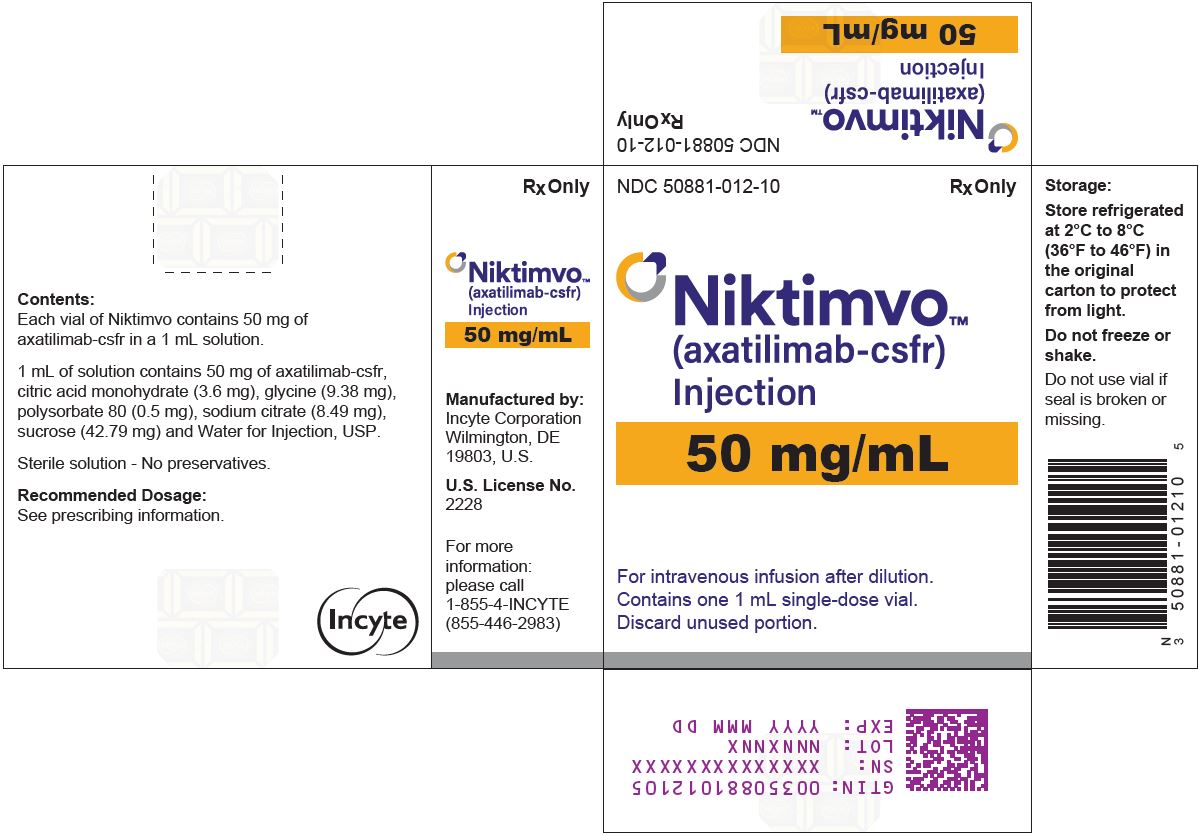
NIKTIMVO axatilimab-csfr 50 mg/mL Injection, 1 vial
🆔 Identity & classification
Where does this data come from?
🏷️ RxNorm drug class
This medicine belongs to the Colony Stimulating Factor-1 Receptor Blocker class.
Where does this data come from?
🏭 Manufacturer & labeler
Where does this data come from?
🩺 Clinical
- Chronic graft-versus-host disease, or cGVHD, happens after a stem cell or bone marrow transplant when the donor's immune cells start attacking the recipient's own body. It can affe...
- What exactly is chronic graft-versus-host disease, and why is Niktimvo used for it?
- Niktimvo is given as an IV infusion — directly into a vein — at a clinic or infusion center. Each session takes 30 minutes, and you'll come in once every two weeks. You won't be ta...
- How is Niktimvo given, and how often will I need to go in for treatment?
Patient education
Supplement & herbal interactions
Where does this data come from?
Ask a licensed pharmacist directly — free, answered by our team.
🧪 Inactive Ingredients / Excipients
Inactive ingredients, also called excipients, are components of the drug product other than the active ingredient. They may include fillers, dyes, coatings, preservatives, flavors, or other formulation ingredients.
💡 Tap an ingredient (hover on desktop) to see what it is and why it’s used.
-
3.60 mg / 1 mL
UNII 2968PHW8QP
A weak organic acid derived from citrus fruits or made through fermentation. It works as a buffer to control pH, a preservative to extend shelf life, and a flavoring agent in medications.
-
9.38 mg / 1 mL
UNII TE7660XO1C
Glycine is an amino acid used in medicines as a buffer to help stabilize pH and improve taste. It may also serve as a filler or binder to give the product proper form and consistency.
-
0.50 mg / 1 mL
UNII 6OZP39ZG8H
Polysorbate 80 is a synthetic emulsifier derived from sorbitol and oleic acid. It helps mix oil and water-based ingredients together in medications and improves how the product disperses in the body.
-
8.49 mg / 1 mL
UNII 1Q73Q2JULR
Sodium citrate is a salt derived from citric acid. It works as a buffer to maintain the medicine's pH level and may also help improve taste or act as a preservative in the formulation.
-
42.79 mg / 1 mL
UNII C151H8M554
A natural sugar derived from sugar cane or sugar beets. It's used as a sweetener, filler, and binder to improve taste, add bulk, and help hold tablet or capsule ingredients together.
-
UNII 059QF0KO0R
Water is a liquid solvent that dissolves and mixes ingredients together in liquid medicines, syrups, and injections. It helps distribute the active drug evenly throughout the product.
6 inactive ingredients listed in the exact product block matched to this NDC.
Where does this data come from?
ingredient classCode="IACT" elements from the exact product block matched by this NDC. Label-section narrative from DailyMed / the openFDA label index is shown separately when available.Inactive ingredient FAQ
Are inactive ingredients the same for every manufacturer?
Why might an inactive ingredient be missing?
Can inactive ingredients matter?
💲 Pricing
A drug doesn't have one price. Each row is a different public payment system, and none is what you'd pay at the counter — that depends on your insurance. The ⓘ on each row explains what it measures.
| Price system | Per each | Per package |
|---|---|---|
| Retail pharmacies payNADAC · weekly | Not in the retail survey — common for institutional, discontinued, or low-volume packs. | |
| Medicaid paysCMS SDUD · 12 mo | No recent Medicaid claims on file for this NDC — rare and low-volume NDCs are suppressed in the public data. | |
| Medicare drug plans payPart D · quarterly | No Part D plan price is available for this NDC in our data. | |
| Medicare Part B allowsASP · J9038 | $56.461 / J9038 unit | — |
Where does this data come from?
🧾 Billing & reimbursement
Where does this data come from?
🔁 Therapeutic equivalents
| Product | Labeler | Pack | NADAC/unit | TE | Status | Price vs. this |
|---|---|---|---|---|---|---|
| Niktimvo 50 mg/mLthis 50881-0012-10 | Incyte | 1 vial | — | — | FDA listed | — |
Where does this data come from?
⏳ Availability & biosimilar status
Biologics have no small-molecule generics; biosimilar competition is tracked in the FDA Purple Book.
Why the date isn’t exact: Biosimilar timing can change because patents may be challenged, settled, licensed, added or removed, and litigation can move the real date earlier or later.
🛈 What do these terms mean?
- Biologic patent
- A patent the reference product’s maker has publicly listed. A biosimilar generally can’t launch until these expire — unless they’re invalidated or resolved in a settlement.
- Reference-product exclusivity
- A flat 12 years of FDA market protection from the biologic’s first licensure (the BPCIA). No biosimilar can be licensed before it ends, regardless of patents.
- Interchangeable exclusivity
- The first interchangeable biosimilar can earn a period as the only interchangeable version (pharmacists can substitute it without the prescriber).
- Earliest biosimilar (LOE)
- The latest of all the dates above — the soonest a biosimilar can realistically reach the market. Litigation and settlements can move it earlier.
Biologics have no small-molecule “generics” — competition comes from FDA-licensed biosimilars, tracked in the FDA Purple Book.
| Code | What it grants | Expires |
|---|---|---|
| RefProduct | Reference-product exclusivity (12-year, BPCIA) — no biosimilar can be licensed before this date | Aug 14, 2036 |
Is there a biosimilar for this drug?
Why do different websites show different biosimilar dates?
Can a biosimilar launch before the last patent expires?
What does “current Purple Book estimate” mean?
What does “FDA listed” mean?
What does a patent or protection date mean here?
Where does this data come from?
📊 Medicare Part D spend CMS · PART D · 2026 (Q1)
🔬 Reported adverse events (FAERS)
Top reported reactions
Age at onset
Reporter sex
Serious outcomes
Where does this data come from?
📦 Packaging — all sizes for this product
| Package NDC | Description | Marketing start | Status |
|---|---|---|---|
| 50881-0012-10 You're viewing this | 1 VIAL, SINGLE-USE in 1 CARTON (50881-012-10) / 1 mL in 1 VIAL, SINGLE-USE | 2024-08-14 | Active |
🧭 About this NDC listing & data coverage
What data is (and isn’t) available for this NDC — tap to expand
| NDC identity (package / product / labeler codes) | ✓ Available |
| Labeler | ✓ Available |
| Product & package description | ✓ Available |
| Marketing category & status | ✓ Available |
| Active ingredient / dosage form / route | ✓ Available |
| FDA label (SPL via DailyMed) | ✓ Available |
| Package photos | ✓ Available |
| Inactive ingredients (structured) | ✓ Available |
| NADAC pharmacy acquisition price (CMS) | — Not published for this NDC CMS publishes NADAC only for NDCs reported in its retail-pharmacy survey. |
| Orange Book / therapeutic-equivalence data | ✓ Available |
| HCPCS J-code billing crosswalk | ✓ Available |
| Medicaid utilization (CMS SDUD) | — Not published for this NDC CMS reports utilization only for NDCs with Medicaid claims above its privacy threshold. |
Questions about this listing
Why is there no price listed?
Is the NDC printed on the package the same as the 11-digit billing NDC?
What do the three segments of this NDC mean?
Is this package still being marketed?
Who lists this product with the FDA?
Do I need a prescription for this product?
Does this product have a billing J-code?
Where does this data come from?
📄 Full prescribing information FDA SPL
🎯 Indications and Usage ▾
1 INDICATIONS AND USAGE NIKTIMVO is indicated for the treatment of chronic graft-versus-host disease (cGVHD) after failure of at least two prior lines of systemic therapy in adult and pediatric patients weighing at least 40 kg. NIKTIMVO is a colony stimulating factor-1 receptor (CSF-1R)-blocking antibody indicated for the treatment of chronic graft-versus-host disease (cGVHD) after failure of at least two prior lines of systemic therapy in adult and pediatric patients weighing at least 40 kg. ( 1 )
⏱️ Dosage and Administration ▾
2 DOSAGE AND ADMINISTRATION Administer only as an intravenous infusion over 30 minutes. ( 2.3 ) The recommended dosage of NIKTIMVO is 0.3 mg/kg (maximum 35 mg) every 2 weeks in adult and pediatric patients weighing 40 kg and above. ( 2.1 ) See Full Prescribing Information for dosage modifications for adverse reactions ( 2.2 ) and preparation and administration instructions. ( 2.3 )
2.1Recommended Dosage For patients weighing at least 40 kg, administer NIKTIMVO 0.3 mg/kg, up to a maximum dose of 35 mg, as an intravenous infusion over 30 minutes every 2 weeks until progression or unacceptable toxicity.
2.2Dosage Modifications for Adverse Reactions Monitor aspartate aminotransferase (AST), alanine aminotransferase (ALT), alkaline phosphatase (ALP), creatine phosphokinase (CPK), amylase, and lipase prior to the start of NIKTIMVO therapy, every 2 weeks for the first month, and every 1 to 2 months thereafter until abnormalities are resolved. For recommended NIKTIMVO dosage modifications due to adverse reactions, see Table 1. Table 1: Recommended NIKTIMVO Dosage Modifications for Adverse Reactions AST = aspartate aminotransferase; ALT = alanine aminotransferase; ULN = upper limit of normal; ALP = alkaline phosphatase; CPK = creatine phosphokinase.
Adverse Reaction Severity Graded per National Cancer Institute (NCI) Common Terminology Criteria for Adverse Events (CTCAE) v5. Dosage Modification Infusion-related reactions [see Warnings and Precautions ( 5.1 )] Grade 1 or 2 Temporarily interrupt the infusion until resolution or decrease infusion rate by 50%. Initiate symptomatic treatment (e.g., antihistamines and antipyretics).
For subsequent infusions, premedicate and resume the infusion at 50% of the prior infusion rate. Grade 3 or 4 Permanently discontinue NIKTIMVO. Elevation of AST or ALT (on the day of dosing) [see Adverse Reactions ( 6.1 )] Grade 3 with total bilirubin ≤ Grade 1 Withhold NIKTIMVO until recovery to Grade 2, then resume NIKTIMVO at 0.2 mg/kg (maximum 23 mg) every 2 weeks.
Elevation of AST or ALT (regardless of the time of the reaction) [see Adverse Reactions ( 6.1 )] ALT or AST ≥ 3 times ULN with total bilirubin ≥ 2 times ULN and ALP < 2 times ULN Withhold NIKTIMVO and investigate for drug-induced liver injury. If confirmed, permanently discontinue NIKTIMVO. Grade 4 Permanently discontinue NIKTIMVO.
Elevation of CPK, amylase, or lipase [see Adverse Reactions ( 6.1 )] ≥ Grade 3 If diagnostic evaluation results show no evidence of end-organ damage, continue NIKTIMVO without dose reduction. If diagnostic evaluation results show evidence of end-organ damage, permanently discontinue NIKTIMVO. Symptomatic ≥ Grade 3 Permanently discontinue NIKTIMVO.
Other Nonhematologic Adverse Reactions [see Adverse Reactions ( 6.1 )] Grade 3 Withhold NIKTIMVO until recovery to Grade 2: If delayed by ≤ 4 weeks from the planned infusion, resume NIKTIMVO at 0.2 mg/kg (maximum 23 mg) every 2 weeks. If delayed by > 4 weeks from the planned infusion, permanently discontinue NIKTIMVO. Grade 4 Permanently discontinue NIKTIMVO.
2.3Preparation and Administration NIKTIMVO 9 mg and 22 mg are available in different concentrations: 9 mg/0.18 mL 9 mg/0.9 mL 22 mg/0.44 mL 22 mg/2.2 mL (10 mg/mL) Prior to preparation, check the vial labels to confirm which concentration is being used to avoid dosing errors, including underdosage and overdosage [see Dosage Forms and Strengths ( 3 )] . Preparation Use aseptic technique to prepare NIKTIMVO. Visually inspect the vial for particulate matter and discoloration prior to dilution.
NIKTIMVO is a slightly opalescent, pale brownish yellow solution. Discard the vial if the solution is cloudy, discolored, or contains visible particles. Do not shake the vial.
Determine the dose [see Dosage and Administration ( 2.1 )] and total volume of NIKTIMVO solution needed. Dilution Withdraw the calculated volume of NIKTIMVO solution from the vial and add it into an intravenous infusion bag made of polyvinyl chloride (PVC), pol…
💊 Dosage Forms and Strengths ▾
3 DOSAGE FORMS AND STRENGTHS Injection: slightly opalescent, pale brownish yellow solution available as: 9 mg/0.18 mL in a single-dose vial. 9 mg/0.9 mL in a single-dose vial. 22 mg/0.44 mL in a single-dose vial.
22 mg/2.2 mL (10 mg/mL) in a single-dose vial. Injection : 9 mg/0.18 mL solution in a single-dose vial. ( 3 ) 9 mg/0.9 mL solution in a single-dose vial.
( 3 ) 22 mg/0.44 mL solution in a single-dose vial. ( 3 ) 22 mg/2.2 mL (10 mg/mL) solution in a single-dose vial. ( 3 )
⛔ Contraindications ▾
4 CONTRAINDICATIONS None. None. ( 4 )
⚠️ Warnings and Cautions ▾
5 WARNINGS AND PRECAUTIONS Infusion-Related Reactions: Interrupt or slow the rate of infusion or permanently discontinue NIKTIMVO based on severity of reaction. ( 2.2 , 5.1 ) Embryo-Fetal Toxicity: May cause fetal harm. Advise females of reproductive potential of the potential risk to a fetus and to use effective contraception. ( 5.2 , 8.1 , 8.3 )
5.1Infusion-Related Reactions NIKTIMVO can cause infusion-related reactions. Infusion-related reactions, including hypersensitivity reactions, occurred in 18% of patients who received NIKTIMVO in the clinical trial (AGAVE-201), with Grade 3 or 4 reactions in 1.3% [see Adverse Reactions ( 6.1 )] . Premedicate with an antihistamine and an antipyretic for patients who have previously experienced an infusion-related reaction to NIKTIMVO [see Dosage and Administration ( 2.2 )] .
Monitor patients for signs and symptoms of infusion-related reactions, including fever, chills, rash, flushing, dyspnea, and hypertension. Interrupt or slow the rate of infusion or permanently discontinue NIKTIMVO based on severity of the reaction [see Dosage and Administration ( 2.2 )] .
5.2Embryo-Fetal Toxicity Based on its mechanism of action, NIKTIMVO may cause fetal harm when administered to a pregnant woman. Advise pregnant women of the potential risk to the fetus. Advise females of reproductive potential to use effective contraception during treatment with NIKTIMVO and for 30 days after the last dose [see Use in Specific Populations ( 8.1 , 8.3 )] .
🤒 Adverse Reactions ▾
6 ADVERSE REACTIONS The following adverse reactions are described elsewhere in the labeling. Infusion-Related Reactions [see Warnings and Precautions ( 5.1 )] The most common (≥ 15%) adverse reactions, including laboratory abnormalities, are increased AST, infection (pathogen unspecified), increased ALT, decreased phosphate, decreased hemoglobin, viral infection, increased GGT, musculoskeletal pain, increased lipase, fatigue, increased amylase, increased calcium, increased CPK, increased ALP, nausea, headache, diarrhea, cough, bacterial infection, pyrexia, and dyspnea.
( 6.1 ) To report SUSPECTED ADVERSE REACTIONS, contact Incyte Corporation at 1-855-463-3463 or FDA at 1-800-FDA-1088 or www.fda.gov/medwatch .
6.1Clinical Trial Experience Because clinical trials are conducted under widely varying conditions, adverse reaction rates observed in the clinical trials of a drug cannot be directly compared to rates in the clinical trials of another drug and may not reflect the rates observed in practice. Chronic Graft-Versus-Host Disease The safety of NIKTIMVO was evaluated in 79 adult and pediatric patients with cGVHD treated with NIKTIMVO 0.3 mg/kg intravenously every 2 weeks in the AGAVE‑201 trial [see Clinical Studies ( 14 )] .
The median duration of treatment was 10.3 months (range: 0.5 to 28.6 months), and 73.4% were treated for more than 6 months. Serious adverse reactions occurred in 44% of patients who received NIKTIMVO. Serious adverse reactions in more than 2 patients included infection (pathogen unspecified), viral infection, and respiratory failure.
Permanent discontinuation of NIKTIMVO due to an adverse reaction occurred in 10% of patients and dose reduction due to adverse reaction occurred in 8% of patients. Dose interruptions due to an adverse reaction occurred in 44% of patients. The adverse reactions leading to dose interruption in more than 2 patients were viral infection, infection (pathogen unspecified), bacterial infection, musculoskeletal pain, and pyrexia.
The most common (≥ 15%) adverse reactions, including laboratory abnormalities, were increased AST, infection (pathogen unspecified), increased ALT, decreased phosphate, decreased hemoglobin, viral infection, increased gamma glutamyl transferase (GGT), musculoskeletal pain, increased lipase, fatigue, increased amylase, increased calcium, increased CPK, increased ALP, nausea, headache, diarrhea, cough, bacterial infection, pyrexia, and dyspnea. Table 2 summarizes the nonlaboratory adverse reactions in AGAVE-201. Table 2: Adverse Reactions in ≥ 10% of Patients With cGVHD Who Received NIKTIMVO in AGAVE-201 Graded according to NCI CTCAE v5.0.
Adverse Reaction NIKTIMVO 0.3 mg/kg intravenously every 2 weeks (N = 79) All Grades (%) Grades 3-4 (%) Infections and infestations Infection (pathogen unspecified) Includes abscess jaw, atypical pneumonia, bacteremia, bronchitis, conjunctivitis, cystitis, device-related infection, enterocolitis infectious, gastroenteritis, gastrointestinal infection, groin abscess, hordeolum, liver abscess, nasopharyngitis, otitis media, otitis media acute, pneumonia, respiratory tract infection, rhinitis, sepsis, sinusitis, tooth infection, upper respiratory tract infection, urinary tract infection, and wound infection.
57 14 Viral infection Includes adenoviral upper respiratory infection, BK virus infection, COVID-19, coronavirus infection, enterovirus infection, gastroenteritis astroviral, gastroenteritis viral, herpes simplex, herpes zoster, influenza, metapneumovirus bronchiolitis, metapneumovirus infection, norovirus infection, oral viral infection, parainfluenza viral bronchitis, parainfluenza virus infection, respiratory syncytial virus infection, rhinovirus infection, viral infection, and viral upper respiratory tract infection.
43 15 Bacterial infection Includes bacterial diarrhea, bacterial vaginosis, campylobacter gastroenteritis, campylobacter infection, cellulitis, clostridium difficile colitis, clostridium difficile infection,…
👥 Use in Specific Populations ▾
8 USE IN SPECIFIC POPULATIONS Lactation: Advise not to breastfeed. ( 8.2 )
8.1Pregnancy Risk Summary Based on its mechanism of action, NIKTIMVO may cause fetal harm when administered to pregnant women [see Clinical Pharmacology ( 12.1 )] . There are no available data on the use of NIKTIMVO in pregnant women to evaluate for a drug-associated risk. No animal reproductive and developmental toxicity studies have been conducted with axatilimab-csfr.
Targeted mutation of CSF-1R or CSF-1 in rodent models results in prenatal and perinatal death, deficits in growth, and pleiotropic impact on multiple organ systems, including skeletal and reproductive. Regulation by CSF-1R on non-mononuclear phagocytic cells and macrophages plays a role in the innate immune protection of the fetus and in pregnancy maintenance and embryo-fetal development. Human immunoglobulin G (IgG) is known to cross the placenta; therefore, NIKTIMVO has the potential to be transmitted from the mother to the developing fetus.
Advise women of the potential risk to the fetus. In the U.S. general population, the estimated background risk of major birth defects and miscarriage in clinically recognized pregnancies is 2% to 4% and 15% to 20%, respectively.
8.2Lactation Risk Summary There are no data on the presence of axatilimab-csfr in human milk or the effects on the breastfed child or milk production. Maternal IgG is known to be present in human milk. Because of the potential for serious adverse reactions in a breastfed child, advise women not to breastfeed during treatment and for 30 days after the last dose of NIKTIMVO.
8.3Females and Males of Reproductive Potential NIKTIMVO may cause fetal harm when administered to a pregnant woman [see Use in Specific Populations ( 8.1 )] . Pregnancy Testing Verify pregnancy status in females of reproductive potential prior to initiating NIKTIMVO [see Use in Specific Populations ( 8.1 )] . Contraception Females Advise females of reproductive potential to use effective contraception during treatment with NIKTIMVO and for 30 days after the last dose of NIKTIMVO.
8.4Pediatric Use The safety and effectiveness of NIKTIMVO for the treatment of cGVHD after failure of at least two prior lines of systemic therapy have been established in pediatric patients weighing at least 40 kg. Use of NIKTIMVO in pediatric patients weighing at least 40 kg is supported by evidence from clinical trials that included 3 children (ages 6 to less than 12 years old) and 5 adolescents (ages 12 to less than 17 years old) [see Clinical Studies ( 14 )] . The safety and effectiveness of NIKTIMVO have not been established in pediatric patients weighing less than 40 kg.
Compared to adult and pediatric patients weighing 40 kg and above, patients weighing less than 40 kg had lower maximum concentration, trough concentration, and average concentration at the same weight-based dosage. Based on findings of thickening of the growth plate and metaphysis and/or degeneration of the growth plate in the femur in animals, monitor bone growth and development in pediatric patients [see Nonclinical Toxicology ( 13.2 )] .
8.5Geriatric Use Of the 79 patients with cGVHD treated with NIKTIMVO, 21 (26.6%) were 65 years and older, and 2 (2.5%) were 75 years and older [see Clinical Studies ( 14 )] . No overall differences in the safety or effectiveness of NIKTIMVO have been observed between patients 65 years of age and older and younger patients.
🤰 Pregnancy ▾
8.1Pregnancy Risk Summary Based on its mechanism of action, NIKTIMVO may cause fetal harm when administered to pregnant women [see Clinical Pharmacology ( 12.1 )] . There are no available data on the use of NIKTIMVO in pregnant women to evaluate for a drug-associated risk. No animal reproductive and developmental toxicity studies have been conducted with axatilimab-csfr.
Targeted mutation of CSF-1R or CSF-1 in rodent models results in prenatal and perinatal death, deficits in growth, and pleiotropic impact on multiple organ systems, including skeletal and reproductive. Regulation by CSF-1R on non-mononuclear phagocytic cells and macrophages plays a role in the innate immune protection of the fetus and in pregnancy maintenance and embryo-fetal development. Human immunoglobulin G (IgG) is known to cross the placenta; therefore, NIKTIMVO has the potential to be transmitted from the mother to the developing fetus.
Advise women of the potential risk to the fetus. In the U.S. general population, the estimated background risk of major birth defects and miscarriage in clinically recognized pregnancies is 2% to 4% and 15% to 20%, respectively.
🧒 Pediatric Use ▾
8.4Pediatric Use The safety and effectiveness of NIKTIMVO for the treatment of cGVHD after failure of at least two prior lines of systemic therapy have been established in pediatric patients weighing at least 40 kg. Use of NIKTIMVO in pediatric patients weighing at least 40 kg is supported by evidence from clinical trials that included 3 children (ages 6 to less than 12 years old) and 5 adolescents (ages 12 to less than 17 years old) [see Clinical Studies ( 14 )] . The safety and effectiveness of NIKTIMVO have not been established in pediatric patients weighing less than 40 kg.
Compared to adult and pediatric patients weighing 40 kg and above, patients weighing less than 40 kg had lower maximum concentration, trough concentration, and average concentration at the same weight-based dosage. Based on findings of thickening of the growth plate and metaphysis and/or degeneration of the growth plate in the femur in animals, monitor bone growth and development in pediatric patients [see Nonclinical Toxicology ( 13.2 )] .
🧓 Geriatric Use ▾
8.5Geriatric Use Of the 79 patients with cGVHD treated with NIKTIMVO, 21 (26.6%) were 65 years and older, and 2 (2.5%) were 75 years and older [see Clinical Studies ( 14 )] . No overall differences in the safety or effectiveness of NIKTIMVO have been observed between patients 65 years of age and older and younger patients.
🧬 Clinical Pharmacology ▾
12 CLINICAL PHARMACOLOGY
12.1Mechanism of Action Axatilimab-csfr is a monoclonal antibody that binds to colony stimulating factor-1 receptors (CSF-1R) expressed on monocytes and macrophages. Blocking CSF-1R with axatilimab-csfr reduces the levels of these circulating proinflammatory and profibrotic monocytes and monocyte-derived macrophages, as demonstrated by a reduction of nonclassical monocyte counts in nonclinical studies with axatilimab-csfr, and inhibits the activity of pathogenic macrophages in tissues.
12.2Pharmacodynamics CSF-1 and Interleukin (IL)-34 Axatilimab-csfr caused a dose-dependent increase from 0.15 mg/kg to 6 mg/kg (0.5 to 20 times the approved recommended dosage) in CSF-1 and interleukin (IL)-34 concentrations and a dose-dependent reduction in the levels of nonclassical monocytes in peripheral blood.
12.3Pharmacokinetics Axatilimab-csfr pharmacokinetics are presented as geometric mean (coefficient of variation [%CV]) in adult patients with cGVHD following axatilimab-csfr 0.3 mg/kg (maximum 35 mg) every 2 weeks, unless otherwise specified. Axatilimab-csfr AUC increased in a greater than dose-proportional manner following single-dose administration of axatilimab-csfr over a dose range of 0.15 mg/kg to 3 mg/kg (0.5 to 10 times the approved recommended dosage) in healthy subjects. There was no axatilimab-csfr systemic accumulation following the approved recommended dosage.
Distribution Axatilimab-csfr volume of distribution is
6.06L (16.3% CV). Elimination Axatilimab-csfr total clearance is
0.07L/h (38.8% CV). The median (5th to 95th percentile) time to 97% reduction from C max after the end of infusion is 4.0 (2.3 to 7.2) days following axatilimab-csfr 0.3 mg/kg (maximum 35 mg). The total clearance of axatilimab-csfr is composed of linear and non-linear components such that axatilimab-csfr clearance decreased from 2.32 mL/h/kg to 0.21 mL/h/kg and mean terminal half-life increased from 10.7 hours to 108 hours following single-dose administrations of axatilimab-csfr over a dose range of 0.15 mg/kg to 3 mg/kg (0.5 to 10 times the approved recommended dosage).
Metabolism Axatilimab-csfr is expected to be metabolized into small peptides by catabolic pathways. Specific Populations No clinically meaningful differences in the exposure of axatilimab-csfr were observed in adult and pediatric patients based on age (12 to 81 years), sex, body weight (40 to 151 kg), race (White, Black, or Asian), mild to moderate renal impairment (estimated creatinine clearance 30-89 mL/min by the Cockcroft-Gault equation), or mild hepatic impairment (total bilirubin ≤ ULN and AST > ULN or total bilirubin 1 to ≤ 1.5 times ULN and any AST) following the approved recommended dosage of 0.3 mg/kg (maximum 35 mg) every 2 weeks.
The effect of severe renal impairment (estimated creatinine clearance 15-29 mL/min, Cockcroft-Gault equation) and moderate to severe hepatic impairment (total bilirubin > 1.5 times ULN and any AST) on axatilimab-csfr pharmacokinetics is unknown. Pediatric Patients Axatilimab-csfr exposures in pediatric patients weighing 40 kg and above are comparable to those in adults following the approved recommended dosage of 0.3 mg/kg (maximum 35 mg) every 2 weeks.
12.6Immunogenicity The observed incidence of ADAs is highly dependent on the sensitivity and specificity of the assay. Differences in assay methods preclude meaningful comparisons of the incidence of ADAs in the studies described below with the incidence of ADAs in other studies, including those of NIKTIMVO or of other axatilimab products. ADAs were assessed in 276 patients with cGVHD who received NIKTIMVO.
The incidence of axatilimab-csfr treatment-emergent ADAs was 33.7% (93/276) following a median exposure time of 7.8 months. NAb were detected in 47 of 93 cGVHD patients with treatment-emergent ADAs. There was no clinically meaningful effect of anti–axatilimab-csfr antibodies or NAb on the pharmacokinetics, pharmacodynamics, or effectiveness of NIKTIMVO.
The pres…
🧬 Mechanism of Action ▾
12.1Mechanism of Action Axatilimab-csfr is a monoclonal antibody that binds to colony stimulating factor-1 receptors (CSF-1R) expressed on monocytes and macrophages. Blocking CSF-1R with axatilimab-csfr reduces the levels of these circulating proinflammatory and profibrotic monocytes and monocyte-derived macrophages, as demonstrated by a reduction of nonclassical monocyte counts in nonclinical studies with axatilimab-csfr, and inhibits the activity of pathogenic macrophages in tissues.
📦 How Supplied / Storage and Handling ▾
16 HOW SUPPLIED/STORAGE AND HANDLING NIKTIMVO (axatilimab-csfr) injection is a slightly opalescent, pale brownish yellow solution. It is supplied in a carton containing one single-dose vial as: 9 mg/0.18 mL (NDC 50881-034-12) 9 mg/0.9 mL (NDC 50881-036-17) 22 mg/0.44 mL (NDC 50881-023-11) 22 mg/2.2 mL (10 mg/mL) (NDC 50881-047-18) Store refrigerated at 2°C to 8°C (36°F to 46°F) in the original carton to protect from light. Do not freeze or shake.
📋 Description ▾
11 DESCRIPTION Axatilimab-csfr is a CSF-1R–blocking antibody. Axatilimab-csfr is a humanized IgG4 (kappa light chain) monoclonal antibody produced in Chinese hamster ovary cells. Axatilimab-csfr has an approximate molecular weight of 150 kDa.
NIKTIMVO (axatilimab-csfr) injection is a sterile, preservative-free, slightly opalescent, pale brownish yellow solution for intravenous use. The solution is free from visible particles. Each single-dose vial contains 9 mg or 22 mg of axatilimab-csfr at a concentration of 10 mg/mL or 50 mg/mL.
Each mL of solution contains citric acid monohydrate (3.6 mg), glycine (9.38 mg), polysorbate 80 (0.5 mg), sodium citrate (8.49 mg), sucrose (42.79 mg) and Water for Injection, USP. The pH is 5.0.
💬 Information for Patients ▾
17 PATIENT COUNSELING INFORMATION Advise the patient to read the FDA-approved patient labeling (Patient Information). Infusion-Related Reactions Advise patients and caregivers that reactions related to the infusion may occur during NIKTIMVO treatment. Inform patients and caregivers of the signs and symptoms of infusion-related reactions and to seek medical care should signs and symptoms occur [see Warnings and Precautions ( 5.1 )] .
Embryo-Fetal Toxicity Advise pregnant women of the potential risk to a fetus. Advise females of reproductive potential to inform their healthcare provider of a known or suspected pregnancy. Advise females of reproductive potential to use effective contraception during treatment with NIKTIMVO and for 30 days after the last dose [see Warnings and Precautions ( 5.2 ), Use in Specific Populations ( 8.1 , 8.3 )] .
Lactation Advise women not to breastfeed during treatment and for 30 days after the last dose of NIKTIMVO [see Use in Specific Populations ( 8.2 )] . Manufactured by: Incyte Corporation Wilmington, DE 19803 U.S. License No.2228 Licensed from: Syndax Pharmaceuticals, Inc.
New York, NY10017 NIKTIMVO and the NIKTIMVO logo are trademarks of Incyte. Patent Information: www.incyte.com/patents © 2026 Incyte Corporation. All rights reserved.