
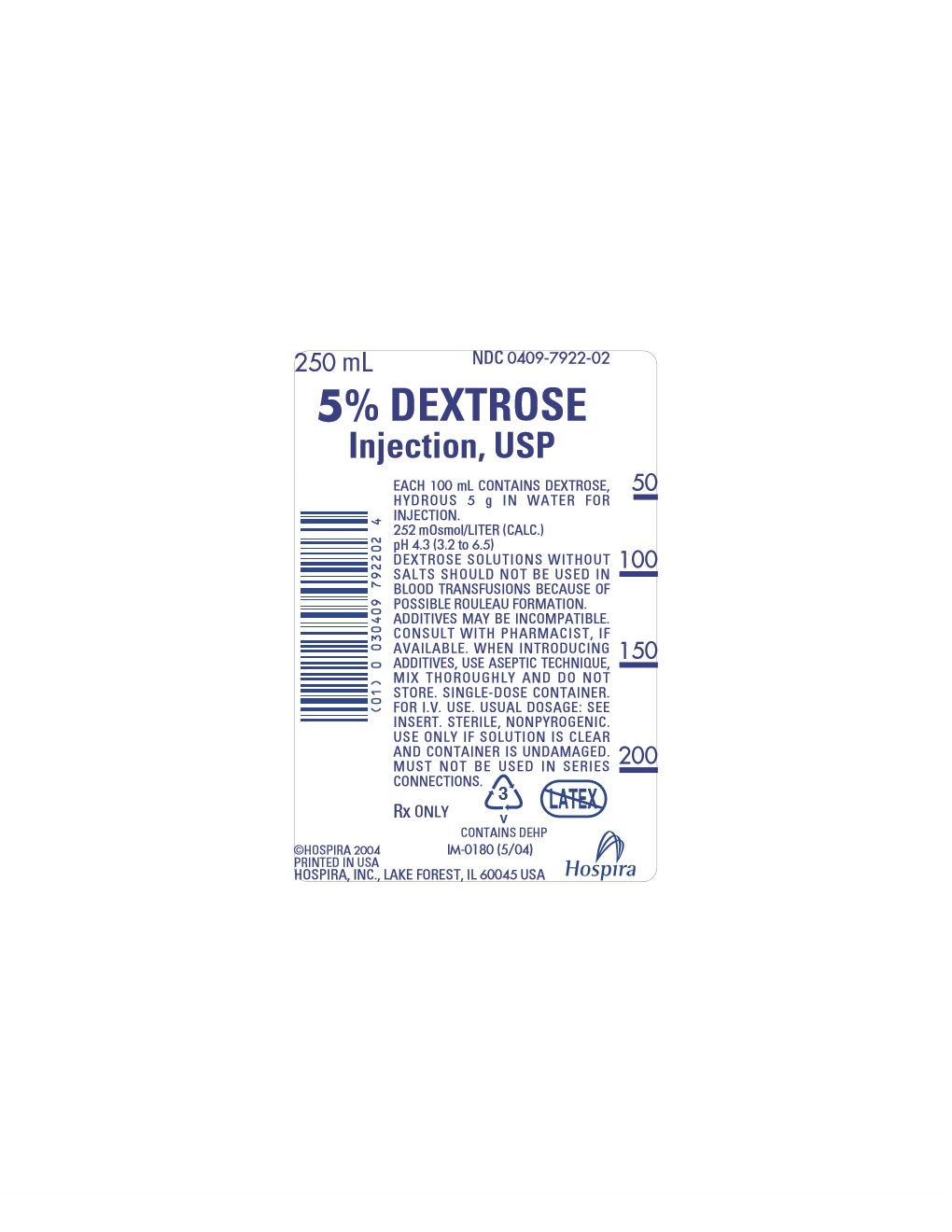
DEXTROSE 5 g/100mL Injection, Solution
Other active recalls for Dextrose (different manufacturers) — 1 · tap to view
🆔 Identity & classification
Where does this data come from?
🏭 Manufacturer & labeler
Where does this data come from?
🩺 Clinical
- Dextrose is essentially glucose — sugar — given directly into a vein. In an emergency, it's used to quickly raise dangerously low blood sugar, which can happen with too much insuli...
- Specific formulations — Infant Dextrose (25%) and Dextrose (25% injection) — are FDA-approved to treat low blood sugar in newborns and infants up to 2 years old. That said, prematu...
- Is dextrose safe for my baby or newborn?
- The most common issues are high blood sugar, vein irritation or clotting at the IV site, low sodium in the blood, and infection. More serious — but less common — reactions include...
Patient education
Supplement & herbal interactions
Where does this data come from?
Ask a licensed pharmacist directly — free, answered by our team.
🧪 Inactive Ingredients / Excipients
Inactive ingredients, also called excipients, are components of the drug product other than the active ingredient. They may include fillers, dyes, coatings, preservatives, flavors, or other formulation ingredients.
💡 Tap an ingredient (hover on desktop) to see what it is and why it’s used.
-
UNII 059QF0KO0R
Water is a liquid solvent that dissolves and mixes ingredients together in liquid medicines, syrups, and injections. It helps distribute the active drug evenly throughout the product.
1 inactive ingredient listed in the exact product block matched to this NDC.
Where does this data come from?
ingredient classCode="IACT" elements from the exact product block matched by this NDC. Label-section narrative from DailyMed / the openFDA label index is shown separately when available.Inactive ingredient FAQ
Are inactive ingredients the same for every manufacturer?
Why might an inactive ingredient be missing?
Can inactive ingredients matter?
💲 Pricing
A drug doesn't have one price. Each row is a different public payment system, and none is what you'd pay at the counter — that depends on your insurance. The ⓘ on each row explains what it measures.
| Price system | Per mL | Per package |
|---|---|---|
| Retail pharmacies payNADAC · weekly | Not in the retail survey — common for institutional, discontinued, or low-volume packs. | |
| Medicaid paysCMS SDUD · 12 mo | No recent Medicaid claims on file for this NDC — rare and low-volume NDCs are suppressed in the public data. | |
| Medicare drug plans payPart D · quarterly | No Part D plan price is available for this NDC in our data. | |
Where does this data come from?
🔁 Therapeutic equivalents
| Product | Labeler | Pack | NADAC/unit | TE | Status | Price vs. this |
|---|---|---|---|---|---|---|
| Dextrose 5 g/100mLthis 51662-1214-01 | HF | 1 pouch | — | AP | Discontinued | — |
Where does this data come from?
⏳ Availability & generic status
The FDA lists approved generic versions of this medicine, but that does not always mean a pharmacy can get one today. Patent rules, launch agreements, supply and pricing can affect when generics actually arrive.
Where does this data come from?
🔬 Reported adverse events (FAERS)
Top reported reactions
Age at onset
Reporter sex
Serious outcomes
Where does this data come from?
📦 Packaging — all sizes for this product
| Package NDC | Description | Marketing start | Status |
|---|---|---|---|
| 51662-1214-01 You're viewing this | 1 BAG in 1 POUCH (51662-1214-1) / 250 mL in 1 BAG | 2018-10-06 | Inactivated by FDA |
🧭 About this NDC listing & data coverage
What data is (and isn’t) available for this NDC — tap to expand
| NDC identity (package / product / labeler codes) | ✓ Available |
| Labeler | ✓ Available |
| Product & package description | ✓ Available |
| Marketing category & status | ✓ Available |
| Active ingredient / dosage form / route | ✓ Available |
| FDA label (SPL via DailyMed) | ✓ Available |
| Package photos | ✓ Available |
| Inactive ingredients (structured) | ✓ Available |
| NADAC pharmacy acquisition price (CMS) | — Not published for this NDC CMS publishes NADAC only for NDCs reported in its retail-pharmacy survey. |
| Orange Book / therapeutic-equivalence data | ✓ Available |
| HCPCS J-code billing crosswalk | — Not published for this NDC Most self-administered / retail products have no J-code — that is normal. |
| Medicaid utilization (CMS SDUD) | — Not published for this NDC CMS reports utilization only for NDCs with Medicaid claims above its privacy threshold. |
Questions about this listing
Why is there no price listed?
What does the discontinued status mean for this NDC?
Is the NDC printed on the package the same as the 11-digit billing NDC?
What do the three segments of this NDC mean?
Who lists this product with the FDA?
Do I need a prescription for this product?
Where does this data come from?
📄 Full prescribing information FDA SPL
🎯 Indications and Usage ▾
NDICATIONS & USAGE Intravenous solutions containing dextrose are indicated for parenteral replenishment of fluid and minimal carbohydrate calories as required by the clinical condition of the patient.
⏱️ Dosage and Administration ▾
DOSAGE & ADMINISTRATION he dose is dependent upon the age, weight and clinical condition of the patient. As reported in the literature, the dosage and constant infusion rate of intravenous dextrose must be selected with caution in pediatric patients, particularly neonates and low birth weight infants, because of the increased risk of hyperglycemia/hypoglycemia. Drug Interactions Additives may be incompatible.
Consult with pharmacist, if available. When introducing additives, use aseptic technique, mix thoroughly and do not store. Parenteral drug products should be inspected visually for particulate matter and discoloration prior to administration, whenever solution and container permit.
(See PRECAUTIONS .) INSTRUCTIONS FOR USE To Open: Tear outer wrap at notch and remove solution container. If supplemental medication is desired, follow directions below before preparing for administration. To Add Medication 1.
Prepare additive port. 2. Using aseptic technique and an additive delivery needle of appropriate length, puncture resealable additive port at target area, inner diaphragm and inject.
Withdraw needle after injecting medication. 3. The additive port may be protected by covering with an additive cap.
4. Mix container contents thoroughly. Preparation for Administration (Use aseptic technique) 1.
Close flow control clamp of administration set. 2. Remove cover from outlet port at bottom of container.
3. Insert piercing pin of administration set into port with a twisting motion until the set is firmly seated. NOTE: When using a vented administration set, replace bacterial retentive air filter with piercing pin cover.
Insert piercing pin with twisting motion until shoulder of air filter housing rests against the outlet port flange. 4. Suspend container from hanger.
5. Squeeze and release drip chamber to establish proper fluid level in chamber. 6.
Attach venipuncture device to set. 7. Open clamp to expel air from set and venipuncture device.
Close clamp. 8. Perform venipuncture.
9. Regulate rate of administration with flow control clamp. WARNING: Do not use flexible container in series connections.
⛔ Contraindications ▾
CONTRAINDICATIONS Dextrose Injection without electrolytes should not be administered simultaneously with blood through the same infusion set because of the possibility that pseudoagglutination of red cells may occur.
⚠️ Warnings ▾
WARNINGS Excessive administration of potassium-free solutions may result in significant hypokalemia. The intravenous administration of these solutions can cause fluid and/or solute overloading resulting in dilution of serum electrolyte concentrations, overhydration, congested states or pulmonary edema. The risk of dilutional states is inversely proportional to the electrolyte concentrations of administered parenteral solutions.
The risk of solute overload causing congested states with peripheral and pulmonary edema is directly proportional to the electrolyte concentrations of such solutions.
🤒 Adverse Reactions ▾
ADVERSE REACTIONS Reactions which may occur because of the solution or the technique of administration include febrile response, infection at the site of injection, venous thrombosis or phlebitis extending from the site of injection, extravasation and hypervolemia. If an adverse reaction does occur, discontinue the infusion, evaluate the patient, institute appropriate therapeutic countermeasures and save the remainder of the fluid for examination if deemed necessary.
🆘 Overdosage ▾
OVERDOSAGE In the event of overhydration or solute overload, re-evaluate the patient and institute appropriate corrective measures. (See WARNINGS , PRECAUTIONS , and ADVERSE REACTIONS .)
🧬 Clinical Pharmacology ▾
CLINICAL PHARMACOLOGY When administered intravenously, these solutions provide a source of water and carbohydrate. Isotonic and hypertonic concentrations of dextrose are suitable for parenteral maintenance of water requirements when salt is not needed or should be avoided. Solutions containing carbohydrate in the form of dextrose restore blood glucose levels and provide calories.
Carbohydrate in the form of dextrose may aid in minimizing liver glycogen depletion and exerts a protein-sparing action. Dextrose injected parenterally undergoes oxidation to carbon dioxide and water. Water is an essential constituent of all body tissues and accounts for approximately 70% of total body weight.
Average normal adult daily requirements range from two to three liters (1.0 to 1.5 liters each for insensible water loss by perspiration and urine production). Water balance is maintained by various regulatory mechanisms. Water distribution depends primarily on the concentration of electrolytes in the body compartments and sodium (Na+) plays a major role in maintaining physiologic equilibrium.
📦 How Supplied / Storage and Handling ▾
HOW SUPPLIED 5% DEXTROSE INJECTION is supplied in the following dosage forms. NDC 51662-1214-1 5% DEXTROSE INJECTION, USP 250mL BAG NDC 51662-1306-1 5% DEXTROSE INJECTION, USP 100mL BAG HF Acquisition Co LLC, DBA HealthFirst Mukilteo, WA 98275 Also supplied in the following manufactures dosage forms Dextrose Injection, USP is supplied in single-dose flexible plastic containers in various sizes and concentrations as shown in the accompanying Table. Store at 20 to 25°C (68 to 77°F). [See USP Controlled Room Temperature.] Protect from freezing.
Revised: June, 2010 Printed in USA EN-2531 Hospira, Inc., Lake Forest, IL 60045 USA HOW SUPPLIED LOGO
📋 Description ▾
DESCRIPTION Dextrose Injection, USP solutions are sterile and nonpyrogenic. They are parenteral solutions containing various concentrations of dextrose in water for injection intended for intravenous administration. Each 100 mL of 5% Dextrose Injection, USP, contains dextrose, hydrous 5 g in water for injection.
The caloric value is 170 kcal/L. The osmolarity is 252 mOsmol/L (calc.), which is slightly hypotonic. Each 100 mL of 10% Dextrose Injection, USP, contains dextrose, hydrous 10 g in water for injection.
The caloric value is 340 kcal/L. The osmolarity is 505 mOsmol/L (calc.), which is hypertonic. The pH for both concentrations is 4.3 (3.2 to 6.5).
The solutions contain no bacteriostat, antimicrobial agent or added buffer and each is intended only as a single-dose injection. When smaller doses are required the unused portion should be discarded. The solutions are parenteral fluid and nutrient replenishers.
Dextrose, USP is chemically designated D-glucose monohydrate (C6H12O6 • H2O), a hexose sugar freely soluble in water. It has the following structural formula: Water for Injection, USP is chemically designated H2O. The flexible plastic container is fabricated from a specially formulated polyvinylchloride.
Water can permeate from inside the container into the overwrap but not in amounts sufficient to affect the solution significantly. Solutions in contact with the plastic container may leach out certain chemical components from the plastic in very small amounts; however, biological testing was supportive of the safety of the plastic container materials. Exposure to temperatures above 25°C/77°F during transport and storage will lead to minor losses in moisture content.
Higher temperatures lead to greater losses. It is unlikely that these minor losses will lead to clinically significant changes within the expiration period. STRUCTURE