
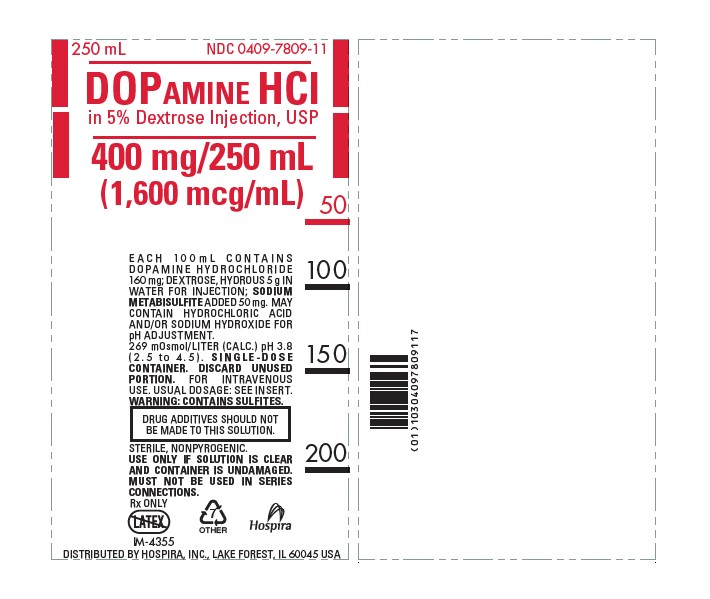
DOPAMINE HYDROCHLORIDE 1.6 mg/mL Injection, Solution, 250 mL — NDC 51662-1316-1 (Billing 51662-1316-01)
This is a package of 250 mL of DOPAMINE HYDROCHLORIDE 1.6 mg/mL Injection, Solution from HF Acquisition Co LLC, DBA HealthFirst, marketed since Oct 2018 and currently FDA-listed. It is the main listing for this product, which comes in 2 package sizes.
Identity & classification
Regulatory identifiers FDA, NLM and CMS codes for this package
- RxCUI (RxNorm): 1743877
Where does this data come from?
- FDA openFDA NDC Directory · synced Oct 1, 2026
- FDA label on DailyMed · label index refreshed Oct 1, 2026
- RxNorm (NLM RxNav) · catalog refreshed Oct 1, 2026
- Medi-Span GPI (licensed)
- First Databank (licensed) · refreshed Oct 1, 2026
RxNorm drug class
This medicine belongs to the Catecholamine class.
Where does this data come from?
- RxClass (NLM) · catalog refreshed Oct 1, 2026
Clinical
- It's an IV medicine for shock, when blood pressure and blood flow are dangerously low. That can happen after a heart attack, trauma, severe infection, open-heart surgery, kidney fa...
- Only through an IV, usually in a hospital and often with an infusion pump. The care team adjusts the rate based on how you respond. You won't take it at home.
- Possible effects include nausea, vomiting, headache, anxiety, a pounding heartbeat, chest pain, shortness of breath and high blood pressure. Tell your nurse about any of these. Rep...
- If dopamine leaks out of the vein, it can seriously damage the surrounding tissue. That's why it goes into a large vein and the site is checked often. Speak up right away if it hur...
Patient education
Supplement & herbal interactions
Where does this data come from?
- MedlinePlus (NLM) · refreshed Oct 1, 2026
- FDA label on DailyMed · label index refreshed Oct 1, 2026
Ask a licensed pharmacist directly — free, answered by our team.
Pricing
A drug doesn't have one price. Each row is a different public payment system, and none is what you'd pay at the counter — that depends on your insurance. The ⓘ on each row explains what it measures.
| Price system | Per mL | Per package |
|---|---|---|
| Retail pharmacies payNADAC · weekly | Not in the retail survey — common for institutional, discontinued, or low-volume packs. | |
| Medicaid paysCMS SDUD · 12 mo | No recent Medicaid claims on file for this NDC — rare and low-volume NDCs are suppressed in the public data. | |
| Medicare drug plans payPart D · quarterly | No Part D plan price is available for this NDC in our data. | |
| Medicare Part B allowsASP · J1265 | $1.012 / J1265 unit | — |
Where does this data come from?
- CMS NADAC weekly file
- CMS ASP pricing files · refreshed Sep 20, 2026
- CMS Medicaid State Drug Utilization Data · refreshed Oct 3, 2026
- CMS Part D plan pricing files · refreshed Sep 24, 2026
- VA National Acquisition Center price file
Billing & reimbursement
Where does this data come from?
- CMS ASP NDC-HCPCS crosswalk · refreshed Sep 22, 2026
- DMEPDAC NDC-HCPCS crosswalk
- openFDA NSDE billing units · refreshed Sep 7, 2026
Packaging — all sizes for this product
| Package NDC | Description | Marketing start | Marketing end | Status |
|---|---|---|---|---|
| 51662-1316-01 You're viewing this Main listing | 250 mL in 1 BAG | 2018-10-19 | — | Active |
| 51662-1316-03 51662-1316-3 | 12 POUCH in 1 CASE / 1 BAG in 1 POUCH / 250 mL in 1 BAG | 2022-09-12 | — | Active |
Pack size FAQ
What quantity is in this package?
What NDC number is used to bill for this package of DOPAMINE HYDROCHLORIDE 1.6 mg/mL Injection, Solution?
Therapeutic equivalents
| Product | Labeler | Pack | NADAC/unit | TE | Status | Price vs. this |
|---|---|---|---|---|---|---|
| Dopamine Hydrochloride and Dextrose 160 mg/100mL 00338-1007-02 | Baxter | 250 ml | — | AP | FDA listed | — |
| Dopamine Hydrochloride in Dextrose 1.6 mg/mL 00409-0042-12 | Hospira, | 12 pouches | — | AP | FDA listed | — |
| Dopamine Hydrochloride 1.6 mg/mLthis 51662-1316-01 | HF | 250 ml | — | AP | FDA listed | — |
| dopamine hydrochloride in dextrose 1.6 mg/mL 51662-1681-03 | HF | 12 pouches | — | AP | FDA listed | — |
| Dopamine Hydrochloride and Dextrose 160 mg/100mL 84549-0007-02 | ProPharma | 250 ml | — | AP | FDA listed | — |
Where does this data come from?
- FDA openFDA NDC Directory · synced Oct 1, 2026
- FDA Orange Book · refreshed Sep 3, 2026
- CMS NADAC weekly file
Availability & generic status
The FDA lists approved generic versions of this medicine, but that does not always mean a pharmacy can get one today. Patent rules, launch agreements, supply and pricing can affect when generics actually arrive.
Where does this data come from?
- FDA Orange Book · refreshed Sep 3, 2026
Inactive Ingredients / Excipients
Inactive ingredients, also called excipients, are components of the drug product other than the active ingredient. They may include fillers, dyes, coatings, preservatives, flavors, or other formulation ingredients.
💡 Tap an ingredient (hover on desktop) to see what it is and why it’s used.
-
UNII LX22YL083G
A simple sugar derived from corn or other sources. It acts as a filler to give the medicine bulk and volume, and as a sweetener to improve taste in oral medications.
-
UNII QTT17582CB
A strong acid used to adjust and maintain the proper pH level in liquid medicines, ensuring stability and preventing breakdown of active ingredients.
-
UNII 55X04QC32I
A strong alkaline chemical used to adjust and maintain the pH balance of liquid medicines. It helps keep the medicine stable and ensures it stays effective during storage.
-
UNII 4VON5FNS3C
Sodium metabisulfite is a preservative derived from sulfur compounds. It prevents microbial growth and oxidation in medicines, helping extend shelf life and maintain product stability.
-
UNII 059QF0KO0R
Water is a liquid solvent that dissolves and mixes ingredients together in liquid medicines, syrups, and injections. It helps distribute the active drug evenly throughout the product.
5 inactive ingredients listed in the exact product block matched to this NDC.
Where does this data come from?
ingredient classCode="IACT" elements from the exact product block matched by this NDC. Label-section narrative from DailyMed / the openFDA label index is shown separately when available.- FDA label on DailyMed · label index refreshed Oct 1, 2026
- FDA openFDA NDC Directory · synced Oct 1, 2026
Inactive ingredient FAQ
Are inactive ingredients the same for every manufacturer?
Why might an inactive ingredient be missing?
Can inactive ingredients matter?
Manufacturer & labeler
Where does this data come from?
- FDA openFDA NDC Directory · synced Oct 1, 2026
- Drugs@FDA
Full prescribing information FDA SPL
🎯 Indications and Usage ▾
INDICATIONS & USAGE Dopamine Hydrochloride in 5% Dextrose Injection, USP is indicated for the correction of hemodynamic imbalances present in shock due to myocardial infarction, trauma, endotoxic septicemia, open heart surgery, renal failure and chronic cardiac decompensation as in refractory congestive failure. When indicated, restoration of circulatory volume should be instituted or completed with a suitable plasma expander or whole blood, prior to administration of dopamine hydrochloride. Patients most likely to respond to dopamine are those whose physiological parameters (such as urine flow, myocardial function and blood pressure) have not undergone extreme deterioration.
Reports indicate that the shorter the time between onset of signs and symptoms and initiation of therapy with volume restoration and dopamine, the better the prognosis. Poor Perfusion of Vital Organs: Although urine flow is apparently one of the better diagnostic signs for monitoring vital organ perfusion, the physician also should observe the patient for signs of reversal of mental confusion or coma. Loss of pallor, increase in toe temperature or adequacy of nail bed capillary filling also may be observed as indices of adequate dosage.
Reported studies indicate that when dopamine is administered before urine flow has decreased to approximately 0.3 mL/minute prognosis is more favorable. However, it has been observed that in some oliguric or anuric patients, administration of the drug has produced an increase in urine flow which may reach normal levels. The drug also may increase urine flow in patients whose output is within normal limits and thus may help in reducing the degree of pre-existing fluid accumulation.
Conversely, at higher than optimal doses for a given patient, urinary flow may decrease, requiring a reduction of dosage. Concomitant administration of dopamine and diuretic agents may produce an additive or potentiating effect. Low Cardiac Output: Dopamine's direct inotropic effect on the myocardium which increases cardiac output at low or moderate doses is related to a favorable prognosis.
Increased output has been associated with unchanged or decreased systemic vascular resistance (SVR). The association of static or decreased SVR with low or moderate increases in cardiac output is regarded as a reflection of differential effects on specific vascular beds, with increased resistance in peripheral beds (e.g., femoral), and concurrent decreases in mesenteric and renal vascular beds. Redistribution of blood flow parallels these changes so that an increase in cardiac output is accompanied by an increase in mesenteric and renal blood flow.
In many instances the renal fraction of the total cardiac output has been found to increase. Increase in cardiac output produced by dopamine is not associated with substantial decreases in systemic vascular resistance as may occur with isoproterenol. Hypotension: Low to moderate doses of dopamine, which have little effect on SVR, can be used to manage hypotension due to inadequate cardiac output.
At high therapeutic doses, dopamine's α-adrenergic action becomes more prominent and thus may correct hypotension due to diminished SVR. As in other circulatory decompensation states, prognosis is better in patients whose blood pressure and urine flow have not undergone extreme deterioration. Therefore, it is suggested the physician administer dopamine as soon as a definite trend toward decreased systolic and diastolic pressure becomes apparent.
⏱️ Dosage and Administration ▾
DOSAGE & ADMINISTRATION Do NOT administer if solution is darker than slightly yellow or discolored in any other way. Do NOT administer unless solution is clear and container is undamaged. Discard unused portion.
Dextrose solutions without electrolytes should not be administered simultaneously with blood through the same infusion set because of the possibility that pseudoagglutination of red cells may occur. Do NOT add sodium bicarbonate or other alkalinizing substance, since dopamine is inactivated in alkaline solution. Dopamine Hydrochloride in 5% Dextrose Injection should be infused into a large vein whenever possible to prevent the infiltration of perivascular tissue adjacent to the infusion site.
Extravasation may cause necrosis and sloughing of the surrounding tissue. Large veins of the antecubital fossa are preferred to veins of the dorsum of the hand or ankle. Less suitable infusion sites should be used only when larger veins are unavailable and the patient's condition requires immediate attention.
The physician should switch to a more suitable site as soon as possible and the infusion site in use should be continuously monitored for free flow. The less concentrated 800 mcg/mL solution may be preferred when fluid expansion is not a problem. The more concentrated 1600 mcg/mL or 3200 mcg/mL solutions, may be preferred in patients with fluid retention or when a slower rate of infusion is desired.
Rate of Administration: Administration into an umbilical artery catheter is not recommended. Dopamine in 5% Dextrose Injection should not be infused through ordinary intravenous apparatus, regulated only by gravity and mechanical clamps. Only an infusion pump, preferably a volumetric pump, should be used.
Each patient must be individually titrated to the desired hemodynamic or renal response to dopamine. In titrating to the desired increase in systolic blood pressure, the optimum dosage rate for renal response may be exceeded, thus necessitating a reduction in rate after the hemodynamic condition is stabilized. If a disproportionate rise in diastolic pressure (i.e., a marked decrease in pulse pressure) is observed in patients receiving dopamine, the infusion rate should be decreased and the patient observed carefully for further evidence of predominant vasoconstrictor activity, unless such an effect is desired.
Administration rates greater than 50 mcg/kg/min have safely been used in adults in advanced circulatory decompensation states. If unnecessary fluid expansion is of concern, adjustment of drug concentration may be preferred over increasing the flow rate of a less concentrated dilution. When discontinuing the infusion, it may be necessary to gradually decrease the dose of dopamine HCl while expanding the blood volume with intravenous fluids to prevent the development of marked hypotension.
Suggested Regimen: 1. When appropriate, increase blood volume with whole blood or plasma until central venous pressure is 10 to 15 cm H 2O or pulmonary wedge pressure is 14 to 18 mm Hg. 2.
Begin infusion of dopamine hydrochloride solution at doses of 2 to 5 mcg/kg/min in adult or pediatric patients who are likely to respond to modest increments of heart force and renal perfusion. In more seriously ill patients, begin infusion of dopamine hydrochloride at doses of 5 mcg/kg/min and increase gradually, using 5 to 10 mcg/kg/min increments, up to a rate of 20 to 50 mcg/kg/min as needed. If doses in excess of 50 mcg/kg/min are required, check urine output frequently.
Should urinary flow begin to decrease in the absence of hypotension, reduction of dopamine dosage should be considered. More than 50% of adult patients have been satisfactorily maintained on doses less than 20 mcg/kg/min. In patients who do not respond to these doses with adequate arterial pressures or urine flow, additional increments of dopamine may be given in an effort to produce an appropriate arterial pressure and central perfusion.
3. Treatment of all patients requires constan…
⛔ Contraindications ▾
CONTRAINDICATIONS Dopamine hydrochloride should not be used in patients with pheochromocytoma. Dopamine should not be administered in the presence of uncorrected tachyarrhythmias or ventricular fibrillation.
⚠️ Warnings ▾
WARNINGS Do NOT add any alkalinizing substance, since dopamine is inactivated in alkaline solution. Patients who have been treated with monoamine oxidase (MAO) inhibitors prior to administration of dopamine should receive substantially reduced dosage of the latter. See PRECAUTIONS, Drug Interactions, below.
Additive medications should not be delivered via this solution. Dopamine Hydrochloride in 5% Dextrose Injection, USP contains sodium metabisulfite, a sulfite that may cause allergic-type reactions including anaphylactic symptoms and life-threatening or less severe asthmatic episodes in certain susceptible people. The overall prevalence of sulfite sensitivity in the general population is unknown and probably low.
Sulfite sensitivity is seen more frequently in asthmatic than in nonasthmatic people.
🤒 Adverse Reactions ▾
ADVERSE REACTIONS The following adverse reactions have been observed, but there are not enough data to support an estimate of their frequency. Cardiovascular System ventricular arrhythmia atrial fibrillation ectopic beats tachycardia anginal pain palpitation cardiac conduction abnormalities widened QRS complex bradycardia hypotension hypertension vasoconstriction Respiratory System dyspnea Gastrointestinal System nausea vomiting Metabolic/Nutritional System azotemia Central Nervous System headache anxiety Dermatological System piloerection Other Gangrene of the extremities has occurred when high doses were administered for prolonged periods or in patients with occlusive vascular disease receiving low doses of dopamine HCl.
🆘 Overdosage ▾
OVERDOSAGE In the case of accidental overdosage, as evidenced by excessive blood pressure elevation, reduce rate of infusion, or temporarily discontinue administration of the drug until patient's condition stabilizes. Since dopamine's duration of action is quite short, no additional remedial measures are usually necessary. If these measures fail to stabilize the patient's condition, consider using an alpha-adrenergic blocking agent (e.g., phentolamine).
🧬 Clinical Pharmacology ▾
CLINICAL PHARMACOLOGY Dopamine exhibits an inotropic action on the myocardium, resulting in increased cardiac output. It causes less increase in myocardial oxygen consumption than isoproterenol and the effect of dopamine usually is not associated with tachyarrhythmia. Reported clinical studies have revealed that the drug usually increases systolic and pulse pressure without any or only a minor elevating effect on diastolic pressure.
Total peripheral resistance at low and intermediate doses is usually unchanged. Blood flow to peripheral vascular beds may decrease while mesenteric blood flow is increased. The drug also has been reported to produce dilation of the renal vasculature which is accompanied by increases in glomerular filtration rate, renal blood flow and sodium excretion.
Increased urinary output produced by dopamine is usually not associated with decreased urine osmolality. Solutions containing carbohydrate in the form of dextrose restore blood glucose levels and provide calories. Carbohydrate in the form of dextrose may aid in minimizing liver glycogen depletion and exerts a protein-sparing action.
Dextrose injected parenterally undergoes oxidation to carbon dioxide and water. Water is an essential constituent of all body tissues and accounts for approximately 70% of total body weight. Average normal adult daily requirement ranges from two to three liters (1.0 to 1.5 liters each for insensible water loss due to perspiration and urine production).
Water balance is maintained by various regulatory mechanisms. Water distribution depends primarily on the concentration of electrolytes and sodium (Na+) plays a major role in maintaining physiologic equilibrium. The reported clearance rate of dopamine in critically ill infants and children has ranged from 46 to 168 mL/kg/min, with the higher values seen in the younger patients.
The apparent volume of distribution in neonates is reported as 0.6 to 4 L/kg, leading to an elimination half-life of 5 to 11 minutes.
📦 How Supplied / Storage and Handling ▾
HOW SUPPLIED DOPAMINE HYDROCHLORIDE IN 5% DEXTROSE INJECTION, USP is supplied in the following dosage forms. NDC 51662-1316-1 DOPAMINE HYDROCHLORIDE IN 5% DEXTROSE INJECTION, USP 400mg 250mL BAG NDC 51662-1316-2 DOPAMINE HYDROCHLORIDE IN 5% DEXTROSE INJECTION, USP 400mg 250mL BAG, 1 BAG IN A POUCH NDC 51662-1316-3 DOPAMINE HYDROCHLORIDE IN 5% DEXTROSE INJECTION, USP 400mg 250mL BAG, IN A POUCH, 12 POUCHES PER CASE HF Acquisition Co LLC, DBA HealthFirst Mukilteo, WA 98275 Also supplied in the following manufacture supplied dosage forms Dopamine Hydrochloride in 5% Dextrose Injection, USP is supplied in 250 and 500 mL LifeCare flexible containers as follows: Avoid contact with alkalies (including sodium bicarbonate), oxidizing agents or iron salts.
Do not use the injection if it is darker than slightly yellow or discolored in any other way. Store at 20 to 25°C (68 to 77°F). [See USP Controlled Room Temperature.] Protect from freezing. Distributed by Hospira, Inc., Lake Forest, IL 60045 USA LAB-1153-1.0 Revised: 03/2018 HOW SUPPLIED LOGO
📋 Description ▾
DESCRIPTION Dopamine Hydrochloride in 5% Dextrose Injection, USP is a sterile, nonpyrogenic, prediluted solution of dopamine hydrochloride in 5% dextrose injection. It is administered by intravenous infusion. Each 100 mL contains dopamine hydrochloride 80 mg (0.8 mg/mL), 160 mg (1.6 mg/mL) or 320 mg (3.2 mg/mL) and dextrose, hydrous 5 g in water for injection, with sodium metabisulfite added 50 mg as a stabilizer; osmolar concentration, respectively 261, 269, or 286 mOsmol/liter (calc.), pH 3.8 (2.5 to 4.5).
May contain hydrochloric acid and/or sodium hydroxide for pH adjustment. Dopamine administered intravenously is a myocardial inotropic agent, which also may increase mesenteric and renal blood flow plus urinary output. Dopamine Hydrochloride is chemically designated 3, 4-dihydroxyphenethylamine hydrochloride (C8H11NO2 • HCl), a white crystalline powder freely soluble in water.
It has the following structural formula: Dopamine (also referred to as 3-hydroxytyramine) is a naturally occurring endogenous catecholamine precursor of norepinephrine. Dextrose, USP is chemically designated D-glucose monohydrate (C6H12O6 • H2O), a hexose sugar freely soluble in water. It has the following structural formula: Water for Injection, USP is chemically designated H2O.
The flexible plastic container is fabricated from a specially formulated CR3 plastic material. Water can permeate from inside the container into the overwrap but not in amounts sufficient to affect the solution significantly. Solutions in contact with the plastic container may leach out certain chemical components from the plastic in very small amounts; however, biological testing was supportive of the safety of the plastic container materials.
Exposure to temperatures above 25°C/77°F during transport and storage will lead to minor losses in moisture content. Higher temperatures lead to greater losses. It is unlikely that these minor losses will lead to clinically significant changes within the expiration period.
STRUCTURE 1 STRUCTURE 2
About this NDC listing & data coverage
What data is (and isn’t) available for this NDC — tap to expand
| NDC identity (package / product / labeler codes) | ✓ Available |
| Labeler | ✓ Available |
| Product & package description | ✓ Available |
| Marketing category & status | ✓ Available |
| Active ingredient / dosage form / route | ✓ Available |
| FDA label (SPL via DailyMed) | ✓ Available |
| Package photos | ✓ Available |
| Inactive ingredients (structured) | ✓ Available |
| NADAC pharmacy acquisition price (CMS) | — Not published for this NDC CMS publishes NADAC only for NDCs reported in its retail-pharmacy survey. |
| Orange Book / therapeutic-equivalence data | ✓ Available |
| HCPCS J-code billing crosswalk | ✓ Available |
| Medicaid utilization (CMS SDUD) | — Not published for this NDC CMS reports utilization only for NDCs with Medicaid claims above its privacy threshold. |