
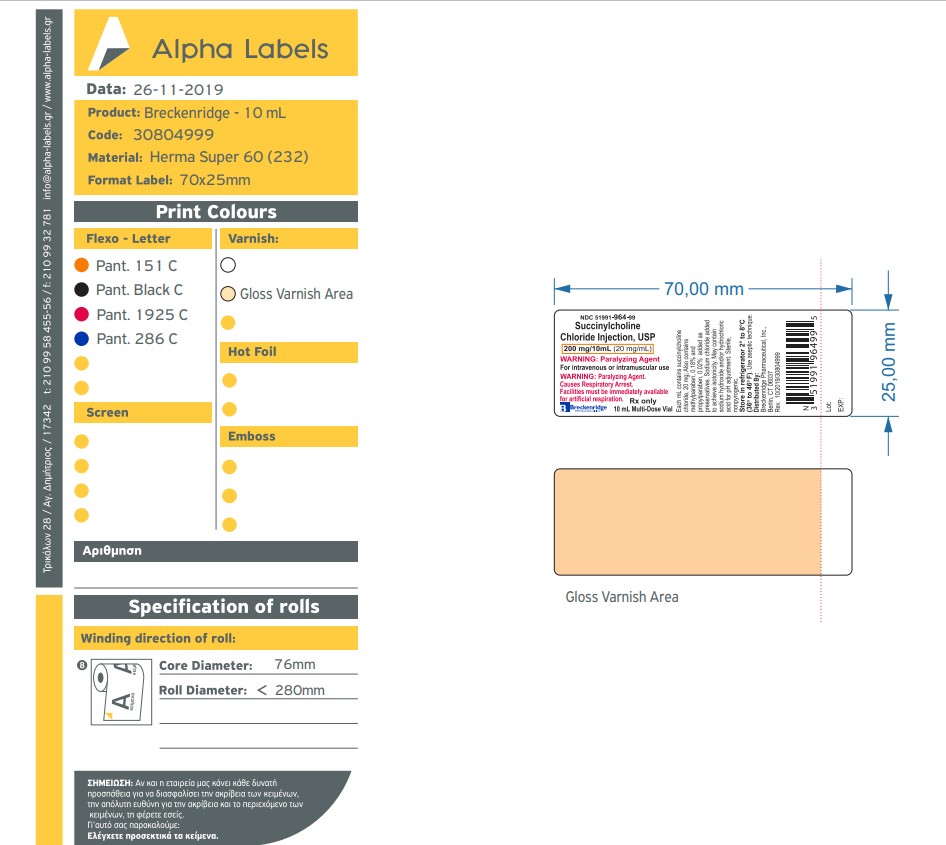
SUCCINYLCHOLINE CHLORIDE 20 mg/mL Injection, Solution, 10 mL
Other active recalls for Succinylcholine Chloride (different manufacturers) — 1 · tap to view
🆔 Identity & classification
Where does this data come from?
🏭 Manufacturer & labeler
Where does this data come from?
🩺 Clinical
- Succinylcholine temporarily relaxes all your skeletal muscles — including the muscles in your throat and airway — so that the anesthesia team can quickly and safely place a breathi...
- What exactly does succinylcholine do, and why would I need it?
- No — succinylcholine only relaxes your muscles. It has no effect on your consciousness or your ability to feel pain. You would always be under general anesthesia when this drug is...
- Will I be awake or feel anything while succinylcholine is working?
Patient education
Supplement & herbal interactions
Where does this data come from?
Ask a licensed pharmacist directly — free, answered by our team.
🧪 Inactive Ingredients / Excipients
Inactive ingredients, also called excipients, are components of the drug product other than the active ingredient. They may include fillers, dyes, coatings, preservatives, flavors, or other formulation ingredients.
💡 Tap an ingredient (hover on desktop) to see what it is and why it’s used.
-
UNII QTT17582CB
A strong acid used to adjust and maintain the proper pH level in liquid medicines, ensuring stability and preventing breakdown of active ingredients.
-
1.8 mg / 1 mL
UNII A2I8C7HI9T
Methylparaben is a preservative derived from benzoic acid that prevents growth of bacteria, fungi, and mold in medicines. It extends the product's shelf life and maintains safety during storage.
-
0.2 mg / 1 mL
UNII Z8IX2SC1OH
Propylparaben is a chemical preservative used to prevent bacterial and fungal growth in medicines and personal care products. It helps extend shelf life and maintain product safety during storage.
-
UNII 451W47IQ8X
Sodium chloride is common table salt. It's used in medicines as a buffer to maintain proper pH, as a filler to add bulk, or to adjust the osmotic balance in liquid formulations.
-
UNII 55X04QC32I
A strong alkaline chemical used to adjust and maintain the pH balance of liquid medicines. It helps keep the medicine stable and ensures it stays effective during storage.
-
UNII 059QF0KO0R
Water is a liquid solvent that dissolves and mixes ingredients together in liquid medicines, syrups, and injections. It helps distribute the active drug evenly throughout the product.
6 inactive ingredients listed in the exact product block matched to this NDC.
Where does this data come from?
ingredient classCode="IACT" elements from the exact product block matched by this NDC. Label-section narrative from DailyMed / the openFDA label index is shown separately when available.Inactive ingredient FAQ
Are inactive ingredients the same for every manufacturer?
Why might an inactive ingredient be missing?
Can inactive ingredients matter?
💲 Pricing
A drug doesn't have one price. Each row is a different public payment system, and none is what you'd pay at the counter — that depends on your insurance. The ⓘ on each row explains what it measures.
| Price system | Per mL | Per package |
|---|---|---|
| Retail pharmacies payNADAC · weekly | Not in the retail survey — common for institutional, discontinued, or low-volume packs. | |
| Medicaid paysCMS SDUD · 12 mo | No recent Medicaid claims on file for this NDC — rare and low-volume NDCs are suppressed in the public data. | |
| Medicare drug plans payPart D · quarterly | No Part D plan price is available for this NDC in our data. | |
Where does this data come from?
🔁 Therapeutic equivalents
| Product | Labeler | Pack | NADAC/unit | TE | Status | Price vs. this |
|---|---|---|---|---|---|---|
| Succinylcholine Chloride 20 mg/mLthis 51662-1526-01 | HF | 10 ml | — | — | Discontinued | — |
Where does this data come from?
⏳ Availability & generic status
This product is an FDA-approved generic. Other versions of the same drug are listed under Therapeutic equivalents, least expensive first.
Where does this data come from?
📦 Packaging — all sizes for this product
| Package NDC | Description | Marketing start | Status |
|---|---|---|---|
| 51662-1526-01 You're viewing this | 10 mL in 1 VIAL, MULTI-DOSE (51662-1526-1) | 2021-05-03 | Inactivated by FDA |
🧭 About this NDC listing & data coverage
What data is (and isn’t) available for this NDC — tap to expand
| NDC identity (package / product / labeler codes) | ✓ Available |
| Labeler | ✓ Available |
| Product & package description | ✓ Available |
| Marketing category & status | ✓ Available |
| Active ingredient / dosage form / route | ✓ Available |
| FDA label (SPL via DailyMed) | ✓ Available |
| Package photos | ✓ Available |
| Inactive ingredients (structured) | ✓ Available |
| NADAC pharmacy acquisition price (CMS) | — Not published for this NDC CMS publishes NADAC only for NDCs reported in its retail-pharmacy survey. |
| Orange Book / therapeutic-equivalence data | — Not published for this NDC Applies only to products approved under an NDA/ANDA; many listings are out of scope. |
| HCPCS J-code billing crosswalk | — Not published for this NDC Most self-administered / retail products have no J-code — that is normal. |
| Medicaid utilization (CMS SDUD) | — Not published for this NDC CMS reports utilization only for NDCs with Medicaid claims above its privacy threshold. |
Questions about this listing
Why is there no price listed?
What does the discontinued status mean for this NDC?
Is the NDC printed on the package the same as the 11-digit billing NDC?
What do the three segments of this NDC mean?
Who lists this product with the FDA?
Do I need a prescription for this product?
Where does this data come from?
📄 Full prescribing information FDA SPL
🚨 Boxed Warning ▾
BOXED WARNING RISK OF CARDIAC ARREST FROM HYPERKALEMIC RHABDOMYOLYSIS - There have been rare reports of acute rhabdomyolysis with hyperkalemia followed by ventricular dysrhythmias, cardiac arrest and death after ... BOX WARNING
🎯 Indications and Usage ▾
INDICATIONS & USAGE Succinylcholine chloride is indicated as an adjunct to general anesthesia, to facilitate tracheal intubation, and to provide skeletal muscle relaxation during surgery or mechanical ventilation.
⏱️ Dosage and Administration ▾
DOSAGE & ADMINISTRATION The dosage of succinylcholine should be individualized and should always be determined by the clinician after careful assessment of the patient (see WARNINGS ). Parenteral drug products should be inspected visually for particulate matter and discoloration prior to administration whenever solution and container permit. Solutions which are not clear and colorless should not be used.
Risk of Medication Errors Accidental administration of neuromuscular blocking agents may be fatal. Store Succinylcholine Chloride Injection, USP with the cap and ferrule intact and in a manner that minimizes the possibility of selecting the wrong product. Adults For Short Surgical Procedures The average dose required to produce neuromuscular blockade and to facilitate tracheal intubation is 0.6 mg/kg Succinylcholine Chloride Injection given intravenously.
The optimum dose will vary among individuals and may be from 0.3 to 1.1 mg/kg for adults. Following administration of doses in this range, neuromuscular blockade develops in about 1 minute; maximum blockade may persist for about 2 minutes, after which recovery takes place within 4 to 6 minutes. However, very large doses may result in more prolonged blockade.
A 5 to 10 mg test dose may be used to determine the sensitivity of the patient and the individual recovery time (see PRECAUTIONS ). For Long Surgical Procedures The dose of succinylcholine administered by infusion depends upon the duration of the surgical procedure and the need for muscle relaxation. The average rate for an adult ranges between 2.5 and 4.3 mg per minute.
Solutions containing from 1 to 2 mg per mL succinylcholine have commonly been used for continuous infusion. The more dilute solution (1 mg per mL) is probably preferable from the standpoint of ease of control of the rate of administration of the drug and, hence, of relaxation. This intravenous solution containing 1 mg per mL may be administered at a rate of 0.5 mg (0.5 mL) to 10 mg (10 mL) per minute to obtain the required amount of relaxation.
The amount required per minute will depend upon the individual response as well as the degree of relaxation required. Avoid overburdening the circulation with a large volume of fluid. It is recommended that neuromuscular function be carefully monitored with a peripheral nerve stimulator when using succinylcholine by infusion in order to avoid overdose, detect development of Phase II block, follow its rate of recovery, and assess the effects of reversing agents (see PRECAUTIONS ).
Intermittent intravenous injections of succinylcholine may also be used to provide muscle relaxation for long procedures. An intravenous injection of 0.3 to 1.1 mg/kg may be given initially, followed, at appropriate intervals, by further injections of 0.04 to 0.07 mg/kg to maintain the degree of relaxation required. Pediatrics For emergency tracheal intubation or in instances where immediate securing of the airway is necessary, the intravenous dose of succinylcholine is 2 mg/kg for infants and small pediatric patients; for older pediatric patients and adolescents the dose is 1 mg/kg (see BOX WARNING and PRECAUTIONS : Pediatric Use).
It is currently known that the effective dose of succinylcholine in pediatric patients may be higher than that predicted by body weight dosing alone. For example, the usual adult IV dose of 0.6 mg/kg is comparable to a dose of 2-3 mg/kg in neonates and infants to 6 months and 1-2 mg/kg in infants up to 2 years of age. This is thought to be due to the relatively large volume of distribution in the pediatric patient versus the adult patient.
Rarely, intravenous bolus administration of succinylcholine in infants and pediatric patients may result in malignant ventricular arrythmias and cardiac arrest secondary to acute rhabdomyolysis with hyperkalemia. In such situations, an underlying myopathy should be suspected. Intravenous bolus administration of succinylcholine in infants or pediatric patients may result in pr…
⛔ Contraindications ▾
CONTRAINDICATIONS Succinylcholine is contraindicated in persons with personal or familial history of malignant hyperthermia, skeletal muscle myopathies and known hypersensitivity to the drug. It is also contraindicated in patients after the acute phase of injury following major burns, multiple trauma, extensive denervation of skeletal muscle, or upper motor neuron injury, because succinylcholine administered to such individuals may result in severe hyperkalemia which may result in cardiac arrest (see WARNINGS ). The risk of hyperkalemia in these patients increases over time and usually peaks at 7 to 10 days after the injury.
The risk is dependent on the extent and location of the injury. The precise time of onset and the duration of the risk period are not known.
⚠️ Warnings ▾
WARNINGS Succinylcholine should be used only by those skilled in the management of artificial respiration and only when facilities are instantly available for tracheal intubation and for providing adequate ventilation of the patient, including the administration of oxygen under positive pressure and the elimination of carbon dioxide. The clinician must be prepared to assist or control respiration. To avoid distress to the patient, succinylcholine should not be administered before unconsciousness has been induced.
In emergency situations, however, it may be necessary to administer succinylcholine before unconsciousness is induced. Succinylcholine is metabolized by plasma cholinesterase and should be used with caution, if at all, in patients known to be or suspected of being homozygous for the atypical plasma cholinesterase gene. Anaphylaxis Severe anaphylactic reactions to neuromuscular blocking agents, including succinylcholine, have been reported.
These reactions have, in some cases, been life-threatening and fatal. Due to the potential severity of these reactions, the necessary precautions, such as the immediate availability of appropriate emergency treatment, should be taken. Precautions should also be taken in those individuals who have had previous anaphylactic reactions to other neuromuscular blocking agents since cross-reactivity between neuromuscular blocking agents, both depolarizing and non-depolarizing, has been reported in this class of drugs.
Risk of Death due To Medication Errors Administration of Succinylcholine chloride results in paralysis, which may lead to respiratory arrest and death; this progression may be more likely to occur in a patient for whom it is not intended. Confirm proper selection of intended product and avoid confusion with other injectable solutions that are present in critical care and other clinical settings. If another healthcare provider is administrating the product, ensure that the intended dose is clearly labelled and communicated.
Hyperkalemia (see BOX WARNING ) Succinylcholine should be administered with GREAT CAUTION to patients suffering from electrolyte abnormalities and those who may have massive digitalis toxicity, because in these circumstances succinylcholine may induce serious cardiac arrhythmias or cardiac arrest due to hyperkalemia. GREAT CAUTION should be observed if succinylcholine is administered to patients during the acute phase of injury following major burns, multiple trauma, extensive denervation of skeletal muscle, or upper motor neuron injury (see CONTRAINDICATIONS ).
The risk of hyperkalemia in these patients increases over time and usually peaks at 7 to 10 days after the injury. The risk is dependent on the extent and location of the injury. The precise time of onset and the duration of the risk period are undetermined.
Patients with chronic abdominal infection, subarachnoid hemorrhage, or conditions causing degeneration of central and peripheral nervous systems should receive succinylcholine with GREAT CAUTION because of the potential for developing severe hyperkalemia. Malignant Hyperthermia Succinylcholine administration has been associated with acute onset of malignant hyperthermia, a potentially fatal hypermetabolic state of skeletal muscle. The risk of developing malignant hyperthermia following succinylcholine administration increases with the concomitant administration of volatile anesthetics.
Malignant hyperthermia frequently presents as intractable spasm of the jaw muscles (masseter spasm) which may progress to generalized rigidity, increased oxygen demand, tachycardia, tachypnea and profound hyperpyrexia. Successful outcome depends on recognition of early signs, such as jaw muscle spasm, acidosis, or generalized rigidity to initial administration of succinylcholine for tracheal intubation, or failure of tachycardia to respond to deepening anesthesia. Skin mottling, rising temperature and coagulopathies may occur later in the course of the hypermetabo…
🤒 Adverse Reactions ▾
ADVERSE REACTIONS Adverse reactions to succinylcholine consist primarily of an extension of its pharmacological actions. Succinylcholine causes profound muscle relaxation resulting in respiratory depression to the point of apnea; this effect may be prolonged. Hypersensitivity reactions, including anaphylaxis, may occur in rare instances.
The following additional adverse reactions have been reported: cardiac arrest, malignant hyperthermia, arrhythmias, bradycardia, tachycardia, hypertension, hypotension, hyperkalemia, prolonged respiratory depression or apnea, increased intraocular pressure, muscle fasciculation, jaw rigidity, postoperative muscle pain, rhabdomyolysis with possible myoglobinuric acute renal failure, excessive salivation, and rash. There have been post-marketing reports of severe allergic reactions (anaphylactic and anaphylactoid reactions) associated with use of neuromuscular blocking agents, including succinylcholine.
These reactions, in some cases, have been life threatening and fatal. Because these reactions were reported voluntarily from a population of uncertain size, it is not possible to reliably estimate their frequency (see WARNINGS and PRECAUTIONS ).
🆘 Overdosage ▾
OVERDOSAGE Overdosage with succinylcholine may result in neuromuscular block beyond the time needed for surgery and anesthesia. This may be manifested by skeletal muscle weakness, decreased respiratory reserve, low tidal volume, or apnea. The primary treatment is maintenance of a patent airway and respiratory support until recovery of normal respiration is assured.
Depending on the dose and duration of succinylcholine administration, the characteristic depolarizing neuromuscular block (Phase I) may change to a block with characteristics superficially resembling a non-depolarizing block (Phase II) (see PRECAUTIONS ).
🧬 Clinical Pharmacology ▾
CLINICAL PHARMACOLOGY Succinylcholine is a depolarizing skeletal muscle relaxant. As does acetylcholine, it combines with the cholinergic receptors of the motor end plate to produce depolarization. This depolarization may be observed as fasciculations.
Subsequent neuromuscular transmission is inhibited so long as adequate concentration of succinylcholine remains at the receptor site. Onset of flaccid paralysis is rapid (less than one minute after intravenous administration), and with single administration lasts approximately 4 to 6 minutes. Succinylcholine is rapidly hydrolyzed by plasma cholinesterase to succinylmonocholine (which possesses clinically insignificant depolarizing muscle relaxant properties) and then more slowly to succinic acid and choline (see PRECAUTIONS ).
About 10% of the drug is excreted unchanged in the urine. Succinylcholine levels were reported to be below the detection limit of 2 μg/mL after 2.5 minutes of an IV bolus dose of 1 or 2 mg/kg in fourteen (14) anesthetized patients. The paralysis following administration of succinylcholine is progressive, with differing sensitivities of different muscles.
This initially involves consecutively the levator muscles of the face, muscles of the glottis and finally the intercostals and the diaphragm and all other skeletal muscles. Succinylcholine has no direct action on the uterus or other smooth muscle structures. Because it is highly ionized and has low fat solubility, it does not readily cross the placenta.
Tachyphylaxis occurs with repeated administration (see PRECAUTIONS ). Depending on the dose and duration of succinylcholine administration, the characteristic depolarizing neuromuscular block (Phase I block) may change to a block with characteristics superficially resembling a non-depolarizing block (Phase II block). This may be associated with prolonged respiratory muscle paralysis or weakness in patients who manifest the transition to Phase II block.
When this diagnosis is confirmed by peripheral nerve stimulation, it may sometimes be reversed with anticholinesterase drugs such as neostigmine (see PRECAUTIONS ). Anticholinesterase drugs may not always be effective. If given before succinylcholine is metabolized by cholinesterase, anticholinesterase drugs may prolong rather than shorten paralysis.
Succinylcholine has no direct effect on the myocardium. Succinylcholine stimulates both autonomic ganglia and muscarinic receptors which may cause changes in cardiac rhythm, including cardiac arrest. Changes in rhythm, including cardiac arrest, may also result from vagal stimulation, which may occur during surgical procedures, or from hyperkalemia, particularly in pediatric patients (see PRECAUTIONS : Pediatric Use).
These effects are enhanced by halogenated anesthetics. Succinylcholine causes an increase in intraocular pressure immediately after its injection and during the fasciculation phase, and slight increases which may persist after onset of complete paralysis (see WARNINGS ). Succinylcholine may cause slight increases in intracranial pressure immediately after its injection and during the fasciculation phase (see PRECAUTIONS ).
As with other neuromuscular blocking agents, the potential for releasing histamine is present following succinylcholine administration. Signs and symptoms of histamine mediated release such as flushing, hypotension and bronchoconstriction are, however, uncommon in normal clinical usage. Succinylcholine has no effect on consciousness, pain threshold or cerebration.
It should be used only with adequate anesthesia (see WARNINGS ).
📦 How Supplied / Storage and Handling ▾
HOW SUPPLIED Succinylcholine chloride injection, USP is supplied as a clear, colorless solution in the following concentrations and packages: Refrigeration of the undiluted agent will assure full potency until expiration date. All units carry a date of expiration. Store in refrigerator 2° to 8°C (36° to 46°F). The multi-dose vials are stable for up to 14 days at room temperature without significant loss of potency. HOW SUPPLIED
📋 Description ▾
DESCRIPTION Succinylcholine Chloride Injection, USP is a sterile, nonpyrogenic solution to be used as ultra short-acting, depolarizing, skeletal muscle relaxant. See HOW SUPPLIED for summary of content and characteristics of the solutions. The solutions are for intramuscular or intravenous use.
Succinylcholine Chloride, USP is chemically designated C14H30Cl2N2O4 and its molecular weight is 361.31. It has the following structural formula: Succinylcholine is a diquaternary base consisting of the dichloride salt of the dicholine ester of succinic acid. It is a white, odorless, slightly bitter powder, very soluble in water.
The drug is incompatible with alkaline solutions but relatively stable in acid solutions. Solutions of the drug lose potency unless refrigerated. Solution intended for multiple-dose administration contains 0.18% methylparaben and 0.02% propylparaben as preservatives (List No.
6629). Product not requiring dilution (multiple-dose fliptop vial) contains sodium chloride to render isotonic. May contain sodium hydroxide and/or hydrochloric acid for pH adjustment. pH is 3.6 (3.0 to 4.5).
See table in HOW SUPPLIED for characteristics. Sodium Chloride, USP, chemically designated NaCl, is a white crystalline compound freely soluble in water. STRUCTURE