
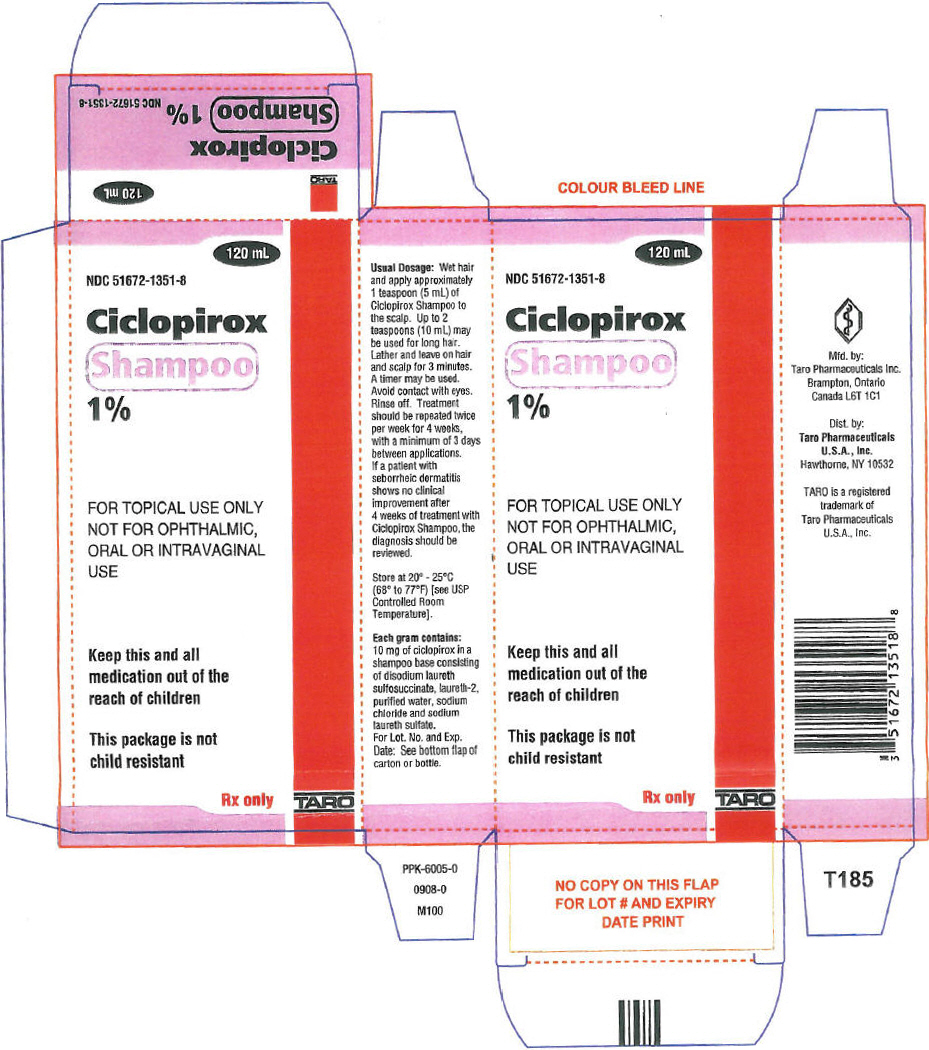
Ciclopirox 10 mg/.96mL Shampoo — NDC 51672-1351-8 (Billing 51672-1351-08)
This is a package of Ciclopirox 10 mg/.96mL Shampoo from Sun Pharmaceutical Industries, Inc., marketed since Feb 2011 and currently FDA-listed; retail pharmacies pay about $0.2108 per mL (NADAC). It is this product's only package size.
NDC database record
One package, one record: these facts belong to NDC 51672-1351-8 alone.
- Record
- FDA NDC Directory package listing · Human prescription drug
- Code segments
- 51672 labeler · 1351 product · 8 package
- Package marketed since
- Feb 23, 2011
- Sample package
- No — commercial package
- Listing certified through
- Dec 31, 2026
- Barcode (UPC)
- 0351672135188
- Medicaid fills, this package
- 22,800 prescriptions in the last four reported quarters
- FDA record last changed
- Jul 24, 2026
Identity & classification
Regulatory identifiers FDA, NLM and CMS codes for this package
Drug-database identifiers Medi-Span GPI and First Databank GCN / HICL / AHFS classification
- GSN (GCN sequence number): 051825
- GCN: 19218
- GPI-14 (Medi-Span): 90150030004510
- HICL (First Databank): 016915
- AHFS class code: 84:04.08.20
Where does this data come from?
- FDA openFDA NDC Directory · synced Oct 8, 2026
- FDA label on DailyMed · label index refreshed Oct 8, 2026
- RxNorm (NLM RxNav) · catalog refreshed Oct 1, 2026
- Medi-Span GPI (licensed)
- First Databank (licensed) · refreshed Oct 8, 2026
Clinical
- It's treating a fungal infection living inside your nail. Ciclodan (the 8% nail lacquer solution) works specifically on onychomycosis — a fungal infection of the nail plate caused...
- What is this medicine actually treating — my nail or a skin infection?
- Nail infections are slow to treat because nails grow slowly. Clinical studies used ciclopirox nail lacquer for 48 weeks — that's nearly a year. Even then, complete clearing of the...
- How long will I have to use this before I see results?
Patient education
Supplement & herbal interactions
Some supplements/herbs that may interact with Ciclopirox — tap one for details:
Where does this data come from?
- MedlinePlus (NLM) · refreshed Oct 8, 2026
- FDA label on DailyMed · label index refreshed Oct 8, 2026
Ask a licensed pharmacist directly — free, answered by our team.
Pricing
A drug doesn't have one price. Each row is a different public payment system, and none is what you'd pay at the counter — that depends on your insurance. The ⓘ on each row explains what it measures.
| Price system | Per mL | Per package |
|---|---|---|
| Retail pharmacies payNADAC · weekly | $0.211 | $25.30 / 120 ml |
| Medicaid paysCMS SDUD · 12 mo | $0.3198 | $38.38 / 120 ml |
| Medicare drug plans payPart D · quarterly | No Part D plan price is available for this NDC in our data. | |
Where does this data come from?
- CMS NADAC weekly file · file of Oct 7, 2026
- CMS ASP pricing files · refreshed Sep 20, 2026
- CMS Medicaid State Drug Utilization Data · through Q4 2025
- CMS Part D plan pricing files · refreshed Sep 24, 2026
- VA National Acquisition Center price file
Packaging — all sizes for this product
| Package NDC | Description | Marketing start | Marketing end | Status |
|---|---|---|---|---|
| 51672-1351-08 You're viewing this Main listing | 1 BOTTLE, PLASTIC in 1 CARTON / 120 mL in 1 BOTTLE, PLASTIC | 2011-02-23 | — | Active |
Therapeutic equivalents
| Product | Labeler | Pack | NADAC/unit | TE | Status | Price vs. this |
|---|---|---|---|---|---|---|
| Ciclopirox 10 mg/.96mL 00591-2159-90 | Actavis | 120 ml | $0.211 | AT | Availability likely | — |
| Ciclopirox 1 g/100mL 21922-0105-52 | Encube | 1 bottle | $0.211 | AT | Availability likely | — |
| Ciclopirox 1 g/100mL 45802-0401-09 | Padagis | 120 ml | $0.211 | AT | Availability likely | — |
| Ciclopirox 10 mg/.96mLthis 51672-1351-08 | Sun | 1 bottle | $0.211 | AT | Availability likely | — |
Where does this data come from?
- FDA openFDA NDC Directory · synced Oct 8, 2026
- FDA Orange Book · refreshed Oct 3, 2026
- CMS NADAC weekly file · file of Oct 7, 2026
Availability & generic status
This product is an FDA-approved generic. Other versions of the same drug are listed under Therapeutic equivalents, least expensive first.
Where does this data come from?
- FDA Orange Book · refreshed Oct 3, 2026
Inactive Ingredients / Excipients
Inactive ingredients, also called excipients, are components of the drug product other than the active ingredient. They may include fillers, dyes, coatings, preservatives, flavors, or other formulation ingredients.
🧪 Avoiding an ingredient? See Ciclopirox Topical inactive ingredients by manufacturer: every current product's list side by side, so you can ask your pharmacy for the version that does not list it.
💡 Tap an ingredient (hover on desktop) to see what it is and why it’s used.
-
UNII D6DH1DTN7E
Disodium laureth sulfosuccinate is a synthetic surfactant and emulsifier derived from lauryl alcohol. It helps mix oil and water-based ingredients together and is commonly used in topical formulations to improve product texture and spreadability.
-
UNII D4D38LT1L5
A synthetic ingredient made from lauryl alcohol and ethylene oxide. It works as an emulsifier and surfactant to help mix water and oil-based ingredients together in the medicine.
-
UNII 451W47IQ8X
Sodium chloride is common table salt. It's used in medicines as a buffer to maintain proper pH, as a filler to add bulk, or to adjust the osmotic balance in liquid formulations.
-
UNII BPV390UAP0
Sodium laureth sulfate is a mild detergent and surfactant derived from coconut oil or petroleum. It helps mix oil and water in formulations and is often used as a cleaning or foaming agent in topical products like shampoos and cleansers.
-
UNII 059QF0KO0R
Water is a liquid solvent that dissolves and mixes ingredients together in liquid medicines, syrups, and injections. It helps distribute the active drug evenly throughout the product.
5 inactive ingredients listed in the exact product block matched to this NDC.
Where does this data come from?
ingredient classCode="IACT" elements from the exact product block matched by this NDC. Label-section narrative from DailyMed / the openFDA label index is shown separately when available.- FDA label on DailyMed · label index refreshed Oct 8, 2026
- FDA openFDA NDC Directory · synced Oct 8, 2026
Inactive ingredient FAQ
Are inactive ingredients the same for every manufacturer?
Why might an inactive ingredient be missing?
Can inactive ingredients matter?
Manufacturer & labeler
More NDCs from Sun Pharmaceutical Industries, Inc. labeler code 51672
- Terconazole 80 mg Suppository NDC 51672-1330-3
- Oralone Triamcinolone Acetonide 1 mg/g Paste NDC 51672-1335-5
- Betamethasone Dipropionate .5 mg/mL Lotion, Augmented NDC 51672-1340-3
- Clobetasol Propionate .05 g/100mL Shampoo NDC 51672-1347-8
- Escitalopram 5 mg/5mL Solution NDC 51672-1348-1
- Clobetasol Propionate .5 mg/mL Lotion NDC 51672-1350-4
- Desoximetasone .5 mg/g Ointment NDC 51672-1352-1
- Fluocinonide 1 mg/g Cream NDC 51672-1353-2
- Fluocinolone Acetonide .11 mg/118.28mL Oil NDC 51672-1356-8
- Fluocinolone Acetonide .11 mg/118.28mL Oil NDC 51672-1357-8
- Diclofenac Sodium 16.05 mg/mL Solution NDC 51672-1358-2
- Oxiconazole Nitrate 10 mg/g Cream NDC 51672-1359-1
Where does this data come from?
- FDA openFDA NDC Directory · synced Oct 8, 2026
- Drugs@FDA
Full prescribing information FDA SPL
🎯 Indications and Usage ▾
1 INDICATION AND USAGE Ciclopirox Shampoo 1% is indicated for the topical treatment of seborrheic dermatitis of the scalp in adults. Ciclopirox Shampoo 1% is an antifungal indicated for the topical treatment of seborrheic dermatitis of the scalp in adults. ( 1 )
⏱️ Dosage and Administration ▾
2 DOSAGE AND ADMINISTRATION Ciclopirox Shampoo 1% is not for ophthalmic, oral, or intravaginal use. Wet hair and apply approximately 1 teaspoon (5 mL) of Ciclopirox Shampoo 1% to the scalp. Up to 2 teaspoons (10 mL) may be used for long hair.
Lather and leave on hair and scalp for 3 minutes. A timer may be used. Avoid contact with eyes.
Rinse off. Treatment should be repeated twice per week for 4 weeks, with a minimum of 3 days between applications. If a patient with seborrheic dermatitis shows no clinical improvement after 4 weeks of treatment with Ciclopirox Shampoo 1%, the diagnosis should be reviewed.
Apply approximately 1 teaspoon of Ciclopirox Shampoo 1% to the scalp twice per week for 4 weeks. ( 2 ) For topical use only. Not for ophthalmic, oral, or intravaginal use.
( 2 )
💊 Dosage Forms and Strengths ▾
3 DOSAGE FORMS AND STRENGTHS Ciclopirox Shampoo 1% is a shampoo containing 1% ciclopirox. Each gram (equivalent to 0.96 mL) of Ciclopirox Shampoo contains 10 mg ciclopirox in a colorless and translucent shampoo base. Shampoo, 1% ( 3 )
⛔ Contraindications ▾
4 CONTRAINDICATIONS None. None ( 4 )
⚠️ Warnings and Cautions ▾
5 WARNINGS AND PRECAUTIONS If signs of irritation occur, discontinue use. ( 5.1 ) Avoid contact with eyes. ( 5.1 ) Hair discoloration has been reported with Ciclopirox use. ( 5.1 )
5.1Local Effects If a reaction suggesting sensitivity or irritation occurs with the use of Ciclopirox Shampoo 1%, treatment should be discontinued and appropriate therapy instituted. Contact of Ciclopirox Shampoo 1% with the eyes should be avoided. If contact occurs, rinse thoroughly with water. In patients with lighter hair color, hair discoloration has been reported.
🤒 Adverse Reactions ▾
6 ADVERSE REACTIONS The most frequently reported adverse reactions are pruritus, burning, and erythema. ( 6.1 ) To report SUSPECTED ADVERSE REACTIONS, contact Taro at 1-866-923-4914 or FDA at 1-800-FDA-1088 or http://www.fda.gov/medwatch.
6.1Clinical Trials Experience Because clinical trials are conducted under widely varying conditions, adverse reaction rates observed in the clinical trials of a drug cannot be directly compared to rates in the clinical trials of another drug and may not reflect the rates observed in clinical practice. In 626 subjects treated with Ciclopirox Shampoo 1% twice weekly in the two pivotal clinical trials, the most frequent adverse events were increased itching in 1% of subjects, and application site reactions, such as burning, erythema, and itching, also in 1% of subjects.
6.2Post Marketing Experience The following adverse reactions have been identified during post approval use of Ciclopirox Shampoo 1%: hair discoloration and abnormal hair texture, alopecia, irritation and rash. Because these events are reported voluntarily from a population of uncertain size, it is not possible to reliably estimate their frequency or establish a causal relationship to drug exposure.
👥 Use in Specific Populations ▾
8 USE IN SPECIFIC POPULATIONS
8.1Pregnancy Teratogenic Effects: Pregnancy Category B There are no adequate or well-controlled studies in pregnant women. Therefore, Ciclopirox Shampoo 1% should be used during pregnancy only if the potential benefit justifies the potential risk to the fetus. Oral embryofetal developmental studies were conducted in mice, rats, rabbits and monkeys.
Ciclopirox or ciclopirox olamine was orally administered during the period of organogenesis. No maternal toxicity, embryotoxicity or teratogenicity were noted at the highest doses of 77, 125, 80 and 38.5 mg/kg/day ciclopirox in mice, rats, rabbits and monkeys, respectively (approximately 13, 42, 54 and 26 times the maximum recommended human dose based on body surface area comparisons, respectively). Dermal embryofetal developmental studies were conducted in rats and rabbits with ciclopirox olamine dissolved in PEG 400.
Ciclopirox olamine was topically administered during the period of organogenesis. No maternal toxicity, embryotoxicity or teratogenicity were noted at the highest doses of 92 mg/kg/day and 77 mg/kg/day ciclopirox in rats and rabbits, respectively (approximately 31 and 54 times the maximum recommended human dose based on body surface area comparisons, respectively).
8.3Nursing Mothers It is not known whether this drug is excreted in human milk. Because many drugs are excreted in human milk, caution should be exercised when Ciclopirox Shampoo 1% is administered to a nursing woman.
8.4Pediatric Use No clinical trials have been conducted in subjects younger than 16 years.
8.5Geriatric Use In clinical trials, the safety and tolerability of Ciclopirox Shampoo 1% in the population 65 years and older was comparable to that of younger subjects. Results of the efficacy analysis in those subjects 65 years and older showed effectiveness in 25 of 85 (29%) subjects treated with Ciclopirox Shampoo 1%, and in 15 of 61 (25%) subjects treated with the vehicle; due to the small sample size, a statistically significant difference was not demonstrated. Other reported clinical experience has not identified differences in responses between the elderly and younger subjects, but greater sensitivity to adverse effects in some older individuals cannot be ruled out.
🤰 Pregnancy ▾
8.1Pregnancy Teratogenic Effects: Pregnancy Category B There are no adequate or well-controlled studies in pregnant women. Therefore, Ciclopirox Shampoo 1% should be used during pregnancy only if the potential benefit justifies the potential risk to the fetus. Oral embryofetal developmental studies were conducted in mice, rats, rabbits and monkeys.
Ciclopirox or ciclopirox olamine was orally administered during the period of organogenesis. No maternal toxicity, embryotoxicity or teratogenicity were noted at the highest doses of 77, 125, 80 and 38.5 mg/kg/day ciclopirox in mice, rats, rabbits and monkeys, respectively (approximately 13, 42, 54 and 26 times the maximum recommended human dose based on body surface area comparisons, respectively). Dermal embryofetal developmental studies were conducted in rats and rabbits with ciclopirox olamine dissolved in PEG 400.
Ciclopirox olamine was topically administered during the period of organogenesis. No maternal toxicity, embryotoxicity or teratogenicity were noted at the highest doses of 92 mg/kg/day and 77 mg/kg/day ciclopirox in rats and rabbits, respectively (approximately 31 and 54 times the maximum recommended human dose based on body surface area comparisons, respectively).
🧒 Pediatric Use ▾
8.4Pediatric Use No clinical trials have been conducted in subjects younger than 16 years.
🧓 Geriatric Use ▾
8.5Geriatric Use In clinical trials, the safety and tolerability of Ciclopirox Shampoo 1% in the population 65 years and older was comparable to that of younger subjects. Results of the efficacy analysis in those subjects 65 years and older showed effectiveness in 25 of 85 (29%) subjects treated with Ciclopirox Shampoo 1%, and in 15 of 61 (25%) subjects treated with the vehicle; due to the small sample size, a statistically significant difference was not demonstrated. Other reported clinical experience has not identified differences in responses between the elderly and younger subjects, but greater sensitivity to adverse effects in some older individuals cannot be ruled out.
🧬 Clinical Pharmacology ▾
12 CLINICAL PHARMACOLOGY
12.1Mechanism of Action Ciclopirox is a hydroxypyridone antifungal agent although the relevance of this property for the indication of seborrheic dermatitis is not known. Ciclopirox acts by chelation of polyvalent cations (Fe 3 + or Al 3 +), resulting in the inhibition of the metal-dependent enzymes that are responsible for the degradation of peroxides within the fungal cell.
12.2Pharmacodynamics The pharmacodynamics of Ciclopirox Shampoo 1% are unknown.
12.3Pharmacokinetics In a study in patients with seborrheic dermatitis of the scalp, application of 5 mL ciclopirox shampoo 1% twice weekly for 4 weeks, with an exposure time of 3 minutes per application, resulted in detectable serum concentrations of ciclopirox in 6 out of 18 patients. The serum concentrations measured throughout the dosing interval on Days 1 and 29 ranged from 10.3 ng/mL to 13.2 ng/mL. Total urinary excretion of ciclopirox was less than 0.5% of the administered dose.
12.4Microbiology Ciclopirox is fungicidal in vitro against Malassezia furfur (Pityrosporum spp.), P. ovale, and P. orbiculare . The clinical significance of antifungal activity in the treatment of seborrheic dermatitis is not known.
🧬 Mechanism of Action ▾
12.1Mechanism of Action Ciclopirox is a hydroxypyridone antifungal agent although the relevance of this property for the indication of seborrheic dermatitis is not known. Ciclopirox acts by chelation of polyvalent cations (Fe 3 + or Al 3 +), resulting in the inhibition of the metal-dependent enzymes that are responsible for the degradation of peroxides within the fungal cell.
📦 How Supplied / Storage and Handling ▾
16 HOW SUPPLIED/STORAGE AND HANDLING Ciclopirox Shampoo, 1% is colorless and translucent, and is supplied in 120 mL plastic bottles (NDC 51672-1351-8). Discard unused product after initial treatment duration. Store at 20° - 25°C (68° - 77°F) [see USP Controlled Room Temperature]. Keep out of reach of children.
📦 Storage and Handling ▾
Store at 20° - 25°C (68° - 77°F) [see USP Controlled Room Temperature]. Keep out of reach of children.
📋 Description ▾
11 DESCRIPTION Ciclopirox Shampoo 1% contains the synthetic antifungal agent, ciclopirox for topical use. Each gram (equivalent to 0.96 mL) of Ciclopirox Shampoo 1% contains 10 mg ciclopirox in a shampoo base consisting of disodium laureth sulfosuccinate, laureth-2, purified water USP, sodium chloride USP, and sodium laureth sulfate. Ciclopirox Shampoo is a colorless, translucent solution.
The chemical name for ciclopirox is 6-cyclohexyl-1-hydroxy-4-methyl-2(1 H )-pyridone, with the empirical formula C 12 H 17 NO 2 and a molecular weight of 207.27. The CAS Registry Number is [29342-05-0]. The chemical structure is: Chemical Structure
💬 Information for Patients ▾
17 PATIENT COUNSELING INFORMATION See FDA-approved patient labeling (Patient Information) The patient should be instructed to: Use Ciclopirox Shampoo 1% as directed by the physician. Avoid contact with the eyes. If contact occurs, rinse thoroughly with water.
Ciclopirox Shampoo 1% is for external use on the scalp only. Do not swallow. Use Ciclopirox Shampoo 1% for seborrheic dermatitis for the full treatment time even though symptoms may have improved.
Notify the physician if there is no improvement after 4 weeks. Inform the physician if the area of application shows signs of increased irritation (redness, itching, burning, blistering, swelling, or oozing).
🍼 Nursing Mothers ▾
8.3Nursing Mothers It is not known whether this drug is excreted in human milk. Because many drugs are excreted in human milk, caution should be exercised when Ciclopirox Shampoo 1% is administered to a nursing woman.
🧬 Pharmacokinetics ▾
12.3Pharmacokinetics In a study in patients with seborrheic dermatitis of the scalp, application of 5 mL ciclopirox shampoo 1% twice weekly for 4 weeks, with an exposure time of 3 minutes per application, resulted in detectable serum concentrations of ciclopirox in 6 out of 18 patients. The serum concentrations measured throughout the dosing interval on Days 1 and 29 ranged from 10.3 ng/mL to 13.2 ng/mL. Total urinary excretion of ciclopirox was less than 0.5% of the administered dose.
🧬 Pharmacodynamics ▾
12.2Pharmacodynamics The pharmacodynamics of Ciclopirox Shampoo 1% are unknown.
🔬 Clinical Studies ▾
14 CLINICAL STUDIES In two randomized, double-blind clinical trials, subjects 16 years and older with seborrheic dermatitis of the scalp applied Ciclopirox Shampoo or its vehicle twice weekly for 4 weeks. Subjects who were immunocompromised, those with psoriasis or atopic dermatitis, women of childbearing potential not using adequate contraception, and pregnant or lactating women were excluded from the clinical trials. An evaluation of the overall status of the seborrheic dermatitis, the presence and severity of erythema or inflammation, and scaling, was made at week 4, using a scale of 0 = none, 1 = slight, 2 = mild, 3 = moderate, 4 = pronounced, and 5 = severe.
Effective treatment was defined as achieving a score of 0 (or a score of 1 if the baseline score was ≥ 3) simultaneously for status of the seborrheic dermatitis, erythema or inflammation, and scaling at Week 4. Ciclopirox shampoo was shown to be statistically significantly more effective than vehicle in both trials. Efficacy results for the two trials are presented in Table 1 below.
Table 1. Effective Treatment Rates at Week 4 in Trials 1 and 2 Ciclopirox Shampoo 1% Vehicle Study 1 220/380 (58%) 60/192 (31%) Study 2 65/250 (26%) 32/249 (13%) Efficacy for African American subjects was not demonstrated, although only 53 African American subjects were enrolled in the two pivotal trials.
🧪 Nonclinical Toxicology ▾
13 NONCLINICAL TOXICOLOGY
13.1Carcinogenesis, Mutagenesis, and Impairment of Fertility A 104-week dermal carcinogenicity study in mice was conducted with ciclopirox cream applied at doses up to 1.93% (100 mg/kg/day or 300 mg/m 2 /day). No increase in drug related neoplasms was noted when compared to control. The following in vitro genotoxicity tests have been conducted with ciclopirox: evaluation of gene mutation in the Ames Salmonella and E. coli assays (negative); chromosome aberration assays in V79 Chinese hamster lung fibroblast cells, with and without metabolic activation (positive); chromosome aberration assays in V79 Chinese hamster lung fibroblast cells in the presence of supplemental Fe3+, with and without metabolic activation (negative); gene mutation assays in the HGPRT-test with V79 Chinese hamster lung fibroblast cells (negative); and a primary DNA damage assay (i.e., unscheduled DNA synthesis assay in A549 human cells) (negative).
An in vitro cell transformation assay in BALB/c 3T3 cells was negative for cell transformation. In an in vivo Chinese hamster bone marrow cytogenetic assay, ciclopirox was negative for chromosome aberrations at a dosage of 5000 mg/kg body weight. A combined oral fertility and embryofetal developmental study was conducted in rats with ciclopirox olamine.
No effect on fertility or reproductive performance was noted at the highest dose tested of 3.85 mg/kg/day ciclopirox (approximately 1.3 times the maximum recommended human dose based on body surface area comparisons).
📄 Carcinogenesis, Mutagenesis, Impairment of Fertility ▾
13.1Carcinogenesis, Mutagenesis, and Impairment of Fertility A 104-week dermal carcinogenicity study in mice was conducted with ciclopirox cream applied at doses up to 1.93% (100 mg/kg/day or 300 mg/m 2 /day). No increase in drug related neoplasms was noted when compared to control. The following in vitro genotoxicity tests have been conducted with ciclopirox: evaluation of gene mutation in the Ames Salmonella and E. coli assays (negative); chromosome aberration assays in V79 Chinese hamster lung fibroblast cells, with and without metabolic activation (positive); chromosome aberration assays in V79 Chinese hamster lung fibroblast cells in the presence of supplemental Fe3+, with and without metabolic activation (negative); gene mutation assays in the HGPRT-test with V79 Chinese hamster lung fibroblast cells (negative); and a primary DNA damage assay (i.e., unscheduled DNA synthesis assay in A549 human cells) (negative).
An in vitro cell transformation assay in BALB/c 3T3 cells was negative for cell transformation. In an in vivo Chinese hamster bone marrow cytogenetic assay, ciclopirox was negative for chromosome aberrations at a dosage of 5000 mg/kg body weight. A combined oral fertility and embryofetal developmental study was conducted in rats with ciclopirox olamine.
No effect on fertility or reproductive performance was noted at the highest dose tested of 3.85 mg/kg/day ciclopirox (approximately 1.3 times the maximum recommended human dose based on body surface area comparisons).
📄 Patient Package Insert ▾
Patient Information Ciclopirox Shampoo 1% Important: For use on the scalp only. Do not get Ciclopirox Shampoo 1% in your eyes, mouth, or vagina. What is Ciclopirox Shampoo 1%?
Ciclopirox Shampoo 1% is a prescription medicine used on the scalp to treat adults with a skin condition called seborrheic dermatitis. It is not known if Ciclopirox Shampoo 1% is safe and effective in children under 16 years of age. What should I tell my doctor before using Ciclopirox Shampoo 1%?
Before using Ciclopirox Shampoo 1%, tell your doctor if you: have any other medical conditions are pregnant or plan to become pregnant. It is not known if Ciclopirox Shampoo 1% will harm your unborn baby. are breastfeeding or plan to breastfeed. It is not know if Ciclopirox Shampoo 1% passes into your breast milk. are taking prescription and non-prescription medicines, vitamins, and herbal supplements.
Know the medicines you take. Keep a list of them to show your doctor and pharmacist when you get a new medicine. How should I use Ciclopirox Shampoo 1%?
Use Ciclopirox Shampoo 1% exactly as your doctor tells you to use it. Wash your hair using Ciclopirox Shampoo 1% 2 times each week for 4 weeks. There should be at least 3 days between each time you use Ciclopirox Shampoo 1%.
Use Ciclopirox Shampoo 1% for 4 weeks even if your skin condition improves. Tell your doctor if your scalp condition is not getting better after you have used Ciclopirox Shampoo 1% for 4 weeks. Do not swallow Ciclopirox Shampoo 1%.
Avoid getting Ciclopirox Shampoo 1% in your eyes. If Ciclopirox Shampoo 1% gets into your eyes, rinse them well with water. How should I apply Ciclopirox Shampoo 1%?
Wet your hair and apply approximately 1 teaspoon of Ciclopirox Shampoo 1% to your scalp. You may use up to 2 teaspoons of Ciclopirox Shampoo 1% if you have long hair. Lather and leave Ciclopirox Shampoo 1% on your hair and scalp for 3 minutes.
You may use a timer. After 3 minutes have passed, rinse your hair and scalp. What are the possible side effects of Ciclopirox Shampoo 1%?
The most common side effects of Ciclopirox Shampoo 1% include: itching, burning, and redness of the scalp. Tell your doctor if you get any of these symptoms and they become worse or do not go away, or if you get blistering, swelling, or oozing in your scalp. These are not all the possible side effects of Ciclopirox Shampoo 1%.
For more information, ask your doctor. Call your doctor for medical advice about side effects. You may report side effects to FDA at 1-800-FDA-1088.
How should I store Ciclopirox Shampoo 1%? Store Ciclopirox Shampoo 1% at room temperature, between 68°F to 77°F (20°C to 25°C). Safely throw away any unused Ciclopirox Shampoo 1% after you finish your treatment.
Keep Ciclopirox Shampoo 1% and all medicines out of the reach of children. General information about Ciclopirox Shampoo 1% Medicines are sometimes prescribed for purposes other than those listed in a Patient Information leaflet. Do not use Ciclopirox Shampoo 1% for a condition for which it was not prescribed.
Do not give Ciclopirox Shampoo 1% to other people, even if they have the same symptoms you have. It may harm them. You can ask your pharmacist or doctor for information about Ciclopirox Shampoo 1% that is written for health professionals.
For more information about Ciclopirox Shampoo 1%, call 1-866-923-4914. What are the ingredients in Ciclopirox Shampoo 1%? Active ingredient: ciclopirox Inactive ingredients: disodium laureth sulfosuccinate, laureth-2, purified water USP, sodium chloride USP, and sodium laureth sulfate.
This Patient Information has been approved by the U.S. Food and Drug Administration. Mfd. by: Taro Pharmaceuticals Inc., Brampton, Ontario, Canada L6T 1C1 Dist. by: Taro Pharmaceuticals U.S.A., Inc., Hawthorne, NY 10532 Revised: November, 2015 PPK-6006-2 41
📄 Package Label / Principal Display Panel ▾
PRINCIPAL DISPLAY PANEL - 120 mL Bottle Carton 120 mL NDC 51672-1351-8 Ciclopirox Shampoo 1% FOR TOPICAL USE ONLY NOT FOR OPHTHALMIC, ORAL OR INTRAVAGINAL USE Keep this and all medication out of the reach of children This package is not child resistant Rx only TARO PRINCIPAL DISPLAY PANEL - 120 mL Bottle Carton