
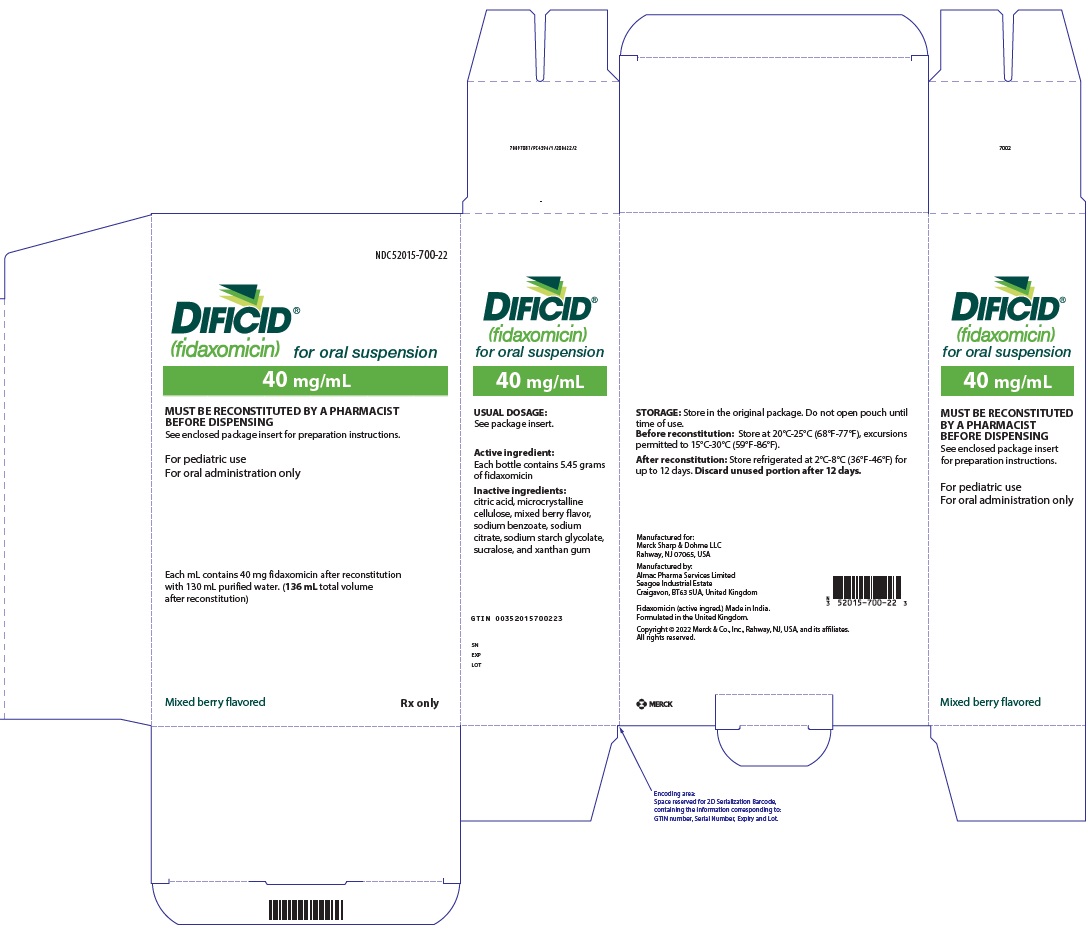
DIFICID FIDAXOMICIN 200 mg/5mL Granule, For Suspension — NDC 52015-700-22 (Billing 52015-0700-22)
This is a package of DIFICID FIDAXOMICIN 200 mg/5mL Granule, For Suspension from Merck Sharp & Dohme LLC, marketed since Feb 2020 and currently FDA-listed. It is this product's only package size.
NDC database record
One package, one record: these facts belong to NDC 52015-700-22 alone.
- Record
- FDA NDC Directory package listing · Human prescription drug
- Code segments
- 52015 labeler · 700 product · 22 package
- Package marketed since
- Feb 18, 2020
- Sample package
- No — commercial package
- Listing certified through
- Dec 31, 2026
- Barcode (UPC-A, from the NDC)
- 3 5201570022 3
- Medicaid fills, this package
- 15 prescriptions in the last four reported quarters
- FDA record last changed
- Jul 24, 2026
Identity & classification
Regulatory identifiers FDA, NLM and CMS codes for this package
Drug-database identifiers Medi-Span GPI and First Databank GCN / HICL / AHFS classification
- GSN (GCN sequence number): 080794
- GCN: 47769
- GPI-14 (Medi-Span): 03530025001920
- HICL (First Databank): 037674
- AHFS class code: 08:12.12.08
- RxCUI (RxNorm): 1111106
Where does this data come from?
- FDA openFDA NDC Directory · synced Oct 8, 2026
- FDA label on DailyMed · label index refreshed Oct 8, 2026
- RxNorm (NLM RxNav) · catalog refreshed Oct 8, 2026
- Medi-Span GPI (licensed)
- First Databank (licensed) · refreshed Oct 8, 2026
RxNorm drug class
This medicine belongs to the Macrolide Antibacterial class.
Where does this data come from?
- RxClass (NLM) · catalog refreshed Oct 8, 2026
Clinical
Fidaxomicin is used to treat diarrhea caused by Clostridium difficile (C. difficile; a type of bacteria that may cause severe or life-threatening diarrhea). Fidaxomicin is in a class of medications called macrolide antibiotics. It works by killing bacteria in the stomach. Fidaxomicin will not treat infections in any other part of the body. Antibiotics such as fidaxomicin will not work for colds, flu, or other viral infections. Taking antibiotics when they are not needed increases your risk of getting an infection later that resists antibiotic treatment.
Read the full MedlinePlus article ↗- Fidaxomicin treats diarrhea caused by a C. difficile infection in your gut. It only works for this infection, not for other kinds.
- Take it by mouth twice a day for 10 days, with or without food. Finish the full course as your prescriber directs, even if you start feeling better.
- The most common are nausea, vomiting and belly pain. Some people also have gut bleeding, anemia or low white blood cells. Let your doctor know if anything bothers you or worsens.
- Get help right away if you have trouble breathing or swelling of your face, mouth or throat. Also call if you get a rash or itching. These could be signs of an allergic reaction.
Patient education
Supplement & herbal interactions
Some supplements/herbs that may interact with Fidaxomicin — tap one for details:
Fidaxomicin may be associated with lower levels of 7 nutrients — worth a chat with your pharmacist, not a cause for alarm.
Where does this data come from?
- MedlinePlus (NLM) · refreshed Oct 8, 2026
- FDA label on DailyMed · label index refreshed Oct 8, 2026
Ask a licensed pharmacist directly — free, answered by our team.
Pricing
A drug doesn't have one price. Each row is a different public payment system, and none is what you'd pay at the counter — that depends on your insurance. The ⓘ on each row explains what it measures.
| Price system | Per mL | Per package |
|---|---|---|
| Retail pharmacies payNADAC · weekly | Not in the retail survey — common for institutional, discontinued, or low-volume packs. | |
| Medicaid paysCMS SDUD · 12 mo | $5,217.36 | $782,604.00 / 150 ml |
| Medicare drug plans payPart D · Q2 2026 | $38.75 | $5,811.90 / 150 ml |
Where does this data come from?
- CMS NADAC weekly file
- CMS ASP pricing files · refreshed Sep 20, 2026
- CMS Medicaid State Drug Utilization Data · through Q1 2026
- CMS Part D plan pricing files · refreshed Sep 24, 2026
- VA National Acquisition Center price file
Packaging — all sizes for this product
| Package NDC | Description | Marketing start | Marketing end | Status |
|---|---|---|---|---|
| 52015-0700-22 You're viewing this Main listing | 1 POUCH in 1 CARTON / 1 BOTTLE, GLASS in 1 POUCH / 150 mL in 1 BOTTLE, GLASS | 2020-02-18 | — | Active |
Therapeutic equivalents
| Product | Labeler | Pack | NADAC/unit | TE | Status | Price vs. this |
|---|---|---|---|---|---|---|
| Dificid 200 mg/5mLthis 52015-0700-22 | Merck | 1 pouch | — | — | FDA listed | — |
Where does this data come from?
- FDA openFDA NDC Directory · synced Oct 8, 2026
- FDA Orange Book · refreshed Oct 3, 2026
- CMS NADAC weekly file
Availability & generic status
We did not find an FDA-approved generic match for this exact strength, form and route. Patent/protection dates below may affect future generic timing.
Why the date isn’t exact: Generic timing can change because patents may be challenged, settled, licensed, added, removed, or worked around with a narrower label — and FDA approval does not always mean a pharmacy can get the generic today.
🛈 What do these terms mean?
- Patent
- Legal protection listed in the Orange Book that may delay generic approval or launch. Issued by the U.S. Patent & Trademark Office.
- Substance patent
- Covers the active drug molecule itself — the hardest to design around. A generic generally can’t launch until it expires.
- Formulation (product) patent
- Covers a specific formulation or dosage form. A generic can sometimes work around it with a different formulation.
- Method-of-use patent
- A patent covering one specific approved use of the drug — not necessarily the whole molecule. A generic can sometimes launch with a “skinny label” that carves out the protected use and keeps the others.
- Skinny label
- A generic label that omits a still-patented use when the FDA allows it — letting a generic reach the market for the unprotected uses.
- Exclusivity
- FDA-granted marketing protection, separate from patents — e.g. 5-yr new chemical entity, 7-yr orphan drug, or a +6-month pediatric extension.
- Paragraph IV
- A generic applicant’s formal challenge to a listed patent. It can potentially lead to earlier generic entry, but often involves litigation or a settlement.
- RLD / RS
- Reference Listed Drug — the brand product the FDA uses as the reference for generic applications. Reference Standard — the product the FDA expects generics to compare against in bioequivalence testing.
- TE / AB rating
- FDA therapeutic-equivalence rating. An AB rating generally means the FDA considers a generic therapeutically equivalent to — and substitutable for — the brand.
- LOE (loss of exclusivity)
- The latest patent or exclusivity currently listed — the loss-of-exclusivity / latest-listed-protection date shown on this page. Paragraph-IV challenges and settlements can move the real date earlier; FDA approval and a manufacturer’s decision to market can move it later.
Built from the FDA Orange Book. The bars above are scaled to each protection’s expiry; the red LOE marker is the last one to lapse.
| Patent | Type | Use code | Expires |
|---|---|---|---|
| US 7906489 ↗ | Method of use | U-2741 | Mar 4, 2027 |
| US 8859510 ↗ | Method of use | U-2741 | Jul 31, 2027 |
| US 7378508 ↗ | Drug substance | — | Jul 31, 2027 |
| US 7863249 ↗ | Drug product | — | Jul 31, 2027 |
| US 9808530 ↗ | Drug product | — | May 28, 2034 |
| US 9808530*PED ↗ | Drug product | — | Nov 28, 2034 |
| US 7378508*PED ↗ | Drug product | — | Jan 31, 2028 |
| US 7906489*PED ↗ | Drug product | — | Sep 4, 2027 |
| US 7863249*PED ↗ | Drug product | — | Jan 31, 2028 |
| US 8859510*PED ↗ | Drug product | — | Jan 31, 2028 |
| Code | What it grants | Expires |
|---|---|---|
| ODE-367 | Orphan Drug Exclusivity (7-year) | Jan 24, 2027 |
Is there a generic version of DIFICID 40 MG/ML SUSPENSION?
The FDA approved a generic — why can’t I get it at my pharmacy yet?
Why do different websites show different generic release dates?
What does “FDA listed” mean?
What does a patent or protection date mean here?
What does “current Orange Book estimate” mean?
Can a generic come out before the last patent expires?
Can a generic come out after the listed dates?
What is the difference between patents and exclusivity?
Why are there multiple patent dates?
Where does this data come from?
- FDA Orange Book · refreshed Oct 3, 2026
What it looks like
Where does this data come from?
- FDA label on DailyMed · label index refreshed Oct 8, 2026
Inactive Ingredients / Excipients
Inactive ingredients, also called excipients, are components of the drug product other than the active ingredient. They may include fillers, dyes, coatings, preservatives, flavors, or other formulation ingredients.
🧪 Avoiding an ingredient? See Fidaxomicin inactive ingredients by manufacturer: every current product's list side by side, so you can ask your pharmacy for the version that does not list it.
💡 Tap an ingredient (hover on desktop) to see what it is and why it’s used.
-
UNII 2968PHW8QP
A weak organic acid derived from citrus fruits or made through fermentation. It works as a buffer to control pH, a preservative to extend shelf life, and a flavoring agent in medications.
-
UNII OP1R32D61U
Microcrystalline cellulose is a purified form of cellulose, a natural fiber from plant sources. It acts as a binder and filler in tablets and capsules, helping hold ingredients together and give the medicine its shape and size.
-
UNII OJ245FE5EU
Sodium benzoate is a salt derived from benzoic acid, a preservative. It's added to medicines to prevent growth of bacteria, fungi, and other microorganisms that could spoil the product.
-
UNII 1Q73Q2JULR
Sodium citrate is a salt derived from citric acid. It works as a buffer to maintain the medicine's pH level and may also help improve taste or act as a preservative in the formulation.
-
UNII 5856J3G2A2
A starch-based powder made from potatoes and processed with sodium. It acts as a disintegrant, helping the tablet or capsule break apart quickly in the stomach so the medicine can be absorbed.
-
UNII 96K6UQ3ZD4
Sucralose is a synthetic sweetener made from sugar. It's added to medicines to improve taste without adding calories, helping make bitter or unpleasant-tasting drugs easier to take.
-
UNII TTV12P4NEE
Xanthan gum is a thickening and stabilizing ingredient made from fermented corn or other sugars. It's added to medicines to improve texture, prevent separation of liquids and solids, and help the product stay consistent.
7 inactive ingredients listed in the exact product block matched to this NDC.
Where does this data come from?
ingredient classCode="IACT" elements from the exact product block matched by this NDC. Label-section narrative from DailyMed / the openFDA label index is shown separately when available.- FDA label on DailyMed · label index refreshed Oct 8, 2026
- FDA openFDA NDC Directory · synced Oct 8, 2026
Inactive ingredient FAQ
Are inactive ingredients the same for every manufacturer?
Why might an inactive ingredient be missing?
Can inactive ingredients matter?
Manufacturer & labeler
More NDCs from Merck Sharp & Dohme LLC labeler code 52015
Where does this data come from?
- FDA openFDA NDC Directory · synced Oct 8, 2026
- Drugs@FDA
Full prescribing information FDA SPL
🎯 Indications and Usage ▾
1 INDICATIONS AND USAGE DIFICID is a macrolide antibacterial indicated in adult and pediatric patients 6 months of age and older for the treatment of C. difficile -associated diarrhea. ( 1.1 ) To reduce the development of drug-resistant bacteria and maintain the effectiveness of DIFICID and other antibacterial drugs, DIFICID should be used only to treat infections that are proven or strongly suspected to be caused by C. difficile . ( 1.2 )
1.1Clostridioides difficile -Associated Diarrhea DIFICID ® is indicated in adult and pediatric patients aged 6 months and older for the treatment of C. difficile -associated diarrhea (CDAD).
1.2Usage To reduce the development of drug-resistant bacteria and maintain the effectiveness of DIFICID and other antibacterial drugs, DIFICID should be used only to treat infections that are proven or strongly suspected to be caused by C. difficile . When culture and susceptibility information are available, they should be considered in selecting or modifying antibacterial therapy. In the absence of such data, local epidemiology and susceptibility patterns may contribute to the empiric selection of therapy.
⏱️ Dosage and Administration ▾
2 DOSAGE AND ADMINISTRATION DIFICID is administered orally with or without food. ( 2.1 ) Adults One 200 mg tablet orally twice daily for 10 days. ( 2.2 ) Pediatrics (6 Months to Less than 18 Years of Age) Tablets Pediatric patients weighing at least 12.5 kg and able to swallow tablets: One 200 mg tablet orally twice daily for 10 days.
( 2.3 ) Oral Suspension Pediatric patients weighing at least 4 kg: Weight-based dosing of the oral suspension twice daily for 10 days using an oral dosing syringe, as specified in Table 1 in the full prescribing information. ( 2.3 ) For instructions on preparation and administration of DIFICID oral suspension, see full prescribing information. ( 2.4 )
2.1Important Administration Instructions DIFICID is available for oral administration as 200 mg tablets and as granules for oral suspension (40 mg/mL (200 mg/5 mL) when reconstituted). DIFICID is administered orally with or without food.
2.2Adult Patients The recommended dosage for adults is one 200 mg DIFICID tablet orally twice daily for 10 days.
2.3Pediatric Patients (6 Months to Less than 18 Years of Age) Tablets The recommended dosage for pediatric patients weighing at least 12.5 kg and able to swallow tablets is one 200 mg DIFICID tablet administered orally twice daily for 10 days. If unable to swallow tablets, pediatric patients may be dosed with DIFICID oral suspension as recommended in Table 1 below. Oral Suspension The recommended dosage for pediatric patients based on weight are shown in Table 1.
Administer DIFICID oral suspension orally twice daily for 10 days using an oral dosing syringe [see Dosage and Administration (2.4) ] . Table 1: Recommended Dosage of DIFICID Oral Suspension in Pediatric Patients, Based on Weight Body Weight Dose Administered Twice Daily Volume of 40 mg/mL Suspension to be Administered Orally Twice Daily 4 kg to less than 7 kg 80 mg 2 mL 7 kg to less than 9 kg 120 mg 3 mL 9 kg to less than 12.5 kg 160 mg 4 mL 12.5 kg and above 200 mg 5 mL
2.4Preparation and Administration of DIFICID Oral Suspension Preparation Shake the glass bottle to ensure the granules move around freely and no caking has occurred. Measure 130 mL of purified water, add to the glass bottle, and cap tightly. Hold bottle in a horizontal position and shake bottle vigorously in that position for at least 2 minutes.
Verify that a homogeneous suspension is obtained. If not, repeat the shaking step. Once a homogeneous suspension is visually confirmed, shake an additional 30 seconds.
Let bottle stand for 1 minute. Verify that the suspension is still homogeneous. If not, repeat steps 3 through 6.
Once reconstituted, DIFICID oral suspension is white to yellowish white in color. Write discard date (current date plus 12 days) on the bottle [see How Supplied/Storage and Handling (16.1 , 16.2) ] . Storage of Reconstituted Oral Suspension Store the reconstituted oral suspension in a refrigerator [between 36°F-46°F (2°C-8°C)] for up to 12 days.
Discard after 12 days. Administration Remove bottle from refrigerator 15 minutes prior to each administration. Shake vigorously until suspension has an even consistency.
Remove cap, then administer orally with or without food using an oral dosing syringe. Between doses, replace cap and store in a refrigerator.
💊 Dosage Forms and Strengths ▾
3 DOSAGE FORMS AND STRENGTHS Film-coated tablets: 200 mg ( 3 ) For oral suspension: 40 mg/mL (200 mg/5 mL) when reconstituted ( 3 ) DIFICID tablets 200 mg white to off-white film-coated, oblong tablets; each tablet is debossed with "FDX" on one side and "200" on the other side. DIFICID for oral suspension White to yellowish white granules; following reconstitution, each mL of white to yellowish white oral suspension contains 40 mg of fidaxomicin (200 mg of fidaxomicin per 5 mL).
⛔ Contraindications ▾
4 CONTRAINDICATIONS DIFICID is contraindicated in patients who have known hypersensitivity to fidaxomicin or any other ingredient in DIFICID [see Warnings and Precautions (5.1) ] . DIFICID is contraindicated in patients who have known hypersensitivity to fidaxomicin or any other ingredient in DIFICID. ( 4 )
⚠️ Warnings and Cautions ▾
5 WARNINGS AND PRECAUTIONS Acute hypersensitivity reactions (angioedema, dyspnea, pruritus, and rash) have been reported. If a severe hypersensitivity reaction occurs, discontinue DIFICID. ( 5.1 ) DIFICID is not expected to be effective for the treatment of other types of infections due to minimal systemic absorption of fidaxomicin.
DIFICID should only be used for the treatment of C. difficile -associated diarrhea. ( 5.2 ) Development of drug-resistant bacteria: Only use DIFICID for infection proven or strongly suspected to be caused by C. difficile . ( 5.3 )
5.1Hypersensitivity Reactions Acute hypersensitivity reactions, including dyspnea, rash, pruritus, and angioedema of the mouth, throat, and face have been reported with DIFICID. If a severe hypersensitivity reaction occurs, DIFICID should be discontinued and appropriate therapy should be instituted. Some patients with hypersensitivity reactions to DIFICID also reported a history of allergy to other macrolides.
Physicians prescribing DIFICID to patients with a known macrolide allergy should be aware of the possibility of hypersensitivity reactions.
5.2Not for Use in Infections Other than C. difficile -Associated Diarrhea DIFICID is not expected to be effective for the treatment of other types of infections due to minimal systemic absorption of fidaxomicin [see Clinical Pharmacology (12.3) ] . DIFICID has not been studied for the treatment of infections other than CDAD. DIFICID should only be used for the treatment of CDAD.
5.3Development of Drug-Resistant Bacteria Prescribing DIFICID in the absence of proven or strongly suspected C. difficile infection is unlikely to provide benefit to the patient and increases the risk of the development of drug-resistant bacteria.
🤒 Adverse Reactions ▾
6 ADVERSE REACTIONS The most common adverse reactions in adults (incidence ≥2%) are nausea, vomiting, abdominal pain, gastrointestinal hemorrhage, anemia, and neutropenia. ( 6 ) The most common adverse reactions in pediatric patients (incidence ≥5%) treated with DIFICID are pyrexia, abdominal pain, vomiting, diarrhea, constipation, increased aminotransferases, and rash. ( 6 ) To report SUSPECTED ADVERSE REACTIONS, contact Merck Sharp & Dohme LLC at 1-877-888-4231 or FDA at 1-800-FDA-1088 or www.fda.gov/medwatch .
6.1Clinical Trials Experience Because clinical trials are conducted under widely varying conditions, adverse reaction rates observed in the clinical trials of a drug cannot be directly compared to rates in the clinical trials of another drug and may not reflect the rates observed in practice. Adults The safety of DIFICID 200 mg tablets taken twice a day for 10 days was evaluated in 564 adult patients with CDAD in two active-controlled trials with 86.7% of patients receiving a full course of treatment. Thirty-three adult patients receiving DIFICID (5.9%) withdrew from trials as a result of adverse reactions (AR).
The types of AR resulting in withdrawal from the study varied considerably. Vomiting was the primary adverse reaction leading to discontinuation of dosing; this occurred at an incidence of 0.5% in both the DIFICID and vancomycin patients in Phase 3 trials. The most common selected adverse reactions occurring in ≥2% of adult patients treated with DIFICID are listed in Table 2.
Table 2: Selected Adverse Reactions with an Incidence of ≥2% Reported in DIFICID-Treated Adult Patients in Controlled Trials System Organ Class DIFICID (N=564) Vancomycin (N=583) Adverse Reaction n (%) n (%) Blood and Lymphatic System Disorders Anemia 14 (2%) 12 (2%) Neutropenia 14 (2%) 6 (1%) Gastrointestinal Disorders Nausea 62 (11%) 66 (11%) Vomiting 41 (7%) 37 (6%) Abdominal Pain 33 (6%) 23 (4%) Gastrointestinal Hemorrhage 20 (4%) 12 (2%) The following adverse reactions were reported in <2% of adult patients taking DIFICID tablets in controlled trials: Gastrointestinal Disorders: abdominal distension, abdominal tenderness, dyspepsia, dysphagia, flatulence, intestinal obstruction, megacolon Investigations: increased blood alkaline phosphatase, decreased blood bicarbonate, increased hepatic enzymes, decreased platelet count Metabolism and Nutrition Disorders: hyperglycemia, metabolic acidosis Skin and Subcutaneous Tissue Disorders: drug eruption, pruritus, rash Pediatrics The safety of DIFICID in pediatric patients 6 months to less than 18 years of age was evaluated in a Phase 2 single-arm trial in 38 patients and a Phase 3 randomized, active-controlled trial in 98 patients treated with DIFICID and 44 patients treated with vancomycin [see Clinical Studies (14.2) ] .
In both studies, patients received DIFICID orally twice daily for 10 days. Patients <2 years of age, or weighing <12.5 kg, or unable to swallow tablets received weight-based doses of DIFICID oral suspension. Patients weighing at least 12.5 kg and able to swallow tablets received the 200 mg DIFICID tablet.
The age range in the Phase 2 trial was 11 months to 17 years and in the Phase 3 trial was 1 month to 17 years (one patient was less than 6 months of age). One death occurred in the Phase 2 single-arm trial. In the Phase 3 trial, there were 3 deaths in DIFICID-treated patients and no deaths in vancomycin-treated patients during the study period (40 days).
All deaths occurred in patients less than 2 years of age and appeared to be related to underlying comorbidities [see Clinical Studies (14.2) ]. Treatment discontinuation due to adverse reactions occurred in 7.9% (3/38) of patients in the Phase 2 trial, and in 1% (1/98) and 2.3% (1/44) of DIFICID- and vancomycin-treated patients, respectively, in the Phase 3 trial. The most common selected adverse reactions occurring in ≥5% of pediatric patients treated with DIFICID in the Phase 3 trial are listed in Table 3.
Table 3: Selec… [Excerpted — this section continues on DailyMed.]
🔄 Drug Interactions ▾
7 DRUG INTERACTIONS Fidaxomicin and its main metabolite, OP-1118, are substrates of the efflux transporter, P-glycoprotein (P-gp), which is expressed in the gastrointestinal tract.
7.1Cyclosporine Cyclosporine is an inhibitor of multiple transporters, including P-gp. When cyclosporine was co-administered with DIFICID, plasma concentrations of fidaxomicin and OP-1118 were significantly increased but remained in the ng/mL range [see Clinical Pharmacology (12.3) ] . Concentrations of fidaxomicin and OP-1118 may also be decreased at the site of action (i.e., gastrointestinal tract) via P-gp inhibition; however, concomitant P-gp inhibitor use had no attributable effect on safety or treatment outcome of fidaxomicin-treated adult patients in controlled clinical trials.
Based on these results, fidaxomicin may be co-administered with P-gp inhibitors and no dose adjustment is recommended.
👥 Use in Specific Populations ▾
8 USE IN SPECIFIC POPULATIONS Pediatrics: The safety and effectiveness of DIFICID have not been established in pediatric patients younger than 6 months of age. ( 8.4 )
8.1Pregnancy Risk Summary The limited available data on use of DIFICID in pregnant women are insufficient to inform any drug-associated risk for major birth defects, miscarriage or adverse maternal or fetal outcomes. Embryo-fetal reproduction studies in rats and rabbits dosed intravenously during organogenesis revealed no evidence of harm to the fetus at fidaxomicin and OP-1118 (its main metabolite) exposures 65-fold or higher than the clinical exposure at the DIFICID recommended dose [see Data ]. The estimated background risk of major birth defects and miscarriage for the indicated populations is unknown.
All pregnancies have a background risk of birth defect, loss, or other adverse outcomes. In the U.S. general population, the estimated background risk of major birth defects and miscarriage in clinically recognized pregnancies is 2 to 4% and 15 to 20%, respectively. Data Animal Data In pregnant rats, fidaxomicin was administered intravenously at doses of 4, 8, and 15 mg/kg/day from gestation day 6 through 17 (during the period of organogenesis).
No embryo/fetal effects were noted in this study at exposures (AUC) 193-fold higher for fidaxomicin, and 65-fold higher for OP-1118 than the clinical exposure at the DIFICID recommended dose. In pregnant rabbits, fidaxomicin was administered intravenously at doses of 2, 4, and 7.5 mg/kg/day from gestation day 6 through 18 (during the period of organogenesis). No embryo/fetal effects were noted in this study at exposures 66-fold higher for fidaxomicin, and 245-fold higher for OP-1118 than the clinical exposure at the DIFICID recommended dose.
8.2Lactation Risk Summary There is no information on the presence of fidaxomicin or its main metabolite, OP-1118, in human milk, the effects on the breastfed infant, or the effects on milk production. The developmental and health benefits of breastfeeding should be considered along with the mother's clinical need for DIFICID and any potential adverse effects on the breastfed infant from DIFICID or from the underlying maternal condition.
8.4Pediatric Use The safety and effectiveness of DIFICID for the treatment of CDAD have been established in pediatric patients 6 months to less than 18 years of age. Use of DIFICID in these age groups is supported by evidence from adequate and well-controlled trials of DIFICID in adults with CDAD and pharmacokinetic, safety and efficacy data from pediatric trials [see Clinical Pharmacology (12.3) , Clinical Studies (14.2) ] . No new safety signals associated with the use of DIFICID in pediatric patients were identified in the pediatric trials [see Adverse Reactions (6.1) ] .
The safety and effectiveness of DIFICID have not been established in pediatric patients younger than 6 months of age.
8.5Geriatric Use Of the total number of patients in controlled trials of DIFICID, 50% were 65 years of age and over, while 31% were 75 and over. No overall differences in safety or effectiveness of DIFICID compared to vancomycin were observed between these subjects and younger subjects. In controlled trials, elderly patients (≥65 years of age) had higher plasma concentrations of fidaxomicin and its main metabolite, OP-1118, versus non-elderly patients (<65 years of age) [see Clinical Pharmacology (12.3) ] .
However, greater exposures in elderly patients were not considered to be clinically significant. No dose adjustment is recommended for elderly patients.
🤰 Pregnancy ▾
8.1Pregnancy Risk Summary The limited available data on use of DIFICID in pregnant women are insufficient to inform any drug-associated risk for major birth defects, miscarriage or adverse maternal or fetal outcomes. Embryo-fetal reproduction studies in rats and rabbits dosed intravenously during organogenesis revealed no evidence of harm to the fetus at fidaxomicin and OP-1118 (its main metabolite) exposures 65-fold or higher than the clinical exposure at the DIFICID recommended dose [see Data ]. The estimated background risk of major birth defects and miscarriage for the indicated populations is unknown.
All pregnancies have a background risk of birth defect, loss, or other adverse outcomes. In the U.S. general population, the estimated background risk of major birth defects and miscarriage in clinically recognized pregnancies is 2 to 4% and 15 to 20%, respectively. Data Animal Data In pregnant rats, fidaxomicin was administered intravenously at doses of 4, 8, and 15 mg/kg/day from gestation day 6 through 17 (during the period of organogenesis).
No embryo/fetal effects were noted in this study at exposures (AUC) 193-fold higher for fidaxomicin, and 65-fold higher for OP-1118 than the clinical exposure at the DIFICID recommended dose. In pregnant rabbits, fidaxomicin was administered intravenously at doses of 2, 4, and 7.5 mg/kg/day from gestation day 6 through 18 (during the period of organogenesis). No embryo/fetal effects were noted in this study at exposures 66-fold higher for fidaxomicin, and 245-fold higher for OP-1118 than the clinical exposure at the DIFICID recommended dose.
🧒 Pediatric Use ▾
8.4Pediatric Use The safety and effectiveness of DIFICID for the treatment of CDAD have been established in pediatric patients 6 months to less than 18 years of age. Use of DIFICID in these age groups is supported by evidence from adequate and well-controlled trials of DIFICID in adults with CDAD and pharmacokinetic, safety and efficacy data from pediatric trials [see Clinical Pharmacology (12.3) , Clinical Studies (14.2) ] . No new safety signals associated with the use of DIFICID in pediatric patients were identified in the pediatric trials [see Adverse Reactions (6.1) ] .
The safety and effectiveness of DIFICID have not been established in pediatric patients younger than 6 months of age.
🧓 Geriatric Use ▾
8.5Geriatric Use Of the total number of patients in controlled trials of DIFICID, 50% were 65 years of age and over, while 31% were 75 and over. No overall differences in safety or effectiveness of DIFICID compared to vancomycin were observed between these subjects and younger subjects. In controlled trials, elderly patients (≥65 years of age) had higher plasma concentrations of fidaxomicin and its main metabolite, OP-1118, versus non-elderly patients (<65 years of age) [see Clinical Pharmacology (12.3) ] .
However, greater exposures in elderly patients were not considered to be clinically significant. No dose adjustment is recommended for elderly patients.
🆘 Overdosage ▾
10 OVERDOSAGE No cases of acute overdose have been reported in humans. No drug-related adverse effects were seen in dogs dosed with fidaxomicin tablets at 9600 mg/day (over 100 times the human dose, scaled by weight) for 3 months.
🧬 Clinical Pharmacology ▾
12 CLINICAL PHARMACOLOGY
12.1Mechanism of Action Fidaxomicin is an antibacterial drug [see Microbiology (12.4) ] .
12.2Pharmacodynamics Fidaxomicin acts locally in the gastrointestinal tract on C. difficile . In a dose-ranging trial (N=48) of fidaxomicin using 50 mg, 100 mg, and 200 mg twice daily for 10 days, a dose-response relationship was observed for efficacy.
12.3Pharmacokinetics The pharmacokinetic parameters of fidaxomicin and its main metabolite OP-1118 following a single dose of 200 mg in healthy adult males (N=14) are summarized in Table 4. Table 4: Mean (± Standard Deviation) Pharmacokinetic Parameters of Fidaxomicin 200 mg in Healthy Adult Males Parameter Fidaxomicin OP-1118 N Value N Value C max (ng/mL) 14 5.20 ± 2.81 14 12.0 ±
6.06T max (h) T max , reported as median (range). C max , maximum observed concentration; T max , time to maximum observed concentration; AUC 0-t , area under the concentration-time curve from time 0 to the last measured concentration; AUC 0-∞ , area under the concentration-time curve from time 0 to infinity; t 1/2 , elimination half-life 14 2.00 (1.00-5.00) 14 1.02 (1.00-5.00) AUC 0-t (ng-h/mL) 14 48.3 ± 18.4 14 103 ±
39.4AUC 0-∞ (ng-h/mL) 9 62.9 ± 19.5 10 118 ± 43.3 t 1/2 (h) 9 11.7 ± 4.80 10 11.2 ±
3.01Absorption Fidaxomicin has minimal systemic absorption following oral administration, with plasma concentrations of fidaxomicin and OP-1118 in the ng/mL range at the therapeutic dose. In fidaxomicin-treated patients from controlled trials, plasma concentrations of fidaxomicin and OP-1118 obtained within the T max window (1-5 hours) were approximately 2- to 6-fold higher than C max values in healthy adults. Following administration of DIFICID 200 mg twice daily for 10 days, OP-1118 plasma concentrations within the T max window were approximately 50%-80% higher than on Day 1, while concentrations of fidaxomicin were similar on Days 1 and 10.
In a food-effect study involving administration of DIFICID to healthy adults (N=28) with a high-fat meal versus under fasting conditions, C max of fidaxomicin and OP-1118 decreased by 21.5% and 33.4%, respectively, while AUC 0-t remained unchanged. This decrease in C max is not considered clinically significant, and thus, DIFICID may be administered with or without food. Distribution Fidaxomicin is mainly confined to the gastrointestinal tract following oral administration.
In selected patients (N=8) treated with DIFICID 200 mg twice daily for 10 days from controlled trials, fecal concentrations of fidaxomicin and OP-1118 obtained within 24 hours of the last dose ranged from 639-2710 µg/g and 213-1210 µg/g, respectively. In contrast, plasma concentrations of fidaxomicin and OP-1118 within the T max window (1-5 hours) ranged 2-179 ng/mL and 10-829 ng/mL, respectively. Elimination Metabolism Fidaxomicin is primarily transformed by hydrolysis at the isobutyryl ester to form its main and microbiologically active metabolite, OP-1118.
Metabolism of fidaxomicin and formation of OP-1118 are not dependent on cytochrome P450 (CYP) enzymes. At the therapeutic dose, OP-1118 was the predominant circulating compound in healthy adults, followed by fidaxomicin. Excretion Fidaxomicin is mainly excreted in feces.
In one trial of healthy adults (N=11), more than 92% of the dose was recovered in the stool as fidaxomicin and OP-1118 following single doses of 200 mg and 300 mg. In another trial of healthy adults (N=6), 0.59% of the dose was recovered in urine as OP-1118 only following a single dose of 200 mg. Specific Populations Geriatric Patients In controlled trials of patients treated with DIFICID 200 mg twice daily for 10 days, mean and median values of fidaxomicin and OP-1118 plasma concentrations within the T max window (1-5 hours) were approximately 2- to 4-fold higher in elderly patients (≥65 years of age) versus non-elderly patients (<65 years of age).
Despite greater exposures in elderly patients, fidaxomicin and OP-1118 plasma concentrations remained in the… [Excerpted — this section continues on DailyMed.]
🧬 Mechanism of Action ▾
12.1Mechanism of Action Fidaxomicin is an antibacterial drug [see Microbiology (12.4) ] .
📦 How Supplied / Storage and Handling ▾
16 HOW SUPPLIED/STORAGE AND HANDLING
16.1How Supplied Tablets DIFICID tablets are white to off-white film-coated, oblong tablets containing 200 mg of fidaxomicin per tablet; each tablet is debossed with "FDX" on one side and "200" on the other side. DIFICID tablets are supplied as bottles of 20 tablets (NDC 52015-080-01). Granules for Oral Suspension DIFICID granules for oral suspension are white to yellowish white.
DIFICID granules for oral suspension (NDC 52015-700-22) is supplied as 150 mL amber glass bottles of 9.53 g of granules that contain 5.45 g of fidaxomicin. Each glass bottle has a child-resistant cap and is sealed in a laminated aluminum foil pouch. After reconstitution, the total oral suspension volume is 136 mL.
Discard unused suspension after 12 days. The concentration of fidaxomicin is 40 mg/mL (200 mg per 5 mL) in the reconstituted oral suspension.
16.2Storage Tablets Store DIFICID tablets at 20°C-25°C (68°F-77°F); excursions permitted to 15°C-30°C (59°F-86°F). See USP controlled room temperature. Store in the original bottle.
Granules for oral suspension Store DIFICID granules for oral suspension at 20°C-25°C (68°F-77°F); excursions permitted to 15°C-30°C (59°F-86°F). Store in the original package. Do not open pouch until time of use.
Once reconstituted, store DIFICID oral suspension refrigerated at 2°C-8°C (36°F-46°F) for up to 12 days. Store capped in the original bottle.
📦 Storage and Handling ▾
16.2Storage Tablets Store DIFICID tablets at 20°C-25°C (68°F-77°F); excursions permitted to 15°C-30°C (59°F-86°F). See USP controlled room temperature. Store in the original bottle.
Granules for oral suspension Store DIFICID granules for oral suspension at 20°C-25°C (68°F-77°F); excursions permitted to 15°C-30°C (59°F-86°F). Store in the original package. Do not open pouch until time of use.
Once reconstituted, store DIFICID oral suspension refrigerated at 2°C-8°C (36°F-46°F) for up to 12 days. Store capped in the original bottle.
📋 Description ▾
11 DESCRIPTION DIFICID (fidaxomicin) is a macrolide antibacterial drug for oral administration. Its CAS chemical name is Oxacyclooctadeca-3,5,9,13,15-pentaen-2-one, 3-[[[6-deoxy-4- O -(3,5-dichloro-2-ethyl-4,6-dihydroxybenzoyl)-2- O -methyl-β-D-mannopyranosyl]oxy]methyl]-12-[[6-deoxy-5- C -methyl-4- O -(2-methyl-1-oxopropyl)-β-D- lyxo -hexopyranosyl]oxy]-11-ethyl-8-hydroxy-18-[(1 R )-1-hydroxyethyl]-9,13,15-trimethyl-, (3 E ,5 E ,8 S ,9 E ,11 S ,12 R ,13 E ,15 E ,18 S )-. The structural formula of fidaxomicin is shown in Figure 1.
Figure 1: Structural Formula of Fidaxomicin DIFICID tablets are film-coated and contain 200 mg of fidaxomicin per tablet and the following inactive ingredients: butylated hydroxytoluene, hydroxypropyl cellulose, lecithin (soy), magnesium stearate, microcrystalline cellulose, polyethylene glycol, polyvinyl alcohol, pregelatinized starch, sodium starch glycolate, talc, and titanium dioxide. DIFICID for oral suspension is supplied as granules in bottles containing 5.45 g of fidaxomicin (40 mg of fidaxomicin per mL after reconstitution) and the following inactive ingredients: citric acid, microcrystalline cellulose, mixed berry flavor, sodium benzoate, sodium citrate, sodium starch glycolate, sucralose, and xanthan gum.
Chemical Structure
💬 Information for Patients ▾
17 PATIENT COUNSELING INFORMATION Advise the patient to read the FDA-approved patient labeling (Patient Information). Oral Suspension Remove the bottle from the refrigerator 15 minutes prior to each administration. Instruct patients or caregivers to use an oral dosing syringe to correctly measure the prescribed amount of medication.
Inform patients or caregivers that oral dosing syringes may be obtained from their pharmacy. Inform the patients or caregivers that DIFICID oral suspension should be prepared by a healthcare professional. Advise them to contact a healthcare professional for any questions regarding administration of DIFICID oral suspension.
Administration with Food Inform patients and caregivers that DIFICID tablets and oral suspension may be taken with or without food. Antibacterial Resistance Patients should be counseled that antibacterial drugs, including DIFICID, should only be used to treat bacterial infections. They do not treat viral infections (e.g., the common cold).
When DIFICID is prescribed to treat a C. difficile infection, patients should be told that, although it is common to feel better early in the course of therapy, the medication should be taken exactly as directed. Skipping doses or not completing the full course of therapy may (1) decrease the effectiveness of the immediate treatment and (2) increase the likelihood that bacteria will develop resistance and will not be treatable by DIFICID or other antibacterial drugs in the future.
🧬 Pharmacokinetics ▾
12.3Pharmacokinetics The pharmacokinetic parameters of fidaxomicin and its main metabolite OP-1118 following a single dose of 200 mg in healthy adult males (N=14) are summarized in Table 4. Table 4: Mean (± Standard Deviation) Pharmacokinetic Parameters of Fidaxomicin 200 mg in Healthy Adult Males Parameter Fidaxomicin OP-1118 N Value N Value C max (ng/mL) 14 5.20 ± 2.81 14 12.0 ±
6.06T max (h) T max , reported as median (range). C max , maximum observed concentration; T max , time to maximum observed concentration; AUC 0-t , area under the concentration-time curve from time 0 to the last measured concentration; AUC 0-∞ , area under the concentration-time curve from time 0 to infinity; t 1/2 , elimination half-life 14 2.00 (1.00-5.00) 14 1.02 (1.00-5.00) AUC 0-t (ng-h/mL) 14 48.3 ± 18.4 14 103 ±
39.4AUC 0-∞ (ng-h/mL) 9 62.9 ± 19.5 10 118 ± 43.3 t 1/2 (h) 9 11.7 ± 4.80 10 11.2 ±
3.01Absorption Fidaxomicin has minimal systemic absorption following oral administration, with plasma concentrations of fidaxomicin and OP-1118 in the ng/mL range at the therapeutic dose. In fidaxomicin-treated patients from controlled trials, plasma concentrations of fidaxomicin and OP-1118 obtained within the T max window (1-5 hours) were approximately 2- to 6-fold higher than C max values in healthy adults. Following administration of DIFICID 200 mg twice daily for 10 days, OP-1118 plasma concentrations within the T max window were approximately 50%-80% higher than on Day 1, while concentrations of fidaxomicin were similar on Days 1 and 10.
In a food-effect study involving administration of DIFICID to healthy adults (N=28) with a high-fat meal versus under fasting conditions, C max of fidaxomicin and OP-1118 decreased by 21.5% and 33.4%, respectively, while AUC 0-t remained unchanged. This decrease in C max is not considered clinically significant, and thus, DIFICID may be administered with or without food. Distribution Fidaxomicin is mainly confined to the gastrointestinal tract following oral administration.
In selected patients (N=8) treated with DIFICID 200 mg twice daily for 10 days from controlled trials, fecal concentrations of fidaxomicin and OP-1118 obtained within 24 hours of the last dose ranged from 639-2710 µg/g and 213-1210 µg/g, respectively. In contrast, plasma concentrations of fidaxomicin and OP-1118 within the T max window (1-5 hours) ranged 2-179 ng/mL and 10-829 ng/mL, respectively. Elimination Metabolism Fidaxomicin is primarily transformed by hydrolysis at the isobutyryl ester to form its main and microbiologically active metabolite, OP-1118.
Metabolism of fidaxomicin and formation of OP-1118 are not dependent on cytochrome P450 (CYP) enzymes. At the therapeutic dose, OP-1118 was the predominant circulating compound in healthy adults, followed by fidaxomicin. Excretion Fidaxomicin is mainly excreted in feces.
In one trial of healthy adults (N=11), more than 92% of the dose was recovered in the stool as fidaxomicin and OP-1118 following single doses of 200 mg and 300 mg. In another trial of healthy adults (N=6), 0.59% of the dose was recovered in urine as OP-1118 only following a single dose of 200 mg. Specific Populations Geriatric Patients In controlled trials of patients treated with DIFICID 200 mg twice daily for 10 days, mean and median values of fidaxomicin and OP-1118 plasma concentrations within the T max window (1-5 hours) were approximately 2- to 4-fold higher in elderly patients (≥65 years of age) versus non-elderly patients (<65 years of age).
Despite greater exposures in elderly patients, fidaxomicin and OP-1118 plasma concentrations remained in the ng/mL range [see Use in Specific Populations (8.5) ] . Pediatric Patients Similar to adults, fidaxomicin has minimal systemic absorption following oral administration across all age groups in pediatric patients. Plasma concentrations remained in the ng/mL range at the therapeutic dose in pediatric patients with mean (± standard deviation) plasma concentrations of 39.… [Excerpted — this section continues on DailyMed.]
🧬 Pharmacodynamics ▾
12.2Pharmacodynamics Fidaxomicin acts locally in the gastrointestinal tract on C. difficile . In a dose-ranging trial (N=48) of fidaxomicin using 50 mg, 100 mg, and 200 mg twice daily for 10 days, a dose-response relationship was observed for efficacy.
🔬 Clinical Studies ▾
14 CLINICAL STUDIES
14.1Clinical Studies of DIFICID in Adult Patients with CDAD In two randomized, double-blinded trials, a non-inferiority design was utilized to demonstrate the efficacy of DIFICID (200 mg tablets twice daily for 10 days) compared to vancomycin (125 mg four times daily for 10 days) in adults with CDAD. Enrolled patients were 18 years of age or older and received no more than 24 hours of pretreatment with vancomycin or metronidazole. CDAD was defined by >3 unformed bowel movements (or >200 mL of unformed stool for subjects having rectal collection devices) in the 24 hours before randomization, and presence of either C. difficile toxin A or B in the stool within 48 hours of randomization.
Enrolled patients had either no prior CDAD history or only one prior CDAD episode in the past three months. Subjects with life-threatening/fulminant infection, hypotension, septic shock, peritoneal signs, significant dehydration, or toxic megacolon were excluded. The demographic profile and baseline CDAD characteristics of enrolled subjects were similar in the two trials.
Patients had a median age of 64 years, were mainly white (90%), female (58%), and inpatients (63%). The median number of bowel movements per day was 6, and 37% of subjects had severe CDAD (defined as 10 or more unformed bowel movements per day or WBC ≥15000/mm 3 ). Diarrhea alone was reported in 45% of patients and 84% of subjects had no prior CDAD episode.
The primary efficacy endpoint was the clinical response rate at the end of treatment, based upon improvement in diarrhea or other symptoms such that, in the investigator's judgment, further CDAD treatment was not needed. An additional efficacy endpoint was sustained clinical response 25 days after the end of treatment. Sustained response was evaluated only for patients who were clinical successes at the end of treatment.
Sustained response was defined as clinical response at the end of treatment, and survival without proven or suspected CDAD recurrence through 25 days beyond the end of treatment. The results for clinical response at the end of treatment in both trials, shown in Table 6, indicate that DIFICID is non-inferior to vancomycin based on the 95% confidence interval (CI) lower limit being greater than the non-inferiority margin of -10%. The results for sustained clinical response at the end of the follow-up period, also shown in Table 6, indicate that DIFICID is superior to vancomycin on this endpoint.
Since clinical success at the end of treatment and mortality rates were similar across treatment arms (approximately 6% in each group), differences in sustained clinical response were due to lower rates of proven or suspected CDAD during the follow-up period in DIFICID patients. Table 6: Clinical Response Rates at End-of-Treatment and Sustained Response at 25 days Post-Treatment in Adult Patients Clinical Response at End of Treatment Sustained Response at 25 days Post-Treatment DIFICID % (N) Vancomycin % (N) Difference (95% CI) Confidence interval (CI) was derived using Wilson's score method.
Approximately 5%-9% of the data in each trial and treatment arm were missing sustained response information and were imputed using multiple imputation method. DIFICID % (N) Vancomycin % (N) Difference (95% CI) Trial 1 88% (N=289) 86% (N=307) 2.6% (-2.9%, 8.0%) 70% (N=289) 57% (N=307) 12.7% (4.4%, 20.9%) Trial 2 88% (N=253) 87% (N=256) 1.0% (-4.8%, 6.8%) 72% (N=253) 57% (N=256) 14.6% (5.8%, 23.3%) Restriction Endonuclease Analysis (REA) was used to identify C. difficile baseline isolates in the BI group, isolates associated with increasing rates and severity of CDAD in the US in the years prior to the clinical trials.
Similar rates of clinical response at the end of treatment and proven or suspected CDAD during the follow-up period were seen in fidaxomicin-treated and vancomycin-treated patients infected with a BI isolate. However, DIFICID did not demonstrate superiority in sustained clinical response when compa… [Excerpted — this section continues on DailyMed.]
🧪 Nonclinical Toxicology ▾
13 NONCLINICAL TOXICOLOGY
13.1Carcinogenesis, Mutagenesis, Impairment of Fertility Long-term carcinogenicity studies have not been conducted to evaluate the carcinogenic potential of fidaxomicin. Neither fidaxomicin nor OP-1118 was mutagenic in the Ames assay. Fidaxomicin was also negative in the rat micronucleus assay.
However, fidaxomicin was clastogenic in Chinese hamster ovary cells. Fidaxomicin did not affect the fertility of male and female rats at intravenous doses of 6.3 mg/kg. The exposure (AUC 0-t ) was approximately 100 times that in humans.
📄 Carcinogenesis, Mutagenesis, Impairment of Fertility ▾
13.1Carcinogenesis, Mutagenesis, Impairment of Fertility Long-term carcinogenicity studies have not been conducted to evaluate the carcinogenic potential of fidaxomicin. Neither fidaxomicin nor OP-1118 was mutagenic in the Ames assay. Fidaxomicin was also negative in the rat micronucleus assay.
However, fidaxomicin was clastogenic in Chinese hamster ovary cells. Fidaxomicin did not affect the fertility of male and female rats at intravenous doses of 6.3 mg/kg. The exposure (AUC 0-t ) was approximately 100 times that in humans.
📄 Patient Package Insert ▾
Patient Information DIFICID ® (dih-fih-sid) (fidaxomicin) tablets, for oral use DIFICID ® (dih-fih-sid) (fidaxomicin) for oral suspension What You Need to Know About Your Medicine Before you take DIFICID, be sure you understand what it is for and how to take it. If you have questions about DIFICID, ask your doctor or pharmacist. Remember that your doctor has prescribed DIFICID only for you.
Never give this medicine to anyone else. Keep this Patient Information for DIFICID so you can read it again. What is DIFICID?
DIFICID is an antibiotic medicine used to treat an infection called Clostridioides difficile -associated diarrhea (CDAD) in adults and children 6 months of age and older. Clostridioides difficile (C-diff) is a bacterium that can cause an infection that can damage your colon and cause stomach pain and severe diarrhea. DIFICID is not to be used to treat other types of infections in the body.
Sometimes infections are caused by viruses rather than bacteria. Antibiotic medicines, including DIFICID, do not kill viruses. It is not known if DIFICID is safe and effective in children under 6 months old.
Who should not take DIFICID? Do not take DIFICID if you are allergic to fidaxomicin, or any other ingredient in DIFICID. See the end of this Patient Information for a complete list of ingredients in DIFICID.
What should I tell my doctor before taking DIFICID? Pregnancy If you are pregnant or plan to become pregnant, tell your doctor before you take DIFICID. It is not known if DIFICID will harm your baby while you are pregnant.
If you are pregnant, you and your doctor should decide together if you will take DIFICID. Breastfeeding If you are breastfeeding or plan to breastfeed, tell your doctor before you take DIFICID. It is not known if DIFICID passes into breast milk.
If you are breastfeeding, you and your doctor should decide together if you will take DIFICID. Other Medicines Tell your doctor about all of the medicines you take, including prescription and over-the-counter medicines, vitamins, and herbal and dietary supplements. Know the medicines you take.
Keep a list of your medicines to show your doctor and pharmacist when you get a new medicine. Allergic Reactions See " Who should not take DIFICID? " If you are allergic to other kinds of antibiotics called macrolides (for example: azithromycin (Zithromax) or clarithromycin (Biaxin)) or any other ingredient in DIFICID, tell your doctor. See the end of this Patient Information for a complete list of ingredients in DIFICID.
How do I take DIFICID? Take DIFICID tablets or oral suspension exactly as prescribed by your doctor. Take DIFICID twice a day (approximately every 12 hours).
For example, if you take your first dose at 8:00 a.m. you should take your second dose at 8:00 p.m. You can take DIFICID with or without food. If DIFICID oral suspension is prescribed for your child: DIFICID oral suspension is a liquid that your pharmacist will mix before it is given to you.
Store DIFICID oral suspension in the refrigerator (see " How should I store DIFICID? "). Take the bottle out of the refrigerator 15 minutes before giving the dose to your child. Shake the bottle well before each dose.
DIFICID oral suspension should be white to yellowish white. Remove the cap and measure the dose with the oral dosing syringe provided by your pharmacist. Give the dose by mouth to your child using the oral dosing syringe.
Put the cap back on the bottle and store in the refrigerator after each dose. Do not skip any doses or stop taking DIFICID until you finish your prescribed treatment, even if you begin to feel better, unless you have a serious allergic reaction (see " What are the possible side effects of DIFICID? "). This will lower the chance that the bacteria will become resistant to DIFICID.
If this happens, DIFICID and other antibiotic medicines may not work in the future. What are the possible side effects of DIFICID? DIFICID can cause serious side effects, including : Allergic reaction .
If yo… [Excerpted — this section continues on DailyMed.]
📄 Package Label / Principal Display Panel ▾
PRINCIPAL DISPLAY PANEL - 200 mg Tablet Bottle Carton NDC 52015-080-01 20 tablets DIFICID ® (fidaxomicin) tablets 200 mg per tablet Rx only PRINCIPAL DISPLAY PANEL - 200 mg Tablet Bottle Carton
PRINCIPAL DISPLAY PANEL - 40 mg/mL Bottle Pouch Carton NDC 52015-700-22 DIFICID ® (fidaxomicin) for oral suspension 40 mg/mL MUST BE RECONSTITUTED BY A PHARMACIST BEFORE DISPENSING See enclosed package insert for preparation instructions. For pediatric use For oral administration only Each mL contains 40 mg fidaxomicin after reconstitution with 130 mL purified water. ( 136 mL total volume after reconstitution) Mixed berry flavored Rx only PRINCIPAL DISPLAY PANEL - 40 mg/mL Bottle Pouch Carton
Medicaid utilization & spend
Medicare Part D spend CMS · PART D · 2026 (Q1)
Reported adverse events (FAERS)
Top reported reactions
Age at onset
Reporter sex
Serious outcomes
Where does this data come from?
About this NDC listing & data coverage
What data is (and isn’t) available for this NDC — tap to expand
| NDC identity (package / product / labeler codes) | ✓ Available |
| Labeler | ✓ Available |
| Product & package description | ✓ Available |
| Marketing category & status | ✓ Available |
| Active ingredient / dosage form / route | ✓ Available |
| FDA label (SPL via DailyMed) | ✓ Available |
| Package photos | ✓ Available |
| Inactive ingredients (structured) | ✓ Available |
| NADAC pharmacy acquisition price (CMS) | — Not published for this NDC CMS publishes NADAC only for NDCs reported in its retail-pharmacy survey. |
| Orange Book / therapeutic-equivalence data | ✓ Available |
| HCPCS J-code billing crosswalk | — Not published for this NDC Most self-administered / retail products have no J-code — that is normal. |
| Medicaid utilization (CMS SDUD) | ✓ Available |