
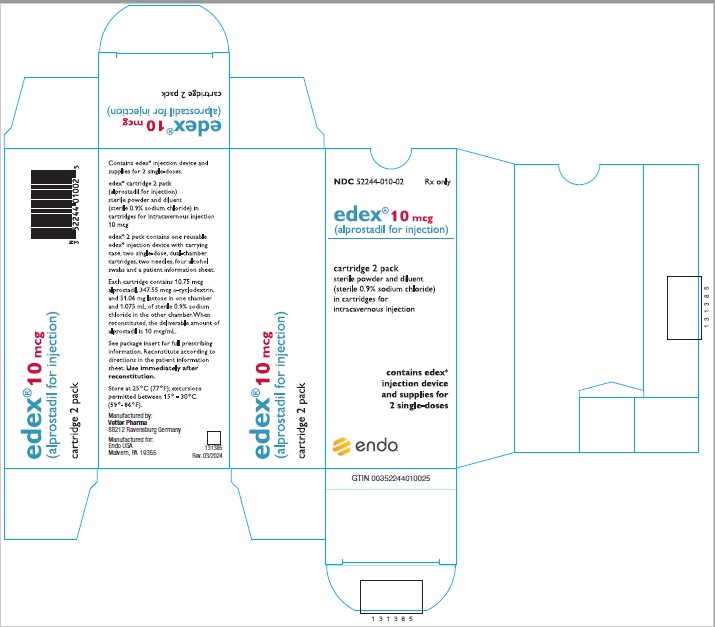
Edex alprostadil 20 ug/mL Injection, Powder, Lyophilized, For Solution — NDC 52244-020-06 (Billing 52244-0020-06)
This is a package of Edex alprostadil 20 ug/mL Injection, Powder, Lyophilized, For Solution from Endo USA, Inc., marketed since Jan 2012 and currently FDA-listed.
NDC database record
One package, one record: these facts belong to NDC 52244-020-06 alone.
- Record
- FDA NDC Directory package listing · Human prescription drug
- Code segments
- 52244 labeler · 020 product · 06 package
- Package marketed since
- Jan 15, 2012
- Sample package
- No — commercial package
- Listing certified through
- Dec 31, 2027
- Barcode (UPC-A, from the NDC)
- 3 5224402006 2
- FDA record last changed
- Jul 24, 2026
Identity & classification
Regulatory identifiers FDA, NLM and CMS codes for this package
Drug-database identifiers Medi-Span GPI and First Databank GCN / HICL / AHFS classification
- GSN (GCN sequence number): 021742
- GCN: 02291
- HICL (First Databank): 000177
- AHFS class code: 24:08.16.00
- RxCUI (RxNorm): 1234236
Where does this data come from?
- FDA openFDA NDC Directory · synced Oct 8, 2026
- FDA label on DailyMed · label index refreshed Oct 8, 2026
- RxNorm (NLM RxNav) · catalog refreshed Oct 1, 2026
- Medi-Span GPI (licensed)
- First Databank (licensed) · refreshed Oct 8, 2026
RxNorm drug class
This medicine belongs to the Prostaglandin Analog class.
Where does this data come from?
- RxClass (NLM) · catalog refreshed Oct 1, 2026
Clinical
Patient education
Supplement & herbal interactions
Where does this data come from?
- MedlinePlus (NLM) · refreshed Oct 8, 2026
- FDA label on DailyMed · label index refreshed Oct 8, 2026
Ask a licensed pharmacist directly — free, answered by our team.
Pricing
A drug doesn't have one price. Each row is a different public payment system, and none is what you'd pay at the counter — that depends on your insurance. The ⓘ on each row explains what it measures.
| Price system | Per mL | Per package |
|---|---|---|
| Retail pharmacies payNADAC · weekly | Not in the retail survey — common for institutional, discontinued, or low-volume packs. | |
| Medicaid paysCMS SDUD · 12 mo | No recent Medicaid claims on file for this NDC — rare and low-volume NDCs are suppressed in the public data. | |
| Medicare drug plans payPart D · quarterly | No Part D plan price is available for this NDC in our data. | |
Where does this data come from?
- CMS NADAC weekly file
- CMS ASP pricing files · refreshed Sep 20, 2026
- CMS Medicaid State Drug Utilization Data · refreshed Oct 8, 2026
- CMS Part D plan pricing files · refreshed Sep 24, 2026
- VA National Acquisition Center price file
Packaging — all sizes for this product
| Package NDC | Description | Per unit | Per pack | Marketing start | Marketing end | Status |
|---|---|---|---|---|---|---|
| 52244-0020-02 52244-020-02 Main listing | 2 BLISTER PACK in 1 CARTON / 1 CARTRIDGE in 1 BLISTER PACK / 1 mL in 1 CARTRIDGE | $237.37 / ea | $474.74 | 2012-01-15 | — | Active |
| 52244-0020-06 You're viewing this | 6 BLISTER PACK in 1 CARTON / 1 CARTRIDGE in 1 BLISTER PACK / 1 mL in 1 CARTRIDGE | — | — | 2012-01-15 | — | Active |
Pack size FAQ
What quantity is in this package?
What NDC number is used to bill for this package of Edex alprostadil 20 ug/mL Injection, Powder, Lyophilized, For Solution?
Prices are the latest CMS NADAC pharmacy acquisition cost per NDC; per-pack figures are per-unit × pack quantity, shown only when the pack is denominated in the same measure NADAC prices.
Therapeutic equivalents
| Product | Labeler | Pack | NADAC/unit | TE | Status | Price vs. this |
|---|---|---|---|---|---|---|
| Edex 20 ug/mLthis 52244-0020-06 | Endo | 1 cartridge | — | — | FDA listed | — |
Where does this data come from?
- FDA openFDA NDC Directory · synced Oct 8, 2026
- FDA Orange Book · refreshed Oct 3, 2026
- CMS NADAC weekly file
Availability & generic status
We did not find an FDA-approved generic match for this exact strength, form and route.
Where does this data come from?
- FDA Orange Book · refreshed Oct 3, 2026
Inactive Ingredients / Excipients
Inactive ingredients, also called excipients, are components of the drug product other than the active ingredient. They may include fillers, dyes, coatings, preservatives, flavors, or other formulation ingredients.
💡 Tap an ingredient (hover on desktop) to see what it is and why it’s used.
-
UNII Z1LH97KTRM
Alfadex is a chemically modified starch derived from corn or potato. It acts as a solubilizer and stabilizer in medicines, helping drugs dissolve better and remain stable in liquid formulations.
-
UNII J2B2A4N98G
Lactose is a natural sugar derived from milk. In medications, it serves as a filler and binder to add bulk and help hold tablet or capsule ingredients together during manufacturing.
-
UNII 451W47IQ8X
Sodium chloride is common table salt. It's used in medicines as a buffer to maintain proper pH, as a filler to add bulk, or to adjust the osmotic balance in liquid formulations.
-
UNII 059QF0KO0R
Water is a liquid solvent that dissolves and mixes ingredients together in liquid medicines, syrups, and injections. It helps distribute the active drug evenly throughout the product.
4 inactive ingredients listed in the exact product block matched to this NDC.
Where does this data come from?
ingredient classCode="IACT" elements from the exact product block matched by this NDC. Label-section narrative from DailyMed / the openFDA label index is shown separately when available.- FDA label on DailyMed · label index refreshed Oct 8, 2026
- FDA openFDA NDC Directory · synced Oct 8, 2026
Inactive ingredient FAQ
Are inactive ingredients the same for every manufacturer?
Why might an inactive ingredient be missing?
Can inactive ingredients matter?
Manufacturer & labeler
More NDCs from Endo USA, Inc. labeler code 52244
- Edex alprostadil 10 ug/mL Injection, Powder, Lyophilized, For Solution NDC 52244-010-02
- Edex alprostadil 40 ug/mL Injection, Powder, Lyophilized, For Solution NDC 52244-040-02
- Theo-24 theophylline anhydrous 100 mg Capsule, Extended Release NDC 52244-100-10
- Theo-24 theophylline anhydrous 200 mg Capsule, Extended Release NDC 52244-200-10
- Theo-24 theophylline anhydrous 300 mg Capsule, Extended Release NDC 52244-300-10
- Theo-24 theophylline anhydrous 400 mg Capsule, Extended Release NDC 52244-400-10
Where does this data come from?
- FDA openFDA NDC Directory · synced Oct 8, 2026
- Drugs@FDA
Full prescribing information FDA SPL
🎯 Indications and Usage ▾
INDICATIONS AND USAGE edex ® is indicated for the treatment of erectile dysfunction due to neurogenic, vasculogenic, psychogenic, or mixed etiology.
⏱️ Dosage and Administration ▾
DOSAGE AND ADMINISTRATION edex ® in the Treatment of Erectile Dysfunction The dosage range of edex ® for the treatment of erectile dysfunction is 1 to 40 mcg. The intracavernous injection should be given over a 5 to 10 second interval. In a study with a dose range of 1 to 20 mcg of edex ® , the mean dose was 10.7 mcg at the end of the dose titration period.
In two studies with a dose range of 1 to 40 mcg of edex ® , the mean dose was 21.9 mcg at the end of the dose titration period. Doses greater than 40 mcg have not been studied. A ½-inch, 27- to 30-gauge needle is generally recommended for the intracavernous injection.
The patient is advised not to exceed the optimum edex ® dose which was determined in the doctor's office. The lowest possible effective dose should always be used. Initial Titration in Physician's Office Erectile Dysfunction of Vasculogenic, Psychogenic, or Mixed Etiology : Dosage titration should be initiated at 2.5 mcg of alprostadil.
If there is a partial response, the dose may be increased by 2.5 mcg to a dose of 5 mcg and then in increments of 5 to 10 mcg, depending upon erectile response, until the dose that produces an erection suitable for intercourse and not exceeding a duration of 1 hour is reached. If there is no response to the initial 2.5-mcg dose, the second dose may be increased to 7.5 mcg, followed by increments of 5 to 10 mcg. The patient must stay in the physician's office until complete detumescence occurs.
If there is no response, then the next higher dose may be given within 1 hour. If there is a response, then there should be at least a 1-day interval before the next dose is given. Erectile Dysfunction of Pure Neurogenic Etiology (Spinal Cord Injury): Dosage titration should be initiated at 1.25 mcg of alprostadil.
The dose may be increased by 1.25 mcg to a dose of 2.5 mcg, followed by an increment of 2.5 mcg to a dose of 5 mcg, and then in 5-mcg increments until the dose that produces an erection suitable for intercourse and not exceeding a duration of 1 hour is reached. The patient must stay in the physician's office until complete detumescence occurs. If there is no response, then the next higher dose may be given within 1 hour.
If there is a response, then there should be at least a 1-day interval before the next dose is given. At-Home (Maintenance Therapy) Dosing Instructions The first injections of edex ® must be done at the physician's office by medically trained personnel. Self-injection therapy by the patient can be started only after the patient is properly instructed and well trained in the self-injection technique.
The physician should instruct the patient to discard any needles which become bent during the self-injection procedure as these needles may break. The physician should make a careful assessment of the patient's skills and competence with the self-injection procedure. The intracavernous injection must be done under sterile conditions.
The site of injection is usually along the lateral aspect of the proximal third of the penis. Visible veins should be avoided. The side of the penis that is injected and the site of injection must be alternated.
The injection site must be cleansed with an alcohol swab before injection. The dose of edex ® that is selected for self-injection treatment should provide the patient with an erection that is satisfactory for sexual intercourse and that is maintained for no longer than 1 hour. If the duration of erection is longer than 1 hour, the dose of edex ® should be reduced.
The lowest effective dose should be used at home. Self-injection therapy for use at home should be initiated at the dose that was determined in the physician's office. Dose adjustment may be required and should be made only after consultation with the physician.
Careful and continuous follow-up of the patient while in the self-injection program must be exercised. This is especially true for the initial self-injections, since adjustments in the dose of edex ® may… [Excerpted — this section continues on DailyMed.]
⛔ Contraindications ▾
CONTRAINDICATIONS edex ® should not be used: in men who have conditions that predispose them to priapism, such as sickle cell anemia or sickle cell trait, multiple myeloma, or leukemia (see WARNINGS ) . for the treatment of erectile dysfunction in men with fibrotic conditions of the penis, such as cavernosal fibrosis or Peyronie’s disease (see PRECAUTIONS ) . in men with penile implants
⚠️ Warnings ▾
WARNINGS Prolonged erections greater than four hours in duration occurred in 4% of all patients treated up to 24 months. The incidence of priapism (erections greater than 6 hours in duration) was <1% with long-term use for up to 24 months. In the majority of cases, spontaneous detumescence occurred.
Pharmacologic intervention and/or aspiration of blood from the corpora was necessary in 1.6% of 311 patients with prolonged erections/priapism. To minimize the chances of prolonged erection or priapism, edex ® should be titrated slowly to the lowest effective dose (see DOSAGE AND ADMINISTRATION ). The patient must be instructed to immediately report to his prescribing physician or, if unavailable, to seek immediate medical assistance for any erection that persists longer than six hours.
If priapism is not treated immediately, penile tissue damage and permanent loss of potency may result.
🤒 Adverse Reactions ▾
ADVERSE REACTIONS edex ® , administered by intracavernous injection in doses ranging from 1 to 40 mcg per injection for periods up to 24 months, has been evaluated in clinical trials for safety in over 1,065 patients with erectile dysfunction. Discontinuation of therapy due to a side effect in clinical trials was required in approximately 9% of patients treated with edex ® and in <1% of patients treated with placebo. Local Adverse Reactions The following local adverse reactions were reported in studies including 1,065 patients treated with edex ® for up to two years.
Penile Pain With use of up to 24 months, penile pain was reported at least once by 29% of patients during injection, 35% of patients during erection, and by 30% of patients after erection. On a per injection basis, 15% of injections were associated with penile pain. Penile pain was judged by patients to be mild in intensity for 80% of painful injections, moderate in intensity for 16% of painful injections, and severe in intensity for 4% of painful injections.
The frequency of penile pain reports decreased over time; 41% of the patients experienced pain during the first 2 months and 3% of the patients experienced pain during months 21 to 24. In placebo-controlled studies, penile pain was reported by 31% of patients after edex ® and by 9% of patients after placebo injection. Prolonged Erection/Priapism Prolonged erections greater than four hours in duration occurred in 4% of all patients treated up to 24 months.
In placebo-controlled studies, 3% of patients treated with edex ® and <1% of patients treated with placebo reported prolonged erections greater than four hours. The incidence of priapism (erections greater than 6 hours in duration) was <1% with long-term use for up to 24 months. In the majority of cases, spontaneous detumescence occurred.
A higher incidence of prolonged erections was found in younger patients (<40 years), non-diabetic patients, and patients with psychogenic etiology of erectile dysfunction ( See WARNINGS ). Hematoma/Ecchymosis In patients treated with edex ® for up to 24 months, local bleeding, hematoma, and ecchymosis were observed in 15%, 5%, and 4% of patients, respectively. In placebo-controlled studies, the frequency of local bleeding was 6% with injection of edex ® and 3% with injection of placebo.
In most cases, these reactions were attributed to faulty injection technique. Local Adverse Reactions Reported by ≥1% of Patients All Study Periods 1 Local Reaction edex® Local Reaction edex® N = 1065 N = 1065 n (%) n (%) Penile pain during injection 305 (29) Ecchymosis 44 (4) Penile pain during erection 368 (35) Penile angulation 72 (7) Penile pain after erection 317 (30) Penile fibrosis 52 (5) Penile pain (other) 2 116 (11) Cavernous body fibrosis 20 (2) Prolonged erection Peyronie's disease 11 (1) > 4 ≤ 6 Hours 44 (4) Faulty injection technique 3 59 (6) > 6 Hours 6 (<1) Penis disorder 28 (3) Bleeding 158 (15) Erythema 17 (2) Hematoma 56 (5) 1 Protocol Numbers KU-620-001, KU-620-002, KU-620-003, F-8653.
2 Penile pain reported without an association to injection site or erection, such as pain in penis and scrotum, pain in glans penis, and burning penile pain. 3 Examples include injection into glans penis, urethra or subcutaneously. Systemic Adverse Experiences The following systemic adverse experiences were reported in controlled and uncontrolled studies in ≥1% of patients treated for up to 24 months with edex ® .
Systemic Adverse Experiences Reported by ≥1% of Patients 1 BODY SYSTEM edex ® BODY SYSTEM edex ® BODY SYSTEM edex ® Adverse Experience N = 1065 Adverse Experience N = 1065 Adverse Experience N = 1065 n (%) n (%) n (%) RESPIRATORY CARDIOVASCULAR UROGENITAL Upper respiratory tract Hypertension 17 (2) Prostate disorder 15 (1) infection 58 (5) Myocardial infarction 13 (1) Testicular pain 13 (1) Sinusitis 14 (1) Abnormal ECG 12 (1) Inguinal hernia 11 (1) BODY AS A WHOLE Influenza-like symptoms 35 (3) METABOLIC/NUTRITIONAL DERMATOLOGIC… [Excerpted — this section continues on DailyMed.]
🔄 Drug Interactions ▾
Drug Interactions The pharmacodynamic interaction between heparin (5,000 units) and alprostadil intravenous infusion (90 mcg over 3 hours) was investigated. The results indicate significant changes in partial thromboplastin time (140% increase) and thrombin time (120% increase). Therefore, caution should be exercised with concomitant administration of heparin and edex ® . (Also, see Drug-Drug Interactions in CLINICAL PHARMACOLOGY, Pharmacokinetics .)
🤰 Pregnancy ▾
Pregnancy, Nursing Mothers and Pediatric Use edex ® is not indicated for use in women or pediatric patients.
🧓 Geriatric Use ▾
Geriatric Use Of the approximately 1,065 patients who entered the in-office dose-titration period in clinical studies, 25% were 65 years or older. In clinical studies, geriatric patients required, on average, higher minimally effective doses and had a higher rate of lack of effect (optimum dose not determined). Overall differences in safety were not observed between these geriatric patients and younger patients.
Geriatric patients should be dosed and titrated according to the same DOSAGE AND ADMINISTRATION recommendations as younger patients, and the lowest possible effective dose should always be used. This drug is known to be substantially excreted by the kidney, and the risk of toxic reactions to this drug may be greater in patients with impaired renal function. Because elderly patients are more likely to have decreased renal function, care should be taken in dose selection, and it may be useful to monitor renal function.
🆘 Overdosage ▾
OVERDOSAGE Limited data are available in regard to edex ® overdose in humans. Systemic reactions are uncommon with intracavernous injection of edex ® . Hypotension occurred in less than 1% of patients treated with edex ® .
A single dose rising tolerance study in healthy volunteers indicated that single intravenous doses of alprostadil from 1 to 120 mcg were well tolerated. Beginning with a 40 mcg bolus intravenous dose, the frequency of drug-related systemic adverse events increased in a dose-dependent manner, characterized mainly by facial flushing. The primary symptom of an edex ® overdose is a prolonged erection or priapism.
Because of the potential for tissue hypoxia and possible necrosis, it is strongly recommended to treat an erection lasting more than 6 hours. The patient is strongly encouraged to go to the nearest emergency room if his personal physician is not available. In the event of an overdose, supportive therapy according to the presence of other symptoms is recommended.
🧬 Clinical Pharmacology ▾
CLINICAL PHARMACOLOGY Alprostadil (PGE 1 ) is one of the prostaglandins, a family of naturally occurring acidic lipids with various pharmacological effects. Endogenous PGE 1 is derived from dihomo-gamma-linolenic acid, a fatty acid found within the phospholipids of cellular membranes. As an endogenous substance, PGE 1 exerts its biological effects either directly or indirectly by regulating and modifying the synthesis and effects of other hormones and mediators.
Mode of Action Alprostadil is a smooth muscle relaxant. Precontracted isolated preparations of the human corpus cavernosum, corpus spongiosum and cavernous artery are relaxed by alprostadil. Alprostadil has been shown to bind to specific receptors in human penile tissue.
Two types of receptors that differ in their PGE 1 binding affinity have been identified. The binding of alprostadil to its receptors is accompanied by an increase in intracellular cAMP levels. Human cavernous smooth muscle cells respond to alprostadil by releasing intracellular calcium into the surrounding medium.
Smooth muscle relaxation is associated with a reduction of the cytoplasmic free calcium concentration. Alprostadil also attenuates presynaptic noradrenaline release in the corpus cavernosum which is essential for the maintenance of a flaccid and non-erect penis. Alprostadil induces erection by relaxation of trabecular smooth muscle and by dilation of cavernous arteries.
This leads to expansion of lacunar spaces and entrapment of blood by compressing the venules against the tunica albuginea, a process referred to as the corporal veno-occlusive mechanism. Pharmacokinetics Alpha-Cyclodextrin After reconstitution, PGE 1 immediately dissociates from the α-cyclodextrin inclusion complex; the in vivo disposition of both components occurs independently after administration. After intravenous infusion of radiolabeled α-cyclodextrin to healthy volunteers, the radiolabeled components were rapidly eliminated within 24-hours, urine accounting for 81% to 83% of radioactivity and feces for 0.1%.
There was no evidence of significant accumulation of radiolabeled α-cyclodextrin in the body even after 7 days of repeated intravenous injection. After intracavernous administration in monkeys, radiolabeled α-cyclodextrin was rapidly distributed from the injection site with less than 0.1% of the dose remaining in the penis 1 hour after administration. There was no evidence of tissue retention of radiolabeled α-cyclodextrin in monkeys.
Alprostadil Absorption After intracavernous injection of 20 mcg of edex ® in 24 patients with erectile dysfunction, mean systemic plasma concentrations of PGE 1 increased from baseline of 0.8 ± 0.6 pg/mL to a peak (C max ) of 16.8 ± 18.9 pg/mL (corrected for baseline) within 2 to 5 minutes and dropped to endogenous plasma levels within 2 hours (Table 1). The absolute bioavailability of alprostadil estimated from systemic exposure was about 98% as compared to the same dose given by a short-term intravenous infusion. Distribution The volume of distribution for PGE 1 was not estimated.
Approximately 93% of PGE 1 found in plasma is protein-bound. Metabolism PGE 1 is metabolized in the corpus cavernosum after intracavernous administration. PGE 1 entering the systemic circulation is rapidly and extensively metabolized in the lungs with a first-pass pulmonary elimination of 60 to 90% of PGE 1 .
Enzymatic oxidation of the C15-hydroxy group followed by reduction of the C13, 14-double bond produces the primary metabolites, 15-keto-PGE 1 , 15-keto-PGE 0 , and PGE 0 . 15-keto-PGE 1 has only been detected in vitro in homogenized lung preparations, whereas 15-keto-PGE 0 and PGE 0 have been measured in plasma. Unlike the 15-keto metabolites which are less pharmacologically active than the parent compound, PGE 0 is similar in potency to PGE 1 in vitro using isolated animal organs.
After intracavernous injection of 20 mcg of edex ® to 24 patients with erectile dysfunction, mean systemic plasma 15-keto-… [Excerpted — this section continues on DailyMed.]
🧬 Mechanism of Action ▾
Mode of Action Alprostadil is a smooth muscle relaxant. Precontracted isolated preparations of the human corpus cavernosum, corpus spongiosum and cavernous artery are relaxed by alprostadil. Alprostadil has been shown to bind to specific receptors in human penile tissue.
Two types of receptors that differ in their PGE 1 binding affinity have been identified. The binding of alprostadil to its receptors is accompanied by an increase in intracellular cAMP levels. Human cavernous smooth muscle cells respond to alprostadil by releasing intracellular calcium into the surrounding medium.
Smooth muscle relaxation is associated with a reduction of the cytoplasmic free calcium concentration. Alprostadil also attenuates presynaptic noradrenaline release in the corpus cavernosum which is essential for the maintenance of a flaccid and non-erect penis. Alprostadil induces erection by relaxation of trabecular smooth muscle and by dilation of cavernous arteries.
This leads to expansion of lacunar spaces and entrapment of blood by compressing the venules against the tunica albuginea, a process referred to as the corporal veno-occlusive mechanism.
📦 How Supplied / Storage and Handling ▾
HOW SUPPLIED edex ® (alprostadil for injection) is available in single-dose, dual-chamber cartridges intended for use with the reusable edex ® injection device. One chamber of the cartridge contains 10.75, 21.5, or 43 mcg of alprostadil as a white, sterile, lyophilized powder. The other chamber contains 1.075 mL of sterile 0.9% sodium chloride.
When the cartridge is placed into the edex ® injection device and reconstituted, the deliverable amount of alprostadil in each milliliter is 10, 20, or 40 mcg, respectively. edex ® Cartridge 2 Pack contains one reusable edex ® injection device, two single-dose, dual-chamber cartridges, two ½-inch, 29-gauge (0.33 mm × 12.7 mm) needles, and four alcohol swabs. edex ® Cartridge 6 Pack contains one reusable edex ® injection device, six single-dose, dual-chamber cartridges, six ½-inch, 29-gauge (0.33 mm × 12.7 mm) needles, and twelve alcohol swabs.
The edex ® cartridges are supplied in the following packages: edex ® Cartridge 2 Pack (includes one injection device, two cartridges, two needles and four alcohol swabs) 10 mcg 1 × 2 Pack NDC 52244-010-02 20 mcg 1 × 2 Pack NDC 52244-020-02 40 mcg 1 × 2 Pack NDC 52244-040-02 edex ® Cartridge 6 Pack (includes one injection device, six cartridges, six needles and twelve alcohol swabs) 10 mcg 1 × 6 Pack NDC 52244-010-06 20 mcg 1 × 6 Pack NDC 52244-020-06 40 mcg 1 × 6 Pack NDC 52244-040-06 Store at 25°C (77°F); excursions permitted between 15°C - 30°C (59°F - 86°F).
📦 Storage and Handling ▾
Store at 25°C (77°F); excursions permitted between 15°C - 30°C (59°F - 86°F).
📋 Description ▾
DESCRIPTION edex ® (alprostadil for injection) is a sterile, pyrogen-free powder containing alprostadil in an alfadex (α-cyclodextrin) inclusion complex. Alprostadil is an endogenous substance known as prostaglandin E 1 (PGE 1 ). edex ® is supplied in single-dose, dual-chamber cartridges. edex ® is lyophilized in single-dose, dual-chamber cartridges intended for use with the reusable edex ® injection device. One chamber of the cartridge contains alprostadil, alfadex and lactose as a sterile, pyrogen-free powder.
The other chamber contains 1.075 mL of sterile 0.9% sodium chloride. The edex ® cartridges are supplied in three strengths: 10-mcg cartridge (10.75 mcg alprostadil, 347.55 mcg α-cyclodextrin, 51.06 mg lactose); 20-mcg cartridge (21.5 mcg alprostadil, 695.2 mcg α-cyclodextrin, 51.06 mg lactose); 40-mcg cartridge (43 mcg alprostadil, 1,390.3 mcg α-cyclodextrin, 51.06 mg lactose). The edex ® injection device is used to reconstitute the sterile powder in one chamber with the sterile 0.9% sodium chloride in the other chamber.
After reconstitution, the edex ® injection device is used to administer the intracavernous injection of alprostadil. The chemical name for alprostadil is (1R,2R,3R)-3-Hydroxy-2-[(E)-(3S)-3-hydroxy-1-octenyl]-5-oxocyclopentane heptanoic acid. The empirical formula is C 20 H 34 O 5 and the molecular weight is 354.49.
The chemical structure is: The α-cyclodextrin inclusion complex improves the water solubility of alprostadil. The empirical formula of α-cyclodextrin is C 36 H 60 O 30 and the molecular weight is 972.85. The chemical structure is: Alprostadil alfadex is a white, odorless, hygroscopic powder.
It is freely soluble in water and practically insoluble in ethanol, ethyl acetate and ether. After reconstitution, the active ingredient, alprostadil, immediately dissociates from the α-cyclodextrin inclusion complex. The reconstituted solution is clear and colorless and has a pH between 4.0 and 8.0.
When the single-dose, dual-chamber cartridge containing either 10.75, 21.5, or 43 mcg of alprostadil is placed into the edex ® injection device and reconstituted, the deliverable amount of alprostadil in each milliliter is 10, 20 or 40 mcg, respectively. alprostadil chemical structure α-cyclodextrin chemical structure
💬 Information for Patients ▾
Information for Patients To ensure safe and effective use of edex ® , the patient should be thoroughly instructed and trained in the self-injection technique before he begins intracavernous treatment with edex ® at home. The desirable dose should be established in the physician's office. The instructions for preparation of the edex ® solution should be carefully followed.
The reconstituted solution may initially appear cloudy due to small air bubbles. Do not use the solution if it remains cloudy, contains precipitates, or is discolored. The reconstituted solution should be gently mixed, not shaken.
A patient information pamphlet is included in each package of edex ® cartridges. edex ® should be used immediately after reconstitution. The patient should follow the instructions in the patient information pamphlet to limit the possibility of bacterial contamination. The reconstituted cartridge is designed for one use only and should be discarded after use.
The edex ® cartridge contains a solid layer or Iyophilized cake of dry white powder approximately 3/8" in thickness. A normal cake may appear cracked or crumbled. If the cartridge is damaged, the cake may shrink in size.
Do not use the cartridge if it appears damaged or the cake is substantially reduced in size. If the dosage prescribed is less than 1 mL of edex ® solution, excess solution will be expelled through the needle as the plunger is pushed and the upper rim of the top stopper reaches the correct volume mark for the prescribed dose. The needle must be properly discarded after use; it must not be reused or shared with other persons.
The dose of edex ® that is established in the physician's office should not be changed by the patient without consulting the physician. The patient may expect an erection to occur within 5 to 20 minutes. A standard treatment goal is to produce an erection lasting no longer than 1 hour. edex ® should be used no more than 3 times per week, with at least 24 hours between each use.
Patients should be aware of possible side effects of therapy with edex ® ; the most frequently occurring is penile pain during and/or after injection, usually mild to moderate in severity. A potentially serious adverse reaction with intracavernous therapy is priapism. Accordingly, the patient should be instructed to contact the physician's office immediately or, if unavailable, to seek immediate medical assistance if an erection persists for longer than 6 hours.
The patient should report any penile pain that was not present before or that increased in intensity, as well as the occurrence of nodules or hard tissue in the penis to his physician as soon as possible. As with any injection, infection is possible. Patients should be instructed to report to the physician any penile redness, swelling, tenderness or curvature of the erect penis.
The patient must visit the physician's office for regular checkups for assessment of the therapeutic benefit and safety of treatment with edex ® . Note: Individuals who are sexually active should be counseled about the protective measures that are necessary to guard against the spread of sexually transmitted diseases, including the human immunodeficiency virus (HIV). Use of intracavernous edex ® offers no protection from the transmission of sexually transmitted or blood-borne diseases.
The injection of edex ® can induce a small amount of bleeding at the site of injection. In patients infected with blood-borne diseases, this could increase the risk of transmission of blood-borne diseases between partners.
⚠️ Precautions ▾
PRECAUTIONS General 1) Intracavernous injections of edex ® can lead to increased peripheral blood levels of PGE 1 and its metabolites, especially in those patients with significant corpora cavernosa venous leakage. Increased peripheral blood levels of PGE 1 and its metabolites may lead to hypotension and/or dizziness. 2) Regular follow-up of patients, with careful examination of the penis at the start of therapy and at regular intervals (e.g.
3 months), is strongly recommended to identify any penile changes. The overall incidence of penile fibrosis, including Peyronie's disease, reported in clinical studies up to 24 months with edex ® was 7.8%. Treatment with edex ® should be discontinued in patients who develop penile angulation, cavernosal fibrosis, or Peyronie's disease.
Treatment can be resumed if the penile abnormality subsides. 3) The safety and efficacy of combinations of edex ® and other vasoactive agents have not been systematically studied. Therefore, the use of such combinations is not recommended.
4) After injection of the edex ® solution, compression of the injection site for five minutes, or until bleeding stops, is necessary. Patients on anticoagulants, such as warfarin or heparin, may have increased propensity for bleeding after intracavernous injection. 5) Underlying treatable medical causes of erectile dysfunction should be diagnosed and treated prior to initiation of therapy with edex ® .
6) edex ® uses a superfine (29 gauge) needle. As with all superfine needles, the possibility of needle breakage exists. Careful instruction in proper patient handling and injection techniques may minimize the potential for needle breakage.
7) The patient should be instructed not to reuse or to share needles or cartridges. As with all prescription medicines, the patient should not allow anyone else to use his medicine. 8) Cardiovascular Risk Related to Underlying Medical Conditions There is a potential for cardiac risk of sexual activity in patients with preexisting cardiovascular disease.
Therefore, treatments for erectile dysfunction, including edex ® , generally should not be used in men for whom sexual activity is inadvisable because of their underlying cardiovascular status. In addition, the evaluation of erectile dysfunction should include a determination of potential underlying causes and the identification of appropriate treatment following a complete medical assessment. Drug Interactions The pharmacodynamic interaction between heparin (5,000 units) and alprostadil intravenous infusion (90 mcg over 3 hours) was investigated.
The results indicate significant changes in partial thromboplastin time (140% increase) and thrombin time (120% increase). Therefore, caution should be exercised with concomitant administration of heparin and edex ® . (Also, see Drug-Drug Interactions in CLINICAL PHARMACOLOGY, Pharmacokinetics .) Information for Patients To ensure safe and effective use of edex ® , the patient should be thoroughly instructed and trained in the self-injection technique before he begins intracavernous treatment with edex ® at home.
The desirable dose should be established in the physician's office. The instructions for preparation of the edex ® solution should be carefully followed. The reconstituted solution may initially appear cloudy due to small air bubbles.
Do not use the solution if it remains cloudy, contains precipitates, or is discolored. The reconstituted solution should be gently mixed, not shaken. A patient information pamphlet is included in each package of edex ® cartridges. edex ® should be used immediately after reconstitution.
The patient should follow the instructions in the patient information pamphlet to limit the possibility of bacterial contamination. The reconstituted cartridge is designed for one use only and should be discarded after use. The edex ® cartridge contains a solid layer or Iyophilized cake of dry white powder approximately 3/8" in thickness.
A normal cake may appear cracked or c… [Excerpted — this section continues on DailyMed.]
🧬 Pharmacokinetics ▾
Pharmacokinetics Alpha-Cyclodextrin After reconstitution, PGE 1 immediately dissociates from the α-cyclodextrin inclusion complex; the in vivo disposition of both components occurs independently after administration. After intravenous infusion of radiolabeled α-cyclodextrin to healthy volunteers, the radiolabeled components were rapidly eliminated within 24-hours, urine accounting for 81% to 83% of radioactivity and feces for 0.1%. There was no evidence of significant accumulation of radiolabeled α-cyclodextrin in the body even after 7 days of repeated intravenous injection.
After intracavernous administration in monkeys, radiolabeled α-cyclodextrin was rapidly distributed from the injection site with less than 0.1% of the dose remaining in the penis 1 hour after administration. There was no evidence of tissue retention of radiolabeled α-cyclodextrin in monkeys. Alprostadil Absorption After intracavernous injection of 20 mcg of edex ® in 24 patients with erectile dysfunction, mean systemic plasma concentrations of PGE 1 increased from baseline of 0.8 ± 0.6 pg/mL to a peak (C max ) of 16.8 ± 18.9 pg/mL (corrected for baseline) within 2 to 5 minutes and dropped to endogenous plasma levels within 2 hours (Table 1).
The absolute bioavailability of alprostadil estimated from systemic exposure was about 98% as compared to the same dose given by a short-term intravenous infusion. Distribution The volume of distribution for PGE 1 was not estimated. Approximately 93% of PGE 1 found in plasma is protein-bound.
Metabolism PGE 1 is metabolized in the corpus cavernosum after intracavernous administration. PGE 1 entering the systemic circulation is rapidly and extensively metabolized in the lungs with a first-pass pulmonary elimination of 60 to 90% of PGE 1 . Enzymatic oxidation of the C15-hydroxy group followed by reduction of the C13, 14-double bond produces the primary metabolites, 15-keto-PGE 1 , 15-keto-PGE 0 , and PGE 0 .
15-keto-PGE 1 has only been detected in vitro in homogenized lung preparations, whereas 15-keto-PGE 0 and PGE 0 have been measured in plasma. Unlike the 15-keto metabolites which are less pharmacologically active than the parent compound, PGE 0 is similar in potency to PGE 1 in vitro using isolated animal organs. After intracavernous injection of 20 mcg of edex ® to 24 patients with erectile dysfunction, mean systemic plasma 15-keto-PGE 0 levels increased within 7 minutes from endogenous levels of 12.9 ± 11.8 pg/mL to a C max of 421 ± 337 pg/mL (corrected for baseline) followed by a decrease to baseline levels in several hours.
Mean systemic plasma PGE 0 levels increased within 20 minutes from endogenous levels of 0.6 ± 0.5 pg/mL to a C max of 3.9 ± 2.3 pg/mL (corrected for baseline) followed by a decrease to baseline levels in several hours. Excretion After further degradation of PGE 1 by beta and omega oxidation, the main metabolites are excreted primarily in urine (88%) and feces (12%) over 72 hours, and total excretion is essentially complete (92%) within 24 hours after administration. No unchanged PGE 1 has been found in the urine and there is no evidence of tissue retention of PGE 1 and its metabolites.
After intracavernous injection of 20 mcg of edex ® in patients with erectile dysfunction, the terminal half-lives (t ½ ) of 15-keto-PGE 0 and PGE 0 were calculated to be 40.9 ± 16.5 minutes and 63.2 ± 31.1 minutes, respectively. The terminal half-life of PGE 1 in healthy volunteers was calculated to be around 9 to 11 minutes which is consistent with that reported in the literature (8 minutes). Mean total body clearance of PGE 1 in patients with erectile dysfunction was calculated to be around 115 L/min after an intravenous infusion of 20 mcg alprostadil.
The above value exceeded cardiac output indicating extensive and rapid elimination of PGE 1 in the lungs and/or blood.
🔬 Clinical Studies ▾
Clinical Studies In two studies (protocol numbers KU-620-001 [Study 1] and KU-620-002 [Study 2]), the safety and efficacy of edex ® were evaluated in 347 men with a diagnosis of erectile dysfunction due to vasculogenic, neurogenic and/or mixed etiology. Each study consisted of three phases: an in-office dose-titration phase, a two-week double-blind cross-over phase at home, and an open-label at home treatment phase that lasted for 12 months (Study 1) or six months (Study 2). During the dose-titration phase, individualized optimum doses of edex ® were established.
Erectile response was measured by the Buckling Test to assess axial penile rigidity. A positive Buckling Test was achieved if the erect penis was able to support an axial load of 1.0 kg without buckling of the penile shaft. During the subsequent two-week double-blind, cross-over phase, patients self-injected edex ® or placebo at home.
Thereafter, patients continued to perform self-injections of open-label edex ® for six or 12 months, and the occurrence of an erection sufficient for sexual intercourse was documented following each injection.
📄 Carcinogenesis, Mutagenesis, Impairment of Fertility ▾
Carcinogenesis, Mutagenesis, Impairment of Fertility Long-term carcinogenicity studies have not been conducted. Alprostadil showed no evidence of mutagenicity in three in vitro assays including the AMES bacterial reverse mutation assay, a forward gene mutation assay in Chinese hamster lung (V79) cells, and a chromosome aberration assay in human peripheral lymphocytes. Alprostadil did not produce damage to chromosomes or the mitotic apparatus in the in vivo rat micronucleus test.
Alprostadil did not cause any adverse effects on fertility or general reproductive performance when administered intraperitoneally to male or female rats at dose levels from 2 to 200 mcg/kg/day. The high dose of 200 mcg/kg/day is about 300 times the maximum recommended human dose (MRHD) on a body weight basis. The human dose of edex ® is <1 mcg/kg (MRHD is 40 mcg and the calculation assumes a 60-kg subject).
📄 Patient Package Insert ▾
edex ® (alprostadil for injection) For Intracavernous Use Only Sterile Powder and Diluent (sterile 0.9% sodium chloride) in Cartridges PATIENT INFORMATION FOR edex ® CARTRIDGES Please read carefully before using. Rx Only Please read carefully before using. edex ® can only be obtained with a prescription from your doctor. You or your partner should be fully trained on the proper injection technique before using edex ® at home.
Be sure to use only the dose prescribed by your doctor. This leaflet provides a summary of information about your medicine. Please read this information carefully before you prepare the edex ® solution.
The reusable edex ® injection device is used to prepare and administer the edex ® solution. A convenient carrying case is provided for the reusable edex ® injection device. Carefully follow the instructions for administration which are described below.
For further information or advice, ask your doctor or pharmacist. Please keep this information in case you need to refer to it again. Erectile Dysfunction: Causes and Treatments There are several causes of erectile dysfunction, commonly known as impotence.
These include impaired blood circulation in the penis, nerve damage, hormonal imbalances, excessive alcohol use, emotional problems, and certain medications that you may be taking for other conditions. Smoking has an adverse effect on erectile function by accentuating the effects of other risk factors such as blood vessel disease or high blood pressure. Erectile dysfunction is often due to more than one of these causes.
Treatment for erectile dysfunction includes penile injections, medical devices that produce an erection, surgical procedures (e.g. penile bypass or implants), hormone treatment, psychological counseling, lifestyle changes, or a change in medication. You should not stop taking any prescription medications, unless told to do so by your doctor. Your doctor has prescribed edex ® , a penile injection, to treat your erectile dysfunction.
Use of edex ® edex ® is injected into a specific area of the penis (see injection directions below) and should produce an erection in 5 to 20 minutes. The erection can be expected to last up to one hour. You should not use edex ® more than 3 times a week.
Injections should be administered at least 24 hours apart. Ideally, the injection should be administered just prior to foreplay. If your partner experiences insufficient vaginal lubrication or painful vaginal sensations during intercourse, the use of a lubricant may be helpful.
Who should NOT use edex ® ? Men who have conditions that might result in long-lasting erections should not use edex ® . Some of these conditions include sickle cell anemia or trait, leukemia, and tumor of the bone marrow (multiple myeloma).
If you have any of these conditions, consult your doctor. Men with penile implants, severe penile curvature, or those who have been advised not to engage in sexual activity should not use edex ® . edex ® should not be used by women or children. What are the risks of using edex ® ?
Erections that last more than 6 hours can cause serious damage to the penile tissue and may result in permanent impotence. Call the prescribing physician or, if unavailable, seek professional help immediately if you still have an erection 6 hours after injection. Various treatment options for reversing a prolonged erection are available.
A common side effect of edex ® is mild to moderate pain during injection. The erection may also be associated with a painful sensation. If you experience severe pain, contact the prescribing physician.
Call your doctor if you notice any redness, lumps, swelling, tenderness or curvature of the erect penis. A small amount of bleeding at the injection site may occur. To prevent bruising, apply firm pressure to the injection site for 5 minutes.
Tell your doctor if you have a condition or are taking a medicine that interferes with blood clotting. There is a possibility of needle breakage with use… [Excerpted — this section continues on DailyMed.]
📄 Package Label / Principal Display Panel ▾
Principal Display Panel - 10 mcg 2pk 10 mcg 2 pk
Principal Display Panel - 10 mcg 6pk 10 mcg 6 pk
Principal Display Panel - 20 mcg 2pk 20 mcg 2pk
Principal Display Panel - 20 mcg 6pk 20 mcg 6pk
Principal Display Panel - 40 mcg 2pk 40 mcg 2pk
Principal Display Panel - 40 mcg 6pk 40 mcg 2pk
Medicare Part D spend CMS · PART D · 2025 (Q1-Q4)
About this NDC listing & data coverage
What data is (and isn’t) available for this NDC — tap to expand
| NDC identity (package / product / labeler codes) | ✓ Available |
| Labeler | ✓ Available |
| Product & package description | ✓ Available |
| Marketing category & status | ✓ Available |
| Active ingredient / dosage form / route | ✓ Available |
| FDA label (SPL via DailyMed) | ✓ Available |
| Package photos | ✓ Available |
| Inactive ingredients (structured) | ✓ Available |
| NADAC pharmacy acquisition price (CMS) | — Not published for this NDC CMS publishes NADAC only for NDCs reported in its retail-pharmacy survey. |
| Orange Book / therapeutic-equivalence data | — Not published for this NDC Applies only to products approved under an NDA/ANDA; many listings are out of scope. |
| HCPCS J-code billing crosswalk | — Not published for this NDC Most self-administered / retail products have no J-code — that is normal. |
| Medicaid utilization (CMS SDUD) | — Not published for this NDC CMS reports utilization only for NDCs with Medicaid claims above its privacy threshold. |