
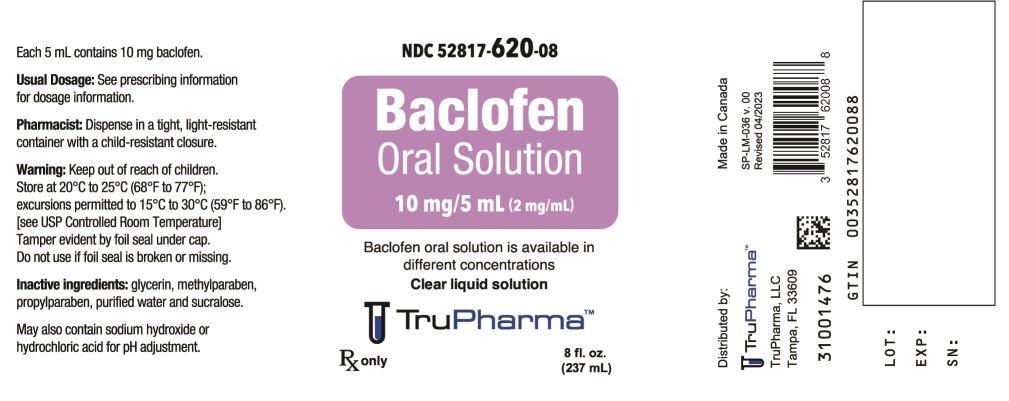
Baclofen 10 mg/5mL Solution, 237 mL
Other active recalls for Baclofen (different manufacturers) — 1 · tap to view
🆔 Identity & classification
Where does this data come from?
🏷️ RxNorm drug class
This medicine belongs to the gamma-Aminobutyric Acid-ergic Agonist class.
Where does this data come from?
🏭 Manufacturer & labeler
Where does this data come from?
🩺 Clinical
Baclofen is used to treat pain and certain types of spasticity (muscle stiffness and tightness) from multiple sclerosis, spinal cord injuries, or other spinal cord diseases. Baclofen is in a class of medications called skeletal muscle relaxants. Baclofen acts on the spinal cord nerves and decreases the number and severity of muscle spasms caused by multiple sclerosis or spinal cord conditions. It also relieves pain and improves muscle movement.
Read the full MedlinePlus article ↗- Baclofen is prescribed to reduce spasticity — the muscle stiffness, spasms, and rigidity that come with conditions like multiple sclerosis or spinal cord injury. Oral forms are als...
- What exactly is baclofen being used to treat — and will it help my pain too?
- Yes, and this is really important. Stopping baclofen suddenly — especially the pump form — can cause a dangerous withdrawal reaction: your spasticity can return much worse than bef...
- I heard you can't just stop taking baclofen — is that really true?
Patient education
Supplement & herbal interactions
Some supplements/herbs that may interact with Baclofen — tap one for details:
Where does this data come from?
Ask a licensed pharmacist directly — free, answered by our team.
🧪 Inactive Ingredients / Excipients
Inactive ingredients, also called excipients, are components of the drug product other than the active ingredient. They may include fillers, dyes, coatings, preservatives, flavors, or other formulation ingredients.
💡 Tap an ingredient (hover on desktop) to see what it is and why it’s used.
-
UNII PDC6A3C0OX
Glycerin is a clear, thick liquid derived from plant oils or fats. It acts as a humectant to retain moisture, a sweetener, and a solvent in medications.
-
UNII A2I8C7HI9T
Methylparaben is a preservative derived from benzoic acid that prevents growth of bacteria, fungi, and mold in medicines. It extends the product's shelf life and maintains safety during storage.
-
UNII Z8IX2SC1OH
Propylparaben is a chemical preservative used to prevent bacterial and fungal growth in medicines and personal care products. It helps extend shelf life and maintain product safety during storage.
-
UNII 96K6UQ3ZD4
Sucralose is a synthetic sweetener made from sugar. It's added to medicines to improve taste without adding calories, helping make bitter or unpleasant-tasting drugs easier to take.
-
UNII 059QF0KO0R
Water is a liquid solvent that dissolves and mixes ingredients together in liquid medicines, syrups, and injections. It helps distribute the active drug evenly throughout the product.
5 inactive ingredients listed in the exact product block matched to this NDC.
Where does this data come from?
ingredient classCode="IACT" elements from the exact product block matched by this NDC. Label-section narrative from DailyMed / the openFDA label index is shown separately when available.Inactive ingredient FAQ
Are inactive ingredients the same for every manufacturer?
Why might an inactive ingredient be missing?
Can inactive ingredients matter?
💲 Pricing
A drug doesn't have one price. Each row is a different public payment system, and none is what you'd pay at the counter — that depends on your insurance. The ⓘ on each row explains what it measures.
| Price system | Per mL | Per package |
|---|---|---|
| Retail pharmacies payNADAC · weekly | $2.085 | $494.05 / 237 ml |
| Medicaid paysCMS SDUD · 12 mo | $2.45 | $581.65 / 237 ml |
| Medicare drug plans payPart D · Q2 2026 | $2.64 | $625.37 / 237 ml |
Where does this data come from?
🔁 Therapeutic equivalents
| Product | Labeler | Pack | NADAC/unit | TE | Status | Price vs. this |
|---|---|---|---|---|---|---|
| Baclofen 10 mg/5mLthis 52817-0620-08 | TRUPHARMA, | 237 ml | $2.085 | AA | Availability likely | — |
| Baclofen 10 mg/5mL 17856-0620-01 | Atlantic | 72 cups | — | AA | FDA listed | — |
| Baclofen 10 mg/5mL 68134-0403-16 | Palmetto | 473 ml | — | AA | FDA listed | — |
| Ozobax Ds 10 mg/5mL 69528-0302-08 | Rosemont | 237 ml | — | AA | FDA listed | — |
| Baclofen 10 mg/5mL 72834-0602-16 | Rosemont | 473 ml | — | AA | Discontinued | — |
| Baclofen 10 mg/5mL 72888-0466-01 | Advagen | 473 ml | — | — | FDA listed | — |
Where does this data come from?
⏳ Availability & generic status
FDA-approved generic versions are listed, and recent pricing/market data suggests they may be available — see Therapeutic equivalents.
Why the date isn’t exact: Generic timing can change because patents may be challenged, settled, licensed, added, removed, or worked around with a narrower label — and FDA approval does not always mean a pharmacy can get the generic today.
🛈 What do these terms mean?
- Patent
- Legal protection listed in the Orange Book that may delay generic approval or launch. Issued by the U.S. Patent & Trademark Office.
- Substance patent
- Covers the active drug molecule itself — the hardest to design around. A generic generally can’t launch until it expires.
- Formulation (product) patent
- Covers a specific formulation or dosage form. A generic can sometimes work around it with a different formulation.
- Method-of-use patent
- A patent covering one specific approved use of the drug — not necessarily the whole molecule. A generic can sometimes launch with a “skinny label” that carves out the protected use and keeps the others.
- Skinny label
- A generic label that omits a still-patented use when the FDA allows it — letting a generic reach the market for the unprotected uses.
- Exclusivity
- FDA-granted marketing protection, separate from patents — e.g. 5-yr new chemical entity, 7-yr orphan drug, or a +6-month pediatric extension.
- Paragraph IV
- A generic applicant’s formal challenge to a listed patent. It can potentially lead to earlier generic entry, but often involves litigation or a settlement.
- RLD / RS
- Reference Listed Drug — the brand product the FDA uses as the reference for generic applications. Reference Standard — the product the FDA expects generics to compare against in bioequivalence testing.
- TE / AB rating
- FDA therapeutic-equivalence rating. An AB rating generally means the FDA considers a generic therapeutically equivalent to — and substitutable for — the brand.
- LOE (loss of exclusivity)
- The latest patent or exclusivity currently listed — the loss-of-exclusivity / latest-listed-protection date shown on this page. Paragraph-IV challenges and settlements can move the real date earlier; FDA approval and a manufacturer’s decision to market can move it later.
Built from the FDA Orange Book. The bars above are scaled to each protection’s expiry; the red LOE marker is the last one to lapse.
| Patent | Type | Use code | Expires |
|---|---|---|---|
| US 10610502 ↗ | Method of use | U-2779 | Aug 30, 2039 |
Is there a generic version of BACLOFEN 10 MG/5 ML SOLUTION?
The FDA approved a generic — why can’t I get it at my pharmacy yet?
Why do different websites show different generic release dates?
What does “FDA listed” mean?
What does a patent or protection date mean here?
What does “current Orange Book estimate” mean?
Can a generic come out before the last patent expires?
Can a generic come out after the listed dates?
What is the difference between patents and exclusivity?
Why are there multiple patent dates?
Where does this data come from?
🗺️ Medicaid utilization & spend
📊 Medicare Part D spend CMS · PART D · 2026 (Q1)
🔬 Reported adverse events (FAERS)
Top reported reactions
Reporter sex
Serious outcomes
Where does this data come from?
📦 Packaging — all sizes for this product
| Package NDC | Description | Marketing start | Status |
|---|---|---|---|
| 52817-0620-08 You're viewing this | 237 mL in 1 BOTTLE (52817-620-08) | 2023-10-12 | Active |
📄 Full prescribing information FDA SPL
🎯 Indications and Usage ▾
1 INDICATIONS AND USAGE Baclofen oral solution is indicated for the treatment of spasticity resulting from multiple sclerosis, particularly for the relief of flexor spasms and concomitant pain, clonus, and muscular rigidity. Baclofen oral solution may also be of some value in patients with spinal cord injuries and other spinal cord diseases. Limitations of Use Baclofen oral solution is not indicated in the treatment of skeletal muscle spasm resulting from rheumatic disorders.
Baclofen oral solution is a gamma-aminobutyric acid (GABA-ergic) agonist indicated for the treatment of spasticity resulting from multiple sclerosis, particularly for the relief of flexor spasms and concomitant pain, clonus, and muscular rigidity. ( 1 ) Baclofen oral solution may also be of some value in patients with spinal cord injuries and other spinal cord diseases. ( 1 ) Limitations of Use Baclofen oral solution is not indicated in the treatment of skeletal muscle spasm resulting from rheumatic disorders ( 1 )
⏱️ Dosage and Administration ▾
2 DOSAGE AND ADMINISTRATION Baclofen oral solution is available in multiple concentrations; include both the total dose in mg and the total dose in volume on prescriptions ( 2.1 ) Initiate baclofen oral solution with a low dosage, preferably in divided doses, administered orally. Increase gradually based on clinical response and tolerability. ( 2.2 ) The maximum dosage is 80 mg daily (20 mg four times a day).
( 2.2 ) When discontinuing, reduce the dosage slowly. ( 2.3 )
2.1Important Dosage Information Baclofen oral solution is available in multiple concentrations; ensure accuracy when prescribing, dispensing and administering baclofen oral solution to avoid dosing errors due to confusion between mg and mL, and with other baclofen oral solutions of different concentrations. When writing prescriptions, include both the total dose in mg and the total dose in volume.
2.2Recommended Dosage Initiate baclofen oral solution with a low dosage, preferably in divided doses, administered orally. The following gradually increasing dosage regimen is suggested, but should be adjusted based on clinical response and tolerability: 5 mg (2.5 mL) three times a day for three days 10 mg (5 mL) three times a day for three days 15 mg (7.5 mL) three times a day for three days 20 mg (10 mL) three times a day for three days Additional increases may be necessary up to the maximum recommended dosage of 80 mg daily (20 mg four times a day).
2.3Discontinuation of Baclofen Oral Solution When discontinuing baclofen oral solution, reduce the dosage slowly and avoid abrupt withdrawn from the drug to help minimize the risk of adverse reactions [see Warnings and Precautions ( 5.1 )].
💊 Dosage Forms and Strengths ▾
3 DOSAGE FORMS AND STRENGTHS Oral Solution: 10 mg/5 mL baclofen as a clear, colorless solution Oral Solution: 10 mg/5 mL ( 3 )
⛔ Contraindications ▾
4 CONTRAINDICATIONS Baclofen oral solution is contraindicated in patients with hypersensitivity to baclofen. Hypersensitivity to baclofen ( 4 )
⚠️ Warnings and Cautions ▾
5 WARNINGS AND PRECAUTIONS Abrupt discontinuation of baclofen has resulted in serious adverse reactions including death; therefore, reduce the dosage slowly when baclofen oral solution is discontinued. ( 5.1 ) Neonatal withdrawal symptoms can occur; gradually reduce the dosage and discontinue baclofen oral solution before delivery. ( 5.2 ) Baclofen oral solution can cause drowsiness and sedation.
Patients should avoid the operation of automobiles or other dangerous machinery until they know how the drug affects them. Advise patients that the central nervous system effects of baclofen oral solution may be additive to those of alcohol and other CNS depressants. ( 5.3 ) Baclofen oral solution can cause exacerbation of the following: psychotic disorders, schizophrenia, or confusional states; autonomic dysreflexia; epilepsy.
Use with caution in patients with these conditions ( 5.5 , 5.6 , 5.7 )
5.1Adverse Reactions from Abrupt Withdrawal of Baclofen Oral Solution Abrupt discontinuation of baclofen, regardless of the cause, has resulted in adverse reactions that include hallucinations, seizures, high fever, altered mental status, exaggerated rebound spasticity, and muscle rigidity, that in rare cases has advanced to rhabdomyolysis, multiple organ-system failure, and death. Therefore, reduce the dosage slowly when baclofen oral solution is discontinued, unless the clinical situation justifies a rapid withdrawal.
5.2Neonatal Withdrawal Symptoms Withdrawal symptoms in neonates whose mothers were treated with oral baclofen throughout pregnancy have been reported starting hours to days after delivery. The symptoms of withdrawal in these infants have included increased muscle tone, tremor, jitteriness, and seizure. If the potential benefit justifies the potential risk to the fetus and baclofen oral solution is continued during pregnancy, gradually reduce the dosage and discontinue baclofen oral solution before delivery.
If slow withdrawal is not feasible, advise the parents or caregivers of the exposed neonate of the potential for neonatal withdrawal.
5.3Drowsiness and Sedation Drowsiness and sedation have been reported in up to 63% of patients taking baclofen, the active ingredient in baclofen oral solution [see Adverse Reactions ( 6.1 )] . Patients should avoid operation of automobiles or other dangerous machinery and activities made hazardous by decreased alertness when starting baclofen oral solution or increasing the dose until they know how the drug affects them. Advise patients that the central nervous system depressant effects of baclofen oral solution may be additive to those of alcohol and other CNS depressants.
5.4Poor Tolerability in Stroke Patients Baclofen oral solution should be used with caution in patients who have had a stroke. Baclofen has not significantly benefited patients with stroke. These patients have also shown poor tolerability to the drug.
5.5Exacerbation of Psychotic Disorders, Schizophrenia, or Confusional States Baclofen oral solution should be used with caution in patients suffering from psychotic disorders, schizophrenia, or confusional states. If treated with baclofen oral solution, these patients should be kept under careful surveillance because exacerbations of these conditions have been observed with oral baclofen administration.
5.6Exacerbation of Autonomic Dysreflexia Baclofen oral solution should be used with caution in patients with a history of autonomic dysreflexia. The presence of nociceptive stimuli or abrupt withdrawal of baclofen oral solution may cause an autonomic dysreflexic episode.
5.7Exacerbation of Epilepsy Baclofen oral solution should be used with caution in patients with epilepsy. Deterioration in seizure control has been reported in patients taking baclofen.
5.8Posture and Balance Effects Baclofen oral solution should be used with caution in patients where spasticity is utilized to sustain upright posture and balance in locomotion or whenever spasticity is utilized to obta…
🤒 Adverse Reactions ▾
6 ADVERSE REACTIONS The following clinically significant adverse reactions are described elsewhere in the labeling: Adverse Reactions from Abrupt Withdrawal of Baclofen Oral Solution [see Warnings and Precautions ( 5.1 )] Neonatal Withdrawal Symptoms [see Warnings and Precautions ( 5.2 )] Drowsiness and Sedation [see Warnings and Precautions ( 5.3 )] Poor Tolerability in Stroke Patients [see Warnings and Precautions ( 5.4 )] Exacerbation of Psychotic Disorders, Schizophrenia, or Confusional States [see Warnings and Precautions ( 5.5 )] Exacerbation of Autonomic Dysreflexia [see Warnings and Precautions ( 5.6 )] Exacerbation of Epilepsy [see Warnings and Precautions ( 5.7 )] Posture and Balance Effects [see Warnings and Precautions ( 5.8 )] Ovarian Cysts [see Warnings and Precautions ( 5.9 )] The most common (up to 15% or more) adverse reactions in patients were drowsiness, dizziness, and weakness.
( 6.1 ) To report SUSPECTED ADVERSE REACTIONS, contact TruPharma, LLC at 1-877-541-5504 or FDA at 1-800-FDA-1088 or www.fda.gov/medwatch.
6.1Clinical Trials Experience Because clinical trials are conducted under widely varying conditions, adverse reaction rates observed in the clinical trials of a drug cannot be directly compared to rates in the clinical trials of another drug and may not reflect the rates observed in practice. The most common adverse reaction is transient drowsiness. In one controlled study of 175 patients, transient drowsiness was observed in 63% of those receiving baclofen compared to 36% of those in the placebo group.
Other common adverse reactions (up to 15%) are dizziness and weakness. Adverse reactions with a frequency of ≥1% are listed in Table 1. Table 1.
Common (≥1%) Adverse Reactions in Patients Treated with Baclofen for Spasticity ADVERSE REACTION PERCENT Drowsiness 10-63% Dizziness 5-15% Weakness 5-15% Nausea 4-12% Confusion 1-11% Hypotension 0-9% Headache 4-8% Insomnia 2-7% Constipation 2-6% Urinary Frequency 2-6% Fatigue 2-4% The following adverse reactions not included in Table 1, classified by body system, were also reported: Neuropsychiatric: euphoria, excitement, depression, hallucinations, paresthesia, muscle pain, tinnitus, slurred speech, coordination disorder, tremor, rigidity, dystonia, ataxia, blurred vision, nystagmus, strabismus, miosis, mydriasis, diplopia, dysarthria, epileptic seizure Cardiovascular: dyspnea, palpitation, chest pain, syncope Gastrointestinal: dry mouth, anorexia, taste disorder, abdominal pain, vomiting, diarrhea, and positive test for occult blood in stool Genitourinary: enuresis, urinary retention, dysuria, impotence, inability to ejaculate, nocturia, hematuria Other: rash, pruritus, ankle edema, excessive perspiration, weight gain, nasal congestion The following laboratory tests have been found to be abnormal in patients receiving baclofen: increased SGOT, elevated alkaline phosphatase, and elevation of blood sugar.
🔄 Drug Interactions ▾
7 DRUG INTERACTIONS
7.1CNS Depressants and Alcohol Baclofen oral solution can cause CNS depression, including drowsiness and sedation, which may be additive when used concomitantly with other CNS depressants or alcohol [see Warnings and Precautions ( 5.3)].
👥 Use in Specific Populations ▾
8 USE IN SPECIFIC POPULATIONS Pregnancy: Based on animal data, may cause fetal harm ( 8.1 ) Because baclofen is excreted unchanged through the kidneys it may be necessary to reduce the dosage in patients with impaired renal function. ( 8.6 )
8.1Pregnancy Risk Summary There are no adequate data on the developmental risk associated with the use of baclofen oral solution in pregnant women. Oral administration of baclofen to pregnant rats resulted in an increased incidence of fetal structural abnormalities at a dose which was also associated with maternal toxicity. The background risk of major birth defects and miscarriage for the indicated population is unknown.
In the U.S. general population, the estimated background risk of major birth defects and miscarriage in clinically recognized pregnancies is 2-4% and 15-20%, respectively. Clinical Considerations Fetal/Neonatal adverse reactions Baclofen oral solution may increase the risk of late-onset neonatal withdrawal symptoms [see Warnings and Precautions ( 5.2 )] . Data Animal Data Baclofen given orally has been shown to increase the incidence of omphaloceles (ventral hernias) in fetuses of rats given approximately 13 times on a mg/kg basis, or 3 times on a mg/m 2 basis, the maximum oral dose recommended for human use; this dose also caused reductions in food intake and weight gain in the dams.
This abnormality was not seen in mice or rabbits.
8.2Lactation Risk Summary At recommended oral doses, baclofen is present in human milk. There are no human data on the effects of baclofen on milk production. There are no adequate data on the effects of baclofen on the breastfed infant.
Withdrawal symptoms can occur in breastfed infants when maternal administration of baclofen oral solution is stopped, or when breastfeeding is stopped [see Warnings and Precautions ( 5.2 )] . The developmental and health benefits of breastfeeding should be considered along with the mother’s clinical need for baclofen oral solution and any potential adverse effects on the breastfed infant from baclofen oral solution or from the underlying maternal condition.
8.4Pediatric Use Safety and effectiveness in pediatric patients below the age of 12 have not been established.
8.5Geriatric Use In general, dose selection for an elderly patient should be cautious, usually starting at the low end of the dosing range, reflecting the greater frequency of decreased hepatic, renal, or cardiac function, and of concomitant disease or other drug therapy.
8.6Renal Impairment Because baclofen is primarily excreted unchanged through the kidneys, baclofen oral solution should be given with caution to patients with renal impairment, and it may be necessary to reduce the dosage.
🆘 Overdosage ▾
10 OVERDOSAGE
10.1Symptoms of Baclofen Overdose Patients may present in coma or with progressive drowsiness, lightheadedness, dizziness, somnolence, accommodation disorders, respiratory depression, seizures, or hypotonia progressing to loss of consciousness.
10.2Treatment for Overdose The treatment of baclofen overdose includes gastric decontamination, maintaining an adequate airway and respirations.
🧬 Clinical Pharmacology ▾
12 CLINICAL PHARMACOLOGY
12.1Mechanism of Action The precise mechanism of action of baclofen is not fully understood. Baclofen inhibits both monosynaptic and polysynaptic reflexes at the spinal level, possibly by decreasing excitatory neurotransmitter release from afferent terminals, although actions at supraspinal sites may also occur and contribute to its clinical effect. Baclofen is a structural analog of the inhibitory neurotransmitter gamma- aminobutyric acid (GABA), and may exert its effects by stimulation of the GABA B receptor subtype.
12.2Pharmacodynamics Baclofen has been shown to have general CNS depressant properties, as indicated by the production of sedation with tolerance, somnolence, ataxia, and respiratory and cardiovascular depression [see Warnings and Precautions ( 5.3 ), Adverse Reactions ( 6.1 ), and Overdosage ( 10.1 )].
12.3Pharmacokinetics A pharmacokinetic study in heathy adult male subjects under fasting conditions at 20 mg dose level demonstrated similar bioavailability for baclofen oral solution (5 mg/5 mL) and oral tablets. The peak plasma concentrations were achieved in about 0.75 hours from oral solution and the apparent elimination half-life is about 5.7 hours. Baclofen is excreted primarily by the kidney in unchanged form, and there is relatively large intersubject variation in absorption and/or elimination.
📦 How Supplied / Storage and Handling ▾
16 HOW SUPPLIED/STORAGE AND HANDLING
16.1How Supplied Baclofen Oral Solution contains 10 mg/5 mL baclofen. It is a clear, colorless solution and is supplied in bottles of 237 mL (NDC 52817-620-08).
16.2Storage and Handling Store at 20°C to 25°C (68°F to 77°F); excursions permitted to 15°C to 30°C (59°F to 86°F) [see USP Controlled Room Temperature]. Dispense in a tight, light-resistant container with a child-resistant closure.
📋 Description ▾
11 DESCRIPTION Baclofen oral solution is a gamma-aminobutyric acid (GABA-ergic) agonist available as 10 mg/5 mL solution for oral administration. Its chemical name is 4-amino-3-(4-chlorophenyl)-butanoic acid, and its structural formula is: Molecular formula is C 1O H 12 CINO 2 . Molecular Weight is 213.66.
Baclofen USP is a white to off-white, odorless or practically odorless crystalline powder. It is slightly soluble in water, very slightly soluble in methanol, and insoluble in chloroform. The baclofen oral solution inactive ingredients are: glycerin, methylparaben, propylparaben, purified water, and sucralose.
May also contain sodium hydroxide or hydrochloric acid for pH adjustment. bac structure
💬 Information for Patients ▾
17 PATIENT COUNSELING INFORMATION Administration Instructions Instruct patients or caregivers to use an oral dosing syringe to correctly measure the prescribed amount of medication. Inform patients that oral dosing syringes may be obtained from their pharmacy. Risks Related to Sudden Withdrawal of Baclofen Oral Solution Advise patients and caregivers not to discontinue use of baclofen oral solution without consulting with their healthcare provider because sudden withdrawal of baclofen oral solution can result in serious complications that include hallucinations, seizures, high fever, confusion, muscle stiffness, multiple organ-system failure, and death [see Warnings and Precautions ( 5.1 )].
Inform patients that early symptoms of baclofen oral solution withdrawal may include increased spasticity, itching, and tingling of extremities. Neonatal Withdrawal Symptoms Advise patients to notify their healthcare provider if they are pregnant, plan to become pregnant, or plan to breastfeed [see Warnings and Precautions ( 5.2 ) and Use in Specific Populations ( 8.2 )]. Increased Risk of Drowsiness with Alcohol and Other CNS Depressants Advise patients that baclofen oral solution may cause drowsiness, and that they should avoid the operation of automobiles or other dangerous machinery, or activities made hazardous by decreased alertness when starting baclofen oral solution or increasing the dose until they know how the drug affects them [see Warnings and Precautions ( 5.3 )].
Inform patients and their caregivers that the drowsiness associated with baclofen oral solution use can be worsened by alcohol and other CNS depressants. Advise patients to read all medicine labels carefully, and to tell their healthcare provider about all prescription and nonprescription drugs they may use. Distributed by: TruPharma, LLC Tampa, FL 33609