
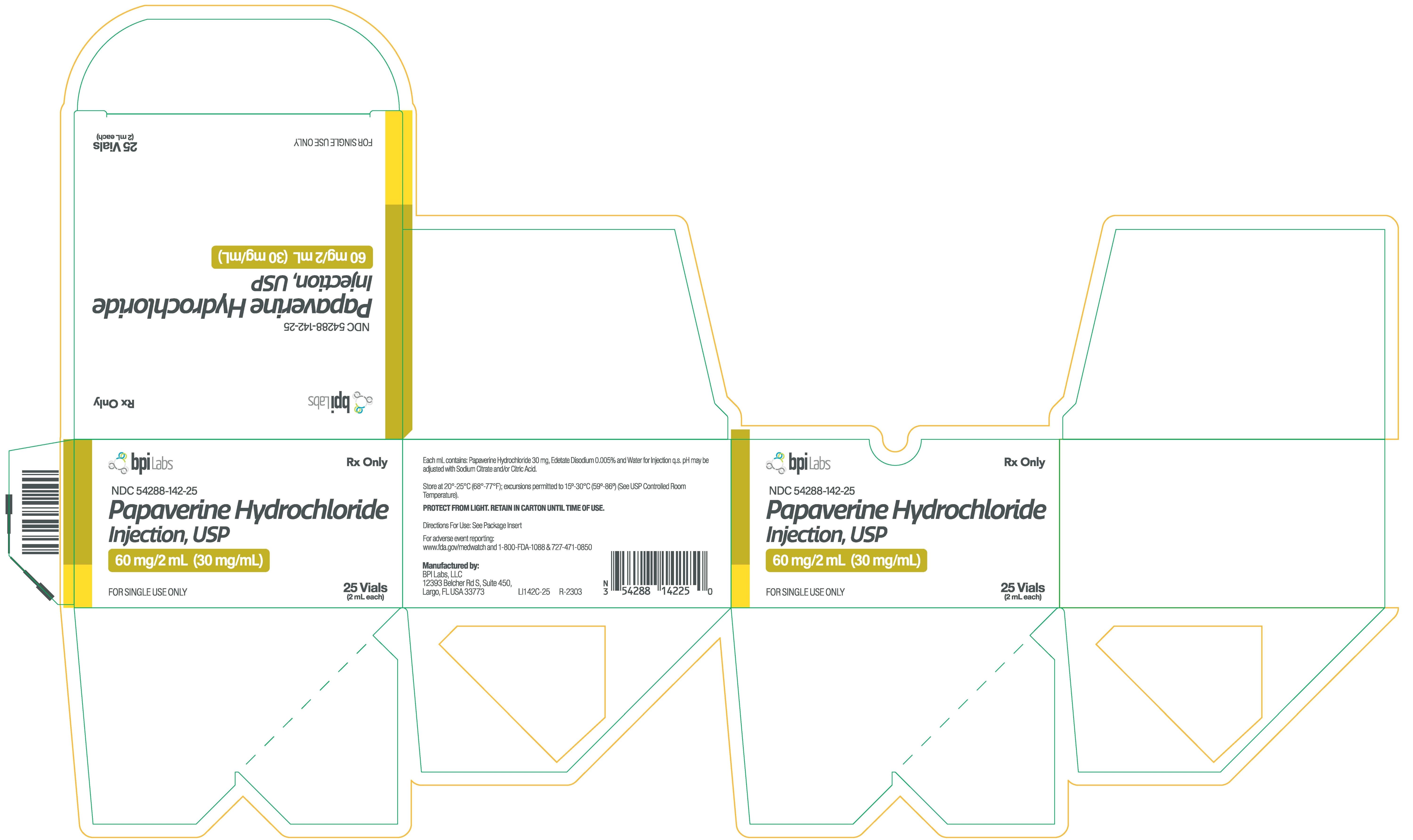
PAPAVERINE HYDROCHLORIDE 30 mg/mL Injection, Solution
Other active recalls for Papaverine Hydrochloride (different manufacturers) — 1 · tap to view
🆔 Identity & classification
Where does this data come from?
🏷️ RxNorm drug class
This medicine belongs to the Papaverine and derivatives class.
Where does this data come from?
🏭 Manufacturer & labeler
Where does this data come from?
🩺 Clinical
- Papaverine is used to relax muscles that have gone into spasm — particularly in blood vessels and internal organs. Your doctor might use it during or after a heart attack, an arter...
- A nurse or doctor will give it to you as an injection — either into a vein or into a muscle. If it goes into a vein, they'll inject it very slowly over a minute or two. That slow p...
- The most common ones are flushing of the face, sweating, nausea, headache, and dizziness. You might also notice your heart beating a bit faster or feel unusually drowsy. Most of th...
- Yes — though they're uncommon. Yellowing of your skin or the whites of your eyes, unusually dark urine, or extreme tiredness could be signs of liver inflammation (hepatitis), which...
Patient education
Supplement & herbal interactions
Where does this data come from?
Ask a licensed pharmacist directly — free, answered by our team.
🧪 Inactive Ingredients / Excipients
Inactive ingredients, also called excipients, are components of the drug product other than the active ingredient. They may include fillers, dyes, coatings, preservatives, flavors, or other formulation ingredients.
💡 Tap an ingredient (hover on desktop) to see what it is and why it’s used.
-
UNII 2968PHW8QP
A weak organic acid derived from citrus fruits or made through fermentation. It works as a buffer to control pH, a preservative to extend shelf life, and a flavoring agent in medications.
-
UNII 7FLD91C86K
Edetate disodium is a chemical compound that binds and removes certain metal ions. In medicines, it acts as a preservative and stabilizer by preventing metals like calcium from interfering with the product's shelf life and consistency.
-
UNII N762921K75
A colorless, odorless gas that makes up most of the air we breathe. In medicines, it's used as a packaging gas or propellant to protect products from oxidation and maintain freshness.
-
UNII B22547B95K
A salt derived from citric acid that helps maintain the proper acid-base balance in the medicine. It's used as a buffer to keep the product stable and at the right pH level.
-
UNII 059QF0KO0R
Water is a liquid solvent that dissolves and mixes ingredients together in liquid medicines, syrups, and injections. It helps distribute the active drug evenly throughout the product.
5 inactive ingredients listed in the exact product block matched to this NDC.
Where does this data come from?
ingredient classCode="IACT" elements from the exact product block matched by this NDC. Label-section narrative from DailyMed / the openFDA label index is shown separately when available.Inactive ingredient FAQ
Are inactive ingredients the same for every manufacturer?
Why might an inactive ingredient be missing?
Can inactive ingredients matter?
💲 Pricing
A drug doesn't have one price. Each row is a different public payment system, and none is what you'd pay at the counter — that depends on your insurance. The ⓘ on each row explains what it measures.
| Price system | Per mL | Per package |
|---|---|---|
| Retail pharmacies payNADAC · weekly | Not in the retail survey — common for institutional, discontinued, or low-volume packs. | |
| Medicaid paysCMS SDUD · 12 mo | No recent Medicaid claims on file for this NDC — rare and low-volume NDCs are suppressed in the public data. | |
| Medicare drug plans payPart D · quarterly | No Part D plan price is available for this NDC in our data. | |
Where does this data come from?
🔁 Therapeutic equivalents
| Product | Labeler | Pack | NADAC/unit | TE | Status | Price vs. this |
|---|---|---|---|---|---|---|
| Papaverine Hydrochloride 30 mg/mL 00517-4002-25 | American | 25 vials | — | — | FDA listed | — |
| Papaverine Hydrochloride 30 mg/mL 14789-0121-05 | Nexus | 10 vials | — | — | FDA listed | — |
| Papaverine Hydrochloride 30 mg/mLthis 54288-0142-25 | BPI | 25 vials | — | — | FDA listed | — |
| Papaverine Hydrochloride 30 mg/mL 72516-0024-10 | Oryza | 10 vials | — | — | FDA listed | — |
Where does this data come from?
⏳ Availability & generic status
We did not find an FDA-approved generic match for this exact strength, form and route.
Where does this data come from?
📦 Packaging — all sizes for this product
| Package NDC | Description | Marketing start | Status |
|---|---|---|---|
| 54288-0142-10 | 10 VIAL in 1 CARTON (54288-142-10) / 2 mL in 1 VIAL (54288-142-01) | 2021-07-10 | Active |
| 54288-0142-25 You're viewing this | 25 VIAL in 1 CARTON (54288-142-25) / 2 mL in 1 VIAL (54288-142-01) | 2023-04-26 | Active |
Pack size FAQ
What quantity is in NDC 54288-0142-25?
What NDC number is used to bill for this package of PAPAVERINE HYDROCHLORIDE 30 mg/mL Injection, Solution?
🧭 About this NDC listing & data coverage
Listed without an FDA application
This product's marketing category indicates it is marketed without an approved FDA application (no NDA, ANDA, or BLA on file). Having an NDC does not by itself establish FDA approval — the NDC Directory is a listing system, not an approval decision. Approval-linked data such as Orange Book therapeutic-equivalence ratings therefore does not apply.
What data is (and isn’t) available for this NDC — tap to expand
| NDC identity (package / product / labeler codes) | ✓ Available |
| Labeler | ✓ Available |
| Product & package description | ✓ Available |
| Marketing category & status | ✓ Available |
| Active ingredient / dosage form / route | ✓ Available |
| FDA label (SPL via DailyMed) | ✓ Available |
| Package photos | ✓ Available |
| Inactive ingredients (structured) | ✓ Available |
| NADAC pharmacy acquisition price (CMS) | — Not published for this NDC CMS publishes NADAC only for NDCs reported in its retail-pharmacy survey. |
| Orange Book / therapeutic-equivalence data | — Not published for this NDC Applies only to products approved under an NDA/ANDA; many listings are out of scope. |
| HCPCS J-code billing crosswalk | — Not published for this NDC Most self-administered / retail products have no J-code — that is normal. |
| Medicaid utilization (CMS SDUD) | — Not published for this NDC CMS reports utilization only for NDCs with Medicaid claims above its privacy threshold. |
Questions about this listing
Is this NDC FDA-approved?
Why is there no price listed?
Is the NDC printed on the package the same as the 11-digit billing NDC?
What do the three segments of this NDC mean?
Is this package still being marketed?
Does this product come in other package sizes?
Who lists this product with the FDA?
Do I need a prescription for this product?
Where does this data come from?
📄 Full prescribing information FDA SPL
🎯 Indications and Usage ▾
INDICATIONS AND USAGE Papaverine is recommended in various conditions accompanied by spasm of smooth muscle, such as vascular spasm associated with acute myocardial infarction (coronary occlusion), angina pectoris, peripheral and pulmonary embolism, peripheral vascular disease in which there is a vasospastic element, or certain cerebral angiospastic states, and visceral spasm , as in ureteral, biliary, or gastrointestinal colic.
⏱️ Dosage and Administration ▾
DOSAGE AND ADMINISTRATION Papaverine Hydrochloride may be administered intravenously or intramuscularly. The intravenous route is recommended when an immediate effect is desired, but the drug must be injected slowly over the course of 1 or 2 minutes to avoid uncomfortable or alarming side effects. Parenteral administration of papaverine hydrochloride in doses of 1 to 4 mL is repeated every 3 hours as indicated.
In the treatment of cardiac extrasystoles, 2 doses may be given 10 minutes apart.
⛔ Contraindications ▾
CONTRAINDICATIONS Intravenous injection of papaverine is contraindicated in the presence of complete atrioventricular heart block. When conduction is depressed, the drug may produce transient ectopic rhythms of ventricular origin, either premature beats or paroxysmal tachycardia. Papaverine Hydrochloride is not indicated for the treatment of impotence by intracorporeal injection.
The intracorporeal injection of papaverine hydrochloride has been reported to have resulted in persistent priapism requiring medical and surgical intervention.
🤒 Adverse Reactions ▾
ADVERSE REACTIONS The following side effects have been reported: general discomfort, nausea, abdominal discomfort, anorexia, constipation or diarrhea, skin rash, malaise, vertigo, headache, intensive flushing of the face, perspiration, increase in the depth of respiration, increase in heart rate, a slight rise in blood pressure, and excessive sedation. Hepatitis, probably related to an immune mechanism, has been reported infrequently. Rarely, this has progressed to cirrhosis.
To report SUSPECTED ADVERSE REACTIONS, contact BPI Labs, LLC at (727) 471-0850 or FDA at 1-800-FDA-1088 or www.fda.gov/medwatch
🤰 Pregnancy ▾
Pregnancy Pregnancy Category C - No teratogenic effects were observed in rats when papaverine hydrochloride was administered subcutaneously as a single agent. It is not known whether papaverine can cause fetal harm when administered to a pregnant woman or can affect reproduction capacity. Papaverine Hydrochloride should be given to a pregnant woman only if clearly needed.
🧒 Pediatric Use ▾
Pediatric Use Safety and effectiveness in children have not been established.
🆘 Overdosage ▾
OVERDOSAGE Signs and Symptoms - The symptoms of toxicity from papaverine hydrochloride often result from vasomotor instability and include nausea, vomiting, weakness, central nervous system depression, nystagmus, diplopia, diaphoresis, flushing, dizziness, and sinus tachycardia. In large overdoses, papaverine is a potent inhibitor of cellular respiration and a weak calcium antagonist. Following an oral overdose of 15 g, metabolic acidosis with hyperventilation, hyperglycemia, and hypokalemia have been reported.
No information on toxic serum concentrations is available. Following intravenous overdosing in animals, seizures, tachyarrhythmias, and ventricular fibrillation have been reported. The oral median lethal dose in rats is 360 mg/kg.
Treatment- To obtain up-to-date information about the treatment of overdose, a good resource is your certified Regional Poison Control Center. Telephone numbers of certified poison control centers are listed in the Physician’s Desk Reference (PDR) In managing overdosage, consider the possibility of multiple drug overdoses, interaction among drugs, and unusual drug kinetics in your patient. Protect the patient's airway and support ventilation and perfusion.
Meticulously monitor vital signs, blood gases, blood chemistry values, and other variables. If convulsions occur, consider diazepam, phenytoin, or phenobarbital. If the seizures are refractory, general anesthesia with thiopental or halothane and paralysis with a neuromuscular blocking agent may be necessary.
For hypotension, consider intravenous fluids, elevation of the legs, and an inotropic vasopressor, such as dopamine or norepinephrine (levarterenol). Theoretically, calcium gluconate may be helpful in treating some of the toxic cardiovascular effects of papaverine; monitor the ECG and plasma calcium concentrations. Forced diuresis, peritoneal dialysis, hemodialysis, or charcoal hemoperfusion have not been established as beneficial for an overdose of papaverine hydrochloride.
🧬 Clinical Pharmacology ▾
CLINICAL PHARMACOLOGY The most characteristic effect of papaverine is relaxation of the tonus of all smooth muscle, especially when it has been spasmodically contracted. Papaverine Hydrochloride apparently acts directly on the muscle itself. This relaxation is noted in the vascular system and bronchial musculature and in the gastrointestinal, biliary and urinary tracts .
The main actions of papaverine are exerted on cardiac and smooth muscle. Papaverine relaxes various smooth muscles, especially those of larger arteries; this relaxation may be prominent if spasm exists. The antispasmodic effect is a direct one and unrelated to muscle innervation, and the muscle still responds to drugs and other stimuli causing contraction.
Papaverine has minimal actions on the central nervous system, although very large doses tend to produce some sedation and sleepiness in some patients. In certain circumstances, mild respiratory stimulation can be observed, but this is therapeutically inconsequential. Papaverine stimulates respiration by acting on carotid and aortic body chemoreceptors.
Papaverine relaxes the smooth musculature of the larger blood vessels, including the coronary, cerebral, peripheral, and pulmonary arteries. This action is particularly evident when such vessels are in spasm, induced reflexly or by drugs, and it provides the basis for the clinical use of papaverine in peripheral or pulmonary arterial embolism. Experimentally in dogs, the alkaloid has been shown to cause fairly marked and long-lasting coronary vasodilatation and an increase in coronary blood flow.
However, it also appears to have a direct inotropic effect and, when increased mechanical activity coincides with decreased systemic pressure, increases in coronary blood flow may not be sufficient to prevent brief periods of hypoxic myocardial depression. Papaverine is effective by all routes of administration. A considerable fraction of the drug localizes in fat deposits and in the liver, with the remainder being distributed throughout the body.
It is metabolized in the liver. About 90% of the drug is bound to plasma protein. Although estimates of its biologic half-life vary widely, reasonably constant plasma levels can be maintained with oral administration at 6 hour intervals.
The drug is excreted in the urine in an inactive form.
📦 How Supplied / Storage and Handling ▾
HOW SUPPLIED Papaverine Hydrochloride Injection, USP, 30 mg/mL is available as 54288-142-10 2mL Vial packaged in boxes of 10. 54288-142-25 2mL Vial packaged in boxes of 25. Store at 20° to 25°C (68° to 77°F); excursions permitted to 15° to 30°C (59° to 86°F) (See USP Controlled Room Temperature). PROTECT FROM LIGHT. RETAIN IN CARTON UNTIL TIME OF USE. Manufactured by: BPI Labs, LLC 12393 Belcher Rd S, Suite 450 Largo, FL USA 33773 LI33I R-2303
📋 Description ▾
DESCRIPTION Papaverine Hydrochloride, USP, is the hydrochloride of an alkaloid obtained from opium or prepared synthetically. It belongs to the benzylisoquinoline group of alkaloids. It does not contain a phenanthrene group as do morphine and codeine.
Papaverine Hydrochloride, USP, is 6,7-dimethoxy-1- veratrylisoquinoline hydrochloride and contains, on the dried basis, not less than 98.5% of C 20 H 21 NO 4 •HCl. The molecular weight is 375.85. The structural formula is as shown.
Papaverine Hydrochloride occurs as white crystals or white crystalline powder. One gram dissolves in about 30 mL of water and in 120 mL of alcohol. It is soluble in chloroform and practically insoluble in ether.
Papaverine Hydrochloride Injection, USP, is a clear, colorless to pale-yellow solution. Papaverine Hydrochloride, for parenteral administration, is a smooth-muscle relaxant that is available in vials containing 30 mg/mL. Each vial also contains edetate disodium 0.005%. pH may be adjusted with sodium citrate and/or citric acid. chemicalstructure