
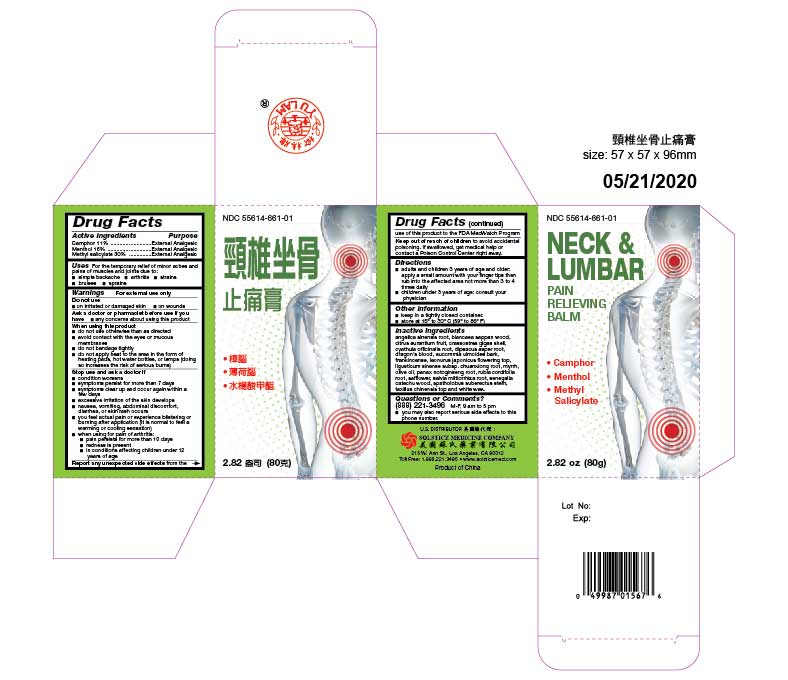
NECK AND LUMBAR PAIN RELIEVING BALM CAMPHOR, MENTHOL, METHYL SALICYLATE 11 g/100g; 16 g/100g; 30 g/100g Ointment
🆔 Identity & classification
Where does this data come from?
🏭 Manufacturer & labeler
Where does this data come from?
🩺 Clinical
This is an over-the-counter topical ointment marketed under FDA's established monograph guidelines for OTC products. It contains camphor, menthol, and methyl salicylate, which are rubefacients and counterirritants typically used in balms applied to the skin over areas of neck and lower back discomfort. These ingredients are commonly included in topical products to create a warming or cooling sensation on the skin surface. The ointment is intended for application directly to the affected area.
Patient education
Supplement & herbal interactions
Where does this data come from?
Ask a licensed pharmacist directly — free, answered by our team.
🧪 Inactive Ingredients / Excipients
Inactive ingredients, also called excipients, are components of the drug product other than the active ingredient. They may include fillers, dyes, coatings, preservatives, flavors, or other formulation ingredients.
💡 Tap an ingredient (hover on desktop) to see what it is and why it’s used.
-
UNII B66F4574UG
A plant-derived ingredient from Chinese angelica root, used as a natural flavoring and fragrance agent in medicines. It may also serve as a traditional ingredient to support formulation stability.
-
UNII 086263LQDD
A natural extract from sappan wood, a tropical tree. Used as a colorant to give medicines their red or brown appearance.
-
UNII DQD16J2B5O
A natural extract from bitter orange fruit used as a flavoring agent and fragrance component. It adds citrus taste and aroma to medicines, making them more palatable for patients.
-
UNII 5I0R0U8ZL0
A natural mineral extract from oyster shells, primarily composed of calcium carbonate. Used in medicines as a filler to add bulk and as a buffering agent to neutralize stomach acid.
-
UNII BRM37UP34O
A plant-derived ingredient from Cyathula officinalis root. It may be used as a binder or filler to help hold tablet ingredients together and add bulk to the formulation.
-
UNII LB1GQP4253
A plant extract from the teasel root used as a traditional herbal ingredient. In medicines, it may function as a filler or binder to help hold the product together and maintain its form.
-
UNII M3YJ2C28IC
Dragon's blood is a natural red resin obtained from tropical plants. It's used in medicines as a colorant and binding agent to give pills and capsules their appearance and help hold ingredients together.
-
UNII L878N1L0AR
A plant extract from the bark of the eucommia tree, used in some formulations as a thickening or binding agent to help hold the medicine together and control how it dissolves.
-
UNII R9XLF1R1WM
Frankincense is a natural resin from the Boswellia tree. It's used in medicines as a binder or thickener to help hold ingredients together and improve the product's consistency and texture.
-
UNII V315CCZ08Z
A plant extract from Japanese motherwort used as a natural coloring agent or flavoring component in some formulations. It may also serve as a carrier or binder to help hold tablet ingredients together.
-
UNII RR83T99U97
A plant-derived substance from Asian lovage root used in traditional formulations. It may serve as a flavoring agent, fragrance component, or natural additive to support product stability and palatability.
-
UNII JC71GJ1F3L
Myrrh is a natural resin obtained from a tree, traditionally used in medicines and perfumes. It may serve as a flavoring agent, fragrance, or mild preservative in formulations.
-
UNII 6UYK2W1W1E
A natural oil extracted from olives. It acts as an emollient and lubricant in formulations, helping to soften ingredients and improve how the medicine spreads or flows.
-
UNII GQX1C1175U
A plant extract from Panax notoginseng root used in traditional medicine formulations. It may function as a filler or active botanical component in herbal or dietary supplement products.
-
UNII 4V873H15CG
A plant-derived natural colorant from the madder plant root. It provides red to brown coloring in medicines and may help bind ingredients together in tablet formulations.
-
UNII 4VBL71TY4Y
Safflower is a plant-derived ingredient used as a natural colorant and flavoring agent in medicines. It may also serve as a filler to add bulk to the formulation.
-
UNII 1693AM5SBN
Salvia miltiorrhiza root is a plant extract used in traditional medicine formulations. It may serve as a flavoring agent, natural colorant, or functional ingredient to support the product's intended therapeutic profile.
-
UNII CHL342Y4LA
A natural extract from acacia wood, used as a binder and astringent in tablets and capsules to help hold ingredients together and improve texture.
-
UNII N51VZ363BA
A plant extract derived from the stem of Spatholobus suberectus, a tropical vine. It's used in herbal and traditional medicine formulations as a natural ingredient to support the product's therapeutic properties and stability.
-
UNII QJ523LD71P
A plant-derived ingredient from Taxillus chinensis, used as a filler or binder to help hold the medicine's solid form together and provide bulk.
-
UNII 7G1J5DA97F
White wax is a refined, bleached plant-based or mineral wax that serves as a coating and hardening agent in medicines. It helps control how fast the drug dissolves and improves the product's texture and appearance.
21 inactive ingredients listed in the exact product block matched to this NDC.
Label-section wording can be broader than the structured product block and may mention additional formulation ingredients.
Where does this data come from?
ingredient classCode="IACT" elements from the exact product block matched by this NDC. Label-section narrative from DailyMed / the openFDA label index is shown separately when available.Inactive ingredient FAQ
Are inactive ingredients the same for every manufacturer?
Why might an inactive ingredient be missing?
Can inactive ingredients matter?
💲 Pricing
A drug doesn't have one price. Each row is a different public payment system, and none is what you'd pay at the counter — that depends on your insurance. The ⓘ on each row explains what it measures.
| Price system | Per g | Per package |
|---|---|---|
| Retail pharmacies payNADAC · weekly | Not in the retail survey — common for institutional, discontinued, or low-volume packs. | |
| Medicaid paysCMS SDUD · 12 mo | No recent Medicaid claims on file for this NDC — rare and low-volume NDCs are suppressed in the public data. | |
| Medicare drug plans payPart D · quarterly | No Part D plan price is available for this NDC in our data. | |
Where does this data come from?
🔁 Therapeutic equivalents
| Product | Labeler | Pack | NADAC/unit | TE | Status | Price vs. this |
|---|---|---|---|---|---|---|
| Neck And Lumbar Pain Relieving Balm 11 g/100g; 16 g/100g; 30 g/100gthis 55614-0661-01 | MADISON | 1 bottle | — | — | FDA listed | — |
Where does this data come from?
⏳ Availability & generic status
We did not find an FDA-approved generic match for this exact strength, form and route.
Where does this data come from?
🔬 Reported adverse events (FAERS)
Top reported reactions
Age at onset
Reporter sex
Serious outcomes
Where does this data come from?
📦 Packaging — all sizes for this product
| Package NDC | Description | Marketing start | Status |
|---|---|---|---|
| 55614-0661-01 You're viewing this | 1 BOTTLE, GLASS in 1 BOX (55614-661-01) / 80 g in 1 BOTTLE, GLASS | 2020-05-21 | Active |
🧭 About this NDC listing & data coverage
What data is (and isn’t) available for this NDC — tap to expand
| NDC identity (package / product / labeler codes) | ✓ Available |
| Labeler | ✓ Available |
| Product & package description | ✓ Available |
| Marketing category & status | ✓ Available |
| Active ingredient / dosage form / route | ✓ Available |
| FDA label (SPL via DailyMed) | ✓ Available |
| Package photos | ✓ Available |
| Inactive ingredients (structured) | ✓ Available |
| NADAC pharmacy acquisition price (CMS) | — Not published for this NDC CMS publishes NADAC only for NDCs reported in its retail-pharmacy survey. |
| Orange Book / therapeutic-equivalence data | — Not published for this NDC Applies only to products approved under an NDA/ANDA; many listings are out of scope. |
| HCPCS J-code billing crosswalk | — Not published for this NDC Most self-administered / retail products have no J-code — that is normal. |
| Medicaid utilization (CMS SDUD) | — Not published for this NDC CMS reports utilization only for NDCs with Medicaid claims above its privacy threshold. |
Questions about this listing
Is this NDC FDA-approved?
Why is there no price listed?
Is the NDC printed on the package the same as the 11-digit billing NDC?
What do the three segments of this NDC mean?
Is this package still being marketed?
Who lists this product with the FDA?
Do I need a prescription for this product?
Where does this data come from?
📄 FDA label — Drug Facts FDA SPL
🎯 Indications and Usage ▾
Uses For the temporary relief of minor aches and pains of muscles and joints due to: ■ simple backache ■ arthritis ■ strains ■ bruises ■ sprains
⏱️ Dosage and Administration ▾
Directions ■ adults and children 3 years of age and older: apply several drops and rub Into the affected area not more than 3 to 4 times daily ■ children under 3 years of age: consult your physician
⚠️ Warnings ▾
Warnings For external use only
🤒 Adverse Reactions ▾
Report any unexpected side effects from the use of this product to the FDA MedWatch Program
📦 Storage and Handling ▾
Other information ■ keep container tightly closed ■ store protected from light at 15 to 30 C (59 To 86 F)
🧪 Active Ingredient ▾
Active ingredients Camphor 11% Menthol 16% Methyl salicylate 30%
🧪 Inactive Ingredients ▾
Inactive ingredients angelica sinensis root, biancaea sappan wood, citrus aurantium fruit, crassostrea gigas shell, cyathula officinalis root, dipsacus asper root, dragon's blood, eucommia ulmoides bark, frankincense, leonurus japonicus flowering top, ligusticum sinense subsp. chuanxiong root, myrrh, olive oil, panax notoginseng root, rubia cordifolia root, safflower, salvia miltiorrhiza root, senegalia catechu wood, spatholobus suberectus stem, taxillus chinensis top and white wax.
🎯 Purpose ▾
Purpose External analgesic External analgesic External analgesic