
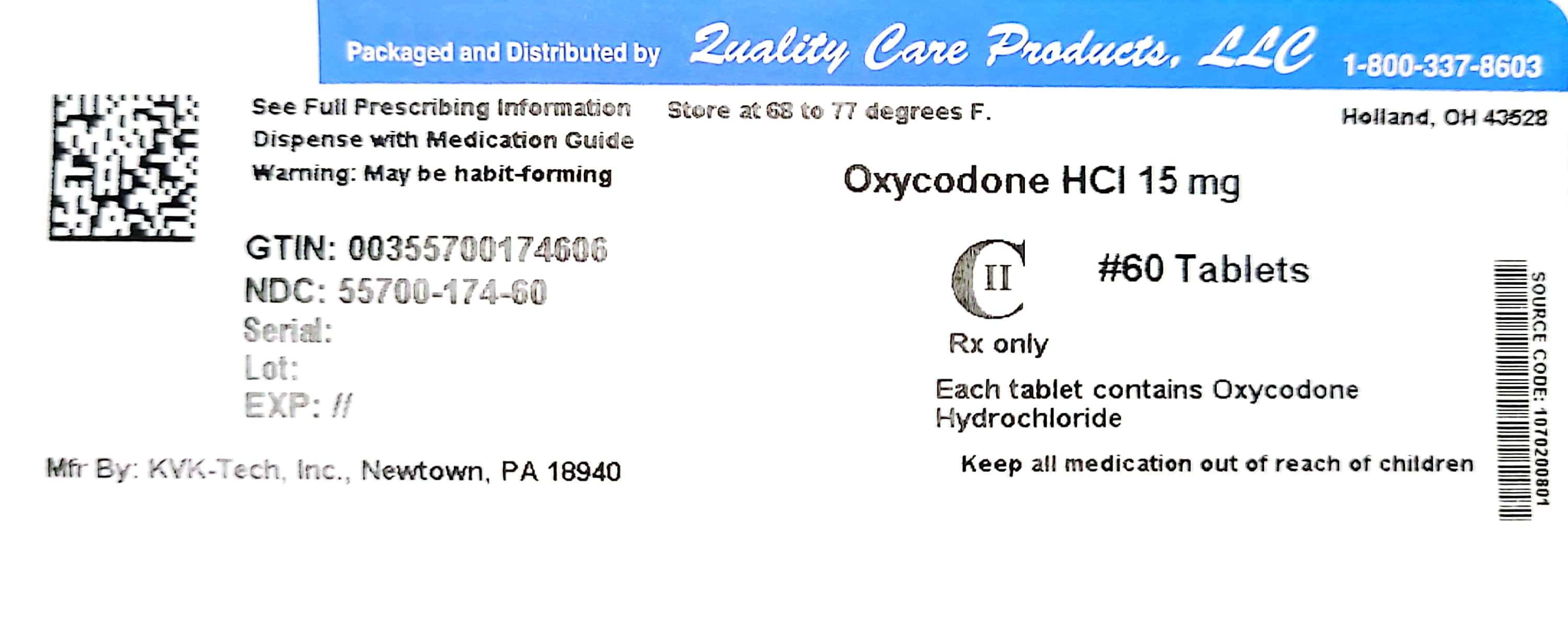
Oxycodone Hydrochloride 15 mg Tablet, 30-count — NDC 55700-174-30 (Billing 55700-0174-30)
This is a package of 30 tablets of Oxycodone Hydrochloride 15 mg Tablet from Quality Care Products LLC, marketed since Oct 2013 and currently FDA-listed, this package's marketing is listed to end Jul 2027.
NDC database record
One package, one record: these facts belong to NDC 55700-174-30 alone.
- Record
- FDA NDC Directory package listing · Human prescription drug
- Code segments
- 55700 labeler · 174 product · 30 package
- Package marketed since
- Oct 18, 2013
- Package marketing ended
- Jul 31, 2027
- Sample package
- No — commercial package
- Billing quantity
- 30 EA per package
- Barcode (UPC-A, from the NDC)
- 3 5570017430 9
- FDA record last changed
- Jul 24, 2026
Other active recalls for Oxycodone Hydrochloride (different manufacturers) — 2 · tap to view
Identity & classification
Regulatory identifiers FDA, NLM and CMS codes for this package
Drug-database identifiers Medi-Span GPI and First Databank GCN / HICL / AHFS classification
- GSN (GCN sequence number): 046474
- GCN: 20091
- GPI-14 (Medi-Span): 65100075100325
- HICL (First Databank): 001742
- AHFS class code: 28:08.08.00
- RxCUI (RxNorm): 1049611
Where does this data come from?
- FDA openFDA NDC Directory · synced Oct 8, 2026
- FDA label on DailyMed · label index refreshed Oct 8, 2026
- RxNorm (NLM RxNav) · catalog refreshed Oct 8, 2026
- Medi-Span GPI (licensed)
- First Databank (licensed) · refreshed Oct 8, 2026
RxNorm drug class
This medicine belongs to the Opioid Agonist class.
Where does this data come from?
- RxClass (NLM) · catalog refreshed Oct 8, 2026
Clinical
Oxycodone is used to relieve severe pain. Oxycodone is in a class of medications called opiate (narcotic) analgesics. It works by changing the way the brain and nervous system respond to pain.
Read the full MedlinePlus article ↗- It treats pain severe enough to need an opioid when other treatments aren’t enough. Some forms, like OxyContin and Xtampza ER, are for around-the-clock, long-term pain and are not...
- Take it by mouth exactly as prescribed. Never crush, chew or dissolve extended-release tablets. If you use the liquid, double-check the dose in mL and the strength on your bottle.
- Constipation, nausea, drowsiness, dizziness and itching are common. Call 911 for slow or shallow breathing or if someone can’t be woken. Tell your doctor if you notice signs of mis...
- No, not without your prescriber’s approval. Alcohol, benzodiazepines and other sedating drugs can cause extreme sleepiness, slowed breathing, coma and death. Tell us about everythi...
Patient education
Supplement & herbal interactions
Some supplements/herbs that may interact with Oxycodone Hydrochloride — tap one for details:
Where does this data come from?
- MedlinePlus (NLM) · refreshed Oct 8, 2026
- FDA label on DailyMed · label index refreshed Oct 8, 2026
Ask a licensed pharmacist directly — free, answered by our team.
Pricing
A drug doesn't have one price. Each row is a different public payment system, and none is what you'd pay at the counter — that depends on your insurance. The ⓘ on each row explains what it measures.
| Price system | Per each | Per package |
|---|---|---|
| Retail pharmacies payNADAC · weekly | Not in the retail survey — common for institutional, discontinued, or low-volume packs. | |
| Medicaid paysCMS SDUD · 12 mo | No recent Medicaid claims on file for this NDC — rare and low-volume NDCs are suppressed in the public data. | |
| Medicare drug plans payPart D · Q2 2026 | $0.1678 | $5.03 / 30 tablets |
Where does this data come from?
- CMS NADAC weekly file
- CMS ASP pricing files · refreshed Sep 20, 2026
- CMS Medicaid State Drug Utilization Data · refreshed Oct 9, 2026
- CMS Part D plan pricing files · refreshed Sep 24, 2026
- VA National Acquisition Center price file
Packaging — all sizes for this product
| Package NDC | Description | Marketing start | Marketing end | Status |
|---|---|---|---|---|
| 55700-0174-01 55700-174-01 Main listing | 120 TABLET in 1 BOTTLE | 2013-10-18 | — | Discontinued by firm |
| 55700-0174-30 You're viewing this | 30 TABLET in 1 BOTTLE | 2013-10-18 | Jul 31, 2027 | Active |
| 55700-0174-60 55700-174-60 | 60 TABLET in 1 BOTTLE | 2013-10-18 | Jul 31, 2027 | Active |
| 55700-0174-90 55700-174-90 | 90 TABLET in 1 BOTTLE | 2013-10-18 | Jul 31, 2027 | Active |
You're viewing the smallest of 4 pack sizes for this product.
Pack size FAQ
What quantity is in this package?
How does this package differ from NDC 55700-0174-60?
What NDC number is used to bill for this package of Oxycodone Hydrochloride 15 mg Tablet?
Therapeutic equivalents
| Product | Labeler | Pack | NADAC/unit | TE | Status | Price vs. this |
|---|---|---|---|---|---|---|
| Oxycodone Hydrochloride 15 mg 43386-0430-01 | Lupin | 100 tablets | $0.132 | — | FDA listed | — |
| Oxycodone Hydrochloride 15 mg 00406-8515-01 | SpecGx | 100 tablets | $0.197 | AB | Availability likely | — |
| Oxycodone Hydrochloride 15 mg 00904-7180-61 | Major | 100 tablets | $0.197 | AB | Availability likely | — |
| Oxycodone Hydrochloride 15 mg 10702-0008-01 | KVK-TECH,INC | 100 tablets | $0.197 | AB | Availability likely | — |
| Oxycodone Hydrochloride 15 mg 13107-0056-01 | Aurolife | 100 tablets | $0.197 | AB | Availability likely | — |
| Oxycodone Hydrochloride 15 mg 31722-0917-01 | Camber | 100 tablets | $0.197 | AB | Availability likely | — |
| Oxycodone Hydrochloride 15 mg 42858-0003-01 | Rhodes | 100 tablets | $0.197 | AB | Availability likely | — |
| Oxycodone hydrochloride 15 mg 47781-0264-01 | Alvogen, | 100 tablets | $0.197 | AB | Availability likely | — |
| Oxycodone Hydrochloride 15 mg 64380-0261-01 | Strides | 100 tablets | $0.197 | AB | Availability likely | — |
| Oxycodone Hydrochloride 15 mg 68084-0975-01 | American | 100 tablets | $0.197 | AB | Availability likely | — |
| Oxycodone Hydrochloride 15 mg 68094-0005-61 | Precision | 100 tablets | $0.197 | AB | Availability likely | — |
| Oxycodone Hydrochloride 15 mg 42806-0007-01 | Epic | 100 tablets | $0.197 | AB | Availability likely | — |
| Roxicodone 15 mg 23635-0581-10 | SpecGx | 100 tablets | $5.468 | AB | Availability likely | — |
| RoxyBond 15 mg 81140-0102-10 | Protega | 100 tablets | $18.191 | — | FDA listed | — |
| Oxycodone Hydrochloride 15 mgthis 55700-0174-30 | Quality | 30 tablets | — | AB | FDA listed | — |
| Oxycodone Hydrochloride 15 mg 60760-0956-30 | ST. | 30 tablets | — | AB | FDA listed | — |
| Oxycodone Hydrochloride 15 mg 60760-0957-30 | ST. | 30 tablets | — | AB | FDA listed | — |
| Oxycodone Hydrochloride 15 mg 63629-8526-01 | Bryant | 100 tablets | — | AB | FDA listed | — |
| Oxycodone Hydrochloride 15 mg 65162-0049-03 | Amneal | 30 tablets | — | AB | FDA listed | — |
| Oxycodone Hydrochloride 15 mg 71335-1080-01 | Bryant | 60 tablets | — | AB | FDA listed | — |
| Oxycodone Hydrochloride 15 mg 71335-1413-01 | Bryant | 60 tablets | — | AB | FDA listed | — |
| Oxycodone Hydrochloride 15 mg 72162-1336-01 | Bryant | 100 tablets | — | AB | FDA listed | — |
| Oxycodone HCL 15 mg 72189-0614-30 | Direct_Rx | 30 tablets | — | AB | FDA listed | — |
| Oxycodone Hydrochloride 15 mg 72865-0128-01 | XLCare | 100 tablets | — | AB | FDA listed | — |
| Oxycodone Hydrochloride 15 mg 76420-0364-01 | Asclemed | 100 tablets | — | AB | FDA listed | — |
| Oxycodone Hydrochloride 15 mg 76420-0758-01 | Asclemed | 100 tablets | — | AB | FDA listed | — |
| Oxycodone hydrochloride 15 mg 76420-0764-01 | Asclemed | 100 tablets | — | AB | FDA listed | — |
| Oxycodone Hydrochloride 15 mg 60760-0967-30 | St. | 30 tablets | — | AB | FDA listed | — |
Where does this data come from?
- FDA openFDA NDC Directory · synced Oct 8, 2026
- FDA Orange Book · refreshed Oct 3, 2026
- CMS NADAC weekly file
Availability & generic status
This product is an FDA-approved generic. Other versions of the same drug are listed under Therapeutic equivalents, least expensive first.
Where does this data come from?
- FDA Orange Book · refreshed Oct 3, 2026
What it looks like
Where does this data come from?
- FDA label on DailyMed · label index refreshed Oct 8, 2026
Inactive Ingredients / Excipients
Inactive ingredients, also called excipients, are components of the drug product other than the active ingredient. They may include fillers, dyes, coatings, preservatives, flavors, or other formulation ingredients.
🧪 Avoiding an ingredient? See Oxycodone inactive ingredients by manufacturer: every current product's list side by side, so you can ask your pharmacy for the version that does not list it.
💡 Tap an ingredient (hover on desktop) to see what it is and why it’s used.
-
UNII OP1R32D61U
Microcrystalline cellulose is a purified form of cellulose, a natural fiber from plant sources. It acts as a binder and filler in tablets and capsules, helping hold ingredients together and give the medicine its shape and size.
-
UNII 35SW5USQ3G
A synthetic yellow dye used to color medicines. It helps make tablets, capsules, and liquids visually distinct so patients can easily identify their medication.
-
UNII L06K8R7DQK
A synthetic blue dye approved by the FDA for use in medications and foods. It serves as a colorant to make pills and liquids visually distinct and easier to identify.
-
UNII EWQ57Q8I5X
Lactose monohydrate is a natural sugar derived from milk. It serves as a filler and binder in tablets and capsules, helping create the proper size, texture, and consistency of the medicine.
-
UNII ETJ7Z6XBU4
Silicon dioxide is a naturally occurring mineral used as a glidant and anti-caking agent. It helps powder ingredients flow smoothly and prevents clumping during manufacturing and storage.
-
UNII 5856J3G2A2
A starch-based powder made from potatoes and processed with sodium. It acts as a disintegrant, helping the tablet or capsule break apart quickly in the stomach so the medicine can be absorbed.
-
UNII O8232NY3SJ
A plant-based carbohydrate derived from corn kernels. It acts as a filler to add bulk, a binder to hold ingredients together, and a disintegrant to help the tablet break apart in your stomach for absorption.
-
UNII 4ELV7Z65AP
Stearic acid is a fatty acid derived from plant or animal sources. It acts as a binder and lubricant in tablets and capsules, helping them hold together and flow smoothly during manufacturing.
8 inactive ingredients listed in the exact product block matched to this NDC.
Where does this data come from?
ingredient classCode="IACT" elements from the exact product block matched by this NDC. Label-section narrative from DailyMed / the openFDA label index is shown separately when available.- FDA label on DailyMed · label index refreshed Oct 8, 2026
- FDA openFDA NDC Directory · synced Oct 8, 2026
Inactive ingredient FAQ
Are inactive ingredients the same for every manufacturer?
Why might an inactive ingredient be missing?
Can inactive ingredients matter?
Manufacturer & labeler
More NDCs from Quality Care Products LLC labeler code 55700
- Hydrochlorothiazide 25 mg Tablet NDC 55700-006-30
- Lidocaine 50 mg/g Patch NDC 55700-142-30
- Sertraline 50 mg Tablet, Film Coated NDC 55700-225-30
- Cyclobenzaprine Hydrochloride 7.5 mg Tablet, Film Coated NDC 55700-239-01
- Zolpidem Tartrate 5 mg Tablet NDC 55700-268-30
- Metronidazole 500 mg Tablet, Film Coated NDC 55700-298-04
- Zolpidem Tartrate 10 mg Tablet NDC 55700-357-30
- Sertraline Hydrochloride 100 mg Tablet, Film Coated NDC 55700-362-30
Where does this data come from?
- FDA openFDA NDC Directory · synced Oct 8, 2026
- Drugs@FDA
Full prescribing information FDA SPL
🎯 Indications and Usage ▾
INDICATIONS AND USAGE Oxycodone hydrochloride tablets are an immediate-release oral formulation of oxycodone hydrochloride indicated for the management of moderate to severe pain where the use of an opioid analgesic is appropriate.
⏱️ Dosage and Administration ▾
DOSAGE AND ADMINISTRATION Oxycodone hydrochloride tablets are intended for the management of moderate to severe pain in patients who require treatment with an oral opioid analgesic. The dose should be individually adjusted according to severity of pain, patient response and patient size. If the pain increases in severity, if analgesia is not adequate, or if tolerance occurs, a gradual increase in dosage may be required.
Patients who have not been receiving opioid analgesics should be started on oxycodone hydrochloride tablets in a dosing range of 5 to 15 mg every 4 to 6 hours as needed for pain. The dose should be titrated based upon the individual patient’s response to their initial dose of oxycodone hydrochloride tablets. Patients with chronic pain should have their dosage given on an around-the-clock basis to prevent the reoccurrence of pain rather than treating the pain after it has occurred.
This dose can then be adjusted to an acceptable level of analgesia taking into account side effects experienced by the patient. For control of severe chronic pain, oxycodone hydrochloride tablets should be administered on a regularly scheduled basis, every 4 to 6 hours, at the lowest dosage level that will achieve adequate analgesia. As with any potent opioid, it is critical to adjust the dosing regimen for each patient individually, taking into account the patient's prior analgesic treatment experience.
Although it is not possible to list every condition that is important to the selection of the initial dose of oxycodone hydrochloride tablets, attention should be given to: 1) the daily dose, potency, and characteristics of a pure agonist or mixed agonist/antagonist the patient has been taking previously, 2) the reliability of the relative potency estimate to calculate the dose of oxycodone needed, 3) the degree of opioid tolerance, 4) the general condition and medical status of the patient, and 5) the balance between pain control and adverse experiences.
Conversion From Fixed-Ratio Opioid/Acetaminophen, Opioid/Aspirin, or Opioid/Nonsteroidal Combination Drugs: When converting patients from fixed ratio opioid/non-opioid drug regimens a decision should be made whether or not to continue the non-opioid analgesic. If a decision is made to discontinue the use of non-opioid analgesic, it may be necessary to titrate the dose of oxycodone hydrochloride tablets in response to the level of analgesia and adverse effects afforded by the dosing regimen. If the non-opioid regimen is continued as a separate single entity agent, the starting dose of oxycodone hydrochloride tablets should be based upon the most recent dose of opioid as a baseline for further titration of oxycodone.
Incremental increases should be gauged according to side effects to an acceptable level of analgesia. Patients Currently on Opioid Therapy: If a patient has been receiving opioid-containing medications prior to taking oxycodone hydrochloride tablets, the potency of the prior opioid relative to oxycodone should be factored into the selection of the total daily dose (TDD) of oxycodone. In converting patients from other opioids to oxycodone hydrochloride tablets, close observation and adjustment of dosage based upon the patient's response to oxycodone hydrochloride tablets is imperative.
Administration of supplemental analgesia for breakthrough or incident pain and titration of the total daily dose of oxycodone hydrochloride tablets may be necessary, especially in patients who have disease states that are changing rapidly. Maintenance of Therapy: Continual re-evaluation of the patient receiving oxycodone hydrochloride tablets is important, with special attention to the maintenance of pain control and the relative incidence of side effects associated with therapy. If the level of pain increases, effort should be made to identify the source of increased pain, while adjusting the dose as described above to decrease the level of pain.
During chronic therapy, especially for non-ca… [Excerpted — this section continues on DailyMed.]
⛔ Contraindications ▾
CONTRAINDICATIONS Oxycodone hydrochloride tablets are contraindicated in patients with known hypersensitivity to oxycodone, or in any situation where opioids are contraindicated. This includes patients with significant respiratory depression (in unmonitored settings or the absence of resuscitative equipment) and patients with acute or severe bronchial asthma or hypercarbia. Oxycodone hydrochloride tablets are contraindicated in any patient who has or is suspected of having paralytic ileus.
⚠️ Warnings ▾
WARNINGS Respiratory Depression: Respiratory depression is the chief hazard from all opioid agonist preparations. Respiratory depression occurs most frequently in elderly or debilitated patients, usually following large initial doses in non-tolerant patients, or when opioids are given in conjunction with other agents that depress respiration. Oxycodone hydrochloride tablets should be used with extreme caution in patients with significant chronic obstructive pulmonary disease or cor pulmonale, and in patients having substantially decreased respiratory reserve, hypoxia, hypercapnia, or pre-existing respiratory depression.
In such patients, even usual therapeutic doses of oxycodone hydrochloride tablets may decrease respiratory drive to the point of apnea. In these patients alternative non-opioid analgesics should be considered, and opioids should be employed only under careful medical supervision at the lowest effective dose. Hypotensive Effect: Oxycodone hydrochloride tablets, like all opioid analgesics, may cause severe hypotension in an individual whose ability to maintain blood pressure has been compromised by a depleted blood volume, or after concurrent administration with drugs such as phenothiazines or other agents which compromise vasomotor tone.
Oxycodone hydrochloride tablets may produce orthostatic hypotension in ambulatory patients. Oxycodone hydrochloride tablets, like all opioid analgesics, should be administered with caution to patients in circulatory shock, since vasodilatation produced by the drug may further reduce cardiac output and blood pressure. Head Injury and Increased Intracranial Pressure: The respiratory depressant effects of narcotics and their capacity to elevate cerebrospinal fluid pressure may be markedly exaggerated in the presence of head injury, other intracranial lesions or a pre-existing increase in intracranial pressure.
Furthermore, narcotics produce adverse reactions which may obscure the clinical course of patients with head injuries.
🤒 Adverse Reactions ▾
ADVERSE REACTIONS Oxycodone hydrochloride tablets have been evaluated in open label clinical trials in patients with cancer and nonmalignant pain. Oxycodone hydrochloride tablets are associated with adverse experiences similar to those seen with other opioids. Serious adverse reactions that may be associated with oxycodone hydrochloride tablets therapy in clinical use are those observed with other opioid analgesics and include: respiratory depression, respiratory arrest, circulatory depression, cardiac arrest, hypotension, and/or shock (see overdosage, WARNINGS ).
The less severe adverse events seen on initiation of therapy with oxycodone hydrochloride tablets are also typical opioid side effects. These events are dose dependent, and their frequency depends on the clinical setting, the patient's level of opioid tolerance, and host factors specific to the individual. They should be expected and managed as a part of opioid analgesia.
The most frequent of these include nausea, constipation, vomiting, headache, and pruritus. In many cases the frequency of adverse events during initiation of opioid therapy may be minimized by careful individualization of starting dosage, slow titration and the avoidance of large rapid swings in plasma concentration of the opioid. Many of these adverse events will abate as therapy is continued and some degree of tolerance is developed, but others may be expected to remain throughout therapy.
In all patients for whom dosing information was available (n=191) from the open-label and double-blind studies involving oxycodone hydrochloride tablets, the following adverse events were recorded in oxycodone hydrochloride tablets treated patients with an incidence ≥ 3%. In descending order of frequency they were: nausea, constipation, vomiting, headache, pruritus, insomnia, dizziness, asthenia, and somnolence. The following adverse experiences occurred in less than 3% of patients involved in clinical trials with oxycodone: Body as a Whole: abdominal pain, accidental injury, allergic reaction, back pain, chills and fever, fever, flu syndrome, infection, neck pain, pain, photosensitivity reaction, and sepsis.
Cardiovascular: deep thrombophlebitis, heart failure, hemorrhage, hypotension, migraine, palpitation, and tachycardia. Digestive: anorexia, diarrhea, dyspepsia, dysphagia, gingivitis, glossitis, and nausea and vomiting. Hemic and Lymphatic: anemia and leukopenia.
Metabolic and Nutritional: edema, gout, hyperglycemia, iron deficiency anemia and peripheral edema. Musculoskeletal: arthralgia, arthritis, bone pain, myalgia and pathological fracture. Nervous: agitation, anxiety, confusion, dry mouth, hypertonia, hypesthesia, nervousness, neuralgia, personality disorder, tremor, and vasodilation.
Respiratory: bronchitis, cough increased, dyspnea, epistaxis, laryngismus, lung disorder, pharyngitis, rhinitis, and sinusitis. Skin and Appendages: herpes simplex, rash, sweating, and urticaria. Special Senses: amblyopia.
Urogenital: urinary tract infection. DRUG ABUSE AND DEPENDENCE Controlled Substance: Oxycodone Hydrochloride Tablets contain Oxycodone, a mu-agonist opioid if the morphine type and is a Schedule II controlled substance. Oxycodone hydrochloride, like other opioids used in analgesia, can be abused and is subject to criminal diversion.
Abuse: Drug addiction is characterized by compulsive use, use for non-medical purposes, and continued use despite harm or risk of harm. Drug addiction is a treatable disease, utilizing a multi-disciplinary approach, but relapse is common. “Drug-seeking” behavior is very common in addicts and drug abusers. Drug-seeking tactics include emergency calls or visits near the end of office hours, refusal to undergo appropriate examination, testing or referral, repeated “loss” of prescriptions, tampering with prescriptions and reluctance to provide prior medical records or contact information for other treating physician(s). “Doctor shopping” to obtain additional prescriptions is co… [Excerpted — this section continues on DailyMed.]
🔄 Drug Interactions ▾
Drug Interactions Oxycodone is metabolized in part to oxymorphone via the cytochrome p450 isoenzyme CYP2D6. While this pathway may be blocked by a variety of drugs (e.g., certain cardiovascular drugs and antidepressants), such blockade has not yet been shown to be of clinical significance with this agent. However, clinicians should be aware of this possible interaction.
Neuromuscular Blocking Agents: Oxycodone, as well as other opioid analgesics, may enhance the neuromuscular blocking action of skeletal muscle relaxants and produce an increased degree of respiratory depression. CNS Depressants: Patients receiving narcotic analgesics, general anesthetics, phenothiazines, other tranquilizers, sedative-hypnotics or other CNS depressants (including alcohol) concomitantly with oxycodone hydrochloride tablets may exhibit an additive CNS depression. Interactive effects resulting in respiratory depression, hypotension, profound sedation, or coma may result if these drugs are taken in combination with the usual dosage of oxycodone hydrochloride tablets.
When such combined therapy is contemplated, the dose of one or both agents should be reduced. Mixed Agonist/Antagonist Opioid Analgesics: Agonist/antagonist analgesics (i.e., pentazocine, nalbuphine, butorphanol and buprenorphine) should be administered with caution to patients who have received or are receiving a course of therapy with a pure opioid agonist analgesic such as oxycodone hydrochloride tablets. In this situation, mixed agonist/antagonist analgesics may reduce the analgesic effect of oxycodone hydrochloride tablets and/or may precipitate withdrawal symptoms in these patients.
Monoamine Oxidase Inhibitors (MAOIs): MAOIs have been reported to intensify the effects of at least one opioid drug causing anxiety, confusion and significant depression of respiration or coma. The use of oxycodone hydrochloride tablets is not recommended for patients taking MAOIs or within 14 days of stopping such treatment.
🧒 Pediatric Use ▾
Pediatric Use The safety and efficacy of oxycodone in pediatric patients have not been evaluated.
🧓 Geriatric Use ▾
Geriatric Use Of the total number of subjects in clinical studies of oxycodone hydrochloride tablets, 20.8% (112/538) were 65 and over, while 7.2% (39/538) were 75 and over. No overall differences in safety or effectiveness were observed between these subjects and younger subjects, and other reported clinical experience has not identified differences in responses between the elderly and younger patients, but greater sensitivity of some older individuals cannot be ruled out. Hepatic Impairment: Since oxycodone is extensively metabolized, its clearance may decrease in hepatic failure patients.
Dose initiation in patients with hepatic impairment should follow a conservative approach. Dosages should be adjusted according to the clinical situation. Renal Impairment: Published data reported that elimination of oxycodone was impaired in end-stage renal failure.
Mean elimination half-life was prolonged in uremic patients due to increased volume of distribution and reduced clearance. Dose initiation should follow a conservative approach. Dosages should be adjusted according to the clinical situation.
Ambulatory Patients: Oxycodone hydrochloride tablets may impair the mental and/or physical abilities required for the performance of potentially hazardous tasks such as driving a car or operating machinery. The patient using this drug should be cautioned accordingly.
🆘 Overdosage ▾
OVERDOSAGE Signs and Symptoms: Acute overdose with oxycodone hydrochloride tablets can be manifested by respiratory depression, somnolence progressing to stupor or coma, skeletal muscle flaccidity, cold and clammy skin, constricted pupils, bradycardia, hypotension, and death. Treatment: To treat oxycodone hydrochloride tablets overdose, primary attention should be given to the re-establishment of a patent airway and institution of assisted or controlled ventilation. Supportive measures (including oxygen and vasopressors) should be employed in the management of circulatory shock and pulmonary edema accompanying overdose as indicated.
Cardiac arrest or arrhythmias may require cardiac massage or defibrillation. The narcotic antagonists, naloxone or nalmefene, are specific antidotes for opioid overdose. Opioid antagonists should not be administered in the absence of clinically significant respiratory or circulatory depression secondary to oxycodone hydrochloride tablets overdose.
If needed the appropriate dose of naloxone hydrochloride or nalmefene should be administered simultaneously with efforts at respiratory resuscitation (see package insert for each drug for the details). Since the duration of action of oxycodone may exceed that of the antagonist, the patient should be kept under continued surveillance and repeated doses of the antagonist should be administered as needed to maintain adequate respiration. Gastric emptying may be useful in removing unabsorbed drug.
Opioid antagonists should be administered cautiously to persons who are suspected to be physically dependent on any opioid agonist, including Oxycodone. (see Opioid-Tolerant Individuals.) Opioid-Tolerant Individuals:In an individual physically dependent on opioids, administration of a usual dose of antagonist will precipitate an acute withdrawal. The severity of the withdrawal syndrome produced will depend on the degree of physical dependence and the dose of the antagonist administered.
Use of an opioid antagonist should be reserved for cases where such treatment is clearly needed. If it is necessary to treat serious respiratory depression in the physically dependent patient, administration of the antagonist should be begun with care and by titration with smaller than usual doses.
🧬 Clinical Pharmacology ▾
CLINICAL PHARMACOLOGY Pharmacology: The analgesic ingredient, oxycodone, is a semi-synthetic narcotic with multiple actions qualitatively similar to those of morphine; the most prominent of these involves the central nervous system and organs composed of smooth muscle. Oxycodone, as the hydrochloride salt, is a pure agonist opioid whose principal therapeutic action is analgesia and has been in clinical use since 1917. Like all pure opioid agonists, there is no ceiling effect to analgesia, such as is seen with partial agonists or non-opioid analgesics.
Based upon a single-dose, relative-potency study conducted in humans with cancer pain, 10 to 15 mg of oxycodone given intramuscularly produced an analgesic effect similar to 10 mg of morphine given intramuscularly. Both drugs have a 3 to 4 hour duration of action. Oxycodone retains approximately one half of its analgesic activity when administered orally.
Effects on Central Nervous System: The precise mechanism of the analgesic action is unknown. However, specific CNS opioid receptors for endogenous compounds with opioid-like activity have been identified throughout the brain and spinal cord and play a role in the analgesic effects of this drug. A significant feature of opioid-induced analgesia is that it occurs without loss of consciousness.
The relief of pain by morphine-like opioids is relatively selective, in that other sensory modalities, (e.g., touch, vibrations, vision, hearing, etc.) are not obtunded. Oxycodone produces respiratory depression by direct action on brain stem respiratory centers. The respiratory depression involves both a reduction in the responsiveness of the brain stem respiratory centers to increases in carbon dioxide tension and to electrical stimulation.
Oxycodone depresses the cough reflex by direct effect on the cough center in the medulla. Antitussive effects may occur with doses lower than those usually required for analgesia. Oxycodone causes miosis, even in total darkness.
Pinpoint pupils are a sign of opioid overdose but are not pathognomonic (e.g., pontine lesions of hemorrhagic or ischemic origins may produce similar findings). Marked mydriasis rather than miosis may be seen due to hypoxia in overdose situations. Effects on Gastrointestinal Tract and Other Smooth Muscle: Oxycodone, like other opioid analgesics, produces some degree of nausea and vomiting which is caused by direct stimulation of the chemoreceptor trigger zone (CTZ) located in the medulla.
The frequency and severity of emesis gradually diminishes with time. Oxycodone may cause a decrease in the secretion of hydrochloric acid in the stomach that reduces motility while increasing the tone of the antrum, stomach, and duodenum. Digestion of food in the small intestine is delayed and propulsive contractions are decreased.
Propulsive peristaltic waves in the colon are decreased, while tone may be increased to the point of spasm resulting in constipation. Other opioid-induced effects may include a reduction in biliary and pancreatic secretions, spasm of sphincter of Oddi, and transient elevations in serum amylase. Effects on Cardiovascular System: Oxycodone, in therapeutic doses, produces peripheral vasodilatation (arteriolar and venous), decreased peripheral resistance, and inhibits baroreceptor reflexes.
Manifestations of histamine release and/or peripheral vasodilatation may include pruritus, flushing, red eyes, sweating, and/or orthostatic hypotension. Caution should be used in hypovolemic patients, such as those suffering acute myocardial infarction, because oxycodone may cause or further aggravate their hypotension. Caution should also be used in patients with cor pulmonale who have received therapeutic doses of opioids.
Pharmacodynamics The relationship between the plasma level of oxycodone and the analgesic response will depend on the patient's age, state of health, medical condition and extent of previous opioid treatment. The minimum effective plasma concentration of oxycodone… [Excerpted — this section continues on DailyMed.]
📦 How Supplied / Storage and Handling ▾
HOW SUPPLIED Oxycodone hydrochloride tablets, USP are available as follows: Oxycodone hydrochloride tablets, USP 5 mg are supplied as white round biconvex tablets debossed “K” on left and “18” on right of the bisect on one side and plain on the other side. Oxycodone hydrochloride tablets, USP 10 mg are supplied as pink round biconvex tablets debossed “K” on left and “56” on right of the bisect on one side and plain on the other side. Oxycodone hydrochloride tablets, USP 15 mg are supplied as green round biconvex tablets debossed “K” on left and “8” on right of the bisect on one side and plain on the other side.
Oxycodone hydrochloride tablets, USP 20 mg are supplied as gray round biconvex tablets debossed “K” on left and “57” on right of the bisect on one side and plain on the other side. Oxycodone hydrochloride tablets, USP 30 mg are supplied as blue round biconvex tablets debossed “K” on left and “9” on right of the bisect on one side and plain on the other side. DEA Order Form Required Dispense in a tight, light-resistant and child-resistant container as defined in the USP.
Protect from moisture. Store at 20° to 25°C (68° to 77°F) with excursions permitted between 15° to 30°C (59° to 86°F) [See USP Controlled Room Temperature]. Manufactured by: KVK-TECH, INC.
110 Terry Dr. Suite 200 Newtown, PA 18940-1850 Item ID # 6102/03 10/13 Manufacturer’s Code: 10702
📋 Description ▾
DESCRIPTION Oxycodone hydrochloride tablets USP is an opioid analgesic. Each tablet for oral administration contains 5 mg, 10 mg, 15 mg, 20 mg or 30 mg of oxycodone hydrochloride USP. Oxycodone hydrochloride is a white, odorless crystalline powder derived from the opium alkaloid, thebaine.
Oxycodone hydrochloride dissolves in water (1 g in 6 to 7 mL) and is considered slightly soluble in alcohol (octanol water partition coefficient is 0.7). Chemically, oxycodone hydrochloride is 4, 5α-epoxy-14-hydroxy-3-methoxy-17-methylmorphinan-6-one hydrochloride and has the following structural formula: The tablets contain the following inactive ingredients: corn starch; lactose monohydrate; microcrystalline cellulose; silicon dioxide; sodium starch glycolate; and stearic acid. The 10 mg tablet also contains D&C Red No.
27 aluminum lake. The 15 mg tablet also contains D&C Yellow No. 10 aluminum lake and FD&C Blue No.
2 aluminum lake. The 20 mg tablet also contains FD&C Blue No. 2 aluminum lake; FD&C Red No.
40 aluminum lake; and FD&C Yellow No. 6 aluminum lake. The 30 mg tablet also contains FD&C Blue No.
2 aluminum lake. The 5 mg, 10 mg, 15 mg, 20 mg, and 30 mg tablets contain the equivalent of 4.5 mg, 9 mg, 13.5 mg, 18 mg, and 27 mg, respectively, of oxycodone free base. image description
⚠️ Precautions ▾
PRECAUTIONS General Oxycodone hydrochloride tablets are intended for use in patients who require oral pain therapy with an opioid agonist. As with any opioid analgesic, it is critical to adjust the dosing regimen individually for each patient (see DOSAGE AND ADMINISTRATION ). Selection of patients for treatment with oxycodone hydrochloride tablets should be governed by the same principles that apply to the use of other potent opioid analgesics.
Opioid analgesics given on a fixed-dosage schedule have a narrow therapeutic index in certain patient populations, especially when combined with other drugs, and should be reserved for cases where the benefits of opioid analgesia outweigh the known risks of respiratory depression, altered mental state, and postural hypotension. Physicians should individualize treatment in every case, using nonopioid analgesics, prn opioids and /or combination products, and chronic opioid therapy with drugs such as oxycodone hydrochloride tablets in a progressive plan of pain management such as outlined by the World Health Organization, the Agency for Health Care Policy and Research, and the American Pain Society.
Use of oxycodone hydrochloride tablets are associated with increased potential risks and should be used only with caution in the following conditions: acute alcoholism; adrenocortical insufficiency (e.g., Addison's disease); convulsive disorders; CNS depression or coma; delirium tremens; debilitated patients; kyphoscoliosis associated with respiratory depression: myxedema or hypothyroidism; prostatic hypertrophy or urethral stricture; severe impairment of hepatic, pulmonary or renal function; and toxic psychosis. The administration of oxycodone hydrochloride tablets, like all opioid analgesics, may obscure the diagnosis or clinical course in patients with acute abdominal conditions.
Oxycodone may aggravate convulsions in patients with convulsive disorders, and all opioids may induce or aggravate seizures in some clinical settings. Tolerance and Physical Dependence: Physical dependence and tolerance are not unusual during chronic opioid therapy. Significant tolerance should not occur in most patients treated with the lowest doses of oxycodone.
It should be expected, however, that a fraction of patients will develop some degree of tolerance and require progressively higher dosages of oxycodone hydrochloride tablets to maintain pain control during chronic treatment. The dosage should be selected according to the patient's individual analgesic response and ability to tolerate side effects. Tolerance to the analgesic effects of opioids is usually paralleled by tolerance to side effects except for constipation.
Physical dependence results in withdrawal symptoms in patients who abruptly discontinue the drug or may be precipitated through the administration of drugs with opioid antagonist activity. If oxycodone hydrochloride tablets are abruptly discontinued in a physically dependent patient, an abstinence syndrome may occur (see DRUG ABUSE AND DEPENDENCE ). If signs and symptoms of withdrawal occur, patients should be treated by reinstitution of opioid therapy followed by gradual tapered dose reduction of oxycodone hydrochloride tablets combined with symptomatic support (see DOSAGE AND ADMINISTRATION : Cessation of Therapy ).
Use In Pancreatic/Bilary Tract Disease: Oxycodone hydrochloride tablets may cause spasm of the sphincter of Oddi and should be used with caution in patients with biliary tract disease, including acute pancreatitis. Opioids like oxycodone hydrochloride tablets may cause increases in the serum amylase level. Information for Patients/Caregivers: If clinically advisable, patients (or their caregivers) receiving oxycodone hydrochloride tablets should be given the following information by the physician, nurse, pharmacist or caregiver: 1.
Patients should be advised to report episodes of breakthrough pain and adverse experiences occurring during therapy. Individualization of dosage is es… [Excerpted — this section continues on DailyMed.]
🍼 Nursing Mothers ▾
Nursing Mothers Oxycodone has been detected in breast milk. Withdrawal symptoms can occur in breast-feeding infants when maternal administration of an opioid analgesic is stopped. Ordinarily, nursing should not be undertaken while a patient is receiving oxycodone hydrochloride tablets since oxycodone may be excreted in milk.
🧬 Pharmacokinetics ▾
Pharmacokinetics The activity of oxycodone hydrochloride tablets is primarily due to the parent drug oxycodone. Oxycodone hydrochloride tablets are designed to provide immediate release of oxycodone. Table 1 Pharmacokinetic Parameters (Mean ± SD) Dose/ Parameters AUC (ng x hr/mL) Cmax (ng/mL) Tmax (hr) Cmin (ng/mL) Cavg (ng/mL) Half-Life (hr) Singe Dose Pharmacokinetics Oxycodone HCl 133.2 ± 33 22.3 ± 8.2 1.8 ± 1.8 n/a n/a 3.73 ± 0.9 5 mg tabs x 3 Oxycodone HCl 128.2 ± 35.1 22.2 ± 7.6 1.4 ± 0.7 n/a n/a 3.55 ± 1.0 15 mg tab Oxycodone HCl 130.6 ± 34.7 21.1 ± 6.1 1.9 ± 1.5 n/a n/a 3.71 ±
0.8Liquid Concentrate 15 mg oral solution Oxycodone HCl 268.2 ± 60.7 39.3 ± 14.0 2.6 ± 3.0 n/a n/a 3.85± 1.3 30 mg tab Food-Effect, Single Dose Oxycodone HCl 105 ± 6.2 19.0 ± 3.7 1.25 ± 0.5 n/a n/a 2.9 ± 0.4 10 mg/10 mL oral sol’n (fasted) Oxycodone HCl 133 ± 25.2 17.7 ± 3.0 2.54 ± 1.2 n/a n/a 3.3 ± 0.5 10 mg/10 mL oral sol’n (fed) Multiple-Dose AUC(72-84) Studies Oxycodone HCl 113.3 ± 24.0 15.7 ± 3.2 1.3 ± 0.3 7.4 ± 1.8 9.4 ± 2.0 n/a 5 mg tabs q6h x 14 doses Oxycodone HCl 99.0 ± 24.8 12.9 ± 3.1 1.0 ± 0.3 7.2 ± 2.3 9.7 ± 2.6 n/a 3.33 mg (3.33 mL) oral sol’n q4h x 21 doses Absorption: About 60% to 87% of an oral dose of oxycodone reaches the systemic circulation in comparison to a parenteral dose.
This high oral bioavailability (compared to other oral opioids) is due to lower pre-systemic and/or first-pass metabolism of oxycodone. The relative oral bioavailability of oxycodone hydrochloride 15 mg and 30 mg tablets, compared to the 5 mg oxycodone hydrochloride tablets, is 96% and 101% respectively. Oxycodone hydrochloride 15 mg tablets and 30 mg tablets are bioequivalent to the 5 mg oxycodone hydrochloride tablets (see Table 1 for pharmacokinetic parameters).
Dose proportionality of oxycodone has been established using the oxycodone hydrochloride 5 mg tablets at doses of 5 mg, 15 mg (three 5 mg tablets) and 30 mg (six 5 mg tablets) based on extent of absorption (AUC) (see Figure 1 ). It takes approximately 18 to 24 hours to reach steady-state plasma concentrations of oxycodone with oxycodone hydrochloride tablets. Food Effect: A single-dose food effect study was conducted in normal volunteers using the 5 mg/5 mL solution.
The concurrent intake of a high fat meal was shown to enhance the extent (27% increase in AUC), but not the rate of oxycodone absorption from the oral solution. (see Table 1). In addition, food caused a delay in Tmax (1.25 to 2.54 hour).
Similar effects of food are expected with the 15 mg and 30 mg tablets. Distribution: Following intravenous administration, the volume of distribution (Vss) for oxycodone was
2.6L/kg. Plasma protein binding of oxycodone at 37°C and a pH of 7.4 was about 45%. Oxycodone has been found in breast milk.
(See PRECAUTIONS - Nursing Mothers .) Metabolism: Oxycodone hydrochloride is extensively metabolized to noroxycodone, oxymorphone, and their glucuronides. The major circulating metabolite is noroxycodone with an AUC ratio of 0.6 relative to that of oxycodone. Oxymorphone is present in the plasma only in low concentrations.
The analgesic activity profile of other metabolites is not known at present. The formation of oxymorphone, but not noroxycodone, is mediated by CYP2D6 and as such its formation can, in theory, be affected by other drugs. (See PRECAUTIONS - Drug Interactions .) Elimination: Oxycodone and its metabolites are excreted primarily via the kidney.
The amounts measured in the urine have been reported as follows: free oxycodone up to 19%; conjugated oxycodone up to 50%; free oxymorphone 0%; conjugated oxymorphone ≤ 14%; both free and conjugated noroxycodone have been found in the urine but not quantified. The total plasma clearance was
0.8L/min for adults. Apparent elimination half-life of oxycodone following the administration of oxycodone hydrochloride tablets was 3.5 to 4 hours. Special Populations: Geriatric: Population pharmacokinetic studies conducted with oxycodone hydrochloride table… [Excerpted — this section continues on DailyMed.]
🧬 Pharmacodynamics ▾
Pharmacodynamics The relationship between the plasma level of oxycodone and the analgesic response will depend on the patient's age, state of health, medical condition and extent of previous opioid treatment. The minimum effective plasma concentration of oxycodone to achieve analgesia will vary widely among patients, especially among patients who have been previously treated with potent agonist opioids. Thus, patients need to be treated with individualized titration of dosage to the desired effect.
The minimum effective analgesic concentration of oxycodone for any individual patient may increase with repeated dosing due to an increase in pain and/or development of tolerance.
📄 Carcinogenesis, Mutagenesis, Impairment of Fertility ▾
Carcinogenesis, Mutagenesis, Impairment of Fertility Long-term studies have not been performed in animals to evaluate the carcinogenic potential of oxycodone hydrochloride tablets or oxycodone. The possible effects on male or female fertility have not been studied in animals. Oxycodone hydrochloride was genotoxic in an in vitro mouse lymphoma assay in the presence of metabolic activation.
There was no evidence of genotoxic potential in an in vitro bacterial reverse mutation assay (Salmonella typhimurium and Escherichia coli) or in an assay for chromosomal aberrations (in vivo mouse bone marrow micronucleus assay). Pregnancy Teratogenic Effects: Category B: Reproduction studies in Sprague-Dawley rats and New Zealand rabbits revealed that when oxycodone was administered orally at doses up to 16 mg/kg (approximately 2 times the daily oral dose of 90 mg for adults on a mg/m2 basis) and 25 mg/kg (approximately 5 times the daily oral dose of 90 mg on a mg/m2 basis), respectively was not teratogenic or embryo-fetal toxic.
There are no adequate and well controlled studies of oxycodone in pregnant women. Because animal reproductive studies are not always predictive of human responses, oxycodone hydrochloride tablets should be used during pregnancy only if potential benefit justifies the potential risk to the fetus. Nonteratogenic Effects: Neonates whose mothers have taken oxycodone chronically may exhibit respiratory depression and/or withdrawal symptoms, either at birth and/or in the nursery.
📄 Package Label / Principal Display Panel ▾
image description
Image of Label Image of Label
About this NDC listing & data coverage
What data is (and isn’t) available for this NDC — tap to expand
| NDC identity (package / product / labeler codes) | ✓ Available |
| Labeler | ✓ Available |
| Product & package description | ✓ Available |
| Marketing category & status | ✓ Available |
| Active ingredient / dosage form / route | ✓ Available |
| FDA label (SPL via DailyMed) | ✓ Available |
| Package photos | ✓ Available |
| Inactive ingredients (structured) | ✓ Available |
| NADAC pharmacy acquisition price (CMS) | — Not published for this NDC CMS publishes NADAC only for NDCs reported in its retail-pharmacy survey. |
| Orange Book / therapeutic-equivalence data | ✓ Available |
| HCPCS J-code billing crosswalk | — Not published for this NDC Most self-administered / retail products have no J-code — that is normal. |
| Medicaid utilization (CMS SDUD) | — Not published for this NDC CMS reports utilization only for NDCs with Medicaid claims above its privacy threshold. |