
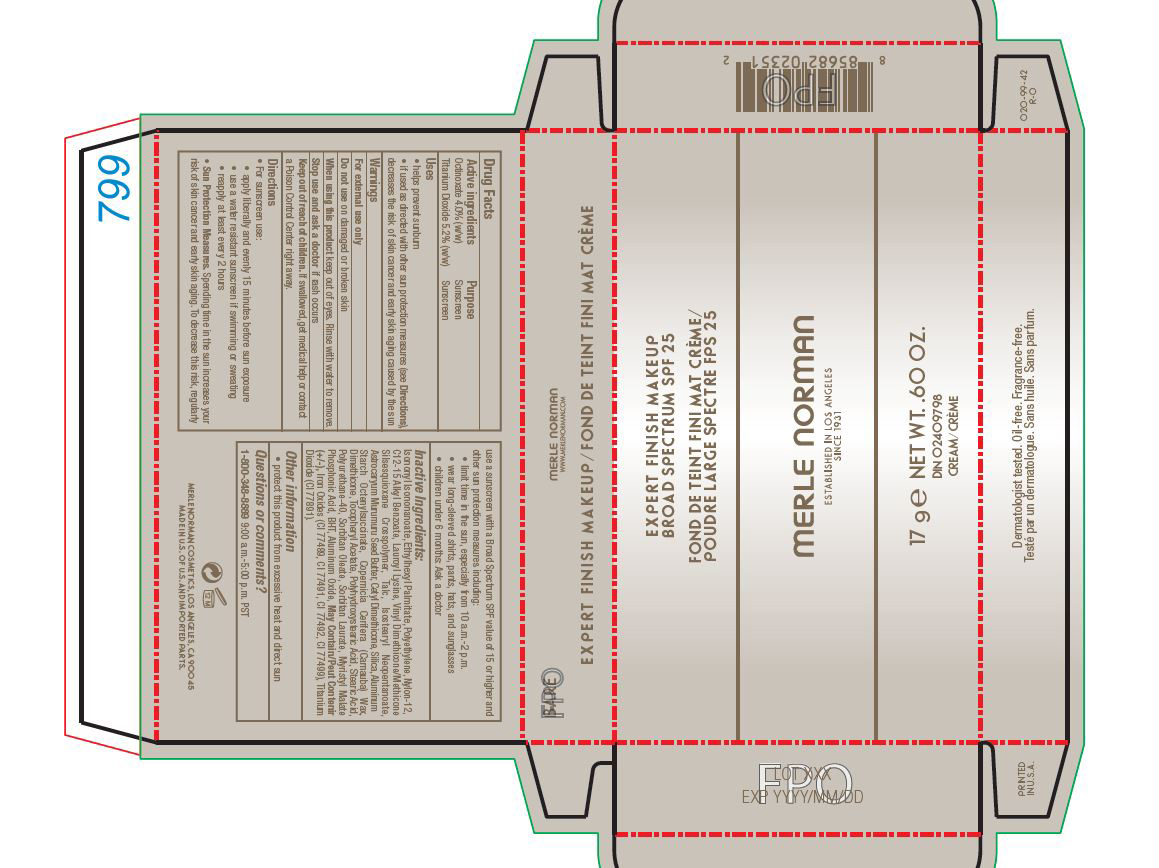
Sandy Beige Expert Finish Makeup Broad Spectrum SPF 25 Merle Norman Octinoxate, Titanium Dioxide 4 g/100g; 5.2 g/100g Cream
🆔 Identity & classification
Where does this data come from?
🏭 Manufacturer & labeler
Where does this data come from?
🩺 Clinical
Sandy Beige Expert Finish Makeup is a topical cream makeup product that also functions as a sunscreen. It contains two active ingredients that work as ultraviolet light filters: octinoxate and titanium dioxide. These ingredients are commonly used in sunscreen and sun-protective cosmetics to help reduce UV exposure to the skin. The product is marketed as an over-the-counter monograph drug under FDA guidelines for its category.
Patient education
Supplement & herbal interactions
Where does this data come from?
Ask a licensed pharmacist directly — free, answered by our team.
🧪 Inactive Ingredients / Excipients
Inactive ingredients, also called excipients, are components of the drug product other than the active ingredient. They may include fillers, dyes, coatings, preservatives, flavors, or other formulation ingredients.
💡 Tap an ingredient (hover on desktop) to see what it is and why it’s used.
-
UNII 9E8X80D2L0
A synthetic form of vitamin E used as an antioxidant and preservative in medications. It helps prevent the active ingredients from degrading when exposed to oxygen or light.
-
UNII A9EJ3J61HQ
A synthetic liquid derived from benzoic acid and long-chain alcohols. It functions as a solvent and penetration enhancer in topical formulations, helping active ingredients dissolve and absorb into the skin.
-
UNII LMI26O6933
Alumina is a white powder form of aluminum oxide. It's used as a filler to add bulk to tablets and capsules, and sometimes as a thickening or anti-caking agent in powdered formulations.
-
UNII I9PJ0O6294
A modified starch derived from corn or potato starch with aluminum salt and octenylsuccinic acid added. It acts as a binder to hold tablet ingredients together and as a thickening agent in liquid formulations.
-
UNII 12V64UPU6R
A plant-based fat extracted from murumuru palm seeds. It acts as an emollient and thickener in topical formulations, helping create smooth texture and improve skin feel in creams and lotions.
-
UNII 1P9D0Z171K
BHT is a synthetic antioxidant that prevents fats and oils in medicines from breaking down and becoming rancid. It helps keep the product stable and effective during storage.
-
UNII R12CBM0EIZ
A natural wax derived from a Brazilian palm tree, used as a coating and polish on tablets and capsules. It creates a smooth, shiny finish that protects the medicine and improves appearance.
-
UNII U4AS1BW4ZB
Cetyl dimethicone is a silicone-based lubricant and emollient. It helps the medicine spread smoothly, reduces friction between particles, and improves the product's texture and feel.
-
UNII 92RU3N3Y1O
Dimethicone is a silicone-based oil that acts as an anti-foaming agent and lubricant in medicines. It reduces gas bubbles in liquid formulations and helps coat and protect the stomach lining when ingested.
-
UNII 2865993309
Ethylhexyl palmitate is an oily chemical made from palm oil and alcohol. It acts as an emollient and skin-conditioning agent in topical medicines, helping the product spread smoothly and keeping skin soft.
-
UNII 1K09F3G675
Ferric oxide red is an inorganic iron compound used as a colorant in medicines. It gives tablets, capsules, or other dosage forms a red or reddish tint for identification and appearance.
-
UNII UG00KM4WR7
A plastic polymer used as a container material and film coating. It helps protect the medicine from moisture and air exposure during storage and shipping.
-
UNII S4V5BS6GCX
A synthetic oily liquid used as an emollient and solvent in topical medications. It helps dissolve active ingredients and creates a smooth, spreadable texture on the skin.
-
UNII 411THY156Q
Isostearyl neopentanoate is a synthetic oily substance used as an emollient and skin-conditioning agent in topical medicines. It helps soften and smooth the product's texture while improving how it spreads on skin.
-
UNII 113171Q70B
Lauroyl lysine is a compound made by combining an amino acid (lysine) with a fatty acid (lauric acid). It works as a glidant and lubricant to help powder particles flow smoothly during manufacturing and tablet compression.
-
UNII 446U8J075B
Nylon-12 is a synthetic plastic polymer used as a coating or film-forming agent in medicines. It helps create a protective barrier around tablets or capsules to control how and when the medicine is released in the body.
-
UNII 35V6A8JW8E
A chemical compound used as a buffer and pH regulator in medications. It helps maintain the proper acidity level of the medicine to improve stability and ensure the active ingredients work as intended.
-
UNII YXH47AOU0F
A synthetic fatty acid used as a thickener and stabilizer in medicines. It helps create the right texture and prevents separation of ingredients in liquid or semi-solid formulations.
-
UNII ETJ7Z6XBU4
Silicon dioxide is a naturally occurring mineral used as a glidant and anti-caking agent. It helps powder ingredients flow smoothly and prevents clumping during manufacturing and storage.
-
UNII 6W9PS8B71J
Sorbitan monolaurate is a natural oil-derived emulsifier made from sorbitol and lauric acid. It helps mix oils and water-based ingredients together in the medicine so the formula stays uniform and smooth.
-
UNII 06XEA2VD56
Sorbitan oleate is an emulsifier derived from sorbitol and oleic acid. It helps mix oil and water-based ingredients together and keeps them from separating in the medicine.
-
UNII 4ELV7Z65AP
Stearic acid is a fatty acid derived from plant or animal sources. It acts as a binder and lubricant in tablets and capsules, helping them hold together and flow smoothly during manufacturing.
-
UNII 7SEV7J4R1U
A powder made from a naturally occurring mineral. In medicines, talc works as a glidant and anti-caking agent, helping tablets and capsules flow smoothly during manufacturing and preventing clumping.
23 inactive ingredients listed in the exact product block matched to this NDC.
Label-section wording can be broader than the structured product block and may mention additional formulation ingredients.
Where does this data come from?
ingredient classCode="IACT" elements from the exact product block matched by this NDC. Label-section narrative from DailyMed / the openFDA label index is shown separately when available.Inactive ingredient FAQ
Are inactive ingredients the same for every manufacturer?
Why might an inactive ingredient be missing?
Can inactive ingredients matter?
💲 Pricing
A drug doesn't have one price. Each row is a different public payment system, and none is what you'd pay at the counter — that depends on your insurance. The ⓘ on each row explains what it measures.
| Price system | Per g | Per package |
|---|---|---|
| Retail pharmacies payNADAC · weekly | Not in the retail survey — common for institutional, discontinued, or low-volume packs. | |
| Medicaid paysCMS SDUD · 12 mo | No recent Medicaid claims on file for this NDC — rare and low-volume NDCs are suppressed in the public data. | |
| Medicare drug plans payPart D · quarterly | No Part D plan price is available for this NDC in our data. | |
Where does this data come from?
🔁 Therapeutic equivalents
Where does this data come from?
⏳ Availability & generic status
We did not find an FDA-approved generic match for this exact strength, form and route.
Where does this data come from?
🔬 Reported adverse events (FAERS)
Top reported reactions
Reporter sex
Where does this data come from?
📦 Packaging — all sizes for this product
| Package NDC | Description | Marketing start | Status |
|---|---|---|---|
| 57627-0166-02 You're viewing this | 1 BOTTLE in 1 CARTON (57627-166-02) / 17 g in 1 BOTTLE (57627-166-01) | 2013-10-20 | Active |
🧭 About this NDC listing & data coverage
What data is (and isn’t) available for this NDC — tap to expand
| NDC identity (package / product / labeler codes) | ✓ Available |
| Labeler | ✓ Available |
| Product & package description | ✓ Available |
| Marketing category & status | ✓ Available |
| Active ingredient / dosage form / route | ✓ Available |
| FDA label (SPL via DailyMed) | ✓ Available |
| Package photos | ✓ Available |
| Inactive ingredients (structured) | ✓ Available |
| NADAC pharmacy acquisition price (CMS) | — Not published for this NDC CMS publishes NADAC only for NDCs reported in its retail-pharmacy survey. |
| Orange Book / therapeutic-equivalence data | — Not published for this NDC Applies only to products approved under an NDA/ANDA; many listings are out of scope. |
| HCPCS J-code billing crosswalk | — Not published for this NDC Most self-administered / retail products have no J-code — that is normal. |
| Medicaid utilization (CMS SDUD) | — Not published for this NDC CMS reports utilization only for NDCs with Medicaid claims above its privacy threshold. |
Questions about this listing
Is this NDC FDA-approved?
Why is there no price listed?
Is the NDC printed on the package the same as the 11-digit billing NDC?
What do the three segments of this NDC mean?
Is this package still being marketed?
Who lists this product with the FDA?
Do I need a prescription for this product?
Where does this data come from?
📄 FDA label — Drug Facts FDA SPL
🎯 Indications and Usage ▾
Stop use and ask a doctor if rash occurs
⏱️ Dosage and Administration ▾
Directions For sunscreen use apply liberally and evenly 15 minutes before sun exposure use a water resistant sunscreen if swimming or sweating reapply at least every 2 hours Sun Protection Measures. Spending time in the sun increases your risk of skin cancer and early skin aging. To decrease this risk, regularly use a sunscreen with a broad spectrum SPF value of 15 or higher and other sun protection measures including: limit time in the sun, especially from 10 a.m. -2 p.m. wear long sleeve shirts, pants, hats, and sunglasses children under 6 months: Ask a doctor
⚠️ Warnings ▾
Warnings For external use only Do not use on damaged or broken skin When using this product, keep out of eyes. Rinse with water to remove.
🧪 Active Ingredient ▾
Active Ingredients Purpose Octinoxate 4.0% Sunscreen Titanium Dioxide 5.2% Sunscreen
🧪 Inactive Ingredients ▾
Inactive Ingredients Isononyl Isononanoate, Ethylhexyl Palmitate, Polyethylene, Nylon-12, C12-15 Alkyl Benzoate, Lauroyl Lysine, Vinyl Dimethicone/Methicone Silsesquioxane Crosspolymer, Talc, Isostearyl Neopentanoate, Astrocaryum Murumuru Seed Butter, Cetyl Dimethicone, Silica, Aluminum Starch Octenylsuccinate, Copernicia Cerifera (Carnauba) Wax, Dimethicone, Tocopheryl Acetate, Polyhydroxystearic Acid, Stearic Acid, Polyurethane-40, Sorbitan Oleate, Sorbitan Laurate, Myristyl Malate Phosphonic Acid, BHT Aluminum Oxide, May Contain, Iron Oxides, Titanium Dioxide
🎯 Purpose ▾
Uses - helps prevent sunburn - if used as directed with other sun protection measures (see Directions), decreases the risk of skin cancer and early skin aging caused by the sun