
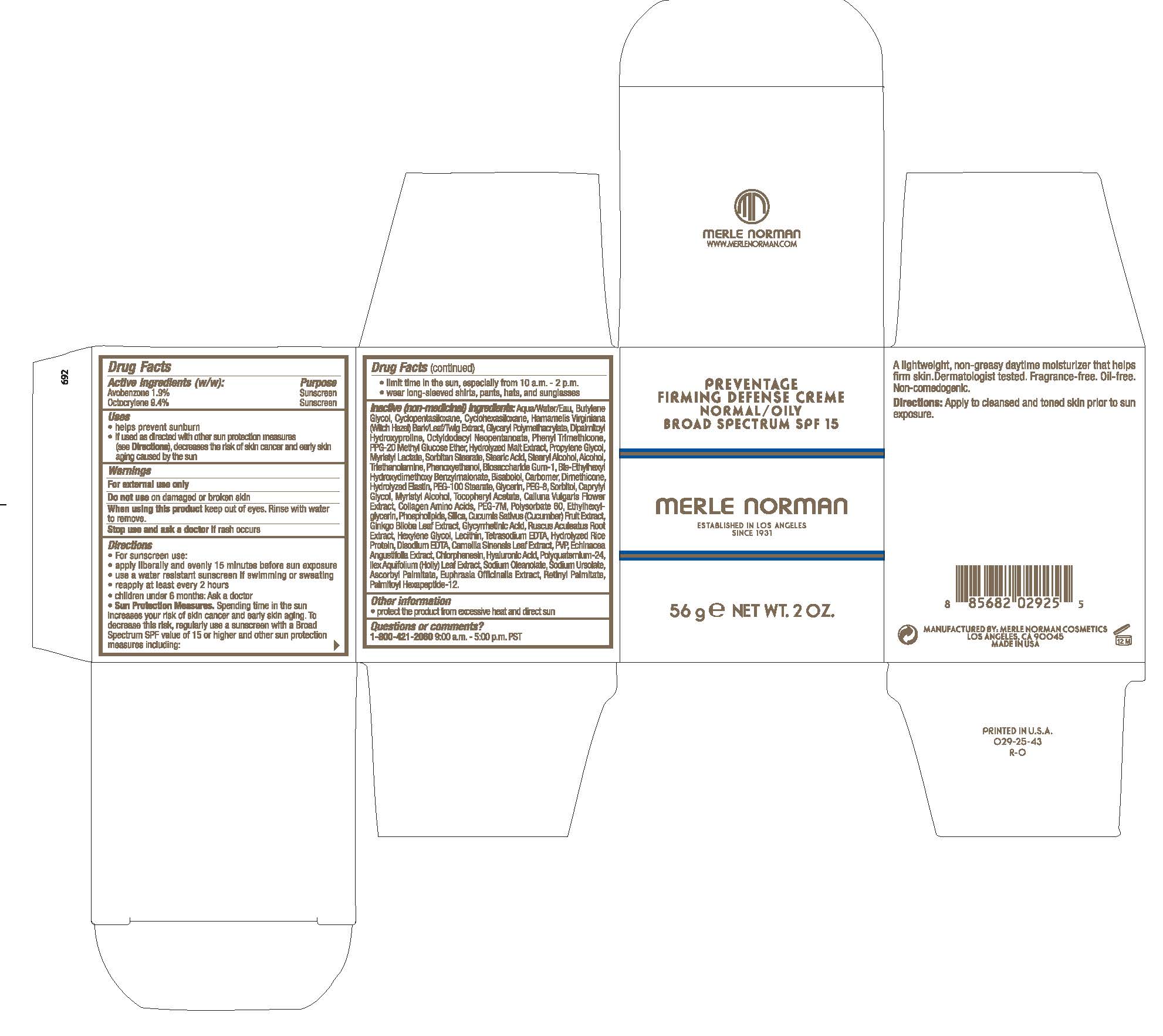
Preventage Firming Defense Creme Normal/ Oily Broad Spectrum SPF 15 Avobenzone, Octocrylene 1.9 g/100g; 9.4 g/100g Cream, 56 g — NDC 57627-186-01 (Billing 57627-0186-01)
NDC 57627-186-01 (billing 57627-0186-01) is a package of 56 g of Preventage Firming Defense Creme Normal/ Oily Broad Spectrum SPF 15 Avobenzone, Octocrylene 1.9 g/100g; 9.4 g/100g Cream from Merle Norman Cosmetics, Inc, marketed since Jan 2022 and currently FDA-listed.
Identity & classification
Regulatory identifiers FDA, NLM and CMS codes for this package
- 11-digit billing NDC: 57627018601
Where does this data come from?
Clinical
Preventage Firming Defense Creme is a topical cream containing two active ingredients classified as ultraviolet (UV) filters. Avobenzone and octocrylene are commonly used together in sunscreen products to absorb and help block both UVA and UVB radiation from the sun. This product is formulated as an over-the-counter monograph sunscreen, meaning it follows FDA guidelines for the sunscreen drug category. The cream is intended for application to normal or oily skin types and carries a broad-spectrum SPF 15 rating.
Patient education
Supplement & herbal interactions
Where does this data come from?
Ask a licensed pharmacist directly — free, answered by our team.
Pricing
A drug doesn't have one price. Each row is a different public payment system, and none is what you'd pay at the counter — that depends on your insurance. The ⓘ on each row explains what it measures.
| Price system | Per g | Per package |
|---|---|---|
| Retail pharmacies payNADAC · weekly | Not in the retail survey — common for institutional, discontinued, or low-volume packs. | |
| Medicaid paysCMS SDUD · 12 mo | No recent Medicaid claims on file for this NDC — rare and low-volume NDCs are suppressed in the public data. | |
| Medicare drug plans payPart D · quarterly | No Part D plan price is available for this NDC in our data. | |
Where does this data come from?
Packaging — all sizes for this product
| Package NDC | Description | Marketing start | Status |
|---|---|---|---|
| 57627-0186-01 57627-186-01 You're viewing this | 56 g in 1 CARTON (57627-186-01) | 2022-01-17 | Active |
Therapeutic equivalents
| Product | Labeler | Pack | NADAC/unit | TE | Status | Price vs. this |
|---|---|---|---|---|---|---|
| Preventage Firming Defense Creme Normal/ Oily Broad Spectrum SPF 15 1.9 g/100g; 9.4 g/100gthis 57627-0186-01 | Merle | 56 g | — | — | FDA listed | — |
| Preventage Firming Defense Creme Normal/Dry Broad Spectrum SPF 15 1.9 g/100g; 9.4 g/100g 57627-0203-01 | Merle | 56 g | — | — | FDA listed | — |
Where does this data come from?
Availability & generic status
We did not find an FDA-approved generic match for this exact strength, form and route.
Where does this data come from?
Inactive Ingredients / Excipients
Inactive ingredients, also called excipients, are components of the drug product other than the active ingredient. They may include fillers, dyes, coatings, preservatives, flavors, or other formulation ingredients.
💡 Tap an ingredient (hover on desktop) to see what it is and why it’s used.
-
UNII 9E8X80D2L0
A synthetic form of vitamin E used as an antioxidant and preservative in medications. It helps prevent the active ingredients from degrading when exposed to oxygen or light.
-
UNII 3K9958V90M
A liquid solvent derived from fermentation or chemical synthesis. In medicines, alcohol dissolves active ingredients, helps preserve the product, and improves how the body absorbs certain drugs.
-
UNII QN83US2B0N
Ascorbyl palmitate is a fat-soluble form of vitamin C used as an antioxidant in medicines. It prevents oils and fats in the product from breaking down and becoming less stable over time.
-
UNII BB4PU4V09H
A plant-derived gum that acts as a thickener and stabilizer in medications. It helps maintain consistent texture and prevents ingredient separation in liquid or semi-solid formulations.
-
UNII 3XUS85K0RA
Butylene glycol is a clear liquid derived from petroleum or plants that acts as a humectant, solvent, and preservative booster in medicines. It helps keep formulations stable, dissolve active ingredients, and maintain moisture in topical products.
-
UNII D9PC510CQV
Calluna vulgaris flowering top is a plant-derived ingredient from heather flowers. It may function as a natural extract, flavoring agent, or botanical additive in formulations.
-
UNII 00YIU5438U
Caprylyl glycol is a clear liquid derived from coconut oil. In medicines, it acts as a humectant to retain moisture, a preservative booster to prevent microbial growth, and a solvent to help dissolve or mix other ingredients.
-
UNII 0A5MM307FC
A synthetic polymer that absorbs water and forms a thick, gel-like substance. In medicines, it works as a thickener and stabilizer to improve texture and help ingredients stay mixed together in creams, gels, and lotions.
-
UNII I670DAL4SZ
A preservative that fights bacteria and fungi. It keeps medicines and topical products stable and safe from microbial contamination during storage and use.
-
UNII YY7C30VXJT
A natural plant extract from cucumber that adds flavor and freshness to medicines. It may also serve as a moisturizing agent or mild preservative in topical or oral formulations.
-
UNII 0THT5PCI0R
A silicone-based liquid that helps distribute active ingredients evenly throughout topical products. It acts as a solvent and emollient, allowing medicines to spread smoothly on skin while improving texture and absorption.
-
UNII XHK3U310BA
Cyclohexasiloxane is a silicon-based liquid that acts as a solvent and conditioning agent in medicines. It helps dissolve or carry other ingredients and improves how the product spreads or feels on the skin.
-
UNII 92RU3N3Y1O
Dimethicone is a silicone-based oil that acts as an anti-foaming agent and lubricant in medicines. It reduces gas bubbles in liquid formulations and helps coat and protect the stomach lining when ingested.
-
UNII E6AHA53N1H
A synthetic amino acid derivative used as a skin-conditioning agent and emollient in topical formulations. It helps soften and smooth the product's texture while improving how it spreads on skin.
-
UNII VB06AV5US8
Echinacea angustifolia is a plant extract used as a natural flavoring or coloring agent in some medicines. It may also help preserve the product's stability or serve as a filler ingredient.
-
UNII 7FLD91C86K
Edetate disodium is a chemical compound that binds and removes certain metal ions. In medicines, it acts as a preservative and stabilizer by preventing metals like calcium from interfering with the product's shelf life and consistency.
-
UNII MP1J8420LU
A salt derived from edetic acid that binds to trace metals in medicines. It serves as a chelating agent and preservative to prevent metal-catalyzed breakdown of the drug and extend shelf life.
-
UNII P540XA09DR
Enoxolone is a naturally derived compound from licorice root that acts as a skin-soothing and anti-inflammatory agent. In medicines, it helps reduce irritation and supports the healing of mucous membranes or damaged skin.
-
UNII 147D247K3P
Ethylhexylglycerin is a synthetic preservative used to prevent bacteria and mold from growing in medicines and personal care products. It helps keep the product safe and stable throughout its shelf life.
-
UNII C9642I91WL
Euphrasia stricta is a plant extract, also known as eyebright. It's used in formulations as a natural flavoring agent and to provide mild botanical properties to the medicine.
-
UNII 19FUJ2C58T
Ginkgo biloba leaf is a plant extract used as a flavoring or coloring agent in some medicines. It may also serve as a natural ingredient to support the product's formulation.
-
UNII PDC6A3C0OX
Glycerin is a clear, thick liquid derived from plant oils or fats. It acts as a humectant to retain moisture, a sweetener, and a solvent in medications.
-
UNII W2ZU1RY8B0
A plant extract from green tea leaves. It's used as an antioxidant ingredient to help preserve the medicine and maintain its stability during storage.
-
UNII UDA30A2JJY
A plant extract from witch hazel used as an astringent and skin-conditioning agent in topical formulations. It helps tone and soothe the skin while functioning as a natural preservative.
-
UNII KEH0A3F75J
Hexylene glycol is a clear liquid alcohol used as a solvent and preservative in medicines. It helps dissolve other ingredients and keeps the product stable during storage.
-
UNII S270N0TRQY
Hyaluronic acid is a naturally occurring substance found in skin and joints. In medicines, it acts as a moisturizer and thickening agent to improve texture and help the product spread smoothly.
-
UNII ZR28QKN0WT
Hydrolyzed elastin is a protein derived from animal connective tissue that has been broken down into smaller components. It acts as a humectant and skin-conditioning agent in formulations, helping to retain moisture and improve texture.
-
UNII 9Z32IEA9F7
A plant extract from holly leaves used as a natural flavoring and botanical ingredient. It adds taste and aroma to medicines while contributing minimal active effects on the body.
-
UNII 1DI56QDM62
A natural fatty substance from soybeans that helps mix oil and water-based ingredients together. It acts as an emulsifier and lubricant in medicines to improve texture and help the product break down properly in your body.
-
UNII 24WE03BX2T
Levomenol is a naturally derived alcohol compound used as a skin-conditioning and anti-inflammatory agent in topical formulations. It helps soothe and protect the skin while improving product texture and absorption.
-
UNII V42034O9PU
A fatty alcohol derived from coconut or palm oil. It serves as an emulsifier and thickener to help blend oil and water in creams or lotions, and improves the product's texture and consistency.
-
UNII 1D822OC34X
A synthetic ester derived from myristic acid and lactic acid. It functions as an emollient and skin-conditioning agent in topical formulations, helping to soften and smooth the product texture while improving how it spreads on skin.
-
UNII X8725R883T
A synthetic oily liquid derived from branched carboxylic acids, used as an emollient and skin-conditioning agent in topical formulations. It helps soften and smooth the product's texture while improving how it spreads on skin.
-
UNII 71M78END5S
A natural fat derived from fish or algae sources. It's included as a nutritional ingredient and helps distribute other components evenly throughout the medicine.
-
UNII HO4ZT5S86C
A synthetic peptide derived from amino acids, used as a skin-conditioning agent and emollient in topical formulations to help soften and smooth the skin surface.
-
UNII YD01N1999R
A waxy substance made from polyethylene glycol and stearic acid. It helps mix oil and water-based ingredients together and serves as an emulsifier and solubilizer in liquid and semi-solid medicines.
-
UNII HIE492ZZ3T
Phenoxyethanol is a synthetic preservative and antimicrobial agent used to prevent bacterial and fungal growth in medicines and cosmetic products, extending shelf life and maintaining product safety.
-
UNII DR0K5NOJ4R
Phenyl trimethicone is a silicone-based lubricant and glidant. It helps powder particles flow smoothly and reduces friction during tablet or capsule manufacturing and filling.
-
UNII B697894SGQ
Polyethylene glycol 400 is a clear, thick liquid made from petroleum-derived polymers. It acts as a solvent and humectant in medicines, helping dissolve active ingredients and retain moisture in the formulation.
-
UNII 4QIB4U4CQR
Polyethylene oxide is a synthetic polymer derived from petroleum. It acts as a binder and thickener in medicines, helping hold ingredients together and controlling how quickly the medication dissolves or releases in the body.
-
UNII CAL22UVI4M
A synthetic emulsifier derived from sorbitol and fatty acids. It helps mix oil and water-based ingredients together and improves the texture and stability of the medicine.
-
UNII FZ989GH94E
Povidone is a synthetic polymer made from a plastic-like material. It acts as a binder to hold tablet ingredients together and as a disintegrant to help the tablet break apart in your stomach so the medicine can be absorbed.
-
UNII 3WV1T97D3K
A synthetic polymer made from glucose and propylene glycol that functions as a humectant and solvent in medicines. It helps keep products moist and aids in dissolving or suspending active ingredients.
-
UNII 6DC9Q167V3
Propylene glycol is a clear liquid derived from petroleum or vegetable sources. It acts as a solvent, humectant, and preservative in medicines, helping dissolve active ingredients and maintain product stability.
-
UNII ZW12V95I1Q
Ruscus aculeatus root is a plant-derived ingredient used as a binder and thickening agent in formulations. It helps hold ingredients together and improve the texture and consistency of the medicine.
-
UNII ETJ7Z6XBU4
Silicon dioxide is a naturally occurring mineral used as a glidant and anti-caking agent. It helps powder ingredients flow smoothly and prevents clumping during manufacturing and storage.
-
UNII NV5D25VL1O
Sodium ursolate is a salt derived from ursolic acid, a natural compound found in plants. It acts as a solubilizer and absorption enhancer to help the active drug dissolve and be taken up more effectively by the body.
-
UNII NVZ4I0H58X
A waxy substance made from sorbitol and stearic acid. It acts as an emulsifier and stabilizer, helping keep oil and water mixed together and preventing separation in the medicine.
-
UNII 506T60A25R
Sorbitol is a natural sugar alcohol derived from glucose. It serves as a sweetener, humectant, and bulking agent in medications to improve taste and help maintain moisture in the product.
-
UNII 4ELV7Z65AP
Stearic acid is a fatty acid derived from plant or animal sources. It acts as a binder and lubricant in tablets and capsules, helping them hold together and flow smoothly during manufacturing.
-
UNII 2KR89I4H1Y
Stearyl alcohol is a waxy, fatty substance derived from natural oils or made synthetically. It acts as an emulsifier and thickener in medicines, helping mix ingredients together and give the product the right texture.
-
UNII 9O3K93S3TK
Trolamine is an alkaline compound used as a pH buffer and emulsifier in medicines. It helps neutralize acids, stabilize formulations, and enable mixing of oil and water-based ingredients.
-
UNII 1D1K0N0VVC
A fat-soluble form of vitamin A used as a colorant and nutritional fortification ingredient. It gives products a yellow or orange tint and increases vitamin A content in the formula.
-
UNII 059QF0KO0R
Water is a liquid solvent that dissolves and mixes ingredients together in liquid medicines, syrups, and injections. It helps distribute the active drug evenly throughout the product.
54 inactive ingredients listed in the exact product block matched to this NDC.
Label-section wording can be broader than the structured product block and may mention additional formulation ingredients.
Where does this data come from?
ingredient classCode="IACT" elements from the exact product block matched by this NDC. Label-section narrative from DailyMed / the openFDA label index is shown separately when available.Inactive ingredient FAQ
Are inactive ingredients the same for every manufacturer?
Why might an inactive ingredient be missing?
Can inactive ingredients matter?
Manufacturer & labeler
Where does this data come from?
FDA label — Drug Facts FDA SPL
🎯 Indications and Usage ▾
Stop use and ask a doctor if rash occurs
⏱️ Dosage and Administration ▾
Directions For sunscreen use: apply liberally and evenly 15 minutes before sun exposure use a water resistant sunscreen if swimming or sweating reapply at least every 2 hours children under 6 months: Ask a doctor Sun Protection Measures. Spending time in the sun increases your risk of skin cancer and early skin aging. To decrease this risk, regularly use a sunscreen with a Broad Spectrum SPF value of 15 or higher and other sun protection measures including: limit time in the sun, especially from 10 a.m. - 2 p.m. wear long-sleeved shirts, pants, hats, and sunglasses
⚠️ Warnings ▾
Warnings For external use only Do not use on damaged or broken skin
🧪 Active Ingredient ▾
Active Ingredients (w/w): Purpose Avobenzone 1.9% Sunscreen Octocrylene 9.4% Sunscreen
🧪 Inactive Ingredients ▾
Inactive (non-medicinal) ingredients: Aqua/Water/Eau, Butylene Glycol, Cyclopentasiloxane, Cyclohexasiloxane, Hamamelis Virginiana (Witch Hazel) Bark/leaf/twig Extract, Glyceryl Polymethacrylate, Dipalmitoyl hydroxyproline, octyldodecyl Neopentanoate, Phenyl Trimethicone, PPG-20 Methyl Glucose Ether, Hydrolyzed Malt Extract, Propylene Glycol, Myristyl Lactate, Sorbitan Stearate, Stearic Acid, Stearyl Alcohol, Alcohol, Triethanolamine, Phenoxyethanol, Biosaccharide Gum-1, Bis-Ethylhexyl Hydroxydimethoxy Benzylmalonate, Bisabolol, Carbomer, Dimethicone, Hydrolyzed Elastin, PEG-100 Stearate, Glycerin, PEG-8, Sorbitol, Caprylyl Glycol, Myristyl Alcohol, Tocopheryl Acetate, Calluna Vulgaris Flower Extract, Collagen Amino Acids, PEG-7M, Polysorbate 60, Ethylhexylglycerin, Phospholipids, Silica, Cucumis Sativus (Cucumber) Fruit Extract, Ginkgo Biloba Leaf Extract, Glycyrrhetinic Acid, Ruscus Aculeatus Root Extract, Hexylene Glycol, Lectithin, Tetrasodium EDTA, Hydrolyzed Rice Protein, Disodium EDTA, Camellia Sinensis Leaf Extract, PVP, Echinacea Angustifolia Extract, Chlorphenesin, Hyaluronic Acid, Polyquaternium-24, Ilex Aquifolium (Holly) Leaf Extract, Sodium Oleanolate, Sodium Ursolate, Ascorbyl Palmitate, Euphrasia Officinalis Extract, Retinyl Palmitate, Palmitoyl Hexapeptide-12.
🎯 Purpose ▾
Uses helps prevent sunburn If used as directed with other sun protection measures (see Directions ), decreases the risk of skin cancer and early skin aging caused by the sun.
About this NDC listing & data coverage
What data is (and isn’t) available for this NDC — tap to expand
| NDC identity (package / product / labeler codes) | ✓ Available |
| Labeler | ✓ Available |
| Product & package description | ✓ Available |
| Marketing category & status | ✓ Available |
| Active ingredient / dosage form / route | ✓ Available |
| FDA label (SPL via DailyMed) | ✓ Available |
| Package photos | ✓ Available |
| Inactive ingredients (structured) | ✓ Available |
| NADAC pharmacy acquisition price (CMS) | — Not published for this NDC CMS publishes NADAC only for NDCs reported in its retail-pharmacy survey. |
| Orange Book / therapeutic-equivalence data | — Not published for this NDC Applies only to products approved under an NDA/ANDA; many listings are out of scope. |
| HCPCS J-code billing crosswalk | — Not published for this NDC Most self-administered / retail products have no J-code — that is normal. |
| Medicaid utilization (CMS SDUD) | — Not published for this NDC CMS reports utilization only for NDCs with Medicaid claims above its privacy threshold. |