
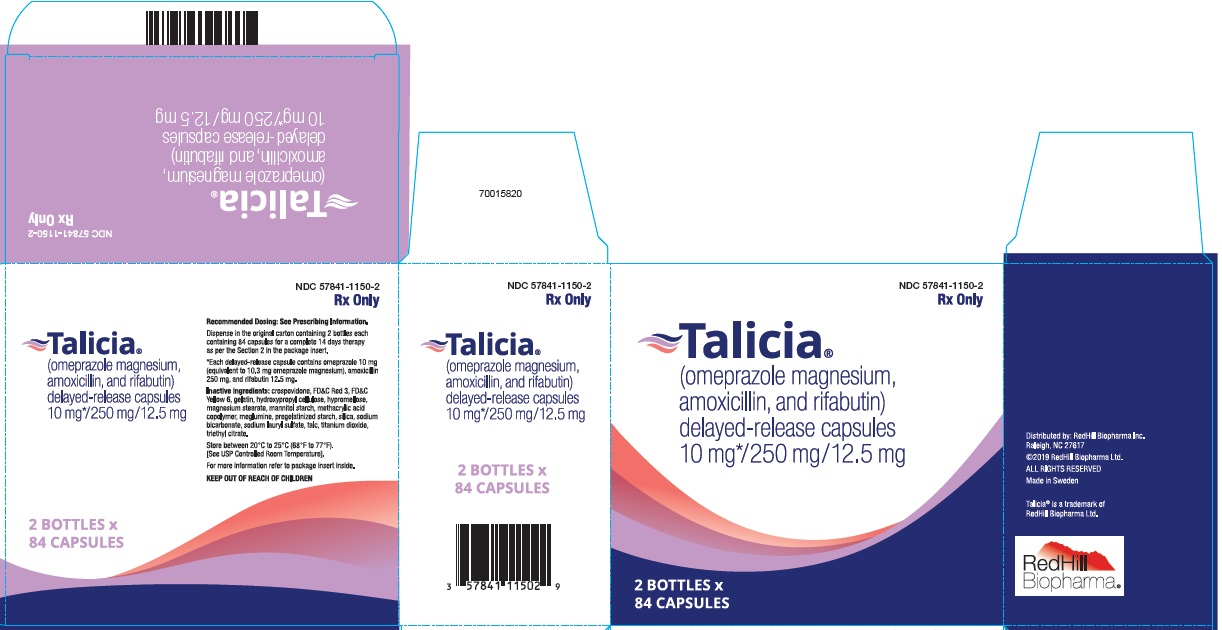
Talicia omeprazole magnesium, amoxicillin and rifabutin 10 mg; 250 mg; 12.5 mg Capsule, Delayed Release — NDC 57841-1150-2 (Billing 57841-1150-02)
This is a package of Talicia omeprazole magnesium, amoxicillin and rifabutin 10 mg; 250 mg; 12.5 mg Capsule, Delayed Release from RedHill Biopharma Ltd, marketed since Mar 2020 and currently FDA-listed; retail pharmacies pay about $4.88 per unit (NADAC). It is the main listing for this product, which comes in 2 package sizes.
NDC database record
One package, one record: these facts belong to NDC 57841-1150-2 alone.
- Record
- FDA NDC Directory package listing · Human prescription drug
- Code segments
- 57841 labeler · 1150 product · 2 package
- Package marketed since
- Mar 9, 2020
- Sample package
- No — commercial package
- Listing certified through
- Dec 31, 2027
- Barcode (UPC)
- 0357841115012
- Medicaid fills, this package
- 6,073 prescriptions in the last four reported quarters
- FDA record last changed
- Oct 8, 2026
Identity & classification
Regulatory identifiers FDA, NLM and CMS codes for this package
Drug-database identifiers Medi-Span GPI and First Databank GCN / HICL / AHFS classification
- GSN (GCN sequence number): 080455
- GCN: 47303
- GPI-14 (Medi-Span): 49993003406520
- HICL (First Databank): 046200
- AHFS class code: 08:12.16.08
- RxCUI (RxNorm): 2262026
Where does this data come from?
- FDA openFDA NDC Directory · synced Oct 8, 2026
- FDA label on DailyMed · label index refreshed Oct 8, 2026
- RxNorm (NLM RxNav) · catalog refreshed Oct 8, 2026
- Medi-Span GPI (licensed)
- First Databank (licensed) · refreshed Oct 8, 2026
RxNorm drug class
This medicine belongs to the Rifamycin Antimycobacterial class.
Where does this data come from?
- RxClass (NLM) · catalog refreshed Oct 8, 2026
Clinical
- Talicia treats H. pylori infection in adults. This is a bacterial infection in the stomach. It combines two antibiotics with an acid reducer.
- Take it three times a day with food, at least 4 hours apart, for 14 days. Swallow the capsules whole with a full glass of water. Don't crush or chew them, and don't drink alcohol w...
- Take it as soon as you remember. If your next dose is within 4 hours, still take the missed one but delay the next so there are at least 4 hours between them.
- Common ones include diarrhea, headache, nausea, stomach pain, dark urine, rash and indigestion. Call your doctor for severe or lasting diarrhea, or a rash that spreads or blisters....
Patient education
Supplement & herbal interactions
Where does this data come from?
- MedlinePlus (NLM) · refreshed Oct 8, 2026
- FDA label on DailyMed · label index refreshed Oct 8, 2026
Ask a licensed pharmacist directly — free, answered by our team.
Pricing
A drug doesn't have one price. Each row is a different public payment system, and none is what you'd pay at the counter — that depends on your insurance. The ⓘ on each row explains what it measures.
| Price system | Per ea | Per package |
|---|---|---|
| Retail pharmacies payNADAC · weekly | $4.883 | $820.26 / 168 capsules |
| Medicaid paysCMS SDUD · 12 mo | $4.82 | $809.74 / 168 capsules |
| Medicare drug plans payPart D · Q2 2026 | $4.88 | $819.40 / 168 capsules |
Where does this data come from?
- CMS NADAC weekly file · file of Oct 7, 2026
- CMS ASP pricing files · refreshed Sep 20, 2026
- CMS Medicaid State Drug Utilization Data · through Q4 2025
- CMS Part D plan pricing files · refreshed Sep 24, 2026
- VA National Acquisition Center price file
Packaging — all sizes for this product
| Package NDC | Description | Per unit | Per pack | Marketing start | Marketing end | Status |
|---|---|---|---|---|---|---|
| 57841-1150-02 You're viewing this Main listing | 2 BOTTLE in 1 CARTON / 84 CAPSULE, DELAYED RELEASE in 1 BOTTLE | $4.88 / ea | $820.25 | 2020-03-09 | — | Active |
| 57841-1150-04 57841-1150-4 | 2 BOTTLE in 1 CARTON / 84 CAPSULE, DELAYED RELEASE in 1 BOTTLE Sample | — | — | 2021-09-24 | — | Active |
In Medicaid, this is the most-dispensed pack of this product — about 100% of fills over the last four reported quarters. See all packs ↓
Pack size FAQ
What quantity is in this package?
What NDC number is used to bill for this package of Talicia omeprazole magnesium, amoxicillin and rifabutin 10 mg; 250 mg; 12.5 mg Capsule, Delayed Release?
Prices are the latest CMS NADAC pharmacy acquisition cost per NDC; per-pack figures are per-unit × pack quantity, shown only when the pack is denominated in the same measure NADAC prices.
Therapeutic equivalents
| Product | Labeler | Pack | NADAC/unit | TE | Status | Price vs. this |
|---|---|---|---|---|---|---|
| Talicia 10 mg/1; 250 mg/1; 12.5 mgthis 57841-1150-02 | RedHill | 84 capsules | $4.882 | — | Availability likely | — |
Where does this data come from?
- FDA openFDA NDC Directory · synced Oct 8, 2026
- FDA Orange Book · refreshed Oct 9, 2026
- CMS NADAC weekly file · file of Oct 7, 2026
Availability & generic status
We did not find an FDA-approved generic match for this exact strength, form and route. Patent/protection dates below may affect future generic timing.
Why the date isn’t exact: Generic timing can change because patents may be challenged, settled, licensed, added, removed, or worked around with a narrower label — and FDA approval does not always mean a pharmacy can get the generic today.
🛈 What do these terms mean?
- Patent
- Legal protection listed in the Orange Book that may delay generic approval or launch. Issued by the U.S. Patent & Trademark Office.
- Substance patent
- Covers the active drug molecule itself — the hardest to design around. A generic generally can’t launch until it expires.
- Formulation (product) patent
- Covers a specific formulation or dosage form. A generic can sometimes work around it with a different formulation.
- Method-of-use patent
- A patent covering one specific approved use of the drug — not necessarily the whole molecule. A generic can sometimes launch with a “skinny label” that carves out the protected use and keeps the others.
- Skinny label
- A generic label that omits a still-patented use when the FDA allows it — letting a generic reach the market for the unprotected uses.
- Exclusivity
- FDA-granted marketing protection, separate from patents — e.g. 5-yr new chemical entity, 7-yr orphan drug, or a +6-month pediatric extension.
- Paragraph IV
- A generic applicant’s formal challenge to a listed patent. It can potentially lead to earlier generic entry, but often involves litigation or a settlement.
- RLD / RS
- Reference Listed Drug — the brand product the FDA uses as the reference for generic applications. Reference Standard — the product the FDA expects generics to compare against in bioequivalence testing.
- TE / AB rating
- FDA therapeutic-equivalence rating. An AB rating generally means the FDA considers a generic therapeutically equivalent to — and substitutable for — the brand.
- LOE (loss of exclusivity)
- The latest patent or exclusivity currently listed — the loss-of-exclusivity / latest-listed-protection date shown on this page. Paragraph-IV challenges and settlements can move the real date earlier; FDA approval and a manufacturer’s decision to market can move it later.
Built from the FDA Orange Book. The bars above are scaled to each protection’s expiry; the red LOE marker is the last one to lapse.
| Patent | Type | Use code | Expires |
|---|---|---|---|
| US 9603806 ↗ | Method of use | U-2660 | Feb 12, 2034 |
| US 9498445 ↗ | Method of use | U-2660 | Feb 12, 2034 |
| US 9050263 ↗ | Method of use | U-2660 | Feb 12, 2034 |
| US 11878011 ↗ | Method of use | U-3816 | May 27, 2042 |
| US 11135172 ↗ | Method of use | U-2660 | Feb 12, 2034 |
| US 11931463 ↗ | Method of use | U-3866 | Feb 12, 2034 |
| US 10238606 ↗ | Drug product | — | Feb 12, 2034 |
| Code | What it grants | Expires |
|---|---|---|
| NP | New Product | Nov 1, 2022 |
| GAIN | Qualified Infectious Disease Product (+5-year) | Nov 1, 2027 |
Is there a generic version of TALICIA DR 10-250-12.5 MG CAP?
The FDA approved a generic — why can’t I get it at my pharmacy yet?
Why do different websites show different generic release dates?
What does “FDA listed” mean?
What does a patent or protection date mean here?
What does “current Orange Book estimate” mean?
Can a generic come out before the last patent expires?
Can a generic come out after the listed dates?
What is the difference between patents and exclusivity?
Why are there multiple patent dates?
Where does this data come from?
- FDA Orange Book · refreshed Oct 9, 2026
What it looks like
Where does this data come from?
- FDA label on DailyMed · label index refreshed Oct 8, 2026
Inactive Ingredients / Excipients
Inactive ingredients, also called excipients, are components of the drug product other than the active ingredient. They may include fillers, dyes, coatings, preservatives, flavors, or other formulation ingredients.
🧪 Avoiding an ingredient? See Amoxicillin / Omeprazole / Rifabutin inactive ingredients by manufacturer: every current product's list side by side, so you can ask your pharmacy for the version that does not list it.
💡 Tap an ingredient (hover on desktop) to see what it is and why it’s used.
-
UNII 68401960MK
Crospovidone is a synthetic polymer made from polyvinylpyrrolidone. It acts as a disintegrant, helping tablets break apart quickly in the stomach so the medicine dissolves and absorbs into the body.
-
UNII PN2ZH5LOQY
A synthetic red dye approved by the FDA for use in foods, medicines, and cosmetics. It serves as a colorant to make tablets, capsules, and liquids visually distinctive for product identification.
-
UNII H77VEI93A8
A synthetic yellow dye used to color medications. It helps identify the drug and make it visually distinctive, with no effect on how the medicine works.
-
UNII 2G86QN327L
Gelatin is a protein derived from animal collagen, commonly used in medicines as a gelling agent and capsule material. It helps create soft or hard capsule shells that hold and release medication, and can also thicken liquid formulations.
-
UNII 9XZ8H6N6OH
A plant-based cellulose derivative used as a binder to hold tablet ingredients together, a thickener in liquids, and a coating agent to control how fast the medicine dissolves.
-
UNII 3NXW29V3WO
Hypromellose is a plant-based thickener made from cellulose. It's used in medicines as a binder to hold ingredients together, a coating for tablets, and a thickener for liquids.
-
UNII 70097M6I30
Magnesium stearate is a salt made from magnesium and stearic acid, a fatty substance. It's used in tablets and capsules as a lubricant and glidant to help ingredients flow smoothly during manufacturing and prevent sticking.
-
UNII 3OWL53L36A
A natural sugar alcohol derived from seaweed or synthesized in the lab. It's used as a filler to add bulk, a sweetener in sugar-free formulas, and a disintegrant to help tablets break apart in the stomach.
-
UNII 6HG8UB2MUY
Meglumine is a sugar-alcohol compound used as a solubilizer and pH buffer in medicines. It helps dissolve drugs that don't mix well in water and maintains stable acidity levels in the formulation.
-
UNII NX76LV5T8J
A synthetic plastic polymer made from methacrylic acid and ethyl acrylate. It's used as a coating or binder to control how and where the medicine dissolves in your digestive system.
-
UNII ETJ7Z6XBU4
Silicon dioxide is a naturally occurring mineral used as a glidant and anti-caking agent. It helps powder ingredients flow smoothly and prevents clumping during manufacturing and storage.
-
UNII 8MDF5V39QO
A white powder form of baking soda that acts as a buffer and pH regulator in medicines. It helps maintain the right acid-base balance and may aid tablet disintegration.
-
UNII 368GB5141J
A detergent and foaming agent derived from coconut or palm oil. In medications, it helps break down and mix oil and water-based ingredients, aids in tablet disintegration, and improves how the drug dissolves and spreads in the mouth or digestive system.
-
UNII O8232NY3SJ
A plant-based carbohydrate derived from corn kernels. It acts as a filler to add bulk, a binder to hold ingredients together, and a disintegrant to help the tablet break apart in your stomach for absorption.
-
UNII 7SEV7J4R1U
A powder made from a naturally occurring mineral. In medicines, talc works as a glidant and anti-caking agent, helping tablets and capsules flow smoothly during manufacturing and preventing clumping.
-
UNII 15FIX9V2JP
Titanium dioxide is a bright white mineral powder commonly used as a colorant and opacifying agent. It makes pills and tablets white or lighter in color and helps make coatings non-transparent.
-
UNII 8Z96QXD6UM
Triethyl citrate is a clear liquid derived from citric acid. It acts as a plasticizer and solvent in tablet coatings and film formulations, helping the coating remain flexible and adhere properly to the medicine.
17 inactive ingredients listed in the exact product block matched to this NDC.
Where does this data come from?
ingredient classCode="IACT" elements from the exact product block matched by this NDC. Label-section narrative from DailyMed / the openFDA label index is shown separately when available.- FDA label on DailyMed · label index refreshed Oct 8, 2026
- FDA openFDA NDC Directory · synced Oct 8, 2026
Inactive ingredient FAQ
Are inactive ingredients the same for every manufacturer?
Why might an inactive ingredient be missing?
Can inactive ingredients matter?
Manufacturer & labeler
More NDCs from RedHill Biopharma Ltd labeler code 57841
Where does this data come from?
- FDA openFDA NDC Directory · synced Oct 8, 2026
- Drugs@FDA
Full prescribing information FDA SPL
🎯 Indications and Usage ▾
1 INDICATIONS AND USAGE TALICIA is a three-drug combination of omeprazole, a proton pump inhibitor, amoxicillin, a penicillin-class antibacterial, and rifabutin, a rifamycin antibacterial, indicated for the treatment of Helicobacter pylori infection in adults. ( 1 ) To reduce the development of drug-resistant bacteria and maintain the effectiveness of TALICIA and other antibacterial drugs, TALICIA should be used only to treat or prevent infections that are proven or strongly suspected to be caused by bacteria. (1.2)
1.1Helicobacter pylori Infection TALICIA is indicated for the treatment of Helicobacter pylori infection in adults [see Clinical Studies (14 ) ] .
1.2Usage To reduce the development of drug-resistant bacteria and maintain the effectiveness of TALICIA and other antibacterial drugs, TALICIA should be used only to treat or prevent infections that are proven or strongly suspected to be caused by susceptible bacteria. When culture and susceptibility information are available, they should be considered in selecting or modifying antibacterial therapy. In the absence of such data, local epidemiology and susceptibility patterns may contribute to the empiric selection of therapy.
⏱️ Dosage and Administration ▾
2 DOSAGE AND ADMINISTRATION Administer four (4) TALICIA capsules three times daily (at least 4 hours apart, e.g., morning, mid-day, and evening) with food for 14 days. ( 2.1 ) Swallow whole. Do not crush or chew. ( 2.1 ) Do not take TALICIA with alcohol. ( 2.1 )
2.1Recommended Dosage Administer four (4) TALICIA capsules three times daily (at least 4 hours apart, e.g., morning, mid-day, and evening) with food for 14 days. Instruct patients to swallow the TALICIA capsules whole, with a full glass of water (8 ounces). Each dose (4 capsules) of TALICIA includes rifabutin 50 mg, amoxicillin 1,000 mg and omeprazole 40 mg. Do not crush or chew TALICIA capsules. Do not take TALICIA with alcohol.
2.2Missed Doses If a dose is missed and the next dose is not within 4 hours, administer the missed dose as soon as possible. If a dose is missed and the next dose is within 4 hours, administer the missed dose as soon as possible and delay the next dose to ensure there are at least 4 hours between two doses.
💊 Dosage Forms and Strengths ▾
3 DOSAGE FORMS AND STRENGTHS Each TALICIA delayed-release capsule contains omeprazole 10 mg (equivalent to 10.3 mg of omeprazole magnesium), amoxicillin 250 mg and rifabutin 12.5 mg. The capsules are orange, opaque, with “RHB” imprinted in black on the capsule cap and “105” imprinted in black on the capsule base. Delayed Release Capsule: Omeprazole 10 mg, (equivalent to 10.3 mg of omeprazole magnesium) amoxicillin 250 mg and rifabutin 12.5 mg. ( 3 )
⛔ Contraindications ▾
4 CONTRAINDICATIONS Known hypersensitivity to omeprazole, amoxicillin or any other beta-lactam antibacterial drugs, rifabutin or any other rifamycin, or any component of TALICIA. ( 4.1 ) Rilpivirine-containing products. ( 4.2 ) Delavirdine. ( 4.3 ) Voriconazole. ( 4.4 )
4.1Hypersensitivity Reactions TALICIA is contraindicated in patients with known hypersensitivity to the components of TALICIA: amoxicillin [or other β-lactam antibacterial drugs (e.g., penicillins and cephalosporins)], omeprazole (or other benzimidazoles [e.g. proton pump inhibitors (PPIs) and anthelmintics]), rifabutin (or any other rifamycins), or to any other component of TALICIA. Hypersensitivity reactions may include anaphylaxis or Stevens Johnson Syndrome, anaphylactic shock, angioedema, bronchospasm, acute tubulointerstitial nephritis, rash and urticaria [see Warnings and Precautions (5.1 , 5.6 , 5.8 ), Adverse Reactions (6.1) ] .
4.2Rilpivirine-containing Products Proton pump inhibitors (PPIs), including omeprazole (a component of TALICIA), are contraindicated in patients receiving rilpivirine-containing products [see Drug Interactions (7.1) ] .
4.3Delavirdine The use of rifabutin (a component of TALICIA), is contraindicated in patients receiving delavirdine [see Drug Interactions (7.1) ] .
4.4Voriconazole The use of rifabutin (a component of TALICIA), is contraindicated in patients receiving voriconazole [see Drug Interactions (7.1) ] .
⚠️ Warnings and Cautions ▾
5 WARNINGS AND PRECAUTIONS Hypersensitivity Reactions: Serious and occasionally fatal reactions (e.g., anaphylaxis) have been reported with components of TALICIA. If hypersensitivity reactions occur, discontinue TALICIA and institute immediate therapy (e.g., anaphylaxis management). ( 5.1 ) Severe Cutaneous Adverse Reactions (SCAR): There have been reports of SCAR with the components of TALICIA.
Monitor closely and discontinue TALICIA at the first signs of SCAR. ( 5.2 ) Drug-induced enterocolitis syndrome (DIES) has been reported with use of amoxicillin, a component of TALICIA. If this occurs, discontinue TALICIA and institute appropriate therapy.
( 5.3 ) Clostridioides difficile -Associated Diarrhea (CDAD): Evaluate if diarrhea occurs. ( 5.4 ) Reduction in the Efficacy of Hormonal Contraceptives: Additional non-hormonal highly effective methods of contraception should be used while taking TALICIA. ( 5.5 ) Acute Tubulointerstitial Nephritis (TIN): Observed in patients taking Proton Pump Inhibitors (PPIs), including omeprazole and penicillins.
Discontinue TALICIA and evaluate patients. ( 5.6 ) Cutaneous and Systemic Lupus Erythematosus: Mostly cutaneous; new onset or exacerbation of existing disease; discontinue TALICIA and evaluate. ( 5.8 )
5.1Hypersensitivity Reactions Serious and fatal hypersensitivity reactions, e.g., anaphylaxis, angioedema, erythema multiforme, exfoliative dermatitis, hypersensitivity vasculitis, acute tubulointerstitial nephritis, and serum sickness have been reported with the components of TALICIA: omeprazole, amoxicillin and rifabutin. Signs and symptoms of these reactions may include hypotension, urticaria, angioedema, acute bronchospasm, conjunctivitis, thrombocytopenia, neutropenia or flu-like syndrome (weakness, fatigue, muscle pain, nausea, vomiting, headache, fever, chills, aches, rash, itching, sweats, dizziness, shortness of breath, chest pain, cough, syncope, palpitations).
There have been reports of individuals with a history of penicillin hypersensitivity who have experienced severe reactions when treated with cephalosporins. Before initiating therapy with TALICIA, inquire about history of hypersensitivity reactions to penicillins, cephalosporins, rifamycins, or PPIs. Discontinue TALICIA and institute immediate therapy, if hypersensitivity reactions occur.
5.2Severe Cutaneous Adverse Reactions Severe cutaneous adverse reactions (SCAR), such as Stevens-Johnson syndrome (SJS), toxic epidermal necrolysis (TEN), drug reaction with eosinophilia and systemic symptoms (DRESS), and acute generalized exanthematous pustulosis (AGEP) have been reported with the components of TALICIA: rifabutin, amoxicillin, and omeprazole [see Warnings and Precautions (5.1) and Adverse Reactions (6.3) ] . Monitor closely and discontinue TALICIA at the first signs of SCAR.
5.3Drug-Induced Enterocolitis Syndrome (DIES) Drug-induced enterocolitis syndrome (DIES) has been reported with use of amoxicillin, a component of TALICIA [see Adverse Reactions (6.3) ] , with most cases occurring in pediatric patients ≤18 years of age. DIES is a non-IgE mediated hypersensitivity reaction characterized by protracted vomiting occurring 1 to 4 hours after drug ingestion in the absence of skin or respiratory symptoms. DIES may be associated with pallor, lethargy, hypotension, shock, diarrhea within 24 hours after ingesting amoxicillin, and leukocytosis with neutrophilia.
If DIES occurs, discontinue TALICIA and institute appropriate therapy.
5.4Clostridioides difficile -Associated Diarrhea Clostridioides difficile -associated diarrhea (CDAD) has been reported with use of omeprazole, a component of TALICIA and nearly all antibacterial agents, including amoxicillin and rifabutin, which are components of TALICIA and may range in severity from mild diarrhea to fatal colitis. Treatment with antibacterial agents alters the normal flora of the colon leading to overgrowth of C. difficile. CDAD must be considered in all patients who present wi… [Excerpted — this section continues on DailyMed.]
🤒 Adverse Reactions ▾
6 ADVERSE REACTIONS The following serious adverse reactions are described below and elsewhere in labeling: Hypersensitivity Reactions [see Warnings and Precautions (5.1) ] Severe Cutaneous Adverse Reactions [see Warnings and Precautions (5.2) ] Drug-Induced Enterocolitis Syndrome (DIES) [see Warnings and Precautions (5.3) ] Clostridioides difficile -Associated Diarrhea [see Warnings and Precautions (5.4) ] Acute Tubulointerstitial Nephritis [see Warnings and Precautions (5.6) ] Cutaneous and Systemic Lupus Erythematosus [see Warnings and Precautions (5.8) ] Rash in Patients with Mononucleosis [see Warnings and Precautions (5.9) ] Uveitis [see Warnings and Precautions (5.10) ] Most common adverse reactions (≥1%) were diarrhea, headache, nausea, abdominal pain, chromaturia, rash, dyspepsia, oropharyngeal pain, vomiting, and vulvovaginal candidiasis.
( 6.1 ) To report SUSPECTED ADVERSE REACTIONS, contact RedHill Biopharma Inc. at 1-833-ADRHILL (1-833-237-4455) or FDA at 1-800-FDA-1088 or www.fda.gov/medwatch .
6.1Clinical Trials Experience with TALICIA Because clinical trials are conducted under widely varying conditions, adverse reaction rates observed in the clinical trials of a drug cannot be directly compared to rates in the clinical trials of another drug and may not reflect the rates observed in practice. The safety of TALICIA was assessed in adult patients who were screened and found to be positive for H. pylori infection in one active-controlled (Study 1) and one placebo-controlled (Study 2) clinical trial. Patients received TALICIA, amoxicillin and omeprazole, or placebo every eight hours for 14 consecutive days taken with food.
A total of 305 patients received TALICIA in Studies 1 and 2, 227 patients received amoxicillin and omeprazole (as omeprazole magnesium) in Study 1, and 41 patients received placebo in Study 2. These patients had a mean age of 46.4 years (range 18 to 70 years); 62.3% were female, 80.3% were white with 64.2% Hispanic or Latino. Adverse Reactions Leading to Discontinuation Treatment discontinuation due to an adverse reaction occurred in 1% (4/305) of patients receiving TALICIA, <1% (1/227) of patients receiving amoxicillin and omeprazole, and 2% (1/41) of patients receiving placebo.
Adverse reactions leading to discontinuation of TALICIA were nausea and vomiting, nausea, nasal congestion, and nasopharyngitis, in one patient each. Most Common Adverse Reactions Selected adverse reactions occurring in ≥1% of patients receiving TALICIA in Study 1 and 2 are described in Table 1 . Table 1: Selected Adverse Reactions Occurring in 1% or Greater of Patients Receiving TALICIA in Studies 1 and 2 a Headache includes: headache and migraine. b Abdominal pain includes: abdominal pain, abdominal pain upper, and abdominal pain lower. c Riboflavin was administered in Study 1 to prevent unintentional unblinding and may have contributed to under-reporting of chromaturia. d Rash includes: rash, rash maculo-papular, rash morbilliform, and urticaria. e Dyspepsia includes: dyspepsia and epigastric discomfort. f Vulvovaginal candidiasis includes: vulvovaginal candidiasis, vulvovaginal mycotic infection, fungal infection, and vaginal discharge + vulvovaginal burning sensation + vulvovaginal pruritus.
Study 1 Study 2 Adverse Reaction TALICIA (N=228) n (%) Amoxicillin and Omeprazole (N=227) n (%) TALICIA (N=77) n (%) Placebo (N=41) n (%) Diarrhea 23 (10.1) 18 (7.9) 11 (14.3) 4 (9.8) Headache a 17 (7.5) 16 (7.0) 12 (15.6) 4 (9.8) Nausea 11 (4.8) 12 (5.3) 3 (3.9) 1 (2.4) Abdominal pain b 8 (3.5) 11 (4.8) 3 (3.9) 2 (4.9) Chromaturia c 0 0 10 (13.0) 1 (2.4) Rash d 6 (2.6) 2 (0.9) 4 (5.2) 0 Dyspepsia e 5 (2.2) 3 (1.3) 1 (1.3) 0 Vomiting 5 (2.2) 5 (2.2) 1 (1.3) 2 (4.9) Oropharyngeal pain 2 (0.9) 2 (0.9) 3 (3.9) 0 Vulvovaginal candidiasis f 5 (2.2) 5 (2.2) 0 0
6.2Other Important Adverse Reactions from the Labeling of the Individual Components of TALICIA Additional adverse reactions that occurred in 1% or greater of patients treated… [Excerpted — this section continues on DailyMed.]
🔄 Drug Interactions ▾
7 DRUG INTERACTIONS Components of TALICIA have the potential for clinically important drug interactions. See Full Prescribing Information for important drug interactions with TALICIA. ( 4 , 5.7 )
7.1Interactions with Other Drugs and Diagnostics Drug interaction studies with TALICIA have not been conducted. The drug interaction information described here is based on the prescribing information of individual TALICIA components: omeprazole, amoxicillin, and rifabutin. Rifabutin is a substrate and inducer of cytochrome P450 (CYP) 3A enzymes.
Omeprazole is a substrate and an inhibitor of CYP2C19, and a substrate of CYP3A4. Co-administration of TALICIA and other drugs that are substrates, inhibitors, or inducers of these enzymes may alter concentrations of rifabutin/omeprazole or other co-administered drugs [See Table 2 below and Clinical Pharmacology (12.3) ]. Omeprazole magnesium is a PPI.
Refer to the prescribing information of the drugs used concomitantly with TALICIA for further information on their interactions with PPIs. Table 2: Interactions with TALICIA When Co-Administered with Other Drugs and Diagnostics CYP2C19 or CYP3A4 Inducers Clinical Impact Decreased exposure of omeprazole when used concomitantly with strong inducers. Prevention or Management St.
John’s Wort, rifampin : Avoid concomitant use with TALICIA [see Warnings and Precautions (5.7) ]. Ritonavir-containing products : See prescribing information for specific drugs. CYP2C19 or CYP3A4 Inhibitors Clinical Impact Increased blood levels of omeprazole and rifabutin.
Prevention or Management Voriconazole : Concomitant use with TALICIA is contraindicated [see Contraindications (4) ] . Fluconazole, posaconazole and itraconazole : Avoid concomitant use with TALICIA. If coadministration cannot be avoided, monitor patients for rifabutin associated adverse events, and lack of anti-fungal efficacy.
CYP2C19 Substrates (e.g., Clopidogrel, citalopram, cilostazol, phenytoin, diazepam) Clinical Impact Increased plasma concentrations of CYP2C19 substrate drugs or decreased/increased plasma concentrations of its active metabolite(s) [see Clinical Pharmacology (12.3) ] . Prevention or Management Clopidogrel : Consider use of alternative anti-platelet therapy [ see Warnings and Precautions (5.7) ] . Avoid concomitant use with TALICIA.
Antiretrovirals/Protease Inhibitors Clinical Impact Antiretrovirals/protease inhibitors may increase rifabutin blood levels. The effect of PPIs (such as omeprazole in TALICIA) on antiretroviral drugs is variable. The clinical importance and the mechanisms behind these interactions are not always known.
Decreased exposure of some antiretroviral drugs (e.g., rilpivirine, atazanavir, and nelfinavir) when used concomitantly with omeprazole may reduce antiviral effect and promote the development of drug resistance [see Clinical Pharmacology (12.3) ]. Increased exposure of other antiretroviral drugs (e.g., saquinavir) when used concomitantly with omeprazole may increase toxicity [see Clinical Pharmacology (12.3) ] . There are other antiretroviral drugs which do not result in clinically relevant interactions with omeprazole.
Prevention or Management Delavirdine : Combination treatment with TALICIA and delavirdine is contraindicated [see Contraindications (4) ]. Rilpivirine-containing products : Concomitant use with TALICIA is contraindicated [see Contraindications (4) ]. Avoid concomitant use of TALICIA with amprenavir, indinavir, lopinavir/ritonavir, saquinavir/ritonavir, ritonavir, tipranavir/ritonavir, fosamprenavir/ritonavir, or nelfinavir [see Warnings and Precautions (5.7) ] .
Other antiretrovirals: See prescribing information for specific antiretroviral drugs. Probenecid Clinical Impact Increased and prolonged blood levels of amoxicillin. Allopurinol Clinical Impact Increase in the incidence of rashes is reported in patients receiving both allopurinol and amoxicillin together compared to patients receiving amoxicillin alone.
It is not known whether th… [Excerpted — this section continues on DailyMed.]
👥 Use in Specific Populations ▾
8 USE IN SPECIFIC POPULATIONS TALICIA may cause fetal harm. ( 8.1 ) Renal Impairment: Avoid use in severe renal impairment. ( 8.6 ) Hepatic Impairment: Avoid use. ( 8.7 )
8.1Pregnancy Risk Summary Based on animal reproduction studies, TALICIA may cause fetal harm when administered to pregnant women. There are no adequate and well controlled studies of amoxicillin, omeprazole, or rifabutin (used separately or together) in pregnant women. Use of TALICIA is generally not recommended for use in pregnancy.
If TALICIA is used during pregnancy, advise pregnant women of the potential risk to a fetus. Omeprazole: Available epidemiologic data do not demonstrate an increased risk of major congenital malformations or other adverse pregnancy outcomes with first trimester omeprazole use. Reproduction studies in rats and rabbits resulted in dose-dependent embryo-lethality at omeprazole doses that were approximately 1.13 to 11 times an oral human dose of 120 mg.
Fetal malformations were not observed in animal reproduction studies with administration of oral esomeprazole (an enantiomer of omeprazole) magnesium in rats and rabbits during organogenesis with doses about 23 times and 14 times, respectively, of an oral human dose of 120 mg esomeprazole or omeprazole. Changes in bone morphology were observed in offspring of rats dosed through most of pregnancy and lactation at doses equal to or greater than approximately 11 times an oral human dose of 120 mg esomeprazole or omeprazole.
When maternal administration was confined to gestation only, there were no effects on bone physeal morphology in the offspring at any age [see Data ] . Amoxicillin: Available data from published epidemiologic studies and pharmacovigilance case reports over several decades with amoxicillin use have not established drug-associated risks of major birth defects, miscarriage, or adverse maternal or fetal outcomes [see Data ] . No adverse developmental effects were observed in animal reproduction studies with administration of amoxicillin to pregnant mice and at doses up to 3 to 6 times an oral human dose of 3 grams.
Rifabutin: Fetal malformations were not observed in rat or rabbit reproduction studies given rifabutin at dose levels up to 200 mg/kg (6 to 13 times the recommended human dose). In rats, given rifabutin at 200 mg/kg/day (about 6 times the recommended human daily dose), there was a decrease in fetal viability. Increased skeletal anomalies were observed in rats and rabbits at 40 and 80 mg/kg/day, respectively (corresponding to approximately an equivalent dose and 5 times the recommended human daily dose); maternal toxicity was noted at 80 mg/kg in rabbits [see Data ].
The estimated background risks of major birth defects and miscarriage for the indicated population are unknown. All pregnancies have a background risk of birth defect, loss, or other adverse outcomes. In the US general population, the estimated background risk of major birth defects and miscarriage in clinically recognized pregnancies is 2% to 4% and 15% to 20%, respectively.
Data Human Data Omeprazole Four published epidemiological studies compared the frequency of congenital abnormalities among infants born to women who used omeprazole during pregnancy with the frequency of abnormalities among infants of women exposed to H2-receptor antagonists or other controls. A population-based retrospective cohort epidemiological study from the Swedish Medical Birth Registry, covering approximately 99% of pregnancies, from 1995 to 99, reported on 955 infants (824 exposed during the first trimester with 39 of these exposed beyond first trimester, and 131 exposed after the first trimester) whose mothers used omeprazole during pregnancy.
The number of infants exposed in utero to omeprazole that had any malformation, low birth weight, low Apgar score, or hospitalization was similar to the number observed in this population. The number of infants born with ventricular septal defects and the number of stillborn in… [Excerpted — this section continues on DailyMed.]
🤰 Pregnancy ▾
8.1Pregnancy Risk Summary Based on animal reproduction studies, TALICIA may cause fetal harm when administered to pregnant women. There are no adequate and well controlled studies of amoxicillin, omeprazole, or rifabutin (used separately or together) in pregnant women. Use of TALICIA is generally not recommended for use in pregnancy.
If TALICIA is used during pregnancy, advise pregnant women of the potential risk to a fetus. Omeprazole: Available epidemiologic data do not demonstrate an increased risk of major congenital malformations or other adverse pregnancy outcomes with first trimester omeprazole use. Reproduction studies in rats and rabbits resulted in dose-dependent embryo-lethality at omeprazole doses that were approximately 1.13 to 11 times an oral human dose of 120 mg.
Fetal malformations were not observed in animal reproduction studies with administration of oral esomeprazole (an enantiomer of omeprazole) magnesium in rats and rabbits during organogenesis with doses about 23 times and 14 times, respectively, of an oral human dose of 120 mg esomeprazole or omeprazole. Changes in bone morphology were observed in offspring of rats dosed through most of pregnancy and lactation at doses equal to or greater than approximately 11 times an oral human dose of 120 mg esomeprazole or omeprazole.
When maternal administration was confined to gestation only, there were no effects on bone physeal morphology in the offspring at any age [see Data ] . Amoxicillin: Available data from published epidemiologic studies and pharmacovigilance case reports over several decades with amoxicillin use have not established drug-associated risks of major birth defects, miscarriage, or adverse maternal or fetal outcomes [see Data ] . No adverse developmental effects were observed in animal reproduction studies with administration of amoxicillin to pregnant mice and at doses up to 3 to 6 times an oral human dose of 3 grams.
Rifabutin: Fetal malformations were not observed in rat or rabbit reproduction studies given rifabutin at dose levels up to 200 mg/kg (6 to 13 times the recommended human dose). In rats, given rifabutin at 200 mg/kg/day (about 6 times the recommended human daily dose), there was a decrease in fetal viability. Increased skeletal anomalies were observed in rats and rabbits at 40 and 80 mg/kg/day, respectively (corresponding to approximately an equivalent dose and 5 times the recommended human daily dose); maternal toxicity was noted at 80 mg/kg in rabbits [see Data ].
The estimated background risks of major birth defects and miscarriage for the indicated population are unknown. All pregnancies have a background risk of birth defect, loss, or other adverse outcomes. In the US general population, the estimated background risk of major birth defects and miscarriage in clinically recognized pregnancies is 2% to 4% and 15% to 20%, respectively.
Data Human Data Omeprazole Four published epidemiological studies compared the frequency of congenital abnormalities among infants born to women who used omeprazole during pregnancy with the frequency of abnormalities among infants of women exposed to H2-receptor antagonists or other controls. A population-based retrospective cohort epidemiological study from the Swedish Medical Birth Registry, covering approximately 99% of pregnancies, from 1995 to 99, reported on 955 infants (824 exposed during the first trimester with 39 of these exposed beyond first trimester, and 131 exposed after the first trimester) whose mothers used omeprazole during pregnancy.
The number of infants exposed in utero to omeprazole that had any malformation, low birth weight, low Apgar score, or hospitalization was similar to the number observed in this population. The number of infants born with ventricular septal defects and the number of stillborn infants was slightly higher in the omeprazole-exposed infants than the expected number in this population. A population-based retrospective cohort study covering all live bi… [Excerpted — this section continues on DailyMed.]
🧒 Pediatric Use ▾
8.4Pediatric Use Safety and effectiveness of TALICIA in pediatric patients below the age of 18 years with H. pylori infection have not been established. Esomeprazole, an enantiomer of omeprazole, was shown to decrease body weight, body weight gain, femur weight, femur length, and overall growth in juvenile rats at oral doses about 11 to 23 times a daily human dose of 120 mg esomeprazole or omeprazole based on body surface area [see Nonclinical Toxicology (13.2) ] .
🧓 Geriatric Use ▾
8.5Geriatric Use Clinical studies of TALICIA did not include sufficient numbers of subjects aged 65 and older to determine whether they respond differently from younger subjects. Other reported clinical experience has not identified differences in responses between the elderly and younger adult patients. Omeprazole Omeprazole was administered to over 2000 elderly individuals (≥ 65 years of age) in clinical trials in the U.S. and Europe.
There were no differences in safety and effectiveness between the elderly and younger subjects. Other reported clinical experience has not identified differences in response between the elderly and younger subjects, but greater sensitivity of some older individuals cannot be ruled out. Amoxicillin An analysis of clinical studies of amoxicillin was conducted to determine whether subjects aged 65 and older respond differently from younger subjects.
These analyses have not identified differences in responses between the elderly and younger patients, but a greater sensitivity of some older individuals cannot be ruled out. This drug is known to be substantially excreted by the kidney, and the risk of toxic reactions to this drug may be greater in patients with impaired renal function. Because elderly patients are more likely to have decreased renal function, it may be useful to monitor renal function in elderly patients taking TALICIA.
Rifabutin Clinical studies of rifabutin did not include sufficient numbers of subjects aged 65 and older to determine whether they respond differently from younger subjects. Other reported clinical experience has not identified differences in responses between the elderly and younger patients.
🆘 Overdosage ▾
10 OVERDOSAGE TALICIA No information is available on accidental overdosage of TALICIA in humans. In case of an overdose, patients should contact a physician, poison control center, or emergency room. The available overdosage information for each of the individual components in TALICIA (omeprazole, amoxicillin and rifabutin) are summarized below: Omeprazole There have been reports of overdosage with omeprazole in humans.
Doses ranged up to 2400 mg (120 times the usual recommended clinical dose). Manifestations were variable, but included confusion, drowsiness, blurred vision, tachycardia, nausea, vomiting, diaphoresis, flushing, headache, dry mouth, and other adverse reactions similar to those seen in normal clinical experience [see Adverse Reactions (6.3) ] . Symptoms were transient, and no serious clinical outcome has been reported when omeprazole was taken alone.
No specific antidote for omeprazole overdosage is known. Omeprazole is extensively protein bound and is, therefore, not readily dialyzable. In the event of overdosage, treatment should be symptomatic and supportive.
Amoxicillin In case of overdosage, discontinue medication, treat symptomatically, and institute supportive measures as required. A prospective study of 51 pediatric patients at a poison-control center suggested that overdosages of less than 250 mg/kg of amoxicillin are not associated with significant clinical symptoms. Crystalluria, in some cases leading to renal failure, has also been reported after amoxicillin overdosage.
In case of overdosage, adequate intake and diuresis should be maintained to reduce the risk of amoxicillin crystalluria. Renal impairment appears to be reversible with cessation of drug administration. High blood concentrations may occur more readily in patients with impaired renal function because of decreased renal clearance of amoxicillin.
Amoxicillin can be removed from circulation by hemodialysis. Rifabutin No information is available on accidental overdosage of rifabutin in humans. While there is no experience in the treatment of overdose with rifabutin capsules, clinical experience with rifamycins suggests that gastric lavage to evacuate gastric contents (within a few hours of overdose), followed by instillation of an activated charcoal slurry into the stomach, may help adsorb any remaining drug from the gastrointestinal tract.
Rifabutin is 85% protein bound and distributed extensively into tissues (volume of distribution at steady state: 8 to 9 L/kg). It is not primarily excreted via the urinary route (less than 10% as unchanged drug); therefore, neither hemodialysis nor forced diuresis is expected to enhance the systemic elimination of unchanged rifabutin from the body in a patient with an overdose of rifabutin.
🧬 Clinical Pharmacology ▾
12 CLINICAL PHARMACOLOGY
12.1Mechanism of Action TALICIA is a combination of antibacterial drugs (rifabutin, amoxicillin) and a proton pump inhibitor (omeprazole as omeprazole magnesium), an antisecretory drug [see Microbiology (12.4) ] .
12.2Pharmacodynamics After oral administration, the onset of the antisecretory effect of omeprazole occurs within one hour, with the maximum effect occurring within two hours. The antisecretory effect lasts longer than would be expected from the short (approximately one hour) plasma half-life, apparently due to prolonged binding to the parietal H+/K+ ATPase enzyme. When the drug is discontinued, secretory activity returns gradually, over 3 to 5 days.
The inhibitory effect of omeprazole on acid secretion increases with repeated daily dosing.
12.3Pharmacokinetics The pharmacokinetic parameters of the components of TALICIA are summarized in Table 3 . Table 3: Mean (Standard Deviation) Pharmacokinetic Parameters of the Components of TALICIA C max =Maximum plasma concentration, AUC 24 =Area under the concentration vs. 24-hour time curve a C max and AUC 24 , estimates derived from 15 healthy subjects following administration of four TALICIA capsules three times in a day (8 hours apart) resulting in the total daily oral doses of 150 mg rifabutin, 3000 mg amoxicillin, and 120 mg omeprazole.
Pharmacokinetic Parameters a Amoxicillin Omeprazole Rifabutin C max (ng/mL) 15,860 (3,340) 1,281 (518) 88 (21) AUC 24 (ng*hr/mL) 145,788 (29,846) 7,161 (3,533) 1,320 (307) The absorption, distribution, and elimination related pharmacokinetic information on the components of TALICIA are provided in Table 4 . Table 4: Pharmacokinetic Properties of the Components of TALICIA T max = Time to reach C max , AUC ∞ = Area under the concentration vs. time profile extrapolated to infinity, t 1/2 = Elimination half-life, ↑ indicates increase, ↓ indicates decrease, ↔ indicates no significant change. a Changes in C max , AUC ∞ , and T max estimates reported from a crossover food-effect study in 18 healthy subjects following the administration of four TALICIA capsules administered once with a high-fat, high calorie meal consisting approximately 1000 kcal (14% from protein, 53% from fat, and 33% from carbohydrates) compared to when four TALICIA capsules administered without food.
Reported T max and t 1/2 estimates are from the same study from 18 subjects (for rifabutin, from 17 subjects) who received TALICIA capsules without food. Pharmacokinetic Parameters Amoxicillin Omeprazole Rifabutin Absorption T max (h), median (range) a 2 (1.25-3) 1.25 (0.75-1.77) 3 (2-6) Effect of Food: With high-fat meal a (relative to fasting) ↓30% in C max ↔ AUC ∞ ↑T max by 1.5 hr ↓92% in C max ↓83% in AUC ∞ ↑T max by 3 hr ↑14% in C max ↑23% in AUC ∞ ↑T max by 2 hr Distribution Protein Binding 20% 95% 85% Elimination t 1/2 (h), mean (standard deviation) 1.4 (0.2) 1 (0.3) 34 (25) Metabolism Metabolic pathways Not significantly metabolized Extensively metabolized CYP2C19 (major) responsible for the formation of hydroxyomeprazole CYP3A4 (minor) responsible for the formation of omeprazole-sulphone These metabolites have very little or no antisecretory activity Of the five metabolites that have been identified, 25-O-desacetyl and 31-hydroxy are the most predominant with a plasma metabolite: parent AUC ratio of 0.10 and 0.07, respectively 25-O-desacetylrifabutin has an activity equal to the parent drug with up to 10% to the total antimicrobial activity Excretion Major route of elimination 60% of oral dose excreted in urine in 6-8 hours (mostly as unchanged drug) 77% of dose excreted in urine as metabolites and the remainder of the dose recovered in feces 53% of the oral dose was excreted in urine, primarily as metabolites About 30% of the dose is excreted in feces Renal and biliary clearance of unchanged drug each contribute approximately 5% to apparent oral clearance Renal Impairment For omeprazole, no clinically meaningful change in bioavailability was… [Excerpted — this section continues on DailyMed.]
🧬 Mechanism of Action ▾
12.1Mechanism of Action TALICIA is a combination of antibacterial drugs (rifabutin, amoxicillin) and a proton pump inhibitor (omeprazole as omeprazole magnesium), an antisecretory drug [see Microbiology (12.4) ] .
📦 How Supplied / Storage and Handling ▾
16 HOW SUPPLIED/STORAGE AND HANDLING TALICIA is supplied as an orange, opaque capsule containing omeprazole 10 mg (equivalent to omeprazole magnesium 10.3 mg), amoxicillin 250 mg and rifabutin 12.5 mg with “RHB” imprinted in black on the capsule cap and “105” imprinted in black on the capsule body. TALICIA capsules are supplied in a carton containing two bottles of 84 capsules each. NDC 57841-1150-1 Bottle containing 84 capsules NDC 57841-1150-2 Carton containing 2 Bottles of 84 capsules Store at 20°C to 25°C (68°F to 77°F) [See USP Controlled Room Temperature].
Store and Dispense in original container with a child-resistant closure. Keep bottle tightly closed.
📋 Description ▾
11 DESCRIPTION TALICIA delayed-release capsules contain omeprazole magnesium, amoxicillin and rifabutin for oral administration. Omeprazole magnesium is included in the delayed-release component of the capsule, and amoxicillin and rifabutin are included in the immediate-release component of the capsule. Each delayed-release capsule contains: omeprazole 10 mg (equivalent to 10.3 mg of omeprazole magnesium) amoxicillin 250 mg (equivalent to 286.9 mg of amoxicillin trihydrate) rifabutin 12.5 mg Omeprazole magnesium is a proton pump inhibitor.
Amoxicillin and rifabutin are antibacterial drugs. Each TALICIA delayed-release capsule contains the following inactive ingredients: crospovidone, FD&C Red 3, FD&C Yellow 6, gelatin, hydroxypropyl cellulose, hypromellose, magnesium stearate, mannitol-starch, methacrylic acid copolymer, meglumine, pregelatinized starch, silica, sodium bicarbonate, sodium lauryl sulfate, talc, titanium dioxide and triethyl citrate. Omeprazole Magnesium Omeprazole magnesium is a white to off-white powder with a melting point with degradation at 200 °C.
The salt is slightly soluble (0.25 mg/mL) in water at 25 °C, and it is soluble in methanol. Omeprazole magnesium is 5-methoxy-2-[[(4-methoxy-3,5-dimethyl-2-pyridyl) methyl] sulfinyl]benzimidazole, (RS) magnesium salt (2:1). Omeprazole magnesium has a molecular formula of (C 17 H 19 N 3 O 3 S) 2 Mg, and a molecular weight of 713.12.
The structural formula is: Amoxicillin Amoxicillin is a semisynthetic antibacterial drug, an analog of ampicillin. Chemically it is (2 S ,5 R ,6 R )-6-[( R )-(-)-2- amino-2-( p -hydroxyphenyl)acetamido]-3,3-dimethyl-7-oxo-4-thia-1-azabicyclo[3.2.0] heptane-2-carboxylic acid trihydrate. Amoxicillin has a molecular formula of C 16 H 19 N 3 O 5 S•3 H 2 O, and a molecular weight of 419.45.
The structural formula is: Rifabutin Rifabutin is a red-violet powder soluble in chloroform and methanol, sparingly soluble in ethanol, and very slightly soluble in water (0.19 mg/mL). Its log P value (the base 10 logarithm of the partition coefficient between n-octanol and water) is 3.2 (n-octanol/water). Rifabutin is (9S,12E,14S,15R,16S,17R,18R,19R,20S,21S,22E,24Z)-6-16,18,20-tetrahydroxy-1'-isobutyl-14-methoxy-7,9,15,17,19,21,25-heptamethylspiro [9,4-(epoxypentadeca[1,11,13]trienimino)-2H-furo[2',3':7,8]naphth[1,2-d] imidazole-2,4'-piperidine]-5,10,26-(3H,9H)-trione-16-acetate.
Rifabutin has a molecular formula of C 46 H 62 N 4 O 11 , and a molecular weight of 847.02. The structural formula is: Rifabutin Chemical Structure Amoxicillin Chemical Structure Omeprazole Magnesium Chemical Structure
💬 Information for Patients ▾
17 PATIENT COUNSELING INFORMATION Hypersensitivity Reactions Advise the patient to call their healthcare provided immediately if they develop new rash, skin lesions, muscle or joint pains, swelling, severe flu-like symptoms, difficulty breathing or visual symptoms [see Warnings and Precautions (5.1) ] . Severe Cutaneous Adverse Reactions Advise patients about the signs and symptoms of serious skin manifestations. Instruct patients to stop taking TALICIA immediately and promptly report the first signs or symptoms of skin rash, mucosal lesions, or any other sign of hypersensitivity [see Warnings and Precautions (5.2) ] .
Diarrhea Counsel patients that diarrhea is a common problem caused by antibiotics, and it usually ends when the antibiotic is discontinued. Sometimes after starting treatment with antibiotics, patients can develop watery and bloody stools even as late as 2 or more months after having taken their last dose of the antibiotic. Patients should contact their physician as soon as possible if they experience bloody diarrhea, persistent abdominal pain, fever, or chronic diarrhea that does not resolve [see Warnings and Precautions (5.4) ] .
Brown-Orange Discoloration Urine, feces, saliva, sputum, perspiration, tears, and skin may be colored brown-orange due to the rifabutin component of TALICIA and some of its metabolites. Soft contact lenses may be permanently stained. Advise patients to be treated with TALICIA of these possibilities and counsel the patient that these should resolve after therapy is completed.
Drug Interactions Advise patients not to take St. John’s Wort, amoxicillin or other penicillin products, rifabutin or other rifamycins, over-the counter (OTC) omeprazole or other PPIs during treatment with TALICIA. Advise patients that they should not start any new medication while taking TALICIA without first speaking with their health care provider [see Warnings and Precautions (5.7) ] .
Contraception Counsel females of reproductive potential who are taking oral or other forms of hormonal birth-control medications to use an additional non-hormonal highly effective method of contraception while taking TALICIA [see Warnings and Precautions (5.5) ] . Embryo-Fetal Toxicity Advise pregnant women and females of reproductive potential that TALICIA is not recommended during pregnancy because of the potential risk to a fetus. Advise females to inform their healthcare provider of a known or suspected pregnancy.
Cutaneous or Systemic Lupus Advise patients to report any symptoms associated with cutaneous or systemic lupus erythematosus [see Warnings and Precautions (5.8) ] . Acute Tubulointerstitial Nephritis Advise the patient or caregiver to call the patient’s healthcare provider immediately if they experience signs and/or symptoms associated with acute tubulointerstitial nephritis [see Warnings and Precautions (5.6) ] . Important Administration Instructions for TALICIA Advise patients to take four (4) TALICIA capsules three times daily (at least 4 hours apart, e.g., morning, mid-day, and evening) with food for 14 days.
They should NOT crush or chew capsules. Advise patients to swallow TALICIA with at least 8 ounces of water. Advise patients not to take TALICIA with alcohol.
Missed doses : Advise patients that if a dose is missed, and the next dose is not within 4 hours, administer as soon as possible. However, if a dose is missed and the next dose is within 4 hours, administer the missed dose as soon as possible and delay the next dose to ensure there are at least 4 hours between two doses. It is important for patients to complete the entire course of therapy.
Counsel patients that antacids may be used concomitantly with TALICIA. Counsel patients to continue the full course of TALICIA regardless of whether or not their symptoms improve. Although change in dyspepsia symptoms may occur (either improvement or worsening), these are unlikely to be related to the H. pylori infection.
Counsel patients that treatment of H. pylor… [Excerpted — this section continues on DailyMed.]
🧬 Pharmacokinetics ▾
12.3Pharmacokinetics The pharmacokinetic parameters of the components of TALICIA are summarized in Table 3 . Table 3: Mean (Standard Deviation) Pharmacokinetic Parameters of the Components of TALICIA C max =Maximum plasma concentration, AUC 24 =Area under the concentration vs. 24-hour time curve a C max and AUC 24 , estimates derived from 15 healthy subjects following administration of four TALICIA capsules three times in a day (8 hours apart) resulting in the total daily oral doses of 150 mg rifabutin, 3000 mg amoxicillin, and 120 mg omeprazole.
Pharmacokinetic Parameters a Amoxicillin Omeprazole Rifabutin C max (ng/mL) 15,860 (3,340) 1,281 (518) 88 (21) AUC 24 (ng*hr/mL) 145,788 (29,846) 7,161 (3,533) 1,320 (307) The absorption, distribution, and elimination related pharmacokinetic information on the components of TALICIA are provided in Table 4 . Table 4: Pharmacokinetic Properties of the Components of TALICIA T max = Time to reach C max , AUC ∞ = Area under the concentration vs. time profile extrapolated to infinity, t 1/2 = Elimination half-life, ↑ indicates increase, ↓ indicates decrease, ↔ indicates no significant change. a Changes in C max , AUC ∞ , and T max estimates reported from a crossover food-effect study in 18 healthy subjects following the administration of four TALICIA capsules administered once with a high-fat, high calorie meal consisting approximately 1000 kcal (14% from protein, 53% from fat, and 33% from carbohydrates) compared to when four TALICIA capsules administered without food.
Reported T max and t 1/2 estimates are from the same study from 18 subjects (for rifabutin, from 17 subjects) who received TALICIA capsules without food. Pharmacokinetic Parameters Amoxicillin Omeprazole Rifabutin Absorption T max (h), median (range) a 2 (1.25-3) 1.25 (0.75-1.77) 3 (2-6) Effect of Food: With high-fat meal a (relative to fasting) ↓30% in C max ↔ AUC ∞ ↑T max by 1.5 hr ↓92% in C max ↓83% in AUC ∞ ↑T max by 3 hr ↑14% in C max ↑23% in AUC ∞ ↑T max by 2 hr Distribution Protein Binding 20% 95% 85% Elimination t 1/2 (h), mean (standard deviation) 1.4 (0.2) 1 (0.3) 34 (25) Metabolism Metabolic pathways Not significantly metabolized Extensively metabolized CYP2C19 (major) responsible for the formation of hydroxyomeprazole CYP3A4 (minor) responsible for the formation of omeprazole-sulphone These metabolites have very little or no antisecretory activity Of the five metabolites that have been identified, 25-O-desacetyl and 31-hydroxy are the most predominant with a plasma metabolite: parent AUC ratio of 0.10 and 0.07, respectively 25-O-desacetylrifabutin has an activity equal to the parent drug with up to 10% to the total antimicrobial activity Excretion Major route of elimination 60% of oral dose excreted in urine in 6-8 hours (mostly as unchanged drug) 77% of dose excreted in urine as metabolites and the remainder of the dose recovered in feces 53% of the oral dose was excreted in urine, primarily as metabolites About 30% of the dose is excreted in feces Renal and biliary clearance of unchanged drug each contribute approximately 5% to apparent oral clearance Renal Impairment For omeprazole, no clinically meaningful change in bioavailability was reported in patients with chronic renal impairment (CL cr between 10-62 mL/min/1.73 m 2 ).
Amoxicillin is primarily eliminated by the kidney [see Use in Specific Populations (8.6) ] . For rifabutin, the disposition was studied following 300 mg dose in 18 patients with varying degrees of renal function. Area under plasma concentration time curve (AUC) of rifabutin increased by about 71% in patients with severe renal impairment (CL cr <30 mL/min) compared to patients with creatinine clearance (CL cr ) between 61-74 mL/min.
In patients with mild to moderate renal impairment (CL cr between 30-61 mL/min), the AUC of rifabutin increased by about 41%. Hepatic Impairment The pharmacokinetics of amoxicillin and rifabutin in patients with moderate and severe hepatic impairment are not k… [Excerpted — this section continues on DailyMed.]
🧬 Pharmacodynamics ▾
12.2Pharmacodynamics After oral administration, the onset of the antisecretory effect of omeprazole occurs within one hour, with the maximum effect occurring within two hours. The antisecretory effect lasts longer than would be expected from the short (approximately one hour) plasma half-life, apparently due to prolonged binding to the parietal H+/K+ ATPase enzyme. When the drug is discontinued, secretory activity returns gradually, over 3 to 5 days.
The inhibitory effect of omeprazole on acid secretion increases with repeated daily dosing.
🔬 Clinical Studies ▾
14 CLINICAL STUDIES The effectiveness and safety of TALICIA were evaluated in a randomized, double-blind, controlled study of TALICIA in treatment-naïve H. pylori -positive adult patients complaining of epigastric pain/discomfort (Study 1, NCT03198507). H. pylori infection at baseline was defined as positive by 13 C urea breath test (UBT) and follow-up upper endoscopy (culture, histology, or Campylobacter -like organism test). Patients were randomized 1:1 to TALICIA or control (total daily dose of amoxicillin 3000 mg and omeprazole 120 mg) administered for 14 consecutive days.
The trial was performed in the U.S and designed to evaluate the added contribution of rifabutin to the TALICIA triple combination. H. pylori eradication was confirmed with a negative 13 C UBT or fecal antigen test performed ≥28 days post-therapy. Patients with negative test results were considered treatment successes.
Patients who tested positive for H. pylori infection were considered treatment failures, and patients with indeterminate, not assessable, or missing results from the test of cure visits underwent a repeat 13 C UBT test. Persistent indeterminate results and patients without any 13 C UBT or fecal antigen test after baseline were considered as treatment failures. H. pylori eradication rates are shown in Table 7 .
The difference in response rates between TALICIA and the control was 26.1% (95% CI; 18.0, 34.1). Table 7. Eradication Rates of H. pylori in Study 1 a The Intent to Treat (ITT) population included all randomized patients who received at least one dose of study drug. b Of those subjects classified as treatment failures, all but one subject in the TALICIA group were positive by 13 C UBT; this one subject was classified as a treatment failure due to a missing post-baseline test result.
H. pylori Eradication ITT Population a TALICIA N = 228 (%) Control N =227 (%) Success 191 (83.8) 131 (57.7) Failure 37 (16.2) b 96 (42.3) P -value < 0.0001 A randomized, double-blind, placebo-controlled study of TALICIA in H. pylori -positive adult patients complaining of epigastric pain/discomfort (Study 2, NCT01980095) was performed in the U.S. and provided supportive evidence for the efficacy of TALICIA for the treatment of H. pylori infection; 77 patients taking TALICIA and 41 patients taking placebo were included in the ITT population, with an eradication rate of 76.6% (95% CI; 66.0%, 84.7%) for the TALICIA-treated patients compared to 2.4% for the placebo-treated patients.
Eleven patients in the TALICIA arm and four patients in the placebo arm were classified as treatment failures due to missing 13 C UBT results at the test-of-cure visit.
🧪 Nonclinical Toxicology ▾
13 NONCLINICAL TOXICOLOGY
13.1Carcinogenesis, Mutagenesis, Impairment of Fertility No long-term studies have been performed to evaluate the effect of TALICIA on carcinogenesis, mutagenesis, or impairment of fertility. Omeprazole In two 24-month carcinogenicity studies in rats, omeprazole at daily doses of 1.7, 3.4, 13.8, 44.0 and 140.8 mg/kg/day (about 0.1 to 11.4 times a human dose of 120 mg/day, as expressed on a body surface area basis) produced gastric enterochromaffin-like (ECL) cell carcinoids in a dose-related manner in both males and female rats; the incidence of this effect was markedly higher in female rats, which had higher blood concentrations of omeprazole.
Gastric carcinoids seldom occur in the untreated rat. In addition, ECL cell hyperplasia was present in all treated groups of both sexes. In one of these studies, female rats were treated with 13.8 mg omeprazole/kg/day (about 1 times a human dose of 120 mg/day, based on body surface area) for one year, and then followed for an additional year without the drug.
No carcinoids were seen in these rats. An increased incidence of treatment-related ECL cell hyperplasia was observed at the end of one year (94% treated vs. 10% controls).
By the second year the difference between treated and control rats was much smaller (46% vs. 26%) but still showed more hyperplasia in the treated group. Gastric adenocarcinoma was seen in one rat (2%).
No similar tumor was seen in male or female rats treated for two years. For this strain of rat, no similar tumor has been noted historically, but a finding involving only one tumor is difficult to interpret. In a 52-week toxicity study in Sprague-Dawley rats, brain astrocytomas were found in a small number of males that received omeprazole at dose levels of 0.4, 2, and 16 mg/kg/day (about < 0.1 to 1.3 times the human dose of 120 mg/day, based on a body surface area basis).
No astrocytomas were observed in female rats in this study. In a 2-year carcinogenicity study in Sprague-Dawley rats, no astrocytomas were found in males or females at the high dose of 140.8 mg/kg/day (about 11 times the human dose of 120 mg/day on a body surface area basis). A 78-week mouse carcinogenicity study of omeprazole did not show increased tumor occurrence, but the study was not conclusive.
A 26-week p53 (+/–) transgenic mouse carcinogenicity study was not positive. Omeprazole was positive for clastogenic effects in an in vitro human lymphocyte chromosomal aberration assay, in one of two in vivo mouse micronucleus tests, and in an in vivo bone marrow cell chromosomal aberration assay. Omeprazole was negative in the in vitro Ames test, an in vitro mouse lymphoma cell forward mutation assay, and an in vivo rat liver DNA damage assay.
Omeprazole at oral doses up to 138 mg/kg/day in rats (about 11 times the human dose of 120 mg on a body surface area basis) was found to have no effect on fertility and reproductive performance. In 24-month carcinogenicity studies in rats, a dose-related significant increase in gastric carcinoid tumors and ECL cell hyperplasia was observed in both male and female animals. Carcinoid tumors have also been observed in rats subjected to fundectomy or long-term treatment with other proton pump inhibitors or high doses of H 2 -receptor antagonists.
Amoxicillin Long-term studies in animals have not been performed to evaluate carcinogenic potential. Studies to detect mutagenic potential of amoxicillin alone have not been conducted; however, the following information is available from tests on a 4:1 mixture of amoxicillin and potassium clavulanate. Amoxicillin and potassium clavulanate were non-mutagenic in the Ames bacterial mutation assay, and the yeast gene conversion assay.
Amoxicillin and potassium clavulanate were weakly positive in the mouse lymphoma assay, but the trend toward increased mutation frequencies in this assay occurred at doses that were also associated with decreased cell survival. Amoxicillin and potassium clavulanate w… [Excerpted — this section continues on DailyMed.]
📄 Carcinogenesis, Mutagenesis, Impairment of Fertility ▾
13.1Carcinogenesis, Mutagenesis, Impairment of Fertility No long-term studies have been performed to evaluate the effect of TALICIA on carcinogenesis, mutagenesis, or impairment of fertility. Omeprazole In two 24-month carcinogenicity studies in rats, omeprazole at daily doses of 1.7, 3.4, 13.8, 44.0 and 140.8 mg/kg/day (about 0.1 to 11.4 times a human dose of 120 mg/day, as expressed on a body surface area basis) produced gastric enterochromaffin-like (ECL) cell carcinoids in a dose-related manner in both males and female rats; the incidence of this effect was markedly higher in female rats, which had higher blood concentrations of omeprazole.
Gastric carcinoids seldom occur in the untreated rat. In addition, ECL cell hyperplasia was present in all treated groups of both sexes. In one of these studies, female rats were treated with 13.8 mg omeprazole/kg/day (about 1 times a human dose of 120 mg/day, based on body surface area) for one year, and then followed for an additional year without the drug.
No carcinoids were seen in these rats. An increased incidence of treatment-related ECL cell hyperplasia was observed at the end of one year (94% treated vs. 10% controls).
By the second year the difference between treated and control rats was much smaller (46% vs. 26%) but still showed more hyperplasia in the treated group. Gastric adenocarcinoma was seen in one rat (2%).
No similar tumor was seen in male or female rats treated for two years. For this strain of rat, no similar tumor has been noted historically, but a finding involving only one tumor is difficult to interpret. In a 52-week toxicity study in Sprague-Dawley rats, brain astrocytomas were found in a small number of males that received omeprazole at dose levels of 0.4, 2, and 16 mg/kg/day (about < 0.1 to 1.3 times the human dose of 120 mg/day, based on a body surface area basis).
No astrocytomas were observed in female rats in this study. In a 2-year carcinogenicity study in Sprague-Dawley rats, no astrocytomas were found in males or females at the high dose of 140.8 mg/kg/day (about 11 times the human dose of 120 mg/day on a body surface area basis). A 78-week mouse carcinogenicity study of omeprazole did not show increased tumor occurrence, but the study was not conclusive.
A 26-week p53 (+/–) transgenic mouse carcinogenicity study was not positive. Omeprazole was positive for clastogenic effects in an in vitro human lymphocyte chromosomal aberration assay, in one of two in vivo mouse micronucleus tests, and in an in vivo bone marrow cell chromosomal aberration assay. Omeprazole was negative in the in vitro Ames test, an in vitro mouse lymphoma cell forward mutation assay, and an in vivo rat liver DNA damage assay.
Omeprazole at oral doses up to 138 mg/kg/day in rats (about 11 times the human dose of 120 mg on a body surface area basis) was found to have no effect on fertility and reproductive performance. In 24-month carcinogenicity studies in rats, a dose-related significant increase in gastric carcinoid tumors and ECL cell hyperplasia was observed in both male and female animals. Carcinoid tumors have also been observed in rats subjected to fundectomy or long-term treatment with other proton pump inhibitors or high doses of H 2 -receptor antagonists.
Amoxicillin Long-term studies in animals have not been performed to evaluate carcinogenic potential. Studies to detect mutagenic potential of amoxicillin alone have not been conducted; however, the following information is available from tests on a 4:1 mixture of amoxicillin and potassium clavulanate. Amoxicillin and potassium clavulanate were non-mutagenic in the Ames bacterial mutation assay, and the yeast gene conversion assay.
Amoxicillin and potassium clavulanate were weakly positive in the mouse lymphoma assay, but the trend toward increased mutation frequencies in this assay occurred at doses that were also associated with decreased cell survival. Amoxicillin and potassium clavulanate were negative in the mouse… [Excerpted — this section continues on DailyMed.]
📄 Recent Major Changes ▾
Dosage and Administration ( 2 ) 9/2023 Warnings and Precautions, Drug-Induced Enterocolitis Syndrome (DIES) ( 5.3 ) 5/2024
📄 Package Label / Principal Display Panel ▾
PRINCIPAL DISPLAY PANEL - Carton NDC 57841-1150-2 Rx Only Talicia ® (omeprazole magnesium, amoxicillin, and rifabutin) delayed-release capsules 10 mg*/250 mg/12.5 mg 2 BOTTLES x 84 CAPSULES Talicia Carton Label
PRINCIPAL DISPLAY PANEL - Bottle Label NDC 57841-1150-1 Talicia ® (omeprazole magnesium, amoxicillin, and rifabutin) delayed-release capsules 10 mg*/250 mg/12.5 mg Rx Only 84 CAPSULES RedHill Biopharma Talicia Bottle Label