
Carvykti ciltacabtagene autoleucel 100000000 1/1 Injection, Suspension, 1 injection — NDC 57894-111-01 (Billing 57894-0111-01)
This is a package of 1 injection of Carvykti ciltacabtagene autoleucel 100000000 1/1 Injection, Suspension from Janssen Biotech, Inc., marketed since Feb 2022 and currently FDA-listed. It is the main listing for this product, which comes in 2 package sizes.
NDC database record
One package, one record: these facts belong to NDC 57894-111-01 alone.
- Record
- FDA NDC Directory package listing · Cellular therapy
- Code segments
- 57894 labeler · 111 product · 01 package
- Package marketed since
- Feb 28, 2022
- Sample package
- No — commercial package
- Listing certified through
- Dec 31, 2027
- Billing quantity
- 1 EA per package
- Barcode (UPC-A, from the NDC)
- 3 5789411101 6
- FDA record last changed
- Aug 27, 2026
Identity & classification
Regulatory identifiers FDA, NLM and CMS codes for this package
Drug-database identifiers Medi-Span GPI and First Databank GCN / HICL / AHFS classification
- GSN (GCN sequence number): 083125
- GCN: 52002
- HICL (First Databank): 047873
- AHFS class code: 10:00.00.00
- RxCUI (RxNorm): 2594780
Where does this data come from?
- FDA openFDA NDC Directory · synced Oct 8, 2026
- FDA label on DailyMed · label index refreshed Oct 6, 2026
- RxNorm (NLM RxNav) · catalog refreshed Oct 1, 2026
- Medi-Span GPI (licensed)
- First Databank (licensed) · refreshed Oct 8, 2026
RxNorm drug class
This medicine belongs to the Antineoplastic cell and gene therapy class.
Where does this data come from?
- RxClass (NLM) · catalog refreshed Oct 1, 2026
Clinical
Ciltacabtagene autoleucel is used to treat multiple myeloma (a type of cancer of the bone marrow) in certain patients. Ciltacabtagene autoleucel is in a class of medications called autologous cellular immunotherapy, a type of medication prepared using cells from the patient's own blood. It works by causing the body's immune system (a group of cells, tissues, and organs that protects the body from attack by bacteria, viruses, cancer cells, and other substances that cause disease) to fight the cancer cells.
Read the full MedlinePlus article ↗- No — Carvykti is nothing like a daily chemotherapy pill. It's a one-time infusion made specifically from your own T cells. The process involves collecting your cells, having them g...
- Is Carvykti a chemo drug I'll take every day?
- The biggest thing to watch for in the first week or two is cytokine release syndrome (CRS) — signs include a high fever, chills, low blood pressure, or trouble breathing. You shoul...
- What should I watch for after I get the infusion — and when should I go to the ER?
Patient education
Supplement & herbal interactions
Where does this data come from?
- MedlinePlus (NLM) · refreshed Oct 1, 2026
- FDA label on DailyMed · label index refreshed Oct 6, 2026
Ask a licensed pharmacist directly — free, answered by our team.
Pricing
A drug doesn't have one price. Each row is a different public payment system, and none is what you'd pay at the counter — that depends on your insurance. The ⓘ on each row explains what it measures.
| Price system | Per mL | Per package |
|---|---|---|
| Retail pharmacies payNADAC · weekly | Not in the retail survey — common for institutional, discontinued, or low-volume packs. | |
| Medicaid paysCMS SDUD · 12 mo | No recent Medicaid claims on file for this NDC — rare and low-volume NDCs are suppressed in the public data. | |
| Medicare drug plans payPart D · quarterly | No Part D plan price is available for this NDC in our data. | |
| Medicare Part B allowsASP · Q2056 | $587,977.755 / Q2056 unit | — |
Where does this data come from?
- CMS NADAC weekly file
- CMS ASP pricing files · refreshed Sep 20, 2026
- CMS Medicaid State Drug Utilization Data · refreshed Oct 8, 2026
- CMS Part D plan pricing files · refreshed Sep 24, 2026
- VA National Acquisition Center price file
Billing & reimbursement
Where does this data come from?
- CMS ASP NDC-HCPCS crosswalk · refreshed Sep 22, 2026
- DMEPDAC NDC-HCPCS crosswalk
- openFDA NSDE billing units · refreshed Oct 7, 2026
Packaging — all sizes for this product
| Package NDC | Description | Marketing start | Marketing end | Status |
|---|---|---|---|---|
| 57894-0111-01 You're viewing this Main listing | 1 INJECTION, SUSPENSION in 1 BAG | 2022-02-28 | — | Active |
| 57894-0111-02 57894-111-02 | 1 INJECTION, SUSPENSION in 1 BAG | 2022-02-28 | — | Active |
Pack size FAQ
What quantity is in this package?
How does this package differ from NDC 57894-0111-02?
What NDC number is used to bill for this package of Carvykti ciltacabtagene autoleucel 100000000 1/1 Injection, Suspension?
Therapeutic equivalents
| Product | Labeler | Pack | NADAC/unit | TE | Status | Price vs. this |
|---|---|---|---|---|---|---|
| Carvykti 100000000 1this 57894-0111-01 | Janssen | 1 injection | — | — | FDA listed | — |
Where does this data come from?
- FDA openFDA NDC Directory · synced Oct 8, 2026
- FDA Purple Book · refreshed Oct 5, 2026
- CMS NADAC weekly file
Availability & biosimilar status
Biologics have no small-molecule generics; biosimilar competition is tracked in the FDA Purple Book.
Why the date isn’t exact: Biosimilar timing can change because patents may be challenged, settled, licensed, added or removed, and litigation can move the real date earlier or later.
🛈 What do these terms mean?
- Biologic patent
- A patent the reference product’s maker has publicly listed. A biosimilar generally can’t launch until these expire — unless they’re invalidated or resolved in a settlement.
- Reference-product exclusivity
- A flat 12 years of FDA market protection from the biologic’s first licensure (the BPCIA). No biosimilar can be licensed before it ends, regardless of patents.
- Interchangeable exclusivity
- The first interchangeable biosimilar can earn a period as the only interchangeable version (pharmacists can substitute it without the prescriber).
- Earliest biosimilar (LOE)
- The latest of all the dates above — the soonest a biosimilar can realistically reach the market. Litigation and settlements can move it earlier.
Biologics have no small-molecule “generics” — competition comes from FDA-licensed biosimilars, tracked in the FDA Purple Book.
| Code | What it grants | Expires |
|---|---|---|
| RefProduct | Reference-product exclusivity (12-year, BPCIA) — no biosimilar can be licensed before this date | Feb 28, 2034 |
Is there a biosimilar for CARVYKTI INFUSION BAG-CASSETTE?
Why do different websites show different biosimilar dates?
Can a biosimilar launch before the last patent expires?
What does “current Purple Book estimate” mean?
What does “FDA listed” mean?
What does a patent or protection date mean here?
Where does this data come from?
- FDA Purple Book · refreshed Oct 5, 2026
Inactive Ingredients / Excipients
Inactive ingredients, also called excipients, are components of the drug product other than the active ingredient. They may include fillers, dyes, coatings, preservatives, flavors, or other formulation ingredients.
🧪 Avoiding an ingredient? See Ciltacabtagene Autoleucel Injection inactive ingredients by manufacturer: every current product's list side by side, so you can ask your pharmacy for the version that does not list it.
💡 Tap an ingredient (hover on desktop) to see what it is and why it’s used.
-
UNII YOW8V9698H
Dimethyl sulfoxide is a clear liquid solvent derived from wood pulp. In medicines, it helps dissolve or carry active ingredients and improve how the body absorbs the drug.
1 inactive ingredient listed in the exact product block matched to this NDC.
Where does this data come from?
ingredient classCode="IACT" elements from the exact product block matched by this NDC. Label-section narrative from DailyMed / the openFDA label index is shown separately when available.- FDA label on DailyMed · label index refreshed Oct 6, 2026
- FDA openFDA NDC Directory · synced Oct 8, 2026
Inactive ingredient FAQ
Are inactive ingredients the same for every manufacturer?
Why might an inactive ingredient be missing?
Can inactive ingredients matter?
Manufacturer & labeler
More NDCs from Janssen Biotech, Inc. labeler code 57894
- STELARA ustekinumab 45 mg/.5mL Injection, Solution NDC 57894-060-02
- STELARA ustekinumab 90 mg/mL Injection, Solution NDC 57894-061-03
- Simponi golimumab 50 mg/.5mL Injection, Solution NDC 57894-070-01
- Simponi golimumab 100 mg/mL Injection, Solution NDC 57894-071-01
- Lazcluze lazertinib 80 mg Tablet, Film Coated NDC 57894-080-60
- Akeega Niraparib Tosylate Monohydrate and Abiraterone Acetate 100 mg; 500 mg Tablet, Film Coated NDC 57894-100-60
- Zytiga abiraterone acetate 250 mg Tablet NDC 57894-150-12
- INFLIXIMAB 100 mg/10mL Injection, Powder, Lyophilized, For Solution NDC 57894-160-01
- Zytiga Abiraterone acetate 500 mg Tablet, Film Coated NDC 57894-195-06
- Icotyde icotrokinra 200 mg Tablet, Film Coated NDC 57894-201-07
- Inlexzo gemcitabine intravesical 225 mg System NDC 57894-225-01
- Lazcluze lazertinib 240 mg Tablet, Film Coated NDC 57894-240-30
Where does this data come from?
- FDA openFDA NDC Directory · synced Oct 8, 2026
- Drugs@FDA
Full FDA label FDA SPL
🚨 Boxed Warning ▾
WARNING: CYTOKINE RELEASE SYNDROME, NEUROLOGIC TOXICITIES, HLH/MAS, PROLONGED and RECURRENT CYTOPENIA, and SECONDARY HEMATOLOGICAL MALIGNANCIES Cytokine Release Syndrome (CRS), including fatal or life-threatening reactions, occurred in patients following treatment with CARVYKTI. Do not administer CARVYKTI to patients with active infection or inflammatory disorders. Treat severe or life-threatening CRS with tocilizumab or tocilizumab and corticosteroids [see Dosage and Administration (2.2 , 2.3) , Warnings and Precautions (5.2) ] .
Immune Effector Cell-Associated Neurotoxicity Syndrome (ICANS), which may be fatal or life-threatening, occurred following treatment with CARVYKTI, including before CRS onset, concurrently with CRS, after CRS resolution, or in the absence of CRS. Monitor for neurologic events after treatment with CARVYKTI. Provide supportive care and/or corticosteroids as needed [see Dosage and Administration (2.2 , 2.3) , Warnings and Precautions (5.3) ] .
Parkinsonism and Guillain-Barré syndrome (GBS) and their associated complications resulting in fatal or life-threatening reactions have occurred following treatment with CARVYKTI [see Warnings and Precautions (5.3) ] . Hemophagocytic Lymphohistiocytosis/Macrophage Activation Syndrome (HLH/MAS), including fatal and life-threatening reactions, occurred in patients following treatment with CARVYKTI. HLH/MAS can occur with CRS or neurologic toxicities [see Warnings and Precautions (5.4) ].
Prolonged and/or recurrent cytopenias with bleeding and infection and requirement for stem cell transplantation for hematopoietic recovery occurred following treatment with CARVYKTI [see Warnings and Precautions (5.5) ] . Immune Effector Cell-associated Enterocolitis (IEC-EC), including fatal or life-threatening reactions, occurred following treatment with CARVYKTI [see Warnings and Precautions (5.9) ]. Secondary hematological malignancies, including myelodysplastic syndrome and acute myeloid leukemia, have occurred in patients following treatment with CARVYKTI.
T-cell malignancies have occurred following treatment of hematologic malignancies with BCMA- and CD19-directed genetically modified autologous T-cell immunotherapies, including CARVYKTI [see Warnings and Precautions (5.10) ] . WARNING: CYTOKINE RELEASE SYNDROME, NEUROLOGIC TOXICITIES, HLH/MAS, PROLONGED and RECURRENT CYTOPENIA, and SECONDARY HEMATOLOGICAL MALIGNANCIES See full prescribing information for complete boxed warning. Cytokine Release Syndrome (CRS), including fatal or life-threatening reactions, occurred in patients following treatment with CARVYKTI.
Do not administer CARVYKTI to patients with active infection or inflammatory disorders. Treat severe or life-threatening CRS with tocilizumab or tocilizumab and corticosteroids. ( 2.2 , 2.3 , 5.2 ) Immune Effector Cell-Associated Neurotoxicity Syndrome (ICANS), which may be fatal or life-threatening, occurred following treatment with CARVYKTI, including before CRS onset, concurrently with CRS, after CRS resolution, or in the absence of CRS.
Monitor for neurologic events after treatment with CARVYKTI. Provide supportive care and/or corticosteroids as needed. ( 2.2 , 2.3 , 5.3 ) Parkinsonism and Guillain-Barré syndrome and their associated complications resulting in fatal or life-threatening reactions have occurred following treatment with CARVYKTI.
( 5.3 ) Hemophagocytic Lymphohistiocytosis/Macrophage Activation Syndrome (HLH/MAS), including fatal and life-threatening reactions, occurred in patients following treatment with CARVYKTI. HLH/MAS can occur with CRS or neurologic toxicities. ( 5.4 ) Prolonged and/or recurrent cytopenias with bleeding and infection and requirement for stem cell transplantation for hematopoietic recovery occurred following treatment with CARVYKTI.
( 5.5 ) Immune Effector Cell-associated Enterocolitis (IEC-EC), including fatal or life-threatening reactions, occurred following treatment with CARVYKTI. ( 5.9 ) Secondary hematological malignancies… [Excerpted — this section continues on DailyMed.]
🎯 Indications and Usage ▾
1 INDICATIONS AND USAGE CARVYKTI is indicated for the treatment of adult patients with relapsed or refractory multiple myeloma, who have received at least 1 prior line of therapy, including a proteasome inhibitor and an immunomodulatory agent, and are refractory to lenalidomide. CARVYKTI is a B-cell maturation antigen (BCMA)-directed genetically modified autologous T cell immunotherapy indicated for the treatment of adult patients with relapsed or refractory multiple myeloma who have received at least 1 prior line of therapy, including a proteasome inhibitor and an immunomodulatory agent, and are refractory to lenalidomide.
( 1 )
⏱️ Dosage and Administration ▾
2 DOSAGE AND ADMINISTRATION For autologous use only. For intravenous use only. Administer a lymphodepleting regimen of cyclophosphamide and fludarabine before infusion of CARVYKTI.
( 2.2 ) Do NOT use a leukodepleting filter. ( 2.2 ) Verify the patient's identity prior to infusion. ( 2.2 ) Premedicate with acetaminophen and an H1-antihistamine.
( 2.2 ) Avoid prophylactic use of systemic corticosteroids. ( 2.2 ) Confirm availability of tocilizumab prior to infusion. ( 2.2 , 5.2 ) Dosing of CARVYKTI is based on the number of chimeric antigen receptor (CAR)-positive viable T cells.
( 2.1 ) Recommended dose range is 0.5–1.0×10 6 CAR-positive viable T cells per kg of body weight, with a maximum dose of 1×10 8 CAR-positive viable T cells per single-dose infusion. ( 2.1 )
2.1Dose CARVYKTI is provided as a single dose for infusion containing a suspension of chimeric antigen receptor (CAR)-positive viable T cells in one infusion bag. The recommended dose range is 0.5–1.0×10 6 CAR-positive viable T cells per kg of body weight, with a maximum dose of 1×10 8 CAR-positive viable T cells per single infusion.
2.2Administration CARVYKTI is for autologous use only. For intravenous use only. The patient's identity must match the patient identifiers on the CARVYKTI cassette and infusion bag.
Do not infuse CARVYKTI if the information on the patient-specific labels does not match the intended patient. Preparing the Patient for CARVYKTI Infusion Confirm availability of CARVYKTI prior to starting the lymphodepleting chemotherapy regimen. Pretreatment Administer the lymphodepleting chemotherapy regimen: cyclophosphamide 300 mg/m 2 intravenously (IV) and fludarabine 30 mg/m 2 IV daily for 3 days.
See the prescribing information of cyclophosphamide and fludarabine for information on dose adjustment in renal impairment. Lymphodepleting regimen must be delayed if a patient has serious adverse reactions from preceding bridging therapies (including clinically significant active infection, cardiac toxicity, and pulmonary toxicity) or active graft versus host disease in patient with prior allogeneic stem cell transplant. Consider repeating lymphodepleting regimen if CARVYKTI dosing is delayed by more than 14 days and patient has recovered from toxicity of the first lymphodepleting regimen.
Administer CARVYKTI infusion 2 to 4 days after the completion of the lymphodepleting chemotherapy regimen. CARVYKTI infusion should be delayed if a patient has any of the following conditions: Clinically significant active infection or inflammatory disorders. Grade ≥3 non-hematologic toxicities of cyclophosphamide and fludarabine conditioning, except for Grade 3 nausea, vomiting, diarrhea, or constipation.
CARVYKTI infusion should be delayed until resolution of these events to Grade ≤1. Premedication Administer the following pre-infusion medications to all patients 30 – 60 minutes prior to CARVYKTI infusion: Antipyretics (oral or intravenous acetaminophen 650 to 1000 mg). Antihistamine (oral or intravenous diphenhydramine 25 to 50 mg or equivalent).
Avoid prophylactic use of systemic corticosteroids because their use may interfere with the activity of CARVYKTI. Receipt of CARVYKTI CARVYKTI is shipped and stored in the vapor phase of liquid nitrogen. Confirm the patient’s identity with the patient identifiers on the shipper.
Preparation of CARVYKTI for Infusion Do not thaw the product until it is ready to be used. Coordinate the timing of CARVYKTI thaw and infusion. Confirm the infusion time in advance and adjust the start time for thaw so that CARVYKTI is available for infusion when the patient is ready.
Once thawed, the CARVYKTI infusion must be completed within 2.5 hours at room/ambient temperature (20 °C to 25 °C). Prior to thawing the product, confirm that tocilizumab and emergency equipment are available prior to the infusion and during the recovery period. Confirm patient identity: Prior to CARVYKTI preparation, match the patient's identity with the patient identifi… [Excerpted — this section continues on DailyMed.]
💊 Dosage Forms and Strengths ▾
3 DOSAGE FORMS AND STRENGTHS CARVYKTI is a cell suspension for intravenous infusion. A single dose of CARVYKTI contains a cell suspension of 0.5–1.0×10 6 CAR-positive viable T cells per kg body weight in one infusion bag up to a maximum of 1×10 8 CAR-positive viable T cells [see How Supplied/Storage and Handling (16) ] . CARVYKTI is a cell suspension for intravenous infusion.
( 3 ) A single dose of CARVYKTI contains a cell suspension of 0.5–1.0×10 6 CAR-positive viable T cells per kg body weight in one infusion bag. ( 3 )
⛔ Contraindications ▾
4 CONTRAINDICATIONS None. None. ( 4 )
⚠️ Warnings and Cautions ▾
5 WARNINGS AND PRECAUTIONS Prolonged and Recurrent Cytopenias : Patients may exhibit ≥Grade 3 cytopenias following CARVYKTI infusion. One or more recurrences of Grade 3 or higher cytopenias may occur after partial or complete recovery of cytopenias. Monitor blood counts prior to and after CARVYKTI infusion.
Prolonged neutropenia has been associated with increased risk of infection. ( 5.5 ) Infections : Monitor patients for signs and symptoms of infection; treat appropriately. ( 5.6 ) Hypogammaglobulinemia : Monitor and consider immunoglobulin replacement therapy.
( 5.7 ) Hypersensitivity Reactions : Hypersensitivity reactions have occurred. Monitor for hypersensitivity reactions during infusion. ( 5.8 ) Immune Effector Cell-associated Enterocolitis: Patients may exhibit prolonged and severe diarrhea in the months following CARVYKTI infusion.
Monitor for signs and symptoms of IEC-Enterocolitis after CARVYKTI infusion and manage per institutional guidelines. ( 5.9 ) Secondary Malignancies : Secondary hematological malignancies, including myelodysplastic syndrome and acute myeloid leukemia, have occurred. T-cell malignancies have occurred following treatment of hematologic malignancies with BCMA- and CD19-directed genetically modified autologous T-cell immunotherapies, including CARVYKTI.
In the event that a secondary malignancy occurs after treatment with CARVYKTI, contact Janssen Biotech, Inc. at 1-800-526-7736. ( 5.10 )
5.1Increased Early Mortality In CARTITUDE-4, a randomized (1:1), controlled trial, there was a numerically higher percentage of early deaths in patients randomized to the CARVYKTI treatment arm compared to the control arm. Among patients with deaths occurring within the first 10 months from randomization, a greater proportion (29/208; 14%) occurred in the CARVYKTI arm compared to (25/211; 12%) in the control arm [see Clinical Studies (14) ]. Of the 29 deaths that occurred in the CARVYKTI arm within the first 10 months of randomization, 10 deaths occurred prior to CARVYKTI infusion, and 19 deaths occurred after CARVYKTI infusion.
Of the 10 deaths that occurred prior to CARVYKTI infusion, all occurred due to disease progression, and none occurred due to adverse events. Of the 19 deaths that occurred after CARVYKTI infusion, 3 occurred due to disease progression, and 16 occurred due to adverse events. The most common adverse events were due to infection (n=12).
5.2Cytokine Release Syndrome Cytokine release syndrome (CRS), including fatal or life-threatening reactions, occurred following treatment with CARVYKTI. Among patients receiving CARVYKTI for relapsed or refractory multiple myeloma in the CARTITUDE-1 and CARTITUDE-4 studies (N=285), CRS occurred in 84% (238/285), including ≥ Grade 3 CRS (ASTCT 2019) in 4% (11/285) of patients. The median time to onset of CRS, any grade, was 7 days (range: 1 to 23 days).
Cytokine release syndrome resolved in 82% with a median duration of 4 days (range: 1 to 97 days). The most common manifestations of CRS in all patients combined (≥ 10%) included fever (84%), hypotension (29%) and aspartate aminotransferase increased (11%). Serious events that may be associated with CRS include pyrexia, hemophagocytic lymphohistiocytosis, respiratory failure, disseminated intravascular coagulation, capillary leak syndrome, and supraventricular and ventricular tachycardia [see Adverse Reactions (6.1) ].
Cytokine release syndrome occurred in 78% of patients in CARTITUDE-4 (3% Grade 3 to 4) and in 95% of patients in CARTITUDE-1 (4% Grade 3 to 4). Identify CRS based on clinical presentation. Evaluate for and treat other causes of fever, hypoxia, and hypotension.
CRS has been reported to be associated with findings of HLH/MAS, and the physiology of the syndromes may overlap. HLH/MAS is a potentially life-threatening condition. In patients with progressive symptoms of CRS or refractory CRS despite treatment, evaluate for evidence of HLH/MAS [see Warnings and Precautions (5.4) ].
Confirm that a min… [Excerpted — this section continues on DailyMed.]
🤒 Adverse Reactions ▾
6 ADVERSE REACTIONS The most common nonlaboratory adverse reactions (incidence greater than 20%) are pyrexia, cytokine release syndrome, hypogammaglobulinemia, hypotension, musculoskeletal pain, fatigue, infections-pathogen unspecified, cough, chills, diarrhea, nausea, encephalopathy, decreased appetite, upper respiratory tract infection, headache, tachycardia, dizziness, dyspnea, edema, viral infections, coagulopathy, constipation, and vomiting. The most common Grade 3 or 4 laboratory adverse reactions (incidence greater than or equal to 50%) include lymphopenia, neutropenia, white blood cell decreased, thrombocytopenia, and anemia.
( 6.1 ) To report SUSPECTED ADVERSE REACTIONS, contact Janssen Biotech, Inc. at 1-800-526-7736 (1-800-JANSSEN) or FDA at 1-800-FDA-1088 or www.fda.gov/medwatch
6.1Clinical Trials Experience Because clinical trials are conducted under widely varying conditions, adverse reaction rates observed in the clinical trials of a drug cannot be directly compared to rates in the clinical trials of another drug and may not reflect the rates observed in practice. The safety data described in the WARNINGS and PRECAUTIONS section reflect exposure to CARVYKTI in 285 patients with relapsed or refractory multiple myeloma: one randomized, open-label with 188 patients in CARTITUDE-4 and one single-arm, open-label study with 97 patients in CARTITUDE-1.
CARTITUDE-4 The safety of CARVYKTI was evaluated in CARTITUDE-4, a randomized, open-label multicenter study, in which patients with relapsed and lenalidomide refractory multiple myeloma received CARVYKTI meeting the product specifications (N=188) or standard therapy (N=211) [see Clinical Studies (14) ] . Patients with known active or prior history of central nervous system involvement, patients who exhibit clinical signs of meningeal involvement of multiple myeloma and patients with a history of Parkinson's disease or other neurodegenerative disorder, were excluded from the trial.
Patients received CARVYKTI at a median dose of 0.71×10 6 CAR-positive viable T-cells/kg (range: 0.41 to 1.08×10 6 cells/kg). The median age of the 188 participants was 62 years (range: 27 to 78 years); 40% were 65 years or older, and 57% were male; 76% were White, were 9% Hispanic or Latino, 8% were Asian, and 3% were Black. The Eastern Cooperative Oncology Group (ECOG) performance status at baseline was 0 in 56%, 1 in 44%.
For the details about the study population, [see Clinical Studies (14)] . The most common nonlaboratory adverse reactions (≥20%) included pyrexia, CRS, hypogammaglobulinemia, musculoskeletal pain, fatigue, upper respiratory tract infection, diarrhea, viral infections, headache, hypotension, and nausea. Serious adverse reactions occurred in 34% of patients.
The most common nonlaboratory serious adverse reactions (≥5%) were pneumonia (9%), viral infection (6%), CRS (6%), and cranial nerve palsies (5%). Table 3 summarizes the adverse reactions that occurred in at least 10% of patients treated with CARVYKTI. Table 3: Adverse reactions observed in at least 10% of patients treated with CARVYKTI (N=188) and standard therapy (N=208) in CARTITUDE-4 CARVYKTI N=188 CARVYKTI N=188 Standard Therapy N=208 Standard Therapy N=208 System Organ Class (SOC) Preferred term Any Grade (%) Grade 3 or higher (%) Any Grade (%) Grade 3 or higher (%) Gastrointestinal disorders - - - - Diarrhea Diarrhea includes Colitis, and Diarrhea.
27 3 27 2 Nausea 20 0 18 1 Constipation 10 0 21 1 General disorders and administrative site conditions - - - - Pyrexia 79 5 16 1 Fatigue Represents multiple related terms. 28 3 50 3 Edema Edema includes Face edema, Generalized edema, Localized edema, Edema peripheral, Periorbital edema, Peripheral swelling, Pulmonary edema, and Scrotal edema. 11 1 20 1 Pain 10 1 14 <1 Immune system disorders - - - - Hypogammaglobulinemia Hypogammaglobulinemia includes subjects with adverse event of hypogammaglobulinemia and/or laboratory IgG levels that fell below 500 mg/dL following CAR… [Excerpted — this section continues on DailyMed.]
🔄 Drug Interactions ▾
7 DRUG INTERACTIONS HIV and the lentivirus used to make CARVYKTI have limited, short spans of identical genetic material (RNA). Therefore, some commercial HIV nucleic acid tests (NATs) may yield false-positive results in patients who have received CARVYKTI.
👥 Use in Specific Populations ▾
8 USE IN SPECIFIC POPULATIONS
8.1Pregnancy Risk Summary There are no available data on the use of CARVYKTI in pregnant women. No reproductive and developmental toxicity studies in animals have been conducted with CARVYKTI to assess whether it can cause fetal harm when administered to a pregnant woman. It is not known whether CARVYKTI has the potential to be transferred to the fetus and cause fetal toxicity.
Based on the mechanism of action, if the transduced cells cross the placenta, they may cause fetal toxicity, including B-cell lymphocytopenia and hypogammaglobulinemia. Therefore, CARVYKTI is not recommended for women who are pregnant, or for women of childbearing potential not using contraception. Pregnant women should be advised that there may be risks to the fetus.
Pregnancy after CARVYKTI therapy should be discussed with the treating physician. In the U.S. general population, the estimated background risk of major birth defects and miscarriage in clinically recognized pregnancies is 2%–4% and 15%–20%, respectively.
8.2Lactation Risk Summary There is no information regarding the presence of CARVYKTI in human milk, the effect on the breastfed infant, and the effects on milk production. The developmental and health benefits of breastfeeding should be considered along with the mother's clinical need for CARVYKTI and any potential adverse effects on the breastfed infant from CARVYKTI or from the underlying maternal condition.
8.3Females and Males of Reproductive Potential Pregnancy Testing Pregnancy status for females of child-bearing age should be verified prior to starting treatment with CARVYKTI. Contraception There are insufficient data to provide a recommendation concerning duration of contraception following treatment with CARVYKTI. In clinical trials, female patients of childbearing potential were advised to practice a highly effective method of contraception and male patients with partners of childbearing potential or whose partners were pregnant were instructed to use a barrier method of contraception, until one year after the patient has received CARVYKTI infusion.
See the prescribing information for lymphodepleting chemotherapy for information on the need for contraception in patients who receive the lymphodepleting chemotherapy. Infertility There are no data on the effect of CARVYKTI on fertility.
8.4Pediatric Use Safety and effectiveness of CARVYKTI in pediatric patients have not been established.
8.5Geriatric Use Of the 97 patients in CARTITUDE-1 that received CARVYKTI, 28% were 65 to 75 years of age, and 8% were 75 years of age or older. CARTITUDE-1 did not include sufficient numbers of patients aged 65 and older to determine whether the effectiveness differs compared with that of younger patients. In 62 patients less than 65 years of age, all grade and Grade 3 and higher neurologic toxicities occurred in 19% (12/62) and 6% (4/62), respectively.
Of the 35 patients ≥65 years of age, all grade and Grade 3 and higher neurologic toxicities occurred in 37% (13/35) and 20% (7/35), respectively. Of the 188 patients in CARTITUDE-4 that received CARVYKTI, 38% were 65 to 75 years of age, and 2% were 75 years of age or older. In 112 patients less than 65 years of age, all grade and Grade 3 and higher neurologic toxicities occurred in 16% (18/112) and 3% (3/112) respectively.
Of the 76 patients ≥65 years of age, all grade and Grade 3 and higher neurologic toxicities occurred in 34% (26/76) and 7% (5/76) respectively.
🤰 Pregnancy ▾
8.1Pregnancy Risk Summary There are no available data on the use of CARVYKTI in pregnant women. No reproductive and developmental toxicity studies in animals have been conducted with CARVYKTI to assess whether it can cause fetal harm when administered to a pregnant woman. It is not known whether CARVYKTI has the potential to be transferred to the fetus and cause fetal toxicity.
Based on the mechanism of action, if the transduced cells cross the placenta, they may cause fetal toxicity, including B-cell lymphocytopenia and hypogammaglobulinemia. Therefore, CARVYKTI is not recommended for women who are pregnant, or for women of childbearing potential not using contraception. Pregnant women should be advised that there may be risks to the fetus.
Pregnancy after CARVYKTI therapy should be discussed with the treating physician. In the U.S. general population, the estimated background risk of major birth defects and miscarriage in clinically recognized pregnancies is 2%–4% and 15%–20%, respectively.
🧒 Pediatric Use ▾
8.4Pediatric Use Safety and effectiveness of CARVYKTI in pediatric patients have not been established.
🧓 Geriatric Use ▾
8.5Geriatric Use Of the 97 patients in CARTITUDE-1 that received CARVYKTI, 28% were 65 to 75 years of age, and 8% were 75 years of age or older. CARTITUDE-1 did not include sufficient numbers of patients aged 65 and older to determine whether the effectiveness differs compared with that of younger patients. In 62 patients less than 65 years of age, all grade and Grade 3 and higher neurologic toxicities occurred in 19% (12/62) and 6% (4/62), respectively.
Of the 35 patients ≥65 years of age, all grade and Grade 3 and higher neurologic toxicities occurred in 37% (13/35) and 20% (7/35), respectively. Of the 188 patients in CARTITUDE-4 that received CARVYKTI, 38% were 65 to 75 years of age, and 2% were 75 years of age or older. In 112 patients less than 65 years of age, all grade and Grade 3 and higher neurologic toxicities occurred in 16% (18/112) and 3% (3/112) respectively.
Of the 76 patients ≥65 years of age, all grade and Grade 3 and higher neurologic toxicities occurred in 34% (26/76) and 7% (5/76) respectively.
🧬 Clinical Pharmacology ▾
12 CLINICAL PHARMACOLOGY
12.1Mechanism of Action CARVYKTI is a BCMA-directed, genetically modified autologous T cell immunotherapy, which involves reprogramming a patient's own T cells with a transgene encoding a CAR that identifies and eliminates cells that express BCMA. The CARVYKTI CAR protein features two BCMA-targeting single-domain antibodies designed to confer high avidity against human BCMA, a 4-1BB co-stimulatory domain and a CD3-zeta (CD3ζ) signaling cytoplasmic domain. Upon binding to BCMA-expressing cells, the CAR promotes T cell activation, expansion, and elimination of target cells.
12.2Pharmacodynamics After a single infusion of CARVYKTI, expansion of CAR-positive T cells coincided with decreases of serum soluble BCMA, serum M-protein, and/or free light chains. Across all patients, levels of IL-6, IL-10, IFN-γ and IL-2 receptor alpha increased post-infusion and peaked at Days 7–14. The serum levels of all cytokines generally returned to baseline levels within 2–3 months post-infusion.
12.3Pharmacokinetics The pharmacokinetics (PK) of CARVYKTI was assessed in 285 adult patients with relapsed or refractory multiple myeloma in CARTITUDE-1 and CARTITUDE-4 receiving a single infusion at the median dose of 0.71×10 6 CAR-positive viable T cells/kg (range: 0.41×10 6 to 1.08×10 6 cells/kg). Following a single infusion, CARVYKTI exhibited an initial expansion phase followed by a rapid decline, and then a slower decline. However, high inter-individual variability was observed.
Table 7: Pharmacokinetic parameters of CARVYKTI in patients with multiple myeloma Parameter Summary Statistics CARTITUDE-1 N=97 CARTITUDE-4 N=188 C max (copies/µg genomic DNA) Median (range), n 47806 (7189 – 115234), 97 34891 (935 – 104861), 185 t max (day) Median (range), n 12.7 (8.7 – 329.8), 97 12.8 (7.8 – 222.8), 185 AUC 0–28d (copies*day/µg genomic DNA) Median (range), n 371569 (58691 – 2024126), 97 293490 (9215 – 1738455), 184 t 1/2 (day) Median (range), n 15.3 (3.0 – 95.4), 42 11.7 (4.1 – 179.6), 49 After the cell expansion, the persistence phase of CARVYKTI was observed for all patients.
At the time of analysis in CARTITUDE-1 (n=65) and CARTITUDE-4 (n=87) studies, the median time for CAR transgene levels in peripheral blood to return to the pre-dose baseline level was approximately 100 days (range: 28 to 365 days) and 109 days (range: 29 to 366 days) post-infusion respectively. Detectable CARVYKTI exposures in bone marrow indicate a distribution of CARVYKTI from systemic circulation to bone marrow. Similar to blood transgene levels, bone marrow transgene levels declined over time and exhibited high inter-individual variability.
Patients with higher CAR-T cell expansion tended to have higher rates of CRS. Some patients required tocilizumab, corticosteroids, and anakinra for the management of CRS. CARVYKTI continues to expand and persist following administration of tocilizumab, corticosteroids, and anakinra.
In CARTITUDE-1, CARVYKTI median C max and AUC 0–28d in patients treated with tocilizumab (n=68) for CRS were 168% and 209% of those in patients (n=29) who did not receive tocilizumab for CRS, respectively. The median C max and AUC 0–28d of CARVYKTI in patients who received corticosteroids (n=21) for CRS were 186% and 307% of those in patients who did not receive corticosteroids (n=76) for CRS, respectively. In addition, the median C max and AUC 0–28d of CARVYKTI in patients who received anakinra (n=18) for CRS were 139% and 232% of those in patients who did not receive anakinra (n=79) for CRS, respectively.
In CARTITUDE-4, the results related to tocilizumab and corticosteroid were consistent with CARTITUDE-1. Specific Populations The pharmacokinetics of CARVYKTI (C max and AUC 0–28d ) were not impacted by age (27 to 78 years), gender, body weight, race, mild hepatic dysfunction [(total bilirubin ≤ upper limit of normal (ULN) and aspartate aminotransferase > ULN) or (ULN < total bilirubin ≤1.5 times ULN)], mild renal dysfunction (60 mL/mi… [Excerpted — this section continues on DailyMed.]
🧬 Mechanism of Action ▾
12.1Mechanism of Action CARVYKTI is a BCMA-directed, genetically modified autologous T cell immunotherapy, which involves reprogramming a patient's own T cells with a transgene encoding a CAR that identifies and eliminates cells that express BCMA. The CARVYKTI CAR protein features two BCMA-targeting single-domain antibodies designed to confer high avidity against human BCMA, a 4-1BB co-stimulatory domain and a CD3-zeta (CD3ζ) signaling cytoplasmic domain. Upon binding to BCMA-expressing cells, the CAR promotes T cell activation, expansion, and elimination of target cells.
📦 How Supplied / Storage and Handling ▾
16 HOW SUPPLIED/STORAGE AND HANDLING CARVYKTI ® is supplied in one infusion bag containing a frozen suspension of genetically modified autologous T cells in 5% DMSO, either as a: 70 mL suspension in an infusion bag and metal cassette (NDC 57894-111-01) or 30 mL suspension in an infusion bag and metal cassette (NDC 57894-111-02) Each CARVYKTI infusion bag is individually packed in an aluminum cryo-cassette. Match the identity of the patient with the patient identifiers on the cassette and infusion bag upon receipt. Store and transport below -120 °C, e.g., in a container for cryogenic storage in the vapor phase of liquid nitrogen.
Store CARVYKTI in the original packaging containing the cassette protecting the infusion bag. Thaw CARVYKTI prior to infusion [see Dosage and Administration (2.2) ] .
📦 Storage and Handling ▾
Store and transport below -120 °C, e.g., in a container for cryogenic storage in the vapor phase of liquid nitrogen. Store CARVYKTI in the original packaging containing the cassette protecting the infusion bag. Thaw CARVYKTI prior to infusion [see Dosage and Administration (2.2) ] .
📋 Description ▾
11 DESCRIPTION CARVYKTI ® (ciltacabtagene autoleucel) is a BCMA-directed genetically modified autologous T cell immunotherapy. CARVYKTI is prepared from the patient's peripheral blood mononuclear cells, which are obtained via a standard leukapheresis procedure. The mononuclear cells are enriched for T cells and genetically modified ex vivo by transduction with a replication-incompetent lentiviral vector to express a CAR comprising an anti-BCMA targeting domain, which consists of two single-domain antibodies linked to a 4-1BB costimulatory domain and a CD3-zeta signaling domain.
The transduced anti-BCMA CAR T cells are expanded in cell culture, washed, formulated into a suspension and cryopreserved. The product must pass a sterility test before release for shipping as a frozen suspension in a patient-specific infusion bag. The product is thawed and then infused back into the patient, where the anti-BCMA CAR T cells can recognize and eliminate BCMA-expressing target cells [see Dosage and Administration (2.2) , How Supplied/Storage and Handling (16) ].
In addition to T cells, CARVYKTI may contain Natural Killer (NK) cells. The formulation contains 5% dimethyl sulfoxide (DMSO).
💬 Information for Patients ▾
17 PATIENT COUNSELING INFORMATION Advise the patient to read the FDA-approved patient labeling (Medication Guide). Inform patients of the risk of manufacturing failure [18%, (17/97 in the clinical study)]. In case of a manufacturing failure, a second manufacturing of CARVYKTI may be attempted.
In addition, while the patient awaits the product, additional anticancer treatment (other than lymphodepletion) may be necessary and may increase the risk of adverse reactions during the pre-infusion period, which could delay or prevent the administration of CARVYKTI. Advise patients that they will be monitored daily for the first 7 days following the infusion, and instruct patients to remain within proximity of a healthcare facility for at least 2 weeks following the infusion. Prior to infusion, advise patients of the following risks and to seek immediate medical attention in the event of the following signs or symptoms: Increased Early Mortality Inform patients of the risk of early mortality.
In a clinical study, treatment in the CARVYKTI arm was associated with a higher rate of death (14%) compared to the control arm (12%) in the first 10 months from randomization. This higher rate of death was observed before receiving CARVYKTI and after treatment with CARVYKTI. The reasons for death were progression of multiple myeloma and adverse events [see Warnings and Precautions (5.1) , Clinical Studies (14) ] .
Cytokine Release Syndrome (CRS) Signs or symptoms of CRS, including fever, chills, fatigue, headache, tachycardia, hypotension, hypoxia, dizziness/lightheadedness or organ toxicities [see Warnings and Precautions (5.2) , Adverse Reactions (6.1) ]. Neurologic Toxicities Signs or symptoms associated with neurologic events, some of which occur days, weeks or months following the infusion including [see Warnings and Precautions (5.3) , Adverse Reactions (6.1) ] : ICANS: e.g., aphasia, encephalopathy, depressed level of consciousness, seizures, delirium, dysgraphia Parkinsonism: e.g., tremor, micrographia, bradykinesia, rigidity, shuffling gait, stooped posture, masked facies, apathy, flat affect, lethargy, somnolence Guillain Barré Syndrome: e.g., motor weakness and polyradiculoneuritis Peripheral Neuropathy: e.g., peripheral motor and/or sensory nerve dysfunction Cranial Nerve Palsies: e.g., facial paralysis, facial numbness Prolonged and Recurrent Cytopenias Signs or symptoms associated with bone marrow suppression including neutropenia, thrombocytopenia, anemia, or febrile neutropenia for several weeks or months.
Signs or symptoms associated with bone marrow suppression may recur [see Warnings and Precautions (5.5) , Adverse Reactions (6.1) ] . Infections Signs or symptoms associated with infection [see Warnings and Precautions (5.6) , Adverse Reactions (6.1) ] . Hypersensitivity Reactions Signs or symptoms associated with hypersensitivity reactions including flushing, chest tightness, tachycardia, and difficulty breathing [see Warnings and Precautions (5.8) ].
Immune Effector Cell-associated Enterocolitis Signs or symptoms including persistent and severe diarrhea, abdominal pain and weight loss, post-infusion. Signs or symptoms of gastrointestinal perforation [see Warnings and Precautions (5.9) ]. Secondary Malignancies Secondary hematological malignancies, including myelodysplastic syndrome, acute myeloid leukemia, and T-cell malignancies (including in GI tract) have occurred [see Boxed Warning , Warnings and Precautions (5.10) , Adverse Reactions (6.1 , 6.2) ].
Advise patients of the need to: Have periodic monitoring of blood counts before and after CARVYKTI infusion [see Warnings and Precautions (5.5) ] . Contact Janssen Biotech, Inc. at 1-800-526-7736 if they are diagnosed with a secondary malignancy [see Warnings and Precautions (5.10) ] . Avoid driving for at least 2 weeks [see Warnings and Precautions (5.3) ] .
Tell their physician about their treatment with CARVYKTI before receiving a live virus vaccine [see Warnings and Precaut… [Excerpted — this section continues on DailyMed.]
💬 Medication Guide ▾
MEDICATION GUIDE CARVYKTI ® (car-vick-tee) (ciltacabtagene autoleucel) Manufactured/Marketed by: Janssen Biotech, Inc., Horsham, PA 19044, USA. U.S. License Number 1864 Marketed by: Legend Biotech, Somerset, NJ 08873, USA.
For patent information: www.janssenpatents.com. For more information, call 1-800-526-7736 or go to www.CARVYKTI.com. © Johnson & Johnson and its affiliates 2022–2025 This Medication guide has been approved by the U.S. Food and Drug Administration.
Revised: October 2025 Read this Medication Guide before you start your CARVYKTI treatment. The more you know about your treatment, the more active you can be in your care. Talk with your healthcare provider if you have questions about your health condition or treatment.
Reading this Medication Guide does not take the place of talking with your healthcare provider about your treatment. What is the most important information I should know about CARVYKTI? CARVYKTI may cause side effects that are severe or life-threatening and can lead to death.
Call your healthcare provider or get emergency help right away if you get any of the following: fever (100.4 °F/38 °C or higher) chills or shaking chills fast or irregular heartbeat difficulty breathing very low blood pressure dizziness/light headedness persistent or severe diarrhea, abdominal pain and weight loss following CARVYKTI infusion effects on your nervous system, some of which can occur days or weeks after you receive the infusion, and may initially be subtle such as: feeling confused, less alert, or disoriented, having difficulty speaking or slurred speech, having difficulty reading, writing, and understanding words, memory loss loss of coordination affecting movement and balance, slower movements, changes in handwriting personality changes including a reduced ability to express emotions, being less talkative, disinterest in activities, and reduced facial expression tingling, numbness, and pain of hands and feet, difficulty walking, leg and/or arm weakness, and difficulty breathing facial numbness, difficulty moving muscles of face and eyes It is important that you tell your healthcare providers that you have received CARVYKTI and to show them your CARVYKTI Patient Wallet Card.
Your healthcare providers may give you other medicines to treat your side effects. What is CARVYKTI? CARVYKTI is a treatment used for adult patients who have cancer of the bone marrow called multiple myeloma.
It is used when at least one other treatment has not worked or has stopped working. CARVYKTI is a medicine made from your own white blood cells, which have been changed (genetically modified) to recognize and attack your multiple myeloma cells. Before you receive CARVYKTI tell your healthcare provider about all your medical conditions, including if you have: Current or past neurologic problems (such as seizures, stroke, new or worsening memory loss) Lung or breathing problems Heart problems Liver problems Kidney problems A recent or active infection Low blood counts Tell your healthcare provider about all the medicines you take, including prescription and over-the-counter medicines, vitamins, and herbal supplements.
How will I receive CARVYKTI? CARVYKTI is made from your own white blood cells, so your blood will be collected by a process called 'leukapheresis' (loo-kah-fur-ee-sis). The procedure can take 3 to 6 hours and may need to be repeated.
Your white blood cells are sent to a manufacturing center to make CARVYKTI. It takes about 4–5 weeks from the time your cells are received at the manufacturing site and are available to be shipped back to your healthcare provider, but the time may vary. While CARVYKTI is being made you may get other medicines to treat the multiple myeloma.
This is so that your multiple myeloma does not get worse. Before you get CARVYKTI, your healthcare provider will give you chemotherapy for 3 days to prepare your body. 30 to 60 minutes before you are given CARVYKTI, you may be given other medicines.
These may in… [Excerpted — this section continues on DailyMed.]
🧬 Pharmacokinetics ▾
12.3Pharmacokinetics The pharmacokinetics (PK) of CARVYKTI was assessed in 285 adult patients with relapsed or refractory multiple myeloma in CARTITUDE-1 and CARTITUDE-4 receiving a single infusion at the median dose of 0.71×10 6 CAR-positive viable T cells/kg (range: 0.41×10 6 to 1.08×10 6 cells/kg). Following a single infusion, CARVYKTI exhibited an initial expansion phase followed by a rapid decline, and then a slower decline. However, high inter-individual variability was observed.
Table 7: Pharmacokinetic parameters of CARVYKTI in patients with multiple myeloma Parameter Summary Statistics CARTITUDE-1 N=97 CARTITUDE-4 N=188 C max (copies/µg genomic DNA) Median (range), n 47806 (7189 – 115234), 97 34891 (935 – 104861), 185 t max (day) Median (range), n 12.7 (8.7 – 329.8), 97 12.8 (7.8 – 222.8), 185 AUC 0–28d (copies*day/µg genomic DNA) Median (range), n 371569 (58691 – 2024126), 97 293490 (9215 – 1738455), 184 t 1/2 (day) Median (range), n 15.3 (3.0 – 95.4), 42 11.7 (4.1 – 179.6), 49 After the cell expansion, the persistence phase of CARVYKTI was observed for all patients.
At the time of analysis in CARTITUDE-1 (n=65) and CARTITUDE-4 (n=87) studies, the median time for CAR transgene levels in peripheral blood to return to the pre-dose baseline level was approximately 100 days (range: 28 to 365 days) and 109 days (range: 29 to 366 days) post-infusion respectively. Detectable CARVYKTI exposures in bone marrow indicate a distribution of CARVYKTI from systemic circulation to bone marrow. Similar to blood transgene levels, bone marrow transgene levels declined over time and exhibited high inter-individual variability.
Patients with higher CAR-T cell expansion tended to have higher rates of CRS. Some patients required tocilizumab, corticosteroids, and anakinra for the management of CRS. CARVYKTI continues to expand and persist following administration of tocilizumab, corticosteroids, and anakinra.
In CARTITUDE-1, CARVYKTI median C max and AUC 0–28d in patients treated with tocilizumab (n=68) for CRS were 168% and 209% of those in patients (n=29) who did not receive tocilizumab for CRS, respectively. The median C max and AUC 0–28d of CARVYKTI in patients who received corticosteroids (n=21) for CRS were 186% and 307% of those in patients who did not receive corticosteroids (n=76) for CRS, respectively. In addition, the median C max and AUC 0–28d of CARVYKTI in patients who received anakinra (n=18) for CRS were 139% and 232% of those in patients who did not receive anakinra (n=79) for CRS, respectively.
In CARTITUDE-4, the results related to tocilizumab and corticosteroid were consistent with CARTITUDE-1. Specific Populations The pharmacokinetics of CARVYKTI (C max and AUC 0–28d ) were not impacted by age (27 to 78 years), gender, body weight, race, mild hepatic dysfunction [(total bilirubin ≤ upper limit of normal (ULN) and aspartate aminotransferase > ULN) or (ULN < total bilirubin ≤1.5 times ULN)], mild renal dysfunction (60 mL/min ≤ creatinine clearance [CRCL] <90 mL/min) or moderate renal dysfunction (30 mL/min ≤ creatinine clearance <60 mL/min).
Formal renal and hepatic impairment studies of CARVYKTI were not conducted.
🧬 Pharmacodynamics ▾
12.2Pharmacodynamics After a single infusion of CARVYKTI, expansion of CAR-positive T cells coincided with decreases of serum soluble BCMA, serum M-protein, and/or free light chains. Across all patients, levels of IL-6, IL-10, IFN-γ and IL-2 receptor alpha increased post-infusion and peaked at Days 7–14. The serum levels of all cytokines generally returned to baseline levels within 2–3 months post-infusion.
🔬 Clinical Studies ▾
14 CLINICAL STUDIES The efficacy of CARVYKTI was evaluated in two studies, CARTITUDE-4 (NCT04181827) and CARTITUDE-1 (NCT03548207), as described below. CARTITUDE-4 Efficacy of CARVYKTI was evaluated in CARTITUDE-4, a randomized, open- label, multicenter controlled study in adult patients with relapsed and lenalidomide-refractory multiple myeloma, who previously received at least 1 prior line of therapy including a proteasome inhibitor and an immunomodulatory agent. A total of 419 patients were randomized 1:1 to receive either a sequence of apheresis, bridging therapy, lymphodepletion and CARVYKTI (n=208) or standard therapy which included daratumumab, pomalidomide and dexamethasone (DPd) or bortezomib, pomalidomide and dexamethasone (PVd) selected by physician prior to randomization based on patient's prior antimyeloma therapy (n=211).
Randomization was stratified by physician's choice of treatment (DPd vs. PVd), ISS (I vs. II vs.
III) and number of prior lines of therapy (1 vs. 2 or 3). Patients with known active or prior history of central nervous system involvement, patients who exhibit clinical signs of meningeal involvement of multiple myeloma and patients with a history of Parkinson's disease or other neurodegenerative disorder, were excluded from the trial.
In the overall study population (N=419), the median age was 61 years (range: 27 to 80 years), 57% were male, 75% were White, 3% were Black or African American, 9% were Asian, and 7% were Hispanic or Latino. Most patients (94%) were International Staging System (ISS) Stage I or II. High-risk cytogenetics [presence of t(4:14), (14:16), and 17p13 del] were present in 34% of patients.
Nineteen percent of patients had presence of soft tissue plasmacytoma. Patients had received a median of 2 (range: 1 to 3) prior lines of therapy and 85% of patients had received prior autologous stem cell transplantation (ASCT). Ninety-nine percent of patients were refractory to their last line of prior therapy.
Forty-seven percent were refractory to a proteasome inhibitor (PI) and 100% were refractory to an immunomodulatory agent. All 208 patients randomized to the CARVYKTI arm underwent apheresis, twelve (6%) were not treated with CARVYKTI due to progressive disease (n=10) or death (n=2), and twenty (10%) progressed prior to infusion with CARVYKTI but were able to receive CARVYKTI as subsequent therapy. Eight (4%) patients received CAR-T positive T cells that did not meet product release specification for CARVYKTI (non-conforming product).
Patients randomized to CARVYKTI were to receive lymphodepleting chemotherapy consisting of fludarabine 30 mg/m 2 /day and cyclophosphamide 300 mg/m 2 /day concurrently for 3 days followed by CARVYKTI infusion 5 to 7 days after start of lymphodepleting chemotherapy. At least one cycle of DPd or PVd bridging therapy was received for disease control between leukapheresis and the start of the lymphodepleting chemotherapy. CARVYKTI was administered as a single IV infusion 5 to 7 days after the start of a lymphodepleting chemotherapy at a median dose of 0.71×10 6 CAR-positive viable T-cells/kg (range: 0.39 to 1.07×10 6 cells/kg).
In the 176 patients that received CARVYKTI as study treatment, the median time from the day after receipt of apheresis material at manufacturing facility to release of product for infusion was 44 days (range: 25 to 127 days) and the median time from first apheresis to CARVYKTI infusion was 79 days (range: 45 days to 246 days). The primary efficacy measure was progression-free survival (PFS) analyzed based on the Intent-To-Treat Analysis Set. The efficacy results for CARTITUDE-4 study are summarized in Table 8, Figure 1 and Figure 2 below.
Table 8: Efficacy results for CARTITUDE-4 CARVYKTI (N=208) Standard Therapy (N=211) NE=not estimable; CI=confidence interval All efficacy endpoints are analyzed based on the Intent to treat analysis set Primary Efficacy Analysis (median duration of follow up of 15.9 months) - - Progression-Free Sur… [Excerpted — this section continues on DailyMed.]
🧪 Nonclinical Toxicology ▾
13 NONCLINICAL TOXICOLOGY
13.1Carcinogenesis, Mutagenesis, Impairment of Fertility No genotoxicity or carcinogenicity studies have been performed with CARVYKTI as they were not indicated. In vitro studies with CARVYKTI manufactured from healthy donors and patients with multiple myeloma showed no evidence of cytokine independent growth and no preferential integration near genes associated with oncogenic transformation. No studies have been conducted to evaluate the effects of CARVYKTI on fertility.
📄 Carcinogenesis, Mutagenesis, Impairment of Fertility ▾
13.1Carcinogenesis, Mutagenesis, Impairment of Fertility No genotoxicity or carcinogenicity studies have been performed with CARVYKTI as they were not indicated. In vitro studies with CARVYKTI manufactured from healthy donors and patients with multiple myeloma showed no evidence of cytokine independent growth and no preferential integration near genes associated with oncogenic transformation. No studies have been conducted to evaluate the effects of CARVYKTI on fertility.
📚 References ▾
15 REFERENCES 1 Lee DW, Santomasso BD, Locke FL, et al. ASTCT consensus grading for cytokine release syndrome and neurologic toxicity associated with immune effector cells. Biol Blood Marrow Transplant 2019; 25: 625–638. 2 National Cancer Institute Common Terminology Criteria for Adverse Events (NCI CTCAE) v 5.0; 2017.
📄 Recent Major Changes ▾
Boxed Warnings 10/2025 Dosage and Administration ( 2.2 ) 07/2026 Warnings and Precautions ( 5.6 , 5.9 ) 10/2025
📄 Package Label / Principal Display Panel ▾
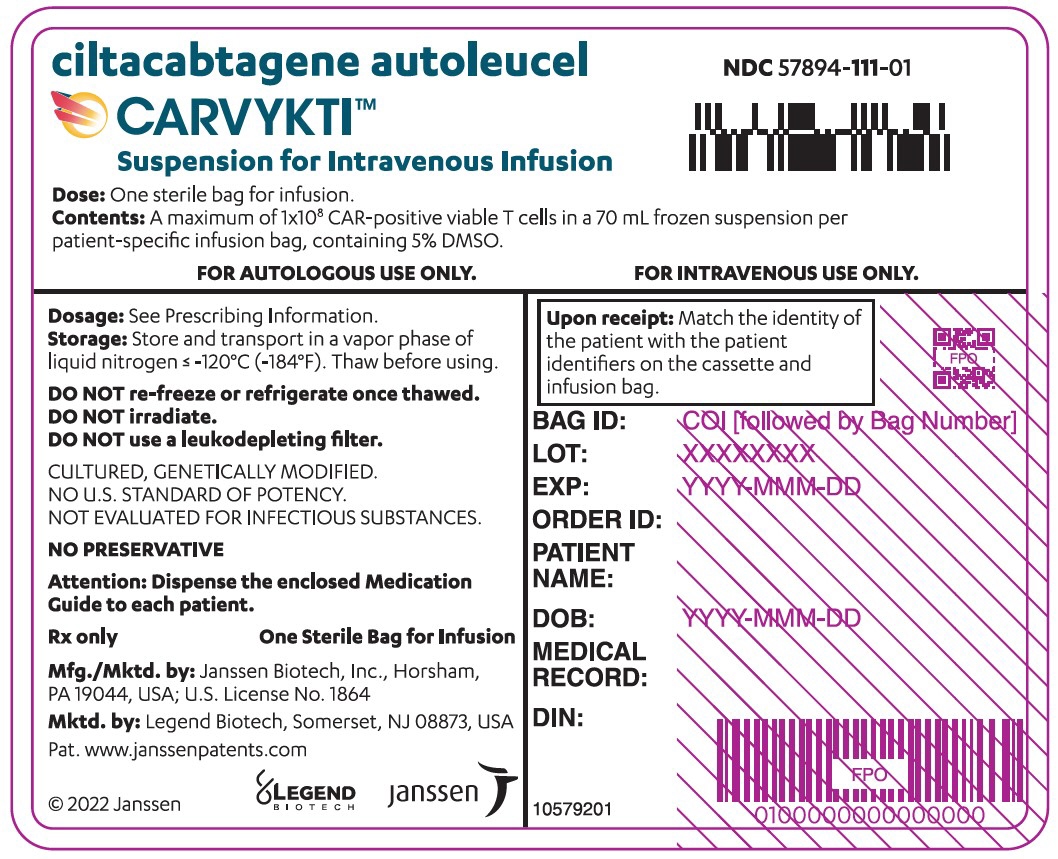
PRINCIPAL DISPLAY PANEL - 70 mL Bag Label ciltacabtagene autoleucel CARVYKTI™ Suspension for Intravenous Infusion NDC 57894-111-01 Dose: One sterile bag for infusion. Contents: A maximum of 1x10 8 CAR-positive viable T cells in a 70 mL frozen suspension per patient-specific infusion bag, containing 5% DMSO. FOR AUTOLOGOUS USE ONLY.
FOR INTRAVENOUS USE ONLY. Dosage: See Prescribing Information. Storage: Store and transport in a vapor phase of liquid nitrogen ≤ -120°C (-184°F).
Thaw before using. DO NOT re-freeze or refrigerate once thawed. DO NOT irradiate.
DO NOT use a leukodepleting filter. CULTURED, GENETICALLY MODIFIED. NO U.S.
STANDARD OF POTENCY. NOT EVALUATED FOR INFECTIOUS SUBSTANCES. NO PRESERVATIVE Attention: Dispense the enclosed Medication Guide to each patient.
Rx only One Sterile Bag for Infusion Mfg./Mktd. by: Janssen Biotech, Inc., Horsham, PA 19044, USA; U.S. License No. 1864 Mktd. by: Legend Biotech, Somerset, NJ 08873, USA Upon receipt: Match the identity of the patient with the patient identifiers on the cassette and infusion bag.
BAG ID: COI [followed by Bag Number] LOT: XXXXXXXX EXP: YYYY-MMM-DD ORDER ID: PATIENT NAME: DOB: YYYY-MMM-DD MEDICAL RECORD NO.: DIN: © 2022 Janssen 10579200 LEGEND BIOTECH janssen carvykti-001-70mL
PRINCIPAL DISPLAY PANEL - 30 mL Bag Label ciltacabtagene autoleucel CARVYKTI™ Suspension for Intravenous Infusion NDC 57894-111-02 Dose: One sterile bag for infusion. Contents: A maximum of 1x10 8 CAR-positive viable T cells in a 30 mL frozen suspension per patient-specific infusion bag, containing 5% DMSO. FOR AUTOLOGOUS USE ONLY.
FOR INTRAVENOUS USE ONLY. Dosage: See Prescribing Information. Storage: Store and transport in a vapor phase of liquid nitrogen ≤ -120°C (-184°F).
Thaw before using. DO NOT re-freeze or refrigerate once thawed. DO NOT irradiate.
DO NOT use a leukodepleting filter. CULTURED, GENETICALLY MODIFIED. NO U.S.
STANDARD OF POTENCY. NOT EVALUATED FOR INFECTIOUS SUBSTANCES. NO PRESERVATIVE Attention: Dispense the enclosed Medication Guide to each patient.
Rx only One Sterile Bag for Infusion Mfg./Mktd. by: Janssen Biotech, Inc., Horsham, PA 19044, USA; U.S. License No. 1864 Mktd. by: Legend Biotech, Somerset, NJ 08873, USA Upon receipt: Match the identity of the patient with the patient identifiers on the cassette and infusion bag.
BAG ID: COI [followed by Bag Number] LOT: XXXXXXXX EXP: YYYY-MMM-DD ORDER ID: PATIENT NAME: DOB: YYYY-MMM-DD MEDICAL RECORD NO.: DIN: © 2022 Janssen 10580600 LEGEND BIOTECH janssen carvykti-002-30mL
Reported adverse events (FAERS)
Top reported reactions
Age at onset
Reporter sex
Serious outcomes
Where does this data come from?
About this NDC listing & data coverage
What data is (and isn’t) available for this NDC — tap to expand
| NDC identity (package / product / labeler codes) | ✓ Available |
| Labeler | ✓ Available |
| Product & package description | ✓ Available |
| Marketing category & status | ✓ Available |
| Active ingredient / dosage form / route | ✓ Available |
| FDA label (SPL via DailyMed) | ✓ Available |
| Package photos | ✓ Available |
| Inactive ingredients (structured) | ✓ Available |
| NADAC pharmacy acquisition price (CMS) | — Not published for this NDC CMS publishes NADAC only for NDCs reported in its retail-pharmacy survey. |
| Orange Book / therapeutic-equivalence data | ✓ Available |
| HCPCS J-code billing crosswalk | ✓ Available |
| Medicaid utilization (CMS SDUD) | — Not published for this NDC CMS reports utilization only for NDCs with Medicaid claims above its privacy threshold. |