
Akeega Niraparib Tosylate Monohydrate and Abiraterone Acetate 100 mg; 500 mg Tablet, Film Coated, 60-count — NDC 57894-100-60 (Billing 57894-0100-60)
This is a package of 60 tablets of Akeega Niraparib Tosylate Monohydrate and Abiraterone Acetate 100 mg; 500 mg Tablet, Film Coated from Janssen Biotech, Inc., marketed since Aug 2023 and currently FDA-listed. It is this product's only package size.
NDC database record
One package, one record: these facts belong to NDC 57894-100-60 alone.
- Record
- FDA NDC Directory package listing · Human prescription drug
- Code segments
- 57894 labeler · 100 product · 60 package
- Package marketed since
- Aug 11, 2023
- Sample package
- No — commercial package
- Listing certified through
- Dec 31, 2026
- Billing quantity
- 60 EA per package
- Barcode (UPC-A, from the NDC)
- 3 5789410060 7
- FDA record last changed
- Sep 17, 2026
Identity & classification
Regulatory identifiers FDA, NLM and CMS codes for this package
Drug-database identifiers Medi-Span GPI and First Databank GCN / HICL / AHFS classification
- GSN (GCN sequence number): 085158
- GCN: 54579
- GPI-14 (Medi-Span): 21409902120330
- HICL (First Databank): 049143
- AHFS class code: 10:00.00.00
- RxCUI (RxNorm): 2645244
Where does this data come from?
- FDA openFDA NDC Directory · synced Oct 1, 2026
- FDA label on DailyMed · label index refreshed Oct 5, 2026
- RxNorm (NLM RxNav) · catalog refreshed Oct 1, 2026
- Medi-Span GPI (licensed)
- First Databank (licensed) · refreshed Oct 1, 2026
RxNorm drug class
This medicine belongs to the Cytochrome P450 17A1 Inhibitor class.
Where does this data come from?
- RxClass (NLM) · catalog refreshed Oct 1, 2026
Clinical
- Akeega, taken with prednisone, treats adults with prostate cancer that has spread and has a BRCA gene change. That includes BRCA2-mutated castration-sensitive and BRCA-mutated cast...
- Take one tablet once a day on an empty stomach, at least an hour before or two hours after eating. Swallow it whole with water and don't crush or chew it. If you miss a dose, take...
- Tiredness, muscle or bone pain, constipation, nausea, swelling, and high blood pressure are common. Low blood counts are also common, so you will have frequent blood tests. Call yo...
- No. Prednisone is part of the treatment and helps protect against adrenal problems. Stopping it or missing doses can cause adrenal insufficiency, so talk to your doctor first.
Patient education
Supplement & herbal interactions
Where does this data come from?
- MedlinePlus (NLM) · refreshed Oct 1, 2026
- FDA label on DailyMed · label index refreshed Oct 5, 2026
Ask a licensed pharmacist directly — free, answered by our team.
Pricing
A drug doesn't have one price. Each row is a different public payment system, and none is what you'd pay at the counter — that depends on your insurance. The ⓘ on each row explains what it measures.
| Price system | Per each | Per package |
|---|---|---|
| Retail pharmacies payNADAC · weekly | Not in the retail survey — common for institutional, discontinued, or low-volume packs. | |
| Medicaid paysCMS SDUD · 12 mo | No recent Medicaid claims on file for this NDC — rare and low-volume NDCs are suppressed in the public data. | |
| Medicare drug plans payPart D · Q2 2026 | $328.51 | $19,710.53 / 60 tablets |
Where does this data come from?
- CMS NADAC weekly file
- CMS ASP pricing files · refreshed Sep 20, 2026
- CMS Medicaid State Drug Utilization Data · refreshed Oct 5, 2026
- CMS Part D plan pricing files · refreshed Sep 24, 2026
- VA National Acquisition Center price file
Packaging — all sizes for this product
| Package NDC | Description | Marketing start | Marketing end | Status |
|---|---|---|---|---|
| 57894-0100-60 You're viewing this Main listing | 1 BOTTLE in 1 CARTON / 60 TABLET, FILM COATED in 1 BOTTLE | 2023-08-11 | — | Active |
Therapeutic equivalents
| Product | Labeler | Pack | NADAC/unit | TE | Status | Price vs. this |
|---|---|---|---|---|---|---|
| Akeega 100 mg/1; 500 mgthis 57894-0100-60 | Janssen | 60 tablets | — | — | FDA listed | — |
Where does this data come from?
- FDA openFDA NDC Directory · synced Oct 1, 2026
- FDA Orange Book · refreshed Oct 3, 2026
- CMS NADAC weekly file
Availability & generic status
We did not find an FDA-approved generic match for this exact strength, form and route. Patent/protection dates below may affect future generic timing.
Why the date isn’t exact: Generic timing can change because patents may be challenged, settled, licensed, added, removed, or worked around with a narrower label — and FDA approval does not always mean a pharmacy can get the generic today.
🛈 What do these terms mean?
- Patent
- Legal protection listed in the Orange Book that may delay generic approval or launch. Issued by the U.S. Patent & Trademark Office.
- Substance patent
- Covers the active drug molecule itself — the hardest to design around. A generic generally can’t launch until it expires.
- Formulation (product) patent
- Covers a specific formulation or dosage form. A generic can sometimes work around it with a different formulation.
- Method-of-use patent
- A patent covering one specific approved use of the drug — not necessarily the whole molecule. A generic can sometimes launch with a “skinny label” that carves out the protected use and keeps the others.
- Skinny label
- A generic label that omits a still-patented use when the FDA allows it — letting a generic reach the market for the unprotected uses.
- Exclusivity
- FDA-granted marketing protection, separate from patents — e.g. 5-yr new chemical entity, 7-yr orphan drug, or a +6-month pediatric extension.
- Paragraph IV
- A generic applicant’s formal challenge to a listed patent. It can potentially lead to earlier generic entry, but often involves litigation or a settlement.
- RLD / RS
- Reference Listed Drug — the brand product the FDA uses as the reference for generic applications. Reference Standard — the product the FDA expects generics to compare against in bioequivalence testing.
- TE / AB rating
- FDA therapeutic-equivalence rating. An AB rating generally means the FDA considers a generic therapeutically equivalent to — and substitutable for — the brand.
- LOE (loss of exclusivity)
- The latest patent or exclusivity currently listed — the loss-of-exclusivity / latest-listed-protection date shown on this page. Paragraph-IV challenges and settlements can move the real date earlier; FDA approval and a manufacturer’s decision to market can move it later.
Built from the FDA Orange Book. The bars above are scaled to each protection’s expiry; the red LOE marker is the last one to lapse.
| Patent | Type | Use code | Expires |
|---|---|---|---|
| US 11986468 ↗ | Method of use | U-4368 | Jul 28, 2037 |
| US 11986468 ↗ | Method of use | U-4368 | Jul 28, 2037 |
| US 11986469 ↗ | Method of use | U-4368 | Jul 28, 2037 |
| US 11986469 ↗ | Method of use | U-4368 | Jul 28, 2037 |
| US 11992486 ↗ | Method of use | U-4368 | Jul 28, 2037 |
| US 11992486 ↗ | Method of use | U-4368 | Jul 28, 2037 |
| US 12383543 ↗ | Method of use | U-4368 | Jul 28, 2037 |
| US 12383543 ↗ | Method of use | U-4368 | Jul 28, 2037 |
| US 11986470 ↗ | Method of use | U-4368 | Jul 28, 2037 |
| US 11986470 ↗ | Method of use | U-4368 | Jul 28, 2037 |
| US 11673877 ↗ | Drug substance | U-2830 | Mar 27, 2038 |
| US 11673877 ↗ | Drug substance | U-2830 | Mar 27, 2038 |
| US 11992486 ↗ | Method of use | U-2830 | Jul 28, 2037 |
| US 11992486 ↗ | Method of use | U-2830 | Jul 28, 2037 |
| US 11986469 ↗ | Method of use | U-2830 | Jul 28, 2037 |
| US 11986469 ↗ | Method of use | U-2830 | Jul 28, 2037 |
| US 11986468 ↗ | Method of use | U-2830 | Jul 28, 2037 |
| US 11986468 ↗ | Method of use | U-2830 | Jul 28, 2037 |
| US 8071579 ↗ | Method of use | U-2830 | Aug 12, 2027 |
| US 8071579 ↗ | Method of use | U-2830 | Aug 12, 2027 |
| US 8143241 ↗ | Method of use | U-2830 | Aug 12, 2027 |
| US 8143241 ↗ | Method of use | U-2830 | Aug 12, 2027 |
| US 8859562 ↗ | Method of use | U-2830 | Aug 4, 2031 |
| US 8859562 ↗ | Method of use | U-2830 | Aug 4, 2031 |
| US 11207311 ↗ | Method of use | U-2830 | Jul 28, 2037 |
| US 11207311 ↗ | Method of use | U-2830 | Jul 28, 2037 |
| US 12383543 ↗ | Method of use | U-2830 | Jul 28, 2037 |
| US 12383543 ↗ | Method of use | U-2830 | Jul 28, 2037 |
| US 8143241 ↗ | Method of use | U-4368 | Aug 12, 2027 |
| US 8143241 ↗ | Method of use | U-4368 | Aug 12, 2027 |
| US 8071579 ↗ | Method of use | U-4368 | Aug 12, 2027 |
| US 8071579 ↗ | Method of use | U-4368 | Aug 12, 2027 |
| US 8859562 ↗ | Method of use | U-4368 | Aug 4, 2031 |
| US 8859562 ↗ | Method of use | U-4368 | Aug 4, 2031 |
| US 11207311 ↗ | Method of use | U-4368 | Jul 28, 2037 |
| US 11207311 ↗ | Method of use | U-4368 | Jul 28, 2037 |
| US 11673877 ↗ | Drug substance | U-4368 | Mar 27, 2038 |
| US 11673877 ↗ | Drug substance | U-4368 | Mar 27, 2038 |
| US 8071623 ↗ | Drug substance | — | Mar 27, 2031 |
| US 8071623 ↗ | Drug substance | — | Mar 27, 2031 |
| US 8436185 ↗ | Drug substance | — | Apr 24, 2029 |
| US 11091459 ↗ | Drug substance | — | Mar 27, 2038 |
| US 11091459 ↗ | Drug substance | — | Mar 27, 2038 |
| US 8436185 ↗ | Drug substance | — | Apr 24, 2029 |
| Code | What it grants | Expires |
|---|---|---|
| I-980 | New indication (3-year) | Dec 12, 2028 |
| NP | New Product | Aug 11, 2026 |
| I-980 | New indication (3-year) | Dec 12, 2028 |
| NP | New Product | Aug 11, 2026 |
Is there a generic version of AKEEGA 100-500 MG TABLET?
The FDA approved a generic — why can’t I get it at my pharmacy yet?
Why do different websites show different generic release dates?
What does “FDA listed” mean?
What does a patent or protection date mean here?
What does “current Orange Book estimate” mean?
Can a generic come out before the last patent expires?
Can a generic come out after the listed dates?
What is the difference between patents and exclusivity?
Why are there multiple patent dates?
Where does this data come from?
- FDA Orange Book · refreshed Oct 3, 2026
What it looks like
Where does this data come from?
- FDA label on DailyMed · label index refreshed Oct 5, 2026
Inactive Ingredients / Excipients
Inactive ingredients, also called excipients, are components of the drug product other than the active ingredient. They may include fillers, dyes, coatings, preservatives, flavors, or other formulation ingredients.
🧪 Avoiding an ingredient? See Abiraterone / Niraparib inactive ingredients by manufacturer: every current product's list side by side, so you can ask your pharmacy for the version that does not list it.
💡 Tap an ingredient (hover on desktop) to see what it is and why it’s used.
-
UNII 2S7830E561
Crospovidone is a synthetic polymer derived from povidone. It acts as a disintegrant, helping the tablet or capsule break apart quickly in the stomach so the active ingredient can be absorbed.
-
UNII 1K09F3G675
Ferric oxide red is an inorganic iron compound used as a colorant in medicines. It gives tablets, capsules, or other dosage forms a red or reddish tint for identification and appearance.
-
UNII EX438O2MRT
Ferric oxide yellow is a naturally occurring iron compound used as a colorant in medications. It gives tablets, capsules, and other forms a yellow or golden hue for identification and appearance.
-
UNII G7515SW10N
A waxy liquid derived from vegetable oil and fatty acids. It works as an emulsifier and solubilizer to help blend oil and water-based ingredients together and improve how the medicine dissolves and is absorbed in the body.
-
UNII 3NXW29V3WO
Hypromellose is a plant-based thickener made from cellulose. It's used in medicines as a binder to hold ingredients together, a coating for tablets, and a thickener for liquids.
-
UNII EWQ57Q8I5X
Lactose monohydrate is a natural sugar derived from milk. It serves as a filler and binder in tablets and capsules, helping create the proper size, texture, and consistency of the medicine.
-
UNII 70097M6I30
Magnesium stearate is a salt made from magnesium and stearic acid, a fatty substance. It's used in tablets and capsules as a lubricant and glidant to help ingredients flow smoothly during manufacturing and prevent sticking.
-
UNII OP1R32D61U
Microcrystalline cellulose is a purified form of cellulose, a natural fiber from plant sources. It acts as a binder and filler in tablets and capsules, helping hold ingredients together and give the medicine its shape and size.
-
UNII 532B59J990
Polyvinyl alcohol is a synthetic polymer made from plant-derived materials. It's used as a binder to hold ingredients together, a film-former in coatings, and a thickener in liquid formulations.
-
UNII ETJ7Z6XBU4
Silicon dioxide is a naturally occurring mineral used as a glidant and anti-caking agent. It helps powder ingredients flow smoothly and prevents clumping during manufacturing and storage.
-
UNII 368GB5141J
A detergent and foaming agent derived from coconut or palm oil. In medications, it helps break down and mix oil and water-based ingredients, aids in tablet disintegration, and improves how the drug dissolves and spreads in the mouth or digestive system.
-
UNII 7SEV7J4R1U
A powder made from a naturally occurring mineral. In medicines, talc works as a glidant and anti-caking agent, helping tablets and capsules flow smoothly during manufacturing and preventing clumping.
-
UNII 15FIX9V2JP
Titanium dioxide is a bright white mineral powder commonly used as a colorant and opacifying agent. It makes pills and tablets white or lighter in color and helps make coatings non-transparent.
13 inactive ingredients listed in the exact product block matched to this NDC.
Where does this data come from?
ingredient classCode="IACT" elements from the exact product block matched by this NDC. Label-section narrative from DailyMed / the openFDA label index is shown separately when available.- FDA label on DailyMed · label index refreshed Oct 5, 2026
- FDA openFDA NDC Directory · synced Oct 1, 2026
Inactive ingredient FAQ
Are inactive ingredients the same for every manufacturer?
Why might an inactive ingredient be missing?
Can inactive ingredients matter?
Manufacturer & labeler
More NDCs from Janssen Biotech, Inc. labeler code 57894
- Stelara ustekinumab 130 mg/26mL Solution NDC 57894-054-16
- STELARA ustekinumab 45 mg/.5mL Injection, Solution NDC 57894-060-02
- STELARA ustekinumab 90 mg/mL Injection, Solution NDC 57894-061-03
- Simponi golimumab 50 mg/.5mL Injection, Solution NDC 57894-070-01
- Simponi golimumab 100 mg/mL Injection, Solution NDC 57894-071-01
- Lazcluze lazertinib 80 mg Tablet, Film Coated NDC 57894-080-60
- Carvykti ciltacabtagene autoleucel 100000000 1/1 Injection, Suspension NDC 57894-111-01
- Zytiga abiraterone acetate 250 mg Tablet NDC 57894-150-12
- INFLIXIMAB 100 mg/10mL Injection, Powder, Lyophilized, For Solution NDC 57894-160-01
- Zytiga Abiraterone acetate 500 mg Tablet, Film Coated NDC 57894-195-06
- Icotyde icotrokinra 200 mg Tablet, Film Coated NDC 57894-201-07
- Inlexzo gemcitabine intravesical 225 mg System NDC 57894-225-01
Where does this data come from?
- FDA openFDA NDC Directory · synced Oct 1, 2026
- Drugs@FDA
Full prescribing information FDA SPL
🎯 Indications and Usage ▾
1 INDICATIONS AND USAGE AKEEGA with prednisone is indicated for the treatment of adult patients with deleterious or suspected deleterious BRCA2 -mutated ( BRCA2 m) metastatic castration-sensitive prostate cancer (mCSPC). AKEEGA with prednisone is indicated for the treatment of adult patients with deleterious or suspected deleterious BRCA -mutated ( BRCA m) metastatic castration-resistant prostate cancer (mCRPC). Select patients for therapy based on an FDA-approved test for AKEEGA [see Dosage and Administration (2.1) ] .
AKEEGA is a combination of niraparib, a poly (ADP-ribose) polymerase (PARP) inhibitor, and abiraterone acetate, a CYP17 inhibitor indicated with prednisone for the treatment of adult patients with: deleterious or suspected deleterious BRCA2 -mutated ( BRCA2 m) metastatic castration-sensitive prostate cancer (mCSPC). deleterious or suspected deleterious BRCA -mutated ( BRCA m) metastatic castration-resistant prostate cancer (mCRPC). Select patients for therapy based on an FDA-approved test for AKEEGA. ( 1 , 2.1 )
⏱️ Dosage and Administration ▾
2 DOSAGE AND ADMINISTRATION BRCA2 m mCSPC: The recommended dosage of AKEEGA is 200 mg niraparib/1,000 mg abiraterone acetate orally once daily in combination with 5 mg prednisone daily until disease progression or unacceptable toxicity. ( 2.2 ) BRCA m mCRPC : The recommended dosage of AKEEGA is 200 mg niraparib/1,000 mg abiraterone acetate orally once daily in combination with 10 mg prednisone daily until disease progression or unacceptable toxicity. ( 2.2 ) Patients receiving AKEEGA should also receive a gonadotropin-releasing hormone (GnRH) analog concurrently or should have had bilateral orchiectomy.
( 2.2 ) Take AKEEGA on an empty stomach at least one hour before or two hours after food. ( 2.2 ) For adverse reactions, consider interruption of treatment, dose reduction, or dose discontinuation. ( 2.3 )
2.1Patient Selection Select patients for the treatment of mCSPC with AKEEGA based on the presence of a BRCA2 gene alteration [see Clinical Studies (14.1) ] . Select patients for the treatment of mCRPC with AKEEGA based on the presence of a BRCA gene alteration [see Clinical Studies (14.2) ] . Information on FDA-approved tests is available at: http://www.fda.gov/CompanionDiagnostics.
2.2Recommended Dosage BRCA2- mutated ( BRCA2 m) Metastatic Castration-Sensitive Prostate Cancer (mCSPC) The recommended dosage of AKEEGA is 200 mg niraparib/1,000 mg abiraterone acetate orally once daily in combination with 5 mg prednisone once daily until disease progression or unacceptable toxicity. BRCA -mutated ( BRCA m) Metastatic Castration-Resistant Prostate Cancer (mCRPC) The recommended dosage of AKEEGA is 200 mg niraparib/1,000 mg abiraterone acetate orally once daily in combination with 10 mg prednisone once daily until disease progression or unacceptable toxicity.
Patients receiving AKEEGA should also receive a gonadotropin-releasing hormone (GnRH) analog concurrently or should have had bilateral orchiectomy. Take AKEEGA on an empty stomach at least one hour before or two hours after food. Swallow tablets whole with water.
Do not break, crush, or chew tablets. If a patient misses a dose, instruct patients to take the dose as soon as possible on the same day and resume their next dose at the normal schedule the following day.
2.3Dosage Modification for Adverse Reactions The recommended dosage modifications for AKEEGA are provided in Table 1. Treatment with AKEEGA should not be reinitiated until the toxicity has resolved to Grade 1 or baseline. If the toxicity is attributed to one component of AKEEGA, the other component of AKEEGA may be continued as a single agent at the current dose until the adverse reaction resolves and AKEEGA can be resumed (see Table 1 ).
Table 1: Dosage Modifications for Adverse Reactions Adverse Reaction Severity Dosage Modification Myelosuppression [see Warnings and Precautions (5.2) ] Hemoglobin <8 g/dL Withhold AKEEGA and monitor blood counts weekly. When hemoglobin returns to ≥9 g/dL, resume at the reduced dose of AKEEGA 100 mg/1,000 mg once daily and monitor blood counts weekly for 28 days and as clinically indicated. Permanently discontinue AKEEGA if hemoglobin has not returned to acceptable levels within 28 days of the dose interruption period or if the patient has already undergone dose reduction to 100 mg/1,000 mg once daily.
If myelodysplastic syndrome or acute myeloid leukemia (MDS/AML) is confirmed, discontinue AKEEGA [see Warnings and Precautions (5.1)]. Platelet count <100,000/mcL First occurrence: Withhold AKEEGA for a maximum of 28 days and monitor blood counts weekly until platelet counts return to ≥100,000/mcL. Resume AKEEGA at same or the reduced dose of 100 mg/1,000 mg once daily.
If platelet count is <75,000/mcL, resume at the reduced dose of AKEEGA 100 mg/1,000 mg once daily. Second occurrence: Withhold AKEEGA for a maximum of 28 days and monitor blood counts weekly until platelet counts return to ≥100,000/mcL. Resume at the reduced dose of AKEEGA 100 mg/1,000 mg once daily.
Permanently d… [Excerpted — this section continues on DailyMed.]
💊 Dosage Forms and Strengths ▾
3 DOSAGE FORMS AND STRENGTHS Tablets 50 mg niraparib/500 mg abiraterone acetate: yellowish orange to yellowish brown, oval, film-coated tablets debossed with "N 50 A" on one side and plain on the other side. 100 mg niraparib/500 mg abiraterone acetate: orange, oval, film-coated tablets debossed with "N 100 A" on one side and plain on the other side. Tablets: 50 mg niraparib/500 mg abiraterone acetate ( 3 ) 100 mg niraparib/500 mg abiraterone acetate ( 3 )
⛔ Contraindications ▾
4 CONTRAINDICATIONS None. None. ( 4 )
⚠️ Warnings and Cautions ▾
5 WARNINGS AND PRECAUTIONS Myelodysplastic Syndrome/Acute Myeloid Leukemia (MDS/AML) : MDS/AML, including a case with fatal outcome, has been observed in patients treated with AKEEGA. Monitor patients for hematological toxicity and discontinue if MDS/AML is confirmed. ( 5.1 ) Myelosuppression: Test complete blood counts weekly for the first month, every two weeks for the next two months, monthly for the remainder of the first year, then every other month, and as clinically indicated.
( 2.3 , 5.2 ) Hypokalemia, Fluid Retention, and Cardiovascular Adverse Reactions: Monitor patients for hypertension, hypokalemia, and fluid retention at least weekly for the first two months, then once a month. Closely monitor patients whose underlying medical conditions might be compromised by increases in blood pressure, hypokalemia, or fluid retention. Control hypertension and correct hypokalemia before and during treatment with AKEEGA.
( 5.3 ) Hepatotoxicity: Can be severe and fatal. Monitor liver function and modify, interrupt, or discontinue treatment as recommended. ( 2.3 , 5.4 ) Adrenocortical insufficiency : Monitor for symptoms and signs of adrenocortical insufficiency.
Increased dosage of corticosteroids may be indicated before, during and after stressful situations. ( 5.5 ) Hypoglycemia: Severe hypoglycemia has been reported when abiraterone acetate, a component of AKEEGA, was administered to patients receiving medications containing thiazolidinediones (including pioglitazone) or repaglinide. Monitor blood glucose in patients with diabetes during and assess if antidiabetic agent dose modifications are required.
( 5.6 ) Increased fractures and mortality in combination with radium Ra 223 dichloride : Use of AKEEGA plus prednisone in combination with radium Ra 223 dichloride is not recommended. ( 5.7 ) Posterior Reversible Encephalopathy Syndrome (PRES): PRES has been observed in patients treated with niraparib, a component of AKEEGA. Discontinue AKEEGA if PRES is confirmed.
( 5.8 ) Embryo-Fetal Toxicity: AKEEGA can cause fetal harm. Advise males with female partners of reproductive potential to use effective contraception. ( 5.9 , 8.1 , 8.3 )
5.1Myelodysplastic Syndrome/Acute Myeloid Leukemia AKEEGA may cause myelodysplastic syndrome/acute myeloid leukemia (MDS/AML). In the individual AMPLITUDE and MAGNITUDE studies, MDS or AML, including cases with fatal outcomes, were reported in 0.6% (2/347) and 0.5% (1/212) of patients treated with AKEEGA plus prednisone, respectively. All patients in other tumor types treated with niraparib, a component of AKEEGA, who developed secondary MDS/cancer-therapy-related AML had received previous chemotherapy with platinum agents and/or other DNA-damaging agents, including radiotherapy.
For suspected MDS/AML or prolonged hematological toxicities, refer the patient to a hematologist for further evaluation. Discontinue AKEEGA if MDS/AML is confirmed.
5.2Myelosuppression AKEEGA may cause myelosuppression (anemia, thrombocytopenia, or neutropenia). In AMPLITUDE, Grade 3–4 anemia, neutropenia, and thrombocytopenia were reported, respectively in 29%, 10%, and 4.9% of patients receiving AKEEGA. Overall, 25% of patients with anemia required a red blood cell transfusion, including 15% who required more than one transfusion.
Discontinuation due to anemia occurred in 1.2% of patients. In MAGNITUDE Cohort 1, Grade 3–4 anemia, thrombocytopenia, and neutropenia were reported, respectively in 28%, 8%, and 7% of patients receiving AKEEGA. Overall, 27% of patients with anemia required a red blood cell transfusion, including 19.5% who required more than one transfusion.
Discontinuation due to anemia occurred in 3% of patients. Monitor complete blood counts weekly during the first month of AKEEGA treatment, every two weeks for the next two months, monthly for the remainder of the first year and then every other month, and as clinically indicated. Do not start AKEEGA until patients have adequately recovered from hematologic… [Excerpted — this section continues on DailyMed.]
🤒 Adverse Reactions ▾
6 ADVERSE REACTIONS The following adverse reactions are discussed elsewhere in the labeling: Myelodysplastic syndrome/acute myeloid leukemia [see Warnings and Precautions (5.1) ] Myelosuppression [see Warnings and Precautions (5.2) ] Hypokalemia, fluid retention, and cardiovascular adverse reactions [see Warnings and Precautions (5.3) ] Hepatotoxicity [see Warnings and Precautions (5.4) ] Adrenocortical insufficiency [see Warnings and Precautions (5.5) ] Hypoglycemia [see Warnings and Precautions (5.6) ] Increased fractures and mortality in combination with Radium 223 Dichloride [see Warnings and Precautions (5.7) ] Posterior reversible encephalopathy syndrome [see Warnings and Precautions (5.8) ] The most common adverse reactions (≥20%), including laboratory abnormalities, are decreased hemoglobin, decreased lymphocytes, musculoskeletal pain, fatigue, decreased platelets, increased alkaline phosphatase, constipation, hypertension, nausea, decreased neutrophils, increased creatinine, increased potassium, decreased potassium, increased AST, fluid retention/edema, increased bilirubin, respiratory tract infection and arrhythmia.
( 6 ) To report SUSPECTED ADVERSE REACTIONS, contact Janssen Biotech, Inc. at 1-800-526-7736 (1-800-JANSSEN) or FDA at 1-800-FDA-1088 or www.fda.gov/medwatch.
6.1Clinical Trial Experience Because clinical trials are conducted under widely varying conditions, adverse reaction rates observed in the clinical trials of a drug cannot be directly compared to rates in the clinical trials of another drug and may not reflect the rates observed in practice. The safety population described in the WARNINGS and PRECAUTIONS reflect exposure to AKEEGA (niraparib 200 mg and abiraterone acetate 1,000 mg) in BRCA2 m patients (N=162) in the AMPLITUDE study and in BRCA m patients in Cohort 1 (N=113) in the MAGNITUDE study unless otherwise specified.
BRCA2 -mutated Metastatic Castration-Sensitive Prostate Cancer (mCSPC) The safety of AKEEGA in patients with BRCA2 m mCSPC was evaluated in AMPLITUDE [see Clinical Studies (14.1) ]. Patients were randomized to receive either AKEEGA (niraparib 200 mg and abiraterone acetate 1,000 mg once daily) (n=162), or placebo and abiraterone acetate (n=161) until unacceptable toxicity or progression. Patients in both arms also received prednisone 5 mg daily.
The median duration of exposure for AKEEGA was 26 months (range: 0 to 48 months). Serious adverse reactions occurred in 36% of patients who received AKEEGA. Serious adverse reactions reported in >2% of patients included anemia (4.9%), and pneumonia (3.7%).
Fatal adverse reactions occurred in 4.9% of patients who received AKEEGA, including sudden death (1.9%), COVID-19 pneumonia (1.2%), pneumocystis jirovecii pneumonia (0.6%), pneumonia (0.6%), and cardio-respiratory arrest (0.6%). Permanent discontinuation of any component of AKEEGA due to an adverse reaction occurred in 13% of patients. Dosage interruptions of any component of AKEEGA due to an adverse reaction occurred in 67% of patients.
Adverse reactions which required dosage interruption in >2% of patients included anemia (30%), COVID-19 (10%), hypertension (9%), neutropenia (8%), thrombocytopenia (8%), hypokalemia (7%), vomiting (4.9%), fatigue (4.3%), diarrhea (2.5%), and pneumonia (2.5%). Dose reductions of any component of AKEEGA due to an adverse reaction occurred in 25% of patients. Adverse reactions which required dose reductions in >2% of patients included anemia (17%).
The most common adverse reactions (>20%), including laboratory abnormalities, in patients who received AKEEGA were decreased hemoglobin, decreased lymphocyte count, hypertension, decreased neutrophil count, musculoskeletal pain, decreased platelet count, constipation, fatigue, decreased potassium, increase creatinine, nausea, increased alkaline phosphate, increased aspartate aminotransferase, respiratory tract infection, arrhythmia, increased blood bilirubin, and fluid retention/edema. Table 2: Adverse Reactio… [Excerpted — this section continues on DailyMed.]
🔄 Drug Interactions ▾
7 DRUG INTERACTIONS Strong CYP3A4 Inducers: Avoid coadministration. ( 7.1 ) CYP2D6 Substrates: Avoid coadministration of AKEEGA with CYP2D6 substrates for which minimal changes in concentration may lead to serious toxicities. If alternative treatments cannot be used, consider a dose reduction of the concomitant CYP2D6 substrate. ( 7.2 )
7.1Effect of Other Drugs on AKEEGA Effect of CYP3A4 Inducers Avoid coadministration with strong CYP3A4 inducers [see Clinical Pharmacology (12.3) ] . Abiraterone is a substrate of CYP3A4. Strong CYP3A4 inducers may decrease abiraterone concentrations [see Clinical Pharmacology (12.3) ], which may reduce the effectiveness of abiraterone.
7.2Effects of AKEEGA on Other Drugs CYP2D6 Substrates Avoid coadministration unless otherwise recommended in the Prescribing Information for CYP2D6 substrates for which minimal changes in concentration may lead to serious toxicities. If alternative treatments cannot be used, consider a dose reduction of the concomitant CYP2D6 substrate drug. Abiraterone is a CYP2D6 moderate inhibitor.
AKEEGA increases the concentration of CYP2D6 substrates [see Clinical Pharmacology (12.3) ], which may increase the risk of adverse reactions related to these substrates. CYP2C8 Substrates Monitor patients for signs of toxicity related to a CYP2C8 substrate for which a minimal change in plasma concentration may lead to serious or life-threatening adverse reactions. Abiraterone is a CYP2C8 inhibitor.
AKEEGA increases the concentration of CYP2C8 substrates [see Clinical Pharmacology (12.3) ], which may increase the risk of adverse reactions related to these substrates.
👥 Use in Specific Populations ▾
8 USE IN SPECIFIC POPULATIONS Moderate or Severe Hepatic impairment: Avoid use. ( 8.6 )
8.1Pregnancy Risk Summary The safety and efficacy of AKEEGA have not been established in females. Based on findings from animal studies and mechanism of action [see Clinical Pharmacology (12.1) ] , AKEEGA can cause fetal harm and potential loss of pregnancy. There are no human data on the use of AKEEGA in pregnant women.
Niraparib has the potential to cause teratogenicity and/or embryo-fetal death since niraparib is genotoxic and targets actively dividing cells in animals and patients (e.g., bone marrow) [see Warnings and Precautions (5.2) and Nonclinical Toxicology (13.1) ] . Due to the potential risk to a fetus based on its mechanism of action, animal developmental and reproductive toxicology studies were not conducted with niraparib. In animal reproduction studies, oral administration of abiraterone acetate to pregnant rats during organogenesis caused adverse developmental effects at maternal exposures approximately ≥ 0.03 times the human exposure (AUC) at the recommended dose (see Data ) .
Data Animal Data Niraparib Niraparib is genotoxic and targets actively dividing cells. Animal developmental and reproductive toxicology studies were not conducted with niraparib. Abiraterone Acetate In an embryo-fetal developmental toxicity study in rats, abiraterone acetate caused developmental toxicity when administered at oral doses of 10, 30 or 100 mg/kg/day throughout the period of organogenesis (gestational days 6–17).
Findings included embryo-fetal lethality (increased post implantation loss and resorptions and decreased number of live fetuses), fetal developmental delay (skeletal effects) and urogenital effects (bilateral ureter dilation) at doses ≥10 mg/kg/day, decreased fetal ano-genital distance at ≥30 mg/kg/day, and decreased fetal body weight at 100 mg/kg/day. Doses ≥10 mg/kg/day caused maternal toxicity. The doses tested in rats resulted in systemic exposures (AUC) approximately 0.03, 0.1 and 0.3 times, respectively, the AUC in patients receiving 1,000 mg daily of abiraterone acetate.
8.2Lactation Risk Summary The safety and efficacy of AKEEGA have not been established in females. There is no information available on the presence of niraparib or abiraterone in human milk, or on the effects on the breastfed child or milk production.
8.3Females and Males of Reproductive Potential Contraception Males Based on findings in animal reproduction studies and its mechanism of action, advise males with female partners of reproductive potential to use effective contraception during treatment and for 4 months after the last dose of AKEEGA [see Use in Specific Populations (8.1) ] . Infertility Based on animal studies, AKEEGA may impair fertility in males of reproductive potential [see Nonclinical Toxicology (13.1) ] .
8.4Pediatric Use Safety and effectiveness of AKEEGA in pediatric patients have not been established.
8.5Geriatric Use Of the 162 patients with BRCA2 gene alteration(s) who received AKEEGA in AMPLITUDE, 40% of patients were less than 65 years, 36% of patients were 65 years to 74 years, and 23% were 75 years and over. Of the 113 patients with BRCA gene alteration(s) who received AKEEGA in MAGNITUDE, 34.5% of patients were less than 65 years, 38.9% of patients were 65 years to 74 years, and 26.5% were 75 years and over. No overall differences in effectiveness were observed between patients 65 years of age or older and younger patients in AMPLITUDE or MAGNITUDE.
Patients 75 years of age or older who received AKEEGA experienced a higher incidence of fatal adverse reactions than younger patients. The incidence of fatal adverse reactions was 4.3% in patients younger than 75 and 13% in patients 75 or older.
8.6Hepatic Impairment Avoid use of AKEEGA in patients with moderate or severe hepatic impairment [see Warnings and Precautions (5.4) and Clinical Pharmacology (12.3) ] . No dosage modification is necessary for patients with mild hepatic… [Excerpted — this section continues on DailyMed.]
🤰 Pregnancy ▾
8.1Pregnancy Risk Summary The safety and efficacy of AKEEGA have not been established in females. Based on findings from animal studies and mechanism of action [see Clinical Pharmacology (12.1) ] , AKEEGA can cause fetal harm and potential loss of pregnancy. There are no human data on the use of AKEEGA in pregnant women.
Niraparib has the potential to cause teratogenicity and/or embryo-fetal death since niraparib is genotoxic and targets actively dividing cells in animals and patients (e.g., bone marrow) [see Warnings and Precautions (5.2) and Nonclinical Toxicology (13.1) ] . Due to the potential risk to a fetus based on its mechanism of action, animal developmental and reproductive toxicology studies were not conducted with niraparib. In animal reproduction studies, oral administration of abiraterone acetate to pregnant rats during organogenesis caused adverse developmental effects at maternal exposures approximately ≥ 0.03 times the human exposure (AUC) at the recommended dose (see Data ) .
Data Animal Data Niraparib Niraparib is genotoxic and targets actively dividing cells. Animal developmental and reproductive toxicology studies were not conducted with niraparib. Abiraterone Acetate In an embryo-fetal developmental toxicity study in rats, abiraterone acetate caused developmental toxicity when administered at oral doses of 10, 30 or 100 mg/kg/day throughout the period of organogenesis (gestational days 6–17).
Findings included embryo-fetal lethality (increased post implantation loss and resorptions and decreased number of live fetuses), fetal developmental delay (skeletal effects) and urogenital effects (bilateral ureter dilation) at doses ≥10 mg/kg/day, decreased fetal ano-genital distance at ≥30 mg/kg/day, and decreased fetal body weight at 100 mg/kg/day. Doses ≥10 mg/kg/day caused maternal toxicity. The doses tested in rats resulted in systemic exposures (AUC) approximately 0.03, 0.1 and 0.3 times, respectively, the AUC in patients receiving 1,000 mg daily of abiraterone acetate.
🧒 Pediatric Use ▾
8.4Pediatric Use Safety and effectiveness of AKEEGA in pediatric patients have not been established.
🧓 Geriatric Use ▾
8.5Geriatric Use Of the 162 patients with BRCA2 gene alteration(s) who received AKEEGA in AMPLITUDE, 40% of patients were less than 65 years, 36% of patients were 65 years to 74 years, and 23% were 75 years and over. Of the 113 patients with BRCA gene alteration(s) who received AKEEGA in MAGNITUDE, 34.5% of patients were less than 65 years, 38.9% of patients were 65 years to 74 years, and 26.5% were 75 years and over. No overall differences in effectiveness were observed between patients 65 years of age or older and younger patients in AMPLITUDE or MAGNITUDE.
Patients 75 years of age or older who received AKEEGA experienced a higher incidence of fatal adverse reactions than younger patients. The incidence of fatal adverse reactions was 4.3% in patients younger than 75 and 13% in patients 75 or older.
🆘 Overdosage ▾
10 OVERDOSAGE In the event of an overdose, administration of AKEEGA should be stopped and general supportive measures undertaken, including monitoring for arrhythmias and cardiac failure and assessing liver function. There is no specific treatment in the event of AKEEGA overdose.
🧬 Clinical Pharmacology ▾
12 CLINICAL PHARMACOLOGY
12.1Mechanism of Action Niraparib is an inhibitor of PARP enzymes, including PARP-1 and PARP-2, that play a role in DNA repair. In vitro studies have shown that niraparib-induced cytotoxicity may involve inhibition of PARP enzymatic activity and increased formation of PARP-DNA complexes resulting in DNA damage, apoptosis, and cell death. Increased niraparib‑induced cytotoxicity was observed in tumor cell lines with or without deficiencies in BRCA1/2 .
Niraparib decreased tumor growth in mouse xenograft models of human cancer cell lines with deficiencies in BRCA1/2 and in human patient‑derived xenograft tumor models with homologous recombination deficiency (HRD) that had either mutated or wild-type BRCA1/2 . Abiraterone acetate is converted in vivo to abiraterone, an androgen biosynthesis inhibitor, that inhibits 17 α-hydroxylase/C17,20-lyase (CYP17). This enzyme is expressed in testicular, adrenal, and prostatic tumor tissues and is required for androgen biosynthesis.
CYP17 catalyzes two sequential reactions: 1) the conversion of pregnenolone and progesterone to their 17α-hydroxy derivatives by 17α-hydroxylase activity and 2) the subsequent formation of dehydroepiandrosterone (DHEA) and androstenedione, respectively, by C17, 20 lyase activity. DHEA and androstenedione are androgens and are precursors of testosterone. Inhibition of CYP17 by abiraterone can also result in increased mineralocorticoid production by the adrenals [see Warnings and Precautions (5.9) ] .
Androgen sensitive prostatic carcinoma responds to treatment that decreases androgen levels. Androgen deprivation therapies, such as treatment with GnRH agonists or orchiectomy, decrease androgen production in the testes but do not affect androgen production by the adrenals or in the tumor. Abiraterone decreased serum testosterone and other androgens in patients in the placebo-controlled clinical trial.
It is not necessary to monitor the effect of abiraterone on serum testosterone levels. Changes in serum prostate specific antigen (PSA) levels may be observed but have not been shown to correlate with clinical benefit in individual patients. In mouse xenograft models of prostate cancer, the combination of niraparib and abiraterone acetate increased anti-tumor activity when compared to either drug alone.
12.2Pharmacodynamics The exposure-response relationship and time-course of pharmacodynamic response for the safety and effectiveness of AKEEGA have not been fully characterized. Hypertension and Cardiovascular Effects Niraparib has the potential to cause effects on pulse rate and blood pressure in patients, which may be related to pharmacological inhibition of the dopamine transporter (DAT), norepinephrine transporter (NET), and serotonin transporter (SERT) [see Nonclinical Toxicology (13.2) ] . Niraparib increased mean pulse rate by 22.4 to 24.1 beats/min, mean systolic blood pressure by 24.5 mmHg, and mean diastolic pressure by 16.5 mmHg relative to 14.0 to 15.8 beats per min, 18.3 to 19.6 mmHg, and 11.6 mmHg in the placebo arm.
Cardiac Electrophysiology No large (>20 ms) increases in the mean QTc interval were detected following the treatment of niraparib 300 mg once daily or 1,000 mg of abiraterone acetate once daily.
12.3Pharmacokinetics Niraparib Following the administration of AKEEGA, the mean (coefficient of variation [CV%]) C max, ss was 831 ng/mL (32%) and AUC 0–24h, ss was 13,616 ng∙h/mL (36%). The accumulation ratio following daily administration of AKEEGA was 3.5-, and 2.6-fold for niraparib AUC 0–24h and C max . Niraparib exhibits dose proportional increase in C max and AUC in the dose range of 30 mg (0.15 times the recommended dosage) to 400 mg (2 times the recommended dosage).
Abiraterone Acetate Following the administration of AKEEGA, the mean (CV%) C max,ss was 151 ng/mL (59%) and AUC 0–24h,ss was 707 ng∙h/mL (59%) for abiraterone. The accumulation ratio following daily administration of AKEEGA was 2-, and 1.8-fold for abira… [Excerpted — this section continues on DailyMed.]
🧬 Mechanism of Action ▾
12.1Mechanism of Action Niraparib is an inhibitor of PARP enzymes, including PARP-1 and PARP-2, that play a role in DNA repair. In vitro studies have shown that niraparib-induced cytotoxicity may involve inhibition of PARP enzymatic activity and increased formation of PARP-DNA complexes resulting in DNA damage, apoptosis, and cell death. Increased niraparib‑induced cytotoxicity was observed in tumor cell lines with or without deficiencies in BRCA1/2 .
Niraparib decreased tumor growth in mouse xenograft models of human cancer cell lines with deficiencies in BRCA1/2 and in human patient‑derived xenograft tumor models with homologous recombination deficiency (HRD) that had either mutated or wild-type BRCA1/2 . Abiraterone acetate is converted in vivo to abiraterone, an androgen biosynthesis inhibitor, that inhibits 17 α-hydroxylase/C17,20-lyase (CYP17). This enzyme is expressed in testicular, adrenal, and prostatic tumor tissues and is required for androgen biosynthesis.
CYP17 catalyzes two sequential reactions: 1) the conversion of pregnenolone and progesterone to their 17α-hydroxy derivatives by 17α-hydroxylase activity and 2) the subsequent formation of dehydroepiandrosterone (DHEA) and androstenedione, respectively, by C17, 20 lyase activity. DHEA and androstenedione are androgens and are precursors of testosterone. Inhibition of CYP17 by abiraterone can also result in increased mineralocorticoid production by the adrenals [see Warnings and Precautions (5.9) ] .
Androgen sensitive prostatic carcinoma responds to treatment that decreases androgen levels. Androgen deprivation therapies, such as treatment with GnRH agonists or orchiectomy, decrease androgen production in the testes but do not affect androgen production by the adrenals or in the tumor. Abiraterone decreased serum testosterone and other androgens in patients in the placebo-controlled clinical trial.
It is not necessary to monitor the effect of abiraterone on serum testosterone levels. Changes in serum prostate specific antigen (PSA) levels may be observed but have not been shown to correlate with clinical benefit in individual patients. In mouse xenograft models of prostate cancer, the combination of niraparib and abiraterone acetate increased anti-tumor activity when compared to either drug alone.
📦 How Supplied / Storage and Handling ▾
16 HOW SUPPLIED/STORAGE AND HANDLING AKEEGA ® (niraparib and abiraterone acetate) tablets are available in the strengths and packages listed below: AKEEGA 50 mg/500 mg film-coated tablets Yellowish orange to yellowish brown, oval, film-coated tablets debossed with "N 50 A" on one side and plain on the other side. They are available in bottles of 60 tablets. NDC 57894-050-60 AKEEGA 100 mg/500 mg film-coated tablets Orange, oval, film-coated tablets debossed with "N 100 A" on one side and plain on the other side.
They are available in bottles of 60 tablets. NDC 57894-100-60 Storage and Handling Store at 20°C to 25°C (68°F to 77°F); excursions permitted to 15°C to 30°C (59°F to 86°F) [see USP Controlled Room Temperature] . Based on its mechanism of action, AKEEGA may harm a developing fetus.
Females who are or may become pregnant should handle AKEEGA tablets with protection, e.g., gloves [see Use in Specific Populations (8.1) ] .
📦 Storage and Handling ▾
Storage and Handling Store at 20°C to 25°C (68°F to 77°F); excursions permitted to 15°C to 30°C (59°F to 86°F) [see USP Controlled Room Temperature] . Based on its mechanism of action, AKEEGA may harm a developing fetus. Females who are or may become pregnant should handle AKEEGA tablets with protection, e.g., gloves [see Use in Specific Populations (8.1) ] .
📋 Description ▾
11 DESCRIPTION AKEEGA ® (niraparib and abiraterone acetate) tablets contain niraparib tosylate (as the monohydrate) and abiraterone acetate. Niraparib Niraparib is a poly (ADP-ribose) polymerase (PARP) inhibitor. The chemical name for niraparib tosylate monohydrate is 2-{4-[(3S)-piperidin-3-yl]phenyl}- 2H -indazole 7-carboxamide 4-methylbenzenesulfonate hydrate (1:1:1).
The molecular formula is C 26 H 30 N 4 O 5 S and it has a molecular weight of 510.61 g/mol. The molecular structure is shown below: Niraparib tosylate monohydrate is a white to off-white, non-hygroscopic crystalline solid. Niraparib tosylate monohydrate is highly soluble in aqueous media over the pH range 1.2 to 6.8 (1.65–1.77 mg/mL determined at 37 ± 1°C).
Chemical Structure Abiraterone Acetate Abiraterone acetate is the acetyl ester of abiraterone. Abiraterone is an inhibitor of CYP17 (17α-hydroxylase/C17,20-lyase). Its molecular formula is C 26 H 33 N O 2 and it has a molecular weight of 391.55 g/mol.
Abiraterone acetate is designated chemically as (3β)-17-(3-pyridinyl) androsta-5,16-dien-3-yl acetate and its structure is: Abiraterone acetate is a white to off-white, non-hygroscopic, crystalline powder. Abiraterone acetate is a lipophilic compound with an octanol-water partition coefficient of 5.12 (Log P) and is practically insoluble in water. The pKa of the aromatic nitrogen is 5.19.
AKEEGA tablets are supplied as 50 mg/500 mg niraparib/abiraterone acetate and 100 mg/500 mg niraparib/abiraterone acetate film-coated tablets for oral administration. Each AKEEGA tablet (50 mg/500 mg) contains 50 mg of niraparib (equivalent to 76.9 mg niraparib tosylate) and 500 mg of abiraterone acetate. Each AKEEGA tablet (100 mg/500 mg) contains 100 mg of niraparib (equivalent to 153.7 mg niraparib tosylate) and 500 mg of abiraterone acetate.
AKEEGA tablet core contains the following inactive ingredients: colloidal anhydrous silica, crospovidone, hypromellose, lactose monohydrate, magnesium stearate, silicified microcrystalline cellulose, sodium lauryl sulfate. The 50 mg/500 mg tablets are finished with film-coating comprising the following inactive ingredients: iron oxide black, iron oxide red, iron oxide yellow, sodium lauryl sulphate, glycerol monocaprylocaprate, polyvinyl alcohol, talc, and titanium dioxide. The 100 mg/500 mg tablets are finished with film-coating comprising the following inactive ingredients: iron oxide red, iron oxide yellow, sodium lauryl sulphate, glycerol monocaprylocaprate, polyvinyl alcohol, talc, and titanium dioxide.
Chemical Structure
💬 Information for Patients ▾
17 PATIENT COUNSELING INFORMATION Advise the patient to read the FDA-approved patient labeling (Patient Information). Hematologic Adverse Reactions Advise patients that periodic monitoring of their blood counts is recommended. Advise patients to contact their healthcare provider for new onset of pallor, weakness, dyspnea, fatigue, bleeding, fever, or symptoms of infection [see Warnings and Precautions (5.1 , 5.2) ] .
Hypokalemia, Fluid Retention, and Cardiovascular Adverse Reactions Inform patients that AKEEGA is associated with, hypokalemia that may lead to QT prolongation. Advise patients that hypertension, hypokalemia, and fluid retention will be monitored at least weekly for the first two months, then once a month. Advise patients to adhere to corticosteroids and to report symptoms of hypokalemia or edema to their healthcare provider [see Warnings and Precautions (5.3) ] .
Hepatotoxicity and Hepatic Impairment Inform patients that AKEEGA is associated with severe hepatotoxicity. Inform patients that their liver function will be monitored using blood tests. Advise patients to immediately report symptoms of hepatotoxicity to their healthcare provider [see Warnings and Precautions (5.4) ] .
Adrenocortical Insufficiency Inform patients that AKEEGA with prednisone is associated with adrenal insufficiency. Advise patients to report symptoms of adrenocortical insufficiency to their healthcare provider [see Warnings and Precautions (5.5) ] . Hypoglycemia Inform patients that AKEEGA is associated with hypoglycemia.
Advise patients with diabetes to monitor blood glucose during and after discontinuation of treatment with AKEEGA [see Warnings and Precautions (5.6) ] . Posterior Reversible Encephalopathy Syndrome Inform patients that they are at risk of developing posterior reversible encephalopathy syndrome (PRES) that can present with signs and symptoms including seizure, headaches, altered mental status, or vision changes. Advise patients to contact their healthcare provider if they develop any of these signs or symptoms [see Warnings and Precautions (5.8) ] .
Dosage and Administration Inform patients that AKEEGA is taken orally once daily with prednisone daily (according to their healthcare provider's instructions) and to not interrupt or stop either of these medications without consulting their healthcare provider [see Dosage and Administration (2.2) ] . Inform patients coadministered a gonadotropin-releasing hormone (GnRH) analog therapy that they need to maintain this treatment during the course of treatment with AKEEGA [see Dosage and Administration (2.2) ] . Inform patients that in the event of a missed daily dose of AKEEGA, they should take their normal dose as soon as possible on the same day and resume their next dose at the normal schedule on the following day.
The patient should not take extra tablets to make up the missed dose [see Dosage and Administration (2.2) ] . Instruct patients to take AKEEGA tablets as a single dose once daily on an empty stomach . Instruct patients to take AKEEGA on an empty stomach at least one hour before or two hours after food.
AKEEGA taken with food causes increased exposure and may result in adverse reactions. Instruct patients to swallow tablets whole with water and not to break, crush, or chew the tablets [see Dosage and Administration (2.2) ] . Embryo-Fetal Toxicity Inform patients that AKEEGA may harm a developing fetus and can cause loss of pregnancy [see Warnings and Precautions (5.9) and Use in Specific Populations (8.1) ] .
Advise males with female partners of reproductive potential to use effective contraception during treatment and for 4 months after the last dose of AKEEGA [see Use in Specific Populations (8.3) ] . Advise females who are pregnant or may become pregnant to handle AKEEGA tablets with protection, e.g., gloves [see Use in Specific Populations (8.1) and How Supplied/Storage and Handling (16) ] . Infertility Advise male patients that AKEEGA may impair fertility [see U… [Excerpted — this section continues on DailyMed.]
🧬 Pharmacokinetics ▾
12.3Pharmacokinetics Niraparib Following the administration of AKEEGA, the mean (coefficient of variation [CV%]) C max, ss was 831 ng/mL (32%) and AUC 0–24h, ss was 13,616 ng∙h/mL (36%). The accumulation ratio following daily administration of AKEEGA was 3.5-, and 2.6-fold for niraparib AUC 0–24h and C max . Niraparib exhibits dose proportional increase in C max and AUC in the dose range of 30 mg (0.15 times the recommended dosage) to 400 mg (2 times the recommended dosage).
Abiraterone Acetate Following the administration of AKEEGA, the mean (CV%) C max,ss was 151 ng/mL (59%) and AUC 0–24h,ss was 707 ng∙h/mL (59%) for abiraterone. The accumulation ratio following daily administration of AKEEGA was 2-, and 1.8-fold for abiraterone AUC 0–24h and C max . No major deviation from dose proportionality was observed for abiraterone acetate in the dose range of 250 mg (0.25 times the recommended dosage) to 1,000 mg (the recommended dosage).
Absorption Niraparib The median T max was 3 hours after dosing. The absolute bioavailability of niraparib is approximately 73%. Abiraterone Acetate The median T max of abiraterone was 1.5 hours after dosing.
Administration of abiraterone acetate with food, compared with administration in a fasted state, results in up to a 10-fold (AUC) and up to a 17-fold (C max ) increase in mean systemic exposure of abiraterone, depending on the fat content of the meal. Given the normal variation in the content and composition of meals, taking abiraterone acetate with meals has the potential to result in increased and highly variable exposures. Distribution Niraparib The apparent volume of distribution of niraparib was 1,117 L.
Niraparib is 83% bound to human plasma proteins. Abiraterone Acetate The apparent volume of distribution of abiraterone was 25,774 L. Abiraterone is highly bound (>99%) to the human plasma proteins, albumin and alpha-1 acid glycoprotein.
Elimination Niraparib The mean t ½ of niraparib when given in combination was approximately 62 hours (CV%: 42%) and apparent CL/F was
16.7L/h (CV%: 27%). Abiraterone Acetate The mean t ½ of abiraterone when given in combination was approximately 20 hours (CV%: 7.8%) and apparent CL/F was 1673 L/h (CV%: 24%). Metabolism Niraparib Niraparib is metabolized by carboxylesterases.
Abiraterone Acetate Abiraterone acetate is rapidly converted in vivo to abiraterone. CYP3A4 and SULT2A1 are the enzymes involved in the metabolism of abiraterone. Excretion Niraparib About 48% (33% to 60%) of the radiolabeled dose was recovered in urine and 39% (28% to 47%) in feces.
Unchanged niraparib accounted for 11% and 19% of the administered dose recovered in urine and feces, respectively. Abiraterone Acetate Approximately 88% of the radiolabeled dose is recovered in feces and 5% in urine. Unchanged abiraterone acetate and abiraterone accounted for 55% and 22% of the administered dose recovered in the feces, respectively.
Specific Populations No clinically significant effects on the PK of niraparib and abiraterone were observed based on body weight (43.3–165 kg for niraparib and 46–165 kg for abiraterone), age (45–90 years for niraparib and 43–90 years for abiraterone), race/ethnicity (White, Asian, and Hispanic) and mild to moderate renal impairment (CLcr: 30–90 mL/min). Severe renal impairment (CLcr: 15–30 mL/min) has not been studied. Hepatic Impairment Niraparib Mild hepatic impairment did not affect the exposure of niraparib.
Moderate hepatic impairment (Total bilirubin > 1.5 to 3 × ULN and any aspartate aminotransferase value) increased niraparib AUC by 56% compared to that of patients with normal hepatic function. Abiraterone Acetate Mild (Child-Pugh score of 5 to 6; Child-Turcotte-Pugh Class A) hepatic impairment increased abiraterone (AUC) by 1.1-fold and moderate (Child-Pugh score of 7 to 9; Child-Turcotte-Pugh Class B) hepatic impairment increased abiraterone (AUC) by 3.6-fold compared to subjects with normal hepatic function. Severe (Child-Pugh score of 10 to 15; C… [Excerpted — this section continues on DailyMed.]
🧬 Pharmacodynamics ▾
12.2Pharmacodynamics The exposure-response relationship and time-course of pharmacodynamic response for the safety and effectiveness of AKEEGA have not been fully characterized. Hypertension and Cardiovascular Effects Niraparib has the potential to cause effects on pulse rate and blood pressure in patients, which may be related to pharmacological inhibition of the dopamine transporter (DAT), norepinephrine transporter (NET), and serotonin transporter (SERT) [see Nonclinical Toxicology (13.2) ] . Niraparib increased mean pulse rate by 22.4 to 24.1 beats/min, mean systolic blood pressure by 24.5 mmHg, and mean diastolic pressure by 16.5 mmHg relative to 14.0 to 15.8 beats per min, 18.3 to 19.6 mmHg, and 11.6 mmHg in the placebo arm.
Cardiac Electrophysiology No large (>20 ms) increases in the mean QTc interval were detected following the treatment of niraparib 300 mg once daily or 1,000 mg of abiraterone acetate once daily.
🔬 Clinical Studies ▾
14 CLINICAL STUDIES
14.1BRCA2 -mutated Metastatic Castration-Sensitive Prostate Cancer (mCSPC) The efficacy of AKEEGA was investigated in AMPLITUDE (NCT04497844), a randomized double-blind, placebo-controlled, multi-cohort, multi-center study in which 696 patients with homologous recombination repair (HRR) gene-mutated (HRRm) mCSPC were randomized (1:1) to receive niraparib 200 mg and abiraterone acetate 1,000 mg (N=348) or placebo and abiraterone acetate (N=348). All patients received prednisone 5 mg daily and were required to have androgen deprivation therapy (ADT) (medical or surgical) >14 days prior to randomization.
The only allowable prior systemic therapy in the mCSPC setting, was up to 45 days of abiraterone acetate, up to 6 cycles of docetaxel, and up to 6 months of ADT. Randomization was stratified by HRR gene alteration ( BRCA2 versus CDK12 versus all other pathogenic alterations), prior docetaxel use (yes versus no), and volume of disease at screening (high versus low). Of the 696 patients enrolled, 323 were randomized as having BRCA2 gene mutation ( BRCA2 m).
Mutation status was determined prospectively using the Foundation One CDx tissue assay or other clinical trial assays. Among the 323 patients with BRCA2 m the median age was 66 years (range 41; 92); 68% were White, 25% Asian, 4% Black, and 3% other or not reported; 10% were Hispanic or Latino; and baseline ECOG performance status was 0 (68%), 1 (30%) or 2 (1.2%). 16% had received prior docetaxel and 11% received prior abiraterone acetate for up to 45 days for mCSPC.
40% had bone-only metastases and 15% had visceral metastases, 10% had BRCA 2 mutations in combination with mutations in other HRR genes. The major efficacy outcome measure was radiographic progression free survival (rPFS) determined by investigator-assessed radiographic progression by bone scan (according to PCWG3 criteria) or soft tissue lesions by CT or MRI (according to RECIST 1.1 criteria) or death, whichever occurred first. Overall Survival (OS) and Time to Symptomatic Progression (TSP) were additional efficacy outcome measures.
A statistically significant improvement in rPFS for niraparib and abiraterone acetate compared to placebo and abiraterone acetate was observed in the overall population of patients with HRRm. In an exploratory analysis in the subgroup of 373 patients with non- BRCA2 mutations, the investigator-assessed rPFS hazard ratio was 0.88 (95% CI: 0.63, 1.24), indicating that the improvement in the overall population was primarily attributed to the results seen in the subgroup of patients with BRCA2 mutation. The efficacy results are presented in Table 6 and Figure 1 for patients with BRCA2 mutations in AMPLITUDE.
Table 6: Efficacy Results from the BRCA2m Subgroup of the AMPLITUDE Study Endpoints AKEEGA (N=162) Placebo +Abiraterone Acetate (N=161) NE = not estimable Radiographic Progression-free Survival Investigator-assessed Events 48 (30%) 82(51%) Median (95% CI) time to event (months) NE (41, NE) 26 (18, 28) Hazard Ratio (95% CI) Calculated using an unstratified Cox proportional hazards model 0.46 (0.32, 0.66) At the first interim analysis for OS, 91 deaths occurred in the BRCA2 m population, 36 [22%] in the AKEEGA arm) and 55 [34%] in the placebo and abiraterone acetate arm.
Figure 1: Kaplan-Meier Plot of Radiographic Progression-Free Survival in the BRCA2 m Population (AMPLITUDE) Treatment with AKEEGA resulted in a delay in TSP (HR = 0.41, 95% CI= 0.26, 0.65). TSP was defined as the time from randomization to the time of symptomatic progression, which included use of external beam radiation for skeletal or pelvic symptoms, cancer-related morbid events, initiation of new systemic anti-cancer therapy, and other cancer-related procedures. Chemical Structure
14.2BRCA -mutated Metastatic Castration-Resistant Prostate Cancer (mCRPC) The efficacy of AKEEGA was investigated in Cohort 1 of MAGNITUDE (NCT03748641), a randomized double-blind, placebo-controlled, multi-cohort, multi… [Excerpted — this section continues on DailyMed.]
🧪 Nonclinical Toxicology ▾
13 NONCLINICAL TOXICOLOGY
13.1Carcinogenesis, Mutagenesis, Impairment of Fertility Niraparib Carcinogenicity studies have not been conducted with niraparib. Niraparib was clastogenic in an in vitro mammalian chromosomal aberration assay and in an in vivo rat bone marrow micronucleus assay. This clastogenicity is consistent with genomic instability resulting from the primary pharmacology of niraparib and indicates potential for genotoxicity in humans.
Niraparib was not mutagenic in a bacterial reverse mutation assay (Ames) test. Fertility studies in animals have not been conducted with niraparib. In repeat-dose oral toxicity studies, niraparib was administered daily for up to 3 months' duration in rats and dogs.
Reduced sperm, spermatids, and germ cells in epididymides and testes were observed at doses ≥10 mg/kg and ≥1.5 mg/kg in rats and dogs, respectively. These dose levels resulted in systemic exposures approximately 0.5 and 0.02 times, respectively, the human exposure (AUC 0–24h ) at the dose of 200 mg daily. There was a trend toward reversibility of these findings 4 weeks after dosing was stopped.
Abiraterone Acetate A two-year carcinogenicity study was conducted in rats at oral abiraterone acetate doses of 5, 15, and 50 mg/kg/day for males and 15, 50, and 150 mg/kg/day for females. Abiraterone acetate increased the combined incidence of interstitial cell adenomas and carcinomas in the testes at all dose levels tested. This finding is considered to be related to the pharmacological activity of abiraterone.
Rats are regarded as more sensitive than humans to developing interstitial cell tumors in the testes. Abiraterone acetate was not carcinogenic in female rats at exposure levels up to 0.8 times the human clinical exposure (1,000 mg daily) based on AUC. Abiraterone acetate was not carcinogenic in a 6-month study in the transgenic (Tg.rasH2) mouse.
Abiraterone acetate and abiraterone were not mutagenic in an in vitro microbial mutagenesis (Ames) assay or clastogenic in an in vitro cytogenetic assay using primary human lymphocytes or an in vivo rat micronucleus assay. In repeat-dose toxicity studies in male rats (13- and 26-weeks) and monkeys (39-weeks), atrophy, aspermia/hypospermia, and hyperplasia in the reproductive system were observed at ≥50 mg/kg/day in rats and ≥250 mg/kg/day in monkeys and were consistent with the antiandrogenic pharmacological activity of abiraterone.
These effects were observed in rats at systemic exposures similar to humans and in monkeys at exposures approximately 0.6 times the AUC in humans at 1,000 mg daily. In a fertility study in male rats, reduced organ weights of the reproductive system, sperm counts, sperm motility, altered sperm morphology and decreased fertility were observed in animals dosed for 4 weeks at ≥30 mg/kg/day orally. Mating of untreated females with males that received 30 mg/kg/day oral abiraterone acetate resulted in a reduced number of corpora lutea, implantations and live embryos and an increased incidence of pre-implantation loss.
Effects on male rats were reversible after 16 weeks from the last abiraterone acetate administration. In a fertility study in female rats, animals dosed orally for 2 weeks until day 7 of pregnancy at ≥30 mg/kg/day had an increased incidence of irregular or extended estrous cycles and pre-implantation loss (300 mg/kg/day). There were no differences in mating, fertility, and litter parameters in female rats that received abiraterone acetate.
Effects on female rats were reversible after 4 weeks from the last abiraterone acetate administration. The dose of 30 mg/kg/day in rats is approximately 0.3 times the recommended dose of 1,000 mg/day based on body surface area. In 13- and 26-week studies in rats and 13- and 39-week studies in monkeys, a reduction in circulating testosterone levels occurred with abiraterone acetate at approximately one half the human clinical exposure based on AUC.
As a result, decreases in organ weights and toxicities were o… [Excerpted — this section continues on DailyMed.]
📄 Carcinogenesis, Mutagenesis, Impairment of Fertility ▾
13.1Carcinogenesis, Mutagenesis, Impairment of Fertility Niraparib Carcinogenicity studies have not been conducted with niraparib. Niraparib was clastogenic in an in vitro mammalian chromosomal aberration assay and in an in vivo rat bone marrow micronucleus assay. This clastogenicity is consistent with genomic instability resulting from the primary pharmacology of niraparib and indicates potential for genotoxicity in humans.
Niraparib was not mutagenic in a bacterial reverse mutation assay (Ames) test. Fertility studies in animals have not been conducted with niraparib. In repeat-dose oral toxicity studies, niraparib was administered daily for up to 3 months' duration in rats and dogs.
Reduced sperm, spermatids, and germ cells in epididymides and testes were observed at doses ≥10 mg/kg and ≥1.5 mg/kg in rats and dogs, respectively. These dose levels resulted in systemic exposures approximately 0.5 and 0.02 times, respectively, the human exposure (AUC 0–24h ) at the dose of 200 mg daily. There was a trend toward reversibility of these findings 4 weeks after dosing was stopped.
Abiraterone Acetate A two-year carcinogenicity study was conducted in rats at oral abiraterone acetate doses of 5, 15, and 50 mg/kg/day for males and 15, 50, and 150 mg/kg/day for females. Abiraterone acetate increased the combined incidence of interstitial cell adenomas and carcinomas in the testes at all dose levels tested. This finding is considered to be related to the pharmacological activity of abiraterone.
Rats are regarded as more sensitive than humans to developing interstitial cell tumors in the testes. Abiraterone acetate was not carcinogenic in female rats at exposure levels up to 0.8 times the human clinical exposure (1,000 mg daily) based on AUC. Abiraterone acetate was not carcinogenic in a 6-month study in the transgenic (Tg.rasH2) mouse.
Abiraterone acetate and abiraterone were not mutagenic in an in vitro microbial mutagenesis (Ames) assay or clastogenic in an in vitro cytogenetic assay using primary human lymphocytes or an in vivo rat micronucleus assay. In repeat-dose toxicity studies in male rats (13- and 26-weeks) and monkeys (39-weeks), atrophy, aspermia/hypospermia, and hyperplasia in the reproductive system were observed at ≥50 mg/kg/day in rats and ≥250 mg/kg/day in monkeys and were consistent with the antiandrogenic pharmacological activity of abiraterone.
These effects were observed in rats at systemic exposures similar to humans and in monkeys at exposures approximately 0.6 times the AUC in humans at 1,000 mg daily. In a fertility study in male rats, reduced organ weights of the reproductive system, sperm counts, sperm motility, altered sperm morphology and decreased fertility were observed in animals dosed for 4 weeks at ≥30 mg/kg/day orally. Mating of untreated females with males that received 30 mg/kg/day oral abiraterone acetate resulted in a reduced number of corpora lutea, implantations and live embryos and an increased incidence of pre-implantation loss.
Effects on male rats were reversible after 16 weeks from the last abiraterone acetate administration. In a fertility study in female rats, animals dosed orally for 2 weeks until day 7 of pregnancy at ≥30 mg/kg/day had an increased incidence of irregular or extended estrous cycles and pre-implantation loss (300 mg/kg/day). There were no differences in mating, fertility, and litter parameters in female rats that received abiraterone acetate.
Effects on female rats were reversible after 4 weeks from the last abiraterone acetate administration. The dose of 30 mg/kg/day in rats is approximately 0.3 times the recommended dose of 1,000 mg/day based on body surface area. In 13- and 26-week studies in rats and 13- and 39-week studies in monkeys, a reduction in circulating testosterone levels occurred with abiraterone acetate at approximately one half the human clinical exposure based on AUC.
As a result, decreases in organ weights and toxicities were observed in the male and fe… [Excerpted — this section continues on DailyMed.]
📄 Patient Package Insert ▾
This Patient Information has been approved by the U.S. Food and Drug Administration. Revised: 12/2025 PATIENT INFORMATION AKEEGA ® (a kee' gah) (niraparib and abiraterone acetate) tablets What is the most important information I should know about AKEEGA?
AKEEGA may cause serious side effects including: Bone marrow problems called myelodysplastic syndrome (MDS) or a type of cancer of the blood called acute myeloid leukemia (AML). MDS or AML that may lead to death has happened in people treated with AKEEGA. If you develop MDS or AML, your healthcare provider will stop treatment with AKEEGA.
Symptoms of low blood cell counts (low red blood cells, low white blood cells, and low platelets) are common during treatment with AKEEGA but can also be a sign of serious bone marrow problems, including MDS and AML. Tell your healthcare provider if you have any of the following symptoms during treatment with AKEEGA: pale skin weakness shortness of breath feeling tired bruising or bleeding more easily fever frequent infections blood in urine or stool weight loss Your healthcare provider will do blood tests to check your blood cell counts: weekly during the first month of treatment, every 2 weeks for the next 2 months of treatment, monthly for the remainder of the year, then every other month and as needed during treatment with AKEEGA.
See " What are the possible side effects of AKEEGA? " for more information about side effects. What is AKEEGA? AKEEGA is a prescription medicine used with prednisone to treat adults with prostate cancer: who have a certain type of abnormal BRCA gene, and whose prostate cancer has spread to other parts of the body (metastatic prostate cancer).
Your healthcare provider will perform a test to make sure AKEEGA is right for you. It is not known if AKEEGA is safe and effective in females. It is not known if AKEEGA is safe and effective in children.
Before taking AKEEGA, tell your healthcare provider about all of your medical conditions, including if you: have high blood pressure or heart problems have low blood potassium levels have liver or kidney problems have a history of adrenal problems have diabetes are receiving any other treatment for prostate cancer are pregnant or plan to become pregnant. AKEEGA can cause harm to your unborn baby and loss of pregnancy (miscarriage). Females who are or may become pregnant should handle AKEEGA tablets with protection, such as gloves. have a partner who is pregnant or may become pregnant.
Males with female partners who are able to become pregnant should use effective birth control (contraception) during treatment and for 4 months after the last dose of AKEEGA. are breastfeeding or plan to breastfeed. It is not known if AKEEGA passes into your breastmilk. Tell your healthcare provider about all the medicines you take , including prescription and over-the-counter medicines, vitamins, and herbal supplements.
AKEEGA may affect the way other medicines work, and other medicines may affect how AKEEGA works. How should I take AKEEGA? Take AKEEGA and prednisone exactly as your healthcare provider tells you.
Your healthcare provider may change your dose, temporarily stop, or permanently stop treatment with AKEEGA if you have certain side effects. Do not change or stop taking your prescribed dose of AKEEGA or prednisone without talking with your healthcare provider first. Take your prescribed dose of AKEEGA 1 time a day.
Take AKEEGA on an empty stomach at least 1 hour before or 2 hours after food . Taking AKEEGA with food may cause more of the medicine to be absorbed by the body than is needed and this may cause side effects. Swallow AKEEGA tablets whole with water.
Do not break, crush, or chew tablets. If you miss a dose of AKEEGA, take the dose as soon as possible on the same day. Return to your normal schedule on the following day.
Do not take extra tablets to make up the missed dose. You should start or continue a gonadotropin-releasing hormone (GnRH) analog therapy during your treatm… [Excerpted — this section continues on DailyMed.]
📄 Recent Major Changes ▾
Indications and Usage ( 1 ) 12/2025 Dosage and Administration ( 2.1 , 2.2 ) 12/2025 Warnings and Precautions ( 5.1 , 5.2 , 5.3 , 5.4 ) 12/2025
📄 Package Label / Principal Display Panel ▾
PRINCIPAL DISPLAY PANEL - 100 mg / 500 mg Bottle Carton NDC 57894-100-60 Tamper AREA Akeega™ (niraparib and abiraterone acetate) tablets 100 mg / 500 mg Warning: Women who are or may be(come) pregnant should not handle AKEEGA™ tablets without protection, e.g., gloves (See Prescribing Information). Do not break, crush, or chew tablets Rx only 60 film-coated tablets janssen PRINCIPAL DISPLAY PANEL - 100 mg / 500 mg Bottle Carton
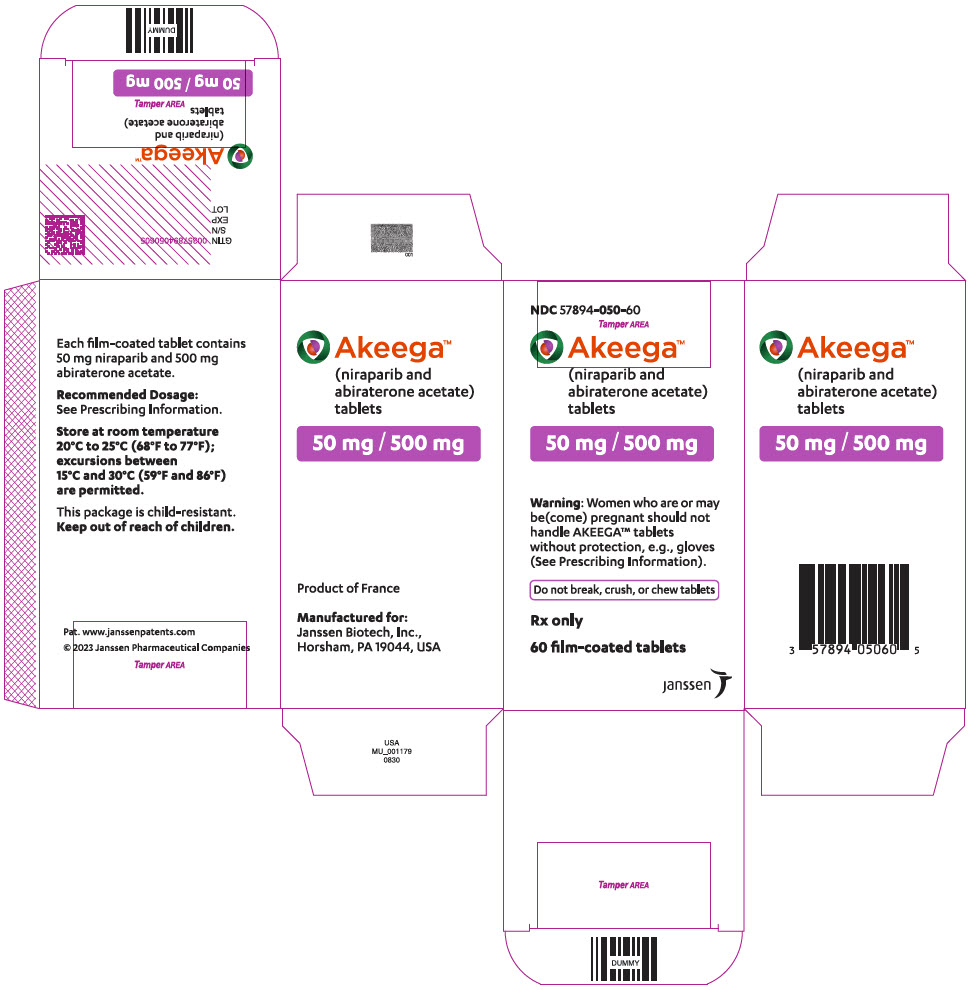
PRINCIPAL DISPLAY PANEL - 50 mg / 500 mg Bottle Carton NDC 57894-050-60 Tamper AREA Akeega™ (niraparib and abiraterone acetate) tablets 50 mg / 500 mg Warning: Women who are or may be(come) pregnant should not handle AKEEGA™ tablets without protection, e.g., gloves (See Prescribing Information). Do not break, crush, or chew tablets Rx only 60 film-coated tablets janssen PRINCIPAL DISPLAY PANEL - 50 mg / 500 mg Bottle Carton
Medicare Part D spend CMS · PART D · 2026 (Q1)
About this NDC listing & data coverage
What data is (and isn’t) available for this NDC — tap to expand
| NDC identity (package / product / labeler codes) | ✓ Available |
| Labeler | ✓ Available |
| Product & package description | ✓ Available |
| Marketing category & status | ✓ Available |
| Active ingredient / dosage form / route | ✓ Available |
| FDA label (SPL via DailyMed) | ✓ Available |
| Package photos | ✓ Available |
| Inactive ingredients (structured) | ✓ Available |
| NADAC pharmacy acquisition price (CMS) | — Not published for this NDC CMS publishes NADAC only for NDCs reported in its retail-pharmacy survey. |
| Orange Book / therapeutic-equivalence data | ✓ Available |
| HCPCS J-code billing crosswalk | — Not published for this NDC Most self-administered / retail products have no J-code — that is normal. |
| Medicaid utilization (CMS SDUD) | — Not published for this NDC CMS reports utilization only for NDCs with Medicaid claims above its privacy threshold. |