
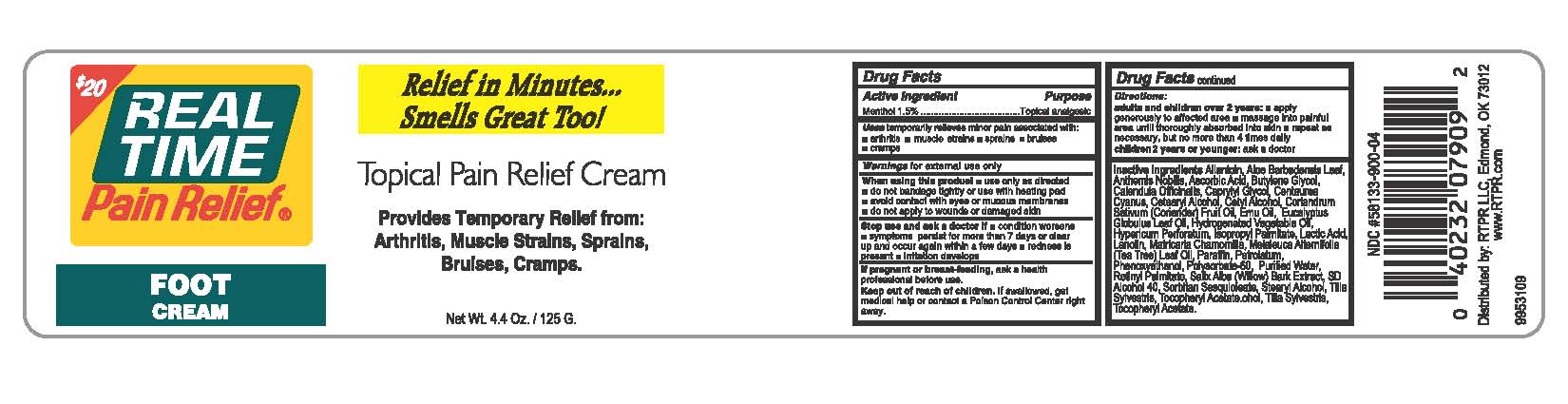
Real Time Pain Relief Foot Cream Menthol 1.5% 1.5 g/100g Cream, 40 g
🆔 Identity & classification
Where does this data come from?
🏭 Manufacturer & labeler
Where does this data come from?
🩺 Clinical
- Menthol is found in a lot of over-the-counter topical products — creams, gels, patches, sprays, and powders. Depending on the product, it's used to temporarily ease minor muscle an...
- Start with clean, dry skin — free of lotions or creams — before applying the patch. Peel the backing off and press the sticky side firmly to the sore area. Most menthol patches sho...
- Yes, a mild burning or tingling feeling right after applying a menthol product is common and usually settles down within a few days of regular use. What's not normal is severe burn...
- Is that burning sensation after I apply it normal?
Patient education
Supplement & herbal interactions
Where does this data come from?
Ask a licensed pharmacist directly — free, answered by our team.
🧪 Inactive Ingredients / Excipients
Inactive ingredients, also called excipients, are components of the drug product other than the active ingredient. They may include fillers, dyes, coatings, preservatives, flavors, or other formulation ingredients.
💡 Tap an ingredient (hover on desktop) to see what it is and why it’s used.
-
UNII 2SBL0E1I0N
An organic alcohol compound used as a fragrance and flavoring agent in medicines. It helps mask taste or odor and may improve the sensory experience of the product.
-
UNII 344S277G0Z
Allantoin is a naturally derived compound that helps soften and soothe skin. In medicines, it works as a skin-conditioning agent and may help support wound healing and reduce irritation in topical formulations.
-
UNII ZY81Z83H0X
Aloe vera leaf is a plant extract derived from the aloe plant. It is used in medicines as a natural moisturizer and skin-soothing agent in topical formulations.
-
UNII JW7FJR3ZLY
A synthetic form of vitamin E derivative used as an antioxidant in medications. It helps prevent ingredient breakdown and spoilage during storage by protecting the product from oxidation.
-
UNII PQ6CK8PD0R
Ascorbic acid, also known as vitamin C, is a white crystalline powder. It serves as an antioxidant to prevent degradation of other ingredients and may also function as a preservative in the formulation.
-
UNII 3XUS85K0RA
Butylene glycol is a clear liquid derived from petroleum or plants that acts as a humectant, solvent, and preservative booster in medicines. It helps keep formulations stable, dissolve active ingredients, and maintain moisture in topical products.
-
UNII P0M7O4Y7YD
A plant extract from calendula flowers, traditionally used in formulations. It typically serves as a botanical ingredient that may provide color, fragrance, or skin-conditioning properties to topical products.
-
UNII 00YIU5438U
Caprylyl glycol is a clear liquid derived from coconut oil. In medicines, it acts as a humectant to retain moisture, a preservative booster to prevent microbial growth, and a solvent to help dissolve or mix other ingredients.
-
UNII QZ239038YC
A natural extract from the cornflower plant, used as a colorant and flavoring agent to give medicines their appearance and taste.
-
UNII 936JST6JCN
Cetyl alcohol is a waxy, fatty substance derived from plant or animal sources. It acts as an emulsifier and thickener in medicines, helping blend oil and water components and giving products a smooth, creamy texture.
-
UNII 60F80Z61A9
A fragrant plant oil extracted from chamomile flowers. It's used as a flavoring agent and fragrance in medicines to improve taste and smell, making the product more pleasant to take.
-
UNII 7626GC95E5
A natural aromatic oil extracted from coriander seeds. Used as a flavoring agent to mask bitter tastes and improve the overall taste of medicines, making them easier to take.
-
UNII 344821WD61
Emu oil is a natural fat derived from emu birds, used in some medicines as an emollient and penetration enhancer to help active ingredients absorb through the skin and soften the formulation.
-
UNII S546YLW6E6
Eucalyptus globulus leaf is a plant-derived ingredient that may serve as a flavoring agent or aromatic component in medications. It is commonly used to add taste or scent to oral formulations.
-
UNII Z82Y2C65EA
Hydrogenated cottonseed oil is a solid fat made by adding hydrogen to cottonseed oil. It's used in medicines as a binder and lubricant to help hold ingredients together and make tablets easier to compress and release.
-
UNII XK4IUX8MNB
Hypericum perforatum, also known as St. John's Wort, is a plant extract used in some medicines. It may serve as an active botanical ingredient or flavoring agent depending on the formulation.
-
UNII Q613OCQ44Y
Isostearyl alcohol is a fatty alcohol derived from plant or petroleum sources. It acts as an emollient and thickener in formulations, helping to soften the product and improve texture and stability.
-
UNII 33X04XA5AT
Lactic acid is a naturally occurring organic acid derived from milk or plant sources. It lowers and maintains pH in formulations, helps preserve the product, and can enhance ingredient stability and absorption.
-
UNII 7EV65EAW6H
Lanolin is a waxy substance derived from sheep's wool. It's used in medicines as an emollient and skin-conditioning agent to soften formulations and improve spreadability in topical products like creams and ointments.
-
UNII SA8AR2W4ER
A natural oil extracted from chamomile flower tops, used as a flavoring and fragrance agent to improve taste and aroma in medicines.
-
UNII G43C57162K
A natural plant extract from tea tree leaves used in topical formulations. It acts as a fragrance, preservative, and antimicrobial agent to help maintain product freshness and sensory appeal.
-
UNII I9O0E3H2ZE
Paraffin is a waxy, petroleum-derived substance used as a coating, lubricant, and hardening agent in tablets and capsules. It helps protect the medicine from moisture and gives pills a smooth finish.
-
UNII 4T6H12BN9U
Petrolatum is a purified mineral oil-based jelly derived from petroleum. In medicines, it acts as an emollient, lubricant, and moisture barrier to soften skin, reduce friction, and help prevent water loss from formulations.
-
UNII HIE492ZZ3T
Phenoxyethanol is a synthetic preservative and antimicrobial agent used to prevent bacterial and fungal growth in medicines and cosmetic products, extending shelf life and maintaining product safety.
-
UNII 7T1F30V5YH
A synthetic emulsifier derived from sorbitol and oleic acid. It helps mix oil and water-based ingredients together and keeps them from separating in liquid formulations.
-
UNII CAL22UVI4M
A synthetic emulsifier derived from sorbitol and fatty acids. It helps mix oil and water-based ingredients together and improves the texture and stability of the medicine.
-
UNII 32JK994WMC
Retinyl propionate is a form of vitamin A ester used in medications and supplements. It acts as an active ingredient rather than a typical inactive excipient, providing vitamin A activity in the formulation.
-
UNII 205MXS71H7
A plant extract from white willow bark. It's used as a natural flavoring agent and may help preserve the medicine by providing mild antioxidant properties in the formulation.
-
UNII 91MBZ8H3QO
Sodium borate is an inorganic salt compound used in medicines as a buffer to help maintain a stable pH level, and sometimes as a mild preservative or cleansing agent in topical formulations.
-
UNII 0W8RRI5W5A
A fatty acid derivative used as an emulsifier and surfactant in medications. It helps blend oily and water-based ingredients together to create a stable, uniform product.
-
UNII NHV2K1OUDH
A plant extract from linden tree flowers, used as a natural flavoring, fragrance, or botanical ingredient to enhance the taste or aroma of the medicine.
-
UNII 059QF0KO0R
Water is a liquid solvent that dissolves and mixes ingredients together in liquid medicines, syrups, and injections. It helps distribute the active drug evenly throughout the product.
32 inactive ingredients listed in the exact product block matched to this NDC.
Label-section wording can be broader than the structured product block and may mention additional formulation ingredients.
Where does this data come from?
ingredient classCode="IACT" elements from the exact product block matched by this NDC. Label-section narrative from DailyMed / the openFDA label index is shown separately when available.Inactive ingredient FAQ
Are inactive ingredients the same for every manufacturer?
Why might an inactive ingredient be missing?
Can inactive ingredients matter?
💲 Pricing
A drug doesn't have one price. Each row is a different public payment system, and none is what you'd pay at the counter — that depends on your insurance. The ⓘ on each row explains what it measures.
| Price system | Per g | Per package |
|---|---|---|
| Retail pharmacies payNADAC · weekly | Not in the retail survey — common for institutional, discontinued, or low-volume packs. | |
| Medicaid paysCMS SDUD · 12 mo | No recent Medicaid claims on file for this NDC — rare and low-volume NDCs are suppressed in the public data. | |
| Medicare drug plans payPart D · quarterly | No Part D plan price is available for this NDC in our data. | |
Where does this data come from?
🔁 Therapeutic equivalents
| Product | Labeler | Pack | NADAC/unit | TE | Status | Price vs. this |
|---|---|---|---|---|---|---|
| Real Time Pain Relief Foot Cream 1.5 g/100gthis 58133-0900-14 | Cosmetic | 40 g | — | — | Discontinued | — |
Where does this data come from?
⏳ Availability & generic status
We did not find an FDA-approved generic match for this exact strength, form and route.
Where does this data come from?
📦 Packaging — all sizes for this product
| Package NDC | Description | Marketing start | Status |
|---|---|---|---|
| 58133-0900-04 | 125 g in 1 JAR (58133-900-04) | 2014-01-31 | Inactivated by FDA |
| 58133-0900-08 | 227 g in 1 JAR (58133-900-08) | 2014-01-31 | Inactivated by FDA |
| 58133-0900-14 You're viewing this | 40 g in 1 JAR (58133-900-14) | 2014-01-31 | Inactivated by FDA |
| 58133-0900-16 | 453 g in 1 JAR (58133-900-16) | 2014-01-31 | Inactivated by FDA |
You're viewing the smallest of 4 pack sizes for this product.
Pack size FAQ
What quantity is in NDC 58133-0900-14?
What is the difference between NDC 58133-0900-14 and NDC 58133-0900-04?
What NDC number is used to bill for this package of Real Time Pain Relief Foot Cream Menthol 1.5% 1.5 g/100g Cream?
🧭 About this NDC listing & data coverage
What data is (and isn’t) available for this NDC — tap to expand
| NDC identity (package / product / labeler codes) | ✓ Available |
| Labeler | ✓ Available |
| Product & package description | ✓ Available |
| Marketing category & status | ✓ Available |
| Active ingredient / dosage form / route | ✓ Available |
| FDA label (SPL via DailyMed) | ✓ Available |
| Package photos | ✓ Available |
| Inactive ingredients (structured) | ✓ Available |
| NADAC pharmacy acquisition price (CMS) | — Not published for this NDC CMS publishes NADAC only for NDCs reported in its retail-pharmacy survey. |
| Orange Book / therapeutic-equivalence data | — Not published for this NDC Applies only to products approved under an NDA/ANDA; many listings are out of scope. |
| HCPCS J-code billing crosswalk | — Not published for this NDC Most self-administered / retail products have no J-code — that is normal. |
| Medicaid utilization (CMS SDUD) | — Not published for this NDC CMS reports utilization only for NDCs with Medicaid claims above its privacy threshold. |
Questions about this listing
Is this NDC FDA-approved?
Why is there no price listed?
What does the discontinued status mean for this NDC?
Is the NDC printed on the package the same as the 11-digit billing NDC?
What do the three segments of this NDC mean?
Does this product come in other package sizes?
Who lists this product with the FDA?
Do I need a prescription for this product?
Where does this data come from?
📄 FDA label — Drug Facts FDA SPL
🎯 Indications and Usage ▾
USES Temporarily relieves minor pain associated with arthritis muscle strains sprains bruises cramps
⏱️ Dosage and Administration ▾
DIRECTIONS adults and children over 2 years apply generously to affected area massage into painful area until throughly absorbed into skin repeat as necessary, but no more than 4 times daily Children 2 years or younger:ask a doctor
⚠️ Warnings ▾
WARNINGS for external use only When using this product use only as directed do not bandage tightly or use with heating pad avoid contact with eyes or mucus membranes do not apply to wounds or damaged skin Stop using and ask a doctor if condition worsens symptoms persist for more than 7 days or clear up and occur again within a few days redness is present irritation develops If pregnant or breast-feeding ask a health professional before use
🧪 Active Ingredient ▾
ACTIVE INGREDIENT Menthol 1.5%
🧪 Inactive Ingredients ▾
INACTIVE INGREDIENTS Allantoin, Aloe barbadensis Leaf Juice, Anthemis nobilis (Roman Chamomile), Ascorbic Acid, Butylene Glycol, Calendula officianlis (Marigold), Caprylyl Glycol, Centaurea cyanus (Cornflower), Cetearyl Alcohol, Cetyl Alcohol, Coriandrum sativum (Coriander) Fruit Oil, Emu Oil, Eucalyptus globulus Leaf Oil, Hydrogenated Vegetable Oil, Hypericum perforatum (St. John’s Wort), Lactic Acid, Lanolin, Matricaria chamomilla (Chamomile), Melaleuca alternifolia (Tea Tree) Leaf Oil, Paraffin, Petrolatum, Phenoxyethanol, Polysorbate-20, Polysorbate-60, Purified Water, Retinyl Palmitate, Salix alba (Willow) Bark Extract, SD Alcohol 40, Sodium Borate, Sorbitan Sesquioleate, Stearyl Alcohol, Tilia sylvestris (Lime Tree), Tocopheryl Acetate.
🎯 Purpose ▾
PURPOSE Topical analgesic